Posted on

Texture in hairdressing course for diverse hair textures

Texture in hairdressing course for diverse hair textures

Texture education belongs in both hairdressing and barbering. A texture in hairdressing course should cover how curl formation and shrinkage affect cutting, practical work on models and mannequin heads, and consultations shaped around different textures. Foundational teaching can also cover identifying hair types 1, 2, 3 and 4.

That matters because one cutting approach won’t suit every head of hair. Curly and coily textures can behave differently from straight hair, so learning to assess hair before picking up the scissors is part of the craft, not an optional extra.

Here, you’ll learn what texture-focused education can involve, from cutting diverse textures to hands-on practice and client conversations. We’ll also look at how these skills fit into hairdressing and barbering education, so you can judge what a course could bring to your work behind the chair.

Key Takeaways

  • Learn why curl formation and shrinkage should shape the way you plan a cut.
  • See how practice on mannequin heads and models can build confidence with a wider range of textures.
  • Use consultation questions to understand each client’s hair habits, needs and preferred upkeep.
  • Explore how texture skills fit into hairdressing and barbering education, and what to look for in a course.

Cutting techniques for diverse textures

Curly cuts need to account for shrinkage and curl formation: a shape that looks one way when stretched may change when curls sit naturally. Course length depends on the skills taught and the balance between demonstrations and practice, so compare the syllabus and learning activities.

Texture-specific cutting techniques

Start by observing how the hair falls in its natural state, then consider its density, curl pattern and the shape the client wants. With curls, shrinkage can make a finished cut appear shorter than its stretched length, so students learn to assess how much the curl springs back before removing length. Wet cutting can help create controlled sections; dry cutting can reveal how individual curls settle. The choice depends on the texture and intended shape.

Technical and freehand techniques

Technical cutting uses planned sections and consistent guides to create a defined outline or layers. Freehand work gives the stylist room to refine the shape where textured hair grows or curls unevenly. For example, a student might establish the outline with a clear sectioning pattern, then personalise the balance by cutting curls in their natural fall. The key is choosing a method that suits the client’s expectations, rather than applying one technique to every head.

Waving and curling techniques

Waving and curling practice helps students understand how styling changes the finished silhouette. A wand or curling iron can form a defined wave, while finger coiling shapes curls by wrapping small sections around a finger. On textured hair, section size and the natural pattern affect the result. Practise on a mannequin first, then assess how the wave or curl changes the cut’s movement and outline.

Tools and products for different textures

Tools can include cutting shears, combs, sectioning clips and a spray bottle; styling practice may use a diffuser or curling iron. Product choice depends on the task: a leave-in conditioner can support a moisturised finish, while a styling product can help define waves or curls. Students should learn to select tools and products based on the hair’s condition, texture and desired result, rather than relying on one fixed kit.

Practical work on models and mannequin heads

Demonstrations break a technique into steps students can practise. An educator might show how to section a mannequin head, choose a parting and apply a styling technique, while explaining what to look for. Students can repeat each step, compare the results and build control before working on a live model. Watching, practising and reviewing together makes the learning active.

A mannequin provides a steady surface for practising sections, tension and tool handling. For example, a student can shape one side, check the outline, then adjust the other. A mannequin can’t respond like a person or show how every hair type behaves in everyday movement. Practice on a live model adds these details, including how the hair falls, how the client sits and how the finish looks from different angles.

Working on models lets students apply a technique to hair with its own pattern, density and styling habits. With educator guidance, they can observe how a planned shape behaves, ask about the model’s routine and adapt their approach. Experience with a broader range of hair types can help prepare hairdressing students for modern salon work. It also develops judgement, rather than simply teaching students to copy a demonstration.

Inclusive salon practice is built through these choices. Students can practise respectful language, ask how a model usually styles their hair and explain each step before beginning. For instance, a model who wears curls naturally may want to see the shape in that state, rather than stretched. A successful session considers comfort, expectations and personal preferences alongside the technical result. Confidence develops through feedback and repetition: review the finish, identify what changed the shape, and apply that learning to the next model.

The course is aimed at stylists with 3 plus years’ salon experience, and mannequin and model sessions offer practical opportunities to build on demonstrated techniques.

Texture in hairdressing course for diverse hair textures

Texture-informed client consultations

Safe practice starts with a clear consultation: discuss the client’s hair history, sensitivities, scalp comfort and desired result before beginning. Explain the planned cutting, colouring or styling steps, agree on the approach, and pause if the client reports discomfort. For example, previous colour services may affect the plan for a new colour session.

A useful consultation gathers details that can change the care plan. Ask how the client wears their hair day to day, what products they use and how much maintenance suits them. Curly and coily hair may need different hydration and maintenance approaches from straight hair. A client who regularly wears wash-and-go curls may want a different routine from someone who stretches their hair for styling.

Texture-informed conversations also shape technical choices. Cutting, colouring and styling principles can vary between hair textures, so the stylist should explain how the proposed technique relates to the client’s goals. Describe the finish in plain language, such as whether layers will add movement or how colour placement may appear through a curl pattern. Then agree on what the client wants to maintain between sessions.

Inclusive consultations make space for diverse hair textures without treating one pattern as the default. Ask open questions, listen without assumptions and use the client’s own language for their hair. A specialist course can help students turn those answers into a practical care plan instead of relying on a generic script. For example, record preferred styling methods, relevant sensitivities and agreed aftercare. Strong consultation skills mean connecting those details to the service, checking that the client understands the plan and gaining agreement before work begins.

An estimated 65% of the world’s consumer population has textured hair. That scale makes texture-aware consultation a core part of welcoming clients, not a niche addition to a service menu. Use the conversation to understand how the client wants their hair to look and feel, and check that the proposed approach reflects their preferences rather than assumptions about their texture.

Keep the plan collaborative throughout the service. Invite the client to flag changes in comfort or concerns about the finish, and explain any adjustments clearly. This helps the client make informed choices and leaves them with aftercare guidance suited to the style they have agreed to maintain.

Hairdressing and barbering education

Compare UK courses by looking beyond their titles. Careers Wales recommends checking what each course involves, how learning is assessed, what previous learners went on to study, and whether a particular grade or skill is required. For textured-hair training, look for a clear connection between theory and practical work. For example, check whether assessment involves demonstrations, written work or both, and whether the course suits your experience.

Yes, specialist courses in textured and Afro hair are available in the UK. Topics may include texture-specific colouring considerations and protective styling. Check whether a course builds foundational knowledge or develops skills you already use in a salon. This distinction helps you match the learning to your career stage and the work you want to take on, such as broadening your approach to styling or colour services.

Qualifications depend on the course. A science and identification course awards a participation certificate upon completion. Another course expects learners to have basic cutting, colouring and finishing ability at Level 2 NVQ. These are course-specific criteria, not universal entry rules. Look at the stated assessment, too: learners may need to demonstrate a technique or explain the theory behind a hair-styling choice.

Strong education connects classroom theory with salon decisions. Some programmes recommend completing a foundational course before progressing to later modules. College hairdressing and barbering courses may also require work experience. In the college information covered here, commercial salon or barbershop work experience is mandatory, and progression requires securing and actively engaging in relevant experience. These expectations connect learning with the pace and demands of professional practice.

Choose education that can expand your technical range and support your next career move. Explore hair course options to develop your skills further.

Heavy Metal Hairdresser: Hair Courses

Heavy Metal Hairdresser offers Hair Courses for hairdressers and barbers looking to develop their creative practice. After exploring texture education, consider this next step when you want to build skills that support expressive, individual work behind the chair.

Texture knowledge informs more than one technique. It helps you consider how a cut, shape and styling choice work together, whether you’re planning a shag or a textured layered finish. Bring questions you want your learning to address, such as adapting your approach to different curl patterns or creating shapes with movement. The right course should connect directly to the work you want to develop.

To discuss Hair Courses, contact Heavy Metal Hairdresser.

Put your texture skills into practice

Your next move is to choose learning that supports the work you want to create. A texture in hairdressing course can be one part of building a more considered approach, helping you bring curiosity and intention to each client’s individual style. Keep developing through observation, practice and thoughtful conversations about what each person wants from their hair.

That mindset matters in expressive work too. Shag Haircuts and Wolfcuts call for a strong sense of shape, while Guest Spots bring fresh perspectives to the creative mix. Let your interests guide what you explore next, whether that means refining your technique or finding new inspiration for your work.

Ready to take the next step? Contact Heavy Metal Hairdresser to start a conversation about where your hair education could take you. Keep learning, keep experimenting, and make space for every texture in the chair.

Frequently Asked Questions

What topics are covered in a hairdressing course on hair texture?

A course may cover texture classification, hair science, styling and colour considerations. For example, learners can explore how follicle shape, moisture and environmental conditions influence hair behaviour, then connect those ideas to salon choices. Some training also introduces protective styling and texture identification. Course content varies, so review the syllabus and assessment methods to understand how theory is applied.

How do hairdressers identify hair types and textures?

Hairdressers assess the visible curl pattern and how strands behave, rather than relying on one label alone. Curl patterns can be measured in millimetres, with a smaller measurement indicating a tighter curl. They may also consider moisture, follicle shape and the hair’s condition. Observing hair in its usual state helps build a clearer picture before choosing a service.

What techniques are taught for cutting and styling different hair textures?

Training can cover structured sectioning, freehand refinement and styling methods suited to the hair’s natural movement. For a curl-focused cut, the hairdresser considers how the shape may change as curls form and shrink. A useful practice sequence is to assess the natural fall, plan the outline, cut with control, then style and review the finished shape. The exact method depends on the desired result.

Posted on

Low maintenance textured hairstyles for short, medium and long hair

Low maintenance textured hairstyles for short, medium and long hair

Low-maintenance hair starts with a cut that works with your natural texture, not one that needs daily heat or careful styling. The best low maintenance textured hairstyles let your waves, curls or natural movement do the work. Short haircuts generally need a trim every four to six weeks to hold their shape, while longer hair can go six to eight weeks between trims.

Low-maintenance can still mean bold, textured and full of character. The key is choosing a shape that suits your hair and the effort you want to put into styling it. Learn what makes a cut easier to live with, how textured styles work at different lengths, and which heatless techniques bring out your hair’s natural movement. From airy layers to tousled shapes, make your texture work for you.

Key Takeaways

  • Choose a cut that works with your natural texture, so your everyday routine feels easier rather than more demanding.
  • Fine and thick hair benefit from different shapes: consider how layers and weight affect volume, movement and styling time.
  • Air-drying and the right leave-in products can bring out texture without making heat styling part of your daily routine.
  • Match the length and upkeep to your lifestyle, then explore a shag haircut for a bold, deliberately undone shape.

1. What Makes a Haircut Low-Maintenance?

A low-maintenance cut follows your natural texture instead of demanding daily heat or precise styling. Fine hair often benefits from a shape that preserves fullness, while longer layers can reduce bulk in thick hair and make it quicker to style. The aim is balance: enough structure to guide the hair without losing the movement that gives it character.

A shag can suit fine or thick hair, but its layers need to match the hair’s density. On fine hair, a lighter shag with carefully placed layers can add movement without making the ends look sparse. Thick hair can carry more layering to reduce weight and reveal its natural texture. For either type, explain how you usually wear your hair and what you want to do at home.

To ask a UK hairdresser for a low-maintenance textured cut, bring a reference photo, describe your natural texture and say how much time you want to spend styling. Ask for a shape that works when air-dried, and be clear about whether you want a fringe or layers.

How often should you trim textured hairstyles to keep their shape? Short cuts generally need a trim every four to six weeks; longer hair can often go six to eight weeks. Short bangs may need attention every four to six weeks, while longer bangs can blend into the rest of the cut and need less frequent shaping.

Which textured hairstyles grow out well between salon visits? Longer bangs, soft face-framing layers and a shag with blended layers can hold their shape as they grow. These details soften the transition between appointments rather than relying on a sharply defined edge.

For Afro-textured hair, the NHS describes a routine of washing every one-two weeks, using a deep wash-out conditioner, towel-drying gently and applying leave-in conditioner. This sequence supports a cut designed around your texture, rather than a daily styling battle.

2. Textured bobs, lobs, pixie cuts and layered styles

A textured bob can show off natural movement without relying on a polished finish. For wavy hair, a bob falling an inch or two below the chin gives the waves room to form. Thick curls may suit a side-parted lob that brushes the shoulder, where added length gives curls weight and helps keep them anchored. A fringed lob can also suit 3B curls, keeping the shape mid-length while preserving curl bounce.

For shorter curls, a pixie with a burst cut is one option for 3C hair. Shaved sides create an even shorter variation, whilst curls remain visible through the top. Match the cut’s outline to how your curls sit naturally, rather than choosing a shape that needs daily reshaping. That difference can make the morning routine simpler.

Layers need to account for both texture and density. Longer layers can reduce bulk in medium-length hair and create a lighter, airier shape. Soft face-framing layers remove weight around the front and can make styling quicker. For long, thick hair, a butterfly cut adds layers near the face; a bouncy blow-dry with a barrel brush brings out their shape.

Fringes change the feel of a cut, but their upkeep depends on the style. A curly fringe is best shaped with a dry cut, so its length reflects how the curls naturally sit. Wear it down for a defined frame, or sweep it up into a high ponytail. Bangs with an octopus cut need trimming every three to four weeks to maintain their length.

Shag, mullet and layered cuts all use varied lengths to create movement, but their outlines differ. A shag leans into scattered layers, while a mullet keeps more length at the back. Compare textured haircut ideas by looking at the fringe, crown and back shape, then choose the outline that suits your natural fall.

Low maintenance textured hairstyles for short, medium and long hair

3. Air-drying and heatless styling

Air-drying lets waves, curls and shaggy layers show their natural pattern without daily heat. Start with freshly washed hair, then gently squeeze out excess water with a towel. Avoid rough rubbing, which can disturb the hair’s surface and leave texture less defined. If your hair is thick, work in sections so each part dries evenly.

Apply a leave-in cream, gel or oil while your hair is damp. Creams can add softness, gels can help define waves, and oils can smooth the finish. Scrunch wavy or curly sections upwards with your hands, then leave them alone as they dry. For a messy shag, apply volumising mousse to damp roots and dry upside down for lift.

What styling products work for low-maintenance textured hair, and how much do they cost in the UK? Leave-in creams, gels and oils can add texture, tame frizz or boost volume without heat. UK prices vary by product type, size and retailer, so compare those details when choosing a formula.

For a simpler routine, choose one product that addresses your main concern, such as definition or frizz, rather than layering several formulas. The NHS notes that gels, hairsprays and setting lotions can reduce frizz but may irritate the scalp. If a product causes irritation, stop using it and choose a gentler option.

How can you maintain textured hair while reducing frizz, breakage and damage? Detangle gently, work in sections and avoid pulling a brush through dry curls. Use your hands to arrange damp hair, then let it dry without repeatedly touching it. Less handling helps preserve the shape and avoid unnecessary friction.

Use hot tools occasionally, especially on bleached ends. A heat protectant is recommended whenever you use a curling iron or flat iron on bleached hair. For a no-heat finish, try loose twists or braids on damp hair, then undo them once dry for softer waves. Gently separate the texture with your fingers. This low-fuss approach is particularly convenient when getting ready for social gatherings; while mobile event services such as Simply Coffee & Matcha handle hospitality for your guests, your hair stays effortlessly in place all day.

4. Low-maintenance cuts for short, mid-length and long hair

Length changes the upkeep equation. A buzz cut keeps a close, sharp outline, but maintaining its cropped length means trimming about once every three weeks. For a softer short shape, a French bob sits at chin length, with a soft fringe and airy, undone texture. A soft blunt bob can also make fine hair appear thicker, while its clean outline gives the cut definition.

For wavy hair, a shoulder-length cut keeps natural movement manageable. Air-dry it, then gently tousle the lengths with your hands to bring out the texture. Medium-length straight hair can benefit from trimmed ends, which help reduce styling time and maintain a healthy appearance. Longer layers also reduce bulk, giving medium hair a lighter shape without sacrificing length.

Long hair offers more room for movement and shape. A clavicut with balayage can grow out naturally, allowing more time between salon appointments. For thick lengths, a butterfly cut places layers around the front; a bouncy blow-dry with a barrel brush brings those pieces forward. Longer hair generally needs trims every six to eight weeks, while the cut’s shape and your preferred finish influence upkeep.

What are the best low-maintenance textured hairstyles for men and women? Choose by texture and routine, not gender: a buzz cut suits someone who wants a close crop, while a shoulder-length cut lets natural waves move freely. A French bob or layered clavicut offers other options at different lengths.

Which textured hairstyles suit different hair lengths and face shapes? For short hair, try a French bob or buzz cut; for mid-length hair, consider a shoulder cut or longer layers; for long hair, explore a clavicut or butterfly cut. Use a fringe or face-framing layers to guide where the shape draws attention, then ask for a finish that works with your natural texture.

Explore options for your textured cut and choose a shape that fits your length and everyday routine.

Heavy Metal Hairdresser: Shag Haircuts

Heavy Metal Hairdresser offers Shag Haircuts for anyone drawn to a layered shape with movement and a less polished edge. A shag can bring natural texture into focus, whether your hair is fine, thick, wavy or curly. The key is shaping the layers around how your hair falls and how you want to style it day to day.

If you’re choosing between a shag, a wolfcut or another textured shape, think about the outline you want and how much styling feels right for you. Bring reference images and explain how your hair behaves after washing. Those details help shape a cut around your routine, not just a picture.

For a cut with character and texture, explore Shag Haircuts with Heavy Metal Hairdresser. Visit Heavy Metal Hairdresser online to take the next step.

Make your next cut feel like you

The best low maintenance textured hairstyles are the ones that feel like you, not a version of your hair that takes effort to maintain. Before choosing a new shape, decide what you want your hair to say and how you want your everyday routine to feel. A reference photo can convey the mood, but your natural texture and styling habits should guide the final direction.

Heavy Metal Hairdresser offers Shag Haircuts and Wolfcuts for expressive, layered looks, alongside Guest Spots. Think about which silhouette feels right, then bring that idea into the conversation. The goal isn’t to copy a picture strand for strand. It’s to make the cut your own.

Ready to explore a shape with more edge? Contact Heavy Metal Hairdresser and take the next step towards a style that feels unmistakably yours.

Frequently Asked Questions

What Makes a Haircut Low-Maintenance?

A low-maintenance haircut keeps its character without needing a precise blow-dry or elaborate daily routine. Think about an ordinary morning: if your hair looks workable after washing and a simple finger-style, the shape is doing its job. Tell your hairdresser which parts you’re happy to style, such as a fringe, and which you’d rather leave alone.

What textured hairstyles work best for straight, wavy, curly and coily hair?

The best match depends on how your texture sits. Straight hair can suit a softly blunt bob; waves can work with a bob or shoulder-length shape. Curly hair can wear a lob or a pixie with a burst shape, while twists offer a low-manipulation option for 4C coils. Share how your hair behaves when dry, then choose a cut that complements that pattern.

How can you style textured hair quickly at home with minimal heat?

Start with damp hair and use your hands to shape it rather than brushing repeatedly. For waves, loosely braid sections and undo them once dry; for curls, gather your hair into a high ponytail to keep it off your face. If your texture needs a refresh the next day, dampen your hands and reshape only the sections that have lost definition.

What styling products work for low-maintenance textured hair, and how much do they cost in the UK?

Leave-in creams, gels and oils can add texture, tame frizz or boost volume without heat. UK prices vary by product type, size and retailer, so compare those details when choosing.

Posted on

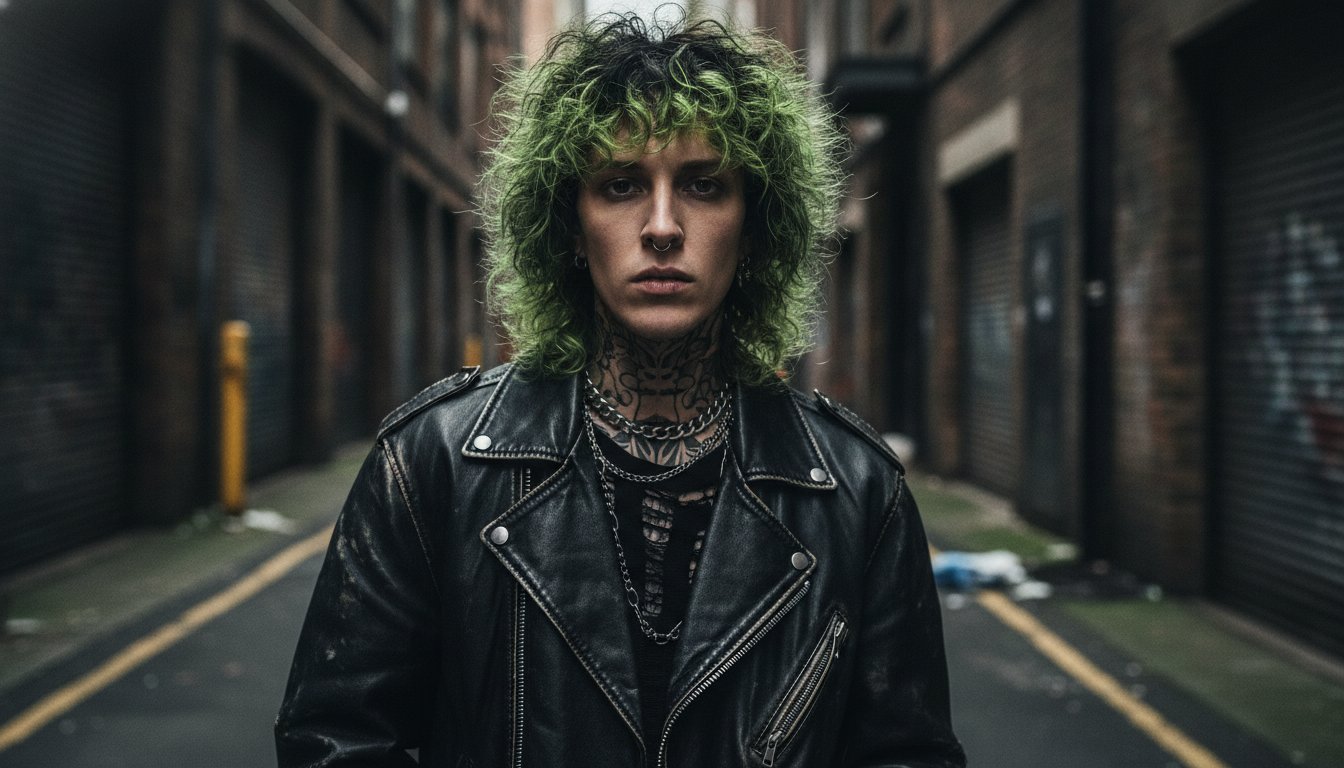
Curly Wolf Cut Inspiration: Aggressive Texture for Alternative Souls

Curly Wolf Cut Inspiration: Aggressive Texture for Alternative Souls

Your curls weren’t meant to be tamed into a polite, rounded halo that looks more like a prize poodle than a person with a pulse. Most traditional stylists are terrified of taking a pair of shears to the crown for those aggressive, choppy layers you actually crave. You’re likely bored of flat tops and predictable shapes that feel like they belong in a corporate office rather than a mosh pit. It’s time to reclaim your texture with some serious curly wolf cut inspiration that weaponises your natural movement for a look that’s pure alternative rebellion.

We know the struggle of finding a shape that feels like home for your subcultural identity. You want volume that defies gravity and texture that looks intentional, not accidental. This guide is your ultimate roadmap to alternative styling. We’ll explore how to achieve a high-impact, textured shape that celebrates your natural curls whilst ditching the outdated rules of the beauty industry. From technical layering secrets to pairing your cut with vivid colour, we’re showing you exactly how to transform your hair into a subcultural weapon.

Key Takeaways

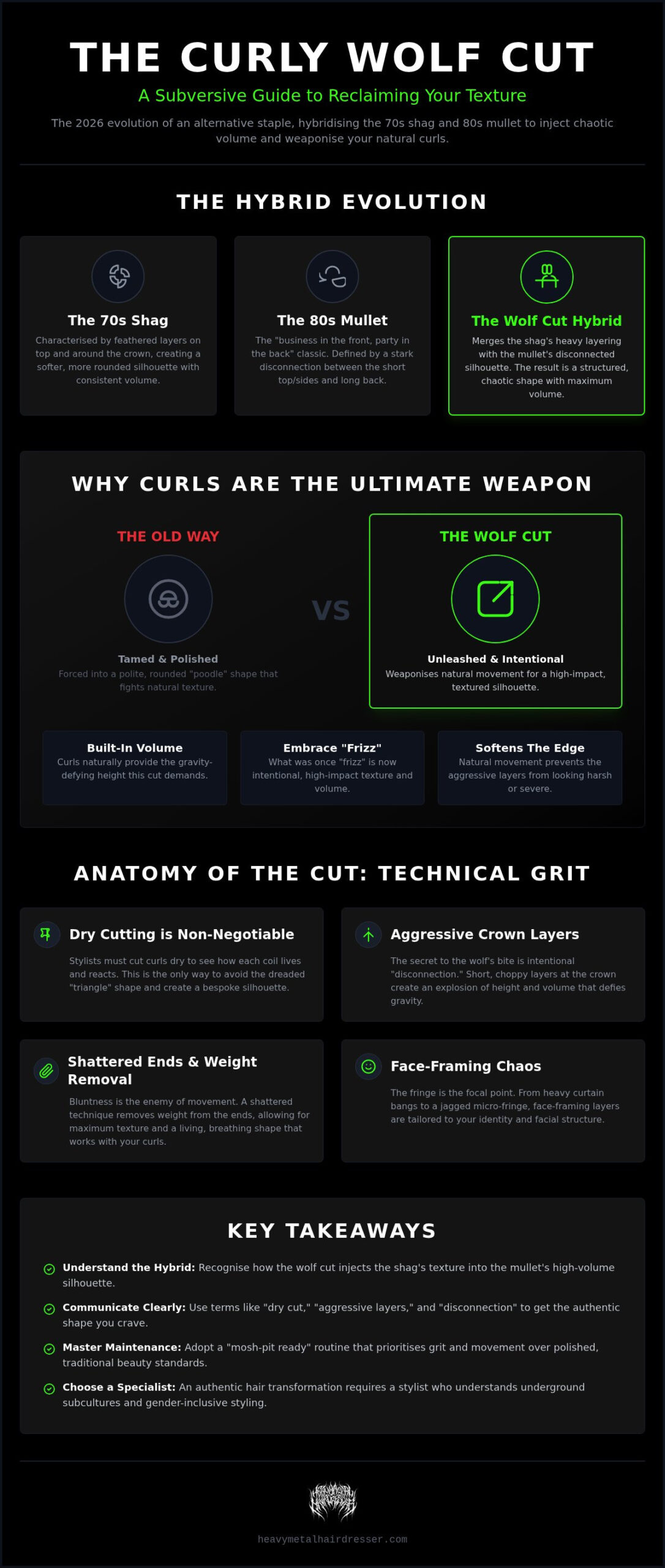
  • Learn how the 2026 wolf cut hybridises the 70s shag and 80s mullet to inject chaotic volume into your natural curl pattern.
  • Find the ultimate curly wolf cut inspiration to help you communicate with your stylist about dry cutting techniques and blending aggressive layers.
  • Discover whether a maximalist Long Wolf or a punk-inspired Cropped Wolf best fits your subcultural identity and specific hair texture.
  • Master a mosh-pit ready maintenance routine that prioritises grit and movement over traditional, polished beauty standards.
  • Understand why choosing a specialist who understands underground subcultures is vital for a gender-inclusive and authentic hair transformation.

Reclaiming the Mane: What Defines a Curly Wolf Cut in 2026?

The wolf cut isn’t just a fleeting social media trend; it’s a high-energy hybrid of the 1970s shag and the 1980s mullet that has evolved into a staple of the underground. By 2026, the collective obsession with overly polished, “perfect” waves has finally started to rot. People are moving towards raw, gritty texture that feels authentic and lived-in. For those with natural movement, this style is about injecting chaos and volume into hair patterns that have historically been forced into submission by traditional stylists. You’re ditching the dreaded “poodle” look for something that feels more like a warning than a welcome. The curly wolf cut is a visual manifesto, a deliberate rejection of mainstream grooming standards that serves as a high-impact tool for subcultural identity. If you’re hunting for curly wolf cut inspiration, you’re looking for a shape that bites back.

The Hybrid Evolution: Shag vs Mullet vs Wolf

The lineage of alternative hair stretches from the jagged edges of 70s punk through to the heavy silhouettes seen on metal stages today. Whilst it is technically a modern variation of the shag, the wolf cut demands far more technical grit. It differs by utilising shorter, more aggressive crown layers that create an immediate explosion of height and movement. The secret to the wolf’s bite is the “disconnection” in length. Unlike traditional salon blends that aim for seamless, polite transitions, this cut thrives on the sharp contrast between the choppy top and the longer, leaner lengths at the back. It’s a structured mess that refuses to play by the rules of conventional beauty.

Why Curls are the Ultimate Weapon for this Shape

Curls provide the built-in volume that straight-haired individuals have to fight for with endless products. Natural texture is the ultimate weapon for this shape because it softens the aggressive lines whilst maintaining a dangerous edge. It’s time to stop fighting “frizz” and start seeing it as intentional, high-impact volume. When you lean into the natural expansion of your hair, the wolf cut becomes a living entity. Curls fill the gaps created by the heavy layering, ensuring the crown stays tall and the silhouette stays fierce. This lack of volume at the crown is a common pain point that this specific layering pattern solves instantly. This is where curly wolf cut inspiration meets the practical reality of reclaiming your mane. You aren’t just getting a haircut; you’re organising your curls into a shape that finally matches your soul.

Anatomy of the Cut: Technical Grit for Natural Curls

Precision matters. When hunting for curly wolf cut inspiration, you aren’t just looking for a vibe; you’re looking for technical grit that respects your natural movement. The first rule of alternative hair is simple: we never cut curls wet. Wet hair lies. A dry cut allows your stylist to see exactly where each curl lives and how it reacts to tension. It’s the only way to avoid the dreaded “triangle” shape or a cut that looks completely different once it’s dry and styled. This technical precision is what separates a professional Wolfcut from a DIY disaster. It ensures your layers have the freedom to bounce without losing their intended shape.

Navigating the “shelf” effect is where most mainstream stylists fail. They often struggle to blend aggressive, short layers into longer lengths without creating a visible disconnect that looks like a mistake. You want a silhouette that flows whilst maintaining its bite. Knowing what to ask your stylist for is crucial when gathering curly wolf cut inspiration for your next session. Ask for weight removal that doesn’t sacrifice the integrity of the curl. If you want to dive deeper into the mechanics of these shapes, check out our ultimate wolf hair cut guide for a full breakdown of subcultural grit.

Disconnection and Aggressive Layering

Height is the goal. We achieve this through short, choppy sections at the crown that force the hair to stand up and shout. This isn’t about subtle graduation. It’s about intentional disconnection. We maintain the length at the back to preserve that classic mullet-inspired silhouette, but we use a “shattered” end technique. This removes the bluntness, allowing for maximum texture and movement that feels alive. It’s a shape that works with your curls, not against them. It creates a percussive rhythm in the hair that traditional cutting styles simply cannot replicate.

Face-Framing Chaos: Bangs and Tendrils

Your fringe is the focal point. Whether you opt for heavy curtain bangs or a jagged micro-fringe depends on your personal level of aggression. We use curls to frame the cheekbones and jawline, creating a sharper, more defined look that cuts through the softness of natural texture. This deadly combination of bangs and layers defines the face, ensuring your identity is the first thing people see. It’s about creating a frame that matches the intensity of your soul. We don’t do “flattering” in the traditional sense; we do high-impact character.

Curly Wolf Cut Inspiration: Styles to Fuel Your Identity

Finding the right curly wolf cut inspiration means looking far beyond the generic portfolios of high-street salons. We aren’t here for “flattering” layers that disappear the moment you leave the chair. We’re here for hair that acts as a visual extension of your music taste and subcultural soul. Whether you’re chasing the silhouette of a 70s rock god or the jagged energy of a punk icon, the wolf cut adapts to your specific curl pattern. It’s about reclaiming your space in the scene with a shape that refuses to be ignored. It’s time to choose a version of this cut that hits as hard as your favourite breakdown.

The Maximalist Long Wolf

This is for the individuals who want to keep their length but lose the traditional weight. Ideal for wavy and loose curl patterns, typically Type 2A to 3A, the Long Wolf focuses on maintaining heavy perimeter weight whilst gutting the internal sections with extreme layering. This creates a “rockstar” aesthetic that commands attention in any room. You get the dramatic fall of long hair paired with the aggressive height of a mullet. It’s a high-impact choice for those who want their texture to do the talking. Style it with grit. Let the layers clash and create their own percussive rhythm without the need for constant taming.

The High-Impact Coily Crop

Type 4 curls shouldn’t be limited to rounded, polite shapes. The Cropped Wolf is a structural, architectural take that celebrates the unique power of coily textures. Shorter lengths allow for more gravity-defying height, turning your hair into a literal crown of rebellion. It’s a tighter, more punk-inspired look that thrives on sharp definition. The key here is maintaining moisture whilst keeping the layers distinct. You want a shape that looks intentional from every angle. It’s about taking up space and proving that aggressive texture has no limits. It’s a bold, unapologetic statement of identity.

A cut this aggressive deserves a palette that matches its energy. Vivid colour isn’t just an accessory; it’s a tool to highlight the technical work we’ve carved into your layers. Neon greens, deep purples, or blood reds can make those shattered ends pop against the darker depth of your roots. By saturating your identity in high-pigment sensation, you turn a great haircut into a subcultural masterpiece. The right vivid hair colour acts as a spotlight for the movement we’ve built into your curls, ensuring every choppy layer is visible even in the dim light of an underground venue.

Curly Wolf Cut Inspiration: Aggressive Texture for Alternative Souls

Mosh-Pit Ready: Styling and Maintaining Your Curls

Your hair needs to survive more than just a morning commute. It needs to survive the front row. Traditional beauty jargon like “sleek”, “polished”, or “frizz-free” has no place here. Those terms are designed for people who want to blend in. When you are looking for curly wolf cut inspiration, you are looking for a shape that stays sharp in the heat of a crowded venue. We build these cuts to be lived-in. We want them to look better after a night of movement. This survival guide is about keeping that aggressive texture alive without sacrificing the health of your curls. It’s about maintaining the grit whilst ensuring your hair remains a high-impact weapon of self-expression.

Essential Products for Gritty Definition

Forget the heavy oils and high-shine waxes that weigh your curls down into a greasy mess. We want a raw, matte finish that feels authentic. Sea salt sprays are your primary tool for adding that “day at the beach, night in the pit” texture. Use matte pastes to define the shattered ends of your layers without making them look crunchy. For those with extreme height in their crown, our Death Grip styling products provide the hold needed to defy gravity. Whilst many people fear the diffuser, it is actually your best friend for creating chaos volume. Don’t just dry for definition; dry for expansion. If you want to master the crossover between these textures, check out our guide on how to style a modern mullet for professional-grade techniques.

The No-Soul-Lost Maintenance Routine

Maintenance shouldn’t mean spending hours in front of a mirror. It’s about working smarter to preserve the edge. To wake up with intentional chaos, try sleeping with your hair in a loose “pineapple” on a satin pillowcase. This preserves the crown volume whilst letting the layers settle into a natural, jagged rhythm. If you’ve paired your cut with vivid tones, the “cold water” rule is non-negotiable. Wash with cool water to keep those pigments from bleeding out. Your curly wolf cut inspiration will only stay fierce if the colour stays saturated. Book a “clean up” appointment every six to eight weeks to ensure your aggressive layers don’t lose their percussive bite. Keeping the shape sharp is the difference between a subcultural statement and a messy accident.

Ready to reclaim your texture and lock in your look? Explore our range of textured styling products to keep your wolf cut sharp through every setlist.

Beyond the Mirror: Finding Your Alternative Hair Specialist

Finding real curly wolf cut inspiration is easy on a screen. Finding a pair of hands that won’t ruin your texture is a different battle entirely. You need a specialist who doesn’t look at your curls and see a problem to be solved with a flat iron. You need a stylist who sees your hair as a canvas for rebellion. This isn’t just about technical cutting; it’s about who understands the subculture that fuels your identity. A mainstream stylist might give you a “soft” version of this look that feels more like a fleeting fashion trend than a lifestyle. We’re here for the version that bites.

Why Subculture Knowledge Matters

Technical skill is only half the battle. The rest is about understanding the music, the fashion, and the grit that defines the alternative scene. There is a massive difference between a “fashion” wolf cut designed for a magazine and an “alternative” one designed for a mosh pit. A specialist who understands your world won’t try to “fix” your frizz or soften your layers. They’ll celebrate the chaos. Building a relationship with a stylist who specialised in alternative hair means you don’t have to explain why you want your crown layers to be three inches long. They already know. They live the same culture you do. They understand that your hair is a percussive part of your identity.

Alternative hair has always been a haven for those who don’t fit the mould. This is why gender-inclusive safe spaces are vital. Most high-street salons are still stuck in a binary world of gendered cuts and pricing. We’ve ditched those outdated rules. Whether you’re non-binary, trans, or simply tired of gendered expectations, your hair should reflect who you are without compromise. Our philosophy is built on inclusivity. We provide a space where being different is celebrated rather than merely tolerated. It’s about creating a community where everyone feels safe to claim their new mane and express their true self.

Join the Revolution at Heavy Metal Hairdresser

Simon Tuckwell and the team at Heavy Metal Hairdresser are national leaders in this movement. With backstage experience at festivals like Download and Bloodstock, they understand the technical demands of hair that needs to perform under pressure. They don’t just offer Wolfcuts; they offer a complete transformation of your identity. If you’re tired of mainstream salon rules and stylists who are afraid of aggressive texture, it’s time to join the revolution. Take the curly wolf cut inspiration you’ve gathered and put it in the hands of experts who actually care about your subcultural soul. Embrace the grit. Claim your mane. Your new identity is waiting in the chair.

Claim Your Texture: Step Into the Alternative Revolution

You have the curly wolf cut inspiration; now you need the technical grit to make it a reality. We’ve explored how aggressive layering and dry cutting techniques turn “poodle” curls into a subcultural weapon. It’s about rejecting the polished, polite standards of the high street in favour of raw, percussive volume that survives the front row. Your hair should be a visual extension of your soul, not a compromise made in a salon chair.

Heavy Metal Hairdresser is the UK’s national destination for this transformation. As specialists in alternative textured layering with backstage experience at Download and Bloodstock, we understand the music and fashion that fuel your identity. We provide a gender-inclusive safe space where your individuality isn’t just accepted; it’s the main event. Stop settling for stylists who are afraid of your hair’s power. Book your aggressive transformation at Heavy Metal Hairdresser and claim the mane you were always meant to wear. Embrace the chaos and let your curls finally speak for your soul.

Frequently Asked Questions

Can I get a wolf cut if I have very tight, coily curls?

Yes, you absolutely can. Tight, coily curls provide incredible structural support for a wolf cut. The natural density of Type 4 hair allows for gravity-defying height at the crown that other textures struggle to achieve. We focus on architectural shapes that celebrate your coils rather than trying to tame them. It is about working with the hair’s natural expansion to create a look that is both high-impact and authentically you.

How often should I trim my curly wolf cut to keep the shape?

You should book a “clean up” appointment every six to eight weeks to maintain the aggressive silhouette. Because this style relies on the contrast between short crown layers and longer lengths, even a small amount of growth can soften the edge. Regular trims ensure the shattered ends stay sharp and the volume doesn’t drop. This schedule keeps your curly wolf cut inspiration looking intentional rather than like an accidental grow-out.

Is a wolf cut high maintenance for someone with curly hair?

No, it is actually designed to be lived-in and resilient. Unlike polished styles that fail at the first sign of humidity, a curly wolf cut thrives on movement and grit. You don’t need to spend hours in front of the mirror; you just need the right technical cut. Once the foundation is solid, your daily routine involves minimal effort to refresh the layers. It is built for festivals, gigs, and chaos.

Will a wolf cut make my hair look thinner or thicker?

A wolf cut will make your hair look significantly thicker at the crown. By removing weight from the internal sections and creating short, choppy layers, we force the hair to stand up and expand. This solves the common pain point of flat hair at the roots. Whilst the ends might look leaner in a mullet-inspired way, the overall silhouette projects a sense of maximalist volume and high-energy texture.

What is the difference between a curly shag and a curly wolf cut?

The main difference lies in the level of aggression and the silhouette. A curly shag is generally more balanced with softer transitions between layers. A wolf cut is a high-energy hybrid that uses much shorter crown layers and a more pronounced mullet-inspired length at the back. It is about intentional disconnection. Whilst both styles celebrate texture, the wolf cut has a sharper “bite” and a more rebellious, underground aesthetic.

Do I need to use a lot of product to style a curly wolf cut?

You don’t need a mountain of product; you just need the right ones. Quality matte pastes and sea salt sprays provide the gritty definition required without weighing your curls down. Using too much product can actually kill the volume we’ve built into the cut. Focus on “less is more” to keep the texture raw and authentic. Our Death Grip range is specifically designed to provide extreme hold with minimal application.

Can I have a wolf cut without a fringe if I have curls?

You can, but the fringe is what provides the face-framing chaos that defines the style. If you’re hesitant about a full fringe, we can start with heavy curtain bangs that blend into the shorter layers. However, the “deadly combination” of a jagged fringe and aggressive crown layers is what gives the wolf cut its subcultural identity. It creates a sharper frame for your cheekbones and jawline that most people find essential.

How do I stop my curly wolf cut from looking like an 80s perm?

Avoiding the “poodle” look comes down to technical execution and shattered ends. We avoid the rounded, uniform layers of the 80s in favour of jagged, disconnected sections. By dry cutting curl by curl, we ensure the shape is architectural rather than spherical. We also use matte styling products to provide a gritty finish. This ensures your look stays firmly in the alternative scene rather than drifting into vintage curly wolf cut inspiration.

Posted on

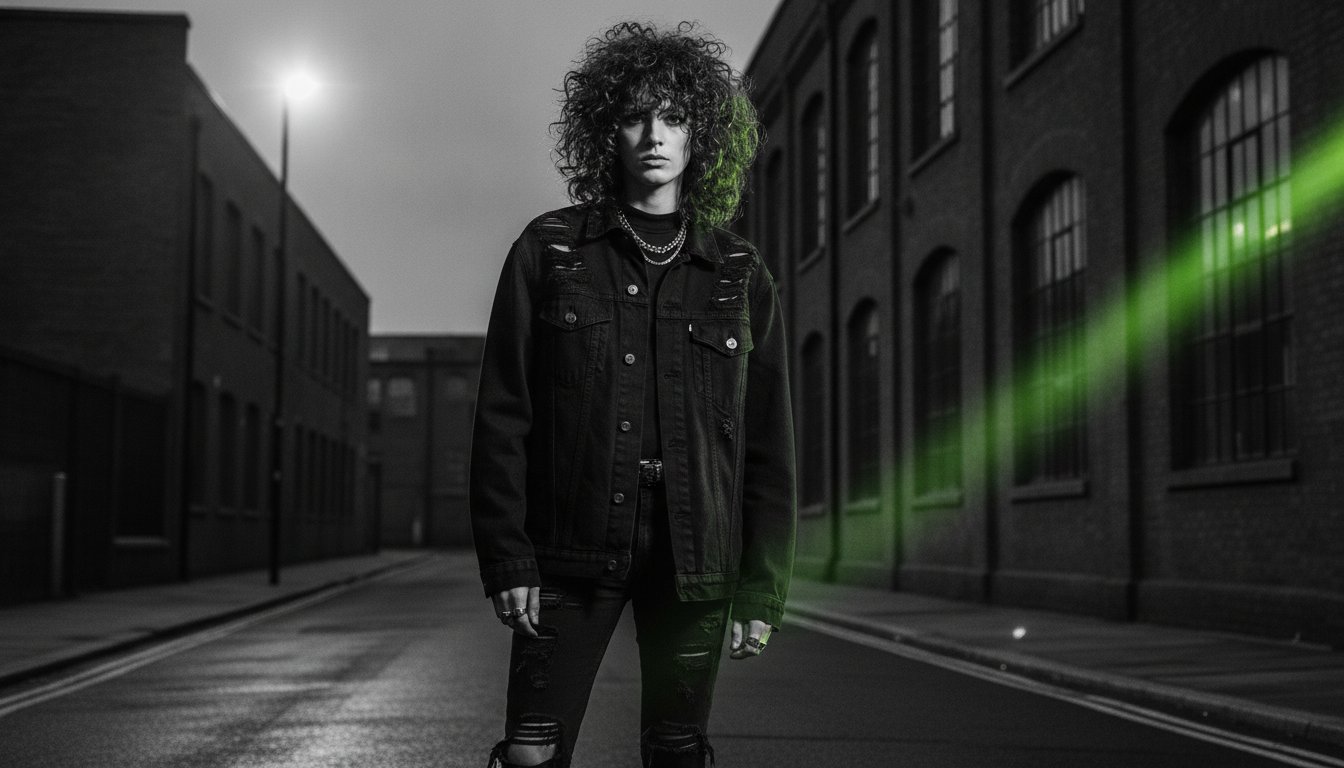
The Curly Shag Haircut in Nottingham: A Guide to Alternative Texture

The Curly Shag Haircut in Nottingham: A Guide to Alternative Texture

Your curls aren’t a mess to be managed or a problem to be “tamed” by a clinical high-street stylist. Most traditional salons see texture as something to be flattened, but we see it as a weapon. If you’re hunting for a curly shag haircut nottingham, you’re likely tired of the dreaded “Christmas tree” shape and the total lack of volume at your crown. You want hair that reflects your subcultural edge, not a watered-down version of mainstream beauty.

We agree that your hair should be as loud as your favourite record. That’s why we’re showing you how to reclaim your texture with an aggressive, low-maintenance shag that defies every boring rule in the book. It’s about high-impact volume and a gritty, rock-inspired aesthetic that actually works with your natural curl pattern rather than fighting against it.

In this guide, we’ll dive into why the 2026 curly shag is the undisputed king of alternative styles. We’ll explore the power of dry-cutting for precision weight placement and how to maintain that effortless, messy silhouette with a routine that doesn’t eat up your morning. Get ready to ditch the “safe” cuts and embrace a style that’s as fiercely independent as you are.

Key Takeaways

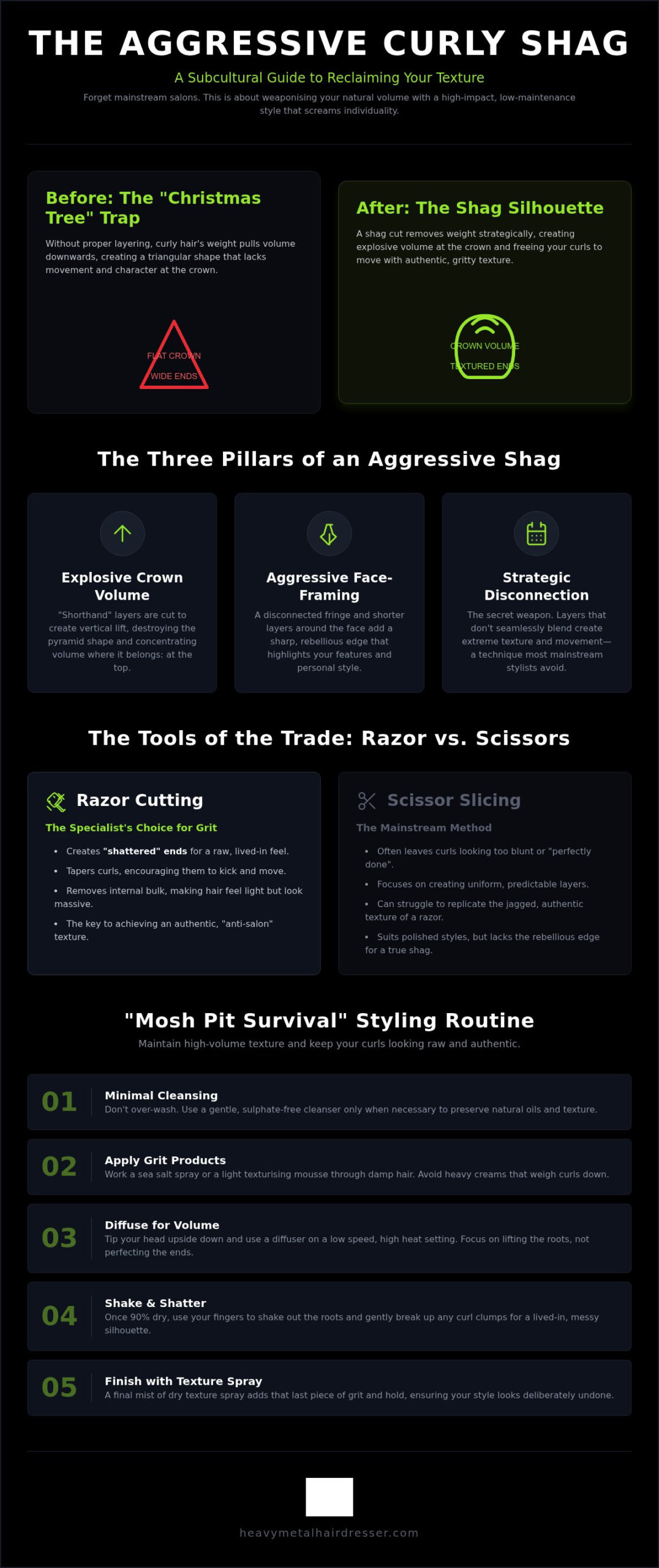
  • Master the three pillars of an aggressive silhouette: crown volume, face-framing, and the strategic disconnection that mainstream stylists often avoid.
  • Understand why a curly shag haircut nottingham requires a specialist who prioritises your individuality over traditional, clinical beauty standards.
  • Learn the crucial differences between the balanced layers of a shag and the mullet-inspired grit of a wolfcut to select your ideal alternative look.
  • Adopt a five-step “Mosh Pit Survival” styling routine to maintain high-volume texture whilst keeping your curls looking raw and authentic.
  • Discover the value of a gender-inclusive safe space that views your natural curls as a tool for self-expression rather than a problem to be tamed.

Redefining the Curly Shag Haircut for the Alternative Scene

Forget the clinical, white-walled salons that treat your curls like a problem to be solved. The curly shag is a high-texture, multi-layered beast inspired by the raw energy of 70s rock and 90s grunge. It is the ultimate “anti-salon” look for anyone who feels out of place in a traditional setting. Most stylists want to “smooth” and “define,” but a curly shag haircut nottingham is about weaponising your natural volume. We do not hide frizz; we embrace it as a deliberate stylistic choice that adds grit and soul to your silhouette. It’s a rebellion against the polished, airbrushed standards that have dominated the industry for too long.

Whilst traditional shag hairdressers laid the groundwork, modern alt-specialists have pushed the boundaries of what textured hair can do. We have moved away from the “pretty” layers of the past towards something more jagged and authentic. This style is for the people who want their hair to look as loud as the music they listen to. It is about creating a shape that feels lived-in from the moment you leave the chair.

Why Curls and Shags are a Match Made in Hell

Curly hair naturally wants to expand outwards. Without the right structure, you often end up with the dreaded “triangle head” or “Christmas tree” shape. Shag layers destroy this silhouette by removing weight where it isn’t wanted and adding it where it’s needed. By using “shorthand” layers, we create vertical volume that stays at the crown rather than sliding down to the ends. This technique ensures your curls have the freedom to move and bounce without being dragged down by their own weight. This cut is also fiercely gender-inclusive. It does not care about traditional masculine or feminine “rules.” It is simply about the hair, the texture, and the person wearing it.

The Rebellious History of Textured Layers

This look has a lineage that screams. From Patti Smith’s iconic dishevelled layers in the 70s to the modern chaos of festival stages at Download and Bloodstock, textured layers have always belonged to the outsiders. In the metal and punk scenes, your hair is a badge of identity. We have seen a massive shift from the polished, “perfect” curls of the early 2000s to the aggressive texture of today. It is about looking like you just stepped off a tour bus, not out of a clinical spa. A curly shag haircut nottingham connects you to that subcultural history, giving you a style that feels both timeless and aggressively modern. We prioritise your individuality over mainstream “perfection” every single time.

The Anatomy of an Aggressive Curly Shag

Constructing a curly shag haircut nottingham requires a total shift in perspective. You aren’t just cutting hair; you’re building a silhouette that demands attention and refuses to blend in. A successful alternative shag rests on three distinct pillars: explosive crown volume, aggressive face-framing, and maintained perimeter length. Whilst mainstream salons aim for a seamless, “safe” transition between layers, we utilise “disconnection.” This technique involves creating layers that don’t technically “match” in length. It sounds like a mistake to the uninitiated, but it’s exactly how you achieve that extreme, high-texture shape. Mainstream stylists fear these gaps. We use them to weaponise your curls.

The “Death Grip” mindset is essential for this process. It is about taking control of the hair’s natural chaos rather than trying to suppress it. This isn’t a passive process. It involves looking at how every individual ringlet behaves and deciding where it needs to be shattered to create movement. If you’re ready to ditch the boring options, you can explore our specialist alternative techniques to see how we handle extreme texture.

Razor Cutting vs. Scissor Slicing for Curls

There is a persistent myth that razors are the enemy of curly hair. In the hands of a specialist, the opposite is true. We use a razor to create “shattered” ends, a technique borrowed from the metal barber scene. Scissor slicing can sometimes leave curls looking too blunt or “done.” A razor allows us to taper the ends of each curl, encouraging them to “kick” and move in different directions. This creates a raw, lived-in feel that scissors simply cannot replicate. It is about removing bulk from the inside out, ensuring your hair feels light whilst looking massive.

The Power of the Disconnected Fringe

Your fringe is the gateway to your entire alternative identity. In a curly shag, the fringe shouldn’t just “be there”; it should frame your face with intent. You might opt for a heavy curtain fringe that hits the cheekbones or a bold micro-fringe that opens up your features. The key is to keep it disconnected from the rest of the layers. This ensures the fringe remains gritty and defined whilst the rest of your hair stays wild. It is the focal point that ties the aggressive volume together. To keep it looking its best, focus on styling the fringe with a bit more tension, allowing the rest of your curls to do exactly what they want.

Curly Shag vs. Wolfcut: Choosing Your Textural Weapon

Choosing between these two looks isn’t just about length. It’s about deciding how much chaos you want to invite into your life. Whilst some stylists claim they’re the same thing, they couldn’t be more wrong. One is a balanced explosion of texture; the other is a mullet-adjacent strike against tradition. If you’re hunting for a curly shag haircut nottingham, you need to know which weapon fits your specific subcultural aesthetic and curl pattern. It’s the difference between looking like a 70s rock icon or a modern e-girl with a death-metal edge. Both styles celebrate individuality, but they communicate very different energies.

Your curl pattern plays a massive role in how these shapes settle. Tighter 3C ringlets will respond differently to disconnection than loose 2C waves. We don’t believe in a one-size-fits-all approach. We look at the way your hair naturally clumps and where it needs to be shattered to give you the most aggressive silhouette possible. It is about choosing the right tool for the job.

The Wolfcut: For Maximum Aggression

The wolf hair cut is the more extreme sibling. It thrives on heavy contrast. You have very short, choppy layers on the top and sides that transition into long, thin lengths at the back. It’s aggressively disconnected. This style has become the favourite of the modern “scene” and e-boy/e-girl aesthetics because it refuses to be subtle. For those with tighter 3C patterns, the wolfcut creates a massive, wild silhouette that feels architectural. It’s for the person who wants their hair to look like it was cut in a dark alley with a switchblade. The curls add a layer of unpredictable grit that straight hair simply cannot match.

The Shag: For 70s Rock Authenticity

The classic shag is more about the flow. Whilst it still uses heavy layering to destroy bulk, the transition between the crown and the perimeter is more blended than a wolfcut. It’s less “mullet” and more “rockstar.” This look is perfect for 2C or 3A curl patterns where you want to encourage better curl clumping and a more rounded, halo-like volume. If your wardrobe is full of vintage leather and band tees, the shag is your best bet. It offers a more authentic, lived-in vibe that feels timeless rather than just trending on TikTok. A curly shag haircut nottingham gives you that high-volume crown without the extreme “long-tail” effect of the wolfcut. It’s a balanced textural weapon that still packs a punch.

The Curly Shag Haircut in Nottingham: A Guide to Alternative Texture

How to Maintain and Style Your Curly Shag Whilst Keeping the Grit

Stop trying to make your curls look “polite.” The whole point of a curly shag haircut nottingham is the raw, unrefined energy it projects. Traditional “scrunching” is often too soft. It creates a “pretty” finish that doesn’t match a rock-inspired aesthetic. Instead, we embrace the “Death Grip” mindset. This means using products with enough backbone to hold the shape whilst you’re in the middle of a mosh pit. To keep your texture looking intentional, follow this 5-step Mosh Pit Survival routine:

  • Cleanse with a sulphate-free formula to protect your vivid hair colour.
  • Apply a gritty styler to soaking wet hair to lock in the volume.
  • Shake your head vigorously to encourage natural separation and movement.
  • Allow the hair to dry completely without touching it to prevent accidental frizz.
  • Disrupt the cast once dry to reveal a shattered, lived-in texture.

To prevent your silhouette from becoming “bottom-heavy,” you’ll need a maintenance trim every 8 to 10 weeks. This ensures the crown layers stay short and the volume remains where it belongs. If you’re ready to overhaul your routine, grab our specialist styling gear to start weaponising your texture today.

The “Air-Dry and Destroy” Method

Minimal product is the key to an authentic, raw finish. Whilst a curly shag haircut nottingham thrives on volume, the wrong products will weigh it down. Sea salt sprays are often better than heavy creams for this look. They provide a matte, shattered finish that looks far more alternative than a shiny, gel-heavy ringlet. You should stop brushing your curls immediately after the shower. Brushing separates the hair into thin, frizzy strands. By leaving the curls to clump naturally, you maintain the aggressive shape of the cut whilst keeping the ends looking sharp.

Diffusing for Maximum Chaos

When you don’t have time for a slow air-dry, use a diffuser to “blast” volume into your crown. Flip your head upside down and focus the heat on the roots to encourage maximum lift. We aren’t aiming for perfectly defined ringlets. We want a look that says you’ve been front-row at a festival all weekend. Disruption is the act of breaking the curl cast for a rock-n-roll finish. This final step is what transforms “pretty” hair into a textural weapon that reflects your subcultural identity.

Why Your Next Alt-Cut Requires a Specialist Stylist

Mainstream salons are built on the idea of “correcting” hair. They see a jagged layer as a flaw that needs smoothing. They’re trained for symmetry, “pretty” finishes, and clinical perfection. If you walk into a traditional shop asking for a curly shag haircut nottingham, they might try to blend your layers or soften your fringe. They’ll try to “tame” the very thing you want to weaponise. That’s the opposite of our mission. We understand that your hair is a badge of your subculture; it’s an extension of your identity that shouldn’t be watered down for the sake of high-street trends.

We don’t just cut hair. We live the culture. Whether we’re styling bands backstage or working in the thick of festivals like Download and Bloodstock, we know how hair performs in the real world. This expertise is why we also provide alternative hair courses UK. We’re teaching the industry how to master subculture aesthetics whilst respecting the raw, gritty nature of textured hair. You deserve a stylist who speaks your language and respects your noise.

Beyond the Binary: Inclusive Styling

Alternative salons are the natural leaders in gender-neutral cutting. We don’t care about “men’s” or “women’s” sections. We care about the silhouette and the soul behind it. A curly shag haircut nottingham is a universal tool for self-expression. It defies the binary. You can communicate your identity to us without needing traditional jargon or feeling like you have to fit a specific mould. In our chair, you’re seen. It’s a sanctuary where you never have to justify why you want your hair to look aggressive or unconventional.

The Heavy Metal Hairdresser Experience

Our philosophy is driven by “Hair To the Throne” and “Death Grip” principles. It’s about having total authority over your own image. We’ve honed these techniques in the mud of Bloodstock and the high-energy chaos of live shows. We know your hair needs to look as sharp at the end of a set as it did at the start. Don’t settle for a stylist who doesn’t understand the music that moves you. Book your alternative transformation today and join a community that celebrates the outliers and the innovators.

Reclaim Your Texture and Your Identity

Your curls are a tool for self-expression, not a puzzle for a high-street stylist to solve. We’ve explored how a curly shag haircut nottingham uses strategic disconnection and crown volume to shatter mainstream beauty standards. Whether you choose the balanced rockstar energy of a shag or the aggressive contrast of a wolfcut, your hair should look as raw and authentic as the music you love. It’s about moving away from “taming” and towards total textural authority.

We don’t just understand this aesthetic; we build it. As official backstage stylists for festivals like Download and Bloodstock, we’ve mastered the art of high-impact texture that survives the pit. Our “Death Grip” and “Hair To the Throne” philosophies ensure your curls have the grit they deserve in a gender-inclusive safe space. We prioritise your individuality over clinical perfection every single time. It’s time to stop fighting your natural texture and start weaponising it.

Take the leap into a style that actually reflects who you are. Book Your Alternative Curly Shag Transformation and join a community that celebrates the outliers. You’ve spent long enough trying to fit in. It’s time to stand out.

Frequently Asked Questions

Can a curly shag work on fine hair?

A curly shag is one of the best choices for fine hair because the short crown layers create immediate lift and the illusion of thickness. By removing weight from the perimeter, we prevent your curls from looking flat or stringy. It’s about building a silhouette that expands outwards rather than hanging downwards. This technique ensures your hair looks massive and textured, regardless of your actual density or curl pattern.

How often should I get my curly shag trimmed to maintain the shape?

You’ll need to book a maintenance trim every 8 to 10 weeks to keep the aggressive silhouette from becoming bottom-heavy. Curly hair grows at an average rate of half an inch per month. As those crown layers lengthen, the volume begins to drop. Regular visits ensure your fringe stays at the right level and the internal layers continue to provide that signature rock-inspired lift and movement.

Is a shag haircut high maintenance for curly hair?

Shag haircuts are famously low maintenance because they thrive on a lived-in, messy aesthetic. You won’t need to spend hours with a round brush or straighteners. Most clients find that a quick air-dry or a blast with a diffuser is enough to set the style. Because the cut follows your natural curl pattern, it actually looks better as it ages between washes. It’s the ultimate alternative style.

What is the difference between a shag and a wolfcut for curls?

The main difference lies in the level of disconnection and the mullet-adjacent silhouette. A wolfcut features much shorter top layers and a more dramatic transition to the back lengths. A curly shag is more balanced, with layers that flow together whilst still providing significant crown volume. Both looks work brilliantly for texture, but the wolfcut offers a more aggressive, jagged silhouette for those seeking an extreme e-girl or e-boy edge.

Do I need to use a diffuser to style my curly shag?

You don’t strictly need a diffuser, but it’s the best tool for injecting maximum chaos and volume into your crown. Air-drying creates a more relaxed, raw finish, whilst diffusing helps to set the curls quickly and encourages them to expand. If you’re short on time or want that high-impact festival look, a diffuser is your best friend. It helps to break the curl cast and create gritty texture.

Can I have a fringe with curly hair in a shag cut?

A fringe is a non-negotiable element of a curly shag haircut nottingham. Whether you choose a heavy curtain fringe or a bold micro-fringe, it serves to frame your face and tie the layers together. We cut curly fringes dry to ensure they sit perfectly at the right level without springing up too high. It adds an immediate alternative edge and prevents the hair from looking like a generic mass.

Will a shag haircut make my hair look thinner or thicker?

A shag haircut is designed to make your hair look significantly thicker by creating vertical volume. Traditional one-length cuts often make curly hair look thin at the roots and bulky at the ends. By introducing multiple layers, we distribute that volume throughout the entire head. This creates a fuller, more architectural shape that celebrates the natural expansion of your curls. It’s the perfect solution for flat, lifeless hair.

What styling products are best for an alternative curly look?

You need products that provide hold without looking too polished or “pretty.” We recommend using our “Death Grip” or “Hair To the Throne” philosophies when selecting stylers. Look for sea salt sprays or gritty matt pastes that encourage separation and a lived-in feel. Avoid heavy oils or silicones that weigh down the layers. The goal is to maintain a dry, shattered texture that looks like you’ve just stepped off a stage.

Posted on

Curly Wolf Cut Inspiration: 2026 Guide to Aggressive Texture and Rockstar Grit

Curly Wolf Cut Inspiration: 2026 Guide to Aggressive Texture and Rockstar Grit

Your curls aren’t a problem to be tamed. They’re a weapon of self-expression that most high-street stylists are too terrified to touch. If you’re tired of walking out of a salon with a polite, triangle-shaped bob when you actually wanted a riot, you’re finally in the right place. Learning how to style a curly wolf cut is about more than just managing frizz; it’s about reclaiming your alternative identity through aggressive texture and intentional chaos. We know the struggle of the damp UK weather turning a sharp look into a soft mess. We’re here to kill that cycle once and for all.

You deserve a cut that celebrates your natural grit rather than trying to polish it away. In this 2026 guide, we’ll show you how to transform your curls into a rebellious masterpiece using expert layering techniques and subcultural inspiration. We’ll break down the specific products needed for that rockstar finish and explain how to maintain the disconnected layers that define this movement. Get ready to embrace a style that’s as unapologetic as the music that inspired it. It’s time to let the wolf out.

Key Takeaways

  • Understand why the curly wolf cut thrives on “disconnection” and aggressive layering to create volume that defies boring, mainstream standards.
  • Explore the best wolf cut variations for your specific curl pattern, from high-volume cropped explosions to long-layered grit.
  • Master how to style a curly wolf cut using moisture-locking techniques and grit-focused products to ensure your texture survives the British weather.
  • Discover how face-framing layers can be carved out to accentuate your features whilst maintaining a raw, rockstar edge.
  • Learn why choosing an alternative specialist is essential for achieving an intentional, rebellious silhouette that celebrates your unique identity.

What is a Curly Wolf Cut? Reclaiming Your Texture with Aggressive Layers

The curly wolf cut isn’t just another passing salon trend. It’s a high-contrast, heavily layered technical rebellion that blends the volume of a shag with the sharp, elongated silhouette of a mullet. Unlike mainstream cuts that aim for a soft, blended look, the wolf cut thrives on intentional disconnection. This means your shorter crown layers don’t have to meet the length in a traditional, polite way. It’s about creating a mane that looks aggressive and entirely your own. It’s a style that demands to be noticed.

Curls are the secret weapon for this specific aesthetic. Natural texture provides the raw volume needed for that iconic “mane” effect without forcing you to spend hours with heat tools. This look is a direct evolution of the 70s rock scene, now adapted for the 2026 alternative community. It’s for the people who want their hair to reflect their music, their politics, and their identity. By reclaiming your natural texture through these bold shapes, you’re stepping away from the clinical perfection of the high street and into something much more authentic.

The Hybrid Origin: Shag Meets Mullet

This style is a chaotic love child. The shag haircut provides the internal texture that keeps the hair moving and alive. Historically, the Shag (haircut) was defined by its messy, effortless layers; however, the wolf cut takes this further by adding the aggressive tail of a mullet. This combination creates a face-framing grit that looks sharp and purposeful. Whilst straight-hair versions of this cut can sometimes look flat, the curly variant is far more wolf-like because it holds its shape through sheer natural energy and bounce.

Why Curls and Wolf Cuts are a Deadly Duo

If you have natural curls, you’ve likely spent years fighting the triangle hair problem. Traditional long layers often result in a flat top and an awkwardly wide bottom. The wolf cut kills this silhouette. By using aggressive, shorter layers at the crown, we eliminate weight where you don’t want it and add height where you do. Curls naturally support the vertical lift required for a successful wolf cut crown. When you’re figuring out how to style a curly wolf cut, you’ll realise the cut itself does most of the heavy lifting. Here is why curls are the ultimate canvas:

  • Vertical Lift: Curls have the structural integrity to stand up at the crown, creating height that lasts.
  • Weight Removal: Aggressive layering stops the heavy bottom effect common in thick hair types.
  • Natural Grit: The inherent frizz and bounce of curls provide that “dirty” rockstar finish effortlessly.

Knowing how to style a curly wolf cut starts with respecting these natural mechanics. The goal is to enhance the behaviour of your hair rather than trying to force it into a shape it doesn’t want to hold. By leaning into the chaos of your curls, you achieve a level of volume and texture that straight-haired people can only dream of.

Curly Wolf Cut Inspiration: 5 Styles to Unleash Your Inner Rockstar

The shift towards experimental hair isn’t just a TikTok phase. It’s a wider cultural movement that celebrates the “shullet” and other high-energy hybrids. As noted by The Guardian on modern hair trends, these edgy silhouettes are part of a broader push for bold, identity-affirming looks. Choosing the right variation depends entirely on your curl pattern and how much chaos you’re willing to embrace. Learning how to style a curly wolf cut begins with picking a silhouette that works with your texture rather than fighting against it.

The Cropped Wolf: High-Volume Chaos

This version is a short, high-volume explosion of curls. It’s the perfect choice for Type 3 textures that naturally want to reach for the sky. We focus on extreme crown height and subtle temple-shaving to create a sharper, more aggressive silhouette. This cut is ideal if you want to highlight your jawline and cheekbones whilst keeping the maintenance low. It works best for tighter curls that can hold their own weight without drooping into a sad puddle by midday.

The Long-Layered Wolf: Heavy Metal Flow

You don’t have to sacrifice your length to join the pack. The long-layered wolf keeps your hair below the shoulders whilst shredding the top layers for maximum grit. It’s designed for movement. If you’re planning on spending your weekend in the pit, this is the cut for you. We manage the weight of long curly hair by removing bulk from the mid-lengths, ensuring your wolf shape stays intact even after hours of headbanging. It’s durable, raw, and unapologetically loud.

For those who want a classic rock aesthetic, the ‘Joan Jett’ Curly Wolf is the ultimate dark horse. This style is moody, heavy on the fringe, and typically kept in darker tones to emphasise the texture. It’s a timeless look that relies on a thick, curly fringe to frame the eyes. Once you’ve picked your vibe, knowing how to style a curly wolf cut becomes a matter of choosing the right grit for the finish. Whether you want it matte and “dirty” or defined and glossy, the foundation is in the layers.

If you’re looking for maximum impact, the Vivid Wolf is the answer. Pairing aggressive layers with vivid hair colour turns your hair into a high-pigment statement. The layers help the different tones pop, creating a multidimensional effect that looks incredible under stage lights. For a less aggressive entry point, the Soft-Wave Wolf offers a gateway for those with looser curl patterns. It’s a more blended approach that still maintains the iconic volume without the extreme disconnection of its shorter cousins. If you’re ready to commit to the pack, our specialists in bespoke wolfcuts are ready to carve out your new identity.

Curly Wolf Cut Inspiration: 2026 Guide to Aggressive Texture and Rockstar Grit

Anatomy of the Cut: Disconnected Layers and Face-Framing Grit

Mainstream stylists will tell you that layers should always blend seamlessly. They are wrong. For a true wolf cut, we embrace disconnection. This is the technical gap between the short, voluminous crown and the longer, shaggy tail. It creates a silhouette that traditional cuts simply can’t touch. By keeping the top layers aggressively short, we force the curls to stand up and create that iconic mane. This isn’t a mistake; it’s a calculated choice. Understanding this architecture makes learning how to style a curly wolf cut significantly easier because the shape is built into the hair’s foundation.

Carving out the face-frame is where we organise the chaos. We use your natural curls to accentuate your favourite features. Whether it’s a sharp jawline or high cheekbones, the layers are shredded using razors or deep point-cutting. This creates raw, aggressive edges that look lived-in from day one. It’s about grit, not glamour. We don’t want a “done” look; we want a cut that looks like it’s seen a few late nights at a basement show. From bottleneck bangs to aggressive micro-fringes, the goal is to centre the face whilst letting the rest of the texture run wild.

Managing Volume without the Triangle Disaster

The triangle shape is the curse of the curly community. We kill it through strategic thinning. Instead of just removing hair, we remove bulk from the “corners” of the silhouette. This prevents the hair from flaring out at the bottom like an unwanted bell. During the cut, over-direction is vital. By pulling the hair forward or upward whilst cutting, we create the specific geometry that allows the tail to remain visible whilst the crown stays high. It ensures the back doesn’t become a solid, heavy block of texture that hides your neck.

The Importance of the Fringe

A wolf cut without a fringe is just a long mullet. Curly bangs are the anchor of this entire alternative aesthetic. Never fear the forehead-fringe; natural texture makes it look effortless and rebellious. We match the fringe density to the rest of the cut’s chaos to ensure it doesn’t look like an afterthought. Whether you opt for soft bottleneck bangs or an aggressive micro-fringe, it centres the face and completes the rockstar grit. When you’re mastering how to style a curly wolf cut, the fringe is usually the piece that ties the whole identity together.

The shredded technique is what separates our work from a standard high-street trim. By using razors, we can thin out the ends of the curls to create a wispy, “shredded” effect that enhances the wolf-like appearance. This prevents the curls from looking too “perfect” or “bouncy,” keeping the vibe firmly in the alternative scene. It’s about weaponising your texture to create a look that is as fierce as it is functional.

How to Style and Maintain Your Curly Wolf Cut

Put down the round brush. If you have been told to blow-dry your curls into submission with a ceramic barrel, you have been lied to. Mastering how to style a curly wolf cut requires a shift in mindset. We aren’t looking for a polished, bouncy finish; we are aiming for aggressive, gritty texture that looks intentional and raw. This five-step process ensures your mane stays high and your silhouette stays sharp even in the dampest UK weather.

  • Step 1: Start with soaking wet hair. Curls need moisture to clump properly. Apply a decent leave-in conditioner to lock that hydration in before you even think about styling.
  • Step 2: Apply a grit-focused styling product. This is where you set the tone for the “dirty” rockstar finish. Work the product through from mid-lengths to ends.
  • Step 3: Diffuse on low heat or air-dry whilst “scrunching” the hair upwards. This encourages the specific wolf-shape and prevents the weight of the water from dragging your crown down.
  • Step 4: Once dry, use a hair pick or your fingers to “explode” the crown layers. Pull the hair away from the scalp to create maximum height and volume.
  • Step 5: Finish with a light-hold salt spray. This locks in the chaos and ensures your silhouette doesn’t collapse an hour after you leave the house.

The No-Brush Rule: Preserving the Curl Pattern

Brushes are for bobs. For a wolf cut, they are the enemy. Using a brush on dry curls creates a fuzzy, undefined mess that ruins the aggressive clumping this style relies on. Wide-tooth combs or your own fingers are the only tools you need. By avoiding brushes, you maintain the “piecey” look that defines the subcultural aesthetic. It allows the disconnected layers to stand out as individual shards of texture rather than a single, frizzy cloud. If you want to keep that sharp, shredded edge, keep the bristles away from your head.

Essential Products for Gritty, Textured Curls

The right kit makes the difference between a flat mess and a rockstar mane. When learning how to style a curly wolf cut, you need products that add hold without the grease. Look for our Death Grip style texture pastes to define the ends and add necessary weight to the tail. For the crown, our Hair To the Throne volume powders are essential. They provide instant vertical lift that lasts all day. Avoid heavy silicones at all costs. They weigh down the wolf silhouette and make your curls look greasy rather than gritty. You want your hair to feel lived-in, not unwashed.

Maintaining this look is about embracing the natural evolution of your hair throughout the day. A little bit of frizz amongst the layers actually adds to the aesthetic, provided the foundation of the cut is solid. If you are ready to ditch the mainstream and embrace a style that actually fits your identity, it is time to book in with a specialist who understands the assignment.

Why Heavy Metal Hairdresser is the Ultimate Destination for Your Wolf Cut

We don’t do traditional. If you’re looking for a polite bridal updo or a standard high-street trim, you’re in the wrong place. We specialise in the wolf hair cut and its rebellious cousins. Our stylists understand that your hair is a weapon of self-expression; it is the intersection of music, identity, and raw technical skill. We have spent years mastering the art of disconnected layers so you don’t have to settle for a generic result that dies the moment you leave the salon chair.

Clients travel from across the UK to sit in our chairs because we speak their language. When you ask for rockstar grit, we don’t reach for a thinning shear and hope for the best. We use razors and point-cutting to build a silhouette that survives the real world. Whether you are looking for a fresh transformation or need expert advice on how to style a curly wolf cut for a weekend-long festival, we have the specialised knowledge to make it happen. We don’t just cut hair. We craft an identity.

An Inclusive Space for Alternative Identities

We are a gender-inclusive safe space. We believe hair has no gender; our cuts are designed for people, not binaries. We celebrate individuality above all else. The salon environment feels like home for the metal and underground community because it is our home too. Your consultation won’t be a list of “shoulds” based on mainstream beauty standards. It will be a conversation about your favourite bands, your subcultural references, and how you want to feel when you look in the mirror. We listen, we understand, and then we create.

Expert Styling for the Mosh Pit and Beyond

Our work is built to last. We have styled backstage at festivals like Download and Bloodstock, so we know exactly what it takes for a look to survive a three-day weekend in a field. We design our wolf cuts to endure the chaos of the mosh pit whilst remaining sharp for your everyday life. Beyond the technicality of the cut, we provide professional advice on how to style a curly wolf cut to keep your texture aggressive and your vivid colours saturated. Join the national community of rockers, artists, and rebels who trust our craft. It’s time to own your texture and weaponise your curls.

Weaponise Your Texture and Claim Your Identity

Your curls were never meant to be hidden or tamed into a polite silhouette. By embracing the aggressive layers and intentional disconnection of the wolf cut, you are choosing a style that weaponises your natural volume. We have covered the technical anatomy of the cut and the essential steps for how to style a curly wolf cut with rockstar grit. Now it’s time to stop settling for mainstream bobs. It is time to start wearing a look that actually reflects your soul.

Heavy Metal Hairdresser is a gender-inclusive safe space where your alternative vision is the priority. Our expert stylists specialise in the textured, shredded edges that define the UK’s underground scene. We have built a national reputation for delivering rockstar-standard cuts that survive festivals and mosh pits alike. Don’t leave your texture to chance at a traditional salon that doesn’t understand the assignment. You deserve a stylist who speaks your language.

Book your aggressive curly wolf cut at Heavy Metal Hairdresser and let our team carve out your new identity. Your hair is your loudest statement; make sure it is saying exactly what you want it to.

Frequently Asked Questions

Is a wolf cut good for curly hair?

A wolf cut is arguably better for curly hair than straight hair. The natural bounce of curls supports the aggressive crown height that defines this look without needing constant heat styling. It eliminates the flat-top problem and prevents the dreaded triangle shape by removing bulk from the mid-lengths and corners.

How do I ask my hairdresser for a curly wolf cut?

Ask for a high-contrast, disconnected hybrid of a shag and a mullet. Be specific about wanting shorter layers at the crown and a visible, shredded tail. Avoid using the word “blended” as this leads to a generic high-street cut rather than a true alternative silhouette. Always bring photos of alternative styles to ensure they understand the grit you’re after.

Will a curly wolf cut make my hair look frizzy?

It won’t make your hair frizzy if the technical execution and product choice are correct. Whilst some grit is intentional for the rockstar aesthetic, you can control unwanted frizz by learning how to style a curly wolf cut with moisture-locking leave-in conditioners and diffusers. It is about creating organised chaos rather than a neglected mess.

Can I have a wolf cut if I have thin curly hair?

Yes, thin curly hair actually benefits from the aggressive layering used in this style. By removing the weight that drags thin curls down, the wolf cut creates an illusion of much higher volume and density at the top. It makes your mane look fuller and more intentional by weaponising the texture you already have.

How often should I trim my curly wolf cut?

Aim for a trim every 8 to 12 weeks to maintain the specific geometry of the layers. Because this cut relies on disconnection, letting it grow out too long can cause the crown to lose its height and the tail to lose its sharp, shredded edge. Regular maintenance keeps the rockstar silhouette looking fresh and purposeful.

Do I need to style my curly wolf cut every day?

Not at all. This style actually thrives on “day two” or “day three” texture. Once you’ve mastered how to style a curly wolf cut after wash day, you’ll find it only needs a quick refresh with salt spray or volume powder between washes. It’s built for a low-maintenance, lived-in vibe that handles the UK weather with ease.

What is the difference between a curly shag and a curly wolf cut?

The wolf cut is the more aggressive, disconnected cousin of the shag. Whilst a traditional shag features layers that blend into one another for a softer look, a wolf cut prioritises a sharper contrast between the short crown and the long back. It is essentially a shag with the attitude and silhouette of a mullet.

Can I get a wolf cut without a fringe if I have curls?

You can, but the fringe is the anchor that provides the classic rockstar frame for the face. If you really want to skip the bangs, ask your stylist for heavy, shredded face-framing layers that start around the cheekbones. This maintains the aggressive silhouette and centres the face without the full forehead coverage.

Posted on

The Ultimate Guide to Shag Haircuts for Curly Hair in 2026

Your curls deserve better than a cut that fights them. If you’ve been scrolling through endless inspo pics wondering whether a shag haircut for curly hair could actually work for your texture without turning into a frizzy nightmare, the answer is a hard yes. The shag isn’t just a haircut. It’s a statement. And for curly hair, it’s basically a cheat code.

We get it. Finding the right cut when you’ve got curls is genuinely stressful. Too much layering and you’re dealing with a triangle situation. Too little and your hair just sits there, heavy and lifeless. You want something that looks intentional, not accidental. Something that works with your texture instead of against it.

That’s exactly what this guide is here for. We’re breaking down everything you need to know about rocking a shag with curly hair in 2026, from how to talk to your stylist about the right layers, to styling techniques that keep frizz in check, to maintenance habits that make the whole thing effortless. By the end, you’ll know precisely what you want and how to keep it looking brilliant.

Key Takeaways

  • A shag haircut for curly hair works with your texture rather than against it, but the right layering technique is everything – too much or too little can make or break the whole look.
  • The shag has a rich history and its 2026 comeback is no accident – understanding where it came from helps you wear it with intention and confidence.
  • Styling a curly shag is all about the right tools and techniques; volume and frizz control aren’t mutually exclusive when you know what you’re doing.
  • Maintenance is simpler than you’d think – a solid trimming schedule and a smart wash-day routine are what keep your curly shag looking sharp between appointments.
  • Choosing a stylist who genuinely specialises in alternative cuts like the shag makes a measurable difference to the final result and your overall experience.

The Shag Haircut: A Brief History and Its Comeback

The shag didn’t just appear out of nowhere. It has roots, real ones, stretching back to the early 1970s when it exploded onto the scene as the anti-establishment answer to the polished, structured cuts of the previous decade. It was messy by design. Layered, textured, deliberately imperfect. It was the haircut of people who didn’t care what the mainstream thought, and that energy has never really left it.

Jane Fonda wore it in Klute in 1971 and changed the game overnight. David Bowie, Rod Stewart, and Debbie Harry each made it their own, pushing it across rock, glam, and punk in ways that cemented its place in alternative culture permanently. It wasn’t just a haircut. It was a signal. A way of saying something without opening your mouth.

The Shag’s Rise in Popularity

The shag thrived in the spaces where music and fashion collided. Punk borrowed it. Grunge resurrected it in the nineties with artists like Courtney Love and Kurt Cobain wearing variations that felt raw and deliberately undone. Each revival brought something new to the cut, but the core DNA stayed intact: heavy layers, a curtain fringe, and a silhouette that moved.

What makes the shag genuinely brilliant for curly hair is that it was always built for texture. The layers aren’t fighting your curl pattern; they’re releasing it. Where a blunt cut can weigh curls down and kill their shape, the shag gives each curl room to do its thing. That’s not a coincidence. It’s structural.

Modern Interpretations of the Shag

In 2026, the shag haircut for curly hair is having a moment that feels different from previous revivals. It’s not nostalgia. It’s evolution. Stylists are moving away from the uniform, heavily razored versions of the past and working with curl-specific techniques like dry cutting and rezo cutting to build shape that actually respects the hair’s natural movement.

Social media has accelerated this shift hard. Curl-focused creators on TikTok and Instagram have pushed the shag back into the spotlight by showing real results on real textures, not just straight hair styled to look wavy. That visibility matters. It’s given people with curls the confidence to ask for a shag haircut for curly hair by name and know exactly what they’re walking in for.

The alternative scene has always known what the mainstream is only just catching up to: texture isn’t a problem to solve. It’s the whole point.

Styling Techniques for Curly Shag Haircuts

Getting the cut is only half the battle. The real magic of a shag haircut for curly hair happens in how you style it. And this is exactly where most guides let you down, offering vague advice that doesn’t account for what curly hair actually needs. Let’s fix that.

Preparing Your Hair for a Shag Cut

Start with a solid wash day foundation. Use a sulphate-free shampoo and a genuinely moisturising conditioner, something with slip that lets you detangle without ripping through your curl pattern. Detangle with a wide-tooth comb or your fingers whilst the conditioner is still in, working from ends to roots. Never dry. Never in a rush.

If you’re planning to use any heat tools after washing, a heat protectant isn’t optional. Apply it evenly through damp hair before you reach for anything that plugs in. Your curls will thank you later.

Styling Your Shag: Step-by-Step Guide

Volume is the goal, and frizz is the enemy. Here’s how you handle both at once.

  • Apply product to soaking wet hair. A curl cream or a lightweight gel works brilliantly here. Scrunch it upward, don’t smooth it down. You’re encouraging the curl to form, not flattening it.
  • Diffuse on a low heat, high airflow setting. Hold the diffuser still rather than moving it around constantly. Cupping sections of hair in the diffuser bowl and letting them sit builds volume without disturbing the curl clump.
  • Scrunch out the crunch once dry. If you’ve used gel, your hair will feel stiff when it’s fully dry. That’s correct. Scrunch it with a small amount of oil or a light serum and the cast breaks, leaving you with defined, bouncy curls and zero frizz.

For days when you want more movement and definition through your layers, a curling wand on the mid-lengths and ends can sharpen up individual curls that need a bit of coaxing. Keep the barrel away from your roots; the shag’s volume lives there naturally.

The tools that actually make a difference are a quality diffuser attachment, a microfibre towel or cotton t-shirt for initial drying, and a wide-tooth comb. That’s genuinely it. You don’t need a shelf full of gadgets.

Choosing the right stylist to cut your shag in the first place changes everything about how easy styling becomes afterwards. A stylist who truly understands alternative cuts will build shape into the haircut itself, so your daily routine does less heavy lifting. If you’re looking for that level of expertise, book with a specialist in alternative haircuts who knows curly texture inside out.

The Ultimate Guide to Shag Haircuts for Curly Hair in 2026

Maintaining Your Curly Shag Haircut

A brilliant cut deserves brilliant upkeep. The good news is that maintaining a shag haircut for curly hair doesn’t require a complicated routine or a cabinet full of products. It requires the right habits, consistently applied.

Trimming schedule is everything. For curly shags specifically, aim for a trim every eight to twelve weeks. Curls can mask split ends and shape loss for a while, but once the layers start to lose their definition, the whole silhouette collapses. Don’t wait until it looks visibly rough. Stay ahead of it.

Products to Use for Curly Shag Maintenance

Your product choices directly affect how your layers behave between appointments. Keep it simple and purposeful.

  • Shampoo: Sulphate-free is non-negotiable. Harsh sulphates strip moisture and wreck curl definition. Wash no more than two or three times a week unless your scalp genuinely demands more.
  • Conditioner: Go heavy on slip. You want something that lets you detangle easily without breakage. Co-washing between full wash days is a solid option for drier curl types.
  • Leave-in conditioner: Apply to soaking wet hair before any styling products. It seals in moisture and gives your curl cream or gel something to work with.
  • Styling cream or lightweight gel: These hold your curl clumps together and keep the layers looking intentional. Avoid anything with heavy waxes or thick butters as your primary styler; they’ll weigh the layers down and kill the volume the shag is built on.

Products with glycerin can be brilliant for moisture retention, but in very dry climates they can pull humidity away from the hair. Know your environment and adjust accordingly.

DIY Refreshing Techniques

Second and third-day curls don’t have to look like a compromise. A spray bottle filled with water and a small amount of your leave-in conditioner is your best friend here. Mist sections lightly, scrunch upward, and either air dry or hit it briefly with a diffuser. Done.

For on-the-go touch-ups, a tiny amount of curl cream warmed between your palms and scrunched into the ends revives definition without restarting your whole routine. Bonnets and satin pillowcases protect your curl pattern overnight and massively reduce the work you’re doing the next morning.

When refreshing at home stops cutting it and your shape feels genuinely lost, that’s your cue to book back in. A professional who specialises in alternative cuts will see exactly what needs addressing. Book your next shag appointment with Heavy Metal Hairdresser and keep your cut sharp.

The biggest mistakes to dodge: skipping trims, using heavy silicone-laden products that build up over time, and rough-drying with a regular towel. Each one quietly dismantles everything your cut is working to achieve.

Why Choose Heavy Metal Hairdresser for Your Curly Shag

Not every salon gets it. Plenty of stylists will nod along when you describe what you want, then deliver something that looks nothing like a shag haircut for curly hair and everything like a regrettable experiment. Heavy Metal Hairdresser is built differently. Alternative cuts aren’t a sideline here. They’re the whole point.

The expertise runs deep. Shags and wolfcuts are core offerings, not occasional requests that get squeezed in between blowouts. That focus matters enormously when your hair has texture, because a stylist who lives and breathes these cuts understands how curl pattern interacts with layering in a way that a generalist simply doesn’t. The result is a silhouette that’s been deliberately constructed for your specific hair, not adapted from a straight-hair template.

The environment backs it up too. Heavy Metal Hairdresser is built on the principle that individuality isn’t just tolerated; it’s celebrated. If you’ve ever sat in a chair and felt like your hair was being treated as a problem to manage rather than something worth genuinely engaging with, this is the antidote. Bold, inclusive, and fiercely non-mainstream. Exactly where a shag belongs.

What to Expect During Your Appointment

It starts with a proper consultation. Before scissors come anywhere near your hair, your stylist will assess your curl pattern, density, and natural movement to understand how your specific texture will respond to layering. You’ll talk through your lifestyle, your styling habits, and what you actually want the cut to do for you day-to-day. Then they get to work building shape that’s yours. You’ll leave with practical styling tips and clear guidance on how to maintain what’s been created, so you’re not guessing when you get home.

Client Testimonials and Success Stories

The proof is in the transformations. Clients who’ve come in frustrated with shapeless, heavy curls have walked out with shags that finally make their texture feel like an asset rather than a battle. Before and after results speak louder than any product claim. Real people, real curl patterns, real cuts that hold their shape between appointments.

That’s what Heavy Metal Hairdresser is building: a community of people who’ve stopped compromising on what their hair can be. When your cut is done right and your stylist genuinely knows curly texture, maintenance becomes straightforward and confidence becomes the default.

Ready to get your curly shag done properly? Book your appointment with Heavy Metal Hairdresser and find out what the right hands can do.

Your Curly Shag Starts Here

You’ve got everything you need now. The history, the technique, the maintenance habits, and the knowledge to walk into any salon and ask for exactly what you want. A shag haircut for curly hair isn’t a gamble when you understand how the layers work with your texture and how to keep them looking sharp between appointments.

The key things to carry forward: layering technique is everything, your styling routine should work with your curl pattern rather than against it, and the stylist you choose makes or breaks the whole experience. Get those three things right and the rest falls into place.

Heavy Metal Hairdresser brings specialist expertise in alternative cuts, a genuinely inclusive space where your individuality isn’t just accepted but celebrated, and a real passion for empowering you to wear your hair exactly how you want it. That’s not something you’ll find everywhere.

Stop settling for cuts that don’t get you. Book your appointment at Heavy Metal Hairdresser today and let your curls finally do what they were always meant to do.

Frequently Asked Questions

Can a shag haircut work for curly hair?

Absolutely, and it works brilliantly. A shag haircut for curly hair is structurally designed to release curl pattern rather than suppress it. The layering creates space between curl clumps, which means each one has room to spring up and move freely. The result is a silhouette with genuine shape and intention, not the shapeless volume you get from cuts that don’t account for texture.

How do I maintain volume in my curly shag?

Volume lives at the roots, so protect it there first. Avoid heavy butters or thick waxes as your primary styler; they drag layers down and flatten the whole cut. Diffuse with the bowl technique, cupping sections rather than moving the diffuser constantly, and let your hair cool completely before touching it. Flipping your head upside down during diffusing also builds root lift that lasts through the day.

What products are best for styling a shag haircut?

A lightweight curl cream or a medium-hold gel applied to soaking wet hair are your two strongest options. Apply on top of a leave-in conditioner to lock in moisture first, then layer your styler over it. Once fully dry, break the gel cast by scrunching with a small amount of oil. Keep your product stack tight; too many layers compete with each other and weigh the cut down.

How often should I get my shag trimmed?

Every eight to twelve weeks is the sweet spot for a curly shag. Curls are forgiving in that they can hide split ends and minor shape loss for a while, but once the layers lose their definition, the silhouette goes with them. Book your trim before it looks visibly rough rather than after. Staying ahead of it means each appointment is a tidy-up rather than a rescue job.

Is a shag haircut suitable for all curl types?

Yes, though the approach shifts depending on your specific texture. Looser wave patterns benefit from lighter layering to avoid the cut going flat. Tighter coils need more deliberate layer placement to ensure the shorter lengths don’t contract too dramatically and throw off the overall shape. A stylist who genuinely specialises in alternative cuts and understands curl behaviour will adapt the technique to your actual hair rather than applying a one-size approach.

Can I style my shag differently for various occasions?

Completely. The shag is one of the most versatile cuts going. For everyday wear, your diffused natural curl does the heavy lifting. For something sharper, a curling wand on the mid-lengths and ends tightens individual curls and makes the layers pop. Pulled back loosely with face-framing pieces left out gives you something that reads more polished without losing the cut’s edge. The layers do the work regardless of how you approach it.

What should I tell my hairdresser for a curly shag?

Be specific about your curl pattern, how your hair behaves when it dries naturally, and what your daily styling routine actually looks like. Ask for dry cutting or curl-specific techniques rather than a wet cut, since curls behave very differently once dry. Mention the length you want to keep, how much fringe you’re comfortable with, and whether you prefer a more dramatic layer drop or something subtler. The more your stylist understands your texture and lifestyle, the better the result.