
The dreaded “awkward phase” is a complete myth fabricated to keep you trapped in a cycle of boring maintenance trims. You don’t have to settle for a flat, accidental mullet or a mushroom shape whilst growing out a pixie cut into a shag. If you feel like your crown has lost its soul while your sides are expanding at an alarming rate, you are not alone. It is a common frustration that often leads people to chop it all off again just to feel some sense of control. We agree that the transition should feel like a deliberate style statement rather than a desperate wait for length.
This guide promises to hand you the roadmap for the next twelve months, turning every centimetre of growth into an intentional, subcultural look. You will learn how to pivot through “stepping stone” styles like the wolfcut and the modern mullet using gritty products like Death Grip to maintain texture. We are diving into alternative styling techniques that prioritise volume and edge over clinical perfection. From managing the width to mastering the internal layers, here is how you reclaim your identity during the grow-out.
Key Takeaways
- Master the “Back-to-Front” rule to keep your nape tight whilst the top length catches up, ensuring your silhouette remains sharp and intentional.
- Discover how growing out a pixie cut into a shag is a stylistic evolution through “stepping stone” looks like the modern mullet and the wolfcut.
- Learn why grit is your best friend, using alternative texturisers like Death Grip to create volume and avoid the flat, lifeless look of clean hair.
- Establish a strategic 8-12 week trim cycle that prioritises internal layering to remove bulk without sacrificing your hard-earned length.
- Identify the specific markers of a finished shag and how to maintain that rebellious, textured silhouette once you have reached your goal.
The Road from Pixie to Shag: Embracing the Transition
Forget everything you have heard about “waiting” for your hair to grow. It isn’t a passive process; it’s a calculated evolution. Growing out a pixie cut into a shag is the shift from a tight, structured crop to a chaotic, layered masterpiece that actually breathes. Many people fail because they treat the grow-out like a straight line, but the reality is more about managing volume than just adding inches.
Your hair often feels “poofy” or bottom-heavy during this stage because the density is sitting in the wrong place. As your pixie expands, the weight at the crown and sides creates a “helmet” effect that kills your silhouette. We fix this by carving out internal weight. By removing bulk from the inside whilst keeping the perimeter untouched, we transform that poof into intentional texture. It’s about making the hair collapse in the right places so the length can finally shine.
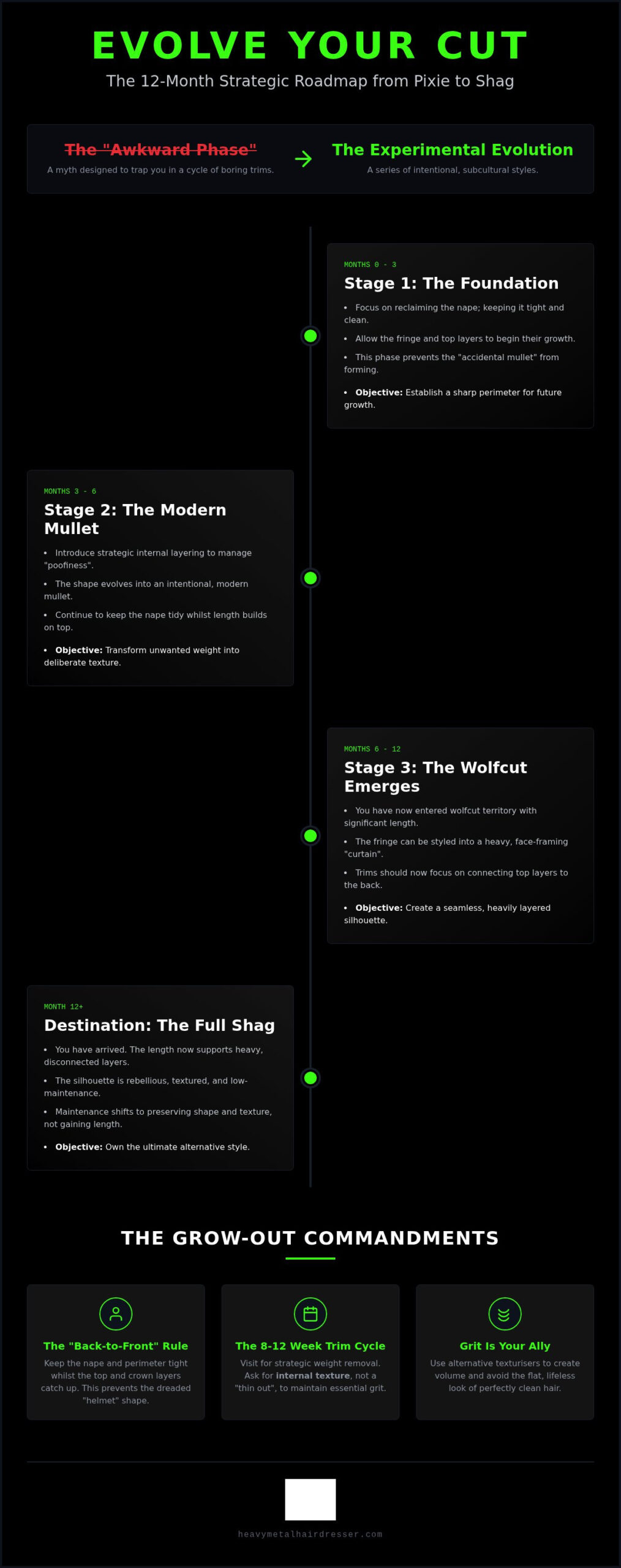
Expect a 6 to 12-month journey to reach your goal. The first three months are usually spent reclaiming the nape and letting the fringe grow. By month six, you are hitting wolfcut territory. If you want to bypass the long wait for natural growth, The Collective ATX provides specialised extension services that can add immediate length and density to your look. By the one-year mark, you have reached full shag status with enough length to support those heavy, face-framing layers.
Why the Shag is the Perfect ‘End Game’
In 2026, the shag remains the ultimate goal for alternative souls. It isn’t just a haircut; it’s a middle finger to the polished, “clean girl” aesthetic that dominates the mainstream. Looking at the history of the shag, you will see it has always been the uniform of rock legends and rebels who value grit over perfection. This style honours those 70s rock roots whilst feeling completely modern through aggressive, disconnected layers. It works for every texture. Curls get more bounce, and straight hair gets the movement it usually lacks. It is the lowest maintenance shape you’ll ever own because it’s designed to look better the messier it gets.
Understanding the ‘Awkward Phase’ Myth
Competitors often frame this transition as a period of “imprisonment” or a struggle to be endured. They are wrong. We reframe “awkward” as “experimental.” That weird length between your ears and jaw is a subcultural opportunity, not a mistake. You know your pixie is ready to evolve when the sides feel too wide and your fringe starts hitting your lashes. The transitional shag is an intentional hybrid where aggressive texture meets emerging length to create a look that is entirely your own.
Strategic Shaping: Why Trims Are Essential Whilst Growing Length
If you follow the generic advice to “just let it grow”, you will end up with a helmet. It’s that simple. Strategic trims are the only way to survive growing out a pixie cut into a shag without reaching for the clippers in frustration. The secret is the “Back-to-Front” rule. You must keep the nape and perimeter tight whilst the top and crown layers catch up. This prevents that accidental mushroom look that kills your confidence. We recommend visiting the salon every 8-12 weeks. This isn’t for a trim in the traditional sense. It’s a strategic weight removal session that prioritises the future shape over immediate length. You’re essentially clearing a path for the top layers to fall into.
When you sit in the chair, stop asking to have your hair “thinned out”. That’s old-school jargon that leads to frizzy, characterless ends that lack the necessary grit. Ask for “internal texture” or “channel cutting” instead. This technique removes bulk from the middle of the hair shaft, allowing the hair to collapse and move naturally. It creates the architecture you need for a rebellious silhouette. You might also want to look into specific styling products for pixie grow-out to help manage these shifting volumes and maintain a sense of control.
Step 1: The Nape Maintenance
Hair at the nape of your neck always seems to grow at double speed. Left unchecked, it creates a “business mullet” that looks accidental rather than edgy. We use a razor to keep these edges soft and lived-in. This allows the crown layers to drop down and eventually blend into the length without creating a harsh line. If you’re struggling with the silhouette, booking a professional Shag Haircut during this phase can redefine your shape without sacrificing your hard-earned progress. It’s about keeping the perimeter sharp whilst the interior evolves.
Step 2: Building the ‘Curtain’ Fringe
The fringe is your most powerful weapon during this transition. It defines the “shag” illusion even when the back is still short. Transition your pixie bangs into heavy, face-framing curtain layers as soon as the length allows. This creates an immediate wolfcut vibe that feels intentional. By blending the fringe into the sideburns, you bridge the gap between short hair and a textured shag. It’s the ultimate shortcut to looking like you have a finished style rather than a work in progress. A heavy fringe draws the eye up, masking the lack of length elsewhere.
Clean hair is the enemy of progress. When you are growing out a pixie cut into a shag, soft and silky strands are your biggest obstacle. They slip, they lay flat, and they reveal every uneven centimetre of growth. You need friction to turn a transitional length into a style. Salt sprays and dry texturisers are essential for creating that “mosh pit” volume that makes a messy grow-out look like a choice. Instead of hiding your hair under a hat, use grit to make it stand up and fight back.
Heat styling is your next tactical move. Forget the curling wand; it creates curls that are far too polished for this aesthetic. Use a flat iron to create “S” waves in your short layers. By rocking the iron back and forth as you move down the hair shaft, you create a jagged, lived-in texture that breaks up the roundness of a growing pixie. This technique adds width in the right places and gives your hair the movement it needs to transition into a wolfcut silhouette.
The ‘Death Grip’ Method for Short Layers
Maximum texture starts with a solid foundation. Apply Death Grip to damp hair to create a gritty, rebellious base before you even reach for the dryer. Once dry, use your fingers to “scrunch” and “pinch” the ends of your layers. This defines the piecey, alternative finish that is the hallmark of a true shag. You should focus on the crown for aggressive height to elongate your profile and counteract the widening sides. This height keeps the look edgy and prevents the hair from looking like a neglected bowl cut.
Managing ‘Poof’ and Volume
The “poof” stage is inevitable, but you can control it. Use Hair To the Throne to lift the roots whilst keeping the ends sharp and directed. If one side is growing faster or feeling wider, use the “tuck and pin” technique. Tucking one side behind the ear and securing it with a plain bobby pin creates an asymmetrical, edgy look that feels completely intentional. Embrace the frizz. In the world of alternative styling, frizz is just another word for texture. It adds to the rockstar aesthetic and gives your hair the “lived-in” soul that a fresh pixie lacks.
Stepping Stones: The Mullet and Wolfcut Evolution
Mainstream beauty magazines treat the mullet as a disaster to be hidden with headbands. They are stuck in 2015. In 2026, the modern mullet is the most tactical move you can make whilst growing out a pixie cut into a shag. It isn’t a failure of length; it’s a high-fashion pivot. By leaning into the mullet, you solve the biggest pain point of the grow-out: the awkward bulk behind the ears. Instead of fighting the fact that your nape is growing faster than your crown, you turn it into a deliberate silhouette that screams intention.
Tell your stylist you want a deliberate “Rock Mullet” rather than a generic trim. This means keeping the back length whilst aggressively texturising the sides and top. It creates a disconnected, edgy look that feels like a choice, not an accident. If you’re looking for specific inspiration on how to wear this, check out our guide on the Modern Mullet Haircut to see how we use grit to define the shape. Stylists often try to “blend” everything to make it look “neat”. You don’t want neat. You want disconnection that honours your subcultural roots.
The Power of the Modern Mullet
The 2026 Rock Mullet is defined by aggressive texture and sharp perimeters. It’s the perfect solution for those months when your hair feels too thick on the sides but too short for a full shag. By keeping the sides tight and the back long, you maintain an alternative edge that works in mosh pits and boardrooms alike. Use your Death Grip to keep the top piecey and elevated. This keeps the focus on the attitude of the cut rather than the specific length. It allows you to maintain your grit whilst the sides slowly catch up to the rest of the party.
Evolving into the Wolfcut
As your top layers finally reach your jawline, you are ready for the wolfcut. This is the ultimate “medium” length stepping stone. It blends the aggressive, short layers of a mullet with the shaggy, face-framing volume of a full shag. It’s a softer, more voluminous version of the grow-out that still retains that subcultural bite. For a deep dive into the technical side of this style, read The Ultimate Wolf Hair Cut Guide. It’s the perfect way to bridge the gap before your hair is long enough for a traditional shag silhouette. Ready to stop hiding and start evolving? Book your Wolfcuts session today and turn that awkward length into a masterpiece.
Final Shag Shaping and Long-Term Maintenance
The moment of arrival is unmistakable. After months of growing out a pixie cut into a shag, your hair finally has enough weight to swing and enough length to support heavy, disconnected layers. It is no longer a “growing out” style; it is a destination. Reaching this point doesn’t mean you stop visiting the salon. To keep a shag from looking like a dated relic or a shapeless mass, you must prioritise internal architecture over raw length. A true shag lives and dies by its layers. If you stop carving out the interior, the weight will drag the crown flat and turn your rebellious silhouette into a boring triangle.
Maintaining this look requires a stylist who understands that “length” is secondary to “vibe.” You need a safe space where your identity is celebrated, not just managed. Traditional salons might try to “smooth” your ends or “tidy” your layers. That is the quickest way to lose the alternative edge you have spent a year building. We focus on keeping the shape aggressive and the texture raw, ensuring your hair remains a reflection of your subcultural roots rather than a generic trend.
Maintaining the Texture
Your shag needs regular “dusting” to stay sharp. This isn’t a full haircut. It’s a precise session where we refresh the internal layers to ensure the hair continues to collapse and move. Without this, the ends become too heavy and the “mosh pit” volume disappears. You also need to rotate your products based on the weather and your hair’s mood. Use Death Grip when you want that aggressive, piecey grit for a gig. On days when you want a softer, lived-in feel, switch to lighter texturisers or Hair To the Throne for root lift. Keeping it “alt” is about intentional messiness. If it starts looking too round or “done,” it’s time for more internal weight removal.
Vivid Colour and the Shag
Vivids are the ultimate way to reclaim your identity during and after the grow-out. A shag is the best possible canvas for creative, high-pigment shades because the layers create natural depth and movement for the colour to play with. We love using face-framing vivids to highlight the aggressive texture around your eyes and cheekbones. It draws attention to the cut’s architecture rather than the length. If you are ready to fully saturate your look, explore our approach to Vivid Hair Colour. High-contrast panels or “skunk stripes” look incredible peeking through shaggy layers, giving you a look that is unapologetically bold and fiercely independent.
Own Your Evolution
The journey of growing out a pixie cut into a shag is more than just a wait for length; it is a tactical evolution of your identity. You have learned that the “awkward phase” is a choice, not a requirement. By keeping the nape tight and prioritising internal weight removal, you maintain a deliberate silhouette at every stage. Grit is your greatest ally. Using products like Death Grip ensures that your hair always has the subcultural edge it needs to stand out rather than laying flat and lifeless.
Stop hiding under hats and start leaning into the transition. Whether you are currently rocking a rock mullet or ready for a full wolfcut, your hair deserves expert hands that understand alternative aesthetics. We are specialists in aggressive texture and subcultural grit, providing a gender-inclusive safe space for all identities. Our award-winning creative styling ensures you never feel “trapped” by a shape you don’t want. Ready to transform your grow-out into a masterpiece? Book your alternative grow-out session at Heavy Metal Hairdresser. Every centimetre of growth is an opportunity to express who you are. Keep it messy, keep it loud, and keep growing.
Frequently Asked Questions
How long does it take to grow out a pixie cut into a shag?
It typically takes between 6 and 12 months to reach a full shag silhouette. The exact duration depends on your hair’s natural growth rate and starting length; if you are looking for ways to support your hair’s health and density, you can read more about the restoration solutions offered by The Hair Clinic. You will usually spend the first three months reclaiming the nape and fringe. By month six, you hit wolfcut territory. Staying consistent with internal weight removal ensures the journey feels like a style evolution rather than a boring wait for length.
Will my hair look like a mullet whilst growing it out?
It will likely resemble a mullet, but the secret is making it look intentional. Instead of an accidental “business mullet,” ask for a deliberate Rock Mullet. This involves keeping the nape length whilst texturising the sides. Emulating this stepping stone is the most tactical way of growing out a pixie cut into a shag. It turns a potential disaster into a high-fashion alternative statement that screams grit.
Can I grow out a pixie cut into a shag with curly hair?
Curly hair is the perfect canvas for a shag because it has built-in volume. The layers in a shag allow curls to stack and bounce rather than creating a flat, heavy shape. You will find that curls actually make the transition easier. They hide uneven lengths and provide the natural grit that straight hair often lacks. Focus on moisture and internal shaping to keep the curls defined and rebellious.
How often should I trim my hair whilst growing out a pixie?
Visit your stylist every 8 to 12 weeks for strategic shaping sessions. These aren’t traditional trims that sacrifice length. Instead, they focus on internal weight removal and keeping the nape tight. This prevents the “helmet” effect that often causes people to give up. Regular maintenance ensures your hair collapses in the right places whilst the crown layers catch up to the rest of your hard-earned length.
What are the best products for styling a transitional shag?
Death Grip and Hair To the Throne are the ultimate tools for maximum subcultural grit. Death Grip provides the rebellious, piecey texture needed to define short layers. Hair To the Throne offers the root lift required to keep the crown from looking flat. Avoid heavy oils or silicones that weigh the hair down. You want friction and volume to make the transition look intentional, edgy, and unapologetically loud.
How do I deal with the ‘awkward stage’ behind my ears?
Tuck the hair behind your ears or keep the nape perimeter sharp with a razor. The area behind the ears often feels the bulkiest during the grow-out. Use a bobby pin for an asymmetrical look or ask your stylist to carve out internal weight from the sides. This prevents the hair from expanding horizontally. It keeps your profile sleek whilst the top length slowly fills in to create your shag.
Can I get a wolfcut if my hair is still quite short?
Yes, a short wolfcut is the ideal intermediate style for alternative souls. You don’t need long hair to start the layering process. A wolfcut focuses on aggressive, disconnected layers at the crown and a heavy fringe. It bridges the gap between a pixie and a full shag perfectly. It gives you a finished, subcultural look even when you are still many months away from your final length goal.
Should I use a razor or scissors for a shag grow-out?
A razor is generally better for creating the lived-in, jagged texture that defines a shag. It allows the stylist to taper the ends so they don’t look “freshly cut” or blunt. Scissors are useful for structural trims, but the razor provides the movement and grit required for alternative styles. It helps the hair blend naturally as it grows, making the transition feel much smoother and more authentic.