What if getting back to bold starts with slowing down? Uneven, faded or unexpectedly dark vivid colour can make the next move feel risky, especially if you’re concerned about your hair’s condition. If you’re searching for a vivid hair colour correction specialist UK, you need a clear plan, not pressure to chase a quick fix.
Colour correction is creative work, but it needs a considered approach. The route forward depends on your current colour, its history, your hair’s condition and the look you want. Some changes may take more than one appointment. At Heavy Metal Hairdresser, creative stylist Simon Tuckwell provides vivid colour correction alongside alternative hair services, with an inclusive approach that makes room for individual style and expression.
This guide explains what vivid colour correction can involve, what to share before your appointment and why a gradual approach may make sense. It also covers the practical factors that shape a plan, so you can explore expressive colour with realistic expectations and your hair’s condition in mind.
Key Takeaways
- Colour correction can address uneven, faded or unexpected vivid results, with the approach tailored to your starting point.
- Your previous colour and hair history help shape a realistic route towards the look you want.
- A vivid hair colour correction specialist UK can help you understand whether your colour goal may need a staged approach.
- Bring your colour history, clear priorities and current photos taken in natural light to show your starting shade.
- Choose a colour goal that feels like you, and make hair condition part of the conversation from the start.
Vivid Hair Colour Correction: What It Can Fix and When to Seek a Specialist
You had one colour in mind, but the mirror shows something else: patchy sections, a shade that’s gone muddy, or vivid pigment clinging where you didn’t want it. That mismatch can feel frustrating, but adding another colour on top without a plan may not solve the underlying problem.
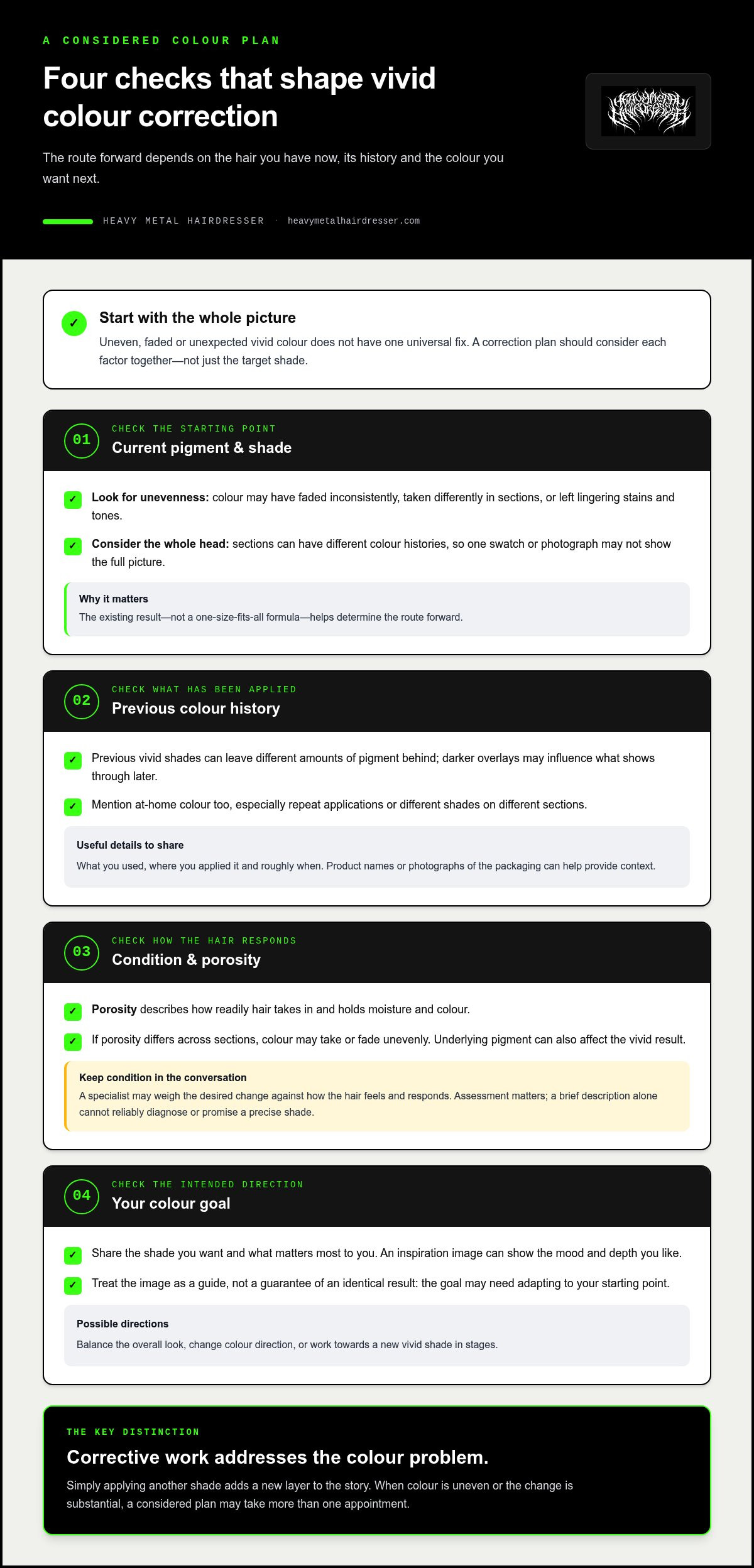
Vivid hair colour correction is a tailored process for addressing unwanted or uneven results and planning a more intentional direction. The approach depends on what’s on your hair now, what’s been applied before, how your hair is responding and the colour you want next. There isn’t one universal fix. Correction might mean balancing the overall look, changing the colour direction or working towards a new shade in stages.
Corrective colour work addresses a colour problem; applying another shade simply adds a new layer to the story. That distinction matters when existing colour is uneven or your goal involves a substantial change. For a useful foundation on how colour methods differ, see this overview of hair-colouring processes and types.
What counts as vivid hair colour correction?
Correction can involve addressing a bright colour that has faded inconsistently, sections that have taken differently, lingering stains or tones that don’t match the intended result. For example, you might want to even out a patchwork effect before choosing a fresh vivid shade. That’s different from starting with an agreed colour goal and simply applying it. The right route depends on the existing result, not a one-size-fits-all formula.
Colour can look different across the head because each section may have a different history. One area might have been coloured repeatedly, while another has less pigment. A useful assessment therefore looks at the overall picture, rather than making a snap judgement from one swatch or photograph.
When does vivid colour need specialist attention?
Persistent unevenness, unexpected tones that remain after washing, or a complicated mix of previous colours are good reasons to seek specialist input. Repeated home applications can make the starting point harder to read: the colour history may vary from section to section, and the visible shade won’t always tell the whole story. Sharing what you’ve used and when gives your stylist more context.
Bring the full story, even if it involves box colour, bold experiments or a shade you’d rather forget. There’s no judgement here. At Heavy Metal Hairdresser, vivid colour correction is part of the salon’s creative colour work, alongside alternative cuts and styling. Creative stylist Simon Tuckwell’s work with bands and artists informs an approach that makes space for individual expression. The plan takes account of both the look you want and the hair you have now.
Why Vivid Colour Correction Depends on Hair History and Starting Shade
A vivid shade doesn’t land on a blank canvas if your hair has been coloured before. Existing pigment, earlier applications and the condition of different sections all affect what can happen next. An inspiration photo is a useful guide, not a guarantee of an identical result. The colour needs to be planned around the hair in front of you.
The main factors shaping a correction plan are your current pigment, previous colour applications, hair condition and the result you’re aiming for. A vivid hair colour correction specialist UK considers those elements together, rather than choosing a formula based on the target shade alone. Even hair that looks like one consistent colour may have different layers of colour history underneath.
How previous colour changes the route forward
Previous vivid shades can leave different amounts of pigment behind, and darker overlays may influence what shows through a later colour. At-home colour matters too, particularly if you’ve applied it more than once or used different shades on different sections. Colour layered over colour can behave differently from hair that hasn’t been coloured, so the same approach won’t necessarily give the same result across the whole head.
Be candid about what you’ve used, where you applied it and roughly when. You don’t need a perfect record. A box colour, a quick experiment or an old shade you’d rather forget is useful information, not a reason for judgement. If you can, bring product names or photographs of the packaging. Leaving out a past application gives an incomplete picture; sharing what you know helps shape a more informed discussion.
Why hair condition and underlying pigment matter
Hair porosity describes how readily the hair takes in and holds moisture and colour. If different areas have different porosity, colour may take or fade unevenly. Underlying pigment matters too: a vivid result is affected by the colour already present beneath or within the hair, so a target shade may need adapting to the starting point. An image can show the mood and depth you like, while a specialist helps translate that inspiration into a plan for your current hair.
Hair condition is part of the planning, not a promise that every correction can happen without affecting it. A specialist may weigh the desired change against how the hair feels and responds, then discuss a more measured route if that better supports its condition. A precise shade can’t be reliably diagnosed or promised from a brief description alone. Assessment matters.
If colour safety is on your mind, the US FDA information on hair dye safety covers possible reactions and precautions. It’s background reading, not a substitute for advice about your individual colour history. Bring your inspiration and an honest account of past colour to give the conversation a stronger starting point. You can also explore Heavy Metal Hairdresser’s vivid colour work for creative inspiration.
Vivid Colour Correction Expectations: Staged Change Versus a Quick Fix
Wanting your chosen shade back now is understandable. But correction doesn’t always mean leaving with the exact target colour after one appointment. The route depends on your starting colour, what’s been done before, the hair’s condition and the change you want. A vivid hair colour correction specialist UK can help set out a direction that balances your goal with what your hair can reasonably manage.
A staged approach isn’t a failed result. It can mean making a useful first change, then reassessing before deciding on the next step. An interim colour might be more even, closer in tone or a better base for moving towards your chosen look. The plan should be tailored to you, rather than forced to match a photograph in one leap.
| Staged approach | Quick-fix expectation |
|---|---|
| Works towards the target in considered steps, with the hair’s response informing the next move. | Assumes the target shade can be reached immediately, whatever the starting point. |
| Can treat a realistic interim result as progress towards the bigger goal. | May overlook how existing colour or unevenness could affect the outcome. |
| Leaves room to adjust the direction as the colour and condition are assessed. | Focuses on the final shade before the route there is understood. |
Can vivid colour correction happen in one appointment?
Some changes may be achievable in one appointment; in other cases, the starting colour, previous processes and desired result call for a more gradual plan. There’s no reliable appointment count to promise from a shade description alone. Shifting a faded vivid tone is a different project from moving away from a deep, layered colour towards a much lighter one. Your stylist can explain the intended direction and what a realistic first result might look like.
Correction versus covering the colour with another shade
Adding a new vivid shade can be a valid creative choice, especially if it suits the colour already there. But simply layering colour over a problem may not resolve patchiness or unwanted tones underneath. Corrective work starts by identifying what needs changing, then shaping a route towards the goal. Covering the colour isn’t always wrong; it may simply answer a different brief.
Bring a clear idea of what matters most to you: a particular tone, more even colour or a gradual move towards a bigger transformation. That gives the plan a useful anchor without locking you into an unrealistic instant result. If you’re still exploring your next bold direction, the vivid hair colour guide can help you find inspiration to discuss.
How to Prepare for a Vivid Hair Colour Correction Appointment
A little preparation can make the colour conversation clearer and more useful. You don’t need a perfect timeline or the right technical vocabulary. Bring what you know, show what you’re aiming for and explain what you’d like to change. That gives your stylist a clearer picture of both the starting point and the goal.
What to bring and explain before colour correction
Gather current photos that show your hair in natural light. Take a few angles if you can, and avoid filters or coloured lighting that could shift how the shade appears. Add a small selection of inspiration images that feel achievable, rather than relying on one heavily edited reference. Note previous vivid shades, darker dyes, home applications and recent colour changes. There’s no need to feel embarrassed about experiments; honest details help shape a more informed discussion.
Use this simple sequence to get ready:
- Record your colour history. List the shades and applications you remember, including home dyes. If you’re unsure of dates or products, say so rather than guessing.
- Take current photos. Photograph your hair in natural light so the existing shade and any differences between sections are easier to discuss.
- Choose a few references. Pick images that show the colour, depth or placement you’re drawn to. A reference communicates direction, not a guaranteed copy.
- Name your priority. Decide whether you most want to address unwanted tones, make the colour look more even or move towards a different vivid shade.
- Share your no-go list. Explain what you want to avoid, such as a particular tone, an all-over application or losing contrast. Your preferences matter.
How to set a clear, flexible colour goal
Describe the feeling and placement you want as well as the shade. For example, you might prefer a saturated look across the whole head or bold colour concentrated in particular sections. If placement is part of your vision, this alternative hair styles guide can help you put that visual direction into words. Keep the goal flexible: the reference is a starting point for a conversation about what suits your current colour.
Preparation is about helping your stylist understand your colour history and priorities, not trying to fix the result at home before the appointment. Ongoing vivid-colour maintenance is a separate topic; for this conversation, focus on what’s on your hair now and what you hope to change. Heavy Metal Hairdresser brings individual goals and colour stories into its vivid colour work without judgement.
Ready to bring your colour history and ideas into the conversation? Explore vivid colour with Heavy Metal Hairdresser.
A Vivid Hair Colour Correction Specialist for Bold, Individual Colour
Colour correction isn’t just about changing what’s on your hair. It’s about finding a way forward that respects your colour history, your hair’s current condition and the look you want to express. At Heavy Metal Hairdresser, vivid colour correction and creative styling are part of an inclusive alternative salon where individuality comes first.
Creative colour work without the judgement
Unconventional shades, past experiments and complicated colour histories are welcome in the conversation. This is a gender-inclusive space where personal style is celebrated, not squeezed into a standard template. You don’t need to arrive with a perfect explanation or apologise for a colour choice that didn’t go to plan. Be honest about what’s happened and clear about what you want next. That gives the colour discussion a useful place to begin.
Founded and operated by barber and creative stylist Simon Tuckwell, Heavy Metal Hairdresser brings an alternative perspective to expressive hair. Simon’s creative work includes backstage styling at Download and Bloodstock, as well as work with bands and artists. That experience sits naturally alongside vivid colour, where individuality and intention matter as much as the shade itself. Every colour goal has its own starting point and route.
Take the next step towards your colour reset
A considered plan starts with the details that make your hair yours: its colour history, its condition now and the direction you want to take. Those factors help shape a realistic path, whether your aim is to rebalance a colour or move towards a different vivid look. A reference image can help communicate the mood you’re after, while an open discussion leaves room to shape the idea around your starting point.
If you’re exploring a new direction as well as a colour reset, Heavy Metal Hairdresser’s professional vivid hair colour offers inspiration for bold, expressive looks. Bring your ideas, your colour story and the result you want to work towards. The conversation can start with what feels like you.
Ready to explore your next colour direction? Take the next step towards your colour reset with Heavy Metal Hairdresser, and make space for colour that reflects your individuality.
Make Your Next Colour Move Your Own
Your next colour doesn’t have to follow anyone else’s rules. Maybe you’re ready to return to a familiar vivid shade, or perhaps this reset is your chance to push into a completely new direction. You don’t need every detail mapped out before you begin. A clear sense of what feels like you is enough to start a useful creative conversation.
Working with a vivid hair colour correction specialist UK can help turn that intention into a considered direction, shaped around your hair and your personal style. Bring your curiosity, your references and the colour you’re excited to explore. There’s room for bold ideas, honest discussion and a look that feels individual rather than copied.
Explore vivid colour work at Heavy Metal Hairdresser and take the next step towards colour that speaks in your own voice. Your next chapter can be every bit as vivid as you are.
Frequently Asked Questions
Is vivid hair colour correction possible after using box dye?
Yes, correction may be possible after box dye, but the dye can affect what options are realistic and how the colour behaves. Tell your specialist the brand or shade if you know it, how often you’ve applied it and roughly when. If you can’t remember every detail, say so. Avoid adding another home colour before your appointment; it changes the canvas and makes your colour history harder to interpret.
Can a hair colour correction specialist fix uneven vivid colour?
A specialist can assess uneven vivid colour and plan an approach for your particular starting point. The result depends on existing pigment, previous applications and hair condition, so there isn’t one treatment that suits every case. A vivid hair colour correction specialist UK can discuss whether the aim is to soften the contrast, balance sections or work towards a new shade. Some patterns may need a gradual approach rather than a single change.
How many appointments can vivid hair colour correction take?
There’s no fixed appointment count for vivid colour correction. The number depends on your starting shade, colour history and target, including how large a change you want. A shift between similar tones may have a different route from moving away from a deep, layered colour. If a staged plan is recommended, ask what each step is intended to achieve. A considered pace is more useful than a promised timeline that ignores your hair.
What happens if vivid hair colour fades unevenly?
Different areas can fade at different rates, especially if they have been coloured or treated differently. Take clear photographs of the current result in daylight, including the sides and back if possible, so the pattern is easier to discuss. Try not to cover the faded areas impulsively with another shade, as this adds more colour history. A specialist can assess the variation and discuss a suitable direction without promising identical colour everywhere.
Can I go from dark hair to vivid colour in one appointment?
It depends on your current shade, the vivid colour you want and whether previous colour is present. A change from a lighter base to a bold tone is a different starting point from moving from dark, previously coloured hair to a bright result. Some transformations may need to happen gradually. An individual plan can set a realistic first step without treating a one-appointment makeover as guaranteed.
Should I remove vivid hair dye at home before seeing a specialist?
It’s generally better to avoid trying colour removal at home before your appointment. A removal product can change the starting point, and the outcome may be harder to assess if more than one process has been used. Make a note of any products or methods you’ve already tried, even if the result was disappointing. Arriving with the colour as it is gives your specialist a clearer picture to discuss.
Can a vivid colour correction specialist work with an unusual colour goal?
Yes, an unusual colour goal can be part of the discussion. Bring a clear reference and explain what draws you to it, such as the tone, placement or overall feel. Also share what you’d rather avoid. Your current colour and hair condition will help shape the route, so an image is inspiration rather than a promise of an exact copy. Bold self-expression belongs in the conversation.