
Posted on

Styling a Mullet as It Grows: Keep the Shape, Lose the Awkward Stage

Styling a Mullet as It Grows: Keep the Shape, Lose the Awkward Stage

What if the awkward stage isn’t a bad haircut, but a shape that hasn’t caught up with your growth? Styling a mullet as it grows means working with the changing layers, not fighting them. One month, the fringe behaves; the next, the sides kick out and the back feels like it belongs to another cut. That doesn’t mean your mullet’s lost its edge.

Different sections can sit and behave differently as they gain length, and a few practical tweaks can help the whole look feel intentional. Adjust the direction and finish to suit your current layers, and pay attention to how your hair settles as it dries. The aim isn’t to force every mullet into the same shape. It’s to keep yours feeling like you.

Here’s what to adjust as your layers shift, how to tell when styling is enough, and when a reshaping trim could bring the cut back into balance. You don’t have to surrender to the in-between stage. Give your mullet room to evolve while keeping the attitude intact.

Key Takeaways

  • Learn how dampness, sectioning and styling direction can shift your mullet’s shape at different lengths.
  • Build a simple at-home routine that you can adapt to your hair’s texture and changing layers.
  • See where styling a mullet as it grows can help, and where it can’t correct an imbalance on its own.
  • Know what a stylist can assess during a shape reset, from weight and texture to your preferred silhouette.
  • Use reference photos to show both your current cut and the direction you want it to take.

Why styling a mullet as it grows means working with the changing shape

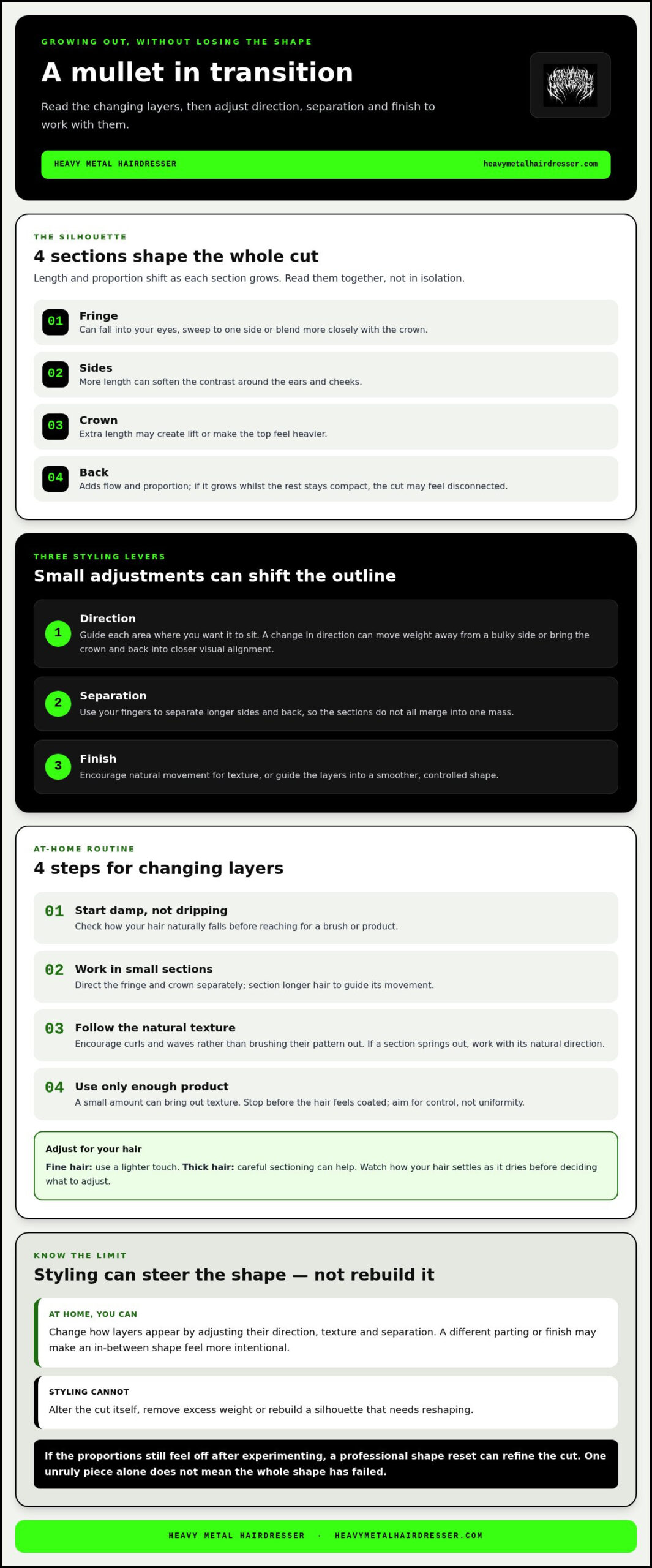
A mullet isn’t one length. Its identity comes from the relationship between the fringe, sides, crown and back. As each section gains length, that balance shifts. The outline that felt sharp after a cut can become softer, heavier or more tousled without the haircut having gone wrong.

A growing mullet is a cut in transition: its fringe, sides, crown and back change in length and proportion, altering the silhouette and movement. The classic contrast between shorter sections and a longer back has plenty of variations, as the history of the mullet haircut shows. There’s no single correct shape to preserve. Your version can evolve with you.

Hair doesn’t necessarily grow at dramatically different rates in different areas. The layers start at different lengths and sit differently as they extend. Texture, density, natural growth patterns and the original cut all affect how that change looks. Styling can steer the shape and bring out its movement, but it can’t remove excess weight or rebuild a silhouette that needs reshaping.

Which parts of a mullet change the look as they grow?

The fringe sets the face-framing outline. As it lengthens, it may fall into your eyes, sweep to one side or blend more closely with the crown. Longer sides can soften the contrast around the ears and cheeks, while thicker or outward-growing sections may obscure it. Extra length at the crown can create lift or make the top feel heavier. The back adds flow and proportion, but if it gains length while the rest stays compact, the cut may feel disconnected. Read the sections together, not in isolation.

What should a mullet look like between growth stages?

Judge the whole silhouette from the front, sides and back. One unruly piece doesn’t automatically mean the shape has failed. Check whether the fringe, sides and back still feel connected, and whether the overall movement suits the look you want. Your hair’s texture and density matter: waves may spread as they dry, curls can spring up, and finer hair may sit closer to the head. The same length can create a different outline on different people.

That’s where styling a mullet as it grows earns its keep. Small changes to direction, separation and finish can make an in-between shape look deliberate. If the proportions still feel off after experimenting, a professional shape reset can refine the cut in a way daily styling alone can’t.

How to style a mullet as it grows through each length stage

Let the current length set the plan. A growing mullet doesn’t need the same finish at every stage, and you don’t have to force it into the shape it had after the cut. Start with hair that’s damp, not dripping, then check how it naturally falls before reaching for a brush or styling product. Small shifts in direction can change the silhouette more than adding extra hold.

To style changing layers without weighing them down, start with damp hair, work in small sections, direct each area where you want it to sit, and use only enough product to support its natural texture. Fine hair may need a lighter touch; thick hair can benefit from careful sectioning. For curls and waves, encourage their pattern rather than brushing it out.

Styling shorter layers while the mullet settles

With shorter fringe and crown layers, use your fingers or a brush to guide the hair away from your eyes and towards the shape you want. Shape the roots to help lift the crown, or smooth the fringe to one side for a more deliberate outline. Add a small amount of a suitable styling product to bring out texture, then stop before the hair feels coated. The goal is control, not uniformity.

As the layers lengthen into the in-between stage, they may fall differently from one wash to the next. Try directing the fringe and crown separately, then let them settle before deciding whether anything needs adjusting. If a section keeps springing out, work with its natural direction instead of repeatedly pressing it flat.

Working with longer sides and back length

Longer sections can merge into one mass if they’re all pushed the same way. Separate the sides and back with your fingers while the hair is damp, then decide where you want movement and where you want a smoother line. For a textured finish, let the layers separate naturally as they dry. For a sleeker shape, guide them into place with a brush and keep the finish controlled rather than stiff.

Parting can shift the balance, too. A change in direction may move weight away from a side that feels bulky or bring the crown and back into closer visual alignment. Check the shape from the front and sides, not just straight on in the mirror. For ideas on cuts that work with your texture and silhouette, explore mullet and textured haircut inspiration.

There’s no single stage-by-stage formula. Watch how your hair behaves as it dries, adjust the direction of each section and keep the movement that makes your mullet yours.

Can styling a mullet as it grows prevent an awkward stage?

Styling can make a changing mullet look more intentional, but it can’t correct every imbalance. Redirecting the fringe, separating layers or adding texture may improve the outline for now. Styling products can’t alter the cut itself or remove weight that’s making the shape feel bulky.

An awkward phase doesn’t automatically call for a dramatic chop. Sometimes a small change in parting or finish is enough; sometimes the cut needs a considered reshape. The right move depends on what’s bothering you and where you want your mullet to go.

What styling can change, and what it cannot

At home, you can change the appearance of your layers by adjusting their direction, texture and separation. A fringe swept aside may feel less disruptive, while defined sections can help the sides and back read as part of one silhouette. These are visual adjustments, not a new haircut. Results also vary with your hair’s texture, density and length, so a technique that works for one mullet may not suit another.

Approach Pros Limits
At-home styling Quickly adjusts direction, texture and separation without changing the cut. Can’t remove unwanted weight or reliably correct persistent imbalance.
Professional reshaping Can refine the balance, weight and texture to suit your preferred silhouette. Changes the cut, so discuss how much length you want to keep.

Signs the shape needs more than a styling tweak

Look for a pattern, not one rogue strand. If the same section consistently sits outside the silhouette you’re aiming for, or heavy ends make the shape feel weighed down, styling may only disguise the issue. Pay attention if getting your fringe, sides and back to sit together is becoming a daily battle. That’s useful information about the cut, not a sign you’ve failed.

A shape reset doesn’t have to mean starting over. A stylist experienced with mullets and textured cuts can assess what’s happening and refine the outline around your preferred look. Be clear about the length you want to keep and the direction you’d like the cut to take. Styling a mullet as it grows can help you ride out change, but a targeted trim is a way to guide that change, not abandon it.
Styling a Mullet as It Grows: Keep the Shape, Lose the Awkward Stage

Simple routine for styling a growing mullet at home

A repeatable routine makes the changing shape easier to read. Start with clean hair, then choose your finish: towel-dried hair gives you a softer, less controlled result, while damp hair is easier to direct before styling. Curly or coily hair may respond best to working with its natural pattern; straight or wavy hair can take more brushing or finger-shaping to create movement.

The wash-day and styling sequence

  • Prepare: Gently squeeze out excess water. If you’re using heat, apply heat protection before drying.
  • Find the trouble spot: Start with the area that needs the most direction, such as a fringe falling forward or a crown that won’t lift.
  • Work in sections: Guide the fringe, crown, sides and back separately with your fingers or a brush. Direct each section where you want it to sit, rather than styling the whole cut as one block.
  • Add a light finish: Use a small amount of a suitable styling product, spreading it through your hands before applying. Add more only if needed. Too much can flatten fine hair or make longer layers clump together.
  • Check the shape: Once dry, look at the mullet from the front, side and back. Adjust only the sections that interrupt the silhouette.

Adjusting technique for texture and daily wear

For a softer, natural finish, use your fingers to encourage the hair’s own movement and keep product minimal. For more definition, separate small sections and apply a little styling cream or paste where you want extra control. Fine, straight hair may need less product; thicker hair may need more deliberate sectioning. Curly hair often benefits from moisture and definition, rather than techniques that disrupt the curl pattern. Let your texture lead.

You don’t need to restart the whole routine between washes. Dampen and reshape just the fringe, crown or ends that have lost their direction. Notice what works in different weather or on busy days; your best routine is the one you can repeat and that keeps your shape feeling like yours.

Quick troubleshooting

  • Flat roots: Lift the roots with your fingers or a brush as you dry, focusing on the crown.
  • Bulky sides: Direct the sides closer to the head, or try a different parting to shift the balance.
  • Unruly ends: Smooth or separate just the ends with a small amount of product, then check how they fall once dry.

For help deciding how your mullet’s shape can evolve, explore personalised mullet styling advice.

When a growing mullet needs a professional shape reset

Sometimes the issue isn’t how you style your mullet. It’s how the cut is sitting now. If the ends feel heavy, the layers no longer connect, or one area keeps breaking away from the silhouette you want, a stylist can assess the balance, weight and texture, then shape the next stage around your preferred look. A reset doesn’t have to erase your mullet or take off all the length. It can be a considered adjustment that makes the cut easier to wear as it grows.

For more context on how shape and texture can work together, explore this modern mullet haircut guide. You can also browse the modern mullet styling guide for ideas to help explain the finish you’re aiming for.

What to bring to a mullet reshaping appointment

Make the conversation specific. Bring reference images that show the front, profile and back, including a photo of your current cut and examples of the direction you’d like it to take. Pictures help show details that words like “shaggy” or “more balanced” can leave open to interpretation.

Talk about your real routine, too. Explain how you usually wear your hair, whether you style it daily and what feels difficult to manage. Be honest about how much length you want to keep. That gives your stylist a clearer starting point for discussing what can be refined without losing the parts of the mullet you love.

If you’re unsure what to ask for, use the images as a starting point, not a rigid blueprint. A shape should work with your own texture and habits, not just look right in a photograph. Your stylist can help translate the references into an approach that suits the hair you have now.

Keep the cut evolving with your identity

There isn’t one correct mullet to grow towards. Layers can be adapted to work with your natural texture, the proportions you like and the way you want to express yourself. Heavy Metal Hairdresser specialises in mullets and alternative textured cuts, shaping each look around the individual rather than forcing everyone into the same silhouette.

Styling a mullet as it grows can keep it workable between cuts, while a thoughtful reshape can guide where it goes next. For more ideas on how a mullet can evolve with you, explore Heavy Metal Hairdresser.

Keep your mullet moving in the right direction

Styling a mullet as it grows is about adapting, not forcing it to stay frozen in one shape. Direct shorter layers where you want them, work with your natural texture and use a light hand so movement stays alive. If styling stops making the silhouette feel balanced, a thoughtful reshape can guide the next stage without wiping out the cut you’ve been growing.

Every mullet should reflect the person wearing it. Heavy Metal Hairdresser specialises in mullets, wolfcuts, shags and alternative textured cuts, with an individual approach shaped by founder Simon Tuckwell’s experience as a barber and creative stylist. The salon’s work has also gained international recognition through social media and backstage festival work.

Ready to keep your shape evolving on your terms? Explore Heavy Metal Hairdresser and keep your mullet evolving. Your in-between stage isn’t a dead end. It’s part of the look taking shape.

Frequently Asked Questions

How do you style a mullet while it is growing out?

Style each section according to how it falls, rather than trying to force the whole cut into one shape. Start with damp or towel-dried hair, direct the fringe and crown with your fingers or a brush, then separate the sides and back. Use a small amount of product to support the finish you want. Styling a mullet as it grows is about working with its changing proportions and natural texture.

How often should you trim a mullet as it grows?

There’s no fixed schedule, as it depends on your preferred shape, texture and how quickly the cut feels out of balance. As a general guide, a trim every 6 to 8 weeks can help keep a growing mullet intentional without taking it back to its original length. Tell your stylist what you’re growing towards and how much length you want to keep, so any reshape supports that goal.

Can you grow a mullet without cutting it?

Yes, you can leave it untrimmed and allow all sections to gain length. The trade-off is that the fringe, sides, crown and back may become harder to balance as they change. Styling can help direct the hair, but it can’t remove weight or reshape the underlying cut. If you’re happy to let the silhouette evolve freely, keep growing; if not, a light shape adjustment is an option.

What should you do when the sides of a mullet get bulky?

Try directing the sides closer to your head while the hair is damp, or change your parting to shift where the weight sits. Use only a little product, since too much can make the area feel heavier. If the sides repeatedly push out or obscure the outline you want, styling may only disguise the bulk. A stylist can assess whether a targeted reshape would bring the silhouette back into balance.

Can you style a mullet with naturally curly or wavy hair?

Absolutely. Work with your natural pattern instead of brushing it into a finish that won’t last. For waves, guide sections with your fingers and let them settle; for curls, use a moisturising styling product suited to your hair and avoid disrupting the curl pattern as it dries. The same mullet can look different across textures, so adjust your technique to the movement and volume your hair naturally creates.

How can you make a growing mullet look less awkward?

Focus on the whole outline, not one section that’s misbehaving. Direct the fringe away from your face, separate layers that have fallen together and adjust the parting or direction to rebalance the shape. A small amount of product can add control without stiffening the hair. If the proportions still feel disconnected after styling, you don’t necessarily need a dramatic cut; a considered reshape may be enough.

When should you see a stylist about a growing mullet?

Consider a professional reshape if the ends feel heavy, sections persistently sit outside your preferred silhouette, or styling becomes increasingly difficult. Bring photos of your current cut and the direction you want, and be clear about the length you’d like to keep. Heavy Metal Hairdresser specialises in mullets and alternative textured cuts, shaping looks around individual style and natural texture rather than one fixed template.

Posted on

How to Style a Mullet for Work: Balancing Professionalism and Subcultural Grit

How to Style a Mullet for Work: Balancing Professionalism and Subcultural Grit

Your mullet isn’t a career-ender. It’s your professional edge hidden in plain sight. You’ve likely felt that familiar gut-punch of anxiety before a big meeting, wondering if your manager sees a liability instead of a leader. It’s exhausting to feel like you have to choose between your subcultural identity and your professional reputation. Mastering how to style a mullet for work is about proving that you can be both a rebel and a high-performer whilst making zero apologies.

You don’t need to hack off your length or cave to boring, clinical standards. You can maintain your grit and your paycheck at the same time. This guide will teach you how to transform raw, alternative texture into a controlled, workplace-ready masterpiece. We’ll explore how to use matte products like Death Grip to avoid that greasy look, ways to keep hair out of your face during shifts, and quick routines for those brutal early starts. It’s time to own a corporate-ready silhouette that still feels unapologetically you.

Key Takeaways

  • Learn how the 2026 workplace shift towards individuality makes your alternative silhouette a professional asset rather than a liability.
  • Master how to style a mullet for work in under ten minutes using a routine that balances subcultural grit with a polished, office-ready finish.
  • Discover how to use high-performance products like Death Grip to create controlled texture that looks intentional and sharp throughout your shift.
  • Identify which specific mullet archetype best suits your industry dress code to maintain your identity whilst commanding respect in meetings.
  • Understand why frequent precision trims are the non-negotiable secret to keeping your corporate mullet looking expensive and well-maintained.

The Rise of the Corporate Mullet: Redefining Workplace Professionalism in 2026

The UK workplace is undergoing a radical aesthetic shift. The era of the anonymous, grey-suit-and-short-back-and-sides professional is dead. By 2026, individuality isn’t just tolerated; it’s celebrated as a mark of creative leadership. The history of the mullet is rooted in subcultural defiance, but it has evolved into a powerful tool for personal branding. In creative hubs and high-rise offices alike, alternative hair is the new business card. It signals that you’re an innovator who isn’t afraid to challenge the status quo.

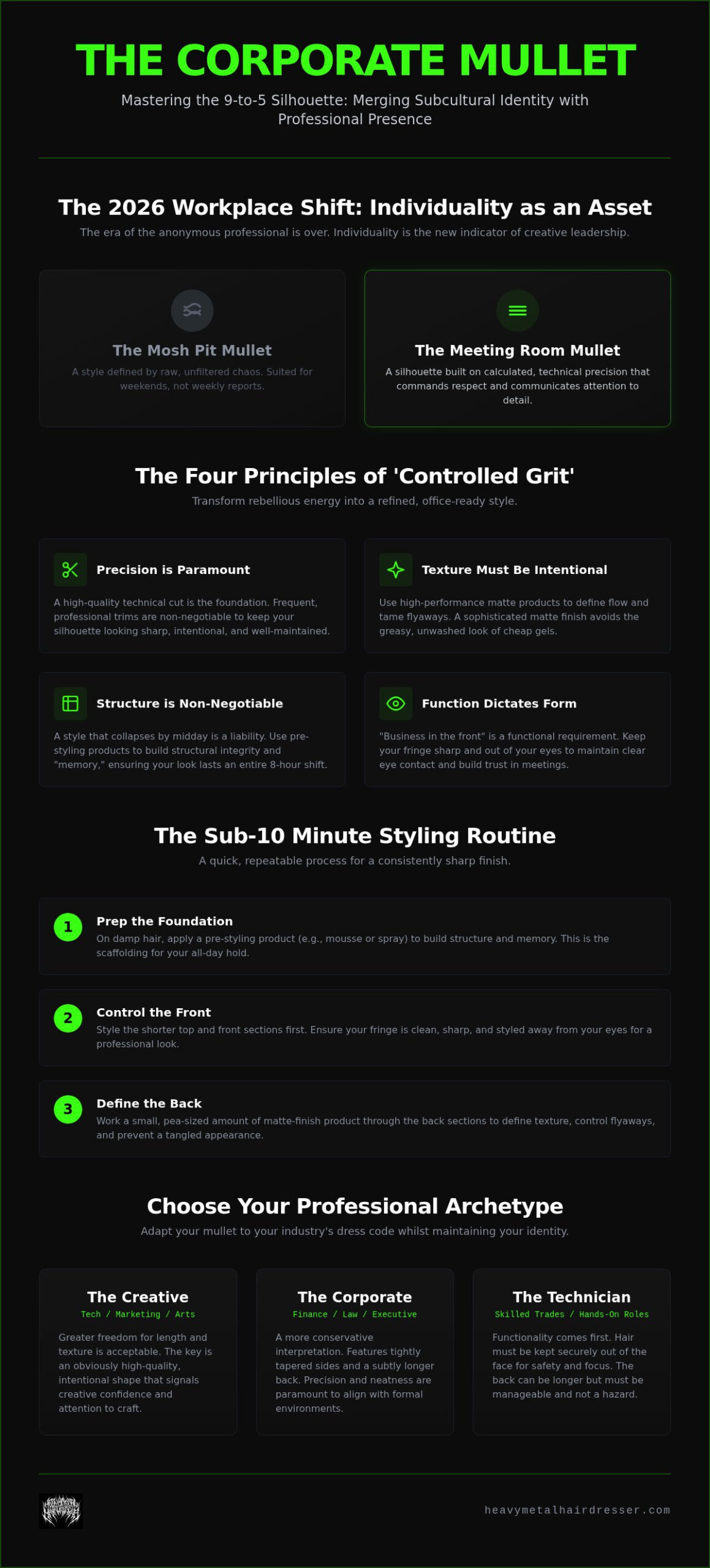
We’ve moved past the idea that “professional” equals “boring.” A modern mullet is a versatile, gender-neutral choice that works across all sectors. However, there’s a clear distinction between a mosh pit mullet and a meeting room mullet. One is about raw, unfiltered chaos; the other is about calculated, technical precision. Mastering how to style a mullet for work means taking that rebellious energy and refining it into a silhouette that commands respect. It’s about proving that grit and professionalism aren’t mutually exclusive.

Breaking the Traditional Beauty Jargon

The word “tidy” has been used for decades to suppress alternative identities. We’re reclaiming it. To us, tidy doesn’t mean a mainstream fade. It means a sharp silhouette, clean tapers, and intentional texture. You can maintain your subcultural grit whilst keeping your look tight and office-appropriate. If you’re worried about HR, focus on the details. High-quality products like Death Grip can transform a wild mane into a structured masterpiece. When you show up with a well-maintained, technically sound cut, you communicate that your attention to detail is absolute.

The Psychology of the Alternative Professional

Confidence is your most valuable asset in any meeting. That confidence is built on alignment. When your outward appearance reflects your true identity, you stop wasting energy on “masking” and start focusing on your work. A well-styled mullet often serves as a high-impact conversation starter in networking circles. It filters the room, attracting collaborators who value authenticity. This is why visiting a safe space salon is non-negotiable. You need a stylist who understands the nuances of the scene and can help you craft a professional look that still feels like home. Your hair is an extension of your authority; wear it with pride.

Controlled Grit: Managing Texture Without Looking Unkempt

Professional texture is intentional. Dirty hair is an accident. There’s a massive difference between the raw chaos of a weekend gig and the structured energy required for the office. When you’re figuring out how to style a mullet for work, you have to master the art of controlled grit. It’s about looking like you meant every single strand to be exactly where it is. This starts with a precision technical cut. If the layers aren’t balanced, no amount of product will save you from looking unkempt.

The “business in the front” isn’t just a cliché; it’s a functional requirement. Clear eye contact is essential for building trust in meetings or maintaining focus during manual shifts. Your fringe should be sharp and kept out of your eyes. Use high-performance products to ensure your silhouette remains consistent from the morning commute to the final sign-off. If you want to keep your edge without losing your credibility, you need a routine that prioritises shape over sheer volume.

The Power of Death Grip for All-Day Hold

Flyaways are the enemy of a sharp professional image. They make a deliberate style look like a mistake. Death Grip is our solution for taming those stubborn strands without sacrificing the soul of your cut. It provides a sophisticated matte finish. This is vital. Most supermarket gels leave a greasy, wet-look residue that screams “unwashed.” Instead, apply a small amount to the back of your mullet to define the flow. It keeps the “party” section from becoming a tangled mess whilst you navigate your day. It’s about having a style that moves with you but never loses its way.

Hair To the Throne: Building the Perfect Foundation

A style that collapses by midday is a liability. To avoid the dreaded lunchtime flat-hair look, you need to build structural integrity from the start. Hair To the Throne acts as the scaffolding for your identity. It’s a pre-styling essential that creates “memory” in the hair. This prevents the weight of the longer back sections from pulling the style flat. By prepping your hair properly, you ensure your mullet lasts through an 8-hour shift and beyond. If you’re ready to upgrade your foundation, consider booking in for a modern mullet haircut to get the technical base right.

Styling Archetypes: Choosing Your Professional Mullet Silhouette

Forget the advice that tells you to hide your hair in a bun. That is a compromise you don’t have to make. A mullet is a statement of intent, not a mistake to be covered up. The secret lies in choosing a silhouette that aligns with your specific industry whilst keeping your identity intact. Adapting a modern mullet haircut for high-stakes environments requires a delicate balance between the volume on top and the length at the back. If the top is too flat, the back looks accidental. If the back is too wild, the top looks unfinished. Harmony is what signals professional grooming.

The role of ear-tucking cannot be overstated. It provides an instant “neat” appearance that satisfies even the strictest grooming policies. By clearing the hair away from your temples, you create a structured frame for your face. This simple move transforms a shaggy, alternative cut into a sharp, intentional style that works in any professional setting.

The Slicked-Back Executive

This is your power move for formal presentations or high-pressure meetings. It is a streamlined, high-impact look that demands authority. Use a wide-tooth comb and a firm texture paste to direct the hair away from the face. By keeping the back sections close to the neck rather than letting them flare out, you create a more conservative profile from the front. It is aggressive, sharp, and perfectly suited for boardrooms where you need to look like the most capable person in the room.

The Ear-Tucked Minimalist

For retail or standard office environments, the ear-tuck is a total game-changer. It is the fastest way to master how to style a mullet for work whilst maintaining a clean appearance. Tucking the sides behind your ears instantly opens up your face and removes the “messy” perception. Pair this with a precision-trimmed fringe. A sharp line across the forehead signals that your hair is a deliberate choice, not a lack of maintenance. It looks organised, intentional, and undeniably cool.

The Low-Tension Flow

Creative studios and tech offices usually allow for more natural movement. Here, you can embrace your texture without looking like you just rolled out of bed. Using how to style a modern mullet techniques, apply a light sea salt spray or matte clay to damp hair. This creates a “lived-in” vibe that stays controlled. The goal is to avoid frizz whilst allowing the length in the back to have some life. It is a relaxed approach for those who value authentic self-expression above all else.

How to Style a Mullet for Work: Balancing Professionalism and Subcultural Grit

Step-by-Step: How to Style Your Mullet for a 9-to-5 Shift

Early starts are brutal. You don’t have time for a full wash and a forty-minute styling session every morning. Mastering how to style a mullet for work is about efficiency. You need a routine that takes you from bed head to boardroom in under ten minutes. Grab your blow-dryer, a wide-tooth comb, and your texture kit. This isn’t about perfection. It’s about creating a controlled, symmetric silhouette that stays sharp until the final whistle.

Bed head is the enemy of the alternative professional. If you wake up with your fringe pointing in three different directions, don’t panic. You don’t need a full reset. A spray bottle and the right technique will kill those stubborn cowlicks and get your growth pattern back under control. Follow this rhythm to ensure your style looks expensive and intentional every single day.

The Morning Prep: From Chaos to Control

Start by dampening your fringe and the sides of your head. You only need enough moisture to reset the hair’s memory. Once damp, distribute a small amount of Hair To the Throne through the mid-lengths. This provides the structural integrity needed to prevent your style from collapsing by lunchtime. It acts as a primer, ensuring your hair responds to the heat and stays where you put it.

Next, use your blow-dryer on a medium heat setting. Direct the top of your mullet forward towards your face. Use your fingers or a wide-tooth comb to create volume at the roots. Simultaneously, direct the sides back towards your ears. This creates that classic high-contrast mullet shape. It looks technically sound and signals that your hair is a deliberate choice. If you’re finding it hard to maintain this shape, you might need a professional refresh. Book a modern mullet haircut to get your technical foundation back on track.

The Finish: Adding the Professional Edge

The final steps are where you lock in your professional image. Warm a pea-sized amount of Death Grip in your palms. Rub your hands together until the product is clear; friction is what activates the hold. Piece out your fringe with your fingertips. You want a sharp, deliberate look that keeps your eyes visible. This is the difference between a “meeting room” mullet and a “mosh pit” mess.

Finally, lightly skim your hands over the back of your mullet. You aren’t trying to flatten it. You’re just reducing surface “fuzz” whilst maintaining the natural flow and length. Check your reflection for symmetry. If the silhouette is balanced and the texture is matte, you’re ready to own your shift. It’s a fast, high-impact routine that proves you can maintain your grit whilst respecting the clock.

Keeping it Sharp: Maintenance and Professional Shape-Ups

A professional mullet is a high-maintenance asset. If you let it grow wild for three months, you lose the sharp silhouette that makes it work in a boardroom. Frequent trims are the secret. They keep the transition between the short sides and the long back looking intentional rather than accidental. When you know how to style a mullet for work, you realise that the styling products only do half the job. The other half is the technical shape. Never attempt a DIY bathroom trim. It’s the fastest way to ruin your professional reputation. Mastering how to style a mullet for work is a long-term commitment to precision grooming.

Communicating with your stylist is vital. Ask for work-friendly alternative shapes. This usually means keeping the temples tight and the fringe precise whilst allowing for length in the back. You can even integrate vivid hair colour into your look. High-pigment shades like deep emerald, midnight violet, or muted charcoal can look incredibly sophisticated if the cut is technically sound. It’s about saturating your identity whilst maintaining a sharp, clean frame that passes any HR inspection.

The Importance of the Technical Cut

A wolf hair cut specialist is your best ally here. They understand the nuance of internal weight removal. This is the process of thinning out the bulk from within the layers without losing the overall length. It makes the hair manageable and prevents it from becoming a heavy helmet during a long shift. A seamless transition between the disconnected sections is what separates a subcultural icon from a messy amateur. This technical foundation ensures your hair moves naturally but always returns to its professional shape.

Between Salon Survival

Manage the shaggy transition phase by sticking to a home maintenance checklist. Use high-quality tools found in alternative hair merch UK collections to keep your texture sharp. Investing in the right combs and matte clays prevents your hair from looking flat or oily between visits. Book your next appointment before you leave the salon chair. Staying ahead of the growth ensures you never have a bad hair week at the office. Your identity is worth the investment; don’t let it fade into a mess.

Own Your Identity in the Boardroom

A professional mullet isn’t a compromise. It’s a masterclass in controlled grit. You’ve seen that the secret to success lies in technical precision and the right tools. Whether you’re rocking an ear-tucked minimalist look or a slicked-back executive profile, you now have the blueprint for balance. Understanding how to style a mullet for work means you no longer have to choose between your paycheck and your subcultural soul. It’s about showing up as your most authentic self whilst maintaining a silhouette that commands respect.

Your hair is your most visible statement. Don’t leave it to chance or a DIY disaster. We are specialists in aggressive texture and subcultural grit, providing a gender-inclusive safe space for all alternative souls. Our expertly crafted styles are designed to fit your lifestyle and your career goals perfectly. Stop masking and start leading. Book your professional mullet transformation at Heavy Metal Hairdresser today. Wear your identity with pride and make no apologies for who you are.

Frequently Asked Questions

Is a mullet professional enough for a corporate office job?

A mullet is absolutely professional enough for a corporate environment in 2026. The shift in UK workplace culture now values individuality as a sign of creative leadership. The key is the execution of the cut. A technically precise silhouette with clean tapers and a sharp fringe signals that your hair is a deliberate choice. When you maintain the shape with regular trims, your alternative identity becomes a powerful tool for personal branding.

How do I stop my mullet from looking messy or greasy at work?

To stop your hair looking greasy, ditch the supermarket gels and oils. These products sit on the surface and create a wet look that feels unwashed in a professional setting. Instead, use a high-performance matte clay like Death Grip. It provides a dry, textured finish that keeps the hair in place whilst looking sophisticated. Learning how to style a mullet for work is about choosing products that absorb light rather than reflecting it.

Can I wear a mullet if I work in healthcare or nursing?

Yes, you can certainly wear a mullet in healthcare settings. Functionality is the priority here, so focus on keeping the hair away from your face. The ear-tucked minimalist archetype is perfect for nursing, as it provides a neat appearance whilst ensuring clear visibility. You can also use low-tension ties for the longer back section during clinical tasks. A well-groomed mullet is just as practical and hygienic as any traditional short haircut.

What are the best styling products for a professional-looking mullet?

The best routine involves layering your products for maximum control. Start with a pre-styler like Hair To the Throne to build structural memory into the hair. This prevents the style from collapsing whilst you navigate your shift. For the final touch, use Death Grip to piece out the texture and tame flyaways. This combination ensures you master how to style a mullet for work with a finish that remains sharp for over eight hours.

How often should I trim my mullet to keep it looking sharp for work?

You should book a professional shape-up every 4 to 6 weeks. This frequency prevents your hair from entering the shaggy transition phase where the technical silhouette begins to fail. Regular maintenance keeps the distinction between the short temples and the long back looking intentional. If you wait too long between salon visits, the style can start to look unkempt, which is where the unprofessional reputation usually comes from. Stay ahead of the growth.

How can I hide the “party” part of my mullet for an important meeting?

You don’t need to hide your identity, but you can streamline the silhouette for high-stakes meetings. Use a wide-tooth comb and a firm paste to direct the back sections closer to the neck. This reduces the flare of the mullet and creates a more conservative profile from the front. By tucking the sides behind your ears and smoothing the texture, you achieve a sharp, executive look that keeps the focus on your professional performance.

What is the best way to style a fringe on a workplace mullet?

The best way to style your fringe is to keep it sharp and symmetric. Use a blow-dryer on medium heat to direct the hair forward and slightly down. This resets any cowlicks or bed head patterns from the night before. Apply a tiny amount of matte product to the tips to piece out the texture. This prevents the fringe from looking flat or heavy, ensuring you maintain eye contact and a polished image throughout the day.

Does a mullet work with thin or fine hair in a professional setting?

A mullet is an excellent choice for thin or fine hair because the layers naturally create the illusion of volume. The internal weight removal techniques used in a wolfcut or mullet allow the hair to stand up rather than lying flat against the scalp. Use a pre-styling product like Hair To the Throne to build a foundation of structural integrity. This prevents fine strands from becoming limp, giving you a textured, professional look that lasts all day.