Posted on

Wolfcut vs Shag for Fine Hair: Injecting Volume and Chaos into Thin Strands

Wolfcut vs Shag for Fine Hair: Injecting Volume and Chaos into Thin Strands

What if the very layers you’ve been told to avoid are actually the secret to resurrecting flat, lifeless strands? Most high-street stylists play it safe with thin hair, leaving you with a blunt, uninspired chop that does nothing for your identity. We know the struggle of choosing between a wolfcut vs shag for fine hair when you’re terrified that aggressive texture will result in stringy, see-through ends. It’s a valid fear when you’ve spent years fighting for every bit of density you have.

But here’s the truth: fine hair doesn’t need less texture. It needs smarter, more intentional internal layering that forces volume at the crown whilst keeping the perimeter solid. You’re about to discover which of these heavy-hitting styles will finally give you that low-effort, high-impact volume you crave. We’ll compare the structural differences, discuss the Death Grip you need for all-day hold, and help you choose a look that reflects your subcultural soul without leaving your hair looking thin.

Key Takeaways

  • Stop fearing the chop; learn how internal texture creates explosive volume without sacrificing the thickness of your ends.
  • Break down the wolfcut vs shag for fine hair debate to find your perfect balance between a 70s rock aesthetic and a modern mullet hybrid.
  • Get the lowdown on rough-drying techniques and lightweight products that keep your fine hair from falling flat by midday.
  • Discover why maintaining a solid perimeter is the secret to making aggressive layers look intentional rather than see-through.
  • Find out why high-street stylists often fail alternative aesthetics and how a specialist safe space protects your identity.

Defining the Wolfcut and Shag for the Alternative Scene

Stop settling for “safe” cuts that leave you looking like everyone else. The shag and the wolfcut are the ultimate “fuck you” to the flat, uninspired strands that mainstream stylists try to manage with blunt trims and boring layers. These shapes aren’t just about hair; they’re about reclaiming your subcultural identity. When you’re weighing up a wolfcut vs shag for fine hair, you’re looking for a silhouette that screams expertise and rebellion. We aren’t here for “pretty” layers. We’re here for texture that has teeth.

These styles are inherently inclusive and gender-neutral. They don’t care about traditional expectations of what “feminine” or “masculine” hair should look like. Instead, they focus on the individual. They offer a gritty, underground aesthetic that works for anyone ready to embrace the chaos. It’s about how you feel when you leave the chair, knowing your hair finally matches your soul. It’s a raw, authentic vibe that prioritises self-expression over everything else.

The Shag: Volume via the Crown

The shag is a 70s-inspired beast that has evolved into a modern staple for the alternative community. It focuses on short, interior layers to force height and movement where fine hair usually falls flat. Whilst the history of the shag is rooted in rock and roll, the current iteration is much more aggressive. It relies on a heavy, purposeful fringe to anchor the look. This creates a “rockstar” silhouette that provides massive volume at the crown without needing the distinctive “tail” of a mullet. It’s the perfect middle ground for those wanting texture whilst keeping some sense of overall density.

The Wolfcut: Chaos via Contrast

Think of the wolfcut as the aggressive lovechild of a classic shag and a traditional mullet. It thrives on extreme disconnection between the top and bottom sections. This isn’t a “blended” look; it’s a statement of contrast. You get aggressive face-framing layers that mimic a wolf’s mane, providing a frame for your features that feels both wild and intentional. It’s built for the mosh pit. If you want your wolfcut vs shag for fine hair choice to lean toward maximum “edge,” this is the winner. The layers are choppy and raw, designed to look like you’ve just stepped off a festival stage. It’s about creating a shape that stays messy and stays loud all day long.

The Technical Battle: Layers, Volume, and Fine Hair

Traditional layering is a death sentence for thin strands. It’s the reason so many people with fine hair are terrified of the scissors, fearing they’ll leave the salon with wispy, transparent ends. When a high-street stylist follows a standard textbook map, they often remove too much weight from the perimeter. This leaves you with those dreaded “see-through” ends. We don’t do that. When deciding between a wolfcut vs shag for fine hair, the technical approach must be about preservation. We carve the hair internally. This creates a hidden scaffold that pushes the top hair up, giving you height without making the bottom look like a wet cat.

It’s about more than just aesthetics. Throughout history, the cultural significance of hairstyles has shown that a cut is a tool for empowerment. For the alternative community, a strong silhouette is a non-negotiable part of our identity. We use specific techniques like point-cutting or razor work to inject movement amongst the strands. This isn’t about thinning the hair out. It’s about creating space for the hair to live and breathe. It is a precise, expert process that respects your hair’s density whilst forcing it to behave.

Internal Layering vs Surface Choppiness

Surface layers often fail fine hair because they lack the structural strength to stand up. They just sit there, heavy and flat. We focus on internal layering instead. This involves removing tiny amounts of weight from the middle of the hair shaft to create “hidden” support structures. Think of it like a corset for your hair. By using a razor, we create soft, jagged ends that lock into each other. This forces the hair to stack and lift naturally. If you want to see how we master these techniques, check out our textured hair services.

The Fringe Factor for Fine Hair

The fringe is the most important part of any alternative cut. For fine hair, a deep, wide fringe is a total game-changer. It pulls hair from the crown forward, which instantly makes the front of your hair look twice as thick. Whether you choose curtain bangs or a jagged micro-fringe, it anchors the entire style. This choice is vital when weighing up a wolfcut vs shag for fine hair, as the fringe defines the silhouette. To stop your bangs from going limp by lunch, we recommend the Death Grip technique. This involves using high-grit products to freeze the texture in place, ensuring your chaos stays exactly where you want it.

Wolfcut vs Shag for Fine Hair: Injecting Volume and Chaos into Thin Strands

Comparison: Wolfcut vs Shag on Thin Strands

Choosing between a wolfcut vs shag for fine hair comes down to your appetite for chaos. Both styles offer a definitive middle finger to flat, lifeless hair. However, they distribute weight in entirely different ways. One builds a fortress of volume around your face. The other thrives on aggressive disconnection. Understanding how these shapes interact with your specific density is the difference between a cut that stays bold and one that falls flat by lunch.

The Volume Winner: The Shag

The shag is the undisputed champion for those who prioritise the appearance of overall density. It concentrates all the choppy action exactly where fine hair needs it most: at the crown. By creating a “halo” of shorter, interior layers, it effectively disguises a flat crown and gives the illusion of a much fuller mane. It is also the lower-maintenance option for your morning routine. A quick blast of Hair To the Throne on damp hair followed by a rough dry is usually enough to wake up the texture. It is designed for the person who wants maximum impact with minimum morning organisation. The shag keeps your ends looking solid whilst forcing the top to stand up and shout.

The Edge Winner: The Wolfcut

If you are chasing a more aggressive, “mullet-lite” silhouette, the wolfcut is your weapon. It provides an edgy, high-contrast look that is perfect for showing off vivid colours or high-contrast dyes amongst your layers. Because the sections are more disconnected, it creates a wilder vibe that looks incredible in a mosh pit or under stage lights. The trade-off is that it requires slightly more styling effort. On very thin strands, those aggressive layers can occasionally look limp without the right support. You will need to be comfortable using product to keep the “wolf” mane from losing its bite throughout the day.

When it comes to the long game, the shag wins on the growth-out phase. Because the layers are more integrated, it ages gracefully whilst you are avoiding the salon. It often evolves into a beautiful, long-textured look over several months. The wolfcut, with its heavy face-framing and shorter top, usually requires more frequent trims to maintain that specific, sharp silhouette. If you are a regular at festivals and don’t mind the upkeep, the wolfcut is a masterpiece of alternative styling. If you want a cut that stays filthy and voluminous for months on end with zero effort, stick with the shag.

Styling Secrets for Fine Hair: From Flat to Filthy

Ditch the round brush. That’s for people who want to look like a 90s news anchor. We want grit. We want hair that looks like it’s been through a three-day festival and come out the other side with a story to tell. Styling a wolfcut vs shag for fine hair requires a complete shift in mindset. You aren’t trying to smooth the hair down; you’re trying to wake it up. The goal is a “filthy” texture that stays all day without collapsing under its own weight.

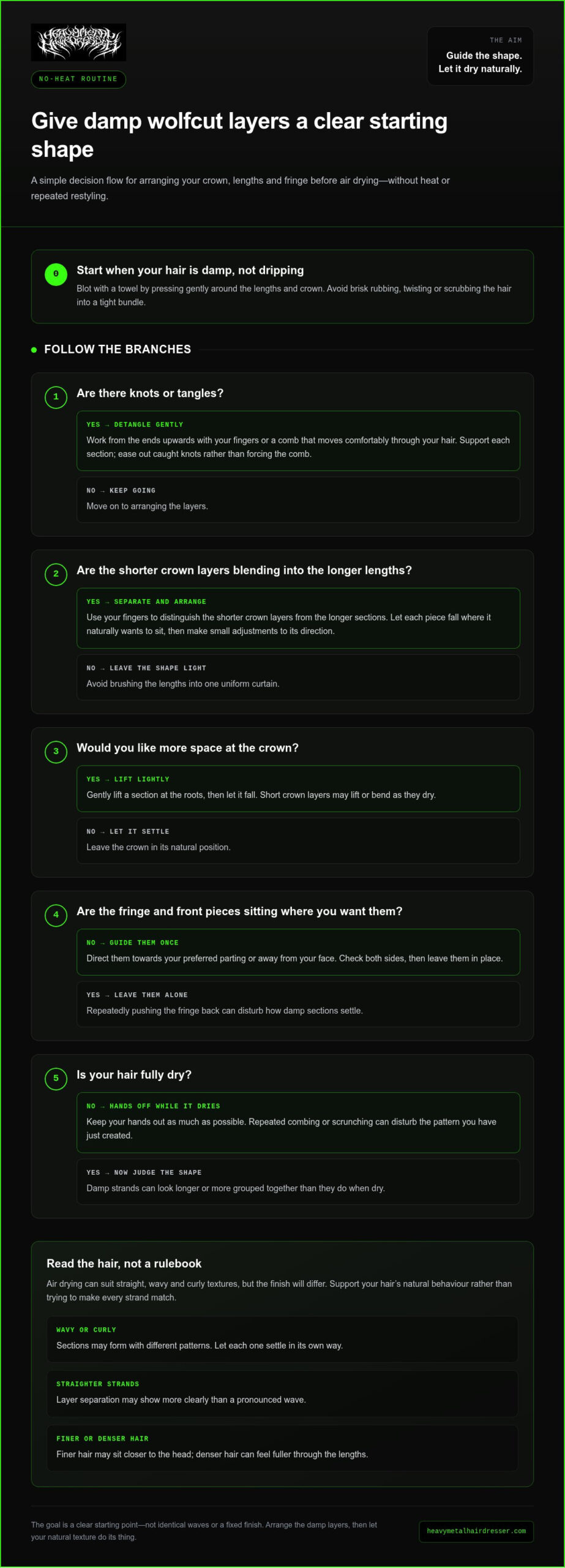
The process starts on damp hair. Apply a lightweight volumiser to give the strands some skeletal support. Don’t overdo it, as fine hair is easily weighed down by heavy resins. Once prepped, rough dry your hair to about 80%. Forget precision. Use your hands to toss the hair around, encouraging the natural chaos of the layers. This is where the foundation of your volume is built. After that, it’s time for the heavy hitters. Use Hair To the Throne for a boost of majestic height or Death Grip for that aggressive, gritty texture that defines the alternative look. Finish by finger-styling individual sections to define the layers without flattening the lift you’ve just created.

The ‘No-Blowout’ Blowout

Round brushes are the enemy of alternative texture. They create a polished, “pretty” finish that completely kills the vibe of a wolfcut or shag. Instead, use a diffuser or just your bare hands. Scrunch the hair upwards whilst drying to maximise the movement amongst your fine strands. This technique forces the internal layers we discussed earlier to stack against each other. If you’ve got vivid colours or high-contrast dyes, always use heat protection. Fine hair is fragile, and the last thing you want is for your electric purple to fade into a muddy mess because you blasted it with unprotected heat. Ready for a change? You can book your textured cut with our experts today.

Second-Day Survival Tips

Your hair usually looks better on day two anyway. The natural oils add a weight that helps the grit stick. Use dry shampoo as a styling tool rather than just a cleaner. Spray it into the roots and mid-lengths to add even more volume and a matte finish. If your fringe starts to look a bit sad, just wash the fringe in the sink and restyle it. It’s a five-minute hack that saves the entire look. This keeps the rest of your hair’s “grit” intact whilst ensuring your face-framing layers stay sharp and intentional. This is how you maintain the edge of a wolfcut or shag whilst keeping your hair healthy and vibrant.

Why Your High Street Stylist Might Kill Your Fine Hair Shag

Most high street stylists are trained to make hair look “nice” according to a narrow, polished standard. They’ve spent years learning how to blend everything into a soft, “pretty” finish that completely misses the point of an alternative aesthetic. When you’re debating a wolfcut vs shag for fine hair, you don’t want blended. You want aggression. You want a cut that has a voice. A mainstream stylist will often play it so safe that they end up removing the very weight you need to maintain density. They leave you with a limp, uninspired mess that doesn’t reflect your identity. A high street stylist might see a photo of a shag and try to make it “wearable” for the office. We see that same photo and figure out how to make it survive a twelve-hour set in a dark club.

We live and breathe this scene. Our expertise comes from festival stages and band styling, not just a textbook. We understand that your hair is a core part of your subcultural identity. It’s a signal to the rest of the world. In a safe-space salon like ours, you never have to justify why you want something “too messy” or “too loud.” We already get it. We know that fine hair needs smarter layering, not just “more” layers. We focus on keeping the perimeter solid whilst forcing volume where it counts. You aren’t just another appointment to us; you’re a member of a community that values self-expression above conformity.

The Alternative Specialist Advantage

We specialise in the textures that others avoid. We know how to use products like Death Grip to lock in that second-day grit from the moment you leave the chair. We also understand the delicate balance of maintaining vivid colours whilst carving out aggressive layers. It’s about a Rockstar standard of styling that prioritises character. You’re entering a space where being different is celebrated rather than merely tolerated. We don’t just cut hair; we build shapes that empower you to express your true self. Our stylists are knowledgeable guides who understand the nuances of alternative fashion and music subcultures.

Booking Your Transformation

Preparing for your appointment should be as exciting as the cut itself. Don’t just bring generic Pinterest boards. Bring photos of your favourite bands, festival shots, or subcultural icons. We want to see the energy you’re trying to capture. Our services are gender-inclusive and focused entirely on the individual. We’ll tailor the internal structure to suit your fine strands and your personal style perfectly. You can expect a raw, authentic environment where your identity is respected and your hair is transformed. Book your wolfcut or shag now and let’s inject some chaos into your look.

Reclaim Your Texture

Fine hair doesn’t have to be flat hair. You’ve seen how internal layering and strategic disconnection can turn thin strands into a high-volume statement. Whether you’ve settled the wolfcut vs shag for fine hair debate or you’re still weighing up the edge of a mullet-hybrid against the classic rockstar shag, the power is in the technique. We don’t do “pretty” layers here. We build shapes that survive the mosh pit and reflect who you actually are. It’s about grit, character, and refusing to settle for a mainstream trim.

As specialists in textured grit and subcultural style, we’ve spent years perfecting looks for touring bands and festival performers. Our salon is a gender-inclusive safe space where your identity is the priority. Stop fighting your hair and start embracing the chaos it’s capable of. Secure your spot with the UK’s alternative hair specialists today. You’re one appointment away from the volume you’ve been told was impossible. It’s time to look as loud as you feel.

Frequently Asked Questions

Is a wolfcut better than a shag for very thin hair?

A shag is generally superior for very thin hair because it maintains a more solid perimeter whilst forcing volume at the crown. When comparing a wolfcut vs shag for fine hair, the wolfcut’s extreme disconnection can sometimes leave the bottom looking too sparse if your density is low. The shag uses internal layers to build a halo of thickness that disguises flat spots and keeps your ends looking healthy and full.

Will a shag haircut make my fine hair look like it’s balding?

A specialist shag will never make you look like you’re balding. We use internal texture to push the hair up from underneath, creating a hidden scaffold of volume. Mainstream stylists often remove too much bulk from the surface, which is where the “balding” fear comes from. By keeping the perimeter heavy and the layers purposeful, we ensure your hair looks thicker and more aggressive than any standard blunt cut would allow.

How often should I trim my wolfcut to keep the texture sharp?

You should book a trim every 6 to 8 weeks to keep the texture sharp and intentional. Because the wolfcut relies on high-contrast layers, the shape can start to look “grown-out” and lose its bite as the shorter sections reach the mid-lengths. Regular maintenance ensures the face-framing remains aggressive and the crown stays lifted, preventing your fine strands from looking unkempt rather than styled for the scene.

Can I have a wolfcut if I have fine hair and a round face?

You can absolutely rock a wolfcut with a round face. The key is how the specialist carves the face-framing layers to create angles and elongate the silhouette. By placing the shortest layers around the cheekbones or jawline, we can sharpen your features whilst the volume at the crown adds necessary height. It is a custom job that focuses on your unique bone structure rather than a one-size-fits-all template.

What are the best British styling products for fine, textured hair?

The best British-made products for this look are Death Grip and Hair To the Throne. We created these specifically to handle the “flat to filthy” transition without the weight of traditional waxes. Hair To the Throne provides the initial lift at the roots, whilst Death Grip adds that essential gritty texture to the layers. They are designed for alternative styles that need to survive a long set or a rainy festival.

Do I need to bleach my hair to get the best out of these styles?

Bleaching isn’t a requirement, but texture is always more visible on lightened or coloured hair. Dark, virgin hair can sometimes hide the intricate layering of a shag or wolfcut in certain lighting. Many of our clients opt for vivid colours or high-contrast dyes to make those jagged edges pop. However, we can carve plenty of movement into natural hair using the right technical “carving” methods during your transformation.

Is the wolfcut still in style for 2026?

The wolfcut remains a dominant force in 2026. It has evolved from the viral 2021 trend into a more refined, “grown-up” version that still prioritises rebellion. With over 1.2 billion views on TikTok as of March 2026, it’s clear that this hybrid style is a mainstay of alternative fashion. The current trend focuses on more blended, wearable layers whilst keeping that signature aggressive crown and face-framing mane that defines the look.

Can a shag be gender-neutral or is it a feminine cut?

The shag is an entirely gender-neutral style that belongs to the rockstar aesthetic, not a specific gender. It’s a silhouette that focuses on identity and subculture rather than traditional masculine or feminine norms. Whether you’re aiming for a 70s glam-rock vibe or a modern underground look, the shag is a versatile tool for self-expression. It works for anyone ready to ditch boring high-street standards for something raw and authentic.

Posted on

Shag vs Mullet: What’s the Difference and Which One Rules Your Style?

Shag vs Mullet: What’s the Difference and Which One Rules Your Style?

Most people think the difference between a shag and a mullet is just a few inches of hair at the nape, but they’re dead wrong. If you’re hunting for a new look, you’ve probably spent hours staring at “shullets” and wolfcuts trying to figure out shag vs mullet what’s the difference without much luck. It’s easy to feel stuck between wanting an aggressive, textured vibe and fearing you’ll end up with a dated, “bad” mullet that belongs in a dusty photo album.

We get it. Describing your favourite level of texture to a stylist shouldn’t feel like a test you’re about to fail. This guide will give you the technical breakdown of how these styles actually work. We’ll look at the “Death Grip” levels of texture that define a modern shag versus the disconnected, rebellious edge of a 2026 mullet. By the end, you’ll know exactly which cut suits your hair’s natural flow and have the confidence to book an alternative stylist who speaks your language.

Key Takeaways

  • Understand the technical divide between the connected layers of a shag and the deliberate disconnection that defines a modern mullet.
  • Get the definitive answer to shag vs mullet what’s the difference so you can describe your desired texture to your stylist with total confidence.
  • Explore hybrid styles like the wolfcut and shullet to find a middle ground between rock-and-roll volume and an aggressive silhouette.
  • Learn how to tailor these alternative cuts to your specific face shape and natural hair texture for a look that actually works for you.
  • Discover the essential toolkit, including Death Grip texture paste, to keep your layers sharp and mosh-pit-ready through any gig.

Defining the Chaos: What is a Shag and What is a Mullet?

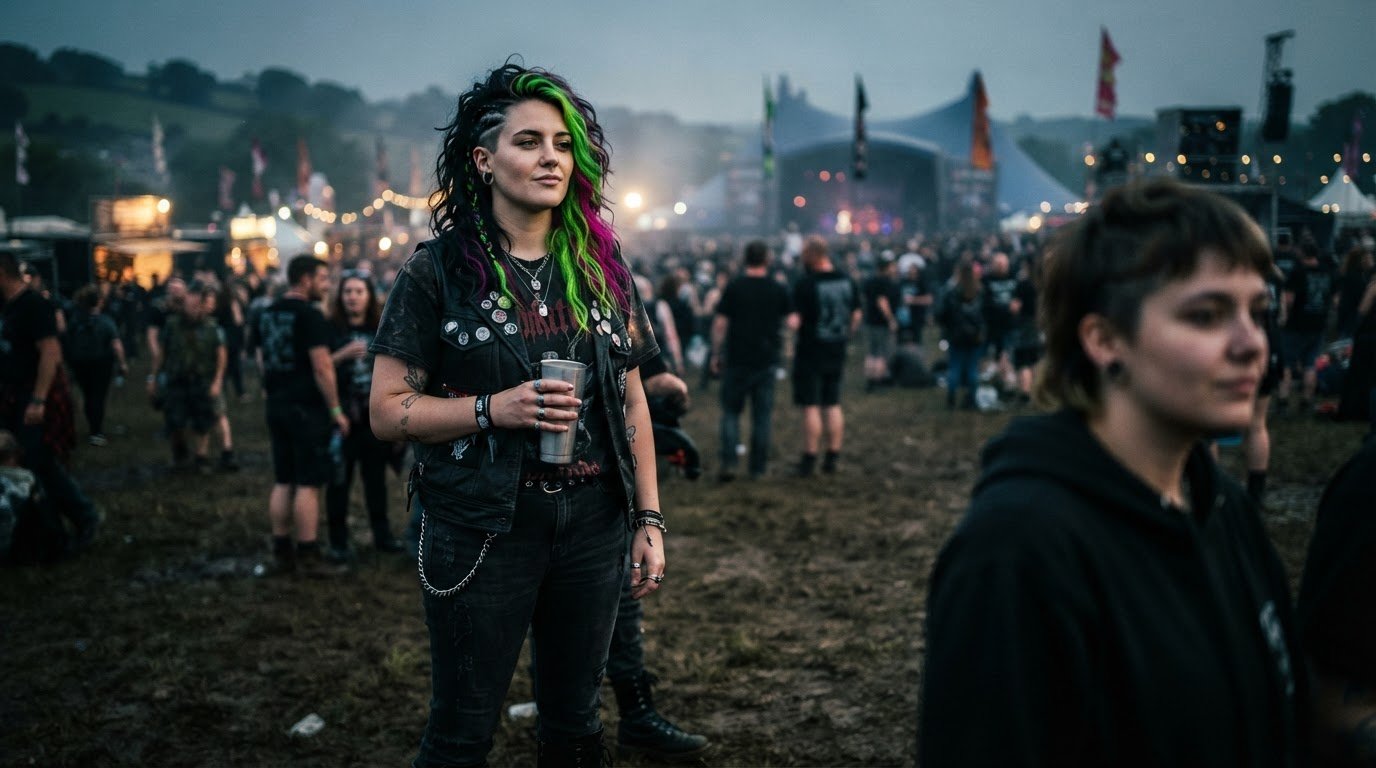
The UK alternative scene doesn’t do boring hair. From the muddy pits of Bloodstock to the neon streets of Camden, textured styles are the current uniform. But when you’re ready for a change, you need to know shag vs mullet what’s the difference before you sit in the chair. These styles share a DNA of heavy texture and attitude, yet they occupy totally different spaces on the subcultural spectrum. One feels like a late-night vinyl session in 1975; the other feels like a punk show in a basement. Whether you’re rocking a natural shade or a vivid colour, these cuts thrive on movement and a refusal to blend in.

The 70s Soul of the Shag

The shag is a 70s icon that never truly died. It was born in the era of Joan Jett and Mick Jagger, designed to look like you just rolled out of bed after a stadium set. It’s defined by uniform, heavy layers and a rock-and-roll fringe that sits heavy over the eyes. Unlike other styles that rely on length, the shag is all about volume at the crown and face-framing texture that softens the jawline. The shag is a connected masterpiece of movement where every layer flows seamlessly into the next. It’s the go-to for anyone wanting effortless cool without the harsh lines of more aggressive cuts. We specialise in Shag Haircuts that prioritise this fluid, lived-in feel, making it a firm favourite amongst those who want volume without the commitment of a disconnected cut.

The 80s Rebellion of the Mullet

If the shag is effortless, the mullet is a loud, aggressive defiance of the status quo. Historically, the Mullet (haircut) was the ultimate “business in the front, party in the back” statement. Today, it’s been reimagined for 2026. We’ve ditched the crispy perms and stiff hairsprays for gritty, textured layers and sharp disconnection. The modern mullet is defined by the stark contrast between short temples and a long nape. There is a deliberate “gap” where the front doesn’t meet the back, creating a silhouette that demands attention. It’s a style for those who want to stand outside the mainstream and embrace a bit of chaos.

Whilst both styles use “Death Grip” levels of texture, the emotional vibe is the real divider. Choosing between them depends on whether you want the cohesive, shaggy volume of a rock star or the disconnected, rebellious edge of a punk. Knowing shag vs mullet what’s the difference helps you communicate that specific energy to your stylist so you don’t end up with a look that feels too safe. It’s about more than just hair; it’s about the subcultural attitude you carry into the room.

The Technical Divide: Connection vs Disconnection

Understanding shag vs mullet what’s the difference comes down to one technical concept: connection. In the hair world, connection means the layers flow into each other without a sudden jump in length. Disconnection is the opposite. It is a deliberate break where one section of hair is significantly longer than the part right next to it. This technical choice dictates how your hair moves in the pit and how much effort you will put into styling it every morning. It is the difference between a fluid, rock-and-roll silhouette and a sharp, aggressive frame.

Anatomy of a Shag: The Seamless Flow

A shag is a connected masterpiece. Every layer is technically linked to the one above it. We use square layers that blend into the overall length to create maximum movement without any harsh steps. The fringe is the anchor here. It frames the eyes and flows directly into the side layers, creating a rounded, shaggy silhouette that works at any length. Whether you are rocking a chin-length bob or waist-deep waves, the shag keeps everything cohesive. It is the best option for those who want that “messy” look whilst keeping the hair feeling like one unified style. If you are looking for a cut that moves with you, our Shag Haircuts are designed to provide that perfect, connected flow.

Anatomy of a Mullet: The Aggressive Break

The mullet is built on an aggressive break. It is fundamentally a disconnected cut. You have the “tail” at the back, but the sides are kept tight, often involving a fade or a sharp “step” that separates the front from the back. The top section stands independently from the length at the nape. This creates that signature drop-off that defines the look. It is a weapon of choice for anyone wanting a silhouette that stands out from a mile away. The modern mullet ditches the soft blending of the past for a gritty, intentional gap that highlights the contrast between short temples and a long nape.

The secret to both styles is the “pivot point”. This is the area behind the ear where the hair transitions from the front framing to the back length. In a shag, this transition is soft and blended. In a mullet, the pivot point is where the disconnection happens. It is where the front ends and the length begins. Whilst a shag can be almost any length, a mullet strictly requires that “tail” to maintain its identity. Knowing shag vs mullet what’s the difference technically allows you to tell your stylist exactly where you want that transition to happen, ensuring you walk out with the right level of aggression for your style.

Shag vs Mullet: What’s the Difference and Which One Rules Your Style?

Beyond the Basics: The Wolfcut and the Shullet

Sometimes the choice isn’t binary. You might find yourself caught in the middle, wanting the heavy volume of a rock-and-roll icon but craving the aggressive silhouette of a modern rebel. This is where hybrids like the Wolfcut and the Shullet come into play. Whilst we’ve already established shag vs mullet what’s the difference in terms of technical connection, these hybrid styles blur those lines to create something entirely new. They offer a way to experiment with alternative texture without committing to the extreme disconnection of a traditional mullet or the softer flow of a classic shag.

The Wolfcut: Where Shag Meets Round Layers

The Wolfcut isn’t just a fleeting social media trend. It is a technical evolution that combines the best parts of our Shag Haircuts with the wilder frame of a mullet. It is characterised by heavy, round layers and intense face-framing that mimics a lion’s mane. This style is a firm favourite for those with fine hair because the internal layering creates a massive volume boost that flatter styles simply can’t achieve. To keep the “wolfish” grit alive, you need to lean into the messiness. It thrives on movement and looks best when it’s slightly unhinged. If you want to get into the weeds of this specific look, check out The Ultimate Wolf Hair Cut Guide for a deeper dive into its aggressive texture.

The Shullet: The Stealth Choice

For the undecided or those amongst us who need to maintain a level of “professionalism” whilst still repping the scene, the Shullet is the stealth weapon of choice. Think of it as a mullet with the training wheels still on. It features more length on the sides than a standard mullet, allowing for a softer transition from the fringe to the back. It maintains a “connected” feel, but pushes the length at the nape to ensure the “party” in the back is still very much invited. The Shullet is also the perfect grow-out style. If you’ve been rocking a disconnected mullet and want to transition back to a more unified look, this hybrid bridges the gap perfectly.

Choosing between these hybrids depends on your end goal. If you want maximum volume and a mane-like frame, the Wolfcut is your winner. If you want to dip your toe into the mullet aesthetic without the harsh “step” behind the ear, the Shullet is the way to go. Understanding shag vs mullet what’s the difference allows you to see how these hybrids borrow from both worlds to create a custom level of aggression. Whether you’re heading to a gig or just heading to work, these mid-ground styles ensure your hair remains a core part of your identity without feeling like a costume.

Which Weapon Should You Choose? Face Shapes and Texture

Picking your next look isn’t just about chasing a subcultural vibe. It’s about how the geometry of the cut hits your face. When you’re weighing up shag vs mullet what’s the difference for your own reflection, you need to consider how your natural texture and bone structure play into the final result. A cut that looks incredible on a rail-thin punk might need a totally different layering strategy for someone with a thick, curly mane. Understanding shag vs mullet what’s the difference in a technical sense is step one; knowing how it sits on your head is step two. It’s about finding the version of these styles that rules your specific look.

Matching the Cut to Your Face Shape

Round faces thrive on height and vertical lines. A mullet is a secret weapon here because the tight sides and vertical length at the back elongate the face. Alternatively, a shag with massive volume at the crown creates a similar lifting effect that prevents the hair from looking bottom-heavy. Square faces, on the other hand, benefit from the soft, feathery layers of a shag that break up a strong jawline. These layers soften the corners of the face whilst maintaining an edgy silhouette. If you have a heart-shaped face, a heavy, textured fringe is non-negotiable. It balances a wider forehead and draws the focus straight to the eyes, creating a more symmetrical frame.

Texture: From Fine Strands to Thick Manes

Your hair’s natural behaviour dictates the technical approach. Thick hair requires aggressive internal layering to remove bulk without losing the silhouette. We use deep point-cutting to ensure the hair moves freely rather than sitting like a solid block. Fine hair needs the opposite strategy. We build “fake” volume through short, choppy crown layers that give the illusion of a thicker mane. For those with natural curls, the modern mullet is a godsend. The disconnection allows curls to bounce independently without the dreaded “triangle hair” effect that often plagues standard haircuts.

Once the shape is locked in, vivid hair colour can be used to highlight those aggressive layers. High-contrast shades make the texture pop in ways natural colours simply can’t. When you sit down for your consultation, use keywords like “grit”, “internal weight removal”, and “Death Grip texture” to ensure your stylist knows you aren’t looking for a standard salon trim. If you’re ready to commit to a look that actually fits your identity, book your transformation with our specialists today and get the texture you deserve.

Living with the Look: Maintenance and Mosh Pit Survival

A killer haircut is only half the battle. Once you’ve settled the debate of shag vs mullet what’s the difference and walked out of the salon, you need to keep that texture alive. These aren’t styles meant for a clinical, polished environment. They are built for the stage, the pit, and the three-day festival bender. Keeping your layers from falling flat requires a strategy that prioritises grit over perfection. If your hair looks too “done,” you’ve probably missed the point. You want it to look like it has lived a little, even on day one.

Styling with Death Grip and Grit

The “scrunch and go” method is your best friend for maximum chaos. Start with damp hair and a heavy dose of sea salt spray to provide a foundation of tackiness. Follow this up with our Death Grip texture paste. Work a small amount through your palms and aggressively scrunch it into the mid-lengths and ends. This creates that lived-in, “second-day” grit immediately after a wash. For those with natural wave or curl, using a diffuser on a low heat setting helps bake in the texture without creating unwanted frizz. You can find more details on how to style a modern mullet for specific product application tips that keep your silhouette sharp.

Professional Maintenance

Even the most rebellious cuts need a regular return to the chair to avoid turning into a total disaster. The maintenance schedule differs significantly based on the technical structure of your cut. Shags are generally more forgiving. You should expect to return every 8 to 12 weeks to keep the connected layers moving and prevent the crown from getting too heavy. Mullets require more frequent attention because of the disconnection. You’ll want a tidy-up every 4 to 6 weeks to keep the “business” sides tight and the silhouette aggressive.

  • Shag Maintenance: Focus on weight removal and fringe trims every 8 to 12 weeks.
  • Mullet Maintenance: Tighten the sides and clean up the nape every 4 to 6 weeks.
  • The Dusting Technique: A method we use to keep ends healthy without losing your hard-earned length.

To refresh your style between washes, skip the shampoo and use a dry texture spray or a bit more sea salt. This maintains the essential oils that give alternative hair its character whilst keeping the volume high. Understanding shag vs mullet what’s the difference in maintenance ensures you don’t let your style lose its edge before the next gig. Keep it gritty, keep it textured, and don’t be afraid to let it get messy.

Own Your Alternative Identity

Choosing between a shag and a mullet isn’t just about hair length; it’s about how you want to move through the world. You now understand shag vs mullet what’s the difference: it is the technical choice between fluid, connected volume and sharp, disconnected aggression. Whether you are leaning towards a classic rock-and-roll shag or a gritty, modern mullet, your hair should be a direct reflection of your subcultural grit. It is about more than just a trim. It is about finding a look that survives the pit and looks even better the next morning.

We don’t do traditional. Our team at Heavy Metal Hairdresser consists of backstage festival styling experts who live for aggressive texture and vivid colour. We pride ourselves on being a gender-inclusive safe space where your individuality is the only rule we follow. If you are tired of explaining your “vibe” to stylists who just don’t get it, it is time to change your scene. Ready to ditch the norm? Book your alternative cut at Heavy Metal Hairdresser today.

Stop settling for safe hair. Embrace the chaos, trust the technical expertise, and walk out with a style that actually says something.

Frequently Asked Questions

Is a wolf cut the same as a shag?

A wolfcut is a hybrid, not a direct replica of a shag. Whilst a shag is all about connected, fluid layers, the wolfcut borrows the round layers of a shag and pairs them with the aggressive silhouette of a mullet. It creates a mane-like frame around the face that is much heavier than a traditional 70s shag. It’s the perfect middle ground if you are still debating shag vs mullet what’s the difference for your own style.

Can I have a mullet if I have curly hair?

Curly hair and mullets are a perfect match. The natural bounce of curls helps the disconnected sections look more organic and less like a deliberate “step” in the hair. This cut is actually a godsend for curly textures because it removes the internal weight that usually causes hair to flare out into a triangle shape. It keeps the volume at the crown and the party at the back without the frizz.

Will a shag haircut make my fine hair look thinner?

A shag is actually one of the best cuts for fine hair. By adding short, choppy layers at the crown, we build “fake” volume that makes thin strands look much fuller. Instead of a flat, heavy silhouette, you get movement and lift that prevents the hair from looking limp. It’s all about technical weight removal and creating texture where it’s needed most to boost your natural mane.

How do I ask my hairdresser for a modern mullet without it looking like the 80s?

The secret to a 2026 mullet is texture and grit. Ask your stylist for “disconnected layers” and “tight temples” rather than a soft, blended transition. Avoid any mention of perms or round brushes. You want the ends to look choppy and lived-in. Bringing a photo of a modern, textured cut ensures you don’t walk out looking like a dated relic. Understanding shag vs mullet what’s the difference helps you specify the level of disconnection you want.

Do shags and mullets require a lot of styling time?

These styles are built for people who hate spending an hour in front of the mirror. They thrive on being slightly unhinged and messy. Most only require a quick scrunch with sea salt spray or a bit of Death Grip texture paste to look stage-ready. They are designed to look better as the day goes on, making them ideal for long festival weekends where you need your hair to survive the mosh pit.

What is the best fringe for a shag haircut?

A heavy, eye-grazing fringe is the definitive anchor for any shag. It should be textured and connected to the face-framing layers to create a seamless flow. If you want something less intense, curtain bangs offer a similar vibe but are easier to pin back. The goal is to create a frame that highlights your eyes whilst maintaining that rock-and-roll attitude that defines the style’s 70s roots.

Can a mullet be professional for work?

Absolutely, especially if you opt for a “shullet” hybrid. By keeping the sides slightly longer and the transition more blended, you can maintain a professional look whilst keeping the length at the nape. It’s about controlling the level of aggression in the cut. A well-maintained, textured mullet can look sharp and intentional in any environment, provided you keep the “business” sides tidy and use the right product to control the chaos.

How do I grow out a mullet into a shag?

Transitioning from a mullet to a shag is all about patience and connection. You need to let the sides grow out whilst keeping the back length in check. Once the hair behind your ears reaches a certain length, your stylist can blend it into the back sections. This removes the disconnected gap, turning your aggressive mullet into a cohesive, heavily layered shag over a few strategic appointments at the salon.

Posted on

Styling a Shag with Natural Texture: Embrace the Raw, Alternative Grit

Styling a Shag with Natural Texture: Embrace the Raw, Alternative Grit

Your hair isn’t a problem to be solved; it’s a weapon waiting to be sharpened. You’ve likely walked out of a salon with a fresh cut only to find that, once you’re back at home, styling a shag with natural texture results in a look that feels more “suburban mum” than “subterranean punk.” It’s a common frustration. You want aggressive layers and raw movement, but you end up with hair that looks too round, too pretty, or just plain frizzy.

We get it. The mainstream beauty industry wants to sell you “polished” and “manageable,” but we’re here to help you embrace the chaos. This guide is about ditching the flat, greasy finishes of traditional products and learning how to weaponise your hair’s natural behaviour for a look that is truly mosh-pit ready. We’ll break down the “Death Grip” approach to styling; we will show you which tools actually create grit and prove that your natural texture is the engine behind the ultimate alternative aesthetic. It’s time to stop taming your hair and start letting it scream.

Key Takeaways

  • Learn how to move away from “pretty” styles and embrace a high-contrast, aggressive finish that celebrates your hair’s natural behaviour.
  • Understand how shattered layers and crown height work together to create that iconic, stage-ready rockstar silhouette.
  • Master the art of styling a shag with natural texture using salt sprays and the “Death Grip” approach for maximum grit and hold.
  • Discover the “Low-Fi” wash ritual and why over-conditioning is the enemy of a truly raw, alternative look.
  • Get expert tips on keeping your shag sharp and managing fringe growth between your professional salon sessions.

Beyond the “Pretty” Shag: Redefining Texture for Alt-Souls

Most magazines want to sell you a “soft” shag. They talk about “effortless chic” and “70s throwbacks” that look like they belong on a greeting card. We aren’t here for that. An alternative shag is high-contrast, aggressive, and thrives on absolute chaos. If you look at the history of the shag, it wasn’t born in a high-end boutique. It was forged in the underground. Styling a shag with natural texture means leaning into the grit. It’s about rejecting the round, blow-dried finish in favour of something that looks like it just survived a three-day festival.

Stop fighting your hair. The industry has spent decades telling you that your natural behaviour needs to be corrected. They want you to iron out the kinks and smooth down the flyaways. We think that’s a waste of potential. Your hair already knows how to be cool. You just need to give it the right framework and the permission to be loud.

Why Natural Texture is Your Best Ally

Your hair’s natural movement is the engine of this cut. When we talk about “shattered” layers, we mean hair that has a mind of its own. Natural waves and curls provide the internal structure that makes a shag look alive. Whilst mainstream stylists might try to “tame” your frizz, we see it as a tool. Frizz is just unorganised volume. When you stop fighting it, you gain the height and width needed for a truly edgy silhouette. Plus, a textured cut grows out better. It doesn’t lose its shape; it just evolves into a new version of itself.

Mainstream vs. Alternative Styling Philosophies

There is a massive divide in how people approach hair. Mainstream philosophy is obsessed with control. It wants everything smooth, shiny, and perfectly placed. It’s the “clean girl” aesthetic applied to a haircut that was meant to be messy. Our approach at Heavy Metal Hairdresser is the opposite. We prioritise identity over perfection. We want your hair to look gritty, matt, and unapologetically loud.

Styling a shag with natural texture requires a shift in mindset. You have to stop viewing “messy” as a failure. In our world, perfection is boring. We use techniques like the “Death Grip” to build hold without sacrificing the raw feel of the hair. It’s about creating a look that feels authentic to you, whether you’re on stage or in the pit. Don’t aim for a salon-polished finish. Aim for a look that tells people exactly who you are before you even open your mouth.

The Anatomy of Texture: How Your Cut Interacts with Your Hair

The architecture of a shag is designed to set your hair free. It isn’t just about cutting hair shorter; it’s about removing weight in specific zones to let your natural pattern take over. When you’re styling a shag with natural texture, you’re working with the physics of the cut. Every “shattered” layer is a deliberate choice to encourage a wave or a curl to spring to life. If you’ve ever felt like your hair was a heavy curtain, this is the demolition it needs. Mainstream stylists often rely on round brushes to “finish” a look, but that just creates a dated, pretty flick. We want raw energy instead.

Your hair type dictates how these layers behave. Coarse hair thrives on aggressive thinning, whilst fine hair needs strategic internal layers to avoid looking limp. The goal is a silhouette that looks lived-in before you even touch a product. It’s about movement. It’s about attitude. It’s about making sure your hair doesn’t just sit there; it performs.

Understanding Your Hair’s Behaviour Under Layers

Removing bulk is the secret to movement. For those with waves or curls, layers remove the weight that drags your pattern flat. Suddenly, your hair has the freedom to bounce and coil. Straight hair requires a different approach. It needs “internal” texture, essentially hidden layers, to prevent it from looking like a flat sheet. If you’ve been experimenting with bleach or vivid colours, your texture will be even more responsive to grit. Processed hair often has more “grab,” which is perfect for an aggressive, textured look. You can find some basic tips for styling a shag, but the real magic happens when you understand your specific hair’s unique rebellion.

The Crown: Where the Chaos Begins

The crown is the most vital part of an alternative shag. This is where we create that iconic “wolfy” height that separates a subcultural cut from a standard salon layer. Short, choppy layers at the top provide the foundation for volume that doesn’t require a blow-dryer. We want to avoid the “helmet hair” effect, where the top looks like a solid, unmoving block. By using specific texturising techniques, we ensure the hair stays separated and gritty. You can inject volume into the roots simply by using your hands and the right product. It’s about creating a silhouette that looks sharp and intentional from every angle. If you’re ready to commit to the chaos, check out our shag haircuts to see how we transform standard textures into something legendary.

Styling a Shag with Natural Texture: Embrace the Raw, Alternative Grit

Styling Weapons: Choosing Products for Grit and Chaos

Mainstream beauty editors love suggesting expensive hydrating mists and silk-infused conditioners. They claim these products are essential for a healthy look. They are wrong. If you want a raw, alternative finish, hydration is often your enemy. It weighs the hair down, smoothes the cuticle, and kills the very friction that makes a shag look alive. Styling a shag with natural texture requires a “Death Grip” philosophy. We want products that provide hold, build massive friction, and keep the hair looking matt and aggressive. You aren’t aiming for “healthy” in the traditional sense; you’re aiming for stage-ready grit.

Your styling kit should be a collection of weapons designed to defy gravity. Forget shiny pomades or greasy waxes. Those are for retro grease monkeys. For a subcultural shag, we prioritise dry, tactile finishes that allow the hair to stand up and stay there. We use products that work with your hair’s natural rebellion rather than trying to sedate it.

Salt Sprays and Texture Tonics

Salt spray is the absolute backbone of any alternative kit. It mimics the effect of sea air or sweat, providing the “built-in” grit necessary for a lived-in look. For the best results, apply your spray to towel-dried hair. This allows the product to bond with the hair as it dries, creating a foundation of texture from the inside out. Focus your application on the mid-lengths. This is where you want to enhance that “choppy” effect. Whilst some cheap sprays can feel like literal glue, a high-quality texture tonic provides an aggressive hold without the plastic-like crunch. It should feel like hair, only tougher.

Pastes and Clays: Defining the Shattered Ends

Once your hair is dry, you need to define the chaos. This is where matt pastes and clays come into play. Our “Hair To the Throne” styling approach relies on a matt finish to keep the look modern and edgy. Shine reflects light and makes layers look blended; matt finishes absorb light and make those shattered ends pop. Use the “scrunch and twist” technique. Take a small amount of clay, rub it between your palms until it’s warm, and then aggressively scrunch it into the ends of your layers. This creates separation and prevents the cut from looking like one solid mass.

Don’t forget the power of dry shampoo as a primary styling tool. Don’t wait until your hair is dirty to use it. Applying a blast of dry shampoo to clean roots provides instant lift and a dusty, gritty texture that helps the crown layers stand up. It’s about building layers of product that work together to maintain that mosh-pit ready silhouette all day long. Avoid over-applying. You want to enhance the natural movement, not bury it under a mountain of gunk. Start small and build the chaos until it feels right.

The Styling Ritual: Step-by-Step Texture Resurrection

Mainstream advice often suggests “plopping” your hair or sleeping in tight braids to create waves. Those methods result in uniform, artificial patterns that look like you’re trying too hard. We want a resurrection, not a fabrication. Styling a shag with natural texture starts with the “Low-Fi” wash. If your hair is too silky or over-conditioned, it will never hold the grit of the Death Grip. Skip the heavy masks. Apply a light conditioner only to the very ends of your hair. You want the mid-lengths to feel slightly raw and responsive to product, not slippery and sedated.

Once you’re out of the shower, towel-dry your hair aggressively. This isn’t a spa; it’s a preparation for chaos. Apply your chosen salt sprays or texture tonics whilst the hair is damp. Then, use the “Scruff” technique. This involves using your fingers to rake, shake, and manually manipulate the hair into its shattered positions. Forget the brush. Your hands are the only tools you need to encourage your hair’s natural rebellion. The final step of the ritual is the head-bang. It sounds like a cliché, but a vigorous shake of the head allows the layers to settle into a lived-in silhouette that looks authentic rather than staged.

The Air-Dry Method for Effortless Grit

If you have the time, air-drying is the best way to maintain the integrity of your natural pattern. Organise your fringe whilst it is soaking wet; get it sitting exactly where you want it. After that, follow the “Hands-Off” rule. Touching your hair whilst it is drying breaks the natural clumps and creates a fuzzy, uncontrolled mess. You want purposeful grit, not a halo of fluff. Once the hair is about 90% dry, give it one final, aggressive scrunch to break the product cast. This releases the movement whilst keeping the hold firmly in place.

Diffusing for Maximum Aggression

When you need more volume, a diffuser is your best weapon. Don’t use it to create “pretty” ringlets. Instead, use low heat and high airflow to mimic a wind-blown, stage-ready texture. Focus the airflow directly at the roots to achieve that iconic “Hair To the Throne” height. Scrunch the hair into the diffuser bowl to boost your natural waves, but keep the movement fast and erratic. This prevents the hair from looking too “done” and ensures the finish remains sharp and alternative. If you want to master these techniques at a professional level, check out our alternative hair courses to sharpen your skills.

Maintaining the Resurrection: Keeping Your Shag Sharp

Mainstream salons love a schedule. They’ll tell you that you need a trim every six weeks to keep your hair looking “healthy” and “neat.” We think that’s rubbish. An alternative shag is one of the few cuts that actually improves as it grows in. The layers settle. The edges soften. It starts to look like it belongs to you rather than a stylist. Styling a shag with natural texture becomes easier as the hair gains a bit of weight and history. You aren’t chasing a fresh-from-the-chair look. You’re cultivating a signature that looks better the messier it gets.

Managing your fringe is the only real hurdle in the long game. Between professional sessions, keep your fringe shaggy rather than blunt. If it starts to hit your eyes, don’t reach for the kitchen scissors to create a straight line. That kills the aggression. Instead, use a bit of your matt paste to piece it out and push it to the sides. This keeps the frame around your face sharp without losing the “shattered” aesthetic we’ve built. Admit defeat only when the crown height starts to sag or the back feels too heavy to hold a curl. That’s when it’s time for a professional reset. Styling a shag with natural texture shouldn’t be a daily battle; it should be a sustainable rebellion.

Day Two Survival: The Mosh-Pit Refresh

You don’t need to wash your hair to bring the chaos back. In fact, day-two hair often has more natural grit than clean hair. To reactivate your products, use a light water spritz followed by a fresh blast of salt spray. This wakes up the “Death Grip” foundation you built on day one. Dry shampoo is your best friend here. Don’t just use it for oil. Use it to inject “backstage” volume into the crown by blasting the roots and massaging with your fingertips. If the mid-lengths are looking too wild, tie back the top sections with a small clip or band. This maintains the shaggy silhouette whilst keeping the hair out of your face during the day.

Beyond the Cut: The Heavy Metal Hairdresser Experience

Your hair is your most visible form of self-expression. Choosing a wolf hair cut specialist ensures that your stylist understands subcultural aesthetics and the music that drives them. We don’t do “pretty.” We do raw, aggressive, and authentic. It is about more than just the technique; it’s about finding a safe space where your identity is celebrated and your hair’s natural behaviour is respected. Learning how to maintain a shag haircut is a journey of self-discovery. When you embrace the natural behaviour of your hair, you stop being a slave to the mirror. You become the authority on your own look. Keep it gritty. Keep it loud. Keep it yours.

Claim Your Chaos: Own the Raw Alternative Silhouette

Your hair is a statement of intent. You’ve learned that styling a shag with natural texture isn’t about control; it’s about collaboration with the chaos. By ditching the round brush and embracing the “Death Grip” philosophy, you’ve moved beyond the polished mainstream. You are now in a space where your identity takes centre stage. Whether you’re air-drying for effortless grit or diffusing for maximum aggression, the power is in your hands. Don’t let the beauty industry sedate your style.

We are the experts in aggressive, stage-ready hair. As seen backstage at Download Festival, we specialise in wolfcuts and shags that defy the ordinary. We provide a gender-inclusive safe space where your subcultural identity is celebrated, not just tolerated. Stop settling for “pretty” when you were born for the pit. Your natural movement is your greatest weapon. Use it.

Join the resurrection and book your alternative transformation. It’s time to stop taming your hair and start letting it scream. Stay loud; stay gritty.

Frequently Asked Questions

Can I style a shag with natural texture if my hair is pin-straight?

Yes, you absolutely can. Pin-straight hair relies on the internal “shattered” layers of the cut to create movement where there is usually none. When styling a shag with natural texture on straight hair, use a heavy-duty salt spray on damp hair followed by a matt clay to piece out the ends. This builds the necessary friction to prevent the hair from looking flat or lifeless.

How do I stop my natural texture from looking frizzy instead of shaggy?

Frizz is simply volume that hasn’t been given a direction yet. To stop it from looking uncontrolled, follow the “Hands-Off” rule whilst your hair is drying to prevent breaking up the natural clumps. Once your hair is almost entirely dry, use a small amount of matt paste to define the ends. This turns fuzzy volume into purposeful, aggressive texture that looks intentional.

What are the best products for styling a shag with natural waves?

Salt sprays and texturising clays are the primary weapons for styling a shag with natural texture. You should avoid heavy, oil-based serums or “smoothing” creams that weigh the hair down and kill the volume. Look for products that provide a matt finish and high friction, as these keep your layers separated and sharp throughout the day.

Do I need a diffuser to style a shag with natural texture?

You don’t strictly need one, but it is a game-changer for volume. Air-drying is perfect for a low-maintenance, lived-in look, but a diffuser allows you to inject massive aggression into the crown. It is the fastest way to achieve “Hair To the Throne” height and boost your natural pattern without creating “pretty” or uniform ringlets.

How often should I wash my hair when maintaining a textured shag?

Aim to wash your hair only two or three times a week. Over-washing strips the natural oils and grit that help an alternative cut hold its shape. A “Low-Fi” wash schedule ensures your hair remains responsive to texturising products whilst preventing it from becoming too silky or slippery to style effectively.

Can I have a shag if I have very curly or coily hair?

Absolutely, and it is one of the best cuts for high-density textures. A shag on curly or coily hair is all about strategic weight removal to let your natural pattern breathe. By cutting shorter layers into the crown, we allow your coils to spring up and create a high-contrast, voluminous shape that rejects mainstream beauty standards.

What is the “Death Grip” technique for alternative hair?

The “Death Grip” is our signature styling philosophy. It involves using high-hold, matt-finish products to lock in a raw and durable silhouette. This technique ensures your hair stays stage-ready through a full set or a night in the mosh-pit without losing its aggressive edge or collapsing into a flat mess.

How do I style my fringe if it has a cowlick or weird natural movement?

Style your fringe whilst it is soaking wet to get ahead of the natural movement. Use your fingers to direct the hair into place, leaning into the cowlick’s direction rather than trying to iron it out. Once dry, use a bit of matt clay to make the “weird” movement look like a deliberate, alternative style choice.

Posted on

Wolf Cut for Oval Faces: Texture & Grit (2026 Guide)

Wolf Cut for Oval Faces: Texture & Grit (2026 Guide)

Your oval face isn’t a “safe” canvas for boring, symmetrical cuts; it’s a high-performance engine that demands more than a standard high-street trim. Most mainstream salons hear the word “layers” and deliver something your nan would wear to a garden party, leaving you with flat, mumsy hair that feels like a betrayal of your identity. You want grit, volume, and a silhouette that screams subculture. A wolf cut for oval face shapes is the ultimate geometric weapon for 2026, offering a hybrid style that balances your features while dialling the attitude up to eleven.

We know the struggle of trying to explain a “shag-meets-mullet” aesthetic to someone who only does blunt bobs. This guide breaks down why this high-volume style is your perfect match and how to master that raw, intentionally undone texture at home. We’ll help you identify the right specialist stylist and provide a gritty, easy-to-follow routine to ensure your layers never lose their edge. It’s time to stop settling for “polished” and start embracing the aggressive, textured volume you actually want.

Key Takeaways

  • Learn why the oval face shape is the ultimate canvas for aggressive, disconnected layers that traditional salons usually avoid.
  • Discover how a wolf cut for oval face shapes can be tailored to inject life into fine strands, debunking the myth that you need thick hair for volume.
  • Master the rough-dry technique and the “grit over shine” philosophy to keep your hair looking authentically alternative at home.
  • Find out how to choose the right fringe, from micro-bangs to blunt cuts, to sharpen your silhouette and reflect your subcultural identity.
  • Understand why visiting a specialist like Simon Tuckwell ensures a gender-inclusive experience that prioritises your individuality over mainstream trends.

What is a Wolf Cut for Oval Faces? Defining the Shag-Mullet Hybrid

The wolf cut isn’t just a haircut; it’s a statement of intent. Born from the collision of the 1970s shag and the 1980s mullet, this Shag-Mullet Hybrid has clawed its way out of the underground to become the definitive silhouette for anyone rejecting the “polished” status quo. It’s defined by heavy, choppy volume at the crown that tapers into aggressive, wispy ends. While some salons try to soften the look, an authentic wolf cut thrives on disconnection and grit.

For those seeking a wolf cut for oval face proportions, you’re starting with a massive advantage. Oval faces are often called the “gold standard” in traditional beauty, but we see them as the ultimate playground for experimental geometry. Because your features are naturally balanced, you don’t have to play it safe. You can push the layers further, go shorter at the top, and embrace a level of texture that would overwhelm other face shapes. It’s about taking that natural symmetry and giving it an edge.

The Geometry of an Oval Face

An oval face shape is vertically longer than it is wide, with a slightly curved jawline. This symmetry allows for extreme layering without the risk of making the face look too wide or too narrow. A wolf cut for oval face structures works by using those shorter, crown-heavy layers to frame the eyes and sharpen the cheekbones. Instead of hiding your features, the aggressive texture acts like a spotlight. You don’t need to worry about the hair “overpowering” you. The more volume we build at the top, the more it creates a striking, feline silhouette that feels both modern and rebellious.

A Subcultural Icon in 2026

While mainstream fashion cycles through trends every six months, the wolf cut has established itself as a permanent fixture in alternative communities. It’s deeply rooted in the heavy metal aesthetic and the DIY spirit of punk. In 2026, it remains a powerful tool for non-conformity. It isn’t just about looking “cool” at Download or Bloodstock; it’s about a gender-neutral approach to beauty that prioritises self-expression over traditional expectations. It’s a cut that says you aren’t here to blend in. It’s a badge of identity for those who find their home in the pit rather than the front row of a fashion show.

Choosing Your Weapon: Adapting the Wolf Cut to Your Hair Type

Forget the gatekeeping you see on social media. There is a persistent myth that you need a specific hair density or a natural wave to pull off this style. It’s rubbish. While the wolf cut for oval face shapes looks incredible on thick hair, it is actually a transformative tool for those with finer strands too. The secret lies in how the layers are carved. It isn’t just about cutting hair off; it’s about engineering movement and grit where none existed before.

Oval faces provide the perfect structural balance to experiment with these technical variations. Whether your hair is pin-straight and flat or a chaotic mass of curls, the goal remains the same: high-volume crown texture and sharp, face-framing disconnection. If you’re unsure which direction to take, our specialist team can help you map out a silhouette that fits your specific hair behaviour and subcultural aesthetic.

Wolf Cut for Fine Hair: Injecting Chaos

Fine hair often suffers from looking “mumsy” or limp when layers are too long or blended. To fix this, we use shorter internal layers. These act as a support system, pushing the top sections up to create the illusion of density. Razor cutting is the essential weapon here. Unlike scissors, a razor creates jagged, uneven ends that catch against each other. This creates the grit needed for that “just rolled out of a gig” look. For a deeper breakdown of these techniques, check out our wolf hair cut guide to see how we build aggressive texture from scratch.

Taming the Beast: Thick and Curly Hair

Thick hair has the opposite problem. Without strategic weight removal, a wolf cut can quickly turn into a heavy “helmet” that hides your oval face rather than framing it. We focus on “channel cutting” or “point cutting” to remove bulk from the mid-lengths. This ensures the signature crown volume doesn’t feel suffocating. If you have natural curls, embrace them. The wolf cut thrives on the wild, unkempt vibe of textured hair. We just need to ensure the back length doesn’t become too “mullet-heavy” by keeping the transition between the crown and the nape intentional and disconnected. It’s about controlled chaos, not a lack of direction.

Wolf Cut for Oval Faces: Texture & Grit (2026 Guide)

The Anatomy of an Alternative Wolf Cut

A true alternative silhouette isn’t achieved by playing it safe with blending. Most high-street stylists are trained to make every layer flow seamlessly into the next. We do the opposite. The wolf cut for oval face shapes depends on intentional disconnection to create that raw, shredded aesthetic. It is the difference between a haircut that looks like a costume and one that feels like an extension of your subcultural identity. We don’t just cut hair; we carve it to ensure the weight sits exactly where it needs to for maximum impact.

The choice of tool is non-negotiable. While scissors are great for structure, the razor is the primary weapon for adding grit. A razor allows us to create “negative space” and “holes” within the cut. These gaps aren’t mistakes; they are strategic points of lightness that allow the hair to move aggressively. This technique prevents the style from looking too solid or heavy, ensuring the texture remains lived-in and sharp rather than overly polished.

Disconnected Layers and Internal Texture

Disconnection is the secret to avoiding the dreaded “mumsy” look. By creating a sharp jump between the short, choppy crown layers and the longer lengths at the nape, we build a silhouette that screams rockstar volume. Internal texture is what provides the “lift” from within. These shorter hidden layers act as a scaffolding system, pushing the top sections up and out. For those with a wolf cut for oval face, this internal architecture ensures the medium-length silhouette doesn’t fall flat during a long night in a crowded venue or a weekend at a festival.

The Fringe Factor: Framing Your Identity

Because oval faces are naturally balanced, you have total freedom when choosing a fringe. This is where you can really dial in your specific aesthetic. We generally categorise the fringe into three distinct vibes:

  • Curtain Bangs: Perfect for a 70s-inspired rock look. They sweep away from the eyes, highlighting cheekbones whilst maintaining a softer, shaggy frame.
  • Choppy Blunt Fringes: These offer a more aggressive, modern alternative edge. They sit heavy across the brow, creating a striking contrast with the wispy side layers.
  • Micro-Bangs: The ultimate punk statement. They open up the face entirely and require a specialist touch to ensure they integrate into the side layers without looking disconnected in the wrong way.

Integrating the fringe into the side layers is essential. It creates a continuous flow of texture that hugs the jawline and draws all the attention to your eyes. Whether you want to look like you’ve just stepped off a stage or out of a mosh pit, the fringe is the final piece of the puzzle that centres your entire look.

Styling the Chaos: Maintenance and Products

The worst thing you can do to a wolf cut is make it look “done”. Traditional salons love to finish a cut with a blowout and a serum that adds high-gloss shine. For an alternative aesthetic, that’s a disaster. A wolf cut for oval face structures relies on aggressive, matte texture to keep the silhouette from looking flat. If your hair is too shiny, the layers lose their definition and the whole style starts to look like a costume rather than a part of who you are. Grit is your best friend. You want the hair to look lived-in, slightly frayed, and completely unfiltered.

Maintenance is just as vital as the initial cut. You aren’t just growing your hair out; you’re maintaining a specific, engineered shape. To keep the disconnection sharp, you need a trim every six to eight weeks. If you leave it much longer, the heavy crown volume that balances your oval face will start to drop. This weight shift turns your sharp alternative look into a shapeless, heavy mess that loses its subcultural edge. We use heat tools like flat irons not to smooth the hair, but to exaggerate the flicked ends and create more “air” between the layers.

The Essential Styling Kit

To get that raw finish, you need the right gear. We don’t do generic high-street products that leave hair feeling greasy or limp. You need Death Grip to provide a gritty, matte hold that lasts through a full set in a basement venue. For that essential lift at the roots, Hair To the Throne is the only tool for the job. It provides the structural support your crown layers need to stay high and aggressive. You can find these and other professional tools in our guide to alternative hair merch UK.

A Step-by-Step Guide to the ‘Mosh Pit Ready’ Look

The goal is to look like you didn’t try, even if you did. Follow this routine to master the texture:

  • Foundation: Start with damp hair. Apply a small amount of Death Grip to the mid-lengths and ends. This sets the stage for the volume to come.
  • The Rough Dry: Forget the brushes. Use your fingers to shake the hair whilst you dry it. If you have natural waves, use a diffuser on a low heat setting to enhance the crunch. If your hair is straight, blast it upside down to force volume into the roots.
  • Heat Styling: Use a flat iron to flick out the ends of the longer sections at the nape. This emphasises the disconnection we carved into the cut.
  • Final Touches: Once dry, hit the crown with a dry texture spray. Scrunch it in to organise the mess into a shape that frames your face.

Ready to ditch the mainstream and embrace the grit? Book your Wolfcut appointment with a specialist who actually understands the alternative scene.

Why Get Your Wolf Cut at Heavy Metal Hairdresser?

Choosing a salon for an alternative style is a massive act of trust. Most high-street shops see a subcultural reference and immediately try to “soften” it, leaving you with a diluted version of your identity. At Heavy Metal Hairdresser, we don’t do diluted. Led by specialist Simon Tuckwell, our team lives and breathes the alternative scene. We understand that a wolf cut for oval face shapes isn’t just a haircut; it’s a piece of engineered architecture designed to withstand a mosh pit. Clients travel from every corner of the UK to our chair because they know we speak their language.

Our expertise isn’t just theory. We’ve spent years styling for the stages of Download and Bloodstock, working with bands and fans who need hair that looks as aggressive at the end of a set as it did at the start. We take that high-energy, festival-ready grit and bring it into the salon environment. When you book with us, you aren’t just getting a trim. You’re joining a community of outsiders who value technical precision and raw authenticity above mainstream trends.

A Gender-Neutral Approach to Hair

We don’t believe in “men’s” or “women’s” hair. Those labels are outdated and irrelevant to the alternative community. We focus on the person in the chair, their hair behaviour, and their identity. Our salon is a fiercely inclusive safe space for the LGBTQ+ community and anyone who feels alienated by traditional beauty standards. This gender-neutral ethos is baked into everything we do, whether we’re carving out a wolf cut for oval face structures or crafting a sharp modern mullet haircut. You shouldn’t have to explain your identity to get a decent haircut; you should just be able to exist.

Expertise That Goes Beyond the Trend

While the wolf cut exploded on social media recently, we’ve been perfecting these silhouettes for years. We understand the deep history of the shag haircut and how it evolved into the aggressive styles of today. Simon Tuckwell has built a national reputation for his mastery of textured layers and razor-cutting techniques. This isn’t a style you can learn from a five-minute video. It requires an understanding of weight distribution and negative space. If you’re tired of being a “safe” version of yourself, it’s time to trust your hair to the specialists who actually understand the grit behind the glamour.

Own Your Alternative Silhouette

You now have the blueprint for a style that rejects the status quo. By leveraging the natural balance of your features, the wolf cut for oval face structures provides a foundation for aggressive volume and raw, disconnected texture. This look thrives on grit, not polish. Ditch the high-shine serums and embrace the matte, lived-in finish that defines the 2026 aesthetic. It is about engineering movement that feels like an extension of your identity rather than a costume.

Don’t leave your subcultural expression in the hands of a stylist who only understands the mainstream. We provide a gender-inclusive safe space where being different is the standard. From styling at Download and Bloodstock to specialist textured cutting in our salon, we live for the technical precision that authentic alternative hair requires. It is time to stop settling for “safe” and start looking like yourself.

Book your alternative transformation with the UK’s wolf cut specialists and join a community that celebrates your individuality. Your hair is the loudest thing about you. Make it count.

Frequently Asked Questions

How do I ask my hairdresser for a wolf cut for an oval face?

Show your stylist reference photos that feature heavy crown volume and aggressive, disconnected layers. Be specific about wanting the texture to frame your cheekbones and eyes without hiding your face. Most mainstream stylists will try to blend the layers to make them “pretty,” so you must specify that you want a raw, shredded finish. Mentioning a wolf cut for oval face proportions helps them understand you want to maintain your natural balance while adding grit.

Is a wolf cut high maintenance for someone with straight hair?

It requires more daily styling than a blunt cut, but it isn’t unmanageable. Straight hair naturally lacks the “grit” needed for this look, so you’ll need to use a matte paste or texture spray every morning. Without product, the layers can look flat or limp, which kills the alternative vibe. It’s a quick routine once you master the rough-dry method, but you can’t just wash and go if you want that high-volume silhouette.

Can I have a wolf cut without a fringe if I have an oval face?

You can certainly skip the fringe, though you’ll lose the signature face-framing “wolf” aesthetic. If you prefer an open forehead, ask for short, face-framing layers that start at the cheekbones instead. This maintains the volume around the centre of your face, which suits oval proportions perfectly. It keeps the disconnected, gritty vibe of the hybrid style while allowing more visibility for your features. It’s a solid alternative for those who find fringes too claustrophobic.

How is a wolf cut different from a standard shag or mullet?

The wolf cut is a deliberate hybrid that sits exactly between the two. A standard shag is usually more blended and soft, while a mullet has a much more extreme contrast between the short front and long back. The wolf cut takes the heavy, shaggy crown volume and combines it with the disconnected length of a mullet. It’s more aggressive than a shag but more wearable and balanced than a traditional 80s mullet.

Does a medium length wolf cut work for people over 40?

Alternative style has no expiry date, and this cut works brilliantly for any age. A medium length wolf cut is actually a great tool for injecting volume and movement into hair that might be losing its natural density. It’s a bold way to express your subcultural identity without following boring, age-based beauty rules. We see plenty of clients over 40 rocking this look at festivals like Download and in their professional lives.

How often should I get my wolf cut trimmed to keep the shape?

You need a trim every six to eight weeks to stop the silhouette from becoming bottom-heavy. Because the wolf cut for oval face structures relies on crown volume for balance, the shape can collapse as it grows. Regular maintenance ensures the layers stay disconnected and the fringe doesn’t lose its sharp edge. If you leave it too long, the weight shift will make your face look dragged down rather than framed and lifted.

What is the best way to style a wolf cut for thin hair?

Focus on building internal structure with lightweight volumising powders or matte grit pastes. Avoid heavy oils or shine-based products, as these will weigh the hair down and make it look greasy rather than textured. Use the rough-dry method to encourage as much natural lift at the roots as possible. This creates the illusion of a much thicker, more aggressive head of hair by forcing the shorter layers to support the longer ones.

Can I get a wolf cut if I have very curly hair?

Curly hair is the ultimate canvas for a wolf cut because it has built-in volume and movement. The key is strategic weight removal to prevent your hair from turning into a heavy “helmet” shape. Your stylist should carve the layers to work with your specific curl pattern, ensuring the crown stays high and the ends remain wispy and light. It’s a fantastic way to embrace your natural texture with a rebellious, unkempt edge.

Posted on

Curly Wolf Cut Inspiration: 2026 Guide to Aggressive Texture and Rockstar Grit

Curly Wolf Cut Inspiration: 2026 Guide to Aggressive Texture and Rockstar Grit

Your curls aren’t a problem to be tamed. They’re a weapon of self-expression that most high-street stylists are too terrified to touch. If you’re tired of walking out of a salon with a polite, triangle-shaped bob when you actually wanted a riot, you’re finally in the right place. Learning how to style a curly wolf cut is about more than just managing frizz; it’s about reclaiming your alternative identity through aggressive texture and intentional chaos. We know the struggle of the damp UK weather turning a sharp look into a soft mess. We’re here to kill that cycle once and for all.

You deserve a cut that celebrates your natural grit rather than trying to polish it away. In this 2026 guide, we’ll show you how to transform your curls into a rebellious masterpiece using expert layering techniques and subcultural inspiration. We’ll break down the specific products needed for that rockstar finish and explain how to maintain the disconnected layers that define this movement. Get ready to embrace a style that’s as unapologetic as the music that inspired it. It’s time to let the wolf out.

Key Takeaways

  • Understand why the curly wolf cut thrives on “disconnection” and aggressive layering to create volume that defies boring, mainstream standards.
  • Explore the best wolf cut variations for your specific curl pattern, from high-volume cropped explosions to long-layered grit.
  • Master how to style a curly wolf cut using moisture-locking techniques and grit-focused products to ensure your texture survives the British weather.
  • Discover how face-framing layers can be carved out to accentuate your features whilst maintaining a raw, rockstar edge.
  • Learn why choosing an alternative specialist is essential for achieving an intentional, rebellious silhouette that celebrates your unique identity.

What is a Curly Wolf Cut? Reclaiming Your Texture with Aggressive Layers

The curly wolf cut isn’t just another passing salon trend. It’s a high-contrast, heavily layered technical rebellion that blends the volume of a shag with the sharp, elongated silhouette of a mullet. Unlike mainstream cuts that aim for a soft, blended look, the wolf cut thrives on intentional disconnection. This means your shorter crown layers don’t have to meet the length in a traditional, polite way. It’s about creating a mane that looks aggressive and entirely your own. It’s a style that demands to be noticed.

Curls are the secret weapon for this specific aesthetic. Natural texture provides the raw volume needed for that iconic “mane” effect without forcing you to spend hours with heat tools. This look is a direct evolution of the 70s rock scene, now adapted for the 2026 alternative community. It’s for the people who want their hair to reflect their music, their politics, and their identity. By reclaiming your natural texture through these bold shapes, you’re stepping away from the clinical perfection of the high street and into something much more authentic.

The Hybrid Origin: Shag Meets Mullet

This style is a chaotic love child. The shag haircut provides the internal texture that keeps the hair moving and alive. Historically, the Shag (haircut) was defined by its messy, effortless layers; however, the wolf cut takes this further by adding the aggressive tail of a mullet. This combination creates a face-framing grit that looks sharp and purposeful. Whilst straight-hair versions of this cut can sometimes look flat, the curly variant is far more wolf-like because it holds its shape through sheer natural energy and bounce.

Why Curls and Wolf Cuts are a Deadly Duo

If you have natural curls, you’ve likely spent years fighting the triangle hair problem. Traditional long layers often result in a flat top and an awkwardly wide bottom. The wolf cut kills this silhouette. By using aggressive, shorter layers at the crown, we eliminate weight where you don’t want it and add height where you do. Curls naturally support the vertical lift required for a successful wolf cut crown. When you’re figuring out how to style a curly wolf cut, you’ll realise the cut itself does most of the heavy lifting. Here is why curls are the ultimate canvas:

  • Vertical Lift: Curls have the structural integrity to stand up at the crown, creating height that lasts.
  • Weight Removal: Aggressive layering stops the heavy bottom effect common in thick hair types.
  • Natural Grit: The inherent frizz and bounce of curls provide that “dirty” rockstar finish effortlessly.

Knowing how to style a curly wolf cut starts with respecting these natural mechanics. The goal is to enhance the behaviour of your hair rather than trying to force it into a shape it doesn’t want to hold. By leaning into the chaos of your curls, you achieve a level of volume and texture that straight-haired people can only dream of.

Curly Wolf Cut Inspiration: 5 Styles to Unleash Your Inner Rockstar

The shift towards experimental hair isn’t just a TikTok phase. It’s a wider cultural movement that celebrates the “shullet” and other high-energy hybrids. As noted by The Guardian on modern hair trends, these edgy silhouettes are part of a broader push for bold, identity-affirming looks. Choosing the right variation depends entirely on your curl pattern and how much chaos you’re willing to embrace. Learning how to style a curly wolf cut begins with picking a silhouette that works with your texture rather than fighting against it.

The Cropped Wolf: High-Volume Chaos

This version is a short, high-volume explosion of curls. It’s the perfect choice for Type 3 textures that naturally want to reach for the sky. We focus on extreme crown height and subtle temple-shaving to create a sharper, more aggressive silhouette. This cut is ideal if you want to highlight your jawline and cheekbones whilst keeping the maintenance low. It works best for tighter curls that can hold their own weight without drooping into a sad puddle by midday.

The Long-Layered Wolf: Heavy Metal Flow

You don’t have to sacrifice your length to join the pack. The long-layered wolf keeps your hair below the shoulders whilst shredding the top layers for maximum grit. It’s designed for movement. If you’re planning on spending your weekend in the pit, this is the cut for you. We manage the weight of long curly hair by removing bulk from the mid-lengths, ensuring your wolf shape stays intact even after hours of headbanging. It’s durable, raw, and unapologetically loud.

For those who want a classic rock aesthetic, the ‘Joan Jett’ Curly Wolf is the ultimate dark horse. This style is moody, heavy on the fringe, and typically kept in darker tones to emphasise the texture. It’s a timeless look that relies on a thick, curly fringe to frame the eyes. Once you’ve picked your vibe, knowing how to style a curly wolf cut becomes a matter of choosing the right grit for the finish. Whether you want it matte and “dirty” or defined and glossy, the foundation is in the layers.

If you’re looking for maximum impact, the Vivid Wolf is the answer. Pairing aggressive layers with vivid hair colour turns your hair into a high-pigment statement. The layers help the different tones pop, creating a multidimensional effect that looks incredible under stage lights. For a less aggressive entry point, the Soft-Wave Wolf offers a gateway for those with looser curl patterns. It’s a more blended approach that still maintains the iconic volume without the extreme disconnection of its shorter cousins. If you’re ready to commit to the pack, our specialists in bespoke wolfcuts are ready to carve out your new identity.

Curly Wolf Cut Inspiration: 2026 Guide to Aggressive Texture and Rockstar Grit

Anatomy of the Cut: Disconnected Layers and Face-Framing Grit

Mainstream stylists will tell you that layers should always blend seamlessly. They are wrong. For a true wolf cut, we embrace disconnection. This is the technical gap between the short, voluminous crown and the longer, shaggy tail. It creates a silhouette that traditional cuts simply can’t touch. By keeping the top layers aggressively short, we force the curls to stand up and create that iconic mane. This isn’t a mistake; it’s a calculated choice. Understanding this architecture makes learning how to style a curly wolf cut significantly easier because the shape is built into the hair’s foundation.

Carving out the face-frame is where we organise the chaos. We use your natural curls to accentuate your favourite features. Whether it’s a sharp jawline or high cheekbones, the layers are shredded using razors or deep point-cutting. This creates raw, aggressive edges that look lived-in from day one. It’s about grit, not glamour. We don’t want a “done” look; we want a cut that looks like it’s seen a few late nights at a basement show. From bottleneck bangs to aggressive micro-fringes, the goal is to centre the face whilst letting the rest of the texture run wild.

Managing Volume without the Triangle Disaster

The triangle shape is the curse of the curly community. We kill it through strategic thinning. Instead of just removing hair, we remove bulk from the “corners” of the silhouette. This prevents the hair from flaring out at the bottom like an unwanted bell. During the cut, over-direction is vital. By pulling the hair forward or upward whilst cutting, we create the specific geometry that allows the tail to remain visible whilst the crown stays high. It ensures the back doesn’t become a solid, heavy block of texture that hides your neck.

The Importance of the Fringe

A wolf cut without a fringe is just a long mullet. Curly bangs are the anchor of this entire alternative aesthetic. Never fear the forehead-fringe; natural texture makes it look effortless and rebellious. We match the fringe density to the rest of the cut’s chaos to ensure it doesn’t look like an afterthought. Whether you opt for soft bottleneck bangs or an aggressive micro-fringe, it centres the face and completes the rockstar grit. When you’re mastering how to style a curly wolf cut, the fringe is usually the piece that ties the whole identity together.

The shredded technique is what separates our work from a standard high-street trim. By using razors, we can thin out the ends of the curls to create a wispy, “shredded” effect that enhances the wolf-like appearance. This prevents the curls from looking too “perfect” or “bouncy,” keeping the vibe firmly in the alternative scene. It’s about weaponising your texture to create a look that is as fierce as it is functional.

How to Style and Maintain Your Curly Wolf Cut

Put down the round brush. If you have been told to blow-dry your curls into submission with a ceramic barrel, you have been lied to. Mastering how to style a curly wolf cut requires a shift in mindset. We aren’t looking for a polished, bouncy finish; we are aiming for aggressive, gritty texture that looks intentional and raw. This five-step process ensures your mane stays high and your silhouette stays sharp even in the dampest UK weather.

  • Step 1: Start with soaking wet hair. Curls need moisture to clump properly. Apply a decent leave-in conditioner to lock that hydration in before you even think about styling.
  • Step 2: Apply a grit-focused styling product. This is where you set the tone for the “dirty” rockstar finish. Work the product through from mid-lengths to ends.
  • Step 3: Diffuse on low heat or air-dry whilst “scrunching” the hair upwards. This encourages the specific wolf-shape and prevents the weight of the water from dragging your crown down.
  • Step 4: Once dry, use a hair pick or your fingers to “explode” the crown layers. Pull the hair away from the scalp to create maximum height and volume.
  • Step 5: Finish with a light-hold salt spray. This locks in the chaos and ensures your silhouette doesn’t collapse an hour after you leave the house.

The No-Brush Rule: Preserving the Curl Pattern

Brushes are for bobs. For a wolf cut, they are the enemy. Using a brush on dry curls creates a fuzzy, undefined mess that ruins the aggressive clumping this style relies on. Wide-tooth combs or your own fingers are the only tools you need. By avoiding brushes, you maintain the “piecey” look that defines the subcultural aesthetic. It allows the disconnected layers to stand out as individual shards of texture rather than a single, frizzy cloud. If you want to keep that sharp, shredded edge, keep the bristles away from your head.

Essential Products for Gritty, Textured Curls

The right kit makes the difference between a flat mess and a rockstar mane. When learning how to style a curly wolf cut, you need products that add hold without the grease. Look for our Death Grip style texture pastes to define the ends and add necessary weight to the tail. For the crown, our Hair To the Throne volume powders are essential. They provide instant vertical lift that lasts all day. Avoid heavy silicones at all costs. They weigh down the wolf silhouette and make your curls look greasy rather than gritty. You want your hair to feel lived-in, not unwashed.

Maintaining this look is about embracing the natural evolution of your hair throughout the day. A little bit of frizz amongst the layers actually adds to the aesthetic, provided the foundation of the cut is solid. If you are ready to ditch the mainstream and embrace a style that actually fits your identity, it is time to book in with a specialist who understands the assignment.

Why Heavy Metal Hairdresser is the Ultimate Destination for Your Wolf Cut

We don’t do traditional. If you’re looking for a polite bridal updo or a standard high-street trim, you’re in the wrong place. We specialise in the wolf hair cut and its rebellious cousins. Our stylists understand that your hair is a weapon of self-expression; it is the intersection of music, identity, and raw technical skill. We have spent years mastering the art of disconnected layers so you don’t have to settle for a generic result that dies the moment you leave the salon chair.

Clients travel from across the UK to sit in our chairs because we speak their language. When you ask for rockstar grit, we don’t reach for a thinning shear and hope for the best. We use razors and point-cutting to build a silhouette that survives the real world. Whether you are looking for a fresh transformation or need expert advice on how to style a curly wolf cut for a weekend-long festival, we have the specialised knowledge to make it happen. We don’t just cut hair. We craft an identity.

An Inclusive Space for Alternative Identities

We are a gender-inclusive safe space. We believe hair has no gender; our cuts are designed for people, not binaries. We celebrate individuality above all else. The salon environment feels like home for the metal and underground community because it is our home too. Your consultation won’t be a list of “shoulds” based on mainstream beauty standards. It will be a conversation about your favourite bands, your subcultural references, and how you want to feel when you look in the mirror. We listen, we understand, and then we create.

Expert Styling for the Mosh Pit and Beyond

Our work is built to last. We have styled backstage at festivals like Download and Bloodstock, so we know exactly what it takes for a look to survive a three-day weekend in a field. We design our wolf cuts to endure the chaos of the mosh pit whilst remaining sharp for your everyday life. Beyond the technicality of the cut, we provide professional advice on how to style a curly wolf cut to keep your texture aggressive and your vivid colours saturated. Join the national community of rockers, artists, and rebels who trust our craft. It’s time to own your texture and weaponise your curls.

Weaponise Your Texture and Claim Your Identity

Your curls were never meant to be hidden or tamed into a polite silhouette. By embracing the aggressive layers and intentional disconnection of the wolf cut, you are choosing a style that weaponises your natural volume. We have covered the technical anatomy of the cut and the essential steps for how to style a curly wolf cut with rockstar grit. Now it’s time to stop settling for mainstream bobs. It is time to start wearing a look that actually reflects your soul.

Heavy Metal Hairdresser is a gender-inclusive safe space where your alternative vision is the priority. Our expert stylists specialise in the textured, shredded edges that define the UK’s underground scene. We have built a national reputation for delivering rockstar-standard cuts that survive festivals and mosh pits alike. Don’t leave your texture to chance at a traditional salon that doesn’t understand the assignment. You deserve a stylist who speaks your language.

Book your aggressive curly wolf cut at Heavy Metal Hairdresser and let our team carve out your new identity. Your hair is your loudest statement; make sure it is saying exactly what you want it to.

Frequently Asked Questions

Is a wolf cut good for curly hair?

A wolf cut is arguably better for curly hair than straight hair. The natural bounce of curls supports the aggressive crown height that defines this look without needing constant heat styling. It eliminates the flat-top problem and prevents the dreaded triangle shape by removing bulk from the mid-lengths and corners.

How do I ask my hairdresser for a curly wolf cut?

Ask for a high-contrast, disconnected hybrid of a shag and a mullet. Be specific about wanting shorter layers at the crown and a visible, shredded tail. Avoid using the word “blended” as this leads to a generic high-street cut rather than a true alternative silhouette. Always bring photos of alternative styles to ensure they understand the grit you’re after.

Will a curly wolf cut make my hair look frizzy?

It won’t make your hair frizzy if the technical execution and product choice are correct. Whilst some grit is intentional for the rockstar aesthetic, you can control unwanted frizz by learning how to style a curly wolf cut with moisture-locking leave-in conditioners and diffusers. It is about creating organised chaos rather than a neglected mess.

Can I have a wolf cut if I have thin curly hair?

Yes, thin curly hair actually benefits from the aggressive layering used in this style. By removing the weight that drags thin curls down, the wolf cut creates an illusion of much higher volume and density at the top. It makes your mane look fuller and more intentional by weaponising the texture you already have.

How often should I trim my curly wolf cut?

Aim for a trim every 8 to 12 weeks to maintain the specific geometry of the layers. Because this cut relies on disconnection, letting it grow out too long can cause the crown to lose its height and the tail to lose its sharp, shredded edge. Regular maintenance keeps the rockstar silhouette looking fresh and purposeful.

Do I need to style my curly wolf cut every day?

Not at all. This style actually thrives on “day two” or “day three” texture. Once you’ve mastered how to style a curly wolf cut after wash day, you’ll find it only needs a quick refresh with salt spray or volume powder between washes. It’s built for a low-maintenance, lived-in vibe that handles the UK weather with ease.

What is the difference between a curly shag and a curly wolf cut?

The wolf cut is the more aggressive, disconnected cousin of the shag. Whilst a traditional shag features layers that blend into one another for a softer look, a wolf cut prioritises a sharper contrast between the short crown and the long back. It is essentially a shag with the attitude and silhouette of a mullet.

Can I get a wolf cut without a fringe if I have curls?

You can, but the fringe is the anchor that provides the classic rockstar frame for the face. If you really want to skip the bangs, ask your stylist for heavy, shredded face-framing layers that start around the cheekbones. This maintains the aggressive silhouette and centres the face without the full forehead coverage.

Posted on

Vivid Color Ideas for Wolf Cuts: Saturate Your Style in 2026

Vivid Color Ideas for Wolf Cuts: Saturate Your Style in 2026

A wolfcut without the right saturation is a wasted opportunity to scream who you are. If you have spent hours perfecting those aggressive, textured layers only to see them disappear into a flat, mousy brown, you aren’t just losing depth; you’re losing your edge. Finding the right vivid color ideas for wolf cuts isn’t about following a trend. It’s about weaponising your aesthetic so your hair reflects your alternative identity before you even speak.

You likely know the frustration of a high-voltage shade turning into a muddy mess after two washes, or feeling like a total outsider in a clinical, white-walled salon. We understand. We’ve built a space where your subcultural roots are the blueprint, not an afterthought. This article explores the most aggressive palettes for 2026, from electric blues to high-saturation cherry reds. You will discover how specific placement techniques like colour melting and high-contrast blocking finally make those layers pop. We’ll also cover the latest 2026 dye regulations and new bond-building tech to ensure your masterpiece lasts through every festival mosh pit.

Key Takeaways

  • Learn how vivid pigments add visual weight to choppy layers, turning a 70s-inspired shag into a modern neon-punk masterpiece.
  • Explore the 2026 palette of vivid colour ideas for wolf cuts, ranging from “Radioactive” yellows to “Deep Abyss” purples.
  • Master strategic placement like split dyes and hidden panels to ensure your colour movement highlights every aggressive, textured layer.
  • Protect your saturation with mosh-pit-proof maintenance tips, including the essential cold-water rule and sulphate-free regimes.
  • Connect with a salon philosophy that views hair as a weapon of self-expression and a safe space for the UK’s unconventional souls.

Beyond the Basics: Why Vivid Color Ideas for Wolf Cuts Rule the Alternative Scene

The wolfcut isn’t a quiet trend. It is a loud, unapologetic fusion of 70s shag grit and modern neon-punk saturation. Whilst some might see it as just another layered style, the alternative community knows it is a declaration of intent. In 2026, we are moving past the ‘safe’ versions of this look. We are seeing a surge in aggressive colour melting that prioritises high contrast over subtle transitions. Choosing specific vivid color ideas for wolf cuts is about more than aesthetics; it is about weaponising your identity. Vivid pigment adds essential visual weight to those choppy, disconnected layers, ensuring the shape doesn’t get lost in the shadows. Without this saturation, the grit of the cut can easily vanish into a mousy, flat blur.

Rejecting mainstream norms requires a signature shade that feels authentic. It is a psychological shield and a badge of honour. In a world that often demands conformity, wearing a high-saturation palette is an act of rebellion. This year is all about the ‘clash’ and the ‘saturation.’ We are seeing people move away from the safety of single-process colours toward multi-tonal masterpieces that look like they were pulled straight from a cyberpunk graphic novel. It is about taking up space and refusing to be ignored.

The Interaction of Texture and Pigment

Texture and pigment are inseparable. A raw wolf hair cut relies on movement and airiness. If the colour is flat, the texture dies. Bleach-induced porosity, which mainstream stylists often fear, is actually a tool here. It allows deep, saturated pigments to anchor themselves into the hair shaft for a more intense, long-lasting finish. We aren’t looking for ‘pretty’ sun-kissed highlights that belong in a bridal magazine. We want aggressive saturation that screams. This means using colour to highlight the ‘bite’ of the scissors. Every disconnected piece should look intentional. High-contrast placement ensures that when you move, the layers reveal different depths of tone, keeping the look dynamic and fierce.

Rejecting the Mainstream Aesthetic

Mainstream beauty standards obsess over ‘natural’ results and ‘lived-in’ balayage. We reject that entirely. In our world, intentional, artificial vibrancy is the goal. It acts as a beacon for the alternative community, a way to find your tribe in a crowd of beige. Understanding what a wolf cut is helps you realise it was never meant to be polite. It is a gender-neutral canvas. Colouring hair this way isn’t about fitting a masculine or feminine box. It is about the soul of the subculture. Whether you are in the front row of a metal show or just walking down the street, your hair should be a high-contrast masterpiece that refuses to blend in. It is about pride, expertise, and a gritty, underground aesthetic that celebrates being different.

The 2026 Vivid Colour Palette: From Neon Toxins to Gothic Depths

Colour is your subcultural uniform. In 2026, we are seeing a massive shift away from generic “fantasy” tones toward palettes that scream specific musical and social identities. If you are leaning into a punk-inspired edge, “Toxic Sludge” greens and “Radioactive” yellows are the primary weapons of choice. These aren’t just bright; they are intentionally jarring. For those who haunt the stages at Bloodstock or Download, “Dried Blood” reds and “Deep Abyss” purples offer a gothic, metal aesthetic that holds its own in the pit. These darker, high-saturation shades provide a heavy, weighted feel to the disconnected layers of a wolfcut, ensuring the shape looks aggressive even under stage lights.

We are also seeing the rise of the “Oil Slick” effect. This involves layering multi-tonal dark vivids like petrol blue, forest green, and deep plum. The result is a shimmer that only reveals its full complexity when you move. It is the perfect choice for someone who wants depth without sacrificing vibrancy. If your style is more industrial or cyber-focused, consider “Industrial Grey” paired with neon “Safety Orange” accents. This high-contrast pairing mimics urban decay and warning signs, creating a look that is both modern and fiercely independent. Choosing a palette is about finding the vivid color ideas for wolf cuts that resonate with your sound and your scene.

High-Saturation Primary Shades

Primary colours like “Cobalt Crush” and “Fire Engine Red” are eternal for a reason. They provide a raw, unfiltered energy that pastel tones simply cannot match. In June 2026, brands like Pulp Riot launched reformulated shades with “Anti-Overworking Technology,” making it easier to achieve these blinding levels of saturation without compromising hair health. We often mix these primaries to create custom, “un-buyable” shades that you won’t find in a standard box. The secret to that neon glow is a perfectly level-ten pre-lightened base. Without that clean canvas, your cobalt will look muddy. When you get it right, the colour looks like it is powered by a battery.

Muted Gritty Tones for the Low-Maintenance Soul

Not everyone wants to be at the salon every three weeks. Muted, gritty tones like smoky teals and dusty mauves are perfect for the “grunge” aesthetic. These shades are designed to look better as they fade, mimicking the worn-in look of a favourite band tee. To keep this looking sharp rather than messy, we utilise “root shadows.” By keeping the roots a darker, more natural or deep vivid tone, the grow-out process looks intentional. It adds a layer of “grit” that complements the choppy nature of the cut. If you want a look that survives the festival season with minimal fuss, our specialists can help you map out a fade-friendly palette that maintains its edge for months.

Vivid Color Ideas for Wolf Cuts: Saturate Your Style in 2026

Strategic Placement: Mapping Your Vivid Colour onto Aggressive Layers

Placement is the difference between a generic dye job and a subcultural masterpiece. When you are looking for vivid color ideas for wolf cuts, you have to think about how the pigment interacts with the movement of the hair. A split dye is the ultimate dual-identity statement. By dividing the cut down the centre, you create a high-impact contrast that highlights the symmetry in your layers. It is bold. It is jarring. It works perfectly with the chaotic energy of the wolf. Choosing vivid color ideas for wolf cuts also means considering how you want to reveal your palette to the world.

If you want something more deceptive, hidden panels are your best friend. We conceal vivid, toxic shades beneath a darker top layer. When you headbang or the wind catches those choppy bits, the colour flashes through. It is a movement-based reveal that keeps people looking. We also love Money Pieces 2.0. This isn’t your standard blonde streak. We use neon face-framing to draw attention to the aggressive fringe. It frames the eyes and adds a sharp, punk-inspired edge to the shortest layers of the cut. Finally, dip-dyed ends can emphasise the “tail” of the wolfcut. Using a contrasting, saturated tip on those longest points makes the silhouette look even more extreme.

Enhancing the Crown and Fringe

The crown needs volume. Placing lighter vivids here creates the illusion of height and lift. It makes the top of the cut look fuller and more textured. When colouring short, choppy bangs, the goal is to avoid overwhelming the face. We use micro-lights or fine slicing to add pigment without losing the shredded look of the fringe. The “Halo” technique is another favourite. We create a ring of colour that separates the crown from the length. This defines the two distinct sections of the wolfcut, making the disconnected layers look intentional and raw.

The ‘Tail’ and Length Strategy

The back of the cut is your largest canvas. It is the perfect spot for a complex colour melt. By applying vivid hair color to the longest points, you maximise the swing and movement of the hair. We often use horizontal blocking here. By applying colour in horizontal bands, we make the layers look even more disconnected. It breaks up the vertical flow and adds to the gritty, unpolished aesthetic. This isn’t about blending perfectly. It is about creating a visual “bite” that shows off the expert craftsmanship of the cut.

Mosh Pit Proof: Maintaining Your Vivid Wolfcut Grit

Preserving your saturation is a battle. When you invest in high-impact vivid color ideas for wolf cuts, you aren’t just buying a look; you’re entering a lifestyle of maintenance. The “Cold Water” rule is your first rite of passage. Hot water opens the hair cuticle, allowing those expensive pigments to literally wash down the drain. Freezing showers are the price of vivid perfection. It sounds brutal, but it’s the only way to keep your “Toxic Sludge” green or “Radioactive” yellow from turning into a dull memory. If you want to keep your edge, you have to embrace the chill.

Your choice of hardware matters too. Sulphate-free and salt-free shampoos are non-negotiable. Traditional shop-bought brands are a chemical onslaught that acts like sandpaper on your saturation. They strip the moisture and the colour in one go. For those living in the pit during festival season, sweat and rain are constant threats. We recommend keeping the hair up in braids or using a dry shampoo to extend the time between wet washes. To keep the texture aggressive without the strip, use specific styling tools like Death Grip. It provides the necessary grit for your wolfcut layers whilst respecting the integrity of the dye.

Home Care Rituals for Alternative Hair

Saturation needs to stay loud. We suggest using colour-depositing conditioners once a week to top up the pigment between salon visits. This is especially vital for high-maintenance shades like cobalt or fire-engine red. Heat styling is the ultimate enemy of longevity. It “cooks” the colour and fries the ends. Instead, air-dry your wolfcut to encourage its natural, raw texture. This preserves the bond-building technology found in 2026’s latest professional formulas. Don’t forget UV protection. The sun eats neon pigment for breakfast. Use a UV-shielding spray if you’re spending the day at a festival to prevent your “Safety Orange” from becoming a muted peach.

Embracing the Fade

Every vivid eventually fades, but there’s a difference between “fading pretty” and just looking tired. A “pretty” fade looks intentional, like a smoky teal turning into a soft seafoam. It still has depth and complements the choppy layers. If the colour looks muddy or patchy, you’ve hit the “tired” stage. Colour bleed is a tactical risk for multi-tonal wolfcuts where pigments migrate across the disconnected layers during washing. When this happens, it’s time to act. You might only need a quick toner refresh to bring the vibrancy back, but if the base has become uneven, a full colour overhaul is the only solution. If you’re unsure if your grit has gone too far, booking a professional refresh is the best way to keep your identity sharp.

Saturate Your Identity at Heavy Metal Hairdresser

Heavy Metal Hairdresser isn’t just a place to get a trim. It’s where your identity gets a voice. We view hair as a weapon of self-expression, a way to signal your subculture before you even step into the pit. Our shag hairdressers don’t just follow a template. They understand the specific, gritty needs of alternative hair. We don’t do “pretty” or “polite.” We do aggressive, textured layers that demand attention. Most importantly, we provide a gender-inclusive safe space where you can be exactly who you are without judgment. This isn’t a clinical salon environment. It’s a community-driven sanctuary for the unconventional souls of the UK metal and festival scene. Traditional salons often feel restrictive or judgmental. We’ve built the opposite: a space where being different is the standard.

Expertise Beyond the Chair

Simon Tuckwell built this vision on the belief that alternative hair deserves expert-level craft. We’ve spent years styling for bands at Download and Bloodstock, learning exactly how hair behaves under stage lights and in mosh pits. This expertise means we prioritise hair health alongside extreme colour saturation. We use the latest 2026 bond-building technologies to ensure your hair stays strong whilst looking radioactive. You aren’t just a client here. You’re part of the movement. We understand the technical nuances of 2026’s new dye regulations, like the limits on resorcinol and Hydroxypropyl-p-phenylenediamine, ensuring your transformation is as safe as it is striking.

The Consultation Process

The journey starts with a conversation. We don’t just pick a colour; we map an aesthetic. When you come in for your consultation, bring your mood boards, your favourite music, and your energy. We tailor vivid color ideas for wolf cuts to your specific skin tone and your subculture. Whether you want a “Toxic Sludge” green for a punk edge or a “Dried Blood” red for a metal look, we ensure the placement weaponises your cut. We’re ready to take your style from “safe” to “extreme.” We’ll look at how the light hits your layers and where the colour will pop most during movement. Ready to bleed neon? Book your spot today.

Weaponise Your Aesthetic in 2026

Your wolfcut is more than a hairstyle; it’s a structural declaration of who you are. We have explored how the right saturation can define aggressive layers and how strategic placement like split dyes or hidden panels keeps your look dynamic. Finding the right vivid color ideas for wolf cuts is about rejecting the polite, beige standards of the mainstream and embracing the grit of the underground. Whether you are leaning into radioactive neons or gothic depths, your hair should be as loud as your favourite track.

Simon Tuckwell is an award-winning creative colourist and a specialist in alternative, gender-neutral hair. As an official stylist for bands at Download and Bloodstock, he understands that your look needs to survive the pit whilst remaining fiercely authentic. We prioritise your hair’s health using the latest 2026 tech so your saturation stays high-voltage for longer. Stop settling for traditional salon environments that don’t get your scene. Secure your vivid transformation at Heavy Metal Hairdresser today. Your identity is waiting to be saturated. Let’s make it happen.

Frequently Asked Questions

Will vivid colour ruin the texture of my wolfcut?

It won’t ruin your texture if you prioritise hair health alongside saturation. We use bond-building technology and 2026-standard formulas to keep those aggressive layers strong and resilient. In fact, a bit of bleach-induced porosity often helps the pigment anchor deeper into the hair shaft. Your wolfcut relies on that raw, gritty texture to look its best, and the right products will keep it that way.

How often do I need to touch up a vivid wolfcut?

Expect to book a refresh every 4 to 6 weeks to keep the saturation loud and proud. Some shades, like “Toxic Sludge” green or cobalt, tend to fade faster than deep purples or “Dried Blood” reds. If you use root shadows, the grow-out looks intentional and sharp rather than messy. This allows you to push your vivid color ideas for wolf cuts a bit longer between full salon sessions.

Can I get vivid colour on a wolfcut without bleaching my hair first?

You can’t get that “neon” glow or high-saturation punch without a pre-lightened base. Darker hair can take deep jewel tones like forest green or deep plum, but the result will be subtle and only visible in direct light. For high-saturation primary shades or neons, you need a level-ten canvas. Without it, the pigment simply won’t show up with the required subcultural intensity.

What are the best vivid colour combinations for a dark wolfcut?

High-contrast pairings or “Oil Slick” palettes work best on dark bases to ensure the cut doesn’t look flat. Think petrol blues, forest greens, and deep plums that shimmer in the mosh pit. Alternatively, neon “Safety Orange” accents against a dark “Industrial Grey” create a jarring, modern look. These vivid color ideas for wolf cuts ensure your disconnected layers don’t get lost in the shadows.

How do I stop my vivid hair colour from bleeding into my clothes?

Cold water washing and 100% drying are your best defences against unwanted transfer. Vivid pigments are large molecules that sit on the hair surface; heat and moisture make them run. Always use a dedicated dark towel and never sleep on white pillowcases whilst your colour is fresh. If you’re heading to a festival, sweat can cause bleeding, so keep your hair tied back during high-energy sets.

Is a wolfcut with vivid colour suitable for a professional work environment?

It depends entirely on your workplace’s definition of professional, but we believe in hair as a weapon of self-expression. If you need to keep it low-key, hidden panels are a tactical solution. You can conceal radioactive shades beneath a darker top layer for a stealthy reveal. When you’re off the clock, the natural movement of the wolfcut lets those hidden vivids scream.

Can I swim in a pool with a freshly dyed vivid wolfcut?

Absolutely not if you want your saturation to survive the week. Chlorine is a chemical bleach that will eat your pigment and turn your masterpiece into a muddy mess. If you must swim, coat your hair in a thick barrier of salt-free conditioner and wear a cap. Even then, you’re taking a massive risk with the longevity of your colour.

What is the best way to style a vivid wolfcut to show off the different colours?

Air-drying with a product like Death Grip is the best way to reveal multi-tonal depth and grit. The raw, disconnected texture of the cut creates natural movement that flashes different shades as you move or headbang. Avoid heavy heat styling or flat-ironing, which can dull the vibrancy. Instead, use your fingers to piece out the layers and let the high-contrast placement do the talking.

Posted on

The Ultimate Guide to Shag Haircuts for Curly Hair in 2026

Your curls deserve better than a cut that fights them. If you’ve been scrolling through endless inspo pics wondering whether a shag haircut for curly hair could actually work for your texture without turning into a frizzy nightmare, the answer is a hard yes. The shag isn’t just a haircut. It’s a statement. And for curly hair, it’s basically a cheat code.

We get it. Finding the right cut when you’ve got curls is genuinely stressful. Too much layering and you’re dealing with a triangle situation. Too little and your hair just sits there, heavy and lifeless. You want something that looks intentional, not accidental. Something that works with your texture instead of against it.

That’s exactly what this guide is here for. We’re breaking down everything you need to know about rocking a shag with curly hair in 2026, from how to talk to your stylist about the right layers, to styling techniques that keep frizz in check, to maintenance habits that make the whole thing effortless. By the end, you’ll know precisely what you want and how to keep it looking brilliant.

Key Takeaways

  • A shag haircut for curly hair works with your texture rather than against it, but the right layering technique is everything – too much or too little can make or break the whole look.
  • The shag has a rich history and its 2026 comeback is no accident – understanding where it came from helps you wear it with intention and confidence.
  • Styling a curly shag is all about the right tools and techniques; volume and frizz control aren’t mutually exclusive when you know what you’re doing.
  • Maintenance is simpler than you’d think – a solid trimming schedule and a smart wash-day routine are what keep your curly shag looking sharp between appointments.
  • Choosing a stylist who genuinely specialises in alternative cuts like the shag makes a measurable difference to the final result and your overall experience.

The Shag Haircut: A Brief History and Its Comeback

The shag didn’t just appear out of nowhere. It has roots, real ones, stretching back to the early 1970s when it exploded onto the scene as the anti-establishment answer to the polished, structured cuts of the previous decade. It was messy by design. Layered, textured, deliberately imperfect. It was the haircut of people who didn’t care what the mainstream thought, and that energy has never really left it.

Jane Fonda wore it in Klute in 1971 and changed the game overnight. David Bowie, Rod Stewart, and Debbie Harry each made it their own, pushing it across rock, glam, and punk in ways that cemented its place in alternative culture permanently. It wasn’t just a haircut. It was a signal. A way of saying something without opening your mouth.

The Shag’s Rise in Popularity

The shag thrived in the spaces where music and fashion collided. Punk borrowed it. Grunge resurrected it in the nineties with artists like Courtney Love and Kurt Cobain wearing variations that felt raw and deliberately undone. Each revival brought something new to the cut, but the core DNA stayed intact: heavy layers, a curtain fringe, and a silhouette that moved.

What makes the shag genuinely brilliant for curly hair is that it was always built for texture. The layers aren’t fighting your curl pattern; they’re releasing it. Where a blunt cut can weigh curls down and kill their shape, the shag gives each curl room to do its thing. That’s not a coincidence. It’s structural.

Modern Interpretations of the Shag

In 2026, the shag haircut for curly hair is having a moment that feels different from previous revivals. It’s not nostalgia. It’s evolution. Stylists are moving away from the uniform, heavily razored versions of the past and working with curl-specific techniques like dry cutting and rezo cutting to build shape that actually respects the hair’s natural movement.

Social media has accelerated this shift hard. Curl-focused creators on TikTok and Instagram have pushed the shag back into the spotlight by showing real results on real textures, not just straight hair styled to look wavy. That visibility matters. It’s given people with curls the confidence to ask for a shag haircut for curly hair by name and know exactly what they’re walking in for.

The alternative scene has always known what the mainstream is only just catching up to: texture isn’t a problem to solve. It’s the whole point.

Styling Techniques for Curly Shag Haircuts

Getting the cut is only half the battle. The real magic of a shag haircut for curly hair happens in how you style it. And this is exactly where most guides let you down, offering vague advice that doesn’t account for what curly hair actually needs. Let’s fix that.

Preparing Your Hair for a Shag Cut

Start with a solid wash day foundation. Use a sulphate-free shampoo and a genuinely moisturising conditioner, something with slip that lets you detangle without ripping through your curl pattern. Detangle with a wide-tooth comb or your fingers whilst the conditioner is still in, working from ends to roots. Never dry. Never in a rush.

If you’re planning to use any heat tools after washing, a heat protectant isn’t optional. Apply it evenly through damp hair before you reach for anything that plugs in. Your curls will thank you later.

Styling Your Shag: Step-by-Step Guide

Volume is the goal, and frizz is the enemy. Here’s how you handle both at once.

  • Apply product to soaking wet hair. A curl cream or a lightweight gel works brilliantly here. Scrunch it upward, don’t smooth it down. You’re encouraging the curl to form, not flattening it.
  • Diffuse on a low heat, high airflow setting. Hold the diffuser still rather than moving it around constantly. Cupping sections of hair in the diffuser bowl and letting them sit builds volume without disturbing the curl clump.
  • Scrunch out the crunch once dry. If you’ve used gel, your hair will feel stiff when it’s fully dry. That’s correct. Scrunch it with a small amount of oil or a light serum and the cast breaks, leaving you with defined, bouncy curls and zero frizz.

For days when you want more movement and definition through your layers, a curling wand on the mid-lengths and ends can sharpen up individual curls that need a bit of coaxing. Keep the barrel away from your roots; the shag’s volume lives there naturally.

The tools that actually make a difference are a quality diffuser attachment, a microfibre towel or cotton t-shirt for initial drying, and a wide-tooth comb. That’s genuinely it. You don’t need a shelf full of gadgets.

Choosing the right stylist to cut your shag in the first place changes everything about how easy styling becomes afterwards. A stylist who truly understands alternative cuts will build shape into the haircut itself, so your daily routine does less heavy lifting. If you’re looking for that level of expertise, book with a specialist in alternative haircuts who knows curly texture inside out.

The Ultimate Guide to Shag Haircuts for Curly Hair in 2026

Maintaining Your Curly Shag Haircut

A brilliant cut deserves brilliant upkeep. The good news is that maintaining a shag haircut for curly hair doesn’t require a complicated routine or a cabinet full of products. It requires the right habits, consistently applied.

Trimming schedule is everything. For curly shags specifically, aim for a trim every eight to twelve weeks. Curls can mask split ends and shape loss for a while, but once the layers start to lose their definition, the whole silhouette collapses. Don’t wait until it looks visibly rough. Stay ahead of it.

Products to Use for Curly Shag Maintenance

Your product choices directly affect how your layers behave between appointments. Keep it simple and purposeful.

  • Shampoo: Sulphate-free is non-negotiable. Harsh sulphates strip moisture and wreck curl definition. Wash no more than two or three times a week unless your scalp genuinely demands more.
  • Conditioner: Go heavy on slip. You want something that lets you detangle easily without breakage. Co-washing between full wash days is a solid option for drier curl types.
  • Leave-in conditioner: Apply to soaking wet hair before any styling products. It seals in moisture and gives your curl cream or gel something to work with.
  • Styling cream or lightweight gel: These hold your curl clumps together and keep the layers looking intentional. Avoid anything with heavy waxes or thick butters as your primary styler; they’ll weigh the layers down and kill the volume the shag is built on.

Products with glycerin can be brilliant for moisture retention, but in very dry climates they can pull humidity away from the hair. Know your environment and adjust accordingly.

DIY Refreshing Techniques

Second and third-day curls don’t have to look like a compromise. A spray bottle filled with water and a small amount of your leave-in conditioner is your best friend here. Mist sections lightly, scrunch upward, and either air dry or hit it briefly with a diffuser. Done.

For on-the-go touch-ups, a tiny amount of curl cream warmed between your palms and scrunched into the ends revives definition without restarting your whole routine. Bonnets and satin pillowcases protect your curl pattern overnight and massively reduce the work you’re doing the next morning.

When refreshing at home stops cutting it and your shape feels genuinely lost, that’s your cue to book back in. A professional who specialises in alternative cuts will see exactly what needs addressing. Book your next shag appointment with Heavy Metal Hairdresser and keep your cut sharp.

The biggest mistakes to dodge: skipping trims, using heavy silicone-laden products that build up over time, and rough-drying with a regular towel. Each one quietly dismantles everything your cut is working to achieve.

Why Choose Heavy Metal Hairdresser for Your Curly Shag

Not every salon gets it. Plenty of stylists will nod along when you describe what you want, then deliver something that looks nothing like a shag haircut for curly hair and everything like a regrettable experiment. Heavy Metal Hairdresser is built differently. Alternative cuts aren’t a sideline here. They’re the whole point.

The expertise runs deep. Shags and wolfcuts are core offerings, not occasional requests that get squeezed in between blowouts. That focus matters enormously when your hair has texture, because a stylist who lives and breathes these cuts understands how curl pattern interacts with layering in a way that a generalist simply doesn’t. The result is a silhouette that’s been deliberately constructed for your specific hair, not adapted from a straight-hair template.

The environment backs it up too. Heavy Metal Hairdresser is built on the principle that individuality isn’t just tolerated; it’s celebrated. If you’ve ever sat in a chair and felt like your hair was being treated as a problem to manage rather than something worth genuinely engaging with, this is the antidote. Bold, inclusive, and fiercely non-mainstream. Exactly where a shag belongs.

What to Expect During Your Appointment

It starts with a proper consultation. Before scissors come anywhere near your hair, your stylist will assess your curl pattern, density, and natural movement to understand how your specific texture will respond to layering. You’ll talk through your lifestyle, your styling habits, and what you actually want the cut to do for you day-to-day. Then they get to work building shape that’s yours. You’ll leave with practical styling tips and clear guidance on how to maintain what’s been created, so you’re not guessing when you get home.

Client Testimonials and Success Stories

The proof is in the transformations. Clients who’ve come in frustrated with shapeless, heavy curls have walked out with shags that finally make their texture feel like an asset rather than a battle. Before and after results speak louder than any product claim. Real people, real curl patterns, real cuts that hold their shape between appointments.

That’s what Heavy Metal Hairdresser is building: a community of people who’ve stopped compromising on what their hair can be. When your cut is done right and your stylist genuinely knows curly texture, maintenance becomes straightforward and confidence becomes the default.

Ready to get your curly shag done properly? Book your appointment with Heavy Metal Hairdresser and find out what the right hands can do.

Your Curly Shag Starts Here

You’ve got everything you need now. The history, the technique, the maintenance habits, and the knowledge to walk into any salon and ask for exactly what you want. A shag haircut for curly hair isn’t a gamble when you understand how the layers work with your texture and how to keep them looking sharp between appointments.

The key things to carry forward: layering technique is everything, your styling routine should work with your curl pattern rather than against it, and the stylist you choose makes or breaks the whole experience. Get those three things right and the rest falls into place.

Heavy Metal Hairdresser brings specialist expertise in alternative cuts, a genuinely inclusive space where your individuality isn’t just accepted but celebrated, and a real passion for empowering you to wear your hair exactly how you want it. That’s not something you’ll find everywhere.

Stop settling for cuts that don’t get you. Book your appointment at Heavy Metal Hairdresser today and let your curls finally do what they were always meant to do.

Frequently Asked Questions

Can a shag haircut work for curly hair?

Absolutely, and it works brilliantly. A shag haircut for curly hair is structurally designed to release curl pattern rather than suppress it. The layering creates space between curl clumps, which means each one has room to spring up and move freely. The result is a silhouette with genuine shape and intention, not the shapeless volume you get from cuts that don’t account for texture.

How do I maintain volume in my curly shag?

Volume lives at the roots, so protect it there first. Avoid heavy butters or thick waxes as your primary styler; they drag layers down and flatten the whole cut. Diffuse with the bowl technique, cupping sections rather than moving the diffuser constantly, and let your hair cool completely before touching it. Flipping your head upside down during diffusing also builds root lift that lasts through the day.

What products are best for styling a shag haircut?

A lightweight curl cream or a medium-hold gel applied to soaking wet hair are your two strongest options. Apply on top of a leave-in conditioner to lock in moisture first, then layer your styler over it. Once fully dry, break the gel cast by scrunching with a small amount of oil. Keep your product stack tight; too many layers compete with each other and weigh the cut down.

How often should I get my shag trimmed?

Every eight to twelve weeks is the sweet spot for a curly shag. Curls are forgiving in that they can hide split ends and minor shape loss for a while, but once the layers lose their definition, the silhouette goes with them. Book your trim before it looks visibly rough rather than after. Staying ahead of it means each appointment is a tidy-up rather than a rescue job.

Is a shag haircut suitable for all curl types?

Yes, though the approach shifts depending on your specific texture. Looser wave patterns benefit from lighter layering to avoid the cut going flat. Tighter coils need more deliberate layer placement to ensure the shorter lengths don’t contract too dramatically and throw off the overall shape. A stylist who genuinely specialises in alternative cuts and understands curl behaviour will adapt the technique to your actual hair rather than applying a one-size approach.

Can I style my shag differently for various occasions?

Completely. The shag is one of the most versatile cuts going. For everyday wear, your diffused natural curl does the heavy lifting. For something sharper, a curling wand on the mid-lengths and ends tightens individual curls and makes the layers pop. Pulled back loosely with face-framing pieces left out gives you something that reads more polished without losing the cut’s edge. The layers do the work regardless of how you approach it.

What should I tell my hairdresser for a curly shag?

Be specific about your curl pattern, how your hair behaves when it dries naturally, and what your daily styling routine actually looks like. Ask for dry cutting or curl-specific techniques rather than a wet cut, since curls behave very differently once dry. Mention the length you want to keep, how much fringe you’re comfortable with, and whether you prefer a more dramatic layer drop or something subtler. The more your stylist understands your texture and lifestyle, the better the result.

Posted on

How Often Should a Wolfcut Be Trimmed? The Alt-Hair Survival Guide

How Often Should a Wolfcut Be Trimmed? The Alt-Hair Survival Guide

Your wolfcut isn’t a “set and forget” accessory. It’s a living, breathing piece of subcultural architecture that demands respect. If you treat it like a standard haircut, you’ll end up with a flat, generic mullet within weeks. You know the feeling when those aggressive layers start to lose their bite and that razor-sharp fringe begins to blind you. It’s a total vibe killer when the weight shifts to the bottom and your crown volume disappears into nothingness.

One of the most common questions we hear in the studio is: how often should a wolfcut be trimmed to keep that textured edge? We get it. You want to maintain the grit without losing the length you’ve worked hard for. This is your survival guide to keeping your look sharp and unapologetically bold. We’re breaking down the exact signs of a failing shape and the timeline you need to follow to ensure your crown stays high and your layers stay lethal. Let’s make sure your hair never loses its soul whilst you’re out there making noise.

Key Takeaways

  • Master the timeline for your specific length, discovering exactly how often should a wolfcut be trimmed to stop your layers from losing their bite.
  • Identify the critical signs of shape collapse, such as the dreaded “Triangle Head” effect and heavy fringe curtains that kill your crown volume.
  • Tailor your maintenance to your hair type, from frequent internal trims for thick manes to longer gaps that help fine hair build necessary bulk.
  • Protect your aesthetic from DIY disasters by learning why professional layering is the only way to keep the back of your cut looking sharp.
  • Keep your crown volume aggressive and your texture sharp by focusing on strategic reshaping rather than just cutting off length.

Understanding the Wolfcut Growth Cycle: Why Layers Drop

The wolfcut is a high-texture hybrid that demands structural upkeep to maintain its aggressive silhouette. Unlike a standard trim where you’re just lopping off dead ends, maintaining this look is about managing the tension between the disconnected layers. It’s a modern twist on the shag and mullet that thrives on a heavy crown and a lot of internal movement. When you’re wondering how often should a wolfcut be trimmed, you have to look at the architecture of the cut rather than just the calendar.

As your hair grows, gravity becomes the enemy. That massive volume at the top starts to migrate south. If you don’t keep up with the maintenance, your sharp, rebellious wolfcut will inevitably collapse into a flat, uninspired shag. Keeping the “bite” in your layers requires more than just a perimeter cut; it requires strategic internal weight removal. This ensures the hair can still move and stack properly without looking like a solid block of hair. Professional layering is about more than length. It’s about maintaining the “textured grit” that defines your identity.

The Shag vs. Mullet Balance

The top-heavy aesthetic is the soul of the wolfcut. It’s what gives the style its subcultural grit and separates it from mainstream, blended styles. However, this balance is fragile. As the hair grows, the crown loses its lift, and the silhouette shifts. Your fringe length is the primary dictator of the cut’s behaviour. Once those bangs hit your eyes or lose their choppiness, the rest of the layers follow suit, losing their definition. You can keep the length increasing whilst maintaining the grit, but only if you’re keeping the internal structure in check. Without regular intervention, the mullet-inspired tail will start to look disconnected in a bad way, rather than a deliberate, edgy way.

Gravity and the ‘Collapse’ Phase

There comes a specific point in the growth cycle where your layers stop looking textured and start looking blocky. This is the collapse phase. You’ll notice the back length quickly overwhelms the shorter, face-framing pieces that give the wolfcut its edge. Whilst heavy texture can disguise the early stages of growth, it eventually reaches a tipping point. Without a professional touch to reshape the layers, the weight distribution shifts entirely to the bottom, creating a wide, flat shape that lacks the aggressive energy of the original cut. Knowing how often should a wolfcut be trimmed is about catching this collapse before it ruins your aesthetic and leaves you with a shape that’s impossible to style at home.

The General Timeline: When to Book Your Next Session

Booking your next appointment isn’t just about calendar management. It’s about vibe preservation. If you’re wondering how often should a wolfcut be trimmed, the answer lies in your specific length and how much “bite” you want to maintain. For short, aggressive shapes with massive crown volume, you’re looking at a 6 to 8-week cycle. Longer, more relaxed versions can push it to 8 or 12 weeks before the silhouette starts to fail. 2026 trends are leaning into a slightly more lived-in, gritty growth, but there’s a fine line between “effortless” and “unmanaged.” You want it to look like you’ve just come from a festival, not like you’ve forgotten where your hairdresser lives.

If your look relies on a heavy, face-framing fringe, you’ll need to be more disciplined. A bottleneck fringe or a choppy curtain bang usually requires a quick tidy every 3 to 4 weeks just to keep your vision clear. Beyond the fringe, you need routine trims to preserve the layers and prevent the weight from dragging the whole look down. Keeping your appointment regular ensures the texture stays sharp rather than turning into a matted mess. It’s the difference between a deliberate style and a shape that’s simply given up.

The 6-Week Refresh

This is the sweet spot for anyone rocking a shorter wolfcut or a high-contrast vivid colour. At six weeks, we focus on re-establishing that essential disconnection between the top and the bottom. We tighten up the face-framing layers and ensure the fringe hasn’t lost its choppiness. It’s also the perfect time to refresh your roots, ensuring your aesthetic stays as loud as your personality. If you want to keep your wolfcut looking like it was done yesterday, this is your gold standard. It keeps the “step” in your layers aggressive and prevents the crown from going flat.

The 12-Week ‘Total Rebuild’

For those growing out their length or rocking a mid-length shag, twelve weeks is the absolute limit. By this point, the layers have likely grown out into a more uniform shape, and the nape area probably looks a bit too much like an accidental mullet. A total rebuild involves redefining the entire silhouette. We strip out the internal bulk that’s accumulated and re-carve the texture to bring back the volume. Removing bulk from the nape is critical here. Without it, the weight distribution shifts, and you lose that aggressive taper. We focus on thinning out the back whilst maintaining the length, ensuring the movement stays fluid and the shape stays sharp.

How Often Should a Wolfcut Be Trimmed? The Alt-Hair Survival Guide

Signs Your Layers Are Losing Their Edge

Your wolfcut isn’t just a hairstyle; it’s a statement. When it starts to fail, it doesn’t just look “long,” it looks defeated. You’ll notice the aggressive texture begins to soften into a generic shape. This is the moment you need to ask how often should a wolfcut be trimmed to keep that subcultural edge. If your hair is no longer reflecting your grit, the architecture has likely collapsed. It’s about the soul of the cut, not just the length of the strands.

Visual Red Flags

Check your profile in the mirror. Is that crown volume still defying gravity, or has it migrated south? One of the most obvious signs of a failing wolfcut is the “Triangle Head” effect. This happens when the top goes flat whilst the bottom gets excessively wide. Your disconnected layers should look like a series of sharp, intentional steps. If they’ve started to blend into one solid mass, you’ve officially entered the danger zone. The “invisible fringe” problem is another major red flag. This occurs when your layers blend too much and lose their definition, making the cut look muddy rather than sharp.

Look at your fringe. A fresh wolfcut fringe is choppy, airy, and rebellious. As it grows out, it turns into a “fringe curtain.” It loses its bite and starts to hang heavy over your eyes. This isn’t just about visibility; it’s about the loss of the “wolf” silhouette. When the face-framing pieces start to blend into the side length, the whole aggressive energy of the cut disappears. You lose that raw, underground aesthetic that made the cut yours in the first place.

Styling Difficulties

We talk a lot about “Mosh Pit Resilience” in the studio. A proper wolfcut should fall back into place no matter how hard you move. If you find yourself constantly readjusting or if your hair feels “heavy” rather than “textured” during your styling routine, the weight distribution is off. You shouldn’t need half a bottle of product to achieve the same volume you had in week one. If you’re struggling to find the original lines, The Ultimate Wolf Hair Cut Guide can help you identify exactly where your shape has gone rogue.

Finally, pay attention to the nape of your neck. Tangling at the nape is a massive indicator that your disconnected layers have become too heavy. This matting happens because the internal structure is no longer supporting the length. Knowing how often should a wolfcut be trimmed depends on these subtle shifts in behaviour. Once the grit turns to mush, it’s time to get back in the chair and reclaim your edge.

Hair Type Variables: Thick, Fine, and Curly Schedules

Your hair type is the blueprint for your maintenance schedule. It dictates how the weight moves, how the layers stack, and ultimately, how often should a wolfcut be trimmed to keep its soul. A thick mane behaves very differently to fine strands or a head of curly chaos. If you ignore your natural texture, your wolfcut will eventually start to fight you rather than work for you. We don’t believe in one-size-fits-all hair; we believe in structural precision that respects your identity.

Chemical history also plays a massive role in the “feel” of your trim. If you’re rocking vivid colours or high-lift bleach, your hair porosity changes. This can make the ends feel “crunchy” or “snagged” faster than virgin hair. You might find yourself needing a micro-trim more frequently just to keep the movement fluid and the texture looking intentional rather than damaged. It’s about maintaining that healthy, rebellious grit without the fried-end look.

Managing Thick, Alternative Manes

Heavy hair is the king of volume but the enemy of shape. For thick hair, “de-bulking” is far more important than removing length. If you leave it too long, your layers will grow out into a solid, immovable “helmet” that lacks any movement. To prevent this, we recommend an internal trim every 6 to 8 weeks. This isn’t just about the perimeter. It’s about carving out the weight so your hair remains light and responsive. Use a product like Death Grip between sessions to maintain that essential separation and stop your thick layers from merging into a flat wall of hair.

Fine Hair and Curly Chaos

Fine hair is the opposite beast. You actually want a bit of growth to add much-needed bulk to the silhouette. You can often push your schedule to 10 or 12 weeks, as the extra length helps the wolfcut feel more substantial. However, you have to watch for “scraggly” ends. Once the bottom layer loses its density, the aggressive top-heavy look starts to feel disconnected in a weak way. We focus on keeping the ends blunt whilst maintaining the choppiness throughout the crown.

Curly and wavy wolfcuts are a different world entirely. These require a “dry cut” approach. We need to see how the curls sit in their natural state as they grow. Curly wolfcuts actually look better with a bit of “lived-in” growth, but they still need strategic reshaping to maintain the aggressive silhouette. It’s a delicate balance of keeping the curl pattern intact whilst ensuring the crown remains high and the ends stay tapered. If you’re ready to reclaim your shape, book your next wolfcut session with a specialist who understands your specific texture.

Professional Maintenance vs. DIY Disasters

The temptation to grab the kitchen scissors at midnight is real. We’ve all been there. But a wolfcut isn’t a standard trim; it’s an intricate map of disconnection and tension. Trying to hack at your own hair usually leads to a blunt, heavy mess that loses all its subcultural grit. You simply cannot see the back of your head well enough to maintain the aggressive taper that defines this look. When you ask how often should a wolfcut be trimmed, the answer is always “by a professional who understands the scene.”

The “kitchen scissor fringe” is the quickest way to kill your aesthetic. Instead of the airy, choppy texture you want, you end up with a solid, blocky line that looks more like a primary school bowl cut than a rebellious statement. A specialist stylist knows how to organise the layers so they grow out gracefully, ensuring your shape remains lethal even as it gains length. It’s about more than just cutting; it’s about structural integrity and preserving your individuality. A professional session ensures that the “bite” in your layers is restored with precision rather than luck.

The Art of Professional Layering

In our studio, Simon Tuckwell and the crew don’t just “cut hair.” They use specific angles to carve out aggressive texture that works with your natural movement. There is a massive difference between a standard trim and a total re-shape. A re-shape is where the magic happens, restoring the crown volume and thinning the nape to perfection. This level of precision is why the style has seen such a massive shag haircut resurrection across the UK alternative scene. We ensure every layer has a purpose and every cut adds to the overall grit of the silhouette.

Home Care Between Appointments

Waiting for your next session doesn’t mean letting your style go to seed. You need to maintain the lift at the crown to keep the silhouette sharp and the layers distinct. Using Hair To the Throne is the best way to keep that volume high whilst you’re between trims. When it comes to washing and drying, less is usually more. We recommend a “no-brush” rule to preserve that gritty, lived-in texture. Brushing out a wolfcut often turns it into a frizzy cloud, destroying the separation that makes the layers pop. Treat your hair with the same attitude you bring to your wardrobe. Treat your maintenance like a ritual, and your hair will return the favour.

Coming into the salon should feel like a reset. It’s an inclusive safe space where your identity is celebrated, not just tolerated. Professional maintenance isn’t just a chore; it’s a way to reclaim your edge and ensure you’re walking out with the confidence to take on any mosh pit. Don’t risk a DIY disaster when you can have passionate expertise instead. Your hair is your crown; keep it sharp.

Reclaim Your Edge and Protect the Grit

A wolfcut is more than a trend; it’s a commitment to a specific, rebellious energy. Maintaining that sharp, top-heavy volume requires a strategic approach to your hair’s architecture. Whether you’re managing thick manes every six weeks or letting fine hair build bulk for twelve, the goal remains the same: aggressive texture that refuses to blend in. Knowing exactly how often should a wolfcut be trimmed ensures you never wake up with a collapsed silhouette or a heavy fringe that hides your identity.

Don’t let your layers lose their bite or settle for a generic, blocky look. Our studio is a gender-neutral safe space where we specialise in alternative styling for those who live outside the mainstream. We’re the go-to experts for touring bands and artists who need their look to survive the heat of the stage. Book your wolfcut maintenance session with the Heavy Metal Hairdresser crew today. It’s time to restore your crown volume and keep your subcultural grit alive. Stay loud, stay sharp, and never settle for a flat shape.

Frequently Asked Questions

Can I trim my own wolfcut fringe at home?

Don’t do it unless you’re prepared for a blocky, blunt disaster. A wolfcut fringe relies on delicate, choppy disconnection that is nearly impossible to replicate with kitchen scissors in a bathroom mirror. Professional stylists use specific angles to ensure the fringe blends into the face-framing layers without losing its rebellious edge. One wrong snip and you’ve traded your alt-aesthetic for a primary school bowl cut.

Will my wolfcut turn into a mullet if I don’t trim it?

It’s almost inevitable that an untended wolfcut will migrate into mullet territory. Because the hair at the nape usually grows faster and feels heavier, the balance of the cut shifts downwards as the crown layers lose their lift. Without regular intervention to thin out the back and re-shape the top, you’ll lose the “wolf” silhouette and end up with a flat, unintentional mullet that lacks any structural grit.

How do I tell my hairdresser I want to keep the length but fix the layers?

Ask for an “internal re-shape” or “strategic weight removal” rather than a standard trim. Tell them you want to preserve the perimeter length whilst refreshing the disconnected layers at the crown to bring back the volume. Bringing a photo of your hair from week one is the best way to show exactly where the “bite” has disappeared. Most alternative specialists understand that the soul of the cut lives in the layers, not the ends.

Does a wolfcut require a lot of styling every day?

It is a low-maintenance style, but it certainly isn’t no-maintenance. The cut is designed to look lived-in and gritty, so you don’t need a polished blow-dry. However, you’ll still need a minute or two to scrunch in some texture product to keep the layers from falling flat. It’s built for mosh pit resilience, meaning it should look better the more you move, provided the internal structure is still holding up.

What happens if I wait 6 months between trims?

Waiting half a year will cause the structural architecture of the cut to fail entirely. When clients ask how often should a wolfcut be trimmed, we warn them that six months is far too long for a high-texture style. By that point, the weight distribution will have shifted so far south that your hair will look like a solid, heavy mass. You’ll likely need a total rebuild rather than a simple refresh to reclaim your original edge.

Is a wolfcut good for hair that is thinning?

Yes, it’s actually one of the best alternative styles for creating the illusion of density. By cutting short, aggressive layers into the crown, we create natural lift and volume where thinning is often most visible. The choppy texture prevents the hair from hanging limp and flat against the scalp. It’s a powerful way to reclaim your identity and build a bold silhouette regardless of your hair’s natural thickness.

Should I get a wolfcut if I have very curly hair?

Absolutely, but ensure you find a stylist who performs dry cuts. Curly hair adds a massive amount of natural texture and “bite” to the wolfcut, making it look even more aggressive and unique. The key is carving out the layers whilst the hair is dry so the stylist can see exactly how each curl stacks. It’s a brilliant way to manage curly chaos whilst keeping an edgy, subcultural aesthetic.

How do I maintain the vivid colour in my wolfcut between trims?

Time your colour refreshes to match your 6-8 week trim cycle. Between studio visits, use cold water for washing and stick to sulphate-free, colour-safe products to prevent the grit from turning into a faded mess. If you’re rocking high-contrast vivids, the “collapse phase” of your layers often coincides with your roots showing. Refreshing both at the same time ensures your aesthetic stays loud and your silhouette stays sharp.

Posted on

Professional Wolfcut for Work: Mastering Alternative Style in the Corporate World

Professional Wolfcut for Work: Mastering Alternative Style in the Corporate World

Who says the boardroom can’t handle a bit of precision-engineered chaos? You’ve spent years building an identity that rejects the mainstream, so the thought of shearing off your edge for a 9-to-5 feels like a total betrayal. It’s a common fear that alternative styles and corporate credibility simply can’t coexist. This often leaves you feeling trapped between a boring, soul-crushing trim and the risk of professional judgment.

We’re here to tell you that you don’t have to choose. By mastering versatile wolfcut styling, you can maintain that rebellious spirit whilst looking sharp enough to lead a high-stakes meeting. This article explores the “softer” 2026 evolution of the wolfcut, providing specific techniques to tame your layers for the office without losing your subcultural soul. You’ll learn exactly what to ask for at the salon and how to transition from a polished professional look to a gritty, textured weekend vibe in minutes.

Key Takeaways

  • Discover how the modern wolfcut evolved into a sophisticated hybrid that balances 70s shag vibes with sharp, office-ready precision.
  • Master versatile wolfcut styling techniques that allow you to switch from a polished corporate look to raw, aggressive texture in seconds.
  • Learn how to tailor your internal layering to your specific workplace, from soft, blended finishes to bold, disconnected lengths.
  • Get the blueprint for a five-minute morning routine that keeps your volume intact from the morning commute through to the final boardroom meeting.
  • Understand why a bespoke consultation is the secret to finding a cut that respects both your subcultural soul and your professional identity.

What is a Professional Wolfcut for Work?

The wolfcut isn’t a fluke. It’s a calculated collision between the 70s shag and the 80s mullet. This modern variation of the shag has ripped up the rulebook for corporate hair. It takes that raw, subcultural energy and refines it into something that commands respect in a boardroom. It’s not about hiding your identity; it’s about presenting the most polished, powerful version of it. This cut tells the world you’re a creative thinker who isn’t afraid to break the mould.

There’s a massive difference between an accidental mess and intentional texture. A professional wolfcut relies on structured weight distribution. We don’t just hack into the hair; we engineer it. By managing where the bulk sits, we ensure the style looks deliberate. It’s the difference between looking like you forgot to brush your hair and looking like you own the office. This requires a stylist who understands how to remove weight from the interior whilst maintaining a sharp silhouette. It’s about creating a foundation that supports itself, even when you aren’t using a dozen products.

Wearing your subculture at work is a psychological power move. It’s about authenticity. When you don’t have to hide who you are, your confidence sky-rockets. A versatile wolfcut styling approach means you can dial the aggression up or down depending on your schedule. You can keep it sleek for the morning meeting and then rough it up for the after-work show. It’s hair that adapts to your life, not the other way around.

The Evolution of the Wolfcut in 2026

It’s 2026, and the wolfcut has evolved from a viral social media moment into a staple of alternative hair. With over 2.24 million monthly Google searches, it’s clear this isn’t a passing fad. The current shift is towards “soft wolf” aesthetics. This version uses more blended layers and refined movement. It’s perfectly suited for UK corporate environments where you want to keep your edge without causing a HR incident. It’s gender-neutral, fiercely inclusive, and adaptable to any hair type. Search data shows interest in the style has increased by 22% this year alone, proving that the desire for individual expression in the workplace is stronger than ever.

Why Professional Doesn’t Mean Boring

Forget the myth that “alternative” equals “unprofessional.” That’s old-school thinking. A well-executed cut communicates creativity and high-level attention to detail. It shows you aren’t afraid to innovate. We specialise in bespoke tailoring that matches the cut to your specific face shape and workplace culture. It’s about versatile wolfcut styling that feels as right in a high-stakes pitch as it does at a weekend gig. Precision chaos is our signature. It’s hair that works as hard as you do. It’s an identity-affirming choice that says you’re here to lead, not just follow the crowd.

The Technical Blueprint: Balancing Aggressive Layers with Polished Finishes

Precision is the difference between a work of art and a workplace disaster. We don’t do surface-level trims that lose their shape after one wash. A professional wolfcut is built from the inside out. By using internal layering, we remove heavy bulk from the mid-lengths whilst keeping the iconic silhouette intact. This structural engineering ensures the hair moves with intention rather than just sitting there. It’s the secret to versatile wolfcut styling; you get the volume you crave without the “helmet” effect that can look untidy in a professional setting.

The fringe is your most critical professional element. It’s the first thing people see during a pitch or a video call. Whether you opt for heavy curtain bangs or a textured micro-fringe, it must look deliberate. We focus on sharp, clean lines around the eyes to maintain a sense of focus. Then there’s the “tail” of the mullet. To avoid looking dishevelled, the back needs to be tapered with precision. It shouldn’t just hang; it should follow the natural curve of your neck. This prevents the “just rolled out of a mosh pit” look unless that’s exactly what you’re going for on a Saturday night.

Precision cutting also dictates how your hair grows out. A well-tailored cut should still look sharp eight weeks later. Whilst many people worry about workplace grooming standards, the reality is that a clean, well-maintained alternative style usually commands more respect than a boring, neglected one. If you want a cut that respects your soul and your career, our specialist wolfcuts are designed to bridge that gap perfectly.

Weight Distribution and Face Framing

We use shorter layers at the crown to create height. This gives you that rebellious lift without the chaos of unmanaged frizz. Face framing is equally vital. By carving out layers that hit the cheekbones or jawline, we highlight your best features. For those with thick hair, we employ an “invisible layer” technique. This removes weight from underneath, so the top layers sit flat and professional when needed, but can be fluffed up for maximum grit later.

Texture Selection: Wavy, Straight, or Curly?

Your natural hair behaviour dictates the blueprint. Curly wolfcuts are the ultimate cheat code for office volume; the layers naturally stack to create a sophisticated, textured shape. If you have straight hair, the challenge is avoiding a limp, flat look during a long shift. We use aggressive internal texturising to ensure your versatile wolfcut styling stays punchy from 9-to-5. For wavy hair, it’s all about enhancing that natural movement with lightweight products that don’t look greasy under office lights.

Professional Wolfcut for Work: Mastering Alternative Style in the Corporate World

Choosing Your Level: Tailoring the Wolfcut to Your Workplace Culture

Context is everything. You wouldn’t wear a battle vest to a legal briefing, and your hair should match that same level of strategic thinking. The beauty of versatile wolfcut styling lies in its modularity. You can dial the intensity up or down based on your office vibe. Recent research on how hairstyles are perceived suggests that whilst alternative looks are gaining ground, the execution still matters immensely for professional standing. It’s about choosing the right volume of rebellion for your specific environment.

In a conservative office, the goal is “stealth alternative.” You want the structure of the wolfcut without the shock factor. This means opting for blended layers that flow together rather than sharp, choppy transitions. Front-of-house roles require a similar level of polish. Focus on subtle face framing that opens up your features. It keeps you looking approachable and professional whilst maintaining that underlying shag silhouette. It’s a sophisticated way to signal your subcultural roots without screaming them across the conference table.

Colour is your secret weapon here. A natural-looking balayage can soften the aggressive layers of a wolfcut for a more corporate-friendly look. Conversely, hidden “peek-a-boo” colours allow you to keep your edge tucked away during the day and revealed when you’re off the clock. It’s all about control. You decide when to turn the volume up.

The Soft Wolf for Corporate Environments

The soft wolf is the ultimate compromise. We reduce the contrast between the crown layers and the lengths to create a more cohesive shape. Keep the fringe swept to the side rather than heavy and blunt. A blow-dried finish is your best friend here. It smooths the cuticle and gives the hair a healthy, intentional sheen. This prevents the “just rolled out of bed” look that often gets alternative styles a bad reputation in traditional firms. It looks tidy, but the soul is still there.

The Creative Wolf: Expressing Your Identity

If you work in a studio or a tech start-up, the gloves are off. This is where you embrace aggressive texture and disconnected lengths. You can push the boundaries by integrating vivid hair colour to make a bold statement. Sharp, disconnected layers signal your subcultural belonging instantly. Styling for a power meeting might involve a bit more structure, whereas your weekend gig look should be raw and unfiltered. It’s about using your hair as a tool for self-expression in a space that celebrates innovation.

Daily Maintenance: Styling Your Wolfcut from Commute to Boardroom

Your wolfcut is a living thing. It needs a bit of direction to survive the morning commute and the inevitable 3 PM slump. The goal isn’t to kill the texture; it’s to curate it. A versatile wolfcut styling approach ensures you look like an intentional professional rather than someone who just rolled out of a tour bus. You need a routine that takes minutes but lasts for hours. It’s about building structural integrity into the hair so it doesn’t collapse under the weight of office lighting and air conditioning.

The toolkit for a professional finish is different from your weekend arsenal. Whilst you might reach for heavy waxes or gritty sea salt sprays for a gig, the office requires something lighter. Think lightweight creams and buildable texture sprays. These products provide hold without the “crunch” that can look untidy in a meeting. If you’re struggling to find the balance between grit and polish, you can book a bespoke styling session to master these techniques with our experts.

The Work-Ready Styling Routine

  • Step 1: Root Lifting. Start whilst the hair is damp. Focus on the crown. Use a vent brush or your fingers to lift the hair away from the scalp whilst drying. This creates the height that defines the wolfcut silhouette.
  • Step 2: Defining Mid-Lengths. Apply a small amount of lightweight cream through the layers. This gathers the “choppiness” into defined sections. It prevents the hair from looking frizzy or unkempt whilst maintaining that iconic shag movement.
  • Step 3: Taming the Fringe. Your fringe is your focal point. Ensure it sits just right to allow for clear eye contact during presentations. Use a round brush to give it a slight curve, preventing it from hanging flat and lifeless over your face.

Emergency Office Fixes

Gravity is the enemy of alternative hair. By mid-afternoon, even the best-styled layers can start to look flat. Dry shampoo is your secret weapon here, but don’t just use it for grease. Spray it into the roots and massage it in to revive that morning volume instantly. It’s a structural support system in a can.

If you need to pivot to a more traditional look for a high-stakes meeting, use the ear tuck. Tucking the side layers behind your ears instantly opens up your face and makes the cut look more like a classic layered bob. For those stubborn flyaways that appear under high-pressure boardroom stress, we recommend the Death Grip technique. Use a tiny amount of product to slick back the very edges of your hairline, ensuring you look sharp and composed until the clock hits five. When the day ends, simply flip your head upside down, give it a vigorous shake, and you’re ready for the mosh pit.

The Heavy Metal Hairdresser Approach: Precision Chaos for Professionals

We don’t do cookie-cutter haircuts here. The mainstream beauty industry is obsessed with making everyone look the same, but we’re here to celebrate the outliers. At Heavy Metal Hairdresser, we specialise in what we call precision chaos. It’s a methodology led by Simon Tuckwell that treats alternative hair as a high-art form rather than a passing trend. Simon’s philosophy is simple: your hair should be a reflection of your soul, not a concession to your contract. We believe that mastery of versatile wolfcut styling allows you to be both a rebellious spirit and a respected professional without compromise.

Our techniques are constantly refined through our alternative hair courses, where we teach stylists across the UK how to master subcultural textures. This educational background means every cut we perform is backed by deep technical knowledge. We understand the physics of hair movement, which is why our wolfcuts grow out so gracefully. We aren’t just giving you a haircut; we’re giving you a structural foundation for your identity. It’s hair that works in the pit and the boardroom.

Bespoke Consultations for the Modern Professional

Every transformation starts with a gender-inclusive, safe-space consultation. We don’t just ask how much length you want off. We ask about your workplace vibe. We want to know if you’re pitching to conservative CEOs or designing for a high-energy creative studio. This allows us to balance your shag haircut desires with your specific career goals. It’s a collaborative artistic project. We look at your face shape, your hair’s natural behaviour, and your professional boundaries to create something entirely unique to you. We don’t follow rules; we make them work for you.

Join the Community of Alternative Professionals

Choosing an alternative style doesn’t mean you’re opting out of professional success. It means you’re redefining what success looks like. The Heavy Metal Hairdresser lifestyle is about fierce independence and an inclusive spirit. It’s about standing out in a sea of grey suits and proving that creativity is your greatest professional asset. Don’t settle for a boring, soul-crushing trim. It’s time to reclaim your identity and show the corporate world exactly who you are. Book your professional wolfcut session today and step into your next meeting with total, unapologetic confidence.

Command the Boardroom Without Losing Your Soul

You’ve seen how precision-engineered layers bridge the gap between subcultural identity and professional standards. By mastering versatile wolfcut styling, you turn your hair into a tool for self-expression that commands respect rather than judgment. It’s about the technical blueprint that supports your lifestyle from the first meeting to the final encore. You don’t have to compromise your edge to climb the ladder.

Led by internationally acclaimed stylist Simon Tuckwell, our team provides a gender-inclusive safe space where your identity is the priority. We bring elite expertise in modern mullet haircuts to every bespoke consultation. We ensure your texture is intentional, your volume is controlled, and your spirit remains unapologetically bold. Stop settling for soul-crushing, generic trims that hide the real you.

It’s time to claim a look that feels authentic in every setting. Book Your Precision Wolfcut Transformation today. You deserve hair that’s as fierce and independent as your career goals.

Frequently Asked Questions

Is a wolfcut considered professional for a corporate job?

Yes, a wolfcut is professional when it’s engineered with precision rather than left to chance. The key is maintaining a sharp silhouette and healthy hair. By focusing on versatile wolfcut styling, you can switch from a tidy, structured office look to a raw, textured weekend vibe. It’s about showing that you value both your individual identity and your professional standards of execution.

How do I ask my hairdresser for a wolfcut that works for the office?

Ask your stylist for a “soft wolf” with blended layers rather than aggressive disconnections. Request that they focus on internal weight distribution to keep the shape slim and manageable. Mention that you need the fringe to be polished for face-to-face meetings. Bringing photos of more refined, textured versions helps ensure you get a cut that respects your workplace culture whilst keeping its alternative soul.

What is the difference between a wolfcut and a mullet for work?

The wolfcut is essentially a more blended, wearable cousin of the mullet. Whilst a mullet has a sharp disconnect between the short front and long back, the wolfcut uses shaggy layers to bridge that gap. This makes it much easier to style for work. It offers a more sophisticated silhouette that feels intentional and high-fashion rather than just a rebellious subcultural statement.

How much styling time does a professional wolfcut require every morning?

You only need about five to ten minutes each morning to keep it looking sharp. Start with a quick blast of the hairdryer at the roots for lift. Then, use a lightweight cream to define the mid-lengths. This prevents the layers from looking frizzy or unkempt. It’s a fast routine that ensures your hair stays structured and professional from the first morning commute to the final boardroom pitch.

Can I have a wolfcut with thin or fine hair and still look professional?

Absolutely, the wolfcut is a game-changer for fine hair because the layers create instant volume. By using shorter layers at the crown, we create a lift that makes thin hair look much thicker. It provides a structured shape that stays put during long shifts. Just ensure your stylist doesn’t over-thin the ends; you need that solid base to maintain a professional, healthy appearance.

Do I need a fringe for a wolfcut to be successful?

A fringe isn’t mandatory, but it does provide the iconic wolfcut frame. If you’re worried about it looking too aggressive for the office, opt for soft curtain bangs. These can be swept to the side or tucked behind your ears when you need a more traditional look. It’s a key part of versatile wolfcut styling that allows you to adapt your intensity level based on your schedule.

How often should I trim my wolfcut to keep it looking tidy for work?

We recommend a maintenance trim every six to eight weeks. Because this style relies on specific weight distribution, letting it grow out too long can make it look heavy and unkempt. Regular trims keep the layers crisp and ensure the fringe doesn’t become a distraction. This schedule prevents the hair from losing its intentional, professional shape and keeps your alternative edge looking sharp and deliberate.

What styling products are best for a professional wolfcut finish?

Stick to lightweight texture sprays and root-lifting mousses for an office-ready finish. Avoid heavy pomades or greasy waxes that can make the layers look flat and dirty under harsh office lights. A dry texturising spray provides hold and volume without the crunch. This toolkit allows you to maintain a polished, sophisticated texture that lasts through back-to-back meetings and high-pressure presentations without collapsing.

Posted on

Short Wolfcut: The Aggressive Guide to Alternative Texture and Grit in 2026

Short Wolfcut: The Aggressive Guide to Alternative Texture and Grit in 2026

Your local high-street salon is likely terrified of your hair. They see the vision of a short wolfcut and immediately try to “soften” the edges until you look like a suburban caricature instead of your favourite subcultural icon. It’s a common trap. You ask for grit and rebellion, but you walk out with a flat, polite “mum bob” that feels more like a safe compromise than a masterpiece.

You deserve a silhouette that actually reflects who you are. We understand the frustration of having your identity diluted by stylists who play it too safe. This guide is here to help you reclaim that aggressive texture and master the short wolfcut with zero apologies. We’re going to show you how to choose aggressive layers that scream rather than whisper.

We’ll explore the best ways to keep your hair from falling flat and which specific products, like Death Grip, will give you that festival-ready finish. From understanding your natural movement to nailing the perfect disconnected fringe, it’s time to embrace the grit.

Key Takeaways

  • Learn how the 2026 short wolfcut evolves the classic shag-mullet hybrid into a high-contrast, face-framing silhouette that prioritises crown volume.
  • Discover the secret of internal crown layers that provide massive lift and aggressive texture without relying on old-school backcombing or heavy styling.
  • Master the “shattered” finish by ditching the round brush and using a diffuser alongside gritty foundations like salt spray or texturising mousse.
  • Understand why the cropped version outshines longer styles for long-term shape retention and immediate subcultural impact at festivals or shows.
  • Explore how to maintain your alternative edge at home using identity-affirming techniques and professional-grade tools like Death Grip.

What is a Short Wolfcut? Redefining the Hybrid Style for 2026

The short wolfcut isn’t just a haircut; it’s a high-contrast collision of eras. Imagine the rebellious spirit of 70s shag texture slammed into the structural aggression of an 80s mullet, then cropped tight for maximum impact. Whilst mainstream salons are busy trying to “perfect” the bob, we’re here to shatter it. This style prioritises massive volume at the crown and aggressive, choppy layers that frame the face with surgical precision. It thrives on raw, textured movement and a tapered nape that refuses to look “done.” The short wolfcut is the definitive 2026 statement for anyone ready to torch the rulebook of polished, binary beauty standards.

The Shag-Mullet DNA in a Cropped Format

Traditional long wolfcuts often rely on length to create flow. The short variant does the opposite. It uses “disconnected” layers to create a silhouette that feels sharp, percussive, and intentional. By stripping away the weight, we reveal the foundational shag and mullet styles that give this look its grit. This isn’t a new concept. It’s the spiritual successor to punk-era evolutions like the “Chelsea” and the “mohawk,” refined for a modern audience that demands both style and subversion. Every snip is designed to create a jagged, shattered edge that moves when you move. It is about creating a shape that holds its own without needing constant adjustments.

Why the Short Variant Rules the Alternative Scene

Practicality meets chaos here. During festival season, you don’t want a style that requires an hour of heat styling or heavy maintenance. The short wolfcut is a low-maintenance weapon. Less weight means more natural lift. It stays aggressive even after three days in a tent at Download or Bloodstock. Beyond the logistics, it serves as a powerful, gender-neutral canvas for self-expression. In the metal and queer communities, hair is identity. This cut offers a way to express that identity amongst peers without conforming to traditional expectations of “pretty” or “handsome.” It’s about being seen on your own terms. For a deeper dive into how this texture functions across different hair types, check out The Ultimate Wolf Hair Cut Guide to master the nuances of subcultural grit.

Anatomy of the Cut: Achieving Aggressive Texture and Volume

The crown is the engine room of any authentic short wolfcut. Forget the dated obsession with backcombing or stiff hairsprays. We achieve massive, percussive lift through short, internal layers that force the hair to stand on its own terms. It’s a technical feat that requires understanding how a client’s specific hair behaviour dictates the final shape. Simon Tuckwell’s approach rejects the cookie-cutter templates found in mainstream salons. Instead, he looks at the natural fall and growth patterns to decide exactly where the grit needs to live to support a rebellious silhouette.

Tool choice is everything. Whilst some stylists reach for thinning shears to remove bulk, we prefer the raw edge of a razor. Razor cutting provides a shattered, lived-in texture that feels immediate and aggressive. It creates the “negative space” necessary for the hair to move and breathe without looking like a static, heavy helmet. When you’re styling the wolf cut in 2026, this built-in texture does half the work for you, ensuring the hair looks just as good at a gig as it does when you first wake up.

The Crown and Choppy Internal Layers

The secret to that voluminous shape in a short wolfcut is the disconnected top section. By separating the crown from the lower lengths, we create a silhouette that screams rather than whispers. This disconnection prevents the hair from looking like a traditional, rounded bob. We focus on shattering the ends to ensure the layers blend through movement rather than through “perfect” graduation. This approach allows the hair to maintain its height throughout the day, even without a heavy arsenal of products. It’s about creating a structure that thrives on chaos.

Face-Framing, Fringes, and Sideburns

The face-frame is where the “wolf-like” stare is born. It’s about creating eyebrow-skimming chaos that draws attention to the eyes and cheekbones. You can choose between a blunt micro-fringe for a sharper, more punk-inspired edge or curtain bangs for a more versatile, shaggy feel. Sideburns are another critical weapon in our arsenal. We use them to accentuate jawlines and add a distinct androgynous or masculine edge to the cut. Customising the “flick” of these layers ensures the style suits your face shape whilst maintaining its alternative soul. If you’re ready to ditch the mainstream and embrace your own identity, consider booking in with the Heavy Metal Hairdresser team to bring this vision to life.

Short Wolfcut: The Aggressive Guide to Alternative Texture and Grit in 2026

Short Wolfcut vs. Long Wolfcut: Which Weapon Suits Your Vibe?

Choosing between lengths is essentially a choice about where you want your volume to live. The short wolfcut delivers an immediate, punchy aesthetic that screams for a spot in the front row at Download. It is a high-impact choice that refuses to blend in. Longer versions certainly offer more “flow” and movement, but they often lose their shape faster. The sheer weight of long hair pulls those aggressive layers down, turning a rebellious silhouette into something far more subdued. If you want a look that stays sharp without constant maintenance throughout the day, going shorter is the smarter play.

The Comparison:

  • Short Wolfcut: Aggressive vibe, high crown volume, 6-week trim cycle.
  • Long Wolfcut: Flowing movement, moderate volume, 10-week trim cycle.

Your daily behaviour should dictate your choice. Short hair requires more frequent trips to the salon to keep the structure intact, but it slashes your morning styling time in half. You don’t have to battle with tangled lengths or heavy sections that refuse to lift. It is about maximum impact with minimal fuss.

Maintenance and Commitment Levels

A short wolfcut needs a sharp eye for detail. To keep that crown from falling flat, you should aim for a professional tidy-up every 6 to 8 weeks. This ensures the internal layers continue to provide the necessary lift. If you decide to let it grow, the transition is remarkably easy. Because of the way we structure the layers, this cut transitions into a modern mullet haircut naturally. It is a versatile way to evolve your style without enduring an awkward “in-between” phase. Whilst you might spend more on salon visits, you’ll find yourself using significantly fewer styling products per wash, which balances the budget over time.

Suitability for Fine vs. Thick Hair

For those with fine hair, this cut is a genuine cheat code for volume. By removing the weight that usually drags fine strands down, we inject life and grit into the hair. It creates the illusion of thickness through shattered, overlapping layers. If your hair is thick, the approach changes. We use aggressive thinning and internal layering to remove bulk whilst maintaining that heavy, alternative aesthetic. Curls and waves also thrive within this choppy framework. The short length prevents curls from becoming a “pyramid” shape, allowing your natural texture to pop whilst keeping the silhouette aggressive and intentional.

Styling Your Short Wolfcut for Maximum Grit and Chaos

Mainstream styling tutorials often ruin a short wolfcut by treating it like a standard salon finish. They reach for round brushes and smoothing serums, effectively killing the very grit that makes the style work. To maintain that aggressive, subcultural edge, you need a process that celebrates chaos rather than trying to tame it. The goal is a shattered, lived-in texture that looks like you’ve just stepped off a tour bus. This isn’t about perfection. It is about identity-affirming movement that holds up under the strobe lights of a basement show.

  • Step 1: Prep the Foundation. Apply a salt spray or a heavy-duty texturising mousse to damp hair. This provides the necessary “tooth” for the layers to grab onto. Don’t be shy with the product; you need a solid base to support the crown volume.
  • Step 2: Kill the Round Brush. Rough-dry your hair using a diffuser or just your hands. Avoid any tools that smooth the hair cuticle. You want the layers to look separated and sharp. Lean forward and dry from the roots up to encourage maximum lift.
  • Step 3: Define the Grit. Work a small amount of Death Grip paste through the mid-lengths and ends. This defines the choppiness and prevents the hair from looking like a soft, undefined cloud. It adds that essential weight to the tips for a “shattered” effect.
  • Step 4: Freeze the Frame. Finish with a blast of cool air from your dryer. This sets the product and locks your chaotic silhouette in place. It ensures the shape stays aggressive until your next wash.

Essential Products for Textured Definition

Achieving that “backstage festival” look requires products that offer hold without the shine. Matt pastes are your primary weapon here. They provide a dry, gritty finish that highlights the aggressive layering of your short wolfcut. For those days when gravity is your enemy, Hair To the Throne is the ultimate tool for maintaining crown volume. It provides the structural support needed to keep your internal layers from falling flat throughout the day. If you’re looking to upgrade your entire kit, our Alternative Hair Merch UK guide covers the pro-level gear you need to maintain subcultural grit at home.

Heat Styling vs. Air-Drying

A well-executed cut should look deadly even when air-dried. This is the “lazy” method, and it works because the internal layers do the heavy lifting. However, if you want to dial up the aggression, a flat iron is a versatile tool. Use it to create shallow “S-waves” through the longer sections. The trick is to keep the ends straight and sharp whilst the roots stay voluminous. This prevents the dreaded “poodle” effect and ensures your texture looks intentional. It’s about contrast. Straight, jagged ends against a chaotic, voluminous crown create the high-impact silhouette that defines the alternative scene. Ready to reclaim your style? Book your transformation with the experts today.

The Heavy Metal Hairdresser Approach: More Than Just a Trim

At Heavy Metal Hairdresser, we don’t do “traditional.” We don’t care about what’s trending on a generic high street. We care about identity-affirming, aggressive style that makes you feel like yourself. When you book a short wolfcut with us, your individuality is the blueprint for every snip. Our salon is a gender-inclusive safe space where being different isn’t just tolerated; it’s the standard. We aren’t just cutting hair. We’re building a silhouette that matches the music you listen to and the community you belong to. Come join a collective that finds beauty in the grit and power in being outside the mainstream.

Gender-Inclusive Styling and Safe Space Culture

We ditched binary “men’s” and “women’s” pricing long ago. It’s an outdated system that doesn’t reflect the technical reality of alternative hair. Instead, our services are based on time and technique. This ensures that our queer, trans, and non-binary clients feel empowered to explore extreme shapes without being boxed in by gendered expectations. During your consultation, we don’t just talk about hair. We talk about your favourite bands and your subcultural influences. We want to know how your short wolfcut needs to function when you’re in a mosh pit or behind a DJ booth. Your voice is the most important tool we use.

Vivid Colour Integration for Wolfcuts

A great cut is the foundation, but vivid hair colour is how you saturate your identity in high-pigment sensation. We use “peek-a-boo” colours hidden within the choppy layers to highlight the aggressive texture of your cut. As you move, flashes of neon or deep jewel tones reveal the complexity of the internal layering we’ve built. We also specialise in the “acid-wash” effect. This involves blending neons with darker, grittier tones for a multi-dimensional finish that looks lived-in and raw. Keeping your creative colour sharp whilst maintaining the integrity of your textured cut is a balancing act we’ve mastered. It’s about ensuring your hair looks just as deadly weeks later as it did on day one.

Reclaim Your Identity with Aggressive Texture

The short wolfcut is more than a trend; it is a declaration of subcultural independence. By mastering the balance between crown volume and shattered, face-framing layers, you move beyond safe compromises and into a silhouette that truly reflects your grit. This cut thrives on raw movement and refuses to be tamed by mainstream standards. It is a low-maintenance weapon designed for those who value authenticity over polish. It provides the perfect canvas for anyone ready to reject the binary and embrace a sharper, more percussive aesthetic.

Don’t let a traditional salon dilute your vision. We bring our expertise from backstage festival work at Download and Bloodstock directly to your chair. As creative specialists in alternative texture, we provide a gender-inclusive safe space where your aesthetic is the only rulebook we follow. We understand the nuances of the scene because we are part of it. Your hair should be a reflection of your soul, not a stylist’s comfort zone.

Book your aggressive short wolfcut at Heavy Metal Hairdresser and step into a style that finally matches your energy. It’s time to wear your rebellion on the outside.

Frequently Asked Questions

Is a short wolfcut high maintenance?

A short wolfcut is low-maintenance for daily styling but requires regular salon visits to maintain its structure. Because the style thrives on imperfection and raw texture, you can often get away with air-drying and minimal product. However, to keep those internal crown layers providing lift, you’ll need a professional tidy-up every 6 to 8 weeks. It is the perfect balance for those who want high-impact style without a long morning routine.

Can I get a wolfcut if I have thin or fine hair?

Absolutely, this style is a genuine cheat code for injecting life into thin or fine hair. By removing the weight that usually drags fine strands down, we create the illusion of thickness through shattered, overlapping layers. The short length allows the hair to stand up more easily, especially when supported by gritty products like salt spray. It transforms flat hair into a voluminous, rebellious statement that holds its own.

What is the difference between a wolfcut and a mullet?

The main difference lies in the blending and the distribution of weight. A traditional mullet has a sharp, often extreme disconnection between a short front and a much longer back. A wolfcut is a hybrid that blends the heavy, face-framing layers of a 70s shag with the tapered nape of an 80s mullet. It results in a more cohesive silhouette that prioritises crown volume over just length at the back.

Do I need to style my wolfcut every day to make it look good?

No, you don’t need to style it every day because this cut is designed to look better as it lives in. A well-executed cut should hold its shape even when air-dried. On days when you want more aggression, a quick blast of cool air and a touch of Death Grip paste will revive the chaos in seconds. It is a style built for festivals and late nights, not for perfection.

Will a short wolfcut suit a round face shape?

Yes, this cut is particularly flattering for round face shapes because the choppy layers add much-needed angles and height. By creating volume at the crown and using face-framing bits to accentuate the cheekbones, we can elongate the face and provide a sharper, more defined look. It breaks up rounded features and replaces them with an edgy, androgynous silhouette that feels both powerful and intentional.

What should I ask my hairdresser for to get a short wolfcut?

Ask for a razor-cut hybrid of a shag and a mullet with significant crown volume and disconnected internal layers. Specify that you want aggressive, shattered ends rather than a soft or “pretty” finish. Bringing photos of alternative icons and mentioning your favourite subcultural aesthetics will help your stylist understand the level of grit you’re after. Emphasise that you want the cut to look lived-in and raw from day one.

How often should I trim my short wolfcut to keep its shape?

To keep your short wolfcut looking sharp and prevent the crown from falling flat, you should book a trim every 6 to 8 weeks. Short styles lose their structural integrity faster than longer ones as they grow out. Regular maintenance ensures the internal layers continue to provide the percussive lift that defines this alternative silhouette. It prevents the style from transitioning into an unintentional bob and keeps the texture feeling aggressive.

Can I have a short wolfcut without a fringe?

You can have this cut without a fringe, though it significantly alters the subcultural vibe. Most people opt for a micro-fringe or curtain bangs to complete the look. If you skip the fringe, focus on heavy face-framing layers that start around the cheekbones to maintain the aggressive framing that gives the style its name. This creates a more open look whilst still retaining the gritty, textured essence of the hybrid cut.