The best short textured haircuts aren’t one-size-fits-all. Short layers, pixies, pixie bobs, shags and mullets each create a different shape and feel. The right choice depends on your hair’s texture, thickness and natural movement. Fine hair may benefit from a cut that builds lift, while layers can shape thicker or curlier hair.
Going short doesn’t mean losing your edge or forcing your hair into a style that fights its natural pattern. The detail is in the cut: where the layers sit, how much weight comes off, and whether you want a sharper silhouette or a messier finish.
This guide compares short layers, pixies, pixie bobs, shags and mullets for fine, thick, straight, curly and wavy hair. You’ll also see why short shag and mullet variations deserve a closer look, and what to consider before choosing a shape you’ll want to wear every day.
Key Takeaways
- Match layer placement to your hair’s texture and density to add movement, shape or lift without unwanted bulk.
- Compare pixies and pixie bobs by the silhouette you want, from cropped and choppy to longer around the face.
- For fine hair, consider styles that build the appearance of volume; for thick hair, look at cuts that remove weight while keeping their shape.
- Shags bring crown volume and tapered edges, while mullets make a bolder statement with a distinct outline.
- Explore shag haircuts when you want a textured shape with an expressive, lived-in feel.
1. Short layers for fine, thick, straight and curly hair
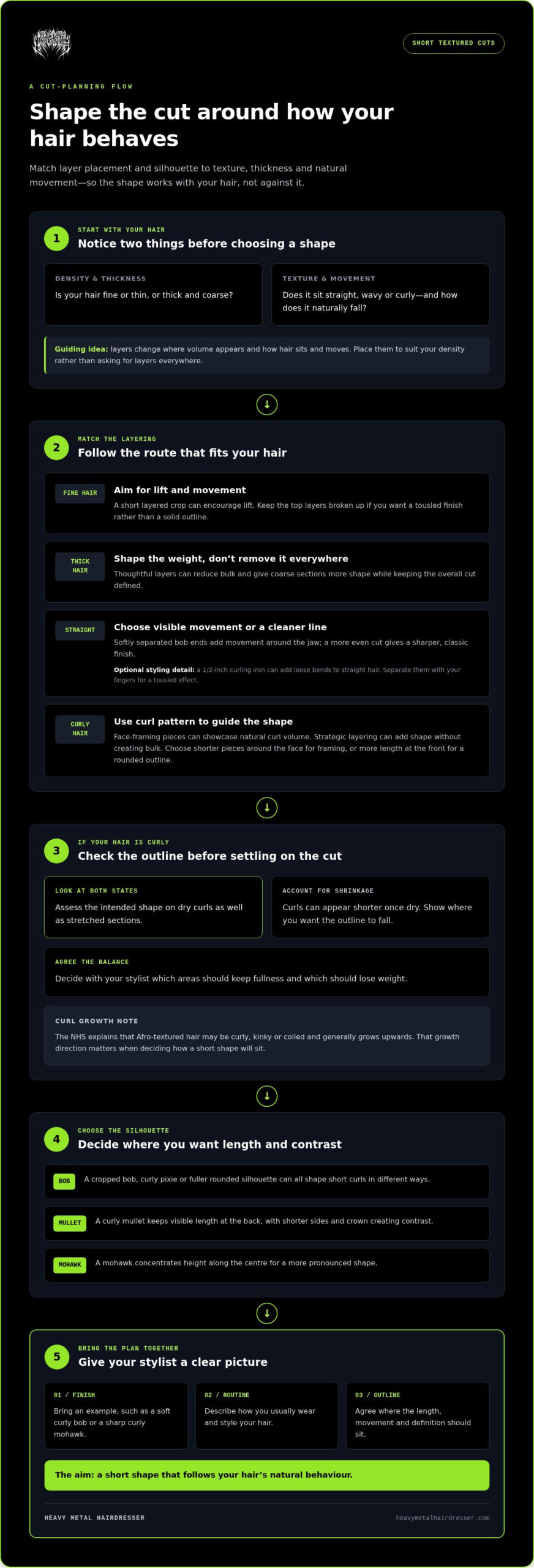
Short layers change how hair sits and moves, and where its volume appears. On fine hair, a short layered crop can encourage lift and movement. On thick hair, thoughtful layering can reduce bulk and give coarse sections more shape. The key is placing layers to suit your density, rather than asking for them everywhere. A classic short cut can still look tousled when its top layers break up a solid outline.
For straight hair, layers make the shape visible without relying on natural bends. A short bob with softly separated ends, for example, creates movement around the jaw; a more even cut gives a sharper, classic finish. If you want a wavy layered lob, a 1/2-inch curling iron can add bends to straight hair. Keep the bends loose, then separate them with your fingers for a tousled effect.
Curly hair needs a different plan because curl pattern affects how each section falls. Marc Ballance recommends face-framing cuts to showcase natural curl volume. David von Cannon recommends strategic layering to add shape without creating bulk. Ask for shorter pieces around the face if you want curls to frame your features, or keep more length at the front for a rounded outline.
Short curls can be shaped into a cropped bob, a curly pixie or a fuller, rounded silhouette. For a cut with bangs, sweep longer fringe to the sides to create face-framing curls, then use finishing cream to smooth and define them. A rich leave-in conditioner or curl cream can help keep natural curls soft and protect them from heat during styling.
Curly mullets and mohawks take the shape further. A curly mullet keeps visible length at the back, while shorter sides and crown create contrast. A mohawk concentrates height along the centre. The NHS explains that Afro-textured hair may be curly, kinky or coiled and generally grows upwards. That growth direction matters when deciding how a short shape will sit.
When choosing short cuts for curly hair, assess the intended shape on dry curls as well as stretched sections. Shrinkage can make curls appear shorter once dry, so show your stylist how you usually wear your hair and where you want the outline to fall. Then agree which areas should keep fullness and which should lose weight.
These short textured haircuts work best when the cut follows your hair’s natural behaviour. Bring an example of the finish you like, such as a soft curly bob or a sharp curly mohawk, and describe your usual styling routine. Together, these details help guide the balance between length, movement and definition.
2. Short textured pixie cuts and pixie bobs
A textured pixie keeps the sides and back close, with choppy length through the top. That contrast gives straight hair a broken-up finish and lets wavy hair show its natural texture. A pixie bob, often called a bixie, keeps more length around the ears and nape. Choose a pixie for a cropped outline, or a bixie if you want extra movement around your face.
Length changes the whole attitude. A short pixie can be tapered at the nape, with more length over the crown for lift. A longer pixie bob can reach the jaw, leaving enough length to tuck behind an ear or sweep across the forehead. Compare the outline you like with your own hair type, then decide where you want the shortest point to sit.
The mixie blends a pixie with a mullet, keeping the front and sides cropped with extra length behind. A wolf cut combines shaggy layers with a more pronounced crown, while a short shag usually spreads movement through the top and sides. These shapes suit people after a less polished finish. Layer placement matters: concentrated crown layers create lift, while longer back sections keep the silhouette from looking like a standard pixie.
Choppy bobs and layered cuts offer a softer route into short hair. A bob can have a blunt perimeter, with broken-up ends adding texture; a pixie bob uses shorter crown layers for a lighter feel. An A-line bob angles longer towards the front and has no layers, unlike a stacked cut, which builds shorter layers at the back. That distinction helps you choose between a clean line and added shape.
Asymmetrical cuts take the contrast further, with one side left longer or a fringe swept across the face. They work as a deliberate design choice, not a flaw to disguise. Show the stylist which side you part on and how you wear your fringe; those details affect where the longer section falls. A choppy bob can also be styled with a 1/4-inch Marcel iron to create defined bends, then loosened for a less sculpted finish.
Before choosing, consider the shape you want on an ordinary day. A closely tapered pixie exposes the nape; a bixie gives more coverage and styling options. A mixie or wolf cut creates a stronger, more uneven outline. Use photos to compare the front, sides and back, rather than choosing from one dramatic angle. The best reference shows the texture and finish you want, not just the haircut’s name.
3. Styles for fine, thin, thick and wavy hair
Start with your hair’s density and movement, then choose a shape that works with both. Fine hair can lose lift under heavy products, so lightweight volumising products can boost roots without weighing them down. A textured pixie, short layered bob or soft shag can suit someone after an easy-to-style look, but each creates a different outline. A pixie keeps the shape cropped, while a bob leaves more length for framing and styling.
For extra height, a stacked bob uses shorter layers at the back to remove weight and build body. It can suit fine or thin hair that sits flat, especially when the back is shaped close and the front stays longer. Thick hair can go the other way: a blunt, chin-length bob gains movement from texture and subtle layering. That combination keeps a defined edge without making the whole shape feel heavy.
Wavy hair brings its own pattern to short styles. A low-maintenance shaggy bob works with the wave rather than demanding a sleek finish; volumising shampoo and conditioner can help with styling and add oomph. A classic shag builds volume around the crown, then tapers towards lighter edges. For a bolder version, cropped bangs and extensive layers give a modern shaggy bob a broken-up outline.
Pixies, bixies and crops can all be adapted to different hair types. A textured pixie keeps the shape close, while a bixie preserves more length around the face. A short crop can be soft through the top or have a sharper perimeter. For an asymmetrical style, keep one side longer or sweep the fringe across. This shifts the visual balance without changing the overall cropped length.
Short textured styles aren’t limited by gender. For anyone with bob-length hair who wants a sleeker finish, pomade or lightweight gel can hold hair back; leaving the front loose creates a more relaxed alternative. A layered crop can also retain natural movement rather than being combed into place. Choose your finish by considering how your hair falls when air-dried and how much time you want to spend styling it.
Use these examples to narrow down the shape before discussing the cut: a stacked bob for crown height, a chin-length bob for thick hair, or a shag for wavy texture. Then decide where you want the weight to sit, whether you prefer a fringe, and how much length you want around the ears and nape. Those choices make a reference photo more useful than a style name alone.
4. Short haircuts for thick or thin hair
Short cuts can work with both thick and thin hair, but the shaping differs. In thick hair, removing weight can make a crop easier to control and reveal its outline. With thin hair, a shorter shape can create the appearance of fullness and volume. Internal, or invisible, layers sit beneath the surface, adding lift without making the outer shape look heavily layered. They’re useful when you want movement without a visibly choppy finish.
Maintenance depends on the cut’s edges and how quickly its shape grows out. A textured mop-top needs trimming every 4 to 6 weeks to maintain its appearance. A sculpted crop should be trimmed every four to six weeks to keep its look and shape. By contrast, reshaping a short choppy haircut can involve salon visits spaced four months apart. Use the original outline and your preferred finish to guide your trim schedule.
Natural Black hair needs shaping that respects its curl pattern and growth direction. The NHS describes Afro-textured hair as curly, kinky or coiled, and generally growing upwards. That can affect how a short crop sits, so consider the finished silhouette rather than judging length on stretched hair alone. Internal layers can reduce hidden weight, while a rounded shape keeps the outline balanced. A hydrating leave-in product can help keep natural curls healthy, as Marc Ballance recommends.
Colour can make a short layered cut feel more individual. A blonde fringe against a darker base, for example, draws attention to the front; a vivid panel can highlight one side of an asymmetrical crop. Consider where the layers fall before choosing colour placement. Colour that follows the cut’s shape can make its lines easier to see, while an all-over shade gives the silhouette a more unified finish.
Choose styling products to suit your hair density and desired result. David von Cannon recommends lightweight volumising products for fine hair, which can boost roots without weighing them down. For a tousled look, work a small amount through the ends and separate sections with your fingers. Wavy hair can benefit from texturising spray to define its bends and create lived-in texture. Avoid loading product onto the roots if you want a lighter finish.
Build an easy routine around the shape, not a complicated set of steps. For a short crop, lift the roots with a lightweight product, then arrange the top with your fingers. For curly hair, use a hydrating leave-in product and define curls individually rather than brushing them out. If the cut loses its outline between trims, note whether the crown, fringe or nape needs reshaping. Those details help keep the style deliberate as it grows.
5. Short shag and mullet variations
Shags and mullets bring texture through shape, not just styling. The shag has evolved since it was invented in the early 1970s, but its core silhouette remains recognisable: volume around the crown and lighter, tapered edges. A short shag can keep that contrast close to the head, or use choppy layers for a looser outline. The takeaway: choose where you want the cut’s weight and movement, then match its length to your preferred finish.
A short shag works across different hair types because its layers can be adjusted. With thick hair, removing weight through the crown and sides can stop the outline feeling dense. With finer hair, keeping the layers less spread out can preserve a fuller-looking shape. Wavy hair gives the cut a tousled finish with less shaping; straighter hair shows the choppy ends more clearly. A fringe draws attention towards the eyes, while longer face-framing pieces soften the outline.
The mullet makes a sharper statement. Its defining contrast is shorter hair around the front and sides, with more length at the back. A short version can keep the back subtle, while a spiky mullet makes the crown and silhouette more pronounced. For a softer variation, use blended layers rather than a hard transition. For a bolder one, keep the sections distinct. These choices matter more than simply asking for a “mullet”, because they determine how dramatic the shape looks.
Face shape can help guide the front and sides, but it shouldn’t dictate the whole cut. A side-swept fringe, for example, can break up a strong horizontal line, while a longer fringe can frame the cheekbones. A short curly mullet can keep curls prominent at the back and crown; a wavy shag can spread movement more evenly. Bring photos of the front, side and back, then point out the features you want to carry into your layered cut.
Think about upkeep before choosing a sharply defined outline. A spiky mullet’s silhouette can be kept sharp with salon visits every 6-8 weeks. A softer, grown-in shag relies more on its layers and natural movement, so its shape changes as it grows. For everyday styling, texturising spray can define waves and create a lived-in finish; use fingers to separate sections rather than flattening the crown. If you want a cut with shaggy texture, explore a shape built around your hair.
Heavy Metal Hairdresser: Shag Haircuts
Heavy Metal Hairdresser offers Shag Haircuts for anyone drawn to choppy layers, crown volume and lighter, tapered edges. If you’re deciding between a short shag and a mullet, consider the silhouette you want: a shag spreads texture through the shape, while a mullet keeps more length at the back. Reference photos of the front, sides and back can help show the finish and outline you’re after.
Turn to Heavy Metal Hairdresser when you want a shag shaped around your preferred look, rather than choosing by haircut name alone. Share how you wear your hair and which details matter most, such as a fringe, a tousled crown or a sharper outline. Visit Heavy Metal Hairdresser to explore Shag Haircuts or get in touch.
Make your next cut your own
Your next step is to choose how you want your hair to feel: subtly moved, sharply outlined or full-on statement-making. Use the ideas here as a starting point, then bring reference images that show the details you’re drawn to. A clear view of the front, sides and back helps turn inspiration into a shape you can make your own.
Short textured haircuts are about more than following a trend. They give you room to work with your natural texture and express your style, whether you’re leaning towards shaggy layers or a bolder wolfcut. Heavy Metal Hairdresser offers Shag Haircuts, Wolfcuts and Guest Spots for people looking to explore those directions.
Ready to shape your next look? Contact Heavy Metal Hairdresser and take the next step towards hair that feels like you.
Frequently Asked Questions
What are the most popular short textured haircuts for men and women?
Popular choices include textured crops, pixies, choppy bobs, shags and mullets. Short textured haircuts can be adapted across genders: a crop can keep the sides close with a broken-up top, while a shag creates a looser outline. For a less dramatic change, try a textured bob with uneven ends. Choose references based on the finish you like, rather than treating a style’s gender label as a rule.
Which short textured haircuts suit different face shapes?
Choose a fringe, volume and outline to balance the features you want to highlight. A side-swept fringe can add an angled line across a rounder face, while length around the jaw can frame a longer face. A square outline can be softened with broken-up ends or a loose wave. These are starting points, not strict rules: compare front-facing photos and consider where your hair naturally parts.
What is the difference between a textured crop, French crop, pixie cut and textured bob?
A textured crop is a short cut with a deliberately broken-up finish, often shaped close at the sides. A French crop usually has a forward fringe and a compact outline. A pixie is cropped around the sides and back, with varied length on top. A textured bob keeps more length, commonly around the jaw, and uses separated ends for movement. Show your stylist the silhouette you mean, since style names can overlap.
How do you style short textured hair at home?
Start with clean, towel-dried hair and work in small sections so product reaches the shape evenly. Use your fingers to lift the roots or direct a fringe, then let waves or curls settle into their natural pattern. Once dry, separate a few pieces to sharpen the outline. For a sleeker finish, comb the hair into place; for a looser result, avoid repeatedly brushing through the finished style.
Which products work best for styling short textured hair?
Choose products based on how your hair behaves and the finish you want. Lightweight volumising products suit fine hair when you want root lift without a heavy feel. Texturising spray can bring out separation in waves, while curl cream helps define curls. Pomade or lightweight gel can give bob-length hair a sleeker, more controlled finish. Start with a small amount, then add more only where the shape needs definition.
How often should you trim a short textured haircut?
Trim frequency depends on how sharply defined the cut is. A textured mop-top is maintained with trims every 4 to 6 weeks, and a short spiky pixie is reshaped every 4-6 weeks. For short hair generally, David von Cannon recommends trimming about every six weeks to maintain its shape. A softer cut can grow out less abruptly, so use changes to the fringe, crown or nape as your guide.
What short textured haircuts work best for fine, thick, curly or wavy hair?
Fine hair can suit a textured pixie or crop, with the top shaped to avoid a flat finish. Thick hair can take a choppy outline that removes weight while preserving its perimeter. For curls, choose a shape that accounts for how they settle when dry. Wavy hair can carry a shaggy bob or layered crop, with its natural bends giving the ends texture.
How do you maintain a short textured haircut as it grows out?
Keep the shape intentional by noticing which area changes first. If the fringe starts falling into your eyes, sweep it to the side; if the crown loses height, change your parting or lift the roots when styling. Letting the back and sides grow can shift a crop towards a softer shape. Tell your stylist which parts you want to retain, so the next reshaping supports that direction rather than resetting the cut.