A cut that gets softened until its sharp edges disappear isn’t the cut you asked for. Wolfcuts & altcuts are about individuality, not making every silhouette behave. If you’ve left a mainstream salon with layers that feel too polite, or wondered how a wolfcut differs from a shag, mullet or another altcut, you’re in the right place.
You don’t have to choose between a bold look and hair that works for you. The right shape should suit your texture, length and identity while keeping the attitude that drew you to it. Heavy layers can also be easier to style at home once you know which tools and techniques bring them to life.
This guide compares wolfcuts and other altcut silhouettes, helps you think through what might work for your hair, and shares practical styling advice for a lived-in, textured finish. You’ll also learn what to look for in a stylist who understands alternative hair and respects your vision. Heavy Metal Hairdresser is a gender-inclusive space, with experience styling bands and artists and working backstage at Download and Bloodstock. No sanding off the edges.
Key Takeaways
- Wolfcuts & altcuts cover a range of shapes, from shag-inspired layers to disconnected mullets. Learn what distinguishes each silhouette.
- Compare the textured movement of a modern shag with the more pronounced contrast of a mullet.
- Fine hair isn’t automatically off-limits for bold layers. A considered shape can add movement while retaining fullness through the ends.
- Build a practical styling routine with damp-hair prep and rough-drying or diffusing.
- Look for an alt-hair stylist who understands the look you want and creates a gender-inclusive space where your vision is respected.
What are Wolfcuts & Altcuts? Defining the New Alternative Standard
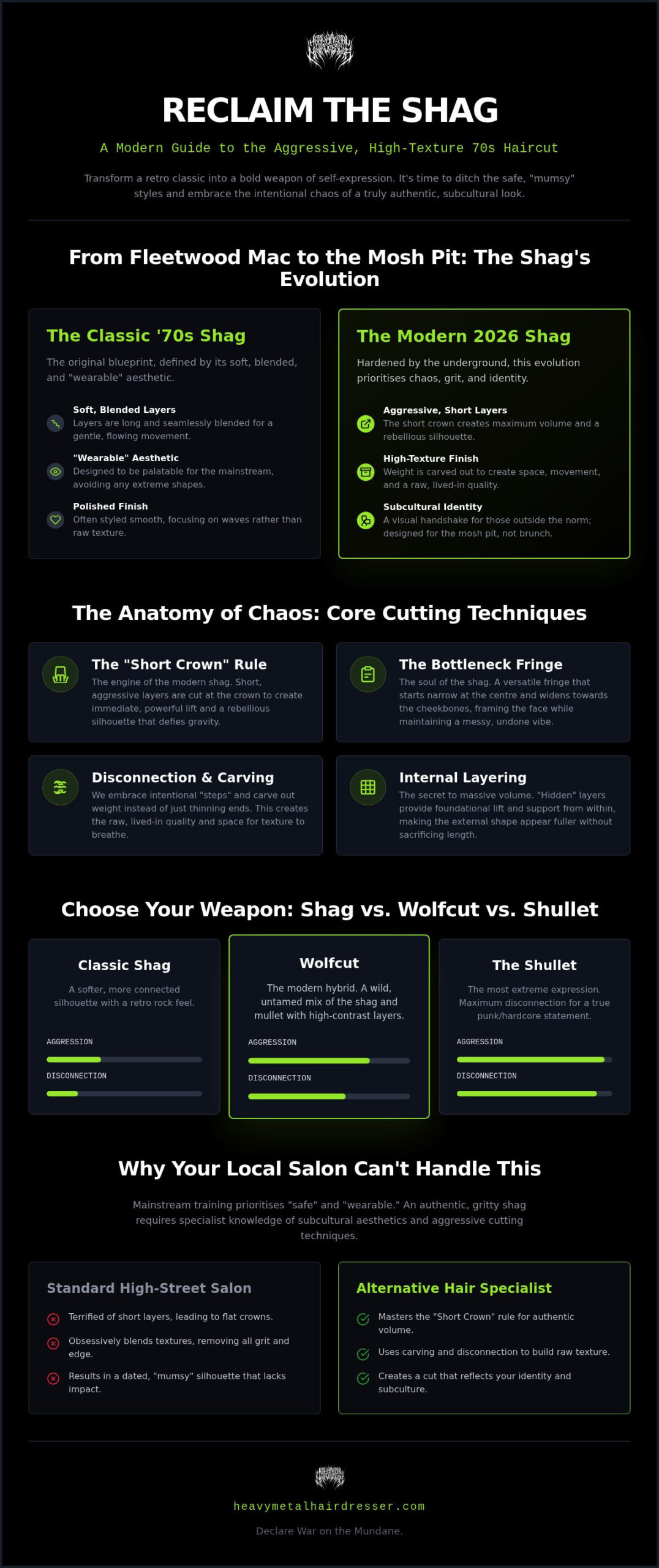
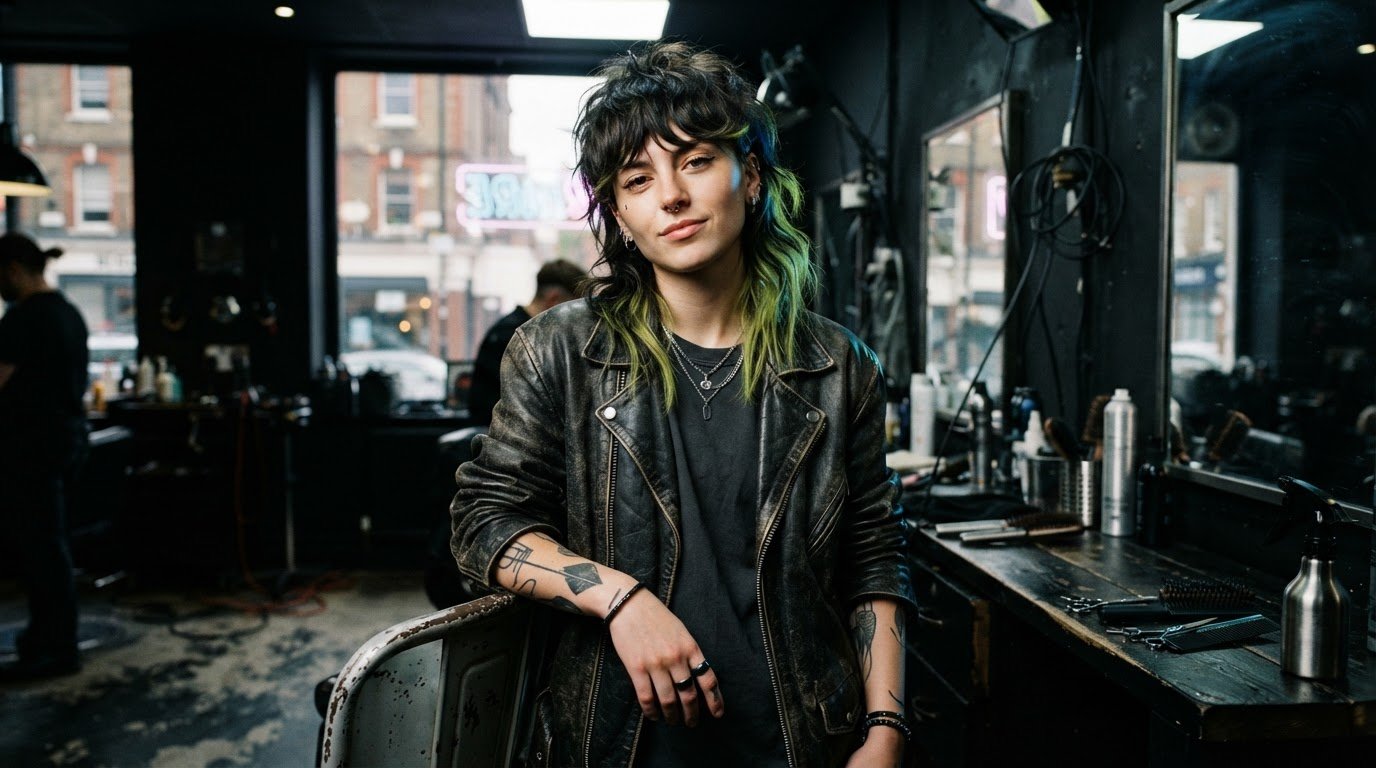
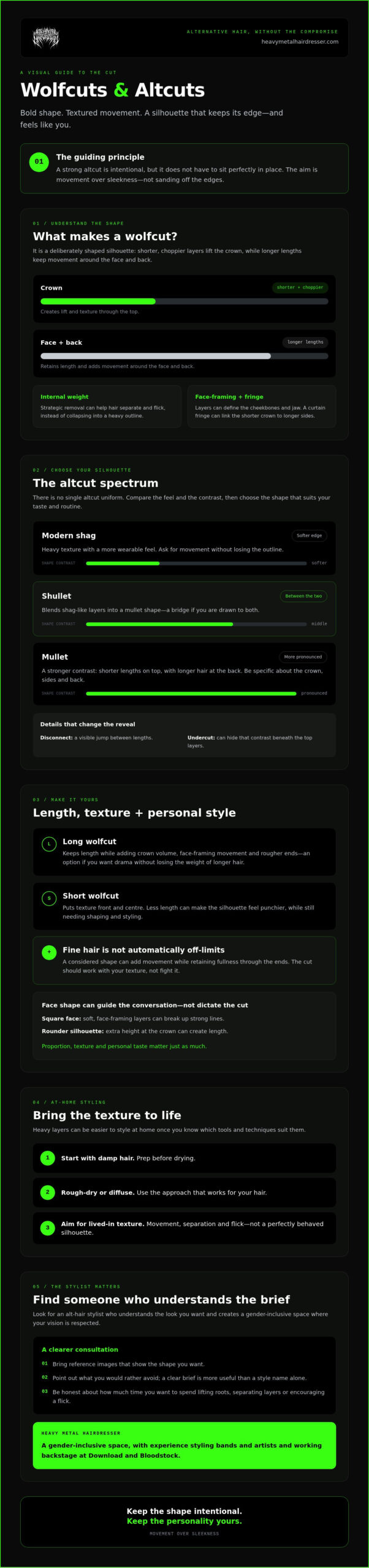
A wolfcut isn’t simply a shag with a mullet bolted on. It’s a deliberately shaped silhouette, with shorter, choppier layers creating lift through the crown and longer lengths retaining movement around the face and back. The result has contrast and direction rather than a uniform cascade of layers. Wikipedia describes a variation of the shag called a wolf cut, placing it within the shag’s wider haircut history.
Altcuts is the bigger picture. The term can include shullets, jellyfish cuts and disconnected mullets, each playing with shape, separation and proportion in a different way. The shared principle is movement over sleekness. Think controlled chaos: the cut should have intention, but it doesn’t need to sit perfectly in place to look finished.
Wolfcuts & altcuts bring music, identity and personal style into the shape of a cut. They aren’t one fixed trend, but a way to create personality through proportion and texture.
The Anatomy of a Professional Wolfcut
The shape depends on more than piling layers on top. A stylist can remove internal weight strategically to help the hair separate and flick instead of collapsing into a heavy outline. Face-framing layers can sharpen the silhouette around the cheekbones and jaw. A curtain fringe can anchor the look, linking the shorter crown to the longer sides. Its length and density matter: it should feel like part of the cut, not an afterthought.
The Subcultural Roots: From Punk to the Mosh Pit
The wolfcut’s shag-and-mullet DNA echoes the long relationship between alternative hair and rock, from the free-moving shapes associated with 1970s rock to the louder styles seen around modern festival culture. The point isn’t to copy a specific era, but to carry its defiant spirit forward.
For heavy metal and underground communities, hair can be part of the signal: a visible refusal to blend in. The shift is from perfection to personality. Texture, unevenness and an unapologetic outline aren’t flaws to correct; they’re part of the design. Heavy Metal Hairdresser brings that subcultural context into its work, with experience styling prominent bands and artists and working backstage at Download and Bloodstock. A strong altcut should look intentional, but it should still feel like you.
The Altcut Spectrum: Choosing Your Silhouette
There’s no single altcut uniform. A modern shag brings heavy texture with a softer, more wearable edge, while an aggressive mullet makes the contrast more pronounced, with shorter lengths on top and longer hair at the back. A shullet sits between the two, blending shag-like layers into a mullet shape. The Guardian captured that easy-going appeal in its piece on the easy, breezy shullet.
Want a sharper reveal? Disconnects create a visible jump between lengths, while an undercut can hide that contrast beneath the top layers. These details let you dial up the edge without changing the whole outline. Bring reference images that show the shape you want, and point out what you’d rather avoid. That gives your stylist a clearer brief than a style name alone.
Long Wolfcut vs Short Wolfcut: Choose Your Weapon
A long wolfcut keeps the length while adding crown volume, face-framing movement and rougher ends. It can suit anyone who wants drama without losing the weight of longer hair. A short wolfcut puts texture front and centre; less length can make the silhouette feel punchier, though it still needs shaping and styling. Think about your daily routine: how much time do you want to spend lifting the roots, separating layers or encouraging a flick? Be honest about that before choosing.
Altcuts for Different Face Shapes
Face shape can guide the conversation, but it shouldn’t dictate the cut. Soft, face-framing layers can break up strong lines around a square face; extra height at the crown can lengthen a rounder silhouette. Proportion, texture and personal taste matter just as much. Wolfcuts & altcuts are about making the shape yours, not following a chart. If you want to explore how a specialist approaches individual silhouettes, see Heavy Metal Hairdresser’s alternative hair work.
For a wearable shag, ask for texture that moves without losing the outline. For a full-throttle mullet, be specific about the contrast between the crown, sides and back. If you’re drawn to both, a shullet can bridge the gap. There’s no face-shape rule that outranks your own taste.
Injecting Chaos into Thin Strands: The Wolfcut on Fine Hair
Fine hair can wear a wolfcut. The idea that it must stay blunt and untouched confuses fine strands with low density and assumes layers always reduce impact. A considered cut can use texture to build lift and movement. The key is control: remove weight where it helps the shape, but keep enough fullness through the ends to avoid a wispy outline.
Ask whether a dry-cutting approach would suit your hair. Seeing the strands in their natural fall can help a stylist judge where the layers sit and how much weight to remove. Shattered ends add separation and a broken-up edge, creating the impression of movement without cutting broad, thin sections. Explore the technique in this guide to the wolfcut on fine hair.
Technical Secrets for Fine Hair Volume
For lift, a stylist may shorten selected crown layers so they don’t lie flat against the head. The back needs a considered shape too: remove too much from the bottom and the mullet outline can turn see-through. Keeping a stronger perimeter, then adding texture selectively above it, can help preserve the look of fullness while creating a more jagged finish. Strand thickness, density and natural movement all affect how a wolfcut or altcut should be shaped.
At home, start with a light touch. A small amount of salt spray or texturiser can encourage separation and grip, but too much product may weigh fine strands down or make them feel stiff. Work it through sparingly, then add more only where the shape needs definition.
Styling for Maximum Oomph
Use a diffuser to encourage natural bends and lift without blasting the layers into a flat sheet. Cup sections gently and move the diffuser around your head; avoid scrubbing the hair, which can disturb the shape. If your hair responds better to your hands, try scrunch-drying: press the ends upwards towards the roots as you rough-dry, then let the layers settle before adding more product.
Keep the finish lived-in, not shellacked. Heavy creams and waxes can collapse fine hair, especially near the roots. Start with clean, damp hair and a light texturising product, then dry until it’s almost set before deciding whether you need extra grit. A little separation often gives a wolfcut more bite than coating every strand.
How to Style a Wolfcut: Mastering Aggressive Texture
A wolfcut comes alive through separation, lift and a bit of deliberate disorder. You don’t need a polished blow-out. Build the shape, then let the layers do their thing. Adjust the amount of product and heat to your hair’s texture and the finish you want.
- Prep: Work a texturising primer through damp hair, concentrating on the lengths rather than saturating the roots with product.
- Build the shape: Rough-dry for a relaxed finish, or use a diffuser to encourage natural bends and lift. Direct air towards the roots for volume, then dry the fringe and face-framing pieces into place.
- Define: Warm a small amount of matte clay or texture paste between your hands. Pinch it into selected layers and ends for separation instead of coating every strand.
- Disorganise: Use your fingers or a wide-tooth comb to break up neat sections and shift the layers into a less uniform shape.
- Set: If you need extra staying power, mist with a high-hold hairspray from a distance. Use a light veil, then scrunch or lift the hair rather than pressing it flat.
Essential Tools for the Alt-Hair Kit
A diffuser is useful for building texture without flattening natural movement, particularly if your hair waves or curls. It isn’t the only option: rough-drying can work well when you want a looser, less defined finish. Matte clays and texture pastes tend to create a drier, more separated look than shine-heavy pomades, which can make layers appear smoother and more grouped. Use a flat iron to make soft S-waves by gently bending the hair in alternating directions rather than winding it into uniform curls. Keep the iron moving and follow its safety instructions.
Maintaining the Grit Between Salon Visits
On second-day hair, dry shampoo can do more than refresh the roots. Used sparingly, it can add grip and help revive flattened layers. For a tired fringe, dampen just the fringe, reshape it with your fingers or a brush, then dry it into place. No full wash needed. For more on how to style a wolfcut between washes, use the guide as a starting point and adapt the method to your own texture.
Wolfcuts & altcuts look strongest when the finish still moves. Start with less product than you think you need, then build definition only where the layers lose their shape. For a cut shaped around texture and attitude, explore alternative haircuts at Heavy Metal Hairdresser.
Finding Your Style Master: The Alt-Hair Specialist
A dramatic cut needs more than someone who can use scissors. The right stylist should understand the references, attitude and shape you’re asking for, then adapt the cut to your hair and everyday routine. When searching for a wolfcut hairdresser, look for someone who respects the subculture behind the silhouette rather than automatically softening it into a more conventional shape.
That respect matters in the chair too. For non-binary and gender-diverse people, a gender-inclusive safe space means being able to talk about the look you want without fitting it into a gendered haircut category. Describe the length, shape and feeling you’re after. You can also share any language or boundaries that will help you feel comfortable.
Make your vision easy to read. Bring a mood board with different angles, point out the details you love, and name what you don’t want copied. Music references can help too: describe the energy, whether it’s raw and jagged or more flowing and dramatic. Wolfcuts & altcuts are personal; a clear brief helps your stylist shape the idea around you.
The Heavy Metal Hairdresser Philosophy
Heavy Metal Hairdresser was founded by Simon Tuckwell, a barber and creative stylist. Its work includes styling for prominent bands and artists, plus backstage festival work at Download and Bloodstock. That experience brings a connection to the scene, but your cut shouldn’t be a copy of someone else’s look. It should reflect your identity, texture and appetite for change.
Creative colour can push an altcut into a different register, highlighting its layers or making its shape more graphic. If vivid shades are part of your vision, explore this guide to vivid hair colour as a way to think through how colour and silhouette might work together.
Booking Your Transformation
Before committing to a new shape, discuss your reference images, current hair, styling routine and the amount of change you’re ready for. Ask how the proposed layers will sit, what upkeep they’ll need and how the cut could grow out. You don’t need specialist vocabulary; clear examples and honest answers are enough. Heavy Metal Hairdresser offers Wolfcuts for people seeking an alternative silhouette. Explore Wolfcuts at Heavy Metal Hairdresser and take your next step towards a cut that feels like yours.
Make Your Next Cut Unmistakably Yours
The right alternative cut is more than a silhouette. It’s a shape built around your texture, your identity and the level of edge you want to wear. Wolfcuts & altcuts can bring lift and movement to fine hair, retain their grit with a considered styling routine, and range from shag-inspired layers to full-throttle mullet contrast.
Your stylist should understand the vision, not dilute it. Heavy Metal Hairdresser offers alternative haircuts, vivid colour and a gender-inclusive space where you can talk through the look you want on your own terms. Its work celebrates individuality rather than copying a trend.
Ready to turn your references into a cut with real attitude? Explore Wolfcuts at Heavy Metal Hairdresser. Bring your ideas, own your edges and make the next look yours.
Frequently Asked Questions
Is a wolfcut high maintenance for daily styling?
A wolfcut can be low-fuss day to day if its layers work with your natural texture. Some mornings, a quick rough-dry or a little texturiser may be enough; other hair types need more shaping to bring out the flick and volume. Tell your stylist how much time you actually want to spend styling it. The cut should fit your routine, not turn every morning into a full production.
Can I get a wolfcut if I have curly hair?
Yes, curly hair can work with a wolfcut, provided the shape is designed around your curl pattern and how much your hair shrinks as it dries. Ask the stylist to consider where curls will sit when dry, especially around the fringe and crown. Bring photos of your hair on an ordinary day, not only freshly styled. That helps set expectations for the outline and finished length.
What is the difference between a wolfcut and a shag?
A wolfcut generally combines shag-like layers with a stronger mullet influence, often creating more contrast between the crown and the longer back. A shag can have heavy texture too, but its outline may feel more evenly layered and less pronounced at the back. The names aren’t rigid rules, though. Show your stylist the exact shape you mean, since one person’s idea of a wolfcut may differ from another’s.
How often should I trim my altcut to keep the shape?
There isn’t one trimming schedule for every altcut. A sharp fringe, close undercut or very defined disconnect may need attention sooner than a longer, more blended shag. Watch how the shape changes as it grows and book a trim when the outline stops sitting as you like. At your appointment, ask your stylist what to monitor and how your specific cut is likely to grow out.
Will a wolfcut work with a very short fringe?
Yes, a very short fringe can pair with a wolfcut for a stark, graphic contrast. Decide how it connects to the crown and face-framing layers, or whether you want it to stand apart. Consider how your fringe behaves as it grows and whether you’re comfortable styling it. Bring reference photos showing the fringe from the front and side, then discuss how your hair’s texture may affect its shape.
How do I stop my wolfcut layers from looking flat?
Start by lifting the roots as you dry your hair, using your fingers to direct the airflow beneath the layers. A diffuser can encourage natural movement, while a light texturiser can add separation where the hair needs it. Use small amounts and build gradually, especially if your strands are fine. Heavy product or applying too much near the roots can weigh the shape down instead of giving it more life.
Are wolfcuts gender-neutral?
Yes. A wolfcut is a shape, not a gender category. Its length, fringe, layering and level of contrast can be adapted to suit the person wearing it. Explain what you want the cut to express, and use reference images if words don’t quite capture it. A gender-inclusive stylist should listen without forcing your ideas into a gendered menu. Wolfcuts & altcuts are for anyone who connects with their attitude and shape.
Can I transition from a bob to a wolfcut easily?
Often, yes, but the result depends on your bob’s length, layers and current outline. A stylist may be able to reshape the top and sides straight away while keeping enough length at the back for the silhouette you want. If your bob is very short or blunt, you may need a gradual transition rather than one dramatic change. Bring photos and ask which parts are achievable now and which may need time to grow.