
A haircut isn’t just a style choice. It is a declaration of war against the mundane. For too long, the traditional hair industry has neutered the most rebellious looks in history, turning subcultural anthems into soft, “mumsy” shadows of their former selves. You don’t want a polite trim that disappears into the crowd. You want a 70s shag haircut modern enough to bite, defined by aggressive layers and an unapologetic edge that refuses to blend in.
We know the frustration of walking out of a standard salon looking far too polished and losing your identity in the process. It is time to reclaim the grit. In this guide, you will discover how to transform a retro classic into a bold weapon of self-expression with high-impact texture and alternative styling. We are breaking down the technical secrets of the cut, the essential products like Death Grip to keep your layers sharp, and how to find a specialist who actually understands your subculture. Prepare to ditch the volume struggles and embrace the chaos of a truly authentic look.
Key Takeaways
- Learn how the 70s shag haircut modern movement has evolved from soft retro waves into a high-texture, aggressive statement for 2026.
- Master the “Short Crown” rule and bottleneck fringe techniques to ensure your layers provide maximum volume and subcultural edge.
- Compare the nuances of classic shags, wolfcuts, and the “shullet” to find the exact silhouette that mirrors your personal style.
- Get to grips with professional “rough dry” techniques and foundational products like Hair To the Throne to maintain volume at home.
- Understand why specialist alternative hair training is the key to avoiding “mumsy” results and achieving a truly gritty, textured finish.
From Stevie Nicks to the Pit: The Evolution of the 70s Shag
The shag isn’t a museum piece. It’s a living, breathing creature. Whilst the icons of the 70s gave us the blueprint, the 70s shag haircut modern version has evolved into something much more aggressive. It’s defined by a high-texture finish and multi-layered depth. The engine of this cut is the short crown. This isn’t about looking like you’ve just stepped off a Fleetwood Mac album cover; it’s about subcultural grit. Modern shags are built to be lived in. They thrive on the friction of everyday life.
We’ve moved past the “louche 70s” aesthetic of velvet and bell-bottoms. By 2026, the shag has been hardened by the underground. Heavy metal and alternative scenes kept this silhouette alive when the mainstream forgot it. It prioritises chaos over polish. It’s about movement that looks better the more you sweat. This evolution isn’t just about fashion; it’s about identity. The cut serves as a visual handshake for those who live outside the norm.
Why Traditional “Wearable” Shags Often Miss the Mark
Mainstream salons love the word “wearable.” Usually, that’s code for “boring” or “safe.” They are terrified of short layers. They give you soft, blended textures that go flat by lunchtime. An alternative soul needs a cut that survives a mosh pit, not just a brunch date. Without that aggressive weight removal and those short, choppy crown layers, you’re left with a dated, “mumsy” silhouette that lacks any real punch. A real shag needs to be hacked into, not politely trimmed. It requires a level of technical bravery that most high-street stylists simply haven’t been taught.
The 2026 Shift: Aggressive Texture and Identity
The modern landscape has embraced the shag as a gender-neutral staple. It is a tool for self-expression that transcends old-school beauty standards. Much of this recent energy comes from the rise of the wolf hair cut, which injected even more “wildness” into the classic shag structure. Finding a 70s shag haircut modern enough for your aesthetic means looking beyond the high street. To get it right, you need a stylist who speaks your language. Mainstream training doesn’t cover this level of technical aggression. Choosing someone who understands subcultural aesthetics ensures your hair looks like a choice, not an accident. This is where a specialist alternative hair course comes in. It equips stylists with the tools to create hair that actually belongs on a stage or in the pit.
The Anatomy of Chaos: Defining Modern Shag Layers
The 70s shag haircut modern aesthetic lives or dies by the crown. In traditional salons, stylists are taught to keep layers long and “safe” to avoid overwhelming the client. We do the opposite. The “Short Crown” rule is our engine. By cutting short, aggressive layers at the top of the head, we create immediate lift and a silhouette that screams attitude. It’s not about being messy for the sake of it. It’s about intentional structural chaos.
Disconnection is another weapon in our arsenal. Whilst mainstream hairdressing obsessively blends every line, we embrace intentional “steps.” These slight breaks in the transition from short to long layers provide the grit needed for a subcultural look. It gives the hair a lived-in, raw quality that survives the day without falling flat. We don’t just thin the hair; we remove weight through carving. This technique creates space for movement, allowing the texture to breathe rather than just looking ragged at the ends.
The Fringe: The Soul of the Shag
The fringe is where your identity sits. You can opt for heavy, lash-grazing 70s bangs for a classic rock feel or a modern bottleneck fringe for something more versatile. A bottleneck fringe starts narrow at the centre and widens towards the cheekbones, creating a frame that highlights your features whilst maintaining that messy, undone vibe. The key is the blend. We carve the fringe so it flows seamlessly into the side layers, ensuring there are no awkward gaps. We adjust the depth based on your forehead height to make sure the weight sits exactly where it needs to.
Internal Layering vs. External Shape
True texture comes from what you can’t see. Internal layering involves “hidden” layers that provide foundational lift without sacrificing your overall length. This is how we achieve that massive, airy volume on fine hair. Instead of standard point cutting, we use a carving technique to sculpt the hair. This method creates deeper channels of texture. To truly make these layers pop, many of our clients integrate vivid hair colour. High-pigment tones like deep violets or toxic greens highlight the depth of the cut, making every layer visible. If you’re ready to ditch the flat, suburban look, booking one of our specialist Shag Haircuts is the first step toward reclaiming your edge.
Choosing Your Weapon: Classic Shag vs. Modern Wolfcut Hybrid
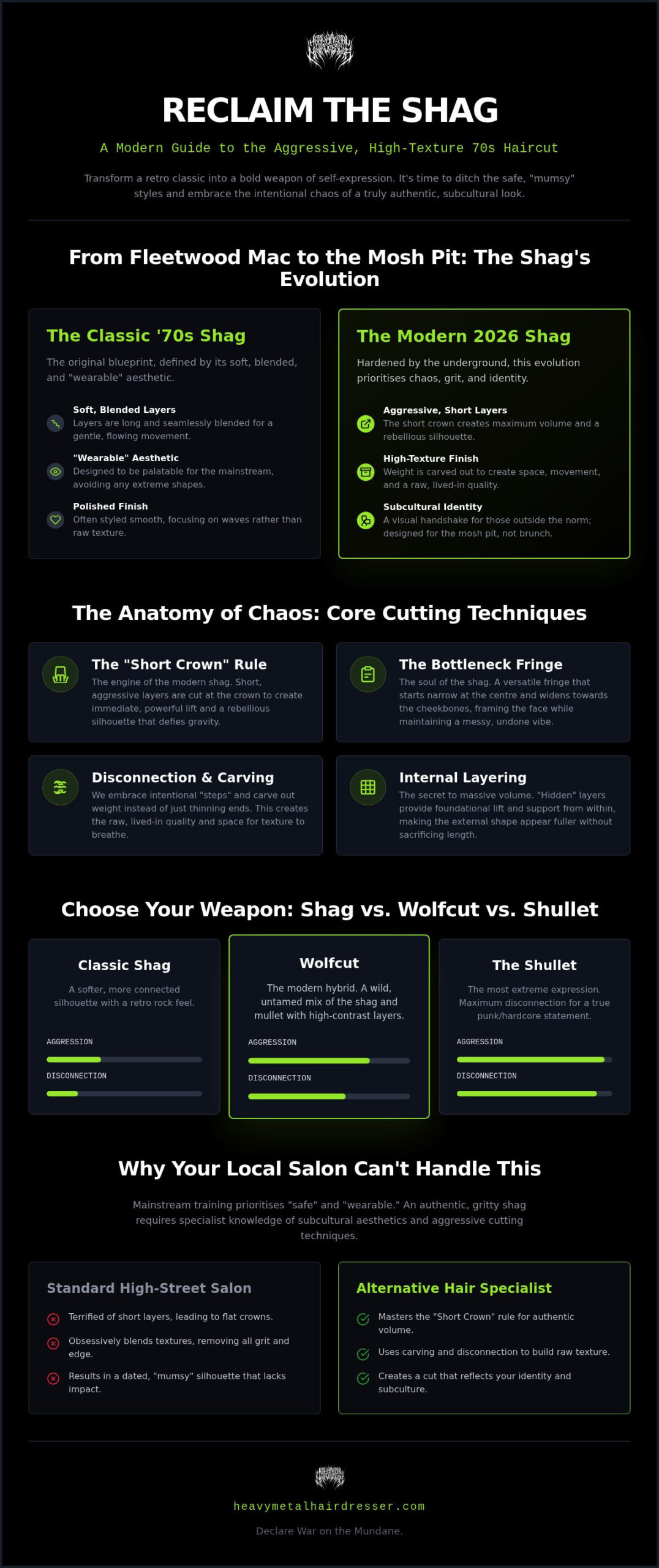
Picking your silhouette is a tactical decision. The 70s shag haircut modern revival offers a spectrum of aggression. On one end, you have the classic Stevie Nicks aesthetic. It’s iconic, featuring heavy fringe and face-framing layers that feel louche and rock-and-roll. On the other end, we have the hybrids. The “Shullet” (shag-mullet) is the choice for those who want to lean into an aggressive nape length whilst keeping the choppy top layers of a shag. It’s a high-impact look that demands attention and refuses to play by the rules.
Your hair type dictates the technical approach. Thicker manes require significant weight removal to prevent the hair from looking like a helmet. We carve into the bulk to create channels of movement. Fine hair, however, needs a structural foundation. We use short crown layers to build height, ensuring the hair doesn’t collapse under its own weight. Whether you want a “Bob-Shag” that hits the jaw or a waist-length alternative mane, the goal is always the same: maximum texture with zero compromise.
The Wolfcut Hybrid: For Maximum Aggression
The wolf hair cut is the shag’s wilder, more textured cousin. This hybrid approach is perfect if you want a “rockstar” finish that feels raw and unfiltered. It takes the volume of a shag and mixes it with the disconnected, wispy ends of a mullet. To keep the look sharp, you need to understand how to maintain the modern mullet haircut elements within the shag structure. It’s about keeping the back long and shredded whilst the top stays chaotic and high-volume. This isn’t just a haircut; it’s an anthem of rebellion.
Texture Matching: Straight, Wavy, or Curly?
The shag is the ultimate cut for natural waves. It organises the chaos, allowing your natural bend to sit perfectly without looking messy in a bad way. For those with straight hair, the challenge is managing “the fluff.” You need the right products to add grit and stop the layers from looking too soft. Curly shags are a game-changer for avoiding the dreaded “triangle” shape. By layering internally, we distribute the volume evenly, letting your curls stack vertically rather than bunching out at the sides. It creates a balanced, rebellious silhouette that celebrates your natural texture instead of fighting it.
Styling the Grit: Maintaining Volume and Texture at Home
Your new cut is only as good as your styling routine. A 70s shag haircut modern silhouette requires more than just a quick air dry. If you leave it to nature, it will go flat. You need to embrace the “Rough Dry” technique. Heat is your friend. Flip your head upside down. Use a hairdryer with a nozzle and blast the roots against the grain. This creates the vertical lift that defines the style. It is about building a shape that looks chaotic but feels structurally solid. You aren’t just drying hair; you are engineering volume.
Foundational volume is non-negotiable. We use Hair To the Throne to prime the hair before the heat hits it. It provides the skeletal support needed to keep those short crown layers from collapsing. Once the hair is dry, you need to define the ends. This is where Death Grip comes in. It creates that “piecey,” aggressive texture that separates a subcultural shag from a standard trim. Don’t be afraid of the “Second-Day” rule. Shags often look their best after a night in the pit. The natural oils and a bit of movement add a level of grit that fresh products can’t always replicate. It is a style that develops character over time.
The Volume Foundation: Prep and Prime
Mainstream conditioners are often the enemy of a gritty shag. They are frequently too heavy and slick. They coat the hair in silicone, weighing down the layers and killing the volume. If you must use conditioner, keep it strictly on the very ends of the hair. Your roots need to stay thirsty for volume boosters. Applying textured styling products whilst the hair is damp creates a foundation for the entire look. It ensures your hair stays high whilst you are moving through your day. This priming stage is what prevents the “flat-top” look that ruins a good shag.
Defining the Layers: The “Death Grip” Method
To get that aggressive finish, you need to work with the individual layers. Take a small amount of Death Grip. Warm it between your palms until it is pliable. Use your fingers to “pinch” and twist the ends of your layers. This creates sharp definition and prevents the hair from looking like a solid, untextured block. It is about creating separation. If your layers go flat between washes, don’t panic. A quick blast of heat and a fresh pinch of product will revive the shape in seconds. You can grab your own Death Grip and styling essentials directly from our shop to keep your grit alive at home.
Why Your Local Salon Can’t Handle This Level of Texture
Most high-street salons are factories for the mundane. They see a 70s shag haircut modern request and immediately try to “soften” it. They are trained in symmetry and traditional beauty standards, which are the natural enemies of subcultural grit. When you want aggressive layers and a disconnected silhouette, you cannot rely on someone who spends their day doing “wearable” bobs. You need a specialist who understands that your hair is an extension of your identity, not just a service on a price list. We don’t do “polite” hair. We do hair that makes a statement.
This technical gap is real. Standard hairdressing qualifications rarely touch on the carving and weight removal techniques required for alternative styles. It is why a specialist alternative hair course is so vital for the modern stylist. It equips them with the technical bravery to hack into the hair and create the movement that defines our scene. We don’t just cut hair; we build silhouettes that survive the chaos of your life. Whether you are in the front row or on the stage, your hair needs to hold its ground.
The Specialist Edge: Understanding the Aesthetic
You should never have to explain what a wolfcut is to your stylist. You shouldn’t have to justify why you want your crown layers short and choppy. At Heavy Metal Hairdresser, we speak your language. Our consultations aren’t about what is “flattering” by mainstream standards; they are about what makes you feel like yourself. We have spent years bridging the gap between music and hair, styling bands at festivals like Download and Bloodstock. We know how hair needs to behave when you are moving. We respect your subcultural identity because we live it too. It is about a shared understanding of the aesthetic.
Beyond the Cut: Joining the Community
Walking into a salon should feel like stepping into a backstage festival vibe, not a clinical waiting room. We have built a gender-inclusive safe space where being different is the baseline. By choosing an independent business that celebrates individuality, you are supporting a community that refuses to be diluted. It is time to reclaim your edge and stop settling for “mumsy” layers. You can book your 70s shag haircut modern transformation by securing one of our Shag Haircuts or checking for our latest Guest Spots. Don’t let a standard salon neuter your style. Let’s create something that actually represents who you are.
Reclaim Your Identity with Aggressive Texture
Your hair is the loudest thing about you. It shouldn’t be neutered by a stylist who doesn’t get it. We’ve broken down why the 70s shag haircut modern aesthetic demands technical aggression, from those vital short crowns to the intentional chaos of disconnected layers. You now have the tools to maintain that gritty texture at home using products like Death Grip and the knowledge to choose a silhouette that actually mirrors your identity. Whether you lean into a wolfcut hybrid or a classic rock-and-roll shag, the goal is always the same: zero compromise on your subcultural edge.
We aren’t just high-street hairdressers. We are specialists in alternative texture who have styled the stages of Download and Bloodstock festivals. Our salon is a gender-inclusive safe space built for the rebels, the outsiders, and anyone who refuses to blend in. Stop settling for “wearable” and start wearing a weapon of self-expression that survives the pit and the everyday grind.
Book your aggressive shag transformation at Heavy Metal Hairdresser. It’s time to reclaim your edge and join a community that celebrates exactly who you are. Your transformation starts here.
Frequently Asked Questions
Is a 70s shag haircut high maintenance?
No, a shag is actually one of the most low-maintenance styles for alternative identities. It is designed to be lived-in and thrives on movement rather than perfection. Unlike blunt cuts that look unkempt as they grow, the aggressive layering in a shag evolves into new, intentional shapes over time. It is a cut built for survival, looking better the more it is “messed up” by your daily life.
Can I have a shag haircut if I have very fine hair?
Yes, a 70s shag haircut modern style is the ultimate solution for fine hair that lacks volume. By cutting short, technical layers into the crown, we remove the weight that usually pulls fine hair flat. This creates foundational lift and makes your hair appear significantly thicker. It transforms limp strands into a high-impact, textured silhouette that holds its shape without collapsing.
What is the difference between a shag and a wolfcut?
The main difference lies in the level of disconnection and the silhouette. A shag is a multi-layered cut that focuses on volume and texture throughout the entire head for a cohesive, messy look. A wolfcut is a hybrid that mixes shag layers with the longer, wispy nape of a mullet. Wolfcuts often feature more dramatic “steps” between layers, whereas a shag maintains a more consistent, albeit chaotic, flow.
How often should I get my shag haircut trimmed?
You should get your shag trimmed every 8 to 12 weeks to maintain the structural integrity of the layers. Whilst the cut grows out better than most, the short crown layers eventually lose their lift as they gain length and weight. A quick tidy-up ensures the internal weight removal stays effective and your fringe doesn’t become unmanageable. It keeps the grit sharp and the volume high.
Do I need to style my shag every day to make it look good?
You don’t need to perform a full styling routine every morning. Most shags look their best on day two or three when the natural texture has settled. A quick refresh with a hairdryer at the roots or a small pinch of product on the ends is usually enough to revive the shape. It is a “get up and go” style that celebrates bedhead chaos rather than polished perfection.
Will a shag haircut work with a round face shape?
Absolutely, a shag is incredibly adaptable for round face shapes. We use face-framing layers and bottleneck fringes to create vertical lines that elongate the appearance of the face. By adding height and volume at the crown, we shift the visual focus upwards. It is a highly customisable cut that we adjust to highlight your features whilst maintaining its unapologetic, subcultural edge.
What products are best for a gritty, textured shag finish?
For a truly gritty finish, you need products that add friction and skeletal support. Start with a volume primer like Hair To the Throne to build a foundation whilst the hair is damp. Once dry, use a technical wax or clay like Death Grip to “pinch” and define the ends of your layers. Avoid heavy oils or silicones, as these will flatten the texture and make the cut look greasy rather than gritty.