Posted on

The Razor Cut Shag Hairstyle: Achieving Aggressive Texture and Lived-In Grit

The Razor Cut Shag Hairstyle: Achieving Aggressive Texture and Lived-In Grit

Stop settling for ‘neat’ when you were born for chaos. A pair of scissors creates a shape, but a straight razor carves an identity. If you’re chasing that raw, aggressive texture that screams underground rather than suburban, the razor cut shag hairstyle is your weapon of choice. It’s the sharp-edged antidote to hair that looks too ‘done’ or lacks the soul of a subcultural icon. You shouldn’t have to fight your hair to make it look authentic.

We know the frustration of leaving a chair with layers that feel too safe or volume that disappears before you’ve even left the shop. You want hair that feels alive, messy, and unapologetically you. This is about more than just a trim; it’s about a mood. You’ll discover why the razor cut shag is the ultimate expression of alternative identity and how to master its chaotic, textured flow. We’ll explore why this technique is the secret to effortless volume in fine hair and why it actually looks better the longer you leave it whilst it grows out. It’s time to embrace the grit.

Key Takeaways

  • Learn how a straight razor carves shattered, seamless ends to inject mechanical movement that traditional scissors simply cannot replicate.
  • Discover why the razor cut shag hairstyle is the ultimate weapon for debulking thick hair and creating aggressive volume in fine strands.
  • Break the rules of traditional styling by subverting face shape norms to build a bespoke look that prioritises your alternative identity.
  • Master the air-dry philosophy and learn which minimal tools you actually need to maintain that gritty, lived-in texture every single day.
  • Explore the deep connection between underground culture and hair, and why your style serves as a powerful statement of belonging.

What is a Razor Cut Shag Hairstyle? Beyond the 70s Revival

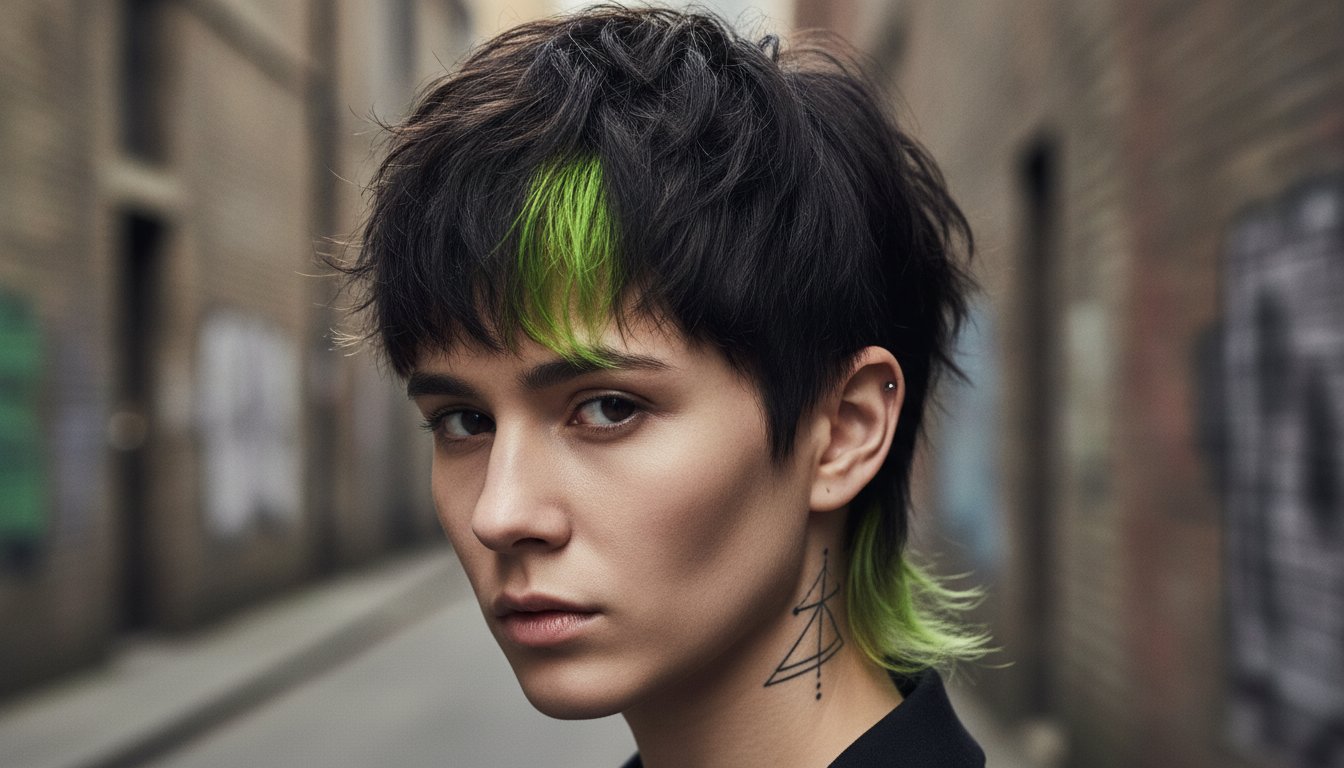
Forget everything you think you know about 1970s retro fluff. This isn’t a vintage throwback; it’s a subcultural revolution. The modern razor cut shag hairstyle is a high-contrast blend of aggressive internal layering and a wispy, lived-in perimeter. In 2026, it has become the definitive uniform for the UK alternative scene, from the backrooms of Camden to the DIY venues of Manchester. It’s the style for those who want their hair to look like it has a pulse.

Whilst the history of the shag haircut is rooted in the rock ‘n’ roll rebellion of the past, the contemporary version swaps soft transitions for shattered edges. We often get asked about the difference between a traditional shag and the trending Wolfcuts. While both play with disconnected lengths, the wolfcut leans harder into a mullet-inspired silhouette with more weight around the ears. A true razor shag is more about that chaotic, seamless flow where the crown layers melt into the length without a visible ‘step’ in sight.

The Anatomy of a Shag: Crown, Fringe, and Length

The secret to that ‘woke up like this’ volume lies in the internal architecture. Short-to-long layering at the crown creates immediate lift, forcing the hair to stand up and move. Your choice of fringe defines the entire vibe. You might opt for aggressive micro-bangs to highlight your brow or heavy, eyebrow-skimming curtains for a more mysterious, indie-sleek look. The perimeter must remain wispy. Blunt edges kill the movement; we want those bottom layers to look like they’ve been through a storm and survived.

Razor vs Scissor: Why the Tool Matters

Scissors are for precision and blunt lines. Razors are for carving soul into the hair. When a stylist uses a pair of scissors, they create a flat, blunt edge that can feel heavy and stagnant. A straight razor carves the hair at a 45-degree taper. This allows the ends to ‘nestle’ into each other, creating that signature shattered effect. It’s the ultimate method for removing weight from thick, bulky hair whilst building incredible volume in fine strands.

Let’s kill a common myth right now. A razor does not cause split ends. That only happens when a stylist uses a dull blade or poor technique. In the hands of a rebellious expert using a fresh, sharp blade, the razor is the safest way to achieve a textured finish that grows out beautifully for months. It’s about movement, grit, and refusing to look like everyone else.

The Razor Advantage: Why It’s the Ultimate Weapon for Texture

Scissors are blunt instruments. Razors are surgical tools for the soul. When we craft a razor cut shag hairstyle, we aren’t just shortening your hair; we’re re-engineering how it behaves. The magic lies in the mechanical movement. Unlike the flat, square ends left by shears, a razor-carved tip is slanted at a 45-degree taper. This allows the hair to ‘nestle’ into itself. Strands don’t just sit on top of each other like stacked bricks; they interlock. This creates a fluid movement that responds to your every turn, giving you that ‘ugly-cool’ flow that scissors simply cannot replicate.

This technique is the ultimate weapon for weight removal. Thick hair often suffers from ‘the triangle’—that dreaded pyramid shape where the bottom looks heavy and the top looks flat. Razors allow us to debulk from the interior without leaving those chunky, visible ‘steps’ that often ruin a layered cut. It’s about creating air. We want space between the layers so your hair can breathe and move independently. If you’re ready to ditch the suburban polish and embrace a more authentic aesthetic, checking out the work at heavymetalhairdresser.com will show you exactly how this grit transforms a look.

The true reward of this technique is the ‘lived-in’ feel. A fresh scissor cut often looks too crisp, almost like a wig. A razor cut looks intentional from day one, but it actually peaks two weeks later. As the hair grows, the tapered ends soften further. The texture becomes more aggressive and the layers settle into a shape that looks like you’ve lived in it. It’s hair that thrives on a bit of neglect.

Carving Shape into Thick Hair

Thick, curly, or unruly hair needs a stylist who isn’t afraid to take up space. We use a ‘slide cutting’ motion, gliding the blade down the hair shaft to remove bulk whilst maintaining length. This prevents the ‘helmet’ effect. By carving out internal channels of weight, we give your natural texture a place to go. The result is a silhouette that feels light but looks massive and impactful.

Injecting Chaos into Fine, Flat Hair

Fine hair doesn’t need ‘neat’ ends; it needs a foundation. We use the razor to create a series of shorter, hidden layers that act as a structural support system. These ‘kickstand’ layers push the longer hair up, creating immediate volume at the crown. Shattered, uneven ends create an illusion of density. Whilst a blunt cut can make thin hair look like a flat sheet, a razor cut shag hairstyle adds the dimension and grit needed to make it look intentionally wild and full.

The Razor Cut Shag Hairstyle: Achieving Aggressive Texture and Lived-In Grit

Customising Your Shag: From Indie-Sleek to Aggressive Metal Layers

Forget the outdated charts telling you which cut matches your face shape. Traditional salons are obsessed with symmetry and ‘flattering’ the features. We aren’t. Your razor cut shag hairstyle should be a reflection of your subcultural allegiance, not a desperate attempt to look balanced. If you want to lean into an ‘anti-flattering’ aesthetic that prioritises raw character over suburban perfection, you’re in the right place. We subvert the rules to create a silhouette that feels like you, regardless of what the mainstream magazines say.

For those chasing maximum impact, the ‘Aggressive Shag’ is the gold standard. It features extreme crown height and intentionally disconnected lengths that create a jagged, high-energy profile. It is the hair equivalent of a wall of distortion. On the other end of the spectrum, the ‘Indie Shag’ offers a softer, more blended transition. It draws inspiration from the 90s Britpop era, using the razor to create a sleeker, more melodic flow that still retains that essential lived-in grit. Both styles rely on the blade to carve out space, but the pressure and angle of the stroke change the entire mood.

Texture is nothing without depth. Integrating vivid hair colour is the ultimate way to highlight the shattered ends a razor provides. High-pigment tones settle into the nooks and crannies of the layers, making every carved-out section pop. Whether it is a deep forest green or a high-contrast cobalt, colour acts as the spotlight for your texture. The way light hits the tapered ends of a coloured shag creates a multi-dimensional effect that blunt cuts can’t achieve.

The Role of the Fringe in Your Identity

Your fringe is the focal point of your frame. A micro-fringe, cut short and sharp with the razor, screams punk and hardcore. It is bold and leaves nowhere to hide. If you prefer a more gothic or mysterious vibe, a heavy, ‘shrouded’ fringe that skims the eyelashes creates a protective veil. We blend these into the ‘sideburn’ layers to ensure the frame is cohesive. This prevents the cut from looking like separate pieces stuck together and ensures the texture flows naturally from the forehead to the shoulders.

Curly and Wavy Shags: Embracing the Natural Pattern

Many stylists are terrified to touch curls with a razor. They’re wrong. For 2b to 3c patterns, the razor is a revelation. We use a ‘curl-by-curl’ razor approach, carving into the natural bend of the hair to encourage bounce and prevent the dreaded ‘poodle’ effect. By keeping the layers elongated and removing internal weight, we allow your waves to spring to life without the frizz. It is about working with the hair’s natural behaviour, not forcing it into submission.

The Survival Guide: Styling and Maintaining Your Razor Cut Shag

You didn’t get a razor cut shag hairstyle to spend forty minutes fighting with a blow-dryer and a round brush. That’s for the suburban crowd. The whole point of this cut is its ability to look incredible with zero heat. Our air-dry philosophy is simple: wash, apply product, and then leave it alone. The more you touch your hair whilst it’s drying, the more you disturb that shattered texture we’ve worked so hard to carve into the lengths.

Your fingers are your best friends here. A wide-tooth comb is the only mechanical tool you need, and only to detangle whilst the hair is wet. Anything finer will smooth out the grit and kill the volume. If you’re heading into a mosh pit or spending a weekend amongst the dust of a festival, your shag is built for the chaos. Sweat and movement actually enhance the lived-in feel. If the crown starts to look flat after a few sets, a quick ‘head bang’ and a finger-scrunch are usually enough to reset the volume and regain that aggressive profile.

Maintenance schedules for a shag are surprisingly forgiving. Because the razor taper allows the hair to grow out without heavy ‘steps’, you can often wait 10 to 12 weeks for a full reshape. However, your fringe is the exception. To keep your punk edge sharp and your sightline clear, we recommend a quick fringe trim every 4 weeks. It keeps the frame of your face intentional whilst the rest of the layers continue to evolve into their gritty, second-month prime.

Product Selection for Gritty Texture

Salt sprays are essential for achieving that ‘just off the stage’ matte finish. They provide the grip needed to stop the hair from looking too soft or clean. For extreme hold during high-energy sets, you can learn how to style a modern mullet or shag using heavy-duty products like Death Grip. It provides the structural integrity your layers need to stay upright and defiant. To revive second-day layers without a full wash, our ‘Hair To the Throne’ method—using a light water mist followed by a vigorous scrunch—brings the bounce and separation back instantly.

The Wash Day Ritual

When it comes to shampooing a shag, less is always more. Over-washing strips the character and natural oils that help the hair ‘clump’ into those beautiful, shattered sections. Aim for once or twice a week at most. Co-washing—using a cleansing conditioner—is a game-changer for keeping those razor-tapered ends hydrated whilst allowing the roots to maintain their natural lift. When drying, use a microfibre towel to scrunch the hair upwards towards the scalp. This encourages the natural wave and ensures the ends remain wispy rather than frizzy. If you need the ultimate hold for a night out, grab some Death Grip to lock your texture in place.

The Heavy Metal Hairdresser Identity: More Than Just a Cut

We don’t just run a salon; we curate a culture. Walking into our space should feel like stepping into the front row of a basement show. It is loud, authentic, and entirely unapologetic. A razor cut shag hairstyle is more than a trend to us. It is a badge of honour for those who exist outside the mainstream. Our identity is forged in the fires of heavy music and underground aesthetics. We’ve spent years honing our craft backstage at festivals like Download and Bloodstock, working with the artists who define the very scenes our clients live and breathe. We understand the music because we are part of it.

Our goal is to empower you to be the loudest person in any room you enter. Your hair should be a visual representation of your internal volume. We aren’t here to make you look ‘presentable’ by society’s boring standards. We are here to help you claim your space. Every stroke of the razor is a deliberate act of rebellion against the polished, clinical feel of traditional hairdressing. We value self-expression above all else and act as a knowledgeable guide for those seeking to express their identity through unconventional means. You deserve a style that feels as intense as your favourite record.

Inclusive Styling for Every Body

We operate as a fiercely independent, gender-inclusive safe space. The binary is dead, and hair has no gender. The shag is perhaps the ultimate gender-neutral silhouette, providing a canvas that can be dialled up or down to suit anyone. Consultation is a collaboration here. We don’t just talk about length; we talk about your subcultural references. Whether you’re pulling inspiration from 80s thrash metal or modern hardcore, we listen. You’ll find yourself amongst like-minded souls who celebrate difference rather than merely tolerating it.

Mastering the Craft: Join the Revolution

We are passionate about spreading this gritty, rebellious expertise. The ‘Simon Tuckwell’ approach combines the surgical precision of high-end barbering with the creative chaos of alternative styling. It is a methodical yet vital way of working that we now share through our alternative hair courses UK. We want to arm the next generation of stylists with the tools to carve out their own path. If you’re ready to stop blending in and start standing out, it is time to take the leap. Book your resurrection and claim your style today. Your new identity is waiting.

Claim Your Alternative Identity

You’ve seen how the razor cut shag hairstyle isn’t just about layers; it’s about carving an identity into every strand. By choosing a blade over blunt scissors, you’re embracing mechanical movement and that raw, shattered texture that defines the UK alternative scene. Whether you’re chasing the aggressive height of a metal shag or the melodic flow of an indie-sleek look, you now have the blueprint to master the chaos. It’s hair that thrives on grit and looks even better as it grows out.

We’ve spent years refining these techniques whilst working backstage at Download and Bloodstock festivals. As award-winning alternative hair specialists, we provide a gender-inclusive safe space where we prioritise your subcultural references. You’ll be amongst like-minded rebels who value raw character over suburban symmetry. We don’t do polish. We do authenticity.

Ready for a resurrection? Book your alternative razor cut now. Step out of the mainstream and into a style that actually reflects the internal volume of your soul. We’ll see you in the chair.

Frequently Asked Questions

Will a razor cut make my hair frizzy?

A razor cut won’t make your hair frizzy provided the stylist uses a brand-new, sharp blade. Frizz usually happens when a dull blade pulls or tears the hair cuticle instead of slicing it cleanly. When executed with precision, the razor actually seals the hair’s surface, creating that signature shattered texture without the fluff. It is all about the technique and the quality of the tool.

How often do I need to get my razor shag trimmed?

You should plan for a full reshape every 10 to 12 weeks to maintain the silhouette. However, the fringe is the focal point of the razor cut shag hairstyle and grows out faster. We suggest popping in for a quick fringe trim every 4 weeks to keep your frame sharp and your vision clear whilst the rest of the layers evolve into their gritty prime.

Can I get a razor cut if I have very fine hair?

Fine hair is actually one of the best candidates for a razor cut. The blade allows us to carve out shorter “supporting” layers underneath the top sections. These act like structural kickstands, pushing the hair up and creating immediate, gritty volume that blunt scissor cuts simply cannot achieve. It is the ultimate hack for flat hair that needs more soul.

What is the difference between a shag and a wolfcut?

The main difference lies in the silhouette and the degree of disconnection. A Wolfcut is a hybrid that leans harder into a mullet shape, featuring more aggressive weight around the ears and a heavy crown. A traditional razor shag focuses on a more cohesive, seamless flow of layers that melt into the length for a softer, lived-in vibe that feels more organic.

Do I have to style my shag every day?

You don’t have to style your shag every day; it is designed to thrive on a bit of neglect. This cut is built for the air-dry philosophy. Most of our clients find their hair looks better on day two or three after the natural oils have had time to settle. A quick finger-scrunch or a light mist of salt spray is usually all you need to revive the grit.

Is a razor cut safe for bleached or vivid coloured hair?

Razor cuts are perfectly safe for bleached or vivid coloured hair, provided the hair still has decent structural integrity. The tapered ends created by the razor actually help high-pigment tones look more multi-dimensional. We will always assess your hair health first to ensure the blade will enhance the texture without compromising the strands or causing unnecessary stress to the hair shaft.

Can I have a shag without a fringe?

You can absolutely wear a shag without a fringe, though it changes the mood of the style. Instead of a traditional bang, we can carve out long, face-framing layers that start around the cheekbones or jawline. This still provides the movement and grit of a razor cut shag hairstyle whilst keeping your forehead clear and the look more indie-sleek and streamlined.

What products are best for a razor cut shag?

Texture is everything, so we recommend salt sprays for a matte, stage-ready finish. For those needing extreme hold during a long set or a night out, products like Death Grip are essential for locking your layers in place. To revive your style between washes, using the Hair To the Throne method with a light water mist will bring that chaotic flow back to life instantly.

Posted on

Medium Length Shag Haircut: Aggressive Texture for the Alternative Soul

Medium Length Shag Haircut: Aggressive Texture for the Alternative Soul

Most salons treat layers like a polite suggestion. They blend them until they disappear into a safe, suburban blur. It’s frustrating to ask for an edge and walk out looking like a Pinterest board for a garden party. You want hair that has teeth; a style that vibrates with the same energy as your favourite vinyl records. If you’re struggling to make a medium length shag haircut look authentic, it’s time to stop playing by mainstream rules.

This cut isn’t just a trend. It’s a high-octane tool for subcultural identity. We’re going to show you how to weaponise your style with aggressive, intentional layers and the grit that defines who you are. You’ll learn exactly what to ask for to ensure you get a raw, disconnected finish instead of a blended mess. We’ll also dive into the low-effort styling secrets that keep your texture sharp without the high-maintenance headache. It’s time to reclaim your aesthetic and wear a look that actually reflects your soul.

Key Takeaways

  • Learn how the modern medium length shag haircut evolves from 70s rock roots into a percussive, mosh-pit ready style.
  • Understand the technical secrets behind aggressive texture, including internal weight removal and the raw finish of razored ends.
  • Discover how to adapt the cut for any hair density, ensuring your shag looks intentional whether your hair is thick or fine.
  • Master the art of the gritty, air-dried look to achieve high-impact volume without the need for polished, high-maintenance routines.
  • Find out why seeking an alternative specialist ensures your cut respects your subcultural identity rather than blending into the mainstream.

Redefining the Medium Length Shag: More Than Just Layers

The medium length shag haircut is more than a retro throwback. It’s a percussive, high-energy cut that lives and breathes at the collarbone. It’s designed for movement. It’s built for the noise. While mainstream stylists might see it as a soft, 70s revival, we see it as a necessary evolution for the alternative soul. This isn’t about looking like a disco star; it’s about surviving the front row of a gig and looking even better when the lights come up. It’s a style that prioritises impact over traditional polish.

Looking back at the history of the shag, you can see how it’s always been the choice of the outsider. From the jagged layers of Joan Jett to the gender-blurring silhouettes of the punk era, it’s a cut that refuses to sit still. In our world, we’ve taken that foundation and added a layer of subcultural grit. We’ve made it sharper. We’ve made it louder. It’s no longer just a haircut; it’s a uniform for those who exist outside the ordinary.

The medium length is the ultimate styling Goldilocks zone. It offers the versatility of long hair without the dead weight that kills volume. You can tie it back when things get chaotic, but when it’s down, it has a presence that shorter cuts often lack. A medium length shag haircut gives you enough weight to maintain a strong silhouette, but enough air to create that signature, gravity-defying texture. It’s the perfect canvas for anyone who wants to project an identity that is both effortless and intense.

The Anatomy of an Alternative Shag

An alternative shag is defined by its contradictions. It features short, rebellious crowns that provide instant volume and choppy fringes that cut straight across the brow. We focus on disconnected lengths to ensure the hair doesn’t just hang there. It needs to fight back. This purposeful messiness creates a silhouette that is unmistakably underground. It also happens to be the best possible base for vivid hair colour. The aggressive layering allows different tones to peek through, creating a multidimensional look that feels raw and authentic.

Why the Mainstream Gets it Wrong

Most salons are terrified of a visible line. They spend hours over-blending layers until the haircut looks polite and safe. That approach kills the rebellious spirit. Pretty layers are the enemy of the alternative soul. They lack the character needed to stand out in a crowd. Our signature is aggressive texture. We want those layers to be seen. We want the ends to look razored and unfinished. By rejecting the polished standards of the high street, we create a look that feels lived-in from the moment you leave the chair. It’s about attitude, not perfection.

Mastering the Architecture of Aggressive Texture

Achieving a medium length shag haircut that actually looks alternative requires a total rejection of traditional hair logic. Most stylists focus on what they leave behind. We focus on what we take out. The architecture of a gritty shag is built on internal weight removal. It is the process of carving out the bulk from the inside to create pockets of air. This isn’t about thinning the hair; it’s about engineering movement. Without this internal work, the hair sits flat and lifeless, regardless of how many layers you hack into the surface.

We replace the standard, soft ‘curtains’ of hair with face-framing blades. These are sharp, disconnected sections that point toward the cheekbones and jawline. They don’t blend. They stand out. This technique ensures that your silhouette remains aggressive even when you haven’t spent an hour in front of the mirror. If you are looking for a stylist who understands this technical grit, you can book a session with an expert who speaks your subcultural language.

The Power of the Razor

In our world, the razor is the primary weapon of choice. While scissors are perfect for precision and blunt lines, they often leave the hair looking too ‘done’. A razor allows us to taper the ends to a fine point, creating a raw, unfinished aesthetic that scissors simply cannot replicate. This tool is essential for creating a lived-in look from the very first day. It mimics the natural wear and tear of a tour cycle, giving the hair a history before you’ve even left the chair.

A razor carves negative space into thick hair, allowing individual sections to breathe and move independently. This is a vital part of knowing how to style a shag effectively. When the ends are razored, they catch the light and the product differently, emphasizing the ‘aggressive’ part of the texture. It’s the difference between a haircut that looks like a wig and one that looks like it belongs to you.

Disconnected Layers for Maximum Grit

To get that high-impact volume, we use a ‘step’ effect. This involves a deliberate disconnection between the short, choppy layers at the crown and the base length at the collarbone. This technique avoids the dreaded ‘mullet’ look whilst retaining a sharp, rebellious edge. It creates a shelf of volume at the top that drops into textured lengths below. This is a more aggressive cousin to the modern mullet haircut, sharing the same DNA of weight distribution but with a more balanced, medium-length finish. By keeping these sections separate, we ensure the hair has enough chaos to look interesting but enough structure to remain wearable.

Medium Length Shag Haircut: Aggressive Texture for the Alternative Soul

Customising Your Shag: Thick, Fine, and Everything Between

Don’t let a mainstream stylist tell you that your hair is ‘too thin’ or ‘too bulky’ for an alternative shape. That is usually code for ‘I don’t know how to cut it.’ A medium length shag haircut is a technical framework, not a rigid template. It is an inclusive, gender-neutral tool that adapts to the person wearing it. It doesn’t matter who you are or what your texture is. We see this cut as a canvas for self-expression, not a gendered aesthetic. The goal is always the same: maximum impact with minimum effort.

The secret to customising this cut lies in understanding density. We don’t just hack away at the lengths. We look at how the hair falls and where it needs support. This extends to the fringe too. Choosing the right length is about balance. A jagged, eyebrow-skimming fringe can shorten a high forehead, whilst a shorter, razored fringe can add height to a rounder face shape. It’s about purposeful geometry that highlights your best features without looking like you’ve tried too hard.

Taming the Beast: Shags for Thick Hair

Thick hair has a tendency to become a triangular ‘helmet’ if it’s layered incorrectly. To avoid this, we focus on removing internal weight without losing that heavy, rock-and-roll feel. We keep the crown layers short and aggressive. This prevents the hair from becoming bottom-heavy and collapsing under its own weight. Deep texturising ensures the hair moves with you, whether you’re on a stage or in the pit. You want the volume at the top, not at the ends. This isn’t about following a trend; it’s about finding the version of the medium length shag haircut that empowers your specific texture.

Chaos for Fine Hair: Building Volume

Fine hair often feels flat and lifeless in traditional cuts. We fix this by combining a blunt, solid base line with extremely choppy top layers. The bluntness at the bottom creates a foundation of perceived thickness, whilst the shorter layers on top provide the lift. It’s all about creating friction between the strands to build a silhouette that lasts. To finish, we recommend using Hair To the Throne. This product provides the instant grit needed to hold the shape and stop the layers from falling flat. It turns fine hair into a chaotic, voluminous statement that refuses to be ignored.

Mosh-Pit Ready: Styling and Maintaining Your Texture

Reject the polish. A medium length shag haircut shouldn’t look like you’ve just stepped out of a shampoo advert. It should look like you’ve just stepped off a stage. The goal is gritty, air-dried texture that holds its own in a mosh pit. Forget the round brush and the smoothing serums. Those tools are designed to hide the very layers we worked so hard to create. Instead, embrace the chaos of your natural movement. We want hair that looks better the more you move.

To get maximum volume, start with damp hair. Apply your texturising product from the mid-lengths to the ends. Use the ‘scrunch and go’ method by squeezing the hair upwards toward the scalp. This encourages the disconnected layers to find their own rhythm. If you’re in a rush, use a diffuser on a low heat setting. Move the dryer in circular motions to create an electric, high-energy texture that won’t fall flat by midday. It’s about building a silhouette that survives the day.

Between washes, don’t reach for the brush. Brushing destroys the separation between the layers and turns your shag into a frizzy cloud. Use a dry texture spray or a bit more salt spray to reactivate the grit. It keeps the look sharp and intentional without the need for a full restyle. If you’re ready to weaponise your look, book your session today with a specialist who understands your aesthetic.

The Daily Scruff: Effortless Styling

We recommend using salt sprays or texturising pastes like Death Grip to give the hair a matte, lived-in finish. Ditch the hairbrush entirely. Your fingers are your best tools for styling a medium length shag haircut because they allow you to direct the ‘blades’ of hair exactly where you want them. Diffusing the hair on a high-speed, low-heat setting is the fastest way to achieve that signature electric texture that defines the alternative soul.

Long-Term Survival: Maintenance Tips

A shag is low-maintenance day-to-day, but it requires a strict 6-8 week trim schedule to keep the shape from collapsing. Once the layers grow too long, the weight starts to pull the volume out of the crown. You can maintain your fringe at home with a bit of careful point-cutting, but nothing beats a professional refresh to keep the architecture sharp. Check out our festival hair guide for more extreme durability tips that will help your style survive a full weekend of chaos.

Why Heavy Metal Hairdresser is Your Shag Specialist

Simon Tuckwell didn’t build this space to follow the rules of the high street. He built it to break them. Heavy Metal Hairdresser is the result of a vision to create a fiercely independent, alternative safe space where subculture is the priority, not an afterthought. We’ve spent years mastering the medium length shag haircut in the environments where it matters most. Our techniques aren’t just salon-tested; they are battle-hardened on festival stages and in the chaotic front rows of gigs across the country. We know how hair behaves when it’s actually being lived in.

We’ve moved away from the clinical, overly polished feel of traditional salons. Instead, we offer a raw, authentic environment where being different is the standard. Our commitment to your identity is reflected in our gender-neutral pricing and our focus on identity-affirming cuts. We don’t believe in gendered templates. We believe in the person sitting in the chair. Whether you’re looking for a total transformation or a technical refresh, we ensure your medium length shag haircut is a precise reflection of your soul.

Beyond the Scissors: A Safe Space for Identity

What makes an inclusive salon different from a high-street chain is the language we speak. We don’t do ‘pretty’ or ‘blended’ unless that’s what you specifically ask for. A consultation here is a deep dive into your subcultural world. We talk about your music, your fashion, and how you want your hair to fight back. We understand the nuances of the scene because we are part of it. To keep your aesthetic sharp between visits, we also offer a range of alternative hair merch UK. It’s gear designed for those who value grit over glamour.

Join the Resurrection

The Shag Resurrection is about reclaiming a style that was always meant to be rebellious. It’s about rejecting the safe, suburban layers and embracing something with teeth. We invite you to join us and experience a haircut that actually empowers your individuality. If you aren’t based near our main centre, keep an eye on our social channels for upcoming Guest Spots. We frequently travel to bring our signature aggressive texture to alternative communities across the UK. Don’t settle for a look that doesn’t represent you. Your hair is your throne. Claim it.

Claim Your Subcultural Crown

Your hair shouldn’t be a compromise. We’ve explored how to ditch the over-blended standards of the high street for a look that actually has teeth. By mastering the internal architecture of the medium length shag haircut, you can achieve high-impact volume that survives the mosh pit. This isn’t just about a trend; it’s about weaponising your aesthetic with razored edges and disconnected grit that reflects exactly who you are.

As a gender-inclusive safe space with international acclaim for alternative texture, we specialise in cuts that mainstream salons are too afraid to touch. Simon Tuckwell’s experience as a stylist for the Download and Bloodstock festivals ensures your hair is built for the noise. It’s time to stop settling for ‘pretty’ and start demanding ‘aggressive’. Book your aggressive shag resurrection with Heavy Metal Hairdresser and step into a version of yourself that refuses to be ignored. Your identity is your power. Wear it loudly.

Frequently Asked Questions

Is a medium length shag haircut high maintenance?

No, it is a high-impact, low-effort style. You spend less time with a hairdryer and more time living. The cut is designed to look better as it grows out and gets a bit lived-in. You only need to visit the salon every 6 to 8 weeks to trim the fringe and keep the crown layers from losing their lift.

Can I have a shag haircut if I have curly hair?

Absolutely. Curls and shags are a perfect match because the aggressive layering removes the weight that usually drags curls down. It prevents that dreaded ‘triangle’ shape. By carving out internal bulk, your natural curls gain more definition and bounce without the frizz-inducing weight of a blunt cut.

What is the difference between a shag and a wolfcut?

A wolfcut is essentially a shag on steroids with a heavier mullet influence. It features much shorter, choppier layers around the crown and more dramatic tapering towards the ends. The medium length shag haircut is more balanced, offering a percussive texture that maintains a more consistent silhouette whilst still keeping its rebellious edge.

Does a shag haircut make you look older or younger?

It makes you look like you have an identity. Whilst the rebellious, rock-and-roll vibe is often associated with a youthful energy, it’s really about projecting confidence. It’s a style that prioritises subcultural character over traditional age-based rules. It’s for anyone who wants their hair to reflect their soul rather than their birth certificate.

What should I ask my hairdresser for a modern shag?

Ask for internal weight removal and razored ends. You need to be clear about wanting disconnected layers and a short crown. Avoid words like ‘blended’ or ‘pretty’ because those lead to a suburban look. Tell them you want a raw, unfinished aesthetic that prioritises movement and volume over perfect symmetry.

Will a shag haircut work on very thin hair?

It is a secret weapon for thin hair. Traditional blunt cuts often leave fine strands looking flat and lifeless. By adding short, choppy layers on top of a solid base line, you create the illusion of density. The layers create friction and lift, making your hair look much thicker than it actually is.

How do I style my shag haircut without heat?

Use a salt spray or a texturising paste like Death Grip on damp hair. Scrunch the hair upwards towards the scalp and simply let it air dry. This ‘scrunch and go’ method encourages the layers to separate and find their own rhythm. It results in a raw, gritty texture that looks far more authentic than a polished blow-dry.

Are shag haircuts still in style for 2026?

Yes, the medium length shag haircut remains a dominant force in 2026. Current trends highlight its versatility across all hair types, from pin-straight to tight coils. It has moved beyond being a retro throwback to become a permanent staple of alternative fashion, valued for its customisable nature and ease of wear.

Posted on

Textured Haircut Specialist: Mastering the Art of Aggressive Alternative Layers

Textured Haircut Specialist: Mastering the Art of Aggressive Alternative Layers

Most stylists are fundamentally terrified of your hair. They see volume as a problem to be solved and bulk as something to be tamed into a safe, polished finish. If you’ve ever left a salon feeling more like a suburban parent than a subcultural icon, you know the frustration of a haircut that’s far too mumsy. Finding a genuine textured haircut specialist is the difference between a style that sits flat and one that screams identity. You want the grit, the movement, and the beautiful chaos of a wolfcut, but mainstream environments keep giving you neat instead of niche.

We’re moving away from the clinical perfection of the high street and into the world of aggressive alternative layers. This article explores how masterfully removing weight and engineering texture creates maximum volume without the need for daily heat styling. It’s about technical rebellion. You’ll learn how a specialist transforms limp strands into a high-impact statement through precision cutting. Discover how to finally get a cut that reflects your world, whilst ensuring your layers blend with purpose and movement.

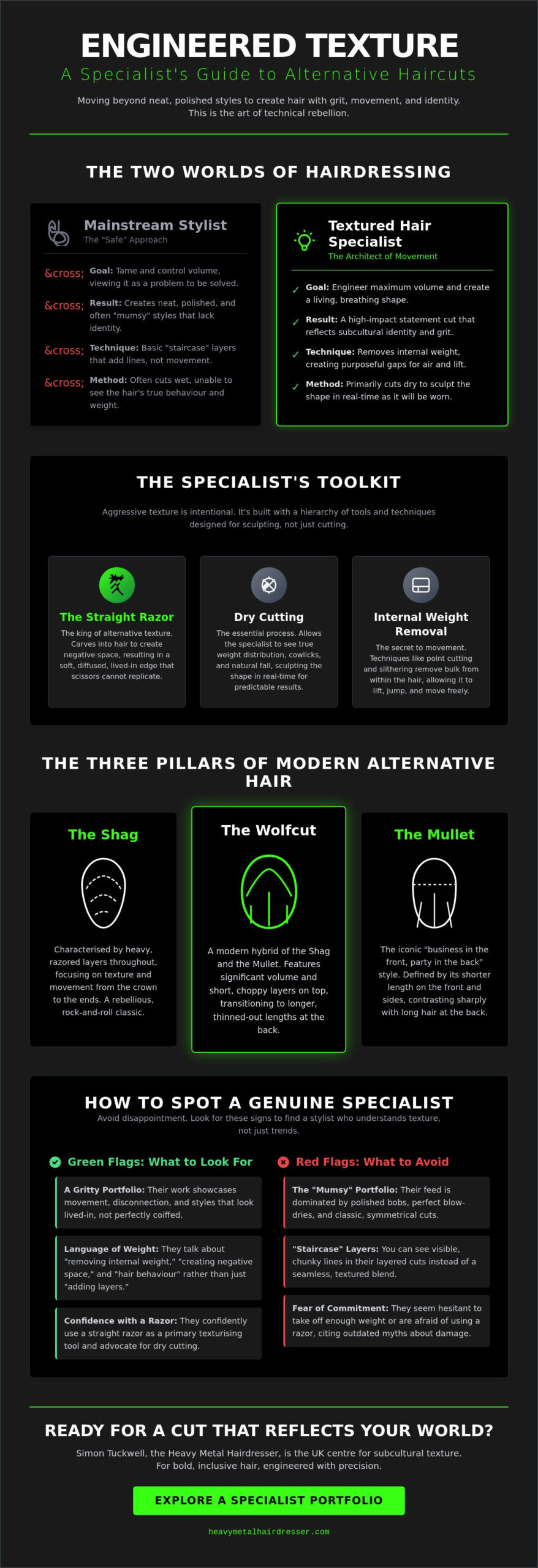
Understand the difference between natural curls and engineered texture. A true textured haircut specialist acts as an architect of movement and weight.

Master the hierarchy of tools. Discover why the straight razor remains the king of alternative texture and how internal weight removal creates hair that moves.

Choose your subcultural weapon. Analyse the three pillars of modern alternative hair; the Shag, the Mullet, and the Wolfcut.

Spot the red flags. Learn how to identify a genuine specialist through their portfolio and avoid stylists who are afraid to take off enough weight.

Meet the Heavy Metal Hairdresser. Explore the vision of Simon Tuckwell and see why clients travel from across the UK for bold, inclusive hair.

Beyond the Curl: What a Textured Haircut Specialist Actually Does

Most salons treat “texture” as a buzzword reserved exclusively for curls. If you have straight or wavy hair, they often don’t know how to give you the edge you’re looking for. A true textured haircut specialist is an architect of movement and weight. We don’t just follow a generic pattern found in a textbook. We look at how your hair falls, where it clumps, and where it’s stubborn. It’s about engineering a shape that lives, breathes, and refuses to sit flat.

Traditional training focuses on “perfect” blends and clinical symmetry. That’s exactly why alternative styles often look like bad costumes when done in mainstream shops. They lack the necessary grit. We distinguish between natural texture, which is the pattern you’re born with, and engineered texture, which is the result of aggressive layering and shags. We prioritise hair behaviour over hair type. We want to know how your hair reacts when you shake your head and where it naturally wants to sit when you’re not trying to tame it.

The Misconception of “Just Adding Layers”

Basic layers often create a “staircase” effect. You see the visible lines where the scissors stopped. That isn’t texture; it’s a lack of technical precision. A specialist focuses on the technical skill of layering to remove internal weight rather than just hacking off length. Removing length simply makes hair shorter. Removing weight makes hair move and jump. Alternative texture is the intentional disruption of hair uniformity. It’s about creating purposeful gaps and highs and lows that catch the light and the air.

Texture for Every Hair Type: From Fine to Coarse

You don’t need a massive mane to pull off a subcultural style. A textured haircut specialist knows how to manipulate fine hair to create a convincing illusion of density. We use shorter internal layers to “push” the longer hair out, creating volume that doesn’t collapse by midday. For those with heavy, bulky hair, we thin it out without creating a cloud of frizz. It is a surgical process of weight management.

Dry cutting is our primary tool for success. Cutting hair whilst it’s wet is like trying to paint a picture in the dark. You cannot see the true weight distribution or the way the cowlicks pull. By cutting dry, we see exactly how each section behaves. We carve out the bulk and watch the shape emerge in real time. This ensures your wolfcut or shag looks just as good when you roll out of bed as it did when you left the salon.

The Technical Rebellion: How Specialists Create Aggressive Alternative Texture

Aggressive texture isn’t an accident. It’s a technical rebellion against the flat, boring standards of mainstream hairdressing. A textured haircut specialist approaches your hair with a specific hierarchy of tools, placing the straight razor at the very top. Whilst traditional stylists fear the blade, we embrace it as the ultimate weapon for creating negative space. By carving into the hair, we create gaps that allow for lift and airiness. This internal weight removal is the secret behind hair that actually moves whilst you walk, rather than just hanging there like a heavy curtain.

The resurgence of retro hairstyles has brought these technical demands back to the forefront of the alternative scene. We use slithering and point cutting not just to soften a line, but to dictate exactly where the hair should collapse or stand up. It’s a surgical process. We aren’t just cutting hair; we’re sculpting it. If you want to see how this technical precision looks in a real-world setting, you can explore our latest transformations at heavymetalhairdresser.com.

Razor Cutting vs. Scissor Cutting

The straight razor provides a tapered, lived-in finish that scissors simply cannot replicate. It’s the essential tool for authentic shags and mullets. There’s a common myth that razors cause split ends. That’s nonsense. Damage only happens with a dull blade or a poor angle. In the hands of an expert, a razor creates a soft, diffused edge that looks cool from day one. We use scissors to build the structural integrity of the cut, ensuring the foundation is solid. The razor is then used to inject the vibe and the attitude.

Point Cutting and Disconnection

If you want the extreme height of a wolfcut, you need disconnection. This means the top layers don’t technically match the bottom ones. It’s a calculated break in the rules. By point cutting at steep, aggressive angles, we create that shredded, raw look. It’s about creating intentional chaos. A textured haircut specialist must master both symmetry and chaos to ensure the result looks deliberate, not accidental. This technical balance is what separates a subcultural statement from a bad haircut. For stylists looking to build this expertise, our professional wolfcut hair course covers the precise disconnection and weight removal techniques needed to deliver authentic alternative results.

Shags, Mullets, and Wolfcuts: Choosing Your Textured Weapon

Choosing your next look isn’t just about picking a photo from a magazine. It’s about deciding how much technical chaos you want to wear every day. A textured haircut specialist understands that these shapes are weapons of self-expression. We don’t just hack away at the length. We look at your bone structure and decide where the volume needs to live to make your features pop. Whether you’re after a subtle rock ‘n’ roll vibe or a full-blown subcultural statement, the right cut is a calculated move.

The transition from a “safe” haircut to an alternative one doesn’t have to happen overnight. Many of our clients evolve their style over several sessions. We might start by introducing internal weight removal to a standard cut, then move into a shag, and eventually push the boundaries with a disconnected wolfcut. This allows you to get used to the movement and learn how to style the “shredded” ends without feeling overwhelmed by the change. It’s a journey of reclaiming your identity through your hair.

The Modern Shag: The Gateway to Texture

The shag hairdressers pillar of the UK alternative scene is defined by its heavy fringes and explosive crown layers. It’s the most versatile weapon in our arsenal. Because the weight is concentrated at the top, it creates instant lift that works on almost any hair type. We maintain that iconic 70s rock aesthetic but update it with gritty, modern finishes that don’t look like a costume. It’s the perfect choice for those who want maximum volume with a “maintenance-to-cool” ratio that favours the lazy; a bit of texture spray is usually all you need.

The Wolfcut and Mullet: For the Bold

If you’re ready to embrace the extreme, we look toward the wolf hair cut and the modern mullet. The wolfcut is a hybrid beast. It takes the face-framing layers of a shag and blends them with the longer, thinner lengths of a mullet. It’s gender-neutral, unapologetic, and fiercely independent. The modern mullet has moved far beyond the 80s cliché. It’s now a staple of subcultural identity, featuring tight, tapered sides and a textured back that celebrates natural movement. A textured haircut specialist tailors the aggression of these cuts to your comfort level, ensuring the disconnection feels intentional and high-fashion rather than accidental.

Matching these cuts to your face shape is where the expertise really shows. Round faces thrive with the vertical height of a wolfcut, which elongates the profile. Square jawlines are perfectly offset by the choppy, soft fringes of a shag. Heart-shaped faces find balance with the width provided by a mullet’s tail. It’s about using hair to create the proportions you want, whilst staying true to your alternative roots. We don’t believe in “rules” that limit you, only technical guidelines that empower your look.

Textured Haircut Specialist: Mastering the Art of Aggressive Alternative Layers

Identifying a Genuine Specialist: Portfolio Red Flags and Must-Ask Questions

Finding a textured haircut specialist isn’t about finding someone who just likes punk music. It’s about technical vetting. Most salon portfolios are filled with “prom hair” and clinical, over-styled blowouts. If you see nothing but polished, glassy finishes, be wary. That stylist is likely hiding a lack of technical precision behind a round brush and far too much hairspray. You need to see the grit. A genuine expert isn’t afraid to show the raw, unpolished reality of a haircut that doesn’t rely on a professional blow-dry to look good.

Look for “lived-in” or “air-dried” results in their work. A specialist should be able to show you how a wolfcut or a shag behaves when it hasn’t been forced into a specific shape with heat. During a consultation, they should be asking about your hair history and your subcultural influences. They should want to know if you’re into 70s rock or 90s grunge because those eras dictate the specific “shred” of your layers. If they don’t understand the vibe, they won’t understand the technical requirements of the cut. If you’re tired of being misunderstood, it’s time to book your transformation at heavymetalhairdresser.com and finally get the cut you deserve.

Questions to Ask Your Potential Stylist

Don’t be afraid to grill your stylist before they pick up the scissors. You are looking for technical answers that prove they understand the architecture of alternative hair. Start with these three essentials:

  • “How do you handle internal weight removal without losing length?” This tests whether they understand how to create movement without just hacking away at the perimeter.
  • “Do you cut hair dry or wet for shags and wolfcuts?” As we discussed earlier, dry cutting is the gold standard for seeing how hair actually behaves.
  • “Can you show me examples of how this cut looks without a professional blow-dry?” Transparency is everything. You need to know you can style this yourself at home.

The Importance of an Inclusive Safe Space

A genuine textured haircut specialist provides a gender-neutral environment where being different is the baseline, not the exception. We reject traditional beauty standards that demand hair be “pretty” or “tame.” Subcultural knowledge informs every snip. Whether it’s the influence of a specific musical scene or a niche fashion movement, your stylist should speak your language. You aren’t just a service appointment; you’re part of a community that values individuality over conformity. Seeking out a specialist who prioritises your identity ensures you leave the chair feeling like yourself, only louder.

Heavy Metal Hairdresser: The UK Centre for Subcultural Texture

Simon Tuckwell built this space for the rebels. As a leading textured haircut specialist, he understands that your hair is a subcultural flag. It isn’t just about a trim. It’s about a statement. We’ve built a national reputation as the go-to centre for those who refuse to conform. Clients travel from every corner of the UK to sit in our chairs. They know that a standard salon won’t deliver the grit they need. We bridge the gap between technical hair mastery and the raw energy of music culture.

For the ultimate alternative look, we often combine these aggressive shapes with vivid hair colour. A wolfcut or a shag becomes a high-pigment sensation when the layers are engineered to show off depth and tone. It is a total identity overhaul. We don’t do “subtle” here. We do bold, saturated, and technically superior hair that refuses to blend into the background.

From Festival Backstage to the Salon Chair

Our expertise isn’t just salon-bound. We’ve spent years backstage at festivals like Download and Bloodstock. This environment is the ultimate testing ground. We’ve mastered the art of creating stage hair for musicians that survives a mosh pit whilst looking incredible under stage lights. This high-energy experience translates directly into your everyday look. Whether we’re using our “Hair To the Throne” philosophy or the precision of “Death Grip,” we ensure your texture lasts. It’s about durability and attitude. Your hair should be able to handle your lifestyle without losing its shape.

Book Your Transformation

Stepping into our salon means entering a high-energy safe space. We organise every session to be inclusive and identity-affirming. For our national clients, we suggest a detailed digital consultation first. This helps us understand your hair behaviour and subcultural goals before you even arrive. We help you plan your trip to the centre to ensure the experience is seamless. You aren’t just getting a haircut; you’re joining a community that celebrates the bold. A textured haircut specialist is waiting to unlock the volume you’ve been denied by mainstream stylists. Don’t settle for “mumsy” layers ever again. Book your textured transformation at Heavy Metal Hairdresser and finally claim the subcultural identity you deserve.

Claim Your Subcultural Identity

Stop settling for safe, “mumsy” hair that lacks the movement you crave. You now know that aggressive texture is a technical engineering feat, not just a random hack. It requires a textured haircut specialist who understands the architecture of weight removal and the grit of subcultural aesthetics. We’ve explored how tools like the straight razor and techniques like disconnection transform flat hair into a bold statement. It’s about reclaiming your look from mainstream standards and finding a shape that reflects your world.

At Blank Space Creative, award-winning creative director Simon Tuckwell and our team bring high-energy expertise from the backstage of Download and Bloodstock festivals. We provide a gender-inclusive safe space where your identity is the priority. We don’t just cut hair; we sculpt it to survive your lifestyle and celebrate your community. Your hair is your loudest accessory. It’s time to make sure it says exactly what you want it to. Don’t wait for permission to be different.

Join the rebellion and book your textured cut with the UK’s alternative specialists.

Frequently Asked Questions

What exactly is a textured haircut specialist?

A textured haircut specialist is an architect of movement who focuses on the internal weight of your hair rather than just the length. We use advanced tools like straight razors and techniques such as carving to create negative space within a style. This ensures your hair has a specific “vibe” and grit that mainstream, polished salons simply cannot replicate. We prioritise how the hair behaves when it’s lived-in and messy.

Can a textured specialist help with very fine or thin hair?

Yes, we use strategic internal layering to create the illusion of density and height. By cutting shorter layers underneath longer sections, we “push” the hair up to prevent it from sitting flat against the scalp. It is a technical way to build volume that doesn’t rely on heavy products or constant backcombing. Fine hair thrives when the weight is managed properly by a textured haircut specialist.

How often should I get a textured haircut like a shag or wolfcut?

You should aim for a refresh every 8 to 12 weeks to maintain the aggressive shape of the crown. Whilst these alternative styles are designed to grow out beautifully and look better with a bit of “age,” the internal layers eventually lose their lift. Regular maintenance ensures the weight distribution stays balanced and your fringe doesn’t lose its intended impact.

Is a razor cut better for texture than a scissor cut?

The straight razor is the superior tool for creating the tapered, shredded ends essential for shags and mullets. Scissors are brilliant for building the initial structure and integrity of a cut, but the razor provides a diffused edge that scissors cannot mimic. We often use a combination of both to ensure your style has both a solid foundation and a rebellious, lived-in finish.

Do I need specific products to maintain a textured haircut at home?

Texture sprays, salt sprays, and matt clays are your primary weapons for daily styling. These haircuts are engineered to look best with a bit of grit and “dirt” in them, so avoid heavy silicones or smoothing oils that cause the layers to collapse. We want to encourage the hair to clump and move, so lightweight products that provide a dry finish are always the best choice.

Can I get a textured haircut if I have curly hair?

Absolutely, and a textured haircut specialist will work with your natural curl pattern rather than against it. We focus on removing bulk from the “triangle” areas to ensure your curls have room to bounce and spiral. It’s about celebrating the natural chaos of your hair whilst giving it a deliberate, subcultural shape that reflects your identity.

Why do my layers always look like a “step” instead of blending?

Visible “steps” happen when a stylist only cuts the perimeter and fails to remove internal weight. They are essentially stacking hair on top of hair without creating a bridge between the lengths. We use point cutting and razoring to bleed the layers together, ensuring the transition is fluid whilst still maintaining the aggressive height you want at the crown.

How do I explain an alternative textured cut to a new hairdresser?

Ask for “internal weight removal,” “disconnected layers,” and “shredded ends” rather than just “layers.” Use specific terms like “wolfcut” or “modern shag” and always provide photos of the hair air-dried or in a lived-in state. If the stylist seems hesitant about taking off significant weight or using a razor, they likely don’t have the technical niche expertise you require. If you’re a stylist looking to close that skills gap yourself, our wolfcut hair course is designed to build the aggressive layering and disconnection techniques your clients are asking for.