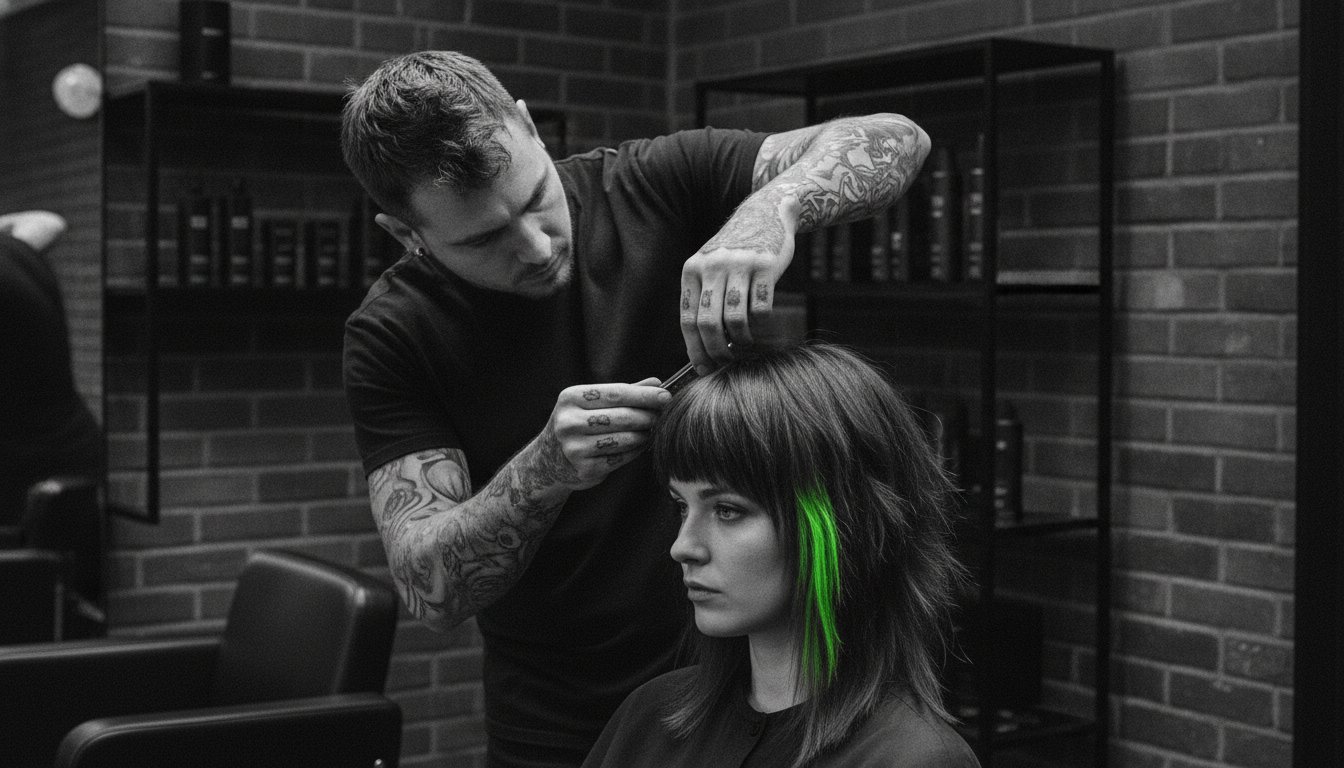
Most mainstream salons are secretly terrified of your hair. You’ve likely spent years sitting in posh, judgemental chairs wondering how to find a stylist like Simon Tuckwell who won’t flinch at the mention of a wolfcut. Instead of the aggressive, jagged shag you asked for, you often leave with “safe” layers that feel completely disconnected from your identity. It’s an exhausting cycle of being misunderstood by stylists who are too scared to take off the weight your texture actually needs.
Finding a professional who respects the link between your fringe and your record collection shouldn’t be a chore. This guide is your blueprint for locating a subcultural architect who treats hair as a raw form of self-expression. You’ll discover the specific portfolio “green flags” that separate the trend-followers from the true experts in aggressive texture and vivid colour technique.
We’ll break down the search techniques you need to find an inclusive, safe space where your subculture is celebrated. Get ready to find a stylist who delivers a cut that looks incredible messy, air-dried, and unapologetically bold.
Key Takeaways
- Understand the technical difference between standard layers and the aggressive texture required for a genuine wolfcut or shag.
- Master digital search strategies and TikTok vetting techniques to filter out mainstream salons in favour of subcultural specialists.
- Use the “Wash and Go” test during your consultation to guarantee a haircut that looks incredible air-dried and messy.
- Uncover the portfolio “green flags” and specific traits to look for when learning how to find a stylist like simon tuckwell.
- Identify stylists who prioritise razor cutting and weight removal to ensure your hair has the movement and grit your aesthetic demands.
What Defines a Simon Tuckwell Style Haircut?
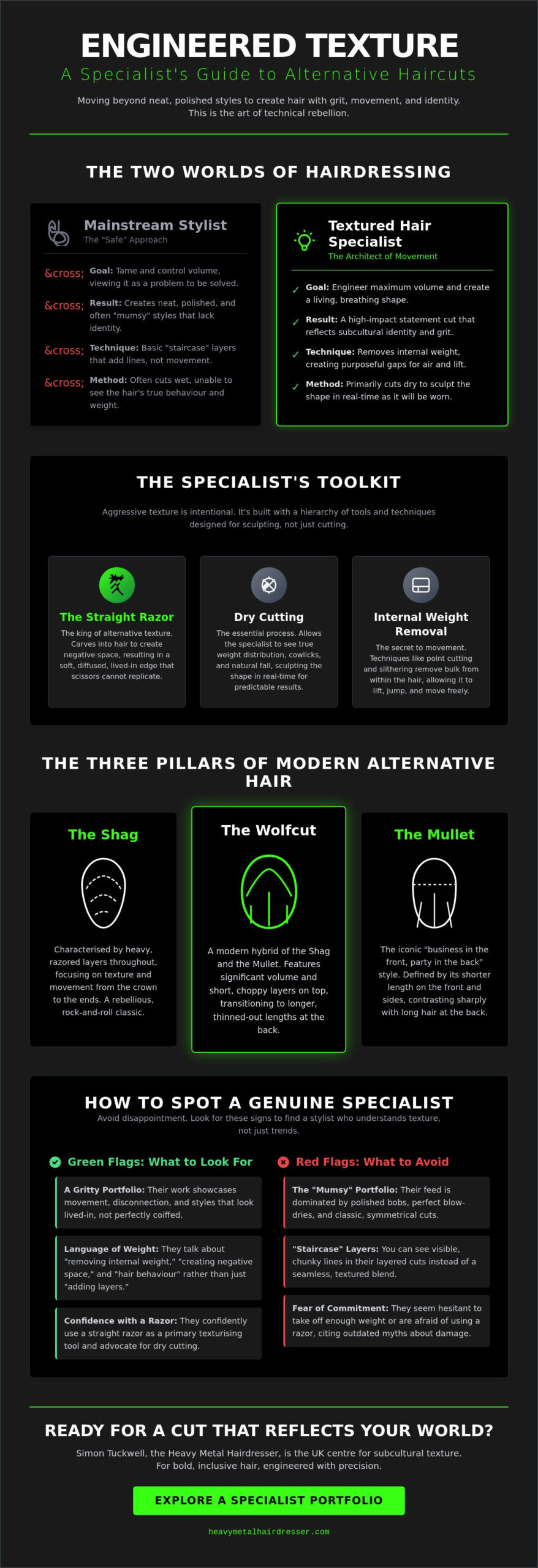
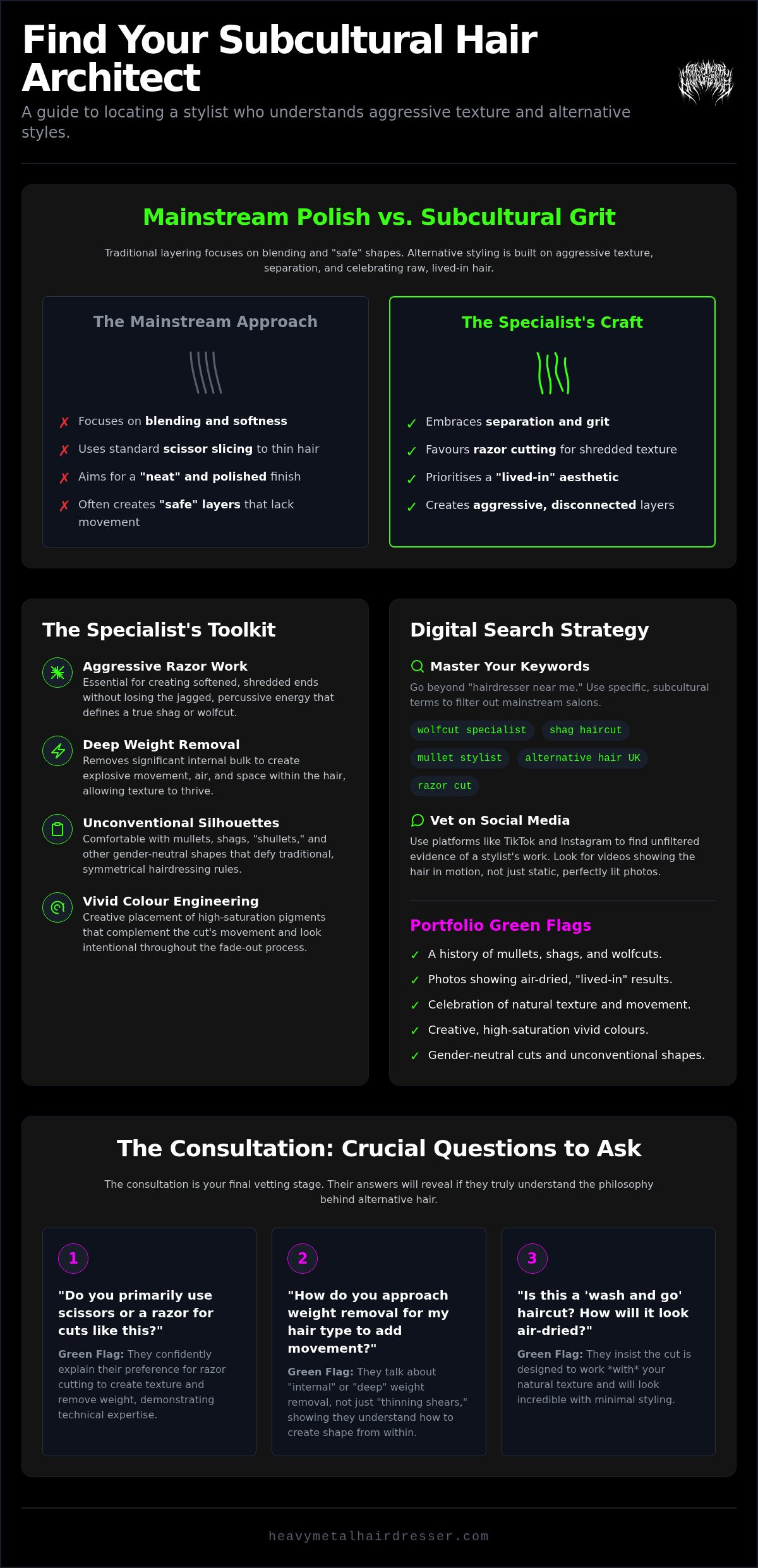
A Simon Tuckwell style haircut is a direct rejection of the polished, clinical perfection found in high-street salons. It is built on aggressive texture. When you discover how to find a stylist like simon tuckwell, you realise that a standard stylist might give you soft, blended layers, but a subcultural specialist understands that a true shag needs grit. It requires deep weight removal and disconnected sections that refuse to lie flat. This isn’t about looking “neat”; it’s about looking expressive. It’s about hair that moves with you, reflecting a raw and authentic energy that mainstream beauty standards often ignore.
Traditional layering often fails because it focuses on blending. Alternative styling focuses on separation. Key technical elements include:
- Deep internal weight removal to create air and movement within thick hair.
- Disconnected lengths that challenge traditional symmetry and balance.
- Aggressive razor work to soften ends without losing the “shredded” look.
Understanding how to find a stylist like simon tuckwell means finding someone who respects the silhouette dictated by Heavy Metal Fashion and punk culture. It is about the link between the music you scream and the hair you wear. A wolfcut isn’t just a trend; it’s an evolution of the mullet and the shag. These styles are designed to be thrashed around in a pit and look even better the next morning. It’s a “lived-in” philosophy where the hair is thrashed, not tamed. Your identity comes first; the “rules” of traditional hairdressing come last.
The Anatomy of the Modern Wolfcut and Shag
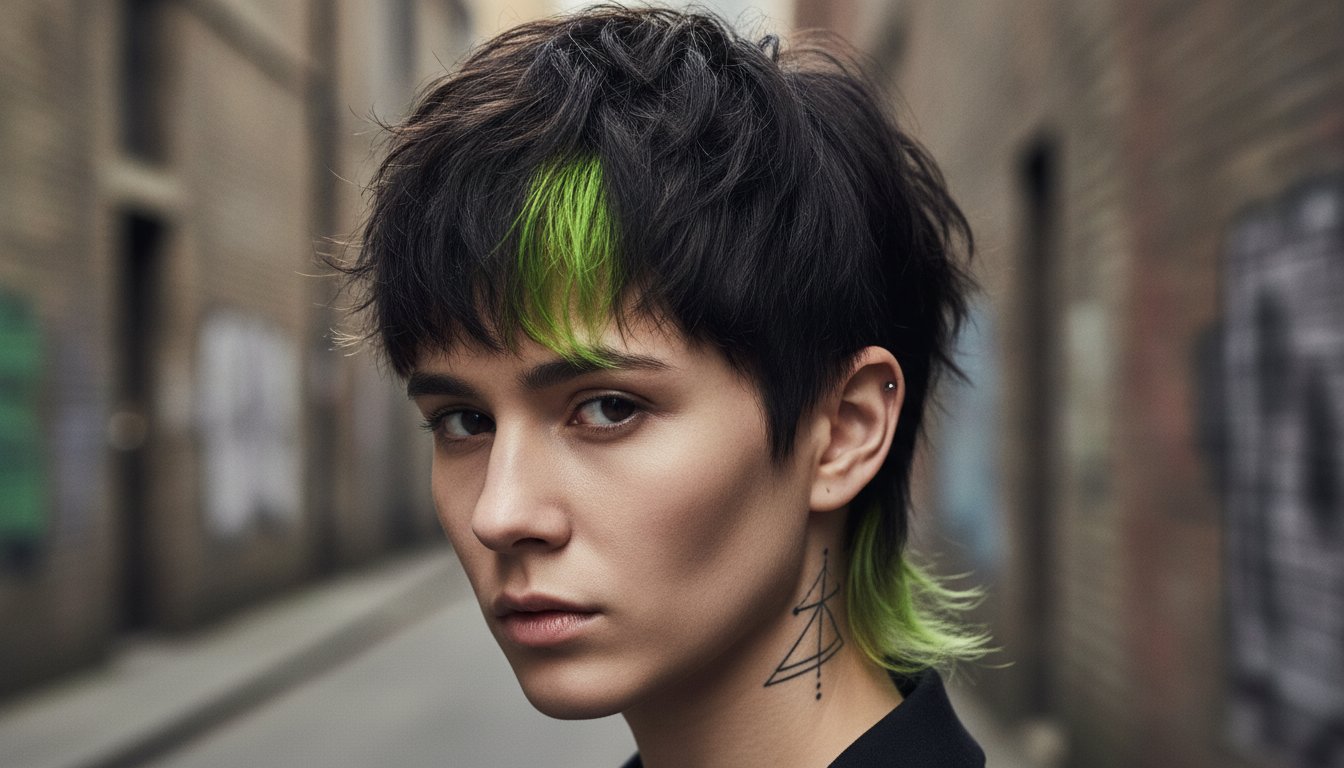
The architecture starts with short, choppy crowns and sharp, disconnected layers. The fringe is the anchor of the entire look. It shouldn’t be a polite curtain; it should be a jagged frame for your face. To achieve that signature grit, the process involves more than just a pair of scissors. Techniques used in services like Hair To the Throne and the application of Death Grip ensure the hair has a raw, percussive energy. This approach prioritises identity over traditional “pretty” aesthetics, focusing on how the hair behaves when you’re living your life, not just when you’re sitting in the chair.
Vivid Colour with an Alternative Edge
Alternative hair demands high-saturation pigments that refuse to fade into the background. A specialist doesn’t just apply colour; they engineer it. They use creative placement that complements the movement of a textured cut. This ensures the colour pops even when the hair is air-dried and messy. Crucially, they understand the “fade-out” process. Your hair should look intentional as the pigment evolves. A true expert knows that vivid colours are a journey, not a one-time event, maintaining their edge from the first wash to the last. If you are searching for a studio that specialises in these high-impact transformations, you can learn more about Shear Lady Salon and their dedication to precision styling.
Identifying the Skills of a Subcultural Specialist
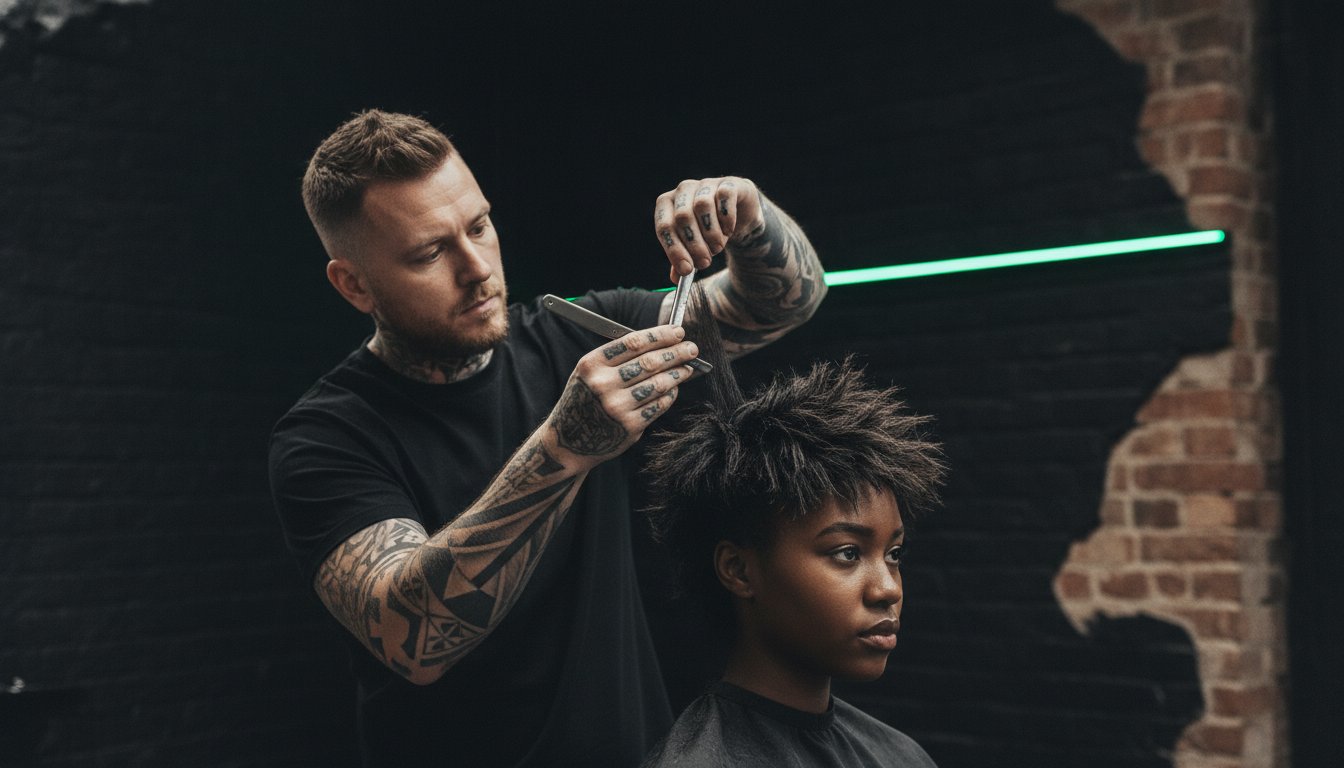
Spotting a true specialist isn’t about counting the years they’ve spent in a chair. It’s about the tools they reach for and the questions they ask. When you’re learning how to find a stylist like simon tuckwell, you need to look for a specific technical vocabulary. Mainstream stylists often rely on scissor slicing to thin hair, which can leave alternative styles looking flat or “wispy”. A subcultural expert often favours razor cutting. This technique allows them to shred the ends and create the jagged, percussive texture that defines a genuine wolfcut or shag. It’s the difference between a haircut that looks polite and one that looks like it belongs on a stage.
The consultation is where the real vetting happens. A standard stylist asks about your hair type; a specialist asks about your favourite bands. They understand that a silhouette isn’t just about face shape. It’s about how your fringe interacts with your leather jacket or how your layers look when you’re headbanging. Check their portfolio for more than just “edgy” bobs. You want to see a history of mullets, shags, and gender-neutral shapes that prove they aren’t afraid of unconventional silhouettes. Many of the best in the scene have refined these skills through alternative hair courses UK, moving beyond basic training to master the art of the fringe and the shred.
The Technical Markers of an Alternative Stylist
Mastery means working with your natural texture rather than fighting it with a flat iron. Look for a stylist who celebrates “shullets” and hybrid shapes that defy traditional categorisation. They should be comfortable with weight removal that feels radical to a mainstream eye. Aggressive layering is a technical approach that removes significant internal weight to create explosive volume and a jagged, percussive silhouette. While the UK Hair and Beauty Industry Authority (HABIA) sets the baseline for safety and professionalism, subcultural specialists go further by engineering hair that looks better the more it’s thrashed around. If you want to see this level of expertise in action, you can explore the work of a professional alternative stylist who lives the culture they cut.
Why Inclusivity is a Technical Skill
Stop wasting time on generic Facebook groups where the top recommendation is usually a local bridal specialist. Understanding how to find a stylist like simon tuckwell starts with a surgical approach to digital discovery. You need to look beyond the basic #hairdresser tag. Use specific modifiers like #wolfcutspecialist or #alternativehair to filter out the high-street chains and “posh” salons that don’t speak your language. This isn’t just about finding someone who can cut hair; it is about finding a subcultural architect who understands the silhouette you are chasing.
TikTok is your best tool for visual vetting. Watch how the hair behaves in “after” videos. If the stylist has to spend twenty minutes styling it with a round brush to make it look “neat”, they haven’t mastered the architecture of the cut. You want to see hair that looks incredible when the client shakes their head. If it looks stiff or over-polished, keep scrolling. Portfolio red flags are easy to spot once you know what to look for. Avoid salons that lead with “bridal” packages or have portfolios filled with uniform, polished waves. These signals suggest a stylist who might be afraid to take off the weight your texture actually needs.
The Ultimate Alternative Search Terms
Use hyper-specific keywords to skip the mainstream noise. Start with “shag hairdressers” or “modern mullet haircut”, then layer in modifiers. Searching for a “queer friendly hairdresser” often leads you to stylists who already operate outside the mainstream bubble and prioritise inclusive, safe environments. You can also search for salons that mention “textured styling products” in their captions. This shows they value the “lived-in” finish over a clinical, flat look. These terms act as a filter, ensuring you only spend your time on stylists who actually understand the link between music and hair.
Vetting the “Vibe” Before You Book
The salon’s digital presence should feel like a community, not a clinic. Scrutinise their Instagram stories to catch a glimpse of the atmosphere. Is the playlist leaning towards metal and punk, or is it background noise for a traditional salon experience? Look for green flags like backstage work at festivals or collaborations with local bands. If the salon stocks Branded Merchandise or uses terms like “creative colour” rather than just “highlights”, they are signalling that they prioritise expression over convention. A space that feels raw and authentic is more likely to respect your identity and deliver a cut that feels like you.
Vetting Your Stylist: Crucial Questions for the Consultation
Sitting in the chair for a consultation is your final filter. Don’t be polite; be precise. When you are figuring out how to find a stylist like simon tuckwell, you have to ask questions that mainstream hairdressers often find uncomfortable. Start with the “Wash and Go” test. Ask them directly: “How will this cut look if I just air-dry it and head out?” A true subcultural specialist builds the shape into the hair itself through technical weight removal. If they tell you the style needs a professional blow-dry or a round brush to look good, they haven’t mastered the architecture of a genuine shag.
Next, tackle the weight conversation. Most stylists are terrified of taking off too much hair. They worry about making it look “thin” or “sparse”. In alternative styling, aggressive internal weight removal is exactly what creates the movement and volume you want. If your stylist isn’t talking about thinning out the bulk to allow the layers to breathe, your style will end up looking like a heavy, dated helmet. You also need to know their product protocol. Ask what they recommend for maintaining grit at home. You want recommendations for texture-heavy products that enhance the “lived-in” feel rather than silicone-heavy serums that weigh the hair down.
Questions to Ask About Your Specific Cut
You need to ensure they understand the connection between different sections of the hair. Ask: “How do you plan to connect the fringe to the rest of the shaggy layers?” The transition from the fringe to the sides is where most mainstream stylists fail, leaving a disconnected gap that looks accidental rather than intentional. Be specific about your hair type and density. Ask: “Can you execute a wolf hair cut on my specific hair density?” If you are chasing high-impact pigment, ask: “What is your approach to vivid hair colour maintenance?” A pro will give you a realistic timeline for touch-ups and a clear strategy for managing the fade-out.
The Safe Space Vibe Check
Technical skill is only half the battle. You need to feel safe and respected. Ask if they offer gender-neutral pricing; charging based on hair length and time rather than gender is a massive green flag for any modern salon. Confirm the salon is a safe space for alternative subcultures where you won’t be judged for your aesthetic or identity. Offering a “silent appointment” option is a significant green flag for inclusivity because it shows the stylist respects the needs of neurodivergent clients or those who simply want a quiet, focused experience without the pressure of small talk. If you want to skip the guesswork and work with a stylist who already embodies these standards, book in with a professional alternative specialist who lives the culture they cut.
The Heavy Metal Hairdresser Shortcut: Simon Tuckwell and His Legacy
Simon Tuckwell isn’t just a stylist. He is the gold standard for the UK alternative scene, a subcultural architect who treats every head of hair as a raw form of self-expression. If you’ve spent months researching how to find a stylist like simon tuckwell, the most direct path is to look at the man who built the blueprint. He lives the culture. As an ambassador for Metal For Good and a regular backstage stylist at Download and Bloodstock festivals, he understands that your hair needs to survive the pit and still look incredible the next morning. This isn’t about traditional beauty; it’s about identity-first styling that refuses to compromise.
The “Heavy Metal Hairdresser” legacy is built on a Red Dot Design award-winning aesthetic that blends technical mastery with a rebellious edge. Whether he is performing a signature wolfcut or saturating a look in vivid colour, the goal is always to amplify the individual. If you can’t make it to his chair directly, you can often catch him during guest spots across the country, bringing his specialised approach to different communities. He has turned the salon experience into a safe, inclusive space where being different is the only requirement for entry.
Training the Next Generation
Simon’s influence extends far beyond his own chair. Through his professional hair courses, he is populating the UK with a new wave of alternative specialists who aren’t afraid of aggressive texture. When a stylist attends a modern mullet haircut masterclass, they aren’t just learning to use a razor. They’re learning the “Blank Space Creative” philosophy. This approach teaches them to see hair as a canvas for subcultural expression rather than a set of rigid industry rules. This ripple effect means that finding a Simon-trained stylist is becoming the ultimate shortcut for clients who demand grit and movement.
Taking the Aesthetic Home
Maintaining that “just-stepped-off-stage” look requires the right gear. You can’t achieve subcultural grit with supermarket hairspray or silicone-heavy serums that weigh down your layers. Simon’s range of Alternative Hair Merch UK provides the specific tools you need to style like a pro at home. Products like Death Grip are engineered to maintain the jagged, percussive texture of a shag, ensuring your hair stays thrashed and expressive between salon visits. Supporting the scene through alternative hair merch is about more than just the look; it’s about belonging to a community that celebrates the unconventional. If you’re ready to stop settling for “safe” layers and want a transformation that truly reflects your soul, Book your transformation with the Heavy Metal Hairdresser today and finally get the hair your subculture demands.
Reclaim Your Identity Through Subcultural Grit
Finding a stylist who understands the percussive energy of a wolfcut is about more than just a haircut. It’s about finding a specialist who treats your identity as the priority. You’ve learned how to spot technical green flags like aggressive weight removal and how to filter out the judgemental mainstream salons. Mastering how to find a stylist like simon tuckwell means seeking out those who live the culture they cut. It requires a professional who respects the link between your fringe and your favourite records.
Simon has refined this craft as an ambassador for Metal For Good and through years of styling backstage at Download and Bloodstock festivals. Using his signature Death Grip and Hair To the Throne methods, he ensures your texture has the grit it needs to survive the pit. Stop settling for safe layers that don’t represent who you are. Book an appointment with the Heavy Metal Hairdresser today and finally get the hair you deserve. Your subculture is your strength; let your hair prove it.
Frequently Asked Questions
What is the difference between a wolfcut and a standard layered haircut?
A wolfcut relies on aggressive disconnection and internal weight removal, whilst standard layers focus on blending. The wolfcut has a choppy crown and jagged ends designed for a percussive, messy finish. Standard layering is often too polite and flat for alternative aesthetics. It’s the technical shredding of the hair that creates the volume and grit necessary for a subcultural look. This architecture ensures the hair moves authentically.
How do I know if a hairdresser is actually queer-friendly?
Look for gender-neutral pricing on their website as a primary indicator of an inclusive environment. A truly queer-friendly salon will often mention safe space policies or offer quiet appointments for neurodivergent clients. Check their social media for diverse representation and identity-affirming language. If they charge based on time and length rather than gender, it shows they respect the individual over traditional industry binaries and outdated beauty standards.
Can I get a Simon Tuckwell style shag if I have very fine hair?
Yes, you can achieve this look with fine hair by focusing on internal texture rather than just surface layers. Learning how to find a stylist like simon tuckwell involves seeking experts who use specific cutting angles to create the illusion of density. By removing weight in the right places, they allow the hair to pop and hold a messy, air-dried shape without looking thin. It’s about engineering volume through clever disconnection.
What keywords should I use to find alternative stylists on Instagram?
Skip generic tags and use hyper-focused terms like #wolfcutspecialist, #shaghaircutuk, or #alternativehairdresser. You can also search for #modernmullet or #queerfriendlysalon to narrow down your results to stylists who operate outside the mainstream. Following accounts that feature backstage festival work or band collaborations is another effective way to discover professionals who understand the specific link between music subcultures and hair architecture. These tags filter out traditional salons instantly.
Why is a consultation so important for alternative hair styles?
A consultation ensures the stylist understands your identity and how the cut will behave with your natural texture. It is your chance to discuss maintenance reality, vivid colour fade-out, and the “Wash and Go” test. For alternative styles, the architecture of the cut must be engineered to your specific lifestyle. Without this dialogue, you risk leaving with a safe mainstream version of the aggressive look you actually wanted. It builds necessary trust.
How do I maintain the texture of a wolfcut between salon visits?
Use high-grit products like Death Grip to maintain the separation and jagged movement of your layers at home. Avoid silicone-heavy conditioners that weigh down the choppy crown and flatten the volume. Air-drying with a salt spray or texture paste allows the internal weight removal to do the work. Focus on enhancing the lived-in feel rather than trying to make the hair look polished or perfectly smooth. This keeps the shred looking intentional.
What should I bring to my appointment to show the stylist the vibe I want?
Bring images of specific textures and silhouettes rather than just one perfect photo. Show them pictures of your favourite bands or subcultural icons to communicate the energy you are chasing. If you have examples of what you don’t want, such as overly blended layers, bring those too. Providing a visual mood board helps the stylist understand the link between your fashion choices and your desired hair silhouette. It clarifies your personal aesthetic.
Do I need to travel to a big city to find a good alternative stylist?
You don’t necessarily need to travel to a major hub, but you should look for stylists who have taken specialised training. Many professionals across the country have completed alternative hair courses UK to master these specific techniques. Check for guest spots where top-tier stylists visit local salons. A specialist who understands subcultural grit is often worth the train journey if your local high-street options feel too traditional or posh.