Posted on

Textured Styling Products for Alternative Hair: The Grit and Chaos Guide

Textured Styling Products for Alternative Hair: The Grit and Chaos Guide

Mainstream hair brands want you to look clean and polished, but your subcultural identity thrives on grit and rebellion. It’s a common frustration; you spend all morning carving out the perfect wolfcut, but within an hour, the volume has vanished and your hair feels greasy rather than lived-in. Most textured styling products found on the high street simply aren’t engineered for the aggressive layers of a shag or the structural demands of a mullet. You need something that survives the pit, not just the commute.

We’re here to help you weaponise your texture and reclaim your style from the bland and the boring. You’ll discover how to achieve that elusive “just rolled out of a gig” look using professional-grade tools like Death Grip and Hair To the Throne. This guide explores the essential kit for alternative subcultures, focusing on long-lasting volume and the raw aesthetic that defines our community. We’ll break down which formulas provide the best hold for heavy layers whilst ensuring your hair stays as bold as your music taste.

Key Takeaways

  • Understand why traditional “clean” finishes fail alternative cuts and how to embrace intentional chaos for better layer separation.
  • Discover how to select the right textured styling products, from salt sprays for matte grit to powders that provide instant root lift.
  • Master specific techniques to build aggressive volume in wolfcuts and enhance the 70s-inspired layers of a modern shag.
  • Find the perfect balance for your hair type, whether you need lightweight solutions for fine strands or heavy-duty control for thick manes.
  • Learn why stage-ready tools like Death Grip and Hair To the Throne are essential for maintaining subcultural grit through the longest gigs.

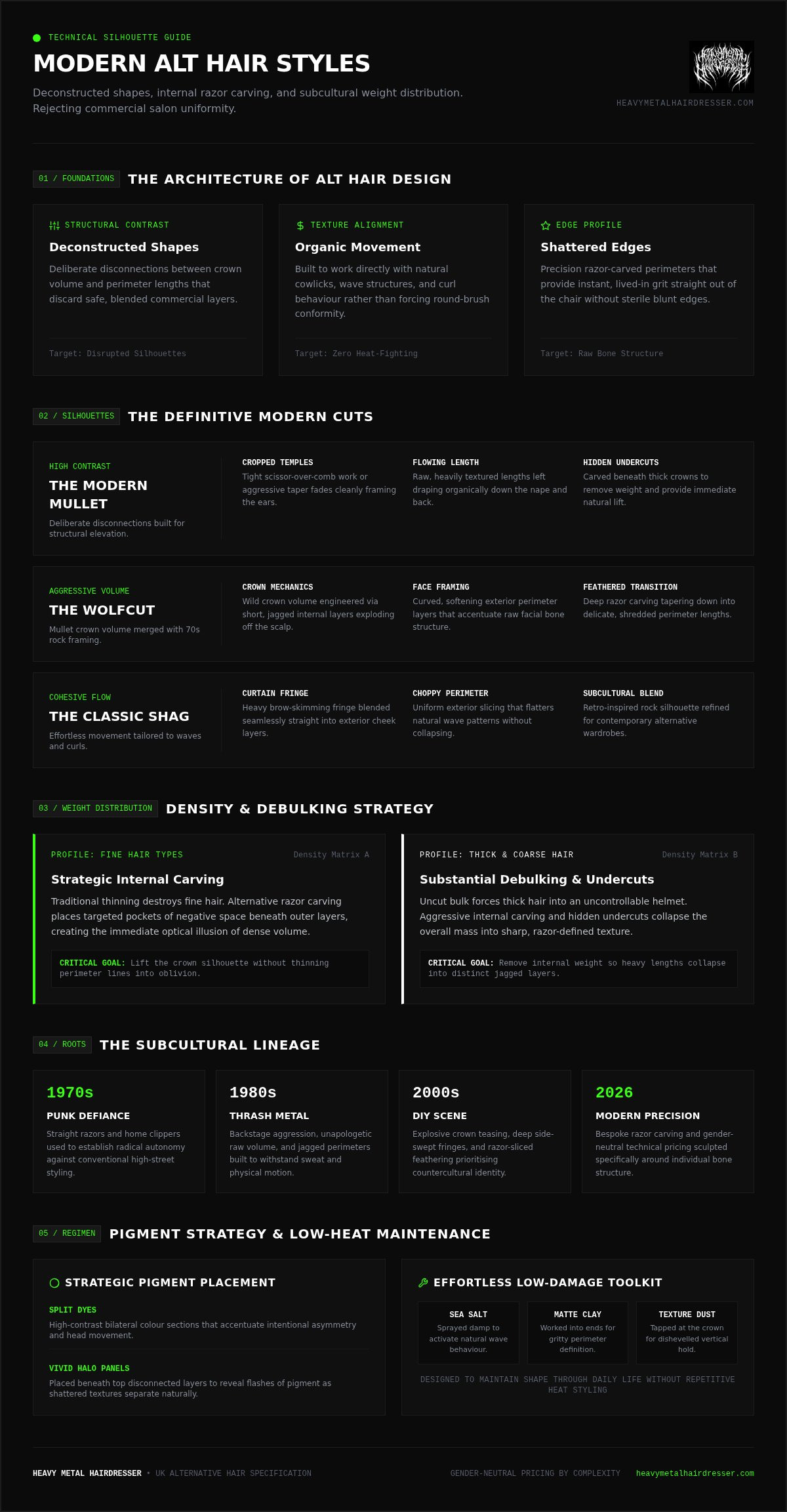
The Rebellion Against Flat Hair: Why Alternative Cuts Demand Aggressive Texture

The mainstream hair industry is obsessed with “clean” volume. They want you to look like you’ve just stepped out of a shampoo advert. For us, that’s the enemy. Alternative texture isn’t about soft waves or polished finishes. It’s about grit, separation, and intentional chaos. It’s the difference between a haircut that looks “nice” and one that looks like it belongs on a stage. We don’t do “nice”. We do impact.

If you’ve ever walked out of a salon with a fresh wolfcut only to have it fall flat before you’ve even reached the station, you know the struggle. Without the right textured styling products, aggressive layers lose their soul. They become heavy and lifeless. A shag without grit is just a messy bob. Professional-grade tools like Death Grip and Hair To the Throne bridge the gap between that initial salon vision and daily survival in the real world. They provide the structural integrity required to keep those layers fighting against gravity whilst maintaining a raw, unwashed aesthetic that screams authenticity.

The Silhouette of the Shag and Wolfcut

Layers create the shape. That’s the foundation. But products define the attitude. Traditional hairsprays are often the enemy here; they create a stiff, plastic helmet that kills movement. You need weightless grit. This allows the hair to move, breathe, and react whilst staying elevated. Every hairstyling product in your arsenal should serve the silhouette, not suffocate it. When you use textured styling products designed for subcultures, you’re giving those short crown layers the strength to stay upright without feeling like a greasy mess. It’s about building a skeleton of volume that survives the pit.

Texture as a Tool for Self-Expression

We’re moving beyond the “pretty” standards that have dominated the industry for decades. Your hair is a signal. It tells the world which tribes you belong to and which bands you’re spinning. Owning an alternative identity means rejecting the idea that hair should be soft or touchable in a conventional sense. It should be expressive. It should be raw. Whether you’re backstage at a festival or just heading to the local pub, the right product ensures your hair remains a testament to your non-conformity. It empowers you to break the rules of traditional beauty.

Grit is the essential, non-negotiable element that transforms a standard haircut into a weapon of alternative identity in 2026.

Decoding the Toolkit: Salt Sprays, Clays, and the Science of Grit

Building a subcultural silhouette requires more than just a pair of shears. You need a curated arsenal of textured styling products that work as hard as you do. Mainstream brands often miss the mark by focusing on “touchable” hair. We want hair that has a story to tell. Your toolkit should start with sea salt sprays. These aren’t for beachy waves; they’re for creating a raw, matt foundation that looks like you’ve spent three days in a festival field. It’s the “beach-gone-wrong” vibe that provides the necessary friction for layers to grab onto.

For those chasing extreme height, texture powders are your best friend. Products like Hair To the Throne inject instant volume directly at the root. They absorb excess oils and provide a dry, gritty feel that keeps even the heaviest wolfcut from collapsing. If you’re looking for sharp separation at the ends of a mullet or shag, matt clays and pastes are the answer. Death Grip offers that extreme hold needed to define individual pieces without adding unwanted shine. Finally, dry wax sprays act as the secret weapon for reworkable, lived-in texture that stays flexible throughout the night.

Hold vs. Shine: Finding the Alternative Sweet Spot

Matt finishes are the gold standard for alternative aesthetics. Shine often reads as “greasy” or “clean,” neither of which fits a gritty, subcultural look. You need a product that absorbs light rather than reflecting it. Understanding hold levels is equally vital. Sometimes you need the iron-clad security of a Death Grip hold for a night in the pit. Other times, you want the soft, chaotic movement of a salt spray. Reworkability is the key here. You want to be able to run your hands through your hair at a gig and have it look even better than when you arrived.

The Art of Product Layering

Success lies in the order of operations. Start with a wet-to-dry base by applying salt spray to damp hair before blow-drying. This creates structural integrity from the inside out. Once dry, finish with powders or clays to lock in the chaos. This prevents the “greasy” trap that happens when you overload dry hair with heavy pastes. Consider the science behind these formulas; research has highlighted potential dangers of hair styling products when combined with extreme heat. Use your tools wisely to keep your mane healthy and your style sharp. If you’re ready to upgrade your kit, check out our professional textured styling products designed for the stage.

Textured Styling Products for Alternative Hair: The Grit and Chaos Guide

Styling the Icons: How to Use Textured Products for Wolfcuts, Shags, and Mullets

The cut is your foundation, but the attitude comes from how you finish it. Whether you’re rocking a shaggy wolfcut or a sharp modern mullet, the way you apply textured styling products dictates whether you look stage-ready or just messy. It’s about intentionality. We want to enhance those aggressive layers and ensure they don’t just sit there; they need to stand out and demand attention. Your hair should look like it has a story to tell.

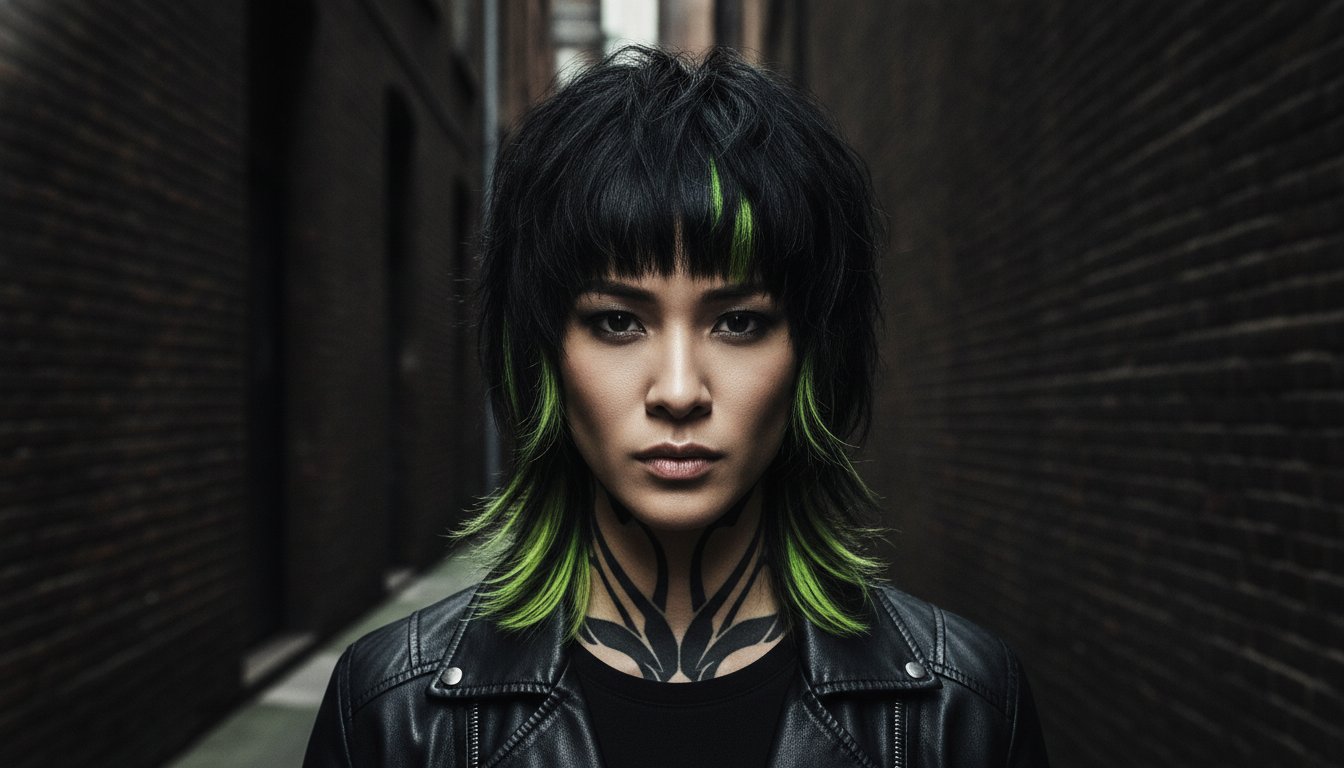
For the wolfcut, it’s all about building aggressive volume that frames the face without looking like a helmet. You want height at the crown and separation through the mid-lengths. The shag, on the other hand, leans into those 70s-inspired layers but swaps the disco polish for modern, gritty textures. It’s a look that thrives on the “just rolled out of a tour bus” vibe. Then there’s the modern mullet. You need to keep the “business” at the front tidy and controlled whilst letting the “party” at the back stay wild and uninhibited. It’s a delicate balance of control and chaos.

Mastering the Wolfcut Flow

To get the best out of a wolfcut, start by applying salt spray to damp hair. Scrunch it in aggressively to encourage natural movement and waves. Once dry, use a texture powder like Hair To the Throne at the crown. This prevents the dreaded “flat-head” look and keeps your layers elevated throughout the day. You can also learn how to style a modern mullet using these same principles of building height and defining edges. The goal is to create a silhouette that feels alive and reactive.

Mullet Maintenance and Grit

When it comes to the mullet, focus your product on the “tail” for maximum impact. This is where you want the most texture and grit. Use a matt paste to define the fringe and sideburns, giving them a sharp, deliberate finish. For those heading into the pit, we recommend the “Death Grip” technique. Apply a small amount of Death Grip paste to the roots and mid-lengths to secure extreme shapes. It ensures your style survives the most intense sets without losing its edge. This level of hold is essential for festival survival, helping your texture last through a three-day weekend of sweat and sound.

Festival environments are the ultimate test for your hair. Between the humidity and the lack of showers, your textured styling products need to be resilient. Layering your products as discussed in the previous section ensures that even as the weekend progresses, your hair maintains its subcultural grit. Don’t be afraid to top up with a little extra powder on day three to absorb oil and refresh that volume. It’s about keeping the energy high until the final encore.

Choosing Your Weapon: Texture Solutions for Fine Strands vs. Thick Manes

Not every mane reacts the same to the pit. Your genetic starting point dictates which textured styling products will weaponise your look and which will leave it looking like a damp rag. Fine strands need a completely different tactical approach compared to thick, unruly manes. It’s about matching the product density to your hair’s structural integrity. If you get this wrong, you’re fighting a losing battle against gravity.

The goal is to enhance the cut you’ve paid for. Whether you’re working with delicate curls or a heavy, straight curtain of hair, the right product choice ensures your subcultural identity remains front and centre. We don’t believe in one-size-fits-all solutions. We believe in specialized tools for specialized people.

Injecting Chaos into Fine Hair

Fine hair is notorious for falling flat under the weight of traditional waxes or heavy pomades. You need lightweight, dry formulas that provide lift without the anchor. Root-lifting powders are the magic bullet here. They provide instant, aggressive volume for a wolf hair cut without the greasy residue that kills movement. Matte finishes are your secret weapon; they create the illusion of thickness by roughening the cuticle and absorbing light. Avoid heavy oils at all costs, as they’ll make your layers look stringy rather than gritty.

Taming and Texturising Thick Hair

Thick hair has plenty of natural volume, but it often lacks definition. Without the right control, a shag or mullet can quickly turn into an amorphous “blob” of hair. You need heavier clays like Death Grip to manage the bulk and provide the necessary separation. These products allow you to carve out space within the mass so the actual geometry of the cut remains visible. This approach also helps manage the inevitable humidity and sweat of a live show, keeping your signature look intact from the first song to the encore.

For curly and wavy alt-cuts, the challenge is enhancing that natural movement without inviting frizz. You want grit, not fluff. A light dusting of powder or a strategic application of salt spray whilst damp can define those coils without making them look “pretty” or polished. Regardless of your hair type, remember the “less is more” rule. Product buildup is the ultimate vibe-killer. It creates a heavy, waxy film that prevents your hair from reacting naturally to your movement. Start with a small amount and build the chaos gradually. Ready to find your perfect match? Explore our range of professional textured styling products and take control of your style.

Professional Standards: Why Death Grip and Hair To the Throne Rule the Pit

Mainstream brands are designed in boardrooms by people who have never set foot in a mosh pit. Our philosophy is different. These products were born from the stage, refined in the sweat of backstage festival tents, and perfected for the people who live for the noise. We don’t care about “salon-smooth” finishes. We care about survival. When you’re using textured styling products that have been tested under the glare of stage lights at festivals like Download and Bloodstock, you know they won’t let you down halfway through the set. They’re built for the heat.

Death Grip is our answer to the demand for extreme hold and subcultural grit. It’s the ultimate matt paste for those who need their style to stay locked in place regardless of the chaos around them. For those who believe bigger is always better, Hair To the Throne provides the “bigger is better” alternative volume that defines the modern scene. These aren’t just bottles on a shelf; they are the alternative hair merch UK essentials for 2026. They represent a standard of performance that traditional products can’t touch.

The Backstage Pedigree

Styling for prominent bands and artists taught us that hair needs to react to energy. It needs to be resilient. We’ve spent years in the heat of the pit, ensuring that every formula can withstand humidity, movement, and the intense environment of a live show. This isn’t just about aesthetics; it’s about performance. We are also fiercely committed to inclusive, gender-neutral styling. Your identity is yours to define. Our tools are built to support that expression regardless of who you are or how you identify. We provide the grit; you provide the soul.

Join the Resurrection

It’s no surprise that shag hairdressers across the UK now trust these formulations to finish their most aggressive cuts. We’ve moved past the era of clinical, over-polished hair. The Heavy Metal Hairdresser community is about embracing the raw and the authentic. We provide the expertise and the gear, but you provide the attitude. These textured styling products are your invitation to join a movement that values individuality over conformity. It’s time to stop settling for products that can’t keep up with your lifestyle. Grab your gear and start the chaos.

Own the Chaos: Take Your Texture to the Stage

Stop settling for hair that quits before the first band has even finished their set. You now have the blueprint to weaponise your layers and select the right textured styling products for your specific hair type. Whether you’re managing the bulk of a thick mane or injecting vital life into fine strands, the secret lies in professional-grade grit that refuses to fall flat. We’ve moved beyond the era of polished perfection into a space where intentional chaos and raw authenticity rule the day.

These tools aren’t corporate experiments born in a boardroom. They are gender-inclusive, subculture-approved formulations designed by alternative hair specialist Simon Tuckwell. Every product in our arsenal has been tested backstage at Download and Bloodstock to ensure it survives the heat of stage lights and the intensity of the pit. It’s time to stop fighting your hair and start defining your identity on your own terms with gear that shares your DNA.

Grab Death Grip and Hair To the Throne: The Ultimate Texture Toolkit

Your hair is your signal to the world. Make it loud, make it gritty, and never apologise for the chaos you create.

Frequently Asked Questions

What is the best textured styling product for a wolfcut?

A combination of sea salt spray and texture powder is the gold standard for a wolfcut. Start with salt spray on damp hair to build a foundation. Once dry, use a product like Hair To the Throne at the crown to ensure those short layers don’t fall flat. This pairing provides the aggressive volume and separation needed for the cut’s signature silhouette without making it feel heavy or polished.

Can I use texture powder on fine hair without it looking greasy?

Texture powder is actually the best solution for fine hair because it’s a dry formula. Unlike waxes or oils, it absorbs excess sebum at the scalp. This keeps your hair looking matt and voluminous rather than weighed down or greasy. It’s the most effective way to use textured styling products on delicate strands whilst maintaining a raw, gritty finish that lasts through the longest gigs.

How do I keep my shag haircut looking gritty but not dirty?

Keeping a shag looking gritty rather than dirty comes down to choosing matt finishes. Avoid high-shine pomades or heavy oils that trap environmental grime. Use a matt clay like Death Grip to define the ends and create separation. This ensures the layers look intentional and sharp. If it starts feeling heavy, a quick blast with a hairdryer can refresh the product and redistribute the grit without a wash.

Is sea salt spray bad for your hair if you use it every day?

Daily use of sea salt spray can be drying because of the salt content. It’s designed to roughen the cuticle for that lived-in feel, but you need to balance it with a high-quality conditioner. If your hair starts feeling brittle, skip a day or use a leave-in treatment. It’s about maintaining hair health whilst chasing that “backstage at Download” aesthetic that requires a certain level of friction.

What is the difference between hair wax and matt clay for mullets?

Hair wax often provides a greasy, shiny finish that doesn’t suit alternative styles. Matt clay, like Death Grip, offers a stiffer hold with zero shine. For a mullet, clay is superior because it defines the “tail” and fringe without making them look oily. It provides the structural integrity needed to keep the party at the back looking wild but deliberate, even in the middle of a mosh pit.

How do I style alternative hair so it lasts through a music festival?

Festival survival requires a strategic layering of dry textured styling products. Start with a salt spray base on day one and use texture powders to refresh volume on days two and three. These products absorb sweat and oil, keeping your style alive. Avoid anything water-based that might melt in the rain or humidity, opting for heavy-duty clays to lock your shape down for the duration of the weekend.

Can I use textured styling products on vivid hair colours?

You can absolutely use these products on vivid hair colours. Most professional-grade texture tools are designed to be colour-safe and won’t strip your dye. However, be mindful of product buildup, as a heavy film can make bright dyes look dull or muted. Use a clarifying shampoo once a week to strip away the grit and let your neon or pastel shades pop before reapplying your styling kit.

How do I get volume at the roots of a heavily layered cut?

Texture powder is the undisputed king for getting volume at the roots of aggressive layers. Apply a small amount of Hair To the Throne directly to the scalp area on dry hair. Massage it in with your fingertips to activate the grit. This creates a structural skeleton at the base of your hair, keeping those short crown layers elevated even if the rest of your hair is naturally heavy.

Posted on

How to Find a Stylist Like Simon Tuckwell: The Alternative Hair Survival Guide

How to Find a Stylist Like Simon Tuckwell: The Alternative Hair Survival Guide

Most stylists are terrified of the razor, and your “safe” layers are the proof. You’ve likely spent years settling for watered-down mullets because your hairdresser was too scared to lean into the grit. If you’re tired of being handled with kid gloves, you need to learn how to find a stylist like simon tuckwell. It’s about more than just a haircut; it’s about finding a technical architect who treats subcultural identity as a core requirement rather than a passing trend.

We know the frustration of sitting in a chair and realising your stylist doesn’t “get” it, or worse, feeling the sting of gendered pricing in a space that feels clinical. This survival guide will show you exactly how to identify, vet, and book a professional who masters aggressive texture and subcultural safety as fiercely as the Heavy Metal Hairdresser himself. You’ll discover how to spot a genuine texture specialist, what questions to ask during a consultation, and how to ensure your next cut grows out with the raw attitude it deserves.

Key Takeaways

  • Learn to spot the difference between a stylist who merely thins out hair and one who understands the structural architecture of aggressive texture.
  • Master the specific search strategies and subcultural keywords needed to learn how to find a stylist like simon tuckwell who won’t play it safe with your layers.
  • Identify red flags in traditional salons and prioritise inclusive spaces that offer gender-neutral pricing and a genuine safe space environment.
  • Vet potential stylists by checking festival backstage credits and subculture-specific portfolios to ensure they truly understand your aesthetic.
  • Discover how to book a specialist who delivers a cut that doesn’t just look good on day one but grows out with grit and maintains its shape.

What Defines the Simon Tuckwell Stylist Archetype?

The Simon Tuckwell archetype isn’t about having a specific playlist or wearing black. It’s a technical blueprint. This persona represents a rare breed of “rebellious expert” who has spent years mastering the rules just so they can break them with precision. Understanding how to find a stylist like simon tuckwell starts with recognising that “alternative” isn’t a costume or a trend. It’s a high-level skillset that combines the structural integrity of high-fashion editorial work with the raw, unfiltered energy of the underground scene.

Whilst mainstream salons aim for a polished, “done” look that fits into a corporate box, this archetype builds shapes that thrive on movement and grit. They don’t just cut; they curate. They prioritise your individuality over outdated beauty standards, ensuring your hair reflects who you actually are. If you want to know how to find a stylist like simon tuckwell, you have to look for someone who views hair as a form of social defiance, bridging the gap between technical mastery and subcultural identity.

Beyond the Scissors: The Cultural Connection

Your stylist needs to speak your language. It’s impossible to execute a perfect wolfcut if the person holding the shears doesn’t understand the weight and history of the subcultures that birthed it. From the DIY ethos of Punk fashion to the dark, textured aesthetics of the metal scene, these influences dictate how hair should move and fall. Simon Tuckwell set the UK standard by taking his craft out of the salon and onto the stages of festivals like Download and Bloodstock. He acts as a community advocate, ensuring that the alternative scene has a professional voice that understands the music and fashion we live in. A stylist in this archetype doesn’t just give you a haircut; they give you a sense of belonging.

The Refusal to Conform

The biggest pain point for anyone with an alternative aesthetic is the “softening” of their look. You walk in asking for a jagged, aggressive mullet and walk out with a soft, bouncy blow-dry because the stylist wanted to make it more “socially acceptable”. A true specialist refuses to conform. They celebrate the aggressive in hair design, using razors and shears to create intentional tension and disconnected layers. This mastery often comes from a hybrid background. The best stylists in this niche usually blend the sharp, disciplined lines of traditional barbering with the fluid, boundary-pushing techniques of creative hairdressing. They won’t flinch when you ask for something extreme; they’ll lean into it.

Technical Mastery: Identifying the Architecture of Texture

Technical mastery isn’t about following a diagram. It’s about understanding how hair behaves when it’s pushed to the limit. If you’re researching how to find a stylist like simon tuckwell, you need to look past the aesthetic and scrutinise the architecture of the cut. A proper alternative specialist follows the ultimate wolf hair cut guide as a technical baseline. This means they aren’t just hacking away at your ends with thinning shears. They’re managing weight distribution to create “aggressive layers” that hold their shape even after a night in the mosh pit.

A stylist who understands this level of detail likely keeps their skills sharp through organisations like the Fellowship for British Hairdressing, where technical precision is the gold standard. They know the difference between a “shag” and a “messy cut”. One is a calculated arrangement of disconnected lengths; the other is just a lack of control. True mastery lies in creating precision within the chaos. If you want a result that doesn’t collapse the moment you leave the salon, you need someone who builds hair from the inside out.

The Anatomy of the Shag and Mullet

When vetting a stylist, listen to the vocabulary they use. Do they talk about internal structure and disconnected layers? If they do, you’re on the right track. A specialist knows that a modern mullet haircut requires face-framing that is bespoke to your bone structure, not just a standard fringe chopped straight across. They create silhouettes that look lived-in but remain structurally sound. You can see this technical obsession in the way Heavy Metal Hairdresser trainees are taught to handle weight removal without sacrificing the overall shape.

Vivid Colour Mastery

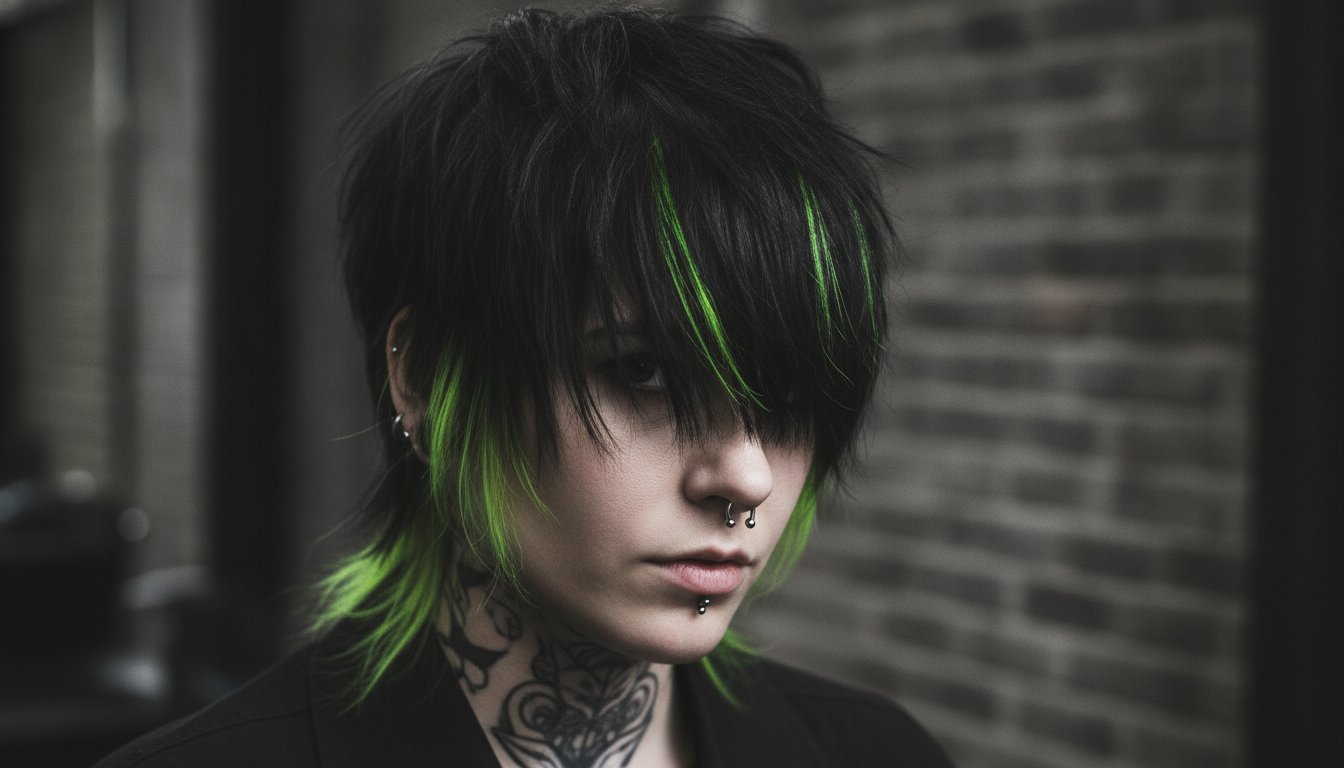
Alternative hair is rarely just about the cut. It’s a total transformation. A stylist in this niche must also be a vivid hair colour specialist. Look for portfolios that showcase saturated, high-pigment tones that don’t look muddy after a few washes. There’s a vital relationship between aggressive texture and bold colour placement. The right colour should highlight the movement of the layers, not hide them. If their portfolio only shows pastel tints on long, straight hair, they aren’t the one for your gritty aesthetic. You need saturated pigments that signal your identity as loudly as your haircut does.

How to Find a Stylist Like Simon Tuckwell: The Alternative Hair Survival Guide

Vetting for Inclusivity and Subcultural Safety

A safe space isn’t just about putting a rainbow sticker in the window. It’s about a fundamental understanding of identity. When you’re looking for how to find a stylist like simon tuckwell, you’re searching for a sanctuary where your subcultural identity is respected, not just tolerated. For the alternative community, hair is a primary tool for self-expression. It is often hair moulded into shapes with a message, signalling a refusal to blend into the mainstream. You need a chair where that message won’t be edited by someone else’s bias.

Authentic inclusivity means your stylist understands identity-affirming hair services. They should listen to your goals without trying to “feminise” or “masculinise” a look based on their own outdated ideas of beauty. You want a professional who sees the human in the chair, not a gendered stereotype. Reading between the lines of a salon’s “About” page is vital. Look for language that emphasises community, safety, and individuality rather than just generic luxury.

The Gender-Neutral Standard

Gendered pricing is a massive red flag in the alternative scene. Charging more for a “women’s” cut when the work is identical to a “men’s” service is archaic. If you want to know how to find a stylist like simon tuckwell, look at their price list first. A specialist in this niche focuses on the time and technical complexity required for a wolfcut or a shag, regardless of the client’s gender. Simon Tuckwell’s model at Blank Space Creative prioritises this modern standard. By removing gender from the equation, he ensures the focus remains on the craft. If a salon still clings to binary price lists, they likely don’t understand the modern, inclusive values of our community.

Identifying a Subcultural Sanctuary

True subcultural safety is found in salons that are active participants in the scene. A stylist’s behaviour outside the salon matters. Are they involved in festival work at Bloodstock or Download? Do they support community initiatives like Metal For Good? These aren’t just CV points; they’re trust signals. Scour client reviews for mentions of a “judgment-free zone” or “safe space.” Pay attention to how the stylists present themselves. Their own aesthetic and style often reflect a commitment to non-conformity. If you find a salon that acts as a sanctuary for those who defy the mainstream, you’ve found your new home.

The Search Strategy: How to Find Your Style Master

Finding the right hands for your hair isn’t a casual Google search. It’s a recon mission. If you want to know how to find a stylist like simon tuckwell, you have to stop looking for “award-winning” generic salons and start looking for subcultural specialists. The mainstream beauty industry is built on smoothing things over. You need someone who knows how to rough them up with technical intent. This requires a targeted search strategy that filters out the safe players and identifies the true architects of texture.

Follow these five steps to narrow down your search:

  • Use subculture-specific keywords: Stop searching for “hairdresser near me”. Use terms like “alt hair specialist”, “wolfcut expert”, or “razor cut shag”.
  • Scour festival backstage credits: Look at who is styling the bands you love. If a stylist is working backstage at Download or Bloodstock, they understand how hair needs to perform in the real world.
  • Analyse portfolios for grit: Avoid portfolios filled with heavily filtered, static models. Look for real people, raw lighting, and hair that looks like it has lived a life.
  • Check for educational credentials: Technical skill in this niche is rare. Check if the stylist has invested in specialist training, such as alternative hair courses UK, to master these specific shapes.
  • Book a consultation first: Never commit to a full transformation without testing the vibe. A consultation is your chance to see if they actually “get” your aesthetic.

Instagram Sleuthing for Texture

Your Instagram feed is your most powerful vetting tool. Move away from generic tags and dive into specific ones like #shaghaircut or #modernmullet. When you find a potential stylist, don’t just look at photos. Look for videos of hair in motion. Texture should move and bounce, not stay stiff and over-styled. Check who the stylists you admire are following. The alternative scene is tight-knit; the best stylists usually follow other innovators who prioritise subcultural identity over mainstream trends. If their “following” list is full of bridal stylists and “clean girl” influencers, they probably aren’t how to find a stylist like simon tuckwell in your local area.

The ‘Consultation’ Litmus Test

The consultation is where you separate the experts from the pretenders. Ask one specific technical question: “How do you handle weight distribution in a shag?” Listen for answers that mention internal structure or disconnected layers. If they talk about “thinning it out”, leave the chair. A true specialist will ask about your lifestyle, the music you listen to, and how much time you actually want to spend styling. They should be excited by extreme shapes, not hesitant. If they try to talk you out of a bold look to make it more “manageable”, they don’t have the rebellious expert persona you need. You can find a stylist who truly respects your vision by booking with a Heavy Metal Hairdresser specialist who lives and breathes this culture.

Why Heavy Metal Hairdresser Remains the Ultimate Destination

Simon Tuckwell isn’t just a stylist with a razor. He’s the architect of the shag hairdressers movement that has redefined the UK alternative scene. Whilst others were playing it safe with traditional bobs, Simon was building a national sanctuary for those who refuse to blend in. If you’ve spent hours researching how to find a stylist like simon tuckwell, you’ll eventually realise that the standard he set is the benchmark for the entire industry. This isn’t just a place to get a trim. It’s the source of the technical grit you’ve been searching for.

The Heavy Metal Hairdresser experience isn’t about clinical white walls or polite small talk. It’s a high-energy environment where festival energy meets surgical technical precision. Clients travel from every corner of the UK to sit in a chair where their identity isn’t just tolerated but actively celebrated. It’s the original blueprint for what an alternative salon should be. It bridges the gap between underground aesthetics and professional mastery.

The Heavy Metal Hairdresser Experience

Expect a space designed specifically for alternative souls. The atmosphere blends the raw energy of a backstage festival area with the discipline of high-end hair design. This isn’t a place for a quick cut. It’s a place for a transformation. Simon’s influence extends beyond his own hands; he has built a network of specialists trained in his specific techniques. Whether you’re booking directly with the man himself or a stylist he has mentored, you’re getting a cut built on subcultural insider knowledge. It’s about feeling safe and celebrated from the moment you walk through the door.

Maintain the Grit at Home

A masterpiece in the chair is useless if it collapses the next morning. To keep that aggressive texture alive, you need professional tools designed for the job. Simon created ‘Death Grip’ and ‘Hair To the Throne’ to ensure his clients could maintain that salon-fresh grit without the fluff. You can find these styling essentials alongside alternative hair merch UK to complete your look. The right products are essential for an aggressive textured look that lasts and grows out with grit.

Your search for how to find a stylist like simon tuckwell ends here. You can book a session at Blank Space Creative or look for a specialist within the Heavy Metal Hairdresser network who understands your vision. Don’t settle for “safe” when you can have a cut that screams your identity. Join the community that celebrates your individuality. Get the hair you were always meant to have.

Claim Your Subcultural Identity

Your hair is the loudest signal of who you actually are. Don’t let a “safe” stylist mute your message. Finding a technical architect who understands subcultural grit means looking for razor-sharp layers, gender-neutral pricing, and a portfolio that actually moves. You’ve learned how to vet for technical mastery and search for specialists who live in the same music and fashion circles you do. This isn’t just about a haircut; it’s about finding a sanctuary where your identity is the priority.

From the stages of Download and Bloodstock festivals to creating the ultimate textured finish with Death Grip, the benchmark for alternative hair is clear. It is about technical expertise, inclusivity, and a refusal to conform to mainstream beauty standards. Now that you know how to find a stylist like simon tuckwell, the only thing left is to claim your chair in a gender-neutral safe space where you truly belong. It is time to stop settling for “socially acceptable” and start demanding the aggressive, identity-affirming shapes you deserve.

Book your transformation with the Heavy Metal Hairdresser crew and finally get a cut that reflects your soul. Stay rebellious and keep it loud.

Frequently Asked Questions

Is a wolfcut the same as a shag haircut?

A wolfcut is a technical hybrid of a shag and a mullet, but it is not the same thing. Whilst a shag prioritises soft, 70s-inspired volume, a wolfcut is far more aggressive. It features shorter, choppier layers around the crown and more disconnected ends. It’s a wilder silhouette that relies on heavy texture and a non-conformist attitude to stay looking sharp.

How do I know if a stylist is actually queer-friendly?

Gender-neutral pricing is the most reliable indicator of a queer-friendly environment. Check the salon’s website to see if they charge by hair length or complexity rather than gender. Look at their social media for diverse representation and identity-affirming language. A space that actively supports the community will usually be loud about its inclusive values and safe-space status.

What should I ask during a hair consultation for an alternative style?

Ask your stylist about their specific approach to internal structure and weight removal. This is vital when learning how to find a stylist like simon tuckwell who understands that texture isn’t just about thinning out the ends. Listen for technical answers about disconnected layers. If they seem hesitant about “extreme” shapes or try to soften your look, they aren’t the right specialist for you.

Can I get a wolfcut if I have very fine hair?

Fine hair is actually a great candidate for a wolfcut because the aggressive layers create natural volume. The key is building internal structure at the crown to provide lift without making the ends look stringy. A specialist will use precise cutting techniques to ensure the hair looks thick and textured. Use products like Death Grip to add the necessary grit and hold to finer strands.

Why do alternative haircuts cost more than standard trims?

Alternative cuts cost more because they require bespoke architectural design rather than a one-size-fits-all approach. Shaping a wolfcut or a shag takes significantly more time and technical skill than a standard trim. You’re paying for a stylist’s specialised expertise in weight management and subcultural aesthetics. These are complex, high-maintenance shapes that require a professional who has mastered the art of creative hairdressing.

How do I maintain an aggressive mullet between salon visits?

Maintain the grit by using specialised styling tools like Hair To the Throne. Texture is everything for an aggressive mullet, so avoid over-washing your hair. Natural oils help the layers sit with more attitude and prevent the shape from looking too soft. Apply a small amount of Death Grip to the ends to keep the disconnected layers looking sharp and intentional rather than frizzy.

Do I need to be a metalhead to go to an alternative hair salon?

You don’t need a specific musical preference to sit in an alternative stylist’s chair. Whilst the brand has deep roots in the heavy metal scene, the focus is on celebrating individuality and non-conformity for everyone. If you want a haircut that defies mainstream beauty standards and reflects your unique identity, you’ll find a sanctuary in an alternative salon regardless of your playlist.

How often should I get my vivid hair colour topped up?

Expect to visit the salon every 4 to 6 weeks to keep your vivid pigments looking sharp. High-pigment shades are stunning but require consistent maintenance to prevent them from looking muddy. Use sulphate-free products and wash with cool water to extend the life of your colour. When researching how to find a stylist like simon tuckwell, always check their portfolio for saturated, long-lasting vivid results.

Posted on

Alternative Hair Courses UK: Master Subcultural Styling and Textured Grit in 2026

Alternative Hair Courses UK: Master Subcultural Styling and Textured Grit in 2026

Your standard NVQ training wasn’t built for the front row of a metal festival or the gritty streets of Camden. You know the feeling; you’re stuck cutting safe, “polite” bobs whilst your soul is screaming for more texture, more grit, and more rebellion. Traditional education often ignores the aggressive, gender-neutral styles that define modern subcultures, leaving you guessing when a client asks for a jagged wolfcut or a mullet that actually has some bite.

It’s time to stop playing it safe and start mastering the craft. Our alternative hair courses UK are designed to tear up the rulebook, giving you the technical mastery to execute complex layers and vivid colour applications with absolute confidence. We’ll show you how to harness professional techniques like “Death Grip” and “Hair To the Throne” to create the textured grit your clients crave. We are exploring the essential training you need in 2026 to build a portfolio that attracts a loyal, niche clientele and turns your chair into a destination for the underground.

Key Takeaways

  • Understand why traditional NVQ frameworks often fail to meet the demands of modern subcultures and how alternative hair courses UK provide the technical grit required for 2026.
  • Master the technical breakdown of the modern shag and wolfcut to execute aggressive, high-texture layers with absolute precision.
  • Gain the confidence to apply vivid colours using unconventional placement and pigment theory designed for maximum saturation and longevity.
  • Learn how to evaluate an educator’s real-world credentials, ensuring they have the festival and backstage experience required to teach authentic styling.
  • Explore the “Death Grip” and “Hair To the Throne” methodologies to elevate your craft and attract a dedicated, niche clientele.

The Shift in Professional Hair Education: Why Alternative Hair Courses UK Matter

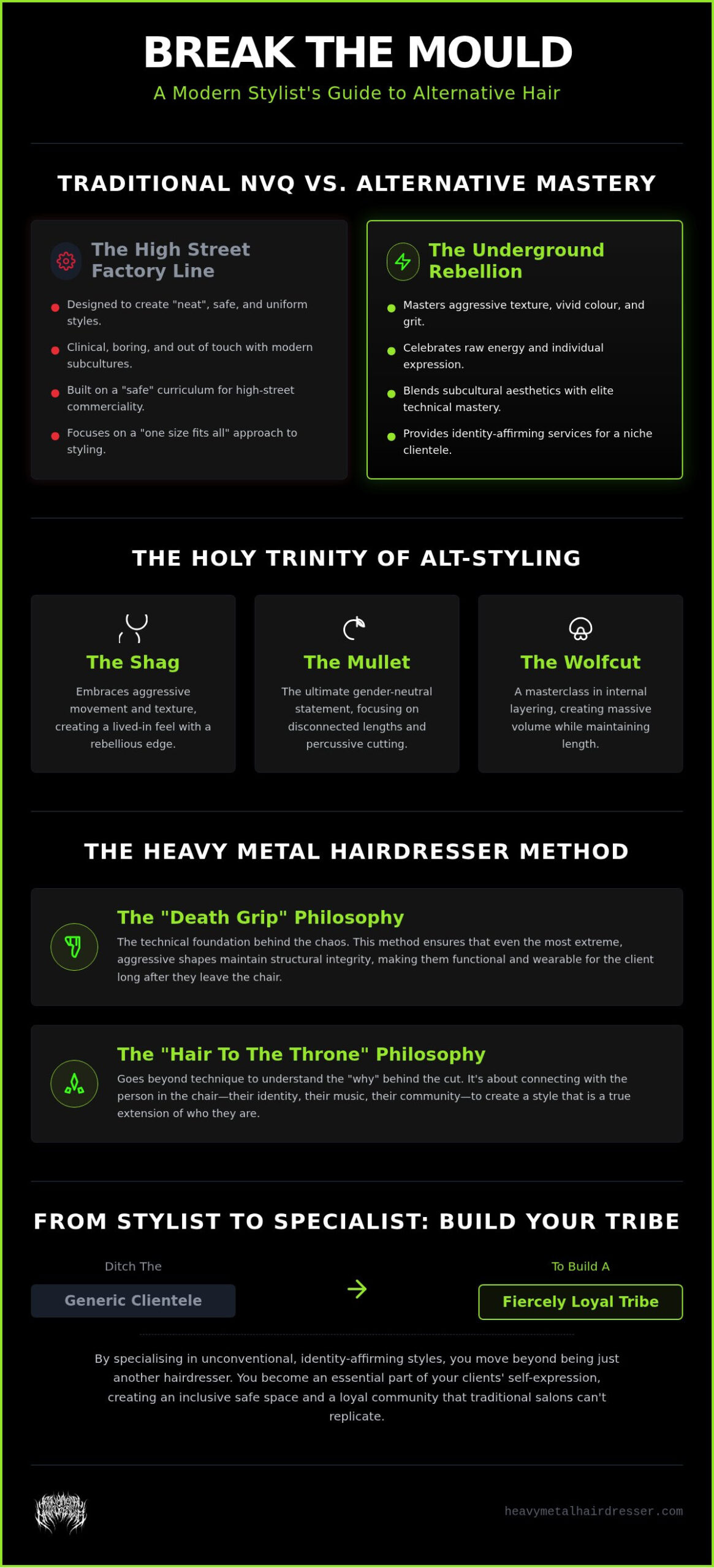
Alternative hair courses are specialised training for subcultural styles like mullets and shags. For too long, the UK hair industry has relied on a rigid framework that prioritises safety over soul. Traditional NVQ training focuses on the “perfect” blend and the “tidy” finish. It’s built for the mainstream high street. But as we move through 2026, the demand for something raw and authentic has exploded. Real technical mastery now requires an understanding of subcultural aesthetics that standard colleges simply don’t touch.

Choosing alternative hair courses UK means learning to break the rules with precision. It isn’t just about “messy” hair; it’s about the deliberate, aggressive layering that defines Punk fashion and its modern descendants. This is the era of the niche specialist. Clients no longer want a stylist who “can do a bit of everything.” They want an expert who understands the weight, the grit, and the lifestyle behind the look. The rise of the niche specialist in the UK hair industry for 2026 isn’t a trend; it’s a shift in power. Stylists are no longer beholden to the “one size fits all” salon model. By focusing on a specific aesthetic, you become a destination.

Moving Beyond the Mainstream Salon Standard

The “safe” approach taught in most academies limits your creative potential. It creates a massive gap between what you’re taught in a classroom and the reality of subcultural styling. Whilst a standard salon might shy away from disconnected sections or extreme texture, these are the hallmarks of a great alternative cut. Beyond the technical, there’s a cultural gap. Traditional training environments can often feel exclusionary or outdated in their approach to gender. Alternative hair education flips this. It prioritises inclusive, gender-neutral training spaces where every identity is celebrated. It’s about the individual, not the box they’re supposed to fit into.

The Economic Value of Specialising in Alt-Hair

Specialising isn’t just a creative choice; it’s a smart business move. People will travel across the country for a stylist who genuinely “gets” their look. This level of dedication is what builds a sustainable, high-income career in an industry that is otherwise becoming increasingly commoditised.

  • Premium Rates: Niche skills are rare. When you master techniques like “Death Grip” or “Hair To the Throne”, you can charge for that unique expertise.
  • Loyal Clientele: Subcultural clients are fiercely loyal. If you’re the only one who can get their mullet right, they won’t go anywhere else.
  • Demographic Target: You’ll attract the festival-goers and music lovers who populate Download and Bloodstock. These are a community that invests heavily in their identity.

In 2026, the most successful stylists are those who have stepped outside the mainstream to own a specific scene with confidence.

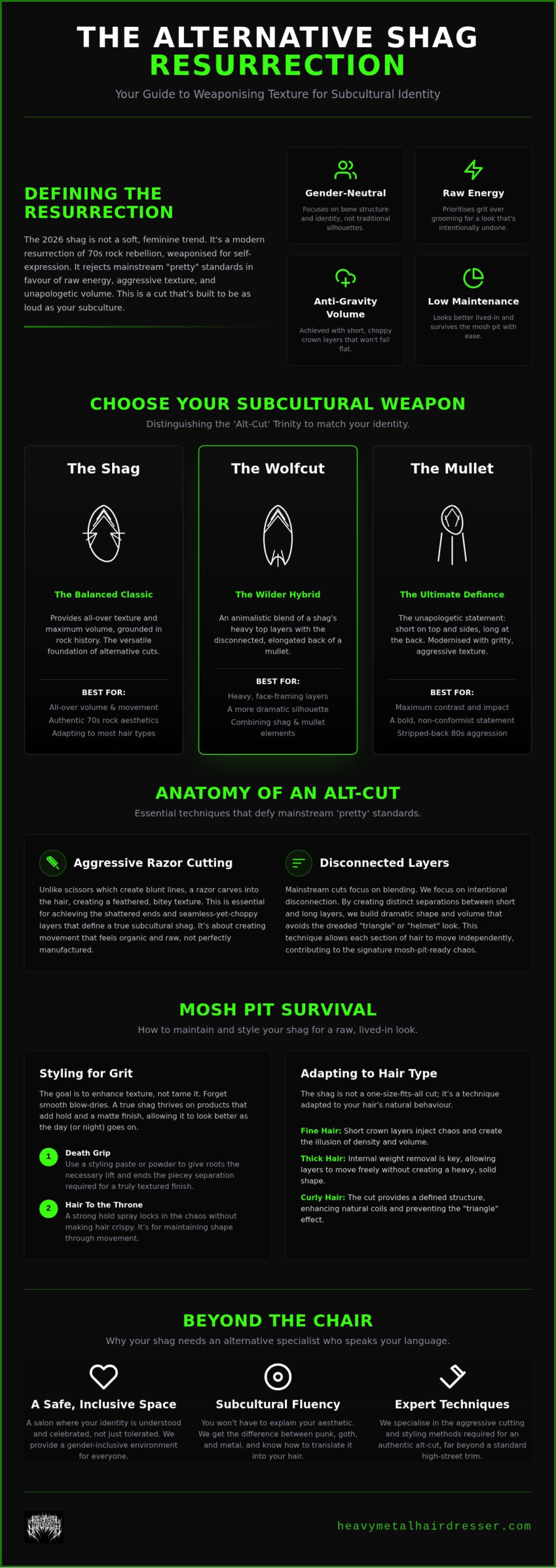
Mastering the Holy Trinity: Shags, Mullets, and Wolfcuts

Mainstream hair is obsessed with symmetry. Subcultural hair is obsessed with energy. When you look at professional alternative hair courses UK, the focus is always on the shapes that define the scene. These cuts are the visual language of British subculture; they have evolved from the rebellion of the 70s into the high-octane grit of 2026. Mastering the modern shag, the mullet, and the wolfcut requires more than just a pair of scissors. It requires a complete shift in how you perceive weight distribution.

Traditional education teaches you to remove weight to make hair lie flat and behave. In the alternative world, we redistribute weight to create lift, jagged movement, and “grit.” The modern shag relies on aggressive layering and a heavy, face-framing fringe that refuses to be “polite.” The mullet has undergone a massive evolution, shedding its 80s disaster reputation to become a subcultural staple that plays with extreme length contrasts. Then there is the wolfcut. It blends the best of both worlds, using the shag’s texture and the mullet’s silhouette to achieve maximum volume. For a deep dive into the specific sectioning required for this look, check out The Ultimate Wolf Hair Cut Guide.

The Mechanics of Aggressive Layering

Movement isn’t found in the blend; it’s found in the disconnect. To create authentic grit, you must use unconventional angles that challenge the scalp’s natural flow. It’s about injecting chaos into the silhouette whilst maintaining the underlying structure. This prevents the hair from looking “messy” and instead makes it look intentional and sharp. If you want to push your technical boundaries, exploring our hair courses is the best way to get hands-on with these jagged techniques.

Tools for the Alternative Stylist

Your toolkit needs an upgrade if you’re chasing subcultural perfection. Standard thinning shears are often the enemy here; they can ruin an alternative aesthetic by creating a “fuzzy” finish rather than a defined, chunky texture. Razor cutting is essential for achieving that “lived-in” feel that looks like the client just stepped off a tour bus. We also utilise specialised finishing techniques like “Death Grip” to ensure the texture stays aggressive long after the client leaves the chair. This isn’t about soft finishes. It’s about technical mastery that stands up to the mosh pit.

Alternative Hair Courses UK: Master Subcultural Styling and Textured Grit in 2026

Creative Colour and Texture: Saturating the Identity

Saturation is everything. In the world of subcultural styling, colour isn’t a subtle accent; it’s the core of the identity. Mastering vivid shades requires a deep understanding of pigment theory and how different tones interact with the aggressive layering of a wolfcut or a shag. Our alternative hair courses UK dive straight into the technical side of high-impact colour, moving far beyond the standard foil work taught in traditional academies. It’s about achieving that deep, opaque saturation that stays vibrant even under stage lights. For a complete breakdown of the science behind these high-pigment sensations, explore our Vivid Hair Colour Guide.

Unconventional placement is where the magic happens. We don’t follow the “rules” of placement because alternative cuts don’t follow the “rules” of shape. We place pigment to highlight the jagged edges of a mullet or to add depth to the disconnected sections of a shag. It’s a technical dialogue between the cut and the colour. During consultations, we don’t just ask what colour a client wants. We find their unique pigment identity. This means understanding their lifestyle, their subculture, and how much “fade” they are willing to manage. It’s a bespoke approach for a bespoke clientele.

Vivid Pigment Mastery

You can’t get high-pigment results on compromised hair. We focus on bleaching techniques that push the boundaries whilst maintaining the structural integrity of the hair fibre. Organising your colour palette is just as vital. You need to know which tones will bleed harmoniously and which will turn to mud. We also teach you how to educate your clients on maintenance. “Stop the fade” isn’t just a catchy phrase; it’s a technical requirement for anyone living their life in the mosh pit. High-street products won’t cut it here; we focus on the professional-grade tools that keep the grit alive.

Styling for the Mosh Pit

Alternative hair needs to survive more than just a walk to the office. It needs to withstand festivals, stage performances, and twelve hours in a crowd. We use specialised methodologies like “Hair To the Throne” to build extreme volume that doesn’t collapse. This isn’t about hairspray that makes the hair feel like plastic. It’s about structural hold that maintains movement. For defining those textured layers, we rely on “Death Grip”. This technique ensures every jagged edge is visible and every layer has the grit it needs to stand out. It’s styling for the real world, grounded in our experience at festivals like Download and Bloodstock.

How to Choose the Best Alternative Hair Course in the UK

Most colleges are still teaching the same “safe” bobs they were in 1995. If you’re hunting for alternative hair courses UK, you’ve got to look beyond the local technical college. You need an educator who has actually spent time backstage at a festival, not just in a classroom. In 2026, the gap between entry-level college routes and professional subcultural mastery is wider than ever. Choosing the right course means finding someone who doesn’t just know the theory but lives the lifestyle. You need technical mastery that has been tested in the real world, from the humidity of a festival stage to the high-pressure environment of a band photoshoot.

Authenticity is your best filter. Look for courses that offer hands-on practical workshops rather than just “look and learn” sessions. You can’t feel the tension of a razor or the grip of a textured cut through a screen. It’s also vital to ensure the training environment is inclusive and celebrates subcultural identity. Alternative hair is deeply rooted in self-expression and gender-neutrality. If a course feels too clinical or “corporate,” it’s likely too sanitised for the aggressive, textured grit you’re trying to master. A true alternative course should cover both the technicality of the cut and the creative chaos of the styling.

Credentials That Matter

“Industry standard” is often just another way of saying “boring.” For alternative education, you want to see credentials that include real-world experience at events like Download or Bloodstock. Learning from stylists who live the subculture ensures you aren’t getting a watered-down version of a mullet or a shag. Avoid “sanitised” training that tries to fit alternative aesthetics into a mainstream box. You want the raw, unfiltered techniques that actually resonate with your niche clientele. This is about technical proficiency, not just following a trend.

Practical Logistics for UK Stylists

Time is a commodity. Many stylists prefer one-day intensives that allow them to master a specific technique and get back to the chair. However, multi-session masterclasses offer a deeper dive into pigment theory and complex weight distribution. When you sign up, check the kit requirements. An alternative hair course often requires specific tools like high-quality razors or specialised texturising shears that aren’t found in a standard kit. Beyond the tools, the networking value is massive. Connecting with fellow alternative stylists across the UK builds a community that supports your growth long after the course ends. If you’re ready to escape the mainstream and upskill with the best, check out our upcoming hair courses to find your next masterclass.

Elevate Your Craft with Heavy Metal Hairdresser Education

Simon Tuckwell didn’t build this brand in a corporate boardroom. He built it in the mud, the mosh pits, and the backstage areas of the UK’s biggest festivals. Heavy Metal Hairdresser is the antidote to the clinical, safe education that has been holding you back. When you look for alternative hair courses UK, you’re looking for an ethos that matches your own rebellious spirit. We don’t just teach you how to cut; we teach you how to master the craft of identity. This is about technical proficiency meeting subcultural pride.

Mastering our specific methodologies means adding serious weapons to your technical arsenal. We’ve developed “Hair To the Throne” and “Death Grip” to solve the problems traditional training ignores. “Hair To the Throne” is our blueprint for extreme, structural volume that refuses to collapse. “Death Grip” is the technique that defines textured layers with aggressive grit. These aren’t just names; they’re battle-tested systems used by the crew that styles the pit at Download and Bloodstock. You’re learning from stylists who understand what hair needs to endure when the adrenaline is high and the lights are bright.

Joining us means joining a community of like-minded, rebellious experts. It’s a space where being different is celebrated and where technical skill is used to empower others. We provide a gender-inclusive, safe environment where you can push your creative boundaries without judgment. You’ll leave with more than just a certificate; you’ll leave with a new perspective on what it means to be a specialist in the alternative scene.

From Backstage to the Chair

The beauty of festival-tested techniques is their reliability. If a style can survive a weekend at Bloodstock, it can survive anything your client throws at it. We show you how to apply these high-performance methods to your daily salon work, ensuring your clients leave with a look that lasts. For a deeper look at how we handle extreme conditions, check out our Festival Hair Backstage Case Study. It’s about empowering your clients through bold, expressive identity that stands up to their lifestyle.

Book Your Masterclass

We are currently booking for our 2026 masterclasses. These sessions are designed for stylists who are ready to escape the mainstream and own their niche. Availability is limited to ensure every stylist gets the hands-on technical guidance they need to succeed. To secure your spot in a professional alternative hair course, you need to act quickly as these sessions often fill up months in advance. Don’t let another year go by cutting “safe” styles that don’t inspire you. Master the art of alternative hair—enquire now.

Own the Alternative Revolution in 2026

The mainstream high street is satisfied with “safe.” You aren’t. Mastering subcultural aesthetics means moving beyond basic blends and embracing the technical grit that defines 2026. From the aggressive layering of a wolfcut to the high-pigment saturation of vivid colours, your path to becoming a niche specialist starts with unlearning the rules of the traditional salon. We’ve spent years redefining the UK alternative scene, bringing the same energy to our education that we bring when styling for Download and Bloodstock festivals.

Our alternative hair courses UK provide the exact technical arsenal you need to dominate this scene. By mastering methodologies like “Death Grip” and “Hair To the Throne”, you aren’t just cutting hair; you’re building a brand that attracts the most loyal, expressive clientele in the industry. The underground isn’t waiting for permission. It’s time to elevate your craft and join a community that celebrates identity without compromise.

Join the Revolution: Book Your Alternative Hair Course

Stop playing it safe. Start making your mark on the pit. Your future as a rebellious expert starts now.

Frequently Asked Questions

What exactly is an alternative hair course and who is it for?

Alternative hair education is specialised training focusing on subcultural aesthetics like shags, mullets, and wolfcuts. It is built for stylists who are bored of mainstream “safe” styling and want to master technical grit. If you are a rebellious expert ready to own a niche and attract a dedicated, music-loving clientele, these sessions are designed for you.

Do I need to be a qualified hairdresser to take an alternative hair course in the UK?

Yes, these are advanced upskilling sessions rather than entry-level programmes. Most alternative hair courses UK require a Level 2 or 3 qualification because they build on foundational cutting and colouring skills. we skip the basics and dive straight into the aggressive layering, technical disconnects, and razor work that define the modern alternative scene.

What specific techniques are covered in a wolfcut hair course?

You will master extreme weight redistribution and face-framing fringe work. We cover the technical disconnects between the shag-inspired top and the mullet-style length. You will learn to use razors and texturising shears to create that jagged, “lived-in” silhouette that maintains its volume. We focus on creating shapes that don’t collapse after one wash.

Are these courses accredited or recognised within the UK hair industry?

The UK industry is largely self-regulated, but our training is recognised for its technical excellence and real-world relevance. While not a standard NVQ, which often avoids “risky” subcultural cuts, our courses are led by veterans with experience at Download and Bloodstock. They are designed to build a professional portfolio that attracts high-value, niche clients.

How much do professional alternative hair training courses usually cost?

Investment levels vary across the UK depending on the duration and the educator’s level of expertise. You will find everything from one-day intensives to multi-session masterclasses. We recommend checking specific course pages for current availability and booking details, as rates reflect the specialised nature of the technical skills and subcultural knowledge being taught.

Will I learn how to use vivid hair colours in these courses?

Creative colour is a massive part of the alternative identity. We cover pigment theory, saturation techniques, and unconventional placement that complements textured cuts. You will learn how to achieve high-impact results that survive the mosh pit without compromising the structural integrity of the hair fibre. It is about making the colour and cut speak the same language.

What kit do I need to bring to a textured styling masterclass?

Bring your professional cutting kit, including high-quality razors and texturising shears. Standard thinning shears often aren’t enough for the chunky, aggressive grit we create. We provide the specialised styling products like “Death Grip” and “Hair To the Throne” during the session to help you master the art of extreme volume and structural hold.

Is there a focus on gender-inclusive and safe space styling?

Inclusivity is a non-negotiable part of our ethos. These alternative hair courses UK are designed to be gender-neutral, focusing on the individual’s identity rather than traditional binary styles. We provide a safe, supportive environment where every stylist is encouraged to push their creative boundaries. It is about celebrating difference and empowering your clients through authentic self-expression.

Posted on

Modern Mullet Haircut: The 2026 Guide to Alternative Texture and Grit

Modern Mullet Haircut: The 2026 Guide to Alternative Texture and Grit

The modern mullet haircut isn’t a nostalgic throwback to a dead era; it’s a high-contrast weapon of subcultural identity designed to dismantle the binary. You’re likely tired of mainstream barbers who think alternative styling just means a slightly messy fade or, worse, a dated caricature that looks like an 80s costume party. It’s frustrating when your hair feels flat and fine whilst you’re craving a shape that carries real weight and grit. We’re here to help you reclaim that edge.

In this guide, you’ll discover how the modern mullet has evolved into a high-texture, gender-neutral powerhouse that prioritises self-expression over social norms. We’re going to break down the technical differences between a standard fade and an aggressive mullet shape so you can speak the right language in the chair. You’ll also learn how to organise your styling routine to maintain a sharp, current look that defies expectations. By the end, you’ll have the confidence to rock a bold, unconventional shape that is unapologetically yours.

Key Takeaways

  • Discover how the modern mullet haircut has evolved from a retro cliché into 2026’s high-contrast “chaos everywhere” aesthetic.
  • Understand the technical anatomy of an aggressive shape, including how to balance the critical weight line and disconnected temple shaves.
  • Learn how to use hair as a tool for gender euphoria and a visual rejection of outdated binary beauty standards.
  • Master the professional styling routine for maintaining grit and volume, even in high-humidity festival environments.
  • See why saturating your identity with vivid hair colour and specialist expertise is the key to a truly alternative transformation.

What is the Modern Mullet Haircut in 2026?

Forget the “business in the front, party in the back” cliché. That’s a tired relic. The modern mullet haircut in 2026 is a deliberate act of subcultural rebellion. It’s a high-contrast evolution of the classic shag and wolfcut, built for those who refuse to blend into the background. We’ve moved past the polished, sterile fades of the last decade. Now, it’s about “chaos everywhere.” This aesthetic prioritises aggressive texture and disconnected layers over smooth transitions. It stands as a core pillar of the rock inspired haircuts movement, where the goal isn’t just to look good; it’s to look loud. It’s hair that demands a reaction.

The Evolution of the Shape

While the history of the mullet traces back to ancient warriors and 80s pop stars, the 2026 silhouette is a different beast entirely. Old-school versions were often flat on top with a rigid, curtain-like length at the back. Today, we focus on vertical volume. We want height. We want movement. The modern shape is jagged, irregular, and purposely messy. It draws heavy influence from underground metal and punk scenes, where hair is meant to move with the music. We’ve ditched the rigid structure for an engineered shape that holds its own without needing a gallon of hairspray. It’s about finding that sweet spot between intentional design and raw, unrefined grit.

Why It Rules the Alternative Scene

This haircut is a visual middle finger to mainstream beauty standards. It’s a refusal to play by the rules of “professionalism” that have stifled identity for decades. The modern mullet haircut bridges the gap between raw punk energy and high-fashion aesthetics. It’s a tool for self-assertion. Wearing a “difficult” haircut like this requires a certain level of confidence. It tells the world you aren’t looking for approval. It’s about finding a silhouette that actually fits your soul, not just your head shape. In a world of carbon-copy styles, this cut offers a way to claim your space and express your identity without saying a single word. It’s tough, it’s inclusive, and it’s unapologetically bold.

The beauty of this style lies in its versatility. It doesn’t care about your gender or your hair type. Whether you’re working with fine strands or thick, unmanageable curls, the modern mullet uses that natural behaviour to create something unique. It’s about leaning into the “problem” areas of your hair and turning them into a feature. By focusing on disconnected layers and purposeful weight, we create a shape that feels alive. It’s not just a trim; it’s a transformation that aligns your external look with your internal energy.

The Anatomy of an Aggressive Modern Mullet

An aggressive modern mullet haircut isn’t just a haphazard mess of lengths. It is a calculated architectural project. To get that sharp, alternative edge, you have to move beyond the standard fade. We’re talking about disconnected sides. This means creating a harsh break between the temple area and the rest of the hair; often through creative temple shaves or skin-tight crops that don’t blend into the top. This disconnection is what gives the style its grit and separates it from mainstream imitations.

The “Weight Line” is the most critical part of the transition. It’s the invisible border where the fringe meets the length at the back. Balancing this requires precision. If it’s too blended, you lose the mullet’s soul. If it’s too disjointed, it looks like a mistake. Your fringe should be a statement of its own. Whether you opt for jagged micro-bangs or heavy, eyebrow-skimming layers, the fringe sets the tone for the entire face. Finally, there’s the tail. The length at the nape should be determined by your neck shape and how much of a silhouette you want to create. It’s about aggressive layering. We use internal texture to create “chaos” within the hair, ensuring it never sits flat or looks too “done.”

Texture as a Technical Tool

Achieving this level of movement requires more than just a pair of scissors. A skilled metal barber understands that texture is a weapon. We use razors and deep point-cutting to shred the ends, removing weight whilst adding flick and flow. For those with thicker manes, deep channel cutting is essential to prevent the hair from becoming a helmet. We’re looking to create “air” in the hair. This allows the layers to breathe and move naturally, maintaining that messy, lived-in behaviour that defines the alternative scene.

Choosing Your Contrast Level

Not every mullet needs to be a total shock to the system. You can play with the volume. A low-contrast version, sometimes called a “Euro Mullet,” uses a subtle taper on the sides for a softer entry point. It’s alternative, but approachable. On the other end of the spectrum, high-contrast shapes feature skin-tight sides with extreme, flowing length at the nape. This is for those who want maximum impact. To keep these aggressive shapes from collapsing by midday, you need a product with serious hold. Using Death Grip ensures your style stays locked in place, no matter how much you move. It’s about having the technical foundation to support the chaos you want to project.

Modern Mullet Haircut: The 2026 Guide to Alternative Texture and Grit

Breaking the Binary: A Gender-Neutral Hair Revolution

The idea that a haircut belongs to a specific gender is an outdated social construct. In the alternative scene, we’ve already burnt that rulebook. The modern mullet haircut has emerged as the ultimate tool for gender euphoria. It allows the wearer to occupy the space between traditional binaries; providing a silhouette that can be simultaneously aggressive and ethereal. In 2026, we’re seeing a massive shift towards identity-affirming styling across Britain. This isn’t just about fashion. It’s about visibility. It’s about hair that finally matches the person in the mirror.

Face-framing layers are the secret weapon here. We can adjust them to sharpen a jawline or soften a forehead regardless of your birth-assigned gender. This flexibility makes it a powerhouse for trans and non-binary individuals seeking a look that feels authentic. It’s vital to find safe space salons where your identity is celebrated rather than merely tolerated. Mainstream shops often struggle with this. They try to force alternative shapes into gendered boxes. We don’t do that. We focus on the person, the texture, and the energy you want to project. By prioritising the individual over the binary, we create shapes that feel like a second skin.

Mullets for All Identities

The “Femme Mullet” is currently dominating alternative fashion circles. It often blends high-pigment colour with sharp, disconnected edges to create a look that is both pretty and punk. We’ve ditched the “men’s” and “women’s” labels entirely. Industry shifts in the UK are finally catching up with this reality. Leading alternative salons have moved away from binary pricing models in favour of time-based structures. We’ve been at the forefront of this charge for years. We categorise by technique and complexity, ensuring everyone feels safe and supported whilst they transform. This approach removes the anxiety of booking and ensures the focus stays entirely on the craft and your comfort.

Face Shape vs. Identity

Ignore the “rules” about face shapes. Traditional stylists might tell you a mullet doesn’t suit a round face or a long chin. They’re wrong. Hair is armour. If a bold, unconventional shape makes you feel powerful, that is the only rule that matters. The modern mullet haircut stands out amongst a sea of boring, safe haircuts precisely because it refuses to conform. It’s about building confidence through self-expression, not fitting into a pre-approved mould. When you wear a cut this loud, you aren’t seeking approval. You’re claiming your space. We use visual weight and internal texture to balance the silhouette to your liking, not to some arbitrary beauty standard. It’s a visual middle finger to the expectation of being “normal.”

Styling and Maintenance: Keeping the Chaos Controlled

Styling a modern mullet haircut isn’t about achieving perfection. It’s about engineering the right kind of mess. If you leave the house looking too polished, you’ve missed the point. You want hair that looks like it has a history. This requires a specific routine that prioritises grit over shine. Follow these steps to lock in your shape without looking like a 1980s caricature. For a deeper breakdown of professional techniques and product application, our guide on how to style a modern mullet covers everything from choosing the right matte finishes to using professional tools that keep your silhouette defiant all day.

  • Step 1: Prep. Start with damp hair. Blast it with a sea salt spray or a heavy-duty volume mist. This creates the “tooth” or grit necessary for the shape to hold its own against gravity.
  • Step 2: Dry. Rough dry your hair using a diffuser. This encourages natural wave and texture whilst preventing the frizz that comes from high-heat blow-drying.
  • Step 3: Texture. Apply a matte clay or a paste like Death Grip to the ends only. Working product into the roots will weigh the hair down and kill your volume.
  • Step 4: Organise. Drop the comb. Use your fingers to pull pieces apart and create definition. You want to organise the chaos into a shape that feels intentional but raw.
  • Step 5: Refresh. Between washes, use dry shampoo at the crown. It saps excess oil and provides an immediate lift to your vertical volume.

Mosh Pit Survival Tips

The modern mullet haircut is the ultimate festival weapon. It thrives in high-humidity environments where other styles fail. If you’re heading into the pit, you need a look that survives physical contact and sweat. The beauty of an aggressive mullet is that it actually looks better as it gets lived-in. To ensure maximum durability, double down on your prep products. If the back starts to sag by the final set, simply flip your head upside down and give it a vigorous shake. The internal layers will snap back into place, maintaining your silhouette whilst you focus on the music.

The Long Game: Maintenance

To keep the contrast sharp, you’ll need to visit your barber every three to four weeks for a side trim. This maintains the disconnected feel that defines the 2026 aesthetic. Managing the fringe is a delicate balance; you want to keep the shaggy, eyebrow-skimming length without it becoming a nuisance. If you ever decide to retire the look, navigate the transition with our guide on how to grow out a mullet. It provides the technical roadmap for changing your weapon without enduring a year of bad hair days.

The Heavy Metal Hairdresser Approach to the Modern Mullet

High-street barbers often treat the modern mullet haircut like a passing fad. They try to “tame” it. They try to make it wearable for an office job you probably hate. At our salon, we do the opposite. We understand the subcultural weight of your hair. Whether you’re referencing 70s glam, 80s thrash, or 2026’s hyper-textured chaos, we speak your language. A specialist salon doesn’t just cut hair; we curate an identity. We’ve spent years styling for bands and festival backstage crews, ensuring that hair holds up under stage lights and in the pit.

We elevate the shape by integrating vivid hair colour. A flat, natural tone can sometimes hide the aggressive layering we’ve worked so hard to create. High-pigment saturation acts like a spotlight for texture. It makes every disconnected layer and jagged edge pop. During our consultation process, we don’t just ask for a reference photo. We want to know your music, your vibe, and how you move. We listen to your identity before we ever pick up a razor. This is a collaborative process between two people who value the underground aesthetic.

More Than Just a Haircut

Our commitment goes beyond the chair. We prioritise inclusive, safe spaces for the entire alternative community. This is a sanctuary for those who feel “outside the mainstream.” We don’t care about what’s trending on a corporate mood board. We care about your individuality. The salon experience is high-energy and percussive. It’s a raw, authentic environment designed to make you feel at home whilst we transform your look. We aren’t here to give you a “safe” version of yourself. We’re here to help you find the loudest one. Your hair should be a visual representation of your internal grit.

Join the Resurrection

Ready for a transformation? Booking your session for a modern mullet haircut is the first step toward reclaiming your visual identity. When you show up, bring your favourite band shirt. It helps us understand the aesthetic universe you live in. You aren’t just getting a service; you’re joining a community that celebrates being different. We celebrate the grit. We celebrate the rebellion. Become part of a movement that refuses to be silenced by boring beauty standards. Claim your space in the chair and let’s create something aggressive. The resurrection of alternative style starts here.

Reclaim Your Identity in the Chair

The modern mullet haircut isn’t just a style choice; it’s a declaration of independence from a boring, binary world. We’ve explored how this shape uses aggressive texture and disconnected layers to build a silhouette that actually matches your energy. Whether you’re using it to find gender euphoria or just to look like you belong on a festival stage, the mullet is your visual weapon for 2026. You don’t have to settle for a safe, high-street fade that hides who you really are.

As award-winning alternative hair specialists and stylists for Download and Bloodstock festivals, we know how to make your hair survive the chaos. We’ve built a gender-neutral safe space where your subcultural references are actually understood. Stop waiting for a barber who “gets it” and come to the experts. Book your modern mullet transformation at Heavy Metal Hairdresser today. Claim your space. Wear your grit with pride.

Frequently Asked Questions

Is a modern mullet high maintenance?

Daily maintenance is surprisingly low because the style thrives on lived-in grit and intentional mess. You won’t need to spend forty minutes with a round brush every morning. However, keeping the silhouette sharp requires a trip to the salon every three to four weeks. This ensures the sides stay tight and the contrast remains aggressive rather than looking like an accidental grow-out.

Can I get a mullet if I have very fine or thin hair?

Fine hair is actually an ideal canvas for this shape because we use aggressive layering to create the illusion of density. By removing weight in specific channels, we allow the hair to stand up and move rather than sitting flat against the scalp. The modern mullet haircut relies on texture, so fine strands often hold the necessary volume better than heavy, thick hair that tends to collapse.

How do I ask my hairdresser for a modern mullet without it looking like the 80s?

Ask for disconnected temple shaves and a heavy weight line instead of a traditional blend. Avoid the word “perm” or any mention of a uniform length on top. You want to emphasise that you’re looking for a high-contrast shape with jagged, irregular layers. Bringing a photo of a modern wolfcut or a textured shag helps bridge the gap between retro and current alternative aesthetics.

What is the difference between a wolfcut and a modern mullet?

The primary difference lies in the sides. A wolfcut is essentially a heavily layered shag that maintains some length and blending around the ears. A modern mullet haircut is far more aggressive; featuring skin-tight or disconnected sides that create a harsh break between the fringe and the tail. Whilst both prioritise texture, the mullet is about high-contrast drama whilst the wolfcut is softer and more blended.

Does a mullet work for professional or office environments?

It absolutely works if your office values identity over conformity. The 2026 version of this cut is a refined, engineered shape that can be styled to look intentional and sharp. If you need to tone it down for a meeting, you can use a matte paste to organise the layers into a more controlled silhouette. It remains an alternative statement, but its technical precision keeps it from looking like a joke.

How long does my hair need to be before I can get a mullet?

You need at least three inches of length on top and four to five inches at the nape to create a recognisable silhouette. We can certainly start the transition with less, but the “tail” won’t have that signature flow until it hits the collar. If you’re starting from a buzz cut, focus on growing out the back whilst keeping the sides tight to build the shape gradually.

Can a mullet be styled for curly hair?

Curly hair is arguably the best texture for this cut because it provides natural volume and movement. Curls give the “party” at the back a life of its own without requiring constant product application. We use specific cutting techniques to ensure your curls stack correctly; preventing the hair from becoming too wide whilst maintaining that essential vertical height at the crown.

What products are best for a textured mullet?

Stick to products that provide a matte finish and heavy grit. A high-quality sea salt spray is essential for your base layer whilst the hair is damp. Once dry, use a matte clay or a high-hold paste engineered for textured mullet styling to define the ends and lock the shape in place. Avoid gels or high-shine pomades; they make the hair look greasy and flat, which kills the alternative edge you’re chasing.

Posted on

Hairdresser for Alternative Subcultures: More Than Just a Cut

Hairdresser for Alternative Subcultures: More Than Just a Cut

Why do so many stylists try to “fix” a haircut that is meant to look like a riot? You have likely sat in a polished salon chair only to have a stylist try to “soften” your edges or “beautify” a shag until it lost its teeth. It’s exhausting to explain that your aesthetic isn’t a mistake that needs correcting. Finding a hairdresser for alternative subcultures means finding someone who doesn’t just see a trend, but understands the weight of the music and history behind it.

We know the frustration of being misunderstood in a traditional, overly-polished environment. You want a look that reflects your identity, not a watered-down version of a mainstream magazine cover. With the wolf cut racking up over one billion views on TikTok, it’s clear that aggressive, textured styles are more than just a passing phase. They’re a declaration of who you are.

In this article, you’ll discover why subculture styling requires a specialist who understands the intersection of identity, music, and aggressive technical texture. We’ll explore how to find a safe, non-judgemental space where your subcultural identity is validated. You’ll learn why a technically superior, aggressive cut is the only way to truly honour your style.

Key Takeaways

  • Identify the shift from traditional beauty standards to expressive identity and why your haircut should be a declaration, not a compromise.
  • Learn the technical hallmarks of the perfect shag or wolfcut, focusing on the percussive weight distribution that a hairdresser for alternative subcultures masters.
  • Understand the role of a safe space in ensuring your identity is validated through inclusive language and gender-neutral styling.
  • Use our underground checklist to vet a stylist’s portfolio for aggressive technical texture and genuine subcultural credentials before you book.
  • Discover how the team at Heavy Metal Hairdresser uses technical expertise to engineer identity for the UK’s alternative scene.

What defines a hairdresser for alternative subcultures?

A hairdresser for alternative subcultures is a technical specialist who lives at the intersection of music, history, and aggressive texture. They aren’t just cutting hair; they are engineering an identity. Traditional training often focuses on “beautifying” a client by softening features and blending layers until they disappear. For us, that is a failure. An alternative specialist understands that a haircut should be a statement of non-conformity. It requires a mastery of percussive weight distribution and disconnected layers that most high-street salons simply don’t teach.

This expertise is rooted in a deep understanding of Alternative fashion and the specific visual codes that define different scenes. Whether you are Goth, Metal, Punk, or Queer, your hair signals your belonging. A specialist knows that a “trendy” shag seen on a celebrity is worlds away from a subculturally-rooted shag haircut. One is a safe, fashion-adjacent accessory; the other is a raw, gritty expression of subcultural grit. Choosing a hairdresser for alternative subcultures ensures your look isn’t a watered-down version of your true self.

The rejection of the mainstream salon model

The clinical, “white box” salon model often feels like a hostile environment for those outside the mainstream. It’s a space designed for polite small talk and standardised beauty. In a subculture-focused space, that polished facade is dismantled. We trade the clinical feel for a gritty, authentic atmosphere that mirrors the underground aesthetic. It isn’t just about the music playing in the background; it’s about a fundamental shift in values. We don’t want to make you look “presentable” for a corporate board meeting. We want to make you look like yourself. Dismantling traditional beauty standards is at the heart of everything we do.

Understanding the subcultural visual language

Hair is a visual shorthand. It’s how we find our people in a crowd. If you’re a metalhead, “softening” your cut is a technical and cultural insult. It strips away the edge that defines your identity. A hairdresser for alternative subcultures understands the connection between stage hair for musicians and the everyday look of the fans. They know how to craft a Wolfcut that retains its bite or a Shag Haircut that feels as aggressive as a distorted guitar riff. It’s about honouring the history of the scene whilst pushing the technical boundaries of what hair can do. We speak your language so you don’t have to translate your identity during a consultation.

The technical soul of subculture hair: Shags, mullets, and wolfcuts

Subculture hair isn’t a byproduct of neglect. It’s the result of precise, intentional technicality. When you visit a hairdresser for alternative subcultures, you aren’t asking for a standard trim. You’re asking for engineered chaos. Mainstream stylists are taught to hide their tracks. They blend, they soften, and they smooth. We do the opposite. We use percussive weight distribution to create disconnected layers that demand attention. It’s about creating movement that looks sharp and deliberate, not just messy.

This technical approach is vital because hair is a primary signal of identity. As explored in The Sociology of Hair, our follicles carry deep social weight. For us, a wolf hair cut is a complex architecture of extreme texture. It requires a completely different mindset than standard long layers. We focus on internal weight removal to ensure the hair moves with the energy of a mosh pit, not the stillness of a portrait. This is aggressive texture. It’s hair that has teeth.

The Shag and the resurrection of 70s grit

Modern shag hairdressers are the architects of rock-and-roll history. This style isn’t just about “messy” hair; it’s about “shrapnel” layers. We focus on heavy face-framing and internal weight removal to create that iconic grit. It’s the ultimate low-maintenance choice. It looks better the more you live in it. If you want a look that survives a weekend at a festival, this is it. You can see our latest work and book your own transformation at heavymetalhairdresser.com.

Mullets and Wolfcuts: The modern subculture standard

There is a massive difference between a “fashion mullet” seen on a runway and a “rock mullet” born in a dive bar. One is a trend. The other is a lifestyle. We use extreme layering to inject volume into fine hair or to wrestle control of a thick mane. A technically sound alternative cut considers the grow-out phase from day one. You shouldn’t need a touch-up every three weeks. A proper hairdresser for alternative subcultures builds a foundation that maintains its shape as it evolves. This is how we ensure your identity remains sharp, even between appointments.

Hairdresser for Alternative Subcultures: More Than Just a Cut

Why subculture styling demands a safe space environment

A safe space in the underground isn’t about being fragile. It’s about being fierce. It’s a room where you don’t have to explain your pronouns, your patches, or your lifestyle. When you look for a hairdresser for alternative subcultures, you’re looking for someone who speaks your language without a dictionary. We understand that for many, hair is a tool for survival. It’s how you signal your place in a world that often wants you to blend in or “soften” your edges. Finding a hairdresser for alternative subcultures who prioritises this environment is essential for true self-expression.

Our heavy metal hair salon is built on this foundation of radical acceptance. We are naturally inclusive because our community has always been a sanctuary for neurodivergent and queer identities. We get that a loud, chemical-smelling, high-pressure salon can be a sensory nightmare. We offer a different rhythm. We use identity-affirming language during every consultation because your name and your vibe are the only things that matter. We recognise the emotional weight your hair carries, especially amongst marginalised groups who use their aesthetic as a shield and a banner.

Gender-inclusive styling: Breaking the binary

Charging by “men’s” or “women’s” cuts is a relic of a boring past. It’s exclusionary and technically irrelevant. We don’t care about the binary; we care about the silhouette. Whether you’re after a Wolfcut or a sharp fade, the price is based on the technical work and the time required, not your gender. Hair plays a massive role in gender transition and identity exploration. We take that responsibility seriously. We focus on the “shape” and the “vibe” that makes you feel like your most authentic self, regardless of what’s on your birth certificate.

The cultural connection: From the pit to the chair

Trust is earned in the pit. It’s built through shared sweat and loud riffs. When your stylist is active in the scene, working backstage at festivals or standing front row at gigs, they understand your lifestyle. We aren’t just a service-based business; we are a community hub. We speak about bands, art, and the history of the underground whilst we work. This shared language creates an instant bond. You aren’t just a client in a chair; you’re amongst your own. We celebrate being outside the mainstream because that’s exactly where we belong.

How to choose your alternative stylist: A checklist for the underground

Finding a hairdresser for alternative subcultures isn’t about scrolling through Instagram for the brightest neon pink you can find. It’s about looking past the pigment. You need to see the architecture of the cut. Many stylists can apply a semi-permanent dye, but few can handle the percussive weight distribution required for a proper rock mullet. Use this checklist to vet your next stylist before you let them near your mane.

  • Check their scene credentials: Are they actually part of the underground? A stylist who spends their weekends at festivals or working backstage with bands understands the durability your hair needs.
  • Evaluate their educational background: Do they just follow trends, or do they lead them? A true expert often teaches others, proving they have mastered the technical soul of the craft.
  • Verify their commitment to inclusivity: A “safe space” isn’t just a sticker on the window; it’s a core value that should be evident in every interaction.

You need a specialist who understands that your hair is a declaration. A hairdresser for alternative subcultures should be a knowledgeable guide, not just a service provider. If they try to talk you out of a disconnected shape because it isn’t “flattering” by mainstream standards, walk away. They don’t speak your language.

Analysing the portfolio for technical grit

Don’t be fooled by pretty colours. When you examine a portfolio, look for sharp, deliberate lines buried amongst the texture. You want to see aggressive texture that holds its shape. Avoid stylists who only showcase “soft” or “feminine” versions of alternative cuts. Those are mainstream approximations. You also need to see evidence of vivid hair colour that doesn’t compromise the integrity of the hair. If the hair looks fried in the photo, it will feel worse in person. Technical grit means the cut looks intentional even when it’s messy.

The consultation: Your first line of defence

The consultation is your vibe check. A specialist will ask about your lifestyle, your music, and your influences. They won’t flinch when you ask for disconnected shapes or non-traditional silhouettes. They should be comfortable breaking the rules of traditional hairdressing to achieve your vision. A no-judgement policy is non-negotiable. If you feel like you have to “beautify” your explanation of your style, you’re in the wrong chair. You deserve a stylist who sees your identity as a blueprint, not a problem to be solved. Stop compromising on your style and book your session with the experts at heavymetalhairdresser.com.

Heavy Metal Hairdresser: Engineering identity through hair

Heavy Metal Hairdresser isn’t just a salon. It’s a sanctuary. We are the UK’s premier destination for subculture styling because we live and breathe the underground. We don’t just cut hair; we engineer identity. Simon Tuckwell and the team have spent years perfecting the aggressive technicality required for authentic shags, mullets, and wolfcuts. We understand that these aren’t just “messy” styles. They are complex architectures of texture and weight. When you sit in our chair, you’re working with a hairdresser for alternative subcultures who knows exactly how to make your hair look as loud as your favourite record.

Our work doesn’t stop at the salon door. We are active participants in the culture. You’ll find us working with bands backstage or set up at major festivals like Download and Bloodstock. We understand the demands of a subcultural lifestyle. Your hair needs to survive the pit, the rain, and the stage lights. That’s why we developed our own professional tools like Death Grip. Along with our alternative hair merch UK, we provide the gear you need to maintain your grit long after you leave the salon.

Mastering the craft and leading the scene

We believe in elevating the entire industry. We aren’t gatekeeping our techniques. Through our alternative hair courses UK, we are training the next generation of specialists. We teach the percussive weight distribution and disconnected layering that mainstream colleges ignore. Our “Hair To the Throne” philosophy is built on technical excellence and radical empowerment. We want every client to feel like the best version of themselves. It’s why alternative souls travel from all corners of the country to find us. They know that a genuine hairdresser for alternative subcultures is a specialist who values their identity above all else.

Join the rebellion: Your next steps

Stop apologising for your aesthetic. Stop letting high-street stylists “fix” your edges. It’s time to embrace your individuality without compromise. When you book a session with us, the consultation is a collaboration. We want to hear about your influences and your scene. We use that information to craft a look that is uniquely yours. We don’t judge; we create. Whether you’re after a sharp Wolfcut or an aggressive Shag Haircut, we have the technical soul to make it happen. Ready to claim your identity? Book your session with Heavy Metal Hairdresser today.

Reclaim your look without compromise

Your hair is more than a trend; it’s a declaration of your place in the underground. We’ve explored how technical grit and percussive weight distribution separate a genuine subcultural cut from a mainstream imitation. We’ve also highlighted why a safe, gender-inclusive environment is non-negotiable for true self-expression. Finding a specialist hairdresser for alternative subcultures ensures your look survives the pit and reflects your soul.

Heavy Metal Hairdresser has built a national reputation as a sanctuary for those who live outside the lines. Our team brings Red Dot Design Award-winning influence to every textured style we craft. Whether we are styling backstage at major UK festivals like Download and Bloodstock or engineering a wolfcut in our salon, our focus remains on your individuality. We provide a space where being different is the standard, not the exception.

Don’t settle for a stylist who wants to “soften” your edges. You deserve a look that has teeth. Book your alternative hair transformation with Heavy Metal Hairdresser today. It’s time to stop blending in and start looking like yourself.

Frequently Asked Questions

What makes a hairdresser “alternative” rather than just creative?

An alternative hairdresser is defined by their deep connection to subcultural history and specific visual codes. Creative stylists often follow mainstream trends with a unique twist, but a specialist understands the percussive weight distribution needed for a punk mullet or a goth shag. It is about technical grit and scene knowledge rather than just being “edgy” for the sake of it.

Can I get a wolfcut or shag if I have very fine or thin hair?

You can absolutely pull off these styles with fine hair because the extreme layering actually creates internal volume. A skilled hairdresser for alternative subcultures uses technical weight removal to make thin hair look fuller and more aggressive. We don’t rely on bulk; we rely on the architecture of the cut to build a silhouette that has movement and bite.

Do alternative hairdressers only work with vivid colours?

No, the technical foundation of the cut is far more important than the pigment. Whilst we love high-impact shades, a subculturally-rooted shag looks just as powerful in natural tones. The focus remains on the aggressive texture and the way the layers interact. We ensure your identity is engineered through the shape first, making the colour a secondary choice for self-expression.

Is a safe space salon only for the LGBTQ+ community?

A safe space is for everyone who feels outside the mainstream, including neurodivergent individuals and those with social anxiety. Whilst we are fiercely inclusive of the LGBTQ+ community, our goal is to provide a non-judgemental environment for all alternative souls. It is a room where you don’t have to perform or explain your identity to get the look you want.

How do I maintain a high-texture alternative cut at home?

Maintaining a high-texture cut is easier than you think because these styles are designed to be lived-in. You don’t need a blow-dryer; you need the right products to enhance the grit. Using something like our Death Grip helps define those “shrapnel” layers and keeps the movement sharp. It is about working with your natural texture rather than fighting against it every morning.

Why are alternative haircuts often more expensive than high-street trims?

These cuts require a higher level of technical education and significantly more time than a standard high-street trim. You aren’t just paying for a haircut; you’re paying for a specialist who understands engineered chaos. A hairdresser for alternative subcultures uses complex layering techniques that aren’t taught in traditional colleges. This expertise ensures your cut maintains its shape for months rather than weeks.

What should I bring to my first alternative hair consultation?

Bring reference photos that show the specific “vibe” you want, even if they aren’t of hair. We love seeing your music influences, fashion patches, or art that inspires you. Be ready to discuss your lifestyle and how much effort you want to put into styling. This helps us craft a shape that feels authentic to your subcultural identity whilst remaining practical.

Can I get a subculture-inspired cut if I work in a professional office environment?

You can definitely embrace subcultural grit whilst maintaining a professional appearance. We can tailor a shag or wolfcut to be more “covert,” allowing you to style it conservatively for work and aggressively for the weekend. It is about finding the right balance of texture that honours your identity without causing friction in your professional life. We call it “engineered versatility.”

Posted on

Unconventional Hair Salon UK: The 2026 Guide to Alternative Excellence

Unconventional Hair Salon UK: The 2026 Guide to Alternative Excellence

Why does a trip to the local hairdresser feel like a constant battle to defend your identity against a stylist who just wants to “fix” your fringe? You’ve likely sat in that chair before, explaining that you want your wolfcut to look jagged and your textures to feel aggressive, only to have them “tame” it into something acceptable for a corporate office you’ve never stepped foot in. Finding an unconventional hair salon UK that actually speaks your language shouldn’t feel like a secret underground mission. You deserve a space where your heavy metal aesthetic or non-conformist identity isn’t just tolerated, but celebrated with technical mastery.

We agree that the traditional beauty industry often fails those of us living on the fringes of the mainstream. This guide is your roadmap to finding a specialist who understands that hair is a manifesto, not just a service. We’ll show you how to identify inclusive spaces that ditch outdated gendered pricing and offer expert advice on maintaining those sharp, death-grip shapes. We are diving into everything you need to ensure your next cut is a true reflection of who you are, whilst keeping you informed on the latest 2026 UK safety standards for your favourite products.

Key Takeaways

  • Ditch the “pretty” standard. Learn why an unconventional hair salon UK is essential for those who want their hair to reflect subcultural grit rather than mainstream trends.
  • Spot technical mastery. Discover how to identify stylists who actually understand aggressive textures and disconnected shapes like shags and wolfcuts.
  • Prioritise your identity. Find out why gender-neutral pricing and inclusive environments are the non-negotiable foundations of a true alternative space.
  • Prepare for your transformation. Learn how to use music, art, and subcultural references to communicate your vision during a specialist consultation.
  • Gain subcultural credibility. Understand how professional expertise meets underground culture through industry leaders who live the lifestyle they style.

Why Choose an Unconventional Hair Salon in the UK?

Traditional high street salons are built on a foundation of “pretty.” Their training manuals are filled with techniques designed to smooth, tame, and polish. But if you’re hunting for an unconventional hair salon UK, “pretty” is usually the last thing on your mind. You want personality. You want grit. You want a cut that screams rather than whispers. Most mainstream stylists treat alternative styles as a phase or a mistake to be corrected. They see a shag and try to blend the layers. They see a mullet and try to make it look “work-appropriate.” This dilution of subcultural aesthetics is exactly why choosing a specialist space matters. It’s the difference between a haircut that fits in and one that stands out.

Alternative hair is often dismissed as “messy” by those who don’t live the lifestyle. In reality, these styles require a higher level of technical mastery than traditional, uniform looks. Executing a perfectly disconnected shape that grows out well takes extreme precision. It’s about knowing exactly where to break the rules of symmetry and balance. An unconventional hair salon UK doesn’t just cut hair; they engineer shapes that defy traditional structure. This is a technical specialism, not just a passing trend. It requires a stylist who understands the physics of aggressive texture and the weight of subcultural history.

The Problem with Mainstream Hairdressing

Mainstream hairdressing education has a long-standing bias toward conformity. Whilst the history of the hairdressing profession shows a constant evolution of style, the modern high street has become stagnant. Standard layers are the default. These techniques are designed for safety, not for the aggressive disconnection required for a true wolfcut or shag. When a conservative stylist tries to “normalise” your vision, they aren’t just giving you a bad haircut; they’re erasing your identity. A specialist understands that raw texture isn’t a problem to be solved. It’s a feature to be amplified and celebrated.

The Value of Subcultural Authority

Authority in the alternative scene isn’t something you can learn from a textbook. It’s lived experience. A stylist who spends their weekends at Bloodstock or Download understands the specific requirements of a subcultural cut. They know that your hair needs to survive a mosh pit and still look legendary the next morning. They speak the language of punk, metal, and queer aesthetics because they are part of those communities. This isn’t just about hair; it’s about shared references. They don’t need a Pinterest board to understand your vibe because they’re already living it. This shared culture ensures your hair remains a manifesto of your true self.

The Toolkit: Identifying Real Alternative Expertise

Real expertise isn’t found in a glossy brochure. It’s found in the sharp, aggressive lines of a cut that refuses to follow the rules. An unconventional hair salon UK stands apart because its stylists have mastered the art of disconnection. They don’t just trim. They sculpt. This requires a toolkit that goes beyond standard shears. It involves using high-performance products like Death Grip to lock in shapes that would collapse in a traditional setting. If a stylist tries to tell you that a mullet is just a “short back and sides with a bit of length,” they don’t have the technical toolkit you need. You need grit, not excuses.

Modern, progressive spaces are also redefining how the industry operates. Beyond technical skill, these specialists embrace transparent structures like gender-neutral pricing in London salons and across the UK. This shift reflects an understanding that expertise should be priced by time and complexity, not by outdated social categories. When you visit a true unconventional hair salon UK, you’re paying for a specialist skill set that understands your subculture from the inside out.

Wolfcuts and Shags: The Physics of Disconnection

A true textured layers haircut is a masterclass in weight distribution. It’s about removing bulk where it isn’t needed to create movement that looks raw and intentional. Mainstream salons often play it safe, resulting in a “soft” shag that lacks the bite of its subcultural roots. Without the right precision, a wolf hair cut quickly becomes flat and lifeless. You need a stylist who understands how to stack layers to build volume that stands up to the elements. It’s about physics, not just fashion.

Creative Colour Mastery

Saturating your identity in pigment is a high-stakes game. Achieving a high-impact vivid hair color requires a deep chemical understanding that traditional training often skims over. It’s about more than just picking a shade from a chart. It involves custom blending tones to match a specific subcultural aesthetic whilst protecting the hair’s structural integrity. If you want a neon green that doesn’t fade into a muddy mess after one wash, you need a specialist who knows the science behind the slab. Ready to reclaim your look? Explore how we handle aggressive alternative shapes at our studio.

Unconventional Hair Salon UK: The 2026 Guide to Alternative Excellence

Beyond the Cut: Inclusive Spaces and Gender-Neutral Identity

An unconventional hair salon UK is more than just a place to get a wolfcut; it is a sanctuary. For the LGBTQ+ and neurodivergent communities, the traditional salon chair can be a place of intense anxiety. Stylists who don’t “get it” often try to soften your edges or question your choice of an aggressive shape. We believe individuality should be celebrated, not just tolerated. A safe space is essential when you are expressing a non-conformist identity. It is about walking into a room where you don’t have to justify your existence or your aesthetic. This is where subcultural grit meets radical acceptance.

The need for these specialised spaces is amplified by the current state of the trade. Because there is a notable lack of UK hairdressing industry regulation, anyone can technically open a shop and claim expertise. This makes finding a salon that prioritises both technical mastery and social safety even more critical. You need to know your stylist isn’t just winging it with your identity or your hair. In an unconventional hair salon UK, the “safe space” label isn’t a marketing gimmick; it is a fundamental requirement of the subcultures we serve.

Breaking the Binary in British Barbering

We’re done with “men’s” and “women’s” cuts. It is an outdated binary that doesn’t reflect the reality of our community. Alternative salons are leading the charge by removing gendered service menus entirely. We charge for time and skill. If you are getting a complex shag, the price shouldn’t change based on your gender. This affirms your identity from the moment you book. Inclusive language isn’t an “extra” feature here; it is the baseline. It ensures that every client feels seen and respected before the first clip of the shears.

A Community-Driven Vibe

Forget the clinical, white-walled salons filled with elevator music and gossip magazines. We want a raw, percussive atmosphere that mirrors the music we love. Our studios feel like the backstage of a gig or an underground club. It is high-energy. It is unfiltered. This environment fosters a sense of belonging amongst those who have always felt like outsiders. You aren’t just a client; you’re part of a scene. This community-driven vibe is what separates a true alternative destination from a mainstream shop trying to look “edgy.”

Preparing for Your Transformation: What to Expect

A transformation at an unconventional hair salon UK is a collaborative riot. It is not a passive experience where you sit back and let someone else decide your fate. You are here because you have a vision that the high street couldn’t handle. To get the best results, you need to arrive prepared to talk about more than just “inches off the bottom.” We are looking for the subcultural pulse behind the request. Whether you are aiming for a jagged wolfcut or a saturated vivid masterpiece, the prep work starts long before the first snip. When you choose an unconventional hair salon UK, you are choosing a stylist who prioritises your subcultural identity above all else.

Forget the sanitised boards of Pinterest. Real alternative inspiration often lives in music, album art, and the raw energy of underground fashion. Bring us references that mean something to you. If a specific bassline or a gritty film aesthetic inspired your new look, tell us. This helps your stylist understand the “vibe” as much as the technical requirements. If you are prepping for high-pigment colour, start focusing on hair health weeks in advance. A strong canvas is essential for a high-impact result that lasts whilst maintaining structural integrity.

The Consultation: Speaking the Same Language

The consultation is where we align on the level of grit you want. We need to know about your lifestyle. Do you spend your summers in a mosh pit? Does your hair need to survive a week at Bloodstock? These details matter. They dictate how we stack your layers and where we place the weight. Be honest about your maintenance habits. If you want a high-impact vivid tone, we need to set realistic expectations. Some transformations are multi-session journeys to ensure your hair remains healthy and resilient. We don’t believe in taking shortcuts that compromise the health of your hair.

Post-Salon Survival

Keeping an aggressive shape sharp requires the right arsenal. Mainstream conditioners will only weigh down your texture. Instead, use Hair To the Throne to maintain that essential volume and grit. You can also check out the shag hairdressers guide to prevent your layers from falling flat between appointments. Managing a vivid fade is part of the process. Use cold water and avoid sulphate-heavy products to keep your identity saturated for as long as possible. If you’re heading to a festival, our festival hair styling UK survival guide will show you exactly how to keep your alternative look intact through three days of mud and mosh pits. Ready to start your journey? Book your specialist transformation now and reclaim your aesthetic.

Heavy Metal Hairdresser: The UK’s Destination for Subcultural Style

Simon Tuckwell didn’t set out to build another generic shop. He founded Heavy Metal Hairdresser to bridge the gap between high-end professional barbering and the raw, creative chaos of underground styling. This is the definitive unconventional hair salon UK for those who refuse to settle for “standard.” Whilst most salons are restricted by city borders or local trends, we have become a national destination. People travel from every corner of the country because they know we don’t just cut hair; we understand the subcultural pulse behind the look. We are a hub where technical mastery meets a fiercely independent spirit.

Our credibility isn’t manufactured. It’s forged in the mud and noise of the UK’s biggest alternative festivals. By styling bands and working backstage at Download and Bloodstock, we’ve tested our techniques in the most demanding environments possible. This level of authority is why we now offer alternative hair courses UK to train the next generation of stylists. We aren’t just cutting hair; we are building a rebellion. We want to ensure that the art of subculture styling survives and thrives, far away from the diluted versions found on the high street.

From the Stage to the Salon

The techniques we use in the studio are the same ones we use when preparing stage hair for musicians. This isn’t about looking good for a photo; it’s about mosh pit survival. Our “Death Grip” philosophy ensures that your aggressive shape or disconnected layers stay exactly where they belong, no matter how hard you move. We’ve taken the lessons learned from the stage and applied them to every client who walks through our doors. This unique perspective is why we are recognised as a leading unconventional hair salon UK. We know that your hair is a manifesto, and it needs to hold its ground. For a deeper dive into keeping your look battle-ready at events, explore our complete guide to festival hair styling UK and learn how to weaponise your texture against the elements.

Join the Rebellion

Your hair is the loudest form of self-expression you own. Don’t let a conservative stylist quiet it down. Booking your spot at the UK’s most unapologetic salon is the first step toward reclaiming your identity. Beyond the chair, you can explore our branded merchandise and professional-grade styling tools designed for alternative textures. We are here to provide the expertise, the environment, and the arsenal you need to stay true to yourself. This is more than a haircut. It is a commitment to being outside the mainstream. It is time to join the community that celebrates your individuality without compromise.

Reclaim Your Aesthetic Identity

Stop compromising your vision for the sake of mainstream “polishing.” You’ve seen how technical specialism in aggressive layering and disconnected shapes is the only way to achieve a look that actually sticks. Finding an unconventional hair salon UK is about more than just a trim; it’s about entering a world where your subcultural references are the baseline, not an “edgy” request. We’ve explored how a true expert prioritises your identity through gender-neutral pricing and a safe, inclusive environment.

This isn’t just theory. It’s a practice forged backstage at Download and Bloodstock, combined with Red Dot Design award-level creativity. You deserve a stylist who speaks your language and builds shapes that survive the mosh pit. It’s time to stop letting conservative salons “tame” your hair and start celebrating your grit. Book your transformation with the Heavy Metal Hairdresser crew today. Your hair is your manifesto. Make sure it’s being written by someone who understands the culture.

Frequently Asked Questions

What makes a hair salon “unconventional” compared to a standard one?

An unconventional hair salon UK prioritises technical mastery of subcultural shapes over mainstream beauty standards. Unlike standard shops that try to “tame” or “fix” alternative styles, these spaces celebrate raw texture and aggressive disconnection. They speak the language of underground scenes, ensuring your hair is a manifesto of your identity rather than a corporate-friendly compromise. It is about expertise in the grit and physics of alternative hair.

Do alternative hair salons in the UK offer gender-neutral pricing?

Yes, leading alternative spaces have ditched outdated gendered menus in favour of pricing based on time and technical skill. This ensures that everyone pays for the complexity of the work rather than being shoehorned into a binary category. It is a fundamental part of being an inclusive, modern studio that respects all identities. You are paying for the stylist’s time and the difficulty of the cut.

How do I find a specialist for a wolfcut or modern mullet?

Look for portfolios that showcase aggressive texture and intentional disconnection rather than soft, blended layers. Search for stylists who specifically list wolfcuts or shag haircuts as their core specialisms. Check their social media for “mosh pit survival” styles and a clear understanding of subcultural aesthetics. If their work looks too “polished” or safe, they probably aren’t the specialist you need.

Is it worth travelling to a specialist salon for vivid hair colour?

Travelling to a specialist is absolutely worth it to ensure the structural integrity of your hair during high-pigment transformations. Vivid colour is a chemical specialism that requires a deeper understanding of saturation and custom blending than standard salons offer. A specialist ensures your identity stays saturated without the muddy fade or chemical damage often seen in mainstream work. They know how to handle the science of the slab.

Can an unconventional salon handle traditional hair types and textures?

An unconventional hair salon UK excels at handling all hair types because their technical foundation is based on physics and weight distribution. Whether your hair is fine, thick, or curly, a specialist understands how to stack layers to create volume or remove bulk. They use the same precision required for a wolfcut to make any hair texture behave exactly how you want it to. Skill is universal.

What should I bring to my first alternative hair consultation?

Bring references that capture the “vibe” of your desired look, such as album art, music videos, or subcultural fashion. Don’t just stick to Pinterest. Show your stylist what inspired the move toward an alternative shape. Be ready to discuss your lifestyle, including your festival habits and how much time you spend on daily maintenance. This helps us align on the level of grit you want.

Are alternative hair salons safe spaces for the LGBTQ+ community?

True alternative salons are historically safe spaces where being different is the standard, not the exception. These environments are built on radical acceptance and use inclusive language as a baseline, not an afterthought. They provide a sanctuary for the LGBTQ+ and neurodivergent communities. This ensures you can express your non-conformist identity without judgement or the need to justify your existence to a stylist who doesn’t get it.

How often do I need to maintain a shag or wolfcut?

You should typically book a maintenance appointment every 8 to 12 weeks to keep aggressive shapes from falling flat. Whilst these cuts are designed to grow out with character, a refresh ensures the layers stay sharp and the volume remains where it is needed. Using texture-specific products like Death Grip can help extend the life of your style and maintain that essential grit between salon visits.

Posted on

The Metal Barber: A Reference Guide to Alternative Barbering and Subcultural Styling

The Metal Barber: A Reference Guide to Alternative Barbering and Subcultural Styling

Why does your “alternative” haircut always end up looking like a standard short-back-and-sides with a bit of gel? It’s a common frustration for anyone living outside the mainstream. You walk in asking for grit and walk out with a “safe” version of your identity because the stylist was afraid of real texture. We know the feeling of sitting in a hyper-masculine shop where your aesthetic feels like a misunderstanding. You deserve a space where being different is the standard, not the exception. Finding a true metal barber means finding someone who respects the weight and history of your subculture.

This guide dives into the technical artistry and subcultural depth behind the movement. We’ll help you understand how to achieve aggressive, identity-affirming hair that actually holds its edge. You’ll learn how to find a specialist who can execute a wolfcut or a Shag Haircut with genuine precision whilst feeling completely understood in your scene. We’re breaking down everything from the “piece-y punk” trends of 2026 to the essential maintenance for high-texture styles like the Death Grip. It’s time to stop settling for generic and start mastering your own subcultural style.

Key Takeaways

  • Master ‘controlled chaos’ through straight-razor techniques that deliver movement without the sterile finish of a standard high-street cut.
  • Understand why traditional fades fail alternative silhouettes and how prioritising internal weight preserves the integrity of a modern mullet.
  • Take control of your consultation by using technical terms like ‘disconnection’ to ensure your stylist understands your subcultural vision.
  • Discover how a dedicated metal barber blends technical precision with a grit-first approach to create identity-affirming, aggressive styles.
  • Explore the shift towards expressive, gender-neutral hair shapes that move beyond the limitations of traditional “short back and sides.”

The Metal Barber Defined: More Than Just a Subcultural Aesthetic

The traditional high-street barber shop is a relic. It’s a place often built on rigid “short back and sides” traditions and hyper-masculine posturing. For the alternative community in the UK, these spaces often feel like a compromise. You walk in with a vision and walk out looking like a safe, generic version of yourself. A metal barber changes that dynamic entirely. This isn’t just about playing heavy music in the background; it’s about a deep, technical understanding of alternative subcultures and the specific textures they demand.

Historically, hair has always been a weapon of rebellion. From the long, unkempt manes of the 70s to the jagged spikes of the punk era, your silhouette tells the world exactly where you stand. The evolution of heavy metal fashion proves that hair is foundational to the aesthetic. It’s a visual middle finger to the status quo. Today, that spirit lives on through specialists who prioritise expressive, gender-neutral shapes over outdated binary standards. It’s about reclaiming your image through technical artistry.

The Philosophy of Subcultural Styling

Inclusivity isn’t a buzzword here; it’s the core. The modern alternative scene in the UK is a melting pot of identities that deserve respect. These specialists provide a safe space where you don’t have to explain why you want a Shag Haircut or an aggressive fringe. It’s about identity-affirming hair that makes you feel like the most authentic version of yourself. Metal is a mindset of technical rebellion. It’s the refusal to follow the “rules” of traditional hairdressing whilst maintaining a level of precision that most high-street shops can’t touch.

The Death of the Cookie-Cutter Cut

Most high-street barbers are trained to find “perfection” in neatness. They see a stray hair and want to trim it. They see a rough edge and want to smooth it. That’s why they struggle with the unpolished look. There’s a massive difference between a “messy” cut and a “technical” alternative style. One is an accident; the other is a deliberate piece of architecture. It takes real skill to create controlled chaos through disconnection and internal weight. A metal barber is a technical expert who fuses subcultural knowledge with aggressive cutting methods. We don’t just cut hair; we sculpt an identity that survives the mosh pit.

Technical Foundations of Metal Barbering: Aggressive Layers and Textured Chaos

Most high-street barbers reach for the clippers the moment you sit in the chair. For alternative styles, that’s usually the first mistake. A metal barber relies on hand-crafted precision rather than the uniform buzz of a machine. Clipper work is strictly secondary to the artistry of the straight razor and the shears. We focus on movement, aggression, and the way hair lives in the real world. This isn’t about a static, polished image. It’s about a cut that looks as good in a mosh pit as it does under stage lights.

Dry cutting is an essential pillar of our methodology. Cutting hair whilst it’s soaking wet hides its true nature. We need to see the natural cowlicks, the stubborn waves, and the way the weight sits when it’s dry. By sculpting the hair in its natural state, we ensure the final shape doesn’t collapse the moment you leave the shop. This technical honesty allows us to build “controlled chaos” that actually behaves for the wearer.

Razor Cutting vs. Scissor Cutting

The straight razor is the ultimate tool for rock inspired haircuts. It allows us to shred the perimeters and create “shattered” ends that scissors simply cannot replicate. Whilst scissors provide the structural integrity needed for high-volume styles, the razor introduces the grit. A metal barber knows how to balance these tools to avoid unwanted frizz. It takes immense technical skill to maximise movement without compromising the health of the hair cuticle. Looking back at the cultural impact of The Hair in Hair Metal, we see that volume was always the goal, but modern techniques allow us to achieve that height with far more sophistication and less damage.

Sculpting the Silhouette

Weight distribution is where the battle is won or lost. Whether it’s a Shag, a mullet, or a Wolfcut, the secret lies in heavy internal layers paired with wispy perimeters. We don’t just “thin out” the hair. We strategically remove bulk to create pockets of air and movement. Our “Hair To the Throne” approach focuses on building vertical volume that defies gravity. This requires a deep understanding of how different hair types support weight. If you’re looking to elevate your own technical skills, our specialised hair courses offer a deep dive into these aggressive sculpting methods.

  • Internal Weight: Removing bulk from the mid-lengths to allow the hair to “pop.”
  • Disconnection: Creating layers that don’t technically meet, resulting in a jagged, aggressive silhouette.
  • Perimeter Shredding: Using the razor to thin out the ends for a lived-in, “grown-out” feel from day one.

Metal Barber vs. Traditional Barbering: Why Conventional Techniques Often Fail

High-street shops love a skin fade. It’s the default setting for the modern man. But apply that clinical precision to a modern mullet and you’ve just killed the silhouette. A traditional barber aims for “neat and tidy,” but an alternative look demands “controlled chaos.” The metal barber understands that a cut isn’t just about removing length; it’s about how the shape connects to your subcultural identity. Whilst a standard shop asks “how much off the top?”, we ask about your lifestyle, your music, and how much grit you can handle. We don’t want you to look like everyone else. We want you to look like you.

Traditional training often ignores the technical nuances of shag hairdressers. Most colleges teach balance and symmetry as the ultimate goal. In our world, symmetry can be the enemy of style. We look for the flow of the hair and the raw attitude of the wearer. If a cut looks too “done” or overly polished, it lacks the rebellious edge that defines the scene. We use techniques that traditionalists might consider “mistakes” to build shapes that actually have a soul.

Precision vs. Expression

Symmetry is safe. It’s predictable. It’s also incredibly boring. Metal barbering prioritises expression and flow over the rigid rules of geometry. We use technical merit to create asymmetrical and disconnected layers that look intentional, not accidental. A jagged fringe or a disconnected side isn’t a failure of skill. It’s a calculated move to disrupt the polished standards of the mainstream. We build architecture that moves with you, ensuring the hair looks just as aggressive when it’s messy as it does when it’s styled.

The Environment and Experience

It’s more than just the hair. Traditional “lad culture” barber shops can be intimidating, hyper-masculine, or just plain exclusionary. A modern metal barber provides a safe, inclusive space where being different is the point. Inclusive, gender-neutral pricing is a hallmark of our craft. You aren’t just another body in the chair; you’re part of a community. It matters that your stylist knows their Bloodstock from their Download. That shared cultural shorthand ensures you aren’t just getting a haircut; you’re being understood in a context that most high-street shops can’t even see.

  • Subcultural Literacy: Understanding the difference between punk, metal, and goth aesthetics.
  • Inclusive Spaces: Moving away from the “lads, lads, lads” atmosphere of traditional shops.
  • Outcome-Focused: Prioritising how the hair feels and behaves over “perfect” symmetry.

The consultation is where your identity is forged. If you can’t speak the language, you’re leaving your look to chance. A metal barber doesn’t just want a vague “vibe”; they need technical cues to build your architecture. Walking into a shop and asking for “something alternative” is a recipe for a generic result. You need to be specific. You need to be bold. This is the moment to define the boundaries of your style before the first cut is made.

Use terms that describe the structure you want. “Aggressive layers” tells your stylist you want jagged, high-contrast texture rather than soft blending. Ask for “disconnection” if you want a shape where the lengths don’t technically meet, creating that sharp, rebellious edge. Discussing “internal weight” is equally vital. It’s the difference between a cut that has natural movement and one that just sits flat. Be honest about your lifestyle too. If you need festival hair that survives a three-day weekend in a mosh pit, your stylist needs to know. Your “mosh pit survival” needs dictate how much structural integrity the cut requires.

Reference Photos Done Right

Don’t just scroll Instagram blindly. You must choose photos that match your actual hair texture and density. If you have fine hair, showing a photo of a thick-maned guitarist won’t help the process. Break the image down for your stylist. Identify exactly what you like. Is it the jagged fringe? Is it the vertical volume at the crown? Look for “lived-in” shots rather than perfectly polished salon photos. A photo taken in a dark club or at a gig shows how the hair actually behaves in the wild. That’s the reality you’re living in, so that’s the reality we should cut for.

Maintaining the Edge at Home

The cut is only half the battle. You need the right toolkit to keep that texture alive. Salts and clays are your best friends for creating grit without the grease. For maximum hold and aggressive texture, our “Death Grip” is the industry standard. It’s designed to give you volume without making you look like a 70s newsreader. If you’re currently in that awkward middle phase, check our guide on how to grow out a mullet whilst keeping your metal edge. Don’t settle for a look that only works on the day of the appointment. Learn the craft of your own hair. Ready to claim your throne? Secure your spot with a specialist today.

  • Be Honest: Tell your stylist exactly how much time you’ll actually spend on your hair each morning.
  • Terminology: Use “shattered perimeters” for that raw, unpolished finish.
  • Product Knowledge: Understand the difference between a matte clay and a high-shine pomade for your specific subculture.

Heavy Metal Hairdresser: Redefining the Craft for the UK Scene

Simon Tuckwell didn’t just want to open another salon. He wanted to build a sanctuary for the outsiders. The Heavy Metal Hairdresser brand is the culmination of years spent backstage at festivals like Download, refining a grit-first approach that traditional stylists simply don’t possess. This is where professional expertise meets underground culture. Whether you are after a jagged Wolfcut or a technical Shag, the mission is clear: to provide a space where your subcultural identity is the priority, not an afterthought.

As a premier metal barber destination in the UK, we bridge the gap between technical barbering and high-end creative hairdressing. We understand that a great cut often needs the right hue to truly pop. That is why we have become a hub for vivid hair colour. We saturate your identity in high-pigment sensation, ensuring your hair screams as loud as your favourite record. We don’t do subtle; we do impact.

We aren’t just cutting hair; we are teaching the next generation how to break the rules properly. By leading the way with alternative hair courses UK, we ensure the art of subcultural styling doesn’t just survive. It thrives. We give stylists the tools to handle aggressive texture and non-conformist shapes with confidence. It is about passing on the torch of technical rebellion to those who aren’t afraid to get their hands dirty.

A Gender-Inclusive Safe Space

Our “Hair To the Throne” philosophy is built on a simple truth: your hair belongs to you. We celebrate every individual identity that walks through our doors. This is a non-judgmental, high-energy environment where your aesthetic is respected. We have moved away from the clinical feel of the high street to create a creative home for the UK alternative community. It’s about bridging the divide. We take the speed and precision of a metal barber and fuse it with the artistic depth of creative hairdressing to ensure your silhouette is unmatched.

Join the Rebellion

Ready to ditch the generic look? Your transformation starts with a conversation. We don’t do walk-in appointments because we value the time it takes to get your silhouette right. Every session is a dedicated block of time focused entirely on your vision. When you book with us, you are joining a community that values self-expression above all else. Our commitment to underground culture is woven into every cut and every colour we produce. It is time to stop settling for a stylist who is afraid of your vision. Book your session with the Heavy Metal Hairdresser crew and claim your identity today.

Claim Your Identity with Technical Grit

You’ve spent years settling for stylists who don’t speak your language. It’s time to stop compromising on your silhouette. We’ve explored how technical precision and subcultural knowledge combine to create hair that actually survives the mosh pit. From the aggressive texture of a razor-cut shag to the vertical volume of a modern wolfcut, your hair should be a visual manifesto. Finding a dedicated metal barber is about more than just a haircut; it’s about reclaiming your space in a community that celebrates the unconventional.

Under the direction of award-winning creative director Simon Tuckwell, our team brings backstage expertise from Download and Bloodstock festivals directly to the salon chair. We provide a gender-neutral, inclusive environment where your identity is never a misunderstanding. Whether you’re maintaining a sharp edge or starting a total transformation, we have the technical grit to make it happen. Book your alternative hair transformation today and stop settling for the mainstream standard. Your hair is your throne; it’s time to take it back.

Frequently Asked Questions

What is the difference between a metal barber and a regular barber?

A metal barber specialises in the technical rebellion of alternative subcultures, whereas a regular barber usually sticks to traditional, symmetrical standards. We prioritise movement and aggression over “neat and tidy” fades. Our world is built on subcultural literacy, meaning we understand the specific aesthetics of the scenes you inhabit and the technical requirements of non-conformist shapes.

Can I get a wolfcut if I have very thin or fine hair?

Absolutely. We use technical layering to build volume in fine hair without making it look sparse. By focusing on internal weight and using a straight razor, we can create the illusion of density and “shattered” texture. It’s about working with your hair’s natural behaviour to ensure the Wolfcuts don’t fall flat or look lifeless.

How often should I visit a metal barber to maintain my mullet or shag?

You should book in every 6 to 10 weeks to keep your silhouette sharp. Alternative styles like mullets and Shag Haircuts are designed to grow out well, but the internal weight eventually needs re-balancing. Waiting too long can cause the shape to lose its “aggressive” edge and start looking unkempt rather than intentional.

Are metal barber shops gender-inclusive and safe for the LGBTQ+ community?

Yes. Inclusivity is the foundation of our brand. We provide a gender-neutral safe space where every identity is celebrated and respected. Our pricing is based on the technicality of the service rather than gender, ensuring everyone feels welcome and understood in our creative, high-energy environment.

What styling products do I need to maintain an aggressive textured haircut?

You need products that provide grit without the grease. Sea salt sprays are great for initial volume, whilst matte clays add definition to the ends. For the ultimate “mosh pit survival” hold, our Death Grip is the best choice for maintaining aggressive texture throughout the day without looking overly polished.

Do I need to have long hair to visit a metal barber?

Not at all. We work with all lengths, from short, jagged punk crops to waist-length manes. The label metal barber refers to the technical approach and subcultural mindset, not the length of the hair. Whether you want a sharp disconnection or a heavy shag, we have the skills to execute it on any length.

How much does an alternative haircut usually cost compared to a standard cut?

Specialist alternative cuts typically involve longer appointment times and more complex technical skills than a standard high-street trim. Because we focus on bespoke consultations and hand-crafted razor work, the cost reflects that level of expertise. It’s an investment in a shape that truly represents your identity rather than a generic, 15-minute buzz.

What should I bring to my first consultation with an alternative stylist?

Bring reference photos that show the specific texture and volume you like. It’s helpful if the photos feature hair similar to your own density and “lived-in” environments. Be ready to discuss your hair’s history and how much time you can realistically spend on styling at home. This ensures we build a shape that actually works for your life.

Posted on

Alternative Hair Courses UK: Master the Art of Subculture Styling in 2026

Alternative Hair Courses UK: Master the Art of Subculture Styling in 2026

Most traditional hair academies are preparing you for a world that doesn’t exist anymore; or at least, one you don’t want to live in. You’ve sat through the clinical demos and the “safe” bridal styles, but they don’t teach you how to handle a razor with intent or how to make a neon green pop against a jagged fringe. If you’re looking for alternative hair courses UK professionals actually respect, you’ve probably realised that mainstream tutors often miss the mark on subculture aesthetics. They see a mess where you see a masterpiece.

It’s frustrating when your creative energy is stifled by rigid rules and polished finishes. You want to craft identities, not just haircuts. In this guide, you’ll discover how to transcend basic training and master the aggressive textures and inclusive techniques that define the modern UK scene. We’ll explore the essential skills for 2026, from perfecting the wolfcut and shag to building a niche client base that values your raw, authentic expertise. It’s time to stop blending in and start leading the underground.

Key Takeaways

  • Learn why mainstream NVQs often leave you unprepared for the aggressive textures and rebellious styles demanded by the UK scene.
  • Master the architecture of wolfcuts and shags through specialised alternative hair courses UK that prioritise identity over conformity.
  • Gain confidence in advanced vivid colour placement and inclusive techniques that go beyond basic primary mixing.
  • Discover how to audit a tutor’s portfolio to ensure they actually live the subculture aesthetic they claim to teach.
  • Explore the “Death Grip” and “Hair To the Throne” methodologies designed to help you build a loyal, niche client base.

Why Traditional Hairdressing Training Often Misses the Mark

Traditional training is a factory line. It’s designed to produce stylists who can replicate a “safe” commercial aesthetic for the masses. In 2024, there were 232,700 people employed in UK hairdressing and beauty salons. With 63% of those being self-employed, the competition is fierce. If you’re just another stylist doing standard layers, you’re invisible. Mainstream education prioritises these polished looks because they’re easy to grade. They don’t want you taking risks with aggressive textures or vivid, clashing colours. They want symmetry. They want “pretty”.

But alternative hair isn’t about being pretty. It’s about being seen. Standardised modules often ignore the nuances of subculture-specific silhouettes. When you try to apply “one size fits all” layering to shags and mullets, the result is weak. It lacks the weight and the attitude that defines the style. There is a massive disconnect between the clinical etiquette taught in colleges and the gritty, raw reality of alternative spaces. Finding alternative hair courses UK stylists actually trust means looking beyond the high-street curriculum.

The Limitations of the Standard NVQ

An NVQ is a foundation, not a finish line. It teaches you the mechanics of how to cut hair without making a mess, but it stops there. You won’t find aggressive, textured layering or creative disconnection in a standard curriculum. To master the art of the underground, you have to unlearn the “perfect” finish. Raw, lived-in results require a different set of rules. Standard training focuses on the “how” but completely ignores the “why” behind subculture styles. You need to move past the basic short back and sides mentality to truly excel.

Bridging the Gap Between Skill and Subculture

You can’t separate the hair from the culture. Understanding the history of punk fashion, metal, and goth aesthetics is vital for any serious stylist. If you don’t understand the music or the movement, you’re just mimicking a trend without any soul. In the UK alternative scene, the stylist acts as a community gatekeeper. You aren’t just providing a service; you’re affirming an identity. The new SIC codes (9621) for hairdressing and barber activities finally give our industry government recognition, but they don’t teach you how to vibe with a niche crowd. Alternative hair courses UK should bridge this gap by blending technical precision with cultural authenticity.

A haircut becomes a declaration of identity when it’s rooted in the rebellion of the scene it serves.

What to Expect from Specialist Alternative Hair Courses in the UK

Specialist alternative hair courses UK are built for the rebels. They aren’t about learning to blow-dry a bouncy bob for a wedding. They’re about dismantling traditional rules to create something raw. You’ll dive deep into the architecture of the wolfcut and the modern shag. These aren’t just “messy” cuts. They require precise engineering to ensure the hair still has structural integrity even after extreme weight removal. Whilst standard UK hairdressing qualifications get you through the door, they rarely touch on the “organised chaos” required for subculture silhouettes.

You’ll also tackle advanced vivid colour theory. This goes way beyond basic primary mixing. You’ll learn how to layer clashing tones and create transitions that look intentional, not accidental. It’s about understanding how light hits jagged edges and using colour to amplify that texture. Expect to work with high-pigment palettes and unconventional placement techniques that mainstream tutors often find “too risky”. This is where you learn to make neon green pop against a soot-black base without the bleed.

Mastering Aggressive Texture and Layers

The toolkit in an alternative workshop looks different. You’ll swap standard shears for razors and thinning shears to create grit. We focus on the “Death Grip” approach to sectioning and tension. This is about how you hold and manipulate the hair to ensure every snip adds to the overall attitude of the silhouette. It’s a high-impact method that requires confidence. You’ll learn exactly where to take the weight out so the style doesn’t collapse. Working with a textured haircut specialist who understands aggressive alternative layers is the key to engineering maximum volume without the style falling flat. We cover:

  • Razor cutting for feathered, “shredded” ends
  • Internal layering to create height without bulk
  • Disconnection techniques for high-contrast shapes

Breaking the Binary: Gender-Neutral Education

Alternative spaces have always been a sanctuary for those outside the norm. Your training must reflect that. Specialist alternative hair courses UK lead the way in gender-inclusive styling. This starts with the consultation. We teach you to remove gendered language from your vocabulary entirely. You aren’t cutting “men’s” or “women’s” hair; you’re cutting for an individual’s identity. It’s about technical skill meeting radical empathy. You’ll learn to adapt classic subculture shapes to suit any face structure, regardless of assigned gender.

Beyond the chair, these courses prepare you for the reality of the scene. Think music-inspired textures and festival-ready stage hair for musicians that can survive a mosh pit. You’ll get hands-on experience with alternative-specific products that mainstream salons don’t even stock. If you’re ready to stop following the crowd, it’s time to explore specialised hair courses that actually speak your language.

Alternative Hair Courses UK: Master the Art of Subculture Styling in 2026

Comparing NVQ Standards with Creative Subculture Workshops

NVQs are the baseline. They provide the fundamental mechanics required to hold a pair of shears without causing a disaster. If you look at the UK’s official hairdressing qualifications, the focus is heavily on safety, hygiene, and standard commercial results. This is essential, but it isn’t enough. While an NVQ gives you the foundation, boutique workshops provide the edge and personality that actually get you booked by the clients you want. There is a massive difference between “Creative” in a mainstream college and “Creative” in an alternative studio.

In a traditional setting, creative hair usually means a slightly more adventurous version of a salon-friendly bob. It’s safe. It’s marketable to the average high-street customer. In the underground scene, alternative hair courses UK professionals lead are far more radical. We’re talking about total identity shifts, not just trims. We prioritise the aggressive, the asymmetrical, and the unapologetic. Accreditation matters for insurance, but authentic experience is what builds a cult following. Clients don’t ask to see your diploma; they look at your portfolio to see if you understand their world.

Accreditation and Career Progression

Choosing private, boutique training doesn’t mean you’re sacrificing professional growth. Many advanced alternative hair courses UK offer CPD (Continuing Professional Development) points that count towards your career milestones. A “name-brand” certificate from a respected alternative specialist carries significant weight in the community. It signals that you’ve moved beyond the basics. This level of specialised training justifies higher service prices in your own space. When you master niche techniques like “Hair To the Throne”, you aren’t just a hairdresser. You’re a specialist in a high-demand, low-supply market.

The Mentorship Factor

Learning from a working “Metal Barber” or a seasoned festival stylist is a total game-changer. These mentors live the lifestyle they teach. They understand the nuances of how hair needs to perform in a mosh pit or under stage lights. This isn’t corporate coaching with a script. Mentorship in the alt-scene is a raw, unfiltered exchange of knowledge between people who value rebellion over conformity. It’s about networking with like-minded rebels who will become your peers, not just your classmates. Corporate coaching focuses on profit margins; alternative mentorship focuses on the power of self-expression and the grit of the craft.

How to Choose the Right Advanced Styling Programme for Your Career

Don’t get blinded by a flashy website or a highly sought-after postcode. Choosing the right alternative hair courses UK stylists can actually bank on requires a deep audit of the person behind the chair. Look at the tutor’s actual portfolio. If their social media is a sea of “safe” honey-blonde balayage, they aren’t the ones to teach you a jagged mullet or a soot-black wolfcut. You need someone who lives the aesthetic they teach. Check for “live” experience. Have they worked backstage at Download Festival? Have they styled prominent artists in the underground scene? This real-world grit is what separates a true mentor from a corporate instructor.

Vivid colour application is another critical factor. Most basic courses teach you how to mix a primary red, but they ignore the science of longevity and clashing. A high-tier programme should cover maintenance as much as application. Inclusivity isn’t just a buzzword in our world; it’s the foundation. Ensure the training environment is a verified safe space where identity-affirming language is the standard, not an afterthought. Post-course support is also vital. You want access to a community of like-minded rebels who can support your growth long after the session ends.

Analysing the Curriculum

A solid curriculum must address the shag haircut resurrection and its many modern variants. It’s the backbone of the current UK alternative scene. Ensure there is a specific focus on the “Wolfcut” and how to adapt it for different hair textures. If you want to go deeper on the mechanics of aggressive disconnection and weight removal that define this style, our dedicated wolfcut hair course covers the full technical workflow from consultation to finish. Demand practical, hands-on time with live models. Mannequins don’t have personalities, cowlicks, or the ability to tell you how they feel. You need to feel the hair move and react to your tools to truly master the craft. Understanding how a textured haircut specialist engineers aggressive alternative layers will transform how you approach every consultation and cut.

Location and Logistics

Travelling for your craft is a rite of passage. If the best alternative hair courses UK has to offer are three train rides away, book the ticket. You should also consider the duration of the training. Some stylists prefer an intensive one-day blast to sharpen a specific skill, whilst others benefit from long-term modular learning. Don’t forget to factor in the cost of professional kits and the specialised alternative products you’ll need to achieve that raw, lived-in finish. Logistics might seem boring, but they’re the bridge between your current skill level and your future career.

Ready to stop following the rules and start making your own? Check out our specialist hair courses and find your edge.

Master the Craft with Heavy Metal Hairdresser’s Specialised Training

Stop settling for mediocre education that tries to sand down your edges. At Heavy Metal Hairdresser, we don’t do “safe”. Our alternative hair courses UK are designed for the rebels who want to dominate the niche market. Simon Tuckwell has spent years perfecting methodologies that mainstream academies simply can’t replicate. With “Hair To the Throne” and “Death Grip”, you aren’t just learning to cut; you’re learning a technical system for high-impact, aggressive silhouettes. These aren’t just buzzwords. They are the tools you need to build a cult following in your own salon.

Our training is built on a foundation of inclusivity and subculture pride. We’ve created a space where being different is the point. You’ll learn the secrets of styling for the people who actually move the needle: bands, festival performers, and high-profile artists. While other tutors are obsessed with red-carpet polish, we teach you how to create stage hair for musicians that survives a mosh pit and still looks iconic under stage lights. Joining the Heavy Metal Hairdresser alumni means stepping into a community of like-minded experts who value raw authenticity over corporate scripts.

The Wolfcut and Shag Masterclass

Our signature textured cutting techniques have gained international acclaim for a reason. They work. In this masterclass, we dive deep into the mechanics of the shag and the wolfcut. You’ll learn how to inject chaos into fine, limp hair to give it life. You’ll also master how to manage the bulk of thick, heavy manes without losing the intended shape. The consultation is where the magic happens. We teach you how to speak the language of alternative clients, ensuring they feel seen and affirmed before you even pick up your shears. It’s about technical precision meeting radical empathy. If you’re ready to go all-in on this signature style, our professional wolfcut hair course gives you the full system for mastering aggressive texture and alternative flow.

Vivid Colour and Beyond

Saturate your identity with our expert vivid colour application training. We go beyond the surface to teach you the actual chemistry of the fade. You’ll learn how to keep your clients’ colours sharp and vibrant between visits, turning them into walking advertisements for your skills. This isn’t just about slapping on some dye. It’s about strategic placement that complements the aggressive textures of an alternative cut. It’s time to stop playing it safe and start making a statement. Level up your skills and book your place on our next course to transform your career and your salon presence.

Own Your Creative Rebellion

You’ve seen how traditional training fails to capture the raw energy of the subculture scene. Mastering the architecture of a wolfcut or the grit of a shag isn’t just about technique; it’s about understanding the identity behind the hair. By choosing specialised alternative hair courses UK, you move beyond “safe” commercial standards and start building a niche career that actually resonates with your values. It’s about technical precision meeting the unfiltered spirit of the underground.

Founder Simon Tuckwell is an internationally acclaimed creative stylist who has brought his expertise to the biggest stages at Download and Bloodstock festivals. Our training is safe-space certified and gender-inclusive, ensuring every stylist feels empowered to express their craft without judgment. This isn’t just a class; it’s an initiation into a community of rebels who refuse to blend in. It’s time to stop mimicking the mainstream and start leading the movement.

Join the revolution and browse our upcoming alternative hair courses

The chair is yours. Make it count.

Frequently Asked Questions

Are alternative hair courses in the UK accredited?

Many specialist alternative hair courses UK offer private certification or CPD (Continuing Professional Development) points rather than traditional NVQ accreditation. While government-regulated diplomas provide a solid baseline, private workshops focus on niche, rebellious techniques that aren’t covered in the standard curriculum. It is always wise to check if the course is recognised by your insurance provider to ensure you are covered for the advanced textures and razor work you’ll be learning.

Do I need a Level 2 NVQ before taking an alternative hair course?

Most advanced workshops require a Level 2 NVQ or equivalent salon experience because they assume you already understand the fundamentals of hair mechanics. However, some entry-level alternative hair courses UK are designed specifically for apprentices or those just starting their journey in the underground scene. If you don’t have a formal qualification, your current skill level or a strong portfolio might still secure you a spot.

What is the difference between a wolfcut and a shag haircut?

A wolfcut is an aggressive, high-contrast hybrid of a shag and a mullet. It features shorter, choppier layers around the crown and face to create maximum volume and a “feral” silhouette. A shag haircut is usually softer and more blended, drawing inspiration from the 70s with feathered layers that frame the face without the extreme disconnection found in a true wolfcut.

Can I learn vivid hair colour techniques online or is face-to-face better?

Face-to-face training is almost always superior for mastering alternative styles. You can’t learn the specific tension of the “Death Grip” or the exact angle of a razor through a screen. Being in the room allows a mentor to correct your hand positioning in real-time, which is vital when you’re working with aggressive layering and complex, multi-tonal vivid colour placements.

Are these courses suitable for barbers as well as hairdressers?

These workshops are perfect for anyone who wants to break away from traditional binary styling. Alternative subcultures don’t care about the label on your shop door. Whether you’re a barber wanting to master longer, textured silhouettes or a hairdresser looking to add more grit to your work, these courses provide the technical skills to serve a diverse, non-conformist clientele.

How much do professional alternative hair courses usually cost in the UK?

Professional training costs vary depending on the depth and duration of the programme. A one-day masterclass often sits between £150 and £350, whilst comprehensive multi-day creative certificates can reach £800 or more. Always check if the fee includes VAT and if you’ll need to provide your own models or if mannequin heads are included in the price.

Will I learn how to style hair for music festivals and bands?

Yes, styling for the scene is a core part of the alternative curriculum. You’ll learn how to create textures that hold up under stage lights and survive the heat of a music festival mosh pit. Mentors with real-world experience at events like Download or Bloodstock will show you how to achieve high-impact looks that are as durable as they are rebellious.

What tools do I need to bring to an alternative hair workshop?

You’ll usually need to bring your own professional kit, including sharp cutting shears, thinning shears, and a high-quality razor. Don’t forget plenty of sectioning clips and a variety of combs. Some workshops might provide specialised styling products or mannequin heads, but it’s always best to check the specific requirements of your chosen course before you arrive.

Posted on

The Shag Haircut Resurrection: Why It Rules the UK Alternative Scene

The Shag Haircut Resurrection: Why It Rules the UK Alternative Scene

Your local high-street salon is likely terrified of your hair. To them, a shag is a vintage relic or a “soft, wearable” layering job; to you, it’s a middle finger to the status quo. Too many people walk in wanting a razor-sharp edge and walk out looking like a soccer mum because their stylist was afraid to go short and choppy. Finding authentic shag hairdressers shouldn’t feel like a chore. You deserve a cut that screams, not one that whispers. It’s time to stop settling for stylists who treat your alternative aesthetic like a phase they need to “fix” with a blow-dry.

We know the frustration of sitting in a chair where the “creative director” doesn’t know their punk from their post-hardcore. This guide explores why the shag is the definitive tool for self-expression in 2026 and how to find a specialist who actually understands the subculture. We’ll break down the evolution of the wolf cut, the rise of the bixie, and how to find a specialist who prioritises your identity over traditional beauty standards. Your hair is your armour; let’s make sure it’s built by someone who understands the fight.

Key Takeaways

  • Identify why the 2026 resurrection prioritises aggressive texture and heavy crown layers over traditional, soft vintage aesthetics.
  • Uncover the technical secrets behind the disconnection method and why razor-cutting is essential for achieving those iconic shattered ends.
  • Decode the structural differences between a classic shag, a wolfcut, and a mullet to ensure you choose the right silhouette for your subculture.
  • Learn how to vet specialist shag hairdressers by looking for alternative portfolios and a commitment to gender-neutral pricing structures.
  • Discover how Heavy Metal Hairdresser is spearheading the UK scene with techniques designed specifically for mosh pits and individuality.

What is a Shag Haircut? Defining the Resurrection in 2026

The shag isn’t just a haircut; it’s a statement of intent. In 2026, the resurrection of this style has moved far beyond the soft, feathered layers of the past. Modern shag hairdressers are ditching the “vintage” label in favour of something far more aggressive. This isn’t your mum’s 1970s blow-dry. It is a calculated explosion of heavy crown layers and extreme texture designed to survive a twelve-hour festival set without losing its shape. The 2026 aesthetic prioritises “aggressive” movement, favouring sharp, jagged edges over the polite waves seen in mainstream salons.

While the history of the shag haircut traces back to icons like Mick Jagger and Joan Jett, the current UK alternative scene has evolved the look. It’s no longer about looking like a rockstar from a history book. It’s about raw, lived-in energy that bridges the gap between heavy metal grit and underground fashion. From the sweaty basements of the DIY punk scene to the main stages of modern festivals, the shag has reclaimed its place as the ultimate weapon for those who refuse to blend in. If you want to understand how that classic silhouette has been weaponised for modern alternative culture, our deep-dive into the 70s shag haircut modern aggressive layers guide breaks down exactly how the original blueprint was torn apart and rebuilt.

The Core Elements of a Modern Shag

Authenticity in a shag relies on a specific “short-to-long” internal layering technique. This creates height at the crown whilst maintaining length through the perimeter, giving the hair a rebellious, gravity-defying structure. You can’t have a real shag without a fringe or a heavy curtain element; it’s the frame that gives the style its subcultural edge. A shag is a high-contrast, multi-length cut designed for maximum volume. It thrives on “shattered” ends that look better the more you mess them up.

Why Alternative Subcultures Own This Look

The shag has always been a badge of rebellion. It sits at the intersection of music, defiance, and gender-neutrality. Because the cut is inherently fluid, it provides a safe space for expressive, non-binary styling that traditional barbering or feminine hairdressing often ignores. We’ve seen a massive shift away from clinical salon perfection. People want hair that reflects their identity; something raw and unapologetic that doesn’t require a degree in styling to maintain.

Alternative shag hairdressers understand that a haircut is a tool for self-expression, not just a service. It’s about fostering a community where being different isn’t just tolerated; it’s the standard. By focusing on lived-in textures rather than polished finishes, the modern shag allows the wearer to carry their subcultural pride from the mosh pit to the workplace without compromising their soul.

Anatomy of an Aggressive Shag: Layers, Fringe, and Chaos

The secret to a cut that actually survives a night in the pit isn’t just “layers”. It’s disconnection. Specialist shag hairdressers know that traditional blending is for the boardroom, not the gig. By intentionally separating the length of the crown from the length of the perimeter, you create a silhouette that has movement and attitude without looking like a helmet. This technical gap is what gives the style its aggressive edge. It’s a key part of the modern shag revival sweeping the UK alternative scene.

Your stylist should be reaching for a razor or using aggressive point-cutting. Blunt scissors are the enemy here. We want “shattered” ends that look like they’ve been through a war zone, not a finishing school. This specific texture allows the hair to stack on itself, creating massive volume at the crown. However, weight management is vital. If your stylist doesn’t carve out the bulk correctly, you’ll end up with the dreaded “mushroom” effect. It’s about keeping the height whilst ensuring the sides stay lean and mean.

The fringe is the anchor of the whole look. Whether you want jagged micro-bangs or heavy, eyebrow-skimming curtains, it has to be intentional. A weak fringe kills a shag. It needs to be thick, textured, and integrated into those face-framing layers to create a cohesive, rebellious frame for your face. If you’re considering a softer but equally impactful fringe option, our guide to the curtain bangs shag haircut and aggressive face-framing explores exactly how to weaponise that look for alternative souls. If you’re ready to commit to the look, the specialists at Heavy Metal Hairdresser can help you find your perfect level of chaos.

Texture is Your Best Friend

Blunt cuts are the ultimate enemy of a true alternative shag. To keep those layers working, you need products that provide genuine grit. Salt sprays and matte clays are essential for enhancing the shattered finish. Using a high-performance product like “Death Grip” or “Hair To the Throne” ensures your volume doesn’t collapse by the second support band. You want hair that feels alive and slightly chaotic, not static and over-polished. Texture isn’t just an option; it’s the foundation of the entire aesthetic.

Face Framing and Personalisation

Every shag must be tailored to the individual. It’s not a one-size-fits-all job. We focus on “bits”, those random, longer strands that hang around the jawline and cheekbones. These aren’t accidents; they’re calculated elements designed to define your structure whilst keeping the look edgy. The fringe must be cut to suit your unique eye and brow structure to ensure it complements your face shape without losing its subcultural bite. It’s about finding the balance between what looks good and what feels like you. This level of personalisation is why finding experienced shag hairdressers is non-negotiable for anyone serious about their alternative identity.

The Shag Haircut Resurrection: Why It Rules the UK Alternative Scene

Shag vs. Wolfcut vs. Mullet: Choosing Your Weapon

Stop treating these names as synonyms. Most shag hairdressers see clients walk in with a photo of a mullet but asking for a shag. The structural differences are massive. A shag provides an even distribution of layers and 360-degree volume. It is a balanced explosion of texture that works around the entire head. The mullet, however, is a game of extremes. It is built on severe length contrast. You have the tight, cropped front and sides paired with a long, flowing back. If you want something in the middle, you are looking for a wolfcut. This hybrid style takes the wild, untamed layers of the shag and applies them to a mullet silhouette.

Your hair density should dictate your choice. Thick hair is the perfect canvas for shag haircuts. The heavy internal layering removes bulk whilst creating that sought-after height at the crown. Conversely, fine hair often struggles with a full shag but thrives with a wolfcut. The shorter layers at the crown create an illusion of density that does not collapse by midday. Understanding the history of the shag haircut helps you see how these styles branched from the same rebellious root to serve different textures. Finding specialist shag hairdressers who can diagnose your hair type is the first step to ensuring your “weapon” of choice actually performs.

The Mullet: For the Bold and Unapologetic

The aggressive mullet isn’t a hipster accessory. Unlike the soft, “safe” versions seen in mainstream magazines, the alternative mullet is sharp and unapologetic. It requires the most commitment to a specific aesthetic. It is the ultimate statement of subcultural pride. If you are currently rocking a shag and want more drama, it is a simple transition. Let the back grow whilst your stylist keeps the sides and fringe tight. This creates a high-contrast look that screams rather than whispers.

The Wolfcut: The Versatile Alternative

The name says it all; wild, untamed, and fiercely independent. The wolfcut is the perfect entry-level alternative style because it is incredibly versatile. It offers the “flow” people love without the structural rigidity of a traditional mullet. It is particularly effective for those amongst us with straighter hair who want to fake some movement. To maintain the look between salon visits, focus on keeping the face-framing layers from getting too heavy. It is a low-maintenance way to stay outside the mainstream whilst keeping your styling routine simple.

Finding Shag Hairdressers Who Actually Get It

Finding a stylist who won’t butcher your vision is harder than it looks. Most high-street salons claim they do shags; they don’t. They do “layered bobs” and call it a day. To find real shag hairdressers, you have to look beyond the Instagram bio. Scrutinise their portfolio. If it’s a sea of honey balayage and beach waves, run. You want to see vivid colours, high-contrast textures, and genuine alternative styles. A specialist’s work should feel like it belongs at a gig, not a garden party. This is about finding someone who understands the weight of subcultural identity.

The “Vibe Check” is non-negotiable. If you walk in and they’re playing generic chart pop, they probably won’t understand why you want your fringe to look “shattered”. A salon that blasts metal, punk, or alternative music is a salon that speaks your language. Look for gender-neutral pricing too. It is a massive green flag. It shows the space is inclusive and focused on the craft rather than outdated gender norms. Finally, ask about their tools. A true shag specialist lives for the razor. If they aren’t comfortable razor-cutting, they aren’t the one for you. Razor cutting is the only way to get that authentic, lived-in grit.

What to Ask During Your Consultation

Don’t be passive. Your consultation is an interview. Ask them: “How do you plan to create internal texture without losing all my length?” A pro will explain the disconnection and “short-to-long” layering we discussed earlier. Ask them to show you how to style it with a diffuser and texture paste. You want a cut that works at home, not just in the chair. Bring a mood board. Use photos of your favourite bands, festival shots, or subcultural icons. Leave the bridal magazines at the door. If you want a team that genuinely gets the vision, book in with our specialists today.

Red Flags in an Alternative Stylist

Watch out for the “softener”. If a stylist tries to talk you out of an extreme fringe because it’s “too harsh”, they are intimidated by the look. They are trying to pull you back into the mainstream. Another warning sign is an over-reliance on GHDs. A shag is about the cut and the raw texture, not hiding behind a flat iron. A real specialist will be excited by your “weird” ideas. They should be pushing the boundaries with you, not holding you back. If they seem hesitant about short, choppy layers, they aren’t the shag hairdressers you’re looking for. You deserve a stylist who treats your hair like the armour it is. If you’re a stylist yourself looking to develop these skills, exploring alternative hair courses UK professionals actually respect is the best way to master the aggressive textures and inclusive techniques that define the modern scene.

Heavy Metal Hairdresser: Redefining the UK Shag Scene

Heavy Metal Hairdresser isn’t just a salon; it’s a rebellion against the clinical, cookie-cutter world of high-street styling. Founded by Simon Tuckwell, this space was built to celebrate subcultural pride and fierce individuality. We don’t aim for the polished perfection of a catwalk. Instead, our signature “aggressive shag” technique is engineered for the mosh pit. It’s a cut designed to look better the more you move, sweat, and live in it. Whilst other shag hairdressers might worry about “suitability” based on outdated rules, we use your identity as the only blueprint that matters.

Our roots are buried deep in the UK alternative scene. You’ll find us backstage at Download Festival or at the heart of local underground hubs. We don’t just “do” alternative hair; we live the culture every single day. This isn’t a trend we’re following. It’s a community we’re leading. We’ve spent years perfecting the art of the shattered layer and the disconnected fringe to ensure your hair acts as your armour. When you sit in our chair, you’re not just getting a service. You’re joining a movement that prioritises self-expression above all else.

Beyond the Cut: The Alternative Experience

We believe that a great haircut requires a safe, inclusive environment. Our salon is a gender-inclusive space where your comfort is as important as your texture. We’ve ditched the judgemental atmosphere of traditional beauty industries in favour of “inclusive” behaviour and raw authenticity. Our connection to the UK music scene informs everything we do. We understand the nuances of different subcultures because we’re part of them. Booking a session with us is about building your confidence on your own terms, not conforming to mainstream “beauty” standards. It’s a place where you can finally be yourself without explanation.

Join the Resurrection

A transformation doesn’t stop at the silhouette. We encourage you to explore our vivid colour work to truly make your new shag pop. Whether it’s deep forest greens, blood reds, or neon purples, we have the technical expertise to match your hair’s energy to your soul. To keep that post-salon grit alive at home, we’ve developed specific tools for the job. Our “Death Grip” and “Hair To the Throne” products are essential for maintaining that shattered, aggressive texture between visits. You can even grab some of our branded merchandise to show your subcultural pride. If you’re ready to ditch the ordinary and embrace the chaos, it’s time to act. Book your shag transformation with the specialists at Heavy Metal Hairdresser and claim your identity.

Claim Your Place in the Alternative Resurrection

Your hair is more than just a style; it’s a declaration of who you are. We’ve explored the technical chaos of the aggressive shag and why the right shag hairdressers make the difference between a “pretty” trim and a subcultural weapon. Whether you’re choosing the balanced volume of a shag or the high-contrast drama of a mullet; the goal is always the same: unapologetic self-expression. You deserve a cut that reflects your soul and survives the pit without losing its edge.

Heavy Metal Hairdresser is here to ensure that vision becomes a reality. As a gender-inclusive safe space, we prioritise your identity above all else. Our team has worked backstage at major UK festivals like Download and Bloodstock; bringing that same intensity to every chair in our salon. We specialise in aggressive texture and vivid colour work that mainstream salons simply won’t touch. It’s time to stop settling for stylists who don’t speak your language. Join the alternative revolution and book your shag today. You’ve finally found your tribe; now let’s build your look together.

Frequently Asked Questions

Is a shag haircut high maintenance?

Shags are actually incredibly low maintenance because they thrive on a “lived-in” feel. You don’t need to fight your natural texture or blow-dry it into submission. The cut is designed to look better as it grows out and gets a bit messy. It’s the ultimate choice for anyone who wants high-impact style without spending forty minutes in front of the mirror every morning. It’s built for real life, not just the salon chair.

Can I have a shag haircut if I have very fine or thin hair?

Yes, a shag is one of the best ways to fake volume on fine or thin hair. By adding short, internal layers, shag hairdressers can create a structural lift that prevents your hair from looking flat or limp. It creates the illusion of density whilst keeping the ends feeling thick and intentional. It’s about clever weight distribution, not just cutting random layers to remove bulk.

How often should I get my shag trimmed to keep the shape?

You should aim for a trim every eight to twelve weeks to keep the silhouette sharp. Whilst the shag grows out better than a blunt bob, those heavy crown layers will eventually lose their “aggressive” lift as they get heavier. A quick tidy-up keeps the fringe from taking over your face and ensures the volume stays exactly where it belongs. It keeps the chaos looking intentional rather than accidental. This focus on structural maintenance is a universal rule; for those who value the same level of specialist precision for their property’s landscape, WGS Tree Services provides expert arboricultural care across the South Coast.

What is the difference between a shag and a wolfcut?

The main difference is the distribution of weight and the severity of the layering. A shag is a balanced, 360-degree explosion of layers with a consistent silhouette. A wolfcut is a hybrid that pulls more from the mullet, featuring a tighter side and a wilder, more untamed flow through the back. It’s slightly more chaotic and less structured than a classic shag, leaning into a more predatory, wild aesthetic.

Do I need to style my shag every day?

You definitely don’t need to style it every day if the cut is executed correctly. A good shag is built to move and shift with your natural habits. Most days, a quick scrunch with some water or a hit of dry shampoo is all you need to reactivate the texture. It’s a “wash and go” style for the alternative soul who values sleep and rebellion over a round brush and a hair dryer.

Is a shag haircut suitable for all face shapes?

A shag is universally flattering because it is bespoke to your specific bone structure. Expert shag hairdressers will adjust the length of the fringe and the position of the face-framing “bits” to highlight your eyes or jawline. Whether your face is round, square, or heart-shaped, the layers can be carved to balance your features whilst maintaining that rebellious edge. It is about personalising the chaos to suit you.

If you are looking for a salon that excels in this kind of tailored approach, Ross Adams Hair & Beauty is a fantastic destination for high-end precision styling and expert colour transformations.

Can a shag be cut on curly or wavy hair?

Curly and wavy hair are the perfect canvases for a shag. The layering removes the “triangle” shape often associated with curls, allowing your natural pattern to spring up and breathe. It provides definition and bounce that a blunt cut simply can’t match. It’s about working with the curl, not against it. The result is a wild, textured look that celebrates your natural movement instead of hiding it.

What products are best for styling a shag at home?

Focus on products that add grit and hold without the grease. A high-quality salt spray is essential for that beachy, shattered look. For more aggressive texture and crown lift, use a matte paste like Death Grip or a volume powder like Hair To the Throne. These products ensure your layers stay separated and defiant all day long. You want hair that feels raw and lived-in, not static or over-polished. For more guidance on choosing the right products and techniques to maintain a modern 70s shag haircut with aggressive layers, our specialist guide covers everything you need to know.