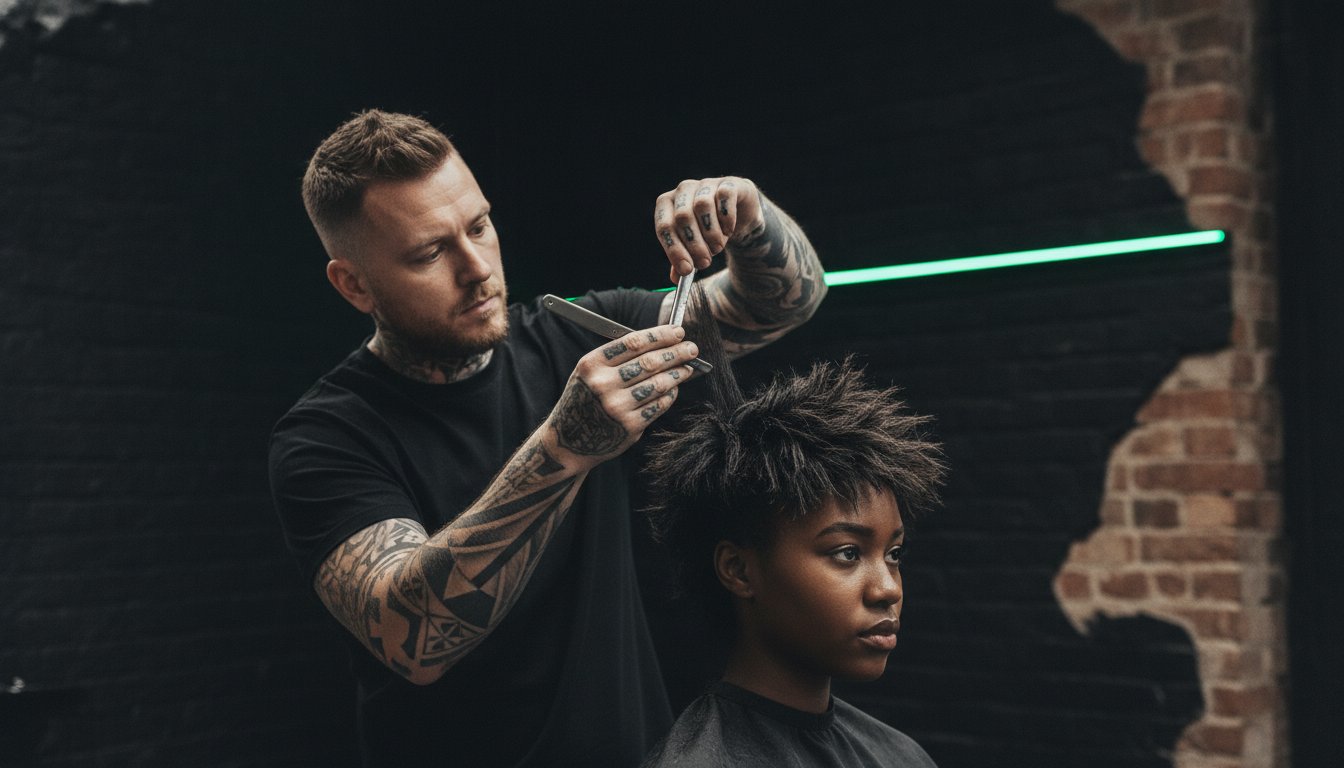

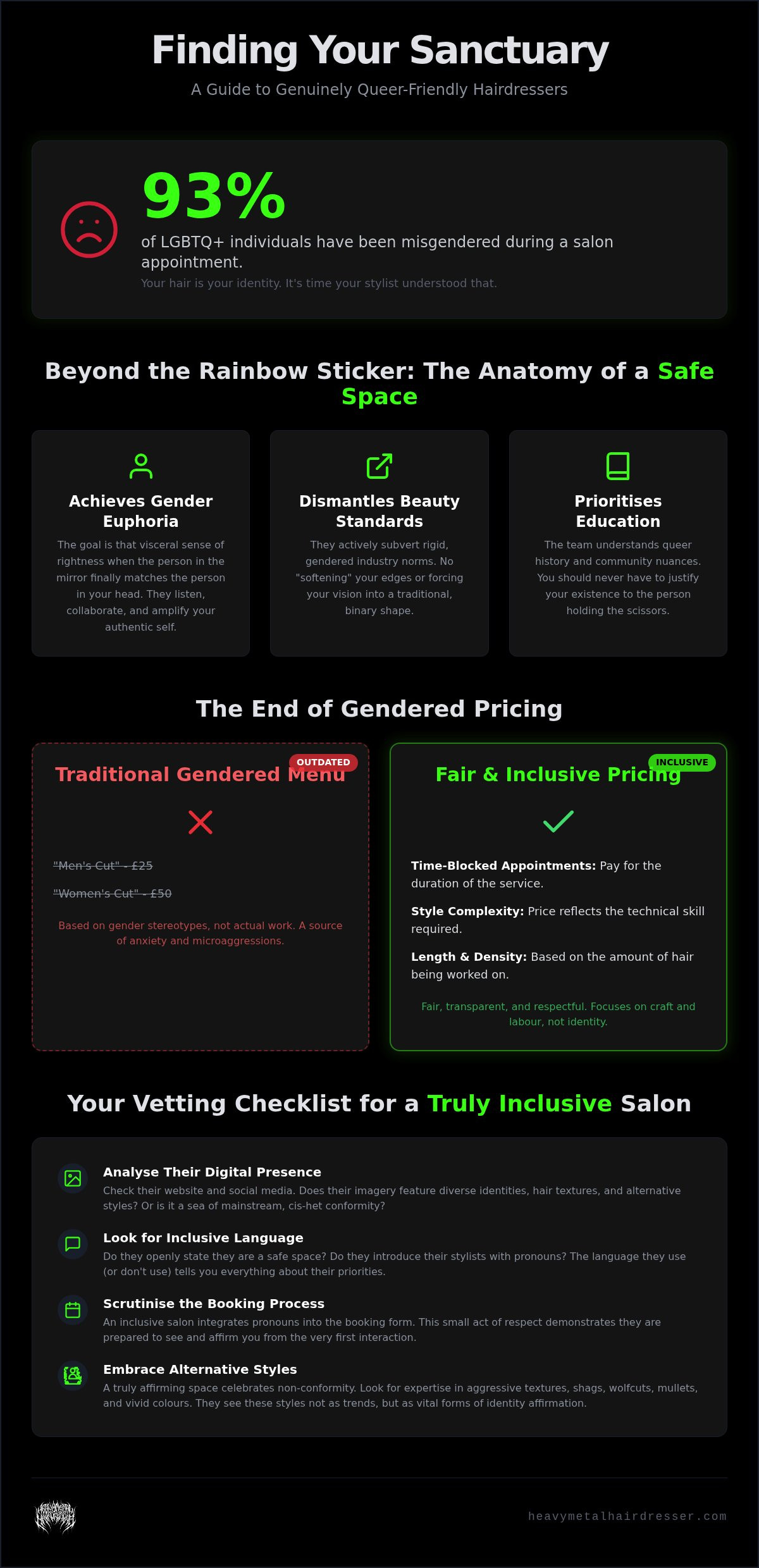
Did you know that a staggering 93% of LGBTQ+ individuals have been misgendered during a salon appointment? It is a gut-punch of a statistic that confirms what many of us feel the moment we step into a clinical, traditional shop. You are likely searching for a queer friendly hairdresser because you are tired of the “correction” talk. You have sat in that chair, heart racing, whilst a stylist tries to “soften” your sharp edges or force your non-conformist vision into a gendered box. You deserve more than a “feminised” mullet or a “masculine” buzz cut. You deserve gender euphoria.
We agree that your hair is the ultimate expression of your identity, and it is time your stylist understood that too. This guide helps you discover a truly inclusive sanctuary that celebrates your soul through raw, rebellious, and expert alternative styling. We will explore how to find salons that ditch gendered pricing, specialise in aggressive textures like shags and wolfcuts, and prioritise your authentic self over outdated industry norms. From understanding the impact of the CROWN Act to identifying genuine safe spaces, we are mapping out the future of identity-affirming style in 2026.
Key Takeaways
- Identify the markers of a genuine queer friendly hairdresser who dismantles traditional beauty standards rather than just tolerating them.
- Ditch the anxiety of “Men’s” or “Women’s” menus by learning how time-based, gender-neutral pricing creates a fairer experience.
- Master the art of the subcultural silhouette with expert insights into how wolfcuts and shags provide a versatile, androgynous edge.
- Use our vetting checklist to screen a salon’s digital presence and booking behaviour for genuine inclusivity and pronoun awareness.
- Transform your look into a source of gender euphoria by choosing a sanctuary that prioritises your authentic self over clinical perfection.
Beyond the Rainbow Sticker: What a Queer Friendly Hairdresser Actually Does
A rainbow sticker in a shop window is a nice gesture, but it isn’t a badge of expertise. A genuine queer friendly hairdresser does not just tolerate your presence; they actively affirm your identity through every stage of the service. This means dismantling the rigid, gendered beauty standards that have dominated the industry for decades. It is about recognising that hair is often the most vital external manifestation of one’s gender identity. When a stylist understands this, the goal shifts from a standard trim to achieving gender euphoria.
Gender euphoria is that visceral sense of rightness. It is the moment the person in the mirror finally matches the person in your head. Reaching that state requires a stylist who treats the consultation as a collaborative, non-judgmental dialogue. They don’t lecture; they listen. They don’t try to mould your vision to fit a traditional, binary shape. They use their technical skill to amplify your authentic self, ensuring the cut feels like a homecoming rather than a compromise.
The Anatomy of a Safe Space Salon
Safety starts before you even reach the chair. An inclusive salon integrates pronouns into the booking process to ensure you are never misgendered. This small act of respect lowers the baseline anxiety that many trans and non-binary individuals feel in service environments. Beyond the booking, staff education is paramount. A safe space requires a team that understands queer history and the specific nuances of our community. They know the difference between a “bad” cut and an intentional, identity-affirming choice. It is about creating an environment where you don’t have to explain or justify your existence to the person holding the scissors.
Subverting the Traditional Salon Experience
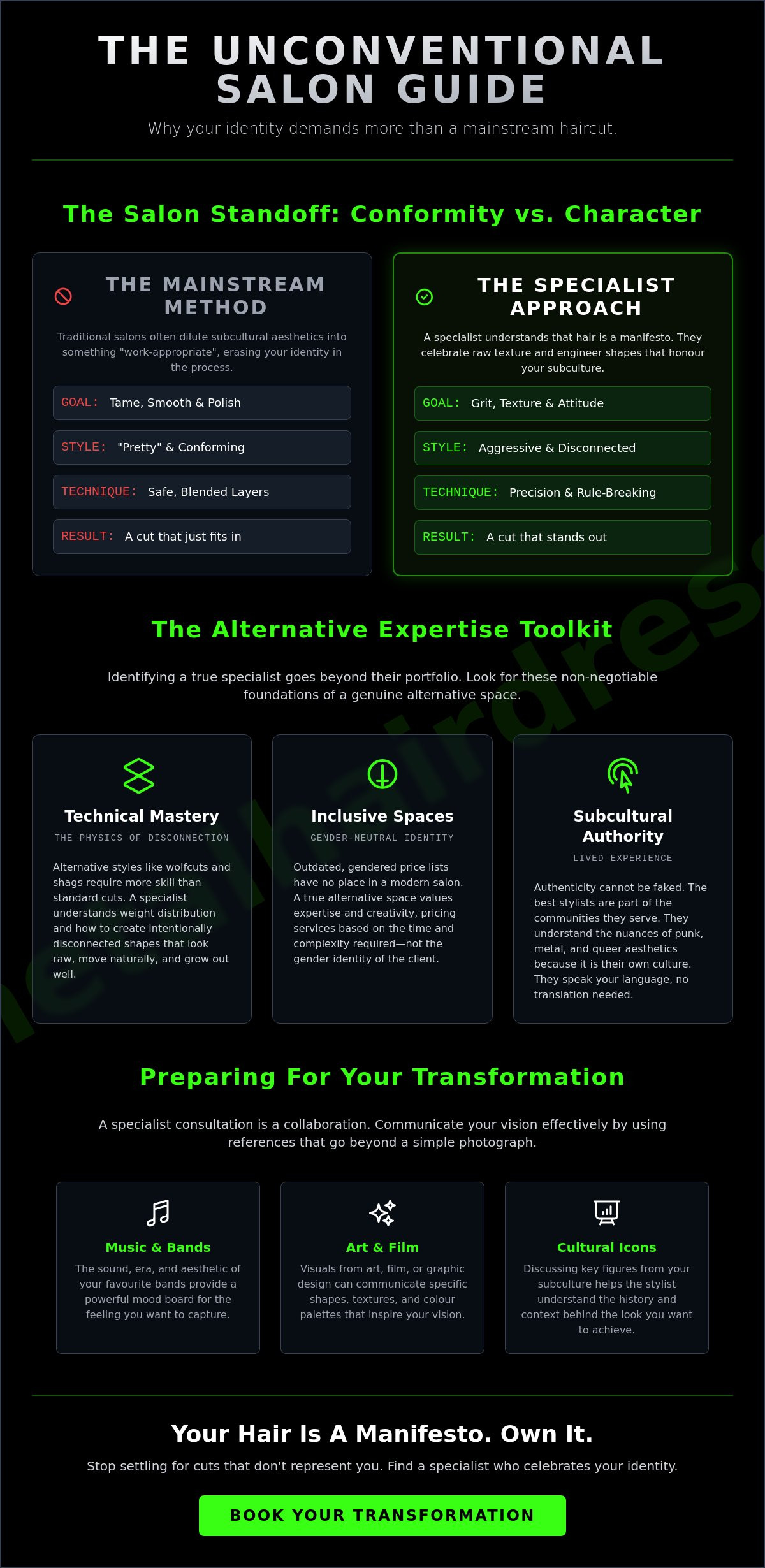
Many traditional salons feel clinical, overly polished, or intimidatingly “high-fashion.” These spaces often feel exclusionary to those who live outside the mainstream. We believe in a different energy. There is a powerful overlap between alternative aesthetics, like heavy metal and punk, and queer safe spaces. Both cultures value rebellion and individuality. A queer friendly hairdresser in an alternative setting understands “coded” hairstyles. They recognise the subcultural weight of a specific crop or a particular texture. They won’t try to “soften” your look to make it more palatable for a traditional audience. They embrace the grit, the aggression, and the non-conformity that makes your style yours.
The End of Gendered Pricing: Why Inclusive Salons Are Changing the Game
The “Men’s Cut” and “Women’s Cut” labels are relics of a binary past. They don’t reflect the actual work; they reflect a stereotype. For a trans or non-binary person, the checkout counter can be a source of intense anxiety. Being charged based on a gender you don’t inhabit is more than just a financial sting. It’s a microaggression. A queer friendly hairdresser knows that your identity shouldn’t dictate your bill. Inclusive salons are burning these outdated menus. By adopting time-based or complexity-based pricing, we ensure the focus remains on the craft. This shift is essential to empower LGBTQ+ communities by removing the financial barriers to authentic self-expression.
Inclusive pricing reflects the actual labour and skill involved in a transformation. It ensures that every client is treated with the same respect, regardless of where they sit on the gender spectrum. It’s about fairness. It’s about valuing the stylist’s time and the client’s vision equally.
This ethos of fairness and transparent cost-mapping is becoming a standard in the wider beauty world; for example, salons like fingerSPA demonstrate this by providing clear price guides that help clients plan their self-care routines with confidence.
Complexity vs. Gender: A Fairer Model
Traditional pricing assumes women have long, complex hair and men have short, simple hair. That is total rubbish. A precision queer friendly hairdresser understands that technical wolf hair cuts require more skill than a basic trim. Pricing should reflect that reality. Most inclusive salons now use three main criteria:
- Time-blocked appointments: You pay for the duration of the service. This allows for detailed consultations and precision work.
- Style complexity: A full transformation is priced differently than a maintenance fringe trim.
- Hair length: Short, medium, or long hair determines the amount of product used and the time needed for drying.
This model provides total transparency. You know exactly what you will pay before you sit in the chair. No surprises. No gendered “tax” at the end of your session.
Why Traditional Salons Struggle to Adapt
The UK hairdressing education system has long been split into “Barbering” and “Hairdressing.” This legacy makes it hard for many high-street stylists to pivot. They are taught to see hair through a binary lens from day one. Binary pricing reinforces harmful stereotypes about hair maintenance and social roles. It is a stubborn habit that needs to break. We encourage you to ask about pricing models before you book. If a salon still uses “Men’s” and “Women’s” labels, they might not be the safe space you need. If you want to see how we handle things, you can explore our gender-neutral services and see the difference for yourself.
Alternative Style as Identity Affirmation: Wolfcuts, Mullets, and Queer Expression
Hair is a battleground for self-expression. For the queer community, “outsider” styles aren’t just fleeting trends; they are survival tools. They signal subcultural belonging. They reclaim space in a world that often demands conformity. A queer friendly hairdresser understands that a haircut is a manifesto. It is the difference between looking like everyone else and finally looking like yourself. These styles allow you to take ownership of your narrative before you even speak a word.
The Modern Mullet has become a queer staple for a reason. It is the ultimate act of rebellion. It refuses to play by the rules of “pretty” or “professional.” It is raw. It is gritty. It is unapologetic. When you wear a mullet, you aren’t just getting a trim; you are announcing your presence. It’s a silhouette that defies the binary, offering a shape that feels both aggressive and soft at the same time.
The Power of the Wolfcut and Shag
Aggressive layers and heavy texture are the building blocks of an androgynous silhouette. Technical wolf hair cuts provide a versatile frame that can be tailored to soften or sharpen your features. It is about using hair to match your internal gender expression. The shag haircut is another high-impact, low-maintenance weapon in the queer style arsenal. It works for all hair types because it embraces chaos over clinical perfection.
You need a specialist for these styles. Traditional stylists often try to “fix” the layers, making them too neat or symmetrical. They don’t get the “ugly-cool” aesthetic. A queer friendly hairdresser knows that the beauty is in the mess. They understand how to use a razor to create that lived-in, subcultural grit that defines the alternative scene. They prioritise the vibe over the rulebook.
Vivid Colour: Saturating Your Identity
Colour is a flag. Using vivid hair colour is a way to reclaim your image from the mundane. Whether it is a neon green buzz cut or deep purple shag layers, high-pigment work signals that you aren’t here to blend in. It is about taking total control of how the world sees you. It turns your hair into a canvas for your identity.
This work is technically demanding. High-pigment saturation requires a specialist who understands the chemistry of alternative dyes. You can’t just slap on some box dye and hope for the best. A professional ensures your hair stays healthy whilst achieving maximum vibrance. They prioritise hair health because your identity shouldn’t come at the cost of your hair’s integrity. It is about long-term maintenance and keeping that saturation sharp amongst the daily grind.
How to Vet Your Next Salon: A Checklist for Safe and Inclusive Haircare
Finding a queer friendly hairdresser shouldn’t feel like a high-stakes gamble. You are looking for a sanctuary, not just a trim. The search starts long before you step through the door. It begins with digital sleuthing to separate the genuine allies from those just chasing the “pink pound.” You need to see evidence of their values in their work and their systems. If a salon claims to be inclusive but their Instagram grid is a sea of traditional, heteronormative bridal hair, that’s a disconnect. Look for a diverse range of gender expressions. If you don’t see someone who looks like you in their portfolio, they might not have the technical or cultural understanding to bring your vision to life.
Your research should extend to the booking behaviour. A truly inclusive space integrates respect into its infrastructure. Check if their booking system asks for pronouns or offers gender-neutral service options based on time and complexity. These details aren’t just “nice to have.” They are the foundations of a low-anxiety environment. Reading reviews from other queer and alternative clients is also vital. Look for mentions of the atmosphere. Did they feel seen? Was their identity respected? A stylist’s response to these reviews tells you everything you need to know about their salon culture.
Red Flags to Watch Out For
Trust your gut. If you see these signs, it is likely that the salon hasn’t done the work to be a safe space:
- Binary pricing: “Men’s” and “Women’s” prices displayed prominently on the window or website.
- Traditional portfolios: A total lack of alternative or gender-non-conforming styles in their gallery.
- Dismissive behaviour: Stylists who seem confused, awkward, or dismissive when you ask about their gender-affirming practices.
Green Flags: Signs of a Genuine Safe Space
A genuine queer friendly hairdresser makes their stance clear. Look for explicit inclusive language in their “About” or “FAQ” sections. They should be proud of their commitment. Another massive green flag is a team that specialises in subcultural, non-binary cuts like the modern mullet. This shows they understand the link between hair and identity. They should also demonstrate a visible commitment to the community, whether through queer-owned business practices or supporting local LGBTQ+ events. If you are ready to ditch the traditional salon stress, you can book your next session at our inclusive alternative salon and experience the difference for yourself.
Heavy Metal Hairdresser: A National Safe Space for Alternative Identities
Heavy Metal Hairdresser is not your typical high-street shop. It is a rebellion against the clinical, “polished” world of traditional beauty. Founded by Simon Tuckwell, this is a sanctuary built specifically for those who live outside the mainstream. It is a place where being different is the standard, not the exception. As a queer friendly hairdresser, we don’t just offer a service; we offer a homecoming. We have stripped away the pretension of the traditional salon experience to create a raw, high-energy environment where your identity is the priority.
Our commitment to gender-inclusive styling is woven into everything we do. We don’t see hair through a binary lens. We see it as a canvas for self-expression. Whether you are looking for aggressive texture or a complete colour overhaul, we provide a space where you can be your authentic self without explanation. This is a destination for the outsiders, the rebels, and everyone who has ever felt out of place in a standard stylist’s chair.
Expertise Born from Subculture
Simon Tuckwell’s background in music and alternative styling is the heartbeat of this salon. Our team has spent years immersed in the energy of festival culture, working backstage at legendary events like Download and Bloodstock. This experience informs our rebellious ethos. We don’t just understand alternative style; we live it. The intersection of heavy metal grit and queer inclusivity is where we thrive. It is a shared language of non-conformity and pride.
Clients travel from across the UK to visit us because we offer a unique perspective they can’t find elsewhere. We specialise in the technical “chaos” of wolfcuts and shags, styles that require a deep understanding of subcultural nuances. We know that your hair is a signal to your community. We respect that weight. We use our expertise to ensure that signal is loud, clear, and perfectly aligned with who you are.
Book Your Identity-Affirming Transformation
Your first visit to Heavy Metal Hairdresser is a collaborative process. We ditch the outdated power dynamic of the “expert” and the client. Instead, we have a direct dialogue. We want to know what makes you feel like yourself. We discuss the technical details of how aggressive layers or high-pigment saturation can match your internal gender expression. There is no judgment here. There is only a shared goal of achieving gender euphoria through expert craft.
The result is a cut that fits your soul. We prioritise your comfort and your vision at every step, ensuring the environment remains low-anxiety and high-impact. It is time to stop settling for stylists who try to “soften” your edges or fit you into a box. It is time to embrace a style that is as bold and independent as you are. Join the rebellion and book your inclusive hair session today.
Reclaim Your Identity in the Chair
You have seen that finding a genuine queer friendly hairdresser is about more than just a safe space; it is about finding an expert who respects your vision and your budget. We have moved past the era of gendered pricing and clinical, exclusionary vibes. It is time to embrace the aggressive textures and subcultural grit that reflect your true self. Whether it is a precision wolfcut, a textured shag, or a rebellious modern mullet, your hair should be a source of euphoria, not anxiety. You deserve a stylist who understands that your look is a manifesto.
Ditch the traditional salon stress. We have built a national destination where gender-neutral pricing is the standard and identity-affirming style is the goal. We specialise in the “chaos” of alternative cuts that high-street shops simply don’t get. Stop settling for “traditional” and join a community that celebrates your non-conformity. Secure your spot at the UK’s premier alternative safe space. Your identity is valid. Your style is yours to define. We are ready when you are.
Frequently Asked Questions
What exactly is a queer-friendly hairdresser?
A queer-friendly hairdresser is a stylist who actively affirms LGBTQ+ identities through their language, pricing, and technical skills. It goes beyond mere tolerance; it is about creating a space where your gender expression is understood and celebrated. They understand the nuances of identity-affirming styles and ensure you aren’t forced into a traditional, binary box. This professional prioritises your comfort and uses their expertise to help you achieve gender euphoria.
Why is gender-neutral pricing important in a hair salon?
Gender-neutral pricing ensures that clients are charged based on the time, skill, and hair length involved rather than their gender identity. Traditional “Men’s” and “Women’s” menus are discriminatory and often force trans or non-binary individuals to choose a label that doesn’t fit. By removing these binary categories, a queer friendly hairdresser creates a fairer, more transparent environment that values the stylist’s labour and the client’s authentic self equally.
How do I know if a salon is actually a safe space for trans people?
Look for concrete signs like pronoun inclusion in booking systems and explicit anti-discrimination policies on their website. A genuine safe space often showcases a diverse range of gender expressions in their portfolio rather than just heteronormative styles. Check reviews from other trans and non-binary clients to gauge the atmosphere. If the salon uses gender-neutral pricing and has staff educated in queer history, it is a strong indicator of a supportive environment.
Can I get a wolfcut or mullet at a traditional hairdresser?
You can ask, but traditional stylists often lack the technical understanding of aggressive, subcultural textures. They might try to “fix” or “soften” the layers to make them more palatable for a mainstream audience. A specialist queer friendly hairdresser understands the “ugly-cool” aesthetic and uses razors or precision shears to create the grit and movement these styles require. It is always better to choose a stylist who lives the alternative subculture.
What should I look for in a stylist’s portfolio if I’m non-binary?
Seek out a portfolio that features androgynous silhouettes, sharp crops, and non-conformist textures. You want to see that the stylist can navigate the space between traditional “masculine” and “feminine” aesthetics without defaulting to binary tropes. Look for examples of wolfcuts, shags, or buzz cuts with creative patterns. If their gallery shows a broad spectrum of gender expression, they likely have the technical range to respect your specific identity-affirming goals.
Do queer-friendly salons only do ‘alternative’ styles?
No, they cater to all styles, but they do so with an inclusive mindset. Whilst many specialise in rebellious aesthetics like punk or grunge, their primary mission is identity affirmation. Whether you want a simple trim or a high-pigment saturation, the focus remains on your comfort and respect. The difference is the environment; you won’t be judged or misgendered, regardless of whether your style is unconventional or more understated.
How do I explain my gender-affirming hair goals to a new stylist?
Use specific reference photos that reflect your desired silhouette and be clear about how you want the cut to make you feel. Instead of using gendered terms, describe the texture, length, and shape you want. A good stylist will lead a collaborative consultation to understand your vision. Don’t be afraid to state your pronouns and explain why certain features are important for your gender euphoria. Clear communication ensures your hair matches your soul.
Is it okay to ask a hairdresser about their inclusivity policies before booking?
It is absolutely encouraged to ask about a salon’s policies to ensure your safety and comfort. A professional, inclusive business will welcome these questions and be happy to explain their approach to gender-neutral pricing, pronoun use, and staff training. If a shop seems dismissive or confused by your enquiry, it is a sign they might not be the right fit. Your hair journey should always start in a place of mutual respect.