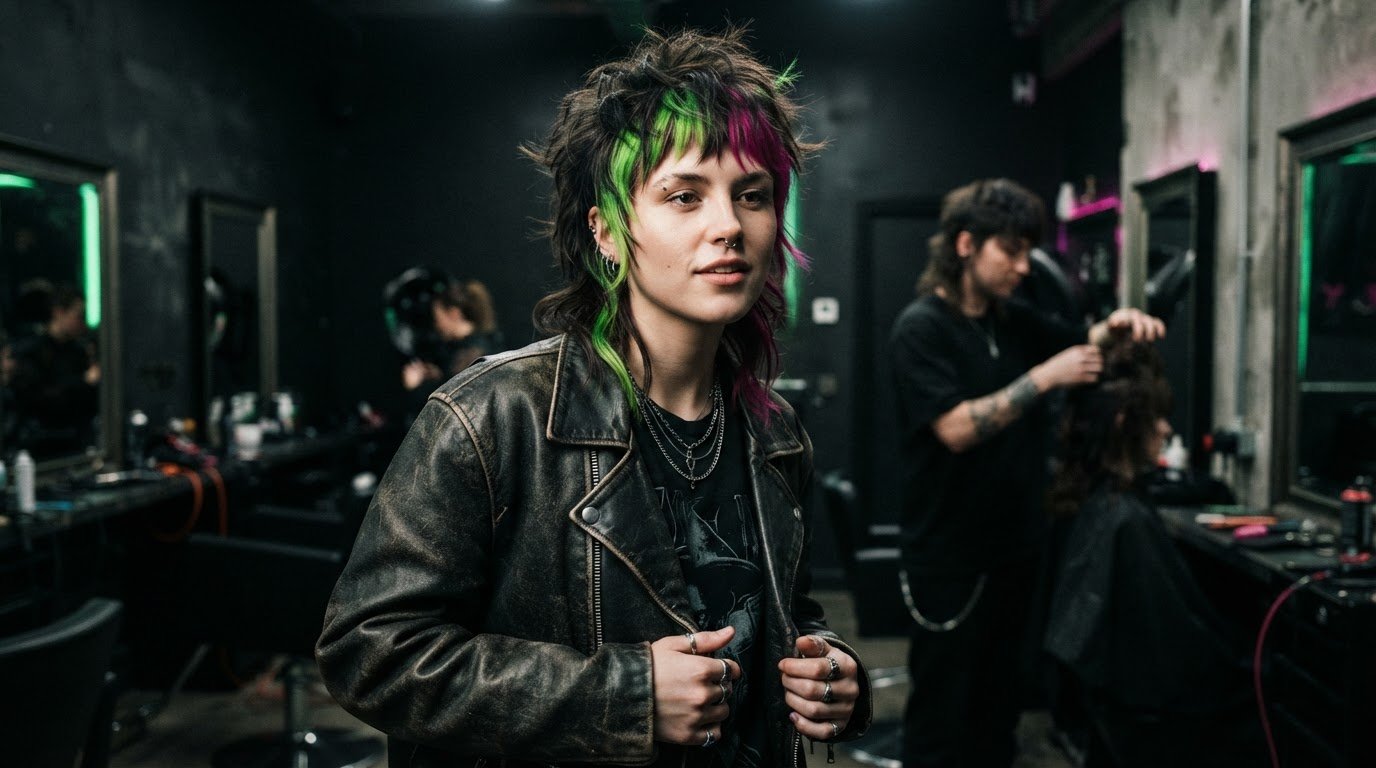
Walking into a conventional salon with an underground reference photo almost always ends in heartbreak. Traditional stylists tend to round off sharp edges, playing it safe until a rebellious vision becomes just another sensible blow-dry. True alt hair styles reject that cookie-cutter conformity entirely, prioritising your raw bone structure, natural movement, and personal identity instead.
If you’ve ever felt judged in a sterile, hyper-traditional chair, or struggled to keep a dishevelled, razor-carved cut looking deliberate once you’re back home, you aren’t alone. Translating subcultural attitude into an everyday haircut shouldn’t require compromising who you are.
This guide will help you discover the defining modern cuts shaping the UK alternative scene, from textured wolfcuts to razor-sharp mullets, and show you how to wear them with genuine confidence. You’ll learn how to match iconic silhouettes to your features, master proper texturising techniques at home, and consult a specialist stylist to get the exact cut you want.
Key Takeaways
- Explore how modern alt hair styles use intentional asymmetry, razor carving, and disrupted silhouettes to celebrate individuality over conventional salon uniformity.
- Compare core subcultural cuts, including the high-contrast mullet, textured wolfcut, and classic shag, to match the right weight distribution to your facial structure.
- Discover strategic pigment placement techniques, from split dyes to vivid halo panels, that amplify the movement of shattered layers.
- Master an effortless home styling sequence using matte clays, sea salt sprays, and texture dusts to keep gritty silhouettes defined without daily heat damage.
- Learn the exact technical vocabulary to bring to your consultation so you can partner with an alternative specialist and secure a truly bespoke result.
What Defines Modern Alt Hair Styles in 2026?
Mainstream hairdressing relies on symmetry, blending, and safe transitions. Modern alt hair styles tear that rulebook up completely. These cuts are architectural, raw, and built specifically around the organic texture of your hair. Instead of forcing your hair into sterile, cookie-cutter shapes, alternative design embraces sharp contrasts. You see deliberate asymmetry, blunt micro-fringes, and razor-carved disconnections that celebrate natural volume instead of thinning it into oblivion.
Crucially, modern alternative hair has dismantled the outdated, binary pricing structures that still linger across conventional high-street salons. Cutting hair based on gender rather than length, density, and technical complexity makes zero sense. Today’s countercultural styling functions as an unapologetic, gender-affirming safe space where anyone can sculpt a silhouette that reflects their authentic identity without compromise.
The Core Philosophy of Alternative Hair Design
Traditional salons aim to hide flaws with blowouts and seamless layers. Alternative hairdressing does the exact opposite. It treats hair as wearable sculpture, using internal weight removal and shattered perimeters to create effortless, rebellious movement. Key pillars of this approach include:
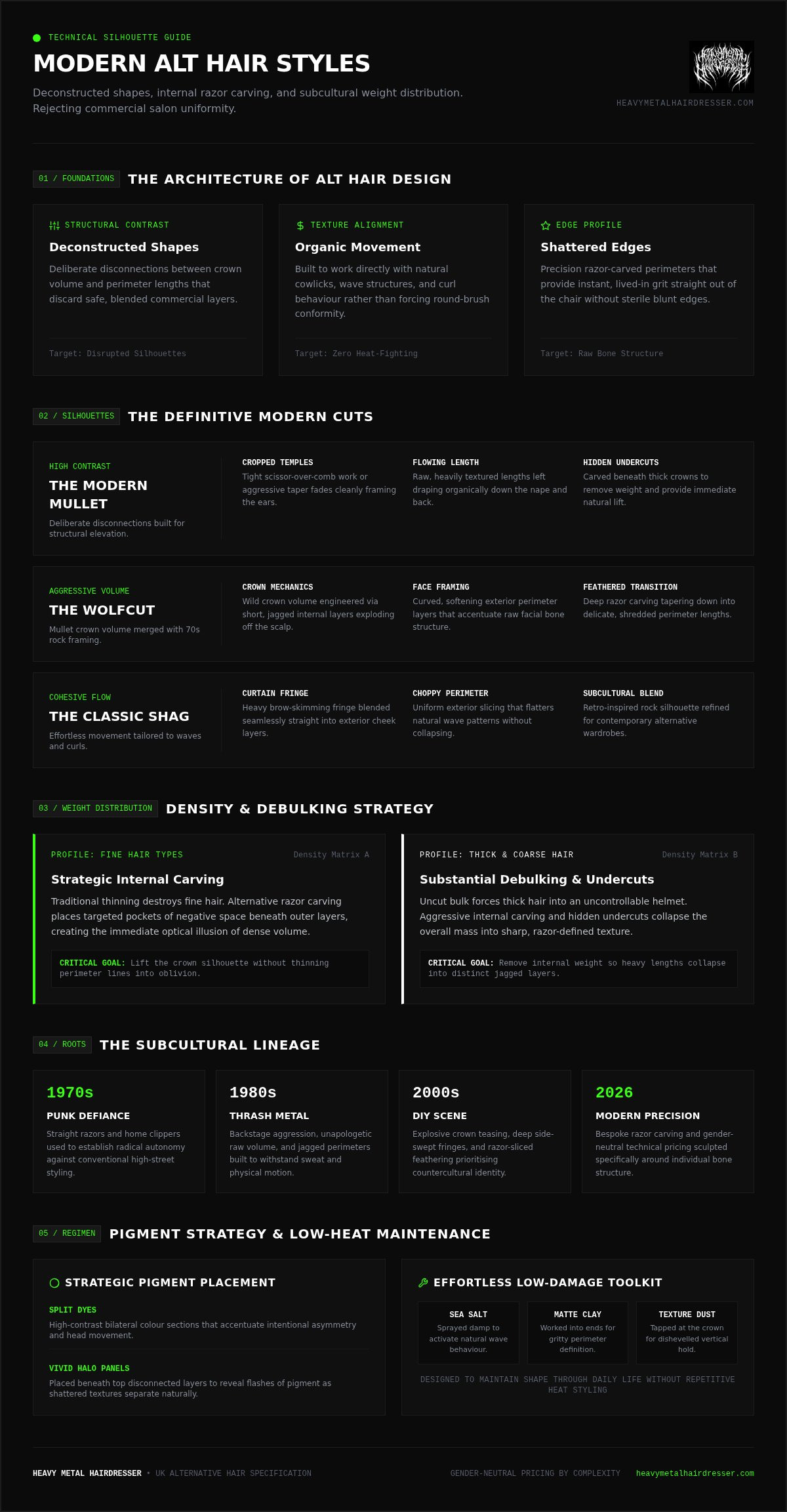
- Deconstructed shapes: Intentional disconnections between the crown and perimeter that reject commercial uniformity.
- Organic movement: Working directly with natural cowlicks, wave patterns, and curls rather than battling against them.
- Shattered edges: Razor-sculpted perimeters that deliver built-in grit straight out of the chair.
Subcultural Roots: Punk, Metal, and Underground Counterculture
Every modern disconnected cut traces its lineage directly back to underground music scenes. The jagged texture and unapologetic volume dominating today’s cuts draw heavy inspiration from 1970s punk, 1980s thrash metal, and the explosive DIY scene culture of the 2000s. The history of punk fashion and hairstyles established that chopping, bleaching, and spiking your hair was a radical act of personal autonomy, not just a passing trend.
Back then, people took straight razors and household clippers to their own heads because high-street salons refused to understand their subcultural energy. That independent defiance remains baked into modern alternative hair craft. Today’s top stylists borrow those aggressive backstage layering techniques and sharpen them with professional razor carving, turning chaotic rebellion into bespoke, wearable art that holds its shape through sweat, mosh pits, and daily life.
The Definitive Modern Alt Hair Styles: Which Cut Fits Your Identity?
Alt hair styles are not one-size-fits-all festival novelties. They are precision-engineered cuts designed around how hair behaves in the wild. Choosing the right cut comes down to understanding internal weight distribution. Fine hair requires strategic carving to create the illusion of volume, whilst thick hair demands substantial internal debulking so the silhouette collapses into sharp, deliberate texture rather than an unruly helmet.
The Wolfcut and the Modern Shag
The wolfcut merges the wild crown volume of a mullet with the face-framing softness of a 70s rock cut. Shorter, jagged layers explode around the top, tapering down into heavily feathered lengths. If you want deep layering with serious grit, check out the ultimate wolf hair cut guide for a complete breakdown of internal razor carving.
The classic shag takes a slightly more cohesive approach. It blends a heavy curtain fringe straight into choppy exterior layers, creating effortless movement that flatters natural waves and loose curls. You can dive deeper into the shag haircut resurrection to see how retro-inspired shapes adapt to modern subcultural wardrobes.
The Modern Mullet and Disconnected Alt Cuts
The modern mullet thrives on deliberate, radical contrast. Instead of a gradual blend, it relies on disconnected sections:
- Cropped temples: Tight scissor-over-comb work or aggressive taper fades around the ears, opening up the profile to showcase curated ear piercings from studios like Stellar SG.
- Flowing length: Raw, textured lengths draping down the nape and back.
- Hidden undercuts: Carved underneath heavy crowns to remove bulk and give thick hair immediate, effortless lift.
To master this structural contrast across straight, wavy, or coily hair, explore the full mechanics behind the modern mullet haircut.
Micro Bangs, Hime Cuts, and Geometric Edge
If you prefer stark geometry over broken edges, blunt micro bangs anchor the browline with unapologetic attitude. Stepped jawline panels, inspired by traditional hime cuts and dark gothic aesthetics, frame facial bone structure while drawing immediate focus to cheekbones and statement piercings.
Whether you want razor-sharp lines or a chaotic silhouette, working with an experienced stylist makes all the difference. Explore bespoke options like a tailored wolfcut or shag haircut to bring your personal subcultural vision to life.
Vivid Colour and Visual Grit: Amplifying Your Alternative Cut
A razor-carved cut provides the architectural foundation, but strategic colour brings that shape alive. High-contrast placement pulls the eye directly toward intentional disconnections, making textured layers pop rather than sink into a flat silhouette. Placing intense colour throughout alt hair styles is never about random bleaching. It is about illuminating the internal movement and raw edges sculpted into the haircut itself.
Rushing this process with aggressive, box-dye bleaching at home ruins both texture and curl elasticity. Once hair fibres melt from over-processing, razor-cut layers lose their structural snap and collapse flat. Saturated tones require a healthy, intact canvas. For a complete guide to high-impact saturation and shade longevity, check out our deep dive into vivid hair colour techniques.
Strategic Placement: Split Dyes, Raccoon Tails, and Panels
Mainstream balayage aims to hide transitions. Subcultural colour blocking celebrates them loudly. Modern alt hair styles rely on intentional visual disruption across three primary formats:
- Split dyes: Bisecting the head down the centre creates immediate drama that shifts dramatically every time your hair moves or parts naturally.
- Halo and peekaboo panels: Slicing neon lime, acid violet, or blood red underneath a jet-black crown gives interior texture high-voltage contrast.
- Horizontal banding: Y2K scene hair-inspired raccoon stripes across micro bangs or face-framing tendrils provide gritty, graphic appeal.
Maintaining High-Voltage Pigment on Textured Hair
Keeping fashion shades punchy on heavily layered or naturally curly hair requires an uncompromising aftercare discipline. Warm water lifts the hair cuticle, letting direct dye molecules flush down the drain instantly. Rinse your hair strictly in cold water using sulphate-free, colour-safe cleansers.
Bleached hair thirsts for hydration, but heavy oil-rich masks can actually strip direct dyes. Instead, rotate between protein-rich bond-building treatments to repair structural disulphide bonds and lightweight, moisture-focused conditioners. This keeps your razor-cut layers snappy, springy, and vibrant without bleeding out your pigment before the next gig.
How to Style and Maintain Alt Hair at Home
There is a stubborn myth that alternative haircuts require zero styling effort. While a proper razor-sculpted cut does the heavy lifting, stepping out of bed with runway-ready grit does not just happen automatically. Alt hair styles need friction, grip, and deliberate separation to keep layers from collapsing flat against your scalp. Ditch the high-gloss serums and heavy silicones; subcultural shapes demand matte finishes that hold up to real life.
To lock in a dishevelled, intentional silhouette every single day, follow this five-step sequence:
- Prep damp roots: Douse the base of your hair with a sea salt spray to build foundational grit.
- Diffuser rough dry: Tip your head upside down and cup sections with a diffuser on medium heat to encourage natural wave chaos.
- Ditch flat brushes: Use only your fingers to rake and shake layers, preserving jagged, razor-carved ends.
- Puff texture dust: Tap a silica-based root powder directly into your crown for immediate, gravity-defying height.
- Pinch and twist: Warm a pea-sized amount of matte clay between your fingertips and define face-framing pieces.
Building Raw Texture and Crown Height
Getting massive crown volume starts during the drying phase. Traditional round brushes smooth the cuticle down, killing the exact raw energy alt hair styles need. Instead, direct warm air up into the roots with your hands to force hair follicles upward. Once completely dry, a light dusting of texture powder creates instant mechanical friction between strands, keeping crown layers spiked, split, or dramatically swept without needing sticky hairspray.
Daily Restyling Without Over-Washing
Washing your hair every morning strips essential oils, causes vivid pigment to fade, and leaves hair strands slippery and soft. Alternative hair actually looks best when it has a bit of lived-in wear. Wake up flattened layers with targeted revival instead of a full wash:
- Targeted misting: Spritz crushed curls and flattened bangs with plain water to reactivate your hair’s natural wave memory.
- Strategic dry shampoo: Spray dry shampoo directly into your root line to absorb excess sebum whilst preserving pliable movement through the mid-lengths.
- Matte clay piecing: Work a tiny dab of matte clay across sleep-crushed ends to sculpt them back into sharp, deliberate spikes.
Mastering this daily balance keeps your silhouette sharp between salon appointments. If your current shape lacks the structural texture to hold these styles naturally, book a specialist session with Heavy Metal Hairdresser to get your layers professionally carved.
Consulting an Alternative Stylist: Securing the Perfect Cut
Walking into a high-street salon with a photo of a razor-carved mullet often leads to frustration. Traditional training focuses on blending away sharp edges and maintaining polite symmetry. To get genuine alt hair styles right, you need a specialist who understands subcultural silhouettes and isn’t afraid to take a straight razor to your perimeter. You deserve an inclusive, gender-affirming safe space where your personal expression is celebrated rather than quietly softened.
Avoid generic requests like “give me layers” or “thin it out.” Instead, use precise technical vocabulary during your consultation:
- Internal weight removal: Ask for bulk carved out from the mid-lengths rather than just thinning scissors dragged through your ends.
- Intentional disconnection: Specify where you want sudden jumps in length, such as between temple fades and back skirts.
- Perimeter shattering: Request razor carving or deep point-cutting along edges to eliminate blunt, shelf-like lines.
Finding Your Specialist and Curating Visual References
Scan a stylist’s portfolio for raw, authentic movement. Look for unedited photos taken under honest lighting, showcasing real clients with varied densities and curl patterns. If a hairdresser only posts polished, heat-curled prom hair, they will likely struggle with the aggressive texture of alt hair styles.
Bring references featuring models whose natural density matches your own. Point out exact landmarks on your face where you want key features to sit. Show them precisely where you want your micro bangs to stop, where face-framing layers should hit your cheekbones, and how high up you want the temple taper to climb.
Navigating Your Safe-Space Consultation
Be completely transparent about your morning routine. A talented alternative hairdresser designs a haircut that works with your actual habits, whether you spend twenty minutes diffusing with sea salt spray or just shake your head out after waking up.
Ask how they plan to approach your hair. Alternative cutting often benefits from dry-cutting or freehand razor work, allowing the stylist to track how cowlicks, whorls, and curl patterns spring back in real time. Take control of your image by booking a bespoke alternative hair consultation with an expert who respects your subcultural identity and cuts with genuine precision.
Step Out of the Mainstream: Claim Your Cut
Mainstream salons will always try to smooth out what makes you stand out. True alt hair styles reject that sanitised, assembly-line beauty in favour of raw, wearable identity. Whether you are balancing the aggressive crown volume of a wolfcut, rocking a high-contrast mullet, or framing your jaw with sharp geometric layers, an authentic shape demands technical precision and gritty texture that holds up to real life.
You deserve an environment where your aesthetic is celebrated without awkward explanations. Heavy Metal Hairdresser channels backstage festival styling heritage from Download and Bloodstock straight into an unapologetically inclusive, gender-affirming community. Using specialist razor carving, we strip away excess internal weight to unlock effortless, lived-in movement tailored specifically to your natural texture. Stop letting traditional salons dilute who you are. Claim your alternative hair transformation and wear your subcultural identity with fierce, unapologetic confidence.
Frequently Asked Questions
What is the difference between a wolfcut and a classic shag?
The main difference lies in weight distribution and graduation. A wolfcut features dramatic crown volume that disconnects sharply before tapering down into wispy, feathered ends, creating an aggressive silhouette inspired by the mullet. A classic shag distributes layers more evenly from root to tip, blending face-framing fringe sections into textured mid-lengths for a softer, rock-and-roll finish. Both celebrate movement, but the wolfcut leans far more extreme in its crown separation.
Can I get an alt hair style if I have fine or thinning hair?
Yes, fine hair often benefits tremendously from alt hair styles because strategic razor carving builds immediate tactile volume. Instead of standard thinning shears that remove bulk blindly, an alternative specialist uses blunt perimeter weight lines and internal micro-layers to prop up limp crowns. Pairing these techniques with lightweight sea salt sprays or silica texture dust gives finer hair dramatic, structural lift without collapsing under heavy styling products.
How do I ask my hairdresser for an alternative haircut without getting a generic style?
Request specific structural techniques rather than generic layered haircuts. Ask for internal weight removal, razor-carved texture, and deliberate disconnections between the crown and perimeter. Bring visual references showing unstyled, real-world texture on models with your exact curl or wave pattern. Clarify where you want key features to sit, such as micro bangs hitting above the brow or sharp temple fades that contrast against flowing back lengths.
Are alt hair styles difficult to style and maintain every morning?
Not if the structural cutting is done properly. Great alt hair styles rely on your natural growth patterns, meaning morning styling often takes under five minutes. You do not need round brushes or complex blowout routines. A quick spritz of water to reactivate wave memory, followed by a pinch of matte clay or root dust, instantly restores grit. The goal is intentional lived-in chaos, not sterile perfection.
Which alternative haircuts work best with natural curls and textured waves?
Shags, wolfcuts, and curly mullets thrive naturally on wavy, curly, and coily hair. Because textured curls have natural spring and buoyancy, internal weight removal eliminates the dreaded pyramid shape instantly. Carving out density behind the ears and through the crown lets individual curl clusters bounce freely, delivering wild, stage-ready volume without requiring daily heat styling or chemical straightening treatments.
Can someone pull off alternative cuts in a professional corporate workplace?
Absolutely, provided the silhouette is tailored to balance rebellion with clean perimeters. Disconnected undercuts can easily remain hidden beneath longer top sections during office hours and revealed after work. Dark monochrome tones, subtle micro-fringes, and textured layers can look exceptionally striking and architectural when paired with sharp corporate tailoring, proving countercultural expression and professional careers are never mutually exclusive.