Most people assume scene hair died in 2009 alongside scorched flat irons and snapped fringe ends. They are completely wrong. Modern scene hair is an architectural razor cut, not an exercise in fried, DIY backcombing.
If you have ever spent an hour teasing your crown only to watch it deflate by lunchtime, or walked out of a mainstream salon looking like a suburban mum because the stylist didn’t get alternative geometry, we feel your pain. You shouldn’t have to incinerate your hair with bleach and desperate backcombing just to rock an unapologetic silhouette. You can have severe contrast, sky-high lift, and genuinely healthy hair at the same time.
Discover how to achieve, cut, and style modern scene hair with healthy volume and razor-sharp precision. We will break down the essential razor-cutting mechanics, safe vivid colour maintenance, and the exact styling routine you need for all-day hold.
Key Takeaways
- Deconstruct the geometry of modern scene hair, moving past nostalgic DIY myths to build radical crown volume paired with a razor-sharp sweeping fringe.
- Discover why traditional blunt scissor cuts fail alternative silhouettes, and how bespoke razor-carving creates essential shattered separation.
- Compare aggressive scene disconnections against modern wolf cuts and textured shags to choose the ideal crown height and perimeter density for your hair.
- Master non-destructive styling and directional blow-drying methods that guarantee structural, all-day hold without shredding bleached strands.
- Learn clean placement techniques for high-contrast vivid colour panels and iconic horizontal coontail stripes that resist bleeding.
What Is Scene Hair? Deconstructing the Subcultural Silhouette
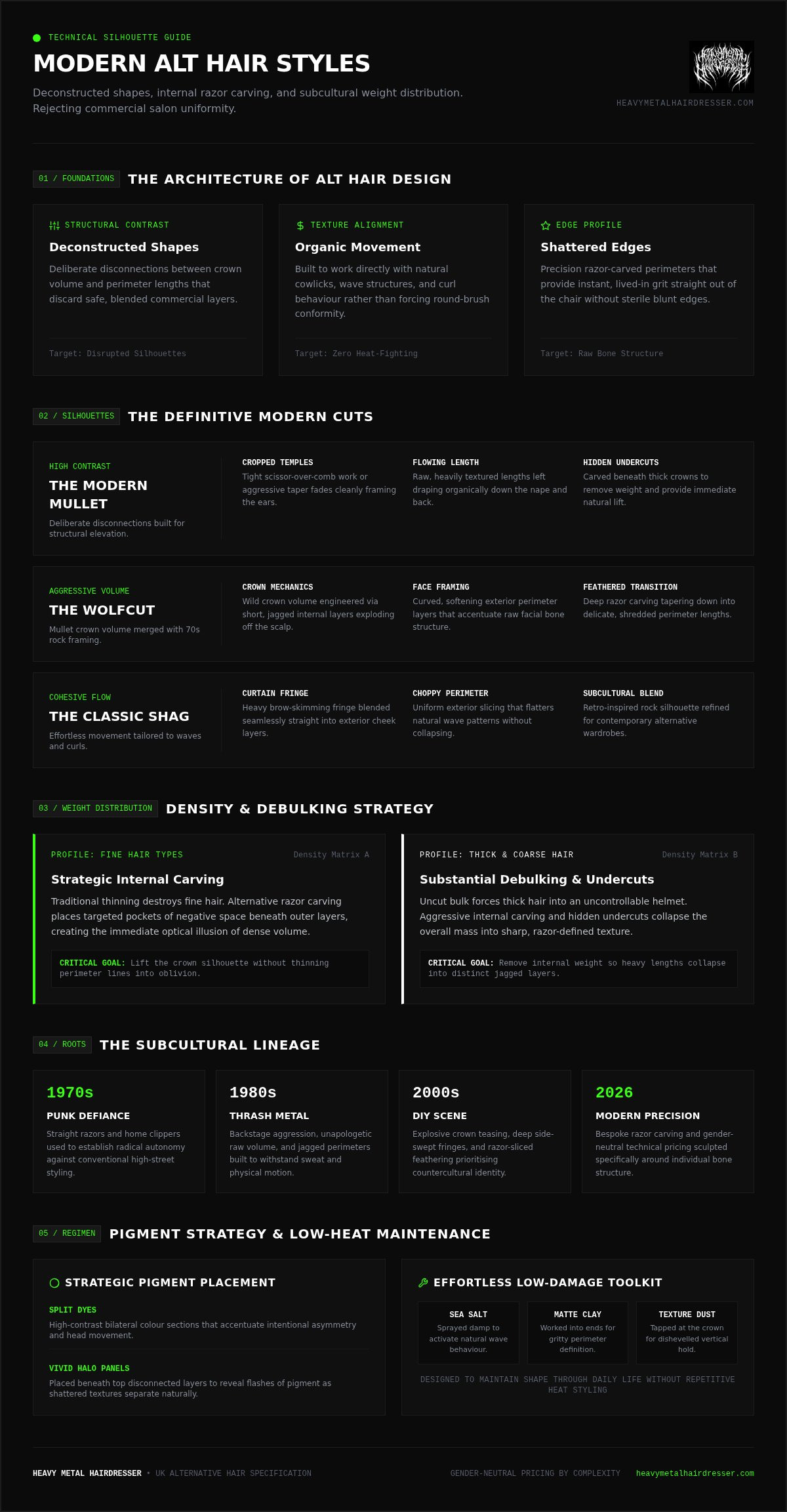
Mainstream nostalgia often dismisses scene hair as chaotic, scorched teenage rebellion. In reality, it represents one of the most technically demanding architectural shapes in subversive hairdressing. Born out of early 2000s post-hardcore and pop-punk undergrounds, the aesthetic branched away from melancholic emo cuts by amplifying volume, expanding proportions, and embracing vivid neon contrasts. Historically rooted in the wider Scene subculture, this silhouette rejected flat conformism in favour of intentional, dramatic geometry. Today, modern Scenecore bridges that raw mid-2000s angst with refined structural technique, fitting right into the broader pantheon of rebellious Alt hair styles dominating the UK landscape.
The Core Anatomy of the Style
Authentic scene silhouettes rely on radical contrast rather than uniform density. The blueprint demands three distinct elements working simultaneously:
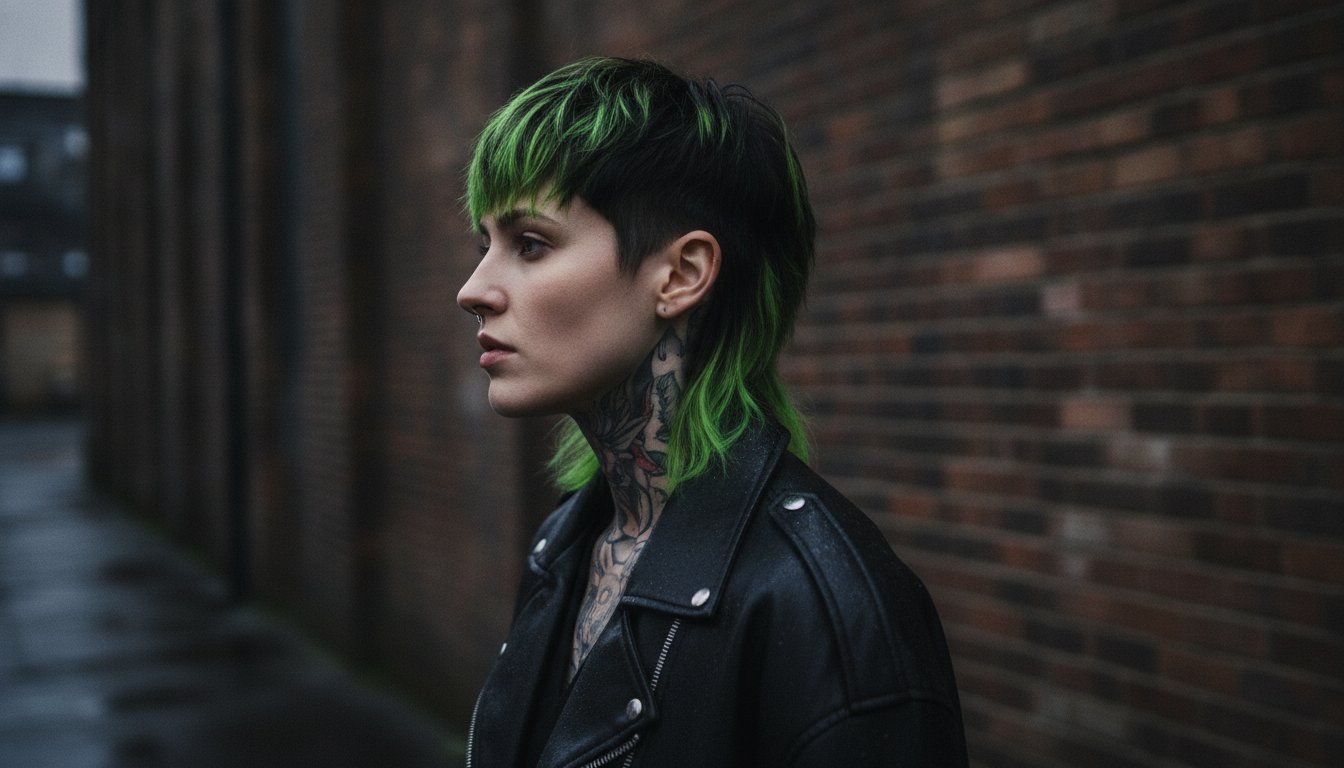
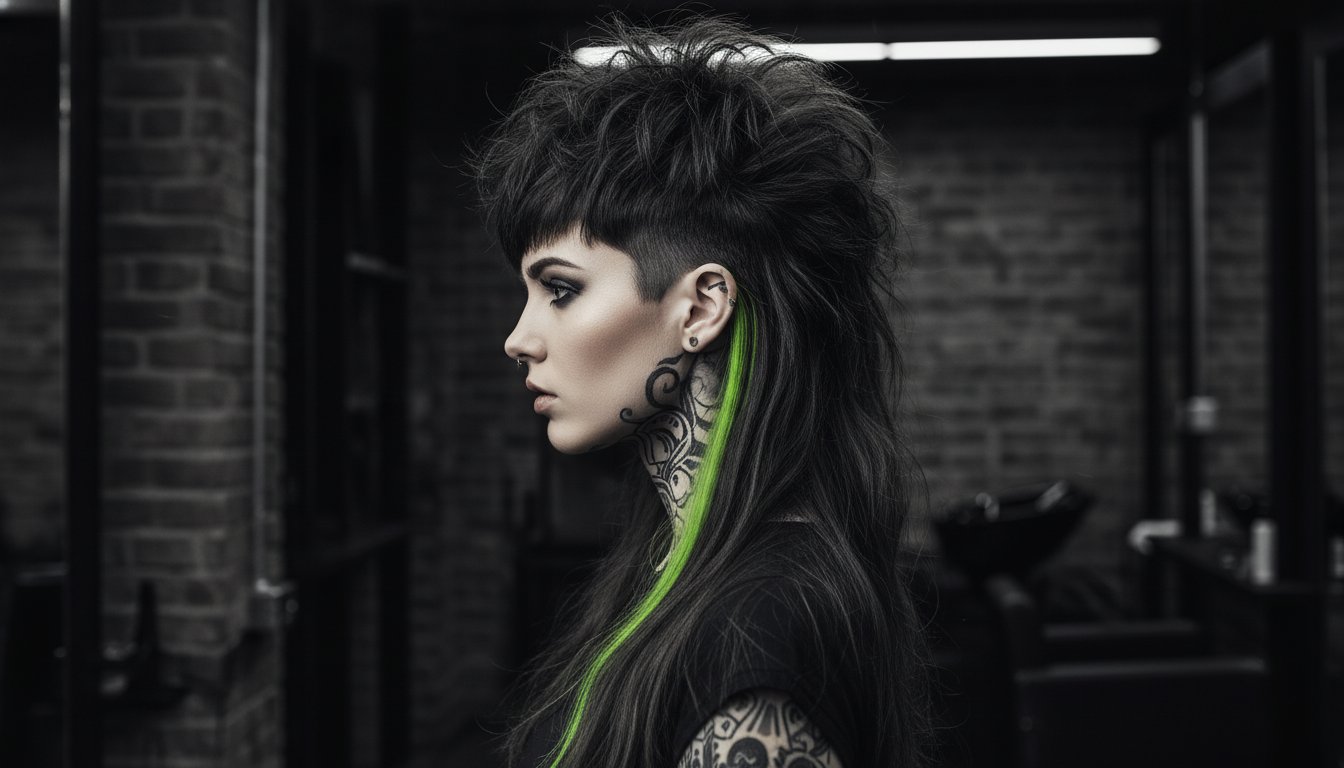
- The Disconnected Crown: High, blunt-layered internal elevation sitting above the occipital bone to deliver instant shelf-like volume without requiring heavy teasing.
- Whisper-Thin Perimeters: Razor-carved base extensions or natural lengths that fall dead-straight, accentuating the severe bulk stacked on top.
- The Heavy Sweeping Fringe: A deep, asymmetric partition originating well behind the hairline, engineered to slice across the brow and deliberately frame one eye.
Extreme separation is the goal. Every layer must possess negative space around it so the silhouette appears sharp, deliberate, and aggressively textured rather than bulky.
The 2026 Scenecore Evolution
The original era relied heavily on chemical violence. People routinely scorched their strands with uncalibrated flat irons and destroyed cuticles using cheap 40-volume bleach. Modern scene hair takes an entirely different philosophical approach: prioritising structural hair health over frantic damage. We now design cuts where the architectural razor work creates automatic lift, drastically reducing the need for aggressive mechanical backcombing.
Contemporary Scenecore is also fiercely gender-inclusive and adaptable. It is no longer restricted to naturally pin-straight strands. By tailoring internal disconnects and fringe weight to individual bone structure, texture, and density, the modern cut delivers sharp attitude without sacrificing hair integrity.
Architectural Cutting: How Professional Stylists Build Scene Texture
Kitchen scissors and bathroom mirror hacks might have been rite-of-passage rituals, but they inevitably end in uneven chunks and frayed split ends. Mainstream stylists often make the opposite mistake: applying blunt scissor lines that leave the haircut heavy, blocky, and completely devoid of movement. Scene hair requires razor-crafted architecture. It demands disciplined sectioning geometry across the parietal ridge to strip away excess density while preserving a structural foundation that supports radical height.
Feather Razors Versus Traditional Shears
Blunt shears cut straight across the hair shaft, creating hard horizontal lines that cause layers to collapse flat against one another. A guarded feather razor slices the hair at an acute diagonal bevel. This tapers the cuticle softly toward the ends, enabling strands to nestle into one another and stack upward effortlessly. Straight and coarse hair benefits from wet razor slicing for fluid glide, while wavy or erratic textures often require dry internal carving to carve negative space precisely where natural density bulks up.
Building the Crown Lift
Lasting crown elevation is an internal engineering trick, not a tease-and-spray miracle. Stylists achieve this silhouette through deliberate mechanics:
- Internal Scaffolding: Carving hidden, shorter layers beneath the crown to physically prop up the longer exterior canopy sections above.
- Occipital De-bulking: Channel-cutting weight away right at the occipital bone, which prevents heavy hair from dragging the crown down flat.
- Perimeter Isolation: Keeping the base tail lengths isolated so they stay wispy and distinct without losing their connection to the dense core.
Crafting the Signature Swoop Fringe
The iconic sweeping fringe relies on strict geometric placement. Stylists map a deep, diagonal parting that begins well past the outer eyebrow arch. The hair is over-directed sharply to the opposite side and sliced down in a continuous, bevelled curve. This technical graduation allows the fringe to glide effortlessly across the brow, veil one eye, and melt seamlessly into razor-tapered side tendrils. Hair is more than aesthetic posturing; academic analysis of the sociology and symbolism of hairstyles shows how precise visual codes signal belonging and individuality.
Executing these razor channels requires specialised subcultural mastery rather than high-street salon caution. If you want a tailored cut that balances severe alternative shapes with weight distribution designed specifically for your hair texture, consider booking with an experienced alternative specialist at Heavy Metal Hairdresser.
Scene Hair vs Wolf Cuts and Shags: Choosing Your Shape
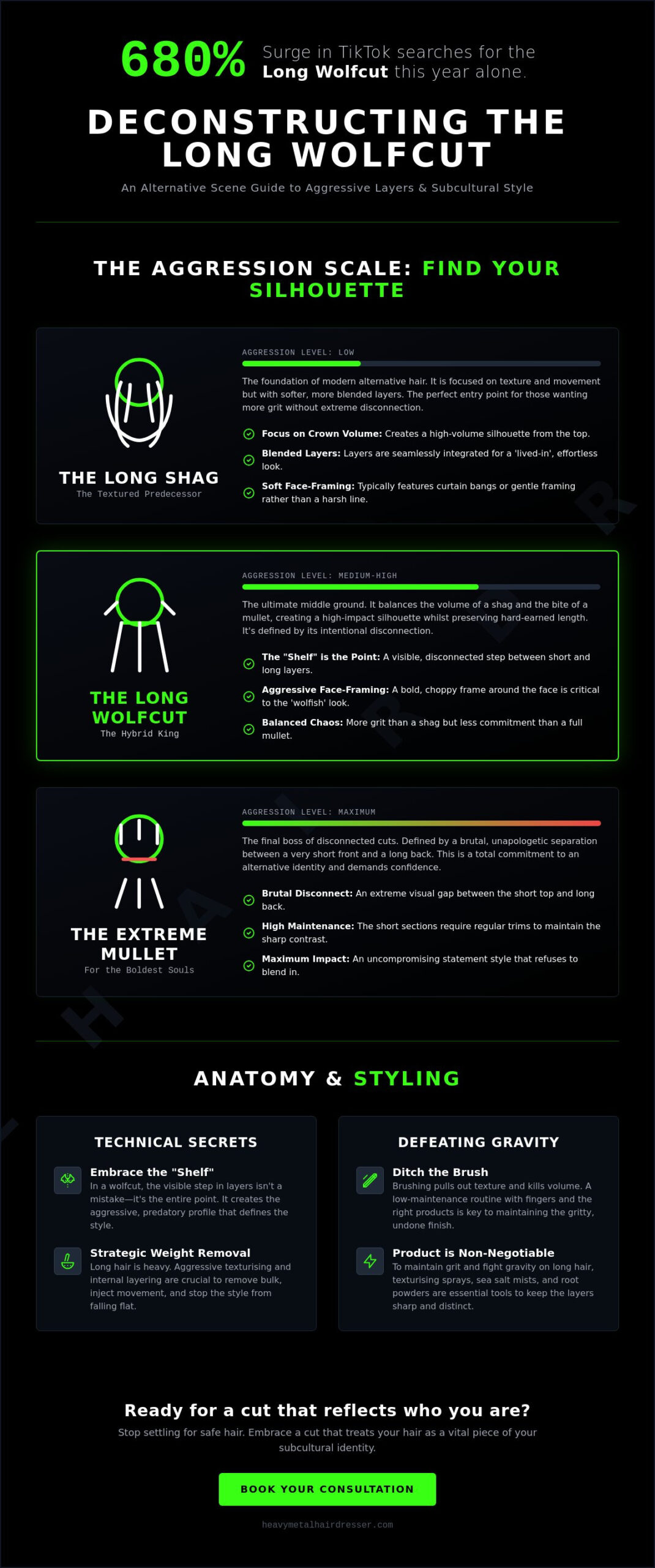
Social media algorithms frequently blur textured alternative cuts together. Shags, wolf cuts, and scene hair get lumped into a single aesthetic bucket, but confusing them leads directly to salon regret. Each cut commands a distinctly different silhouette, weight distribution, and styling commitment. Understanding their internal architecture ensures you leave the salon with the exact balance of rebellion and convenience you want.
| Feature | Scene Hair | Wolf Cut | Classic Shag |
|---|---|---|---|
| Crown Height | Extreme elevation with harsh disconnect | Moderate, rounded crown lift | Soft, graduated natural volume |
| Perimeter Weight | Ultra-thin, razor-shredded wisps | Medium taper with blended tail | Full, fluid, feathered perimeter |
| Styling Time | High: directional heat and texturising | Medium: diffuser or quick blast | Low: wash-and-wear natural wave |
Comparing Disconnect and Layer Aggression
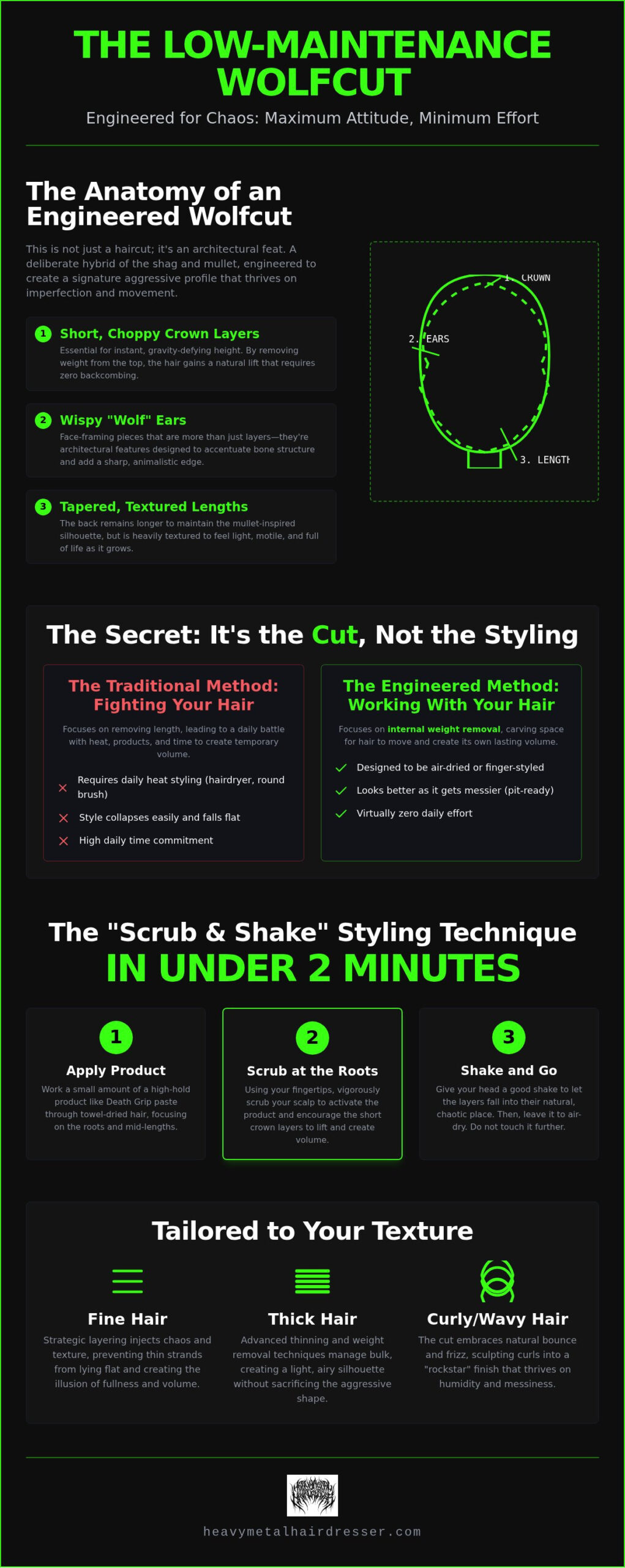
The defining technical separator is layer graduation. A traditional 1970s shag relies on a fluid cascade, celebrating organic movement and seamless blend. A modern wolf hair cut bridges vintage rock grit with modern softness, preserving heavier mid-lengths that cushion the shape. Scene hair strips those transitional mid-lengths out entirely. It builds an intentional cliff edge between a buoyant, short crown and paper-thin perimeters.
Daily Maintenance and Commitment Levels
Your choice comes down to styling stamina and natural growth patterns. If you have stubborn cowlicks, tight curl patterns, or zero patience for heat tools, a softer shag works with your texture rather than against it. Authentic scene silhouettes demand real effort. Keeping that radical contrast alive means booking reshapes every four to six weeks to stop overgrown crown layers from dragging the silhouette flat, alongside a reliable daily routine to coax gravity-defying lift from your roots.

Styling and Teasing Without Destruction: The Step-by-Step Blueprint
Scraping a plastic rat-tail comb aggressively against dry, bleached hair is the fastest route to snapped fibres and permanent thinning. Vintage styling tutorials treated backcombing like an act of war, but modern scene hair demands smart mechanical support. You do not need to tear off your hair cuticles to achieve bulletproof crown lift. By combining thermal shielding, directional tension, and frictionless cushion packing, you can construct massive architectural volume that withstands the entire day without shedding hair down the plughole.
Root Preparation and Directional Blow-Drying
Volume begins while hair is still damp. Mist a dedicated thermal shield from mid-lengths to ends, then work a targeted root-lifting tonic into the crown zone. Fit a narrow concentrator nozzle to your hairdryer. Using a medium ceramic round brush, grip sections across the parietal ridge and dry the hair directly against its natural growth direction. Pull upward at a 90-degree angle to freeze root posture before introducing heated styling irons.
The Friction-Free Cushion Backcombing Method
Ditch fine-toothed plastic combs entirely. Instead, use a narrow, natural-bristle brush designed to distribute pressure gently across the shaft:
- Target the Root Base: Isolate horizontal crown subsections no thicker than half an inch. Leave the top veil layer untouched to conceal the structural work beneath.
- Single-Stroke Packing: Insert the bristles three inches above the scalp. Glide the brush down to the base in a single, smooth, compacting motion. Never scrub up and down like a saw.
- Protect the Mid-Lengths: Pack fibres strictly within the first two inches of the root. Leaving mid-lengths and ends completely free stops bird-nest tangles and prevents wash-out breakage.
Locking Shape with Death Grip and Hair To the Throne
Once the root cushion is packed, glide flat irons across your sweeping fringe and wispy perimeter tails, keeping the heat moving briskly down the hair shaft. Architectural hold requires weightless structural integrity rather than sticky helmet hair. Work Hair To the Throne through your crown sections to deliver pliable, gravity-defying body that refuses to wilt under natural humidity.
Lock your shape into place using Death Grip. This formulation acts as an immovable shield, anchoring severe spikes, elevated crowns, and razor-separated textures against sweat, wind, and movement. Finish by misting dry texture spray through the razor-cut tips for ultimate separation.
Equip your styling kit with the exact formulations built for subversive hair shapes by picking up professional hold essentials directly from Heavy Metal Hairdresser.
Vivid Colour Placement and Coontails: Finishing the Alternative Aesthetic
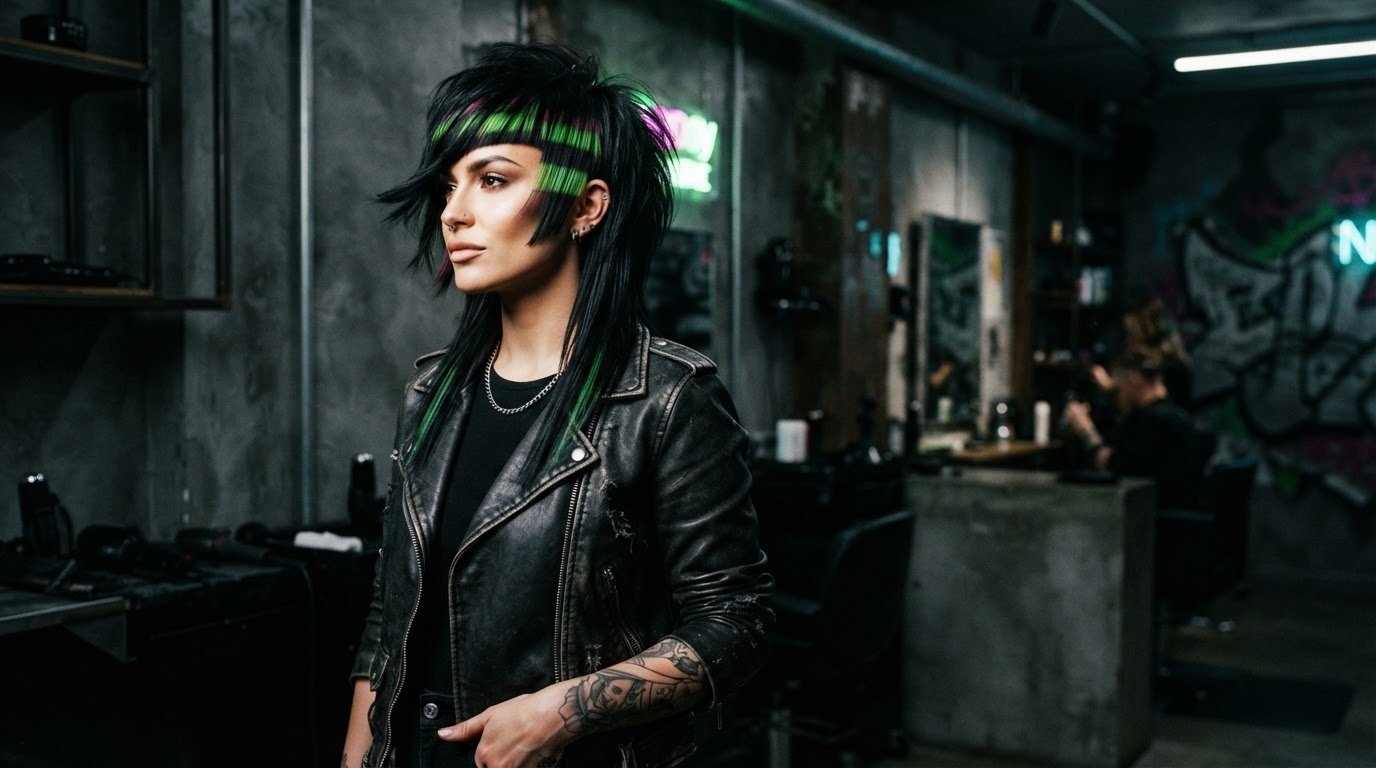
Colour isn’t an afterthought on scene hair; it’s the final structural amplifier. While classic emo styles leaned into monochromatic obsidian or deep mahogany, scene aesthetics demand explosive, high-contrast saturation. Midnight black perimeters paired with electric lime, ultraviolet, or neon magenta bring the haircut’s razor geometry to life. Slapping unmeasured box bleach onto fragile strands creates muddy bands and immediate breakage. Executing technical vivid hair colour requires a clean, even lift so your brights scream with intensity while hair stays healthy.
Precision Coontails and Block Colour Mechanics
Horizontal raccoon stripes, or “coontails”, remain the undisputed visual hallmark of subcultural styling. Amateurs often attempt freehand painting with runny formulas, resulting in blurred, bleeding splotches. Getting crisp graphic lines demands absolute precision:
- Tension Masking: Isolate a razor-thinned perimeter tail or fringe section. Pin it completely flat against a foil board using low-tack stylist tape to map out sharp horizontal boundaries.
- Direct Dye Viscosity: Work exclusively with high-viscosity, non-drip direct dyes. Runny pigments bleed straight beneath the tape line, destroying the graphic contrast.
- Tonal Juxtaposition: Pair cool, level-one jet black against high-voltage warm neons like acid yellow or optic pink. The sharper the contrast, the more dramatic your layers appear.
Safeguarding Bleached Strands in Subcultural Styling
Lifting hair to a clean, pale-yellow canvas before applying vivid direct dyes temporarily compromises internal keratin bonds. If you plan to heat-style and backcomb your crown regularly, bond-building treatments during the lightening process are non-negotiable. These formulations repair fractured disulphide bonds from the inside out, keeping strands flexible under thermal stress.
At-home maintenance requires discipline. Wash your hair strictly with freezing cold water and sulphate-free cleansers. Steaming hot water expands the outer cuticle instantly, bleeding your neon tones directly into your black panels. Mainstream colourists often push clients toward muted, conventional highlights because they don’t understand alternative colour blocking. Trusting an experienced alternative specialist keeps your hair intact, vibrant, and razor-sharp.
Reclaim Your Edge: The New Era of Alternative Structure
Authentic scene hair isn’t a relic of fried DIY nostalgia; it is a masterclass in razor-crafted architecture. When you replace destructive backcombing with intentional internal weight removal, your crown achieves radical, enduring lift without sacrificing hair health. Pair that structural precision with disciplined cushion styling and sharp vivid contrast, and you get an uncompromising silhouette that commands attention.
You don’t have to compromise your identity at salons that fear extreme shapes. Backed by backstage festival styling heritage across major UK alternative events, our team offers a dedicated safe-space environment that celebrates who you are without judgment. Our master cutters specialise in razor-carved texture and vivid transformations designed to honour your individuality. Book your alternative transformation with our specialist stylists and take complete ownership of your look.
Frequently Asked Questions
Can I get scene hair if I have naturally curly or wavy hair?
Yes, you can adapt scene hair to wavy or curly patterns. Modern cuts lean into razor disconnection that embraces natural movement instead of demanding pin-straight compliance. Stylists carve negative space dry to remove bulk without flattening your natural texture. If you want the classic silhouette, smooth your fringe and perimeter with targeted heat while letting the textured crown layers pop with their organic wave.
How is modern 2026 scene hair different from original 2000s styles?
Modern 2026 scene hair prioritises strand integrity and architectural razor technique over fried DIY damage. Vintage versions relied on scorching flat irons, unmeasured bleach, and aggressive teasing. Today’s Scenecore silhouette blends elements of softer wolf cuts and shags. We carve structural lift directly into the internal layers, allowing you to rock vivid colour blocking and extreme height without destroying your hair cuticle.
Will backcombing for scene volume permanently ruin my natural hair?
No, strategic cushion teasing will not ruin your hair if done correctly. Breakage happens when people aggressively saw abrasive plastic combs up and down the hair shaft. If you use a natural bristle brush, target exclusively the root base, and pack the fibres downward in single strokes, your cuticles stay intact. Always shield strands with thermal protectant and gently condition before detangling.
What is the best way to ask a hairdresser for a scene cut?
Bring clear visual references showing both the crown profile and the sweeping fringe. Tell your stylist you want a razor-crafted cut with disconnected internal crown layering and whisper-thin perimeters. Avoid requesting generic long layers, which leave the shape bulky and blended. Ask specifically for weight removal around the occipital bone and an exaggerated, asymmetric swoop fringe mapped across a deep parting. Exploring the portfolios of professional hair design studios like Haomanim can help you source clear reference imagery for precision layering and razor finishes.
How often do I need to get my scene fringe and layers trimmed?
Plan to book a maintenance trim every four to six weeks. Because the signature sweeping fringe sits right against the brow and eye line, even minor growth throws off the geometry. Crown layers also lose their upright tension as they lengthen, which drags down overall height. Regular reshape visits keep the weight distribution sharp and stop the wispy perimeter ends from splitting.
Can I style scene hair without spending hours using straighteners every day?
Yes, directional blow-drying cuts daily styling down to ten minutes. You do not need to flat-iron every strand from root to tip. Focus heated plates only on the fringe and the very tips of your perimeter tails. By rough-drying your crown over-directed against its natural growth pattern, you establish immediate volume. The cut’s internal razor architecture does the heavy lifting for you.
What styling products are essential to keep scene volume from collapsing?
Essential products include a lightweight root-lifting tonic, dry texture spray, and strong-hold styling formulations. Start with a weightless styling prep like Hair To the Throne to build flexible body across damp crown roots before heat styling. Once shaped, anchor the architectural elevation with a firm-hold finisher like Death Grip. This locks out humidity, keeping razor-tapered peaks suspended without leaving flaky residue.