Posted on

Short Mullet Ideas for Women: Aggressive Shapes and Subcultural Grit

Short Mullet Ideas for Women: Aggressive Shapes and Subcultural Grit

The mullet isn’t a costume; it’s a weapon of self-expression designed to survive the front row of a mosh pit. Most people think this cut is just a retro relic, but for those living outside the mainstream, it’s a living symbol of subcultural grit. You’ve likely spent hours looking for short mullet ideas for women, only to find watered-down versions that look more like a “Dad mullet” than a statement of intent. It’s exhausting when you want aggressive texture but keep seeing styles that feel far too safe.

We understand that struggle. You need a look that feels authentic, suits your hair texture, and requires minimal effort to style before a gig. This guide will help you discover the boldest short mullet variations designed to celebrate your individuality and survive the heaviest mosh pits. We’ll explore sharp, aggressive shapes that work for fine hair and show you how to communicate your vision to a stylist who actually understands alternative aesthetics. From jagged crops to your new favourite pixie-hybrid, it’s time to find a cut that matches your energy.

Key Takeaways

  • Learn how to ditch the flat 80s caricature in favour of aggressive, modern shapes that define subcultural rebellion.
  • Discover a range of short mullet ideas for women, including high-impact pixie-mullets and shaggy, radical undercuts.
  • Master the art of tailoring your cut to your chaos, ensuring fine hair gets volume whilst thick hair stays sharp and manageable.
  • Get the lowdown on mosh pit-tested styling techniques, from the raw air-dry finish to using a diffuser for maximum grit.
  • Find out how to spot a stylist who speaks your language and values a gender-inclusive, safe-space environment over traditional salon clichés.

The Anatomy of a Short Mullet: Why It Is the Ultimate Alt-Hair Statement

The short mullet is a middle finger to the status quo. It is the evolution of punk and metal aesthetics, stripped of the hairspray and gloss of previous decades. Whilst the cultural history of the mullet is rooted in ancient warriors and 70s rock gods, the modern iteration is far more aggressive. It’s built for the pit, not the boardroom. Unlike the flat, feathered shapes of the 1980s, today’s short mullet ideas for women rely on raw texture and intentional disconnection. It’s a look that refuses to be ignored.

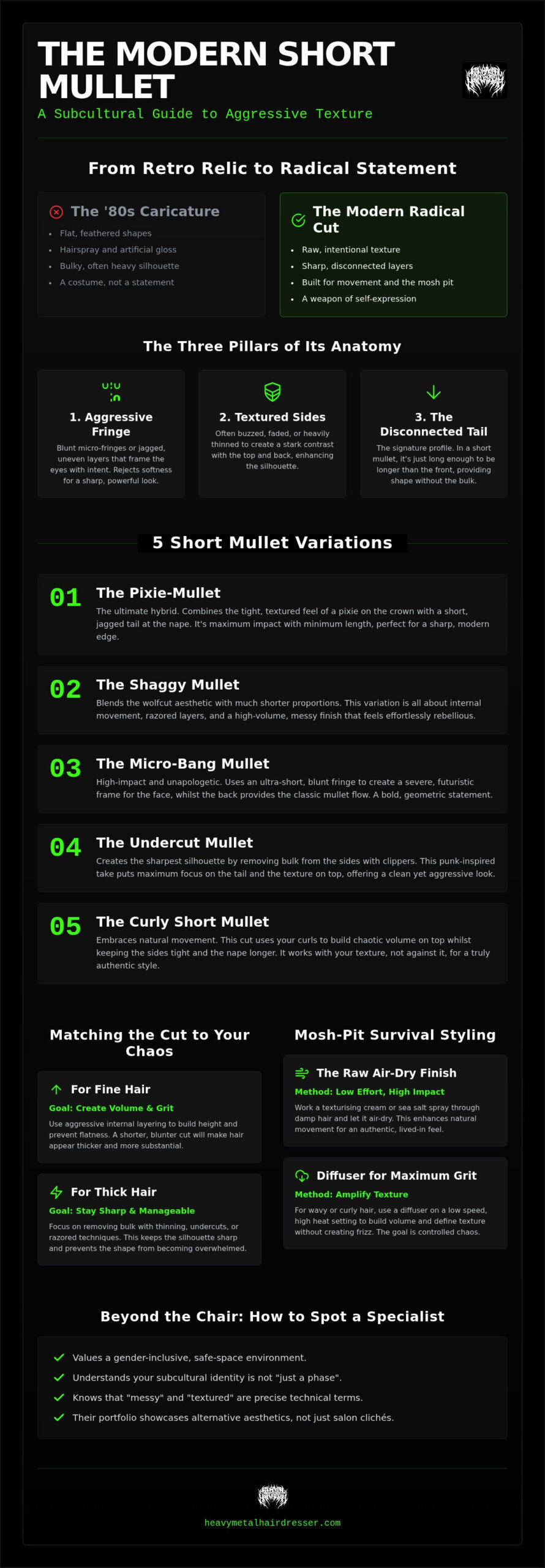
This style is inherently inclusive. It works across all gender identities because it rejects the binary of “long” or “short” hair. It’s about the silhouette, not the gendered expectations attached to it. To master the look, you need to understand the three pillars of its anatomy:

  • Aggressive Fringe: Think blunt micro-fringes or jagged, uneven layers that frame the eyes with intent.
  • Textured Sides: These are often buzzed, faded, or heavily thinned to create a sharp contrast with the top and back.
  • The Tail: In a short mullet, the back doesn’t need to hit your shoulders. It just needs to be longer than the front, providing that signature profile without the bulk.

The Shift from Retro to Radical

The mullet has moved from the stage to the mosh pit. Traditional lengths can feel heavy or dated, but the “short” variation offers a sharper, more percussive edge. It’s about precision. By keeping the proportions tight, the hair gains a sense of urgency. This is why modern mullet haircuts have become a staple in the UK alternative scene. They provide the grit of a shag with the convenience of a crop. It’s a low-maintenance weapon for high-energy lives.

Subculture and Identity

Your hair is a visual badge. It signals your belonging to a community that values authenticity over polish. Choosing one of many short mullet ideas for women is an act of rebellion against traditional beauty standards. It’s an intentional disconnection from being “pretty” in favour of being powerful. Because this look is so specific, finding a safe-space salon is vital. You need a stylist who understands that “messy” is a technical term and that your subcultural identity isn’t just a phase. It’s who you are.

5 Short Mullet Variations: From Pixie-Mullets to Radical Undercuts

Choosing a new look is about matching your hair to your internal chaos. When exploring short mullet ideas for women, you’ll find that the best variations aren’t found in mainstream magazines. They’re found in the pit. These shapes are built on aggressive layering and a refusal to blend in. Each variation offers a different level of subcultural grit, allowing you to customise the intensity based on your hair texture and personal style.

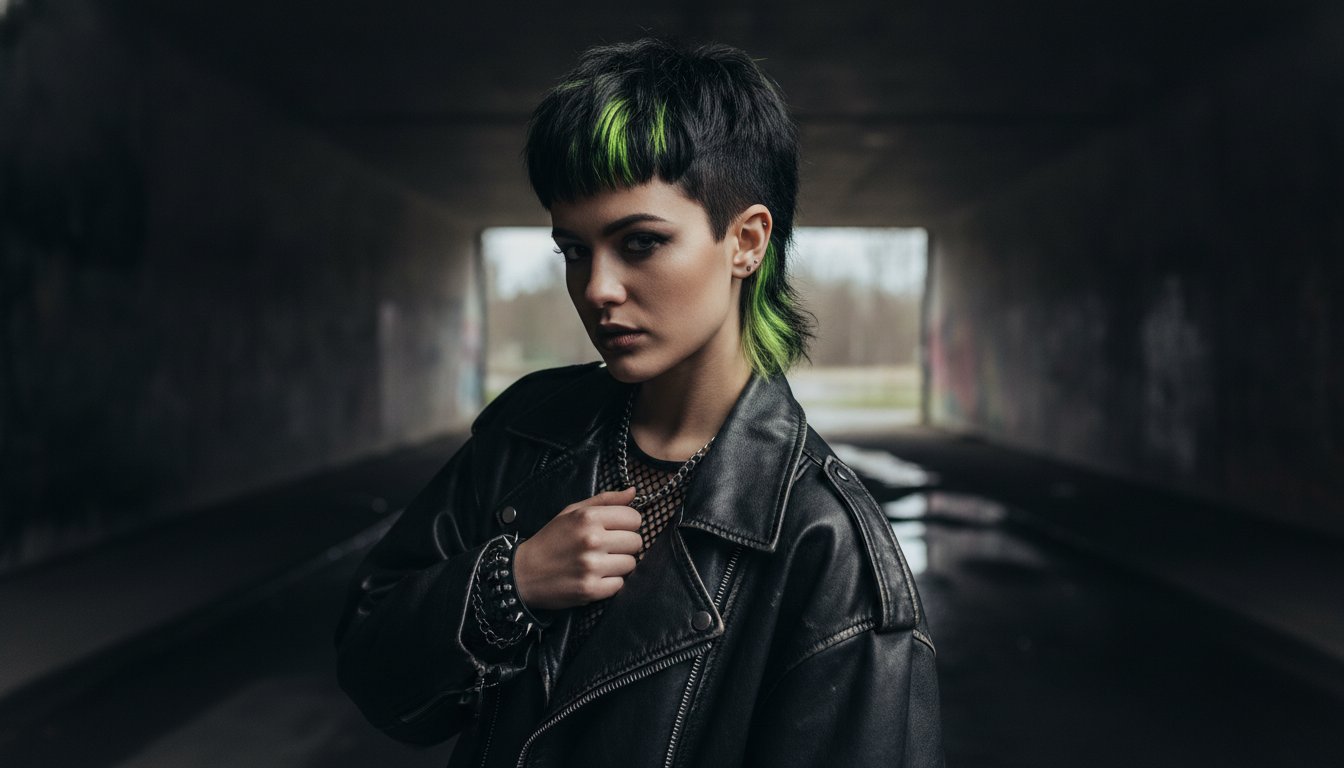
  • The Pixie-Mullet: This is the ultimate hybrid. It offers the tight, textured feel of a pixie on top with a jagged tail at the nape. It’s maximum impact with minimum length.
  • The Shaggy Mullet: This variation blends the wolfcut aesthetic with much shorter proportions. It’s all about internal movement and messy volume.
  • The Micro-Bang Mullet: High-impact and unapologetic. It uses short, blunt fringes to frame the forehead whilst leaving the back to do its own thing.
  • The Undercut Mullet: By removing bulk from the sides with a clipper, you create a sharper, punk-inspired silhouette. It’s the cleanest way to highlight the tail.
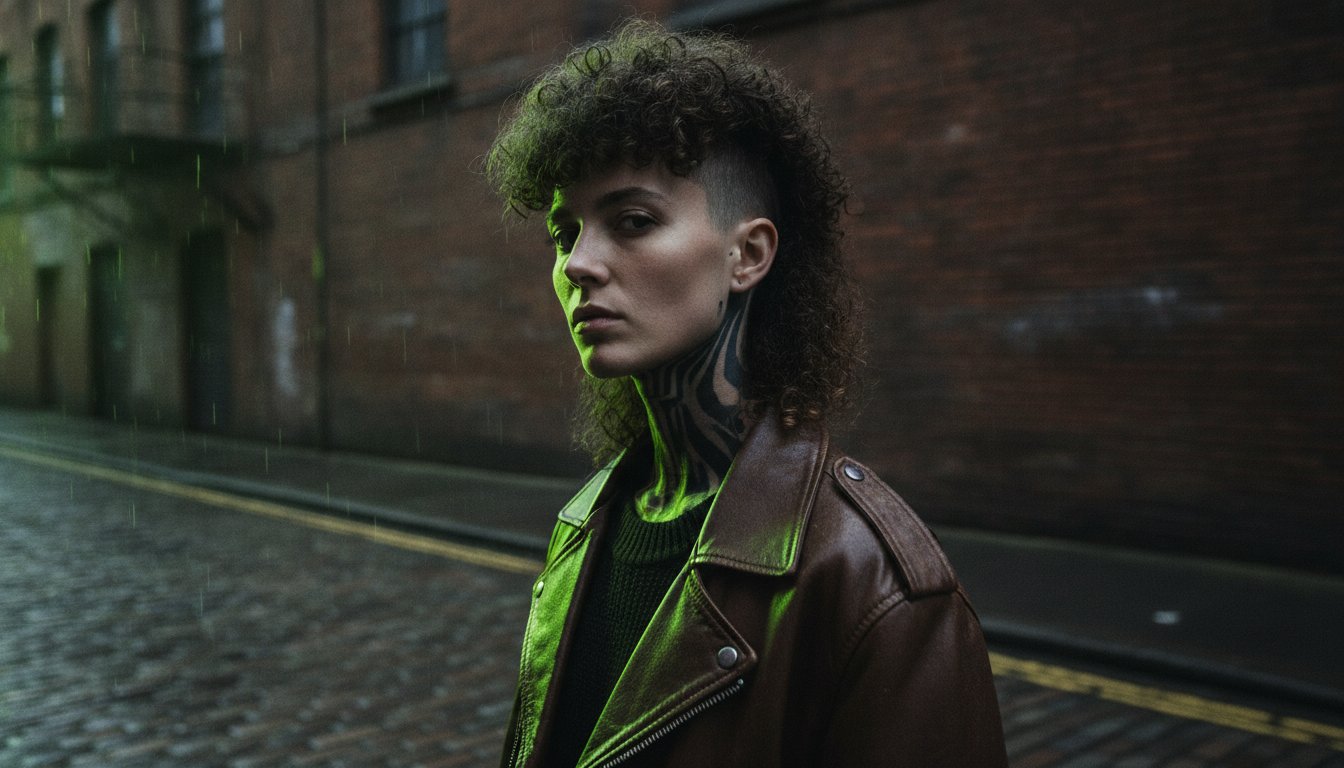
  • The Curly Short Mullet: Never fight your natural movement. This cut uses curls to create chaotic volume that stays high and tight where it matters.

Finding the right balance for these aggressive shapes requires a stylist who truly understands alternative hair aesthetics.

The Pixie-Mullet Hybrid

This is the perfect choice for anyone transitioning from a standard pixie who wants more edge. The key is in the internal layers. You want height and grit on the crown to prevent the hair from lying flat. To make the back look intentional, your stylist should use a razor or point-cutting technique. This ensures the tail looks like a deliberate design choice rather than an accidental growth spurt. It’s a sharp, modern way to wear one of the most popular short mullet ideas for women.

Aggressive Fringes and Micro-Bangs

A micro-fringe changes everything. It shifts the energy from retro to radical instantly. You can choose between blunt edges for a graphic look or jagged, feathered edges for a more lived-in feel. The trick is balancing that fringe length with the tail. If the front is super short, the back should have enough texture to provide a sense of symmetry. It’s about creating a percussive rhythm across the scalp that feels authentic to your subcultural identity.

Matching the Cut to Your Chaos: Texture, Face Shape, and Flow

Your hair texture shouldn’t limit your rebellion. It should dictate your strategy. Most short mullet ideas for women fail when they ignore the physics of the hair. A great alternative cut isn’t just about length; it’s about how the layers interact to create movement. The secret lies in disconnection. This is the technical gap between the short top, the thinned sides, and the aggressive tail. It is what separates a subcultural statement from a generic salon trim.

Forget the myth that only certain face shapes can pull off a mullet. It’s all about the framing. A round face benefits from vertical height and a jagged micro-fringe. A square face needs broken, feathered edges to soften the jawline whilst maintaining a sharp profile. We don’t follow traditional beauty rules here. We break them with intent to highlight your best features through intentional disconnection.

Injecting Life into Fine Hair

Fine hair needs a skeleton to keep it from falling flat. We use shorter internal layers, often called “ghost” layers, to provide invisible scaffolding. This technique is heavily inspired by the wolf hair cut approach. By carving out weight from underneath, the top layers gain a natural lift that survives the heat of a gig. Avoid heavy oils or thick waxes. Stick to lightweight salt sprays to keep the texture gritty but airy.

De-bulking for Thick and Coarse Hair

Thick hair is a different beast. Without the right technique, a short mullet can quickly turn into a “mushroom” shape that lacks definition. We manage this through aggressive de-bulking. Using an undercut on the sides is a brilliant way to remove excess volume whilst keeping the silhouette sharp. The goal is to ensure the back flows rather than looking like a solid block of hair. We use point-cutting and channeling to create deep, jagged valleys in the hair. This allows the light to hit the texture and keeps the shape looking dangerous rather than bulky.

  • Internal Layering: Essential for building height without losing length.
  • Undercuts: The best tool for managing side-volume in coarse hair.
  • Disconnection: The key to achieving that authentic, non-conformist aesthetic.
Short Mullet Ideas for Women: Aggressive Shapes and Subcultural Grit

Mosh Pit Survival: How to Style and Maintain Your Texture

A haircut is only as good as its ability to survive a gig. If your style collapses the moment you hit the floor, it isn’t doing its job. The most successful short mullet ideas for women are those that thrive on a bit of chaos. We don’t do “perfect” here. We do grit. Achieving that raw, textured finish is about using the right tools and knowing when to leave the hair alone. The “Air-Dry and Go” method is the gold standard for a reason. It allows your natural movement to take the lead whilst keeping the silhouette sharp and aggressive.

  • Salt Sprays: Essential for that gritty, beach-meets-black-metal texture.
  • Texture Pastes: Use these on dry hair to define individual jagged layers.
  • Diffusers: The secret weapon for injecting chaotic volume without causing frizz.
  • Pomades: Perfect for slicking down the sides or adding weight to the tail.

Styling for Maximum Grit

Forget everything traditional salons told you about blowing your hair smooth. When styling a modern mullet for a high-energy environment, you want the hair to look lived-in. Start with damp hair and apply a generous amount of salt spray. Scrunch the hair with your hands to encourage the layers to separate. If you have fine hair, use a diffuser to blast the roots for extra height. For a finish that refuses to budge, use a product like Death Grip. It provides an untouchable texture that keeps your style locked in place through the heaviest sets. Remember, “perfect” hair is the enemy of the alt-mullet. If a few strands fall out of place, it only adds to the aesthetic.

Between Salon Visits

Maintaining the edge of your cut requires a bit of discipline. Short mullet ideas for women can quickly lose their shape if the “awkward stage” of growth isn’t managed. We recommend organising a trim every six to eight weeks to keep the disconnection looking deliberate. This is especially vital for your fringe. A micro-fringe that gets too long can lose its aggressive energy and start looking like a standard bowl cut. If you are also rocking vivid hair colour, keep it fresh by using cold water and sulphate-free cleansers. This ensures your identity remains saturated in high-pigment sensation whilst your cut stays sharp.

Ready to reclaim your identity with a cut that actually lasts? Grab your slot for a mosh pit-tested transformation here.

Beyond the Chair: Why the Right Specialist Makes the Difference

Your search for short mullet ideas for women shouldn’t end with a screenshot. It should end in the chair of someone who actually gets it. Traditional hairdressing jargon often fails alternative clients because it prioritises “blending” and “softness.” In our world, those are dirty words. You want a silhouette that looks like it was carved with a razor, not polished with a round brush. Bringing a radical vision to a mainstream salon often results in a “safe” version that lacks the subcultural grit you’re after. Traditional stylists are trained to fix “mistakes” like uneven layers or harsh lines. We call those design features.

A specialist alternative salon offers more than just a haircut. It provides a gender-inclusive, safe-space environment where your identity is celebrated, not just tolerated. We don’t do traditional bridal styling or children’s trims for a reason. We focus on the niche. When you choose a stylist with official credentials from festivals like Download or Bloodstock, you’re getting someone who knows how hair behaves under stage lights and in the middle of a crowd. That expertise translates to a cut that holds its shape long after you’ve left the salon. It’s about mosh pit-tested technical proficiency.

The Alternative Specialist Advantage

There is a massive difference between a “fashion mullet” seen on a runway and a “rock mullet” seen in a basement venue. One is a passing trend; the other is a lifestyle. Alternative specialists understand the nuances of aggressive textured layers. They won’t try to talk you out of micro-bangs or suggest “toning down” the disconnection. Instead, they’ll find ways to make those elements work for your specific hair type. Look for a portfolio that shows raw, unedited texture and a variety of identities. If every photo looks like it belongs in a high-street window, keep looking.

Preparing for Your Appointment

Communication is vital. When you arrive for your appointment, bring photos that show the grit, not just the shape. Avoid heavily filtered or over-styled influencer shots. Instead, look for images of musicians or people in your community whose hair has the movement you admire. Be honest about your lifestyle. If you need a cut that survives regular mosh pits but still lets you function in a professional setting, tell us. We can adjust the level of aggression to suit your needs. When discussing short mullet ideas for women, ask for “shattered ends” and “intentional disconnection.” This ensures you walk out with a weapon of self-expression rather than a standard bob.

Own Your Edge in the Front Row

The short mullet is more than a trend. It is a badge of subcultural belonging that survives the heat of the pit and the chaos of everyday life. You’ve seen how aggressive layering and intentional disconnection can transform fine hair or de-bulk thick strands. It is about matching the cut to your energy. When you explore short mullet ideas for women, you aren’t just looking for a haircut; you are looking for a visual identity that refuses to compromise.

Choosing an alternative specialist ensures your vision isn’t watered down by traditional salon jargon. As official stylists for Download and Bloodstock festivals, we specialise in gender-inclusive, mosh pit-tested styling techniques that keep your texture sharp and your spirit independent. Our salon is a safe space where your individuality is the priority. It’s time to stop settling for safe and start looking for radical. Book your aggressive short mullet transformation today and walk out with a shape that actually speaks your language. Your next favourite look is waiting.

Frequently Asked Questions

Is a short mullet high maintenance for daily styling?

A short mullet is actually one of the lowest maintenance styles for alternative hair. It thrives on a raw, lived-in finish rather than a polished look. You don’t need to spend hours with a blow-dryer. Just apply some sea salt spray to damp hair and let it air dry. The aggressive layers do the work for you, creating natural volume that looks better the messier it gets.

Can I pull off a short mullet if I have very fine hair?

Absolutely. Fine hair benefits from the radical layering found in many short mullet ideas for women. By using internal “ghost” layers, we create a skeleton of support that lifts the hair from the root. This prevents the style from looking flat or limp. Avoid heavy conditioners and stick to lightweight texturisers to keep your volume high and your silhouette sharp throughout the day.

How often do I need to get my short mullet trimmed?

We recommend a trim every six to eight weeks to maintain the intentional disconnection of the cut. Because the fringe and the “tail” grow at different rates, leaving it too long can cause the shape to lose its edge. Regular maintenance ensures your micro-bangs stay aggressive and your sides remain tight. This schedule prevents the hair from entering an “awkward stage” that feels accidental rather than designed.

What is the difference between a pixie-mullet and a wolfcut?

The main difference is the proportion and length. A pixie-mullet is much shorter and tighter on the top and sides, often featuring micro-bangs and a jagged nape. A wolfcut is a longer, shaggier evolution that blends the mullet with a traditional shag. Whilst both rely on heavy texture, the pixie-mullet offers a more percussive, punk-inspired energy that is ideal for those wanting a truly short variation.

Will a short mullet work with my natural curls?

Curls and mullets are a perfect match. Natural movement adds chaotic volume that makes the cut look even more dangerous. We use specific carving techniques to ensure your curls sit in a way that highlights the disconnection. Instead of fighting the frizz, we embrace it as part of the grit. Use a diffuser to set the shape and a light cream to define the ends without losing the bounce.

How do I style my mullet so it stays in place at a gig?

Survival in the pit requires serious hold. Start with a gritty base like salt spray, then use a product like Death Grip to lock the texture into place. This keeps your layers separated and aggressive even when things get sweaty. Focus on the fringe and the crown to maintain height. If a few strands fall out of place during the set, don’t worry. It just adds to the subcultural aesthetic.

Should I get an undercut with my short mullet?

An undercut is a brilliant addition if you have thick hair or want a sharper punk silhouette. It removes excess bulk from the sides, making the disconnection between the top and the tail even more dramatic. It also makes daily styling faster because there is less hair to manage. If you want maximum grit, a buzzed undercut provides a clean contrast against the jagged, textured layers of the rest of the cut.

Can I have a short mullet with vivid hair colours?

Short mullet ideas for women look incredible when paired with high-pigment shades. Vivid colours like deep reds, neon greens, or electric blues saturate your identity and highlight the jagged edges of the cut. We specialise in creative colour that complements the aggressive shape of your hair. Just remember to use sulphate-free products to keep your hue fresh and vibrant whilst maintaining the integrity of your mosh pit-tested style.
Posted on

The Curly Mullet Hairstyle: A Guide to Aggressive Texture and Subcultural Grit

The Curly Mullet Hairstyle: A Guide to Aggressive Texture and Subcultural Grit

The modern mullet isn’t some ironic throwback; it is a textured manifesto for the subcultural underground. If you’ve ever left a traditional salon looking like a shapeless poodle because the stylist feared your natural volume, you know the struggle is real. Embracing a curly mullet hairstyle shouldn’t mean compromising on your identity or settling for a dated accident. You deserve a look that carries as much grit as your favourite record.

We are here to help you master this high-impact cut with zero apologies. You will learn how technical layering creates that essential crown volume whilst keeping your length aggressive and intentional. We’ll break down the subcultural variations that set you apart from the mainstream. We’ll also cover the styling secrets needed for maximum mosh pit survival, including how to use Death Grip for a finish that stays put. From understanding the wolfcut hybrid to finding a gender-inclusive space that actually gets it, this is your blueprint for texture. It is time to ditch the frizz and embrace the chaos.

Key Takeaways

  • Learn to distinguish a modern, high-contrast cut from a dated 80s accident by focusing on your natural curl patterns.
  • Ditch the dreaded triangle shape with internal weight removal techniques that balance crown volume with an aggressive, textured tail.
  • Identify the best curly mullet hairstyle hybrid for your look, including the high-impact wolf-mullet and the face-framing shullet.
  • Master the scrunch-to-crunch method using Death Grip to keep your texture intact through the most intense mosh pits.
  • Find out why alternative specialists provide a vital, gender-inclusive safe space for those rejected by traditional high-street salons.

What is a Modern Curly Mullet Hairstyle?

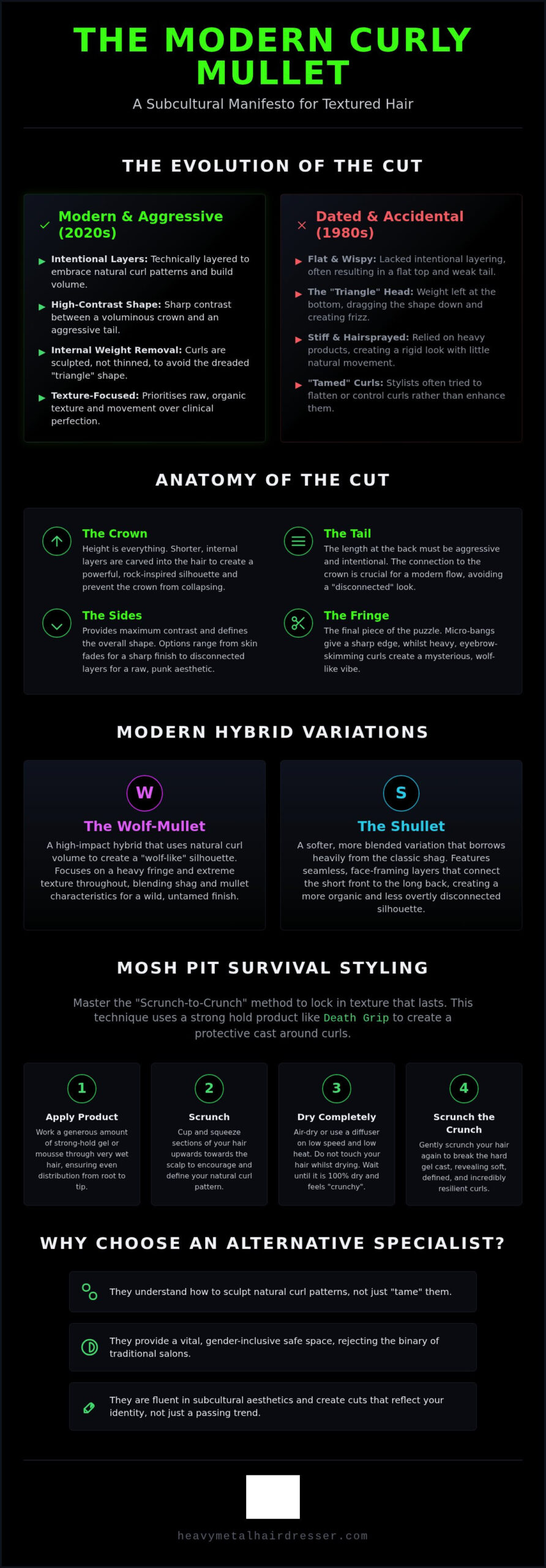
The modern curly mullet hairstyle is a high-contrast, aggressive statement. It prioritises raw texture over the clinical perfection of high-street styling. Forget the “business in the front, party in the back” nonsense that mainstream media loves to recycle. This isn’t a joke or a costume. It’s a technical, layered cut designed to embrace natural curl patterns whilst maintaining a sharp, subcultural edge. Traditional stylists often try to “tame” curls. We do the opposite. We use them to build height and attitude that a standard fade could never achieve.

Whilst the 80s version often looked like a flat, wispy accident, the 2026 “alt” mullet is all about intentional weight. It thrives on the organic chaos of curls. This shape has become a uniform amongst the metal and punk scenes, offering a silhouette that commands space. It’s built for those who find beauty in the grit and power in being different. This cut doesn’t just sit on your head; it works with your hair’s natural behaviour to create something fierce and functional.

The Evolution of the Alternative Mullet

Tracing the mullet hairstyle history reveals a path from 70s glam rock rebellion to its current status as a subcultural staple. In the past, the mullet was often bound by rigid, awkward proportions. Today, it has evolved into a powerful tool for gender-neutral expression. It breaks the binary of traditional hairdressing. The modern version focuses on the “shag” influence, blending the length and the crown with seamless, internal layers. It’s about how the hair moves, not just how it sits. This shift prioritises a textured, lived-in feel over the stiff, hairsprayed looks of previous decades.

Why Curls Change the Mullet Game

Curls are the perfect medium for an aggressive shape. Natural volume creates a “wolf-like” silhouette that straight hair can’t mimic without heavy product intervention. The bounce and spring of a curl provide an organic lift at the crown, which is essential for that high-impact profile. Curls are also practical for the alternative lifestyle. They hide growth stages effectively and maintain their shape even after a night in a crowded venue.

A professional curly mullet hairstyle serves as a visual manifesto, turning natural texture into a defiant badge of subcultural identity. It’s the ultimate way to reclaim your curls from the boring, polished standards of the mainstream.

The Anatomy of an Aggressive Curly Mullet: Layers and Weight

Engineering a high-impact curly mullet hairstyle requires more than just a pair of scissors. It demands a deep understanding of how curls stack and move. Most traditional salons fail because they treat curls as a problem to be solved rather than a medium to be sculpted. They leave you with a “triangle” head. This happens when weight is left at the bottom, dragging the crown down and flattening your silhouette. We fix this through aggressive internal weight removal. It is about creating space within the hair so each curl has the freedom to bounce and coil without being crushed by bulk.

The cultural symbolism of the mullet is rooted in rebellion. Your cut should reflect that. You need a sharp, intentional contrast between the height of the crown and the length of the “tail” at the back. If the transition is too soft, it looks like a dated mistake. If it is too disconnected, it can lose its organic flow. Your fringe is the final piece of the puzzle. Micro-bangs offer a sharp, punk-rock edge. Heavy, eyebrow-skimming curls provide a more mysterious, “wolf-like” vibe. Both require technical precision to ensure they don’t collapse into a frizzy mess by midday.

Managing Curl Weight and Bulk

Traditional thinning shears are the enemy of the alternative mullet. They shred the hair, creating “fuzz” and destroying curl definition. We use a technical “carving” method instead. This involves cutting into the curl pattern to encourage movement and grit. It allows us to remove bulk whilst keeping the curl intact. The sides play a massive role in the final shape. You have options:

  • Skin Fades: For maximum contrast and an aggressive, modern finish.
  • Tapers: For a more blended, traditional subcultural look.
  • Disconnected Layers: For a raw, DIY aesthetic that screams punk.

The Crown: Creating Height Without the Frizz

Height is everything. Shorter layers at the top create the signature rock silhouette that defines this look. We inject chaos into the texture whilst maintaining curl integrity. It is a delicate balance of grit and health. If you want to explore how these layers can merge into even more extreme shapes, check out the ultimate wolf hair cut guide for a deeper dive. Finding a stylist who understands this technicality is vital. If you’re ready to ditch the high-street boredom, you should visit an alternative specialist who understands your aesthetic.

Modern Variations: From the Wolf-Mullet to the Shullet

The curly mullet hairstyle isn’t a static look. It’s a versatile template that adapts to your specific subculture. Whether you’re fronting a band or losing yourself in an underground rave, there’s a variation that fits your vibe. We’ve moved past the “slick-back” styles found in mainstream catalogues. Instead, we embrace the modern mullet revival by pushing the boundaries of what texture can do. These variations aren’t just about length; they’re about how you frame your identity.

For those in the underground electronic scene, the Curly Euro-Mullet has become a staple. It features tighter, often buzzed sides that transition sharply into a dense, curly tail. It’s clean but aggressive. If you want something even more punk-inspired, the Burst Fade Mullet focuses the fade around the ear. This creates a circular, “burst” effect that makes your curls pop with maximum contrast. It’s high-energy and requires zero apologies.

The Wolf-Mullet: Maximum Chaos

The Wolf-Mullet is the ultimate hybrid for those who refuse to choose between a shag and a mullet. It takes the heavy, choppy layers of a wolfcut and stretches the back for that signature mullet silhouette. Expect extreme volume and a wild, unkempt finish that thrives at festivals. Unlike a standard modern mullet haircut, the wolf variant prioritises shaggy internal texture over clean lines. It’s the favourite of musicians who want their hair to move as much as they do on stage. It’s raw. It’s loud. It’s chaotic.

The Shullet: A Softer Edge

If you aren’t ready for a skin-fade but still want to ditch the mainstream, the Shullet is your entry point. It blends 70s shag aesthetics with the mullet’s distinctive length. This style is perfect for transitioning from a standard shag into something more daring. It keeps the face-framing curls that soften your features whilst maintaining the length in the back. You get the best of both worlds:

  • Internal Layers: These keep the crown high and prevent the hair from dragging.
  • Face Framing: Heavy fringe and side pieces hug the jawline to add mystery.
  • Versatility: The Shullet works with everything from loose waves to tight coils.

The Shullet proves that grit doesn’t always have to be sharp. It can be textured, lived-in, and unapologetically cool without the harshness of a buzz saw. It’s about finding the balance that feels like you.

The Curly Mullet Hairstyle: A Guide to Aggressive Texture and Subcultural Grit

Styling Your Curls for Grit, Volume, and Mosh Pit Survival

Most high-street curl guides focus on “pretty” results. They push heavy oils and shine-enhancing creams that leave you looking polished and precious. That doesn’t work for a curly mullet hairstyle. You need grit. You need volume that fights back against humidity and movement. We prioritise a matte, deconstructed finish that actually looks better as the night goes on. This isn’t about perfection. It is about structure and survival.

The “scrunch-to-crunch” method is your secret weapon for alternative styling. Instead of fearing the product cast, we use it to lock in an aggressive shape. You apply your styler to soaking wet hair, let it dry into a hard shell, and then “scrunch” it out. For a subcultural look, don’t over-scrunch. Leave some of that tension in the hair. It creates a “dirty” texture that stays upright whilst everyone else’s hair is falling flat. Between washes, don’t reach for the water spray. Use dry shampoo to add “dirt” and grip to the roots, maintaining that lived-in, effortless aesthetic.

The Alternative Styling Routine

Getting the height right requires a methodical approach. Follow these steps to ensure your crown doesn’t collapse:

  • Step 1: Apply a volumising base like Hair To the Throne to damp roots. Focus on the crown and the fringe area to build a foundation of lift.
  • Step 2: Use a diffuser on a low-heat, low-airflow setting. Tilt your head upside down to encourage aggressive volume. Do not touch the curls until they are 100% dry.
  • Step 3: Once dry, take a small amount of Death Grip. Rub it between your palms and manipulate individual curls. This deconstructs the pattern and adds a matte, gritty finish.

Survival Tips for Gigs and Festivals

A curly mullet hairstyle faces its toughest test in a crowded venue. Heat and sweat are the enemies of volume. If you’re heading into the pit, you need products that offer a “death grip” on your style. Dry shampoo is vital here. It isn’t just for cleaning; it adds a layer of friction that prevents layers from sliding together and losing their definition. For more technical advice on maintaining this level of attitude, check out our guide on how to style a modern mullet. If you want to keep your texture sharp through the final encore, you need to stock up on professional-grade grit before your next show.

Choosing an Alternative Specialist for Your Curly Transformation

Traditional high-street salons are often built on rigid, mainstream beauty standards. They prioritise “neatness” and “suitability” over raw self-expression. If you walk in asking for an aggressive curly mullet hairstyle, a standard stylist might try to talk you out of it. They might suggest softening the layers or “taming” the frizz. This happens because they don’t understand the subcultural grit required for an authentic alt-cut. You aren’t looking for a “pretty” haircut; you’re looking for a visual manifesto. You need a specialist who understands that hair is a tool for identity, not just a service to be performed.

When scouting for a stylist, look at their portfolio for more than just technical skill. Search for shags, mullets, and heavy texture. If their feed is full of “lived-in blondes” and bridal updos, they likely won’t have the technical proficiency to carve out the internal weight needed for a curly mullet. You want to see evidence of vivid colours and high-contrast shapes. Communication is your best tool here. Use subcultural references from the music and art scenes you love. Mention specific bands, eras, or aesthetics. A specialist will know exactly what you mean when you ask for “mosh pit survival” hair.

Finding a Safe Space Salon

A salon should be a refuge, not a source of anxiety. Inclusive environments are vital in the hair industry, especially for those who exist outside the mainstream. One hallmark of a progressive, alternative salon is gender-neutral pricing. This ensures that you are charged for the time and skill involved in your cut, rather than being forced into a gendered “tax” for self-expression. Heavy Metal Hairdresser organises its space to celebrate individuality and foster a sense of belonging. It is a gender-inclusive safe space where your identity is respected and celebrated. We act as a knowledgeable guide for those who seek to express themselves through unconventional means.

Preparing for Your Appointment

Gathering the right references is essential for a successful transformation. Don’t settle for generic images. Bring album covers, gig photos, or street-style shots that capture the specific energy you want to project. This is also the time to discuss how vivid hair colour can elevate your new shape. High-pigment tones can highlight the technical layering of a curly mullet hairstyle, adding depth and even more attitude to your curls. Booking your transformation with a specialist ensures that the “alt-cut” soul is preserved. You deserve a stylist who acts as a supportive peer and understands the nuances of your community.

Reclaim Your Texture and Command the Pit

Your hair is the loudest thing about you. Mastering the curly mullet hairstyle isn’t about chasing a fleeting trend; it’s about reclaiming your texture from the clinical boredom of the high street. You now have the technical blueprint for internal weight removal, the knowledge of gritty styling, and the confidence to choose a specialist who understands your subcultural soul. Whether you’re fronting a band or losing yourself in the crowd, your curls are finally working for you.

We don’t do polished. We specialise in aggressive, textured alt-cuts designed for mosh pit survival. Our team brings the same expertise seen backstage at Download and Bloodstock to every chair in our gender-inclusive safe space. It’s time to stop hiding your natural volume and start using it to project your identity. Don’t settle for a stylist who fears your curls. Choose a rebel expert who knows how to sculpt them.

Ready to unleash your curls? Book your alternative transformation at Heavy Metal Hairdresser today.

Stay loud. Stay gritty. We’ll see you in the pit.

Frequently Asked Questions

Is a curly mullet high maintenance for daily wear?

A curly mullet hairstyle is actually lower maintenance than you might think. It thrives on a lived-in, gritty texture rather than clinical perfection. You don’t need to wash it daily; in fact, second-day hair often has more natural grip. A quick refresh with a volumising base like Hair To the Throne at the roots is usually enough to revive the crown. It’s about embracing the chaos of your natural pattern whilst keeping the silhouette aggressive.

Can I get a curly mullet if I only have wavy hair?

Wavy hair is a perfect foundation for this look. You don’t need tight coils to achieve an aggressive shape. Waves often provide a softer, “wolf-like” texture that is easier to style into a deconstructed finish. You will likely rely more on high-hold products like Death Grip to ensure your waves don’t fall flat during the day. The technical layering remains the same, focusing on building height at the top and length at the back.

How often should I trim my mullet to keep the shape sharp?

To keep the silhouette sharp and intentional, you should book a trim every six to eight weeks. Curls grow “out” as much as they grow “down,” so the internal weight can quickly become bottom-heavy. Regular maintenance ensures the crown stays high and the “tail” doesn’t become too wispy or tangled. If you leave it longer, the “triangle” shape usually returns, dragging down the overall impact of the cut.

Will a curly mullet work for thin or fine hair types?

This style is a secret weapon for thin or fine hair. The aggressive layering and weight removal actually create the illusion of much thicker hair. By stacking shorter layers at the crown, you generate natural lift that fine hair usually lacks. It’s about strategic sculpting. We remove bulk from the sides to make the top and back appear more dense and high-impact. It transforms flat hair into a textured, subcultural statement.

What should I ask my barber for to get an alternative curly mullet?

Avoid generic terms. Ask your specialist for a “high-contrast, textured alt-cut with internal weight removal.” Be specific about wanting a shaggy, disconnected crown and an aggressive tail. It’s always best to bring references from the music and art scenes you follow. This helps the stylist understand the “grit” you are aiming for. Mention that you want to avoid a “polished” finish in favour of something more raw and subcultural.

How do I stop my curly mullet from looking like a 1980s perm?

The key is the technical transition and the finish. The 80s look relied on soft blends and stiff hairsprays. The modern curly mullet hairstyle uses sharp tapers, skin fades, or “carved” layers to create a more aggressive, intentional silhouette. We prioritise matte, deconstructed textures over shiny, uniform curls. Using a matte paste instead of traditional gel ensures the hair looks gritty and modern rather than like a dated, chemically-treated accident.

Can I combine a curly mullet with vivid hair colours?

Vivid tones are the perfect partner for an alternative cut. High-pigment colours like neon greens, deep purples, or blood reds highlight the technical layering and make individual curls pop. It adds a visual depth that enhances the “grit” of the style. Many of our clients combine their transformation with creative colour to fully saturate their identity. It’s a bold way to ensure your texture stands out even in a dark, crowded venue.

Is the curly mullet considered a gender-neutral hairstyle?

The mullet is a powerful tool for gender-neutral expression. It completely bypasses the traditional binaries of “masculine” or “feminine” hairdressing. By blending various lengths and textures, it creates a shape that belongs to everyone. In a progressive, safe space salon, these cuts are valued for the skill and time they require, not the gender of the person in the chair. It is a universal badge of subcultural rebellion and individual pride.

Posted on

Shag vs Mullet: What’s the Difference and Which One Rules Your Style?

Shag vs Mullet: What’s the Difference and Which One Rules Your Style?

Most people think the difference between a shag and a mullet is just a few inches of hair at the nape, but they’re dead wrong. If you’re hunting for a new look, you’ve probably spent hours staring at “shullets” and wolfcuts trying to figure out shag vs mullet what’s the difference without much luck. It’s easy to feel stuck between wanting an aggressive, textured vibe and fearing you’ll end up with a dated, “bad” mullet that belongs in a dusty photo album.

We get it. Describing your favourite level of texture to a stylist shouldn’t feel like a test you’re about to fail. This guide will give you the technical breakdown of how these styles actually work. We’ll look at the “Death Grip” levels of texture that define a modern shag versus the disconnected, rebellious edge of a 2026 mullet. By the end, you’ll know exactly which cut suits your hair’s natural flow and have the confidence to book an alternative stylist who speaks your language.

Key Takeaways

  • Understand the technical divide between the connected layers of a shag and the deliberate disconnection that defines a modern mullet.
  • Get the definitive answer to shag vs mullet what’s the difference so you can describe your desired texture to your stylist with total confidence.
  • Explore hybrid styles like the wolfcut and shullet to find a middle ground between rock-and-roll volume and an aggressive silhouette.
  • Learn how to tailor these alternative cuts to your specific face shape and natural hair texture for a look that actually works for you.
  • Discover the essential toolkit, including Death Grip texture paste, to keep your layers sharp and mosh-pit-ready through any gig.

Defining the Chaos: What is a Shag and What is a Mullet?

The UK alternative scene doesn’t do boring hair. From the muddy pits of Bloodstock to the neon streets of Camden, textured styles are the current uniform. But when you’re ready for a change, you need to know shag vs mullet what’s the difference before you sit in the chair. These styles share a DNA of heavy texture and attitude, yet they occupy totally different spaces on the subcultural spectrum. One feels like a late-night vinyl session in 1975; the other feels like a punk show in a basement. Whether you’re rocking a natural shade or a vivid colour, these cuts thrive on movement and a refusal to blend in.

The 70s Soul of the Shag

The shag is a 70s icon that never truly died. It was born in the era of Joan Jett and Mick Jagger, designed to look like you just rolled out of bed after a stadium set. It’s defined by uniform, heavy layers and a rock-and-roll fringe that sits heavy over the eyes. Unlike other styles that rely on length, the shag is all about volume at the crown and face-framing texture that softens the jawline. The shag is a connected masterpiece of movement where every layer flows seamlessly into the next. It’s the go-to for anyone wanting effortless cool without the harsh lines of more aggressive cuts. We specialise in Shag Haircuts that prioritise this fluid, lived-in feel, making it a firm favourite amongst those who want volume without the commitment of a disconnected cut.

The 80s Rebellion of the Mullet

If the shag is effortless, the mullet is a loud, aggressive defiance of the status quo. Historically, the Mullet (haircut) was the ultimate “business in the front, party in the back” statement. Today, it’s been reimagined for 2026. We’ve ditched the crispy perms and stiff hairsprays for gritty, textured layers and sharp disconnection. The modern mullet is defined by the stark contrast between short temples and a long nape. There is a deliberate “gap” where the front doesn’t meet the back, creating a silhouette that demands attention. It’s a style for those who want to stand outside the mainstream and embrace a bit of chaos.

Whilst both styles use “Death Grip” levels of texture, the emotional vibe is the real divider. Choosing between them depends on whether you want the cohesive, shaggy volume of a rock star or the disconnected, rebellious edge of a punk. Knowing shag vs mullet what’s the difference helps you communicate that specific energy to your stylist so you don’t end up with a look that feels too safe. It’s about more than just hair; it’s about the subcultural attitude you carry into the room.

The Technical Divide: Connection vs Disconnection

Understanding shag vs mullet what’s the difference comes down to one technical concept: connection. In the hair world, connection means the layers flow into each other without a sudden jump in length. Disconnection is the opposite. It is a deliberate break where one section of hair is significantly longer than the part right next to it. This technical choice dictates how your hair moves in the pit and how much effort you will put into styling it every morning. It is the difference between a fluid, rock-and-roll silhouette and a sharp, aggressive frame.

Anatomy of a Shag: The Seamless Flow

A shag is a connected masterpiece. Every layer is technically linked to the one above it. We use square layers that blend into the overall length to create maximum movement without any harsh steps. The fringe is the anchor here. It frames the eyes and flows directly into the side layers, creating a rounded, shaggy silhouette that works at any length. Whether you are rocking a chin-length bob or waist-deep waves, the shag keeps everything cohesive. It is the best option for those who want that “messy” look whilst keeping the hair feeling like one unified style. If you are looking for a cut that moves with you, our Shag Haircuts are designed to provide that perfect, connected flow.

Anatomy of a Mullet: The Aggressive Break

The mullet is built on an aggressive break. It is fundamentally a disconnected cut. You have the “tail” at the back, but the sides are kept tight, often involving a fade or a sharp “step” that separates the front from the back. The top section stands independently from the length at the nape. This creates that signature drop-off that defines the look. It is a weapon of choice for anyone wanting a silhouette that stands out from a mile away. The modern mullet ditches the soft blending of the past for a gritty, intentional gap that highlights the contrast between short temples and a long nape.

The secret to both styles is the “pivot point”. This is the area behind the ear where the hair transitions from the front framing to the back length. In a shag, this transition is soft and blended. In a mullet, the pivot point is where the disconnection happens. It is where the front ends and the length begins. Whilst a shag can be almost any length, a mullet strictly requires that “tail” to maintain its identity. Knowing shag vs mullet what’s the difference technically allows you to tell your stylist exactly where you want that transition to happen, ensuring you walk out with the right level of aggression for your style.

Shag vs Mullet: What’s the Difference and Which One Rules Your Style?

Beyond the Basics: The Wolfcut and the Shullet

Sometimes the choice isn’t binary. You might find yourself caught in the middle, wanting the heavy volume of a rock-and-roll icon but craving the aggressive silhouette of a modern rebel. This is where hybrids like the Wolfcut and the Shullet come into play. Whilst we’ve already established shag vs mullet what’s the difference in terms of technical connection, these hybrid styles blur those lines to create something entirely new. They offer a way to experiment with alternative texture without committing to the extreme disconnection of a traditional mullet or the softer flow of a classic shag.

The Wolfcut: Where Shag Meets Round Layers

The Wolfcut isn’t just a fleeting social media trend. It is a technical evolution that combines the best parts of our Shag Haircuts with the wilder frame of a mullet. It is characterised by heavy, round layers and intense face-framing that mimics a lion’s mane. This style is a firm favourite for those with fine hair because the internal layering creates a massive volume boost that flatter styles simply can’t achieve. To keep the “wolfish” grit alive, you need to lean into the messiness. It thrives on movement and looks best when it’s slightly unhinged. If you want to get into the weeds of this specific look, check out The Ultimate Wolf Hair Cut Guide for a deeper dive into its aggressive texture.

The Shullet: The Stealth Choice

For the undecided or those amongst us who need to maintain a level of “professionalism” whilst still repping the scene, the Shullet is the stealth weapon of choice. Think of it as a mullet with the training wheels still on. It features more length on the sides than a standard mullet, allowing for a softer transition from the fringe to the back. It maintains a “connected” feel, but pushes the length at the nape to ensure the “party” in the back is still very much invited. The Shullet is also the perfect grow-out style. If you’ve been rocking a disconnected mullet and want to transition back to a more unified look, this hybrid bridges the gap perfectly.

Choosing between these hybrids depends on your end goal. If you want maximum volume and a mane-like frame, the Wolfcut is your winner. If you want to dip your toe into the mullet aesthetic without the harsh “step” behind the ear, the Shullet is the way to go. Understanding shag vs mullet what’s the difference allows you to see how these hybrids borrow from both worlds to create a custom level of aggression. Whether you’re heading to a gig or just heading to work, these mid-ground styles ensure your hair remains a core part of your identity without feeling like a costume.

Which Weapon Should You Choose? Face Shapes and Texture

Picking your next look isn’t just about chasing a subcultural vibe. It’s about how the geometry of the cut hits your face. When you’re weighing up shag vs mullet what’s the difference for your own reflection, you need to consider how your natural texture and bone structure play into the final result. A cut that looks incredible on a rail-thin punk might need a totally different layering strategy for someone with a thick, curly mane. Understanding shag vs mullet what’s the difference in a technical sense is step one; knowing how it sits on your head is step two. It’s about finding the version of these styles that rules your specific look.

Matching the Cut to Your Face Shape

Round faces thrive on height and vertical lines. A mullet is a secret weapon here because the tight sides and vertical length at the back elongate the face. Alternatively, a shag with massive volume at the crown creates a similar lifting effect that prevents the hair from looking bottom-heavy. Square faces, on the other hand, benefit from the soft, feathery layers of a shag that break up a strong jawline. These layers soften the corners of the face whilst maintaining an edgy silhouette. If you have a heart-shaped face, a heavy, textured fringe is non-negotiable. It balances a wider forehead and draws the focus straight to the eyes, creating a more symmetrical frame.

Texture: From Fine Strands to Thick Manes

Your hair’s natural behaviour dictates the technical approach. Thick hair requires aggressive internal layering to remove bulk without losing the silhouette. We use deep point-cutting to ensure the hair moves freely rather than sitting like a solid block. Fine hair needs the opposite strategy. We build “fake” volume through short, choppy crown layers that give the illusion of a thicker mane. For those with natural curls, the modern mullet is a godsend. The disconnection allows curls to bounce independently without the dreaded “triangle hair” effect that often plagues standard haircuts.

Once the shape is locked in, vivid hair colour can be used to highlight those aggressive layers. High-contrast shades make the texture pop in ways natural colours simply can’t. When you sit down for your consultation, use keywords like “grit”, “internal weight removal”, and “Death Grip texture” to ensure your stylist knows you aren’t looking for a standard salon trim. If you’re ready to commit to a look that actually fits your identity, book your transformation with our specialists today and get the texture you deserve.

Living with the Look: Maintenance and Mosh Pit Survival

A killer haircut is only half the battle. Once you’ve settled the debate of shag vs mullet what’s the difference and walked out of the salon, you need to keep that texture alive. These aren’t styles meant for a clinical, polished environment. They are built for the stage, the pit, and the three-day festival bender. Keeping your layers from falling flat requires a strategy that prioritises grit over perfection. If your hair looks too “done,” you’ve probably missed the point. You want it to look like it has lived a little, even on day one.

Styling with Death Grip and Grit

The “scrunch and go” method is your best friend for maximum chaos. Start with damp hair and a heavy dose of sea salt spray to provide a foundation of tackiness. Follow this up with our Death Grip texture paste. Work a small amount through your palms and aggressively scrunch it into the mid-lengths and ends. This creates that lived-in, “second-day” grit immediately after a wash. For those with natural wave or curl, using a diffuser on a low heat setting helps bake in the texture without creating unwanted frizz. You can find more details on how to style a modern mullet for specific product application tips that keep your silhouette sharp.

Professional Maintenance

Even the most rebellious cuts need a regular return to the chair to avoid turning into a total disaster. The maintenance schedule differs significantly based on the technical structure of your cut. Shags are generally more forgiving. You should expect to return every 8 to 12 weeks to keep the connected layers moving and prevent the crown from getting too heavy. Mullets require more frequent attention because of the disconnection. You’ll want a tidy-up every 4 to 6 weeks to keep the “business” sides tight and the silhouette aggressive.

  • Shag Maintenance: Focus on weight removal and fringe trims every 8 to 12 weeks.
  • Mullet Maintenance: Tighten the sides and clean up the nape every 4 to 6 weeks.
  • The Dusting Technique: A method we use to keep ends healthy without losing your hard-earned length.

To refresh your style between washes, skip the shampoo and use a dry texture spray or a bit more sea salt. This maintains the essential oils that give alternative hair its character whilst keeping the volume high. Understanding shag vs mullet what’s the difference in maintenance ensures you don’t let your style lose its edge before the next gig. Keep it gritty, keep it textured, and don’t be afraid to let it get messy.

Own Your Alternative Identity

Choosing between a shag and a mullet isn’t just about hair length; it’s about how you want to move through the world. You now understand shag vs mullet what’s the difference: it is the technical choice between fluid, connected volume and sharp, disconnected aggression. Whether you are leaning towards a classic rock-and-roll shag or a gritty, modern mullet, your hair should be a direct reflection of your subcultural grit. It is about more than just a trim. It is about finding a look that survives the pit and looks even better the next morning.

We don’t do traditional. Our team at Heavy Metal Hairdresser consists of backstage festival styling experts who live for aggressive texture and vivid colour. We pride ourselves on being a gender-inclusive safe space where your individuality is the only rule we follow. If you are tired of explaining your “vibe” to stylists who just don’t get it, it is time to change your scene. Ready to ditch the norm? Book your alternative cut at Heavy Metal Hairdresser today.

Stop settling for safe hair. Embrace the chaos, trust the technical expertise, and walk out with a style that actually says something.

Frequently Asked Questions

Is a wolf cut the same as a shag?

A wolfcut is a hybrid, not a direct replica of a shag. Whilst a shag is all about connected, fluid layers, the wolfcut borrows the round layers of a shag and pairs them with the aggressive silhouette of a mullet. It creates a mane-like frame around the face that is much heavier than a traditional 70s shag. It’s the perfect middle ground if you are still debating shag vs mullet what’s the difference for your own style.

Can I have a mullet if I have curly hair?

Curly hair and mullets are a perfect match. The natural bounce of curls helps the disconnected sections look more organic and less like a deliberate “step” in the hair. This cut is actually a godsend for curly textures because it removes the internal weight that usually causes hair to flare out into a triangle shape. It keeps the volume at the crown and the party at the back without the frizz.

Will a shag haircut make my fine hair look thinner?

A shag is actually one of the best cuts for fine hair. By adding short, choppy layers at the crown, we build “fake” volume that makes thin strands look much fuller. Instead of a flat, heavy silhouette, you get movement and lift that prevents the hair from looking limp. It’s all about technical weight removal and creating texture where it’s needed most to boost your natural mane.

How do I ask my hairdresser for a modern mullet without it looking like the 80s?

The secret to a 2026 mullet is texture and grit. Ask your stylist for “disconnected layers” and “tight temples” rather than a soft, blended transition. Avoid any mention of perms or round brushes. You want the ends to look choppy and lived-in. Bringing a photo of a modern, textured cut ensures you don’t walk out looking like a dated relic. Understanding shag vs mullet what’s the difference helps you specify the level of disconnection you want.

Do shags and mullets require a lot of styling time?

These styles are built for people who hate spending an hour in front of the mirror. They thrive on being slightly unhinged and messy. Most only require a quick scrunch with sea salt spray or a bit of Death Grip texture paste to look stage-ready. They are designed to look better as the day goes on, making them ideal for long festival weekends where you need your hair to survive the mosh pit.

What is the best fringe for a shag haircut?

A heavy, eye-grazing fringe is the definitive anchor for any shag. It should be textured and connected to the face-framing layers to create a seamless flow. If you want something less intense, curtain bangs offer a similar vibe but are easier to pin back. The goal is to create a frame that highlights your eyes whilst maintaining that rock-and-roll attitude that defines the style’s 70s roots.

Can a mullet be professional for work?

Absolutely, especially if you opt for a “shullet” hybrid. By keeping the sides slightly longer and the transition more blended, you can maintain a professional look whilst keeping the length at the nape. It’s about controlling the level of aggression in the cut. A well-maintained, textured mullet can look sharp and intentional in any environment, provided you keep the “business” sides tidy and use the right product to control the chaos.

How do I grow out a mullet into a shag?

Transitioning from a mullet to a shag is all about patience and connection. You need to let the sides grow out whilst keeping the back length in check. Once the hair behind your ears reaches a certain length, your stylist can blend it into the back sections. This removes the disconnected gap, turning your aggressive mullet into a cohesive, heavily layered shag over a few strategic appointments at the salon.