What if the dreaded awkward phase is actually a myth designed to keep you trapped in a boring, safe haircut? We’ve all been told that learning how to grow out a mullet means a six month sentence of looking unkempt. That is only true if you follow the rules of a traditional high street barber. You don’t have to sacrifice your subcultural identity just because you’re craving more length.
We know that the fear of losing your alt edge is real. You want to keep that aggressive silhouette whilst your layers catch up, and you’re right to be picky about who touches your hair during this transition. This guide will show you how to evolve your look into a lethal wolfcut or a heavy shag without enduring a single day of feeling mid. We’ll cover the tactical trims that maintain your shape, the essential styling tips using Death Grip for the mosh pit, and how our specialised Shag Haircuts can bridge the gap between your current look and your next masterpiece. Get ready to master the transition with confidence. Your hair is about to get a lot more interesting.
Key Takeaways
- Stop waiting for your hair to “be normal” and treat the grow-out as a deliberate, aggressive stylistic evolution.
- Learn exactly how to grow out a mullet using strategic perimeter trims that keep your silhouette sharp whilst the sides catch up.
- Weaponise your existing layers to transition into high-impact Shag Haircuts or Wolfcuts without losing your alt edge.
- Utilise grit-heavy styling and vivid colour to distract from awkward lengths and maintain a rebellious aesthetic throughout.
- Partner with an alternative stylist who understands identity-affirming transitions rather than standard high-street “corrections”.
Mastering the Transition: Why Growing Out a Mullet Doesn’t Mean Looking “Normal”
Forget the idea that you’re in recovery. Growing out a mullet isn’t about reverting to a default setting or hiding under a beanie for six months. It’s a tactical shift from one aggressive shape to the next. High street barbers will tell you to just leave it alone, but that passivity is exactly what leads to the unkempt, lost my way look. For those of us in alternative circles, the goal isn’t to look normal; it’s to look intentional. Learning how to grow out a mullet is about evolution, not apology.
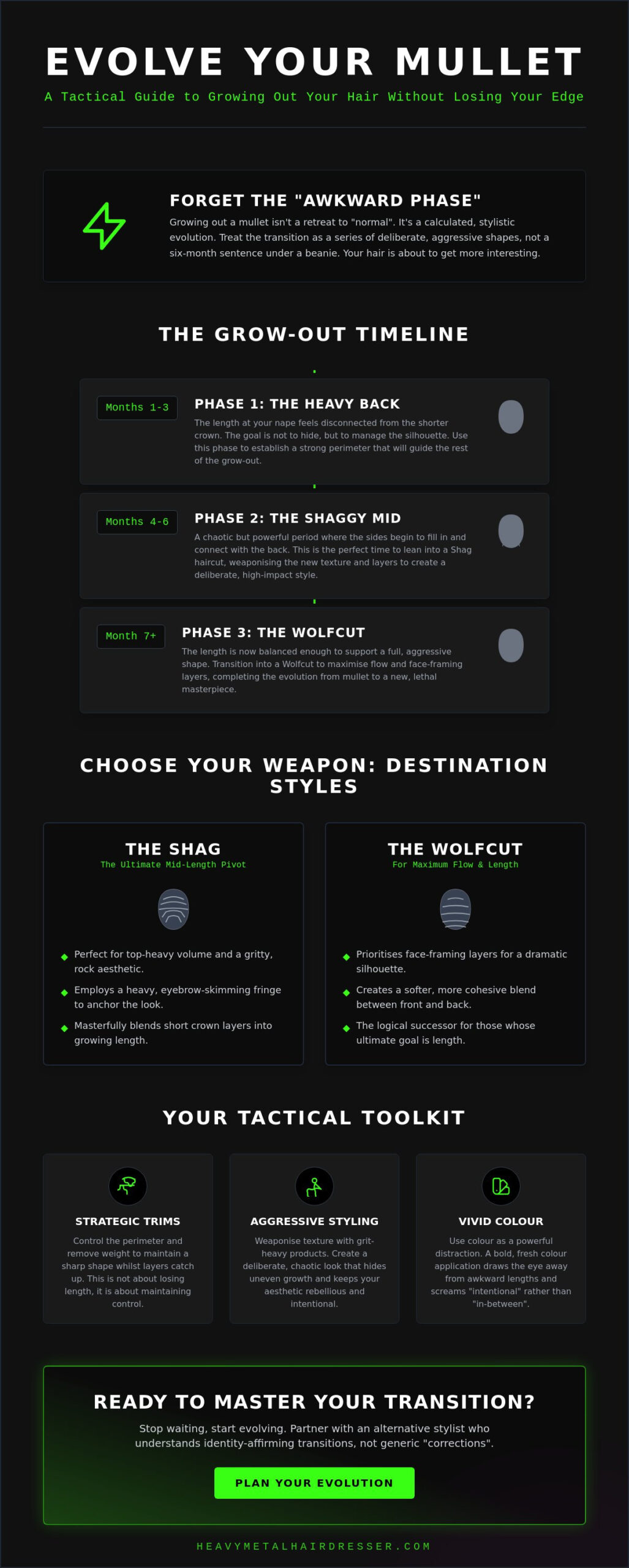
The “do nothing” approach fails because alternative cuts rely on specific weight distribution. If you stop styling and trimming, the hair becomes a shapeless mass that swallows your features. Instead, you should view the process through three distinct phases:
- The Heavy Back: Month one to three, where the length at the nape starts to feel disconnected from the crown.
- The Shaggy Mid: Month four to six, a chaotic period where the sides begin to fill in and meet the back.
- The Wolfcut: Month seven onwards, where the length is balanced enough to support a full, aggressive shape.
Reframing these stages as mini-styles ensures you never feel like you’re in a waiting room. Every month is an opportunity for experimental texture.
The Psychology of the Grow-Out
Maintaining your alt identity is vital for your confidence. If you feel like you’ve lost your edge, you’ll likely reach for the clippers in a moment of weakness. Set realistic expectations. Your hair won’t look like a 70s rock god overnight. When looking for inspiration, ditch the photos of flat, straight bobs. Look for modern Shag Haircuts or heavy-layered textures that celebrate volume. Your goal photo should reflect the rebel you are, not the person your parents want you to be. It’s about keeping that gritty, underground aesthetic alive whilst the length catches up.
Mullet Anatomy and Growth Patterns
Hair on the back of the head often feels like it grows faster, but it’s actually just got a head start. The mullet is a hairstyle defined by its short-to-long disconnect, and that gap is what you’re trying to bridge. The original cut removed weight from the sides, meaning those areas have the most ground to cover. Understanding how to grow out a mullet requires patience with the perimeter. In 2026, the perimeter-first growth strategy prioritises keeping the bottom edge clean whilst the internal layers find their rhythm.
Tactical Haircuts: Shags and Wolfcuts as Your Grow-Out Weapons
Most mainstream guides assume your mullet was a momentary lapse in judgment. They treat the grow-out like a recovery period for a bad habit. We know better. If you’re looking at how to grow out a mullet, you aren’t looking for a boring bob. You’re looking for your next aggressive shape. The Shag and the Wolfcut are your primary weapons here. These aren’t just random styles; they are the logical, structural successors to the mullet’s silhouette.
Instead of fighting the existing layers, these cuts embrace them. A mullet is essentially a Shag that hasn’t finished loading. By shifting the weight and refining the perimeter, we can turn that “party in the back” into a cohesive, high-impact aesthetic. Aggressive texture is your best friend during this phase. It hides the uneven growth and keeps your look feeling deliberate rather than neglected. It’s about keeping the grit whilst the length settles in.
The choice between these two shapes depends on where you want the drama. A Shag focuses on height and top-heavy volume. A Wolfcut prioritises face-framing layers and a softer blend between the front and back. Both allow you to keep your alt edge without looking like you’ve given up on your style.
The Shag: The Ultimate Mid-Length Pivot
The Shag is the perfect pivot if you love top-heavy volume. It takes those short crown layers from your mullet and blends them into the increasing length at the nape. This style relies on a heavy, eyebrow-skimming fringe to anchor the look. It maintains that gritty, 70s rock aesthetic whilst your sides catch up. If you want to understand why this shape is dominating the UK scene, check out The Shag Haircut Resurrection for a deeper dive into its subcultural power.
The Wolfcut: For Those Who Want Maximum Flow
If your goal is length, the Wolfcut is your path. It uses the “mullet tail” as the foundation for your overall length. The magic happens with aggressive face-framing layers. These layers bridge the gap between your short sides and the longer back, creating a seamless, wild flow. It’s the gold standard for rock inspired haircuts in 2026. It allows you to keep your alternative edge whilst moving away from the extreme disconnect of a traditional mullet.
The key is keeping the texture raw. Don’t aim for perfection. Aim for character. If you’re ready to evolve your silhouette, our specialists are masters at crafting Wolfcuts that respect your identity. Transitioning your hair doesn’t have to be a compromise. It’s an upgrade.
The Science of the Strategic Trim: Perimeter Control and Weight Removal
Reddit advice usually boils down to “just don’t cut it.” That’s a fast track to disaster hair. If you want to know how to grow out a mullet without looking like a lost hiker, you need tactical maintenance. Total passivity is the enemy of the alternative aesthetic. You need a strategic trim every 8 to 12 weeks. This isn’t about losing your hard-earned length. It’s about rebalancing the weight so your hair looks like a deliberate choice rather than an accident.
The “Perimeter Only” rule is your primary survival tactic. Your mullet tail has a massive head start on the rest of your head. If you don’t trim the back, the gap between your sides and the nape stays massive forever. By taking a small amount off the bottom perimeter, you allow the sides and top to catch up. This prevents the dreaded “Shelf.” This is that awkward horizontal line where short crown layers meet the long tail like a literal staircase. Internal weight removal is equally vital. It keeps the texture aggressive and prevents your hair from turning into a thick, unstyleable helmet.
Blending the Disconnect
Bridging the jump between buzzed or short sides and a long back requires technical precision. We use “invisible layers” to soften the transition without losing the alternative silhouette. It’s about creating a visual path for the hair to follow as it grows. You want the eye to move smoothly from the temple to the nape. Performing a regular dusting of the ends prevents breakage and ensures your length stays healthy enough to reach your final goal shape. It keeps the ends sharp rather than frayed.
Managing the Nape Area
The nape can quickly devolve into a 70s gym teacher look if you leave it unchecked. You have to control the width. A modern, rebellious silhouette is lean at the neck, not wide and bushy. We prioritise point cutting to ensure the finish stays gritty and lived-in. This technique removes bulk whilst adding the jagged, raw texture that defines our subculture. It keeps you looking like a regular in the mosh pit rather than someone who just forgot where the barber is. Keep the back narrow, keep the texture raw, and the grow-out feels like a power move.
Styling Through the Chaos: Products and Techniques for Texture
Hiding your hair under a beanie is a coward’s way out. If you’re figuring out how to grow out a mullet, you need to lean into the chaos rather than covering it up. Headbands and hats are for people who want to blend in; we want to stand out. The “Salt and Grit” method is your best friend during this transition. It involves layering sea salt sprays and texturisers to make the varying lengths look intentional. Don’t fight the frizz. Weaponise it. A messy, textured finish says you’re a regular at the front of the stage, not someone waiting for their hair to look “nice”. This gritty foundation ensures your hair stays in place during a twelve-hour festival set without needing a mirror.
Regarding drying, air-drying with a heavy dose of product preserves that raw, alternative shape best. If you must use heat, use a diffuser on a low setting. This injects volume without making the hair look too “done” or polished. You want to maintain that gritty, underground vibe even in the mosh pit. A transition cut should still look sharp when you’re moving. Using a diffuser helps to set the layers into an aggressive, wild shape that defies the gravity of the grow-out. It’s about keeping the grit whilst the length settles in.
Vivid Colour as a Distraction
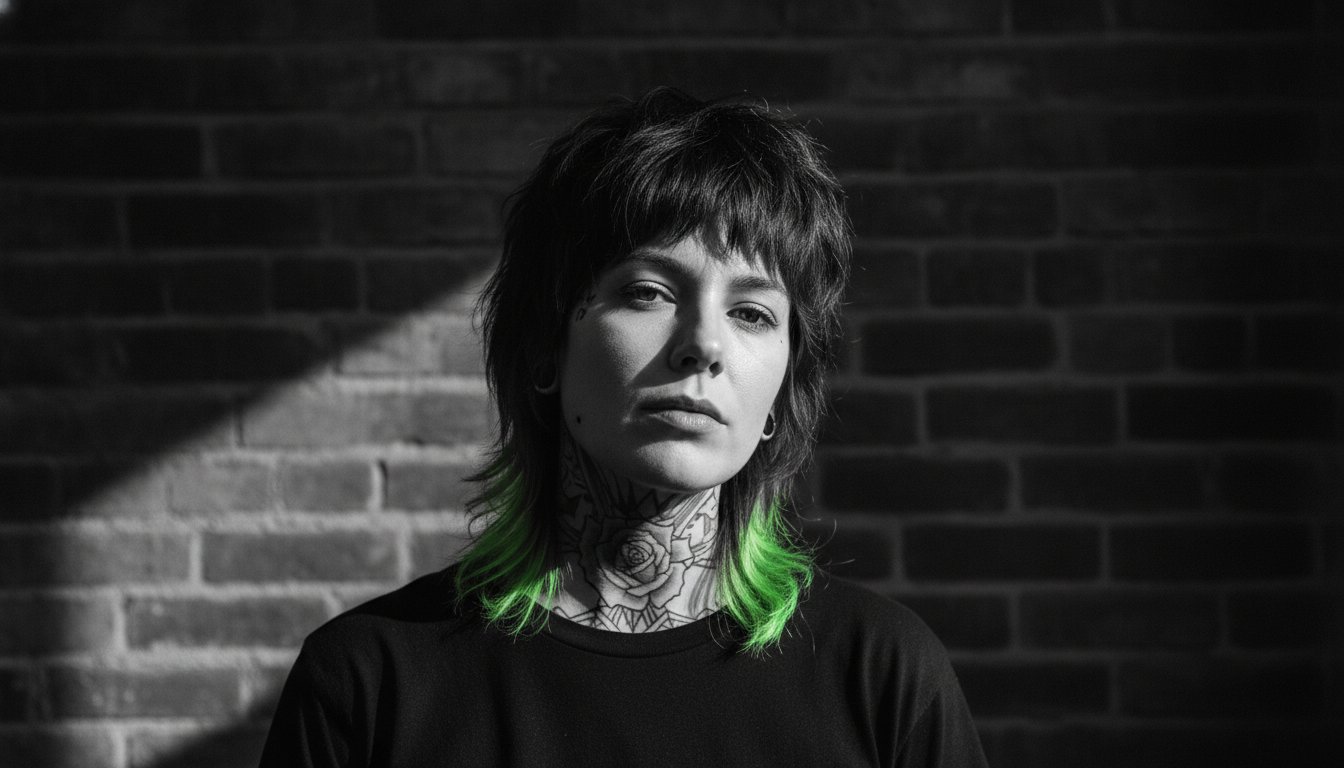
Bold pigments are a cheat code for the grow-out process. A neon dip-dye or a high-contrast split-dye draws the eye to the colour rather than the transition point between your layers. It makes the cut look like a deliberate stylistic choice. When you saturate your hair in high-pigment tones, the structure of the cut becomes secondary to the impact of the shade. Check out our guide on Vivid Hair Colour to see how saturating your identity in pigment can save your look during the awkward months. It turns a “growing out” phase into a total statement.
The Alternative Product Arsenal
You need the right tools to maintain an aggressive shape. Our Death Grip is essential for pinning back those stubborn side pieces as they grow; it offers a firm hold that won’t give up halfway through a set. For the top, Hair To the Throne provides the volume needed to keep your crown from falling flat. Use root powders to inject life into growing layers and pomades to slick back the sides for a sharper silhouette. This keeps you looking lethal even during the longest transition. These products ensure your hair remains a tool for self-expression, not a source of frustration.
Ready to grab the gear? Pick up some Death Grip and take control of your texture today.
Why Your Alternative Stylist is Your Best Ally in 2026
Don’t leave your evolution to chance. When you’re figuring out how to grow out a mullet, the person holding the shears makes or breaks the outcome. Mainstream barbers often view alternative styles as something that needs “correcting”. They see a mullet and immediately think about evening it out into a blunt bob. That is a stylistic death sentence. You don’t want a correction. You want a transition. An alternative specialist understands that your hair is a reflection of your subcultural identity. They aren’t trying to make you look “normal”; they’re helping you become the next version of yourself. Understanding what separates a true metal barber from a standard high-street operator is essential knowledge before you book your next appointment.
Gender-inclusive safe spaces are a non-negotiable in 2026. You deserve a chair where your identity is celebrated, not just tolerated. Whether you’re moving towards a masculine shag or a feminine wolfcut, your stylist should speak your language. They understand the nuances of alternative aesthetics because they live them. This isn’t just about hair. It’s about identity-affirming care that respects your roots whilst you reach for new lengths. This level of understanding is why choosing a specialist is the most important step in the process.
Choosing the Right Specialist
Avoid walk-in barbers at all costs. They operate on speed and standardisation. That is the opposite of what a complex grow-out requires. You need someone whose portfolio is stacked with Shag Haircuts, aggressive Wolfcuts, and raw, lived-in texture. Look for stylists who have invested in alternative hair courses UK. These experts have mastered the specific mechanics of subculture styling. They know how to move weight and manage the perimeter without stripping away your edge. A consultation should feel like a collaboration, not a lecture on “proper” hair maintenance.
Planning Your Hair Journey
Hair doesn’t grow in a vacuum. You need a six to twelve month roadmap. This plan should account for how your routine changes as the seasons shift and your length increases. In winter, you might need more moisture. In summer, you’ll want more grit. Your stylist will help you adjust your product lineup, perhaps moving from lighter sprays to heavier pomades as the sides fill in. This long-term vision prevents the panic-cutting that ruins so many grow-outs. It turns a frustrating wait into a controlled, identity-affirming journey. Ready for the next stage? Book your transition cut with Heavy Metal Hairdresser and let’s build your next shape together.
Own Your Evolution: The Path to Your Next Shape
The transition from a mullet to your next masterpiece is a tactical power move. You’ve learned that how to grow out a mullet isn’t about being passive or hiding under a hat for six months. It’s about strategic perimeter control, embracing aggressive texture, and refusing to settle for a boring, high-street “correction”. Whether you’re evolving into a heavy shag or a lethal wolfcut, you must keep your edge sharp and your styling products gritty throughout the process.
At Heavy Metal Hairdresser, we provide a gender-inclusive safe space where your subcultural identity is always the priority. Our team specialises in wolfcuts and shags, bringing backstage festival styling expertise to every chair. We don’t just cut hair; we engineer transitions that respect your roots whilst looking forward to your next aggressive silhouette. Don’t let your grow-out be a period of compromise. Book your transition cut at Heavy Metal Hairdresser and take control of your journey today. Your hair is your loudest statement. Make it count.
Frequently Asked Questions
How long does it take to grow out a mullet into a wolfcut?
It typically takes six to nine months to transition into a full wolfcut. Since hair grows approximately half an inch per month, you need this time for your short side layers to meet the length at the nape. Your starting point dictates the exact timeline. A shorter micro-mullet will naturally take longer than a grown-out shullet to reach that heavy, layered flow.
Should I cut the back of my mullet while growing it out?
You must trim the back if you want a balanced shape. Following the “Perimeter Only” rule prevents your hair from looking like a neglected tail whilst the sides catch up. Trimming the length at the neck every few months allows the rest of your hair to reach a uniform starting point. It’s the only way to ensure how to grow out a mullet without looking like a 70s gym teacher.
How do I stop my growing mullet from looking like a bob?
Avoid blunt edges and keep the texture aggressive. A bob happens when the bottom perimeter is cut straight across without internal weight removal. Ask your specialist for point cutting and jagged layers to maintain a rebellious silhouette. Using products like sea salt sprays will keep the hair messy and lived-in, which is the direct opposite of a polished, traditional bob.
Can I use vivid colour while growing out my hair?
Vivid colour is a brilliant tool for masking awkward lengths. Bold pigments like neon greens or deep purples draw the eye to the shade rather than the structural gaps in your cut. It helps maintain your alternative identity during the transition. Just ensure you’re using high-quality dyes that won’t compromise the health of your growing hair, as healthy ends are vital for reaching your goal length.
What is the most awkward stage of growing out a mullet?
The most awkward stage usually hits between months three and five. This is when your crown layers are too long to be a defined mullet but too short to tuck behind your ears. It often feels heavy and shapeless. This is exactly when you need a strategic trim to rebalance the weight and prevent the hair from becoming a flat, unstyleable mess.
How do I style the short side layers of a mullet during growth?
Use a firm-hold pomade or Death Grip to control the sides. You can slick them back for a sharper, more aggressive look or use root powder to add volume and grit. If they’re long enough to move, try using a small amount of texturiser to flick them outwards. This creates a deliberate, rock-inspired messy finish that bridges the gap between the front and the back.
Is a shag or a wolfcut better for transitioning from a mullet?
A shag is better for those who love top-heavy volume and height. A wolfcut is the superior choice if you want to focus on face-framing layers and overall length. Both styles utilise existing mullet layers effectively. The choice depends on your final goal. If you want a 70s rock vibe, go for the shag. If you want a more modern, wild flow, the wolfcut is your winner.
How often should I see my alternative stylist during the grow-out?
Seeing your alternative stylist every 8 to 12 weeks is the sweet spot for learning how to grow out a mullet properly. This frequency allows for enough growth to see progress whilst preventing the shape from collapsing. Regular maintenance visits are for dusting the ends and removing internal bulk. It keeps the grow-out intentional and prevents the hair from becoming unmanageable.