Posted on

Modern Mullet for Women: 2026 Guide to Texture and Grit

Modern Mullet for Women: 2026 Guide to Texture and Grit

The mullet isn’t a haircut. It’s a textured weapon for self-expression. Most people still associate it with dated 80s tropes, but the modern mullet for women in 2026 is a different beast entirely. It’s sharp. It’s gritty. It prioritises raw texture over tired traditions. We understand the fear of looking costumey or ending up with a cut that feels more like a joke than a statement. You deserve a style that reflects your subcultural roots without the high-street polished fluff.

We agree that finding a stylist who truly understands alternative aesthetics is often a nightmare. You want a look that feels authentic, not forced. This guide promises to help you reclaim this rebellious silhouette with a modern, feminine edge that focuses on movement and grit. We will dive into the best ways to style aggressive layers at home, how to choose products like Death Grip for that perfect finish, and why your choice of salon matters for your identity. It’s time to stop blending in and start leaning into the texture.

Key Takeaways

  • Master the 2026 evolution of the modern mullet for women by focusing on shattered texture and face-framing layers rather than dated, stiff silhouettes.
  • Learn how to tailor fringe widths and side-burn lengths to balance your unique face shape while maintaining a sharp, aggressive edge.
  • Discover why heat styling is often the enemy of alternative hair and how to achieve a gritty, lived-in finish with minimal daily effort.
  • Identify why specialised texture products like Death Grip are the secret to keeping your layers defined and your style unapologetically bold.
  • Understand the importance of finding a gender-inclusive, subcultural safe space where your identity is celebrated, not just tolerated.

The Modern Mullet for Women: A Subcultural Resurrection

The modern mullet for women is no longer a historical curiosity or an ironic costume. It has emerged in 2026 as a sophisticated, high-energy hybrid that blends the effortless flow of a 70s shag with the jagged edges of 80s punk. Understanding the history of the mullet reveals a style that has always belonged to the outsiders. Today’s iteration is more refined and intentional. It’s a gender-neutral staple that has moved from the fringes of alternative subcultures into the centre of high-fashion editorial work, particularly amongst those who value self-expression. This cut empowers you to reject the rigid, polished standards of traditional femininity. It replaces “pretty” with “powerful.” It swaps “neat” for “gritty.” By choosing this silhouette, you’re making a bold statement about your identity and your refusal to conform to high-street expectations.

Deconstructing the 2026 Mullet Aesthetic

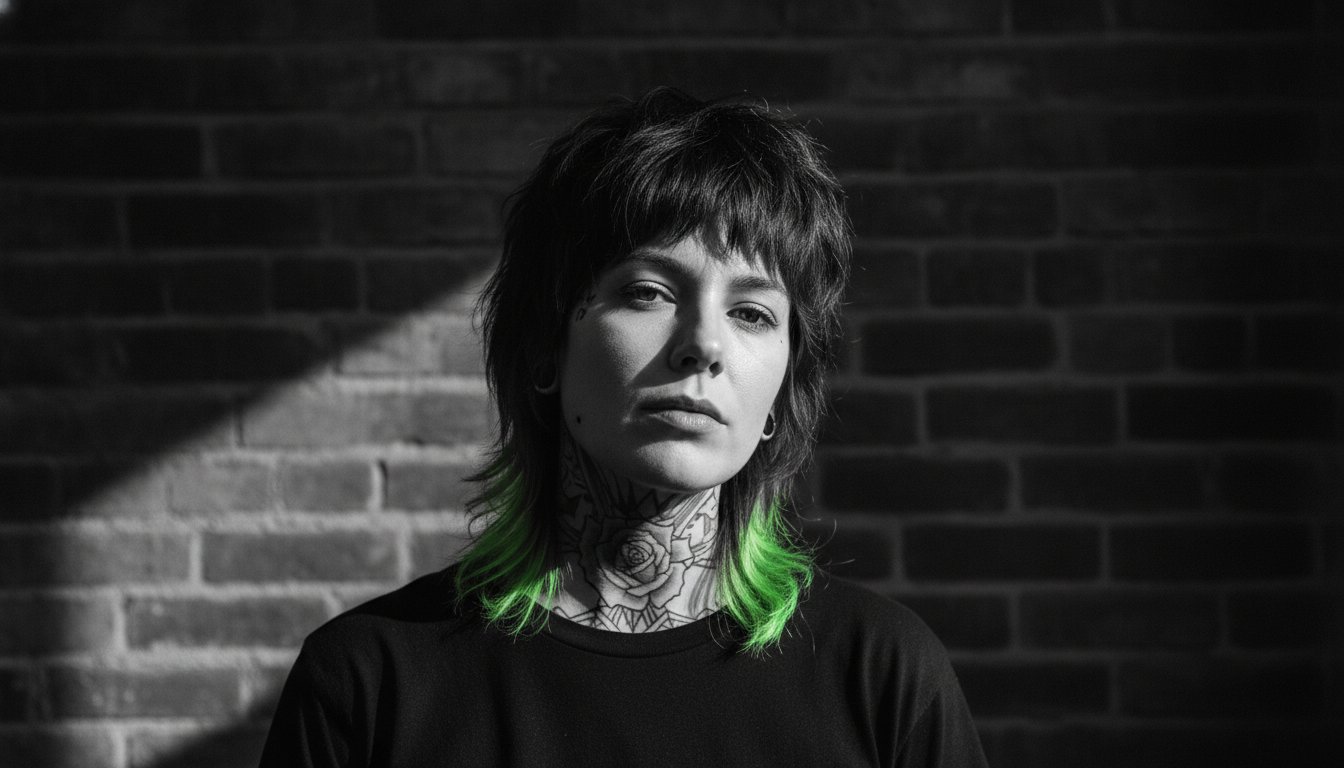
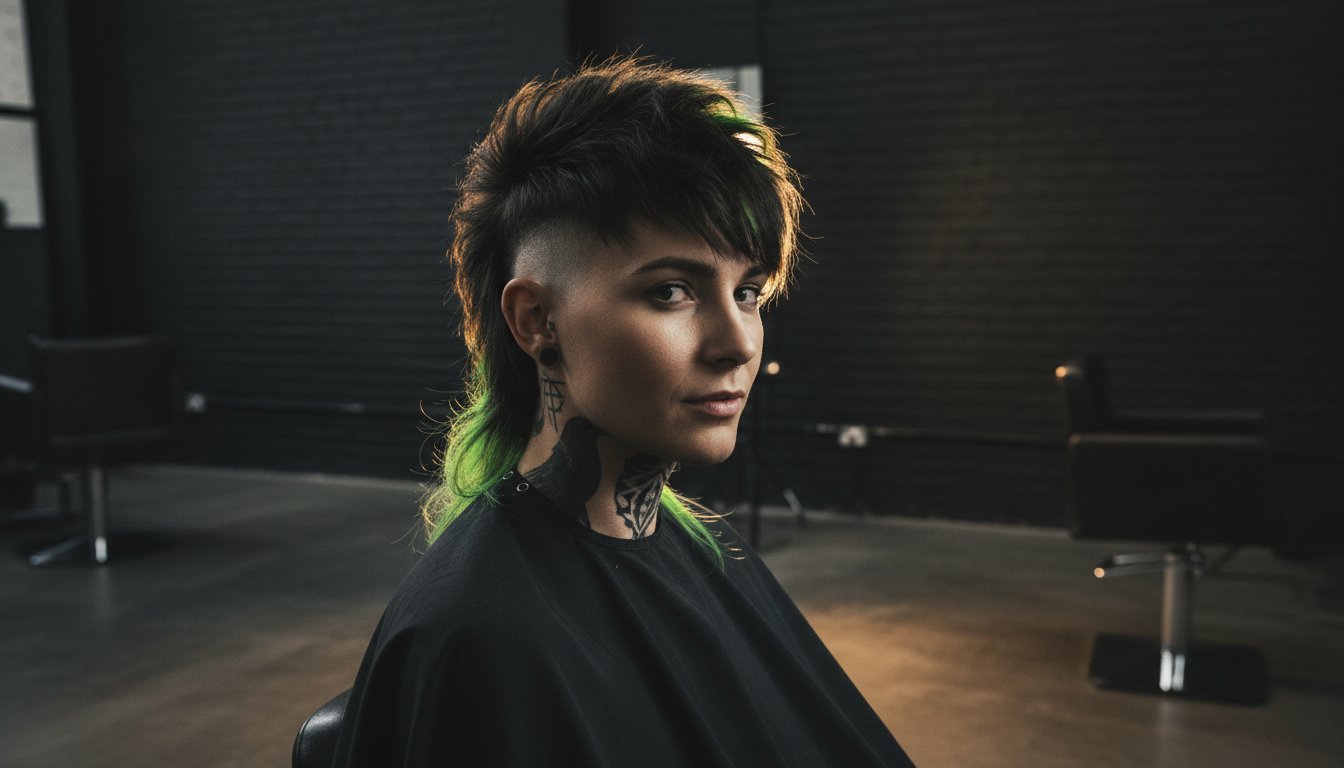
Modernity in this style is defined by disconnection. We aren’t looking for the smooth, invisible transitions taught in traditional beauty schools. Instead, the 2026 aesthetic celebrates visible “steps” and shattered ends. The fringe acts as the anchor for the entire look. You might choose aggressive micro-bangs that expose the forehead or a heavy, eyebrow-skimming curtain fringe that adds mystery. These elements provide the face-framing texture that makes the modern mullet for women so versatile. To achieve that signature grit, stylists often reach for specialised texture products like Death Grip, ensuring the layers stay separated and sharp. To elevate the look further, many in the alternative scene incorporate vivid, high-contrast colour. Placing a neon streak or a deep jewel tone through the choppy layers helps to highlight the movement and the technical skill behind the cut.

Mullet vs. Shag vs. Wolfcut: Identifying Your Vibe

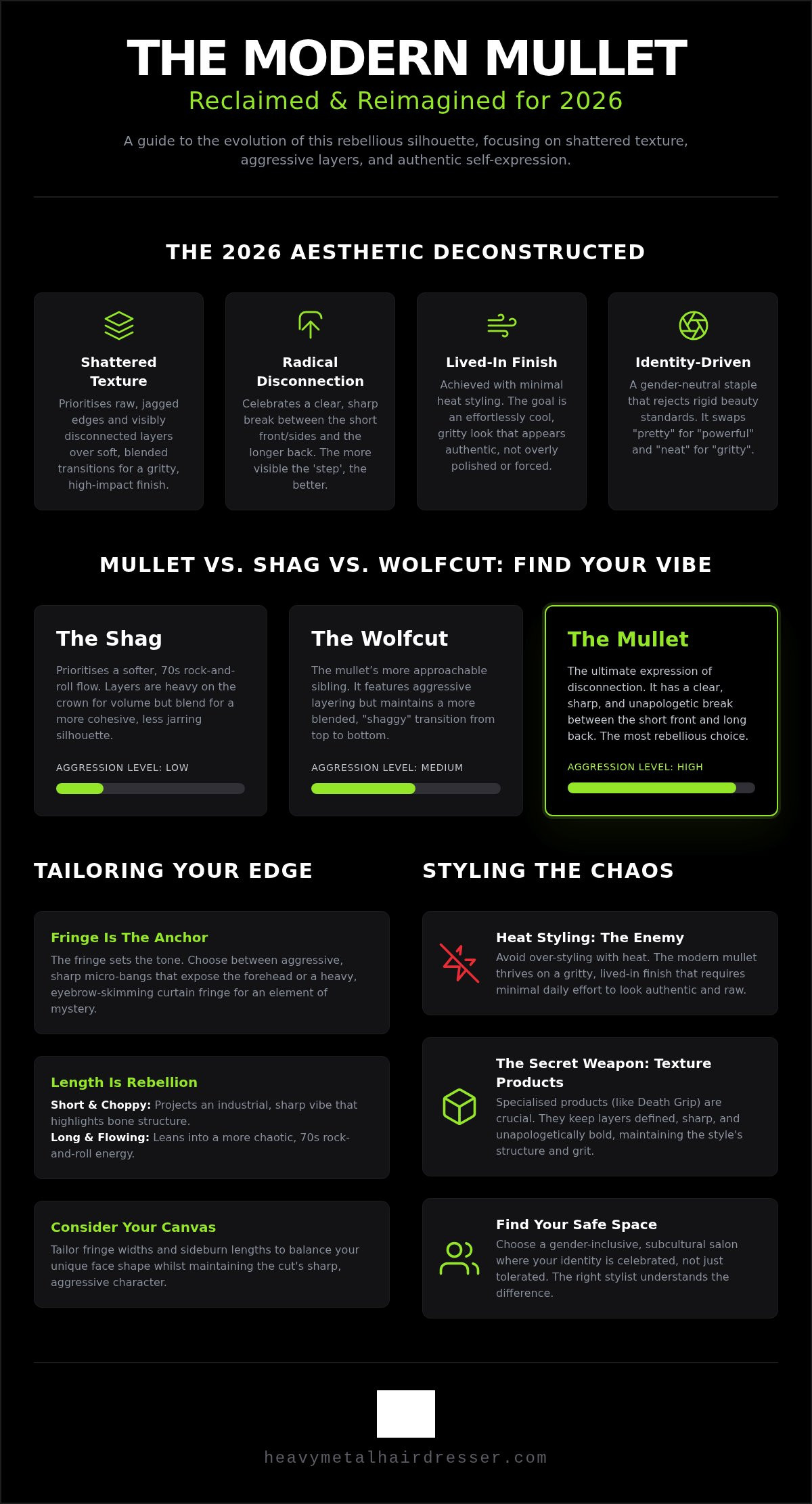
Distinguishing between these textured styles is vital for communicating with your stylist. While they all share a love for layers, the “aggression” level varies significantly. Identifying which vibe fits your personality helps you maintain confidence in your new look. At Heavy Metal Hairdresser, we specialise in these aggressive silhouettes, ensuring every client walks out with a cut that is technically perfect and authentically them.

  • The Shag: This style prioritises 70s rock-and-roll flow. It features heavy layers around the crown to create volume but maintains a softer, more cohesive silhouette that works well with natural waves.
  • The Wolfcut: Think of this as the mullet’s younger, more approachable sibling. It offers aggressive layering but keeps the transition from the short top to the long back more blended and “shaggy.”
  • The Mullet: This is the ultimate expression of disconnection. There is a clear, sharp break between the short hair at the front and sides and the length at the back. It is the most rebellious of the three, demanding a stylist who isn’t afraid to take risks with the shears.

Decoding the Layers: Which Modern Mullet Suits You?

Choosing the right level of aggression is the first step. The modern mullet for women is a modular weapon for your identity. It’s not about following a template. It’s about deciding how much “grit” you want to project. Length dictates the volume of your rebellion. A short, chopped-up version feels industrial and sharp. A longer, flowing silhouette leans into a chaotic, rock-and-roll energy. It’s a choice between a precision strike and a wall of sound.

Texture is the soul of this cut. We aren’t looking for “blended” layers that disappear into one another. We want a “shattered” finish. This means visible disconnection and raw edges. The modern mullet resurgence has shown that this style thrives in queer and androgynous spaces because it defies traditional symmetry. You can opt for a “soft” mullet with gentle transitions or go for a high-contrast “death-hawk” hybrid. This involves buzzed sides and a sharp, textured ridge that demands attention. If you’re unsure which level of grit suits your identity, our experts at Heavy Metal Hairdresser can help you map out the perfect silhouette.

The Short Modern Mullet: Bold and Unapologetic

The short version is a masterclass in highlighting bone structure. By stripping away the weight around the sides, your jawline and cheekbones become the focus. We use sharp internal layers to create height and movement without the bulk. This isn’t a low-effort cut; it’s a high-impact statement.

  • Add undercut details or side-shaves for a more industrial, underground look.
  • Keep the “tail” sharp and defined with regular trims every six to eight weeks.
  • Use a heavy-duty product like Death Grip to maintain the separation in those shorter, internal layers.

The Long Mullet: Flow, Movement, and Chaos

Longer lengths allow for a more chaotic, lived-in vibe. It’s the perfect middle ground for those who want to keep their length but hate the “flatness” of traditional long hair. For those seeking maximum volume, the ultimate wolf hair cut guide is a great resource for seeing how long layers can be pushed to their limit. The long mullet prioritises movement. It’s hair that looks better the more you move.

  • Inject maximum volume into the crown using shorter, shattered layers to avoid the “flat top” look.
  • Use the length as a canvas for creative colour melts, like neon greens fading into deep blacks.
  • Focus on air-drying and sea salt sprays to let your natural texture enhance the “shattered” ends.

Communication with your stylist is vital. Don’t just ask for a mullet. Tell them how “shattered” you want the ends. Show them exactly where you want the disconnection to start. If you want it to look like you’ve been at a festival for three days, say so. That’s the energy we’re after.
Modern Mullet for Women: 2026 Guide to Texture and Grit

Tailoring the Shape: Face Shapes and Hair Textures

Forget the lie that you need a specific face shape to pull off a modern mullet for women. That’s high-street propaganda. Any face can host this silhouette. It’s simply a matter of geometry. We don’t use templates. We use technical tailoring to ensure the cut works for your bone structure rather than against it. It’s about balance, not restriction. By manipulating the width of the fringe or the length of the side-burns, we can sharpen a jawline or soften a forehead whilst keeping that rebellious edge intact.

Round faces benefit from a narrower, more vertical fringe. This draws the eye up and down, creating an elongating effect. Keeping the side-burns longer and more pointed helps to “slice” through the width of the cheeks. For square faces, we do the opposite. A wider fringe that bleeds into the side layers helps to round off the corners of the face. We use shattered, uneven layers to break up harsh lines. The goal is to make the cut look like it grew out of your identity, not like it was pasted onto your head.

Mullets for Fine and Thin Hair

Fine hair often gets a bad reputation in alternative circles. People think they can’t achieve the volume needed for a proper mullet. They’re wrong. The secret lies in internal layering. By cutting shorter “support” layers underneath the top sections, we push the hair up from the roots. This creates the illusion of density without needing a massive amount of hair. Shattered ends are your best friend here. Blunt cuts make thin hair look limp and heavy; jagged, uneven ends make it look airy and voluminous. Death Grip provides the necessary hold for fine hair, ensuring those aggressive internal layers don’t fall flat by midday. This ensures your texture stays “up” even when the weather is working against you.

Taming the Beast: Mullets for Curly and Coarse Hair

Curls and coarse textures are built for the modern mullet. They provide a natural, organic chaos that straight hair has to work hard to mimic. However, thick hair needs careful management to avoid the dreaded “mushroom” effect. We focus on thinning out the mid-lengths using specialised techniques that remove bulk without sacrificing the curl pattern. This allows the hair to sit closer to the head where it needs to, whilst the “tail” at the back remains wild and full. Moisture is vital for curly mullets, but we avoid the greasy, polished look of traditional products. You want a finish that is hydrated but matte. A gritty, lived-in texture allows the curls to clump together in a way that looks intentional and raw, rather than frizzy and neglected.

Styling the Chaos: Maintaining Your Edge

The modern mullet for women thrives on imperfection. If you are spending an hour with a flat iron, you are doing it wrong. We advocate for a “less is more” approach. Alternative hair should look lived-in, not manufactured. High-street salons love a sleek finish, but we want grit. Heat styling is often the enemy here. Excessive heat strips the hair of its natural movement and flattens the aggressive layers we have worked so hard to create. Instead, embrace the chaos. Your survival kit should prioritise texture over shine. For a deeper dive into the specific tools you will need, check out our guide on how to style a modern mullet.

The 5-Step Morning Routine for Maximum Texture

You don’t need a salon-grade blowout every day. You just need the right products and five minutes. Follow this routine to keep your modern mullet for women looking sharp and aggressive.

  • Step 1: Refresh the crown. Use a matte-finish volume powder at the roots to revive any flatness from sleep.
  • Step 2: Define the tails. Work a small amount of Hair To the Throne through the ends of your back layers to keep them separated and gritty.
  • Step 3: Use a diffuser. If your hair is damp, use a diffuser on low heat and low speed to encourage natural movement without frizz.
  • Step 4: Finger-comb. Put the brush down. Use your fingers to break up the layers and create a dishevelled, intentional mess.
  • Step 5: Lock it in. A final mist of texture spray or a tiny dab of Death Grip ensures the “shattered” look stays put all day.

Maintaining the Cut Between Salon Visits

A mullet is a high-precision cut that requires regular upkeep to stay looking “alt” rather than just “messy.” The most critical part is the fringe. Once your bangs start hitting your eyes, the balance of the silhouette is gone. Book a fringe trim every three to four weeks to keep your vision clear and your style sharp. You can also learn how to maintain your shag between salon visits using our professional tips, as many of the same rules apply to aggressive layering.

Watch for signs that your layers are losing their edge. If the top of your head feels heavy or the “tail” starts blending too seamlessly with the rest of your hair, your mullet is growing out into a standard long cut. Don’t let your identity fade. When the grit disappears, it is time to head back to the chair. Ready for a refresh? Book your next session with our specialists to reclaim your texture and keep your edge.

Heavy Metal Hairdresser: A National Safe Space for Alt-Style

Heavy Metal Hairdresser isn’t just a salon; it’s a sanctuary. We don’t just cut hair. We curate identities. For many, the modern mullet for women is the final piece of a puzzle that traditional high-street shops refuse to solve. They lack the subcultural vocabulary. They fear the aggression of the layers. We lean into it. Our mission is built on celebrating individuality over conformity. We’ve binned the clinical, overly polished feel of the service industry in favour of a raw, underground aesthetic that feels like home. It’s a space where being different is the standard, not the exception.

Our reputation as a national leader in alternative hair means clients regularly travel from across the UK to sit in our chairs. They aren’t just coming for a trim. They’re coming for a transformation. To complete that shift, many choose to integrate vivid hair colour into their new silhouette. Saturating your modern mullet for women in high-pigment neon or deep, gothic tones ensures your identity is visible from across the room. We specialise in high-contrast, aggressive colour that accentuates every shattered layer.

Beyond the Cut: The Inclusive Salon Experience

We’ve ditched the traditional beauty jargon. You won’t hear us talking about “soft feathering” or “subtle blends.” We talk about grit, disconnection, and movement. This language shift is part of our commitment to creating a safe space for queer, neurodivergent, and alternative souls. We understand that for many in our community, a trip to a standard salon can be an exercise in masking. Not here. Our stylists are supportive peers who understand the nuances of alternative subcultures because they live them. During your consultation, we don’t just look at your hair. We look at your vibe, your music, and your lifestyle to ensure the cut reflects the real you.

Join the Rebellion: Booking Your Transformation

Ready to reclaim your edge? Preparing for your first alternative appointment is about more than just finding a photo. Think about the “aggression” level you want. Consider how much time you’re willing to spend on maintenance. If you aren’t near our main base, keep an eye out for our national Guest Spots and festival pop-ups. We’ve brought our specialised texture to places like Download and Bloodstock, proving that great hair belongs in the mud and the mosh pit. We don’t do walk-ins. We don’t do traditional bridal hair. We do rebellion. Book your modern mullet transformation today and stop settling for a style that doesn’t belong to you.

Reclaim Your Identity with Raw Texture

The shift toward the modern mullet for women is more than a style choice. It is a reclamation of subcultural power. You have learned that texture beats tradition every time. Whether you are injecting height into fine strands or taming wild curls, the secret lies in aggressive disconnection and shattered ends. We don’t do polished. We do authentic. Your hair is a weapon of self-expression; it should never feel like a costume.

Our stylists have honed their craft backstage at Download and Bloodstock festivals, bringing that same high-energy grit to our gender-inclusive safe space. We specialise in technical precision and specialised Death Grip texture techniques to ensure your layers stay sharp. Stop settling for high-street clones that don’t get your vibe. Secure your chair at the UK’s home of alternative hair and let us build a silhouette that actually reflects who you are. It is time to lean into the chaos and own your edge.

Frequently Asked Questions

Is a modern mullet hard to style at home?

No, it’s actually designed for low-effort grit. It relies on air-drying and finger-combing rather than a technical blowout. You just need to refresh the crown with a bit of volume powder and define the ends with a textured product. It’s hair that looks better the messier it gets. You don’t need a flat iron; you just need your fingers and five minutes.

Can I have a modern mullet if I have very thin hair?

Yes, and it’s actually one of the best cuts for creating the illusion of density. We use internal support layers to push the hair up from the roots. This prevents it from sitting flat against your scalp. Shattered ends add a sense of airiness and movement that blunt cuts lack. It’s a technical way to make thin strands look far more substantial.

How often should I get my mullet trimmed to keep it looking sharp?

You should book a maintenance appointment every six to eight weeks to preserve the overall silhouette. However, the fringe often needs attention much sooner. If you have micro-bangs or heavy curtain bangs, a quick visit every three to four weeks keeps your vision clear. Regular trims ensure the aggressive disconnection between the front and back doesn’t fade into a messy, shapeless grow-out.

Will a mullet suit a round face shape?

Absolutely, as long as the geometry is tailored to your features. A narrower fringe and longer, pointed side-burns will elongate the face. We avoid wide, horizontal lines that add bulk to the cheeks. It’s about using vertical disconnection to sharpen your bone structure. Any face can host a modern mullet for women when the layers are cut with precision.

What is the difference between a wolfcut and a modern mullet?

The main difference is the level of disconnection. A wolfcut is softer and more blended, acting as a hybrid between a shag and a mullet. It has a more cohesive flow. A modern mullet for women is more aggressive. It features a clear, sharp break between the short hair at the front and the long hair at the back. It’s a bolder, more rebellious statement.

Do I need to use specific products for a textured mullet?

Yes, texture is the lifeblood of this style. You need a matte-finish product like Death Grip to maintain separation and height. Traditional high-street waxes or gels are often too heavy and greasy for this look. You want something that provides a gritty, lived-in finish without weighing down the layers. Salt sprays and volume powders are also essential for keeping that shattered aesthetic alive.

Can I grow out a mullet easily if I change my mind?

Growing it out requires patience but is entirely manageable with the right stylist. As the back grows, we gradually trim the length to meet the shorter front layers. This eventually transitions the cut into a shag or a wolfcut. It’s a journey of evolving textures rather than a single awkward phase. We simply shift the balance of the weight until you reach your new goal.

Is the modern mullet considered a gender-neutral haircut?

Yes, it is a staple of androgynous and queer fashion. This cut rejects traditional feminine beauty standards in favour of a silhouette that works for any identity. It focuses on the individual’s bone structure and subcultural roots rather than binary gender expectations. It’s a versatile weapon for self-expression that belongs to anyone brave enough to wear it. In our salon, it’s a symbol of total inclusivity.
Posted on

What to Ask for a Modern Mullet: The Ultimate Alt-Scene Guide

What to Ask for a Modern Mullet: The Ultimate Alt-Scene Guide

What if the only thing standing between you and a killer alternative silhouette is a single technical term your stylist doesn’t understand? Sitting in a generic salon chair is often a gamble, especially when you’re trying to explain that you want a look that’s more metalcore than middle management. You’ve likely felt that rising panic as the scissors get too close to your ears, worrying you’ll walk out looking like an 80s tribute act rather than a modern icon. Knowing exactly what to ask for a modern mullet is the difference between a haircut that feels like a costume and one that defines your identity.

We’ve all been there, staring into the mirror at a ‘safe’ trim that completely ignores our subcultural roots. You deserve a style that matches your energy and respects the grit of the scene. This guide is your technical blueprint to mastering the terminology and reference points needed to advocate for your aesthetic. We’ll break down the spectrum of aggression, from soft wolfcuts to sharp, disconnected layers. You’ll learn how to describe the specific Death Grip texture that keeps a look raw; ensuring you leave the chair with a modern mullet that actually fits your alternative soul.

Key Takeaways

  • Stop the 80s disaster before it starts by learning why ‘just a mullet’ is the most dangerous phrase you can say in the chair.
  • Master the mechanics of the fringe, temple, and tail to ensure internal weight removal creates movement rather than a helmet look.
  • Follow our technical script to know exactly what to ask for a modern mullet, focusing on the ‘zero point’ at the temples and the specific fringe ‘drop’.
  • Embrace the chaos of textured hair and learn how salt sprays help you maintain that aggressive, ‘Death Grip’ finish at home.
  • Identify your ideal level of aggression, whether it’s a blended ‘Casual Mullet’ or a high-contrast, stage-ready ‘Rock Mullet’.

The Mullet Identity Crisis: Why Communication is Everything

Walking into a high-street salon and uttering the m-word is a high-stakes gamble. For most stylists, the term triggers a flashback to 80s sitcoms and questionable synth-pop bands. But for the alternative community, the mullet is a sacred silhouette. It’s a badge of queer identity, a staple of the metal scene, and a middle finger to corporate grooming standards. The anxiety you feel in the chair is real. You’re trying to bridge the gap between a mainstream professional and a subcultural vision. If you don’t master the specifics of what to ask for a modern mullet, you risk walking out with a generic disaster rather than a 2026 masterpiece.

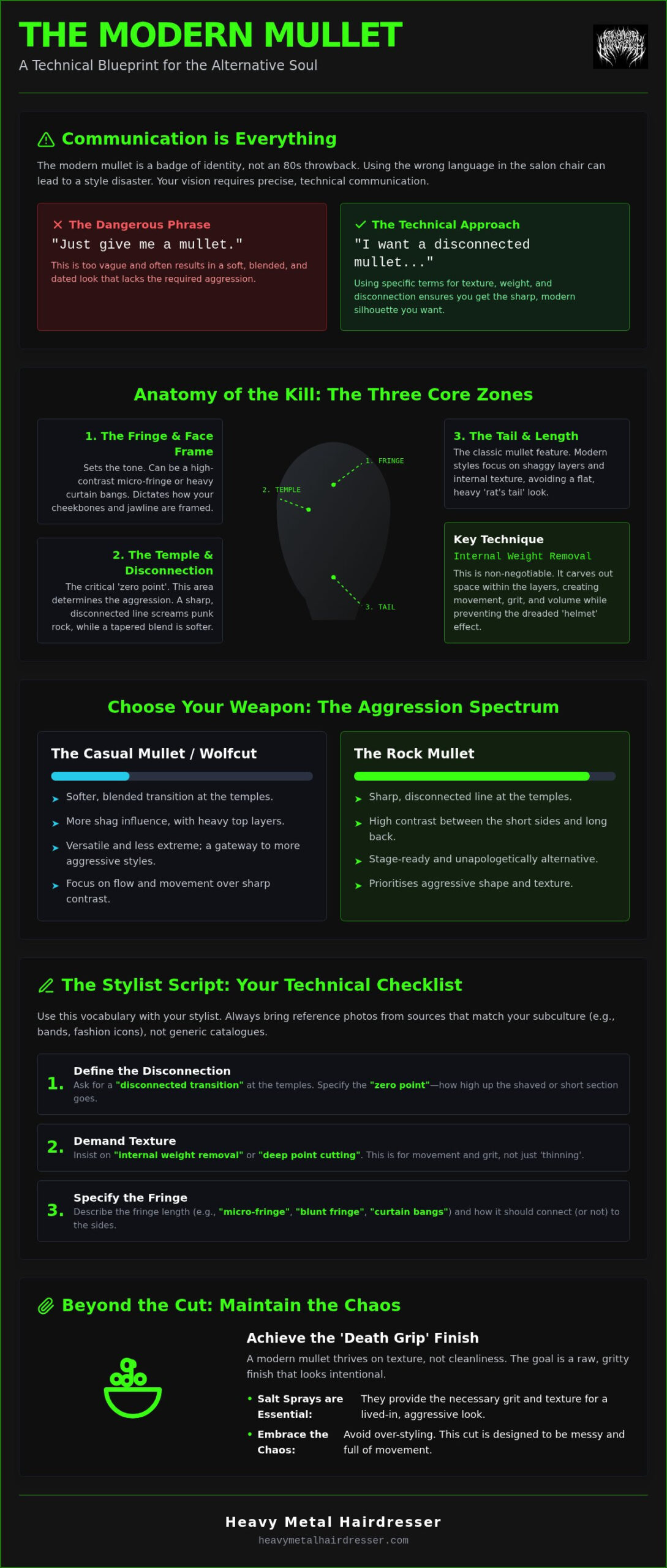
The danger lies in the phrase ‘just a mullet’. It’s too open to interpretation. A stylist who spends their day doing ‘short back and sides’ will default to what they know. They’ll give you a safe, blended version that lacks the aggression and soul of the scene. You aren’t looking for a haircut that merely tolerates your identity; you need one that screams it. This requires a shift in how we talk about hair, moving away from clinical descriptions and towards technical, intentional choices.

Finding a barber who understands technical instructions is essential for any complex cut. Professional teams like Upmen Barbers demonstrate the importance of precision grooming, ensuring that every detail of your specific vision is executed with skill and consistency.

Defining the Modern Mullet in 2026

The modern mullet is a high-texture, multi-length silhouette with purposeful weight distribution. Gone are the days of the ‘blended’ look where the transition from front to back was a smooth, boring gradient. Today’s version thrives on intentional disconnection. We aren’t just letting the back grow; we’re aggressively carving out the temples and prioritising face-framing layers that highlight your features. While the history of the mullet shows it has always been about contrast, the 2026 iteration is more about the ‘shag’ influence and internal weight removal. It’s about how the hair moves, not just where it ends.

Why Traditional Jargon Fails You

Mastering the vocabulary is essential because traditional jargon often fails the alternative client. When you’re deciding what to ask for a modern mullet, you have to ditch the ‘short on top’ clichés. To a traditional barber, that might mean a tidy crew cut with a rat’s tail. To an alt-specialist, it means an aggressive Death Grip texture with a heavy, blunt fringe. Traditional jargon lacks the nuance of the scene. Texture in a mainstream shop often means a few snips with thinning shears. In our world, it means deep, internal layering that creates grit and volume. This is why reference photos are non-negotiable. Don’t pull them from a generic magazine. Find them in the pits at Bloodstock or from queer fashion icons who understand the balance of the shape. You need a stylist who speaks your language and understands that your hair is your armour.

Anatomy of the Kill: Understanding Modern Mullet Mechanics

A mullet isn’t just a haircut; it’s a structural engineering project. If you don’t understand the mechanics, you’re likely to walk out with a shape that feels accidental rather than aggressive. When considering what to ask for a modern mullet, you must break the look down into three primary zones: the fringe, the temple, and the tail. Each zone requires a different level of attention to ensure the final silhouette is balanced and sharp. The secret to a look that doesn’t resemble a dated 70s helmet is internal weight removal. This isn’t just thinning the hair; it’s about carving out space within the layers to allow for movement and grit.

In the UK alternative scene, the ‘Wolf-Mullet’ hybrid has become the dominant shape. It merges the heavy, shaggy layers found in Wolfcuts with the classic elongated back of a traditional mullet. This hybrid works because it provides volume on top without the rigid, flat feel of older styles. You can choose your transition intensity here. A tapered transition is softer and more blended, whilst a disconnected transition creates a sharp, jarring line at the temples that screams punk rock. Understanding these mechanics gives you the power to advocate for your aesthetic in the chair.

The Fringe and Face Framing

Your fringe sets the entire tone of the look. A micro-fringe is a high-contrast choice that pushes the aggression of the style, whilst heavy curtain bangs offer a more versatile, 90s-grunge vibe. The sideburn area is the most critical part of face framing. This is where you dictate the level of exposure for your cheekbones and jawline. Integrating the fringe with the top layers ensures a seamless flow, preventing the hair from looking like two separate pieces stuck together. It’s about creating a frame that highlights your identity.

The Tail: Length vs. Density

The tail is your statement piece, but length isn’t everything. Modern alt-styles have moved away from the thin, wispy tails of the past in favour of textured density. You want the back to feel substantial, even if it’s heavily layered. When you’re deciding what to ask for a modern mullet, specify where you want the ‘step’ to occur. This is the transition point between the shorter top and the longer back. Choosing a length that complements your neck shape and jawline ensures the silhouette remains flattering even at its most extreme; providing a balanced look that grows out beautifully.

What to Ask for a Modern Mullet: The Ultimate Alt-Scene Guide

Choosing Your Weapon: From ‘Soft-Serve’ to Aggressive Alt-Shapes

A mullet isn’t a singular choice; it’s a spectrum of aggression. Your placement on that spectrum depends on how much you want to rattle the cages of the mainstream. For some, the goal is a subtle nod to the scene that survives a corporate meeting. For others, it’s a full-throttle assault on convention. When you’re deciding what to ask for a modern mullet, you first need to identify which subcultural ‘weapon’ fits your lifestyle. The Casual Mullet is the entry point. It features low contrast and blended transitions, making it office-friendly whilst maintaining that rebellious silhouette. It’s the ‘business’ side of the coin, kept tidy enough to avoid HR interventions.

Moving up the scale, we find the Rock Mullet. This is the stage-ready version, heavy on the texture and designed for movement. It prioritises grit over perfection. If you want something softer and more feminine, the ‘Shullet’ or Mullet-Shag is your best bet. It leans into the 70s aesthetic, using shaggy layers to create a frame that’s both edgy and ethereal. At the furthest end of the spectrum lies the Death-Metal Mullet. This is about maximum grit, featuring extreme disconnection and shaved temples. It’s a look that doesn’t ask for permission.

The Aggressive Alt-Mullet

This is where the ‘Death Grip’ texture truly shines. The aggressive alt-mullet is defined by its sharp, uncompromising lines. Key features include skin fades at the temples and an extreme length contrast between the fringe and the tail. Because this style relies on technical precision and a deep understanding of subculture, it requires a ‘Metal Barber’ or an alt-specialist. You can’t get this level of grit at a generic centre. When researching your modern mullet haircut, look for portfolios that showcase raw, disconnected shapes rather than polished, mainstream fades. This style is about owning your space with a look that’s as loud as a double-kick pedal.

The Soft-Serve Modern Mullet

If you need to keep a professional edge, the soft-serve version is your secret weapon. You can still have the mullet shape without the shock factor. The trick is using ‘hidden’ disconnection. This involves shorter layers tucked underneath longer ones, providing versatility for different settings. When considering what to ask for a modern mullet that feels more organic, focus on texture over sharp lines. You want the hair to look lived-in. Ask for point-cutting and internal weight removal to create a soft, shaggy flow. This approach allows the hair to fall naturally, giving you a look that’s effortless but still undeniably alternative. It’s about being a wolf in sheep’s clothing.

The Stylist Script: Exactly What to Ask for at the Chair

You’ve found the right salon. Now don’t bottle it. Communication is the only tool that prevents a ‘Billy Ray’ disaster. Knowing exactly what to ask for a modern mullet requires a step-by-step approach that leaves zero room for stylist guesswork. Start by defining the ‘Zero Point’. This is the shortest area at your temples. It dictates the aggression of the look. If you want a high-contrast finish, this point needs to be tight to the skin.

Next, specify the Fringe ‘Drop’. Tell them exactly where you want the fringe to hit your face. Is it a micro-fringe above the brows or a heavy curtain that hits the cheekbones? Once the frame is set, request ‘Internal Texture’. Mainstream stylists love to ‘thin out’ hair with bulk shears, but that just makes it flat. You want internal weight removal that creates volume and grit. Discuss the ‘Connection’ next. Decide if you want the top to blend into the back or if you want a sharp, disconnected step that highlights the length. Finally, finalise the ‘Tail’ shape. A square tail provides a masculine, heavy edge, whilst a pointed tail offers a classic rock vibe.

Technical Terms to Drop (The Cheat Sheet)

Use these terms to show you know your craft. Ask for ‘Point Cutting’ for a jagged, textured finish or ‘Razor Cutting’ if you want maximum raw grit and lived-in ends. Request ‘Square Layers’ to maintain a sharp, aggressive edge rather than a round, soft silhouette. In a mullet context, a ‘Taper’ is a gradual blend that keeps things somewhat tidy. A ‘Fade’ usually means taking the temples down to the skin for a high-contrast look that demands attention; you can learn more about Razorhead Barbershop and how they use precision fades to create this sharp, alternative grit. Mastering this vocabulary ensures your stylist treats the cut with the technical respect it deserves.

The Reference Photo Protocol

Photos are your best friend, but only if they’re realistic. Find images that match your actual hair density. If you have fine hair, showing a photo of a thick-haired metalhead will only lead to disappointment. Showing three photos (Front, Side, Back) is non-negotiable for a 360-degree vision. If you’re leaning more towards a shaggy, blended look, check out The Ultimate Wolf Hair Cut Guide to see how those layers differ from a standard mullet. Ready to reclaim your identity? Book your session with an alt-specialist who speaks your language and understands the scene.

Beyond the Cut: Maintaining the Chaos and Texture

Squeaky clean hair is the ultimate enemy of a modern mullet. If your hair is too soft, the architecture collapses and the aggression vanishes. You want grit. You want lived-in texture that looks like you’ve just stepped off a stage at Download. Mastering what to ask for a modern mullet is only half the battle. The other half is refusing to over-wash your hair. Natural oils are your best friend, providing the weight and hold that fresh shampoo strips away. Between washes, use a dry shampoo or a blast of cold air to refresh the volume without losing the soul of the cut.

Refreshing your look doesn’t mean starting from scratch. Focus on the fringe and the crown where the hair tends to go flat. Use your fingers to manipulate the internal layers we carved out during the session. If the tail starts to look too ‘neat’, you’ve lost the vibe. The goal is a look that feels effortless but remains technically sharp. This maintenance phase is where you truly own the silhouette, ensuring the transition between the business and the party stays as jarring as intended.

The Salt and Grit Strategy

Base texture starts on damp hair. A high-quality salt spray provides the foundation, giving the layers something to ‘grip’ onto. Once dry, a matte paste is essential for defining the shape. Use a Death Grip style paste to separate the tail and add weight to the ends. This isn’t about a polished finish; it’s about chaotic precision. For those with natural waves or curls, the ‘scrunch-and-leave’ method is superior to any brush. It encourages the organic movement we detailed in our guide on how to style a modern mullet, preventing the hair from looking frizzy or over-processed.

Integrating Vivid Colour

A mullet is a structural statement, but vivid hair colour turns it into a masterpiece. High-contrast placements like skunk stripes or neon dip-dyes on the tail highlight the disconnection we created in the chair. It makes the ‘step’ between the top and back more visible, adding a layer of visual aggression that sets you apart from the mainstream. When you’re deciding what to ask for a modern mullet, think about how colour can enhance your frame. A darker root with high-pigment ends adds depth and grit. Just remember to balance the heavy styling products with a solid conditioning routine. You need to maintain hair health whilst using matte pastes to ensure your pigment stays vibrant and your texture stays raw.

Reclaim Your Identity in the Chair

You’ve now got the technical blueprint to ensure your next trip to the stylist isn’t a gamble. By defining your zero point and demanding internal texture instead of simple thinning; you’ve mastered what to ask for a modern mullet that actually represents your subcultural roots. Remember that the transition between the business and the party is entirely yours to control. Whether you’re aiming for a soft-serve shag or a high-contrast death-metal silhouette, the mechanics remain the same. It’s about purposeful weight distribution and the grit to own your space.

Don’t settle for a mainstream salon that treats your identity like a passing trend. You deserve a space that understands the scene and the importance of aggressive texture. We are a gender-inclusive safe space for all identities, bringing years of backstage styling experience from the UK’s biggest metal festivals like Download and Bloodstock. We don’t just cut hair; we build armour. It’s time to walk out of the salon with a shape that finally matches the volume of your life.

Book your session with the alternative experts at Heavy Metal Hairdresser and let’s create your masterpiece together. Your hair is the ultimate expression of your independence; make it count.

Frequently Asked Questions

What is the difference between a modern mullet and a wolfcut?

A modern mullet is defined by high contrast between the short temples and the elongated tail. A wolfcut is a shaggy, heavily layered hybrid that prioritises volume around the crown and face. Whilst the wolfcut leans into a softer, wilder aesthetic; the mullet is about that sharp, intentional disconnection. Knowing this distinction is vital when deciding what to ask for a modern mullet that fits your specific vibe.

Can I get a modern mullet if I have very fine or thin hair?

Yes, you absolutely can. Fine hair actually benefits from the shorter layers on top as it creates natural lift and volume. The key is to avoid thin, wispy ends in the tail. Ask for bluntness at the base of the length and internal weight removal on top. This creates the illusion of density whilst maintaining the aggressive texture needed for an alternative silhouette that doesn’t fall flat.

How often do I need to get a mullet trimmed to keep it looking ‘modern’?

To keep the silhouette sharp, aim for a trim every six to eight weeks. If you’ve opted for a skin fade or tight taper at the temples, you might need a ‘clean up’ every three to four weeks to maintain the contrast. Regular maintenance prevents the ‘business’ side from growing into the ‘party’ side, which is what often leads to that accidental, dated 80s look.

Do I need to style my mullet every day for it to look good?

Not necessarily. The beauty of a textured, alternative cut is that it thrives on being lived-in. You don’t need a full blow-dry every morning. Most days, a quick blast of salt spray and some finger-scrunching are enough to reactivate the grit. It’s about embracing the chaos. If the fringe looks flat, just refresh that specific section rather than washing your entire head and stripping your oils.

What should I avoid saying to my hairdresser when asking for a mullet?

Avoid vague phrases like ‘just a mullet’ or ‘short back and sides’. These are the most dangerous words in a salon. They leave too much to the stylist’s interpretation, often resulting in a generic, dated shape. Instead, use the technical script we provided. Be specific about your zero point and disconnection to ensure you walk out with a look that actually fits the alternative scene.

Is a modern mullet considered a gender-neutral haircut?

The modern mullet is a cornerstone of gender-inclusive styling. It’s a versatile silhouette that transcends traditional masculine or feminine grooming standards. In the alternative and queer communities, it serves as a powerful tool for self-expression. It’s about the attitude and the architecture of the cut rather than who is wearing it. It’s a safe, bold choice for anyone looking to break the binary and reclaim their identity.

Can I have a modern mullet with curly hair without it looking like the 80s?

You can, and it looks incredible. To avoid the 80s ‘perm’ look, your stylist needs to focus on internal weight removal. This prevents the hair from forming a solid, round helmet shape. By carving out the temples and using disconnected layers, the curls fall in a shaggy, modern way. It’s about creating a silhouette that feels intentional and sharp rather than accidental and poofy; ensuring your texture stays raw.

What are the best products for a textured mullet look?

Grit is your best friend. Start with a high-quality salt spray on damp hair to build a base of texture. For the final finish, a matte paste like Death Grip is essential for defining the tail and adding separation to the layers. Avoid anything with a high shine or heavy silicone. These will make the hair look greasy and flat rather than the raw, rebellious finish you’re actually aiming for.

Posted on

How to Grow Out a Mullet: The Alternative Survival Guide for 2026

How to Grow Out a Mullet: The Alternative Survival Guide for 2026

What if the dreaded awkward phase is actually a myth designed to keep you trapped in a boring, safe haircut? We’ve all been told that learning how to grow out a mullet means a six month sentence of looking unkempt. That is only true if you follow the rules of a traditional high street barber. You don’t have to sacrifice your subcultural identity just because you’re craving more length.

We know that the fear of losing your alt edge is real. You want to keep that aggressive silhouette whilst your layers catch up, and you’re right to be picky about who touches your hair during this transition. This guide will show you how to evolve your look into a lethal wolfcut or a heavy shag without enduring a single day of feeling mid. We’ll cover the tactical trims that maintain your shape, the essential styling tips using Death Grip for the mosh pit, and how our specialised Shag Haircuts can bridge the gap between your current look and your next masterpiece. Get ready to master the transition with confidence. Your hair is about to get a lot more interesting.

Key Takeaways

  • Stop waiting for your hair to “be normal” and treat the grow-out as a deliberate, aggressive stylistic evolution.
  • Learn exactly how to grow out a mullet using strategic perimeter trims that keep your silhouette sharp whilst the sides catch up.
  • Weaponise your existing layers to transition into high-impact Shag Haircuts or Wolfcuts without losing your alt edge.
  • Utilise grit-heavy styling and vivid colour to distract from awkward lengths and maintain a rebellious aesthetic throughout.
  • Partner with an alternative stylist who understands identity-affirming transitions rather than standard high-street “corrections”.

Mastering the Transition: Why Growing Out a Mullet Doesn’t Mean Looking “Normal”

Forget the idea that you’re in recovery. Growing out a mullet isn’t about reverting to a default setting or hiding under a beanie for six months. It’s a tactical shift from one aggressive shape to the next. High street barbers will tell you to just leave it alone, but that passivity is exactly what leads to the unkempt, lost my way look. For those of us in alternative circles, the goal isn’t to look normal; it’s to look intentional. Learning how to grow out a mullet is about evolution, not apology.

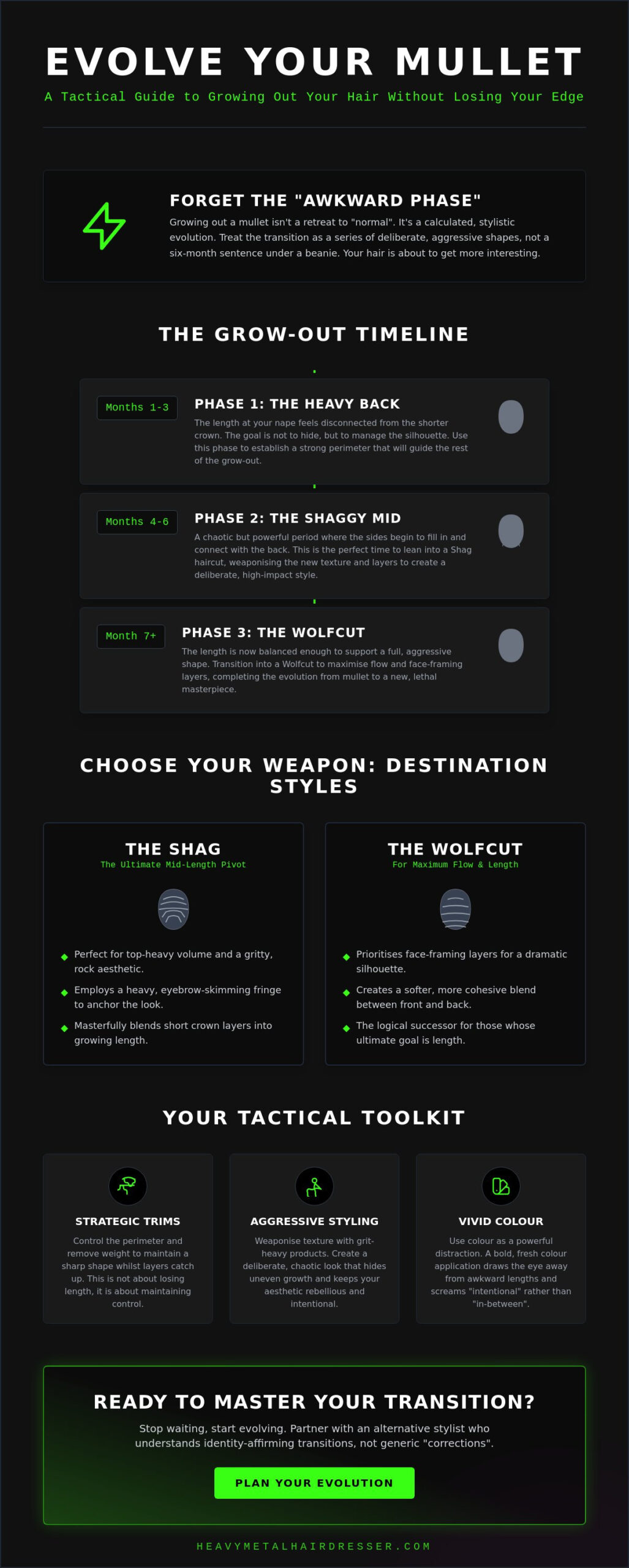
The “do nothing” approach fails because alternative cuts rely on specific weight distribution. If you stop styling and trimming, the hair becomes a shapeless mass that swallows your features. Instead, you should view the process through three distinct phases:

  • The Heavy Back: Month one to three, where the length at the nape starts to feel disconnected from the crown.
  • The Shaggy Mid: Month four to six, a chaotic period where the sides begin to fill in and meet the back.
  • The Wolfcut: Month seven onwards, where the length is balanced enough to support a full, aggressive shape.

Reframing these stages as mini-styles ensures you never feel like you’re in a waiting room. Every month is an opportunity for experimental texture.

The Psychology of the Grow-Out

Maintaining your alt identity is vital for your confidence. If you feel like you’ve lost your edge, you’ll likely reach for the clippers in a moment of weakness. Set realistic expectations. Your hair won’t look like a 70s rock god overnight. When looking for inspiration, ditch the photos of flat, straight bobs. Look for modern Shag Haircuts or heavy-layered textures that celebrate volume. Your goal photo should reflect the rebel you are, not the person your parents want you to be. It’s about keeping that gritty, underground aesthetic alive whilst the length catches up.

Mullet Anatomy and Growth Patterns

Hair on the back of the head often feels like it grows faster, but it’s actually just got a head start. The mullet is a hairstyle defined by its short-to-long disconnect, and that gap is what you’re trying to bridge. The original cut removed weight from the sides, meaning those areas have the most ground to cover. Understanding how to grow out a mullet requires patience with the perimeter. In 2026, the perimeter-first growth strategy prioritises keeping the bottom edge clean whilst the internal layers find their rhythm.

Tactical Haircuts: Shags and Wolfcuts as Your Grow-Out Weapons

Most mainstream guides assume your mullet was a momentary lapse in judgment. They treat the grow-out like a recovery period for a bad habit. We know better. If you’re looking at how to grow out a mullet, you aren’t looking for a boring bob. You’re looking for your next aggressive shape. The Shag and the Wolfcut are your primary weapons here. These aren’t just random styles; they are the logical, structural successors to the mullet’s silhouette.

Instead of fighting the existing layers, these cuts embrace them. A mullet is essentially a Shag that hasn’t finished loading. By shifting the weight and refining the perimeter, we can turn that “party in the back” into a cohesive, high-impact aesthetic. Aggressive texture is your best friend during this phase. It hides the uneven growth and keeps your look feeling deliberate rather than neglected. It’s about keeping the grit whilst the length settles in.

The choice between these two shapes depends on where you want the drama. A Shag focuses on height and top-heavy volume. A Wolfcut prioritises face-framing layers and a softer blend between the front and back. Both allow you to keep your alt edge without looking like you’ve given up on your style.

The Shag: The Ultimate Mid-Length Pivot

The Shag is the perfect pivot if you love top-heavy volume. It takes those short crown layers from your mullet and blends them into the increasing length at the nape. This style relies on a heavy, eyebrow-skimming fringe to anchor the look. It maintains that gritty, 70s rock aesthetic whilst your sides catch up. If you want to understand why this shape is dominating the UK scene, check out The Shag Haircut Resurrection for a deeper dive into its subcultural power.

The Wolfcut: For Those Who Want Maximum Flow

If your goal is length, the Wolfcut is your path. It uses the “mullet tail” as the foundation for your overall length. The magic happens with aggressive face-framing layers. These layers bridge the gap between your short sides and the longer back, creating a seamless, wild flow. It’s the gold standard for rock inspired haircuts in 2026. It allows you to keep your alternative edge whilst moving away from the extreme disconnect of a traditional mullet.

The key is keeping the texture raw. Don’t aim for perfection. Aim for character. If you’re ready to evolve your silhouette, our specialists are masters at crafting Wolfcuts that respect your identity. Transitioning your hair doesn’t have to be a compromise. It’s an upgrade.

How to Grow Out a Mullet: The Alternative Survival Guide for 2026

The Science of the Strategic Trim: Perimeter Control and Weight Removal

Reddit advice usually boils down to “just don’t cut it.” That’s a fast track to disaster hair. If you want to know how to grow out a mullet without looking like a lost hiker, you need tactical maintenance. Total passivity is the enemy of the alternative aesthetic. You need a strategic trim every 8 to 12 weeks. This isn’t about losing your hard-earned length. It’s about rebalancing the weight so your hair looks like a deliberate choice rather than an accident.

The “Perimeter Only” rule is your primary survival tactic. Your mullet tail has a massive head start on the rest of your head. If you don’t trim the back, the gap between your sides and the nape stays massive forever. By taking a small amount off the bottom perimeter, you allow the sides and top to catch up. This prevents the dreaded “Shelf.” This is that awkward horizontal line where short crown layers meet the long tail like a literal staircase. Internal weight removal is equally vital. It keeps the texture aggressive and prevents your hair from turning into a thick, unstyleable helmet.

Blending the Disconnect

Bridging the jump between buzzed or short sides and a long back requires technical precision. We use “invisible layers” to soften the transition without losing the alternative silhouette. It’s about creating a visual path for the hair to follow as it grows. You want the eye to move smoothly from the temple to the nape. Performing a regular dusting of the ends prevents breakage and ensures your length stays healthy enough to reach your final goal shape. It keeps the ends sharp rather than frayed.

Managing the Nape Area

The nape can quickly devolve into a 70s gym teacher look if you leave it unchecked. You have to control the width. A modern, rebellious silhouette is lean at the neck, not wide and bushy. We prioritise point cutting to ensure the finish stays gritty and lived-in. This technique removes bulk whilst adding the jagged, raw texture that defines our subculture. It keeps you looking like a regular in the mosh pit rather than someone who just forgot where the barber is. Keep the back narrow, keep the texture raw, and the grow-out feels like a power move.

Styling Through the Chaos: Products and Techniques for Texture

Hiding your hair under a beanie is a coward’s way out. If you’re figuring out how to grow out a mullet, you need to lean into the chaos rather than covering it up. Headbands and hats are for people who want to blend in; we want to stand out. The “Salt and Grit” method is your best friend during this transition. It involves layering sea salt sprays and texturisers to make the varying lengths look intentional. Don’t fight the frizz. Weaponise it. A messy, textured finish says you’re a regular at the front of the stage, not someone waiting for their hair to look “nice”. This gritty foundation ensures your hair stays in place during a twelve-hour festival set without needing a mirror.

Regarding drying, air-drying with a heavy dose of product preserves that raw, alternative shape best. If you must use heat, use a diffuser on a low setting. This injects volume without making the hair look too “done” or polished. You want to maintain that gritty, underground vibe even in the mosh pit. A transition cut should still look sharp when you’re moving. Using a diffuser helps to set the layers into an aggressive, wild shape that defies the gravity of the grow-out. It’s about keeping the grit whilst the length settles in.

Vivid Colour as a Distraction

Bold pigments are a cheat code for the grow-out process. A neon dip-dye or a high-contrast split-dye draws the eye to the colour rather than the transition point between your layers. It makes the cut look like a deliberate stylistic choice. When you saturate your hair in high-pigment tones, the structure of the cut becomes secondary to the impact of the shade. Check out our guide on Vivid Hair Colour to see how saturating your identity in pigment can save your look during the awkward months. It turns a “growing out” phase into a total statement.

The Alternative Product Arsenal

You need the right tools to maintain an aggressive shape. Our Death Grip is essential for pinning back those stubborn side pieces as they grow; it offers a firm hold that won’t give up halfway through a set. For the top, Hair To the Throne provides the volume needed to keep your crown from falling flat. Use root powders to inject life into growing layers and pomades to slick back the sides for a sharper silhouette. This keeps you looking lethal even during the longest transition. These products ensure your hair remains a tool for self-expression, not a source of frustration.

Ready to grab the gear? Pick up some Death Grip and take control of your texture today.

Why Your Alternative Stylist is Your Best Ally in 2026

Don’t leave your evolution to chance. When you’re figuring out how to grow out a mullet, the person holding the shears makes or breaks the outcome. Mainstream barbers often view alternative styles as something that needs “correcting”. They see a mullet and immediately think about evening it out into a blunt bob. That is a stylistic death sentence. You don’t want a correction. You want a transition. An alternative specialist understands that your hair is a reflection of your subcultural identity. They aren’t trying to make you look “normal”; they’re helping you become the next version of yourself. Understanding what separates a true metal barber from a standard high-street operator is essential knowledge before you book your next appointment.

Gender-inclusive safe spaces are a non-negotiable in 2026. You deserve a chair where your identity is celebrated, not just tolerated. Whether you’re moving towards a masculine shag or a feminine wolfcut, your stylist should speak your language. They understand the nuances of alternative aesthetics because they live them. This isn’t just about hair. It’s about identity-affirming care that respects your roots whilst you reach for new lengths. This level of understanding is why choosing a specialist is the most important step in the process.

Choosing the Right Specialist

Avoid walk-in barbers at all costs. They operate on speed and standardisation. That is the opposite of what a complex grow-out requires. You need someone whose portfolio is stacked with Shag Haircuts, aggressive Wolfcuts, and raw, lived-in texture. Look for stylists who have invested in alternative hair courses UK. These experts have mastered the specific mechanics of subculture styling. They know how to move weight and manage the perimeter without stripping away your edge. A consultation should feel like a collaboration, not a lecture on “proper” hair maintenance.

Planning Your Hair Journey

Hair doesn’t grow in a vacuum. You need a six to twelve month roadmap. This plan should account for how your routine changes as the seasons shift and your length increases. In winter, you might need more moisture. In summer, you’ll want more grit. Your stylist will help you adjust your product lineup, perhaps moving from lighter sprays to heavier pomades as the sides fill in. This long-term vision prevents the panic-cutting that ruins so many grow-outs. It turns a frustrating wait into a controlled, identity-affirming journey. Ready for the next stage? Book your transition cut with Heavy Metal Hairdresser and let’s build your next shape together.

Own Your Evolution: The Path to Your Next Shape

The transition from a mullet to your next masterpiece is a tactical power move. You’ve learned that how to grow out a mullet isn’t about being passive or hiding under a hat for six months. It’s about strategic perimeter control, embracing aggressive texture, and refusing to settle for a boring, high-street “correction”. Whether you’re evolving into a heavy shag or a lethal wolfcut, you must keep your edge sharp and your styling products gritty throughout the process.

At Heavy Metal Hairdresser, we provide a gender-inclusive safe space where your subcultural identity is always the priority. Our team specialises in wolfcuts and shags, bringing backstage festival styling expertise to every chair. We don’t just cut hair; we engineer transitions that respect your roots whilst looking forward to your next aggressive silhouette. Don’t let your grow-out be a period of compromise. Book your transition cut at Heavy Metal Hairdresser and take control of your journey today. Your hair is your loudest statement. Make it count.

Frequently Asked Questions

How long does it take to grow out a mullet into a wolfcut?

It typically takes six to nine months to transition into a full wolfcut. Since hair grows approximately half an inch per month, you need this time for your short side layers to meet the length at the nape. Your starting point dictates the exact timeline. A shorter micro-mullet will naturally take longer than a grown-out shullet to reach that heavy, layered flow.

Should I cut the back of my mullet while growing it out?

You must trim the back if you want a balanced shape. Following the “Perimeter Only” rule prevents your hair from looking like a neglected tail whilst the sides catch up. Trimming the length at the neck every few months allows the rest of your hair to reach a uniform starting point. It’s the only way to ensure how to grow out a mullet without looking like a 70s gym teacher.

How do I stop my growing mullet from looking like a bob?

Avoid blunt edges and keep the texture aggressive. A bob happens when the bottom perimeter is cut straight across without internal weight removal. Ask your specialist for point cutting and jagged layers to maintain a rebellious silhouette. Using products like sea salt sprays will keep the hair messy and lived-in, which is the direct opposite of a polished, traditional bob.

Can I use vivid colour while growing out my hair?

Vivid colour is a brilliant tool for masking awkward lengths. Bold pigments like neon greens or deep purples draw the eye to the shade rather than the structural gaps in your cut. It helps maintain your alternative identity during the transition. Just ensure you’re using high-quality dyes that won’t compromise the health of your growing hair, as healthy ends are vital for reaching your goal length.

What is the most awkward stage of growing out a mullet?

The most awkward stage usually hits between months three and five. This is when your crown layers are too long to be a defined mullet but too short to tuck behind your ears. It often feels heavy and shapeless. This is exactly when you need a strategic trim to rebalance the weight and prevent the hair from becoming a flat, unstyleable mess.

How do I style the short side layers of a mullet during growth?

Use a firm-hold pomade or Death Grip to control the sides. You can slick them back for a sharper, more aggressive look or use root powder to add volume and grit. If they’re long enough to move, try using a small amount of texturiser to flick them outwards. This creates a deliberate, rock-inspired messy finish that bridges the gap between the front and the back.

Is a shag or a wolfcut better for transitioning from a mullet?

A shag is better for those who love top-heavy volume and height. A wolfcut is the superior choice if you want to focus on face-framing layers and overall length. Both styles utilise existing mullet layers effectively. The choice depends on your final goal. If you want a 70s rock vibe, go for the shag. If you want a more modern, wild flow, the wolfcut is your winner.

How often should I see my alternative stylist during the grow-out?

Seeing your alternative stylist every 8 to 12 weeks is the sweet spot for learning how to grow out a mullet properly. This frequency allows for enough growth to see progress whilst preventing the shape from collapsing. Regular maintenance visits are for dusting the ends and removing internal bulk. It keeps the grow-out intentional and prevents the hair from becoming unmanageable.