Posted on

Modern Mullet Haircut: The 2026 Guide to Alternative Texture and Grit

Modern Mullet Haircut: The 2026 Guide to Alternative Texture and Grit

The modern mullet haircut isn’t a nostalgic throwback to a dead era; it’s a high-contrast weapon of subcultural identity designed to dismantle the binary. You’re likely tired of mainstream barbers who think alternative styling just means a slightly messy fade or, worse, a dated caricature that looks like an 80s costume party. It’s frustrating when your hair feels flat and fine whilst you’re craving a shape that carries real weight and grit. We’re here to help you reclaim that edge.

In this guide, you’ll discover how the modern mullet has evolved into a high-texture, gender-neutral powerhouse that prioritises self-expression over social norms. We’re going to break down the technical differences between a standard fade and an aggressive mullet shape so you can speak the right language in the chair. You’ll also learn how to organise your styling routine to maintain a sharp, current look that defies expectations. By the end, you’ll have the confidence to rock a bold, unconventional shape that is unapologetically yours.

Key Takeaways

  • Discover how the modern mullet haircut has evolved from a retro cliché into 2026’s high-contrast “chaos everywhere” aesthetic.
  • Understand the technical anatomy of an aggressive shape, including how to balance the critical weight line and disconnected temple shaves.
  • Learn how to use hair as a tool for gender euphoria and a visual rejection of outdated binary beauty standards.
  • Master the professional styling routine for maintaining grit and volume, even in high-humidity festival environments.
  • See why saturating your identity with vivid hair colour and specialist expertise is the key to a truly alternative transformation.

What is the Modern Mullet Haircut in 2026?

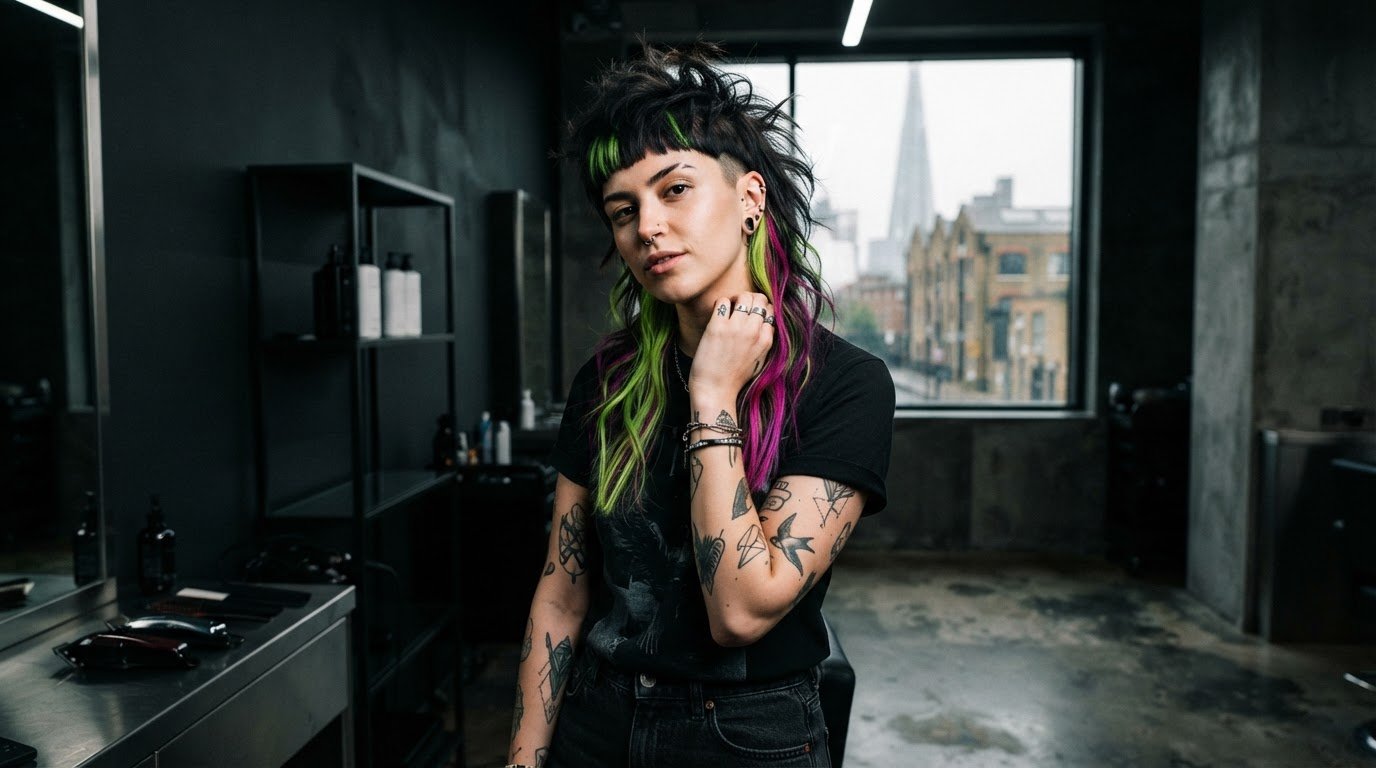
Forget the “business in the front, party in the back” cliché. That’s a tired relic. The modern mullet haircut in 2026 is a deliberate act of subcultural rebellion. It’s a high-contrast evolution of the classic shag and wolfcut, built for those who refuse to blend into the background. We’ve moved past the polished, sterile fades of the last decade. Now, it’s about “chaos everywhere.” This aesthetic prioritises aggressive texture and disconnected layers over smooth transitions. It stands as a core pillar of the rock inspired haircuts movement, where the goal isn’t just to look good; it’s to look loud. It’s hair that demands a reaction.

The Evolution of the Shape

While the history of the mullet traces back to ancient warriors and 80s pop stars, the 2026 silhouette is a different beast entirely. Old-school versions were often flat on top with a rigid, curtain-like length at the back. Today, we focus on vertical volume. We want height. We want movement. The modern shape is jagged, irregular, and purposely messy. It draws heavy influence from underground metal and punk scenes, where hair is meant to move with the music. We’ve ditched the rigid structure for an engineered shape that holds its own without needing a gallon of hairspray. It’s about finding that sweet spot between intentional design and raw, unrefined grit.

Why It Rules the Alternative Scene

This haircut is a visual middle finger to mainstream beauty standards. It’s a refusal to play by the rules of “professionalism” that have stifled identity for decades. The modern mullet haircut bridges the gap between raw punk energy and high-fashion aesthetics. It’s a tool for self-assertion. Wearing a “difficult” haircut like this requires a certain level of confidence. It tells the world you aren’t looking for approval. It’s about finding a silhouette that actually fits your soul, not just your head shape. In a world of carbon-copy styles, this cut offers a way to claim your space and express your identity without saying a single word. It’s tough, it’s inclusive, and it’s unapologetically bold.

The beauty of this style lies in its versatility. It doesn’t care about your gender or your hair type. Whether you’re working with fine strands or thick, unmanageable curls, the modern mullet uses that natural behaviour to create something unique. It’s about leaning into the “problem” areas of your hair and turning them into a feature. By focusing on disconnected layers and purposeful weight, we create a shape that feels alive. It’s not just a trim; it’s a transformation that aligns your external look with your internal energy.

The Anatomy of an Aggressive Modern Mullet

An aggressive modern mullet haircut isn’t just a haphazard mess of lengths. It is a calculated architectural project. To get that sharp, alternative edge, you have to move beyond the standard fade. We’re talking about disconnected sides. This means creating a harsh break between the temple area and the rest of the hair; often through creative temple shaves or skin-tight crops that don’t blend into the top. This disconnection is what gives the style its grit and separates it from mainstream imitations.

The “Weight Line” is the most critical part of the transition. It’s the invisible border where the fringe meets the length at the back. Balancing this requires precision. If it’s too blended, you lose the mullet’s soul. If it’s too disjointed, it looks like a mistake. Your fringe should be a statement of its own. Whether you opt for jagged micro-bangs or heavy, eyebrow-skimming layers, the fringe sets the tone for the entire face. Finally, there’s the tail. The length at the nape should be determined by your neck shape and how much of a silhouette you want to create. It’s about aggressive layering. We use internal texture to create “chaos” within the hair, ensuring it never sits flat or looks too “done.”

Texture as a Technical Tool

Achieving this level of movement requires more than just a pair of scissors. A skilled metal barber understands that texture is a weapon. We use razors and deep point-cutting to shred the ends, removing weight whilst adding flick and flow. For those with thicker manes, deep channel cutting is essential to prevent the hair from becoming a helmet. We’re looking to create “air” in the hair. This allows the layers to breathe and move naturally, maintaining that messy, lived-in behaviour that defines the alternative scene.

Choosing Your Contrast Level

Not every mullet needs to be a total shock to the system. You can play with the volume. A low-contrast version, sometimes called a “Euro Mullet,” uses a subtle taper on the sides for a softer entry point. It’s alternative, but approachable. On the other end of the spectrum, high-contrast shapes feature skin-tight sides with extreme, flowing length at the nape. This is for those who want maximum impact. To keep these aggressive shapes from collapsing by midday, you need a product with serious hold. Using Death Grip ensures your style stays locked in place, no matter how much you move. It’s about having the technical foundation to support the chaos you want to project.

Modern Mullet Haircut: The 2026 Guide to Alternative Texture and Grit

Breaking the Binary: A Gender-Neutral Hair Revolution

The idea that a haircut belongs to a specific gender is an outdated social construct. In the alternative scene, we’ve already burnt that rulebook. The modern mullet haircut has emerged as the ultimate tool for gender euphoria. It allows the wearer to occupy the space between traditional binaries; providing a silhouette that can be simultaneously aggressive and ethereal. In 2026, we’re seeing a massive shift towards identity-affirming styling across Britain. This isn’t just about fashion. It’s about visibility. It’s about hair that finally matches the person in the mirror.

Face-framing layers are the secret weapon here. We can adjust them to sharpen a jawline or soften a forehead regardless of your birth-assigned gender. This flexibility makes it a powerhouse for trans and non-binary individuals seeking a look that feels authentic. It’s vital to find safe space salons where your identity is celebrated rather than merely tolerated. Mainstream shops often struggle with this. They try to force alternative shapes into gendered boxes. We don’t do that. We focus on the person, the texture, and the energy you want to project. By prioritising the individual over the binary, we create shapes that feel like a second skin.

Mullets for All Identities

The “Femme Mullet” is currently dominating alternative fashion circles. It often blends high-pigment colour with sharp, disconnected edges to create a look that is both pretty and punk. We’ve ditched the “men’s” and “women’s” labels entirely. Industry shifts in the UK are finally catching up with this reality. Leading alternative salons have moved away from binary pricing models in favour of time-based structures. We’ve been at the forefront of this charge for years. We categorise by technique and complexity, ensuring everyone feels safe and supported whilst they transform. This approach removes the anxiety of booking and ensures the focus stays entirely on the craft and your comfort.

Face Shape vs. Identity

Ignore the “rules” about face shapes. Traditional stylists might tell you a mullet doesn’t suit a round face or a long chin. They’re wrong. Hair is armour. If a bold, unconventional shape makes you feel powerful, that is the only rule that matters. The modern mullet haircut stands out amongst a sea of boring, safe haircuts precisely because it refuses to conform. It’s about building confidence through self-expression, not fitting into a pre-approved mould. When you wear a cut this loud, you aren’t seeking approval. You’re claiming your space. We use visual weight and internal texture to balance the silhouette to your liking, not to some arbitrary beauty standard. It’s a visual middle finger to the expectation of being “normal.”

Styling and Maintenance: Keeping the Chaos Controlled

Styling a modern mullet haircut isn’t about achieving perfection. It’s about engineering the right kind of mess. If you leave the house looking too polished, you’ve missed the point. You want hair that looks like it has a history. This requires a specific routine that prioritises grit over shine. Follow these steps to lock in your shape without looking like a 1980s caricature. For a deeper breakdown of professional techniques and product application, our guide on how to style a modern mullet covers everything from choosing the right matte finishes to using professional tools that keep your silhouette defiant all day.

  • Step 1: Prep. Start with damp hair. Blast it with a sea salt spray or a heavy-duty volume mist. This creates the “tooth” or grit necessary for the shape to hold its own against gravity.
  • Step 2: Dry. Rough dry your hair using a diffuser. This encourages natural wave and texture whilst preventing the frizz that comes from high-heat blow-drying.
  • Step 3: Texture. Apply a matte clay or a paste like Death Grip to the ends only. Working product into the roots will weigh the hair down and kill your volume.
  • Step 4: Organise. Drop the comb. Use your fingers to pull pieces apart and create definition. You want to organise the chaos into a shape that feels intentional but raw.
  • Step 5: Refresh. Between washes, use dry shampoo at the crown. It saps excess oil and provides an immediate lift to your vertical volume.

Mosh Pit Survival Tips

The modern mullet haircut is the ultimate festival weapon. It thrives in high-humidity environments where other styles fail. If you’re heading into the pit, you need a look that survives physical contact and sweat. The beauty of an aggressive mullet is that it actually looks better as it gets lived-in. To ensure maximum durability, double down on your prep products. If the back starts to sag by the final set, simply flip your head upside down and give it a vigorous shake. The internal layers will snap back into place, maintaining your silhouette whilst you focus on the music.

The Long Game: Maintenance

To keep the contrast sharp, you’ll need to visit your barber every three to four weeks for a side trim. This maintains the disconnected feel that defines the 2026 aesthetic. Managing the fringe is a delicate balance; you want to keep the shaggy, eyebrow-skimming length without it becoming a nuisance. If you ever decide to retire the look, navigate the transition with our guide on how to grow out a mullet. It provides the technical roadmap for changing your weapon without enduring a year of bad hair days.

The Heavy Metal Hairdresser Approach to the Modern Mullet

High-street barbers often treat the modern mullet haircut like a passing fad. They try to “tame” it. They try to make it wearable for an office job you probably hate. At our salon, we do the opposite. We understand the subcultural weight of your hair. Whether you’re referencing 70s glam, 80s thrash, or 2026’s hyper-textured chaos, we speak your language. A specialist salon doesn’t just cut hair; we curate an identity. We’ve spent years styling for bands and festival backstage crews, ensuring that hair holds up under stage lights and in the pit.

We elevate the shape by integrating vivid hair colour. A flat, natural tone can sometimes hide the aggressive layering we’ve worked so hard to create. High-pigment saturation acts like a spotlight for texture. It makes every disconnected layer and jagged edge pop. During our consultation process, we don’t just ask for a reference photo. We want to know your music, your vibe, and how you move. We listen to your identity before we ever pick up a razor. This is a collaborative process between two people who value the underground aesthetic.

More Than Just a Haircut

Our commitment goes beyond the chair. We prioritise inclusive, safe spaces for the entire alternative community. This is a sanctuary for those who feel “outside the mainstream.” We don’t care about what’s trending on a corporate mood board. We care about your individuality. The salon experience is high-energy and percussive. It’s a raw, authentic environment designed to make you feel at home whilst we transform your look. We aren’t here to give you a “safe” version of yourself. We’re here to help you find the loudest one. Your hair should be a visual representation of your internal grit.

Join the Resurrection

Ready for a transformation? Booking your session for a modern mullet haircut is the first step toward reclaiming your visual identity. When you show up, bring your favourite band shirt. It helps us understand the aesthetic universe you live in. You aren’t just getting a service; you’re joining a community that celebrates being different. We celebrate the grit. We celebrate the rebellion. Become part of a movement that refuses to be silenced by boring beauty standards. Claim your space in the chair and let’s create something aggressive. The resurrection of alternative style starts here.

Reclaim Your Identity in the Chair

The modern mullet haircut isn’t just a style choice; it’s a declaration of independence from a boring, binary world. We’ve explored how this shape uses aggressive texture and disconnected layers to build a silhouette that actually matches your energy. Whether you’re using it to find gender euphoria or just to look like you belong on a festival stage, the mullet is your visual weapon for 2026. You don’t have to settle for a safe, high-street fade that hides who you really are.

As award-winning alternative hair specialists and stylists for Download and Bloodstock festivals, we know how to make your hair survive the chaos. We’ve built a gender-neutral safe space where your subcultural references are actually understood. Stop waiting for a barber who “gets it” and come to the experts. Book your modern mullet transformation at Heavy Metal Hairdresser today. Claim your space. Wear your grit with pride.

Frequently Asked Questions

Is a modern mullet high maintenance?

Daily maintenance is surprisingly low because the style thrives on lived-in grit and intentional mess. You won’t need to spend forty minutes with a round brush every morning. However, keeping the silhouette sharp requires a trip to the salon every three to four weeks. This ensures the sides stay tight and the contrast remains aggressive rather than looking like an accidental grow-out.

Can I get a mullet if I have very fine or thin hair?

Fine hair is actually an ideal canvas for this shape because we use aggressive layering to create the illusion of density. By removing weight in specific channels, we allow the hair to stand up and move rather than sitting flat against the scalp. The modern mullet haircut relies on texture, so fine strands often hold the necessary volume better than heavy, thick hair that tends to collapse.

How do I ask my hairdresser for a modern mullet without it looking like the 80s?

Ask for disconnected temple shaves and a heavy weight line instead of a traditional blend. Avoid the word “perm” or any mention of a uniform length on top. You want to emphasise that you’re looking for a high-contrast shape with jagged, irregular layers. Bringing a photo of a modern wolfcut or a textured shag helps bridge the gap between retro and current alternative aesthetics.

What is the difference between a wolfcut and a modern mullet?

The primary difference lies in the sides. A wolfcut is essentially a heavily layered shag that maintains some length and blending around the ears. A modern mullet haircut is far more aggressive; featuring skin-tight or disconnected sides that create a harsh break between the fringe and the tail. Whilst both prioritise texture, the mullet is about high-contrast drama whilst the wolfcut is softer and more blended.

Does a mullet work for professional or office environments?

It absolutely works if your office values identity over conformity. The 2026 version of this cut is a refined, engineered shape that can be styled to look intentional and sharp. If you need to tone it down for a meeting, you can use a matte paste to organise the layers into a more controlled silhouette. It remains an alternative statement, but its technical precision keeps it from looking like a joke.

How long does my hair need to be before I can get a mullet?

You need at least three inches of length on top and four to five inches at the nape to create a recognisable silhouette. We can certainly start the transition with less, but the “tail” won’t have that signature flow until it hits the collar. If you’re starting from a buzz cut, focus on growing out the back whilst keeping the sides tight to build the shape gradually.

Can a mullet be styled for curly hair?

Curly hair is arguably the best texture for this cut because it provides natural volume and movement. Curls give the “party” at the back a life of its own without requiring constant product application. We use specific cutting techniques to ensure your curls stack correctly; preventing the hair from becoming too wide whilst maintaining that essential vertical height at the crown.

What products are best for a textured mullet?

Stick to products that provide a matte finish and heavy grit. A high-quality sea salt spray is essential for your base layer whilst the hair is damp. Once dry, use a matte clay or a high-hold paste engineered for textured mullet styling to define the ends and lock the shape in place. Avoid gels or high-shine pomades; they make the hair look greasy and flat, which kills the alternative edge you’re chasing.

Posted on

Wolf Cut on Straight Hair: How to Inject Texture into Flat Strands

Wolf Cut on Straight Hair: How to Inject Texture into Flat Strands

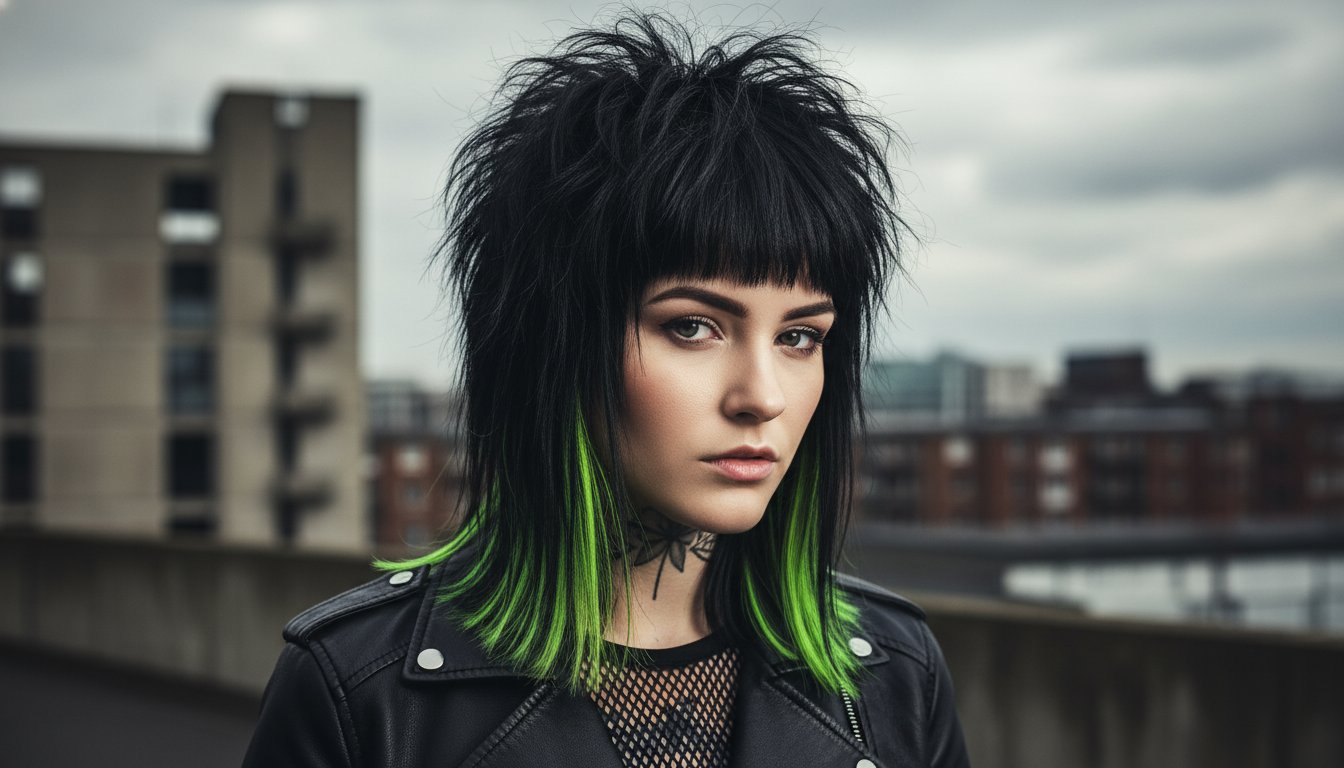
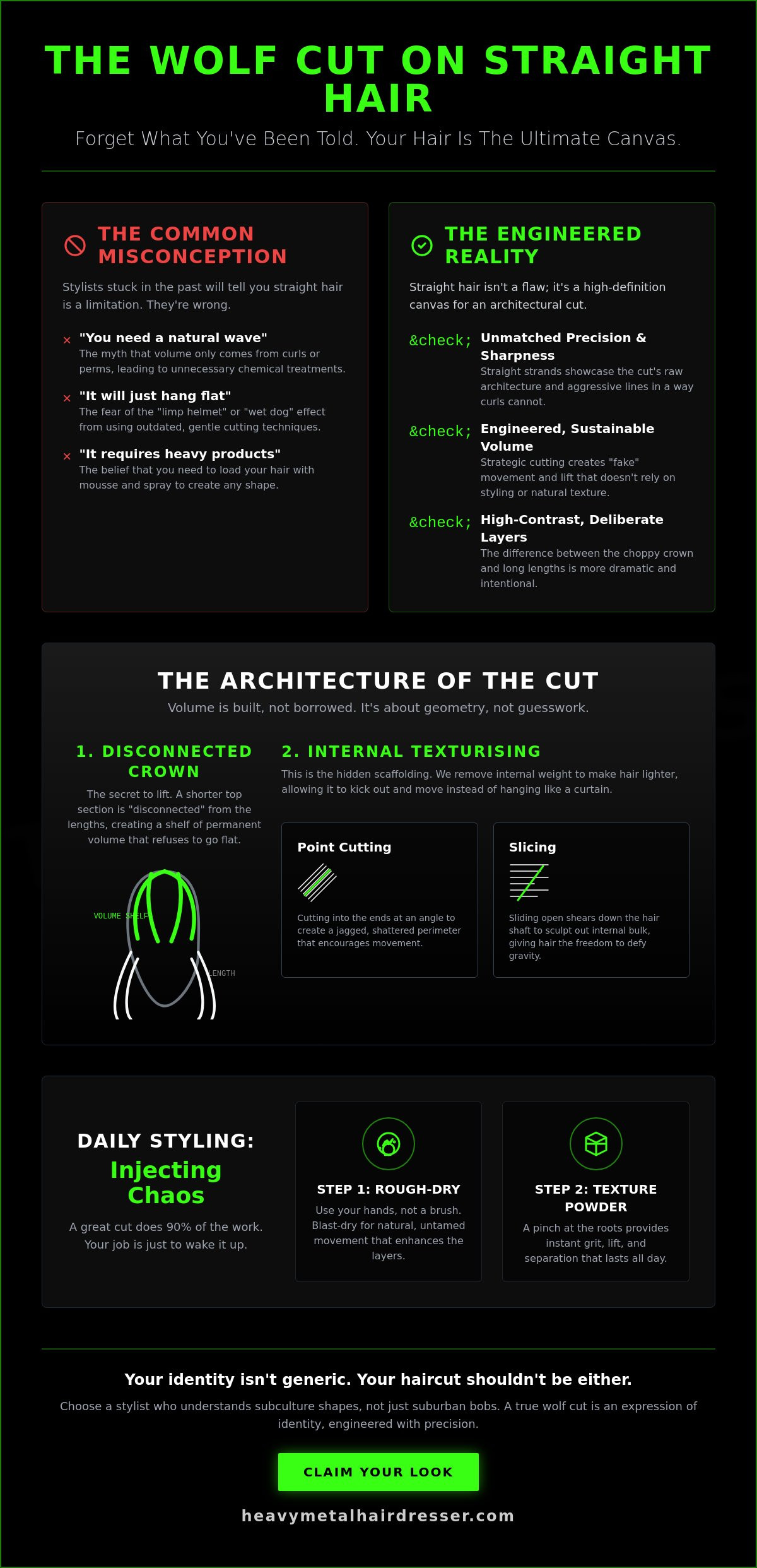
Your straight hair isn’t a curse; it’s the ultimate canvas for the sharpest, most architectural wolf cut on the scene. Most stylists tell you that you need a natural wave to pull off this look, but they’re wrong. A wolf cut on straight hair offers a level of precision and jagged, aggressive detail that curly hair simply can’t match. It’s about time you stopped settling for hair that looks like a limp helmet and started demanding a cut that reflects your alternative identity.

We understand the frustration of strands that refuse to hold volume or look flat by midday. It’s exhausting fighting your natural texture just to feel like yourself. This guide shows you exactly how to transform those flat strands into a masterpiece of sustainable volume and visible, choppy layers. You’ll learn the specific techniques we use to build height at the crown and the styling secrets that keep your look sharp whilst ensuring your hair remains your favourite way to express your identity. From razor-cut ends to the perfect texturising grit, we’re diving into how you can claim this look for your own.

Key Takeaways

  • Reframe straight hair as the perfect canvas for aggressive, high-contrast layers that demand attention and precision.
  • Discover how the disconnected crown technique creates a wolf cut on straight hair that refuses to go flat or look limp.
  • Shift your focus from heavy products to architectural cutting methods like point cutting to build permanent, sustainable texture.
  • Learn the rough-dry and texture powder secrets that keep your layers looking sharp and rebellious every single day.
  • Understand why choosing a stylist who understands subculture shapes is vital for a cut that truly reflects your identity.

Can You Get a Wolf Cut on Straight Hair? (The Short Answer: Yes)

Let’s get one thing straight. You don’t need a natural wave or a permanent curl to look like a wolf. The wolf cut is a high-contrast, heavily layered beast that thrives on attitude. It’s the bastard child of a 70s Shag (haircut) and an 80s mullet. On straight strands, it isn’t just a haircut; it’s a deliberate statement of intent. Whilst most people think straight hair is a limitation, we see it as an opportunity for more precision and sharper lines.

A wolf cut on straight hair exposes the raw architecture of the cut in a way that curly hair simply can’t. It’s honest and unapologetic. We know the fear that keeps you from the chair. You’re worried about the “wet dog” effect or ending up with a limp, helmet-like fringe that just hangs there. That happens when stylists use traditional, “pretty” techniques designed for suburban bobs. We don’t do pretty. We use aggressive texturising to force movement into flat strands where nature didn’t provide any.

The secret to avoiding the flat look is creating “fake” movement. We do this by shattering the ends and carving out internal weight. By removing the bulk that pulls your hair down, we allow the layers to kick out and breathe. This isn’t about gentle thinning; it’s about engineering a shape that holds its own even when you’re in the middle of a mosh pit or running for a train.

Why Straight Hair Offers a Sharper Edge

Straight strands act like a high-definition spotlight for the precision of the cut. You get cleaner, more visible ‘steps’ in the layering process. The contrast between that short, choppy crown and the long, trailing lengths is far more dramatic on straight hair. If you’re chasing an industrial, punk, or cyber-goth aesthetic, your natural texture is your greatest asset. It looks engineered rather than accidental. It provides a level of architectural detail that gets lost in a sea of curls, making the wolf cut on straight hair a superior choice for those who want their identity to be seen from across the room.

Debunking the ‘Perm Required’ Myth

Stop listening to stylists who tell you a chemical perm is the only way to make this work. You don’t need to fry your hair with harsh chemicals to get volume. The real magic lies in the ‘shattered’ ends and strategic internal weight removal. When we remove the hidden bulk from the mid-lengths, we make the hair significantly lighter. Once that weight is gone, your hair is much easier to style ‘up’ and out. Straight hair isn’t naturally flat; it’s just heavy. By removing the anchor, we give your hair the freedom to defy gravity. It’s about the shape of the cut, not just the texture of the strand.

The Architecture: How to Cut Wolf Layers into Straight Hair

The wolf cut isn’t just about hacking away at your ends. It’s a calculated architectural project. When crafting a wolf cut on straight hair, we prioritise the ‘Disconnected Crown’. This is the technical secret to avoiding the limp, lifeless look that plagues most straight-haired attempts. By keeping the top layers significantly shorter and unblended from the lengths below, we create a shelf of volume. As celebrity hairstylist Cheryl Bergamy explains, the wolf cut is defined by its wild and untamed appearance. On straight strands, that ‘wild’ look comes from the contrast between these distinct sections.

We use point cutting and slicing to build this texture. Point cutting involves cutting into the hair at an angle, creating a jagged, uneven perimeter. Slicing is a more aggressive technique where we slide open shears down the hair shaft to remove internal weight. This isn’t just thinning; it’s sculpting. It allows straight hair to kick out and move rather than just hanging like a curtain. It injects a sense of chaos that straight hair naturally lacks.

Length plays a massive role in how much ‘pop’ your cut has. Shorter variations often have more bounce because there’s less gravitational pull on the crown. If you’re chasing that high-energy, subcultural vibe, taking a few inches off the base can make the layers stand up with more attitude. The straightness of your hair actually helps here. It allows the face-framing pieces to act like sharp, architectural lines that highlight your cheekbones and jaw. If you’re ready to commit to this shape, finding a specialist for your Wolfcut is the best way to ensure the geometry works for your face shape.

Internal Texture vs. Surface Layers

Think of internal texture as the hidden scaffolding of your hair. These hidden layers remove the ‘bulk’ that typically drags straight hair down. They create pockets of air that allow the hair to sit higher. Surface layers are the visible, shattered pieces that provide the classic messy vibe. The interaction between these two levels creates the illusion of extreme thickness and movement. It turns a flat head of hair into a multi-dimensional masterpiece that looks thick and rebellious.

The Role of the Fringe and Bangs

The fringe is the soul of the wolf cut on straight hair. Whether you opt for heavy curtain bangs or a blunt ‘micro’ fringe, this section acts as the anchor for the entire look. Straight hair allows for incredible precision in the fringe, which we then blend into the side layers. This seamless transition ensures your hair looks intentional and sharp. It prevents the cut from looking like a DIY disaster and instead gives it a professional, high-fashion edge.

Wolf Cut on Straight Hair: How to Inject Texture into Flat Strands

Defeating the ‘Flat’ Look: Addressing the #1 Objection

“Will I look like a wet dog?” This is the ultimate fear for anyone considering a wolf cut on straight hair. It’s a valid concern. If a stylist applies a cookie-cutter technique designed for wavy hair to your straight strands, you’ll end up with a limp, shapeless mess. But here’s the reality: volume is a product of architecture, not just a can of sea salt spray. You can’t just spray your way out of a bad silhouette. You need a cut that forces the hair to stand up and fight back.

Real volume comes from the internal shape. A standard layered cut is often too cautious. It leaves heavy bulk in the mid-lengths to maintain a “healthy” or “polished” look. On straight hair, that bulk acts like an anchor. It drags everything down until it’s flat against your skull. We don’t do cautious. We create an alternative silhouette that uses the hair’s natural weight against itself. By carving out the underside, we allow the top layers to spring to life.

Sustainable wolf cut on straight hair maintenance doesn’t start in your bathroom; it starts in our chair. If the technical execution is flawed, you’ll spend hours fighting your hair every morning with a round brush and a prayer. When the cut is engineered correctly, the hair naturally wants to sit in that messy, voluminous shape. You aren’t forcing it into a style; you’re just giving it a nudge to do what the cut already dictates.

Why Your Last Layered Cut Failed

Traditional hairdressing is often too obsessed with “blending.” On straight hair, perfectly blended layers often result in a staircase effect. You see every horizontal line where the scissors met the strand. It looks dated, stiff, and unmistakably “suburban.” We solve this by shattering the perimeter. By jaggedly cutting the ends and removing the blunt edges, we encourage the hair to move in different directions. This breaks up the flat surface and creates the illusion of depth and grit that straight hair usually lacks.

The ‘Fine Hair’ Factor amongst Straight Strands

Amongst the straight-haired community, those with fine strands often fear the wolf cut the most. They worry it will leave them with “see-through” ends. Actually, the wolf cut is a saviour for fine hair. When hair is fine and straight, every gram of weight pulls it flat. By strategically removing that weight, we allow the remaining hair to defy gravity. It’s about quality of movement over quantity of hair. If your strands are particularly thin, you might want to look at our specific advice for a wolfcut on fine hair to see how we inject chaos into even the thinnest strands.

Straight Wolf Cut Styling: Injecting Chaos Daily

Straight hair is a liar. It tells you it cannot hold volume. It is lying. Styling a wolf cut on straight hair is about breaking the hair’s natural habit of laying flat. It is a daily act of rebellion against gravity. You don’t need a professional blowout every morning. You need grit. You need the right tools. Most importantly, you need to stop being gentle with your strands. We aren’t aiming for a polished finish; we are aiming for a look that has survived a three-day festival.

We start with the rough dry. This isn’t about smoothness or shine. It’s about finding the volume hidden at your scalp. Blast your roots whilst your head is upside down. This forces the hair to dry in an upward direction. It builds a foundation of chaos before you even touch a styling tool. Once the hair is 80 per cent dry, flip back over. You will already see a massive difference in the height of your crown.

Texture powder is the holy grail for this look. It provides the friction that straight hair naturally lacks. Without it, your layers will slide back into a flat curtain within an hour. A few puffs at the crown create a structure that lasts through a full shift or a long night out. Use your flat iron to create jagged flicks rather than soft curls. Twist the iron away from your face at the ends of your layers. This reinforces the sharp, architectural steps we built into the cut. If you want to maintain this level of aggression, book your next Wolfcut with a specialist who understands subcultural shapes.

Essential Tools for Straight Strands

You need a diffuser. Even on straight hair, a diffuser allows you to “scrunch-dry” texture into the mid-lengths without causing frizz. When it comes to products, texture sprays are for volume, whilst waxes are for definition. Use a wax with a serious Death Grip on the very ends of your layers to create that piecey, shattered look. Avoid heavy oils at all costs. They are the enemy of the wolf cut. They weigh down the crown and kill the lift you worked so hard to create.

The ‘Chaos’ Method: 5-Minute Morning Routine

  • Step 1: Dampen the roots with a water mister and apply a lightweight volume booster.
  • Step 2: Perform an upside-down blow-dry to find that hidden volume at the base of the neck and crown.
  • Step 3: Apply texture powder directly to the roots at the crown for that mosh pit lift.
  • Step 4: Finish with a blast of cool air to set the shape and lock in the rebellion.

Maintenance is the final piece of the puzzle. Your layers will eventually collapse under their own weight as they grow. To keep the silhouette sharp and aggressive, you need a trim every six to eight weeks. This prevents the “wolf” from evolving into a standard, boring layered cut.

Why Heavy Metal Hairdresser is the Ultimate Wolf Cut Destination

Mainstream salons are often terrified of the wolf cut. They try to “soften” the edges. They try to make it look “pretty” or “approachable.” We don’t. At Heavy Metal Hairdresser, we specialise in aggressive, subculture-inspired shapes that demand to be noticed. If you want a wolf cut on straight hair that looks like it belongs on a stage rather than in a supermarket, you’re in the right place. We’ve spent years working with bands and festival-goers. We know hair needs to do more than just look good in a mirror. It needs to survive the pit. It needs to look just as aggressive at 3 AM as it did at soundcheck.

Our space is built on a foundation of fierce independence and radical inclusivity. We are unapologetically gender-neutral and identity-affirming. This is a safe space for every outlier, non-conformist, and alternative soul. Your hair is your most visible form of self-expression. We treat it with the respect it deserves. We also know that a wolf cut on straight hair is the perfect canvas for vivid colour. Whether it’s neon green, deep violet, or industrial grey, our colour work is designed to make those architectural layers pop. Straight hair allows for sharp transitions and contrasts that other textures simply cannot showcase.

Our Signature Aggressive Texturising

We don’t believe in “one size fits all” hair. Every cut we perform is bespoke. We look at your specific hair density and face shape before we ever pick up the shears. Our specialised texturising techniques ensure your straight hair never looks limp or “helmet-like.” We focus on internal weight removal and shattered perimeters to give you height that lasts. We also won’t gatekeep our secrets. We teach you exactly how to maintain that “edge” at home so you don’t lose your attitude between appointments.

Join the Alternative Revolution

We aren’t just a salon. We are a community of people who celebrate being different. If you are looking for more inspiration on how subcultural styles are evolving, check out our deep dive into The Shag Haircut Resurrection. It explains why these high-contrast shapes continue to rule the UK alternative scene. When you’re ready to stop settling for “normal” and start looking like yourself, we are ready for you. Book your transformation with a specialist and claim the look you’ve always wanted.

Claim Your Alternative Identity

Your straight hair is no longer an excuse for a flat, uninspired look. By embracing the sharp geometry of a wolf cut on straight hair, you turn your natural texture into a high-definition statement. We’ve shown you that volume is an architectural choice. It’s built through disconnected crowns and shattered ends rather than just luck. You now have the blueprint for injecting daily chaos into your strands with the right tools and a bit of grit.

Don’t settle for a stylist who wants to play it safe with “pretty” layers. You deserve a look that reflects your true self. Our specialist Wolfcut stylists understand subculture aesthetics and provide award-winning creative direction that mainstream salons can’t touch. We pride ourselves on being a gender-inclusive safe space where your identity is celebrated, not just managed. It’s time to stop fighting your hair and start leading the pack. Book Your Wolf Cut Transformation at Heavy Metal Hairdresser and let us carve out the rebellion you’ve been waiting for. Your new era starts here.

Frequently Asked Questions

Can I get a wolf cut if I have pin-straight hair?

Yes, pin-straight hair is actually an ideal canvas for the sharp, jagged lines of this style. Whilst wavy hair often hides the details, a wolf cut on straight hair showcases the technical precision of every layer. It creates a high-contrast, industrial aesthetic that looks intentional rather than accidental. You just need a stylist who isn’t afraid to use aggressive texturising to force movement into those flat strands.

How do I style a wolf cut on straight hair without it looking flat?

The secret is building a foundation of chaos during the drying process. Always blow-dry your roots whilst your head is upside down to find that hidden volume and prevent the hair from drying flat against the scalp. Once dry, use a high-grit texture powder at the crown to lock in the height. Avoid heavy conditioners or oils that act as anchors and drag your layers down.

Is a wolf cut high maintenance for straight hair?

It depends on your definition of maintenance, but daily styling is actually very fast once you master the rough-dry and powder routine. However, you cannot ignore your trim schedule. Because straight hair shows every line, you need a professional refresh every six to eight weeks. If you let it grow out too long, the weight will eventually cause your layers to collapse and lose their aggressive edge.

What products are best for a straight wolf cut?

You need products that provide friction and hold without adding weight. Texture powder is your absolute holy grail for crown volume. A lightweight sea salt spray can help add grit to the mid-lengths during the drying phase. For the ends, use a wax with a serious Death Grip to define those shattered, piecey layers. Stay away from smoothing serums or anything designed for a polished finish.

Will a wolf cut make my thin, straight hair look thicker?

Yes, removing weight is the best way to make fine hair appear fuller. When straight hair is thin, its own weight pulls it flat and makes it look sparse. By carving out internal layers, we allow the remaining hair to stand up and move freely. This creates the illusion of density and depth. A wolf cut on straight hair turns limp strands into a multi-dimensional shape that looks thick and rebellious.

How often should I trim my wolf cut to keep the shape?

Aim for a trim every six to eight weeks to keep the silhouette sharp. Straight hair grows in a way that can quickly make aggressive layers look like a standard, boring cut. Regular maintenance ensures the technical “steps” in your hair remain visible and the crown stays light enough to hold its volume. If you wait longer, the balance of the cut will shift and the layers will start to look heavy.

Can I have a wolf cut without bangs?

You can, but the fringe is usually what anchors the entire look. If you skip the bangs, you’ll need very heavy face-framing layers to maintain the wolf silhouette. This creates more of a high-fashion shag vibe rather than a traditional wolf cut. It’s a great option if you aren’t ready to commit to a full fringe but still want that jagged, alternative edge around your jawline and cheekbones.

Is a wolf cut the same as a mullet?

Not exactly, though they share the same DNA. The wolf cut is a hybrid of a 70s shag and an 80s mullet. A traditional mullet is very “business in the front, party in the back” with a distinct, often severe disconnection. The wolf cut is more about continuous, heavy layering throughout the entire head. It has more volume on the sides and a more blended, albeit still aggressive, transition between the short crown and the long lengths.