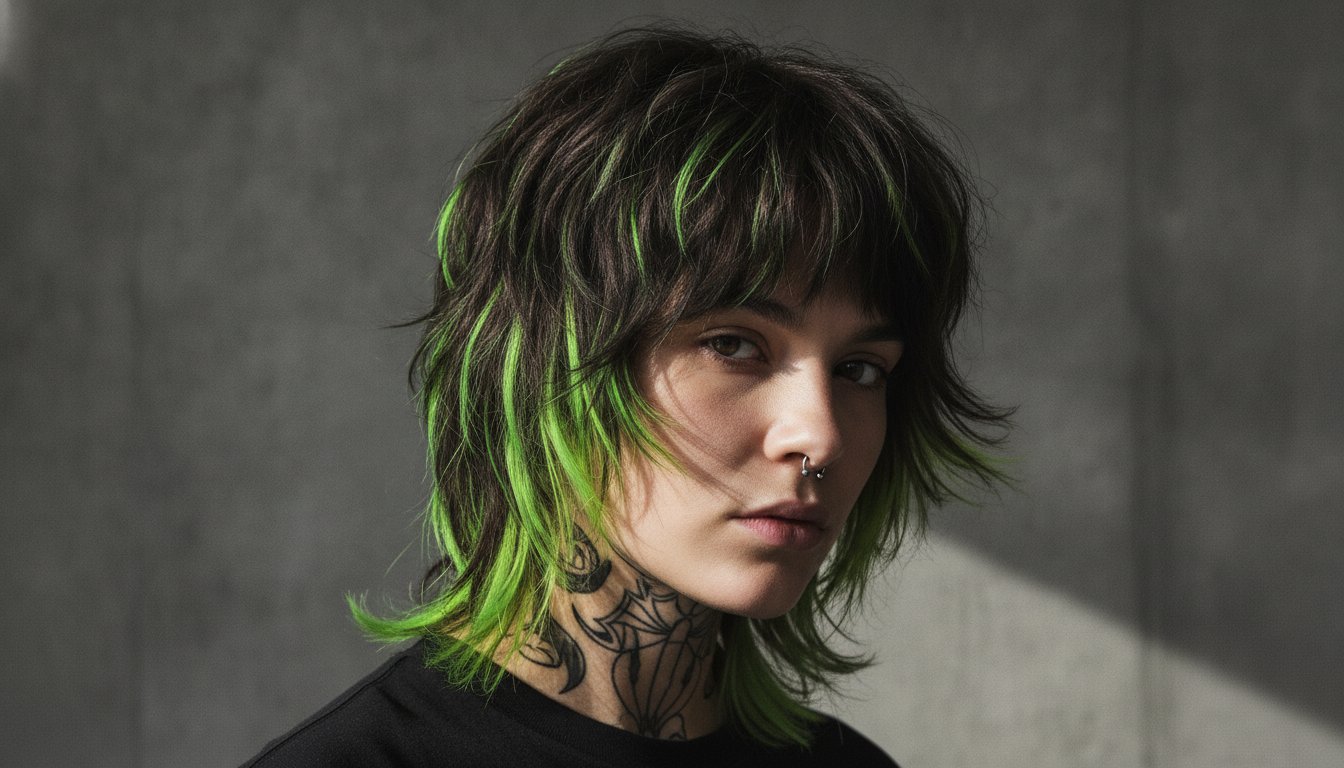

A growing wolfcut doesn’t need to be wrestled back into its original shape. Styling a wolfcut as it grows out means working with its new proportions, not fighting every flipped-out end or shifting layer. If shorter pieces sit differently and the overall shape feels less defined, you’re not imagining it. As your hair grows, your routine can change too.
The aim is to keep the texture and movement that make the cut yours, without turning every morning into a styling battle. This guide covers adaptable ways to wear your wolfcut through changing lengths, from encouraging natural texture to giving stubborn layers direction. You’ll also learn what to try when the shape feels off and when a conversation with a stylist about a reshape could help. A small styling adjustment may be enough. If you want expert support, Heavy Metal Hairdresser specialises in wolfcuts and alternative cuts, with options to discuss what suits your look and comfort.
Key Takeaways
- Learn why the balance between shorter layers, longer lengths and fringe shifts as your wolfcut grows.
- Use a simple damp-hair routine to encourage movement without forcing every layer into place.
- Match your styling approach to whether your cut is in a shorter, in-between or longer grow-out stage.
- Track changes in your silhouette with occasional photos taken in similar light.
- Find out when styling a wolfcut as it grows out may be enough, and when a reshape conversation could help.
Styling a wolfcut as it grows out: why the shape changes
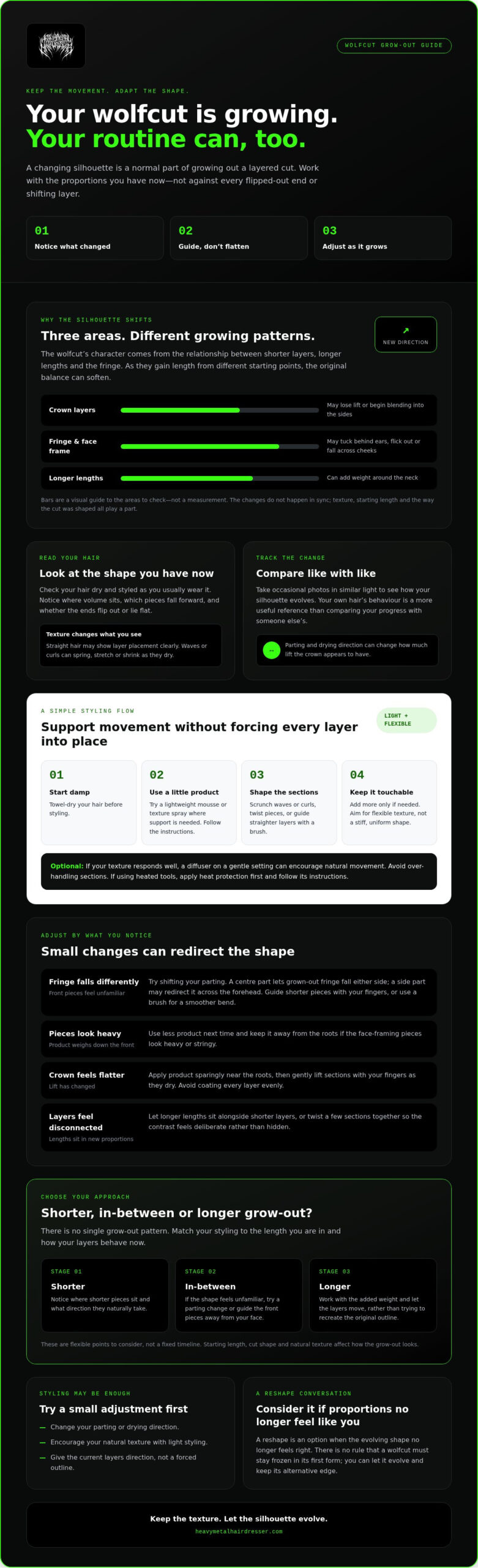
A changing silhouette is a normal part of growing out a layered cut, not a sign that you’ve done anything wrong. A wolfcut’s shape comes from the relationship between shorter crown layers, longer lengths around the sides and back, and the fringe or face-framing pieces. As these sections gain length from different starting points, the balance that made the original cut distinctive can soften.
That structure is part of the cut’s character. A wolfcut is a modern variation of the shag, with layers that create movement and a deliberately undone shape. As the layers lengthen, they may sit closer to the head, blend into surrounding sections or fall in a new direction. The original silhouette can become less obvious, even when the hair still has texture and personality.
There’s no single grow-out pattern. Your starting length, the way the cut was shaped and your natural texture all affect what you see. Straight hair may show changes in layer placement clearly; waves or curls can spring, stretch or shrink as they dry. Styling habits matter too. A parting or drying direction that once lifted the crown might now make it sit flatter. Start by noticing what your hair is doing now, rather than expecting it to follow a fixed timeline.
What changes first as wolfcut layers grow?
The crown layers may lose some lift or begin blending into the sides. Face-framing pieces might reach a length where they tuck behind your ears, flick out or fall across your cheeks, while the longer sections add weight around the neck. These changes don’t happen in sync because each area started at a different length and may behave differently with your texture.
Look at your hair when it’s dry and styled as you usually wear it. Notice where the volume sits, which pieces keep falling forward, and whether the ends flip out or lie flat. This gives you a more useful picture of your shape than comparing your progress with someone else’s hair.
Is the awkward wolfcut stage unavoidable?
Some lengths may feel unfamiliar, especially when the fringe and face-framing sections no longer sit as they did. That doesn’t mean the stage is a failure. Try changing your parting, directing the front pieces away from your face or bringing out your natural texture. A small change in direction can give the layers a different kind of energy.
Growing it out doesn’t mean giving up its alternative edge. You can keep the movement loose and lived-in, let the shape evolve or explore a reshape if the proportions no longer feel like you. There’s no rule that says a wolfcut must stay frozen in its first form.
How to style a growing wolfcut without flattening its texture
Keep your routine light and let the lengths move. Start with damp, towel-dried hair, then work a small amount of suitable styling product through the areas that need support. A lightweight mousse or texture spray can help encourage lift and definition. Follow the product instructions, and add more only if your hair needs it.
Shape sections according to how they sit now. Scrunch waves or curls, twist a few pieces around your fingers, or guide straighter layers into place with a brush. You’re not trying to recreate the exact outline of the original cut. Give the current layers enough direction to look intentional.
Lightweight, adaptable styling helps preserve movement by supporting the layers without weighing them into a stiff, uniform shape. For more upkeep ideas, see this wolf cut maintenance routine, then adjust the approach to suit your hair and preferred finish.
How to shape the fringe and face-framing layers
Try shifting your parting before adding more product. A centre part can let grown-out fringe fall on either side, while a side part may redirect it across the forehead. Use your fingers to separate and guide shorter pieces, or a brush for a smoother bend. If those pieces look heavy or stringy, use less product next time and keep it away from the roots.
How to work with crown layers and longer lengths
For soft lift at the crown, apply product sparingly near the roots and gently lift sections with your fingers as they dry. Avoid coating every layer evenly; varied, touchable texture often looks more natural. Let longer lengths sit alongside the shorter layers, or twist a few sections together so the contrast feels deliberate rather than hidden.
If your texture responds well, a diffuser can help dry your hair while encouraging its natural movement. Try a gentle setting and avoid over-handling the sections; results vary with hair texture and drying technique. If you use heated tools, apply heat protection first and follow its instructions. Aim for a flexible finish, not a locked-in shape.
Styling a wolfcut as it grows out doesn’t require a complicated kit or a perfect blow-dry. To explore how an alternative-cut specialist might approach your current shape, learn more about Heavy Metal Hairdresser’s wolfcut expertise.
Which styling approach suits each wolfcut grow-out stage?
Use the shape in front of you as your guide, not a calendar. “Shorter”, “in-between” and “longer” describe how your layers sit in relation to each other, not how long you’ve been growing your hair. The table offers starting points, not strict rules. Your texture, density and preferred finish all affect what works.
| What you notice | Low-effort option | More defined option |
|---|---|---|
| Shorter layers still dominate; the crown has more shape than the lengths. | Let the crown dry naturally and guide the longer pieces around your face with your fingers. | Separate a few crown sections for texture, then shape the fringe in the direction you want it to fall. |
| In-between lengths are beginning to blend, but some layers still stand apart. | Change your parting and scrunch or smooth the hair according to its natural texture. | Use fingers or a brush to define selected sections, keeping the finish varied rather than uniform. |
| Longer lengths now carry more of the silhouette, with softer or less obvious layering. | Wear the lengths loose and let the remaining layers move around them. | Give a few face-framing or crown pieces extra direction to bring definition back into the outline. |
When the shorter layers still dominate
Let the crown texture do its thing while the longer sections frame your face. Don’t try to make every layer match. For a softer finish, leave the sections less separated; for a pieceier effect, define a few strands with your fingers and a small amount of suitable product. Directing the fringe to the side, forward or away from your face can change the balance without changing the cut.
When the lengths begin to blend together
As layers merge, define a few pieces and leave others relaxed. This keeps movement visible without making the style look overly arranged. Try a different parting or finish before deciding you need to trim back towards the old shape. If an experiment doesn’t work, wash it out or reset your hair with your usual routine. Not every look has to stick.
As the cut gets longer, resist hiding the shorter layers beneath the lengths. Let them sit together, or bring out a few selectively to keep some contrast. These are options, not universal fixes. Choose an approach that suits your hair today, whether that’s barely-there texture or a more deliberate shape.
A practical routine for managing wolfcut growth between trims
A repeatable routine makes it easier to tell whether your wolfcut needs a styling tweak or simply more time. Keep the steps flexible: your texture, preferred finish and available time matter more than following a strict schedule. For more context on the cut and its terminology, explore the ultimate wolfcut guide.
A repeatable wash-day and refresh routine
On wash day, start with clean, damp hair. Choose styling support for the result you want: texture for separation, hold for more definition or smoothing support for a softer finish. Use products according to their instructions, and don’t assume you need the same amount or approach every time.
Change one thing at a time as you style. Try a new parting, a different drying direction or a lighter hand with product, then notice how your hair responds. When you’re short on time, focus on the sections that most affect the outline, such as the fringe or crown, and let the rest settle naturally.
For a useful visual check, take an occasional photo in similar light and from a similar angle. Compare the overall silhouette, not every strand. Are the front pieces sitting differently? Has the crown lost the lift you like? Photos can help distinguish a temporary styling frustration from a change in shape that keeps bothering you.
When should you ask for a reshape?
Consider speaking with a stylist if the outline persistently feels difficult to style or no longer feels like you. A reshape conversation doesn’t automatically mean losing length. It’s a chance to explain the direction you want and discuss what might work with the hair you have now.
Make the conversation specific. Bring your photos and describe your desired length, the sections that frustrate you and the features you want to keep, such as crown texture or face-framing layers. If you’re unsure whether to keep growing it or bring back a more layered shape, comparing related cuts may help. The shag haircut guide offers context on another textured shape.
Styling a wolfcut as it grows out doesn’t mean managing every stage alone. Heavy Metal Hairdresser specialises in wolfcuts and alternative textured cuts. You can explore its wolfcut expertise if you’d like a stylist’s perspective on your current shape.
Keep your growing wolfcut yours: styling support and next steps
Choose what feels right for your hair: keep growing, change how you style the layers or explore a reshape that suits the length you have now. There’s no single correct finish, and you don’t have to preserve the cut exactly as it was on day one.
Styling a wolfcut as it grows out can mean trying small changes and seeing what works. If you’d like another perspective, a stylist experienced with wolfcuts and textured cuts can talk through options for your current shape. Heavy Metal Hairdresser specialises in alternative cuts, including wolfcuts. Any discussion should start with your preferences, not a promised result.
What to bring to a wolfcut reshape conversation
Reference images can help make your ideas clear. Bring examples of shapes you like, as well as details you’d rather avoid. Be open about how much time you want to spend styling, how your hair behaves and how much length you’d like to retain. You know what feels like you; a stylist can discuss how those preferences might work with your hair as it is now.
How to choose your next move
If a change of parting, direction or styling finish makes the shape feel more like yours, an adjustment at home may be enough for now. If the outline repeatedly frustrates you, certain sections remain difficult to wear or the cut no longer reflects how you want to look, a conversation with a stylist could help clarify your options. It’s a discussion, not a commitment to cut.
There’s no rush to decide. Explore wolfcut and alternative styling to learn more about Heavy Metal Hairdresser’s approach and consider what feels right for your hair. Whether you keep growing, restyle or reshape, the best wolfcut is the one you want to wear.
Let your wolfcut evolve on your terms
As your layers change, the shape shifts too. The key to styling a wolfcut as it grows out is adapting your routine to the proportions you have now. Light, flexible styling can keep movement without forcing every piece into its old place. If a parting or texture tweak brings the cut back into balance, keep growing. If the shape persistently feels wrong, a reshape conversation can help you consider your options without committing to a particular result.
Heavy Metal Hairdresser specialises in wolfcuts, shags, mullets and textured styling. Founder Simon Tuckwell is a barber and creative stylist, with backstage experience at Download and Bloodstock. That alternative-cutting background can inform a conversation about what may suit your current length and the look you want to wear.
Explore alternative wolfcut styling and discuss your next cut with Heavy Metal Hairdresser. Keep growing, restyle or reshape. Your hair, your call, and the best wolfcut is the one that feels like you.
Frequently Asked Questions
How do you style a wolfcut while growing it out?
Style the lengths you have now rather than trying to recreate the original outline. Start with damp hair, use a little suitable product for your preferred finish, then shape selected sections with your fingers or a brush. You might redirect the fringe, encourage texture at the crown or let the longer pieces fall naturally. Adjust one thing at a time and see how your hair responds.
How long does it take to grow out a wolfcut?
There’s no fixed timeframe. It depends on your starting length, how much length you want and how your hair grows. A wolfcut also has several layers, so the shape can change before the overall length feels substantially different. Rather than relying on a calendar, notice how the fringe, crown and longer sections sit in relation to each other. Occasional photos in similar light can help you track those changes.
Can you grow out a wolfcut without cutting it?
Yes, you can let a wolfcut grow without cutting it. The layers and fringe will continue to change as they gain length, and you can adapt your parting or styling to suit the evolving shape. Some people prefer to leave every section untouched; others choose to discuss a reshape if the outline becomes difficult to wear. A cut isn’t required to grow it out, and the choice is yours.
What should you do with wolfcut layers as they grow?
Let the layers work with their new proportions instead of forcing them into their original positions. If the crown still has visible texture, bring out a few pieces; if the layers are blending, try a different parting or define selected sections. Keep the finish flexible, and avoid adding more product if shorter pieces start to look heavy or separated. Let your hair’s texture and the look you enjoy guide your approach.
How do you style wolfcut bangs when they get longer?
Experiment with the direction and parting. Longer fringe can be guided to either side, worn across the forehead or blended into face-framing pieces, depending on its length and how it naturally falls. Use your fingers for a relaxed finish or a brush for a smoother bend. Apply product sparingly, especially if the fringe is fine or easily weighed down. If it keeps falling in a way you dislike, ask a stylist about options.
Does a wolfcut look good at every length?
A wolfcut can evolve through different lengths, but whether you like the look is personal. As it grows, the balance between crown layers, fringe and longer sections changes, so the original silhouette may soften or take on a different character. Styling can help you explore the in-between shape, but there’s no obligation to love every stage. Choose the length and finish that feel comfortable and expressive for you.
When should you get a wolfcut reshaped?
Consider discussing a reshape if the outline persistently feels difficult to style or no longer reflects the look you want. Bring reference images, explain which sections bother you and say how much length you’d like to keep. A conversation with a stylist experienced in wolfcuts and textured cuts can help clarify possible directions, but it doesn’t commit you to a cut. If a styling change is working, there’s no need to rush.