What if your bob could keep its shape without looking too polished? A shaggy bob haircut combines the bob’s outline with the shag’s movement, creating a lived-in, textured shape that can feel unmistakably yours. The tricky part is that inspiration photos often show very different lengths, layers and fringes under the same name.
If you’re unsure whether you want a soft, blended shape or something choppier, you’re not alone. Fringe can shift the whole mood, while a small change in length or layer placement can take a cut from relaxed to full-on rock ’n’ roll. Rather than copying a picture blindly, identify the details that suit your hair and the way you want to wear it.
This guide explains what defines a shaggy bob, how its shape can be tailored, and what to discuss before your next cut. We’ll look at length, layers, fringe and styling, plus how a shaggy bob differs from nearby cuts such as the wolfcut. Heavy Metal Hairdresser specialises in shags and textured alternative styles, so you can use this guide to build a clearer brief and feel more confident about the shape you want.
Key Takeaways
- A shaggy bob haircut pairs a bob-length outline with shag-inspired layers and texture, but there’s no single template to copy.
- Choose the length, layer placement and fringe to match the shape and finish you want; each detail can shift the overall look.
- Use reference photos from multiple angles, and point out exactly what you like in each to build a clearer haircut brief.
- Heavy Metal Hairdresser is an inclusive salon founded by creative stylist Simon Tuckwell, specialising in shags and textured cuts shaped around individual style.
- HMH merchandise is available only at the new merch store, whilst Wolfcut course orders are still accepted on the Heavy Metal Hairdresser website.
What Is a Shaggy Bob Haircut, and What Makes It Different?
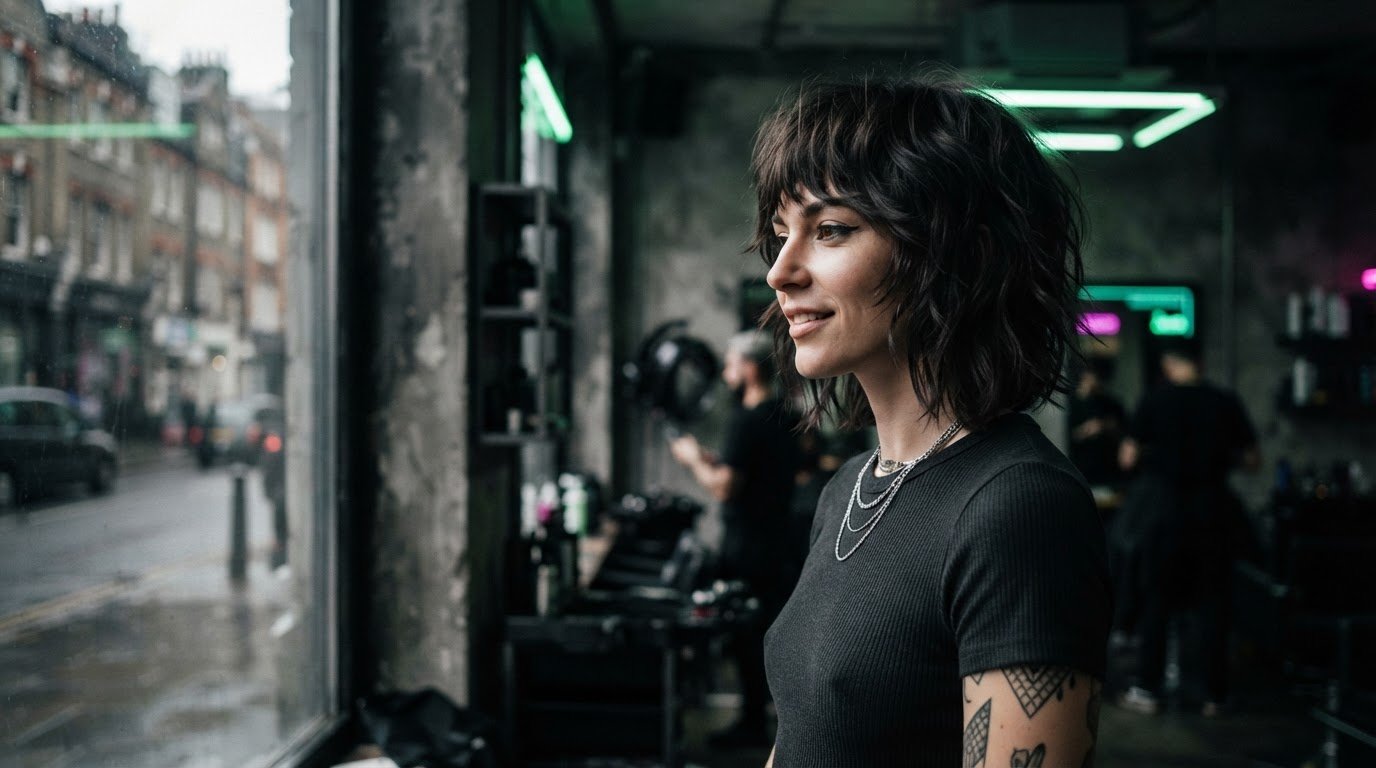
A shaggy bob haircut combines a bob-length silhouette with shag-inspired layers and texture. The bob gives the cut its outline; the layers add movement and a deliberately undone finish. There’s no fixed template. The shape might sit near the jaw, skim the shoulders or land somewhere between, with the layers designed to work with the length and the finish you want.
A shaggy bob is defined by its bob-shaped outline and deliberately textured finish.
That balance sets it apart from a blunt bob, where a cleaner, more uniform edge tends to take centre stage. Choppy or feathered layers break up the outline and add visible movement, while the length keeps the shape recognisably bob-like. The result depends on how the outline and layers work together, not simply on adding “shaggy” layers to any short cut.
Fringe often features in shag-inspired styles, from a soft, parted shape to a more broken-up fringe, but it isn’t essential. A fringe-free version can still have the textured layers and bob outline that give the cut its character. The history and types of bob cuts offer useful context for the variety of bob silhouettes.
How the bob shape and shag layers work together
Think of the bob as the cut’s outer boundary, not a universal jawline length. A shorter outline can feel compact, while a longer one may brush the shoulders. Within that frame, layers can be subtle and feathered or more visibly choppy. Their placement changes where the texture catches the eye and how the outline reads, allowing the shape to be tailored rather than copied from a single reference.
Hair texture and density matter to the design. A layer that looks airy in one reference may sit differently on another head of hair. Bring the image as a starting point and describe the detail you’re drawn to: perhaps the broken-up ends, the shape around the face or the overall length. A shag haircut shares the same movement-led spirit, but its outline can extend well beyond bob length.
How a shaggy bob differs from a longer shag or wolfcut
The clearest difference is the silhouette. A longer shag can carry its layers well past the shoulders; a shaggy bob keeps the overall shape within bob territory. Both can have texture throughout, but the shorter outline makes the bob’s perimeter a more prominent part of the look.
A wolfcut often creates more contrast between a fuller, more layered crown and a longer, narrower perimeter. A shaggy bob can borrow choppiness or crown texture without taking on that whole silhouette. Since inspiration photos can use these names interchangeably, focus on the outline you want to keep and where you want the most visible texture. That gives you a clearer starting point for discussing the cut.
How Is a Shaggy Bob Built? Length, Layers and Fringe Explained
A shaggy bob isn’t one preset cut with a fixed length, mandatory fringe and layers in the same places. Its shape comes from choices made together: where the outline sits, how the layers break it up, and whether fringe becomes part of the frame. Change one element and the balance shifts. That’s the useful part: you can describe the effect you want rather than ask for a one-size-fits-all version.
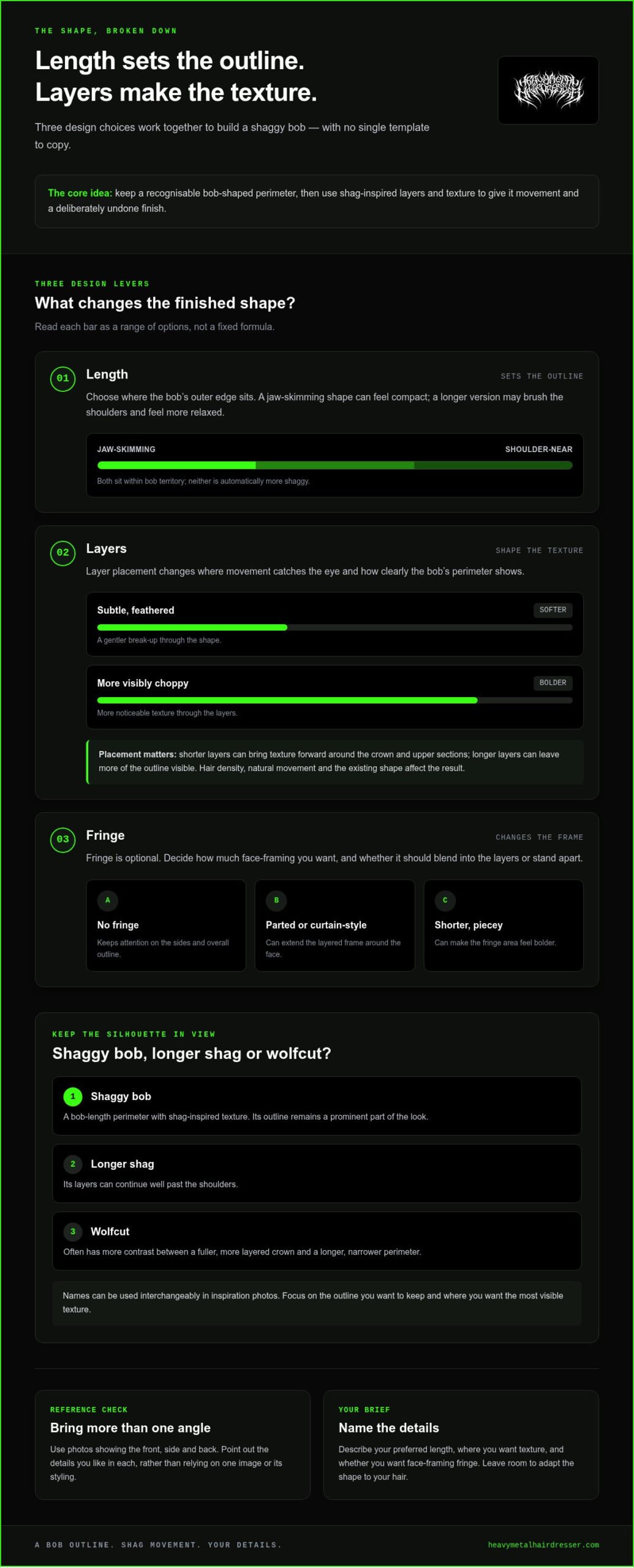
Length sets the outline, layer placement shapes the texture, and fringe changes the frame.
Choosing the length of a shaggy bob
A jaw-skimming shape can look compact and make the outline a strong feature. A longer, shoulder-near version may feel more relaxed, with extra length around the neck and shoulders. Neither is automatically more “shaggy”. The impression depends on how the layers work with the chosen perimeter. For a clearer brief, bring references showing the front, side and back, not just the angle that first caught your eye.
Look for the details the pictures share, and the ones that differ. Maybe you like the short outline in one, the longer front pieces in another, or the way the back sits close to the neck. Naming those details helps separate the shape you want from the styling in the photo. A discussion of cosmetology techniques for bob haircuts can also help explain why a bob’s outline and its internal layers are distinct design choices.
What layers and fringe change in the finished shape
Layers create the broken-up surface that gives the cut its shag-inspired character. Shorter layers can make texture more noticeable around the crown and upper sections; longer layers can keep more of the outline visible while softening a solid, blunt finish. These are design possibilities, not guaranteed results. Hair density, natural movement and the existing shape all affect how a particular layer placement will look.
Fringe is a choice, not a rule. A parted or curtain-style fringe can extend the layered frame around the face, while a shorter, more piecey fringe can make that area feel bolder. Leaving the forehead clear keeps attention on the sides and overall outline. Think about how much face-framing you want and whether you’d rather the fringe blend into the layers or stand apart.
- Length: Decide whether you’re drawn to a jaw-skimming outline or one closer to the shoulders.
- Layers: Point out where you want the texture to show, such as around the crown, sides or ends.
- Fringe: Choose whether you want a face-framing detail, and describe its length or shape.
Take those preferences into your haircut conversation, while leaving room to adapt the details to your hair. If you’re drawn to textured, individual cuts, explore Heavy Metal Hairdresser’s shag haircut work as you shape your brief.
Will a Shaggy Bob Suit Your Hair and Personal Style?
A shaggy bob haircut can be adapted for different hair textures and personal styles. Instead of asking whether your hair or face fits a fixed ideal, consider how you want the cut to feel and how its layers can work with your hair’s natural behaviour and your day-to-day styling habits. Treat a reference photo as a starting point, not a contract.
Use the table to turn a broad mood into a practical conversation. These are possible directions, not guaranteed outcomes: hair density, texture and the cut’s overall shape all influence the finished look.
| Desired finish | Possible design direction | Question to discuss with your stylist |
|---|---|---|
| Soft and understated | A quieter outline with less obvious separation between layers | How can the texture stay subtle? |
| Choppy and undone | More visible variation through the layers | Where should the broken-up texture show most? |
| Bold and alternative | A stronger contrast between the outline and textured sections | How can the shape feel expressive without losing the bob silhouette? |
What to consider for fine, thick, straight or wavy hair
Hair density and natural texture affect how layers appear, but they don’t dictate one correct version. If your hair is fine, discuss how much separation you want before the outline feels too broken up. With thick hair, talk through where you’d like the shape to feel lighter or more compact. Straight hair and waves can show the same layering differently, so bring references with a texture close to your own and discuss how the cut could be adapted.
Matching the cut to an alternative or understated look
The same bob-and-shag structure can create very different moods. A softer finish might feel relaxed and low-key; a choppier arrangement can bring a sharper, more rebellious edge. You don’t have to choose between “alternative” and “polished” as fixed categories. Describe the attitude you want, whether that’s soft, bold, messy or deliberately undone, and say what you’d rather avoid.
Think beyond the photograph, too. If the reference looks heavily styled but you prefer a more natural finish, say so. If you want the layers to be the main event, explain where you’d like them to stand out. Your preferred effort level matters alongside the look: a cut should make sense for how you like to wear your hair, not only for how it appears in a still image.
How to Prepare a Clear Shaggy Bob Brief for Your Haircut
A saved photo can spark an idea, but it won’t always show the details that make the cut work for you. Before your appointment, turn the inspiration into a short, clear brief. For a shaggy bob haircut, focus on the outline, the amount and placement of layering, whether you want a fringe, and how much effort you’re happy to put into styling your hair day to day.
A useful haircut brief covers the outline, layer placement, fringe preference and reference images.
- Choose the outline. Describe the length you have in mind and where you’d like the shape to sit.
- Identify your layer preference. Explain whether you want subtle movement or more visible, choppy texture.
- Decide about fringe. Say whether you want a fringe, are unsure, or prefer to keep it out of the design.
- Share references. Bring images that show the shape and details you’re drawn to.
Build a reference board that shows the details you want
Choose a small set of pictures with a similar overall length to the one you’re considering. Include front, side and back views where possible, as each angle reveals something different about the outline and layers. Note what appeals to you in each image: perhaps it’s the fringe in one, the silhouette in another, or the broken-up texture in a third. No single photo has to show the whole result.
Inspiration images can show different hair textures, styling and lengths, even when they’re all tagged as the same cut. Be clear about what you want to borrow and what you don’t. “I like this fringe, but want a longer outline” gives a more useful starting point than asking for an exact copy of a photo.
Questions to discuss before the first cut
Use your references to guide a collaborative conversation. Talk about how visible you want the layers to be, where you’d like the texture to stand out, and whether you want a fringe that blends in or makes a statement. Then discuss the length you’re aiming for, including which details of the outline matter most to you.
Be candid about your everyday routine, too. How do you usually wear your hair? How much time do you want to spend styling it? There’s no need to promise yourself a new routine just to match an image. These answers help shape a cut around your preferences without assuming that a particular finish will require no effort.
If you’re undecided, say so. Bring two possible directions and explain what you like about each; the conversation can help clarify the details before the cut begins. Heavy Metal Hairdresser specialises in shags and textured cuts shaped around individual expression. Explore shag haircut services as you prepare your brief.
Get a Shaggy Bob with Heavy Metal Hairdresser
A shaggy bob should feel like your cut, not a carbon copy of someone else’s. Heavy Metal Hairdresser is an alternative, inclusive salon founded by barber and creative stylist Simon Tuckwell. The salon’s work with shags and textured cuts gives you room to talk through the shape you want, from a softer, broken-up outline to something with more attitude.
Heavy Metal Hairdresser has worked backstage at Download and Bloodstock, bringing its alternative hair experience into a welcoming space where individuality is celebrated. Bring your reference images, preferences and any details you’re unsure about. The conversation can focus on what matters to you: length, visible texture, fringe and how you want the finished shape to express your style.
A haircut conversation built around your individuality
You don’t need technical language or one perfect inspiration photo. Say what you like, what you’d change and how you usually wear your hair. Perhaps one image has the right outline, while another captures the texture you’re after. Sharing those distinctions makes your brief clearer and gives the cut conversation a useful starting point.
Heavy Metal Hairdresser is an inclusive, gender-inclusive salon. Bring your full self and be direct about the look you want, whether that’s subtle, choppy, bold or deliberately undone. A good reference brief isn’t about handing over control; it helps turn your ideas into a focused conversation about a shape that feels individual.
Book your shaggy bob haircut
Ready to take the next step? Use the site’s Book In option to book a haircut with Heavy Metal Hairdresser. Bring your references and notes about length, layers and fringe. They’ll help explain the look you’re aiming for and give you a clear place to begin.
Quick site note: Heavy Metal Hairdresser merchandise is no longer sold on this website and is available only at the new merch store. Wolfcut course orders are still accepted here on the Heavy Metal Hairdresser website.
If a shaggy bob feels like your kind of shape, bring your brief and book a haircut with HMH. Make it yours.
Make Your Next Cut Unmistakably Yours
Your next step doesn’t have to be a perfect picture or a fully decided plan. Bring a rough idea, a few notes and an open mind about how the details can come together. The right shaggy bob haircut should feel like an expression of you, not a trend you have to squeeze yourself into.
Keep your brief close. It can help you explain what you’re drawn to, what you’d rather avoid and how you want to feel with your new shape. You’re allowed to refine the idea as you talk it through. That’s part of making the cut personal.
Ready to turn your references into a haircut conversation? Book a shaggy bob haircut with Heavy Metal Hairdresser and bring the details that make the look yours.
Go bold, stay true to yourself, and let your next cut make its own noise.
Frequently Asked Questions
Can you have a shaggy bob without a fringe?
Yes, a shaggy bob haircut can work without a fringe. The layered texture and bob outline can carry the look on their own, with the front sections blending into the sides instead. If you’re growing out a fringe or prefer your forehead clear, mention that before the cut. A reference with a fringe-free front view can help make your preference clear, especially if other pictures you like show a fringe.
Can a shaggy bob be worn with glasses?
Yes. Glasses and a shaggy bob can work together; the frames and hair simply share space around your temples and cheeks. If your glasses have thick arms or sit close to your face, bring them to your haircut so you can see how the side sections fall around them. Mention whether you want hair tucked behind your ears or prefer it loose, as that can affect how you like the sides to sit.
Can a shaggy bob be cut asymmetrically?
Yes, an asymmetrical outline is an option. You might prefer one side to sit slightly longer, or want the front sections to angle differently from the back. The more pronounced the difference, the more it becomes a key feature of the cut. Bring a reference that shows both sides, and describe how noticeable you want the imbalance to be rather than relying on a front-facing photo alone.
Can you tie a shaggy bob back?
Sometimes, depending on the cut’s length and which sections are long enough to gather. A longer bob may allow a small ponytail, while a shorter shape might be easier to sweep back with clips or pins. Layers can leave shorter pieces free, so don’t expect every strand to stay secured. If tying your hair back matters to you, mention it before the cut and show how you usually wear it.
How do you grow out a shaggy bob?
Growing out a shaggy bob means letting the outline and layers gain length at different rates, so the shape may change as it grows. Decide whether you want to keep a bob-like silhouette for a while or move towards a longer cut. At a future haircut, explain that growing it out is the goal before taking off length. This helps keep the next shape aligned with where you want your hair to go.
Can a regular bob be changed into a shaggy bob?
Yes, a regular bob can be reshaped with layers and texture, though the approach depends on its current length and shape. If you want to keep as much length as possible, say so clearly before making a substantial change. Bring a picture of your current hair as well as the finish you’re aiming for. That gives your stylist a useful view of the starting point and the details you want to change.
Is a shaggy bob suitable if you prefer a less polished look?
Yes. A shaggy bob can suit a deliberately relaxed, less uniform finish, with the amount of texture tailored to your taste. Tell your stylist you’d rather have movement and a slightly undone feel than a sharply defined, pristine outline. It also helps to describe how you normally wear your hair, so the cut’s character can fit your everyday style rather than relying on a carefully posed reference photo.