

Your shag shouldn’t need a full rebuild every morning. But one night on the pillow can flatten the crown, split carefully cut layers or send your fringe in a direction you never chose. If you’re wondering how to sleep with a styled shag and keep its movement, you’re not alone. The aim isn’t to freeze every piece in place. It’s to reduce friction and pressure so the shape you’ve already created is easier to revive.
A simple bedtime routine can help your layers hold on to their texture without leaving you uncomfortable or tangled in complicated styling tricks. This guide covers how to prepare your hair, choose between a smooth pillowcase and a loose protective tie-up, and avoid crushing your fringe and crown overnight.
In the morning, you’ll learn how to bring back a little lift and definition with a quick refresh, rather than a full wash-and-style reset. Shags are built for movement. Let’s keep yours looking like itself.
Key Takeaways
- Learn how to sleep with a styled shag by choosing an overnight method that suits your hair’s length, texture and comfort.
- Check whether your hair is dry, slightly damp or carrying plenty of product before deciding what, if anything, to do before bed.
- Compare a smooth pillowcase, a loose bonnet and a high gather to find a way to protect your layers without forcing them flat.
- Use a short, adaptable bedtime routine to limit the effects of pillow pressure, friction and tossing.
- Spot when recurring fringe or layer problems may call for a shag shape better suited to your texture and routine.
Why does a styled shag look different after a night’s sleep?
A shag is built on contrast: shorter layers around the crown, face-framing pieces and longer lengths all move in their own way. A pillow can press those sections in different directions as you sleep. You might wake to a flattened crown, a fringe pushed off course or longer pieces that look less defined than they did at bedtime.
Overnight shag protection is about reducing friction and pressure so your existing shape keeps its movement, not setting a brand-new style while you sleep. That’s the aim when working out how to sleep with a styled shag: wake up with the character of your cut still there, even if it needs a quick adjustment.
What happens to shag layers while you sleep?
The crown and shorter layers can be pressed against the pillow, especially if you sleep on your back or turn from side to side. Pressure may squash lift at the roots, while friction can shift your fringe or rub pieces out of their intended direction. Longer sections can spread across the pillow and separate, leaving them fluffy, uneven or less defined.
There’s no single overnight result. Hair texture, length, the products already in your hair and your sleeping position all affect how much the shape changes. A short, straight fringe may show a shift quickly; a longer, wavier section may simply lose some separation. Notice what tends to move on your own head. That’s more useful than expecting every layer to behave identically.
Is the aim to style your shag or protect it?
Some overnight techniques are designed to create a new wave pattern or curl. That’s different from protecting a shag you’ve already styled. If your hair is finished for the day, focus on limiting rubbing and crushing. There’s no need to twist it into a new shape or add moisture in the hope of waking up with a different texture.
Protection can reduce disruption, but it can’t guarantee a perfect wake-up. Your fringe may still need repositioning, and the crown might need a light lift. Think of your routine as keeping the cut’s movement within reach, not locking every strand in place. The shag’s deliberately layered character is part of what makes it distinctive; this shag haircut overview offers a useful historical and descriptive snapshot.
If you want to understand how the cut’s layers work together, the shag haircut guide explores the shape and its appeal. Knowing what your layers are meant to do makes it easier to tell normal sleep-softened texture from a shape that repeatedly falls awkwardly.
Prepare your shag before bed without flattening its texture
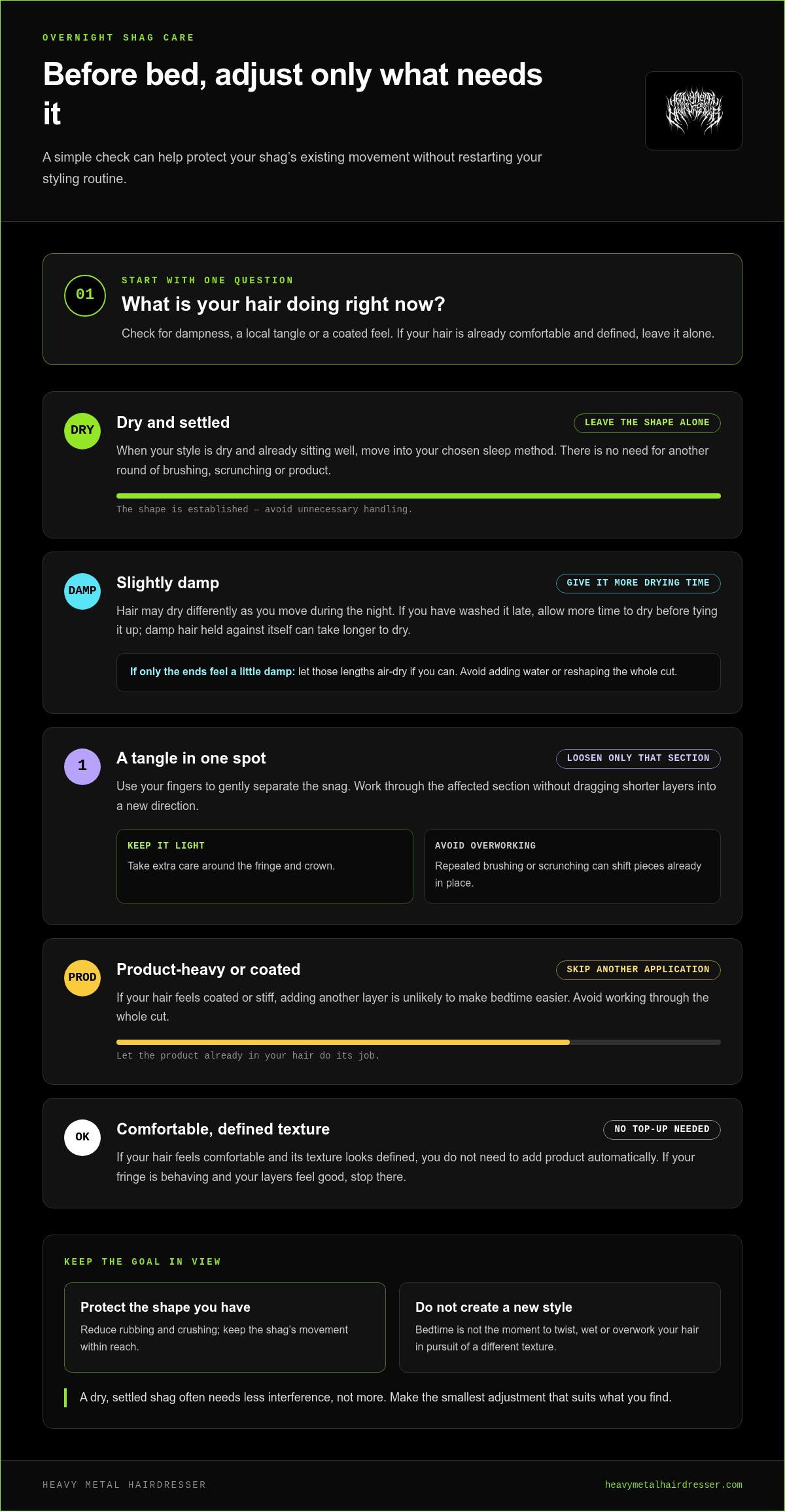
Before choosing how to sleep with a styled shag, check what your hair is doing. Is it fully dry and settled, slightly damp from a late wash, or carrying enough product to feel coated? Each state calls for a different level of fuss. Bedtime isn’t the moment to restart your styling routine. A finished shape often needs less interference, not another round of brushing, scrunching or product.
Bedtime preparation should support your shag’s existing shape, not impose a new one. Keep the check simple: notice where hair feels damp or tangled, then adjust only those areas. If the cut already has the separation and movement you like, leave it alone.
Should you go to bed with a shag wet or dry?
A dry, settled style is generally easier to protect because its shape is already established. Slightly damp hair may dry differently as you move during the night, so don’t rely on going to bed with wet lengths to create dependable texture. If you’ve washed your hair late, allow more time for it to dry before tying it up. Damp hair held against itself can take longer to dry.
If only the ends feel a little damp, avoid adding more water or reshaping the whole cut. Give those lengths more time to air-dry if you can. A rushed bedtime reset can disturb the fringe and crown that were already sitting well.
A quick pre-sleep check for product and tangles
Look for obvious snags rather than treating your whole head as a problem. Use your fingers to gently separate a tangle, working through the affected section without dragging shorter layers into a new direction. Keep your touch light around the fringe and crown. Repeated brushing or scrunching can shift pieces that were already in place.
Take the same considered approach with product. If your hair feels coated or stiff, adding another layer is unlikely to make bedtime easier. If it feels comfortable and the texture looks defined, there’s no need to top it up automatically. Let what’s already in your hair do its job.
- Dry and settled: Leave the shape alone, then move into your chosen sleep method.
- Slightly damp: Give it more drying time and avoid tying it up while it’s still wet.
- Tangled in one spot: Loosen only that section gently with your fingers.
- Product-heavy: Skip another application and avoid working through the whole cut.
Keep the routine comfortable. If the fringe is already behaving, don’t pin it into a position it doesn’t naturally sit in. If your layers feel good, stop there. A shag shaped around your texture and everyday routine can make these small decisions feel more intuitive. Learn about Heavy Metal Hairdresser’s shag expertise and its approach to cuts that express your individuality.
Choose an overnight method that suits your shag’s length and texture
There’s no single sleep setup that works for every shag. A short, choppy cut may be hard to gather without bending layers into odd angles, while longer hair can be easier to contain. Your texture and how much coverage feels comfortable matter too. The best method protects your shape comfortably without pulling your hair into a new one.
When deciding how to sleep with a styled shag, compare the options by what they do: reduce rubbing, contain longer lengths or keep hair loosely gathered away from the pillow. Treat the benefits as possibilities, not promises. Your layers may still shift, but a method that fits your cut is less likely to squash it unnecessarily.
When a smooth pillowcase may be enough
A smooth pillowcase gives your hair a less textured surface to move against, without tying it up or adding tension. It’s a low-effort option for short shags, layers that don’t gather neatly, or anyone who finds headwear uncomfortable. It won’t stop all movement or guarantee your fringe stays put, but it lets you leave the cut loose instead of forcing short pieces into a tie.
When to try a loose bonnet or high gather
A loose bonnet can contain longer layers and keep them from spreading across the pillow. A loose high gather may also suit longer hair, lifting lengths away from the back of your head. Keep any hold soft and relaxed. If short layers poke out or your fringe gets pulled back, leave it loose or switch methods. Comfort comes first.
| Method | May suit | Likely benefit | Possible drawback |
|---|---|---|---|
| Smooth pillowcase | Short shags or anyone avoiding headwear | Less direct rubbing, with hair left loose | Hair can still shift against the pillow |
| Loose bonnet | Longer or fuller layers | Contains more of the hair | May feel uncomfortable or disturb the fringe |
| Loose high gather | Longer lengths that gather easily | Keeps lengths away from the pillow | Can distort short layers or pull at the hairline |
Let your haircut guide how much gathering makes sense. If your shag sits around the jaw or has lots of short crown layers, a tie may catch some pieces and leave others bent or loose. A smooth sleep surface can be simpler. With longer lengths, a bonnet or high gather can contain more hair, but neither should feel tight. Take it down if you notice pulling at the hairline or pressure where the hair is secured.
Try one method for a few nights and notice what happens to the crown, fringe and ends separately. If the crown stays lifted but the fringe shifts, you may only need to adjust how it sits before bed, not change the whole setup. Keep the method that feels easy to sleep in and leaves the most movement intact. Bedtime doesn’t need to become a styling battle.
Follow this simple bedtime routine to protect a styled shag
A useful routine should feel quick, not like a second styling session. Check what your hair needs, protect it in a way that suits its length and texture, then leave it alone. The point of sleeping with a styled shag is to make mornings easier, not force every layer into perfect formation overnight. Adapt the steps to what feels comfortable for you.
The bedtime sequence: check, protect and settle
Start by checking your hair. If it’s still damp, give it more time to dry before gathering or covering it. Then gently place any wayward layers with your fingers. Don’t pull the fringe into an awkward position or tighten a hold to keep every piece still. Choose the sleep method that feels easy to settle into.
- Check your lengths. Make sure your hair is dry enough for the method you’ve chosen. If it’s damp, avoid tying it up and allow more drying time.
- Ease apart obvious tangles. Use your fingers on the affected section only. Leave the rest of your shag undisturbed.
- Settle the fringe and layers loosely. Let shorter pieces fall naturally instead of forcing them back or pinning them down.
- Choose your protection. Leave short layers loose on a smooth pillowcase, or use a loose bonnet or relaxed high gather if your longer hair sits comfortably that way.
- Check for tension. Before you settle, make sure nothing is pulling at your hairline or pressing uncomfortably against your head. Loosen or remove it if it is.
That’s enough. You don’t need to add styling product as a final step unless your hair genuinely needs it. Extra product can make an already coated style feel heavier, while more scrunching or brushing may disturb the shape you’re trying to protect.
The morning reset: revive the shag, not the whole routine
In the morning, release any covering or gather gently. Give compressed layers a moment to fall, then use your fingers to bring back separation. Check the fringe, crown and longer lengths separately. Refresh only the parts that need attention rather than brushing through or reworking the whole cut.
If one section still looks flattened, try lifting it at the roots with your fingers and letting it settle. A small amount of water or styling product may help, but both are optional. Start with less than you think you need, then reassess before adding more. The result may not look salon-fresh, and it doesn’t need to. You’re aiming to bring back movement without restarting the full routine.
If your shag’s shape keeps fighting your everyday routine, Heavy Metal Hairdresser specialises in expressive shag cuts. Its shag haircut expertise is grounded in shaping that works with your texture and individuality.
When your shag needs a better shape, start with a cut built for you
A bedtime routine can help protect the style you already have. It can’t change where your layers sit or make a fringe fall in a direction it naturally resists. If your crown looks flat one morning, that may simply be sleep. If the same sections fall awkwardly day after day, even after you’ve tried different ways to protect and refresh them, the cut itself may be part of the picture.
Signs the issue may be the cut, not your sleep routine
Look for a pattern rather than judging your shag after one rough night. Recurring signs might include layers that keep separating in an unbalanced way, a fringe that persistently fights its natural direction, or sections that still don’t sit as intended after a gentle finger refresh. Different sleep methods can help you work out whether pressure is the main culprit, but they can’t correct a shape that feels off in everyday life.
Notice when the trouble appears. Does the fringe misbehave before you go to bed, too? Do the layers feel unbalanced whether your hair is loose or gathered? Those details are useful clues. When discussing a cut, explain your texture, how you usually wear your hair and how much time you want to spend styling it. Mention the parts you like as well as the ones that frustrate you. The aim is a shape that feels like yours, not a copy of someone else’s shag.
Make your shag fit your texture and your everyday life
Shag shaping can take your individual texture, personal expression and styling habits into account. That doesn’t mean a tailored cut will remove every bit of morning effort. It means the shape can be considered alongside the way your hair moves and how you want to wear it. A routine that fits your life matters as much as the look you’re after.
If you’re exploring cuts beyond the shag, this alternative hair styles guide offers inspiration across expressive looks. Heavy Metal Hairdresser specialises in shags and textured alternative styling, with an individuality-led approach to shaping. A cut built around your texture can make everyday styling feel more manageable while keeping your look distinctly yours.
For more on Heavy Metal Hairdresser’s approach, visit its shag styling page.
Let your shag work with you
Your hair doesn’t need to wake up perfectly arranged to look like itself. The right overnight habits can help, but your cut should also make sense for your texture, taste and everyday routine. If you keep fighting the same layers each morning, that’s useful information, not a styling failure. Let it guide your next step.
For ideas on how to sleep with a styled shag and make the shape feel more personal, look beyond your pillow routine. Heavy Metal Hairdresser, founded by barber and creative stylist Simon Tuckwell, specialises in shags, wolfcuts, mullets and textured styling. Simon has also worked backstage at Download and Bloodstock, bringing alternative hair expertise to expressive cuts.
Explore Heavy Metal Hairdresser’s shag expertise and find a shape that feels like you. Keep your layers untamed, your routine comfortable and your style entirely your own.
Frequently Asked Questions
Should I sleep with my shag fringe pinned back?
Usually, leave your fringe unpinned if you want it to keep its usual direction. A tight clip can pull shorter pieces back or leave them sitting oddly when you take it out. If it falls across your face and bothers you, try laying it loosely to one side without tension. In the morning, check its natural parting before repositioning it rather than forcing it into a style it won’t hold comfortably.
Can you sleep with a short shag in a bonnet?
Yes, but a bonnet may not be the easiest fit for every short shag. Short crown layers or a fringe can shift beneath the edge, and the bonnet may feel bulky if there isn’t enough length to gather. Try it while you’re winding down and check that it doesn’t press your fringe flat. If it feels restrictive or keeps slipping, leave your hair loose instead.
Is a silk or satin pillowcase better for a shag?
Either can provide a smoother surface than a more textured pillowcase, so comfort and preference can guide your choice. There’s no need to assume one will preserve your style completely or suit every hair texture. If you tend to move around, notice whether your fringe or crown shifts on your current pillowcase first. Choose an option you find comfortable enough to use consistently, rather than treating fabric as a fix for every morning hair wobble.
Can I sleep with sea salt spray in my shag?
You can sleep with sea salt spray in your hair if it’s already part of your finished style and feels comfortable. Don’t add another layer automatically before bed. If your hair feels stiff, gritty or coated, leave it alone overnight and decide in the morning whether it needs attention. Follow the directions on your chosen product, as use can vary between formulas. Sea salt spray isn’t essential to protect a shag while you sleep.
How do I sleep with a curly shag without losing definition?
For a curly shag, avoid stretching the curls into a tight tie or pressing them under a snug covering. If your hair is long enough, gather it loosely so the curls aren’t pulled taut; otherwise, try a comfortable bonnet or leave it loose on a smooth pillowcase. In the morning, work with the curl groups that have formed. Pulling them apart too soon can make the overall shape look less defined.
What if my shag looks flat at the crown when I wake up?
Give the crown a moment to settle before deciding it needs a full restyle. Change your parting slightly to reveal lift from a less compressed section, then check the silhouette from the front and sides. If the same flat spot appears most mornings, try a different sleeping position or overnight method for a few nights and compare. A recurring issue may also be worth discussing as part of your haircut’s shape.
Do I need to wash my hair before sleeping with a styled shag?
No, you don’t need to wash your hair just because you’re going to bed with a styled shag. If it’s clean enough for you and the style feels comfortable, leave it as it is. Washing late can mean going to bed before your hair has fully dried, which may leave the shape unpredictable by morning. If you do wash it, give it time to dry before gathering or covering it.