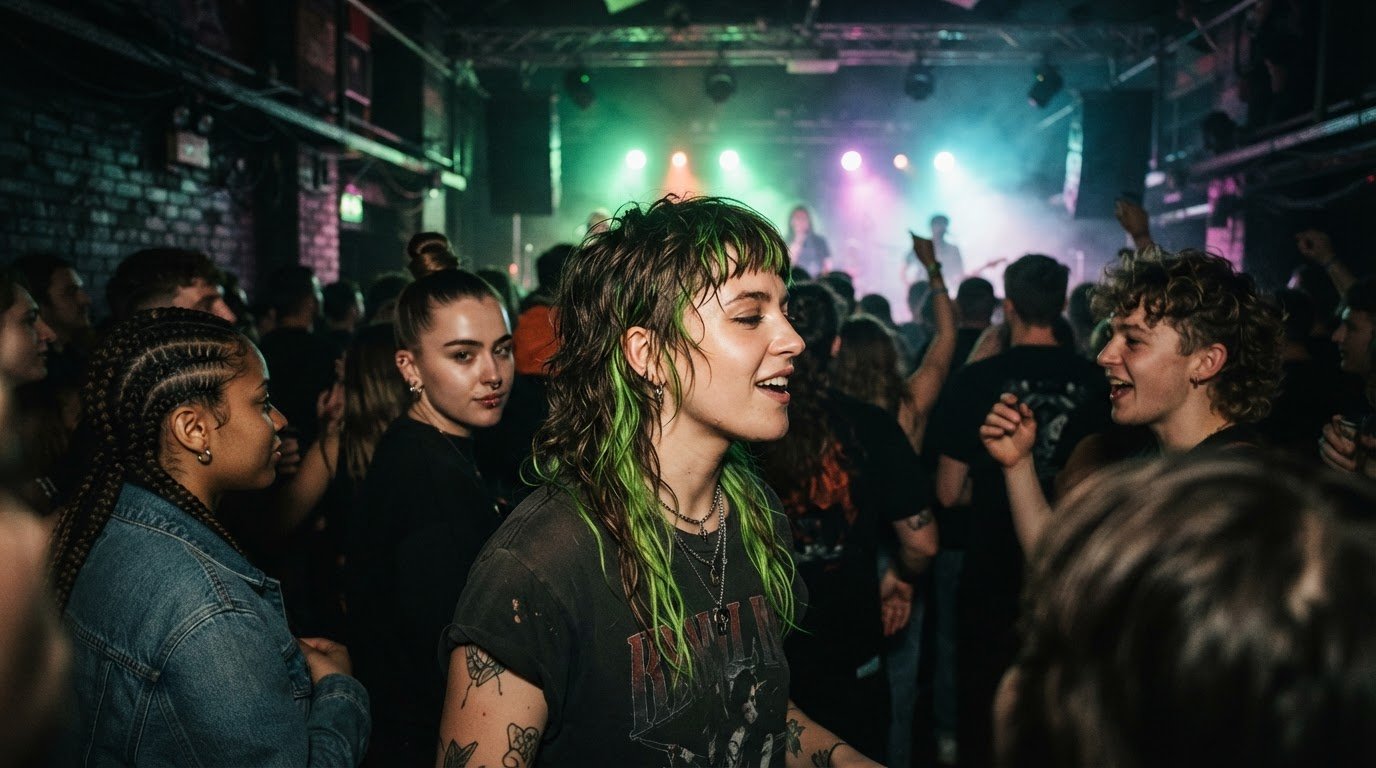
The best concert hair isn’t the style with the hardest hold. It’s the one that stays out of your face, feels comfortable in a crowd and still looks like you when the encore hits. If you’re weighing up flyaways, your hair length or texture, or how much time you want to spend getting ready, start with what you’ll be doing at the gig. The best concert proof hairstyles suit your hair and the night, not an impossible standard of perfection.
Here are 10 looks for different lengths, textures and concert plans, from braids and practical updos to undone, textured styles. You’ll also find a straightforward way to prepare your hair and make small adjustments during the show, without relying on a complicated routine or a flawless finish.
Heavy Metal Hairdresser’s alternative cuts and textured styling offer plenty of inspiration for a look with personality. The salon’s backstage festival work at Download and Bloodstock brings a connection to the live-music scene, too. Pick an idea, make it yours, then get back to the music.
Key Takeaways
- Choose a style for the venue, set length and how much you plan to move, rather than aiming for maximum hold.
- Match concert proof hairstyles to your hair length, texture and comfort preferences.
- Consider everything from practical braids and buns to expressive, alternative shapes.
- Test your style for comfort before the gig and make small adjustments if it shifts.
- Shags, mullets, wolfcuts and textured styling can help shape a personal concert look. HMH merchandise is no longer sold on the Heavy Metal Hairdresser website and is available only at the new merch store. Wolfcut course orders are still accepted on the Heavy Metal Hairdresser website.
What makes a hairstyle concert-proof? Start with the night you are planning
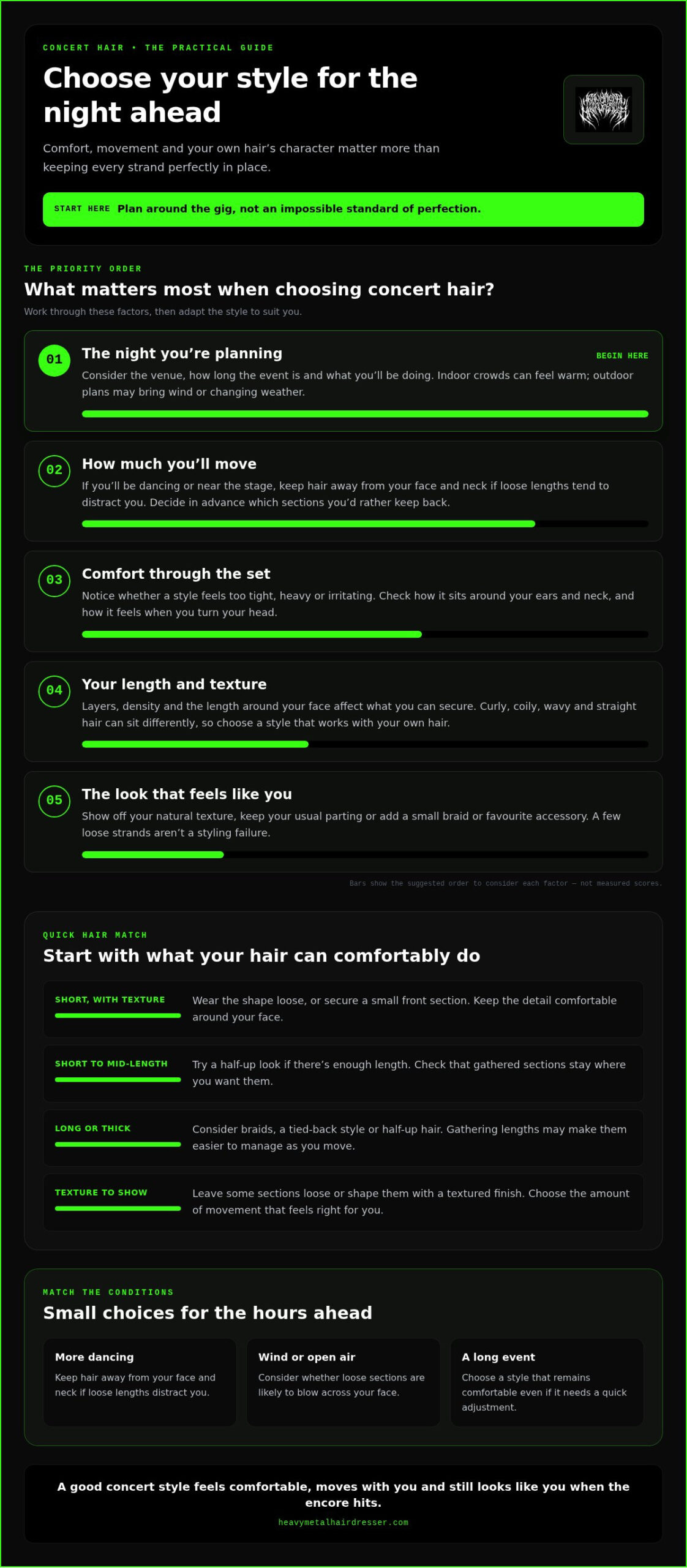
Concert-proof hair is a style that feels comfortable through the gig, moves with you and expresses your own look. It doesn’t mean every strand will stay exactly where you put it. A busy floor, a long set or changing weather can shift even a carefully planned style.
Think about the whole event, not just how your hair looks when you leave home. Is it an indoor show, an outdoor gig or a festival where you’ll be outside between sets? Will you be near the stage, dancing for hours or taking a quieter spot? Loose hair can feel great when there’s room to move, but become distracting if it keeps falling across your face. If you expect to be moving a lot, decide in advance which sections you’d rather keep back.
Comfort is personal. A style can look brilliant in a photo but feel too tight, heavy or irritating midway through the set. Notice how it sits around your ears and neck, whether you like having your hair tied back, and how it feels when you turn your head. A look you can forget about while you’re immersed in the music has a real advantage.
Which concert conditions should shape your hairstyle choice?
Use the likely conditions as a guide, not a guarantee. An indoor venue can feel warm in a dense crowd, while an outdoor show may bring wind or changing weather. A long event gives a style more time to loosen, and dancing adds movement. Picture the hours ahead and choose a look that will still feel comfortable if it shifts a little.
- More dancing: Keep hair away from your face and neck if loose lengths tend to distract you.
- Wind or open-air plans: Consider whether loose sections are likely to blow across your face.
- A long event: Choose a style that remains comfortable even if it needs a quick adjustment.
How do you balance practicality with self-expression?
Start with what you like. There’s no single concert look that suits everyone, and your hair doesn’t need to fit a prescribed idea of alternative style. A simple shape can still have impact: add texture, a favourite accessory or one detail that feels like you. For a wider view of different types of hairstyles and their cultural significance, Wikipedia offers a broad overview.
You could keep your usual parting, show off your natural texture or add a small braid to a cut you already love. If you want a more dramatic look, build around that and adapt the shape for comfort. Shags, mullets and wolfcuts each bring their own movement and character. The right choice is the one that feels like yours. Concert proof hairstyles should work with your identity, not ask you to leave it at the door.
Set a realistic goal: hair that feels good, suits your plans and can be adjusted if needed. A few loose strands aren’t a styling failure. They’re part of a night spent moving, singing and being there.
Choose concert-proof hairstyles that suit your hair length and texture
The right look depends on more than whether your hair is short or long. Consider its texture and thickness, how much movement you want and what usually feels comfortable. A braid can gather long hair neatly, for example, but it won’t suit every length or texture. Treat these ideas as starting points and adapt them to your hair.
Use this quick guide to narrow down your options. “Short” and “long” are flexible descriptions: layers, density and the length around your face all affect what you can secure.
| Your hair or preference | Possibilities to consider | Think about |
|---|---|---|
| Short, with texture | Wear the shape loose, or secure a small front section | Keep the detail comfortable around your face |
| Short to mid-length | Try a half-up look if there’s enough length | Check that gathered sections stay where you want them |
| Long or thick | Consider braids, a tied-back style or half-up hair | Gathering lengths may make them easier to manage as you move |
| Texture you want to show | Leave some sections loose or shape them with a textured finish | Choose the amount of movement that feels right for you |
What concert hairstyles can work with shorter hair?
Short hair doesn’t need to be pulled back to look considered. Work with the shape of your cut: textured layers can add definition, while a small section secured away from your face brings a practical detail. If your hair is long enough, try a half-up style to keep some length loose without gathering everything. Use what your cut already gives you rather than forcing it into a style it can’t comfortably hold.
What options suit longer or thicker hair?
Longer or thicker hair gives you more to gather, but the best option still depends on how you like it to feel. Braids, tied-back styles and half-up looks bring lengths together, which may make them easier to manage while you move. If you prefer your hair down, leave some sections loose rather than trying to secure every strand. For ongoing inspiration, the American Academy of Dermatology Association shares tips for healthy hair.
Texture matters as much as length. Curly, coily, wavy and straight hair can all work with gathered or loose looks, but sections may sit differently and need different handling. Don’t assume the same technique will behave identically on every head of hair. A test run gives you the chance to spot pinching, slipping or a section that keeps falling forward before the gig.
If you want a cut that supports your preferred look, a stylist can tailor textured layers around your hair and aesthetic. Heavy Metal Hairdresser specialises in alternative cuts and textured styling, including shags, mullets and wolfcuts. Explore the alternative hair styles guide for ideas, or browse alternative cuts and textured styling for inspiration. Concert proof hairstyles aren’t one-size-fits-all. Start with the hair you have and the way you want to wear it.
10 Concert-proof hairstyle ideas, from tied-back to full-on alternative
No one look works for every gig or every head of hair. These concert proof hairstyles range from practical ways to gather your lengths to expressive styles that put your texture and cut centre stage. Choose the one that feels like you, then adjust it to suit your plans.
Which tied-back styles keep hair out of your face?
Braids, ponytails and buns can gather your hair, but none guarantees a flawless finish through every set. Half-up styles move some sections away from your face while leaving length loose. Try your chosen arrangement beforehand and notice whether it pulls, feels bulky or shifts when you move. Comfort matters more than a style that only works when you stand still.
- Classic braid: Gather longer hair into one braid for a familiar, unfussy finish. Check that the braid sits comfortably against your head and neck.
- Braided ponytail: Tie your hair back, then braid the lengths. This combines a gathered shape with a clear braid detail.
- High ponytail: Keep your lengths up and visible. Test the position with a few head turns to see whether it feels comfortable.
- Low bun: Gather hair at the nape for a softer, understated updo. It may suit you if you prefer less hair around your face.
- Half-up hair: Secure the top sections and leave the rest loose. It’s a useful middle ground if you want both movement and hair gathered back.
How can loose or alternative styles feel gig-ready?
Not every look needs to be tied away. Texture, a deliberate parting or a small accessory can make loose hair feel considered without turning it into a rigid, overworked style. Choose clips or other simple accessories that feel comfortable and suit your aesthetic. For more on backstage festival hair and managing it in a crowd, explore festival hair and mosh-pit survival.
- Space buns: Divide your hair into two buns for a playful, high-impact shape. Try them higher or lower, depending on what feels comfortable.
- Baby braids: Add a few small braids around your face or through loose lengths. They bring detail without securing every strand.
- Textured loose hair: Let your natural texture show with a deliberately lived-in finish. Choose this if you want movement rather than a fully tied-back style.
- Clipped-back sections: Use clips to hold one or both front sections away from your face. This is a simple way to add colour or contrast.
- Undone shag or wolfcut: Let choppy layers and natural movement do the work. It’s an alternative shape with a relaxed finish.
These looks aren’t restricted by hair type or gender. A braid, bun or loose finish can be adapted to your length, texture and personal style. Keep the details you love, change what doesn’t feel comfortable and make the final look your own.
Get concert hair ready: a simple plan before and during the show
Choose a style, check the comfort, then adjust only if you need to. Concert proof hairstyles aren’t about locking every strand in place. They’re about picking a look you can wear and knowing how you’ll handle it if it shifts.
Before you start, think about the event and the style you want. A long outdoor day may call for a different approach from an indoor set, but neither needs an elaborate routine. Choose a look you can create without rushing. If you’re trying a new parting, braid or updo, test it beforehand rather than making the bathroom mirror your backstage emergency.
- Choose: Pick a style that suits your plans and feels like you. Decide what you want to keep away from your face and what you’d rather leave loose.
- Style: Follow your usual routine and use products only as directed on their packaging. Extra product or extra steps won’t guarantee that your hair stays unchanged.
- Check comfort: Move your head, look down and turn from side to side. Notice whether pins, ties or accessories pull, press or feel loose, then adjust them before you leave.
- Make small adjustments: If your hair moves during the event, reshape or secure the section that’s bothering you when there’s room. You don’t need a full restyle.
Be honest about the comfort check. A ponytail that feels fine at first may pull after you’ve worn it for a while. A clip might sit neatly at home but catch when you turn your head. Test the finished style with the movements you expect to make, and remove or reposition anything that irritates you. The aim is to feel ready, not to chase a flawless finish.
During the show, check how your hair feels rather than inspecting every strand. If a section falls forward, tuck it back, loosen a tight tie or reshape a braid when you have room. A spare hair tie or a couple of pins may be useful for some styles, but keep your kit small and practical. Don’t rely on a mirror, a place to store belongings or enough space to stop and fix your hair. Choose a look that works without them.
If you use a styling product, follow its directions rather than adding more just because the crowd is moving. Products and techniques can help shape a look, but they can’t promise it won’t shift in changing conditions. A few loose strands are normal. Make a simple adjustment, then get back to the music.
For a cut with its own texture and character, explore alternative haircuts and textured styling from Heavy Metal Hairdresser.
Make your concert hairstyle yours with alternative styling expertise
A gig look can start with the cut itself. Shags, mullets and wolfcuts offer different shapes and layers to play with, while texture or vivid colour can make the finished look feel distinctly yours. The cut and styling can work together: wear a textured shape loose, or gather some sections when you want hair away from your face. The right approach depends on your hair and how you like to wear it.
How can an alternative haircut support your gig look?
Think of the cut as a starting point, not a fixed concert style. You might lean into a shag’s movement, build an undone look around a wolfcut or let a mullet’s shape stand out. These are options to explore, not guaranteed results for every texture or length. Heavy Metal Hairdresser’s ultimate wolf haircut guide offers inspiration if you’re drawn to that layered, alternative shape.
Then decide how you want to wear it for the show. Leave your texture visible, add a small accessory or secure a section that tends to fall forward. The details can be subtle or loud. There’s no dress code for self-expression and no single version of alternative hair you need to copy. Choose the balance of shape, movement and practicality that feels right for you.
Where can readers explore Heavy Metal Hairdresser?
Heavy Metal Hairdresser is an inclusive alternative salon founded by barber and creative stylist Simon Tuckwell. Its work centres on alternative cuts and textured styling, including shags, mullets and wolfcuts, as well as vivid colour. Backstage festival work at Download and Bloodstock connects the salon to the live-music scene, but no one signature look or outcome suits everyone.
If you’re considering a new shape, explore HMH’s work and think about what you want your hair to express, whether that’s choppy texture, a recognisable silhouette or a cut that feels more like you. Use the ideas as inspiration, not a demand to change your look. Concert proof hairstyles can be personal, expressive and practical in their own way.
HMH merchandise is no longer sold on the Heavy Metal Hairdresser website and is available only at the new merch store. Wolfcut course orders are still accepted on the Heavy Metal Hairdresser website. 🤘
Explore the wolfcut guide for ideas, then find the cut and styling direction that feels like yours.
Take your look from idea to gig-ready
Your next concert look doesn’t need to be a full transformation. Start with one detail you’re excited to wear, whether that’s more texture, a new shape or a simple way to keep your hair comfortable through the set. Let the rest follow your taste. The best concert proof hairstyles aren’t about chasing perfection; they’re about feeling like yourself while you’re there for the music.
If you’re thinking beyond a one-night style, a cut shaped around your personality can give you new ways to wear your hair long after the encore. Heavy Metal Hairdresser takes an inclusive approach that celebrates individuality and alternative styling.
Explore Heavy Metal Hairdresser’s alternative styling and booking options, and find inspiration for a look that feels unmistakably yours. Then head to the show ready to move, sing and enjoy every minute.
Frequently Asked Questions
What is the best hairstyle for a concert?
The best choice suits the kind of gig and feels comfortable on you. For a high-energy show, a ponytail or braid can gather longer lengths; for a more relaxed set, try loose texture or a half-up shape. Concert proof hairstyles don’t have to look identical from doors to encore. Choose a look you’ll enjoy wearing and can adjust easily.
How do I keep my hair out of my face at a gig?
Secure the front sections with a clip, headband or tie that feels comfortable and doesn’t press against your scalp. If your parting tends to fall forward, sweep it to one side and secure just that section instead of pulling all your hair back. Test the style by turning your head. A detail that stays comfortable as you look around is more useful than one that only looks tidy when you’re still.
Can you wear your hair down to a concert?
Yes. Loose hair can be a great choice if you like its natural movement and don’t mind it shifting as you move. If you want it to feel less distracting, tuck the front sections behind your ears or secure one side and leave the rest down. If you’re likely to dance in a close crowd, consider whether hair across your face or neck will bother you.
Are braids a good choice for a concert?
They can be. A braid gathers longer hair into a defined shape, while a small accent braid adds detail without tying everything back. Choose an arrangement that suits your length and how you want to wear it. Don’t pull it so tightly that your scalp feels uncomfortable, and secure the end in a way that works for your hair. A braid may loosen during a gig, so treat it as a practical option, not a guarantee.
How can I make concert hair look good in photos?
Choose a shape that frames your face the way you like, then add one visible detail, such as a clip, braid or strong parting. Before the show, take a quick photo from the front and side to see whether a section falls across your eyes or an accessory disappears into your hair. Aim for a look that feels like you in person, not only one designed for the camera.
What should I bring to refresh my hair at a concert?
Keep it light: a spare hair tie, a couple of pins or a small clip may be enough, depending on your style. If you carry a compact comb, use it only when you have room to pause safely and comfortably. Don’t rely on having access to a mirror or somewhere to store extra items. Check the event’s bag guidance before packing, and bring only what you’ll use.
Can short hair be styled for a concert?
Absolutely. Short hair can work with its natural shape, a textured finish, a changed parting or a clip that holds a fringe away from your eyes. If the sides are long enough, tuck them behind your ears or secure a small section. Try the look with your usual jacket or accessories before the event to check that nothing catches or feels awkward when you move.