Posted on

Halloween Hair Trends: Professional Styles for 2026

Halloween Hair Trends: Professional Styles for 2026

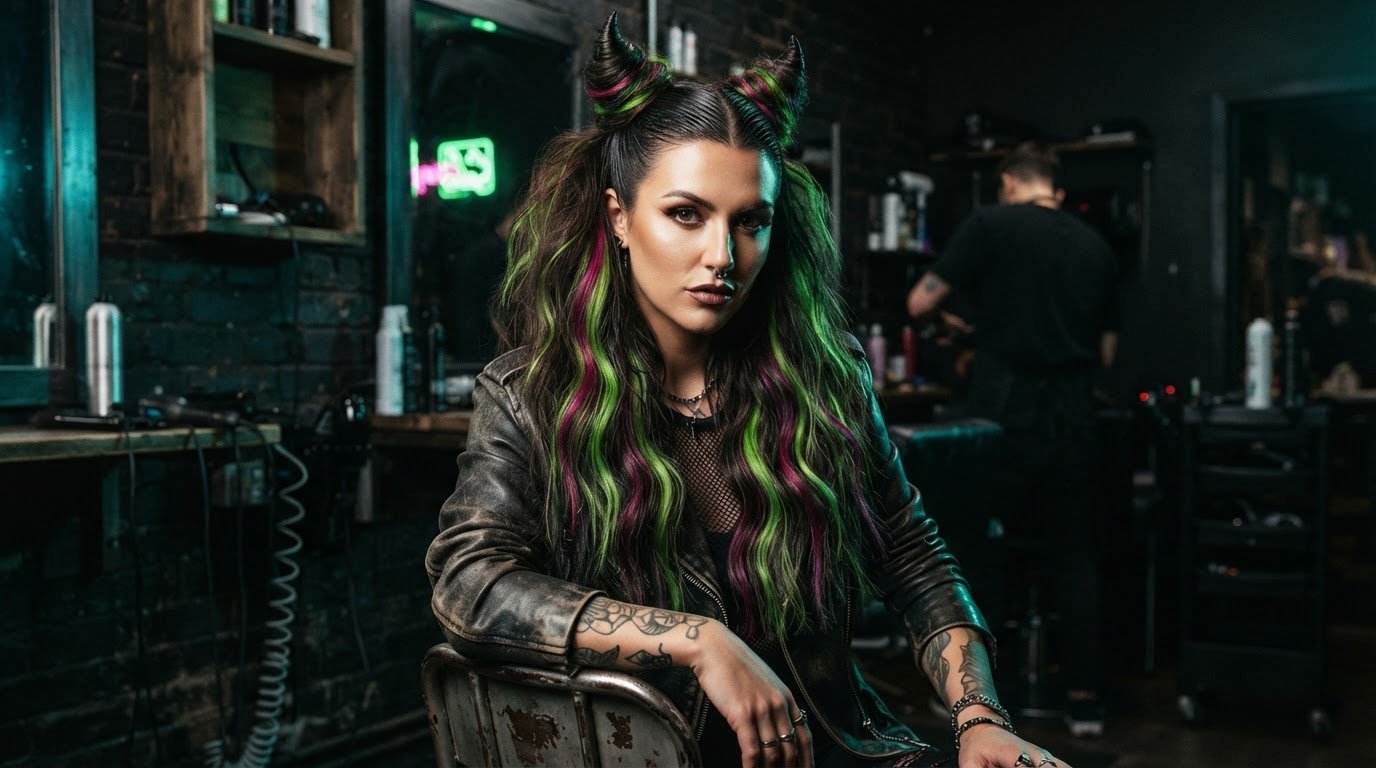
Halloween hair doesn’t need a full costume to make a statement. The looks in this guide can be created at home in under 30 minutes, from devil horn buns and sleek vampire hair to zombie volume, witchy waves and Frankenstein-inspired streaks.

A striking style should feel like you, not a disguise you can’t wait to take off. Whether you want something sharp and polished or gloriously messy, the right shape and texture can bring your Halloween hair to life.

Here are ideas for different moods and hair textures, plus practical styling tips for each look: sculpted buns for devil horns, slicked-back lengths for vampire drama, teased volume for a zombie finish, loose waves with a witchy edge, and vivid streaks inspired by Frankenstein. Pick a favourite, make it your own, and let your hair join the Halloween mischief.

Key Takeaways

  • Build devil horn buns by dividing your hair into four sections; two small empty cardboard tubes can help shape the horns.
  • Choose a sleek, controlled finish for vampire-inspired hair, or push texture and lift for a more undone zombie look.
  • Create witchy waves by alternating the direction of each curl for a looser, more natural-looking shape.
  • Use bold, contrasting streaks to bring a Bride of Frankenstein look to life without changing your whole style.
  • These Halloween looks can be created at home in under 30 minutes, so you can pick a style that suits your mood and get straight to the good part.

1. Devil horn buns

To make devil horn buns, divide your hair into four sections, then use the two upper sections to build a horn on each side. Shape each section around a small empty cardboard tube, secure it into a bun, and adjust the points until they read as horns. This Halloween hair look can be created at home in under 30 minutes.

Start with dry, detangled hair so each section is easier to control. Use a centre part as your guide, then separate the hair from ear to ear. You’ll have four sections: two at the front and two at the back. Tie the lower sections out of the way. The upper pair will become the devil horns, one on either side of the parting.

Take a small, empty cardboard tube and hold it upright where you want the first horn. Wrap the front section around the tube, keeping the hair smooth and snug. The tube acts as a template, giving the bun a more defined, pointed shape than a loose knot. Repeat on the other side with the second tube, checking that both horns face the same direction.

Once each section is wrapped, carefully slide out the tube if the shape holds. Pin the wrapped hair close to the scalp, using pins that match your hair colour where possible. If the horn softens, wrap the section more tightly around the tube before securing it. Keep the base firm and the tip narrow for a clear devil-horn outline.

Now release the lower sections. Leave them loose for dramatic contrast, or twist them into small buns beneath the horns. For a sharper finish, smooth flyaways around the parting and bases. For a rougher, punk-inspired look, leave a few wisps around your face. A clean centre part makes the horns look symmetrical, while a slightly uneven finish feels deliberately chaotic.

Check the silhouette from the front and side before adding final pins. If one horn looks flatter, adjust its wrapped section instead of pulling hard at the tip. The cardboard templates help create matching shapes, but your hair’s length and density affect how much you can wrap into each bun. Keep the style comfortable, with pins that hold without digging into your scalp.

For a full costume, pair the horns with dark eye make-up or a red accessory; the hairstyle can also stand alone. The four-section method gives you a clear structure, while the two tubes make shaping easier. Keep the lower hair loose for movement, or pin it up for a compact silhouette that stays focused on the horns.

2. Sleek vampire hair

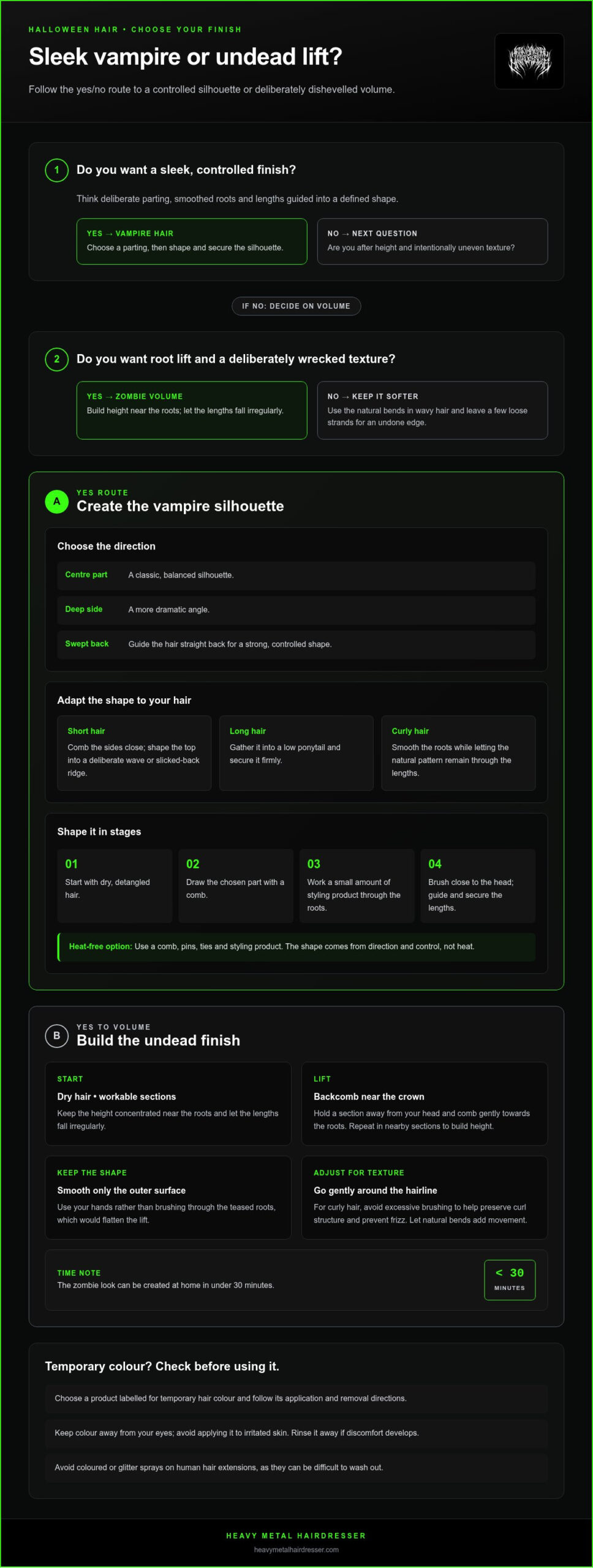
Sleek vampire hair turns a sharp parting and glossy lengths into a dark, deliberate look. Start with dry, detangled hair, then decide whether you want a centre part, a deep side part or hair swept straight back. A centre part gives a classic, balanced silhouette; a side part adds a more dramatic angle.

To create the style, draw your part with a comb and work a small amount of styling product through the roots. Brush each side close to your head, guiding the lengths behind your shoulders or into a low ponytail. Secure the ponytail firmly, then smooth the surface with your hands. Keep the lengths straight for a severe finish, or add a neat twist at the base.

For short hair, comb the sides close and shape the top into a deliberate wave or slicked-back ridge. Gather long hair into a low ponytail, while curly hair can keep its natural pattern through the lengths, with only the roots smoothed. Straight hair gives the most uniform, glassy outline, but a clear parting and controlled shape bring out the vampire effect on any texture.

Popular Halloween hairstyles are easiest to create in stages: choose the shape, part the hair, smooth or sculpt the roots, then secure the finish. For vampire hair, use a comb and pins rather than heat. For a different character, shape a bun or tease the roots. A defined silhouette does more for a costume than complicated decoration.

Temporary colour sprays and dyes vary, so choose a product labelled for temporary hair colour and follow its directions for application and removal. Keep colour away from your eyes, and wash it out as instructed rather than scrubbing aggressively. Avoid coloured or glitter sprays on human hair extensions, as they can be difficult to wash out.

For a heat-free finish, use a comb, pins, ties and styling product to create the shape, and avoid hot tools. A sleek look relies on direction and control, not heat. To help it last through a party or trick-or-treating, secure gathered hair with a firm tie and pins, then smooth loose sections with your hands instead of repeatedly brushing them.

Scalp sensitivity matters with temporary colour. Read the label, follow its safety directions and avoid applying product to irritated skin. For children, choose products whose instructions allow their use, and have an adult apply and remove them. Stop using a product and rinse it away if discomfort develops.

3. Undead zombie volume

Zombie hair needs height, uneven texture and a finish that looks deliberately wrecked. You can create this Halloween look at home in under 30 minutes, using backcombing and separated sections rather than a polished shape. Keep the volume concentrated near the roots, then let the lengths fall irregularly. That contrast gives the style its unsettling, freshly risen-from-the-grave energy.

Begin with dry hair and divide it into workable sections. Lift a section near the crown, hold it away from your head, then comb gently towards the roots. Repeat with nearby sections, building height where you want the silhouette to look most dramatic. Use lighter pressure around the hairline, where visible knots can make the style uncomfortable or difficult to shape.

For a controlled finish, smooth only the outer surface with your hands. Don’t brush through the teased roots, or you’ll flatten the lift you’ve created. Leave a few strands across the forehead or temples for a disordered edge. On straight hair, stagger the direction of those loose pieces; on naturally wavy hair, let the existing bends add extra movement.

Curly hair brings its own texture to a zombie look. Avoid excessive brushing to help prevent frizz and preserve the curls’ structure. Instead, lift the roots with your fingers, then separate only the areas that need more height. This keeps the curl pattern visible while making the overall shape rougher. A few deliberately shifted curls can look more convincing than brushing out your whole head.

Short hair can still carry undead volume. Backcomb the crown and top, then use your fingers to push sections in different directions. With longer hair, create lift at the crown and leave the lengths loose, or gather them into an uneven low tie. Keep the sides flatter to make the raised centre stand out, or add texture around the face for a more chaotic silhouette.

Finish by checking the shape from the front and side. If the crown looks too uniform, loosen and reposition a small section rather than rebuilding the whole style. If your costume includes a hood or hat, keep the highest volume clear of where it sits so the accessory doesn’t crush the teased roots. Aim for controlled mess, not a solid, tangled mass.

Make the look your own with a temporary colour accent or a few dark accessories, keeping the focus on shape and texture. Zombie volume works best when each section points in a slightly different direction but the crown still holds a clear outline. That balance turns ordinary bedhead into a recognisable undead finish.

For fine hair, the guide advises against using Ultra Volume Clip-Ins because they are too heavy. Build the silhouette with gentle backcombing at the crown instead, and lightly smooth the outer layer so the lift stays visible. If the shape needs adjusting, reposition a few strands rather than adding weight or brushing through the teased roots. A deliberately uneven outline keeps the look untidy without sacrificing height.
Halloween Hair Trends: Professional Styles for 2026

4. Witchy long waves

Witchy long waves bring movement and shadow without hiding your hair’s natural texture. Mermaid waves make a strong starting point: use a curling wand or flat iron, alternating the direction of each curl. This stops the lengths from falling into one uniform pattern. The result feels loose and spell-worn, rather than polished into matching ringlets.

Work through dry hair in manageable sections, curling one away from your face and the next towards it. Keep the curl shape consistent from mid-lengths to ends, then let each section cool before gently separating it with your fingers. A comb can soften the finish, but brushing through every curl may loosen the wave pattern. Leave the ends slightly less defined for an undone edge.

For extra length and fullness, 22-inch or 24-inch seamless clip-in extensions can support long, flowing waves. Blend each piece beneath the top layer, then curl your own hair and the extensions in alternating directions. Match the extension colour closely to your lengths for a seamless effect, or use a contrasting tone to make the costume styling more dramatic.

Costume details change the mood. For a witch, try a deep side part, loose waves and a dark ribbon woven through one side. For vampire styling, keep the parting precise and the waves smoother, with lengths swept behind your shoulders. Wednesday Addams calls for a centre part and a more restrained shape, or two neat plaits instead of loose waves.

For a heat-free version, braid damp hair into sections and let it dry fully before undoing the braids. More braids create tighter bends; fewer, looser braids make broader waves. Separate the finished style with your fingers, then pin one side back if a witch’s hat needs a secure fit. This adds texture without a curling wand or flat iron.

Keep the silhouette intentional: lift gently at the crown for a more dramatic witch, or leave the roots flatter for a sleek vampire effect. If you use a curling wand or flat iron, apply heat protection spray first and work carefully around the hairline. The guide’s full set of Halloween looks can be created at home in under 30 minutes, so this wave pattern fits a quick costume finish.

Before heading out, check that clips feel secure and aren’t pulling at your scalp. Let the waves fall over your shoulders, or pin one side back to show off a statement earring. A dark ribbon, a precise centre part or a hidden colour accent can turn the same mermaid waves into a distinct character.

For a gathered alternative, a messy witch hairstyle can be created by tying back two-day-old hair. It offers a different shape while keeping the costume styling relaxed. The bunches hairstyle is described as suitable for medium-length and long hair, making it another option alongside loose waves. Choose between a gathered bun, bunches or flowing lengths to keep the hairstyle in step with the character’s overall finish.

5. Bride of Frankenstein streaks

The Bride of Frankenstein’s signature look is a bold, pale streak framing dark hair. Echo the contrast with temporary colour, a clip-in weft or a pale ribbon. Keep the accent near the front hairline for instant character, or place it through a side section for a subtler, more wearable effect.

For a quick temporary accent, clip a coloured weft beneath the top layer of hair. Peekaboo colour can be added in about five minutes, with the upper layer concealing the attachment. Choose a pale shade against darker lengths to nod to the Bride, or reverse the contrast for a more personal take. A visible strand defines the look without recolouring every section.

To style a streak into your hair, first choose the parting and decide which side will carry the contrast. Brush a narrow front section away from the rest, then apply a temporary colour product according to its directions. Keep the application precise and protect surrounding hair from stray colour. One defined stripe reads clearly; several scattered marks create a more chaotic, monster-inspired finish.

Short hair can carry an accent beside the parting, while longer hair can take a pale streak from the temple through the lengths. On curls, place the contrast where the curl pattern catches the light. On straight hair, a clean section makes the graphic line sharper. These placements keep the Bride reference recognisable across different cuts and textures.

Pair the streak with a strong silhouette. A centre part and two teased side sections create a dramatic frame, while a sleek ponytail makes the colour the main event. For a softer costume, add loose waves around the streak. Keep accessories simple, such as a dark hair clip, so the contrast stays visible without competing with the rest of the look.

Temporary sprays and dyes differ in application and removal, so follow the product’s instructions and use it only as directed. Avoid coloured or glitter sprays on human hair extensions, as they can be difficult to wash out. If you use a removable weft, keep the colour product on your own hair instead. This protects the accessory and makes the accent easier to remove.

A pale streak also works beyond a full costume: pair it with black clothing, a sharp parting and minimal accessories for a subtle Frankenstein reference. The contrast tells the story. A temporary weft offers a quick change, while a carefully placed colour accent gives the front of your hairstyle a more integrated finish. Choose the method that suits your look and styling time.

Use temporary sprays and dyes only as directed, and follow the product’s instructions for removal. Keep coloured or glitter sprays off human hair extensions, as they can be difficult to wash out.

Heavy Metal Hairdresser: Shag Haircuts

Heavy Metal Hairdresser offers shag haircuts for anyone wanting an expressive shape that works beyond one night of dressing up. A shag can bring texture and movement to your everyday look, giving you a bold base for future costume styling without relying on temporary colour or accessories.

If you’re drawn to the tousled energy of zombie volume or witchy waves, a shag haircut offers a lasting way to wear texture. For a sharper, more alternative silhouette, explore Wolfcuts too. Hair To the Throne and Guest Spots are also part of the salon’s offering.

Bring your ideas, whether you want a subtle shift or a more dramatic shape. Contact Heavy Metal Hairdresser to discuss a shag haircut that fits your style.

Make your next look your own

A costume can be a one-night transformation or the spark for a style you keep wearing. Take the detail you loved most, whether it was a bold shape, a flash of colour or deliberately unruly texture, and let it influence your everyday look. Halloween hair can be a starting point for experimenting with your personal style, not just the finishing touch to a costume.

For a cut with movement and attitude, Heavy Metal Hairdresser offers shag haircuts and wolfcuts. Guest Spots are another way to explore the salon’s creative work. Choose the direction that feels like you, from lived-in texture to a more defined silhouette, and make the look yours beyond the season.

Contact Heavy Metal Hairdresser to talk about a cut that fits your style. Bring your ideas, embrace the unexpected, and keep making space for hair that refuses to blend in.

Frequently Asked Questions

What are easy Halloween hairstyles for adults and children?

Cat-ear shapes, loose bunches and a messy witchy bun are simple options for different ages. For cat ears, shape a 5 cm section of hair at each side of the head, then secure each with pins. Medium-length and long hair can be divided into bunches for a quick character look. For a witch-inspired style, tie back two-day-old hair into a loose bun and let a few strands frame the face.

Which temporary hair dyes and sprays are safe, and how do I remove them?

Choose a product labelled for temporary hair colour, follow its application and removal directions, and keep it away from your eyes. Check the safety directions, avoid irritated skin, and rinse it away if discomfort develops.
Posted on

Haircuts for Creative Professionals: Find Your Workday-Ready Look

Haircuts for Creative Professionals: Find Your Workday-Ready Look

What if your haircut could carry your creative identity into the studio, office or meeting room without feeling like a costume? Haircuts for creative professionals can balance self-expression with a shape that feels right for your working day. The practical questions are how a bold silhouette will work with your hair, how it will feel in your workplace and how much effort it needs on a rushed morning.

You don’t need to settle for a safe, forgettable cut or commit to a high-maintenance look that doesn’t fit your life. Start with what you want your hair to say, then consider your natural texture and everyday styling habits. Individual doesn’t have to mean impractical.

Explore shags, wolfcuts and mullets, and compare how their layers, outlines and styling needs differ. You’ll also find ways to describe the finish you want at your salon consultation, including how much movement, definition and daily upkeep feels right. The aim is a cut that feels unmistakably yours at work and beyond.

Key Takeaways

  • Haircuts for creative professionals can balance personal expression with the look you want to bring to work.
  • Compare the shag, wolfcut and modern mullet by silhouette and styling effort to find a direction worth exploring.
  • Use your hair’s texture, density and natural movement to set realistic expectations for how a reference cut may translate.
  • Before your salon consultation, decide which features matter most and how much time you want to spend styling your hair each day.
  • Heavy Metal Hairdresser specialises in alternative haircuts, including wolfcuts, shags and mullets, informed by Simon Tuckwell’s creative styling and festival work.

Haircuts for creative professionals: expression without a workday costume

A haircut can be part of how you show up creatively without turning every workday into a performance. A graphic fringe, unruly layers or a sharper outline can signal taste and personality. The right balance depends on what feels like you, not on an imaginary office rulebook. A designer presenting to clients, a maker working in a studio and a creative lead moving between meetings may all want something different from their hair.

An adaptable creative haircut expresses your identity and still feels workable through an ordinary day. That doesn’t mean sanding off every bold edge. Professional suitability isn’t the same as conventionality, and there’s no single haircut that earns its place in a creative workplace. Think about how the cut moves, how it sits when you’re focused on a task and whether you feel comfortable wearing it in the settings you work in.

What makes a haircut feel creative rather than corporate?

Shape, movement and texture do the talking. Soft, broken-up layers can give a cut a lived-in feel, while a strong outline can make a quieter shape look deliberate. Personal references matter too, whether they come from music, fashion, art or a past version of your own style. The shag’s history offers useful context: The Shag Haircut: A Historical Perspective traces the cut’s evolution and its connection to the wolf cut.

Creative expression can stay subtle, go full-volume or land somewhere in between. You might choose a detail that shows when your hair moves rather than changing the whole silhouette dramatically. Neither option is more authentic. Start with your own taste and comfort, not a stereotype about how a creative person is supposed to look.

Start with how you want to feel at work

Before choosing a reference image, name the impression you want your haircut to make. Do you want to feel composed and quietly distinctive, or more visibly bold? Then picture the real rhythm of your working day: a client meeting, a hands-on task, time at a desk or a mix of all three. This can help you decide where you want the cut’s character to stand out.

  • Low-key refinement: Consider shape and subtle texture that feel individual without dominating your overall look.
  • Visible character: Think about more defined movement, a noticeable fringe or layers that shift as you move.
  • A disruptive silhouette: Explore a stronger outline if that feels comfortable across the settings you work in.

These are starting points, not rules. A cut that feels confident in a client-facing role may look different from one suited to a practical studio routine, and your comfort matters in both. Bring the impression you want to your salon conversation, then describe what you want to keep, change or make more noticeable. That gives the haircut a direction rooted in your identity rather than a workplace costume.

Compare creative haircuts: shag, wolfcut and modern mullet

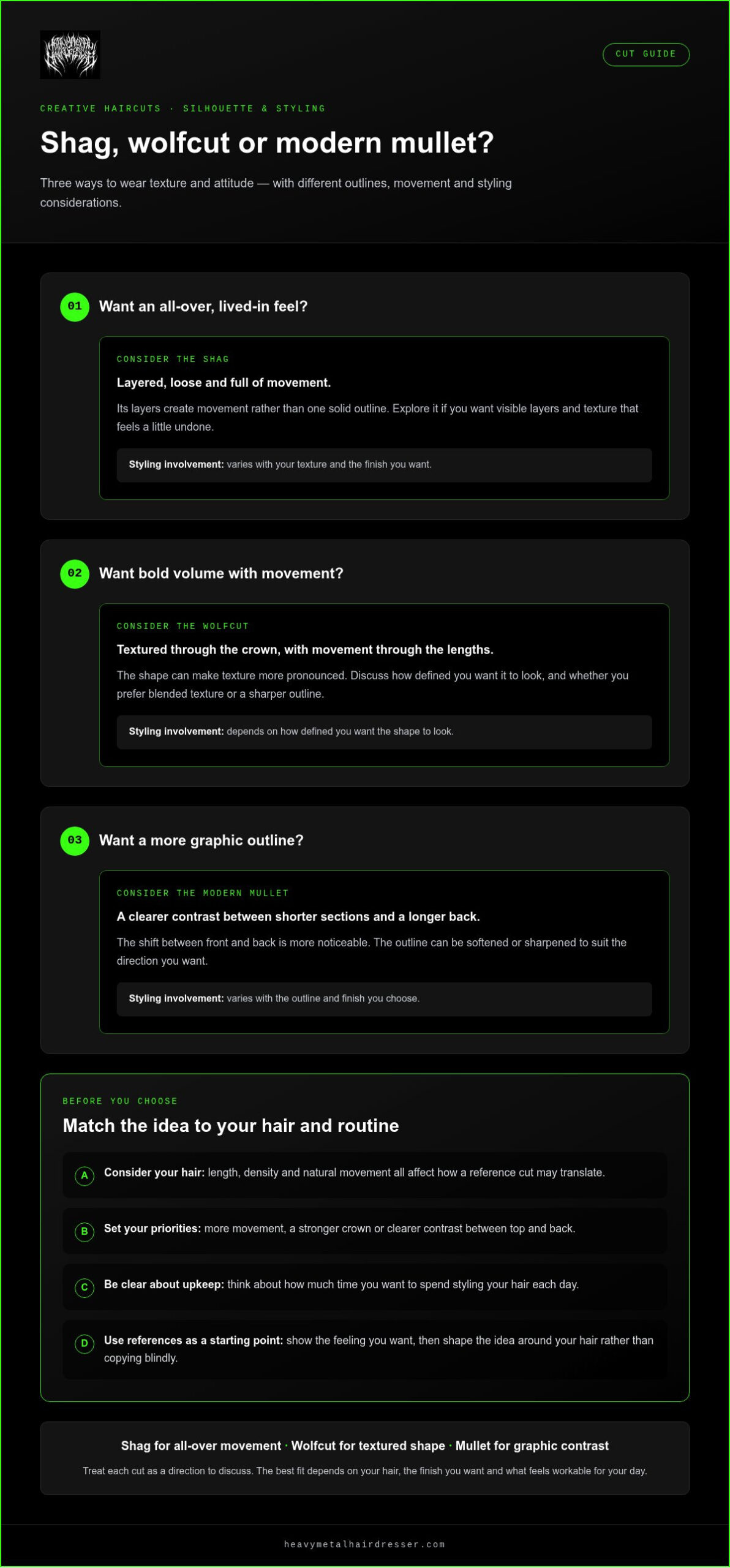
These cuts all bring texture and attitude, but they create different outlines. A shag leans into layered movement, a wolfcut often pushes that texture into a bolder shape, and a mullet makes the contrast between the front and back more noticeable. Use this comparison as a starting point, not a promise of how a cut will sit on your hair. Length, density and natural movement all affect the result.

Cut Silhouette and character Styling involvement May suit you if…
Shag Layered, loose and full of movement Varies with texture and desired finish You want a lived-in shape with visible layers
Wolfcut Textured and more pronounced through the crown Depends on how defined you want the shape to look You like bold volume with movement through the lengths
Modern mullet A clearer contrast between shorter sections and a longer back Varies with the outline and finish you choose You want a more graphic, unmistakable silhouette

Choose a shag for all-over movement, a wolfcut for textured shape or a mullet for a more graphic contrast between top and back. Treat each as a direction to discuss. A reference photo can show the feeling you’re after, while your stylist can shape the idea around your hair rather than copy it blindly.

A shag for movement and lived-in texture

A shag’s layers give the hair movement rather than one solid outline. If you’re drawn to texture that feels loose and a little undone, it’s a useful shape to explore. The amount and placement of the layers can be discussed in relation to your preferences and hair. The shag haircut guide offers more context on its alternative appeal.

A wolfcut or mullet for a stronger silhouette

A wolfcut can bring together a textured crown and movement through the lengths, while a mullet puts more emphasis on the shift between shorter sections and a longer back. The line between them can be softened or sharpened. Ask yourself whether you prefer blended texture or a more graphic outline. Explore the wolfcut guide and modern mullet guide for more detail.

For haircuts for creative professionals, the most useful comparison is the one that helps you explain your priorities: more movement, a stronger crown or a clearer length contrast. If you’re leaning towards one of these alternative shapes, explore Heavy Metal Hairdresser’s haircut expertise as you refine the direction you want to take.

Will an expressive haircut work in a professional setting?

Yes, an expressive haircut can work in a professional setting. Professional doesn’t automatically mean conventional, and there’s no single office look for every creative role. Your workplace might involve a shared studio, client presentations, practical work or a changing mix of settings. Consider the context you actually move through rather than assuming every employer or client expects the same appearance.

A more striking shape can feel energising and make your personal style visible. It can also draw attention, which you may enjoy or prefer to dial back on certain days. That’s a trade-off to weigh, not a reason to rule out the cut. The outline, length, texture and finish all affect its overall feel, and your comfort matters as much as the impression it makes.

How can you adjust the feel without erasing the cut?

Styling gives you options, not a duty to make your hair more acceptable. Defined texture can bring layers or a fringe forward; a relaxed finish can make the same shape feel softer and less deliberate. Neither changes the haircut’s identity. They’re simply different ways to wear it, depending on your mood, the day’s plans and how you like your hair to sit.

Think about what you’d genuinely enjoy doing. If you want a cut that can shift between a more defined finish and a looser one, describe both to your stylist. Be clear about how much daily styling feels realistic, too. A dramatic shape won’t automatically feel right in every workplace, and a subtler finish won’t suit everyone. The aim is choice, not camouflage.

Choosing your comfort level with visibility

Consider three features, from low-key to high-impact: contrast, texture and length difference. You might want plenty of movement but a softer outline, or a noticeable contrast with less emphasis on styling. There’s no score to get right. This quick check helps turn a general feeling, such as “I want something alternative”, into details a stylist can work with.

  • Contrast: Do you want a blended outline or a sharper change between sections?
  • Texture: Would you prefer understated movement or layers that stand out?
  • Length difference: Should the shape feel even, or should the variation be part of its character?

Bring references that show both the shape you’re drawn to and how it looks in everyday wear. Save images with different finishes, and point out what you like in each: the fringe, the outline, the texture or the way the lengths sit. For haircuts for creative professionals, confidence isn’t a universal dress code. It’s a personal sense of feeling like yourself in the places your work takes you. Heavy Metal Hairdresser’s alternative haircut expertise centres individuality, giving you space to explore a shape that feels like yours.

Haircuts for Creative Professionals: Find Your Workday-Ready Look

Match your haircut to your hair, routine and creative role

A reference photo shows the destination, not necessarily the route your hair will take. Density, length and natural movement all affect how a shape sits. To find a cut that works beyond the picture, make the decision in this order: name the silhouette you want, consider how your hair behaves, then factor in the styling you’re happy to do on an ordinary morning.

  1. Clarify the shape. Describe what you want to notice first, such as a strong outline, more movement or a particular fringe.
  2. Account for your hair. Consider its density, length and natural movement, and how those qualities might change the reference.
  3. Be realistic about upkeep. Say how you usually wear your hair and how much time you want to spend styling it.

Translate inspiration into useful reference images

Build a small set of images that shows the shape from the front, side and back, where possible. For each one, point to the detail you like: the outline, a fringe, the amount of texture or how the layers fall. Include an example of what you don’t want, too. It can clarify your boundaries, such as avoiding too much length contrast or a fringe that sits across your eyes.

Use references to communicate, not to demand an exact copy. The same cut can look different on hair with greater density, a different length or a distinct natural pattern of movement. Explaining why a photo appeals to you gives your stylist more to work with than the image alone.

Talk through texture, upkeep and the shape you want

Describe a normal day with your hair: whether you air-dry it, how you wear it during practical tasks and which styling steps you’ll actually keep up. If you want a cut to work with your natural movement, say so. A stylist can use those details to adapt the reference and shape the silhouette around your hair rather than assuming it will behave like someone else’s.

Your creative role can help clarify the brief, too. Think about whether your day involves focused studio work, hands-on tasks or regular client-facing time, then explain what needs to feel comfortable through those moments. For broader ideas, the professional guide to alternative hair styles offers further inspiration to bring into the conversation.

Consultation checklist:

  • The silhouette or feature you want most
  • Reference images showing the shape from different angles
  • Details you like, plus anything you want to avoid
  • Your hair’s usual texture, movement, density and length
  • Your everyday routine and realistic styling time
  • How you want the cut to feel during your working day

Take the checklist into your consultation and use it to keep the conversation specific. Haircuts for creative professionals work best when a clear brief is adapted to the hair and routine you actually have. Book a creative haircut consultation and bring your references, preferences and everyday routine into the discussion.

Find your creative haircut with Heavy Metal Hairdresser

You’ve compared shapes and considered how your hair behaves. Now turn those ideas into a clear salon conversation. Heavy Metal Hairdresser specialises in shags, wolfcuts, mullets and textured styling, with room to explore a silhouette that reflects your identity rather than a prescribed office look. The focus is on your preferred shape, how you wear your hair and what feels right for everyday life.

Bring your references and your real-life routine

Bring a few images that show what draws you to a cut, and be ready to explain the detail: perhaps it’s the loose layers, a strong outline or the way the fringe frames the face. Add an example that shows what you’d rather avoid. That contrast makes your preferences clearer than a style name alone.

Talk honestly about your routine, too. Explain whether you air-dry your hair, how you wear it during practical tasks and how much styling time you want to spend. Hair density, length and natural movement can all affect how a reference translates. At Heavy Metal Hairdresser, these details help shape a conversation around your preferred silhouette and the way your own hair behaves. Your inspiration sets the direction, with your individuality at the centre.

It’s fine if you’re still deciding between two shapes. Say what you like about each and where you feel unsure. A useful haircut discussion isn’t about arriving with all the answers. It’s about making your preferences specific enough to explore together.

Make your next move towards a cut with character

Simon Tuckwell founded and leads Heavy Metal Hairdresser, bringing creative styling experience from collaborations with bands and artists and backstage work at Download and Bloodstock. That context informs the salon’s alternative approach, but you don’t need a stage look. Your cut can be as subtle or statement-making as feels right to you.

The salon’s inclusive environment celebrates individuality. Whether you’re exploring a shag, considering the textured shape of a wolfcut or drawn to a mullet’s length contrast, your work, hair and styling habits can all help guide the discussion. There’s no single version of creative style you need to fit.

Before your consultation, narrow your shortlist to the features you want most, the details you’d avoid and the upkeep that feels realistic. That gives you a strong starting point for finding haircuts for creative professionals that feel personal and workable. Explore Heavy Metal Hairdresser and start planning your creative haircut.

Make your next haircut feel like yours

Your next cut doesn’t have to define your whole style. Think of it as a choice for this version of you: the one heading into your current work, everyday routines and whatever comes next. Haircuts for creative professionals can make space for self-expression without locking you into one look or one way of wearing it.

Bring your ideas into the salon with an open mind. A useful conversation can turn a strong instinct into a shape that feels personal, wearable and distinctly yours. You don’t need a perfect script or a final answer before you start. Begin with what you’re curious to try.

Explore Heavy Metal Hairdresser and plan a cut with character. Your next look can be bold, understated or somewhere in between. Choose what feels right for you, and wear it your way.

Frequently Asked Questions

Is there a haircut that looks creative but still feels professional?

Yes, a creative cut can feel professional because professionalism isn’t tied to one approved shape. Your role, workplace and personal style all matter. For example, a softly shaped fringe can read differently from a sharply defined one, even with similar layers. Consider how you want to feel during a video call or presentation, then choose a finish that supports your confidence without asking you to hide the parts of your look you value.

Can I have a bold haircut if I work with clients?

Yes, client-facing work doesn’t automatically rule out expressive hair. Think about the settings you work in, from informal creative reviews to formal presentations, and the impression you want to make in each. You might prefer a striking outline or choose a shape whose details are more noticeable up close. Share that context with your stylist and talk through the finish you’re drawn to. Responses vary, so centre the choice on your comfort.

How do I explain the haircut I want to a stylist?

Bring a few clear reference images and name the detail that catches your eye in each. One might show the fringe you like, another the shape around the ears or the way the back sits. Explain what you want to avoid, too. Then describe how you normally wear your hair, including whether you tie it back or tuck it behind your ears. A shared conversation gives your stylist more to work with than a cut’s name alone.

Are creative haircuts suitable for natural texture?

Yes, a creative shape can be planned around your natural texture rather than treated as a one-size-fits-all template. Tell your stylist what your hair does after washing, how it moves as it dries and where it tends to sit. For instance, a reference with loose waves may translate differently on straighter or curlier hair. Agree on the silhouette and finish you want while allowing the details to suit your own hair.

Do creative professional haircuts need lots of daily styling?

Not necessarily. The effort depends on your hair, the chosen shape and how defined you want the finish to look. Before settling on a cut, describe an ordinary morning: do you have time to shape your fringe, or would you rather leave your hair to fall naturally? Be candid about what you’ll actually do. That helps your stylist discuss a shape and finish that align with your preferred routine, without assuming every cut needs the same upkeep.

Should I choose a haircut based on my job title?

No, a job title alone can’t tell you which cut will feel right. Creative professionals work in different settings and have individual tastes, even within the same field. Consider your actual working day, the moments when you want to feel most at ease and how much expression you want your hair to carry. Your routine matters too. There’s no required look that proves you’re capable; choose a shape that feels comfortable and true to you.