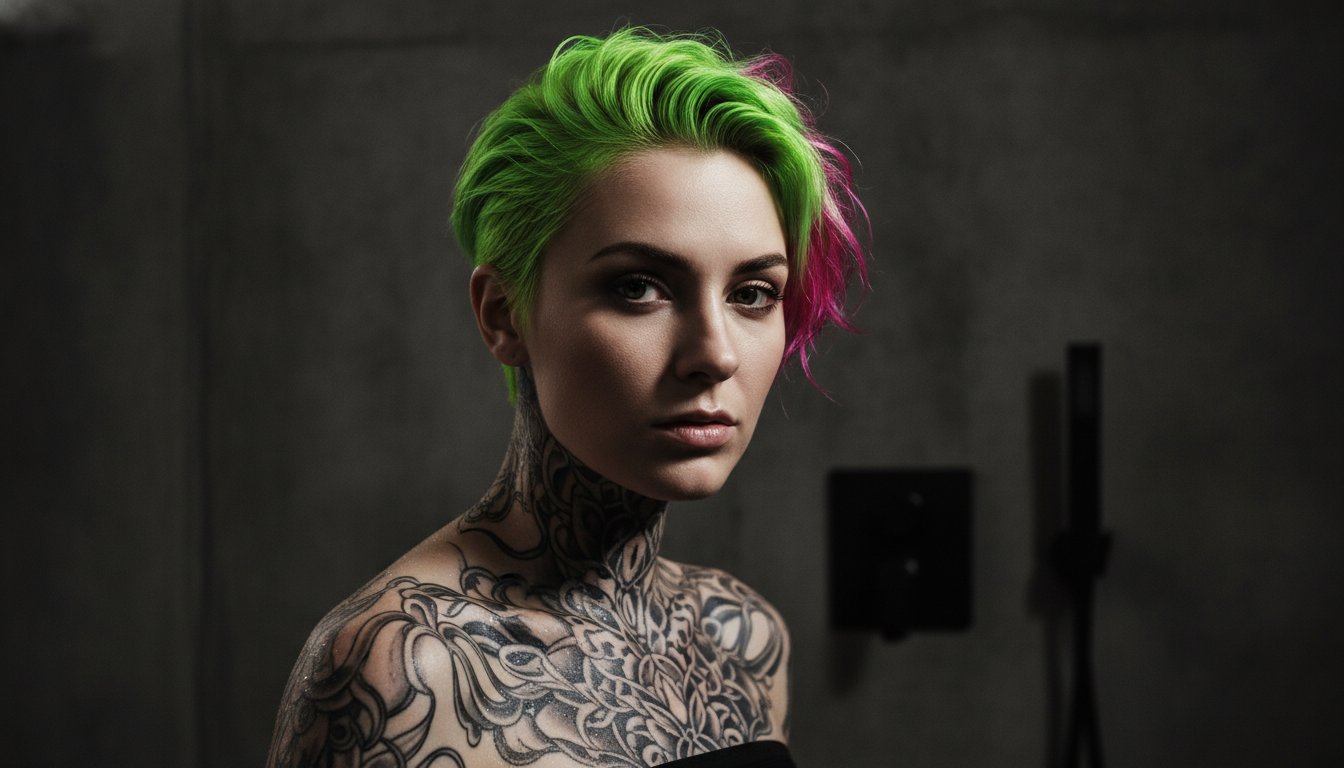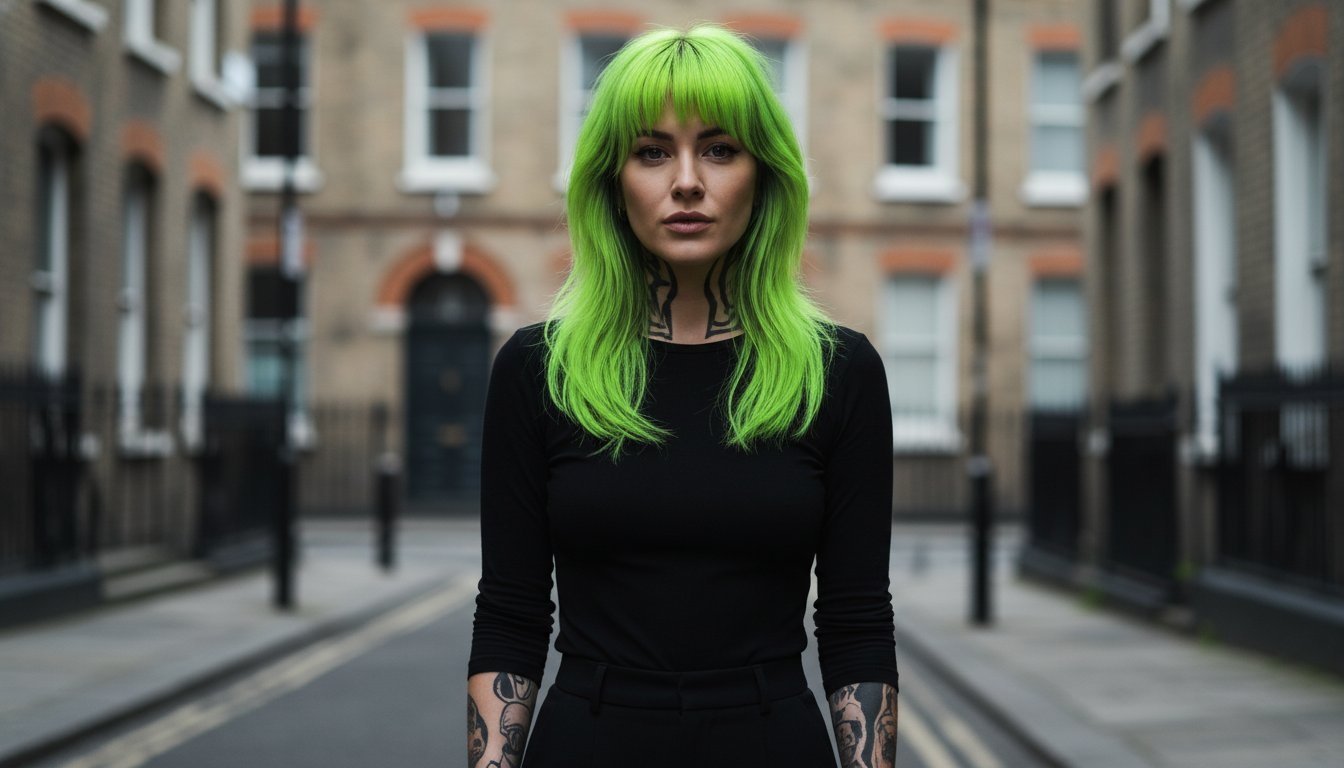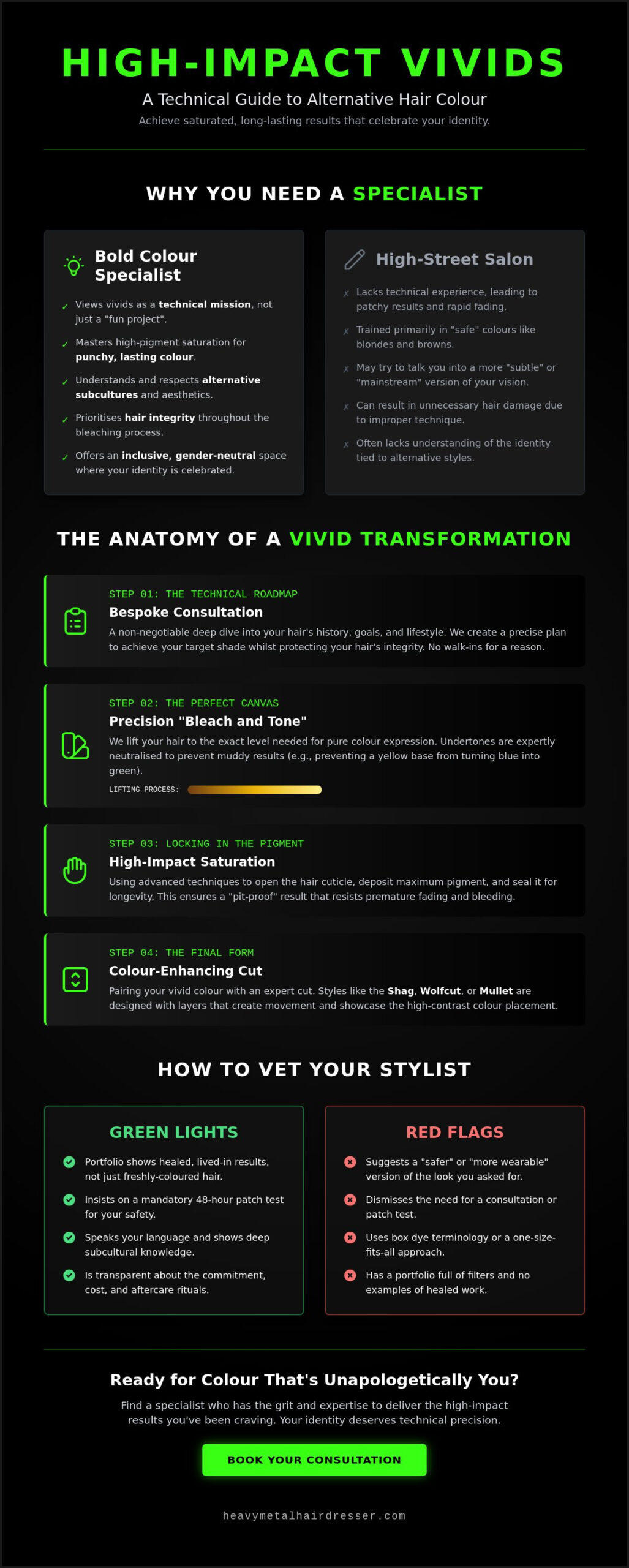

Your hair colour isn’t a “beauty trend”; it’s a tactical declaration of who you are. Watching that expensive neon green or deep violet swirl down the shower drain after just forty-eight hours feels like a personal betrayal. Most high-street bottles claim to be “colour-safe,” but they’re often far too aggressive for the delicate chemistry of direct dyes. Finding the best shampoo for vibrant hair colour requires moving past the marketing fluff and into the grit of acidic pH levels and pigment-locking technology.
We know you’re tired of straw-like textures and conflicting advice from mainstream blogs that simply don’t understand the nuances of subcultural aesthetics. You deserve saturated pigment that stays vivid for weeks and hair that remains textured enough to style a perfect shag. This guide reveals how to defend your vivid pigment with a tactical selection of shampoos that keep alternative hair colours saturated and defiant. We’re diving into the science of acidic pH levels, the reality of UK water minerals, and the specific products that ensure your identity survives the sweat and chaos of a weekend-long festival.
Key Takeaways
- Understand why vivid dyes fade faster than permanent shades by learning how pigments sit on the hair cuticle.
- Discover why a low acidic pH between 4.5 and 5.5 is the most critical feature when choosing the best shampoo for vibrant hair colour.
- Learn how to spot hidden salts in high-street “colour care” bottles that strip your pigment and leave hair feeling like straw.
- Master the survival routine for your alternative aesthetic by switching to cold water washes and reducing your washing frequency.
- Recognise why even the highest quality shampoo requires a professional vivid colour application as a foundation for long-lasting saturation.
The Science of the Fade: Why Your Vibrant Colour Escapes
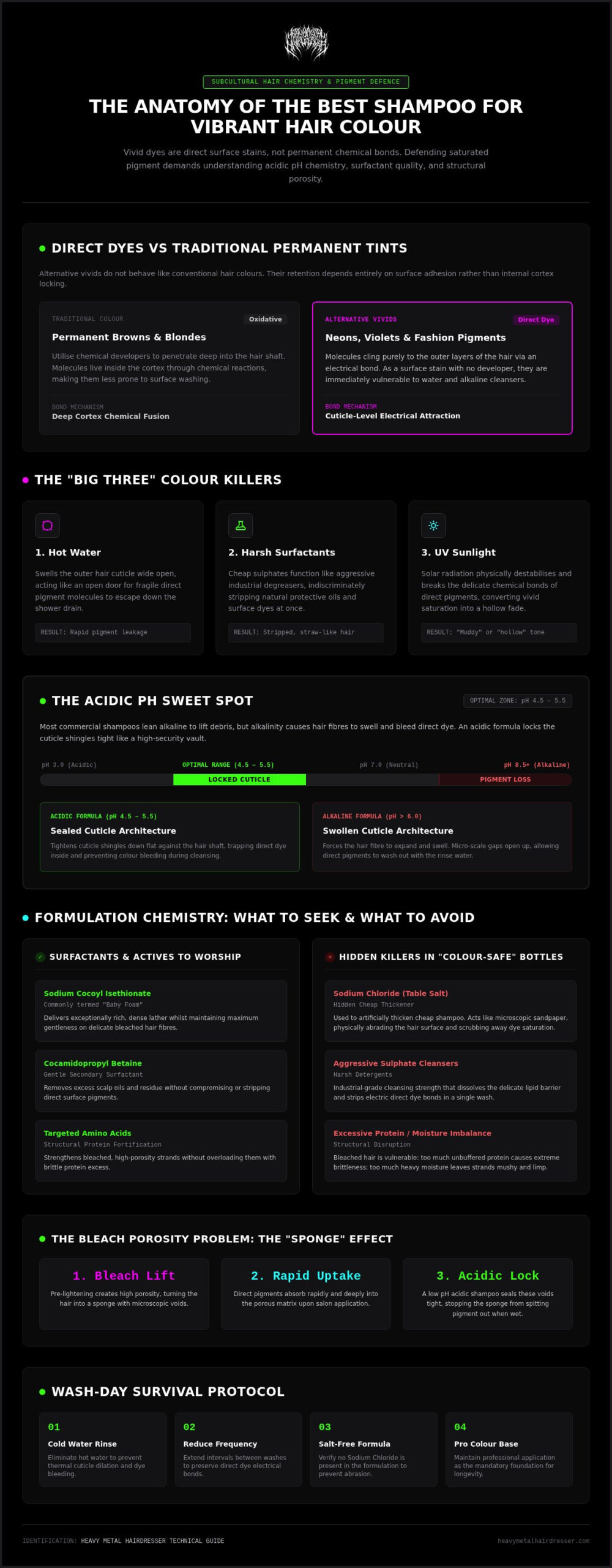
Vivid hair isn’t just a shade; it’s a structural challenge. Unlike permanent browns or blondes that use chemical reactions to live deep inside the hair shaft, alternative pigments are “direct dyes.” This means the molecules cling to the outer layers of the hair. It’s an electrical bond, not a permanent marriage. Because these pigments sit on the surface, they are vulnerable to every element they touch. Understanding this is the first step in choosing the best shampoo for vibrant hair colour to protect your investment.
Your hair is constantly under siege. We identify the “Big Three” colour killers that turn your neon dream into a pastel nightmare:
- Hot Water: It swells the hair cuticle, acting like an open door for pigment to walk right out.
- Harsh Surfactants: Cheap sulphates act like industrial degreasers. They strip away the oils and the dye molecules simultaneously.
- UV Rays: Sunlight physically breaks down the chemical bonds of the pigment. This leads to that dreaded “muddy” or “hollow” fade.
For those rocking wolf hair cuts or heavily layered shags, vibrancy isn’t just about shine. It’s about saturation. We want deep, defiant tones that hold their own against the grit and texture of an alt aesthetic. Traditional beauty standards prioritise a glassy finish, but alt-hair needs a balance. You need a formula that maintains pigment density without making your textured layers feel limp or greasy.
The Porosity Problem
To get those neons to pop, we usually have to bleach the hair first. This process creates high porosity. Think of your hair like a sponge with giant holes. It takes the colour in beautifully, but it “spits” it back out the moment it gets wet. Using the best shampoo for vibrant hair colour helps manage this by keeping the pH level acidic. A low pH seals those “holes” in the hair strand, trapping the dye inside the cuticle where it belongs.
Vivids vs. Traditional Tints
Standard “colour-safe” shampoos are often designed for oxidative dyes. These are the colours that use a developer to penetrate the hair. To understand the chemistry of semi-permanent hair colour, you have to realise that vivids are essentially a stain. They don’t have a developer to lock them into the cortex. This is why you see that “bleeding” effect in the shower. If your shampoo is too alkaline, it encourages this bleeding. It turns your expensive salon visit into a colourful puddle on the shower floor. You need a cleanser that respects the delicate surface-level bond of direct pigments.
The Anatomy of the Best Shampoo for Vibrant Hair Colour
Walking into a shop and grabbing anything labelled “colour-safe” is a rookie mistake. For alternative shades, sulphate-free is merely the starting line. If you want to find the best shampoo for vibrant hair colour, you have to look under the hood at the chemical formulation. Your goal is a bottle that respects the fragile bond between your hair and that neon pigment whilst keeping the structure of your bleached strands intact.
The most critical factor is the pH level. Most commercial shampoos are slightly alkaline to help lift dirt, but alkalinity is the enemy of a sealed cuticle. According to research on shampoo pH and cuticle damage, alkaline formulas cause the hair fibre to swell. This swelling allows your expensive direct dye to leak out during every wash. You need a formula sitting in the acidic sweet spot of pH 4.5 to 5.5. This keeps the cuticle shingles pressed down tight, locking your colour in a high-security vault.
Beyond pH, you need to manage the protein and moisture balance. Bleached hair is essentially wounded hair. Too much protein makes it brittle; too much moisture makes it mushy. The best shampoo for vibrant hair colour provides a hit of amino acids for strength without sacrificing the slip needed for detangling. Look specifically for “salt-free” labels too. Many brands use sodium chloride (table salt) as a cheap thickener. It’s abrasive, acting like sandpaper on your hair’s surface and scrubbing away your saturation.
Surfactants to Worship
Not all bubbles are created equal. You want surfactants that cleanse the scalp without declaring war on your ends. Sodium Cocoyl Isethionate, often called “baby foam,” is a dream for vivids. It provides a rich lather that is incredibly gentle on the hair. Pair this with Cocamidopropyl Betaine to ensure you’re removing excess oil without stripping your pigment. This level of gentle care is vital for maintaining modern mullet haircuts, where you need to preserve the natural movement and texture of the hair whilst keeping those aggressive pops of colour looking sharp. If you’re struggling to find the right balance, our experts at Heavy Metal Hairdresser can help you map out a custom care routine.
UV Blockers and Antioxidants
Sunlight is a natural bleach. If you spend your summers at Download or Bloodstock, the UV rays will eat your hair colour for breakfast. Look for ingredients like sunflower seed extract and Vitamin E. These act as biological shields, neutralising the free radicals that cause oxidative stress and shade distortion. Protecting your hair whilst out in the pit is just as important as the shampoo you use at home. These antioxidants prevent the “ghosting” effect where your vibrant blue turns into a muddy, washed-out grey after just one sunny afternoon.
Mainstream vs. Alt-Professional: Comparing Your Options
Vivid hair isn’t cheap. So why wash it with something that costs less than your morning coffee? Buying a budget bottle from the supermarket is a gamble you’ll likely lose. These brands talk a big game about “colour protection,” but their priority is the mass market, not your specific shade of radioactive pink. Finding the best shampoo for vibrant hair colour means looking past the flashy label and into the ingredient list. High-street options are often bulked out with fillers that do more harm than good.
The Hidden Killers in Cheap Bottles
Sodium Chloride is the biggest offender in the budget aisle. It is essentially table salt. Manufacturers use it to thicken cheap formulas, but for your hair, it acts like sandpaper. It is an abrasive that scrubs away your saturation with every wash. Then there are silicones. They provide a “plastic” shine that masks the fact your hair is actually dying for moisture. Budget formulas also lean heavily on alcohol-based drying agents to make the hair feel “clean,” but they leave your strands feeling like straw and your pigment looking hollow.
Specialist Vivid Maintenance Brands
Investing in professional brands is about protecting your vivid hair colour from the inside out. Pro formulas are significantly more concentrated. You use a pea-sized amount rather than a palmful. This makes the cost-per-wash comparable to budget bottles in the long run because the bottle lasts three times longer. Many of these specialist brands now include bond-builders that repair the damage from bleaching whilst you cleanse. Some even offer depositing shampoos, which act as a tactical boost to replace lost pigment between salon visits.
To make the most of these high-end formulas, you should follow dermatologist guidelines for washing hair. This means focusing your shampoo purely on the scalp. Don’t scrub your ends. Let the suds rinse through the lengths naturally as you rinse. This tactic reduces friction on your most fragile, pigment-heavy strands. Choosing the best shampoo for vibrant hair colour from an alt-professional brand also ensures your money supports ethical, often vegan and cruelty-free, businesses that actually understand the subcultures they serve.
The Wash-Day Ritual: Mosh Pit Survival for Your Hair
Washing your hair shouldn’t be a mindless daily habit. For alternative colours, it is a calculated risk. Every time you step under the shower head, you’re inviting the water to steal your pigment. Even with the best shampoo for vibrant hair colour, your technique determines whether your shade lasts three weeks or three months. You have to treat your wash day like a tactical operation designed to defend your identity against the elements.
The first rule is the “Cold Water Challenge.” You have to embrace the freeze. Hot water is a solvent that swells the hair fibre and forces the cuticle open. Cold water keeps those shingles flat. It is uncomfortable, but it is the only way to stop the dye from bleeding into the drain. If you can’t handle a full cold shower, wash your hair over the sink to keep the rest of your body warm. It is a small price to pay for a neon that stays neon.
Strategic cleansing is your next line of defence. Focus your effort entirely on the scalp where the oil lives. Your ends don’t need scrubbing; they are the most porous and fragile part of your hair. The running suds from the best shampoo for vibrant hair colour will clean the lengths sufficiently as they rinse through. When you’re finished, don’t rub your hair with a towel. Pat it dry gently. Friction is a physical force that can literally scrape pigment off the surface of pre-bleached hair strands.
Surviving the Pit
Festivals like Bloodstock or Download are endurance tests for your aesthetic. Sweat, beer, and dust are inevitable. Instead of a full wash in a questionable campsite shower, use dry shampoo to absorb oils at the root. You can mask day-three grease by leaning into an aggressive, textured look. Using Death Grip allows you to maintain that lived-in grit without stripping your colour. If your fringe gets too gritty, a quick-refresh with cold water and a tiny drop of cleanser can buy you another twenty-four hours of saturation.
The ‘Conditioner First’ Myth-Bust
You might have heard that “reverse washing” protects your pigment. Whilst it can help very fine hair avoid being weighed down, it isn’t a magic fix for colour retention. You need the shampoo to hit the scalp first to remove debris properly. The real secret is the final step of the ritual. Always finish with an acidic rinse or a final cold blast. This ensures the cuticle is fully locked before you step out into the air. If your current routine is failing to keep your shade bold, book a consultation at Heavy Metal Hairdresser to overhaul your maintenance strategy.
Beyond the Bottle: Professional Vivid Care Strategies
Even the most expensive bottle of the best shampoo for vibrant hair colour won’t save a botched job. If your foundation is weak, your maintenance is just a slow retreat. A professional vivid hair colour application ensures the pigment is driven deep into the cuticle from day one. This isn’t just about slapping dye on; it’s about the chemistry of the lift. If the hair isn’t prepped with the right porosity, the colour will slide off regardless of what you use in the shower.
Specialists understand that vivids require a different level of respect than standard tints. We know when to push the bleach and when to stop to preserve the hair’s integrity. A solid foundation means your home care actually has something to work with. You’ll find that the best shampoo for vibrant hair colour works twice as hard when it’s protecting a professionally saturated base. It’s the difference between a colour that lasts three weeks and one that stays defiant for months.
Your hair’s shape plays a massive role in how your colour is perceived. A textured shag haircut is the ultimate partner for vivids. The layers create shadows and highlights that make even a slightly faded neon look intentional and gritty. It adds movement that flat, one-length cuts lack. When your colour starts to shift, the movement of a shag keeps the look alive. It masks the regrowth and the inevitable tonal changes that happen between salon visits.
The Power of Professional Toner
Salon-grade toners are the secret weapon. They are formulated to neutralise specific undertones that emerge as your vivids fade. Unlike home “box” fixes that often contain harsh metallic salts, professional toners are gentle and bespoke. We can create personalised colour-maintenance cocktails that you can use at home to keep your saturation at peak levels. This ensures your “grit” and texture remain intact without the muddy buildup associated with cheap drugstore products.
Inclusive Style, Exclusive Results
Choosing a salon that understands alternative subcultures is vital. You aren’t just a client; you’re part of a community that values self-expression above all else. We provide a safe-space environment where your identity is celebrated, not just tolerated. We know the difference between a “mistake” and a deliberate aesthetic choice. When you’re ready for a colour that defies the mainstream, book your vivid session today. Knowing when it’s time for a professional refresh is the final step in your tactical defence strategy.
Defend Your Identity and Keep Your Colour Defiant
Maintaining a saturated aesthetic requires more than just luck; it demands a tactical approach to chemistry and care. You’ve learned that the best shampoo for vibrant hair colour must be acidic to lock the cuticle and free from abrasive salts that scrub away your hard-earned pigment. By mastering the cold-water wash and focusing your efforts on the scalp, you ensure your neon or deep-jewel tones survive the chaos of the mosh pit and the heat of the summer sun.
Your hair is a declaration of who you are, and it deserves a foundation built by experts who live and breathe alternative subcultures. As vivid colour specialists and backstage festival stylists, we provide a gender-inclusive safe space where your self-expression is the priority. Don’t let your identity fade into the background. Secure your vibrant identity – Book with Heavy Metal Hairdresser today and keep your shade as bold as your spirit. Your hair has never been in better hands.
Frequently Asked Questions
How often should I wash my hair to keep the colour vibrant?
Aim for washing your hair only once or twice a week to maintain maximum saturation. Every time you wet your hair, you risk pigment loss, so training your hair to last longer between washes is vital. Use a high-quality dry shampoo to manage oil at the roots without disturbing the lengths. This reduced frequency ensures the best shampoo for vibrant hair colour can do its job without being overused on fragile, pre-bleached strands.
Does cold water really make a difference for hair colour?
Cold water is one of the most effective tools for defending your shade. High temperatures cause the hair cuticle to swell and lift, which allows the large direct dye molecules to escape into the drain. Rinsing with cold water keeps the cuticle shingles flat and locked against the hair shaft. It might be uncomfortable in the shower, but it is the simplest way to ensure your neon or jewel tones stay defiant for weeks longer.
Can I use dry shampoo on vibrant hair colour?
Dry shampoo is a non-negotiable part of an alternative hair care routine. It allows you to skip traditional water-based washes, which are the primary cause of pigment fading. By absorbing excess sebum at the scalp, you can maintain the texture of your wolfcut or shag without stripping the colour from your ends. It is the perfect tactical solution for multi-day festivals where access to cold water and professional products is limited.
Is sulphate-free shampoo enough to stop my hair from fading?
Sulphate-free is just the baseline and isn’t a guarantee against fading. Many “sulphate-free” formulas still contain harsh surfactants or high levels of sodium chloride that can be just as abrasive as traditional detergents. You also need to ensure the formula has an acidic pH between 4.5 and 5.5. Finding the best shampoo for vibrant hair colour means looking for a product that balances gentle cleansing with cuticle-sealing chemistry rather than just relying on a label.
What ingredients should I avoid in a colour-safe shampoo?
Avoid sodium chloride, which is often used as a cheap thickener but acts like sandpaper on your pigment. You should also stay away from drying alcohols and high-alkaline ingredients that force the hair cuticle to open. Silicones should be used cautiously; whilst they provide shine, they can create a plastic-like buildup that prevents moisture from reaching the hair. Stick to professional, niche-focused brands that prioritise the structural health of bleached, alternative hair over mass-market filler ingredients.
Should I use a colour-depositing shampoo every time I wash?
Using colour-depositing shampoos every time can lead to uneven pigment buildup and tonal distortion. These products are tactical tools designed to refresh your shade, not replace your primary cleanser. We recommend using them every second or third wash to top up the vibrancy without making the hair feel heavy or muddy. Always follow up with a moisture-rich conditioner to ensure your hair stays soft and manageable despite the extra pigment load.
How do I stop my vivid hair colour from bleeding onto my pillow?
Ensure your hair is 100% dry before your head hits the pillow to prevent dye transfer. Damp hair is more porous and prone to “bleeding” onto fabrics through friction and moisture. Switch to a silk or satin pillowcase in a dark colour like black or deep purple to hide any accidental staining. If you’ve just had a fresh vivid application, laying a dark towel over your pillow for the first few nights provides an extra layer of protection.
Can I use heat styling tools on vibrant coloured hair?
Heat styling tools can be used, but you must be cautious as high heat physically “cooks” the pigment out of the hair. Always apply a professional-grade heat protectant and keep your tools on a lower temperature setting, ideally below 180 degrees. Excessive heat causes immediate fading and can turn vibrant blues or purples into dull, muddy shades. For textured styles like shags, try air-drying or using salt-free texturising sprays to embrace your natural grit instead.