Posted on

Pastel Hair Colour Ideas for Fading, Shades and Skin Tones

Pastel Hair Colour Ideas for Fading, Shades and Skin Tones

Pastel hair colour ideas can look dreamy, but pastel shades fade over time. Permanent pastel colour may last several weeks with colour-safe products, and sulfate- and paraben-free shampoo and conditioner can help slow fading. Your starting colour and complexion also shape which pastel shades will work for you.

A soft wash of colour can make a striking change, but it’s fair to wonder how long it will stay vivid and whether a shade will suit you. Pastels can work across different skin tones. The key is choosing a shade that complements your undertones and understanding what it takes to create and maintain the look.

This guide covers how pastel colour fades and practical ways to help it last. You’ll find advice on choosing shades for your complexion, plus green, blue and silver combinations to inspire you. From a subtle tint to a sharper split-dye, explore the direction that feels like you.

Key Takeaways

  • Pastel colour may last several weeks; colour-safe, sulfate- and paraben-free shampoo and conditioner can help slow fading.
  • Compare a shade with your complexion and wardrobe by holding a shirt or scarf in that colour near your face.
  • Try pink and mint green side by side for a fresh contrast, or use them in a split-dye look.
  • A blonde base can suit soft pastels, whilst dark hair may need multiple lightening sessions to create a suitable canvas.
  • Explore blue and silver gradients for a cooler-toned look, and consider how the shades can blend from roots to ends.

1. Does Pastel Hair Fade Fast?

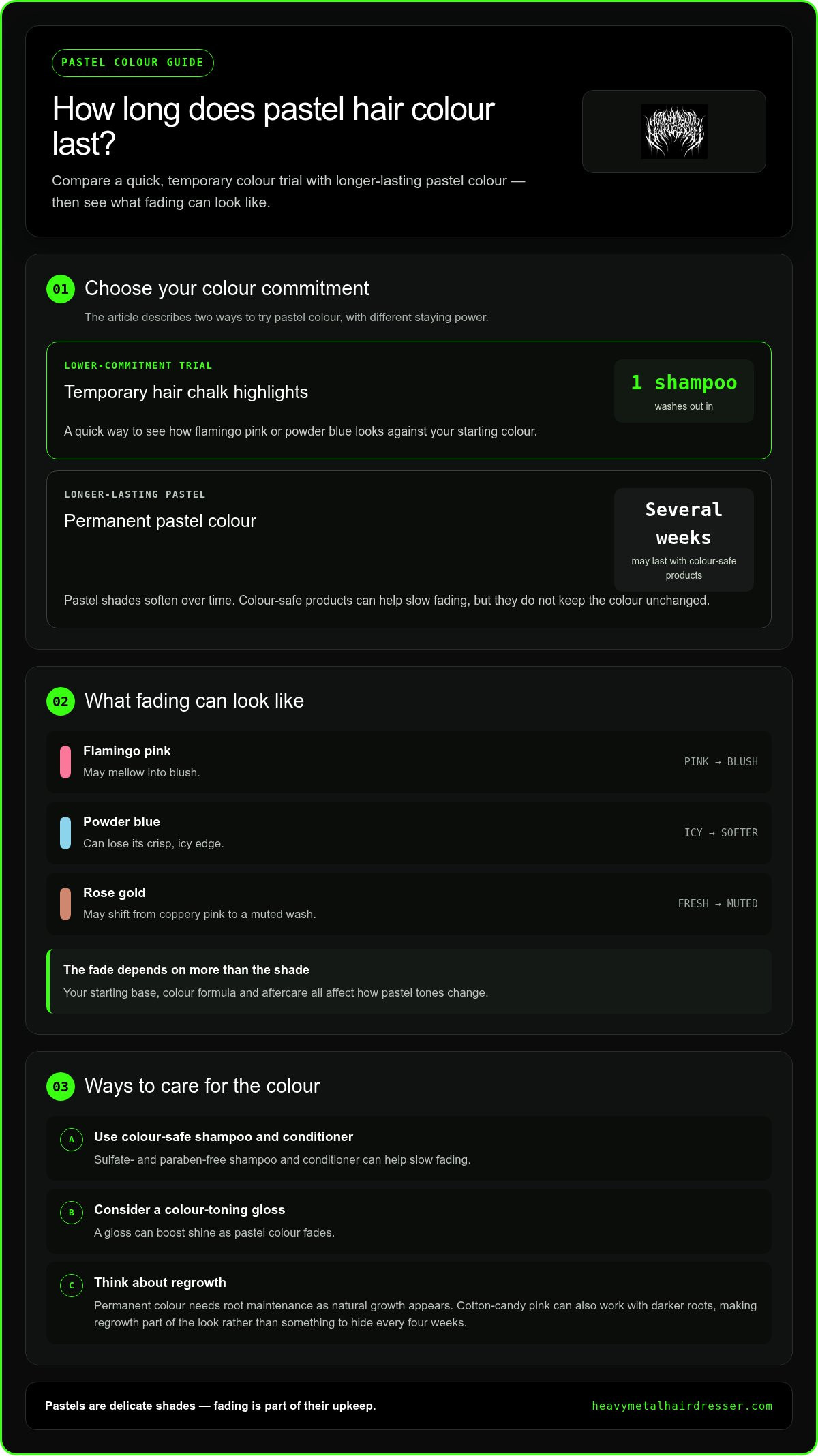
Permanent pastel hair colour may last several weeks with colour-safe products. Sulfate- and paraben-free shampoo and conditioner can help slow fading, but the colour will soften over time.

Pastels are delicate shades, so fading is part of their upkeep. Flamingo pink may mellow into blush, while powder blue can lose its crisp, icy edge. Rose gold can shift from a fresh coppery pink to a more muted wash. Your starting base, colour formula and aftercare all affect how the shades change.

For a lower-commitment trial, try temporary hair chalk highlights. They wash out in one shampoo, giving you a quick way to see how flamingo pink or powder blue looks against your base. For longer-lasting pastel colour, use shampoo and conditioner designed for coloured hair. A colour-toning gloss can also help boost shine as the pastel fades.

Blonde hair provides a light canvas for pastel pink highlights, so fine ribbons of pink can create a soft, visible shift. On dark blonde hair, working with the existing base may be preferable to lightening it before adding pink tones. The natural depth remains visible, with pastel highlights among darker blonde strands rather than one flat block of colour.

Rose gold bridges pink and peach, with a warmer feel than cool pastel pink. Peach adds a softer, sunset-like finish. For a blended effect, place rose-gold tones beside pale pink rather than using separate solid panels. A colour-toning gloss can refresh the shine and help the mix look intentional as the tones soften.

Pink and lavender make a cool pairing. Try pastel pink around the face with lavender through the lengths, or reverse the placement for a less expected finish. You can also blend the shades gradually, without a sharp dividing line. Keep them similarly soft so one colour doesn’t overpower the other.

Roots matter, too. Permanent colour needs root maintenance as natural growth appears, or a visible line can form. Cotton-candy pink can work with darker roots, so they don’t have to be hidden every four weeks. That contrast makes regrowth part of the design, while a gloss can keep the pastel lengths looking considered between colour appointments. If you enjoy using salon appointments as a chance to unwind, pairing hair maintenance with soothing spa Services can turn routine upkeep into a complete self-care day.

2. Choosing a pastel shade for your complexion

Choose a pastel by considering your skin’s undertone, not just its depth. Undertones are often described as warm, cool or neutral; skin depth ranges from fair to deep. These are different considerations. A shade that complements your undertone can feel harmonious, while deliberate contrast can make the colour pop. Pastels can suit different skin tones when you choose with undertones in mind.

Try a simple face-framing test. Hold a shirt or scarf in your chosen hair colour near your face, then look at your eyes and complexion. Check it beside a window in natural daylight and again under indoor lighting. A soft lilac scarf, for example, may look different from a peach one. Notice which shade makes your features feel clear instead of relying on the fabric colour alone.

Your wardrobe can help guide the choice. If you regularly wear black, bright mint or icy blue can create a sharp contrast. If your favourite clothes lean towards earthy greens, creams or rust, muted peach or dusty rose may blend more easily. Neither is a rule. Use the clothes you already wear as a practical colour palette, not a reason to rule out a shade you love.

Neutral undertones give you room to try both warm and cool pastels. Compare cool lavender with warm peach, or pale pink with powder blue. Hold each shade near your face, then consider whether you want the colour to soften your overall look or stand out. Neutral undertones don’t make every shade look the same: brightness and depth still change the effect.

Consider saturation, too. A muted pastel can feel subtle, while a more vivid version of the same colour makes a stronger statement. Try a soft rose before committing to bright pink, or compare pale mint with a stronger green. These pairings help you judge the intensity you want, rather than choosing a colour name without considering its tone.

Make a shortlist of shades, then test each with a scarf or top you own. Compare them in daylight, see how they work with your usual clothes, and decide whether you prefer harmony or contrast. Save reference pictures that show a similar skin depth and the exact pastel tone you like. A clear brief starts with the shade, intensity and mood you want.

If you’re shaping the whole look around a new colour, explore shag haircut inspiration for a cut with movement and texture.

3. Green pastel shades and combinations

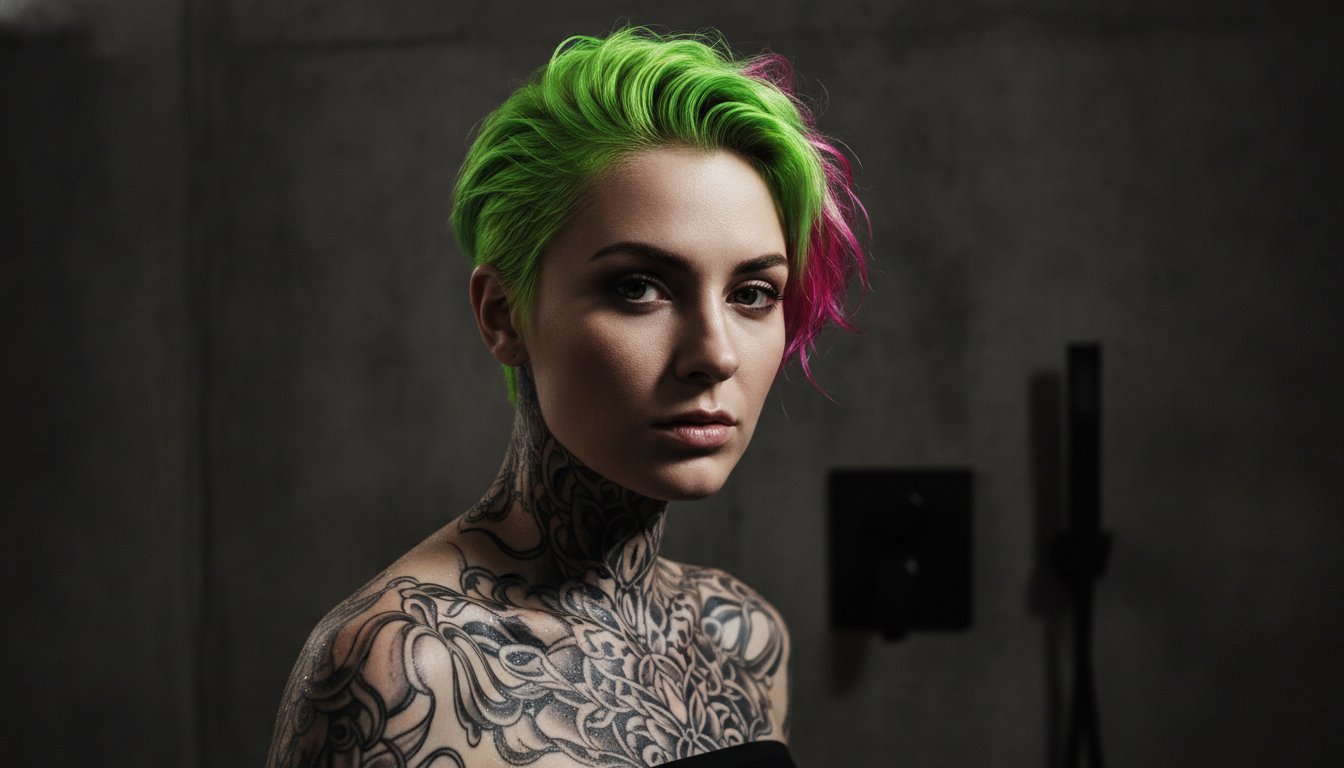
Green pastels can feel soft or deliberately unusual, depending on their depth and placement. Mint sits at the pale end, while deep peppermint green has more weight and contrast. Compare the shade with your starting colour and decide whether you want a hazy wash or a sharper statement. Lighter green reads as delicate; stronger green makes a bolder impression.

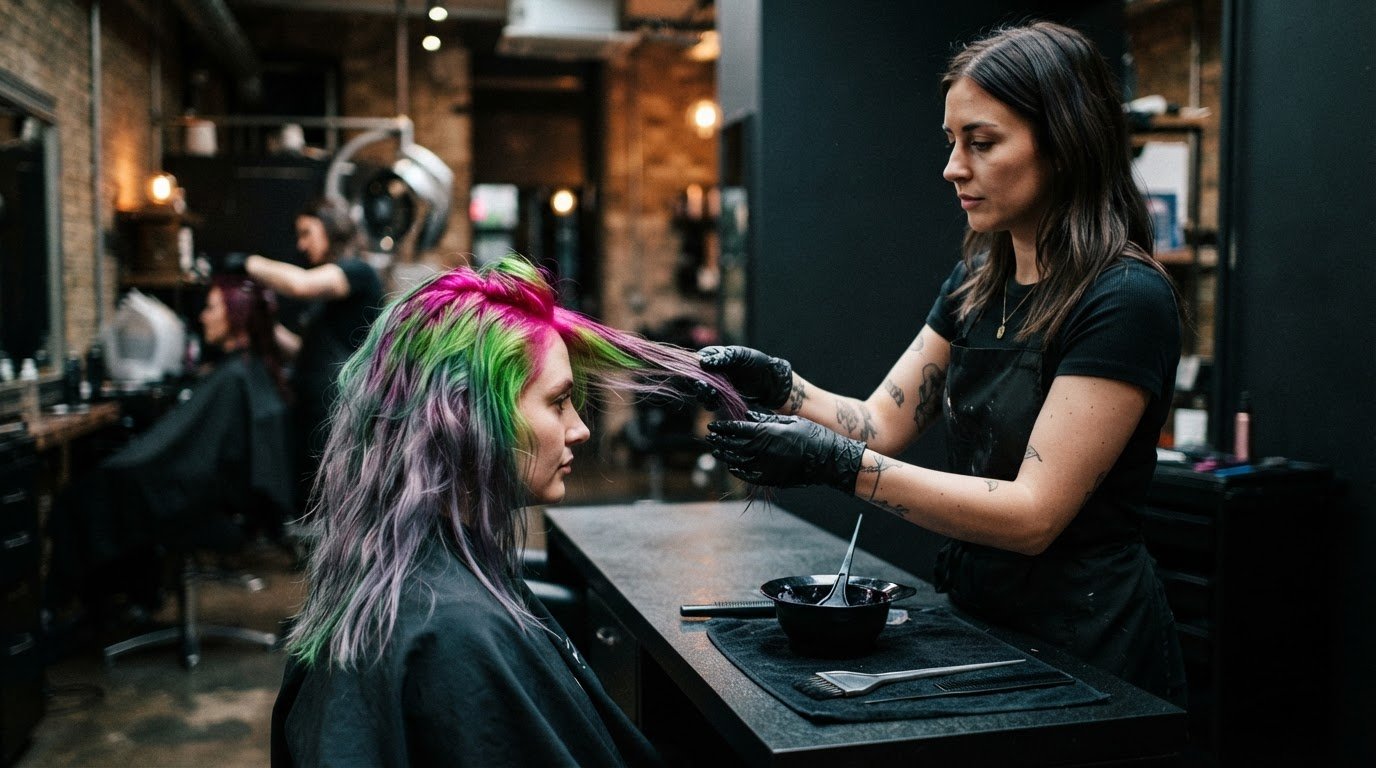
Pink and mint green sit opposite each other on the colour wheel, creating a lively contrast side by side. Try a split-dye, with pastel pink on one side and mint on the other, or alternate the colours in distinct panels. Keep both shades similarly light for balance. If one is much brighter, it becomes the main event and the other acts as an accent.

Lavender gives green a cooler, less expected partner. A two-tone look can divide the head vertically or place lavender through the fringe and green through the lengths. You can also keep purple and green distinct in separate sections rather than blending them. For a quieter combination, pair pale lavender with muted mint; deeper purple beside vivid green creates a more graphic clash.

Deep peppermint green is a strong choice if pale mint feels too subtle. Its richer tone can add definition around the face or through the ends, especially against a lighter base. Try a green panel beneath the top layer for a flash of colour when your hair moves. A full-head application is bolder, while separated sections let green share space with your natural shade.

Fluorescent green makes a high-impact statement. It’s brighter than a traditional pastel, so use it as an accent if you want colour without an all-over effect. A vivid fringe, a streak near the parting or a panel beneath the crown can make the shade feel intentional. Green can also shift towards yellow, so be clear about whether you want mint, peppermint or acid-bright green.

Plan the placement before settling on a combination. Choose the dominant shade, then decide where the second colour should go: beside it in a split-dye, underneath as a hidden panel, or in separate streaks. Save reference images showing the balance of green and lavender, or pink and mint, you want. This communicates both shade and layout more clearly than asking for “pastel hair colours” alone.

For a green-and-lavender look, keep the colours in separate panels for a crisp two-tone effect. A softer transition can blur the boundary, but may make the shades less distinct. Your pastel shade and its placement shape the result, so plan both before applying colour.
Pastel Hair Colour Ideas for Fading, Shades and Skin Tones

4. Does pastel hair look good on all skin tones?

Yes. Pastels can suit different skin tones when you choose colours that complement your undertones. On short hair, a pastel fringe or vivid panel makes the shade a focal point; medium hair can carry face-framing pieces or a split-dye. Long hair gives you more room to place colour, such as a gradual blend through the lengths.

A blonde base can provide a suitable foundation for soft pastels, as a pale starting shade lets delicate colour show clearly. Full-saturation pink works best on lighter bases, although a skilled colourist can adapt it to any starting colour. Intensity matters: soft lilac and pale mint look different from vivid pink, even on similar blonde hair.

Your skin tone doesn’t rule out pastel colour. Consider your undertone, then compare warmer and cooler shades near your face. For example, hold peach and lilac fabrics beside your complexion in daylight. Notice which makes your features feel more defined and whether you prefer harmony or contrast. This simple comparison can help narrow a broad choice.

Pre-lightening affects how soft or saturated the final colour looks. Pastel pink over a light blonde base can appear airy, while the same pink over a deeper base may look less pastel. A colourist considers your starting shade, target colour and hair’s integrity when planning how light to go. The aim is a pale enough canvas for the pastel to show while keeping the hair’s condition in view.

Dark hair may need multiple bleaching sessions to reach a light enough base for pastel colour. That takes more commitment than adding colour to blonde hair, as the process depends on how much lightening your starting shade needs. A gradual plan may make more sense than trying to reach a very pale base all at once. Be specific about the goal: pale lavender, powder blue and soft pink each create a different result.

Bleaching at home isn’t a shortcut to take casually. Colourist Stephanie Brown advises against bleaching hair at home to achieve pastel shades. A professional colourist can assess your existing base and plan the lightening needed for your chosen look. This is especially important if you’re starting with dark hair and aiming for a very pale pastel.

Bring reference pictures showing both the shade and placement you want. Pastel pink on a blonde pixie, for instance, suggests a different result from lavender ribbons on long hair. Include images with a similar base colour, and point out whether you want a subtle wash or a bold, full-saturation finish. These details help clarify the colour plan and upkeep before you commit.

5. Blue and silver gradients

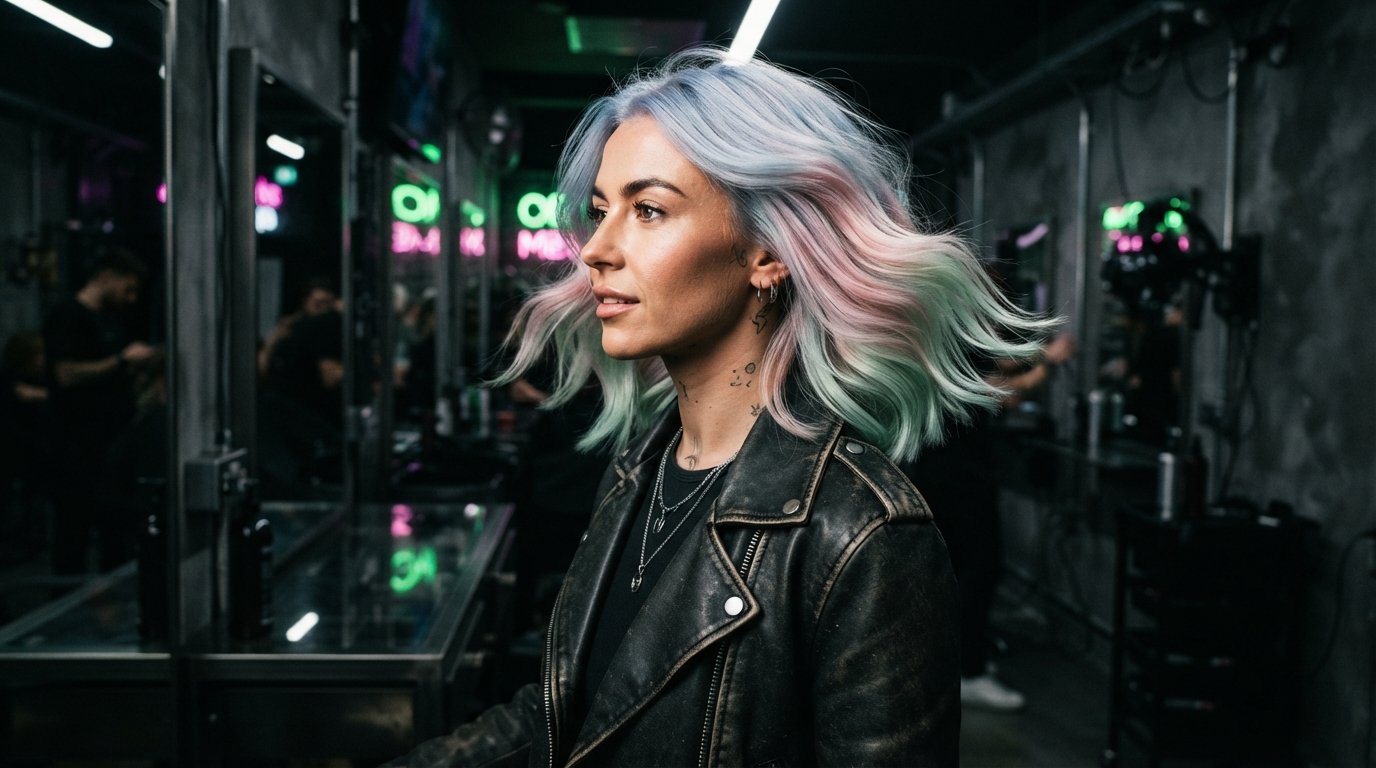
A blue-to-silver gradient connects cool colours in one look. You could start with deeper blue near the roots, blending through powder blue into pale silver at the ends. For a softer effect, keep most of the hair silver and concentrate blue through the mid-lengths. The transition can be gradual or defined, depending on whether you want a misty fade or visible colour bands.

Choose the blue tone before planning the blend. Powder blue creates a gentle shift into silver, while stronger blue adds contrast. Think of the colours as a sequence: deep blue, lighter blue, then silver. Each step gives the eye a clear change in tone. For a quieter result, use fewer shades and keep the boundary soft.

Placement changes the overall effect. A root-to-tip gradient makes the colour story easy to see, especially on straight hair. Silver around the face with blue through the back creates a different focal point. You could also keep the crown mostly natural and introduce blue and silver through the lengths, for a more contained look than an all-over transformation.

Hair length affects how much room you have for a visible transition. Short hair can use a blue fringe or silver-tipped sections to suggest a gradient without long colour bands. Medium hair can show a clear shift from blue around the crown to silver ends. Long hair gives more space for several tones, such as navy, powder blue and silver, to flow in sequence.

Blue and silver can work with other pastels, too. A little lavender between them can soften the transition. For sharper contrast, silver beside vivid blue keeps the shades distinct. Pink can join the palette, with a pale face-framing panel and blue-to-silver through the lengths. Keep the colour blocks separate if you want each shade to stand out.

Before choosing a formula, save pictures showing the gradient direction and shade balance you like. One image might show silver ends with a blue crown; another might show blue panels against a mostly silver base. Bring the examples together and mark the details you want to keep. This makes a clearer colour plan than asking for “blue and silver” alone.

Consider how the gradient will look when styled. Loose waves reveal the shift between blue and silver as the sections move, while a smooth finish makes the blend appear more continuous. A tied-back style can show where the colours meet, so decide whether you want a soft or graphic boundary. For a pretty but unconventional finish, blue and silver offer a cool alternative to familiar pastel pink.

Heavy Metal Hairdresser: Shag Haircuts

Heavy Metal Hairdresser offers Shag Haircuts, a natural next step if you want movement with your pastel look. Shaggy layers can make contrasting tones more visible as your hair falls, while face-framing pieces bring colour forward. Bring reference images showing the shade placement and shape you want, such as silver ends with blue through the lengths.

Consider a shag if you want texture and shape to complement your colour. If you prefer a different silhouette, Heavy Metal Hairdresser also offers Wolfcuts. Choose your cut for the outline and movement you want, not just the pastel shade.

To explore a Shag Haircut, visit Heavy Metal Hairdresser.

Make the colour your own

Turn your inspiration into a look that feels personal. Choose a reference image, then mark what matters most: the shade, its placement, the cut’s shape or the level of contrast. That gives you a stronger starting point than trying to recreate every detail of someone else’s hair. Pastel hair colour ideas work best as a springboard for your own expression, not a set of rules.

Heavy Metal Hairdresser can help connect your colour inspiration with a haircut that has the movement and attitude you want. Its Shag Haircuts and Wolfcuts offer expressive shapes to consider, while Guest Spots bring additional creative perspectives. Think about how your chosen colour will sit with your preferred outline, from face-framing pieces to layered lengths.

Ready to shape your next look? Contact Heavy Metal Hairdresser and start planning a style that feels unmistakably yours.

Frequently Asked Questions

Does Pastel Hair Fade Fast?

Yes, pastel colour gradually softens, though permanent pastel dye may last several weeks with colour-safe care. Temporary hair chalk is a much shorter experiment: it washes out in one shampoo. Consider which kind of change suits your routine. If you enjoy seeing a shade shift, fading can be part of the look; if you want a steadier tone, plan for upkeep.

Is Pastel Hair Hard to Maintain?

Pastel hair needs more attention than a low-maintenance natural shade because its delicate tones visibly change as they fade. Choose colour-safe shampoo and conditioner, and use a colour-toning gloss to refresh shine. Consider regrowth, too: permanent colour can leave a visible line as natural roots appear. If you’d rather avoid frequent root upkeep, a design that leaves darker roots visible can make regrowth feel intentional.

Does pastel hair look good on all skin tones?

Pastels can suit different skin tones when the shade works with your undertones and preferred contrast. For a clear comparison, hold lilac and peach fabric near your face in daylight. One may harmonise with your complexion; the other may create a bolder contrast. Neither is automatically better. Decide which effect you prefer, then use it to guide the shade and placement.

How do you know if pastel hair suits you?

Try a colour near your face before committing to a full look. A shirt or scarf gives you a quick visual test, while temporary hair chalk can show how the colour reads in your own hair. Save reference pictures that match your preferred intensity and placement. Consider your usual wardrobe, too: a shade that works with clothes you already wear may feel easier to make your own.

What are the most popular pastel hair colour ideas for 2026?

Standout pastel looks to explore in 2026 include flamingo pink, powder blue, rose gold, mint green, lavender, and blue-to-silver gradients. These are style directions, not a popularity ranking. For a more individual twist, pair pink with mint in a split-dye, blend lavender into green panels, or add peach beside rose gold. Choose the colour combination and placement that suit your intended contrast.

Which pastel hair colours suit different skin tones and undertones?

There’s no single pastel shade for each skin tone. Compare warm options, such as peach and rose gold, with cool choices, such as lavender, powder blue or silver. Neutral undertones can try both directions. Hold a scarf in each shade beside your face and notice whether it creates harmony or contrast. Your preferred effect, base colour and wardrobe can help narrow the choice.

Can you get pastel hair on dark hair, or does it need bleaching?

Dark hair usually needs lightening for a soft pastel to show clearly, and reaching a pale base may take multiple bleaching sessions. Your starting colour and desired shade shape the process. Avoid bleaching at home to achieve pastels; colourist Stephanie Brown advises against it. If you want colour without lightening your whole head, temporary hair chalk offers a brief highlight effect instead.

How to dye hair pastel pink, lavender, blue or peach at home?

For a temporary trial, apply hair chalk to selected sections, then wash it out with one shampoo. Colourist Stephanie Brown describes pink as one of the easier pastel shades to apply at home; green can be unpredictable and turn yellow. Follow the product directions and test a hidden section first. Don’t try home bleaching to create a pale base for pastel dye.
Posted on

How to Remove Vivid Hair Dye Without Damage: A Careful 2026 Guide

How to Remove Vivid Hair Dye Without Damage: A Careful 2026 Guide

The fastest way to strip vivid colour can be the quickest route to dry, unpredictable hair. If you’re searching for how to remove vivid hair dye without damage, resist treating removal like a race. Bright shades can fade unevenly or cling on longer than expected, and your hair’s history affects what happens next.

It’s understandable to want the colour gone now, especially when DIY advice points in different directions. But safer fading is usually a patient process, not a stripping contest. This guide explains why vivid dye lingers, how to weigh cautious at-home steps, and which harsh choices could leave your hair feeling rough or fragile.

We’ll also explain how fading differs from bleach, what to consider before trying a removal method, and when a colour change is best planned with a stylist. Heavy Metal Hairdresser specialises in vivid colour, with an individual approach that keeps hair condition and self-expression in the same frame. Sometimes the smartest next look starts with a careful plan.

Key Takeaways

  • Identify whether your colour is semi-permanent or another dye type before choosing a fading method.
  • Understand how natural fading, colour removers and lightening differ in pace, uncertainty and potential stress on your hair.
  • For how to remove vivid hair dye without damage, take a cautious step-by-step approach: assess your hair, test first and reassess before doing more.
  • Follow product label directions and avoid rushing into repeated treatments if your hair feels fragile.
  • Patchy colour, multiple dye layers or a major colour change may call for a stylist’s tailored plan.

Why vivid hair dye can be stubborn to remove without damage

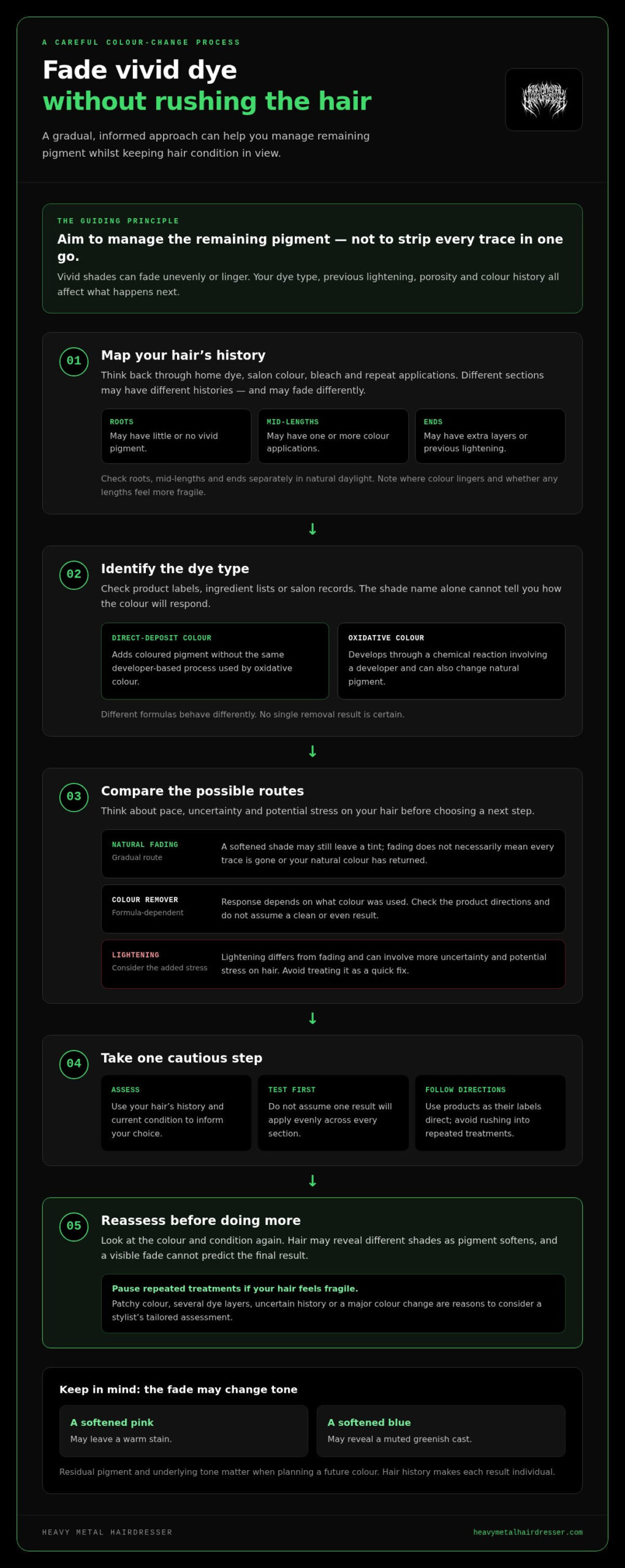
Ready for a new colour? You don’t need to wage war on your hair to get there. The safer goal in how to remove vivid hair dye without damage is to manage the remaining pigment whilst protecting your hair’s condition. A gradual fade may be more realistic than expecting every trace of colour to vanish at once.

Vivid shades often use direct-deposit colour, but the result depends on more than the shade on the box. Previous lightening, hair porosity, overlapping applications and at-home colour history can all affect the outcome. A cautious plan starts with understanding what’s on your hair, not reaching for the strongest remover you can find.

What kind of vivid hair dye is in your hair?

Direct-deposit colour adds coloured pigment without the same developer-based process used by oxidative colour. Oxidative dyes develop through a chemical reaction inside the hair shaft and can also change natural pigment. Formulas vary, and vivid colours may be used alongside other colour processes. Product labels, ingredient lists and salon records can help identify what was used. Different formulas respond differently, so no single removal result is certain.

The chemistry of hair coloring helps explain why dye types behave differently: colour can sit on or within the hair, whilst oxidative processes work differently from simple pigment deposit. That distinction matters when choosing a next step. If you’re unsure what was used, don’t assume the colour name tells the whole story. Keep the packaging or note the brand and shade, if you can.

Why the same colour can fade differently on different hair

Hair that’s been lightened may be more porous, meaning its outer structure can be more open and absorb colour readily. That can help vivid pigment look intense, but it may also make the fade unpredictable: some areas release colour sooner whilst others hold on. Hair with different histories from root to tip can behave like several canvases, not one.

Layering adds another complication. Reapplying the same shade can build pigment in some sections, and overlapping colours may reveal different tones as they soften. A blue over a faded base, for example, may not fade to the same shade across the head. A photo, even in clear light, can’t show the hair’s porosity or full colour history, and a shade name can’t predict the final result.

Think back through the full timeline: home dye, salon colour, bleach, and any sections that have been coloured more often. If the history is patchy or uncertain, that’s useful information, not a reason to panic. A stylist can assess your hair and discuss realistic options before a bigger change. Heavy Metal Hairdresser specialises in vivid colour, and its vivid hair colour guide explores how bold colour can become part of your individual look. Knowing how your current colour got there is the first step towards changing it with care.

How vivid dye interacts with the hair shaft as it fades

Colour doesn’t simply sit on hair like paint on a smooth wall. Each strand has an outer protective layer called the cuticle, made of overlapping scales, and an inner area where colour changes can take place. As pigment loosens or washes away, the shade you see shifts. That visible fade doesn’t necessarily mean every trace of colour has gone or that your natural colour has returned.

This distinction matters when working out how to remove vivid hair dye without damage. A softened pink might leave a warm stain; a blue may reveal a muted greenish cast. Those remnants are not a reliable guide to what a future colour will look like. The hair’s underlying tone and condition still matter.

Direct dye, oxidative colour, and the difference that matters

Direct dye is colour deposited onto the hair, whilst oxidative colour develops through a chemical process involving a developer. The formulas work differently, so they may fade or respond to removal in different ways. Neither type guarantees a clean fade. Before choosing a method, check the product label or salon records to identify what was used. The American Cancer Society’s hair dye safety guidance also points to precautions such as following product directions.

Porosity, previous lightening, and leftover pigment

Porosity describes how readily hair takes in and releases moisture and colour. Lightening can alter the cuticle, so treated lengths may absorb vivid pigment differently from less-processed roots. That history can affect how colour fades and how much tint remains.

Think of a head of hair as a timeline. New growth may have little or no vivid pigment, mid-lengths may have one application, and the ends may have several layers or prior lightening. As colour softens, each area can reveal a different shade. The change may look especially uneven in bright bathroom lighting or against a light background.

Check your hair in natural daylight, looking at the roots, mid-lengths and ends separately. Note whether the colour appears even, where it lingers, and whether the lengths feel more fragile than the roots. This gives you a more useful starting point than judging your whole head under one light. It still can’t predict an exact endpoint: previous treatments and residual pigment make each head of hair its own case.

If the colour history is unclear or the fade is already patchy, a stylist can assess your hair and discuss a controlled route towards your next look. Heavy Metal Hairdresser specialises in vivid colour, and Simon Tuckwell’s individual approach keeps expression and hair condition in view. Explore professional guidance for your colour change to make sense of what the remaining pigment might mean before deciding what comes next.

Vivid dye removal methods compared: what is gentler and what carries more risk?

There’s no single removal route that suits every vivid shade or hair history. Method choice depends on the dye type and your hair’s history. The strongest option isn’t automatically the cleanest: aggressive stripping can leave unwanted tones behind and put more stress on hair, without delivering the even result you hoped for.

Natural fading
Pace: Gradual. Uncertainty: It can fade unevenly and may leave a tint. Potential stress: Depends on what you do to encourage fading; repeated washing or drying methods can still affect condition.

Colour-removal products
Pace: Depends on the formula and dye. Uncertainty: Results vary, and these products aren’t interchangeable. Potential stress: Depends on the product and your hair’s condition.

Lightening
Pace: Can shift colour more quickly, but isn’t a predictable shortcut. Uncertainty: May reveal underlying or leftover tones. Potential stress: Higher, because lightening can affect both artificial colour and natural pigment.

Gradual fading versus dedicated colour-removal products

Allowing colour to soften gradually may feel less abrupt than a major chemical change, but patience matters. A faded shade can still look patchy or linger in porous lengths. Colour-removal products are a separate option, but one remover’s directions and intended use don’t automatically apply to another. Read and follow the specific label, and don’t assume the product will restore your original base colour. A result that looks lighter isn’t necessarily a blank canvas.

When weighing up how to remove vivid hair dye without damage, ask not only “Which method works fastest?” but also “What could this reveal, and how might my hair respond?” That pause can prevent a rushed decision from becoming a bigger colour correction.

Why bleach, household hacks, and repeated stripping can backfire

Bleach is not the same as a colour remover. It lightens by changing pigment, including natural pigment, and can reveal warm or unexpected undertones rather than lifting vivid colour neatly away. Home mixtures and repeated harsh treatments add uncertainty: ingredients, strengths and combinations may not be designed for hair, whilst repeated processing can leave lengths feeling rough or weak.

Don’t stack treatments just because the first result looks incomplete. If your hair becomes unusually fragile or stretchy, or your scalp feels uncomfortable, stop and avoid applying more. Those signs call for caution, not another round of stripping. A stylist can assess the colour and condition together, then help plan a more controlled change that protects the possibility of your next look.

How to Remove Vivid Hair Dye Without Damage: A Careful 2026 Guide

How to fade vivid hair dye more cautiously at home

A careful home approach is less about doing more and more about making each step count. Before trying a fading product or changing your routine, take stock of the colour and the hair underneath it. A small, controlled test can reveal a lot before you commit to treating every section.

  1. Identify the dye. Check the packaging, product label or salon records, if you have them. Note whether the colour was direct-deposit or part of an oxidative process, and record any previous lightening or colour applications. If you can’t identify the formula, don’t assume a method will suit it.
  2. Assess your hair’s condition. Look and feel through the roots, mid-lengths and ends. Notice areas that feel unusually dry, weak or stretchy, and where colour is more heavily layered. A method that seems manageable on one section may be too much for another.
  3. Test one discreet strand. Choose a small, hidden piece that reflects the lengths and colour history you plan to treat. Follow the chosen product’s instructions exactly, including its safety guidance. Don’t add ingredients or change how it’s used.
  4. Rinse, observe and reassess. Record the visible colour change and how the strand feels once dry. Compare the result with untreated hair before deciding whether to proceed. A test is a guide, not a promise that the whole head will respond evenly.

A cautious strand test before treating your whole head

Choose a strand from an area that’s been coloured or lightened, rather than testing only on untouched roots if your lengths are the concern. Note the starting shade, follow the product label, then check the strand in natural light. If the colour shifts sharply, looks markedly uneven, or the hair feels compromised afterwards, stop. Don’t treat the rest of your hair on the strength of that result.

Aftercare while the colour fades

Handle your hair gently and condition it in a way that suits its needs and any product directions. Avoid another removal attempt until you’ve assessed how the first one affected both colour and feel. More treatments aren’t automatically more progress.

Take a quick photo in consistent natural lighting before a change and after the strand test. Check the same areas each time, rather than relying on memory or comparing pictures taken in different lighting. This makes it easier to spot whether the colour is shifting and whether the hair is holding up.

Stop and reassess if the test strand becomes unusually fragile, stretchy or rough, if the result is sharply uneven, or if your scalp feels uncomfortable. Don’t push through warning signs. If the colour history is complicated or you’re unsure what the test means, Heavy Metal Hairdresser specialises in vivid colour. Plan your next colour change with a stylist before taking a bigger step.

When a stylist can help remove vivid hair dye more safely

DIY fading has limits. If your colour is layered, your hair feels fragile, or the next look is a major shift, tailored guidance can help you weigh the options before adding more stress. Getting support isn’t admitting defeat. It’s choosing a plan based on the hair you have, not an imagined result from a photo or a shade name.

Signs that DIY fading is no longer the best move

Pause if you see distinct bands, stubborn patches of staining or unexpected tones that become more obvious as the colour fades. A noticeable change in how your hair feels or behaves is another reason to avoid further processing. If you’re unsure whether your hair can tolerate another step, don’t use another treatment to find out.

Complex colour history makes at-home predictions especially unreliable. The roots may have one application, the lengths several, and the ends may have been lightened before the vivid shade went on. A stylist can consider those differences rather than treating every section as if it will respond alike. That’s useful if you’re aiming for a dramatic change, where an uneven starting point may affect the route and result.

What a careful consultation can clarify

A useful conversation starts with the full colour history: what was applied, where it was applied, and whether the hair has been lightened or treated before. Bring product details or salon records if you have them. The stylist can assess your hair’s condition, discuss what you want next, and explain realistic options, including whether a gradual transition makes more sense than chasing an immediate change.

Be clear about what matters most to you. Is your priority to preserve length, move towards a particular shade, or simply soften the vivid colour for now? Clear priorities help shape a plan around your hair’s condition and your tolerance for change, without promising an exact endpoint before the hair has been assessed.

Planning the next colour without losing your individuality

Vivid colour isn’t a mistake to erase. It can be a bold part of how you express yourself, and changing it doesn’t mean giving that up. Heavy Metal Hairdresser specialises in vivid colour in an inclusive space that celebrates individual identity. Founded by creative stylist Simon Tuckwell, the salon approaches colour as personal expression, with hair condition part of the conversation about what comes next.

Before deciding, consider whether you’re comfortable with more than one stage of change, or whether you’d rather explore an interim shade whilst the colour shifts. A stylist can tailor the discussion to your hair’s history and condition, helping you understand the trade-offs without pushing you towards a particular look. For a considered next step with how to remove vivid hair dye without damage, share your colour history and desired result with a stylist experienced in vivid colour.

If you’re ready to plan a more controlled change, discuss a careful vivid-colour change with Heavy Metal Hairdresser.

Choose a next look that feels like you

Your next colour doesn’t need to be decided in a rush. Give yourself room to work out how you want your hair to look and feel, whether that means letting the vivid shade soften, shifting towards something new or planning a gradual change. The best next step is one you can make with confidence, not pressure.

If the colour feels complicated or you’re unsure how to remove vivid hair dye without damage, a tailored conversation can help turn uncertainty into a plan. Heavy Metal Hairdresser’s specialist vivid colour work sits within an inclusive salon environment that celebrates individual identity. Founded by creative stylist Simon Tuckwell, the salon treats colour as personal expression. Your colour story is yours to shape, and changing it doesn’t mean losing what makes it personal.

Explore vivid colour work with Heavy Metal Hairdresser, and take your next step towards a look that still feels unmistakably you.

Frequently Asked Questions

How long does vivid hair dye take to fade naturally?

There’s no fixed timeline: the fade depends on the dye, how deeply the colour shows, and how your hair responds to washing and everyday wear. A vivid shade may soften gradually yet leave a tint behind. If you’re planning another colour, don’t rely on a calendar estimate. Judge your hair’s current shade and condition before deciding what to do next.

Does clarifying shampoo remove vivid hair dye?

Clarifying shampoo may help loosen some surface colour, but it can’t guarantee complete removal. It’s designed to cleanse thoroughly, not return hair to its original shade. Frequent use may leave hair feeling dry, particularly if it’s already processed. Follow the shampoo’s directions, condition afterwards as appropriate, and pause if your lengths start to feel rough rather than repeating washes to chase a faster fade.

Can I colour my hair again straight after fading vivid dye?

Not necessarily. Whether you can colour again depends on the method you’ve used, the product instructions and how your hair feels afterwards. A fresh shade may also look different over lingering pigment than it does on a clean base. Before applying colour all over, test a small strand with the intended colour, following its label directions. If the result is unpredictable or the hair feels weak, hold off and get tailored advice.

Will vivid hair dye come out completely?

Not always. Some colour may fade until it’s barely visible, whilst a trace can remain in the hair and affect the next shade. This matters most if you’re aiming for a pale or very different colour, where leftover pigment may show through or alter the result. Be prepared for a transition rather than assuming the colour will disappear entirely. A stylist can help assess whether the remaining tone needs to be factored into your plan.

Is colour remover safe for vivid hair dye?

It depends on the remover, the dye formula and your hair’s condition. A product made for one type of colour may not suit another, so check its intended use and read the full instructions before applying it. Use it only as directed, and don’t combine it with other treatments unless its label says to. If you can’t identify the dye or your hair has a complicated treatment history, get professional guidance first.

Can vivid hair dye damage your hair as it fades?

Fading on its own doesn’t automatically mean the dye is damaging your hair. Dryness or weakness can be linked to previous lightening, your hair’s existing condition or attempts to speed up removal. Notice how your hair behaves during routine care: if it starts snapping more easily or feels unusually weak when wet, stop adding treatments. Focus on gentle handling and let your hair’s condition guide your next move.

Why is my vivid hair dye fading unevenly?

Uneven fading can reflect differences in how colour was applied or how each section of hair has been treated. Styling and washing habits can also affect areas that get the most handling or exposure. Check the shade when your hair is fully dry and under neutral daylight, then note where the difference appears. If you’re seeing distinct bands or a sudden change, avoid trying to correct just one patch without a plan.

Posted on

How to Maintain Vivid Hair Colour: The Alt-Hair Survival Guide (2026)

How to Maintain Vivid Hair Colour: The Alt-Hair Survival Guide (2026)

Your shower floor shouldn’t look like a neon crime scene every time you scrub up. If you’re tired of watching your identity swirl down the drain after just two washes, you’re doing it wrong. Learning how to maintain vivid hair colour isn’t about gentle beauty tips; it’s a tactical regime of pigment preservation. We know the frustration of seeing a sunset ombre or electric blue fade into a muddy mess whilst your favourite white t-shirts end up permanently stained. It’s a high-stakes game that requires more than just a sulfate-free shampoo.

We agree that the “wash and go” lifestyle is dead for anyone sporting a high-voltage mane. You shouldn’t have to choose between a saturated shade and hair that doesn’t feel like literal straw. This guide promises to hand you the survival kit needed to keep your alternative hair aggressive for six weeks or more. We’re diving into the cold-water protocols, the pigment-depositing secrets that actually work, and the 2026 regulatory shifts you need to navigate to keep your look loud and your hair healthy enough to survive any mosh pit.

Key Takeaways

  • Understand that vivid dye is a surface stain, meaning every hot shower is a direct threat to your pigment’s longevity.
  • Adopt the “Ice Bucket” rule to physically lock the hair cuticle and stop the bleed during your washing routine.
  • Master how to maintain vivid hair colour by weaponising sulphate-free, pH-balanced products against rapid fading.
  • Shield your saturated shade from UV damage and sweat during festivals or high-energy gigs to keep your edge in the wild.
  • Utilise professional gloss reinforcements and custom-blended conditioners to ensure your colour stays aggressive for six weeks or more.

Understanding the Saturated Identity: Why Vivid Pigment Behaves Differently

Vivid hair colour isn’t your standard salon service; it is a high-stakes commitment to a subcultural identity. Unlike traditional permanent shades that use ammonia to penetrate the hair’s cortex and alter its natural melanin, vivids are direct dyes. They function as a non-oxidative pigment that relies on cuticle integrity for longevity. Think of it as a high-performance stain rather than a chemical transformation. Because these pigments sit on the outer layers of the hair shaft, they are constantly under threat from environmental factors and every day habits. If you want to master how to maintain vivid hair colour, you have to stop thinking about “dyeing” your hair and start thinking about “armouring” it.

Traditional hair coloring chemistry relies on a developer to lift the hair’s natural pigment and deposit new colour deep inside. Vivids don’t have that luxury. They are essentially “makeup for hair” that clings to the surface. This creates a unique challenge. Whilst permanent colour stays put until it grows out, vivid pigment is in a constant state of departure. Every time you wet your hair, you are essentially inviting that pigment to leave. Understanding this “staining” mechanism is the first step in stopping the bleed and keeping your alternative look aggressive for weeks rather than days.

The Porosity Problem

To achieve a neon or pastel result, your hair must first be a blank canvas. Pre-lightening or bleaching for vivid hair colour is a mandatory prerequisite for saturation. However, this process physically blasts the cuticle open. It creates a porous, “leaky” hair structure. If your hair is too damaged, it will “spit out” pigment faster than you can apply it. You need a certain level of aggressive texture for the dye to grip, but if the cuticle is blown out, the colour has no anchor. It’s a delicate balance between achieving the right lift and maintaining enough structural integrity to keep the door shut on your pigment.

Direct Dyes vs. Permanent Colour

The molecular size of your chosen shade determines its lifespan. In the world of direct dyes, not all pigments are created equal. Blue and green molecules are notoriously large and stubborn; they tend to hang around longer but can be a nightmare to remove. Pinks and reds are smaller and slip out of the hair shaft with minimal effort. This is why your “fade path” matters. A sunset ombre might fade into a beautiful peach, whilst a cool-toned purple might transition into a muddy grey if the hair’s porosity isn’t managed. Knowing how to maintain vivid hair colour requires you to anticipate how your specific subcultural shade will behave as it inevitably begins to ghost you.

  • Direct Dyes: Large molecules, sit on the cuticle, wash out over time.
  • Oxidative Dyes: Small molecules, enter the cortex, stay until they grow out.
  • Porosity: The “leaky” factor that determines how fast your colour escapes.

The Cold Water Protocol: Establishing a Low-Impact Washing Routine

Heat is the silent killer of alternative identity. When you blast your hair with hot water, you’re triggering a process called thermal expansion. This physically lifts the cuticle scales like shingles on a stormy roof, creating a wide-open exit for your expensive pigment. If you are obsessing over how to maintain vivid hair colour, your first battle is fought at the shower tap. Every degree of heat increases the solubility of the dye molecules, essentially melting your look away. Research into the chemistry of hair color fading proves that water temperature is one of the most aggressive factors in premature pigment loss.

To survive the fade, you must adopt the “Ice Bucket” rule. The water needs to be as cold as you can stand. It’s a shock to the system, but it’s the only way to lock the cuticle flat and trap the colour inside the hair shaft. Many in the community prefer washing their hair in the sink whilst keeping their body warm in the shower. This separation ensures you don’t compromise on your comfort whilst giving your hair the sub-zero treatment it requires to stay saturated. You are training your hair to survive on a once-a-week washing cycle. Transitioning takes patience, but reducing water exposure is the single most effective way to keep your edge.

Step-by-Step Washing Routine

Preparation is everything. Detangle your hair whilst it’s bone dry to minimise mechanical damage; wet hair is at its weakest and most prone to snapping. Once you’re under the cold tap, focus your sulphate-free cleanser strictly on the scalp area. There is no need to scrub your mid-lengths or ends. As the suds rinse away, they will naturally clean the rest of the hair without stripping the concentrated pigment from your most visible sections. Finish with a freezing rinse to ensure every cuticle scale is clamped shut.

The Dry Shampoo Alternative

Dry shampoo is the bridge between your “wash days.” It absorbs excess oils and adds the gritty, lived-in texture that makes alternative styles like shag haircuts or wolfcuts look their best. To avoid the dreaded white residue on darker or high-saturation shades, apply the spray at night. This allows the powder to fully absorb whilst you sleep, leaving you with refreshed hair that hasn’t touched a drop of water. Organise your week around a specific wash day to maximise your pigment’s lifespan and keep your routine disciplined.

  • Thermal Expansion: Heat opens the cuticle; cold locks it shut.
  • Scalp Focus: Clean the roots, protect the ends.
  • Frequency: Aim for one wash every 7 to 10 days.

Mastering how to maintain vivid hair colour is about discipline. It’s a tactical choice to prioritise your aesthetic over a steaming hot shower. By controlling the temperature and the frequency of your routine, you ensure your colour remains aggressive and your hair stays structurally sound for the long haul.

How to Maintain Vivid Hair Colour: The Alt-Hair Survival Guide (2026)

Chemical Warfare Against Fade: Choosing the Right Maintenance Arsenal

Your bathroom cabinet is the front line of pigment preservation. If you’re serious about how to maintain vivid hair colour, you need to stop using supermarket sludge that treats your hair like a dirty garage floor. Most generic shampoos are loaded with Sodium Lauryl Sulphate (SLS). This is an industrial-strength surfactant designed to strip grease, but on alternative hair, it simply erases your identity. It rips the pigment right off the surface of the hair shaft. You need a sulphate-free baseline to ensure your wash day doesn’t become a fade day.

Cuticle control is a game of chemistry. Hair naturally thrives at an acidic pH of 4.5 to 5.5, which keeps the cuticle layers tightly clamped. Most cheap soaps are alkaline, which forces the cuticle to swell and stay open. This is why professional, pH-balanced products are non-negotiable. Staying updated on FDA safety guidelines for hair dye is also crucial as regulations shift in 2026. With the voluntary phase-out of various synthetic additives and new EU restrictions, choosing reputable, professional-grade brands ensures you are protecting your scalp whilst keeping your saturated tone aggressive.

Pigmented conditioners are the ultimate cheat code for alternative hair. These “colour bombs” deposit a fresh layer of dye amongst your main wash days. They fill in the gaps where your original shade has started to ghost you. By using a custom-blended or high-pigment mask once a week, you can keep your electric blue or neon pink looking fresh-from-the-salon for double the usual time. It’s about constant reinforcement rather than just hoping for the best.

Ingredients to Blacklist

Clarifying shampoos are the ultimate enemy of the alternative soul. They are designed to strip everything away, which is a death sentence for semi-permanent pigment. You should also avoid heavy silicones. These ingredients create a plastic-like film that masks damage whilst allowing your colour to leak out underneath. Look for breathable, water-soluble formulas that don’t trap heat or block moisture from reaching the cortex.

The Power of Bond Builders

Pre-lightening is a chemical trauma that leaves your hair structure “leaky.” Bond-repairing technology is the only way to seal that damage. These treatments work at a molecular level to reconnect broken disulphide bonds. Regular use ensures the internal structure of your shag haircuts or mullets remains intact. It keeps your hair textured and edgy rather than allowing it to turn into a frizzy, snapping mess that can’t hold pigment.

  • Sulphate-Free: The bare minimum for keeping your pigment on your head.
  • pH-Balanced: Keeps the cuticle door locked shut.
  • Bond Builders: Repairs the structural damage from bleaching.
  • Pigmented Masks: Recharges your colour between salon visits.

Mosh Pit and Festival Survival: Protecting Your Colour in the Wild

Your hair doesn’t live in a vacuum. If you’re spending your weekends in the pit or camping at a three-day festival, your environment is actively trying to kill your colour. UV rays are essentially a slow-motion bleach job. They break down the chemical bonds of your direct dye, turning a vibrant emerald into a washed-out mint before the headliner even hits the stage. Knowing how to maintain vivid hair colour in the wild means anticipating these threats before they strike. It’s about tactical defence against sun, salt, and sweat.

Mechanical friction is another silent thief. Every time your hair rubs against a rough hoodie, a beanie, or someone else’s shoulder in a mosh pit, you’re losing pigment through abrasion. Protecting your festival hair requires a barrier of UV protectant and physical shielding to stop the fade. Sweat is equally destructive. The salinity in your perspiration acts as a mild solvent, loosening the grip of the pigment on your hair’s surface. If you want to keep your look aggressive, you need a plan that survives the chaos of the alternative lifestyle.

Sun and Chlorine Defence

The sun is your biggest enemy at outdoor events like Download or Bloodstock. UV-absorbing leave-in conditioners are non-negotiable. Think of it as SPF for your identity. If you’re heading to a pool or a lake, use the “Pre-Soak” method. Drench your hair in fresh water first. Your hair is like a sponge; if it’s already full of clean water, it can’t soak up the chlorine or salt that would otherwise strip your shade. A hat isn’t just a fashion choice; it’s a structural necessity for colour preservation during peak daylight hours.

Post-Gig Recovery

Once the dust settles, your recovery routine determines if your colour survives the weekend. Salt buildup from sweat needs to be removed gently. Avoid the temptation to scrub. Use a co-wash or a very mild cleanser to lift the grit whilst leaving the pigment intact. This is also the time to reinforce the shape of your style. Maintaining the flow of a wolf hair cut amongst the chaos requires a deep conditioning treatment to restore the moisture lost to sun and dry shampoo. If your hair feels like straw, it won’t hold the light, and your colour will look flat.

Don’t let a weekend of madness ruin months of maintenance. If you’re ready to master the most aggressive styles in the scene, check out our Hair Courses to learn the technical side of alternative hair. Learning how to maintain vivid hair colour is just the start of owning your aesthetic with confidence.

  • UV Barrier: Leave-in protection is mandatory for outdoor gigs.
  • Pre-Soak: Fresh water first to block salt and chlorine.
  • Physical Shielding: Use hats or braids to reduce mosh pit friction.
  • Gentle Recovery: Co-wash after heavy sweating to remove salt without stripping dye.

Professional Reinforcement: How Heavy Metal Hairdresser Keeps Your Edge

Home care is your daily grind, but professional reinforcement is how you stay top-tier. When you are mastering how to maintain vivid hair colour, you eventually hit a wall where home masks aren’t enough. Professional intervention is the difference between a shade that looks “lived-in” and one that looks neglected. We don’t just apply pigment; we engineer a long-term strategy for your hair’s survival. This includes providing custom-blended take-home conditioners matched exactly to your unique shade. These aren’t generic shop-bought fixes. They are concentrated pigment recharges designed to keep your alternative identity aggressive between appointments.

Expertise also matters when you want to change your vibe. Transitioning between bold colours, like moving from a deep cobalt to a neon pink, is a delicate operation. Doing this at home usually leads to total structural destruction and a muddy result. We specialise in “colour stripping” techniques that respect the hair’s integrity, ensuring you can evolve your look without losing your length or texture. It is a partnership built on technical proficiency and a shared understanding of subcultural grit.

The Gloss and Refresh Service

A professional “gloss” is the secret weapon of the alternative scene. This mid-appointment refresh is significantly cheaper and healthier than a full re-dye because we aren’t re-bleaching the canvas. We focus on closing the cuticle professionally after weeks of festival dust and mosh pit sweat. This service is essential for maintaining the aggressive layers of alternative styles. These cuts rely on light reflection and movement; if the colour looks flat or the ends look frizzy, the whole aesthetic collapses. A gloss service ensures your how to maintain vivid hair colour strategy includes structural repair alongside pigment saturation.

Identity-Affirming Consultations

You shouldn’t have to explain your subculture to your stylist. We provide inclusive, safe-space consultations that prioritise your identity over mainstream trends. We collaborate with you to plan a colour journey that minimises damage over months and years. Whether you are rocking a textured shag or a sharp mullet, we ensure your colour enhances the cut. Ready to stop the bleed and claim your look? Book your creative colour session at Heavy Metal Hairdresser and let’s build a regime that survives the wild.

  • Professional Gloss: Recharges pigment whilst sealing the cuticle.
  • Custom Blends: Take-home conditioners matched to your specific shade.
  • Safe Transitions: Expert colour changes without sacrificing hair health.
  • Subcultural Expertise: Stylists who speak your language and respect your edge.

Claim Your Saturated Future

Your hair is more than just a look; it’s a statement of intent. Mastering how to maintain vivid hair colour isn’t about following mainstream beauty rules. It’s about tactical choices. From adopting the sub-zero “Ice Bucket” washing rule to weaponising pH-balanced products against the fade, you now have the survival kit to keep your pigment aggressive for weeks. You’ve learned to shield your shade in the chaos of the mosh pit and when to call in professional reinforcements for that essential cuticle-locking gloss.

Don’t settle for a muted version of yourself. We are award-winning alternative hair specialists who understand the subcultural grit required to keep your edge. As a gender-inclusive safe space featured backstage at Download and Bloodstock, we don’t just dye hair; we engineer identities that survive the wild. It’s time to stop the bleed and keep your look loud. Your hair deserves a routine that matches your energy.

Join the rebellion and book your next creative colour session today. Your most saturated self is waiting. Stay loud, stay vibrant, and never let the mainstream dull your glow.

Frequently Asked Questions

How long does vivid hair colour typically last?

Vivid hair colour typically lasts between 4 to 8 weeks before it requires a significant refresh. This window depends heavily on your shade’s molecular size and your commitment to the cold water protocol. Blues and greens tend to linger longer whilst pinks and reds might ghost you earlier. If you want to know how to maintain vivid hair colour for the long haul, focus on pigment preservation from day one.

Can I use normal shampoo on my vivid hair?

Standard supermarket shampoos are the primary enemy of alternative hair. They are packed with harsh sulphates like Sodium Lauryl Sulphate that act like industrial degreasers on your scalp. These surfactants rip the pigment right off the hair shaft with every wash. Switch to a professional, sulphate-free, and pH-balanced formula to ensure your identity doesn’t end up swirling down the shower drain every time you scrub.

How often should I wash my hair to keep the colour bright?

You should aim to wash your hair no more than once a week to maximise vibrancy. Every water exposure is a risk factor for pigment loss. If you can push it to every 10 days by using dry shampoo at night, your colour will stay aggressive for much longer. Transitioning to a low-frequency cycle takes time, but your saturated tone will thank you for the restraint.

Does cold water really make a difference for hair colour?

Cold water is non-negotiable for locking the cuticle flat and trapping pigment inside the hair. Hot water causes thermal expansion, which physically lifts the hair’s outer layers and lets the dye escape. By using the “Ice Bucket” rule, you ensure the hair shaft remains sealed. It is a brutal routine, but it’s the most effective way to stop the bleed during your washing cycle.

Is it okay to use heat styling tools on vivid hair?

High heat will physically melt the pigment out of your hair, so use styling tools sparingly. If you must use a flat iron or wand, keep the temperature below 180°C and always apply a professional-grade heat protectant first. Heat styling on unprotected, bleached hair is a fast track to a dull, faded look. Prioritise air-drying or low-heat settings to keep your edge and structural integrity.

How do I stop my hair dye from bleeding onto my clothes?

Ensure your hair is completely dry before getting dressed, as moisture is the main vehicle for pigment transfer. If you’ve recently dyed your hair, a final freezing rinse with a splash of white vinegar can help seal the cuticle further. Use dark towels and pillowcases during the first two weeks to avoid permanent staining. Once the hair is bone dry, the bleeding usually stops unless you get caught in the rain.

Can I go swimming with vivid hair colour?

Chlorine and saltwater are aggressive solvents that will strip your colour in minutes. If you can’t avoid the pool, use the “Pre-Soak” method by drenching your hair in fresh water and applying a leave-in conditioner before diving in. This prevents your hair from soaking up the chemical-heavy pool water. Always rinse with fresh water immediately after your swim to remove any lingering residue that might dull your shade.

What is the best way to refresh my colour at home?

Using a pigmented conditioner or “colour bomb” is the most effective way to recharge your shade amongst salon visits. These products deposit a fresh layer of dye whilst deeply hydrating your bleached strands. It is a vital part of how to maintain vivid hair colour without the damage of constant re-dyeing. Apply the mask once a week to fill in any faded patches and keep your tone saturated and aggressive.