
Stop treating your sea salt spray like a holiday accessory. Most tutorials promise sun-kissed waves, but we know you aren’t looking for a trip to the coast; you’re looking for a riot. If you’ve been struggling with flat, limp hair that loses its shape before you’ve even reached the gig, you need a different approach. Using sea salt spray for hair texture isn’t about looking soft; it’s about weaponising your wolfcut with aggressive, gritty volume that actually stays put.
It’s frustrating when your alternative style feels more polite than punk because your product leaves your strands feeling like a crunchy, dry mess. We agree that generic beauty industry advice just doesn’t cut it for subcultural styles like shags and wolfcuts. This guide promises to transform your routine by teaching you the expert art of injecting raw, long-lasting grit into your hair. We will explore the specific techniques needed to master wet versus dry application and how to achieve Death Grip levels of volume that hold through every movement.
Key Takeaways
- Forget beach waves; learn how sea salt spray for hair texture works by swelling the hair cuticle to create immediate, gritty thickness in flat strands.
- Master the difference between wet and dry application to choose between a lived-in feel or maximum subcultural grit.
- Use the “upside down” technique and strategic sectioning to inject aggressive volume into the crown and layers of your wolfcut or shag.
- Discover how to revive your style for day two and keep your texture sharp through the intensity of a festival mosh pit.
- Level up your styling game with “Death Grip” levels of hold that celebrate your individuality without the dreaded crunch of traditional products.
Beyond the Beach: Why Sea Salt Spray is the Ultimate Alt-Hair Weapon
Most brands want you to believe that sea salt spray belongs on a breezy coastline during a summer holiday. They’re wrong. For those of us in the alternative scene, sea salt spray for hair texture is a tactical tool used to weaponise a wolfcut or a shag. It’s a mineral-based texturiser designed to mimic the rough, gritty feel of ocean air without the annoying sand. The unique mineral composition of sea salt allows it to bind to the hair, creating a tactile roughness that makes aggressive layers stand out rather than falling flat.
This isn’t just about ‘beach waves’. That’s a limited marketing term that ignores the raw potential of subcultural styling. Using sea salt spray for hair texture allows you to bypass the generic advice and focus on what matters: grit. Whether you’re a metalhead, a punk, or someone who simply refuses to conform, texture is the ultimate equaliser. It’s gender-inclusive and identity-affirming; it doesn’t care who you are, only that your hair has enough ‘grip’ to tell a story.
The Anti-Polished Aesthetic
The mainstream is currently obsessed with the ‘clean girl’ look, featuring slicked-back buns and high-shine finishes. We aren’t. Our aesthetic is deliberately rebellious and unapologetically gritty. For us, ‘messy’ isn’t an accident; it’s an expert-led style choice that signals you belong in the pit, not a corporate office. Sea salt spray is essential for creating that ‘lived-in’ vibe from day one. It strips away the artificial softness of freshly washed hair, replacing it with a raw energy that feels authentic to the underground.
Texture vs. Hold: Understanding the Difference
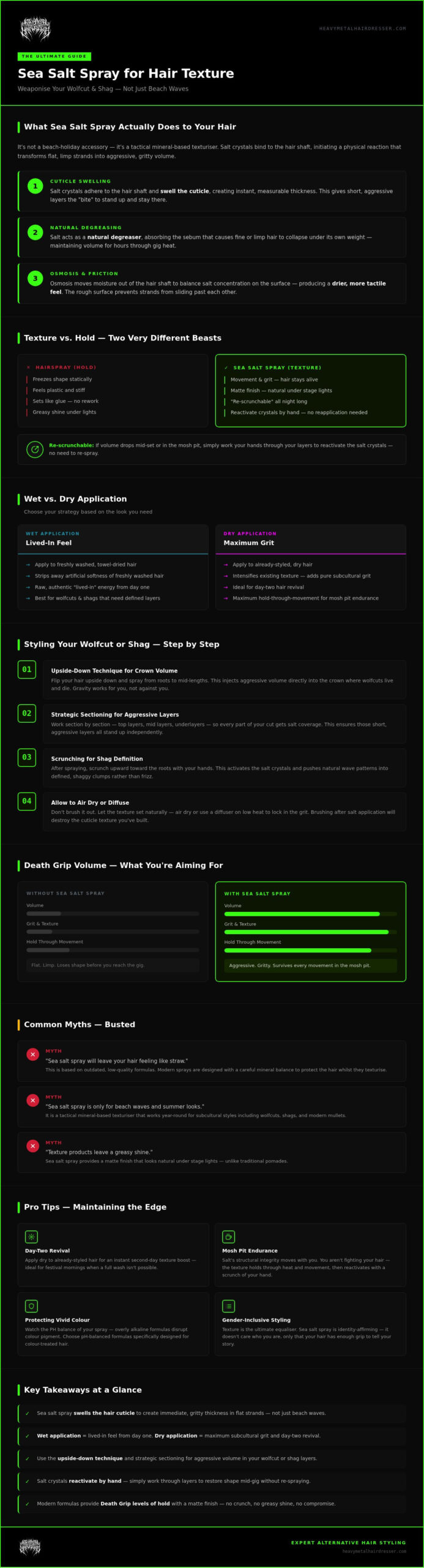
It’s vital to understand that texture and hold are different beasts. Hairspray is designed to freeze a shape in time; it’s static and often feels plastic. Sea salt spray is about movement and grit. It provides a matte finish that looks natural under stage lights, helping you achieve those Death Grip levels of texture without the greasy shine of traditional pomades.
Because it doesn’t set like a glue, your hair remains ‘re-scrunchable’ throughout the night. If your volume starts to drop mid-set or whilst you’re in the mosh pit, you can simply work your hands through your layers to reactivate the salt crystals. This flexibility is what gives alternative styles their longevity. You aren’t fighting against your hair; you’re giving it the structural integrity to move with you.
The Science of Grit: How Salt Transforms Flat Strands
Don’t just spray and hope for the best. To master your style, you need to understand why salt works. When you apply sea salt spray for hair texture, you’re initiating a physical reaction on every individual strand. Salt crystals adhere to the hair shaft and swell the cuticle, creating instant thickness. This structural change is essential for anyone sporting a modern mullet haircut, as it provides the necessary “bite” for those short, aggressive layers to stand up and stay there.
Sea salt also acts as a natural degreaser. It absorbs the natural oils that usually cause fine or limp hair to collapse under its own weight. By soaking up sebum, the salt allows your hair to maintain its volume for hours. This is particularly useful amongst alternative subcultures where hair needs to survive the heat of a gig without turning into a greasy mess. It’s about creating a foundation of friction that keeps your hair from lying flat.
Cuticle Swelling and Volume
At a microscopic level, salt crystals create a rough surface on the hair. This friction prevents strands from sliding past each other, which is how you achieve that coveted shaggy look. Osmosis in hair care is the process where moisture moves out of the hair shaft to balance the salt concentration on the surface, resulting in a drier, more tactile feel. Whilst this sounds intense, it’s the secret to that “rough” texture that defines the alt-aesthetic.
Many fear that salt will leave their hair feeling like straw. This is a common myth based on outdated, low-quality formulas. Modern sprays are designed with a careful mineral balance to protect the hair whilst they texturise. If you want to dive deeper into how products interact with different hair types, our Hair Courses offer expert insight into the technical side of alternative styling.
Protecting Your Vivid Colour
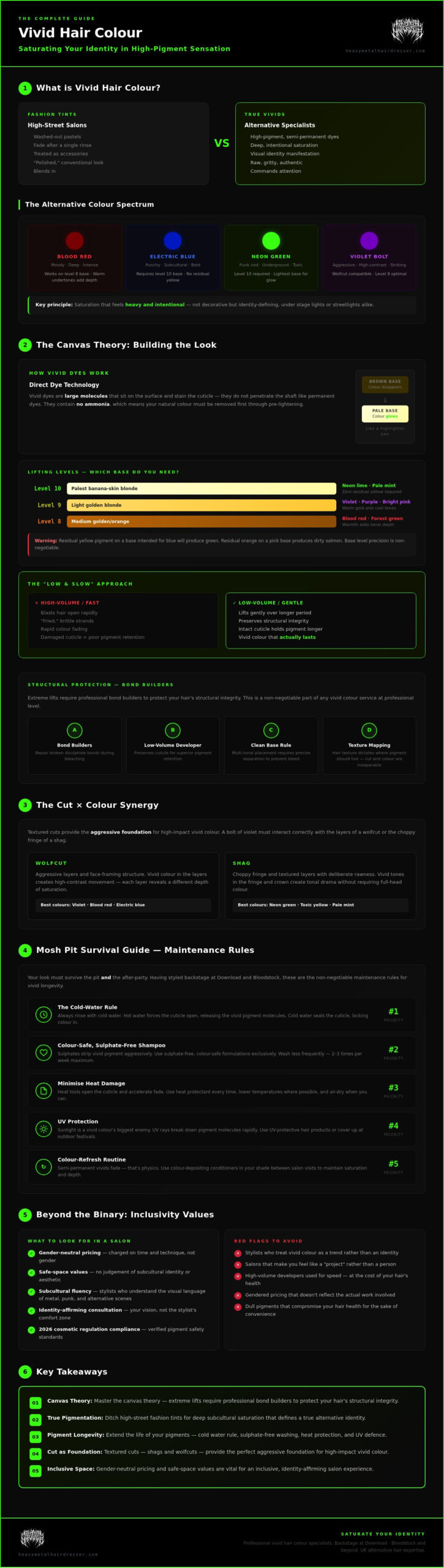
Maintaining vivid hair colour requires a specific strategy when using salt products. Salt can be abrasive, but the real danger to your pigment is a disrupted PH balance. Sprays that are too alkaline will blow the cuticle wide open, causing your neon pinks or deep teals to bleed out in the shower. Always look for PH-balanced formulations that keep the cuticle tight whilst still providing that gritty finish.
To avoid long-term pigment fade, rinse your hair thoroughly after a day of heavy styling. Letting salt sit on your strands for days can lead to dehydration, which makes the hair porous and less able to hold onto dye. A quick rinse with cool water is usually enough to remove the crystals without stripping your identity-affirming shades. This keeps your colour punchy and your texture sharp for your next session.
Wet vs. Dry Application: Mastering Your Texture Strategy
Don’t limit yourself to one method. The way you apply sea salt spray for hair texture dictates whether you look effortlessly cool or ready for a riot. It’s about control. Applying to damp hair builds a foundation of volume from within the strand, whilst dry application creates a surface-level grit that looks unapologetically raw. Understanding when to use each technique is what separates a professional finish from a flat mess.
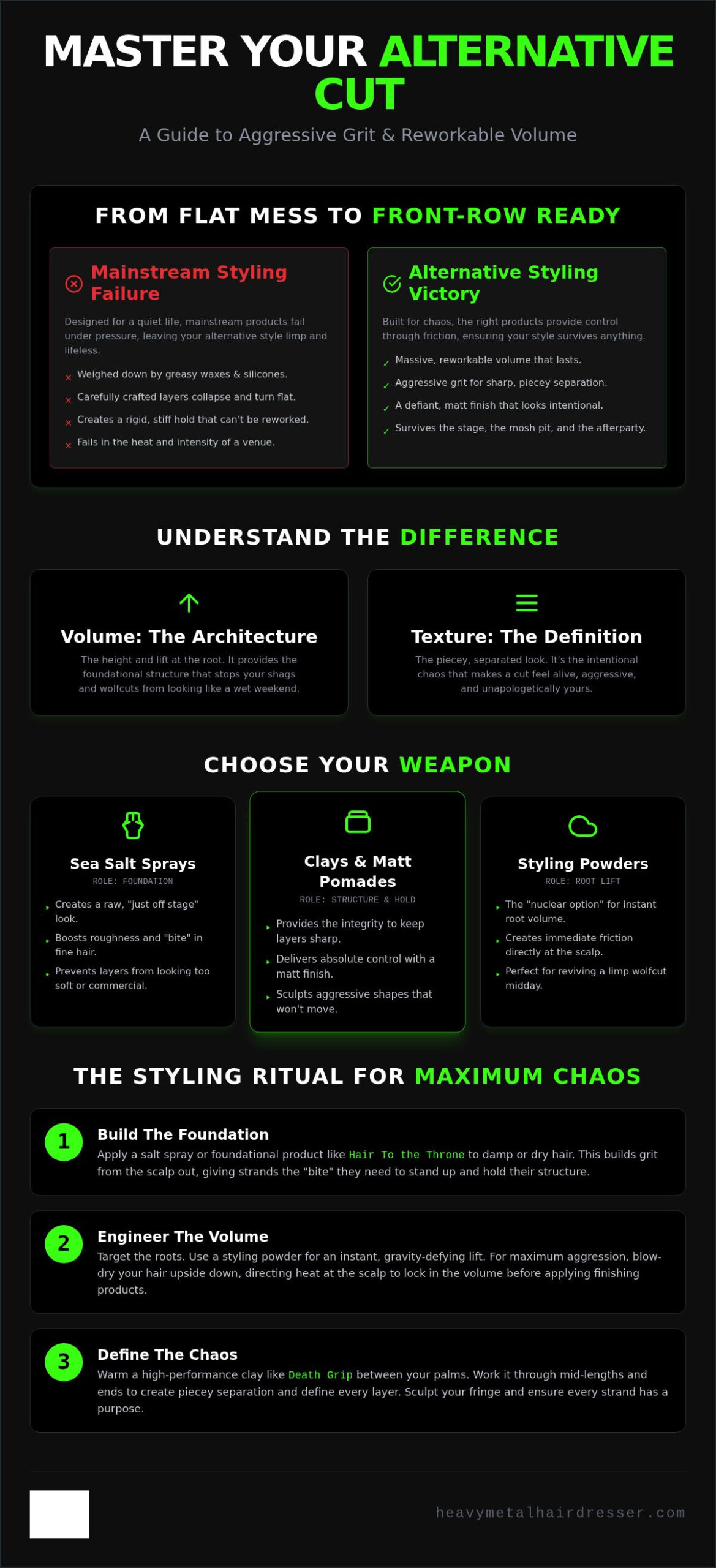
For those seeking maximum root lift, the “blow-dry hack” is your secret weapon. Mist the spray directly onto damp roots before drying. The heat expands the salt crystals, propping up the hair at the base for a structural height that won’t collapse. You can also “cocktail” your spray by layering it with other products. If you need more hold, apply salt spray first for grit, then finish with a small amount of Death Grip to lock the shape. Dosage matters too: start with 3 to 5 pumps for fine hair, whilst thicker manes can handle 8 to 10 sprays without feeling weighed down.
The Damp Start: Subtle, Natural Flow
Applying to damp hair is the best route for a softer, wavy shag. It allows the product to distribute evenly as the hair dries, preventing any “patchy” texture. Follow these steps for a natural alternative aesthetic:
- Mist towel-dried hair from mid-lengths to ends.
- Scrunch the hair upwards towards the scalp to encourage natural movement.
- Let it air-dry to achieve that “woke up like this” vibe.
This method is particularly effective for those with naturally curly or wavy hair types. It defines the curl pattern whilst adding enough “bite” to keep the layers from looking too polished. It’s the perfect foundation for a lived-in look that feels authentic.
The Dry Finish: Aggressive, Gritty Chaos
When you need instant impact, go for a dry finish. This technique is the absolute secret to a wolf hair cut with maximum “bite” and separation. Spraying onto bone-dry hair creates immediate friction, allowing you to piece out specific sections and create that iconic, jagged silhouette. It’s less about flow and more about aggressive, textured chaos.
The “scrunch and blast” technique involves squeezing the hair with your palm whilst applying a quick burst of heat from a hair dryer to instantly freeze the gritty texture in place. This creates a matte, high-impact finish that stays sharp through a full day of movement. It’s the go-to method for anyone who wants their alternative cut to look as rebellious as it feels. By focusing on the ends and the crown, you can create a silhouette that defies gravity and celebrates your individuality.
How to Style Your Wolfcut or Shag with Sea Salt Spray
Forget the round brush. Polished finishes are for people who want to look like they’ve never been to a gig. To get the best out of sea salt spray for hair texture, you need to use your hands; brushes only smooth out the grit you’ve worked so hard to create. Start by sectioning your hair into manageable chunks. Focus your energy on the crown and those face-framing layers that give your cut its aggressive shape.
The “Upside Down” technique is your best friend for injecting volume into the under-layers. Tip your head forward, mist the spray through the lengths, and scrunch upwards towards the scalp. This creates a foundation of lift that supports the top layers. Once you’re upright, manipulate individual “flicks” in your wolfcut to sharpen the silhouette. Pinch the ends of the disconnected layers with a small amount of product to create a jagged, intentional look that refuses to blend in.
Defining the Wolfcut Layers
Wolfcuts rely on the contrast between the short, choppy top and the longer “tail” at the back. If that tail looks limp, the whole aesthetic falls apart. Use sea salt spray for hair texture to bridge the gap between these disconnected sections. By adding grit to the longer lengths, you ensure the hair has enough “bite” to hold its shape without looking stringy or greasy. Focus on the mid-lengths to keep the movement fluid but controlled; this prevents the hair from hanging flat against your neck.
The Shag Resurrection: 70s Grit, 2026 Style
Our shag hairdressers know that the secret to a modern shag is the “halo” of texture around the head. You want volume that radiates outwards. To avoid “flat-head” syndrome, concentrate your product on the mid-lengths rather than just the very top. This creates a balanced silhouette that feels heavy in the right places whilst maintaining that rebellious, non-conformist edge.
If you have a heavy fringe or curtain bangs, salt spray is a game-changer. A light mist provides a non-greasy finish that keeps hair from clumping together. It allows your fringe to move naturally whilst maintaining enough structure to stay out of your eyes during a set. If you’re ready to commit to a new look, book your next Wolfcut with our expert team to get the perfect foundation for your style.
Maintaining the Edge: Pro Tips for Long-Lasting Texture
Your style shouldn’t die just because the gig ended. Mastering the use of sea salt spray for hair texture means knowing how to keep that grit alive through the aftermath. Day two hair is often where the best alternative shapes are born. If your layers feel flat after a night of sleep, don’t reach for the shampoo. Instead, apply a light mist of salt spray and hit it with a blast of cool air from your dryer. This reactivates the minerals, lifting the hair away from the scalp without the need for a full restyle.
Embracing the “Death Grip” mindset means accepting that your hair will have a tactile, slightly tangled quality. This isn’t a mistake; it’s the foundation of the identity. The friction created by the salt is what allows a wolfcut to maintain its height and separation through movement. If you’re constantly trying to brush it smooth, you’re fighting the product. Let the texture build. The more “lived-in” it feels, the more authentic the silhouette becomes.
Eventually, every style needs a reset. You’ll know it’s time for a deep cleanse when your hair starts to feel “tacky” or heavy rather than gritty. Mineral buildup can eventually dull your colour if left too long. Use a clarifying treatment once a week to strip back the salt and product residue; this gives your strands a fresh start for your next round of styling.
Festival and Gig Readiness
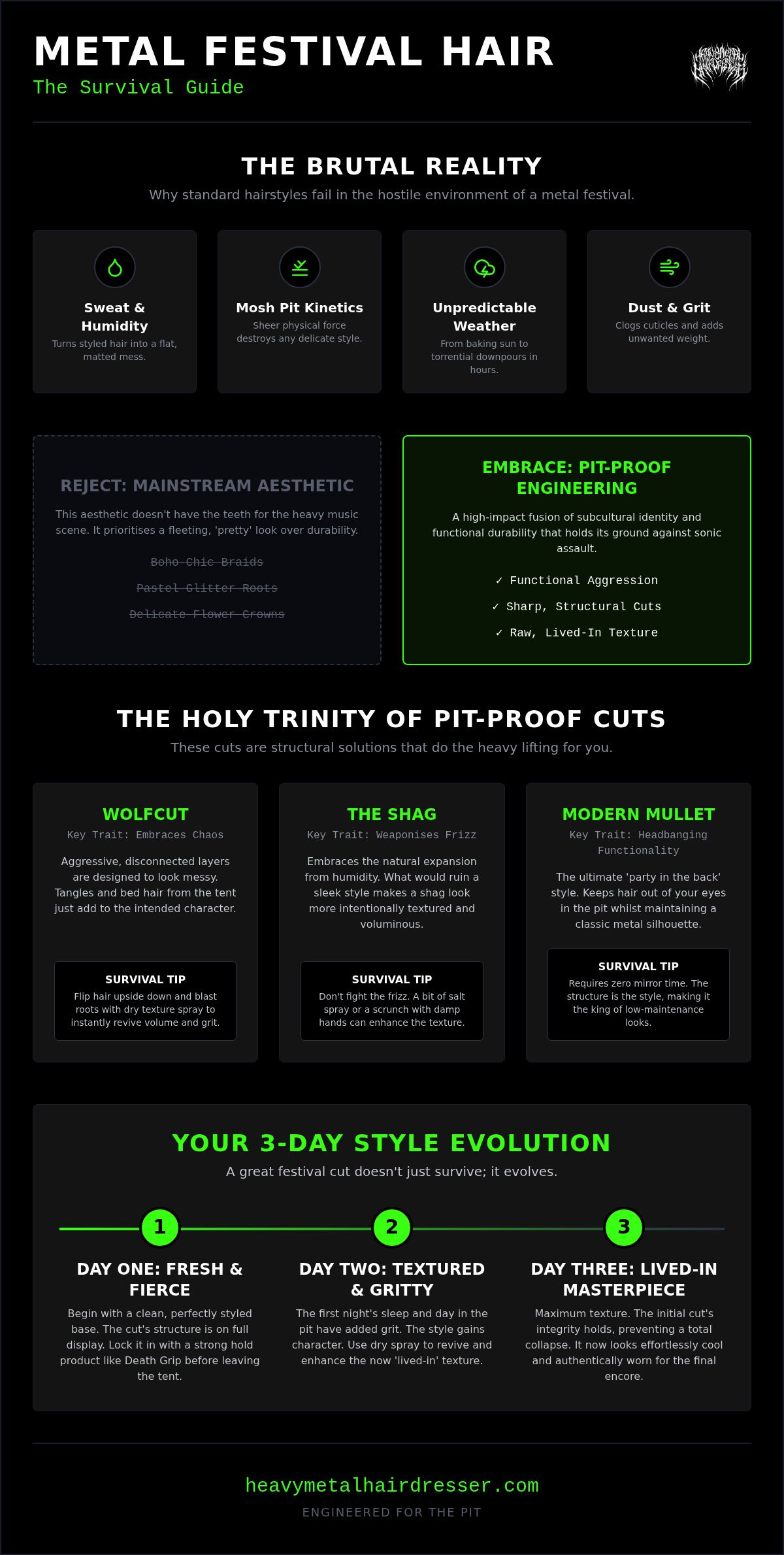
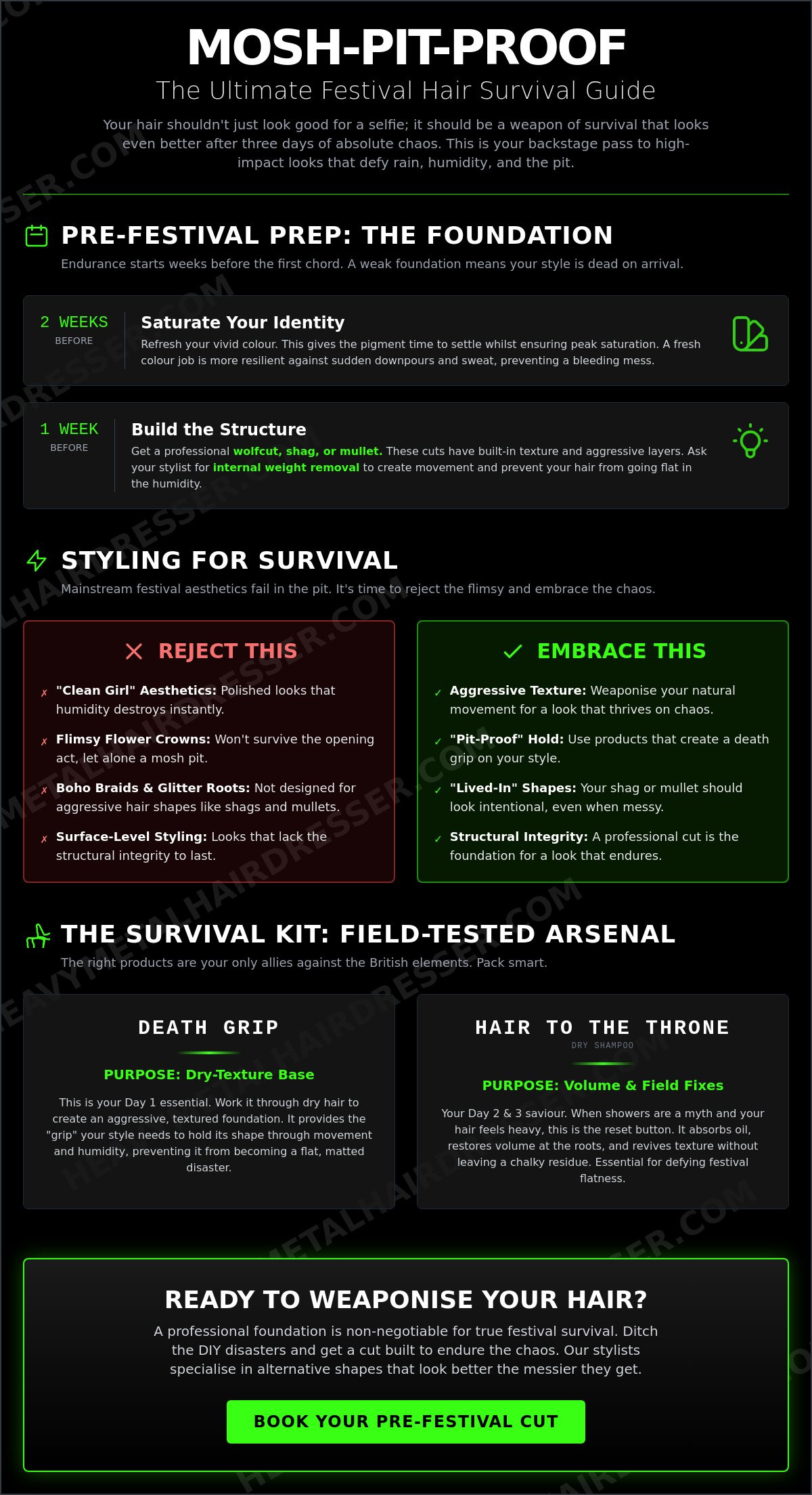
When you’re three days deep into a festival, salt spray is your best friend. It’s a superior alternative to dry shampoo for alt-styles because it adds volume whilst absorbing sweat and oil. We’ve seen this in action with stage hair for musicians, where texture has to survive the intense heat of stage lights and mosh pits. Organise a small “touch-up kit” with a travel-sized spray to keep your fringe from clumping during long days in the pit.
The Heavy Metal Hairdresser Philosophy
We believe hair is the ultimate form of self-expression. It’s why we champion gender-neutral styling and encourage our community to experiment with unconventional shapes. Whether you’re rocking a shag or a jagged mullet, your hair should be a reflection of your subcultural pride. We provide the technical expertise, but the attitude is all yours. Ready to take your texture to the next level? Book in for a textured cut and let’s weaponise your style.
Weaponise Your Style
Mastering sea salt spray for hair texture is about more than just volume; it’s about reclaiming your identity from the polished mainstream. You’ve learned that grit is a tactical choice. By understanding the science of cuticle swelling and the difference between wet and dry application, you can now inject aggressive, long-lasting energy into every layer of your wolfcut or shag. Don’t fear the tangles or the matte finish. Those are the marks of a style that refuses to conform.
We bring our backstage festival styling expertise directly to the chair, providing a gender-inclusive safe space for every alternative identity. As alternative hair specialists, we know that your hair is your loudest statement. It’s time to ditch the generic advice and embrace the raw, underground aesthetic you deserve. Your texture should be as loud as your music.
Book Your Textured Wolfcut or Shag at Heavy Metal Hairdresser and let us help you find your edge. Stay loud, stay gritty, and never settle for flat hair again.
Frequently Asked Questions
Does sea salt spray work on straight hair for texture?
Yes, sea salt spray is one of the most effective tools for adding grit to naturally straight hair. It works by creating friction between individual strands, which prevents them from sliding past each other and lying flat. For straight hair, applying to damp roots before blow-drying provides the most structural lift. It transforms “slippery” hair into a workable, gritty canvas that is perfect for maintaining the jagged layers of a mullet or shag.
Will sea salt spray dry out my hair or cause damage?
Salt is naturally dehydrating, but professional-grade formulas are balanced with conditioning agents to mitigate this effect. It won’t cause long-term damage if you use it correctly and maintain a solid hydration routine. If your hair is already chemically treated or naturally brittle, look for sprays that contain added oils. Using a hydrating mask once a week ensures your strands stay supple whilst you enjoy that rebellious, matte texture.
Can I use sea salt spray every day on my wolfcut?
You can use it daily, but we recommend “refreshing” your style rather than layering heavy amounts of new product every morning. Over-application can lead to mineral buildup, which eventually makes the hair feel heavy and tacky rather than gritty. A light mist on day two is usually enough to reactivate the salt crystals already in your hair. If you do style daily, ensure you use a clarifying shampoo once a week to reset your strands.
Is sea salt spray safe for bleached or vivid coloured hair?
It is safe, but you must be mindful of the pH balance of your chosen product. Some sea salt spray for hair texture options can be slightly alkaline, which might cause vivid dyes to fade faster by opening the hair cuticle. Always opt for professional, pH-balanced sprays to protect your neon or pastel shades. Rinsing with cool water after a long day of styling helps keep the cuticle closed and your identity-affirming colour punchy.
How do I stop sea salt spray from making my hair feel crunchy?
Crunchiness is usually a sign of over-application or a formula with too much alcohol. To avoid this, start with just a few pumps and build the texture gradually. You can also “cocktail” the spray by applying a tiny amount of hair oil to your ends first. Once the hair is dry, give it a final scrunch with your hands to break any “cast” formed by the salt. This leaves the hair feeling gritty and textured but still touchable.
What is the difference between sea salt spray and sugar spray?
The primary difference lies in the finish and the level of “bite” they provide. Sea salt spray creates a matte, gritty finish with significant volume, making it the go-to for aggressive alternative styles. Sugar spray offers a shinier finish and a softer, more “grippy” hold that feels less drying. While sugar is great for polished waves, salt is the undisputed king for anyone seeking that raw, lived-in energy essential for shags and wolfcuts.
Can I use sea salt spray with a hair dryer or diffuser?
Using heat is actually the secret to achieving maximum volume. When you apply sea salt spray for hair texture to damp hair and then use a diffuser, the heat causes the salt crystals to expand. This process props up the hair at the root, creating a structural height that air-drying alone cannot match. For an alternative, messy look, use a diffuser on a low heat setting to encourage jagged movement without creating unwanted frizz.
How do I wash out sea salt spray properly?
To fully remove mineral deposits, you should use a clarifying shampoo once a week. Regular shampoos can sometimes leave behind a residue, especially if you have been layering product for a festival or a long weekend. Focus the shampoo on your scalp and mid-lengths to break down the salt and sebum. Always follow up with a deep conditioner or a hydrating treatment to restore the moisture balance that the salt provides during the styling process.