Posted on

Wolfcut vs Mullet: Decoding Alternative Texture and Subcultural Grit

Wolfcut vs Mullet: Decoding Alternative Texture and Subcultural Grit

Walking into a traditional salon and asking for “texture” is a high-stakes gamble that usually ends in a flat, suburban tragedy. You’re chasing subcultural grit, yet there’s that nagging fear of walking out with a “Karen” cut that belongs in a supermarket aisle rather than a mosh pit. The wolfcut vs mullet debate isn’t just about length; it’s about the technical soul of the shape and the level of aggression in your layers.

It’s exhausting trying to explain a jagged, disconnected fringe to a stylist who only knows how to play it safe. You know your hair can handle heavy layering, but you need someone who respects your natural texture instead of fighting it. Discover the technical and aesthetic differences between the wolfcut and the mullet to find the perfect aggressive layer for your identity. We’ll break down the architecture of these extreme shapes, from layer disconnection to hair density, whilst helping you find a professional who understands that hair is a rebellion, not just a service.

Key Takeaways

  • Master the technical architecture of the wolfcut vs mullet to understand the difference between soft, face-framing graduation and aggressive, disconnected layers.
  • Identify which extreme shape suits your hair density and face shape, ensuring your layers add volume rather than falling flat.
  • Learn the “no-wash” secrets and styling techniques needed to keep your texture looking gritty and lived-in long after you leave the chair.
  • Recognise why these cuts are vital symbols of subcultural identity and how to find a specialist who respects your alternative aesthetic.

The Identity Crisis: Why the Wolfcut and Mullet are Subcultural Siblings

In the sweat-soaked venues of the UK alternative scene, hair isn’t just an accessory. It’s a flag. By 2026, the wolfcut vs mullet debate has moved from niche forums to the main stage of underground culture. These aren’t just haircuts. They’re technical evolutions of subcultural rebellion. The wolfcut is a wild hybrid, blending the shaggy, feathered layers of the 1970s with the aggressive silhouette of a mullet. It’s heavy on volume and face-framing “wolf” ears. The mullet, however, remains the ultimate middle finger to convention. It’s built on a foundation of “business up front, party in the back,” but modern versions swap the 80s cheese for sharp, gritty disconnection.

Tracing the Roots: From 70s Shags to Modern Metal Scenes

The shag haircut laid the foundation for every textured layer we love today. It was the uniform of rock royalty like Joan Jett, prioritising movement and a “just rolled out of a tour bus” aesthetic. As subcultures evolved, this softness hardened. The history of the mullet shows a trajectory from ancient warriors to 80s glam, but the modern metal scene has reclaimed it as something far more aggressive. At festivals like Download and Bloodstock, you’ll see mullets that aren’t about kitsch nostalgia. They’re about extreme disconnection. Alternative communities reclaim these “ugly-cool” styles because they demand attention. They reject the polished, generic standards of traditional beauty in favour of something raw and authentic.

The TikTok Effect vs. True Alternative Identity

Social media algorithms have a habit of sanitising rebellion. The “wolfcut” name exploded on TikTok, racking up over 1.2 billion views by mid-2026. Whilst this brought texture back to the mainstream, it also created a divide. There’s a massive difference between a “soft girl” wolfcut, which is often just a slightly messy long bob, and an aggressive alternative wolfcut. The latter requires deep, purposeful texturising and a total lack of fear.

The mullet has managed to remain “edgy” because it’s harder to make “polite.” It requires a certain level of subcultural grit to pull off a truly disconnected back and front. To ensure your stylist gets it right, you have to move beyond the trending hashtags. You need someone who understands that these silhouettes are a visual handshake in the alternative world. They shouldn’t be “fixing” your frizz or smoothing out your jagged ends. They should be leaning into the chaos of the shape to reflect your specific identity.

Technical Anatomy: Dissecting the Layers of the Wolfcut and the Mullet

Precision is the silent partner of chaos. To the untrained eye, these styles look like an accidental explosion of texture. In reality, the wolfcut vs mullet distinction comes down to the architecture of the layers. One relies on a seamless, albeit aggressive, graduation of length. The other thrives on a total lack of connection. Understanding the technical skeleton of these cuts is how you avoid the “accidental mullet” and achieve a shape that actually serves your aesthetic.

The Mullet: Aggressive Disconnection and the Sharp Silhouette

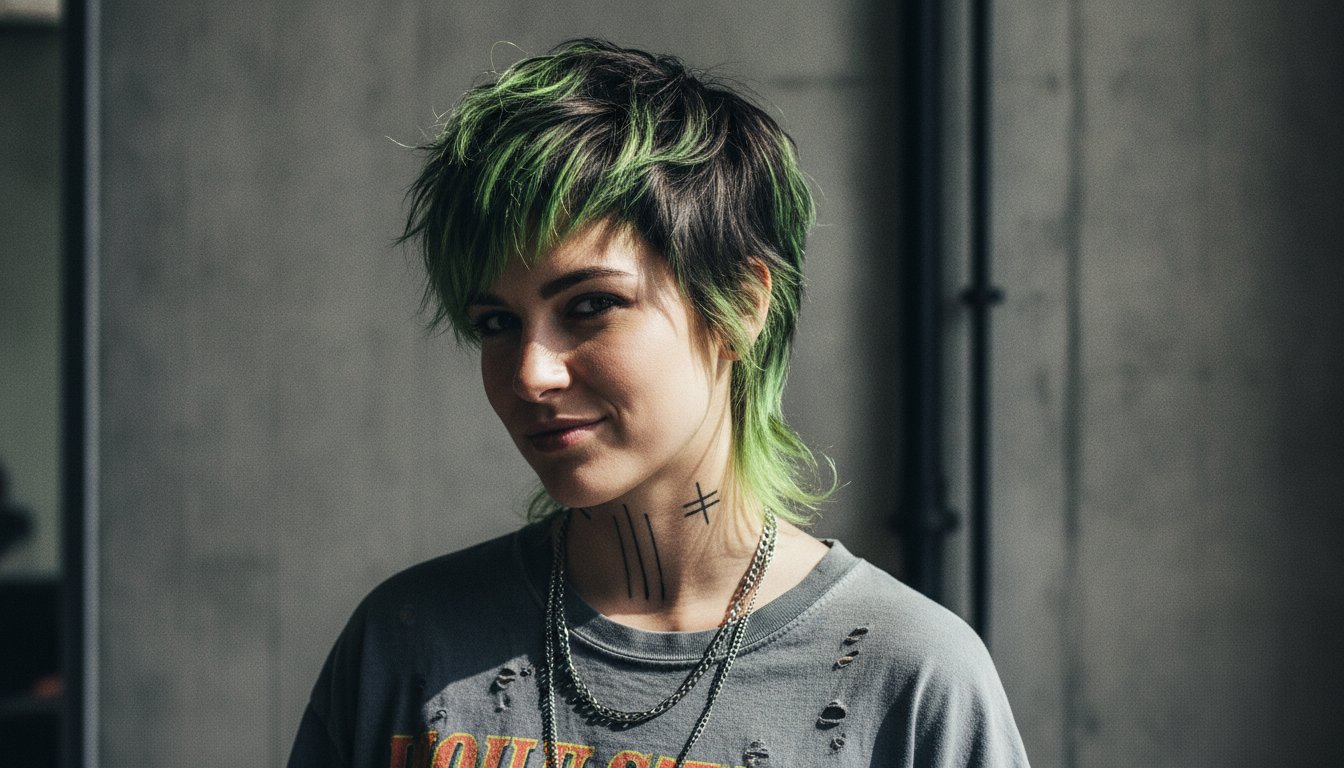
The modern mullet is defined by its refusal to blend. It’s a game of two halves. The sides are typically taken very short, often utilising skin fades or tight, textured crops that expose the ear. This creates a narrow, streamlined front. The “tail” at the back is left long, creating a sharp, vertical drop from the crown.

  • The Disconnection: There is no transitional bridge between the short temples and the long nape.
  • The Texture: We use deep point-cutting to inject “grit” into the tail, preventing it from looking like a flat curtain.
  • The Perimeter: The front is often finished with a blunt or jagged micro-fringe to heighten the contrast.

The Wolfcut: All-Over Volume and Shaggy Chaos

If the mullet is a vertical line, the wolfcut is a circle. This style is the spiritual successor to the shag. It focuses on massive, top-heavy volume that tapers into wispy ends. The defining feature is the “wolf ears.” These are short, aggressive layers cut into the crown that stand up and create a wild, predatory silhouette.

Unlike the mullet, the wolfcut uses curtain bangs to blend the front into the sides. It’s a continuous flow of layers that frame the face and jawline. It’s softer than a mullet but far more voluminous. To keep the structural integrity, we focus on weight removal from the mid-lengths whilst keeping the crown heavy. If you want to see this technical precision in action, booking a session with a specialist in wolfcuts ensures your layers are intentional rather than just messy.

Comparing the Silhouettes: Volume vs. Drama

Choosing between these two shapes depends on where you want the visual weight. The wolfcut is for those who want height and width at the top of the head. It’s perfect for creating a “halo” of texture. The mullet is for those who want length-focused drama and a slimmer profile. Both require a fearless approach to texturising. Without technical precision, these cuts lose their subcultural edge and just look like a bad DIY job. It’s the difference between a calculated rebellion and a genuine mistake.

Wolfcut vs Mullet: Decoding Alternative Texture and Subcultural Grit

The Battle of the Shapes: Which Cut Should You Choose?

Deciding on the wolfcut vs mullet isn’t just a matter of scrolling through a Pinterest board. It’s a clash of silhouettes that must be negotiated with your hair’s biology. Whilst both styles thrive on a “just rolled out of a pit” aesthetic, they serve very different masters. One is a masterclass in building volume where none exists, whilst the other is a strategic weapon for controlling thick, unruly manes. Choosing the wrong one doesn’t just result in a bad hair day; it results in a shape that fights your features instead of framing them.

Texture and Density: Wolfcuts for Fine Hair vs Mullets for Thick Strands

If you’re constantly battling flat, lifeless hair, the wolfcut is your salvation. It uses short, aggressive crown layers to inject height and movement into fine strands. By concentrating the volume at the top, it creates the illusion of density that traditional long cuts lack. It’s about building a “halo” of texture that stays upright with minimal effort.

Conversely, the mullet is the ultimate tool for those with thick, heavy hair. Thick hair often suffers from the “triangle” effect, where the weight pulls everything down into a wide, shapeless mass. The mullet solves this through extreme disconnection. By removing the bulk from the sides and focusing on a vertical tail, it streamlines your profile. It’s about taking control of the chaos.

  • Fine Hair: Opt for the wolfcut. The graduated layers prevent the ends from looking “ratty” whilst providing maximum lift at the roots.
  • Thick Hair: Choose the mullet. The short sides remove massive amounts of weight, making your hair feel lighter and more manageable.
  • Curly Texture: Both work, but a mullet allows curls to drop vertically, whilst a wolfcut encourages them to expand outwards into a shaggy sphere.

Face Framing and Jawlines: Choosing Your Aesthetic Weapon

Your haircut should act as a frame for your identity. The wolfcut is famously forgiving; it uses “flicked” layers and curtain bangs to soften sharp features or hide a larger forehead. It hugs the jawline, creating a rounded, shaggy indie energy that feels approachable yet rebellious. It’s the “lived-in” look perfected.

The mullet, however, is built for rockstar aggression. By exposing the temples and ears, it highlights the cheekbones and sharpens the jawline. It’s a high-contrast look that demands a fearless attitude. Maintenance levels also play a role here. A wolfcut often requires more daily styling with a blow-dryer to maintain that top-heavy volume. A modern mullet is lower maintenance in the morning, often looking better with a simple “no-wash” refresh, but it requires more frequent trips to a specialist to keep the side disconnection sharp. Mapping these cuts to your unique anatomy is a technical process, so always ensure your stylist understands the subcultural grit you’re aiming for before they pick up the shears.

Maintaining the Grit: Styling Your Texture for the Pit and Beyond

The biggest mistake people make after getting an alternative cut is trying to keep it too clean. If your hair looks like it belongs in a shampoo advert, you’ve missed the mark. The wolfcut vs mullet debate often centres on the cut itself, but the real subcultural grit happens in the days after you leave the chair. These shapes are designed to thrive on a “lived-in” aesthetic. Natural oils and movement are your friends, helping the layers clump together and create that jagged, aggressive silhouette that defines the scene.

The Daily Grind: Keeping Your Layers Sharp Between Salon Visits

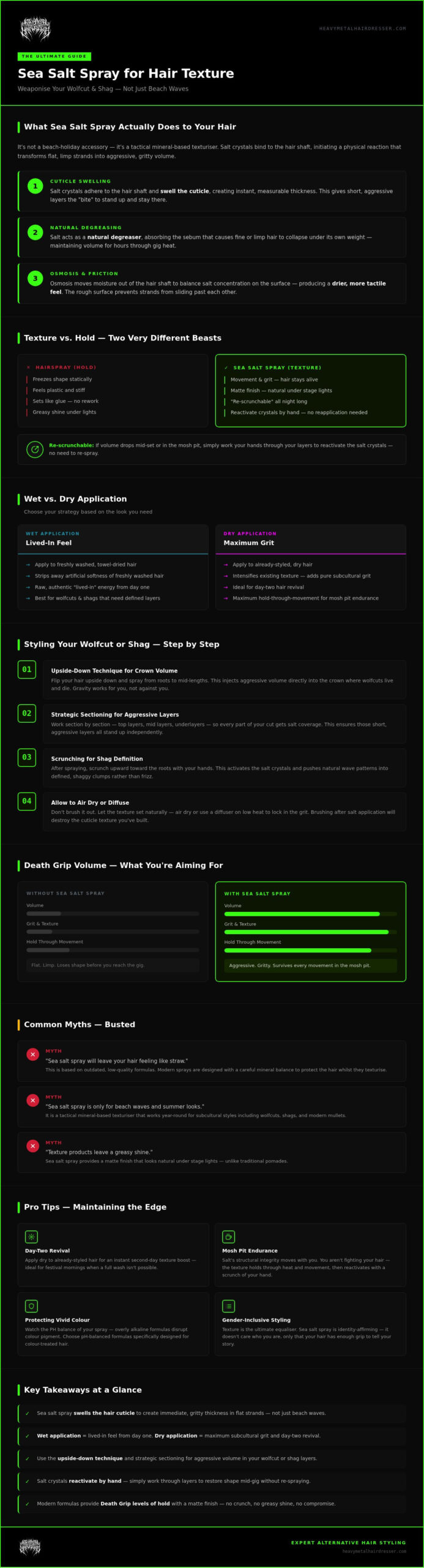
To keep a wolfcut looking predatory, you need to lean into the chaos of the crown. Start by refreshing your layers with a light mist of water or a texture spray rather than doing a full wash. This preserves your vivid hair colour whilst giving you a base to work with. For the mullet, the focus is on the contrast. You want the sides to look sharp and the tail to look wild. If you’re heading into a mosh pit at a festival, don’t fight the sweat. Use it to your advantage by scrunching your layers to reactivate the product already in your hair.

  • The No-Wash Rule: Aim for 2-3 days between washes to let the texture build.
  • Wolfcut Refresh: Focus on the “ears” at the crown. Blow-dry them upwards for a few seconds to regain that top-heavy volume.
  • Mullet Control: Keep the front fringe tidy with a tiny bit of pomade, letting the back do whatever it wants.

Essential Gear: Using Death Grip and Hair To the Throne

Generic high-street products are often too heavy or too greasy for extreme shapes. They weigh down the layers and kill the volume. To maintain the structural integrity of your cut, you need gear built for the alternative community. Death Grip is our go-to for that aggressive, “stay-put” texture. It provides a matte finish that looks gritty rather than oily, ensuring your layers don’t fall flat halfway through a gig.

For those chasing the ultimate crown lift, Hair To the Throne is non-negotiable. It provides the height needed for the wolfcut’s signature ears without the crunch of traditional hairspray. These products are designed to protect your vivid tones whilst enhancing the jagged edges of your cut. If you want to master these techniques at home, you can explore our hair courses to learn how to style like a professional. Using the right gear means your hair stays a visual handshake of your identity, no matter how hard you’re going in the pit.

Beyond the Chair: Why Your Cut is an Expression of Identity

A haircut is never just about aesthetics. It’s a visual handshake. It signals your subcultural alignment before you even speak. Whether you’ve landed on the wolfcut vs mullet, your choice is a declaration of independence from the mainstream. In alternative communities, these shapes represent more than fashion; they represent a shared history of music, art, and rebellion. You aren’t just looking for a stylist. You’re looking for a creative collaborator who understands the nuances of your scene.

The Gender-Inclusive Safe Space: Cutting Hair, Not Personalities

Traditional salons often fail those who don’t fit the standard mould. They can feel clinical, judgmental, or overly gendered. We reject that. A true alternative salon is a gender-inclusive safe space where your identity is celebrated rather than merely tolerated. This means moving away from “men’s” and “women’s” price lists in favour of gender-neutral pricing based on time and technical complexity.

  • Identity First: Your hair should reflect who you are, not what society expects.
  • Safe Environment: A place where queer and alternative identities are the norm, not the exception.
  • Authentic Connection: We talk about music, subculture, and art whilst we work on your transformation.

This approach ensures that every client feels seen. We aren’t here to polish you up for a corporate office. We’re here to help you sharpen your edge. It’s about creating an environment where you can be unapologetically yourself whilst we focus on the technical precision of your layers.

Joining the Heavy Metal Hairdresser Community

Our expertise isn’t born in a textbook. It’s forged in the mud of festivals like Download and Bloodstock. Working backstage with bands has taught us that hair needs to survive the pit whilst looking incredible under stage lights. This festival-hardened experience informs every cut we perform in the salon. We know how to balance the “ugly-cool” grit of a mullet with the structural integrity needed to keep it looking sharp for weeks.

To get the best result, come prepared. Bring photos of the specific aggression you’re after. Think about your lifestyle and how much time you actually want to spend styling. Most importantly, trust the process. When you work with a specialist who “gets it,” the result is more than just a new look. It’s a version of yourself that finally feels authentic. Book your wolfcut or mullet with the experts to start your transformation with a team that lives and breathes alternative culture.

Own Your Texture: The Future of Subcultural Style

Choosing between the wolfcut vs mullet is more than a technical decision; it’s a commitment to your subcultural identity. You’ve now mastered the difference between the aggressive disconnection of a mullet and the shaggy, voluminous graduation of a wolfcut. You know which shape serves your hair density and how to maintain that gritty, lived-in texture using the right gear. Most importantly, you know that your hair deserves a specialist who respects your aesthetic and provides a truly gender-neutral, inclusive environment.

Our expertise isn’t just theory. We’ve spent years styling for the chaotic crowds at Download and Bloodstock, perfecting the art of extreme shapes that survive the pit. We aren’t just cutting hair; we’re building a community of rebels who refuse to settle for the suburban status quo. It’s time to stop compromising and start expressing your true self through a silhouette that actually speaks your language.

Join the revolution and book your textured transformation with a team that lives for alternative shags, mullets, and wolfcuts. Your new identity is waiting.

Frequently Asked Questions

Is a wolfcut the same as a mullet?

No, they are distinct technical shapes. A wolfcut is a shaggy, graduated hybrid of a 70s shag and a mullet that focuses on all-over volume. The mullet is defined by extreme disconnection between the short front and the long back. In the wolfcut vs mullet debate, the wolfcut offers a softer, rounded silhouette whilst the mullet is far more vertical and aggressive.

Can I get a wolfcut if I have very fine hair?

Yes, it is actually one of the best styles for fine hair. The aggressive crown layers create height and the illusion of density where hair usually falls flat. By concentrating volume at the top, it prevents your strands from looking limp at the roots. It is a strategic way to inject life and movement into fine hair without needing constant backcombing.

How often do I need to trim a mullet to keep it looking sharp?

You should aim for a trim every 6 to 8 weeks. The side disconnection and the shorter fringe grow out much faster than the length in the back. If you leave it too long, the sharp contrast that defines the mullet begins to blur into a standard shag. Regular maintenance keeps the edges gritty and ensures the silhouette remains intentional rather than accidental.

Do I need to use heat tools to style a wolfcut every day?

Not necessarily, but a quick blast with a hairdryer helps. You can air-dry for a lived-in, “no-wash” look, but using a dryer on the crown layers for sixty seconds will activate those signature “wolf ears.” It is about working with your natural texture. If you want that high-energy, predatory volume, a little heat and a good texture product go a long way.

Is a mullet suitable for a professional work environment?

It depends on your workplace, but modern mullets are far more versatile than the 80s versions. You can style the fringe for a more “conservative” front whilst keeping the grit in the back. However, these are fundamentally rebellious shapes. They are designed to stand out and express subcultural identity, so they rarely feel at home in a traditional corporate cubicle.

What is the best product for adding texture to a modern mullet?

Use a matte-finish product like Death Grip for maximum hold and grit. You want to avoid anything greasy that makes the tail look oily or flat. A volume powder like Hair To the Throne is also essential for the crown. These products ensure the wolfcut vs mullet distinction stays clear by defining the jagged, disconnected edges of the cut.

Can I transition a wolfcut into a mullet later on?

Yes, and it is a relatively simple shift. Since the wolfcut already features short crown layers, your stylist just needs to disconnect the sides and clear the hair away from the ears. You essentially “hollow out” the middle sections to leave the long tail at the nape. It is a natural progression for anyone wanting to increase the aggression of their style.

How do I explain the difference to my hairdresser if they aren’t an alt-specialist?

Use technical terms like “disconnection” and “graduation” to be precise. For a mullet, tell them you want no blend between the short temples and the long nape. For a wolfcut, ask for heavy, shaggy layers with a focus on crown volume and face-framing curtain bangs. Always bring reference photos of specific alternative shapes to ensure they don’t default to a safe, suburban haircut.

Posted on

Fixing a Shag Haircut That’s Too Short: The Alt-Hair Survival Guide

Fixing a Shag Haircut That's Too Short: The Alt-Hair Survival Guide

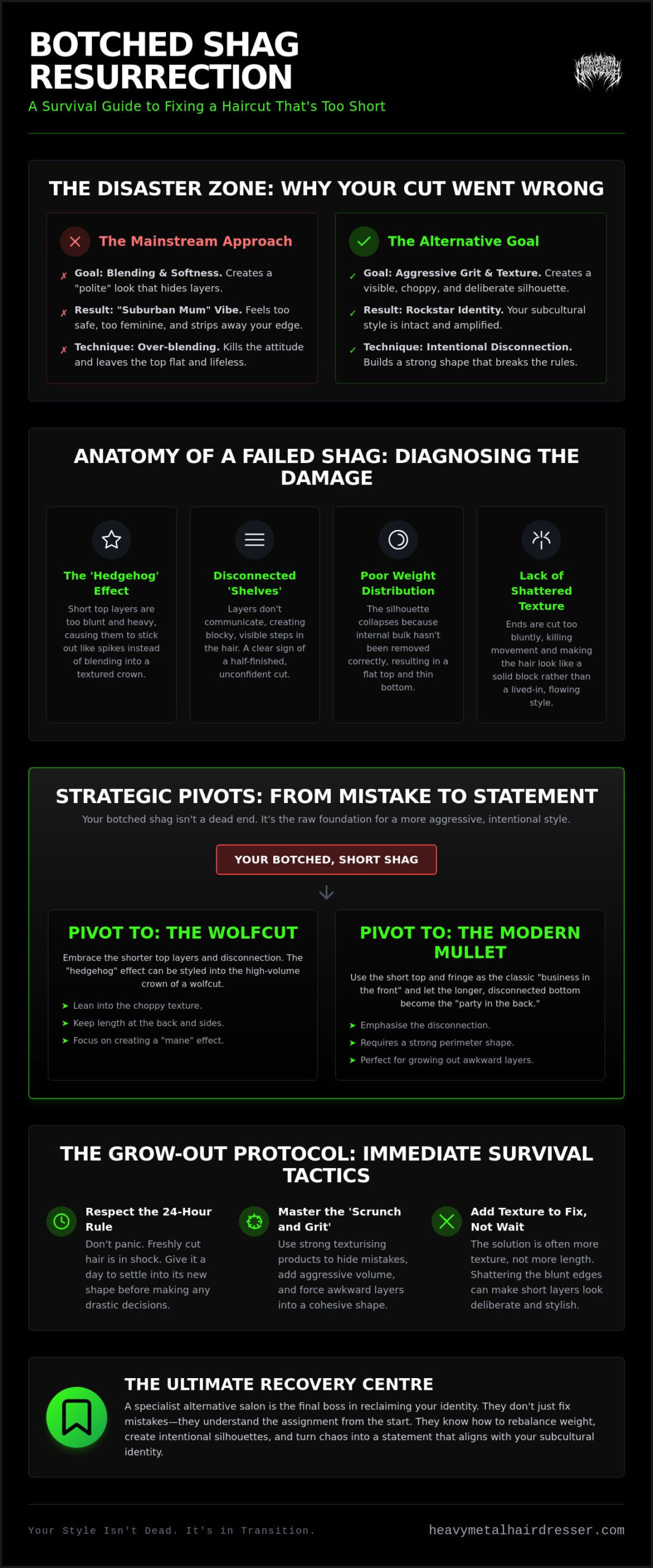
That “hedgehog” reflection in the mirror isn’t a hair disaster; it’s the raw foundation for your most aggressive style yet. You went in for a rockstar shag and walked out feeling like a suburban mum with layers that are far too feminine and way too choppy. It’s a total gut punch when your subcultural identity is stripped away by a stylist who didn’t understand the assignment. We know exactly how it feels to lose that edge. Fixing a shag haircut that’s too short is about more than just waiting for it to grow. It’s about taking control of the chaos.

We agree that looking “too suburban” when you wanted to look like a riot grrrl is a nightmare. This survival guide is here to help you resurrect your look and pivot that botched cut into a deadly alternative shape with professional grit. You’ll discover a clear plan to grow out those awkward layers whilst keeping your aesthetic intact. We’ll also cover styling tricks to hide the mistakes and show you how to pivot the mess into a deliberate wolfcut or a sharp mullet. Your style isn’t dead; it’s just in transition.

Key Takeaways

  • Learn how to pivot a botched, disconnected cut into a deliberate wolfcut or modern mullet to reclaim your subcultural edge.
  • Discover the technical secrets to fixing a shag haircut that’s too short by rebalancing internal weight and texture.
  • Master the “scrunch and grit” styling method to hide the “hedgehog effect” and add volume to flat, awkward layers.
  • Understand how to use professional-grade gear like Hair To the Throne to maintain an aggressive silhouette whilst your hair transitions.
  • Find out why specialist alternative salons act as the ultimate recovery centre for reclaiming your identity after a mainstream hair disaster.

The Shag Disaster: Why Your Cut Feels Too Short and How to Stop the Panic

The mirror doesn’t lie, but it can be incredibly cruel after a bad salon visit. You walked in asking for a rockstar silhouette and walked out with a “can I speak to the manager” special. It feels too feminine. It feels too safe. Most importantly, it feels like your subcultural identity has been sanded down by someone who didn’t understand the assignment. It’s a gut punch. But before you spiral, realise that fixing a shag haircut that’s too short is a process of resurrection rather than just a repair job. We aren’t just trying to “fix” a mistake; we’re pivoting the chaos into a new, more aggressive shape.

First, you must respect the 24-hour rule. Freshly cut hair is often in a state of shock. The cuticle is agitated, the weight has shifted, and the layers haven’t had time to live in your natural texture. Give it a full day and a proper sleep before you make any drastic decisions. Hair that looks stiff and “hedgehog-like” immediately after a cut often softens once it’s been lived in for a few hours. Stop the panic. Put down the kitchen scissors. We’re going to find the pivot point that turns this disaster into a statement.

Why Mainstream Stylists Often Botch the Alternative Shag

Mainstream hair education prioritises “blending” and “softness” above all else. This is the suburban approach. It’s designed to make hair look polite and inconspicuous. A true shag needs aggressive grit and visible, choppy texture. When a stylist over-blends, they kill the attitude of the cut. They often remove too much weight from the crown in an attempt to make it “wearable,” which leaves the top flat and the bottom looking thin and disconnected. They’re trying to follow a standard template whilst you’re looking for something that breaks the rules.

Assessing the Damage: Is it Too Short or Just Too Blunt?

Look closely at the silhouette to understand the Anatomy of a Failed Shag. Are there “shelves” in your hair? Shelving happens when the layers don’t communicate with each other, creating blocky, disconnected steps. Check the fringe as well. If the stylist has cut the fringe too far back towards your ears, they’ve fundamentally altered your face shape. Identifying these technical errors is the first step in fixing a shag haircut that’s too short. Ultimately, a botched shag is simply a lack of intentional weight distribution.

Anatomy of a Failed Shag: Understanding Layers, Weight, and Length

A successful shag is a delicate balance of internal texture and perimeter length. When this ratio is off, the whole silhouette collapses. Most people think fixing a shag haircut that’s too short requires extensions or months of hiding under a beanie, but the real solution often lies in the weight distribution. A shag that feels “wrong” is usually suffering from a lack of movement. If the ends are too blunt, the hair becomes a solid block of weight. This is especially true for those with high hair density. Amongst alternative styles, thick hair suffers most from half-hearted layering because it ends up looking like a mushroom rather than a rockstar.

Fixing the problem often involves adding more texture rather than waiting for length. By shattering the edges and removing internal bulk, you can make the short layers look like a deliberate choice. It’s about creating a flow where there is currently a blockage. If your hair feels stuck, it’s because the weight hasn’t been properly distributed to allow for that signature lived-in movement.

The ‘Hedgehog’ Effect: When Top Layers Go Rogue

The “hedgehog effect” happens when a stylist applies a traditional bob mindset to an alternative cut. They leave the crown too heavy and the layers too blunt. Instead of a soft, textured halo, you get short spikes that stick out at odd angles. You can identify this by looking for a lack of transition between the crown and the nape. To manage these unruly, short top sections, using a heavy-duty product like Death Grip is essential. It allows you to pin down rogue layers and force them into a more cohesive, aggressive shape whilst you wait for the transition to settle.

Disconnected Layers vs. Blended Chaos

Alternative hair thrives on intentional disconnection. It’s the difference between a “mistake” and a “statement.” If your stylist was scared of the cut, they likely left the layers half-finished. This results in a look that feels more like a primary school bowl cut than a subcultural icon. You need to know how to deal with a bad haircut by identifying if the ends have been properly shattered. If the edges are blunt, the shag will never have the grit it needs. If you’re ready to stop hiding and start reclaiming your look, booking a session for professional Shag Haircuts is the fastest way to regain your confidence.

Fixing a Shag Haircut That's Too Short: The Alt-Hair Survival Guide

Strategic Pivots: Transforming a Short Shag into a Wolfcut or Modern Mullet

Most mainstream advice tells you to hide. They suggest headbands, clips, or growing it out into a boring bob. We disagree. A shag that’s “too short” isn’t a failure; it’s a raw transition into an even bolder shape. Instead of playing defence, go on the attack. Lean into the grit. By embracing aggressive texture, you make the mistake look like a deliberate subcultural choice. Fixing a shag haircut that’s too short is far more effective when you pivot towards styles that actually thrive on choppy, disconnected layers.

Your hair hasn’t lost its soul; it has just lost its direction. When you stop trying to make the layers look “normal” and start making them look dangerous, the panic disappears. The key is intentionality. If the layers look like they were meant to be that short, the “botched” feeling evaporates instantly. You aren’t just hiding a bad cut. You are evolving your aesthetic into something more independent and fierce.

The Wolfcut Pivot: Injecting Chaos into Thin Strands

If your crown layers feel like a hedgehog, you’re already halfway to a wolf hair cut. This style uses those shorter top sections to create a wild mane effect. By keeping the sides slightly more textured and maintaining width around the cheekbones, you create a silhouette that feels intentional. This pivot is a lifesaver for people with fine hair. The shorter layers provide the lift and volume that longer, heavier shags often lack. It turns “too short” into “perfectly voluminous.”

The Modern Mullet: Reclaiming Your Soul

A fringe cut too far back or too high is the ultimate panic trigger. The fix? Make the back the star of the show. The modern mullet is the ultimate rebel recovery for a botched shag. It reclaims the “cool” factor by leaning into the contrast between the short front and the longer nape. You can learn how to style a modern mullet using gritty tools that emphasise the disconnect. It’s a high-energy look that tells the world you meant to do this. Fixing a shag haircut that’s too short becomes a statement of independence rather than a desperate repair job.

Style Comparison: Shag vs. Wolfcut vs. Mullet

Choosing your weapon for hair resurrection depends on your hair type and face shape. A wolfcut offers a softer, more face-framing flow that suits heart and oval shapes. The mullet is pure aggression, perfect for square or round faces that need verticality and edge. If you want to keep some femininity, stick to the wolfcut’s blended chaos. If you want to burn the suburban look to the ground, the mullet is your best friend. Whilst the wolfcut prioritises a wild flow, the mullet’s aggression is unmatched for pure subcultural grit.

The Grow-Out Protocol: Professional Styling Techniques for Transitional Hair

Toss your round brush in the bin. It is the enemy of alternative texture. If you are currently fixing a shag haircut that’s too short, your best weapon isn’t a heat tool; it’s the right product. Transitioning out of a botched cut requires a “scrunch and grit” mindset. You want to lean into the messiness rather than trying to smooth it over. Smooth hair reveals every technical flaw. Gritty hair makes those flaws look like intentional design choices. Use Hair To the Throne to inject massive volume into flat, short crown layers. This creates the height needed to balance out the shorter perimeter.

Stop fighting the layers. Start manipulating them. When you embrace the chaos of a transitional cut, you reclaim the power over your image. The goal is to make the hair look lived-in and raw. This isn’t about perfection; it’s about subcultural survival. By focusing on volume and grit, you turn a suburban nightmare into a gritty, independent statement that feels authentic to who you are.

Manipulation with Texture Products

Death Grip is your survival gear. Whilst mainstream guides suggest salt spray, it often lacks the hold required for heavy metal hair. It is too watery. It is too soft. You need a product that allows you to sculpt piecey, aggressive texture that stays put. Create “faux-length” by lightly straightening the very bottom layers whilst using Death Grip to volumise the top. This contrast in texture draws the eye vertically, making the hair appear longer than it actually is. It is a technical illusion that works every time.

The Art of the ‘In-Between’ Fringe

Bangs that are an inch too short can feel like a disaster. Stop trying to blow-dry them flat. Embrace the micro-bang. Use Death Grip to create a “shattered” or spiky fringe look that feels punk rather than accidental. By separating the fringe into distinct, textured pieces, you remove the “bowl cut” weight. Blend these pieces into your side layers to create a seamless, aggressive transition. It turns a mistake into a high-fashion statement that looks entirely on purpose.

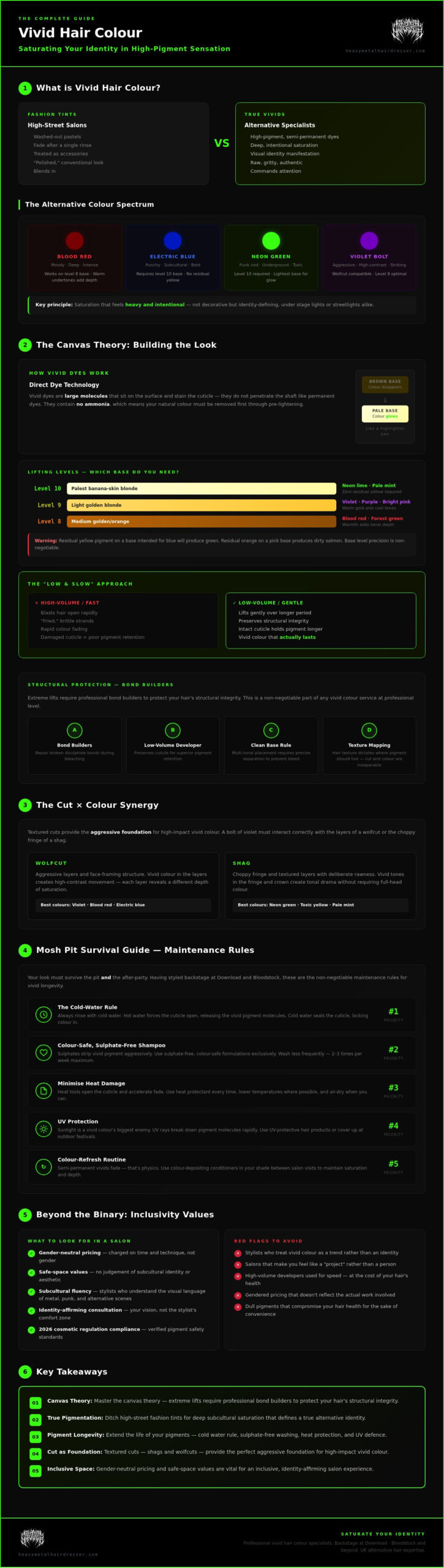
Vivid Colour as a Tactical Distraction

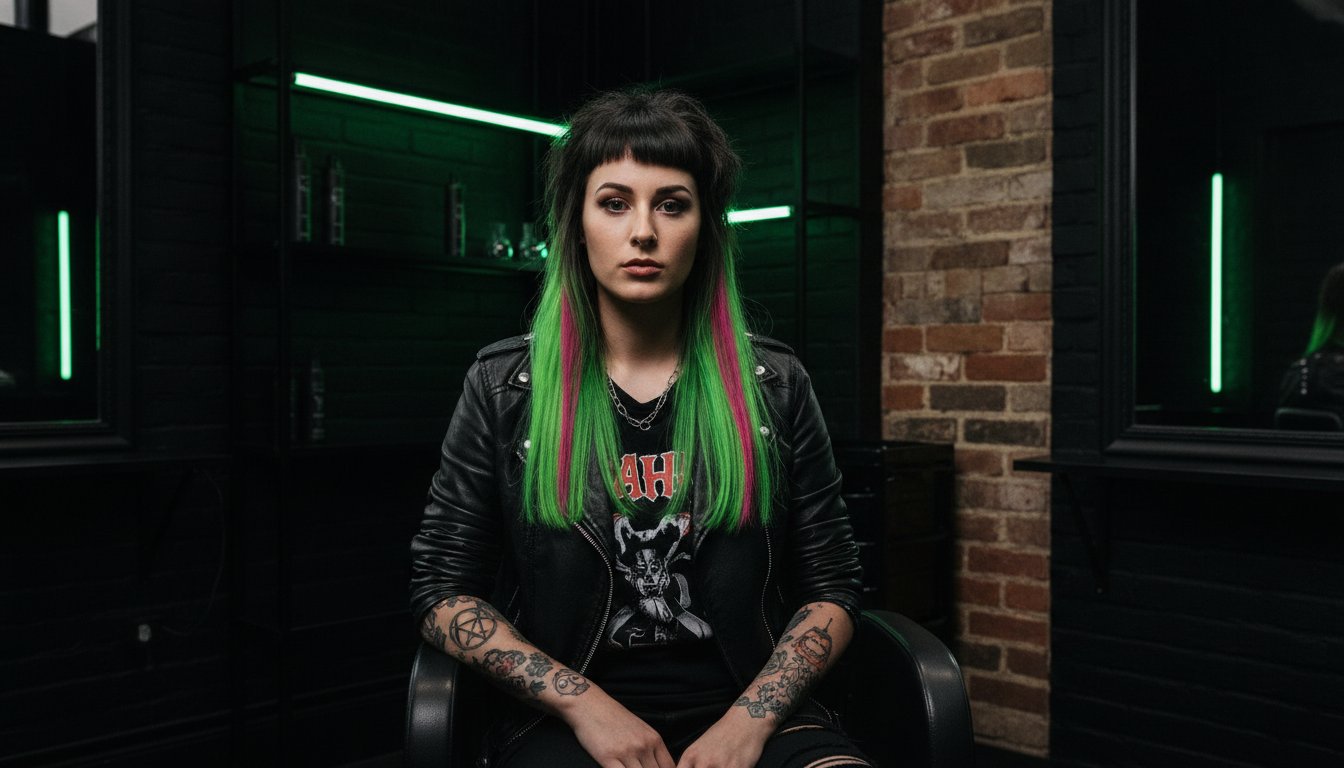
Structural mistakes in a cut are often visible because the colour is flat. Introducing vivid hair colour can completely redefine the silhouette. High-pigment tones draw the eye to the saturation rather than the layer length. Use “money pieces” around the face or hidden panels of neon to break up the “hedgehog” effect. A bold colour choice signals that your entire look is a deliberate expression of identity. If you’re tired of the transitional struggle, grab some Branded Merchandise and wear your alt-identity with pride whilst your layers catch up.

Resurrecting Your Style with Heavy Metal Hairdresser Expertise

Mainstream stylists see a mistake; we see a blank canvas for something better. Our shag hairdressers specialise in the resurrection of botched cuts. We don’t do “polite.” We do identity. If you’re currently fixing a shag haircut that’s too short, you’ve found the ultimate recovery centre. This is a gender-inclusive safe space where your subcultural identity is the priority, not a trend. We understand the gut punch of a cut that feels too feminine or too suburban. We’re here to burn that look to the ground.

Simon Tuckwell built this brand on the idea that hair should be aggressive, textured, and entirely personal. With international acclaim and a history of festival styling, Simon understands that “wearable” doesn’t have to mean “boring.” We don’t just trim hair; we sculpt it to fit the person beneath. Stop hiding under that beanie. Your resurrection starts the moment you walk through our doors. We take those disconnected layers and turn them into a statement of independence.

Simon Tuckwell’s Vision for Alternative Hair

We’ve moved far beyond the binary of “men’s” and “women’s” hair. A shag or a mullet is a shape, not a gender. This philosophy extends to our professional gear. Death Grip and Hair To the Throne aren’t just styling products; they are survival tools for alternative life. They provide the grit needed to make short layers stand up and fight. This commitment to subculture has made our salon a national destination for those rejected by mainstream beauty standards. We celebrate the outsiders because we are the outsiders.

Booking Your Recovery Session

When you book a “fix-it” session, don’t just ask for a trim. Tell us your history. Explain where the previous stylist lost their nerve and where the layers became disconnected. Ask for a rebalance of internal weight and shattered ends. Bring reference photos of the most aggressive wolfcuts or mullets you can find. Communicating your alternative goals to a specialist ensures we can pivot the mess into a masterpiece. Fixing a shag haircut that’s too short is about reclaiming your power over your image.

Book your style resurrection at Heavy Metal Hairdresser.

Reclaim Your Edge and Start Your Resurrection

Stop hiding under beanies and waiting for time to heal the damage. You now have the blueprint for turning a “hedgehog” disaster into a deliberate subcultural statement. Whether you pivot into a wild wolfcut or a sharp modern mullet, the key is to embrace aggressive texture and ditch the suburban rules. Fixing a shag haircut that’s too short isn’t about achieving a polished, mainstream perfection. It’s about reclaiming your soul through grit, volume, and intentional disconnection. You are one strategic pivot away from your best look yet.

We specialise in aggressive texture and subcultural grit. Our salon provides a gender-inclusive safe space for all identities who have been rejected by traditional beauty standards. As nationally recognised alternative hair masters, we see every botched cut as an opportunity to create something legendary. You deserve a style that reflects your internal fire, not one that makes you feel invisible. Stop the panic and start the transformation today.

Reclaim your alternative identity at Heavy Metal Hairdresser.

Your hair is a weapon of self-expression. It is time to use it with pride.

Frequently Asked Questions

Can I fix a short shag without losing more length?

Yes, you can absolutely reclaim your style without sacrificing your current perimeter. The secret lies in rebalancing the internal weight and shattering the ends to create movement. By removing bulk from the middle sections, the hair stops looking like a solid block and starts flowing. It is about technical texture rather than cutting the base. This approach makes the existing length look deliberate and aggressive rather than accidental.

How long does it take for a botched shag to grow into a wolfcut?

You can usually expect a transition period of two to four months for the perimeter to drop sufficiently. Hair grows approximately half an inch per month on average. Since a wolfcut relies on a heavier mane at the top and longer length at the bottom, you simply need to let the base grow whilst keeping the top layers textured. It is a fast pivot that rewards patience with a lethal silhouette.

What are the best products for styling short, choppy layers?

Ditch the weak salt sprays and opt for heavy-duty tools like Death Grip and Hair To the Throne. You need a product with enough hold to sculpt aggressive pieces and prevent the “hedgehog” effect. These professional-grade formulas provide the grit required to keep short layers from falling flat. They allow you to manipulate the hair into a raw, lived-in shape that stays put through the chaos of your day.

Is it possible to turn a short shag into a modern mullet?

Absolutely, and it is actually one of the most effective methods for fixing a shag haircut that’s too short. If your fringe or side layers feel too high, lean into the disconnect by shortening the sides even further. This emphasises the length at the back and creates a sharp, rebellious silhouette. It turns a technical error into a high-energy statement of subcultural independence that looks entirely on purpose.

How do I hide a fringe that was cut too short?

Stop trying to hide behind boring clips and embrace the micro-fringe aesthetic. Use a gritty texture paste to shatter the edges and create a piecey, punk look that frames the face with attitude. By separating the fringe into distinct sections, you remove the heavy “bowl cut” weight. It transforms a “too short” mistake into a deliberate, high-fashion choice that signals you are in total control of your image.

Should I go back to the same hairdresser to fix my shag?

If the original stylist didn’t understand your alternative aesthetic, they are unlikely to fix it correctly. Mainstream education prioritises blending and softness, which is the opposite of what a gritty shag needs. They may try to “fix” the cut by softening it further, which only strips away more of your identity. Seek out a specialist recovery centre that understands subcultural grit and aggressive layering instead.

Can vivid colour help hide a bad haircut?

High-pigment colour is the ultimate tactical distraction for a botched cut. It draws the eye to the saturation and tone rather than the structural flaws in the layers. Introducing bold panels or neon money pieces can redefine your entire silhouette. When your colour is this loud, the length of your layers becomes secondary to the overall impact of your look. It confirms that your style is a conscious expression of self.