Posted on

Emo Haircut Ideas 2026: Fringe, Layers and Colour with Attitude

Emo Haircut Ideas 2026: Fringe, Layers and Colour with Attitude

The heavy side fringe is iconic, but it isn’t the only way to make emo hair hit hard. The best emo haircut ideas 2026 treat the look as a toolkit, not a uniform: choppy layers, a shag-inspired wolfcut, a shorter shape or a flash of vivid colour can all bring attitude without repeating the same template. If your inspiration board shows the vibe but not the cut behind it, start by identifying the details you want to borrow.

Fringe, length and texture change the whole effect, and the right balance depends on your hair and how you want to express yourself. Fine, straight hair, for example, can gain movement from carefully placed layers, while very fine ends may need enough weight to keep their shape. Colour can emphasise the silhouette, but it isn’t essential.

Here, we’ll explore distinct emo directions for 2026, from sweeping fringe and piece-y layers to shorter cuts and bold or dimensional colour. You’ll find ways to compare each shape, adapt it to your hair and explain what you want to your stylist, so the finished look feels unmistakably yours.

Key Takeaways

  • Use emo haircut ideas 2026 as a starting point, then choose the details that feel true to you.
  • Compare five haircut directions by their shape and styling needs, not just by the reference photo.
  • Match length, fringe and layers to your hair texture and the amount of daily styling you’re comfortable with.
  • Make your stylist brief clearer with several references, specific details you like and boundaries you want respected.
  • An inclusive alternative stylist can adapt textured cutting and colour to the shape you choose.

What makes emo haircut ideas recognisable in 2026?

Emo hair uses expressive shape, texture and styling to communicate personal identity. Some visual cues have staying power: a fringe directed across or around the face, visible layers, and contrast between fuller sections and sharper, lighter ends. Colour, length, parting and whether the finish looks polished or undone are all yours to decide.

An emo haircut is a personal, expressive shape built through direction, texture and contrast, not one required fringe or length. That distinction matters when exploring emo haircut ideas 2026. The year offers a lens for fresh interpretations, not proof that one silhouette has taken over. The emo subculture has a rich history, and its familiar visual cues can be adapted rather than copied wholesale.

Which details give an emo haircut its signature shape?

A directional fringe draws the eye. It might skim the forehead, frame one side of the face or blend into shorter front layers. Choppy layers add separation, making sections look deliberately piece-y rather than smoothly blended. Together, these details create contrast through movement around the face, lift at the crown or finer ends beneath a fuller outline.

Length and layer placement change the silhouette. Longer hair can carry sweeping front pieces and tapered ends; a shorter cut can concentrate texture around the crown and fringe. More volume at the top makes the outline bolder, while layers that begin lower down keep more weight through the upper lengths. No single parting, gender expression or hair length defines emo style. Choose a shape that works with your hair and feels like you.

How does 2026 emo hair differ from a throwback recreation?

A scene-era reference might pair long, straight lengths with a dramatic side fringe and strong dark-and-bright contrast. A more individual interpretation could keep the directional fringe but change the length, soften the contrast or add movement through a shag-inspired shape. These are creative options, not a ranking of what’s most popular.

Choose the elements you want to keep and the ones you’d rather leave in the archive. You might borrow a familiar fringe but make the layers more relaxed, or keep a sharply textured outline with a different parting. For another subculture reference, explore our Scene hair guide. Treat all your references as starting points, not rules.

Five emo haircut ideas for 2026, from heavy fringe to textured layers

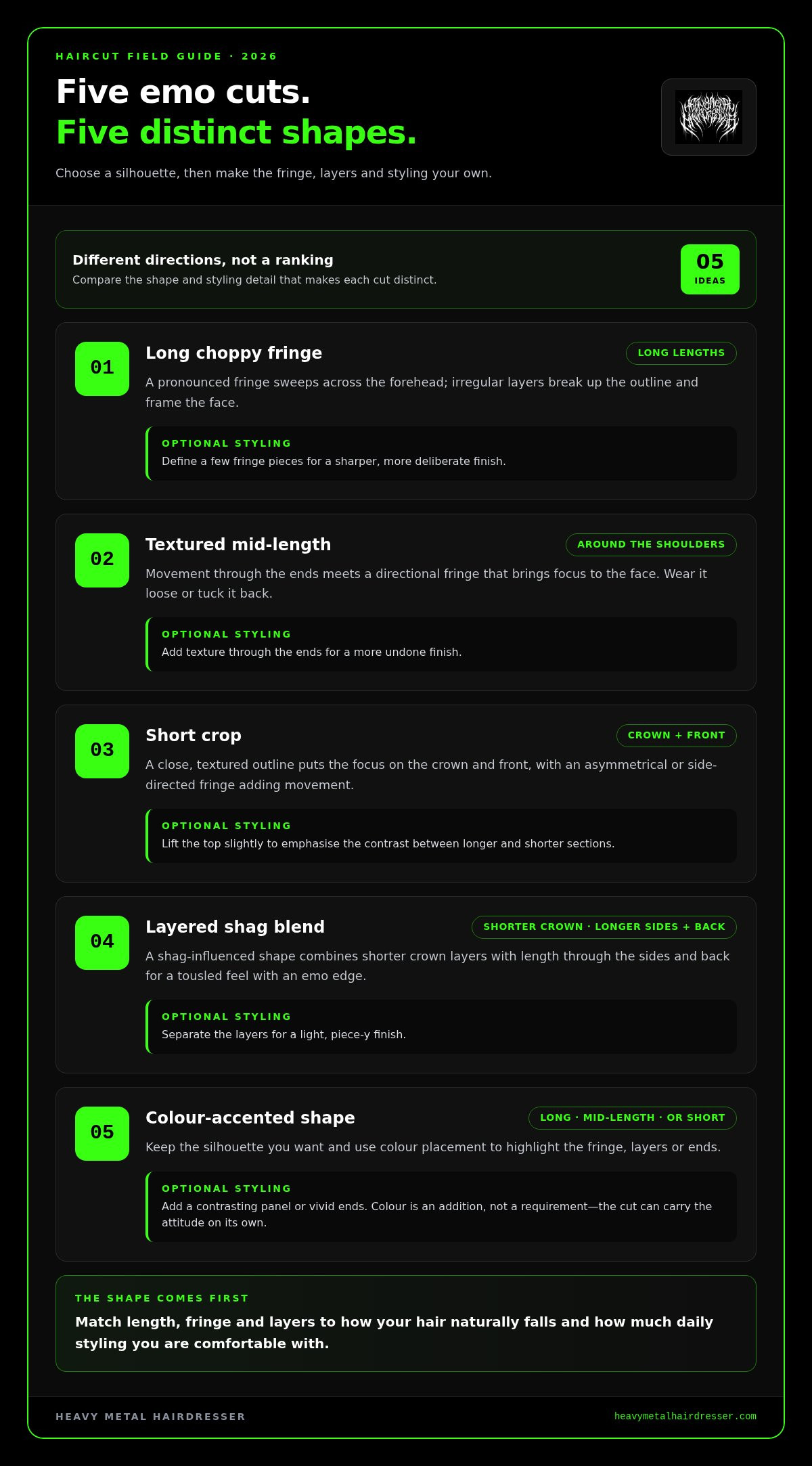
These are different directions, not a ranking of what’s “in”. The best emo haircut ideas 2026 are the ones you can adapt to your length, texture and styling routine. Hair continually borrows from its past and reshapes it for the present, part of the wider evolution of hairstyling. Start by choosing a silhouette, then decide how much drama you want to add.

  • Long choppy fringe: Long lengths frame the face, while a pronounced fringe sweeps across the forehead and irregular layers break up the outline. Optional styling: Define a few fringe pieces for a sharper, more deliberate finish.
  • Textured mid-length: A cut around the shoulders keeps movement through the ends, while a directional fringe brings focus to the face. Wear it loose or tuck it back. Optional styling: Add texture through the ends for a more undone finish.
  • Short crop: A close, textured outline puts the focus on the crown and front, with an asymmetrical or side-directed fringe adding movement. Short doesn’t have to mean subtle. Optional styling: Lift the top slightly to emphasise the contrast between longer and shorter sections.
  • Layered shag blend: A shag-influenced shape combines shorter layers around the crown with length through the sides and back. The result can feel tousled while keeping its emo edge. Optional styling: Separate the layers for a light, piece-y finish. For more on the cut itself, explore our shag haircut guide.
  • Colour-accented shape: The silhouette can be long, mid-length or short, with colour placed to highlight the fringe, layers or ends. Optional styling: Add a contrasting panel or vivid ends. Colour is an addition, not a requirement; the cut can carry the attitude on its own.

Which long or mid-length emo cut gives layers room to move?

Long face-framing layers keep the overall length while creating movement around the cheeks and jaw. A mid-length cut gives the outline a lighter feel, and its directional fringe can work with the way you part or style your hair. Both shapes can draw on shag cutting, but the amount of layering and where it begins will change the result. If keeping length matters to you, make that clear when discussing how much to remove.

Can short emo hair still feel expressive and unmistakable?

Absolutely. A short crop can use an angled fringe, textured crown or close sides to create contrast without relying on long lengths. Vivid panels or contrasting tones can sharpen the shape, but they’re optional; placement should complement the cut rather than dictate it. Heavy Metal Hairdresser creates textured cuts shaped around individual style. Explore alternative hair styling.

Which emo haircut suits your hair texture, length and styling habits?

There’s no single hair type, length or heavy fringe required for emo hair. The right cut depends on how your hair naturally falls, the shape you want and how much time you’re willing to spend styling it. Use this comparison to prepare for a conversation, not as a set of rules. A reference photo may sit differently on your hair because texture and density affect how layers fall.

Hair and length Texture considerations Fringe preference Daily styling effort
Long, fine or straight Layers can add movement; keeping enough weight may help the ends look fuller. Long, directional fringe or softer face-framing pieces. Low to medium, depending on how defined you want the layers.
Mid-length, thick or straight Discuss where to remove bulk so the shape doesn’t feel too heavy. Pronounced fringe or a less committed side sweep. Medium if you want a distinct, piece-y finish.
Mid-length, wavy Natural movement can make layers sit differently from a straight reference. Flexible fringe that works with your usual parting. Low to medium, depending on whether you define the wave.
Short, fine or thick Density affects crown volume and how sharply the outline reads. Asymmetrical fringe or shorter, textured front pieces. Medium; sharper shapes may need more frequent reshaping.
Any length, curly Talk through curl pattern and shrinkage, as dry length and shape can differ from a stretched reference. Fringe shaped to work with your natural curl and preferred styling. Varies with your routine and the finish you want.

How should hair texture shape an emo haircut choice?

Consider density as well as texture. Thick hair may need carefully placed layers to create movement without losing the silhouette. With fine hair, a more measured approach can help the ends avoid looking overly sparse. Straight hair tends to show the cut’s lines clearly, while waves and curls bring their own movement. Mention your natural wave or curl pattern, any shrinkage and how you usually wear your hair. The cut should make sense without assuming you’ll spend ages styling it every morning.

How much fringe styling and upkeep are you comfortable with?

A pronounced fringe makes a strong statement, but you may need to restyle it to keep it sitting as you like. Softer face-framing pieces offer more flexibility and can be swept aside. Short, sharp outlines can lose their edge as they grow, so consider how often you’re comfortable reshaping the cut. Be honest about your routine: if you want minimal daily effort, say so. These emo haircut ideas 2026 should fit your life as well as your reference board.
Emo Haircut Ideas 2026: Fringe, Layers and Colour with Attitude

How to turn emo haircut inspiration into a clear stylist brief

A reference photo captures a mood, not the whole haircut. Bring several images and explain what you want to borrow from each, along with anything you’d rather avoid. That makes it easier to turn inspiration into a shape that works with your hair and routine.

A strong reference brief names the shape you want and the practical limits it needs to respect. Use this five-step process to make the conversation clearer:

  1. Gather references. Choose a few images that show the overall silhouette, fringe and layers. Include different angles where possible, so the shape isn’t only clear from the front.
  2. Spot the shared details. Is it the long side-swept fringe, choppy ends, crown volume or length you keep saving? Point to the specific feature in each image rather than asking for a copy of one person’s whole look.
  3. Set your boundaries. Explain what you don’t want, too. You might love the layers but want to keep your length, or want an expressive fringe that doesn’t cover your eyes.
  4. Talk through upkeep. Describe how you usually wear your hair, how much styling you’re comfortable with and how often you’re happy to reshape the cut.
  5. Agree the shape. Discuss fringe direction, where the layers begin, the outline and how the cut will sit with your natural texture before settling on a plan.

What should you show and say during an emo haircut consultation?

Be specific about your references. You could say, “I like the fringe in this photo, but I want the length from this one and less bulk through the ends.” Describe your usual styling routine and how much change feels right, whether that’s a subtle shift or a sharper new outline. Your identity and boundaries belong in the conversation. The aim is a cut that feels like you, not someone else’s idea of emo hair.

How can you keep the cut wearable between appointments?

Choose an approach that suits the shape and your routine. You may prefer to let natural movement do the work, or use a small amount of styling product to define the layers. Haircut upkeep and colour upkeep are separate considerations: a vivid panel can complement the shape, but it doesn’t dictate the cut. If colour is part of your plan, our vivid hair colour guide covers colour-specific considerations.

Bring your references and a clear sense of what you want from the cut. Heavy Metal Hairdresser offers alternative hair styling shaped around individual texture and identity.

Make 2026 emo haircut ideas your own with an alternative stylist

A strong reference is a starting point, not a template to copy. The same fringe or layered silhouette can sit differently depending on your hair’s texture, density and natural movement. Keep the part that speaks to you, then shape the rest around your features, styling habits and the way you want to express yourself.

A collaborative approach helps translate an image into practical choices: where the layers begin, how the fringe moves, which sections keep their weight and how the outline works with your hair as it naturally falls. You can keep the attitude of a reference without being locked into somebody else’s exact cut.

What can a specialist bring to an emo-inspired cut?

Textured-cutting experience can turn broad ideas like “choppy” or “piece-y” into a considered shape. Heavy Metal Hairdresser is an inclusive alternative salon founded by barber and creative stylist Simon Tuckwell. The salon specialises in textured cuts, shags, mullets and wolfcuts, bringing a focus on movement and silhouette to alternative hair. The approach is to listen, adapt and create a cut that feels like yours, rather than fitting everyone into one fringe or formula.

Your identity and boundaries are part of the brief. Be clear about what you want to emphasise, what you’d rather avoid and how much change feels right. An inclusive approach makes room for personal expression without assuming that emo hair has one gender, length or look.

Where can your next alternative haircut idea take you?

Before choosing, weigh up four things: the shape you’re drawn to, how your texture behaves, how much daily styling you enjoy and what feels like your own expression. A sharp fringe may be the right statement; softer layers might better suit your routine. Vivid colour can add another layer of personality, but it’s optional. The cut should still feel right without it.

Use emo haircut ideas 2026 to spark possibilities, then bring your preferences into a conversation about a personalised shape. Heavy Metal Hairdresser’s alternative haircuts, textured styling and vivid colour work give you room to explore different directions with individuality at the centre.

Explore Heavy Metal Hairdresser’s alternative hair services and find a direction that feels unmistakably yours.

Make your next emo cut unmistakably yours

The strongest emo haircut ideas 2026 aren’t one-size-fits-all. Start with the silhouette that speaks to you, then consider how your texture, preferred fringe and styling routine will shape the result. Colour can sharpen the look, but it’s never a requirement. A few clear reference photos and honest notes about what you want, and don’t want, can help turn inspiration into a cut that feels personal.

Heavy Metal Hairdresser brings textured cutting and alternative styling together with an inclusive approach to self-expression. Founded by barber and creative stylist Simon Tuckwell, the salon’s experience includes backstage festival work at Download and Bloodstock. Its focus on textured cuts and vivid colour gives you room to explore a shape and finish that fit your identity.

Explore alternative haircuts with Heavy Metal Hairdresser and take the next step towards a look that feels like you. Your hair, your rules.

Frequently Asked Questions

What are the best emo haircut ideas for 2026?

The best emo haircut ideas 2026 are the ones that suit your hair and personal style, rather than a trend ranking. Consider a long choppy fringe, textured mid-length layers, a short crop, a shag-influenced shape or a cut with optional colour accents. Compare the silhouette and upkeep of each direction, then adapt the fringe and layers to your natural texture and the way you like to wear your hair.

Can you get an emo haircut with short hair?

Yes, short hair can carry a strong emo shape. A textured crop can use an asymmetrical fringe, side-directed front pieces or contrast between the crown and sides to create movement and attitude. Length isn’t the defining factor. Before choosing a reference, consider how the shorter outline will sit with your hair’s density and texture, and whether you’re comfortable styling the fringe or maintaining a sharper shape as it grows.

Is emo hair only suitable for straight hair?

No. Emo hair can be adapted for straight, wavy and curly textures. Natural movement affects how layers fall, and curls may appear shorter when dry than they do when stretched. Share your usual styling routine and texture with your stylist, then discuss how the shape will behave without extensive styling. A straight-haired reference can still inspire the fringe or silhouette, but the cut may need adapting to your hair’s natural pattern.

How do I explain an emo haircut to my stylist?

Bring several reference images and point out exactly what you like in each: the fringe direction, layer placement, overall length or outline. Say what you want to avoid, too, such as losing too much length or having a fringe cover your eyes. Explain your natural texture, usual styling routine and how much upkeep feels realistic. Clear details help turn the mood of a reference into a shape tailored to you.

How do you style an emo fringe?

Start with damp hair and direct the fringe the way you want it to sit as you dry it. For a straighter finish, use a heat protectant before applying heat, and work in sections rather than repeatedly passing over the same area. A small amount of texture paste or styling wax can separate the ends. The exact routine depends on your hair’s texture and fringe shape, so choose a finish that feels comfortable and manageable.

Can an emo haircut work without a heavy side fringe?

Absolutely. A heavy side fringe is a recognisable option, not a requirement. You can keep an emo-inspired feel with visible layers, face-framing pieces, crown texture or an asymmetrical outline, while choosing a lighter fringe or no fringe at all. Tell your stylist how much of your face you want the hair to frame and how you normally part it. The aim is a distinctive shape that feels right to you.

What is the difference between emo hair and scene hair?

Emo and scene styles overlap, and people may mix elements from both. Emo hair is often associated with directional fringe, layered lengths and a more restrained or introspective overall look. Scene styling can lean towards a more deliberately exaggerated silhouette, with heightened volume and vivid colour as possible accents. These are broad influences, not strict rules. Your haircut can draw from either, both or neither, depending on the expression you want.
Posted on

Finding a Hairdresser Who Understands Your Style: A No-Nonsense Guide

Finding a Hairdresser Who Understands Your Style: A No-Nonsense Guide

Your reference photo isn’t the problem. The wrong stylist is. You know the feeling: you show someone the sharp, shaggy, unapologetically you look you want, and leave with a safer, more conventional version. Finding a hairdresser who understands my style starts with spotting the difference between someone who can repeat a trend and someone whose work shows they understand your aesthetic.

It’s fair to feel unsure. A polished social feed doesn’t always show whether a stylist has experience with the cut or colour you want, and describing a look can feel like a test you didn’t prepare for. You deserve to feel heard and respected, and to take part in decisions rather than being talked out of your own style.

This guide will help you assess whether a stylist’s portfolio shows work close to the look you want, recognise signs of a good consultation and make that conversation count. We’ll cover what to bring, what to ask and how to agree a clear plan for your cut, colour, upkeep and next steps. No guesswork. No settling for “close enough”.

Key Takeaways

  • Finding a hairdresser who understands my style starts with knowing what matters to me, from the look I want to how much upkeep I can manage.
  • Review a stylist’s recent work for comparable texture, shape, finish and colour technique, rather than expecting an identical face or exact reference.
  • Look beyond follower counts and dramatic transformations. Assess portfolio relevance, communication, inclusivity and practical fit.
  • Bring several reference images, note what appeals to you in each, and share current photos of your hair and relevant colour or styling history.
  • Choose someone who listens, discusses realistic options and helps you agree a clear plan for the look and what comes next.

Finding a Hairdresser Who Understands Your Style Starts With Your Priorities

It’s frustrating to ask for a cut or colour with a bit of edge and feel the idea get softened before the scissors even come out. The answer isn’t to find someone who’ll agree to everything. It’s to find someone with relevant skill who listens, explains their thinking and respects your individuality.

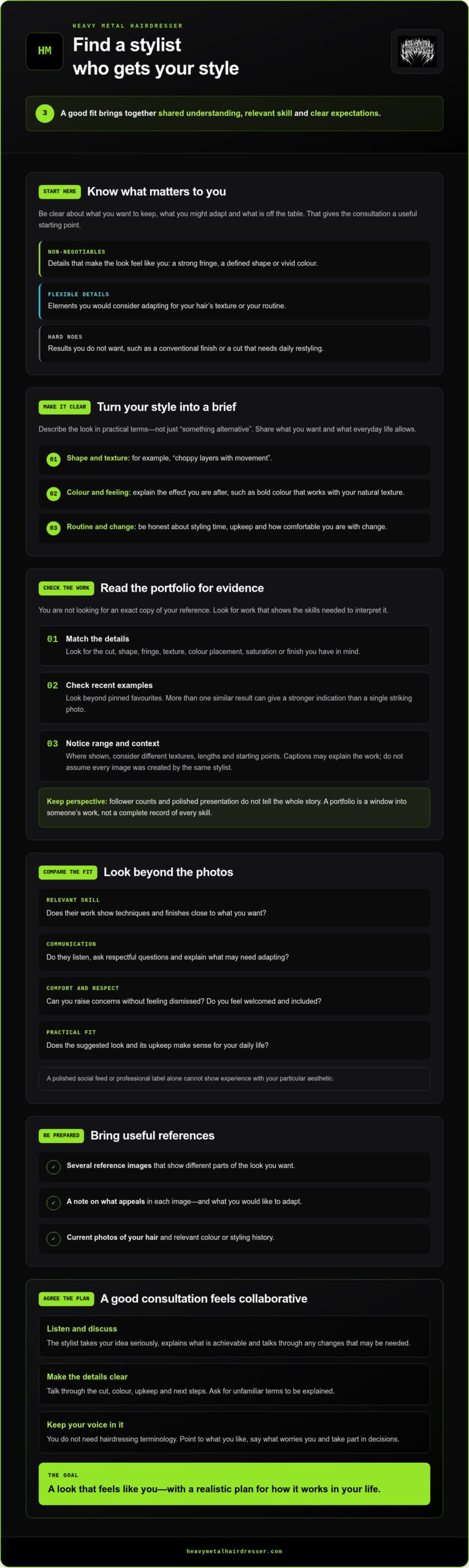
Stylist fit means shared understanding, relevant skill and clear expectations. Technique matters, but so do communication, comfort and an honest conversation about upkeep. A look that only works after a long styling session may not suit your daily life. Be clear about what you want to keep, what you’re open to changing and what’s firmly off the table.

  • Non-negotiables: details that make the look feel like you, such as a strong fringe, defined shape or vivid colour.
  • Flexible details: elements you’d consider adapting to suit your hair’s texture or your routine.
  • Hard noes: results you don’t want, such as a conventional finish or a cut that needs daily restyling.

Turn your personal style into a clear brief

Describe the shape, texture, colour and overall feeling you’re after. “Choppy layers with movement” or “a bold colour that still works with my natural texture” gives you more to discuss than “something alternative”. Separate must-haves from inspiration you’re happy to adapt. Be honest about how much time you’ll spend styling, the upkeep you can manage and how comfortable you are with change. These details help shape a look that fits your life, not just a picture.

Decide what a good appointment should feel like

A collaborative stylist listens without rushing to replace your idea, asks respectful questions and explains what may need adapting. You don’t need professional hairdressing terminology. Point to what you like, describe what worries you and ask for unfamiliar terms to be explained. Feeling welcomed matters, especially when a cut or colour is tied to identity. A neutral overview of the cosmetology profession, including the term licensed cosmetologist, offers background, but a label alone doesn’t show experience with your particular aesthetic.

Notice how the conversation feels. Can you raise concerns without being dismissed? Does the stylist explain what’s achievable and what maintenance could involve? Specialist experience can be relevant: for example, Heavy Metal Hairdresser focuses on alternative cuts, textured styling and vivid colour. Your own priorities remain the test. Look for a respectful exchange and a clear understanding of the look you want.

How to Check Whether a Hairdresser Can Deliver Your Style

A portfolio is more useful than a promise, but one striking photo doesn’t prove consistent experience. Look for repeated examples of the techniques and finishes you want, especially if your reference is outside the mainstream. Whether you are looking for textured salon cuts or sharp fades and grooming from specialists like Sam’s Scissors Barbershop, you’re not searching for someone who has copied your exact picture. You’re checking whether their work shows the skills needed to interpret it.

Read a portfolio for relevant evidence

Use this process to review public work without getting distracted by follower counts or polished presentation:

  1. Start with the details you want. Is the cut layered, blunt, heavily textured or shaped around a fringe? For colour, look for the placement, saturation and finish that appeal to you.
  2. Check recent examples. Scan beyond pinned favourites and look for more than one result using a similar technique. Consistency across different posts is a stronger clue than a single perfect match.
  3. Look for range. Where the portfolio shows it, notice how the stylist works with different hair textures, lengths and starting points. The faces don’t need to resemble yours. The relevant shape, texture and finish do.
  4. Read the context. Captions or service descriptions may explain what was done. Don’t assume a particular stylist created every image, or that one photo proves experience with every technique.

Social media is a window into someone’s work, not a complete record of every skill. If the portfolio shows little of the details you care about, treat that as a question to ask, not proof either way. For wider inspiration, explore this alternative hair styles guide, then use your chosen references to look for relevant evidence.

Match your reference to the right expertise

Get specific about the skill behind the look. If you want loose, layered movement, compare examples with this shag haircut guide. For a choppier, heavily textured shape, the wolf hair cut guide can help you name what you’re drawn to. If colour is the main event, use the vivid hair colour guide to explore the effect you want. The same principle applies if your look centres on sharp fades or tailored beard shaping, where dedicated craftspeople like Straight 8 Barbers show how barbering requires its own distinct technical expertise.

Then compare like with like. A stylist may show bold colour but not the placement you’re after, or plenty of layers without examples of your preferred texture. That distinction helps you ask sharper questions before deciding whether their experience fits. If alternative cuts, textured styling or vivid colour are your focus, you can also browse Heavy Metal Hairdresser’s alternative hair work as one example of a specialist portfolio.

Compare Hairdressers by Skill, Communication and Style Compatibility

A busy social feed or dramatic before-and-after can catch your eye, but neither tells the whole story. A striking transformation doesn’t prove the stylist has experience with your particular cut, colour technique or hair texture. Popularity can’t tell you whether you’ll feel comfortable speaking up, either.

The strongest match combines relevant work with clear, respectful communication. Compare each stylist against the same priorities, not unrelated signals such as follower counts. That makes it easier to weigh technical evidence alongside how they treat you and whether the practical details suit your life.

Use a simple stylist comparison scorecard

For each candidate, note what you can actually see or learn. Use “strong”, “unclear” or “needs asking” rather than forcing a score when you don’t have enough evidence. The aim isn’t to find a flawless profile. It’s to identify the right questions before you commit.

Spot green flags and reasons to pause

Green flags include clarifying what you like about a reference, offering options and explaining any limits without dismissing your idea. A stylist may reasonably say a particular result needs adapting to your hair or routine. That’s different from steering you towards a conventional look without listening.

Pause if your references are brushed aside, a result is promised without discussion, or you feel pressured to decide before your questions are answered. Ask what alternative approach they’d suggest and why. If the response still doesn’t feel respectful, it’s reasonable to look elsewhere. When finding a hairdresser who understands my style, your judgement of the conversation belongs on the scorecard alongside the work itself.

Finding a Hairdresser Who Understands Your Style: A No-Nonsense Guide

Prepare for a Hair Consultation That Gets Your Style Across

A useful consultation isn’t a hairdressing vocabulary test. It’s a chance to show what you mean, share details that affect your hair and check whether you and the stylist picture the same result. A little preparation can turn “I want something like this” into a clear, collaborative conversation.

Bring references that explain the feeling, not just the finish

Choose a few images that show different parts of the look you want. One might capture the shape, another the fringe or texture, and another the colour placement. Add a current photo of your own hair so the stylist can see the starting point instead of relying on memory or an old picture.

Make a quick note beside each reference. Keep it simple:

  • What I like: the choppy layers, the weight around the face or the placement of the colour.
  • What I don’t want copied: the length, styling finish or another detail that isn’t right for me.
  • My hair history: relevant colour or chemical treatments, past cuts and how you usually style your hair.
  • My routine: how much time you’re happy to spend styling and what upkeep feels manageable.

Your routine matters. A reference can show the finished look, but it can’t tell the stylist how much daily effort you’re willing to put in. Be candid. Your routine is part of the brief, not an inconvenience.

Ask questions that reveal whether you are being heard

Use open questions to make the conversation practical and check that the stylist understands the effect you’re after:

  • “How might this shape work with my hair’s texture and the way I wear it?”
  • “What would you adapt from these references, and why?”
  • “How much styling or upkeep might this look need?”
  • “What’s another option if this detail isn’t suitable for my hair?”

Listen for a clear explanation that connects your reference to your hair and routine. It’s reasonable for a stylist to suggest changes, but you should understand the reason and have space to respond. If you’re finding a hairdresser who understands my style, shared understanding matters more than knowing technical terms.

Before anything begins, summarise the plan aloud in your own words: the shape or colour you’ve agreed, what will be adapted, what remains flexible and what upkeep to expect. Invite the stylist to correct anything you’ve misunderstood. That final check can catch a mismatch before it becomes a result you didn’t ask for.

If expressive cuts or colour are your direction, explore Heavy Metal Hairdresser’s alternative hair work as you prepare your references.

Choose a Hairdresser Who Respects Your Style and Makes the Next Step Clear

You don’t need a stylist who says yes to every idea. You need someone who understands what you’re aiming for, can show relevant work and explains recommendations without sanding off the parts that make the look yours. A good stylist may suggest adapting a reference to suit your hair or routine. The difference is that they explain why, listen to your response and make the decision with you.

If you’re worried they’ll default to something more conventional, look for evidence before you decide: work that reflects the cut or colour you want, plus a conversation where your questions are taken seriously. Ask what they’d keep from your reference, what they’d change and why. If the answer skips over your preferences or leaves you uncertain about the plan, it’s reasonable to pause and consider another fit.

Know when you have found the right kind of stylist

Look for three things working together: the stylist understands the details you’ve pointed out, explains options in a way you can follow and respects your personal expression. They don’t have to promise an exact copy of a reference. They should be able to discuss what’s realistic for your hair, clarify any changes and make room for your input.

Trust both kinds of evidence: what you can see in their work and how you felt during the consultation. Did you feel listened to? Could you ask questions without being made to feel difficult? Finding a hairdresser who understands my style isn’t about chasing a perfect guarantee. It’s about leaving with a clear, shared direction and confidence in the next step.

Explore a salon built around alternative expression

For readers drawn to expressive cuts and colour, Heavy Metal Hairdresser offers an example of an alternative, inclusive salon. Its work focuses on shags, wolfcuts, mullets, textured styling and vivid colour, with individuality welcomed in a safe-space environment. Founded and operated by lead stylist Simon Tuckwell, the salon also brings backstage festival experience at Download and Bloodstock. These details can help you decide whether its focus aligns with your aesthetic, just as you’d assess any stylist against your own priorities.

If that alternative focus feels like a match for the work you’re exploring, learn more about Heavy Metal Hairdresser.

Choose a Stylist Who Gets the Real You

Finding a hairdresser who understands my style isn’t about finding someone who’ll copy a reference exactly. It’s about choosing a stylist whose work shows relevant skill, who listens without steering you towards a safer version and who can agree a realistic plan with you. Look for evidence in their portfolio, ask direct questions and trust how the conversation feels.

That combination matters most when your look is personal. Heavy Metal Hairdresser is an alternative, inclusive salon where individuality is celebrated, with specialist work including shags, wolfcuts, mullets and vivid colour. Lead stylist Simon Tuckwell also brings backstage festival experience at Download and Bloodstock.

If that focus feels aligned with your aesthetic, explore Heavy Metal Hairdresser’s alternative styling. Keep your references close, your questions ready and your standards intact. Your style deserves to be understood, not toned down.

Frequently Asked Questions

How do I find a hairdresser who understands my style?

Look for a stylist whose portfolio shows relevant work and whose consultation feels collaborative. Compare examples for the shape, texture, finish or colour technique you want, then ask how they’d adapt your reference to your hair and routine. Finding a hairdresser who understands my style means weighing visible skill alongside communication. You should leave the conversation with a clear, realistic plan, not feeling talked out of your idea.

What should I look for in a hairdresser’s portfolio?

Look for more than one example of the techniques and finish you want, ideally across different clients and hair textures. A face or hair type doesn’t need to match yours exactly. Focus on details such as layered shape, fringe, texture, colour placement and how the result sits. Read captions for context, but treat social media as evidence to discuss, not proof of every skill a stylist may have.

Should I bring photos to a hair consultation?

Yes. Bring several references that show useful details, such as the overall shape, fringe, texture or colour placement. Note what you like in each and what you don’t want copied. Include a current photo of your hair and be ready to explain relevant colour or styling history. Photos help you communicate, but you don’t need professional terminology or an exact replica.

What questions should I ask a new hairdresser?

Ask how your reference could work with your hair texture and everyday routine, what they’d adapt and why, and what upkeep the look may involve. If a detail seems unsuitable, ask what alternative they’d suggest. Before proceeding, summarise the agreed cut or colour, what may change and what remains flexible. This gives the stylist a chance to correct any misunderstanding and helps you decide whether the plan feels right.

How can I tell if a hairdresser is inclusive and will respect my identity?

Notice whether the stylist listens to your preferences, uses respectful language and makes space for you to explain what the look means to you. You can ask how they approach identity-led styling and whether their portfolio reflects work aligned with your aesthetic. Heavy Metal Hairdresser describes itself as an inclusive safe space where individuality is celebrated, with a focus on alternative cuts, textured styling and vivid colour.

What if a hairdresser says my reference will not work?

Ask them to explain what may not work and why, then invite them to suggest an alternative that keeps the details you care about. A thoughtful stylist may recommend adapting a reference to suit your hair or routine while still respecting your goal. If they dismiss your idea, pressure you into a different look or can’t explain their recommendation clearly, you’re entitled to pause and seek another opinion.

Posted on

Wolfcut with Colour Ideas: Aggressive Texture Meets Vivid Pigment

Wolfcut with Colour Ideas: Aggressive Texture Meets Vivid Pigment

A wolfcut without the right pigment is like a mosh pit without a soundtrack. It’s just a lot of movement with zero impact. You’ve likely felt the sting of a mainstream salon softening your layers when you specifically asked for a blade. It’s frustrating when flat, dull dyes swallow up the texture you crave. If you’re looking for wolfcut with color ideas that refuse to blend in, you’ve come to the right place. We understand that your hair isn’t just a style. It’s a structural commitment to chaos that requires a specialist’s touch.

We agree that a bold aesthetic shouldn’t fade into the background or wash out after one weekend at a festival. You deserve a look that fuses aggressive texture with vivid pigments that actually stay put. In this article, you’ll discover how to use alternative colour placements to make those chaotic layers pop. We’ll explore the specific techniques that turn a standard cut into a high-impact statement of identity. It’s time to stop settling for mainstream standards and start building a masterpiece of layers and light.

Key Takeaways

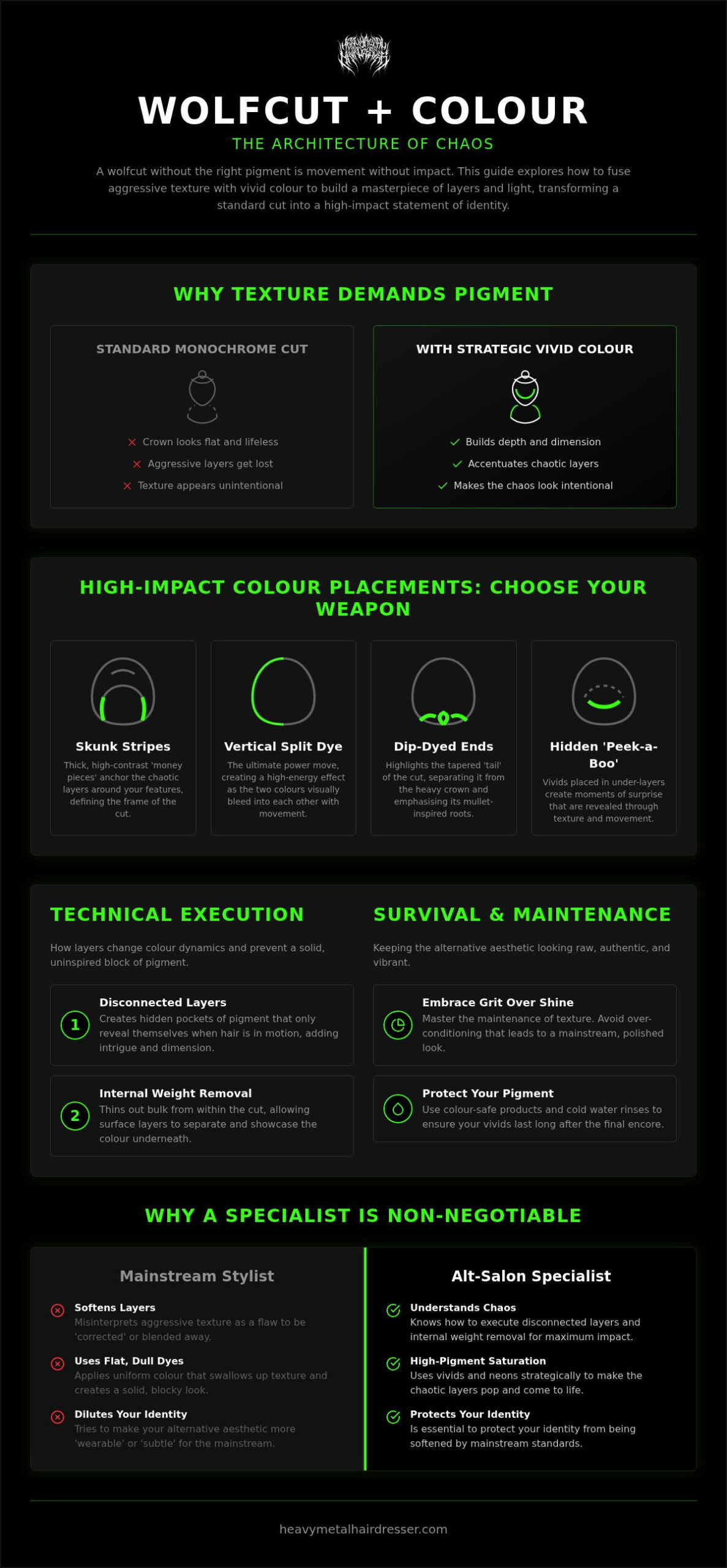
  • Understand why aggressive texture demands vivid pigment to build depth and stop your crown looking flat.
  • Explore high-impact wolfcut with colour ideas like skunk stripes and face-framing money pieces that define your silhouette.
  • Learn how disconnected layers and internal weight removal prevent your vivids from looking like a solid, uninspired block.
  • Master the maintenance of grit over shine to keep your alternative aesthetic looking raw and authentic.
  • Discover why a specialist alt-salon is essential to protect your identity from being softened by mainstream stylists.

The Synergy of the Wolfcut and Colour: Why Texture Demands Pigment

A wolf cut isn’t just another trend; it’s a structural canvas for those who refuse to play by the rules. It thrives on a heavy crown and wispy, tapered ends that demand visual depth to avoid looking flat or uninspired. Without the right pigment placement, those aggressive layers can easily get lost in a sea of monochrome. This is where the magic of vivid hair colour comes in. By using high-pigment saturation, we can accentuate the disconnected layers and highlight the face-framing ‘claws’ that define the wolf aesthetic. Finding the right wolfcut with color ideas starts with understanding the geometry of the cut. It’s about making the chaos look intentional.

The Architecture of Alternative Colour

Traditional highlights are too polite for this silhouette. You need something grittier. When you’re looking for wolfcut with color ideas, think about how the hair moves. Disconnected layers create hidden pockets of pigment that only reveal themselves when you’re in motion. Blunt, uniform colour fails because it hides the very texture you’ve worked so hard to achieve. You need diffused, gritty transitions and sharp contrasts to separate the ‘mane’ at the top from the ‘tail’ at the bottom. By placing darker tones at the roots and through the internal layers, we create an illusion of even more volume in the crown. Meanwhile, lighter or more vivid pigments on the ends make those ‘claws’ look sharper and more intentional. It’s a structural masterpiece that uses light and shadow to demand attention.

Subcultural Roots: From Punk to the Mosh Pit

This look didn’t appear in a vacuum. It draws its DNA from the 70s rock scene and 80s underground punk movements. It’s a staple amongst the crowds at Download and Bloodstock for a reason. It’s raw. It’s unapologetic. Most importantly, it’s a gender-neutral foundation that allows anyone to build a creative identity. The cut serves as a safe space for experimentation, whilst the colour provides the volume. Whether you’re in the mosh pit or the front row, this combination signals that you’re part of a community that values self-expression over mainstream polish. It’s about being seen on your own terms. We don’t do ‘subtle’ here; we do identity-affirming statements that last long after the final encore.

Vivid Wolfcut with Colour Ideas: Choose Your Weapon

Forget the subtle balayage you see in high-street window displays. An aggressive cut demands an aggressive palette. When you’re scouting for wolfcut with color ideas, you’re looking for pigment that acts as a weapon, slashing through the texture to command attention. The wolf hair cut is the perfect host for neon pigments because its disconnected nature allows for multiple points of impact. It isn’t just about picking a shade; it’s about strategic placement that respects the grit of the silhouette.

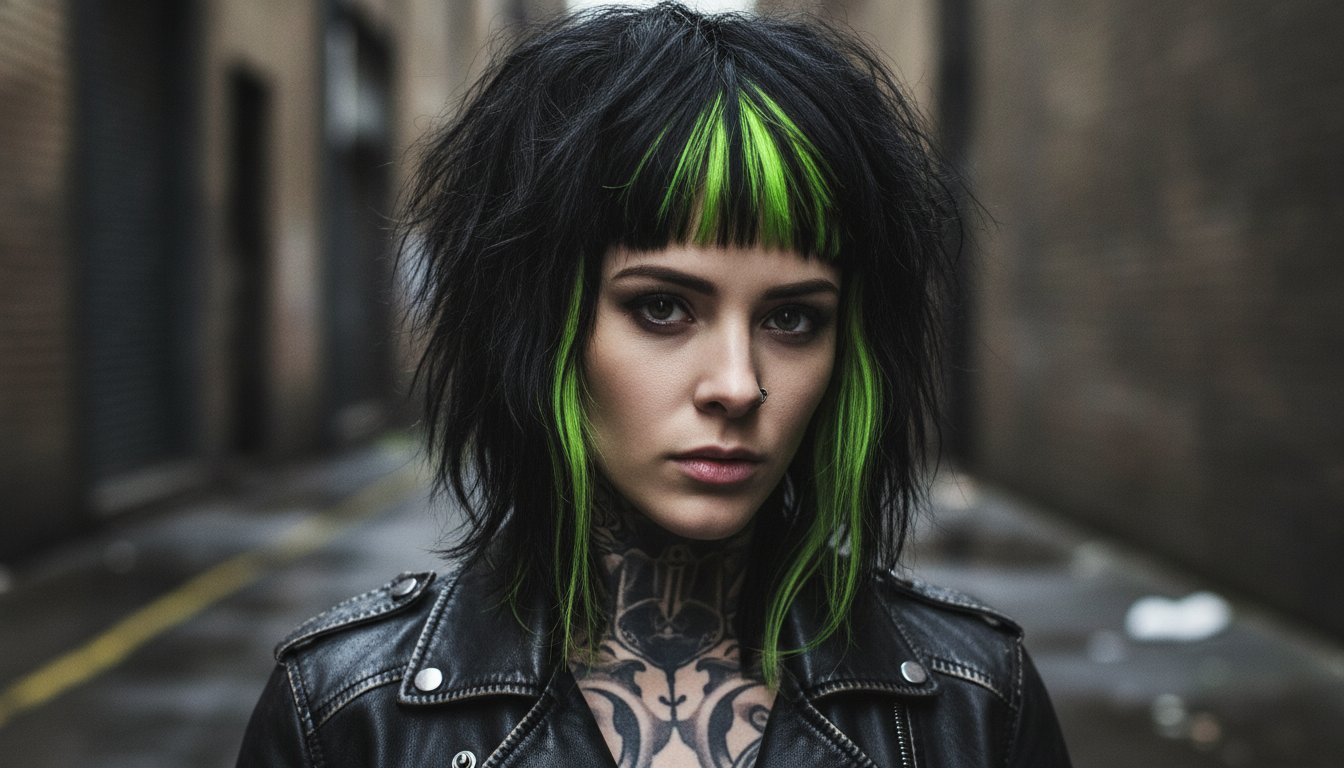
Face-framing is essential for this look. Using ‘skunk stripes’ or thick, high-contrast ‘money pieces’ anchors the chaotic layers around your features. These aren’t your standard face-lights. We’re talking about broad sections of bleached white or neon green against a dark base. This technique defines the frame of the cut, ensuring the wispy ‘claws’ of the fringe don’t disappear into your forehead. It’s a subcultural staple that screams identity.

Split Dyes and High-Contrast Chaos

If you want maximum impact, the vertical split dye is the ultimate power move. Often called the ‘Cruella’ effect, this technique divides the head down the centre, allowing the shaggy frame to showcase two entirely different worlds. One side might be a deep obsidian, whilst the other is a piercing ultraviolet. Because the wolfcut is so heavily layered, the two colours bleed into each other visually as you move, creating a flickering, high-energy effect. For those who prefer horizontal movement, dip-dyeing the tapered ends follows the natural flow of the cut. This highlights the ‘tail’ and separates it from the heavy crown, emphasising the mullet-inspired roots of the style. High-contrast pairings like black and neon pink are non-negotiable for a true alt-aesthetic.

Hidden Layers and Peek-a-Boo Pigment

When exploring wolfcut with color ideas, don’t overlook the power of the under-layer. Not every statement needs to be screaming from the surface. Placing vivids in the under-layers creates ‘peek-a-boo’ moments that reveal themselves through the texture. When you use a technique like Death Grip texture to style your layers, you create separation that allows these hidden pigments to pop. This ‘halo’ effect around the face-framing sections adds a three-dimensional quality to the hair. It prevents the cut from looking like a solid block of colour, which is a common mistake in traditional salons. By hiding neon green or electric blue beneath a darker top layer, the colour only flashes when the hair is in motion or styled with heavy texture. It’s a sophisticated way to handle vivids without losing the raw, underground vibe of the cut.

Wolfcut with Colour Ideas: Aggressive Texture Meets Vivid Pigment

Technical Execution: How Layers Change Colour Dynamics

A wolfcut isn’t a flat surface. It’s a three-dimensional sculpture. Most mainstream stylists treat colour like a two-dimensional sheet, but that approach dies the moment you introduce disconnected layers. These layers act like shutters. They open and close with every movement, revealing and hiding pigment in a percussive rhythm. When we perform internal weight removal, we aren’t just making the hair lighter. We’re creating channels for light to penetrate the crown and hit those vivid tones from the inside out. This is why your wolfcut with color ideas needs to be built into the cut itself, rather than slapped on as an afterthought.

The movement of the hair is heavily dictated by its shag haircut heritage. This influence creates a multi-directional flow that makes multi-coloured strands look like they’re vibrating. Without this technical foundation, vivid colours can look muddy or disjointed. You need a specialist who understands how a blade creates the space for a brush to do its job. It’s a technical dance between the blade and the pigment.

Dimension Through Disconnection

We use the shorter crown layers to anchor the visual weight of the style. By placing more saturated or darker pigments here, we boost the appearance of volume. It’s a trick of the light. Conversely, the wispy ends are the perfect place for ‘dipped’ neon accents. Because these ends are so fine, they can carry intense pigment without making the overall silhouette feel bottom-heavy. The goal is to avoid the ‘shelf’ effect. This happens when a stylist doesn’t know how to transition colour between two distinct lengths. We use diffused, hand-painted techniques to ensure the ‘mane’ and the ‘tail’ feel like part of the same beast.

The Grow-Out Strategy

Alternative hair should look better as it ages. We don’t aim for pristine perfection that falls apart after one wash. Root-smudging is a non-negotiable part of the gritty, lived-in wolfcut look. It allows your natural colour to bleed into the vivids, creating a shadow-root that adds even more depth to the crown. As your wolfcut with color ideas evolves, the fade becomes part of the aesthetic. You can use the ‘Death Grip’ method of styling to maintain that aggressive shape even as the pigment starts to soften. It’s about embracing the evolution of the grit. We build the cut to survive the mosh pit, ensuring the structure remains intact whilst the colour tells the story of where you’ve been.

Survival and Maintenance: Keeping the Grit Vibrant

Vivid hair isn’t a museum piece. It’s meant to be lived in. If you’ve spent three days in a field at Bloodstock, you know that your hair needs to survive more than just a light breeze. Maintaining wolfcut with color ideas requires a shift in mindset. You need to stop chasing high-street shine and start embracing subcultural grit. Shine is for bridal parties. Grit is what defines the separation in your layers and makes your pigment look intentional rather than polished. When layers are too shiny, they clump together. When they have grit, they stand apart like claws.

To keep that volume from collapsing under the weight of the day, you need tools like Hair To the Throne. This isn’t just about height. It’s about ensuring your crown stays aggressive even when the vivids start their inevitable fade. Protecting your colour whilst using heavy styling techniques is a balancing act. You want the hold, but you don’t want the build-up that turns electric blue into muddy grey. We build these looks to be durable, but the right home care keeps the fire burning longer.

Mosh-Pit Proof Maintenance

Festivals are the ultimate endurance test for alternative hair. To keep your look vibrant through long nights and heavy sets, you need to rethink your wash cycle. Dry texture sprays are your best friend here. They preserve the colour by extending the time between water exposures whilst adding the necessary friction to keep your layers from falling flat. Interestingly, second-day hair often shows off the wolfcut’s colour best. The natural oils and product remnants create a piecey texture that lets the light hit different pigment pockets. It’s a raw look that a fresh wash simply can’t replicate. It looks better when it’s a little bit wrecked.

The Gear: Essential Styling Tools

Choosing the right products is critical for maintaining the integrity of your cut and colour. You should check out our textured styling products guide to find the specific gear that suits your hair density. Using a product like Death Grip allows you to define individual coloured sections without turning them into a sticky mess. It provides the structural support your layers need to stay separated and visible.

Avoid heavy waxes that trap dirt and dull your vivids. Instead, opt for lightweight, high-impact powders and sprays. Heat protection is also non-negotiable. Bleached strands are already vulnerable. Hitting them with a flat iron without a barrier is a fast track to breakage and pigment loss. We recommend using a professional-grade heat shield every time you style. Ready to level up your look? Book your session with a specialist today to ensure your colour survives the pit and stays as bold as your identity.

Why a Specialist Alt-Salon is Non-Negotiable

High-street salons are built on the “polished” ideal. When you walk in asking for a wolfcut, they often panic and “soften” the layers. They turn a blade-cut masterpiece into a generic feathered layer because they’re afraid of the aggression. To truly execute wolfcut with color ideas, you need a stylist who isn’t trying to make you look “presentable” for a corporate office. Simon Tuckwell specialises in creating aggressive yet wearable art. He understands that your hair is a shield and a statement. It’s about ditching the refined for the authentic. You don’t need a stylist who asks if your parents will like it. You need a visionary who asks if it’s loud enough.

The difference lies in the intention. A specialist alt-salon doesn’t just cut hair; we curate identity. We know the difference between a fringe that’s “too short” and one that’s “just punk enough.” This isn’t about following a manual. It’s about understanding the geometry of the face and the spirit of the person in the chair. We recognise that your hair is often the loudest part of your subcultural voice. We’re here to make sure it doesn’t stutter.

From Backstage to the Chair

Our techniques aren’t born in a clinical classroom. They’re forged backstage at festivals like Bloodstock and Download. We understand the specific needs of the heavy music and alt-fashion communities because we’re part of them. When we talk about wolfcut with color ideas, we’re considering how that pigment will look under stage lights or in a rain-soaked field. The value of a consultation here is that we respect your subcultural “why.” We won’t try to talk you out of a neon split-dye; we’ll figure out how to make it hit harder. We know that for many, this hair is the first time they’ve truly seen themselves in the mirror. It’s a powerful moment, and we don’t take it lightly.

Booking Your Metamorphosis

When you’re ready to commit, bring us photos of chaos. We don’t want to see over-edited, airbrushed perfection from a mainstream magazine. Bring us the gritty, the raw, and the unconventional. This is a gender-inclusive safe space where your identity is the priority, not a checkbox. Our pricing is inclusive and our services are gender-neutral because hair has no binary. We’re here to help you navigate the transition from “standard” to “subcultural icon.”

It’s time to stop settling for stylists who are scared of your vision. You deserve a structural masterpiece that doesn’t wash out or lose its edge the moment you leave the salon. Book your wolfcut and colour session today and let’s build something that actually represents who you are. No more softening. No more compromises. Just pure, unadulterated pigment and texture.

Reclaim Your Identity Through Texture and Pigment

Your hair is a structural masterpiece that deserves more than a softened mainstream finish. We’ve explored how aggressive layers demand vivid placements and why maintenance is a matter of preserving the grit. It’s about making the chaos intentional. Stop scrolling through wolfcut with color ideas and start living the metamorphosis in a space that actually understands your “why.” You don’t need to settle for a look that doesn’t represent your subcultural roots.

Our team brings the same expertise seen backstage at Download and Bloodstock directly to your chair. We’ve built a gender-inclusive safe space where alternative identities are celebrated rather than tolerated. We specialise in the aggressive texture and high-pigment vivids that traditional salons are often too afraid to touch. You don’t need to blend in anymore. It is time to embrace the raw, authentic version of yourself with a cut and colour that commands respect.

Join the Resurrection: Book Your Specialist Wolfcut and Colour at Heavy Metal Hairdresser

The pit is waiting. Make sure your hair is ready for it.

Frequently Asked Questions

Is a wolfcut with colour high maintenance?

It is more demanding than a natural look, but the maintenance level depends on your specific choice of wolfcut with color ideas. Vivid pigments require cold water washes and sulphate-free care to prevent bleeding. However, the cut itself is designed to look better as it grows out and gets grittier. Using techniques like root-smudging can extend your time between salon visits whilst maintaining an intentional aesthetic.

Which colours work best for a wolfcut on fine hair?

High-contrast tones and shadow roots are the best weapons for fine hair. Darker pigments at the crown create an illusion of density and depth. Meanwhile, lighter accents on the wispy ends add movement without making the hair look thin. Avoid solid, heavy blocks of colour. These can weigh down the silhouette and make your aggressive layers look flat rather than textured.

How often should I refresh the colour in my wolfcut?

You should plan for a colour refresh every 6 to 8 weeks to keep vivid pigments piercing. If you have opted for a lived-in look with root-smudging, you might push this to 10 or 12 weeks. The aggressive texture of the cut hides growth better than a blunt style. Use a colour-depositing conditioner at home to maintain the intensity of your pigment between appointments.

Can I get a wolfcut and vivid colour if I have dark hair?

You can definitely achieve this, though it requires a professional lightening process first. We use high-performance lighteners to lift dark bases before applying the vivid pigment of your choice. This ensures the neon or jewel tones pop against the textured layers. It is a multi-step metamorphosis, but the high-impact result is worth the time spent in the specialist’s chair.

Does a wolfcut suit a round face shape when using bright colours?

It absolutely does, provided you use strategic colour placement to elongate the silhouette. Bright face-framing “claws” or vertical skunk stripes can draw the eye down and create sharp angles. We use the disconnected layers to add height at the crown, which balances out a rounder face shape. Colour is a tool we use to contour your features and highlight your identity.

What is the best way to style a coloured wolfcut for volume?

The best way to build volume is by using professional tools like Hair To the Throne. Apply it to damp roots before blast-drying with your head upside down to encourage maximum lift. Once dry, use a product like Death Grip to separate the coloured layers and add that signature gritty texture. This prevents the hair from clumping together and hiding your carefully placed pigment.

Will the layers in a wolfcut make my colour look messy?

The layers won’t make it look messy; they make it look three-dimensional. In fact, a wolfcut with color ideas thrives on the movement that layers provide. Instead of a flat, boring block of dye, you get a flickering effect as the hair moves. The disconnection prevents the colours from muddying together, keeping your vivids distinct and sharp within the aggressive texture.

Can I tie my hair up with a wolfcut without hiding the colour?

You can tie your hair up and actually reveal even more pigment. Half-up styles are perfect for showing off the contrast between the crown and the under-layers. If you have peek-a-boo colour, a high ponytail or bun will bring those hidden vivids to the surface. The shorter face-framing layers will stay down, keeping your alternative aesthetic front and centre even when tied back.

Posted on

Expressive Hair Colour Ideas: Saturating Your Subcultural Identity in 2026

Expressive Hair Colour Ideas: Saturating Your Subcultural Identity in 2026

Most mainstream salons treat vivid pigments like a temporary trend. For us, your hair is the primary weapon in your subcultural arsenal. You’re likely tired of scrolling through Pinterest boards that feel far too preppy or generic for your aesthetic. It’s frustrating when stylists don’t understand that you aren’t looking for a “subtle pop.” You’re looking for total identity saturation. We know the struggle of keeping your look sharp whilst surviving the chaos of festival season without your shade fading into obscurity.

This article will show you how to weaponise expressive hair colour ideas to amplify your alternative aesthetic and finally express your true identity. You’ll discover the most aggressive trends for 2026, from the airy defiance of “Cloud Girl” platinum to the liquid-like depth of colour melting. We will also break down how to stay ahead of the latest EU and EAEU ingredient changes whilst ensuring your metallic hues and rich burgundies stay screaming from the stage to the street.

Key Takeaways

  • Learn why expressive hair colour is a deliberate act of identity saturation rather than just a fleeting salon trend.
  • Discover 2026’s “gritty vivid” palette, featuring expressive hair colour ideas like acid greens that actually improve as they wear in.
  • Learn how internal colouring techniques can amplify the texture and movement of alternative styles like shags and wolfcuts.
  • Explore the importance of safe space salons for achieving gender-affirming hair transformations that honour non-binary aesthetics.
  • Get the “Alt-Hair Survival Guide” for keeping your vivid pigments saturated and vibrant whilst surviving the chaos of festival season.

Defining Expressive Hair Colour: More Than Just a “Fun” Trend

Mainstream salons often treat vivid pigments as a “pop of colour” or a temporary “shake up” for your look. We don’t. For the alternative community, expressive hair colour is a deliberate act of identity saturation. It’s a declaration of war against the mundane. This isn’t about following a fleeting trend you saw on a morning talk show. It’s about externalising your internal landscape. When you choose a high-saturation shade, you aren’t just changing your appearance; you’re claiming your space in a world that often demands conformity.

Whilst the ancient art of hair dyeing has served as a status symbol for millennia, its role in subculture is specifically about rebellion. Traditional salon techniques like highlights or balayage are designed to look “natural” or “sun-kissed.” They aim to blend in. Expressive hair colour does the opposite. It demands to be seen. It uses pigments that don’t exist in nature to signal tribal belonging. There is a gritty, raw energy in a saturated head of hair that a “polished” mainstream look simply cannot replicate. It’s the difference between a studio recording and a live set in a basement venue.

Navigating the world with vivid hair has a profound emotional impact. It acts as a social filter. It attracts your tribe and repels the judgemental. There is power in that. You aren’t hiding. You’re standing at the front of the stage. This aesthetic prioritises the visceral over the “flattering.” It values the aggressive over the soft. It’s about wearing your subcultural grit like a badge of honour.

This sense of identity isn’t just for individuals; for businesses looking to attract their own ‘tribe’ and establish a powerful presence, Fireheart Digital offers the strategic marketing expertise needed to define your brand’s place in the market.

Identity Saturation vs. Temporary Trends

Alternative souls don’t settle for “temporary.” We have no interest in festival sprays that flake off before the first encore. We choose permanent, high-impact expressive hair color ideas because our identity isn’t a weekend costume. Whether it’s the neon defiance of punk or the deep, atmospheric hues of the metal scene, hair colour has always been a vital visual signal. It allows us to recognise each other amongst the crowd. It’s a commitment to a lifestyle, not just a look.

The Heavy Metal Hairdresser Philosophy

We’ve never played by the rules of “flattering” mainstream beauty. If a toxic green makes you feel like a god, then that colour is perfect. Our philosophy is unapologetically focused on individuality. We’ve honed this craft whilst styling at festivals like Download and Bloodstock, where hair is part of the subcultural armour. We understand that a Wolfcut or one of our signature Shag Haircuts is only half the story. The colour is what brings the cut to life. We prioritise your vision over industry clichés every single time.

The 2026 Vivid Palette: Alternative Hues for Subcultural Grit

2026 isn’t about perfection. It’s about grit. We are moving away from the plastic, over-filtered look of the past. We now embrace “gritty vivids.” These are pigments that evolve. They look better after three weeks of sweat, dry shampoo, and late-night sets. Acid Greens and Toxic Yellows are the go-to for high-energy, aggressive styles. They don’t just sit on the hair; they scream. If you prefer the shadows, Deep Blood Reds and Goth Purples offer a classic alternative staple with a modern, smoky twist.

For those seeking mystery, Oil Slick and Petrol tones provide multi-tonal depth. These shades shift under stage lights, revealing hidden dimensions. If you live for the night, Cyber Neon and UV-reactive shades turn your hair into a beacon under club blacklights. Whilst we push these boundaries, we never cut corners on hair dye safety. Using professional-grade pigments ensures your hair remains healthy enough to maintain these intense saturations.

Exploring expressive hair color ideas is about finding a shade that matches your frequency. If you’re ready to commit to a total identity shift, our vivid hair colour services are designed to help you stand out from the mainstream crowd.

Monochrome and High-Contrast Pairings

The “Cruella” split-dye remains a timeless power move. Black and white isn’t just a choice; it’s a statement of duality. Contrast blocking is also huge. Imagine a neon lime fringe against a deep raven base. These high-contrast pairings are perfect for defining the aggressive layers in a Shag Haircut or a Wolfcut. They create visual separation that makes the cut look sharper and more intentional. If you want to take high-contrast banding even further, Raccoon Tail Hair offers a scene-era approach to alternating stripes that can be adapted from sharp and bold to subtle and tucked away within your layers.

Muted Neons and “Faded” Aesthetics

We are seeing a massive rise in “dusty” vivids. These are colours that embrace the natural fade process from the first wash. Think smokey pinks and grimy lavenders. A “perfect” fade is often more expressive than a fresh-out-of-the-bottle hue. It shows history. It shows you’ve actually lived in your hair. These muted neons offer an edge that traditional pastels simply can’t touch. They feel lived-in, raw, and authentically you.

Placement and Technique: How Colour Enhances Alternative Cuts

A killer haircut is only half the battle. You can have the sharpest layers in the room, but if the colour placement is generic, the whole aesthetic falls flat. Traditional balayage is built for soft waves and “natural” transitions. It fails miserably when applied to aggressive shags and mullets. Those cuts thrive on contrast and intentionality. We use colour to map out the architecture of your hair. It’s about reinforcing the shape we’ve built with the shears.

One of our favourite techniques is “Internal Colouring.” These are hidden pops of vivid pigment tucked deep within the layers. They only reveal themselves when you’re moving, headbanging, or caught in a draught. It’s a subtle way to keep your look multi-dimensional without sacrificing the overall saturated vibe. We also lean heavily into the “Halo” effect. By framing the face with a high-contrast shade, we can highlight the blunt fringe of a wolfcut. This makes the silhouette look more deliberate and aggressive. It draws the eye exactly where we want it.

The sociology of hair shows that how we style ourselves is a direct reflection of our social standing and internal values. For us, placement isn’t just about what looks “good” in a mirror. It’s about what feels right for your subcultural identity. We use expressive hair color ideas to signal who you are before you even speak. If the placement is wrong, the signal gets lost in the noise.

Framing the Wolfcut with Vivid Pigment

The wolf hair cut is all about that “just-rolled-out-of-the-pit” texture. Generic all-over colour can make these disconnected layers look muddy. Instead, we use vivid pigment to accentuate the choppy ends. Choosing shades like toxic yellow or neon orange on the tips adds a layer of visual grit that makes the texture pop. This placement adds “grit” to textured layers, turning a messy cut into a masterpiece of subcultural defiance.

Saturating the Shag: Enhancing Movement

A shag haircut lives or dies by its movement. Multi-tonal colour adds the depth needed to make those short layers sing. We focus placement on the curtain bangs and face-framing “bits” to create a 3D effect. This technique is especially powerful for fine hair. By layering darker tones underneath and brighter neons on top, we can make your hair appear significantly thicker and more textured. It’s about creating a visual rhythm that matches the energy of the cut.

Expressive Hair Colour Ideas: Saturating Your Subcultural Identity in 2026

Breaking the Binary: Gender-Inclusive Colour and Safe Spaces

Mainstream beauty standards are a trap. They rely on rigid, outdated ideas of what is “flattering” based on a binary gender scale. In the alternative scene, we know those rules are dead. Hair colour is one of the most powerful tools available for gender-affirming self-expression. It allows you to sculpt an image that actually aligns with your internal reality. Whether you are non-binary, trans, or simply someone who rejects traditional norms, your hair should be a source of power. Finding a safe space hair salon is essential for this journey. You need a stylist who understands that your aesthetic goals aren’t about “looking pretty” for the status quo. They are about visibility and authenticity.

Communication in the chair should be free from binary jargon. You shouldn’t have to explain why you want a look that isn’t traditionally “feminine” or “masculine.” Instead, focus on the energy of the look. Do you want something aggressive, ethereal, or totally alien? A stylist who respects your identity will listen to these cues. They will help you weaponise expressive hair color ideas to create a silhouette that feels like home. This process is about more than just aesthetics. It is about claiming your right to exist exactly as you are.

Gender-Neutral Colour Palettes

We love exploring colours that transcend traditional norms. The “Anti-Beauty” movement is a massive influence here. It’s about choosing shades that deliberately challenge mainstream expectations. Think of “grimy” neons, muddy teals, or industrial greys. These tones don’t play by the rules of “boy” or “girl” colours. Using bold colour in this way helps many people feel more comfortable and confident in their own skin. It’s a way to signal your identity to the world without saying a single word. It acts as subcultural armour.

The Importance of an Inclusive Stylist

A bold hair colour specialist UK must understand identity as deeply as they understand bleach. When searching for a salon, look at their mission statement. Does it explicitly mention inclusivity? Does their portfolio show a diverse range of humans? Preparing for a consultation in a safe space should feel exciting, not anxiety-inducing. Your identity should be celebrated as the foundation of the creative process. If you are ready to start your journey in a space that truly sees you, book your consultation with our inclusive team today.

From the Mosh Pit to the Mirror: Survival and Maintenance

Expressive hair colour isn’t just a style choice. It’s an investment in your identity. We’ve discussed the aggressive neons and deep goth purples of 2026, but keeping those pigments saturated requires more than just a quick wash. Mainstream advice tells you to use generic “colour-safe” supermarket products. That won’t cut it here. If you want your subcultural armour to survive the pit, you need a specific maintenance strategy. You’ve spent hours in the chair perfecting your look. Don’t let it wash down the drain because of poor aftercare.

We encourage you to embrace the “beautiful fade.” Your hair is a journey. A high-impact shade that evolves into a gritty, dusty pastel tells a story of where you’ve been. However, there is a difference between a stylish fade and a muddy mess. Professional-grade products are non-negotiable. They are designed with higher pigment loads and gentler cleansers that respect the integrity of your hair. When you experiment with expressive hair color ideas, you’re signing up for a lifestyle that prioritises hair health alongside high-voltage impact.

The Cold Water Rule and Other Hard Truths

Maintaining high-pigment saturation isn’t always comfortable. It requires discipline and the right habits. Follow these three steps to protect your vivids:

  • Step 1: Wash with the coldest water you can stand. Hot water forces the hair cuticle open, allowing those precious vivid pigments to escape. Cold water seals the cuticle shut, locking the colour in place.
  • Step 2: Minimise heat styling. Excessive heat literally “cooks” the pigment out of your hair strands. If you must use a dryer, keep it on a cool setting and always use a professional heat protectant.
  • Step 3: Use sulphate-free, professional cleansers. Sulphates are aggressive detergents that strip away everything, including your identity. Stick to professional formulas specifically engineered for vivids.

Pro Maintenance Tips for Alternative Souls

Surviving festival season whilst keeping your hair bright is a massive challenge. When you’re camping at Download or Bloodstock, dry shampoo is your primary weapon. It absorbs oil without the need for a colour-stripping wash. It also adds that essential “grit” back into your texture. For a deeper dive into preserving your shade, check out our full list of vivid hair colour maintenance tips.

Finally, don’t wait until your hair is unrecognisable to book your “refresh” appointment. Regular maintenance ensures your identity stays saturated. Most vivids benefit from a top-up every 6 to 8 weeks. This keeps the depth of your oil slick or cyber neon tones consistent. Your hair is your signal to the world. Keep it loud. Keep it clear.

Claim Your Subcultural Identity in High Definition

Your hair is the most visible piece of armour you own. It signals your tribe and filters out the noise of the mainstream. We’ve explored how the 2026 palette of gritty neons and deep goth purples can transform your look. You now know that the right placement is what makes a Wolfcut or Shag Haircut truly lethal. From the cold water rule to the beauty of a lived-in fade, maintaining your saturation is a commitment to your true self. These expressive hair color ideas are more than just a change of pace; they are a declaration of who you are in a world that demands conformity.

At Heavy Metal Hairdresser, we live for this rebellion. Led by award-winning colourist Simon Tuckwell, our team serves as the official backstage stylists for festivals like Download and Bloodstock. We provide a fiercely inclusive, gender-affirming safe space where your identity is celebrated, not just tolerated. Ready to weaponise your aesthetic? Book your identity-saturating colour session at Heavy Metal Hairdresser today. Stand out. Stay loud. Stay you.

Frequently Asked Questions

How long does expressive hair colour typically last before it starts to fade?

Most vivid pigments stay saturated for 4 to 8 weeks, depending on the specific shade and your commitment to aftercare. Cool tones like blues and purples tend to exit the hair faster than warmer reds or oranges. Using professional-grade, sulphate-free cleansers and sticking to the cold water rule are the best ways to extend the life of your shade before it begins its transition into a dusty, gritty fade.

Do I always need to bleach my hair to get vivid, expressive colours?

Yes, for high-impact neons, pastels, and bright primaries, a pre-lightened base is essential. Without removing your natural pigment first, these dyes will only show up as a subtle, dark tint that lacks the “glow” of true vivids. However, deep jewel tones like oxblood or forest green can sometimes be applied to medium brown hair to create a moody, atmospheric sheen without the need for intense lightening.

Can I achieve bold expressive hair colour on dark hair without damaging it?

Total saturation requires some lightening, but we use advanced bond-builders to protect your hair’s integrity. If you want to avoid all-over bleach, you can explore expressive hair color ideas that use high-contrast placement, such as neon face-framing “bits” or internal pops of colour. This allows you to claim an aggressive alternative look whilst keeping the majority of your dark hair untouched and healthy.

What are the best expressive hair colour ideas for short alternative cuts?

Short, textured cuts like mullets or crops thrive on high-contrast blocking and neon fringes. Acid greens or toxic yellows applied specifically to the choppy ends can make the architecture of the cut pop. You might also consider a split-dye buzz cut or a “halo” of UV-reactive pigment around the hairline. These placements are designed to make short hair look more deliberate and subculturally aggressive.

Is expressive hair colour suitable for professional work environments?

Your identity shouldn’t be a secret, but you can adapt your look using “internal colouring” techniques. This involves hiding vivid pigments under a top layer of a more “natural” or dark shade, revealing the saturation only when you move or headbang. Smoky metallics and deep oil-slick tones are also excellent expressive hair color ideas for those who need to navigate corporate spaces whilst maintaining their alternative grit.

How often should I see a specialist to maintain my vivid hair colour?

We recommend booking a refresh appointment every 6 to 8 weeks to keep your colour screaming. This allows us to top up the pigment and manage any root regrowth before the look becomes too disconnected. Regular maintenance ensures your shade stays intentional and sharp, preventing it from looking like a washed-out accident after a chaotic festival season or a busy month of gigs.

What is the difference between a “creative colour” and a “vivid colour” service?

Vivid colour refers specifically to the use of high-pigment, non-natural dyes like neons and electric primaries. Creative colour is a broader category that focuses on complex application techniques, including colour melting, prism effects, and geometric sectioning. Whilst vivid colour is about the intensity of the pigment itself, creative colour is about the technical artistry used to map that pigment onto your specific haircut for a bespoke finish.