
Your reference photo isn’t the problem. The wrong stylist is. You know the feeling: you show someone the sharp, shaggy, unapologetically you look you want, and leave with a safer, more conventional version. Finding a hairdresser who understands my style starts with spotting the difference between someone who can repeat a trend and someone whose work shows they understand your aesthetic.
It’s fair to feel unsure. A polished social feed doesn’t always show whether a stylist has experience with the cut or colour you want, and describing a look can feel like a test you didn’t prepare for. You deserve to feel heard and respected, and to take part in decisions rather than being talked out of your own style.
This guide will help you assess whether a stylist’s portfolio shows work close to the look you want, recognise signs of a good consultation and make that conversation count. We’ll cover what to bring, what to ask and how to agree a clear plan for your cut, colour, upkeep and next steps. No guesswork. No settling for “close enough”.
Key Takeaways
- Finding a hairdresser who understands my style starts with knowing what matters to me, from the look I want to how much upkeep I can manage.
- Review a stylist’s recent work for comparable texture, shape, finish and colour technique, rather than expecting an identical face or exact reference.
- Look beyond follower counts and dramatic transformations. Assess portfolio relevance, communication, inclusivity and practical fit.
- Bring several reference images, note what appeals to you in each, and share current photos of your hair and relevant colour or styling history.
- Choose someone who listens, discusses realistic options and helps you agree a clear plan for the look and what comes next.
Finding a Hairdresser Who Understands Your Style Starts With Your Priorities
It’s frustrating to ask for a cut or colour with a bit of edge and feel the idea get softened before the scissors even come out. The answer isn’t to find someone who’ll agree to everything. It’s to find someone with relevant skill who listens, explains their thinking and respects your individuality.
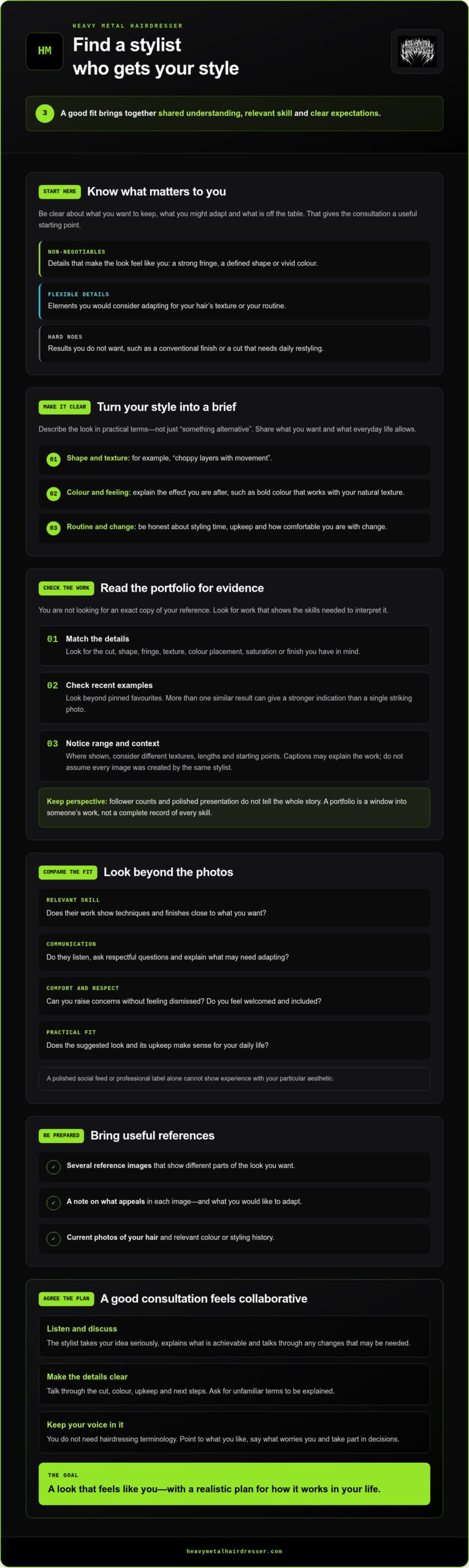
Stylist fit means shared understanding, relevant skill and clear expectations. Technique matters, but so do communication, comfort and an honest conversation about upkeep. A look that only works after a long styling session may not suit your daily life. Be clear about what you want to keep, what you’re open to changing and what’s firmly off the table.
- Non-negotiables: details that make the look feel like you, such as a strong fringe, defined shape or vivid colour.
- Flexible details: elements you’d consider adapting to suit your hair’s texture or your routine.
- Hard noes: results you don’t want, such as a conventional finish or a cut that needs daily restyling.
Turn your personal style into a clear brief
Describe the shape, texture, colour and overall feeling you’re after. “Choppy layers with movement” or “a bold colour that still works with my natural texture” gives you more to discuss than “something alternative”. Separate must-haves from inspiration you’re happy to adapt. Be honest about how much time you’ll spend styling, the upkeep you can manage and how comfortable you are with change. These details help shape a look that fits your life, not just a picture.
Decide what a good appointment should feel like
A collaborative stylist listens without rushing to replace your idea, asks respectful questions and explains what may need adapting. You don’t need professional hairdressing terminology. Point to what you like, describe what worries you and ask for unfamiliar terms to be explained. Feeling welcomed matters, especially when a cut or colour is tied to identity. A neutral overview of the cosmetology profession, including the term licensed cosmetologist, offers background, but a label alone doesn’t show experience with your particular aesthetic.
Notice how the conversation feels. Can you raise concerns without being dismissed? Does the stylist explain what’s achievable and what maintenance could involve? Specialist experience can be relevant: for example, Heavy Metal Hairdresser focuses on alternative cuts, textured styling and vivid colour. Your own priorities remain the test. Look for a respectful exchange and a clear understanding of the look you want.
How to Check Whether a Hairdresser Can Deliver Your Style
A portfolio is more useful than a promise, but one striking photo doesn’t prove consistent experience. Look for repeated examples of the techniques and finishes you want, especially if your reference is outside the mainstream. Whether you are looking for textured salon cuts or sharp fades and grooming from specialists like Sam’s Scissors Barbershop, you’re not searching for someone who has copied your exact picture. You’re checking whether their work shows the skills needed to interpret it.
Read a portfolio for relevant evidence
Use this process to review public work without getting distracted by follower counts or polished presentation:
- Start with the details you want. Is the cut layered, blunt, heavily textured or shaped around a fringe? For colour, look for the placement, saturation and finish that appeal to you.
- Check recent examples. Scan beyond pinned favourites and look for more than one result using a similar technique. Consistency across different posts is a stronger clue than a single perfect match.
- Look for range. Where the portfolio shows it, notice how the stylist works with different hair textures, lengths and starting points. The faces don’t need to resemble yours. The relevant shape, texture and finish do.
- Read the context. Captions or service descriptions may explain what was done. Don’t assume a particular stylist created every image, or that one photo proves experience with every technique.
Social media is a window into someone’s work, not a complete record of every skill. If the portfolio shows little of the details you care about, treat that as a question to ask, not proof either way. For wider inspiration, explore this alternative hair styles guide, then use your chosen references to look for relevant evidence.
Match your reference to the right expertise
Get specific about the skill behind the look. If you want loose, layered movement, compare examples with this shag haircut guide. For a choppier, heavily textured shape, the wolf hair cut guide can help you name what you’re drawn to. If colour is the main event, use the vivid hair colour guide to explore the effect you want. The same principle applies if your look centres on sharp fades or tailored beard shaping, where dedicated craftspeople like Straight 8 Barbers show how barbering requires its own distinct technical expertise.
Then compare like with like. A stylist may show bold colour but not the placement you’re after, or plenty of layers without examples of your preferred texture. That distinction helps you ask sharper questions before deciding whether their experience fits. If alternative cuts, textured styling or vivid colour are your focus, you can also browse Heavy Metal Hairdresser’s alternative hair work as one example of a specialist portfolio.
Compare Hairdressers by Skill, Communication and Style Compatibility
A busy social feed or dramatic before-and-after can catch your eye, but neither tells the whole story. A striking transformation doesn’t prove the stylist has experience with your particular cut, colour technique or hair texture. Popularity can’t tell you whether you’ll feel comfortable speaking up, either.
The strongest match combines relevant work with clear, respectful communication. Compare each stylist against the same priorities, not unrelated signals such as follower counts. That makes it easier to weigh technical evidence alongside how they treat you and whether the practical details suit your life.
Use a simple stylist comparison scorecard
For each candidate, note what you can actually see or learn. Use “strong”, “unclear” or “needs asking” rather than forcing a score when you don’t have enough evidence. The aim isn’t to find a flawless profile. It’s to identify the right questions before you commit.
Spot green flags and reasons to pause
Green flags include clarifying what you like about a reference, offering options and explaining any limits without dismissing your idea. A stylist may reasonably say a particular result needs adapting to your hair or routine. That’s different from steering you towards a conventional look without listening.
Pause if your references are brushed aside, a result is promised without discussion, or you feel pressured to decide before your questions are answered. Ask what alternative approach they’d suggest and why. If the response still doesn’t feel respectful, it’s reasonable to look elsewhere. When finding a hairdresser who understands my style, your judgement of the conversation belongs on the scorecard alongside the work itself.
Prepare for a Hair Consultation That Gets Your Style Across
A useful consultation isn’t a hairdressing vocabulary test. It’s a chance to show what you mean, share details that affect your hair and check whether you and the stylist picture the same result. A little preparation can turn “I want something like this” into a clear, collaborative conversation.
Bring references that explain the feeling, not just the finish
Choose a few images that show different parts of the look you want. One might capture the shape, another the fringe or texture, and another the colour placement. Add a current photo of your own hair so the stylist can see the starting point instead of relying on memory or an old picture.
Make a quick note beside each reference. Keep it simple:
- What I like: the choppy layers, the weight around the face or the placement of the colour.
- What I don’t want copied: the length, styling finish or another detail that isn’t right for me.
- My hair history: relevant colour or chemical treatments, past cuts and how you usually style your hair.
- My routine: how much time you’re happy to spend styling and what upkeep feels manageable.
Your routine matters. A reference can show the finished look, but it can’t tell the stylist how much daily effort you’re willing to put in. Be candid. Your routine is part of the brief, not an inconvenience.
Ask questions that reveal whether you are being heard
Use open questions to make the conversation practical and check that the stylist understands the effect you’re after:
- “How might this shape work with my hair’s texture and the way I wear it?”
- “What would you adapt from these references, and why?”
- “How much styling or upkeep might this look need?”
- “What’s another option if this detail isn’t suitable for my hair?”
Listen for a clear explanation that connects your reference to your hair and routine. It’s reasonable for a stylist to suggest changes, but you should understand the reason and have space to respond. If you’re finding a hairdresser who understands my style, shared understanding matters more than knowing technical terms.
Before anything begins, summarise the plan aloud in your own words: the shape or colour you’ve agreed, what will be adapted, what remains flexible and what upkeep to expect. Invite the stylist to correct anything you’ve misunderstood. That final check can catch a mismatch before it becomes a result you didn’t ask for.
If expressive cuts or colour are your direction, explore Heavy Metal Hairdresser’s alternative hair work as you prepare your references.
Choose a Hairdresser Who Respects Your Style and Makes the Next Step Clear
You don’t need a stylist who says yes to every idea. You need someone who understands what you’re aiming for, can show relevant work and explains recommendations without sanding off the parts that make the look yours. A good stylist may suggest adapting a reference to suit your hair or routine. The difference is that they explain why, listen to your response and make the decision with you.
If you’re worried they’ll default to something more conventional, look for evidence before you decide: work that reflects the cut or colour you want, plus a conversation where your questions are taken seriously. Ask what they’d keep from your reference, what they’d change and why. If the answer skips over your preferences or leaves you uncertain about the plan, it’s reasonable to pause and consider another fit.
Know when you have found the right kind of stylist
Look for three things working together: the stylist understands the details you’ve pointed out, explains options in a way you can follow and respects your personal expression. They don’t have to promise an exact copy of a reference. They should be able to discuss what’s realistic for your hair, clarify any changes and make room for your input.
Trust both kinds of evidence: what you can see in their work and how you felt during the consultation. Did you feel listened to? Could you ask questions without being made to feel difficult? Finding a hairdresser who understands my style isn’t about chasing a perfect guarantee. It’s about leaving with a clear, shared direction and confidence in the next step.
Explore a salon built around alternative expression
For readers drawn to expressive cuts and colour, Heavy Metal Hairdresser offers an example of an alternative, inclusive salon. Its work focuses on shags, wolfcuts, mullets, textured styling and vivid colour, with individuality welcomed in a safe-space environment. Founded and operated by lead stylist Simon Tuckwell, the salon also brings backstage festival experience at Download and Bloodstock. These details can help you decide whether its focus aligns with your aesthetic, just as you’d assess any stylist against your own priorities.
If that alternative focus feels like a match for the work you’re exploring, learn more about Heavy Metal Hairdresser.
Choose a Stylist Who Gets the Real You
Finding a hairdresser who understands my style isn’t about finding someone who’ll copy a reference exactly. It’s about choosing a stylist whose work shows relevant skill, who listens without steering you towards a safer version and who can agree a realistic plan with you. Look for evidence in their portfolio, ask direct questions and trust how the conversation feels.
That combination matters most when your look is personal. Heavy Metal Hairdresser is an alternative, inclusive salon where individuality is celebrated, with specialist work including shags, wolfcuts, mullets and vivid colour. Lead stylist Simon Tuckwell also brings backstage festival experience at Download and Bloodstock.
If that focus feels aligned with your aesthetic, explore Heavy Metal Hairdresser’s alternative styling. Keep your references close, your questions ready and your standards intact. Your style deserves to be understood, not toned down.
Frequently Asked Questions
How do I find a hairdresser who understands my style?
Look for a stylist whose portfolio shows relevant work and whose consultation feels collaborative. Compare examples for the shape, texture, finish or colour technique you want, then ask how they’d adapt your reference to your hair and routine. Finding a hairdresser who understands my style means weighing visible skill alongside communication. You should leave the conversation with a clear, realistic plan, not feeling talked out of your idea.
What should I look for in a hairdresser’s portfolio?
Look for more than one example of the techniques and finish you want, ideally across different clients and hair textures. A face or hair type doesn’t need to match yours exactly. Focus on details such as layered shape, fringe, texture, colour placement and how the result sits. Read captions for context, but treat social media as evidence to discuss, not proof of every skill a stylist may have.
Should I bring photos to a hair consultation?
Yes. Bring several references that show useful details, such as the overall shape, fringe, texture or colour placement. Note what you like in each and what you don’t want copied. Include a current photo of your hair and be ready to explain relevant colour or styling history. Photos help you communicate, but you don’t need professional terminology or an exact replica.
What questions should I ask a new hairdresser?
Ask how your reference could work with your hair texture and everyday routine, what they’d adapt and why, and what upkeep the look may involve. If a detail seems unsuitable, ask what alternative they’d suggest. Before proceeding, summarise the agreed cut or colour, what may change and what remains flexible. This gives the stylist a chance to correct any misunderstanding and helps you decide whether the plan feels right.
How can I tell if a hairdresser is inclusive and will respect my identity?
Notice whether the stylist listens to your preferences, uses respectful language and makes space for you to explain what the look means to you. You can ask how they approach identity-led styling and whether their portfolio reflects work aligned with your aesthetic. Heavy Metal Hairdresser describes itself as an inclusive safe space where individuality is celebrated, with a focus on alternative cuts, textured styling and vivid colour.
What if a hairdresser says my reference will not work?
Ask them to explain what may not work and why, then invite them to suggest an alternative that keeps the details you care about. A thoughtful stylist may recommend adapting a reference to suit your hair or routine while still respecting your goal. If they dismiss your idea, pressure you into a different look or can’t explain their recommendation clearly, you’re entitled to pause and seek another opinion.