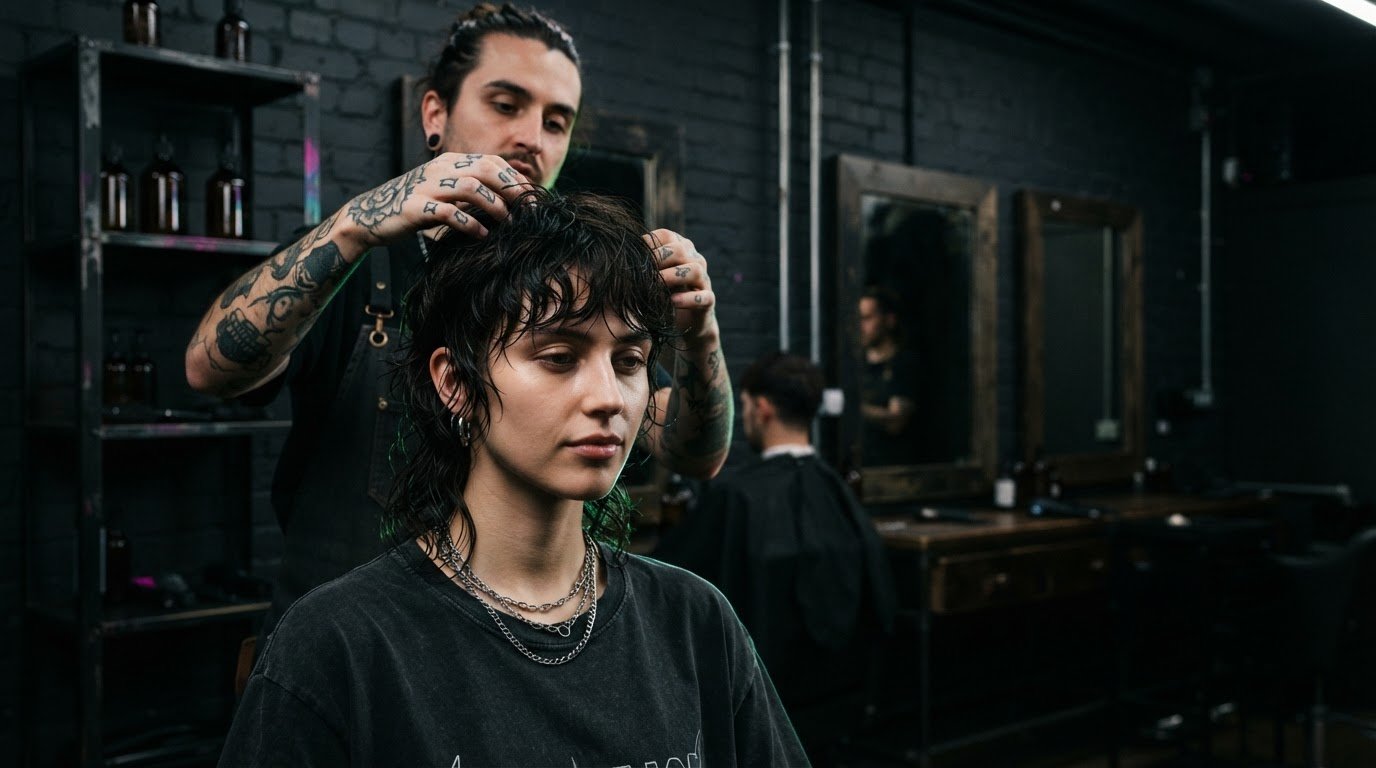
What if the secret to a better wolfcut isn’t more styling, but knowing when to leave it alone? Air drying a wolfcut can feel like a gamble: damp layers fall where they like, the fringe does its own thing, and the finished shape may look flat or frizzy. A wolfcut has movement built into its layers, but a little direction while your hair is damp can help that shape come through.
You don’t need a complicated product line-up or a battle with heat tools. A few simple choices can help bring out texture, keep the crown from collapsing and guide your fringe as it dries. The aim isn’t perfect, identical waves. It’s a shape that feels like you and works with your natural texture.
This guide takes you through a no-heat routine, from removing excess water and arranging individual layers to handling your fringe as it dries. You’ll also find practical fixes for flat roots, uneven sections and frizz. Start with the shape, then let your natural hair do its thing.
Key Takeaways
- Air drying a wolfcut starts with gently removing excess water, then arranging damp layers before they dry.
- Short crown layers and longer lengths can settle differently, so work with your hair’s natural texture and density.
- For a flat crown, uneven sections or frizz, re-dampen and reshape only the area that needs attention.
- A cut shaped around your texture and preferred everyday finish can make air-dried styling easier to manage.
- HMH merchandise is available only at the new merch store. Wolfcut course orders are still accepted on the Heavy Metal Hairdresser website.
Air drying a wolfcut: why the layers need a little direction
Air drying a wolfcut means arranging damp layers into the shape you want, then letting them dry without a hair dryer. It isn’t simply a case of washing your hair and hoping every piece falls into place. A little direction at the start can help the cut’s shape show through as the water evaporates.
Different lengths respond differently as they dry. Shorter layers around the crown can lift or bend, while the longer sections beneath them may fall with more weight. Natural bends, curls or straighter strands influence how each piece sits. Density matters too: finer hair may sit closer to the head, while denser hair can feel fuller through the lengths.
- Short crown layers may lift, bend or separate from the longer sections.
- Longer lengths can settle with more weight and fall downwards as they dry.
- Your natural texture and density affect the amount of movement, volume and separation you see.
The same cut can look different from one person to the next, or from one wash day to another. The result depends on the cut’s shape, your hair’s natural behaviour and how you arrange the layers while they’re damp. Air drying is a styling choice, not a promise of a particular finish. Aim for texture that feels like yours rather than trying to force every strand into the same shape.
What makes a wolfcut behave differently as it dries?
Shorter, more textured pieces can show their natural bends quickly, while longer lengths may stay grouped together or fall away from the crown. Wavy or curly hair can form sections with different patterns; straighter hair may show the separation between layers more clearly than a pronounced wave. The point isn’t to make every length match. Notice how each area settles and give it only the guidance it needs.
Can every wolfcut be air dried?
Air drying can suit straight, wavy and curly textures, but it won’t create the same finish on each. Letting hair dry naturally tends to show more of its own movement, while a blow-dried finish can be directed towards a more deliberate lift or shape. Neither is the only right way to wear it. If you want to explore how the cut itself is shaped, the ultimate wolfcut guide covers the broader overview.
Keep your expectations grounded in your own hair, not someone else’s finished photo. A well-shaped cut gives you a foundation, but the layers still respond to their natural texture and weight. With air drying a wolfcut, the goal is to support that behaviour, not erase it. Next, prepare and arrange the damp sections so they have a better chance of falling the way you want.
How to air-dry a wolf cut: a simple routine from damp to dry
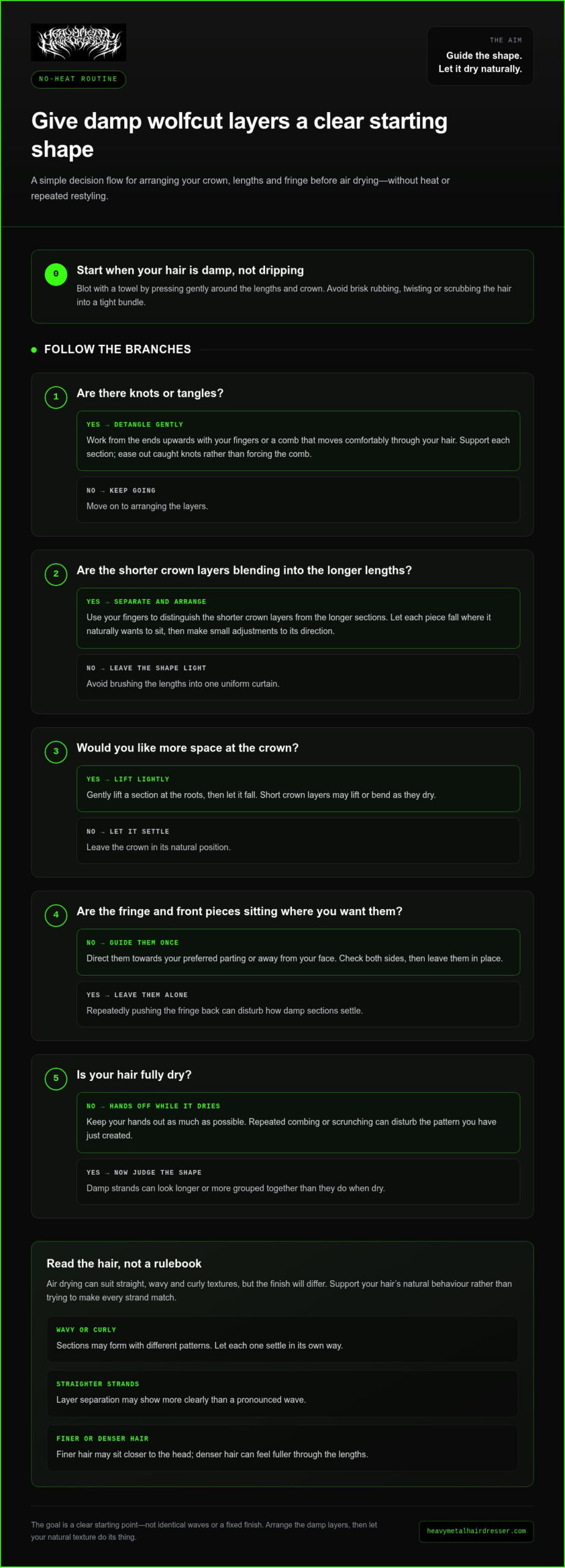
Good air drying starts before your hair has a chance to set. Remove excess water, gently untangle the lengths and place each layer where you want it to fall. Work through the routine once, then give the shape time to settle. Repeatedly combing or scrunching your hair as it dries can disturb the pattern you’ve just created.
How should you prepare damp hair before air drying?
Blot your hair with a towel rather than rubbing it briskly. Gentle pressing removes water without roughing up the layers. Detangle from the ends upwards using your fingers or a comb that moves comfortably through your hair. Start shaping when it feels damp, not dripping. Very wet hair can be harder to arrange and may cling together in heavy sections.
- Blot away excess water. Press a towel around the lengths and crown. Don’t twist or scrub your hair into a tight bundle.
- Detangle with care. Work from the ends upwards, supporting each section so you’re not tugging at the roots. If a knot catches, ease it apart rather than forcing the comb through.
- Arrange the crown and lengths. Use your fingers to separate the shorter layers from the longer ones. Let each section fall where it naturally wants to sit, then make small adjustments to its direction.
- Set the fringe and front pieces. Guide them towards your preferred parting or away from your face. Check both sides, then leave them alone instead of continually pushing them back into place.
- Let it dry undisturbed. Keep your hands out of your hair as much as possible. Wait until it’s fully dry before judging the shape: damp strands can look longer or more grouped together than they will when dry.
How do you arrange wolfcut layers without heat?
Keep the shaping light. If you want more space at the crown, gently lift a section at the roots and let it fall. Separate longer pieces with your fingertips rather than brushing them into one uniform curtain. Styling product is optional: use it only if it suits your hair. Different textures have different needs, as the science of hair texture helps illustrate. Let your natural pattern guide how you handle each section.
Once the fringe and layers are placed, resist the urge to keep checking them. Moving damp hair repeatedly can split sections or make them settle differently. Air drying a wolfcut isn’t about locking every strand into a fixed position; it’s about giving the shape a clear starting point, then letting your hair do its thing. If you’d like a cut shaped with everyday texture in mind, explore Heavy Metal Hairdresser’s wolfcuts.
Air drying a wolfcut by texture: adapt the method, not the cut
There’s no single air-drying move that suits every head of hair. Straight, wavy and curly textures each bring their own movement to the layers. Treat the table as a starting point, not a rulebook. The right approach is the one that works with your hair rather than trying to make it behave like another texture.
| Texture | Likely drying behaviour | Gentle shaping option |
|---|---|---|
| Straight or fine | Layers may settle closer to the head, with separation depending on natural movement and density. | Arrange individual sections with your fingers before they dry; keep the shape relaxed. |
| Wavy | Lengths may form loose bends, with some sections more defined than others. | Guide the existing bends into place and avoid brushing them apart as they dry. |
| Curly | Curls may group into defined sections, so layers can look distinct where the curl pattern changes. | Shape curls gently whilst damp, then leave them undisturbed to dry. |
These are tendencies, not guarantees. Density affects how much the hair’s weight pulls on a layer; length affects how far it can move; and the haircut’s shape influences where the shorter and longer sections sit. Two people with similar curls can get different results from the same routine. Even your own hair may settle differently if its texture varies across your head.
What can straight or fine hair expect from air drying?
Straighter or finer hair can show the cut’s outline without forming much natural wave, and some layers may sit close to the head. That isn’t a flaw. Before drying, use your fingers to separate the crown from the lengths and place each section where you’d like it to fall. Let your natural texture show rather than scrunching or twisting every piece to try to create movement.
If your main goal is more lift, keep the shaping modest and focus on where the layers begin and how they sit. The haircut itself plays a big part in the result, so don’t expect air drying alone to create a different silhouette. For more targeted ideas, see this guide to styling a wolfcut for maximum volume.
How can wavy or curly hair keep its natural movement?
Wavy and curly hair already has movement to work with. While it’s damp, gently shape a section along its natural bend or curl, then stop handling it. Repeated brushing or finger-combing as it dries can break up sections and change how the texture sits. The curl pattern and cut shape both affect how clearly the layers show, so let the finished result reflect your own mix of lengths and texture.
Use the method as a guide, then adjust one thing at a time. If the crown needs a different feel from the ends, shape those areas separately rather than treating your whole head as one block. That’s the point of air drying a wolfcut: adapt how you handle it to your texture, and let the cut work with the hair you have.
Air-dried wolfcut troubleshooting: fix flat, uneven or frizzy-looking layers
A section that dries differently from the rest doesn’t mean the whole style has gone wrong. Hair can settle unevenly, especially when the layers have different lengths or natural movement. Before starting over, identify the specific area you want to change. A small adjustment may be enough, and repeated handling can disturb the shape that’s already forming.
What can you do if the crown dries flat?
If the crown is still damp, gently lift the shorter layers at the roots with your fingers and arrange them away from the scalp. Then leave them to dry. If your hair is already dry, lightly re-dampen just the crown and reshape it. How much lift you see without heat depends on your natural texture, density and the cut itself, so aim for a shape that feels right for your hair rather than expecting a guaranteed result.
- Flat crown: Lift the crown layers while damp, then let them dry without pressing them down with your hands or leaning on them.
- Uneven sections: Re-wet only the section that sits out of place. Smooth or separate it gently, following its natural bend, then leave it to dry again.
- Overly separated ends: Use your fingers to bring neighbouring strands together lightly. Avoid repeated combing, which can split the sections further.
- Unwanted frizz: If your hair is still damp, smooth the surface gently with your hands. For waves or curls, guide the section along its natural pattern rather than brushing it straight.
Make one change at a time. If you reshape the crown, ends and fringe all at once, it’s harder to tell what helped. Small, local adjustments leave the rest of the style intact and stop a minor frustration turning into a full restyle.
How can you correct uneven sections or unwanted frizz?
Use a little water on your fingers to re-dampen only the piece that needs attention; it doesn’t need to be soaked through. Arrange it with a light touch, smoothing straighter strands or encouraging a natural wave or curl to regroup. Then wait until it’s fully dry before judging the change. Damp hair can look more clumped or stretched than the finished result, so give it time before making another adjustment.
Repeatedly touching your hair as it dries can shift sections, break up natural texture or flatten layers you’ve already placed. Step back and let the shape settle. If the same area keeps frustrating you, the cut’s shape may not match the finish you want. Heavy Metal Hairdresser specialises in wolfcuts and textured cuts shaped around individual style. Explore Heavy Metal Hairdresser’s wolfcuts for a cut designed with your everyday texture in mind.
Make an air-dried wolfcut feel like yours with a cut built for texture
Your everyday finish starts with the cut itself. A stylist can shape the layers around how your hair naturally falls, its density and the way you want to wear it most days. That might mean a softer outline, clearer separation between layers, or a fringe that sits comfortably with your natural movement. The aim isn’t to copy someone else’s wolfcut. It’s to build a shape that feels like yours and gives you a workable base for styling.
When might a haircut shape need a professional reset?
If the same layers repeatedly fall in a way you don’t enjoy, even after small adjustments at home, it may be worth rethinking the cut’s shape. Re-dampening and arranging one section can change how it dries that day; a restyle changes the lengths and balance that shape how your hair falls. There’s no single correct wolfcut. Your preferred amount of texture, movement and everyday effort should help guide the shape.
Bring clear examples of what you like, but also think about what works in real life: how you want the fringe to sit, how much movement you enjoy around the crown and how you usually wear the longer sections. Those details help a stylist understand the finish you’re after. Air drying a wolfcut can feel easier when the layers are shaped with your natural texture and usual routine in mind.
What is Heavy Metal Hairdresser’s approach to wolfcuts?
Heavy Metal Hairdresser is an inclusive alternative hair salon focused on expressive cuts and natural texture, including wolfcuts and other textured styles. Founded by barber and creative stylist Simon Tuckwell, the salon makes room for individuality rather than pushing one fixed template. A cut should work with the person wearing it, whether their preferred finish is tousled, softly layered or more defined.
A professionally shaped cut won’t dictate exactly how your hair must look each day. It can give the layers a considered foundation, while your own texture and styling choices bring the character. Ready to explore a shape tailored to your hair and talk through the finish you want? Explore a wolfcut appointment with Heavy Metal Hairdresser.
Site note: HMH merchandise is no longer sold on the Heavy Metal Hairdresser website and is available only at the new merch store. Wolfcut course orders are still accepted on the Heavy Metal Hairdresser website.
Shape your next cut around the hair you actually wear
Let your next wash day give you useful clues. Notice which areas naturally fall into place and which ones you’d like to sit differently. A quick note or photo when your hair is fully dry can help you explain the finish you’re after, from fringe direction to the amount of movement you want around the crown. Air drying a wolfcut is personal, so your everyday preferences matter more than matching somebody else’s result.
Bring those details into a conversation about your next cut. Heavy Metal Hairdresser has worked backstage at Download and Bloodstock, bringing alternative hair into the festival scene. If you’re ready to explore a shape that feels like you, explore a wolfcut appointment with Heavy Metal Hairdresser and discuss the look you want.
Keep experimenting, trust your texture and make the style your own.
Frequently Asked Questions
Can you air dry a wolfcut without using any styling products?
Yes, styling products are optional. For a product-free wash day, gently detangle your hair and use your fingers to place the layers before they dry. Your natural texture and the cut will still influence the finish, which may look more relaxed than a deliberately defined style. If you’re testing a new routine, try it on a day when you don’t need a particular result, then see how your hair behaves once fully dry.
How long does it take for a wolfcut to air dry?
There’s no set drying time. Length, density, texture, how wet your hair is and the conditions around you all affect how long it takes. The surface can feel dry while sections underneath are still damp, so check near the roots and nape before deciding it’s done. If you’re getting ready for a specific plan, wash with enough time to let your hair dry fully rather than relying on a quick final check.
Is air drying better than blow-drying a wolfcut?
Neither method is automatically better. Air drying lets your natural texture lead, while blow-drying gives you more control over direction and finish. Choose based on the look you want that day: a relaxed, lived-in result or a more deliberately shaped style. You can use different approaches on different days. Your wolfcut doesn’t need one fixed routine to look intentional.
Can you sleep with a wet wolfcut and let it dry overnight?
You can go to bed with damp hair, but it may settle differently after a night of movement. If you try it, arrange the layers loosely first and avoid tying them tightly, which can leave sections pressed or bent in an unwanted direction. In the morning, check whether the hair is dry underneath as well as on the surface. If it is, adjust only the area that needs attention.
What happens if my wolfcut looks different once it is completely dry?
A different dry finish doesn’t automatically mean the cut is wrong. Compare what you see with how your hair usually behaves, and notice whether the issue is limited to one section or keeps recurring. For a one-off kink, re-wet that small area and reshape it. If the same layer consistently sits differently from the look you want, make a note of it to guide a future cut or styling conversation.
Can a fringe be air dried with a wolfcut?
Yes. Think about how you want the fringe to frame your face, then guide it in that direction while it’s damp. Your natural growth pattern can pull it to one side or create a parting, so it may not fall exactly like a reference photo. Give it time to dry before changing its direction. If you’re unsure which shape suits your routine, try a few partings while the hair is damp.