
What if the awkward stage isn’t a bad haircut, but a shape that hasn’t caught up with your growth? Styling a mullet as it grows means working with the changing layers, not fighting them. One month, the fringe behaves; the next, the sides kick out and the back feels like it belongs to another cut. That doesn’t mean your mullet’s lost its edge.
Different sections can sit and behave differently as they gain length, and a few practical tweaks can help the whole look feel intentional. Adjust the direction and finish to suit your current layers, and pay attention to how your hair settles as it dries. The aim isn’t to force every mullet into the same shape. It’s to keep yours feeling like you.
Here’s what to adjust as your layers shift, how to tell when styling is enough, and when a reshaping trim could bring the cut back into balance. You don’t have to surrender to the in-between stage. Give your mullet room to evolve while keeping the attitude intact.
Key Takeaways
- Learn how dampness, sectioning and styling direction can shift your mullet’s shape at different lengths.
- Build a simple at-home routine that you can adapt to your hair’s texture and changing layers.
- See where styling a mullet as it grows can help, and where it can’t correct an imbalance on its own.
- Know what a stylist can assess during a shape reset, from weight and texture to your preferred silhouette.
- Use reference photos to show both your current cut and the direction you want it to take.
Why styling a mullet as it grows means working with the changing shape
A mullet isn’t one length. Its identity comes from the relationship between the fringe, sides, crown and back. As each section gains length, that balance shifts. The outline that felt sharp after a cut can become softer, heavier or more tousled without the haircut having gone wrong.
A growing mullet is a cut in transition: its fringe, sides, crown and back change in length and proportion, altering the silhouette and movement. The classic contrast between shorter sections and a longer back has plenty of variations, as the history of the mullet haircut shows. There’s no single correct shape to preserve. Your version can evolve with you.
Hair doesn’t necessarily grow at dramatically different rates in different areas. The layers start at different lengths and sit differently as they extend. Texture, density, natural growth patterns and the original cut all affect how that change looks. Styling can steer the shape and bring out its movement, but it can’t remove excess weight or rebuild a silhouette that needs reshaping.
Which parts of a mullet change the look as they grow?
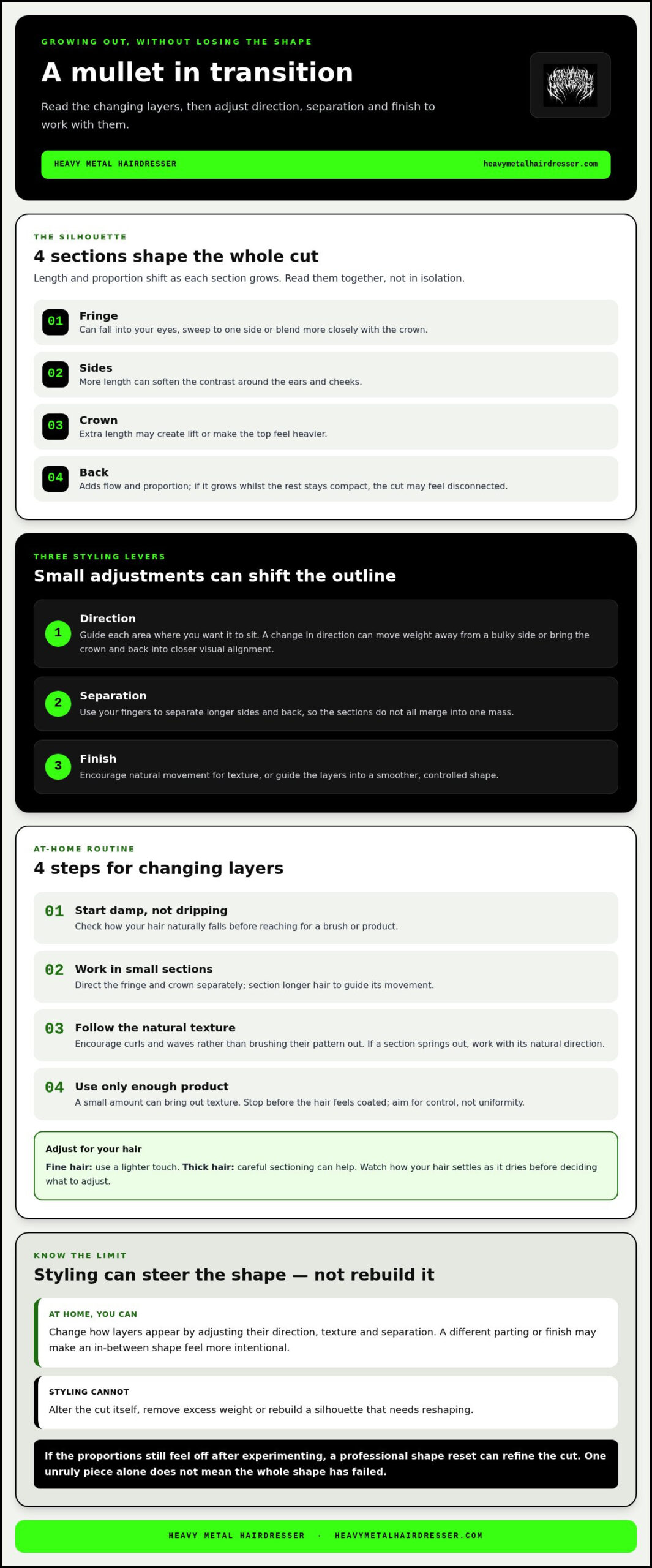
The fringe sets the face-framing outline. As it lengthens, it may fall into your eyes, sweep to one side or blend more closely with the crown. Longer sides can soften the contrast around the ears and cheeks, while thicker or outward-growing sections may obscure it. Extra length at the crown can create lift or make the top feel heavier. The back adds flow and proportion, but if it gains length while the rest stays compact, the cut may feel disconnected. Read the sections together, not in isolation.
What should a mullet look like between growth stages?
Judge the whole silhouette from the front, sides and back. One unruly piece doesn’t automatically mean the shape has failed. Check whether the fringe, sides and back still feel connected, and whether the overall movement suits the look you want. Your hair’s texture and density matter: waves may spread as they dry, curls can spring up, and finer hair may sit closer to the head. The same length can create a different outline on different people.
That’s where styling a mullet as it grows earns its keep. Small changes to direction, separation and finish can make an in-between shape look deliberate. If the proportions still feel off after experimenting, a professional shape reset can refine the cut in a way daily styling alone can’t.
How to style a mullet as it grows through each length stage
Let the current length set the plan. A growing mullet doesn’t need the same finish at every stage, and you don’t have to force it into the shape it had after the cut. Start with hair that’s damp, not dripping, then check how it naturally falls before reaching for a brush or styling product. Small shifts in direction can change the silhouette more than adding extra hold.
To style changing layers without weighing them down, start with damp hair, work in small sections, direct each area where you want it to sit, and use only enough product to support its natural texture. Fine hair may need a lighter touch; thick hair can benefit from careful sectioning. For curls and waves, encourage their pattern rather than brushing it out.
Styling shorter layers while the mullet settles
With shorter fringe and crown layers, use your fingers or a brush to guide the hair away from your eyes and towards the shape you want. Shape the roots to help lift the crown, or smooth the fringe to one side for a more deliberate outline. Add a small amount of a suitable styling product to bring out texture, then stop before the hair feels coated. The goal is control, not uniformity.
As the layers lengthen into the in-between stage, they may fall differently from one wash to the next. Try directing the fringe and crown separately, then let them settle before deciding whether anything needs adjusting. If a section keeps springing out, work with its natural direction instead of repeatedly pressing it flat.
Working with longer sides and back length
Longer sections can merge into one mass if they’re all pushed the same way. Separate the sides and back with your fingers while the hair is damp, then decide where you want movement and where you want a smoother line. For a textured finish, let the layers separate naturally as they dry. For a sleeker shape, guide them into place with a brush and keep the finish controlled rather than stiff.
Parting can shift the balance, too. A change in direction may move weight away from a side that feels bulky or bring the crown and back into closer visual alignment. Check the shape from the front and sides, not just straight on in the mirror. For ideas on cuts that work with your texture and silhouette, explore mullet and textured haircut inspiration.
There’s no single stage-by-stage formula. Watch how your hair behaves as it dries, adjust the direction of each section and keep the movement that makes your mullet yours.
Can styling a mullet as it grows prevent an awkward stage?
Styling can make a changing mullet look more intentional, but it can’t correct every imbalance. Redirecting the fringe, separating layers or adding texture may improve the outline for now. Styling products can’t alter the cut itself or remove weight that’s making the shape feel bulky.
An awkward phase doesn’t automatically call for a dramatic chop. Sometimes a small change in parting or finish is enough; sometimes the cut needs a considered reshape. The right move depends on what’s bothering you and where you want your mullet to go.
What styling can change, and what it cannot
At home, you can change the appearance of your layers by adjusting their direction, texture and separation. A fringe swept aside may feel less disruptive, while defined sections can help the sides and back read as part of one silhouette. These are visual adjustments, not a new haircut. Results also vary with your hair’s texture, density and length, so a technique that works for one mullet may not suit another.
| Approach | Pros | Limits |
|---|---|---|
| At-home styling | Quickly adjusts direction, texture and separation without changing the cut. | Can’t remove unwanted weight or reliably correct persistent imbalance. |
| Professional reshaping | Can refine the balance, weight and texture to suit your preferred silhouette. | Changes the cut, so discuss how much length you want to keep. |
Signs the shape needs more than a styling tweak
Look for a pattern, not one rogue strand. If the same section consistently sits outside the silhouette you’re aiming for, or heavy ends make the shape feel weighed down, styling may only disguise the issue. Pay attention if getting your fringe, sides and back to sit together is becoming a daily battle. That’s useful information about the cut, not a sign you’ve failed.
A shape reset doesn’t have to mean starting over. A stylist experienced with mullets and textured cuts can assess what’s happening and refine the outline around your preferred look. Be clear about the length you want to keep and the direction you’d like the cut to take. Styling a mullet as it grows can help you ride out change, but a targeted trim is a way to guide that change, not abandon it.
Simple routine for styling a growing mullet at home
A repeatable routine makes the changing shape easier to read. Start with clean hair, then choose your finish: towel-dried hair gives you a softer, less controlled result, while damp hair is easier to direct before styling. Curly or coily hair may respond best to working with its natural pattern; straight or wavy hair can take more brushing or finger-shaping to create movement.
The wash-day and styling sequence
- Prepare: Gently squeeze out excess water. If you’re using heat, apply heat protection before drying.
- Find the trouble spot: Start with the area that needs the most direction, such as a fringe falling forward or a crown that won’t lift.
- Work in sections: Guide the fringe, crown, sides and back separately with your fingers or a brush. Direct each section where you want it to sit, rather than styling the whole cut as one block.
- Add a light finish: Use a small amount of a suitable styling product, spreading it through your hands before applying. Add more only if needed. Too much can flatten fine hair or make longer layers clump together.
- Check the shape: Once dry, look at the mullet from the front, side and back. Adjust only the sections that interrupt the silhouette.
Adjusting technique for texture and daily wear
For a softer, natural finish, use your fingers to encourage the hair’s own movement and keep product minimal. For more definition, separate small sections and apply a little styling cream or paste where you want extra control. Fine, straight hair may need less product; thicker hair may need more deliberate sectioning. Curly hair often benefits from moisture and definition, rather than techniques that disrupt the curl pattern. Let your texture lead.
You don’t need to restart the whole routine between washes. Dampen and reshape just the fringe, crown or ends that have lost their direction. Notice what works in different weather or on busy days; your best routine is the one you can repeat and that keeps your shape feeling like yours.
Quick troubleshooting
- Flat roots: Lift the roots with your fingers or a brush as you dry, focusing on the crown.
- Bulky sides: Direct the sides closer to the head, or try a different parting to shift the balance.
- Unruly ends: Smooth or separate just the ends with a small amount of product, then check how they fall once dry.
For help deciding how your mullet’s shape can evolve, explore personalised mullet styling advice.
When a growing mullet needs a professional shape reset
Sometimes the issue isn’t how you style your mullet. It’s how the cut is sitting now. If the ends feel heavy, the layers no longer connect, or one area keeps breaking away from the silhouette you want, a stylist can assess the balance, weight and texture, then shape the next stage around your preferred look. A reset doesn’t have to erase your mullet or take off all the length. It can be a considered adjustment that makes the cut easier to wear as it grows.
For more context on how shape and texture can work together, explore this modern mullet haircut guide. You can also browse the modern mullet styling guide for ideas to help explain the finish you’re aiming for.
What to bring to a mullet reshaping appointment
Make the conversation specific. Bring reference images that show the front, profile and back, including a photo of your current cut and examples of the direction you’d like it to take. Pictures help show details that words like “shaggy” or “more balanced” can leave open to interpretation.
Talk about your real routine, too. Explain how you usually wear your hair, whether you style it daily and what feels difficult to manage. Be honest about how much length you want to keep. That gives your stylist a clearer starting point for discussing what can be refined without losing the parts of the mullet you love.
If you’re unsure what to ask for, use the images as a starting point, not a rigid blueprint. A shape should work with your own texture and habits, not just look right in a photograph. Your stylist can help translate the references into an approach that suits the hair you have now.
Keep the cut evolving with your identity
There isn’t one correct mullet to grow towards. Layers can be adapted to work with your natural texture, the proportions you like and the way you want to express yourself. Heavy Metal Hairdresser specialises in mullets and alternative textured cuts, shaping each look around the individual rather than forcing everyone into the same silhouette.
Styling a mullet as it grows can keep it workable between cuts, while a thoughtful reshape can guide where it goes next. For more ideas on how a mullet can evolve with you, explore Heavy Metal Hairdresser.
Keep your mullet moving in the right direction
Styling a mullet as it grows is about adapting, not forcing it to stay frozen in one shape. Direct shorter layers where you want them, work with your natural texture and use a light hand so movement stays alive. If styling stops making the silhouette feel balanced, a thoughtful reshape can guide the next stage without wiping out the cut you’ve been growing.
Every mullet should reflect the person wearing it. Heavy Metal Hairdresser specialises in mullets, wolfcuts, shags and alternative textured cuts, with an individual approach shaped by founder Simon Tuckwell’s experience as a barber and creative stylist. The salon’s work has also gained international recognition through social media and backstage festival work.
Ready to keep your shape evolving on your terms? Explore Heavy Metal Hairdresser and keep your mullet evolving. Your in-between stage isn’t a dead end. It’s part of the look taking shape.
Frequently Asked Questions
How do you style a mullet while it is growing out?
Style each section according to how it falls, rather than trying to force the whole cut into one shape. Start with damp or towel-dried hair, direct the fringe and crown with your fingers or a brush, then separate the sides and back. Use a small amount of product to support the finish you want. Styling a mullet as it grows is about working with its changing proportions and natural texture.
How often should you trim a mullet as it grows?
There’s no fixed schedule, as it depends on your preferred shape, texture and how quickly the cut feels out of balance. As a general guide, a trim every 6 to 8 weeks can help keep a growing mullet intentional without taking it back to its original length. Tell your stylist what you’re growing towards and how much length you want to keep, so any reshape supports that goal.
Can you grow a mullet without cutting it?
Yes, you can leave it untrimmed and allow all sections to gain length. The trade-off is that the fringe, sides, crown and back may become harder to balance as they change. Styling can help direct the hair, but it can’t remove weight or reshape the underlying cut. If you’re happy to let the silhouette evolve freely, keep growing; if not, a light shape adjustment is an option.
What should you do when the sides of a mullet get bulky?
Try directing the sides closer to your head while the hair is damp, or change your parting to shift where the weight sits. Use only a little product, since too much can make the area feel heavier. If the sides repeatedly push out or obscure the outline you want, styling may only disguise the bulk. A stylist can assess whether a targeted reshape would bring the silhouette back into balance.
Can you style a mullet with naturally curly or wavy hair?
Absolutely. Work with your natural pattern instead of brushing it into a finish that won’t last. For waves, guide sections with your fingers and let them settle; for curls, use a moisturising styling product suited to your hair and avoid disrupting the curl pattern as it dries. The same mullet can look different across textures, so adjust your technique to the movement and volume your hair naturally creates.
How can you make a growing mullet look less awkward?
Focus on the whole outline, not one section that’s misbehaving. Direct the fringe away from your face, separate layers that have fallen together and adjust the parting or direction to rebalance the shape. A small amount of product can add control without stiffening the hair. If the proportions still feel disconnected after styling, you don’t necessarily need a dramatic cut; a considered reshape may be enough.
When should you see a stylist about a growing mullet?
Consider a professional reshape if the ends feel heavy, sections persistently sit outside your preferred silhouette, or styling becomes increasingly difficult. Bring photos of your current cut and the direction you want, and be clear about the length you’d like to keep. Heavy Metal Hairdresser specialises in mullets and alternative textured cuts, shaping looks around individual style and natural texture rather than one fixed template.