Posted on

Styling a Mullet as It Grows: Keep the Shape, Lose the Awkward Stage

Styling a Mullet as It Grows: Keep the Shape, Lose the Awkward Stage

What if the awkward stage isn’t a bad haircut, but a shape that hasn’t caught up with your growth? Styling a mullet as it grows means working with the changing layers, not fighting them. One month, the fringe behaves; the next, the sides kick out and the back feels like it belongs to another cut. That doesn’t mean your mullet’s lost its edge.

Different sections can sit and behave differently as they gain length, and a few practical tweaks can help the whole look feel intentional. Adjust the direction and finish to suit your current layers, and pay attention to how your hair settles as it dries. The aim isn’t to force every mullet into the same shape. It’s to keep yours feeling like you.

Here’s what to adjust as your layers shift, how to tell when styling is enough, and when a reshaping trim could bring the cut back into balance. You don’t have to surrender to the in-between stage. Give your mullet room to evolve while keeping the attitude intact.

Key Takeaways

  • Learn how dampness, sectioning and styling direction can shift your mullet’s shape at different lengths.
  • Build a simple at-home routine that you can adapt to your hair’s texture and changing layers.
  • See where styling a mullet as it grows can help, and where it can’t correct an imbalance on its own.
  • Know what a stylist can assess during a shape reset, from weight and texture to your preferred silhouette.
  • Use reference photos to show both your current cut and the direction you want it to take.

Why styling a mullet as it grows means working with the changing shape

A mullet isn’t one length. Its identity comes from the relationship between the fringe, sides, crown and back. As each section gains length, that balance shifts. The outline that felt sharp after a cut can become softer, heavier or more tousled without the haircut having gone wrong.

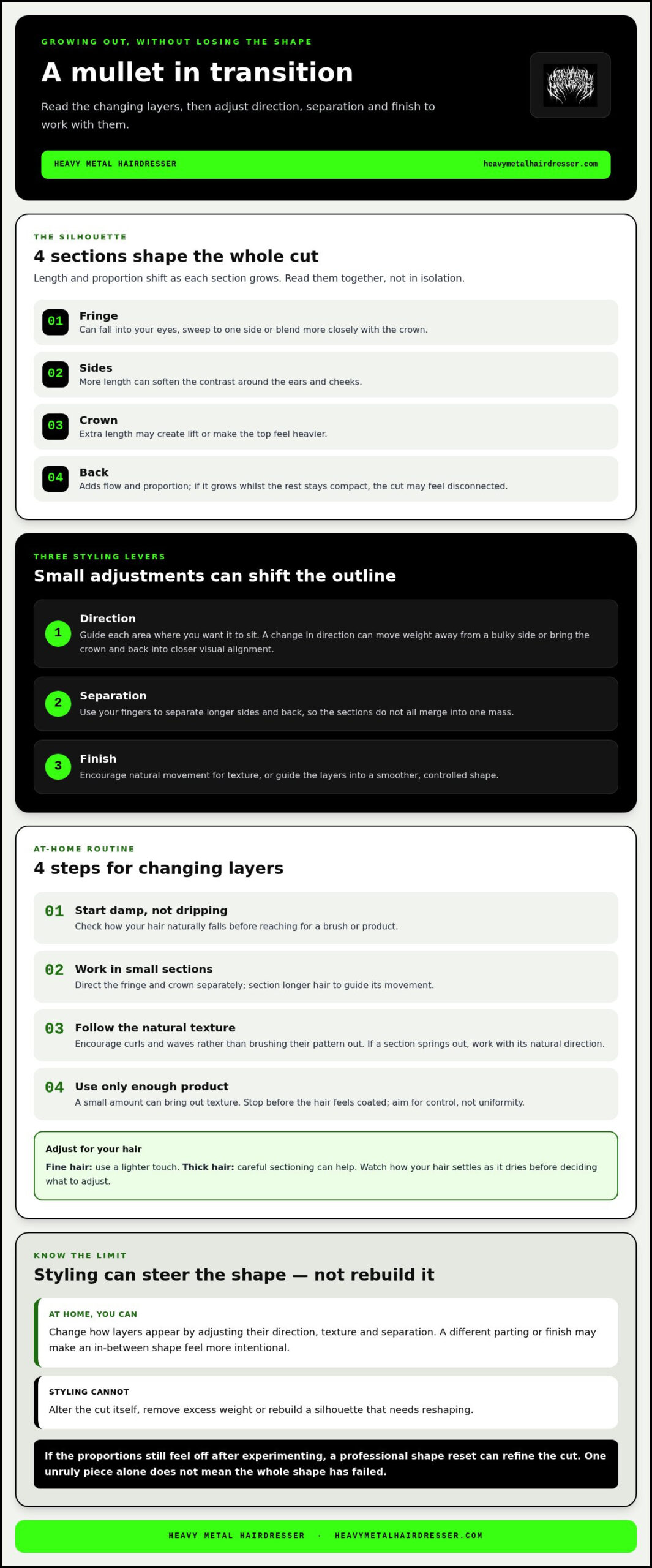
A growing mullet is a cut in transition: its fringe, sides, crown and back change in length and proportion, altering the silhouette and movement. The classic contrast between shorter sections and a longer back has plenty of variations, as the history of the mullet haircut shows. There’s no single correct shape to preserve. Your version can evolve with you.

Hair doesn’t necessarily grow at dramatically different rates in different areas. The layers start at different lengths and sit differently as they extend. Texture, density, natural growth patterns and the original cut all affect how that change looks. Styling can steer the shape and bring out its movement, but it can’t remove excess weight or rebuild a silhouette that needs reshaping.

Which parts of a mullet change the look as they grow?

The fringe sets the face-framing outline. As it lengthens, it may fall into your eyes, sweep to one side or blend more closely with the crown. Longer sides can soften the contrast around the ears and cheeks, while thicker or outward-growing sections may obscure it. Extra length at the crown can create lift or make the top feel heavier. The back adds flow and proportion, but if it gains length while the rest stays compact, the cut may feel disconnected. Read the sections together, not in isolation.

What should a mullet look like between growth stages?

Judge the whole silhouette from the front, sides and back. One unruly piece doesn’t automatically mean the shape has failed. Check whether the fringe, sides and back still feel connected, and whether the overall movement suits the look you want. Your hair’s texture and density matter: waves may spread as they dry, curls can spring up, and finer hair may sit closer to the head. The same length can create a different outline on different people.

That’s where styling a mullet as it grows earns its keep. Small changes to direction, separation and finish can make an in-between shape look deliberate. If the proportions still feel off after experimenting, a professional shape reset can refine the cut in a way daily styling alone can’t.

How to style a mullet as it grows through each length stage

Let the current length set the plan. A growing mullet doesn’t need the same finish at every stage, and you don’t have to force it into the shape it had after the cut. Start with hair that’s damp, not dripping, then check how it naturally falls before reaching for a brush or styling product. Small shifts in direction can change the silhouette more than adding extra hold.

To style changing layers without weighing them down, start with damp hair, work in small sections, direct each area where you want it to sit, and use only enough product to support its natural texture. Fine hair may need a lighter touch; thick hair can benefit from careful sectioning. For curls and waves, encourage their pattern rather than brushing it out.

Styling shorter layers while the mullet settles

With shorter fringe and crown layers, use your fingers or a brush to guide the hair away from your eyes and towards the shape you want. Shape the roots to help lift the crown, or smooth the fringe to one side for a more deliberate outline. Add a small amount of a suitable styling product to bring out texture, then stop before the hair feels coated. The goal is control, not uniformity.

As the layers lengthen into the in-between stage, they may fall differently from one wash to the next. Try directing the fringe and crown separately, then let them settle before deciding whether anything needs adjusting. If a section keeps springing out, work with its natural direction instead of repeatedly pressing it flat.

Working with longer sides and back length

Longer sections can merge into one mass if they’re all pushed the same way. Separate the sides and back with your fingers while the hair is damp, then decide where you want movement and where you want a smoother line. For a textured finish, let the layers separate naturally as they dry. For a sleeker shape, guide them into place with a brush and keep the finish controlled rather than stiff.

Parting can shift the balance, too. A change in direction may move weight away from a side that feels bulky or bring the crown and back into closer visual alignment. Check the shape from the front and sides, not just straight on in the mirror. For ideas on cuts that work with your texture and silhouette, explore mullet and textured haircut inspiration.

There’s no single stage-by-stage formula. Watch how your hair behaves as it dries, adjust the direction of each section and keep the movement that makes your mullet yours.

Can styling a mullet as it grows prevent an awkward stage?

Styling can make a changing mullet look more intentional, but it can’t correct every imbalance. Redirecting the fringe, separating layers or adding texture may improve the outline for now. Styling products can’t alter the cut itself or remove weight that’s making the shape feel bulky.

An awkward phase doesn’t automatically call for a dramatic chop. Sometimes a small change in parting or finish is enough; sometimes the cut needs a considered reshape. The right move depends on what’s bothering you and where you want your mullet to go.

What styling can change, and what it cannot

At home, you can change the appearance of your layers by adjusting their direction, texture and separation. A fringe swept aside may feel less disruptive, while defined sections can help the sides and back read as part of one silhouette. These are visual adjustments, not a new haircut. Results also vary with your hair’s texture, density and length, so a technique that works for one mullet may not suit another.

Approach Pros Limits
At-home styling Quickly adjusts direction, texture and separation without changing the cut. Can’t remove unwanted weight or reliably correct persistent imbalance.
Professional reshaping Can refine the balance, weight and texture to suit your preferred silhouette. Changes the cut, so discuss how much length you want to keep.

Signs the shape needs more than a styling tweak

Look for a pattern, not one rogue strand. If the same section consistently sits outside the silhouette you’re aiming for, or heavy ends make the shape feel weighed down, styling may only disguise the issue. Pay attention if getting your fringe, sides and back to sit together is becoming a daily battle. That’s useful information about the cut, not a sign you’ve failed.

A shape reset doesn’t have to mean starting over. A stylist experienced with mullets and textured cuts can assess what’s happening and refine the outline around your preferred look. Be clear about the length you want to keep and the direction you’d like the cut to take. Styling a mullet as it grows can help you ride out change, but a targeted trim is a way to guide that change, not abandon it.
Styling a Mullet as It Grows: Keep the Shape, Lose the Awkward Stage

Simple routine for styling a growing mullet at home

A repeatable routine makes the changing shape easier to read. Start with clean hair, then choose your finish: towel-dried hair gives you a softer, less controlled result, while damp hair is easier to direct before styling. Curly or coily hair may respond best to working with its natural pattern; straight or wavy hair can take more brushing or finger-shaping to create movement.

The wash-day and styling sequence

  • Prepare: Gently squeeze out excess water. If you’re using heat, apply heat protection before drying.
  • Find the trouble spot: Start with the area that needs the most direction, such as a fringe falling forward or a crown that won’t lift.
  • Work in sections: Guide the fringe, crown, sides and back separately with your fingers or a brush. Direct each section where you want it to sit, rather than styling the whole cut as one block.
  • Add a light finish: Use a small amount of a suitable styling product, spreading it through your hands before applying. Add more only if needed. Too much can flatten fine hair or make longer layers clump together.
  • Check the shape: Once dry, look at the mullet from the front, side and back. Adjust only the sections that interrupt the silhouette.

Adjusting technique for texture and daily wear

For a softer, natural finish, use your fingers to encourage the hair’s own movement and keep product minimal. For more definition, separate small sections and apply a little styling cream or paste where you want extra control. Fine, straight hair may need less product; thicker hair may need more deliberate sectioning. Curly hair often benefits from moisture and definition, rather than techniques that disrupt the curl pattern. Let your texture lead.

You don’t need to restart the whole routine between washes. Dampen and reshape just the fringe, crown or ends that have lost their direction. Notice what works in different weather or on busy days; your best routine is the one you can repeat and that keeps your shape feeling like yours.

Quick troubleshooting

  • Flat roots: Lift the roots with your fingers or a brush as you dry, focusing on the crown.
  • Bulky sides: Direct the sides closer to the head, or try a different parting to shift the balance.
  • Unruly ends: Smooth or separate just the ends with a small amount of product, then check how they fall once dry.

For help deciding how your mullet’s shape can evolve, explore personalised mullet styling advice.

When a growing mullet needs a professional shape reset

Sometimes the issue isn’t how you style your mullet. It’s how the cut is sitting now. If the ends feel heavy, the layers no longer connect, or one area keeps breaking away from the silhouette you want, a stylist can assess the balance, weight and texture, then shape the next stage around your preferred look. A reset doesn’t have to erase your mullet or take off all the length. It can be a considered adjustment that makes the cut easier to wear as it grows.

For more context on how shape and texture can work together, explore this modern mullet haircut guide. You can also browse the modern mullet styling guide for ideas to help explain the finish you’re aiming for.

What to bring to a mullet reshaping appointment

Make the conversation specific. Bring reference images that show the front, profile and back, including a photo of your current cut and examples of the direction you’d like it to take. Pictures help show details that words like “shaggy” or “more balanced” can leave open to interpretation.

Talk about your real routine, too. Explain how you usually wear your hair, whether you style it daily and what feels difficult to manage. Be honest about how much length you want to keep. That gives your stylist a clearer starting point for discussing what can be refined without losing the parts of the mullet you love.

If you’re unsure what to ask for, use the images as a starting point, not a rigid blueprint. A shape should work with your own texture and habits, not just look right in a photograph. Your stylist can help translate the references into an approach that suits the hair you have now.

Keep the cut evolving with your identity

There isn’t one correct mullet to grow towards. Layers can be adapted to work with your natural texture, the proportions you like and the way you want to express yourself. Heavy Metal Hairdresser specialises in mullets and alternative textured cuts, shaping each look around the individual rather than forcing everyone into the same silhouette.

Styling a mullet as it grows can keep it workable between cuts, while a thoughtful reshape can guide where it goes next. For more ideas on how a mullet can evolve with you, explore Heavy Metal Hairdresser.

Keep your mullet moving in the right direction

Styling a mullet as it grows is about adapting, not forcing it to stay frozen in one shape. Direct shorter layers where you want them, work with your natural texture and use a light hand so movement stays alive. If styling stops making the silhouette feel balanced, a thoughtful reshape can guide the next stage without wiping out the cut you’ve been growing.

Every mullet should reflect the person wearing it. Heavy Metal Hairdresser specialises in mullets, wolfcuts, shags and alternative textured cuts, with an individual approach shaped by founder Simon Tuckwell’s experience as a barber and creative stylist. The salon’s work has also gained international recognition through social media and backstage festival work.

Ready to keep your shape evolving on your terms? Explore Heavy Metal Hairdresser and keep your mullet evolving. Your in-between stage isn’t a dead end. It’s part of the look taking shape.

Frequently Asked Questions

How do you style a mullet while it is growing out?

Style each section according to how it falls, rather than trying to force the whole cut into one shape. Start with damp or towel-dried hair, direct the fringe and crown with your fingers or a brush, then separate the sides and back. Use a small amount of product to support the finish you want. Styling a mullet as it grows is about working with its changing proportions and natural texture.

How often should you trim a mullet as it grows?

There’s no fixed schedule, as it depends on your preferred shape, texture and how quickly the cut feels out of balance. As a general guide, a trim every 6 to 8 weeks can help keep a growing mullet intentional without taking it back to its original length. Tell your stylist what you’re growing towards and how much length you want to keep, so any reshape supports that goal.

Can you grow a mullet without cutting it?

Yes, you can leave it untrimmed and allow all sections to gain length. The trade-off is that the fringe, sides, crown and back may become harder to balance as they change. Styling can help direct the hair, but it can’t remove weight or reshape the underlying cut. If you’re happy to let the silhouette evolve freely, keep growing; if not, a light shape adjustment is an option.

What should you do when the sides of a mullet get bulky?

Try directing the sides closer to your head while the hair is damp, or change your parting to shift where the weight sits. Use only a little product, since too much can make the area feel heavier. If the sides repeatedly push out or obscure the outline you want, styling may only disguise the bulk. A stylist can assess whether a targeted reshape would bring the silhouette back into balance.

Can you style a mullet with naturally curly or wavy hair?

Absolutely. Work with your natural pattern instead of brushing it into a finish that won’t last. For waves, guide sections with your fingers and let them settle; for curls, use a moisturising styling product suited to your hair and avoid disrupting the curl pattern as it dries. The same mullet can look different across textures, so adjust your technique to the movement and volume your hair naturally creates.

How can you make a growing mullet look less awkward?

Focus on the whole outline, not one section that’s misbehaving. Direct the fringe away from your face, separate layers that have fallen together and adjust the parting or direction to rebalance the shape. A small amount of product can add control without stiffening the hair. If the proportions still feel disconnected after styling, you don’t necessarily need a dramatic cut; a considered reshape may be enough.

When should you see a stylist about a growing mullet?

Consider a professional reshape if the ends feel heavy, sections persistently sit outside your preferred silhouette, or styling becomes increasingly difficult. Bring photos of your current cut and the direction you want, and be clear about the length you’d like to keep. Heavy Metal Hairdresser specialises in mullets and alternative textured cuts, shaping looks around individual style and natural texture rather than one fixed template.

Posted on

How to Style a Modern Mullet: The Ultimate Guide to Textured Grit

How to Style a Modern Mullet: The Ultimate Guide to Textured Grit

A modern mullet isn’t just a haircut; it’s an engineered architectural feat that requires high-performance grit to stay defiant. You likely know the frustration of leaving the studio looking like a legend only to have your hair collapse into a flat, lifeless mess whilst you’re halfway through your day. Perhaps you’ve overcompensated with heavy pastes, ending up with a greasy finish that kills the very movement you wanted to celebrate. It’s a common struggle when you’re trying to balance raw texture with a hold that actually lasts.

We’re going to show you exactly how to style a modern mullet using professional techniques and the aggressive, textured styling products, such as Death Grip, needed to keep your silhouette sharp. You’ll master the art of creating high-volume, defiant texture that doesn’t quit, regardless of your hair density. This guide covers everything from choosing the right matte finishes to using professional tools with total confidence. By the end, you’ll have a style that survives a weekend festival or a packed gig without losing its edge.

Key Takeaways

  • Stop the sag. Learn why aggressive texture is the only way to maintain a sharp, defiant silhouette that doesn’t go flat by midday.
  • Gear up. Understand the critical difference between matte clays and greasy oils to ensure your finish stays gritty rather than oily.
  • Master the technique. We break down how to style a modern mullet using directional blow-drying to build massive volume at the crown.
  • Pit-proof your hair. Discover the “double-product” layering method designed to keep your style locked in through festivals and high-energy gigs.
  • Find your tribe. See how expert guidance provides a safe, inclusive space for unconventional self-expression and subcultural pride.

The Modern Mullet Aesthetic: Why Texture is Non-Negotiable

The 1980s version of this cut was often a stiff, synthetic-looking disaster. Today’s silhouette is aggressive and raw. It’s about engineering movement. If your hair sits flat against your skull, you’ve lost the fight. Modern styling is about creating a shape that looks intentional but feels chaotic whilst maintaining structural integrity. The history of the mullet shows it was once a punchline. Now, it’s a weapon of choice for the alternative crowd.

Knowing how to style a modern mullet starts with understanding that grit is a requirement, not an option. This isn’t about being neat or refined. We’re building a subcultural identity. It’s the difference between a traditional taper that looks safe and a hybrid Wolfcut that demands attention. You want a look that says you’ve been at a gig for three days, but you still look sharper than anyone in the room.

The Anatomy of an Aggressive Mullet

It’s all about the weight distribution. You want a heavy, textured fringe that balances out the length at the nape. Disconnected layers are the secret here. They allow the hair to move independently. This creates that jagged, architectural look. Your hair needs memory. By using the right prep products, you teach the follicles to hold a defiant shape rather than collapsing into a boring, straight line. Without that internal support, the “party in the back” just looks like a sad, limp tail.

Texture vs. Mess: Finding the Balance

There’s a fine line between looking like you’ve mastered your style and looking like you just rolled out of a ditch. The goal is a matte, gritty finish. Avoid the wet look at all costs. Greasy gels and heavy oils are for the mainstream. We want separation that highlights creative colour work. When you’re learning how to style a modern mullet, focus on creating layers of depth. Whether you’ve got neon panels or deep obsidian tones, texture makes those shades pop by catching the light in all the right, jagged places. If you’re still exploring which silhouette suits your features and lifestyle, our guide to alt hair styles shaping the UK underground scene is an essential starting point.

Choosing Your Weapon: Essential Textured Styling Products

Most mainstream grooming guides will suggest a lightweight cream or a soft wax for your hair. Forget that. If you want to know how to style a modern mullet that actually holds its shape, you need to understand the difference between high-performance grit and weak, greasy alternatives. Traditional products often rely on heavy oils or silicones. These are the enemies of the modern silhouette. They add weight. They create a wet look that feels dated and clinical. For a truly authentic underground aesthetic, matte finishes are non-negotiable. You want your hair to look like it has its own gravity.

Choosing your product depends on your hair’s density and length. Fine hair needs lightweight powders that provide dry grip without clumping. Thick hair requires heavy-duty clays to force coarse strands into submission. Short sections benefit from high-hold pastes for sharp, directional spikes. Longer nape sections work best with sea salt sprays to maintain movement whilst adding texture. It’s about matching the product’s strength to the hair’s resistance.

Death Grip: The Ultimate Hold for Extreme Shapes

When you’re building a style that needs to defy physics, you reach for Death Grip. This isn’t your average clay. It’s designed for structural integrity. Use it specifically in the mohawk section at the crown to build height that doesn’t collapse. It provides a death-defying hold that stays matte and never flakes, even after hours of movement. Warm a small amount between your palms until it’s invisible. Work it from the roots to the ends for maximum control. This ensures your aggressive silhouette remains intact from the first coffee to the final encore.

Hair To the Throne: Volume and Texture in One

If your hair feels flat or lifeless by midday, you need to inject some chaos. Hair To the Throne is a texture dust that provides instant root lift. It’s the secret weapon for anyone with fine or thin hair who wants that aggressive, high-volume look. Just a small puff at the base of the hair allows you to sculpt and reshape your mullet throughout the day. You can find this and other essential tools in our Alternative Hair Merch UK guide. Using a powder instead of a spray prevents the hair from becoming saturated or greasy.

Mastering how to style a modern mullet is easier when you have the right arsenal. If you’re unsure which product suits your specific density, you can always browse our professional styling range to find your perfect match. Having the right tools means you can focus on the expression rather than worrying about your hair falling flat before the first set is even over.

Step-by-Step Guide: How to Style a Modern Mullet

Styling isn’t just a morning routine; it’s a ritual of construction. If you want to master how to style a modern mullet, you must start with the right foundation. Freshly washed hair is often too soft and slippery to hold an aggressive shape. This is why “second-day hair” is your best friend. The natural oils provide a tacky base that helps styling products grab the hair more effectively. If you must wash, use a minimal amount of conditioner to avoid weighing down the follicles.

Volume at the crown is what separates a defiant silhouette from a flat, dated look. Directional blow-drying is essential here. Use a medium heat setting and direct the airflow upwards at the roots around the crown and mohawk section. This forces the hair to stand up, creating the height needed for a modern profile. Once the roots are set, you can focus on the lengths. When applying your chosen product, follow the “back-to-front” rule. Start at the nape and work towards the fringe. This prevents you from overloading the front of your hair with too much weight, which is the fastest way to end up with a greasy, flat mess.

The Pre-Style: Setting the Foundation

Start whilst your hair is still damp. Mist a sea salt spray through the mid-lengths and ends to create initial grit. If you have natural waves or curls, rough-dry using a diffuser. This encourages the hair to clump into organic sections rather than frizzing out. As you dry, identify the “break points” in your layers. These are the spots where the hair naturally separates. Use these gaps to your advantage by scrunching the hair upwards to lock in that messy, lived-in texture before you even touch a styling clay.

The Finish: Locking in the Chaos

Take a small amount of Death Grip or a similar high-hold clay. Warm it thoroughly between your palms until it’s completely melted. This prevents clumping and ensures even distribution. Use a “claw” technique, raking your fingers through the hair from the roots to define individual texture sections. This creates separation and depth. Once you’re happy with the shape, use the cold shot button on your hairdryer. The blast of cold air sets the product and locks the structural integrity of your style in place. Detail the fringe and sideburns last with whatever residue is left on your fingers for a sharp, intentional finish that lasts through the heaviest sets.

How to Style a Modern Mullet: The Ultimate Guide to Textured Grit

Pit-Proofing Your Style: Durability for the Alternative Soul

Humidity is the silent killer of alternative shapes. Sweat turns a sharp silhouette into a limp, soggy mess within minutes of hitting the floor. If you want to know how to style a modern mullet that survives a three-day festival, you need a strategy for extreme durability. It isn’t just about the initial look. It’s about how that look holds up when the temperature rises and the air gets thick. Relying on a single product is a rookie mistake. True endurance requires a structural foundation that can withstand the chaos of a live environment.

The “double-product” layering technique is the only way to ensure your hair stays defiant. Start by applying a texturising dust or sea salt spray to damp hair as a primer. This creates an internal skeleton. Once dry, layer your high-hold clay over the top to seal the shape. This method prevents the hair from absorbing atmospheric moisture, which is what usually causes a style to collapse. If you find yourself losing height whilst in the middle of a crowd, a quick scrunch with dry hands can often reactivate the powder at the roots, giving you an instant lift without needing a mirror.

Survival in the Mosh Pit

When you’re in the pit, you need water-resistant gear. Traditional waxes often melt with body heat, leading to product running into your eyes mid-set. This is painful and unnecessary. Use a matte clay with a high melting point and finish with a professional-grade setting spray. This acts like a shellac, locking the outer layers into a rigid, protective barrier. For more insider tips on keeping your aesthetic intact during high-intensity sets, check out our Festival Hair: A Backstage Case Study. It’s the ultimate blueprint for mosh pit survival.

Between Salon Visits

A modern mullet requires maintenance to keep its aggressive edge. As the nape grows out, it can start to look shaggy in the wrong way. Keep the silhouette clean by using a small amount of product to pull the back sections downwards and outwards. If you’re brave enough to trim your own fringe, use the tips of your scissors to snip vertically. This maintains the jagged, textured finish rather than creating a blunt, suburban line. Managing vivid colours during this stage is also vital. Avoid over-washing, as the heavy styling products needed for grit can be tough on semi-permanent dyes. Use a dry shampoo to refresh the roots instead of a full scrub whenever possible.

If your current style has lost its structural integrity and you need a professional reset, book an appointment with our creative team to get your edge back. We understand the nuances of alternative growth cycles and can help you navigate the awkward stages without sacrificing your subcultural identity.

The Heavy Metal Hairdresser Advantage

A haircut is a statement, but the environment where you get it matters just as much as the blade. The Heavy Metal Hairdresser isn’t your standard barber shop. It’s a sanctuary for the unconventional. We provide a gender-inclusive safe space where self-expression isn’t just allowed; it’s the entire point. Simon Tuckwell and our creative team live and breathe the subcultures we serve. We understand that your hair is a vital part of your identity. You won’t find clinical white walls or generic small talk here. You’ll find a community that celebrates the gritty, the raw, and the rebellious.

Mastering how to style a modern mullet is easier when you’ve had a professional foundation laid by experts who know the architecture of alternative hair. We don’t just follow trends. We engineer shapes that work with your natural texture and lifestyle. Whether you’re looking for a jagged Wolfcut or a sharp, tapered mullet, our team ensures the weight distribution is perfect for your specific hair density. This expertise ensures that when you leave our chair, you have a style that’s built to last and easy to maintain.

Professional Gear for Professional Results

The products we use aren’t selected by accident. Death Grip and Hair To the Throne were specifically engineered for this scene. They provide the aggressive hold and matte grit that mainstream brands simply can’t match. Using salon-grade tools at home is the only way to replicate the results you get in the studio. It’s the difference between a silhouette that survives a high-energy gig and one that collapses before you’ve even left the house. You can also represent the culture by grabbing our Branded Merchandise, ensuring your aesthetic is consistent from your head to your gear.

Master the Craft Yourself

We believe in empowering our community. If you want to take your styling skills to the next level, our Alternative Hair Courses UK are designed to teach you the technical secrets of the trade. We show you how to style a modern mullet like a pro every single morning, giving you total control over your look. It’s about more than just hair. It’s about having the confidence to express who you are without compromise. We share the technical proficiency needed to handle different densities and layers so you can maintain that “just-walked-out-of-the-studio” energy every day.

Ready to reclaim your identity with a style that actually speaks for you? Whether you need a fresh transformation or the gear to keep your current look sharp, we’ve got you covered. Book your next session or grab your gear here and join a community that values your individuality as much as you do.

Own Your Silhouette: The Future of Your Grit

Mastering how to style a modern mullet is about more than just looking the part; it’s about engineering a shape that refuses to quit. By prioritising matte, aggressive texture over greasy finishes and using directional drying to build structural volume, you’ve taken control of your aesthetic. Whether you’re layering products for mosh pit durability or detailing your fringe for a sharp finish, you now have the professional blueprint for subcultural hair that stays defiant.

We don’t just talk about this scene; we live it. Our team consists of award-winning creative director Simon Tuckwell and stylists who have prepped bands for the stages of Download and Bloodstock. We provide a gender-inclusive safe space where your identity is celebrated, not just managed. You deserve gear that matches your energy and expertise that understands your community. It’s time to stop settling for flat hair and start commanding attention with a silhouette that speaks for itself.

Grab your Death Grip and Hair To the Throne here to lock in your transformation. Stay rebellious, stay gritty, and keep your edge sharp.

Frequently Asked Questions

What is the best product for a messy mullet?

Matte clays and texturising powders are the superior choice for achieving a messy, lived-in finish. You want products like Death Grip that provide a dry, gritty hold without the greasy shine of traditional waxes. This allows you to sculpt defiant shapes that look raw whilst maintaining structural integrity throughout the day. Avoid heavy oils that weigh the hair down and kill the volume.

How do I get more volume in the back of my mullet?

Injecting volume into the nape requires a combination of root-lifting powder and heat. Apply a puff of Hair To the Throne directly to the base of the hair and use a hairdryer with a diffuser to scrunch the lengths upwards. This creates the structural memory needed for the hair to stand out from the neck rather than hanging flat against your skin.

Can I style a mullet if I have very straight hair?

You can absolutely style a modern mullet with straight hair by using aggressive texturisers to force movement into the strands. Start with sea salt spray on damp hair and rough-dry to create a base grit. Once dry, use a high-hold matte clay to pinch and twist individual sections. This creates the illusion of choppy layers and jagged depth where there is no natural wave.

How often should I wash my hair when using heavy textured products?

Washing every two to three days is ideal for maintaining the necessary grit for styling. Heavy products actually perform better on hair that isn’t stripped of its natural oils. Use a dry shampoo between washes to refresh the roots without losing the architectural foundation you’ve built. This prevents the hair from becoming too soft and slippery to hold an aggressive shape.

What is the difference between a modern mullet and a wolfcut?

A modern mullet features a sharper contrast with shorter sides, whereas a Wolfcut is a shaggier, more blended hybrid. Wolfcuts typically have more volume around the face and softer transitions between the fringe and the nape. Both styles rely on aggressive texture, but the mullet prioritises a more disconnected, aggressive silhouette that stands out from the crowd.

How do I stop my mullet from looking like a “Dad” haircut?

Avoid wet-look gels and neat, blended transitions to keep your style firmly in the alternative camp. A “Dad” mullet looks accidental; a modern one looks engineered. Focus on matte finishes, jagged fringes, and disconnected layers that highlight the contrast. Using professional tools ensures the look is intentional and sharp rather than dated and suburban.

Can I use these styling techniques on a short mullet?

The principles of volume and grit apply perfectly to short mullets regardless of the length at the nape. You still need to use directional blow-drying and matte clays to create height at the crown. This ensures the silhouette remains aggressive and intentional. Even with shorter hair, the goal is to create a defiant shape that doesn’t collapse by midday.

Is Death Grip suitable for all hair types?

Death Grip is engineered to handle everything from fine, wispy strands to thick, stubborn hair. Its high-performance matte formula provides a death-defying hold without weighing down thinner textures or looking greasy on denser hair. It is the ultimate tool for anyone learning how to style a modern mullet with total confidence and professional results.