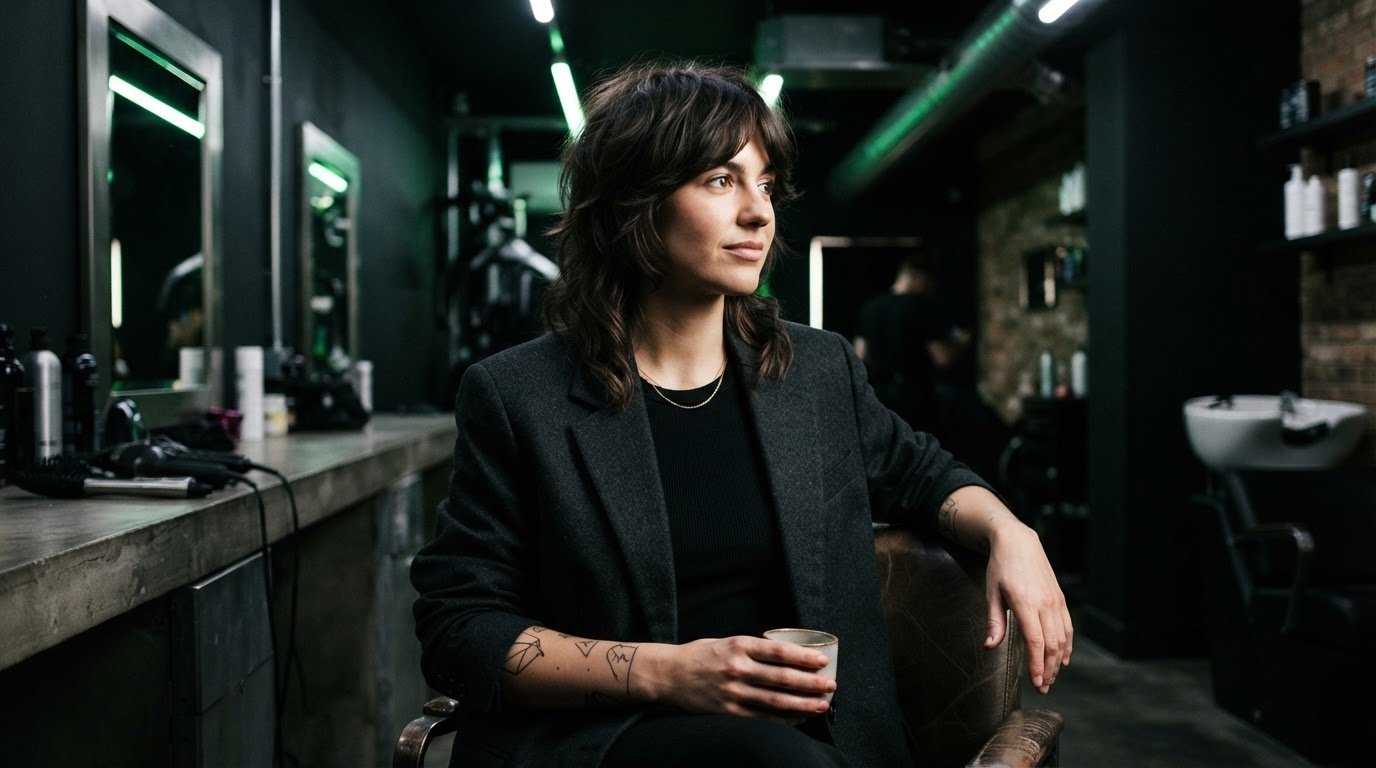
A professional wolfcut for work is shaped by control, not conformity. Softer, more blended layers can keep the cut’s movement without making the silhouette feel too dramatic. Fringe length and shape can also be tailored to your comfort and workplace. The result can still look unmistakably like you.
It’s fair to wonder whether choppy layers will feel too bold on a Monday morning, or whether your fringe will take more time to style than you have. Workplace expectations can make personal style feel like something to tone down. But adapting your wolfcut doesn’t mean sanding off its edges.
This guide explains how layer placement, fringe and texture change the overall look, and how to style your cut around your hair and working day. You’ll also find practical points to discuss with a stylist, from the finish you want to the upkeep you’re comfortable with. Keep the character. Make the routine work for you.
Key Takeaways
- A professional wolfcut for work isn’t one fixed look. Consider your workplace expectations and the level of visual impact that feels right to you.
- Shorter crown layers, longer lengths and fringe all affect the shape. Discuss these details with your stylist to customise the result.
- Compare a controlled finish with a higher-volume, textured look to find an approach that suits your workday and styling routine.
- Take reference photos to your stylist and explain your hair texture, daily routine and how much time you want to spend styling.
- Weigh a softer silhouette against more visible layers, then choose a balance that keeps your individuality intact.
Can a professional wolfcut work in your workplace?
It’s understandable to wonder whether a distinctive cut will feel out of place at work. A wolfcut can be adapted to different working environments, but “work-ready” doesn’t mean there’s one correct version. Think of it as a customised layered shape, not a fixed office template. The balance of shorter layers, longer lengths and fringe can be adjusted to suit your hair, preferences and day-to-day life.
The cut sits within a broader shag tradition. The variation of the shag known as the wolfcut takes on mullet-like characteristics, but that doesn’t dictate how bold the finished look must be. The haircut creates the shape; styling decides how strongly its texture and movement come through. Your working environment may influence that choice, but it doesn’t have to erase your individuality.
What makes a wolfcut feel more understated?
Small design choices can change the overall impression. A longer, softer fringe may feel less striking than a short, heavy one. Less pronounced layers can add movement without creating a sharply contrasted silhouette. Face-framing length also affects how strongly the cut frames your features.
Styling can soften or emphasise texture without changing the haircut itself. A smoother finish may feel more controlled, while letting your natural movement show creates a more lived-in effect. Neither is the “right” choice. Consider what feels comfortable for you, rather than treating workplace appearance as a set of rigid rules.
Does a wolfcut suit different professional settings?
Workplaces aren’t all cut from the same cloth. In a formal setting, you might prefer a more controlled finish or less prominent fringe. A creative environment may leave room for visible layers and texture. In practical work, comfort and keeping hair manageable during tasks may matter most. These are possibilities, not rules: expectations vary between roles and organisations.
If you’re unsure, check any relevant workplace guidance or ask an appropriate contact how appearance expectations apply to your role. That gives you a clearer starting point before deciding on the cut’s shape or styling. A considered work look and personal expression can coexist. The aim is to choose a version that feels like you and makes sense for your setting, not to meet a supposed universal standard.
How wolfcut layers, fringe and texture shape the finished look
A wolfcut gets its movement from contrast: shorter layers around the crown meet longer lengths through the back. That mix draws on shag and mullet shapes, as described in the history of the wolf cut. The balance matters. More pronounced differences between the layers can make the shape feel bolder, while a softer blend may give it a quieter outline.
The same wolfcut can look controlled or untamed depending on how you style its layers, fringe and natural texture. The haircut sets the structure; your styling choices bring out different parts of it. That flexibility is useful if you want a professional wolfcut for work that can shift in feel without losing its character.
How can fringe and layers be tailored for work?
Fringe isn’t one-size-fits-all. A longer or more softly shaped fringe may feel less prominent, while a shorter, fuller fringe can make more of a statement. Face-framing pieces can also range from subtle shaping to a stronger, more visible edge. These are options to explore with your stylist, not rules for what’s acceptable at work.
Bring reference photos that show both your everyday preference and a more expressive version of the cut. Pointing out what you like in each can help clarify which details you want to keep, soften or emphasise. Use the consultation to discuss how the fringe and layers frame your face, and how much visual impact feels like you.
What should you consider about your hair texture?
Your hair’s density and natural movement affect how layers sit, how much volume appears and what upkeep may involve. Wavy or curly hair may bring its own movement to the shape; straighter hair may show the layers differently. Length matters too, because it changes how the shorter crown sections meet the longer lengths. A reference photo can show the shape you like, but your hair may not fall in exactly the same way.
Be upfront about how your hair behaves day to day and how much time you want to spend styling it. The ultimate wolfcut guide offers broader cut fundamentals to help you prepare. Heavy Metal Hairdresser specialises in wolfcuts and textured styles, so exploring its wolfcut expertise may also help you think through the shape you want.
Professional wolfcut styling: subtle finish or full-volume attitude?
A wolfcut doesn’t have to show up at maximum volume every day. You can keep the same cut and change how much texture, lift and definition you bring forward. A controlled finish might suit a day when you want a neater outline; a more tousled shape can bring out the cut’s movement when you feel like it. Your hair texture, the cut itself and your styling technique all affect the result, so use these approaches as starting points rather than guaranteed outcomes.
| Finish | Visual effect | General effort | May suit |
|---|---|---|---|
| Controlled | Smoother, more contained layers | Low to moderate, depending on your routine | Days when you want a tidier outline |
| Textured, higher volume | More lift, separation and movement | May take more hands-on shaping | When you want the cut’s edge to stand out |
How can you create a tidier workday finish?
Keep it simple. Direct your fringe into the shape you prefer, smooth only the sections that feel unruly, or use your fingers to define a few layers. You don’t need to flatten the whole cut or reach for heated tools every morning. If you use a hairdryer or another heated tool, use heat protection and follow the product instructions.
Try the routine on a day when you have time to see how your hair responds. Guiding the fringe away from your face or calming the sides may be enough to create a more controlled outline. What works will depend on how your layers fall and how much natural movement your hair has.
How do you bring the wolfcut’s texture back after work?
If you want a more expressive finish later, loosen any sections you’ve smoothed and reshape the layers with your fingers. You could bring out more separation or volume, depending on your texture and the look you’re after. There’s no need to maintain two separate looks: keep your everyday finish as it is if that feels right.
For more ideas on working with the cut’s movement, explore this wolfcut styling guide. If you’re considering a professional wolfcut for work, a stylist can help you discuss a cut and finish around your texture and routine. Heavy Metal Hairdresser specialises in wolfcut haircuts, with individuality at the centre of its approach.
How to ask your stylist for a work-ready wolfcut
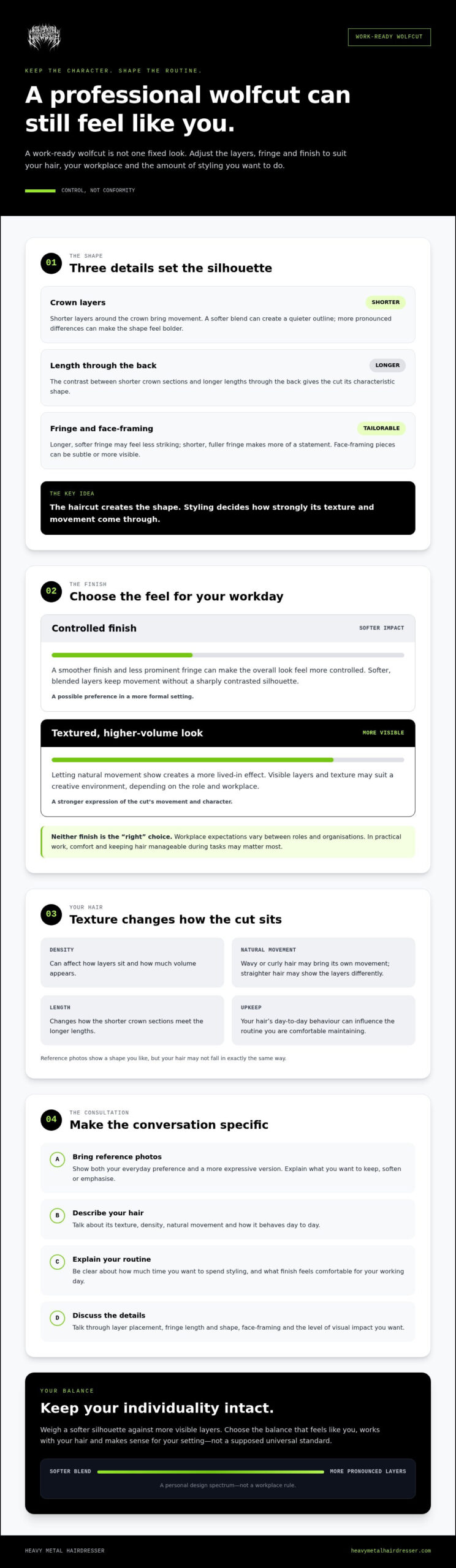
“The best brief tells your stylist how you want the cut to look, how you wear it day to day and how much effort you want to put into styling it.” That gives them something more useful to work with than the word “professional” alone. Use this consultation checklist to make the details clear before the cut begins.
- 1. Gather references. Choose photos that show the shape from more than one angle where possible. Include a workday finish you like and a more expressive version if you want the option to change things up.
- 2. Explain what you like. Point out the details in each image: perhaps the fringe length, shorter crown layers, face-framing pieces or overall silhouette. Say what you’d rather avoid, too.
- 3. Describe your routine. Tell your stylist what your working day involves, how much time you realistically want to spend styling your hair and whether you prefer a subtle or more noticeable finish.
- 4. Agree the cut and upkeep. Talk through layer placement, fringe, natural texture and how the shape may behave as it grows out. Ask what maintenance and styling the proposed cut may involve before you decide.
What reference photos should you bring?
Bring images that show the cut itself, not just a finished look from one angle. A side view can reveal how the shorter layers meet the longer lengths; a front view can show the fringe and face-framing shape. Choose examples of both everyday styling and the bolder finish you might want sometimes. Explain what appeals to you in each, so your stylist can distinguish the details you want from the parts you don’t.
What should you agree before the cut?
Be specific about your styling time. If you want a quick routine, say so; if you’re happy to spend longer shaping the layers, make that clear. Ask how the chosen fringe and layer placement may change as they grow out, and what adjustments might help maintain the shape. These conversations help tailor a professional wolfcut for work to your hair and real routine, rather than an idealised reference photo.
Heavy Metal Hairdresser specialises in wolfcuts and textured styles. If you’re considering a cut shaped around your preferences, explore its wolfcut expertise and use these questions to guide your consultation.
Choose a wolfcut that feels like you at work and beyond
A softer silhouette can keep the layers less prominent, while more visible shaping brings extra movement and edge. Either way, the cut needs to fit your real routine. A more textured finish may take more hands-on styling, depending on your hair and the shape you choose. A controlled finish might suit you better if mornings are already full. There’s no single version that earns the label “work-ready”. Your setting, preferences and any relevant workplace expectations all matter.
Is a professional wolfcut right for your routine?
Ask yourself two things: how much of the wolfcut’s character do you want to show, and how much time do you genuinely want to spend styling it? You might prefer a quieter outline for everyday wear, or choose more pronounced layers because that’s the look that feels most like you. Neither choice needs to be permanent. Your styling can shift with your mood and plans.
A consultation can help refine details such as fringe, layer placement and shape around your texture and routine. It’s a chance to talk through what you want and what upkeep may involve, not a promise of a particular result. Choose a look you feel good wearing on an ordinary workday, not just one that looks right in a reference photo.
Where can you explore specialist wolfcut styling?
Heavy Metal Hairdresser is an inclusive alternative salon specialising in wolfcuts and textured styling. Its individuality-led approach means the conversation can centre on your preferences and how you want the cut to work for you. The salon is a gender-inclusive space; everyone’s needs are different, so consider what matters to you when deciding where to discuss your haircut.
A professional wolfcut for work doesn’t have to mean choosing between fitting your routine and keeping your edge. It’s about finding a balance that feels wearable to you, whether that means softer layers, a bolder shape or something in between. To see more, explore Heavy Metal Hairdresser and its wolfcut and textured styling work.
Make your next cut work on your terms
A professional wolfcut for work isn’t one preset shape. Fringe, layer placement and texture influence its overall feel, while styling lets you choose a more controlled finish or bring out extra movement. The right balance depends on your workplace expectations, your comfort and the time you want to spend getting ready.
Before committing, talk with your stylist about your everyday routine, the level of edge you want and how the cut may grow out. Bring reference images that show both the shape you like and how you’d wear it. A clear conversation can help turn your ideas into a cut tailored to your hair and preferences, without asking you to leave your individuality at the door.
Heavy Metal Hairdresser specialises in wolfcuts and textured alternative styles. Founded by barber and creative stylist Simon Tuckwell, the salon is an inclusive, gender-inclusive environment. Explore Heavy Metal Hairdresser to see its work and services, and start planning a wolfcut that works on your terms.
Frequently Asked Questions
Can a wolfcut look professional for work?
Yes, a wolfcut can suit a professional setting when its shape and styling feel right for you and your workplace. A softer silhouette or more defined layers are both options, not universal standards. Consider any relevant appearance guidance, then discuss how fringe, layer placement and natural texture could shape the result. A professional wolfcut for work can keep the cut’s distinctive movement without requiring the same bold finish every day.
How do I make a wolfcut look more subtle at work?
Try directing your fringe neatly, smoothing selected sections or defining the layers without adding extra volume. You don’t need to flatten the whole cut: a small adjustment around the face or crown may create a more controlled outline. What works depends on your hair and haircut, so try a simple routine and see how it wears through your working day. Your own comfort matters more than following a rigid rule.
Is a wolfcut high maintenance?
Maintenance varies with your hair texture, the cut’s shape and the finish you want. A look that relies on defined volume may take more daily styling than one worn closer to your natural movement. Before committing, tell your stylist how much time you want to spend getting ready and ask how the layers may behave as they grow. That conversation can help you choose a shape that fits your routine, rather than an idealised photo.
Can you wear a wolfcut with a fringe in a formal workplace?
Often, yes, but the right choice depends on your workplace’s expectations and your preferences. A longer or softer fringe may feel less prominent, while a shorter, fuller fringe makes more of a statement. You can also style fringe away from your face on days you want a more controlled look. If expectations aren’t clear, check relevant workplace guidance before deciding what shape feels comfortable.
How should I explain a professional wolfcut to my hairdresser?
Describe the shape you want rather than relying on “professional” alone. Explain your preferred layer length, fringe, face-framing detail and how much movement or contrast you’d like. Bring reference photos from different angles, ideally showing both an everyday finish and a bolder version. Point out what appeals in each image, and describe your hair texture and routine. That gives your hairdresser a clearer brief to discuss and tailor with you.
Can a wolfcut be styled differently for work and weekends?
Yes. The same haircut can look more controlled for work and more textured or voluminous at other times. You might smooth selected sections or guide your fringe into place for one finish, then loosen the layers with your fingers for extra movement. How much the look changes depends on your hair and styling technique. Switching it up is optional, though; you don’t need to maintain two separate looks.
What should I ask before getting a wolfcut for work?
Ask how the proposed layers and fringe will work with your natural texture, how much styling the shape may need and how it could change as it grows out. Explain your work routine and any relevant appearance expectations, then agree the level of visual impact you feel comfortable with. It’s also useful to ask which details can be adjusted if you want a softer or more expressive finish. A clear conversation helps you make an informed choice.