Your precision-cut bob isn’t a style statement; it’s a cage that’s suffocating your alternative edge. We know the frustration of looking too “neat” or “mainstream” while you’re desperate for something with more bite. You want the volume and aggression of a shag, but you’re terrified of that awkward, mullet-like in-between stage. Transitioning from a bob to a wolfcut doesn’t mean you have to wait a year for your hair to grow out before it looks intentional.
We agree that the blunt, structured lines of your current cut feel restrictive when your soul craves chaos. This guide promises to show you how to dismantle that structure and embrace the fierce, textured layers of a short wolfcut right now. We’ll provide a clear roadmap for the transition, proving that short wolfcuts are just as aggressive as longer versions. You’ll also discover how to use products like Death Grip to hide the growth process and maintain your subcultural identity whilst your layers evolve. It’s time to stop the wait and start the deconstruction.
Key Takeaways
- Stop viewing your blunt cut as a limitation. A structured bob provides the ideal perimeter for a fierce, jaw-length wolfcut that prioritises volume at the crown.
- Discover why transitioning from a bob to a wolfcut is an act of structural deconstruction. Focus on internal weight removal to achieve that signature, aggressive “kick out” texture.
- Map out a three-appointment evolution plan with your stylist. This ensures your hair looks intentional and rebellious throughout the growth process instead of accidental or messy.
- Learn the exact rockstar terminology to use during your consultation. Requesting “disconnection” and “aggressive layers” ensures you avoid a mainstream result and keep your alternative edge.
- Master the “wash and wreck” styling method. Utilise dry waxes and texture pastes to keep your new layers looking sharp and chaotic with minimal daily effort.
Dismantling the Blunt Line: Why Your Bob is the Perfect Wolfcut Canvas
The structured bob is often sold as a “timeless” classic, but for those outside the mainstream, it can feel like a cage. It’s too polished, too neat, and lacks the raw energy of an alternative aesthetic. Transitioning from a bob to a wolfcut is the immediate solution for anyone looking to trade that “safe” silhouette for something with more bite. You don’t need to wait months for your hair to grow before you can start this process. In fact, the solid baseline of your bob provides the ideal foundation for a shorter, more aggressive iteration of the style.
A wolfcut is the rebellious hybrid of a 70s shag and a modern mullet. It’s defined by heavy crown volume and thin, wispy ends that demand attention. Whilst a bob is all about the perimeter and maintaining a solid shape, the wolfcut is a modern variation of the shag that prioritises movement and internal texture. Your bob’s current length acts as the scaffolding. We aren’t waiting for length; we are deconstructing the weight. This shift from clean lines to intentional chaos is what gives the wolfcut its fierce, underground edge.
The “Wolf-Bob” Hybrid: A 2026 Trend
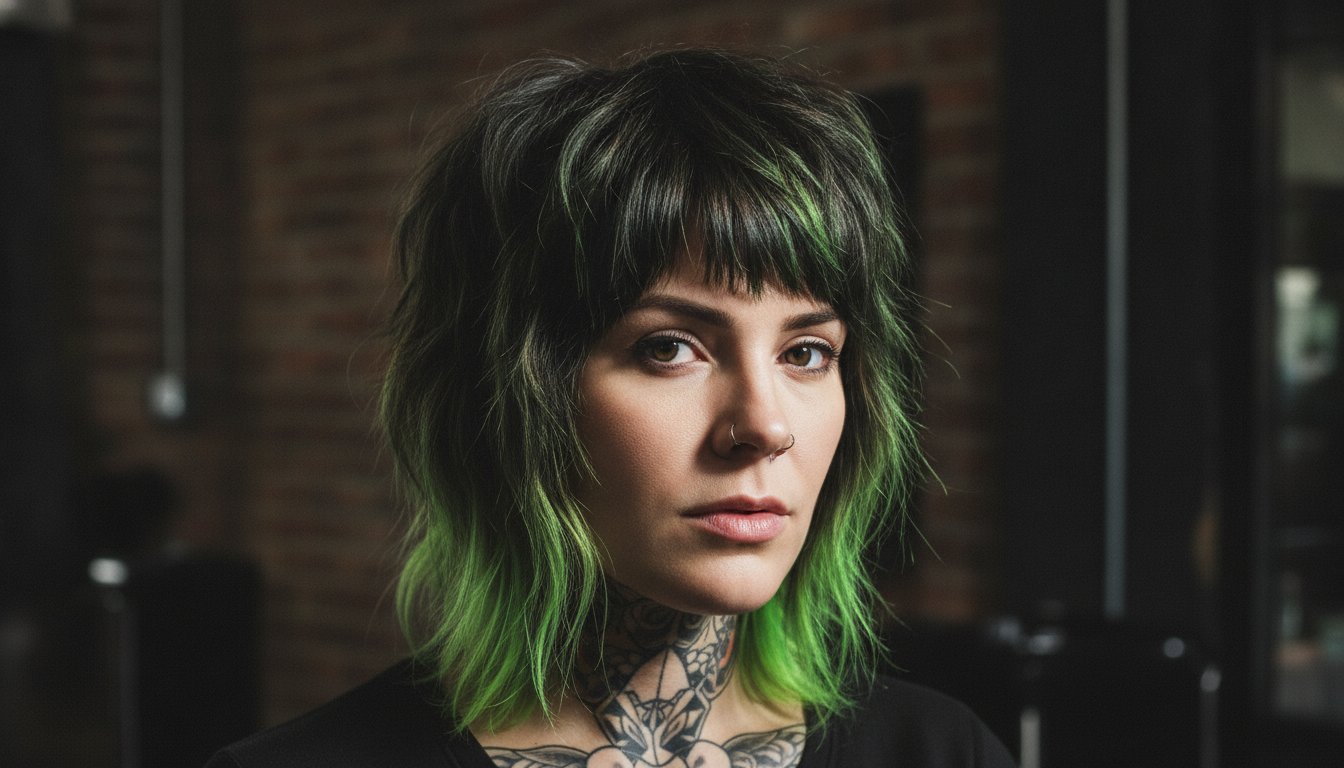
The “Wolf-Bob” is the high-impact answer for those who want a shorter silhouette. It sits proudly above the shoulders, offering a punchy alternative to the long, flowing versions seen on social media. This is the ultimate first step when transitioning from a bob to a wolfcut. It keeps the compact feel you might be used to but replaces the blunt edges with aggressive, choppy layers. This style creates a high-impact silhouette that works perfectly for those moving away from a blunt cut without sacrificing their alternative identity.
Deconstructing the Perimeter
The biggest hurdle in this transition is the “bottom-heavy” feel of a traditional blunt cut. To fix this, we focus on perimeter deconstruction. This technique involves breaking up the solid baseline through intense point-cutting and razor work. We shred the ends to remove the “helmet” effect that plagues many growing-out bobs. By thinning out the bottom and stacking weight at the top, the hair begins to kick out in that iconic wolfcut fashion. Perimeter deconstruction is the key to avoiding the “helmet” look and transforming a static cut into a living, breathing style.
The Structural Shift: From Clean Lines to Aggressive Layers
Sculpting your new identity requires a complete departure from traditional layering techniques. Transitioning from a bob to a wolfcut is more than just adding a few steps; it’s a structural overhaul of how hair weight is distributed. Standard layers found in high-street salons aim for a smooth, blended finish. Aggressive textured layers do the opposite. They create intentional shelves and jagged edges that demand attention. This disruption is what separates a “nice haircut” from a subcultural statement.
Internal weight removal is the secret weapon for this transition. Whilst a bob keeps weight at the ends to maintain a solid line, a wolfcut requires the mid-lengths to be hollowed out. This allows the hair to kick out and move with a raw, unrefined energy. Without this internal sculpting, your hair will simply look like a messy bob. Avoid the temptation of the DIY “ponytail method” seen on social media. When you are starting with the limited length of a bob, one wrong snip with a hair tie can turn your alternative vision into an accidental bowl cut. Precision is everything when you are working with shorter starting points.
The Crown and the Shag: Creating Vertical Volume
Bobs are essentially horizontal styles. They pull the eye across the jawline. The wolfcut is unapologetically vertical. By cutting shorter, choppy layers into the crown, we shift the focus upwards to create that iconic rockstar volume. This creates a high-impact silhouette that feels tall and aggressive. If you are used to a side-parted bob, this shift involves moving hair towards a centre-weighted or forward-swept position. It’s about building height where there was once only flatness, giving the “wolf” its bite.
Face-Framing Disruption: Disconnecting the Fringe
The fringe is the soul of this style. To successfully move away from a bob, you must disconnect the front sections from the rest of the hair. This usually involves heavy curtain bangs or a “bottleneck” fringe that sits shorter in the middle and longer at the temples. We blend these into new face-framing layers that “shred” the face, creating a frame that looks lived-in and gritty. For a deeper dive into achieving that raw look, check out our Ultimate Wolf Hair Cut Guide to understand how to master subcultural grit. If you’re ready to ditch the boredom, booking a professional wolfcut ensures your transition is handled with expert hands rather than luck.
Navigating the Growth: Managing Length Whilst Shifting Shapes
“My hair isn’t long enough yet” is the most common excuse for staying stuck in a boring blunt cut. It’s also a lie. Mainstream beauty magazines often claim you need collarbone length or six inches of growth before you can even consider this style. They’re wrong. Transitioning from a bob to a wolfcut is about shape evolution, not just length accumulation. We treat this as a strategic roadmap over two or three appointments. By focusing on the silhouette rather than the tape measure, we ensure your hair looks aggressive and intentional from day one.
The first appointment focuses on deconstructing that heavy bob perimeter. By the second visit, we deepen the disconnection between the crown and the nape. The “awkward phase” only happens when layers are left to grow out without a plan. If the weight is correctly distributed, that extra length at the back becomes a deliberate design choice rather than a sign you’ve missed a trim. We lean into the “mullet-esque” growth at the neck. In our world, a mullet isn’t a mistake; it’s a foundation. We keep the sides tight and the crown high to ensure the shape remains fierce whilst the back catches up.
Texture Matching: Fine vs. Thick Hair Transitions
Fine hair needs strategic scaffolding. We use shorter crown layers to create the illusion of a thicker, more chaotic mane. This prevents the hair from looking flat or “stringy” as it grows. Thick hair has the opposite problem: the “triangle bob” effect. This is where the ends flare out and look like a tent. We fix this by cutting internal channels. These “hidden” layers remove bulk and encourage the hair to collapse in the middle whilst kicking out at the ends. It turns a heavy, static block of hair into a moving, breathing wolfcut.
The Role of Vivid Colour in the Transition
Strategic pigment is your best friend during this shift. Using vivid hair colour can distract the eye from uneven growth or “in-between” lengths. Peek-a-boo panels or bold “money pieces” highlight your new, choppy layers, making them the focal point of the style. We also recommend darker, “lived-in” roots. This adds immediate visual depth to the crown, making those shorter layers look even more explosive and voluminous. Colour isn’t just an accessory here; it’s a tool to refine your new silhouette whilst transitioning from a bob to a wolfcut.
The Salon Consultation: How to Request a Wolfcut Without Losing Your Soul
Walking into a standard high-street salon with a bob and asking for a wolfcut is often a gamble. Most traditional hairdressers are trained to value symmetry, “healthy” ends, and polished finishes. They might try to talk you out of the chop. They’ll warn you about “losing your length” or suggest a “soft, blended layer” to keep things tidy. You must be firm. You aren’t there for a sensible trim; you’re there for a structural overhaul. Tell them you want a raw finish that looks intentional, not a “neat” style that blends into the crowd.
When transitioning from a bob to a wolfcut, your reference photos are your strongest weapon. Avoid high-fashion magazines that sanitise the look for a mainstream audience. Instead, search for “stage hair” or “rockstar mullets”. Look for images where the hair looks like it’s survived a three-day festival in a muddy field. You need to show your stylist the “shredded” look you’re after. If the photo looks too curated or brushed, you’ll likely end up with a result that lacks the necessary bite.
Speaking the Language of Grit
You need to use specific terminology to ensure the result matches your vision. Ask for “disconnection” between the crown and the perimeter. Tell your stylist you want “internal weight removal” to create that hollowed-out middle section that allows the hair to move. Request “shattered ends” rather than blunt ones. If your hair type can handle it, ask for a razor cut. Razors create a jagged, lived-in texture that standard scissors simply cannot replicate. For a deeper look at these terms, check out our Modern Mullet Haircut guide to master the language of alternative hair.
Why an Alternative Specialist Matters
An alternative salon is more than just a place for a haircut; it’s a safe space where your subcultural identity is the priority. A specialist in textured layers understands that your hair needs to survive more than just a desk job. We build “mosh-pit survival” into the structure of every cut. We know that a wolfcut should look just as good sweaty and tangled at a gig as it does when you first leave the chair. If you’re ready to stop compromising and finally ditch the bob, book your wolfcut with a team that actually speaks your language.
Styling Your New Chaos: Tools and Techniques for the Wolfcut
Forget the high-maintenance blow-outs and the clinical perfection of your previous blunt cut. Transitioning from a bob to a wolfcut introduces you to the “wash and wreck” philosophy. This is low-effort, high-impact styling designed to look better the more you move. While mainstream tutorials might suggest curling every single layer with a hot iron, we know that true alternative grit comes from working with your hair’s natural rebellion. You want a finish that looks lived-in and raw, not something that belongs in a bridal magazine.
The secret to this texture lies in your product choice. Ditch the heavy oils and smoothing creams that weighed down your bob. You need salt sprays for grit, texture pastes for definition, and dry waxes for that matte, “unwashed” appearance. To define the iconic “wings” of the cut, we recommend using a product like Death Grip. It provides the necessary hold to keep those layers flicking outwards without making the hair feel crunchy or static. Scrunch-drying is your primary technique here. Simply apply your product to damp hair and squeeze upwards to encourage volume and chaos without the need for a round brush.
Air-Drying for the Mosh Pit
Air-drying doesn’t have to mean looking flat. Start by applying a salt spray to damp hair, focusing on the roots and mid-lengths. Use small clips to “set” your face-framing layers whilst they are wet. By pinning the hair back at the temples or pushing the fringe into a specific shape, you ensure it dries with an intentional silhouette. This method is perfect for maintaining your edge without the heat damage. For more cross-compatible tips on managing aggressive texture, our guide on how to style a modern mullet covers the essentials of maintaining grit during the growth phase.
The Power of Texture Pastes
Once your hair is dry, use a texture paste to refine the details. Take a small amount and “pinch” the ends of your layers. This creates the sharp, wolf-like finish that defines the style. Traditional hairspray is the enemy here. It creates a “helmet” effect that kills the movement your new layers provide. You want a style that can survive a gig and still look intentional. If you’re looking for the right tools to maintain your look, explore our alternative hair merch UK for the gear you need to keep your subcultural identity sharp. Transitioning from a bob to a wolfcut is your ticket out of the mainstream. Stay messy, stay aggressive, and let the chaos work for you.
Embrace the Chaos: Your Transformation Starts Now
Your bob was a starting point; now it’s time to make it a statement. Transitioning from a bob to a wolfcut is an act of rebellion against the polished and the predictable. You’ve learned that length isn’t the barrier; structure is. By focusing on aggressive internal layers and disconnecting the crown, you can bypass the “awkward phase” and move straight into intentional grit. Remember that your styling routine should be as raw as your aesthetic. Use texture pastes to define those edges and let your hair breathe whilst it evolves.
We don’t do “neat” and we don’t do mainstream. Our salon is a gender-inclusive safe space where your identity is celebrated, not just managed. We’ve spent years crafting stage-ready looks for bands and festival stages, and we’re ready to bring that same energy to your transformation. It’s time to stop waiting for growth and start embracing the deconstruction. Work with specialists who understand alternative, textured styles and won’t try to “fix” your edge.
Book your wolfcut transformation with the Heavy Metal Hairdresser crew. Your new silhouette is waiting. Let’s wreck the rules together.
Frequently Asked Questions
Can I get a wolfcut if I have a very short bob?
Yes, a chin-length bob is the perfect starting point for a shorter, punchier iteration of the style. We focus on crown volume and face-framing disconnection rather than waiting for length at the back. This “Wolf-Bob” hybrid creates a high-impact silhouette that works immediately without requiring months of growth.
How long does it take to transition from a bob to a full wolfcut?
Most clients achieve the full silhouette within two to three salon appointments, typically over six months. Transitioning from a bob to a wolfcut is a process of evolving the shape. Each visit involves removing weight from the mid-lengths and allowing the nape area to grow into those signature wispy ends whilst keeping the top layers short and voluminous.
Is a wolfcut high maintenance compared to a bob?
It’s actually the opposite. A bob requires precision styling and constant heat to maintain its blunt, polished look. A wolfcut thrives on natural movement and intentional messiness. You’ll swap your round brush for texture pastes and spend significantly less time fighting your hair’s natural rebellion every morning.
Will a wolfcut work on curly or wavy hair during the transition?
Natural texture is a massive advantage for this style. The aggressive layers remove the “tent” effect common with curly bobs, allowing your curls to stack vertically. This creates immediate volume at the crown and prevents the hair from flaring out at the chin in a triangular shape that many alternative clients hate.
Do I need to use heat tools every day to style a wolfcut?
No. We advocate for the air-dry method using salt sprays or dry waxes to maintain that raw, underground aesthetic. Heat tools often make the layers look too “finished” or mainstream. Embracing your natural texture keeps the style looking authentic and gritty whilst protecting your hair from unnecessary damage.
What is the difference between a wolfcut and a shag when growing out a bob?
The difference lies in the level of aggression and disconnection. A shag is a soft, blended variation of the 70s classic. A wolfcut is a hybrid that leans heavily into the mullet aesthetic, featuring sharper disconnection and more dramatic weight removal. It’s the more rebellious choice for those ditching a blunt cut.
How often should I get a trim during the transition period?
Aim for a refresh every 8 to 12 weeks. Regular maintenance is essential to keep the layers from becoming a “helmet” as they grow. These appointments ensure the weight remains focused at the top whilst the perimeter continues to deconstruct, allowing the back to grow into a fierce, mullet-like tail.
Can a wolfcut hide the “awkward growth” phase of a bob?
It is the best way to handle the growth process. By shredding the perimeter of your bob, the extra length at the nape looks like a deliberate design choice rather than a missed trim. Transitioning from a bob to a wolfcut transforms the frustration of growing out a blunt cut into an immediate, intentional style statement.