
Your wolfcut shouldn’t look like a polite mistake; it should look like a deliberate riot. Most people walk out of the salon with a killer shape only to find their hair goes flat after an hour, leaving those aggressive layers looking disjointed instead of blended. It’s a common frustration whilst trying to maintain that raw, underground aesthetic without it turning into a limp 80s disaster. Learning how to style a wolfcut is about more than just drying your hair. It is about reclaiming your identity through texture and volume that refuses to quit.
We know you want that gritty, lived-in feel that stays put even in the middle of a mosh pit. This guide delivers the unapologetic techniques you need to transform a flat mane into a high-volume masterpiece. We will show you exactly which products provide that essential subcultural grit and how to tame a fringe that won’t sit right. Get ready to master the controlled chaos of your layers and ensure your style remains as fiercely independent as you are. It is time to stop settling for a flat finish and start embracing the grit.
Key Takeaways
- Understand the hybrid aesthetic of the 70s shag and 80s mullet to create a look that prioritises identity over perfection.
- Master the step-by-step process of how to style a wolfcut using damp hair techniques to ensure your volume never falls flat.
- Weaponise your styling kit with Hair To the Throne and Death Grip for maximum grit and texture that survives the night.
- Learn to customise your approach for fine or thick hair, focusing on de-bulking thick manes without sacrificing that signature aggressive shape.
- Discover the mosh pit survival guide for maintaining your style through sweat, movement, and three-day festivals.
What is a Wolfcut Aesthetic? Texture, Chaos, and Identity
The wolfcut is not just a haircut; it is a riot on your head. It represents the ultimate collision of two iconic subcultural silhouettes. Think of it as the modern, more aggressive evolution of the Shag haircut, smashed together with the unapologetic length and rebellion of an 80s mullet. In the UK alternative scene, this cut has become the definitive uniform for those who reject the polished, clinical finish of mainstream styling. It is raw, it is gritty, and it demands attention.
Texture is the lifeblood of this look. Without it, the layers fall flat and the attitude vanishes. The wolfcut thrives on movement and “styled chaos” rather than perfection. It is also fiercely inclusive. This style belongs to everyone, regardless of gender identity. It is a gender-neutral canvas for self-expression that prioritises personality over traditional beauty standards. Mastering how to style a wolfcut starts with embracing its messy, non-conformist roots.
The Anatomy of an Aggressive Wolfcut
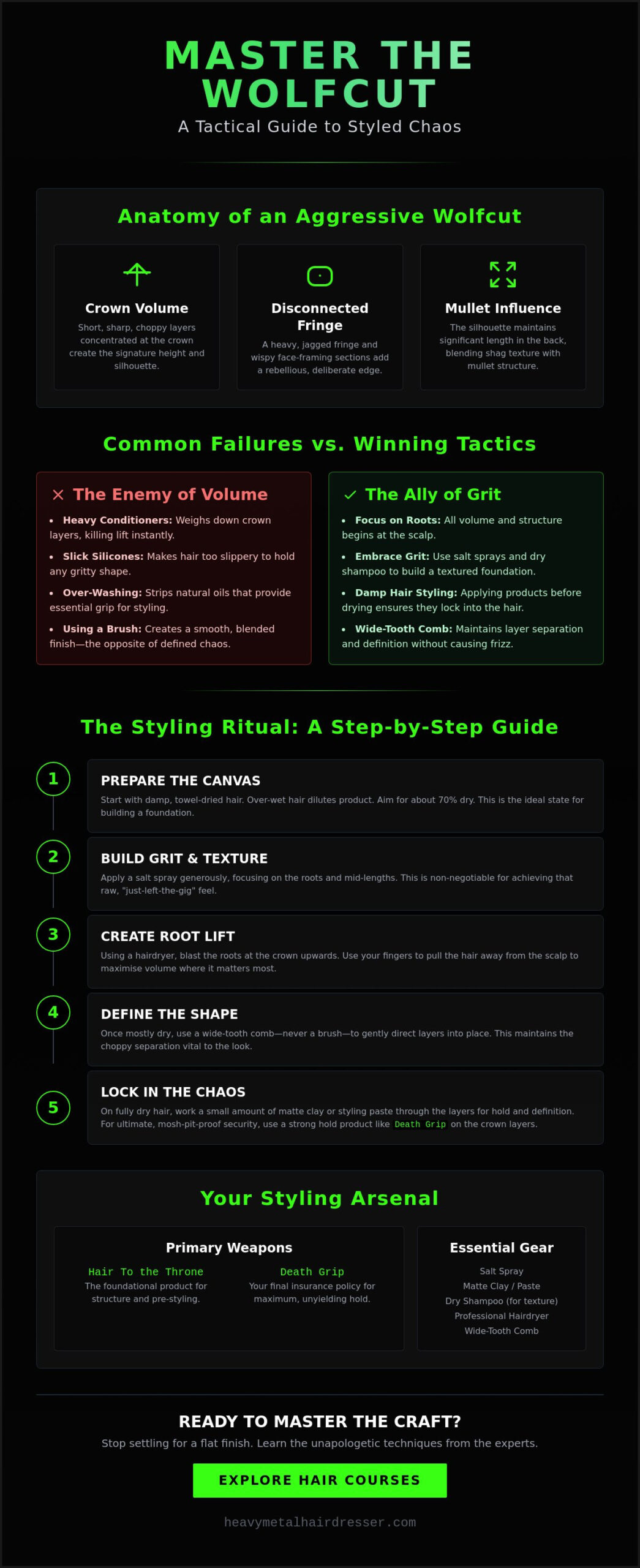
To get the look right, you have to understand the structure. An aggressive wolfcut relies on short, choppy layers concentrated around the crown. This creates the essential height and volume that defines the “wolf” silhouette. These layers should feel percussive and sharp, not blended into oblivion. Face-framing sections should be wispy and deliberate, blending into a significantly longer back. The real secret weapon is the disconnected fringe. A heavy, jagged fringe that sits slightly apart from the side layers adds a rebellious edge that separates a true wolfcut from a standard layered style.
Why Your Wolfcut Looks Flat (And How to Fix It)
If you are struggling with how to style a wolfcut that actually stays up, the culprit is often your shower routine. A common mistake is over-conditioning alternative hair. Heavy conditioners weigh down those short crown layers, making them succumb to gravity within minutes. Gravity is the enemy of the wolfcut. Without structural styling, heavy layers will always collapse. There is a massive difference between “messy hair” and “styled chaos.” Messy hair is just flat and unwashed; styled chaos is intentional, gritty, and supported by the right products to keep those layers standing tall whilst you are in the middle of a crowd.
- Stop over-washing: Natural oils provide the initial grip you need.
- Ditch the heavy silicones: They make hair too slippery to hold a shape.
- Focus on the roots: Volume starts at the scalp, not the ends.
Assembling Your Styling Arsenal: Essential Gear for Maximum Volume
Forget the polished, supermarket mousses that promise volume but deliver limpness. If you want to know how to style a wolfcut that actually survives the night, you need an arsenal of products that fight back. Your primary weapons in this battle are Hair To the Throne and Death Grip. These aren’t your typical high-street stylers. They are designed to provide the structural integrity required for aggressive, choppy layers that refuse to obey the laws of gravity. Salt sprays are also non-negotiable. They provide that raw, gritty, “just-left-the-gig” feel that defines the alternative aesthetic. Without this essential grit, your hair is just a collection of layers; with it, it is a statement.
The tools you use are just as critical as the products you apply. A wide-tooth comb is your best friend whilst you work through your mane. Brushes are for people who want a smooth, blended finish, which is exactly what we are trying to avoid. A comb allows you to maintain the definition of each individual layer without turning your head into a frizzy cloud. If you are looking to elevate your technique, consider exploring the Hair Courses available to master these subcultural styles from the experts.
The Best Products for Gritty Texture
When choosing your finish, matte always wins. Pomades and high-shine waxes are too heavy and look too “done” for a wolfcut. A matte clay provides the friction needed to keep those short crown layers standing tall. Dry shampoo should also be viewed as a styling tool rather than just a cleaning product. Even on clean hair, a blast of dry shampoo at the roots adds a layer of “dusty” texture that helps layers stick together. Use Death Grip as your final insurance policy. It locks in the most aggressive sections of your crown, ensuring the silhouette remains sharp through every headbang.
Tools for the Job
Invest in a professional-grade hairdryer with variable heat control. The most important attachment you will ever own is the diffuser. A standard nozzle concentrates air in a way that blows out the shape and flattens the texture. A diffuser disperses the air, allowing you to dry the hair whilst keeping the “crunch” of your products intact. Your hands are your most versatile tools. The “scrunch” technique, where you rhythmically squeeze the hair whilst drying, encourages the natural wave and separates the layers. Use sectioning clips to organise your chaos whilst you work; it’s much easier to style the crown when the back length is clipped out of the way.
- Wide-tooth comb: Maintains layer separation.
- Diffuser attachment: Protects the aggressive silhouette from blowing out.
- Sectioning clips: Essential for managing heavy, multi-layered manes.
- Matte Clay: Provides the necessary grit without the grease.
Step-by-Step: How to Style a Wolfcut for Maximum Impact
Don’t wait until your hair is bone dry to start. That is a rookie mistake that leads to a flat, uninspired mane. To master how to style a wolfcut, you must begin whilst the hair is damp. This is the only way to ensure your base products actually penetrate the cuticle and build a foundation that won’t collapse. Apply your texture product, specifically Hair To the Throne, from the roots right through to the ends. You want every strand coated in grit before you even think about picking up a hairdryer.
Flip your head. Use the ‘Upside Down’ blow-dry method to force volume into the roots. Gravity is usually your enemy; use it to your advantage by drying against the natural fall of the hair. This creates an aggressive, chaotic lift that a standard blow-dry can’t match. When you’re nearly dry, focus on the fringe. It needs to sit aggressively. Pull it forward and piece it out with your fingers so it doesn’t just hang there like a limp curtain. Finally, hit the whole thing with a cold shot. This sets the shape in place, locking in the chaos before you head out.
The Foundation: Pre-Styling for Longevity
Preparation is everything. When you step out of the shower, pat your hair dry with a microfibre towel or an old band tee. Never rub. Rubbing creates unwanted frizz that looks messy rather than intentional. Distribute your product evenly amongst the layers to ensure consistent hold. If you miss the crown, you lose the look. The crown is where the ‘wolf’ truly lives. Give it double the attention to ensure it stays standing tall all day.
Defining the Layers
Once dry, use your fingers to twist and define the face-framing sections into sharp ‘claws’. This adds a predatory edge to the silhouette. Avoid the ‘helmet head’ look by keeping movement in the ends. You want texture, not a solid block of hair. If you are working with a long wolfcut, pay extra attention to the back. It needs to look intentional and choppy to ensure it doesn’t just fade into a standard, boring V-cut. Refining these details is essential for anyone learning how to style a wolfcut with professional-grade grit.
Customising the Chaos: Styling for Fine, Thick, and Curly Manes
Every mane is a different beast. Whilst the silhouette remains the same, the path to getting there depends on your specific DNA. You can’t treat fine, wispy strands like a thick, heavy curtain. Mastering how to style a wolfcut requires you to adapt your product load and technique to your specific texture. It is about working with the hair you have to create the identity you want. Whether you are fighting gravity or battling bulk, the goal is always the same: aggressive, intentional texture.
The Fine Hair Survival Guide
Fine hair is the ultimate challenge for this cut. It wants to surrender to gravity. To fight back, you need to inject volume into thin strands without weighing them down. This is where Hair To the Throne becomes your best friend. It creates the illusion of density by swelling the hair shaft, giving those crown layers something to hold onto. Heavy creams and oils are the enemy here. They turn a wolfcut into a limp, greasy disaster within an hour. Use a light touch with products and focus your efforts on the roots. For a deeper dive into the specific techniques that make this work, our complete guide to the wolfcut on fine hair covers every technical secret for injecting aggressive volume into thin strands.
- Back-combing secrets: A light tease at the crown creates a structural “nest” for layers to sit on.
- Texture dust: Use a tiny amount of styling powder for instant, dry grip that doesn’t slip.
- Cold air: Always finish your blow-dry with a cold shot to lock that fine hair into its new, voluminous shape.
Taming the Thick Wolfcut
Thick hair often suffers from the “triangle” effect. The bottom expands whilst the top stays flat. Mastering the shag haircut for thick hair is about de-bulking. You need to remove the hidden weight so the top layers can actually breathe and move. For extreme styling, an undercut is a secret weapon. It eliminates the bulk at the nape, allowing the wolfcut silhouette to remain sharp and aggressive rather than puffy. Use weightier products like Death Grip to pull the layers down and out, preventing the hair from becoming a solid block.
Curly manes are perfect for this aesthetic, but they require a delicate touch to avoid the “poodle” effect. Use a diffuser on a low heat setting. Do not touch the curls whilst they are drying. This preserves the coil without creating a halo of frizz. If your current texture is fighting you, it might be time for a professional intervention. Book your next session for Wolfcuts and let us carve out the chaos for you.
Remember the golden rule of product ratios: “less is more” for fine hair to avoid collapse, but “more is more” for thick and curly textures that need the extra weight to define the layers. Adjust your arsenal accordingly to keep your chaos under control.
Beyond the Mirror: Mosh Pit Survival and Professional Maintenance
A wolfcut that only looks good for a selfie is a failure. To truly master how to style a wolfcut, you have to prepare for the elements. Festivals and underground gigs are the ultimate testing grounds for alternative hair. You need a style that doesn’t turn into a sticky, clumping mess the second you start to sweat in a crowded room. Products like Death Grip and Hair To the Throne are formulated to maintain their structural integrity whilst you are moving. They provide a dry, gritty hold that allows the hair to move naturally. If you are headbanging for three hours, you want your hair to move with you, not set into a solid, glue-like block that looks plastic under stage lights.
Real-world wear and tear is where the wolfcut proves its worth. Unlike polished styles that fall apart at the first sign of humidity, this cut thrives on a bit of rough handling. The secret to how to style a wolfcut for extreme environments is building the product into the hair in layers. This creates a “memory” in the strands. Even if you get caught in a downpour or spend the night in a tent, the foundation remains. It is about creating a look that is resilient enough to survive the night and still look intentional the next morning.
Stage Hair and Festival Resilience
The principles of stage hair for musicians are built on pure resilience. When you are three days into a festival field, your natural oils become your greatest ally. This “dirty hair” advantage provides a level of grip that clean hair simply cannot match. You don’t need a full shower to fix your look; you just need to revive it. A quick mist of water followed by a blast of salt spray will reactivate the products already amongst your layers. This backstage trick keeps your silhouette aggressive without needing a full styling kit in your tent. It’s about working with the chaos of the environment rather than fighting it.
Keeping the Shape Sharp
Maintenance is the difference between a subcultural icon and a neglected mullet. Because this style relies on precision-engineered layers, you need a wolf hair cut refresh every 6-8 weeks. Once those crown layers grow too long, gravity takes over and the volume disappears. You will know it is time for a trim when the fringe starts to lose its jagged edge or the back feels too heavy to lift. Don’t fall into the trap of home-trimming your own fringe. It is the fastest way to ruin the rebellious silhouette we have built. If your layers are looking limp and the grit has gone, it is time to stop the DIY experiments and find the best wolfcut hairdresser UK has to offer for a professional resurrection that restores your shape. Book your wolfcut specialist today for a professional resurrection that restores your shape.
Reclaim Your Identity with Controlled Chaos
Mastering the wolfcut is about more than just a haircut; it’s a commitment to a subcultural aesthetic that refuses to play by the rules. You’ve learned that the secret to how to style a wolfcut lies in building a gritty foundation on damp hair and using a diffuser to protect that aggressive silhouette. From injecting volume into fine strands to de-bulking thick manes, the right arsenal of Death Grip and Hair To the Throne ensures your texture survives the most intense mosh pits.
If you’re ready to stop the DIY struggle and want a shape carved by an expert in aggressive texture and vivid colour, it’s time to visit the source. As a stylist for bands at Download and Bloodstock festivals, we understand the demands of an alternative lifestyle. We provide a gender-inclusive safe space where your individuality is the priority. Book Your Alternative Transformation at Heavy Metal Hairdresser and let us refine your chaos into a masterpiece. Your hair is your statement. Make it loud.
Frequently Asked Questions
Is a wolfcut high maintenance to style every day?
It is only high maintenance if you are chasing a polished, mainstream look. The wolfcut thrives on a lived-in, raw aesthetic that actually gets better as the day goes on. You don’t need a salon blowout every morning to look good. A quick blast of salt spray and some aggressive finger-combing is often enough to revive the shape. It is a style built for movement, not for sitting still under a layer of hairspray.
Can I style a wolfcut without using heat tools?
You can absolutely style this look without heat if you have some natural movement in your hair. Apply your base products to damp strands and use the “scrunch” method to encourage your natural waves. Air-drying allows the layers to settle into a more organic, gritty silhouette. If your hair is naturally very straight, you might need a diffuser for that initial lift, but many alternative textures thrive without the high heat.
What is the best product for a messy wolfcut look?
Matte is the only way to go for that gritty, subcultural finish. Avoid anything that adds shine or grease, as it will make your layers look limp and oily. A high-hold matte clay or a dry texture spray provides the friction needed to keep the crown standing tall. For those aggressive, disconnected sections, a touch of Death Grip ensures the shape remains sharp without looking like you’ve tried too hard or spent hours in front of the mirror.
How do I stop my wolfcut from looking like a flat mullet?
The secret of how to style a wolfcut without it going flat is all in the root work. Mullets look flat when the crown layers lose their structural integrity and collapse against the scalp. Use a volume-building product at the roots and avoid heavy conditioners that weigh the hair down. If it still feels limp, a bit of back-combing at the crown will provide the internal support needed to keep the “wolf” silhouette alive.
Does a wolfcut work for people with very curly hair?
Curly manes are actually some of the best candidates for this aggressive shape. The heavy layering removes the bulk that often causes curly hair to look like a solid block. By carving out these layers, your curls gain the freedom to move and define themselves. Use a diffuser on a low setting to dry the hair whilst preserving the coil, ensuring you maintain that signature chaotic volume without the frizz or the “poodle” effect.
How often should I wash my hair to keep the wolfcut texture?
Washing your hair every day is the fastest way to kill your texture. Natural oils are essential for providing the “grip” that keeps your layers from looking too soft and fluffy. Aim for two to three times a week at most. If your roots feel oily, use a bit of dry shampoo for added texture. Day-two and day-three hair usually holds the aggressive wolfcut silhouette much better than freshly washed strands because the hair has more natural friction.
Can I style a wolfcut if I have a very short fringe?
A short fringe actually enhances the rebellious, DIY feel of the cut. Whether you have micro-bangs or a jagged, short fringe, it adds a percussive edge to the face-framing layers. The key is to keep the fringe disconnected from the side sections. This creates a sharper, more aggressive silhouette that aligns perfectly with the underground aesthetic. Just use a tiny bit of product to piece the ends out for maximum impact and a gritty finish.
What should I do if my wolfcut layers feel too heavy?
If your layers feel heavy, it is usually because the internal weight hasn’t been properly removed. This isn’t something you can fix with how to style a wolfcut techniques at home. You need a best wolfcut hairdresser UK specialist to de-bulk the mane using specific carving techniques. This allows the layers to sit properly without the “triangle” effect. Never try to thin out your own layers at home, as you will likely ruin the structural balance and the overall shape.