
Your fine hair isn’t a curse; it’s a blank canvas for the most aggressive texture you’ve ever seen. You’ve likely been told to keep your hair blunt to save the volume. You’ve been warned that heavy layers will make your strands look stringy or weak. It’s a boring lie fed to you by mainstream salons that don’t understand the grit of a true alternative aesthetic. We know the frustration of a style that goes flat before you’ve even finished your morning coffee.
The truth is that a shag haircut for fine hair is the ultimate hack for achieving effortless, rock-star volume without losing your identity. By using strategic, alternative cutting techniques, we can inject life into thin strands and create a look that celebrates your natural texture rather than fighting it. In this 2026 guide, we’ll show you how to ditch the “weight” and embrace the chaos. We’ll explore the specialised methods used to build height at the crown and the essential products like Death Grip that keep your fringe defiant all day long. Get ready to transform your flat hair into a high-volume masterpiece.
Key Takeaways
- Ditch the blunt cuts and learn how razor techniques create the “lived-in” texture fine hair needs without sacrificing perimeter thickness.
- Discover why the shag haircut for fine hair is the ultimate solution for resurrecting 70s rock grit and banning flat, lifeless strands.
- Compare the silhouettes of the shag, wolfcut, and mullet to find which aggressive style preserves the most weight for your hair density.
- Master the “no-blow-dry” philosophy and learn how to use specialised products like Death Grip to lock in volume that actually lasts.
- Find out why an inclusive, alternative-focused salon is the only place that prioritises your identity over mainstream beauty standards.
Why the shag haircut for fine hair is the ultimate alternative solution
Forget what the high-street stylist told you. They usually want you to keep your hair blunt. They claim it adds “weight” or “bulk”. In reality, that weight acts like a lead anchor, dragging your style into the dirt within minutes of you leaving the house. The modern shag is a high-texture, multi-layered beast featuring a heavy fringe that demands attention. It is the perfect shag haircut for fine hair because it replaces boring, flat lines with a chaotic, multi-dimensional silhouette that actually stays upright.
To understand why this works, look at the history of the shag haircut. Born in the 70s and refined by rock legends, it was never meant to be “pretty” or polished. It was about grit. Today, it serves as a strategic visual lie. By creating hundreds of different lengths across the head, you increase the surface area of the hair. This creates the illusion of a massive, thick mane where there was once just a thin, transparent veil. It is about taking up space and refusing to let your hair go unnoticed.
The “Thin Hair” Myth: Why layers are your friend
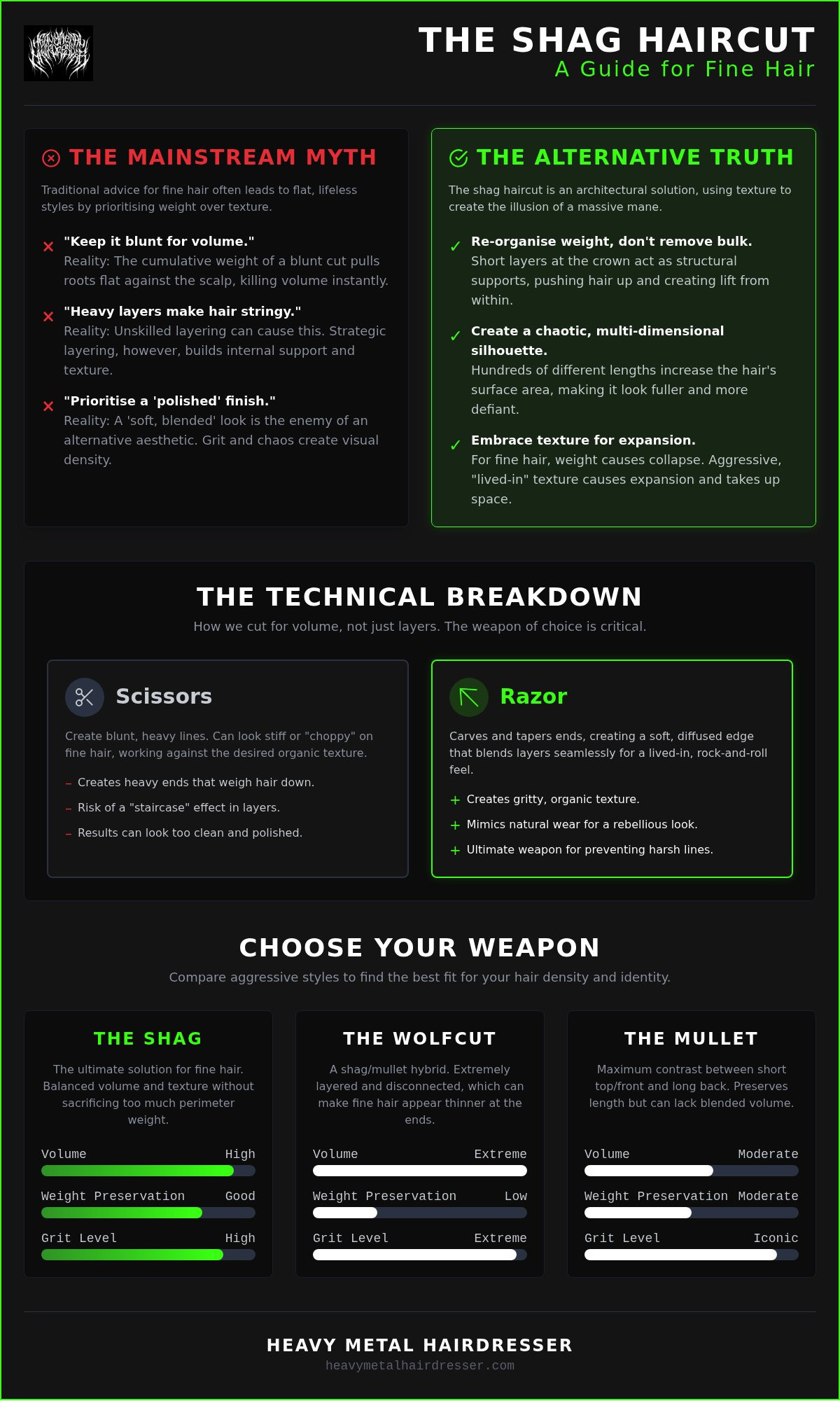
The biggest fear for anyone with fine hair is that layers will “thin it out” or make the ends look stringy. This is absolute rubbish. When you leave fine hair at one length, the cumulative weight of the ends pulls the roots flat against the scalp. By carving out short layers at the crown, we remove that anchor. These shorter pieces act as structural support, pushing the rest of the hair up and creating a lift that no amount of backcombing can replicate. We aren’t removing bulk; we’re re-organising it to work for your silhouette. Weight in fine hair causes collapse; texture causes expansion.
Shag vs. The Mainstream: Choosing grit over polish
Traditional salons often try to give you “soft, blended layers”. That is fine if you want to look like a catalogue model, but it is useless for an alternative identity. We prioritise aggressive texture and a rebellious silhouette over “sensible” styles. This isn’t about a smooth finish; it is about a raw, lived-in aesthetic that looks better the more you mess with it. This style represents the shag haircut resurrection currently tearing through the UK scene. It is about reclaiming your look and refusing to settle for a boring cut just because your hair is fine.
The technical breakdown: how we cut for volume, not just layers
Most stylists approach a shag haircut for fine hair with a sense of dread. They worry that removing hair will leave the client with a transparent, stringy mess. We don’t. We use technical precision to build an internal scaffold that holds the hair up. It is about removing weight in the right places whilst reinforcing the perimeter to maintain density. This isn’t just a haircut; it’s an architectural project for your head.
The goal is to create a style that looks massive but feels weightless. We achieve this by focusing on the relationship between the crown and the length. If you’re ready to ditch the flat look, come see us for a bespoke shag haircut that actually works with your texture.
Razor cutting vs. Scissor cutting for fine strands
Scissors create blunt, heavy lines. On fine hair, these lines can look too “perfect” or stiff, which is the opposite of the lived-in, alternative aesthetic we want. Scissors can also make fine hair look “choppy” in a way that feels accidental rather than intentional. We prefer the razor. A blade allows us to taper the ends of the hair, mimicking the natural wear and tear of a rock-and-roll lifestyle. It gives the hair a soft, diffused edge that blends seamlessly with other layers.
This technique is vital for fine hair because it prevents the “staircase” effect where you can see exactly where one layer ends and the next begins. The razor is the ultimate weapon of choice for carving out gritty, organic texture in fine hair without the clinical stiffness of scissors.
The importance of the crown: building the “nest”
The secret to a high-volume shag lies in the “nest” at the crown. We use internal layering techniques, cutting shorter pieces underneath the top sections. These hidden layers act as “kickers,” propping up the surface hair and preventing it from falling flat. It creates a structural lift that stays put even without heavy styling. This is how we achieve that iconic, messy height that defines the alternative look.
To keep the style from looking like an accidental mullet, we manage the transition from the fringe to the side layers with extreme care. We often integrate curtain bangs to frame the face. These bangs bridge the gap between the heavy fringe and the shorter crown layers, creating a “deadly” combination that looks intentional and edgy. For those who want to preserve maximum length, we might suggest a “shullet” hybrid. This preserves the density at the bottom whilst allowing the crown to go wild, ensuring you don’t lose that precious “weight” at the ends.
Choosing your weapon: Shag vs. Wolfcut vs. Mullet
Picking between these three isn’t just about style. It’s about how your specific hair density behaves under pressure. A shag haircut for fine hair typically offers a more rounded, blended silhouette. It is the most forgiving of the three. It focuses on uniform layers that create a seamless flow from the heavy fringe down to the ends. If you want volume without looking like you’ve had a fight with a lawnmower, the shag is your baseline. It feels authentic, gritty, and lived-in without requiring a massive leap of faith.
The wolfcut and mullet are more aggressive. They rely on disconnection. This means there is a sharp jump in length between the top and the bottom. For fine hair, the shag preserves the most weight at the perimeter. This is crucial if you’re worried about your ends looking transparent. Maintenance also varies. A shag can usually last eight to twelve weeks. A wolfcut needs the crown refreshed every six to eight weeks. A mullet needs regular attention to the sides and top to keep the contrast sharp and the attitude high.
The Wolfcut on fine hair: Injecting chaos
The wolfcut is the louder, more chaotic cousin of the shag haircut for fine hair. It uses heavily disconnected layers to create a massive illusion of density at the crown. By stacking short layers on top of longer ones, it forces the hair to stand up. For many, it is the ultimate way to express a subcultural identity. Check out the ultimate wolf hair cut guide for a deeper dive into this aggressive silhouette.
Is it too risky for very thin hair? Our expert verdict is no, provided the disconnection isn’t too extreme. If your hair is exceptionally thin at the ends, we might suggest a “soft” wolfcut. This keeps the crown wild whilst ensuring the bottom doesn’t vanish into thin air. It is about balance, not just bravery. We work with your natural texture to ensure the “wolf” doesn’t swallow your style whole.
The Modern Mullet: For the truly bold
For those who want to push boundaries, the modern mullet haircut is the ultimate fine-hair hack. It is arguably the most gender-neutral style in our arsenal. By keeping the back long and dense, we preserve the appearance of “weight” that fine-haired people often fear losing. Meanwhile, the top and sides are cut short and heavily textured. This creates a high-contrast look that makes even the finest hair look intentional and aggressive. It is a statement of defiance against boring, flat hair. It says you’re here, you’re different, and you don’t care about mainstream “rules” for thin hair.
How to style your shag for maximum grit and hold
Traditional styling advice is a trap for fine hair. They want you to use round brushes and high heat to force volume into existence. That is a waste of time. A proper shag haircut for fine hair is designed to be low-maintenance and high-impact. We advocate for a “No-Blow-Dry” philosophy. Air-drying preserves the authentic, raw texture of the razor cut. It prevents your hair from looking like a frizzy mess and instead lets it settle into its natural, gritty rhythm. It is about working with your hair, not fighting it.
Salt sprays are often the first thing people reach for, but they are a double-edged sword. On fine strands, too much salt leads to dehydration and breakage. It makes the hair look matte but feels like straw. You want the grit without the damage. This is why strategic product choice is your best friend. You need products that provide hold without the heavy, greasy residue of mainstream waxes.
The Product Arsenal: Death Grip & Hair To the Throne
To get that defiant height, start with Hair To the Throne. Apply it to your roots whilst the hair is still damp. It provides the structural support needed for crown-focused volume without feeling sticky or stiff. Once your hair is dry, it is time for the heavy hitter. Death Grip is essential for keeping your layers separated and gritty. It provides a tactile hold that defines the ends of your shag and keeps the silhouette aggressive.
The trick with fine hair is avoiding “product slump”. Start with a tiny amount of Death Grip. You can always add more, but if you overload fine strands, they will collapse. Use just enough to define the fringe and the face-framing layers. This ensures your texture stays sharp all day without the weight pulling your roots flat.
The “Mosh-Pit Survival” styling routine
Whether you are at a gig or a festival, you need a routine that takes five minutes. Apply your products, use the “scrunch and go” method to encourage the layers to pop, and get out the door. It is that simple. If you are heading to a weekend event, check out our festival hair survival guide for backstage tips on keeping your hair alive in the pit.
Refreshing your look on day two is easy. Don’t wash it. Use a small amount of Death Grip to piece out the fringe and add a bit of water to reactivate the Hair To the Throne at the roots. It keeps the alternative edge without the need for a full reset. If you are ready to overhaul your routine, you can order Death Grip and Hair To the Throne to start building your own arsenal.
Why Heavy Metal Hairdresser is the home of the alternative shag
We don’t do “traditional”. If you are looking for a polished, suburban bob, you are in the wrong place. Heavy Metal Hairdresser is built for the outsiders, the rebels, and the people who have been told their hair is “too difficult” for an edgy look. Mastering a shag haircut for fine hair requires more than just a pair of scissors; it requires an understanding of subcultural identity. Our expertise wasn’t born in a clinical beauty school. It was forged backstage at festivals like Download and Bloodstock, styling bands who need hair that survives a set and looks killer under the lights.
Lead stylist Simon Tuckwell approaches every head of hair as a unique piece of DNA. We don’t use templates. We look at your growth patterns, your texture, and your lifestyle to create a bespoke silhouette. We understand that fine hair needs an aggressive, technical touch to keep it from falling flat. We celebrate individuality by refusing to follow mainstream rules that prioritise “safety” over style. Here, being different is the standard. It is about taking your thin strands and giving them a voice.
A safe space for alternative souls
Finding a stylist who actually understands your music and your aesthetic is a game-changer. You shouldn’t have to explain why you want a heavy, face-shrouding fringe or disconnected layers. We already get it. We’ve built a gender-inclusive safe space where your identity is the priority, not a box to be checked. This commitment is reflected in our business model; we’ve binned gendered pricing in favour of a system that values time and craft over outdated social norms.
Your first consultation isn’t a lecture. It is a direct dialogue. We talk about your hair’s history, your styling habits, and exactly how much grit you want to achieve. We want you to leave feeling like the best version of yourself, not a watered-down version of a trend. It is about creating a look that feels like home and reflects the subcultures you belong to.
Ready to resurrect your hair?
Stop settling for hair that collapses the moment you walk out the door. It is time to embrace the resurrection of the 70s rock aesthetic with a modern, technical twist. Whether you want a rounded shag, a sharp wolfcut, or a defiant mullet, we are ready to transform your thin strands into a high-volume masterpiece. For stylists who want to master these aggressive techniques themselves, we also offer alternative hair courses to help spread the art of subculture styling.
Your transformation is just a booking away. Don’t let your fine hair dictate your identity any longer. Book your shag haircut for fine hair today and join a community that values authenticity over everything else. Let’s build a silhouette that actually says something.
Stop Settling for Flat Hair and Reclaim Your Volume
Fine hair is no longer a reason to hide behind a boring, one-length cut. You’ve discovered that the secret to thickness isn’t “weight,” but strategic, aggressive texture. By embracing the razor and the internal scaffold of a shag haircut for fine hair, you can finally achieve a silhouette that reflects your alternative identity. Whether you choose the rounded flow of a shag or the high-contrast grit of a mullet, you are choosing a style that works with your natural DNA instead of fighting it.
At Heavy Metal Hairdresser, we don’t follow the mainstream rules that leave your hair looking flat. Our expertise is forged backstage at festivals like Download and Bloodstock, and our gender-inclusive safe space is built for the outsiders. Led by Simon Tuckwell’s Red Dot level creative vision, we are ready to resurrect your strands with technical precision. It is time to ditch the polished lies of traditional salons and embrace the chaos of a truly bespoke cut.
Ready to transform your look? Book Your Transformation at Heavy Metal Hairdresser and step into a style that actually says something. Your hair is a blank canvas; let’s make it a masterpiece.
Frequently Asked Questions
Does a shag haircut make fine hair look thinner or thicker?
A shag haircut for fine hair makes it look significantly thicker by creating a multi-dimensional silhouette. Instead of one flat layer, the strategic internal scaffolding of shorter crown pieces pushes the rest of the hair up. This creates the illusion of a massive, dense mane. We focus on removing weight that causes collapse whilst reinforcing the perimeter to ensure you don’t lose that essential feeling of fullness.
How often should I get my shag haircut trimmed to keep it sharp?
To keep the silhouette sharp and the volume at its peak, you should aim for a trim every eight to twelve weeks. Fine hair is prone to split ends which can make your layers look stringy rather than gritty. Regular maintenance ensures the crown layers stay light enough to maintain their lift. If you wait too long, the cumulative weight of the growth will drag the style flat, ruining the alternative edge.
Can I have a shag haircut if my hair is naturally very straight and fine?
Absolutely. Straight, fine hair often lacks natural movement, which is exactly why a shag is the perfect solution. We use razor cutting to carve out organic texture that straight strands simply cannot achieve with blunt scissors. By tapering the ends and building height at the crown, we give straight hair a rebellious, lived-in character. It transforms a limp, “perfect” look into something raw and intentional.
What is the best fringe style for a fine hair shag?
A heavy, face-shrouding fringe or curtain bangs are the best options for fine hair. These styles bridge the gap between your shortest crown layers and the longer perimeter. A thick fringe creates a focal point of density right at the front, making the rest of your hair appear fuller by association. It adds an aggressive, subcultural grit that defines the entire look and frames your face with purpose.
Is a razor cut safe for fine, fragile hair?
Razor cutting is perfectly safe for fine hair when executed by a specialist who understands the tool’s mechanics. It is actually preferable to scissors because it creates a diffused, tapered edge that blends seamlessly. This prevents the harsh, “staircase” effect often seen in traditional layered cuts. As long as the blade is fresh and the technique is precise, it avoids the damage associated with blunt, dragging tools.
How do I style a shag haircut for fine hair without it going flat?
Styling a shag haircut for fine hair requires a “less is more” approach to prevent it from going flat. Start with Hair To the Throne at the roots whilst damp to build structural support. Once air-dried, apply a tiny amount of Death Grip to the ends to separate layers and add grit. This combination locks in volume without the greasy weight of mainstream products, keeping your texture defiant from morning until the mosh pit.
Can I transition from a bob to a shag with fine hair?
Transitioning from a bob to a shag is a common journey for those reclaiming their alternative identity. We start by introducing internal texture and shorter layers at the crown whilst allowing your perimeter length to grow. It is about shifting the weight from the bottom of the cut to the top. This process prevents the “awkward stage” by ensuring your hair always has a deliberate, textured silhouette as it evolves.
What styling products should I avoid with a fine hair shag?
You must avoid heavy, oil-based waxes and thick pomades designed for coarser textures. These products are too heavy for fine strands and will cause your style to collapse into a greasy mess within hours. Similarly, be cautious with excessive salt sprays; whilst they provide grit, they can dehydrate fine hair and lead to breakage. Stick to lightweight, specialised products like Death Grip that offer hold without the leaden weight.