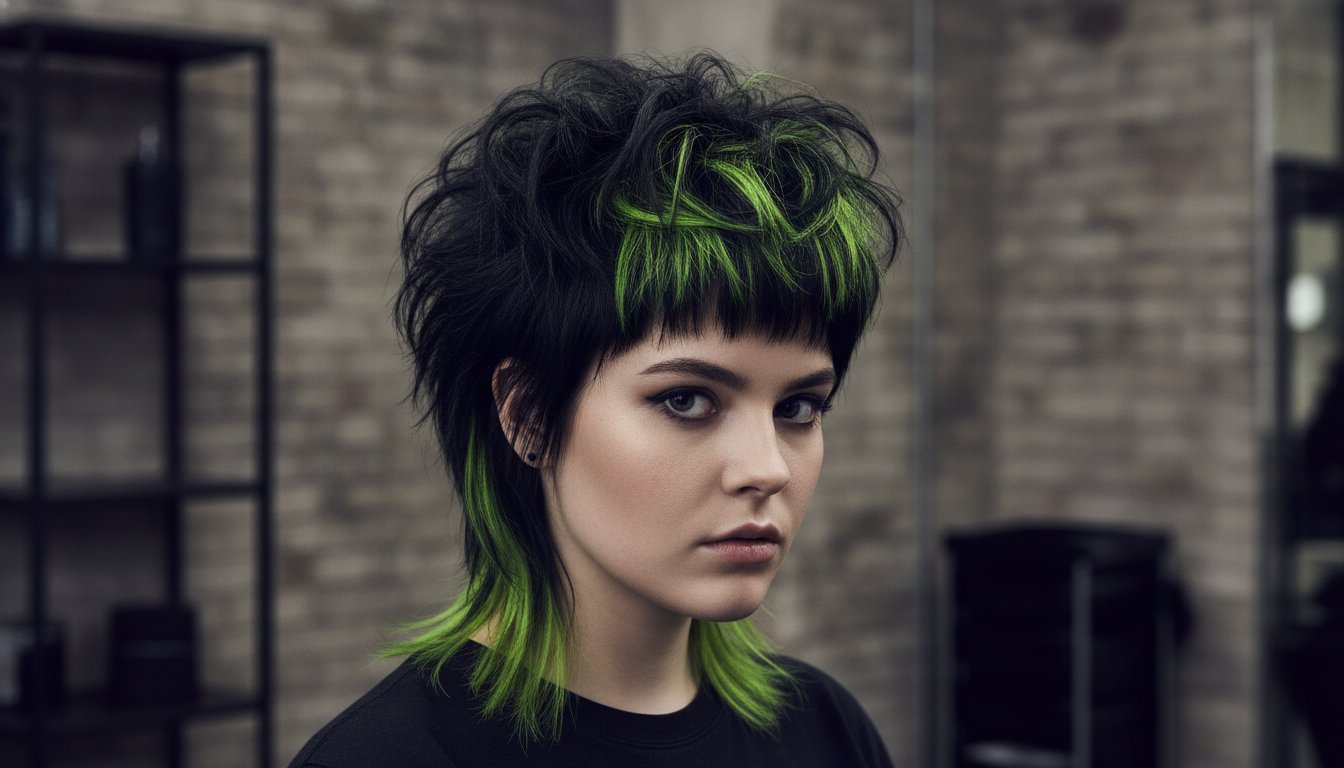
Who told you that a round face needs to be ‘softened’ with a boring, safe haircut? If you’re sick of mainstream stylists trying to make you look ‘cute’ when you actually want an edge, you’re in the right place. Most advice tells you to hide your features. We’re here to sharpen them. Finding the perfect wolf cut for round face isn’t about blending in. It’s about using aggressive texture to build an architectural silhouette that commands attention and defines your jawline.
You’re likely tired of hair that falls flat at the crown or looking too ‘approachable’ for your subcultural identity. You need a look that survives a mosh pit and angles that cut through the noise. We’ll show you how to weaponise the wolf cut to create intense volume and bold, gritty texture that defies traditional beauty standards. We will explore how to specialise your routine with Death Grip and Hair To the Throne to keep your style locked in whilst ensuring your look stays fiercely independent. It’s time to stop hiding and start building a shape that reflects who you really are.
Key Takeaways
- Shatter the myth that round faces need soft styles by weaponising high-contrast, aggressive layers to create sharp, architectural angles.
- Master the ‘Short Top’ technique to build intense crown volume, ensuring your wolf cut for round face provides height rather than unwanted width.
- Learn how to use ‘slashed’ face-framing layers and micro-fringes to cut across cheekbones, transforming a soft silhouette into a bold statement.
- Discover the rough-drying secrets and professional products like Hair To the Throne needed to maintain a gritty texture that survives any mosh pit.
- Understand why skipping the high street for a subculture expert is vital for a gender-inclusive experience that understands your specific alternative aesthetic.
Why the Wolf Cut Rules for Round Faces (and How It Works)
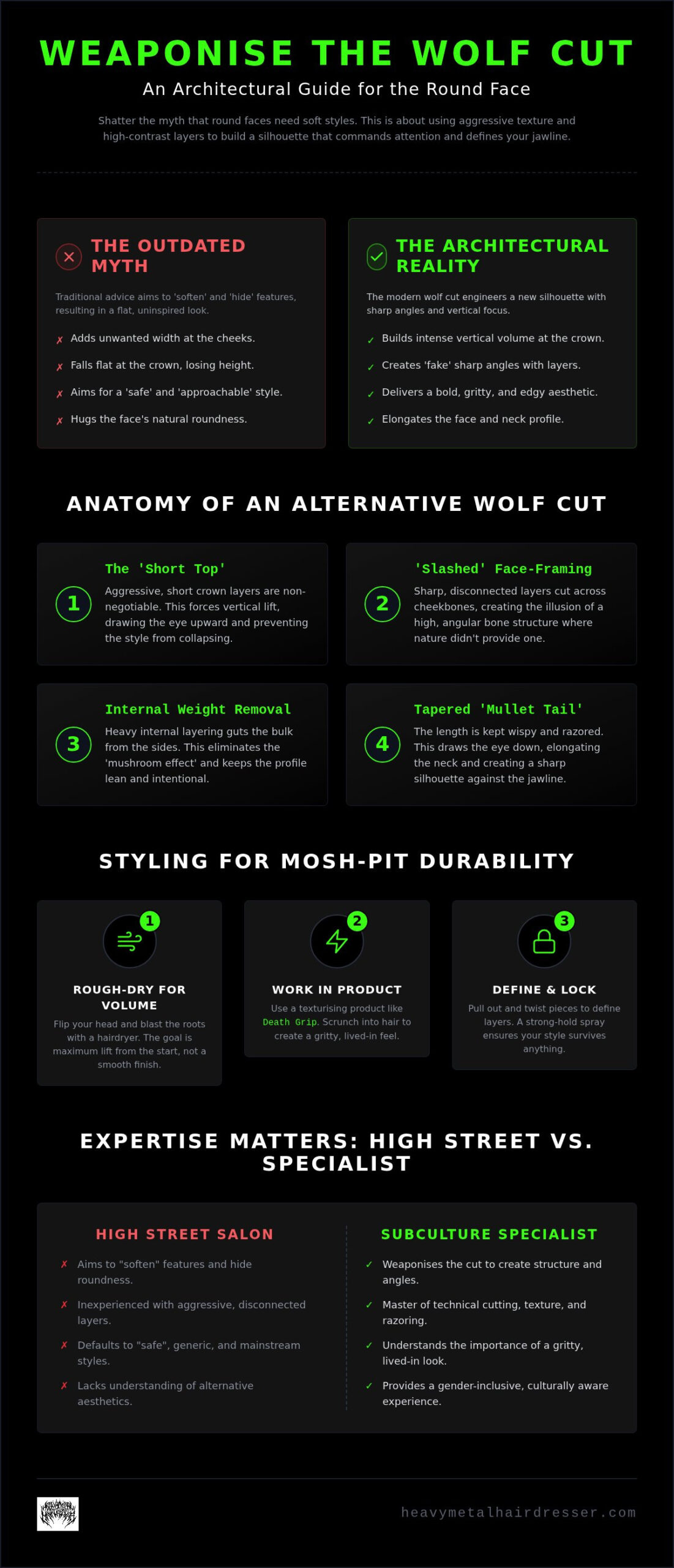
Forget the ‘soft’ look. We aren’t here to blend your jawline into your neck or make you look ‘approachable’. The wolf cut for round face is a high-contrast hybrid of aggressive shaggy layers and mullet-inspired length. It’s the ultimate weapon for anyone sick of being told to play it safe. The wolf cut has solidified itself as a subcultural staple for 2026, offering a middle finger to traditional beauty standards whilst providing a silhouette that actually has some bite.
High-street stylists often claim that round faces can’t handle short layers. That’s outdated bollocks. They’re scared of the texture because they don’t know how to control the weight. If you look at the history of the shag, you’ll see that volume has always been about rebellion and self-expression. We aren’t trying to hide your face shape. We’re trying to give it structure that it doesn’t naturally have. We call this the ‘Architectural Shift’. It’s about using hair to create height and vertical lines that draw the eye up, rather than out.
The Anatomy of an Alternative Wolf Cut
This isn’t your standard salon trim. We use heavy internal layering to gut the weight from the sides of the head. This prevents the hair from poofing out at the cheeks, which is exactly what you don’t want. Instead, we disconnect the length to create a raw, jagged edge that looks lived-in and intentional. In our world, grit is far more important than perfection. We want your hair to look like it has a history, even if you just walked out of the chair. It’s about texture that stays messy and layers that have a life of their own.
Round Face Dynamics: Geometry vs. Softness
Round faces usually find their widest point at the cheeks. Traditional cuts just hug that width and make everything look circular. We do the opposite. By forcing vertical volume at the crown, we offset that horizontal width and create a more elongated look. We create ‘fake’ angles with choppy, pointed layers that slash across the cheekbones. This turns softness into geometry. It’s about building a frame that looks sharp enough to cut. When you focus on height and aggressive texture, the roundness of the face becomes a canvas for the cut, not a problem to be solved.
Engineering the Silhouette: Crown Volume and Face-Framing
The ‘Short Top’ isn’t a suggestion; it’s the foundation. To master a wolf cut for round face, crown layers must be short and aggressive. This creates a vertical focal point that pulls the eye upward. If the top is too long, the hair collapses under its own weight. It adds width where you least want it. We use internal thinning to gut the weight from the sides, especially in the space behind the ears. This prevents the dreaded ‘mushroom effect’ that haunts so many mainstream salon visits. For thick UK hair types, this technical removal of bulk is vital. We create a streamlined profile that stays narrow through the mid-lengths, ensuring the texture looks intentional rather than accidental.
We don’t use soft, wispy bits to ‘frame’ the face in the traditional sense. We use slashed layers. These are sharp, disconnected sections that cut directly across the cheekbones. It creates a synthetic angle where nature didn’t provide one. It mimics the look of high, sharp bone structure. By removing weight from the internal sections, we ensure the hair moves with you. It doesn’t just sit there like a heavy helmet. This is about engineering a silhouette that feels light but looks heavy and textured.
The “Death Grip” on Volume
Flat hair is the absolute enemy of this aesthetic. If your crown falls, your face looks rounder. It’s that simple. We use Death Grip to lock in that raw, percussive texture that defines the subculture. You want to force volume into the roots from the moment you start styling. Use a ‘scrunching’ motion or light back-combing to create a gritty, unpolished feel. It shouldn’t look like you’ve spent hours in front of a mirror. It should look like you’ve been at a show for three hours. If you’re struggling with the technique, our Hair Courses can help you master the art of alternative styling at home.
Jawline Definition through Tapering
The ‘tail’ of the wolf cut is what separates it from a standard shag. For a round face, tapering these ends is crucial for balance. We keep the ends wispy and thin to draw the eye down, effectively elongating the neck. This sharpens the jawline by providing a high-contrast backdrop of negative space. The transition from the shaggy front to the mullet-back must be seamless. We blend these sections using a razor to ensure the silhouette remains architectural rather than bulky. A wolf cut for round face fails if the back is too heavy. It needs to be lean, mean, and perfectly tapered to maintain that aggressive edge.
Choosing Your Fringe: Curtain Bangs vs. Micro-Fringe
The fringe is the anchor of your entire look. It’s the piece that dictates how the rest of the layers behave and where the eye settles. When you’re rocking a wolf cut for round face, the fringe isn’t just an accessory; it’s a strategic tool used to disrupt the circularity of your features. You want something that creates tension and interest. Whether you go for a sweeping shield or a sharp, short blade, the goal is to add structure where nature kept things soft. Don’t let anyone tell you that a certain style is off-limits. It’s all about how you angle the cut to suit your vibe.
Asymmetry is your best friend here. A slightly “wonky” or jagged fringe can actually balance a round face better than a perfectly symmetrical one. It breaks the visual expectation of a circle and introduces a sense of movement. We aren’t looking for salon-perfect precision that looks like a wig. We want a fringe that looks like it has lived a little. It should feel raw, intentional, and unapologetically you.
Curtain Bangs: The Versatile Shield
Mainstream stylists love curtain bangs because they’re safe. We love them because they’re a gateway to more aggressive styling. To make them work for a wolf cut for round face, we cut them cheekbone-high. This creates a sharp diagonal line that slashes across the face, effectively ‘cutting’ the width of the cheeks. When you style them with a slight flick at the eye level, you add width at the top of the face rather than the centre. This draws the eye upward and outward, reinforcing that architectural silhouette we’re building. For a deeper dive into the mechanics of these layers, check out The Ultimate Wolf Hair Cut Guide.
Aggressive Micro-Bangs and Blunt Cuts
Breaking the “round face rules” is what we do best. Conventional wisdom says you should avoid straight horizontal lines, but a micro-fringe is the ultimate bold move for sharpening features. By exposing more of the forehead and the brow, you create a stark, cool contrast against the shaggy length of the rest of the cut. It’s punk, it’s high-fashion, and it’s incredibly effective at defining your brow bone. To keep these short bangs from curling or losing their edge, you need to blow-dry them flat immediately after washing. A tiny bit of product is all you need to keep that blunt line looking sharp whilst the rest of your hair stays chaotic and textured.
Styling Your Wolf Cut for Maximum Grit and Durability
A wolf cut for round face isn’t a ‘wash and go’ style. It requires a specific ritual to ensure those layers don’t just hang there like wet laundry. The goal is to build a structure that looks chaotic but stays exactly where you put it. Start by prepping your damp hair with Hair To the Throne. This isn’t just about heat protection; it adds the initial fibre needed to give the hair some backbone. Without a solid base, the aggressive texture we’ve cut into your hair will simply collapse by midday.
Next, flip your head upside down. Rough-dry your hair whilst focusing the heat at the roots. This forces volume into the crown, which is vital for maintaining that elongated silhouette we discussed earlier. Once dry, use a small amount of Death Grip to define the ‘shards’. Work the product through the ends to create jagged, separated layers that slash across your features. Finally, give it the ‘Mosh-Pit Test’. Shake your head. If it moves but falls back into a gritty, textured shape, you’ve nailed it. Avoid heavy hairsprays that turn your hair into a stiff helmet; we want movement, not a plastic shell.
The Alternative Tool Kit
Your tools dictate the final vibe of your wolf cut. If you have natural waves, a diffuser is your best friend. It enhances the natural chaos of the layers without blowing them into a frizzy mess. For those with straighter hair, use a straightener to create ‘kinks’ rather than curls. Twist the iron back and forth as you move down the hair to create a jagged, irregular bend. For more detailed techniques on managing extreme texture, check out our guide on how to style a modern mullet.
Maintenance Between Salon Visits
Lived-in hair always looks better in the alternative scene, but it needs a bit of help to stay fresh. Use dry shampoo to refresh the texture on second-day hair. It absorbs oil whilst adding even more grit to the roots. If you’re rocking one of our signature vivid colours, avoid high heat where possible to prevent fading. Whilst it’s tempting to trim your own ‘bits’ at home, don’t. One wrong snip can ruin the architectural balance of your wolf cut for round face. Keep your style looking sharp and professional by stocking up on our Death Grip and styling essentials.
Booking Your Specialist: Why a Subculture Expert Matters
Walking into a standard high-street salon and asking for a wolf cut for round face is a massive gamble. Most mainstream stylists are trained to ‘soften’ features and ‘blend’ layers until the edge disappears. They see a round face and immediately try to make it look ‘pretty’ or ‘balanced’ according to traditional beauty standards. That’s not what we do. You aren’t here for a trim; you’re here for a transformation that reflects your identity. A subculture expert understands that ‘aggressive’ is a compliment and that ‘messy’ is a technical skill. We don’t hide your face; we use architectural layers to give it a sharper, more defined attitude.
Finding a gender-inclusive safe space is just as important as the cut itself. Your hair is an extension of your identity, and you shouldn’t have to explain your aesthetic to someone who doesn’t get the scene. When you book with a specialist, you’re entering an environment where being different is the baseline. We speak the same language. Whether you’re preparing for a festival or just want to feel like yourself in the mirror, the right stylist makes all the difference. It’s about feeling seen, not just styled.
Consultation Red Flags to Watch Out For
During your consultation, pay close attention to the language the stylist uses. If they suggest ‘thinning it out’ to make it ‘more manageable’ or ‘softer’, they probably don’t understand the wolf cut for round face. You want to hear terms like ‘gutting the weight’, ‘disconnecting the edges’, or ‘slashing the frame’. If they seem afraid of using a razor or thinning shears to create raw texture, they aren’t the one for you. Always bring photos of musicians or people from the scene rather than over-polished influencers. Real hair that has survived a show is the best reference for what you actually want.
The Heavy Metal Experience
Heavy Metal Hairdresser was built on the front lines of alternative culture. Founder Simon Tuckwell has spent years as a creative stylist for festivals like Download and Bloodstock, meaning we know exactly how to create hair that looks incredible on stage and in the pit. We specialise in the aggressive texture and vivid colour that mainstream salons fear. Our approach is built on inclusive, gender-neutral bookings because your identity shouldn’t dictate your price. For more on why these styles are taking over the UK, check out The Shag Haircut Resurrection. It’s time to stop settling for ‘safe’ and start booking with experts who understand the grit.
Sharpen Your Silhouette and Claim Your Look
You don’t have to settle for the ‘safe’ options mainstream salons push on you. A wolf cut for round face is your chance to break the rules and build a shape that actually reflects your identity. By focusing on aggressive crown volume and slashed face-framing layers, you transform softness into a sharp, architectural statement. It’s about grit, movement, and hair that survives the pit whilst looking effortlessly cool. We’ve spent years styling for the biggest stages at Download and Bloodstock; we specialise in the alternative texture that other stylists fear.
Whether you want a micro-fringe or a disconnected mullet-hybrid, we provide a gender-inclusive safe space for your transformation. Stop hiding behind boring cuts and start weaponising your texture. It is time to step out of the mainstream and into a style that finally feels like you. Book your aggressive wolf cut transformation with the experts and let our team of subculture specialists bring your vision to life. Your new look is waiting. Let’s build something bold.
Frequently Asked Questions
Is a wolf cut good for a round face?
Yes, it is exceptional for adding structure to soft features. A wolf cut for round face works by using aggressive crown volume to create height, which draws the eye upward. This vertical focus breaks the circularity of the face shape. Instead of hiding your features, the disconnected layers create synthetic angles that mimic sharp bone structure. It is about building a frame that has grit, definition, and subcultural edge.
Will a wolf cut make my face look fatter?
No, it won’t make your face look wider if your stylist understands internal thinning. The key is removing bulk from the sides so the hair doesn’t poof out at the cheeks. Mainstream salons often fail here by leaving too much weight. We gut the internal sections to keep the profile lean whilst focusing the volume at the top. This creates a vertical silhouette that sharpens your jawline rather than softening it.
How do I style a wolf cut on a round face if I have fine hair?
Fine hair needs fibre and grit to hold the aggressive shape of a wolf cut for round face. Start by prepping damp hair with Hair To the Throne to build a solid foundation. Rough-dry your hair upside down to force volume into the roots from the start. Once dry, use a tiny amount of Death Grip on the ends to create separated, jagged shards. This prevents fine hair from falling flat.
What is the difference between a wolf cut and a shag?
The wolf cut is a high-contrast hybrid that blends the heavy layering of a shag with the disconnected length of a mullet. Whilst a traditional shag focuses on uniform texture, the wolf cut is more aggressive and architectural. It features a much shorter, choppier top and a distinct tail at the back. It is essentially the shag’s more rebellious sibling, prioritising grit and raw edges over a blended look.
Can I have a wolf cut with a double chin?
Yes, you absolutely can. The wolf cut is actually brilliant for this because the tapered tail at the back draws the eye down and elongates the neck. We keep the ends wispy and thin to create negative space around the jawline, which provides immediate definition. By focusing the volume at the crown and keeping the length lean, we shift the focus toward the sharp, textured angles of the cut.
How often do I need to trim a wolf cut to keep the shape sharp?
You should book a trim every six to eight weeks to maintain the architectural integrity of the layers. Because this style relies on aggressive crown volume and specific internal thinning, it can start to look bottom-heavy as it grows out. Regular maintenance ensures the short top stays short enough to hold its height. It also keeps your face-framing layers sharp enough to cut through the noise of daily life.
Do I need to style my wolf cut every day?
No, you don’t need to do a full styling routine every single morning. In fact, second-day hair often has more of the lived-in grit that makes this style rule. You can refresh the texture in seconds by scrunching a bit more Death Grip into the ends or using dry shampoo to boost the crown. The goal is a look that survives a show, so a bit of morning chaos actually helps.
What products are best for a textured wolf cut?
You need products that provide fibre and hold without adding greasy weight. We recommend Hair To the Throne as a prep spray to build initial volume and protect against heat. For the finishing touch, Death Grip is essential for defining those jagged, shard-like layers. These products are designed for alternative textures that need to stay locked in all day. Avoid heavy waxes that cause the crown to fall flat.