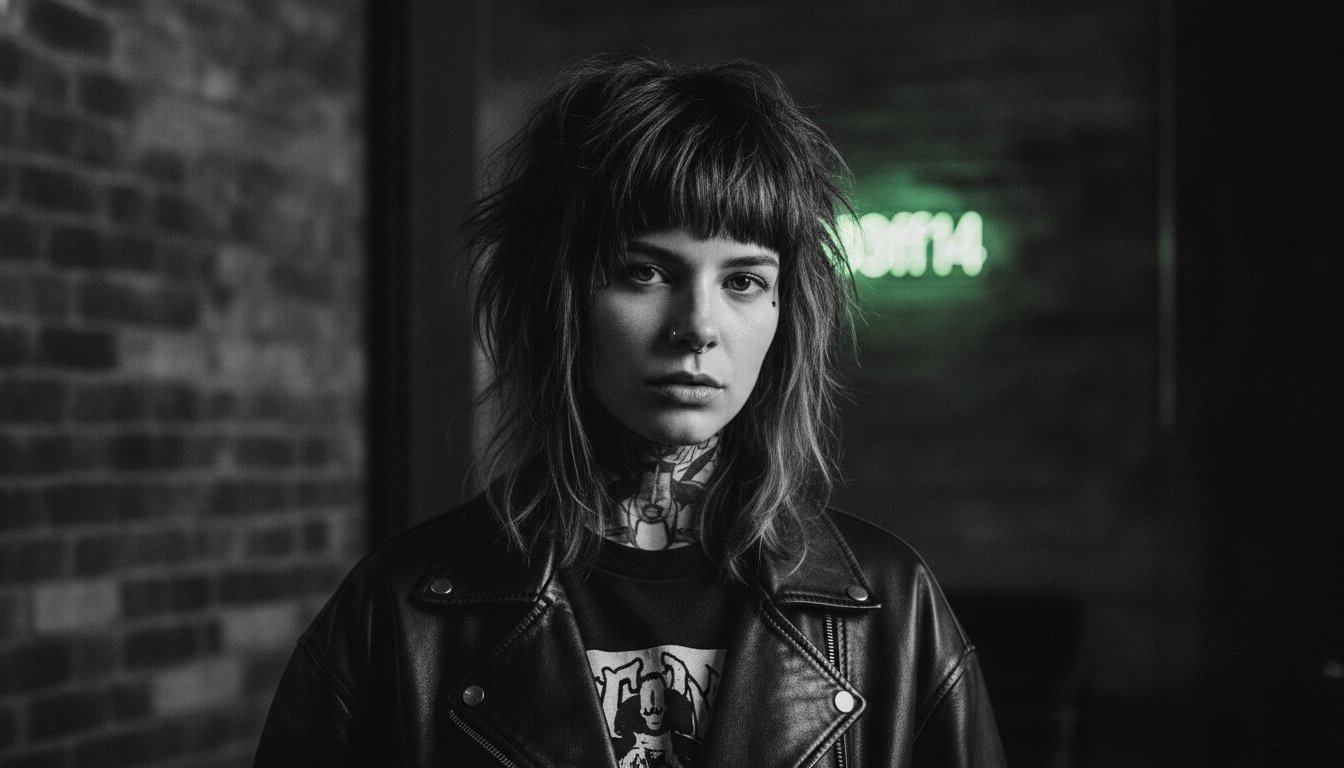
Most stylists are terrified of your hair. They see a reference photo for a wolfcut and immediately try to soften the edges, worried that a jagged, aggressive silhouette will look like a mistake. You walk in wanting a technical hybrid of a shag and a mullet. You walk out with a sensible, blended bob that feels more suburban parent than underground icon. It is the ultimate betrayal of your aesthetic identity.
We know that feeling of being misunderstood whilst sitting in the chair. You want the grit, the disconnected layers, and the raw texture that defines alternative style. This is your definitive guide on how to ask your stylist for a wolfcut without getting a “Karen” cut in the process. We will master the subcultural terminology and the technical preparation required to ensure your stylist actually picks up the razor and commits to the chaos.
We are going to break down the specific language of texture, explain why the shag-mullet balance is non-negotiable, and give you the confidence to demand the aggressive finish you deserve. It is time to stop playing it safe and start looking like yourself.
Key Takeaways
- Understand the technical DNA of the style as a high-contrast merger of shag volume and mullet length that defies mainstream norms.
- Learn exactly how to ask your stylist for a wolfcut using precise terms like “internal weight removal” to avoid a safe, suburban result.
- Master the art of organising reference photos to communicate specific goals for your fringe, crown, and length without leaving room for “safe” interpretations.
- Discover how to tailor the texture for your specific hair type, whether you need to build volume in fine hair or strip weight from thick locks.
- Recognise why choosing an alternative specialist who understands subcultural aesthetics is the only way to guarantee a result with genuine grit.
Decoding the Wolfcut: The Hybrid of Shag and Mullet
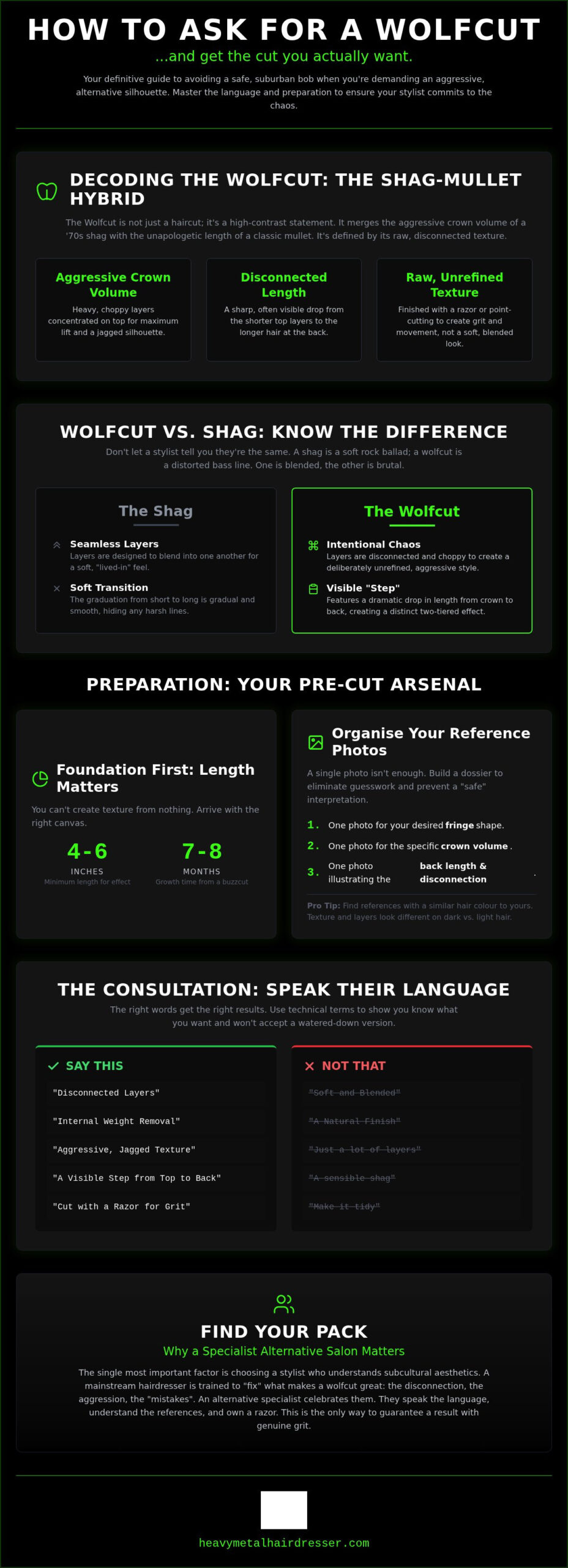
The wolfcut isn’t just a trend. It’s a technical evolution. Think of it as a hybrid of the shag and mullet that has been stripped of its politeness. It takes the aggressive crown volume of a 70s shag and slams it into the unapologetic length of a classic mullet. This is a high-contrast, heavily layered style designed for impact. It doesn’t ask for permission; it demands attention. This specific silhouette is defined by choppy layers, a heavy face-framing fringe, and a disconnected texture that feels raw and unrefined.
If you are wondering how to ask your stylist for a wolfcut that actually looks right, you need to understand the anatomy of the beast. You aren’t looking for a smooth transition or a “natural” finish. You want a fringe that bleeds into shorter, jagged layers on top, whilst the back maintains its length and bite. This cut has become the absolute favourite amongst the UK alternative scene for 2026 because it rejects the polished, “done” look of mainstream salons. It is the ultimate expression of textured grit for those who live outside the norm.
Wolfcut vs. Shag: Understanding the Difference
Don’t let a stylist tell you they are the same thing. A shag is about seamless, lived-in layers that blend into one another. It’s cool, but it’s soft. The wolfcut is about intentional chaos. Whilst both styles use texture to create movement, the wolfcut features a much more dramatic drop in length towards the back. The transition is sharper and more disconnected. If the shag is a soft rock ballad, the wolfcut is a distorted bass line in a basement club. You want that “step” in the hair to be visible, not hidden or blended away into safety.
Why Length Matters Before You Sit in the Chair
You can’t manifest texture out of thin air. You need a solid foundation before you start worrying about how to ask your stylist for a wolfcut. Ideally, you want at least 4 to 6 inches of hair to see the true “wolf” effect. Anything shorter and you are just getting a choppy mullet without the necessary weight to create those iconic layers. If you are growing out a fresh buzz, expect a timeline of roughly 7 to 8 months to reach full form. Your current fringe length is the anchor. It dictates where those first face-framing layers begin and how much “lift” you can actually achieve at the crown.
Preparation: How to Organise Your Reference Photos
Photos are your primary weapon. But one image is never enough. If you want to master how to ask your stylist for a wolfcut, you need a curated dossier, not a single screenshot. Most people fail here. They show a blurry photo of a celebrity and hope for the best. You need 3 to 5 high-quality images that highlight different aspects of the cut. One should show the fringe you want. Another should capture the specific crown volume. A third must illustrate the length at the back. This eliminates the guesswork that leads to a boring, safe result.
Texture is easier to see on lighter hair. If you have dark hair, try to find references with similar tones. A jet-black wolfcut looks completely different from a bleached one in a photo. Shadows and layers often get lost in the darkness of a digital screen. By finding models with a similar hair colour to yours, you can see exactly how those choppy layers will behave on your own head. It allows you to point at a specific strand and say, “I want this level of disconnection.”
Selecting the Right Reference for Your Face Shape
Face-framing layers are the engine room of this style. They can be adjusted to accentuate your jawline or soften your features. Curtain bangs act as the bridge. They connect the aggressive top volume to the disconnected sides. You must avoid those over-edited, highly filtered social media shots. They are a lie. They show hair that has been photoshopped to look fuller than humanly possible. Real hair has gaps. Real hair has movement. Choose references that look like they exist in the real world, not just on a curated feed.
The ‘Styling Reality’ Check
Be honest about your morning routine. Does the photo show air-dried hair or a professional salon blowout? Most wolfcut references you see online have been meticulously styled for the camera. You need to identify if the look you love requires specific textured styling products like Death Grip or Hair To the Throne to maintain its structure. Be prepared to discuss your daily hair behaviour with your stylist. If you aren’t going to blow-dry it, tell them. They can then cut more grit into the hair to ensure it holds its shape without the extra effort. If you want to see how we handle these transformations in person, take a look at our latest wolfcuts for some genuine inspiration.
The Consultation: Technical Terms to Use (and Avoid)
Never say the word “trim”. That word is the death of alternative hair. To a mainstream stylist, it signals a desire for safety and minimal change. If you want to know how to ask your stylist for a wolfcut, you must use language that signals technical precision and a refusal to play it safe. Ask for “internal weight removal”. This isn’t about thinning the hair with cheap thinning shears. It’s about carving out space within the structure so the hair can actually move. It creates that signature shaggy lift that makes the style look alive rather than flat and heavy.
Demand “short, choppy layers” through the crown. This is where the volume lives. If the layers are too long, the weight will drag the style down into a standard layered cut. You want the top to feel almost like a separate entity from the length. Use the term “disconnected” if you want a sharper, more aggressive transition between the top and the bottom. It tells the stylist you aren’t afraid of a visible step. You aren’t looking for a “natural” blend. You are looking for a silhouette with genuine bite.
Razor Cutting vs. Scissor Cutting
Razor cutting is the gold standard for this aesthetic. It creates a “shattered” edge that scissors struggle to replicate. Ask your stylist: “Do you use a straight razor for textured layers?” A razor thins the ends in a way that feels raw and punk. If you prefer something slightly more controlled, scissor “point-cutting” is the alternative. It provides a softer wolfcut whilst still maintaining the necessary grit. Most mainstream stylists default to scissors. Specialists reach for the blade.
Nailing the Fringe and Face-Framing
The fringe makes or breaks the look. When you are explaining how to ask your stylist for a wolfcut, be very clear about the fringe. Ask for “eyebrow-grazing” or “shattered” bangs. You want them to look like they were cut with intent, not just shortened to stay out of your eyes. Ensure the “step” between the fringe and the side layers isn’t too blunt. It should flow, but with enough texture to avoid looking like a helmet. Finally, specify that you want a “flick” at the ends of the layers. This ensures the hair kicks out rather than curling under, maintaining that wild energy.
Customising the Cut for Your Hair Type
Your hair density shouldn’t be a barrier to alternative style. It just changes the technical roadmap. When you are figuring out how to ask your stylist for a wolfcut, you must account for how your specific strands behave. Fine hair needs support. Thick hair needs space. Curly hair needs a stylist who understands how to let the texture breathe without losing the shape. This is about adapting the grit to your reality, not forcing a reference photo onto a texture that can’t support it.
Injecting Chaos into Thin Strands
There is a common myth that wolfcuts don’t work on thin hair. That is rubbish. You just need a different strategy. Over-layering fine hair is a disaster; it removes the weight needed to maintain a silhouette and makes the hair look sparse. Instead, focus on blunt ends to create the illusion of thickness. We use internal layering to build “faked” volume from the inside out. Adding vivid hair colour can also provide visual depth, making the layers look more substantial. Dry cutting is essential here. It allows the stylist to see exactly where the hair falls in its natural state, ensuring they don’t take too much weight from the wrong places.
Taming the Beast: Thick and Coarse Hair
Thick hair is the ultimate canvas for a wolfcut, but it requires aggressive weight removal. Without it, you end up with a “mushroom” effect that looks more like a 1980s helmet than a modern alternative icon. The crown needs strategic thinning to prevent it from becoming too poofy. You want the flow of the cut to remain sharp and gritty. It is about stripping out the bulk whilst keeping the structure intact. This allows the layers to sit flat where they should and kick out where they need to, maintaining that signature aggressive silhouette without the unnecessary weight.
Curly and wavy hair types are born for this style. The natural movement adds a layer of “chaos” that straight hair has to work hard to replicate. The key is managing cowlicks and natural partings. A heavily layered style can sometimes make a parting look sparse if not handled correctly. Your stylist needs to work with your natural growth patterns, not against them. This ensures the cut looks intentional even when you haven’t touched a styling tool. If you are ready to ditch the mainstream and embrace the grit, book your wolfcut transformation with a team that speaks your language.
Finding Your Pack: Why a Specialist Alternative Salon Matters
Mainstream salons operate on a “safe” default. They fear the razor. They fear the disconnection. To them, a wolfcut is just a mistake they haven’t “corrected” yet. You need a specialist who understands that your hair is a subcultural flag. Whether your influences are 70s punk, 90s grunge, or modern metal aesthetics, your stylist should already speak that language. This makes the process of how to ask your stylist for a wolfcut much simpler. You aren’t teaching them; you are collaborating with them.
Look for salons that lead the industry rather than just following it. Those who offer alternative hair courses UK are usually at the forefront of these technical styles. They aren’t just copying TikTok trends. They are creating the blueprints. A stylist who teaches others how to master textured grit is far more likely to give you the aggressive, raw finish you are looking for.
The Safe Space Consultation
A proper alternative salon is more than just a place for a haircut. It is a gender-inclusive safe space. You should feel empowered to express your identity as clearly as your haircut goals. Look for salons that celebrate individuality rather than just tolerating it. One major sign of an expert, modern salon is inclusive, gender-neutral pricing. It shows they value the craft and the person, not outdated binary categories. Communicating your identity should be as natural as discussing your fringe length.
Vetting Your Stylist’s Portfolio
Don’t be fooled by a generic mood board. Anyone can pin a photo. You need to see real wolf hair cuts in their actual client work. Check their social media for evidence of “aggressive” textures and vivid colours. If their portfolio is full of soft balayage and “safe” trims, they aren’t the one for your wolfcut. You want to see evidence of technical grit and a willingness to break the traditional rules of hairdressing. This gives you the confidence to sit in the chair and know you won’t walk out looking like everyone else.
You have the terminology. You have the reference photos. Now you just need the right hands to execute the vision. Stop settling for watered-down versions of your identity. Book your transformation with the Heavy Metal Hairdresser crew and finally walk out with the aggressive, textured wolfcut you actually wanted.
Own Your Texture and Join the Pack
You now have the technical script and the visual evidence to secure the cut you actually want. Mastering how to ask your stylist for a wolfcut is about more than just showing a picture. It is about demanding internal weight removal and refusing the safety of a standard trim. You know how to curate your references based on your hair density and how to communicate with technical precision. No more suburban bobs. No more watered-down layers. You are finally ready to claim the grit.
Don’t leave your aesthetic to chance in a mainstream salon that doesn’t understand your world. As a specialist alternative hair salon, we live for aggressive texture and vivid colour. We provide a gender-inclusive safe space where your identity is the priority, not a trend to be softened. It is time to stop compromising and start looking like the icon you are. Book your wolfcut at Heavy Metal Hairdresser and let our experts carve out the silhouette you deserve. Your hair is your loudest statement. Make sure it says exactly who you are.
Frequently Asked Questions
What do I say to my hairdresser to get a wolfcut?
You should ask for “internal weight removal” and “short, choppy layers” through the crown to achieve that signature shaggy lift. Avoid saying you want a “trim”, as this signals safety to a mainstream stylist. Instead, use technical terms like “disconnected texture” to ensure the transition between the top volume and the length is sharp, gritty, and unapologetic.
Can I get a wolfcut if I have very fine or thin hair?
You can definitely get a wolfcut with fine hair, but the strategy must change to avoid making the hair look sparse. Focus on keeping the ends blunt whilst using internal layering to build volume from the inside out. Dry cutting is essential here. It allows the stylist to see exactly how the layers behave without the weight of water dragging them down into a flat silhouette.
Is a wolfcut the same as a shag or a mullet?
No, it is a technical hybrid that merges the crown volume of a shag with the aggressive length of a mullet. Whilst shags are often about seamless, lived-in layers, the wolfcut is about intentional chaos and disconnection. It features a much more dramatic drop in length towards the back, creating a high-contrast silhouette that a standard shag usually lacks.
How long does my hair need to be for a wolfcut?
You need at least 4 to 6 inches of hair to see the true effect of the layers. Anything shorter and you are essentially getting a choppy mullet without the necessary weight to create the iconic “wolf” silhouette. If you are growing out a buzz cut, expect a wait of roughly 7 to 8 months to reach the ideal starting length for this style.
How do I style a wolfcut at home so it looks like the salon?
Focus on enhancing the natural texture with lightweight products like sea salt sprays or texturising mists. Air-drying often works best to maintain the “intentionally undone” look, but you can use a diffuser for extra root volume. If you want more definition, use a small amount of styling cream to separate the choppy layers without weighing the hair down with heavy oils.
Do I need to go to a specialist alternative salon for this cut?
It is highly recommended to seek out a specialist because mainstream salons often default to “safe” techniques that water down the result. Alternative specialists understand subcultural aesthetics like punk and grunge. They aren’t afraid to use razors or create the aggressive, disconnected layers that define the style, ensuring you don’t end up with a sensible, blended bob that lacks grit.
What is the maintenance like for a wolfcut?
You should expect to visit the salon every 6 to 8 weeks to maintain the shape and prevent the layers from becoming too heavy. Because this style relies on crown volume, the “lift” will start to drop as the hair grows out. Regular maintenance ensures the fringe stays at the right length and the internal weight removal remains effective for that signature kick.
Can a wolfcut be gender-neutral?
The wolfcut is inherently gender-neutral and suits anyone looking to express a non-conformist identity. Its roots in subcultural hair mean it prioritises self-expression over traditional binary beauty standards. When learning how to ask your stylist for a wolfcut, focus on the silhouette and texture rather than gendered terms to ensure the result matches your personal aesthetic and provides a safe, inclusive experience.