Why settle for a lukewarm, mainstream trim when you could walk out with a haircut that actually looks like it has teeth? You know the anxiety of sitting in that chair, clutching your phone, and wondering if your stylist is about to “soften” your edges into something unrecognisable. It’s a common fear amongst those of us in alternative subcultures. If you’re worried about your layers being too polite or your fringe looking too “Pinterest-perfect,” you need a tactical plan. Mastering how to ask your stylist for a wolfcut is about more than just showing a photo; it’s about speaking the language of grit.
This is your ultimate blueprint for securing a cut that matches your energy. We’re going to arm you with the technical vocabulary, the specific visual prep, and the confidence to ensure your hair is a weapon of self-expression rather than a standard service. You’ll learn the difference between a soft shag and a lethal wolfcut. We’ll cover how to demand aggressive texture whilst keeping the length you love, ensuring you walk out feeling like yourself, only sharper.
Key Takeaways
- Identify the wolfcut as a high-contrast hybrid of the 70s shag and 80s mullet to nail that specific, aggressive silhouette.
- Learn exactly how to ask your stylist for a wolfcut using technical terms like “internal weight” and “tension” to avoid a generic or rounded “mom” haircut.
- Build a visual arsenal of gritty, alternative reference photos that communicate your subcultural identity better than any mainstream celebrity snap.
- Secure your look by asking critical consultation questions about the three-month grow-out and the stylist’s approach to aggressive texture.
- Understand why seeking out a specialist alternative salon is the ultimate move for those who prioritise raw self-expression over high-street polish.
What Is a Wolfcut? Defining the Aggressive Shape You Want
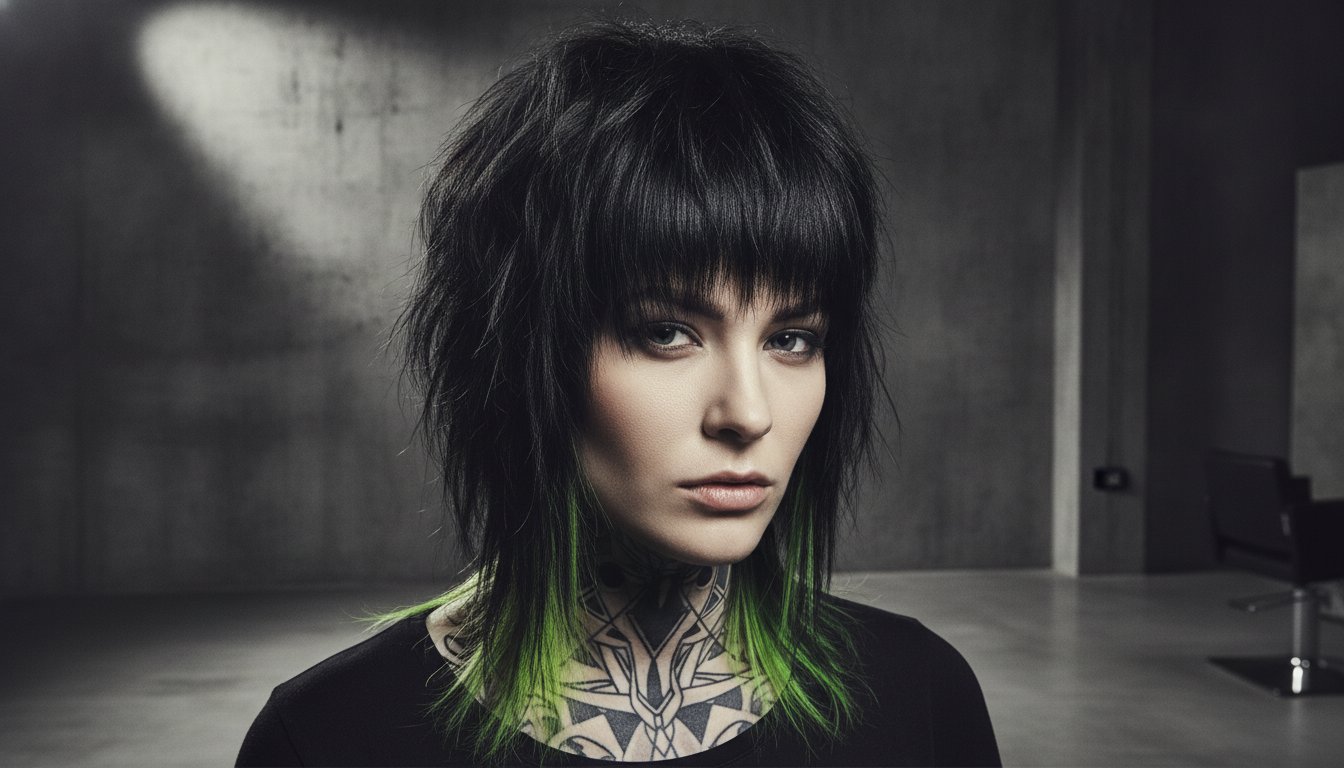
The wolfcut isn’t just a trend; it’s a high-contrast evolution of subcultural style. Think of it as a lethal hybrid that takes the heavy, textured crown of a Shag (haircut) and marries it to the rebellious, elongated tail of an 80s mullet. This isn’t a cut for those who want to blend in. It’s defined by extreme volume at the top of the head that tapers into wispy, almost shattered ends. Whilst mainstream salons might try to “soften” the look, a true wolfcut thrives on its aggressive, disconnected layers.
The beauty of this shape lies in its inclusivity. It’s a gender-neutral silhouette that works across every hair texture, from pin-straight to tight coils. On curly hair, it prevents the dreaded “triangle” shape by removing weight where it isn’t needed. On straight hair, it creates movement where none existed before. When you’re figuring out how to ask your stylist for a wolfcut, you must emphasise that you want a shape that looks intentional and sharp, not something that has been blended into submission.
The Difference Between a Soft Shag and a Wolfcut
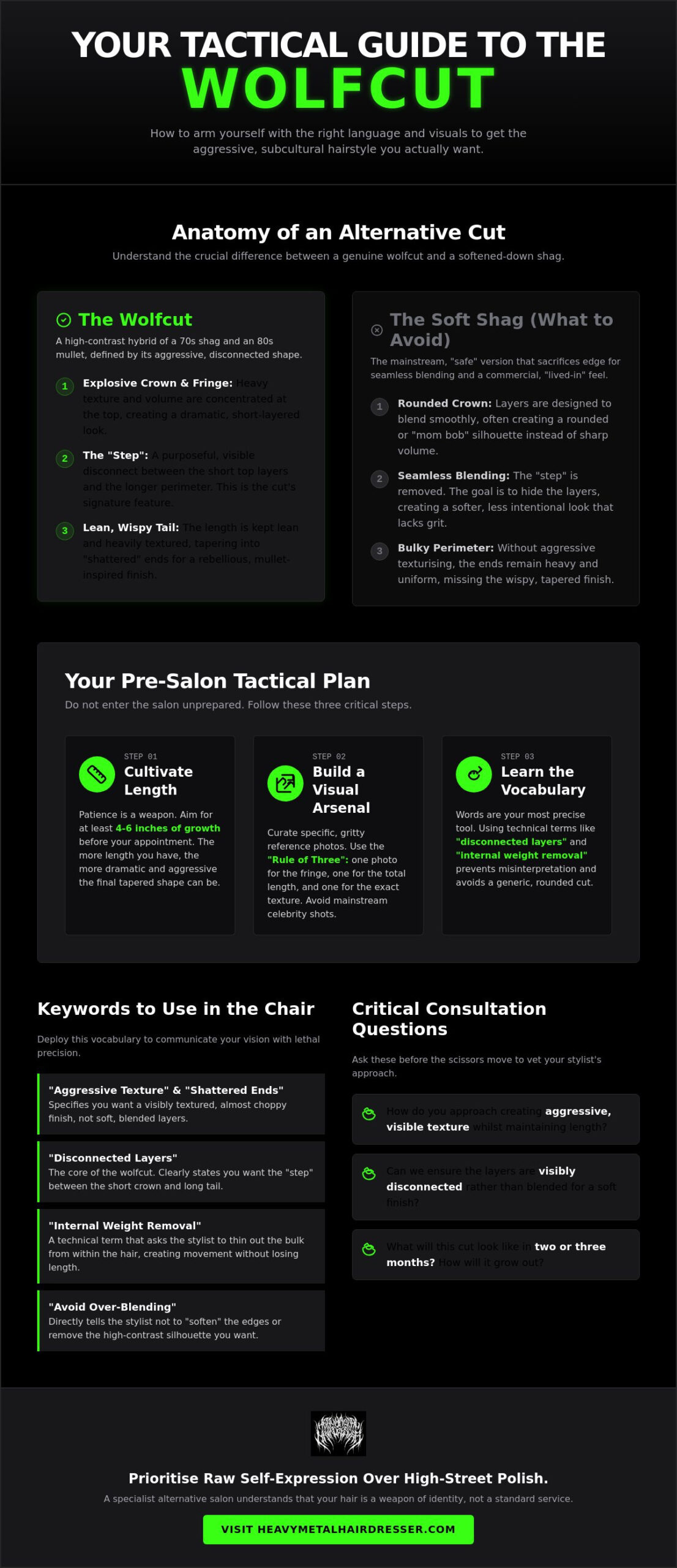
Many people confuse these two, but the difference is in the grit. A soft shag is all about seamless blending and a “lived-in” feel. In contrast, a wolfcut embraces the “step” between lengths. The crown is explosive and short, whilst the perimeter remains lean and elongated. It’s this high-contrast gap that gives the cut its alternative edge. If your stylist starts talking about “soft layers,” they might be veering too far into mainstream territory. You want layers that are purposeful, shattered, and unashamedly bold.
Why Length Matters Before You Hit the Chair
Patience is a virtue, even in the underground scene. For the most dramatic results, aim for at least four to six inches of growth before booking in. Your starting length dictates the “tail” of your wolfcut. If you’re transitioning from a buzz cut, you’ll likely end up with a “cub cut” (a shorter, bob-length version) first. If you’re coming from a bob, your stylist will need to focus on internal weight removal to ensure the shape doesn’t look like a mushroom. Knowing how to ask your stylist for a wolfcut means understanding that the longer your hair is to start, the more “aggressive” that taper can be.
- The Crown: Needs to be short enough to create height.
- The Tail: Needs enough length to maintain that wispy, mullet-inspired finish.
- The Connection: Or lack thereof; the “step” is what makes it a wolfcut.
Gathering Your Visual Arsenal: How to Choose Reference Photos
Your reference photos are your primary communication tool. They are the bridge between the vision in your head and the scissors in your stylist’s hand. If you walk into a salon and show a photo of a “normie” celebrity with a soft, blow-dried shag, don’t be surprised when you leave with a safe, suburban bob. To get a result that actually feels alternative, you must curate your inspiration with intent. This is the first tactical step in how to ask your stylist for a wolfcut that carries real subcultural weight.
Avoid generic red-carpet shots. Instead, look for specialists who live and breathe wolf hair cuts to see how they handle the disconnect between the crown and the perimeter. Use the “Rule of Three” to eliminate confusion. Bring one photo specifically for the fringe, one for the total length, and one that highlights the exact texture you want. This prevents your stylist from guessing and ensures the “lethal” edge you’re after remains intact.
Matching Photos to Your Natural Hair Texture
Physics doesn’t care about your aesthetic. If you have pin-straight hair, showing a photo of a curly wolfcut is a recipe for disappointment. You need to find “real-world” photos that reflect your natural behaviour. Look for images where the hair hasn’t been over-styled with a round brush for social media. If you’re working with less density, search for wolfcuts for thin hair to see how aggressive layering can actually create the illusion of massive volume amongst finer strands.
Identifying the ‘Vibe’ of Your Layers
Decide early if you want “shattered” ends or a heavier, more blunt perimeter. Shattered ends provide that wispy, ethereal look often seen in underground Japanese street style. A blunt perimeter feels more like a classic 80s mullet. Consider your lifestyle too. A “long wolfcut” offers more versatility for updos, whilst a “short wolfcut” demands a commitment to the shape. Look for photos of the hair “in the wild,” perhaps at a gig or a festival, to see how the layers move when they aren’t fresh from the chair. If you’re looking for a specialist who understands this grit, exploring the work at heavymetalhairdresser.com can help refine your visual goals.
- Fringe: Is it a heavy curtain bang or a jagged micro-fringe?
- Length: Where does the longest point sit on your shoulders?
- Texture: Are the layers chunky and visible or finely sliced?
The Technical Vocabulary: Keywords to Say to Your Stylist
Vague language is the enemy of an alternative look. If you just ask for “layers,” you’re leaving your identity in the hands of someone who might think you want a safe, 90s-style blowout. Knowing how to ask your stylist for a wolfcut requires a specific, technical lexicon. You must move past beauty industry clichés and use descriptors that prioritise grit over polish. This prevents the dreaded “mushroom” effect or, worse, a generic “mom” haircut that drains your subcultural energy.
Focus on “internal weight” and “tension.” These aren’t just buzzwords; they describe how the hair actually sits on your head. Requesting “internal texturising” helps remove bulk from the mid-lengths whilst keeping your perimeter lean. This ensures the shape stays narrow and sharp rather than puffing out into a round, feminine silhouette. You want the hair to look like it has been sculpted with a razor, not just trimmed with scissors.
Terms for the Crown and Layers
For the top of your head, be direct. Ask for “short, aggressive crown layers.” You want height that defies gravity and creates a rebellious profile. Tell your stylist you want “choppy, shattered ends” rather than blunt ones. This creates a lived-in feel that doesn’t require hours of styling. By removing weight internally, your stylist can give you that “explosive” volume at the crown whilst keeping the rest of the hair wispy and tapered.
Defining the Face Frame and Fringe
Your face frame is the focal point of the entire cut. Decide if you want “curtain bangs” that sweep away or a heavy, straight-across “bottleneck” fringe that sits lower on the forehead. Specify where you want the shortest face-framing pieces to start; cheekbone height adds high-fashion drama, whilst jawline length offers a slightly softer transition. If you want to lean into a modern mullet hybrid, mention “tapered sideburns” to narrow the silhouette and heighten the contrast.
Finally, be clear about the “disconnect.” This is the structural gap where the short layers on top don’t perfectly blend into the longer pieces at the bottom. It is the defining feature of the look. When researching how to ask your stylist for a wolfcut, remember that most traditional training focuses on seamless blending. You are asking them to break those rules. Demand that “step” between the crown and the length to ensure your look remains unapologetically alternative and fierce.
The Consultation: Questions to Ask Before the Scissors Move
The consultation is the final gatekeeper. It is where you test if the person holding the shears actually respects your subcultural identity or if they are just chasing a TikTok trend. This is a fiercely inclusive space. Your gender, your hair texture, and your personal aesthetic should be celebrated, not “corrected” to fit a mainstream mould. Learning how to ask your stylist for a wolfcut is as much about the questions you ask as the photos you show.
Ask them directly: “How will this shape grow out over the next three months?” A professional who understands alternative shapes will explain how the disconnected layers will settle into a wearable shag over time. If they look confused, they might be planning a cut that only looks good for twenty minutes. You also need to clarify the styling commitment. Ask if the cut will hold its grit without a professional blow-dry. A true wolfcut should look better after a night at a gig than it does fresh from the chair.
Don’t let a stylist talk you out of the look because of “thin hair.” This is a common objection in mainstream salons. Address it head-on. Explain that you want internal weight removal to create volume at the crown. Aggressive layering is a tool for texture, not a threat to density. If you want a result that doesn’t compromise on your vision, book your wolfcut consultation with an expert who values your individuality.
Testing Their Alternative Expertise
Ask if they have experience with the techniques used by specialist shag hairdressers. You want to know if they understand low-maintenance, high-impact shapes. Are they comfortable with aggressive layering patterns? If they seem hesitant to go “too short” on the crown, they might not be the right fit for your vision. A specialist will embrace the “step” and the grit rather than trying to blend it into submission.
Managing Your Expectations for Daily Styling
Discuss the products needed to maintain that raw, gritty texture. Enquire about air-dry techniques that enhance your hair’s natural rebellion. This is also the perfect time to talk about how vivid hair colour can be used to highlight the shattered ends of your new cut. High-pigment tones can turn a great shape into a masterpiece of self-expression; making every layer pop with intent.
- The Grow-out: Will it require a trim every six weeks or every three months?
- The Product: Do I need salt spray, wax, or a heavy-duty grip?
- The Texture: How will my natural waves react to these aggressive layers?
The Heavy Metal Hairdresser Approach: Grit, Identity, and Texture
High-street chains often prioritise “pretty” over “personality.” They want to give you a haircut that fits into a corporate office or a family reunion. Simon Tuckwell’s philosophy is the complete opposite. It’s about celebrating individuality through aggressive texture and raw self-expression. When you’re deciding how to ask your stylist for a wolfcut, the most critical factor is the environment you choose. A specialist alternative salon isn’t just a place for a trim; it’s a sanctuary where your subcultural identity is the blueprint. It’s a gender-inclusive safe space where being different is the standard, not the exception.
Mainstream stylists might try to “fix” the disconnect or soften the layers to make the cut more “wearable.” In our world, the disconnect is the point. We use professional-grade tools and years of underground expertise to ensure your hair looks like a weapon of intent. This approach honours the history of the shape whilst pushing it into a modern, gritty reality. Your hair should reflect who you are, whether you’re in the middle of a mosh pit or standing on a stage. It’s about grit, not just glamour.
Maintenance Tools for the Wolfcut
A lethal cut requires the right arsenal to maintain its edge at home. To keep those shattered layers looking sharp, you need Death Grip. It’s the ultimate clay for creating that piecey, aggressive texture that defines the wolfcut. For the crown, Hair To the Throne provides the maximum volume and lift needed to defy gravity. Maintaining the look is a lifestyle choice. That’s why wearing alternative hair merch is just as important as the products you use; it signals your allegiance to the scene.
Booking Your Transformation
Don’t trust your vision to someone who doesn’t understand the nuances of alternative music and fashion. You need a specialist who knows the difference between a bad mullet and a masterfully executed wolfcut. Prepare for your appointment by reflecting on the grit you want to project. When you’re ready to commit to a shape that actually feels like you, Book your wolfcut consultation with the masters of texture. We don’t do “normal.” We do you, only louder.
- The Specialist: Seek out those who live and breathe alternative culture.
- The Prep: Bring your visual arsenal and your technical vocabulary.
- The Result: A haircut that matches your energy and your identity.
Take Command of Your Alternative Identity
Walking into a salon with a vision is only half the battle. Now that you’ve mastered how to ask your stylist for a wolfcut, you have the tactical edge needed to protect your aesthetic. By using technical terms like internal weight and demanding a purposeful disconnect, you ensure your hair remains a weapon of self-expression. Remember to stick to the Rule of Three with your reference photos and never settle for a “soft” version of a shape that deserves grit.
If you’re tired of mainstream stylists who don’t understand the pit or the stage, it’s time to visit a specialist. Simon Tuckwell founded Heavy Metal Hairdresser as a fiercely gender-inclusive safe space for those who live outside the norm. Our team has styled for iconic events like the Download and Bloodstock festivals, so we know exactly how to handle aggressive texture. Secure your wolfcut with the alternative experts at Heavy Metal Hairdresser and walk out with a look that actually reflects who you are. Your identity is too valuable to be left to chance; own your style and stay loud.
Frequently Asked Questions
Can I get a wolfcut if I have very fine or thin hair?
Yes, you absolutely can. It is a total myth that layering makes thin hair look sparse. When you are researching how to ask your stylist for a wolfcut with finer strands, focus on “internal weight removal.” This technique creates height at the crown and prevents your hair from looking flat or lifeless. The aggressive layers actually build a structural silhouette that gives the illusion of much thicker hair.
How long does my hair need to be for a wolfcut?
Aim for at least four to six inches of length for the best results. This starting point ensures there is enough hair to create that signature wispy “tail” whilst maintaining volume on top. If your hair is currently shorter, you might start with a “cub cut,” which is a bob-length version of the shape. As it grows, your stylist can transition the layers into a full-blown wolfcut silhouette.
What is the difference between a wolfcut and a mullet?
The wolfcut is a high-contrast hybrid that offers more volume on the sides than a traditional mullet. Whilst a mullet is defined by very short sides and a long back, the wolfcut keeps the shaggy, face-framing layers of a 70s shag. It feels more “filled in” around the face. It’s the perfect choice if you want the rebellion of a mullet without the extreme “business in the front” contrast.
Do I have to style my wolfcut every day?
No, this cut is designed to thrive on low-maintenance grit. It actually looks better the second or third day after washing when your natural oils add some lived-in texture. You don’t need a round brush or a blow-dryer to make it work. Just scrunch in some salt spray or a bit of Death Grip clay and let it air-dry for that raw, rock-inspired finish.
Will a wolfcut work with my natural curls or waves?
Curls and waves are actually the perfect foundation for this shape. Natural texture adds immediate volume and movement that straight hair often has to fight for. When you’re figuring out how to ask your stylist for a wolfcut on curly hair, ensure they plan to cut it dry. This prevents the “triangle” effect and ensures the layers sit exactly where they should once the hair bounces back.
How often do I need to get my wolfcut trimmed?
Expect to book a tidy-up every 8 to 12 weeks. The beauty of this alternative shape is that it grows out into a beautiful, shaggy mess that still looks intentional. You only need to head back to the chair when the crown layers lose their “explosive” lift or the fringe starts to obscure your vision. It is one of the most forgiving cuts for those who hate frequent salon visits.
Can I have a wolfcut with vivid hair colours?
Vivid colours and wolfcuts are a match made in subcultural heaven. High-pigment tones like cherry cola or icy platinum highlight the “shattered” ends and make every aggressive layer pop. Because the cut has so much movement, the light hits different sections of the colour constantly. It turns your hair into a shifting, high-contrast weapon of self-expression that looks incredible under stage lights.
Is the wolfcut a gender-neutral hairstyle?
The wolfcut is unapologetically gender-inclusive and belongs to everyone. It is a shape defined by subcultural identity and personal grit rather than traditional gender norms. Whether you want to lean into a more masculine, mullet-heavy vibe or a softer, feminine shag, the technical principles remain the same. It is about sculpting a look that fits your soul, regardless of where you sit on the spectrum.