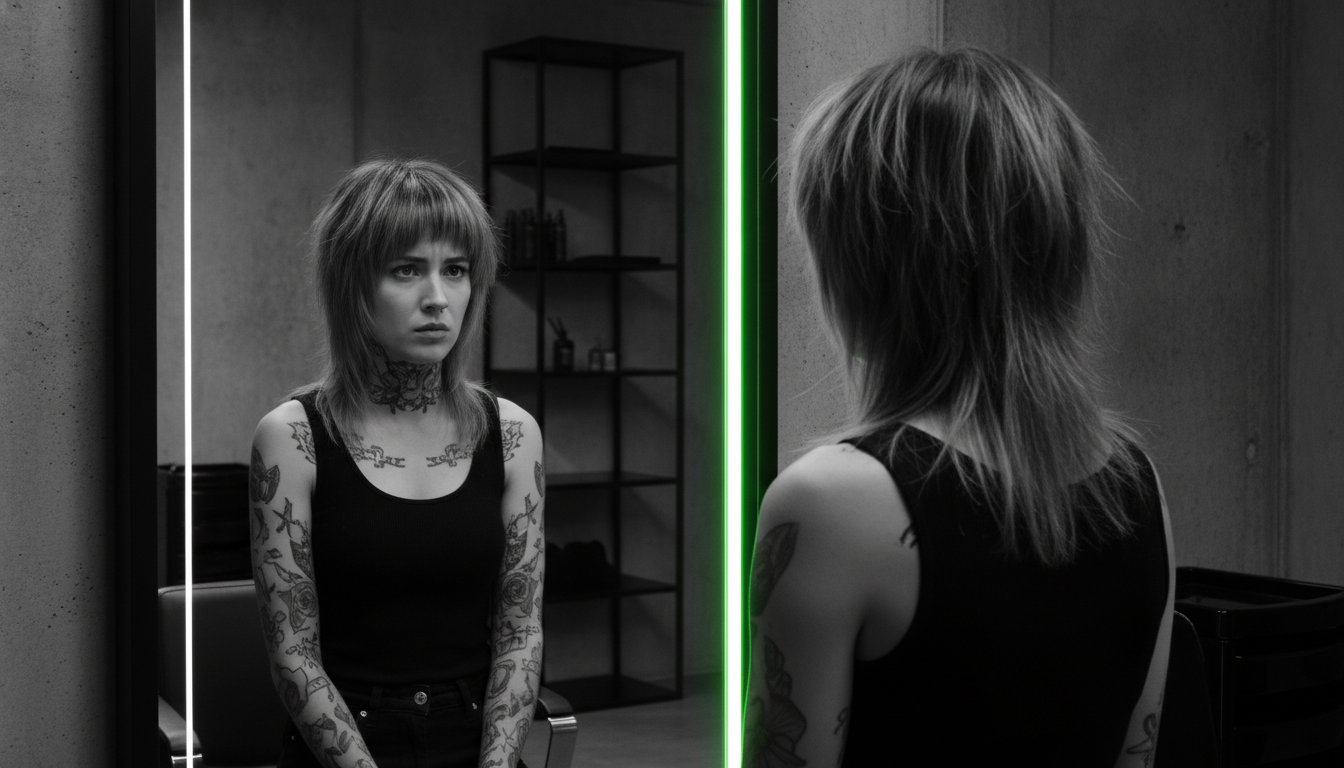
You left the salon chair expecting a raw, shaggy masterpiece, but you walked out looking like a suburban newsreader from 1985. Instead of the effortless, gritty texture you craved, you’re staring at disconnected “staircase” layers and a fringe that’s far too short for comfort. It’s a total gut-punch when your hair feels more “polished” than “punk.” Fixing a bad wolfcut haircut starts with acknowledging the mess, then refusing to let a mainstream stylist dictate your aesthetic ever again.
We know that sinking feeling when your external identity doesn’t match the rebel inside. A botched cut feels like a loss of self-expression, especially when the crown lacks volume and the layers look like a literal set of stairs. But your style isn’t dead. You can turn this disaster into a look that’s even bolder and more intentional than your original vision. It is time to reclaim your grit.
In this guide, you’ll discover how to identify exactly where the scissors went rogue and how to manage the chaos with professional blending techniques. We’ll explore structured, intentional alternatives that salvage your length whilst transforming the silhouette. From using aggressive texture to growing it out gracefully amongst the mess, we’ll ensure you walk away with a style that screams independence rather than a mistake.
Key Takeaways
- Learn to spot technical errors like the “staircase effect” and “rat tails” that ruin the flow of your alternative style.
- Discover how to pivot a botched cut into a sharp mullet or a blended shag, turning a disaster into a deliberate, edgy statement.
- Master professional techniques for fixing a bad wolfcut haircut, such as using texture paste to marry disconnected layers together.
- Apply heat styling tricks and “flicked” ends to hide structural shelves and maintain your grit whilst your hair grows out.
- Understand why subcultural specialists are essential for resurrecting failed cuts through the science of over-direction and tension.
The Wolfcut Disaster: Identifying Where Your Stylist Went Wrong
You went for gritty, subcultural edge and ended up with a suburban tragedy. It is a common crisis. When you walk out of a salon feeling more like a local councillor than a rock icon, the technical breakdown is usually obvious to the trained eye. Identifying these errors is the first step in reclaiming your look. A botched cut isn’t just a bad day; it’s a structural failure of layers, tension, and weight.
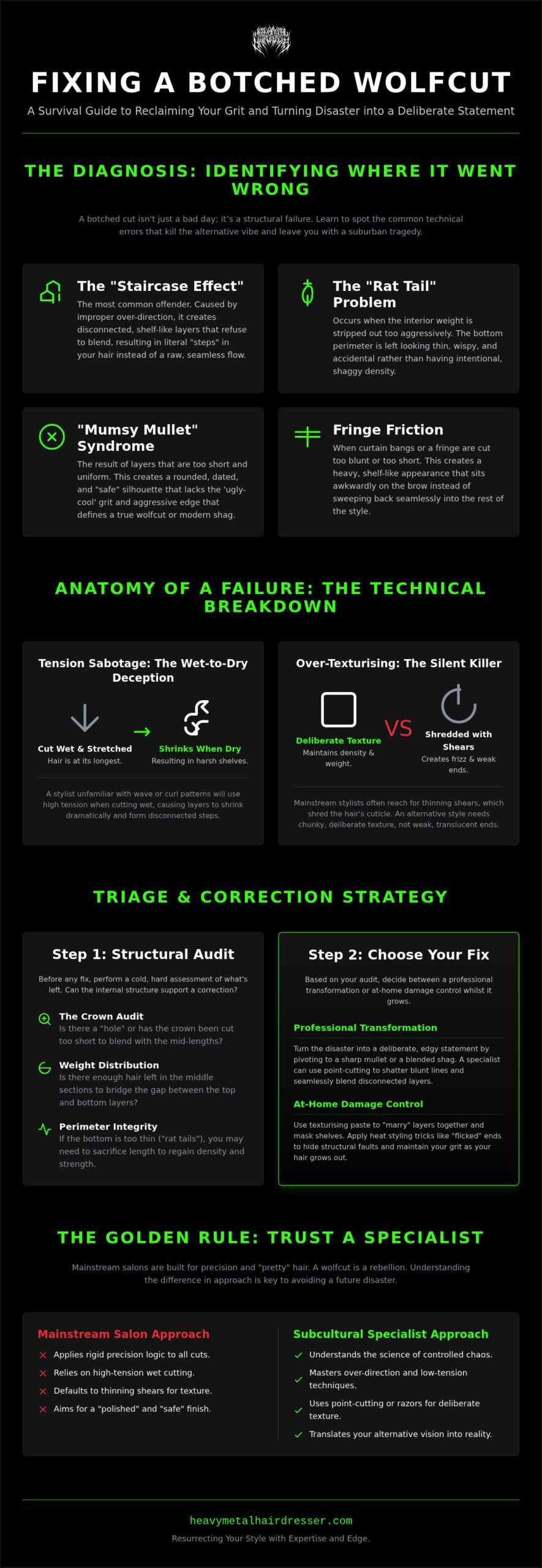
The “Staircase Effect” is the most frequent offender. This happens when a stylist fails to over-direct the hair properly, creating literal steps rather than a raw, aggressive flow. You’re left with disconnected shelves stacked on your head that refuse to blend. Then there is the “Rat Tail” problem. This occurs when the interior weight is stripped away too aggressively, leaving the bottom perimeter looking thin, wispy, and accidental rather than intentional.
Your wolfcut might also suffer from “Mumsy Mullet” syndrome. This is the result of layers that are too short and uniform, creating a rounded, dated silhouette that feels safe. It lacks the “ugly-cool” grit that defines the style. Fringe friction adds to the mess when curtain bangs are cut too blunt or too short, resulting in a shelf-like appearance that sits heavy on the brow instead of sweeping back into the mane.
Why Mainstream Salons Struggle with Wolfcuts
Mainstream salons are built on the foundation of precision and “pretty” hair. They want every strand in its place. A wolfcut is a rebellion against that perfection. Most high-street stylists don’t understand the delicate balance between a 70s shag and a 90s mullet. They often use traditional wet-cutting tension on wavy or curly hair, which leads to massive shrinkage and those dreaded “shelves.” They lack the subcultural vocabulary to translate your alternative vision into a structural reality.
Immediate Damage Assessment: Can It Be Saved?
Before you panic, you need a structural audit. Fixing a bad wolfcut haircut requires a cold, hard look at what is left on your head. You need to determine if the internal structure can still support a correction or if you’re in a “grow-out” phase.
- The Crown Audit: Check if there is a “hole” in the layers or if the crown has been cut too short to blend with the mid-lengths.
- Weight Distribution: Assess if there is enough hair left in the middle sections to bridge the gap between the top and bottom.
- Perimeter Integrity: If the bottom is too thin, you might need to sacrifice some length to regain the style’s density.
Fixing a bad wolfcut haircut often involves shattering those blunt lines with expert point-cutting. If the damage is purely visual, texture paste can often mask the shelves whilst the hair settles. However, if the structure is gone, you’ll need a specialist to pivot the style into something even bolder.
The Anatomy of a Failed Wolfcut: Layers, Tension, and Logic
Understanding the technical failure is the only way to begin fixing a bad wolfcut haircut. It isn’t just a matter of “growing it out”; it is about correcting the geometry that went rogue. Most stylists fail because they apply standard precision logic to a style that thrives on controlled chaos. If layers aren’t properly over-directed towards the face or the ceiling, the weight sits in all the wrong places. You end up with a heavy, dated bob instead of a streamlined, aggressive mane.
Tension is another silent saboteur. When hair is cut whilst soaking wet, it’s at its longest and most elastic. For those with natural wave or curl, the “spring back” effect is real. A stylist might think they’re cutting a subtle transition; however, as soon as that hair dries, it shrinks into a harsh, horizontal shelf. This lack of foresight is why your layers look like they belong on two different people. It’s a total lack of understanding of hair logic.
The Wolfcut Equilibrium is the perfect ratio of crown volume to nape length.
Over-Texturising: The Silent Killer of Alternative Styles
Mainstream stylists often reach for thinning shears when they see thick hair. This is a fatal error for alternative styles. Thinning shears shred the cuticle and remove the “meat” from the hair, leaving the ends looking frizzy and translucent. A true wolfcut needs chunky, deliberate texture that maintains its density. If your ends are already over-thinned, the fix involves blunt-cutting the perimeter to restore a sense of weight. You can’t build a house on a weak foundation; you can’t build a wolfcut on shredded ends.
The Role of Face Framing and Fringe
The fringe is the anchor of this look. If it’s wonky or too blunt, the whole vibe shifts from “rockstar” to “regret.” Many stylists create a boxy frame because they fear the “ugly-cool” C-shape curve. This curve should sweep from the eyebrow down to the jawline, seamlessly marrying the bangs to the sideburns. Fixing a bad wolfcut haircut often starts with re-shaping the face frame to restore balance. For those seeking a real specialist alternative styling experience, getting this transition right is what separates a masterpiece from a mess.
Salvage vs. Transformation: Choosing Your Correction Strategy
When you’re staring at a botched job in the mirror, the immediate instinct is to hide under a beanie for six months. Don’t do that. You have two real paths forward: salvage the existing structure or transform it into something entirely new. Fixing a bad wolfcut haircut isn’t just about damage control; it’s about reclaiming your identity. You need a strategy that prioritises your aesthetic over the length you’re terrified to lose. Length is temporary, but a bad silhouette is a daily drain on your confidence.
The “Mullet Pivot” is for those who aren’t afraid of a sharper edge. If your layers are too disconnected, stop trying to make them meet. Lean into the gap. By sharpening the temples and keeping the nape long, you transition from a “bad haircut” to an aggressive, intentional statement. It’s a power move that turns a mistake into a choice. Alternatively, the “Shag Resurrection” focuses on softening the edges. This 70s-inspired rock vibe uses deep point-cutting to bridge those staircase layers, giving you a cohesive, shaggy flow that looks like it belongs on a stage rather than in a supermarket.
Sometimes, the scissors have gone too far. If the crown is shredded and the perimeter is gone, the “Pixie Transition” is your best friend. A heavily textured pixie or a “mixie” provides a clean slate whilst maintaining your subcultural edge. Consulting with an alternative specialist is vital here. They speak the language of grit and won’t try to give you a “neat” trim that kills your vibe. They understand that even a reset needs to feel rebellious.
Correction Strategy Comparison
Choosing your path depends on your face shape and how much “maintenance” you can handle. Blending is ideal for softening a square jawline, as it creates a rounder, more inclusive frame. However, it usually means losing two or three inches of bottom length to balance the top. Aggressive disconnection suits those with sharper features who want to lean into a punk aesthetic. If you’re still worried about a visible “shelf” in your hair, consider the vivid colour distraction. Using creative pigments like neon panels or an oil-slick melt draws the eye to the colour, effectively masking structural flaws whilst your hair recovers. If you’re looking to further sharpen your aesthetic or boost your confidence while your hair grows, you can find out more about professional aesthetic treatments designed to enhance your unique features.
The Power of the Modern Mullet
The modern mullet haircut is the ultimate survival tool for a botched wolfcut. It embraces the “business in the front, party in the back” logic but adds a 2026 twist of aggressive texture and grit. By shortening the sides and refining the fringe, you create a shape that grows out beautifully amongst the chaos. The mullet doesn’t just fix the mess; it elevates your look into something unapologetically bold. It’s the perfect way of fixing a bad wolfcut haircut whilst proving that you haven’t lost your edge.
Professional Fixes and At-Home Damage Control
Fixing a bad wolfcut haircut is often an exercise in creative camouflage. You don’t have to wait months for the hair to grow before you can look in the mirror without flinching. The secret lies in marrying those disconnected layers together through aggressive styling. Texture paste is your most valuable weapon here. By working a matte, high-hold paste into the mid-lengths and ends, you can physically bond the shorter “staircase” layers to the longer sections, creating a cohesive, intentional flow instead of a series of accidental shelves.
Heat styling offers another immediate rescue. If your layers are sitting in a heavy, horizontal line, use a flat iron to create “flicked” ends. By curling the ends of the shorter layers outwards and the longer layers inwards, you break up the bluntness and add movement that hides structural flaws. If you have any natural wave, put down the straighteners and pick up a diffuser. Chaos is your friend when the cut is bad. Diffusing for maximum volume at the crown helps fill in any “holes” or gaps in the layers, making the mess look like a deliberate, voluminous choice.
Accessories also play a massive role in survival. Don’t just hide under a hat; use subcultural staples like bandanas, heavy-duty clips, or even safety-pin accents to section off the parts of the cut that bother you most. It’s about distracting the eye whilst your hair gains the “meat” it needs to be properly corrected.
Styling Your Way Through the Growth Phase
Learning how to style a modern mullet or wolfcut whilst it grows out is a vital skill. The “Death Grip” method is our go-to for salvage. It involves using heavy-duty, gritty products to define unruly layers and give them a sharp, wet-look finish that screams “I meant to do this.” Salt sprays and dry shampoos are equally essential. They add the necessary grit to mask a bad cut by creating a rough, matte texture that obscures the precision errors made by a mainstream stylist. If you’re struggling to manage the mess, it might be time to book a session with a specialist who actually speaks the language of texture.
DIY ‘Fixes’ to Avoid at All Costs
The urge to fix a bad wolfcut haircut yourself is strong, but you must resist. Never pick up the kitchen scissors to “even it out.” You lack the sectioning logic and over-direction skills to fix a structural failure, and you will likely end up with layers that are even shorter and more disconnected. Avoid the temptation of box dyes as well. Already compromised, over-textured hair is prone to breakage; adding harsh chemicals will only strip the hair of the density you need for a professional correction. Finally, do not try to “thin it out” further. Removing more weight will only make the staircase effect more prominent and leave you with wispy, unmanageable ends.
Trusting the Experts: How Heavy Metal Hairdresser Resurrects Your Style
When the high-street salon fails you, you need a specialist who understands the architecture of rebellion. Fixing a bad wolfcut haircut isn’t a job for someone who spends their day doing “neat” bobs or traditional bridal styling. It requires a wolf hair cut specialist who can look at your disconnected layers and see the potential for a masterpiece. We don’t just trim the edges; we rebuild the grit from the scalp up. We are the emergency room for alternative hair disasters.
The Heavy Metal Hairdresser approach is unapologetically bold and deeply inclusive. We recognise that your hair is your loudest form of self-expression. By using professional-grade gear like Hair To the Throne and our signature Death Grip product, we define your new look with a level of texture that mainstream stylists simply cannot replicate. Booking a consultation is the first step towards salvation. It’s where we sit down, look at the damage, and map out a path to resurrect your style whilst maintaining your identity.
The Simon Tuckwell Standard of Chaos
Led by Simon Tuckwell, our team brings international acclaim and a raw, underground aesthetic to every chair. We specialise in the aggressive textured layers that define subcultural identities. This isn’t a clinical service. It is a creative transformation. Our backstage experience at major UK metal festivals like Download and Bloodstock has turned us into experts in high-pressure styling. We’ve seen every disaster imaginable and fixed them all. We provide a gender-neutral safe space where being different isn’t just tolerated; it’s the standard. We speak the language of texture and grit because we live it every day.
Join the Alternative Community
Choosing a salon is about more than just the cut. It’s about finding a community that understands your music, your lifestyle, and your refusal to conform. Once we’ve salvaged your look, we help you keep that energy alive at home. You can maintain your corrected style and show your allegiance with our alternative hair merch UK, featuring gear designed for those who value subcultural grit. Don’t hide under a hat or settle for a “safe” fix that kills your vibe. Reach out, book in, and let us fix the grit. Your hair transformation starts here.
Reclaim Your Identity and Fix the Grit
A botched haircut is just a temporary detour on your style journey. You now know how to spot the structural failures, from disconnected staircase layers to those dreaded “rat tail” ends. Whether you choose to pivot into a sharp modern mullet or blend the chaos into a 70s-inspired rock shag, the power is back in your hands. Fixing a bad wolfcut haircut requires a specialist who understands that “ugly-cool” isn’t a mistake; it is a deliberate choice.
Simon Tuckwell and the team bring international acclaim to every hair resurrection, offering a gender-inclusive safe space for those who live outside the mainstream. We specialise in the aggressive texture and subcultural grit that high-street salons simply don’t understand. Stop hiding under beanies and start owning your silhouette again. You deserve a look that screams independence rather than regret.
Book your wolfcut resurrection at Heavy Metal Hairdresser and let us transform your disaster into a bold subcultural statement. You aren’t just getting a repair; you’re joining a community that celebrates your individuality. Your hair is your rebellion. Let’s make it loud.
Frequently Asked Questions
Can a bad wolfcut be fixed without cutting it much shorter?
You can often fix the silhouette without losing significant length by focusing on internal weight removal. A specialist uses deep point-cutting to shatter the “staircase” lines, making the transition look intentional rather than accidental. If the perimeter is too thin, you might lose an inch to restore density, but the goal is always to save the “party” in the back whilst refining the “business” up front.
How long does it typically take for a botched wolfcut to grow out?
It typically takes three to six months for the hair to gain enough “meat” for a total structural reset. Given that hair grows approximately 1.25 centimetres (half an inch) per month, you’ll see a real difference in the blend by the twelve-week mark. Fixing a bad wolfcut haircut is a marathon, not a sprint. Regular maintenance trims ensure the botched layers don’t turn into an unmanageable mess whilst you wait.
What should I say to a new stylist to ensure they don’t mess up the fix?
Tell your stylist you want “aggressive texture” and “shattered ends” rather than “precision layers.” Specifically ask them to avoid thinning shears, as these shred the cuticle and make wolfcuts look frizzy. Mention that you want to bridge the gap between the crown and the nape using over-direction. If they look confused or start talking about “classic bobs,” they aren’t the right specialist for your alternative identity.
Is it better to turn a bad wolfcut into a mullet or a shag?
Choosing between a mullet and a shag depends on how much you want to lean into the disconnect. A mullet is the ultimate pivot for a cut that is already too short on the sides; it turns a mistake into a sharp, punk statement. A shag is better if you have enough length left to blend the layers into a cohesive, 70s-inspired rock flow. Both options provide a more intentional vibe than a failed wolfcut.
Can vivid colour help hide bad layering in a wolfcut?
Vivid colour is a powerful tool for masking structural flaws. Using creative techniques like neon face-framing panels or a deep oil-slick melt draws the eye away from choppy layers and towards the pigment. It creates a visual distraction that makes “staircase” layers look like a deliberate part of a high-energy, alternative aesthetic. Colour adds a layer of grit that disguises technical errors whilst your hair grows.
What styling products are best for blending disconnected layers at home?
Use high-hold texture pastes and salt sprays to marry disconnected sections together. Our Death Grip method is perfect for this, as it provides the heavy-duty grit needed to define unruly layers and hide shelves. Work the product into dry hair, focusing on the mid-lengths where the layers meet. This creates a “shattered” finish that makes the disconnected parts of your hair look like a raw, subcultural choice.
Why does my wolfcut look like a ‘Karen’ haircut instead of being edgy?
Your cut looks “mumsy” because the layers are likely too uniform and the ends are too neat. A proper wolfcut needs “ugly-cool” grit and aggressive disconnection. If your stylist used traditional precision techniques, you’ll end up with a rounded, dated silhouette. Fixing a bad wolfcut haircut involves removing internal weight and shattering those blunt perimeters to move away from the “neat” mainstream look and back into subcultural territory.
How often should I get trims whilst growing out a bad haircut?
You should aim for a maintenance trim every eight to twelve weeks. Whilst it sounds counterintuitive to cut hair you are trying to grow, these “dustings” are essential for maintaining a wearable shape. A specialist will only remove the absolute minimum from the length whilst re-shaping the internal layers to prevent the “staircase” effect from getting worse. This keeps your style looking intentional amongst the growth phase.

