Why does every “low-maintenance” wolfcut eventually transform into a puffy, accidental bowl cut that looks more like a mushroom than a masterpiece? It is the classic alternative trap. One minute you are rocking a razor-sharp silhouette, and the next, your crown feels like a helmet whilst your ends look thin and accidental. You aren’t losing your edge, but you are losing the battle against gravity. We know the frustration of watching that aggressive shape melt into a shapeless mess that feels impossible to style.
Growing your hair out does not have to mean looking like a Victorian schoolboy. By mastering the art of reshaping a grown out wolfcut, you can reclaim your identity and pivot towards a longer, more intentional alternative look. This survival guide breaks down the professional technical pivots needed to manage internal weight and maintain that essential grit. We will explore strategic colour evolution, the power of Death Grip for texture, and how to survive the 2026 growth cycle without ever touching a boring, traditional salon chair. It is time to stop waiting for length and start active evolution.
Key Takeaways
- Identify the “mushroom stage” physics where crown layers meet the ear line, causing unwanted puffiness and loss of your aggressive silhouette.
- Learn the professional technical pivots for reshaping a grown out wolfcut, focusing on internal weight removal to flatten the sides without losing length.
- Master “intentional chaos” styling techniques using Death Grip and Hair To the Throne to maintain grit and prevent a flat, lifeless crown.
- Discover how strategic colour shifts, such as shadow roots and vivid money pieces, can slim down a puffy crown and distract from uneven growth.
- Map your transition into a long shag or a modern mullet to ensure your hair stays intentional and alternative throughout the entire growth cycle.
The Physics of the Grow-Out: Why the ‘Mushroom’ Stage Happens
The wolfcut is a high-energy silhouette that relies on vertical tension and aggressive texture. When you stop cutting it, that tension collapses. The “mushroom stage” is the precise moment your shorter crown layers migrate south and collide with your ear line. Instead of a sharp, tapered look, you get a rounded, horizontal bulk that feels wider than it is long. Understanding these physics is the first step in reshaping a grown out wolfcut without losing your mind.
This happens because of how weight distributes as it moves. In a variation of the shag called a wolf cut, the layers are designed to be disconnected. This means the top doesn’t blend into the bottom. Whilst this looks incredible when fresh, the grow-out creates a literal shelf at the back of your head. British humidity only makes this worse. Our damp climate swells the hair cuticle, causing those unmanaged layers to expand outwards. Without proper internal weight removal, you aren’t just growing length; you’re growing a helmet.
The Disconnection Point and Visual Weight
Visual weight is about where the eye stops. In a fresh wolfcut, the eye moves vertically from the choppy fringe down to the wispy ends. As it grows, the weight shifts from the top of your head to the sides. Vertical flow turns into horizontal bulk. If your stylist didn’t manage the internal density, those layers sit on top of each other like bricks. Disconnection is the primary enemy of a graceful wolfcut evolution. When the gap between your shortest layer and your longest length becomes too heavy, the silhouette dies. You lose the aggressive edge and end up with a bottom-heavy shape.
Setting Your 2026 Style Goals
Reshaping a grown out wolfcut requires a clear roadmap for your next identity. You have two main routes: the “Long Shag” or the “Modern Mullet.” The Long Shag evolution focuses on blending disconnected layers into a more cohesive, 70s-inspired flow. If you want to keep the aggression, the Modern Mullet pivot is your best bet. This involves keeping the back length whilst your top layers catch up. Avoid blunt cuts at all costs during this transition. A blunt line will kill the movement and make the “mushroom” look even more pronounced. Tell your stylist you want edge-retention through internal thinning. You want to keep the length but lose the bulk.
The Technical Pivot: Reshaping Without Losing Your Length
The goal isn’t to start over. It’s to evolve. When you’re reshaping a grown out wolfcut, the biggest fear is losing those hard-won centimetres of length. Traditional stylists might try to “even it out,” which is often code for cutting it all off into a boring bob. We don’t do that. The technical pivot is about removing bulk from the inside out. By carving out the internal weight that creates the “mushroom puff,” we flatten the sides whilst keeping the perimeter long and jagged.
Maintaining the “V” or “U” shape at the back is non-negotiable for an alternative silhouette. Instead of a standard trim, we use “dusting.” This involves removing only the most damaged tips without sacrificing the overall length. It keeps the hair healthy but preserves the aggressive, tapered look you’ve spent months growing. This method ensures your hair continues to look intentional, even as it reaches new lengths.
Internal Texturising Techniques for Alt-Hair
Thinning shears are often the enemy of a gritty, lived-in texture. They can leave the hair looking frizzy rather than sharp. We prefer point-cutting. This technique allows us to break up heavy, horizontal sections by cutting vertically into the hair. It creates gaps for movement and removes the “shelf” effect mentioned in the previous section. By meticulously removing weight where the hair is densest, we ensure the style remains light and responsive to styling products like Death Grip.
Slide-cutting is another essential tool for reshaping a grown out wolfcut. It acts as a bridge between your short crown layers and the mid-lengths. By sliding the blade down the hair shaft, we create soft, diagonal lines that encourage the hair to lay flat. This is particularly effective when prepping for 2026 hair color trends, as a smoother internal surface allows vivid colours to pop without being obscured by unwanted bulk.
The Face-Framing Adjustment
Your fringe is the focal point of your identity. As it grows, that short “wolf-fringe” needs to evolve. We transition these into gritty, eyebrow-skimming curtain bangs. This involves connecting the temple layers down to the jawline. It creates a seamless flow that slims the face and hides the transition. It stops the hair from looking like two separate haircuts. For deeper insights into this process, check out our guide on how to maintain a shag haircut.
If you’re ready to stop fighting the mushroom and start embracing the evolution, you can book one of our specialised Wolfcut reshaping sessions to keep your edge intact.

Mastering the Mess: Styling Through the Awkward Growth Stages
Polished blow-outs are for bridal parties and office jobs. When you are reshaping a grown out wolfcut, trying to smooth everything down only highlights the disconnection we discussed earlier. Smooth hair makes that “mushroom shelf” look like a mistake. Instead, you need to embrace intentional chaos. By creating a gritty, lived-in texture, you blur the lines between your short crown layers and your longer ends. It’s about making the mess look like a choice.
The secret lies in preventing the “flat top, puffy sides” disaster. Gravity pulls the top layers down whilst the side layers expand. You need weightless volume at the roots to keep the silhouette vertical. Use products like Hair To the Throne to lift the crown. Then, use aggressive matte products to crush the volume at the ears. This creates a flatter, rockstar silhouette that feels more like a modern mullet than a helmet. High-end advice on maintaining a wolf cut often suggests heat styling to blend these layers. Loose, messy waves help bridge the gap between lengths. Use these tips to blend your layers:
- Wrap sections of different lengths together around a large barrel wand to force them into a single wave.
- Keep the ends straight to maintain that jagged, alternative edge.
- Alternate the direction of your curls to prevent the hair from clumping into one big roll.
The Power of Gritty, Matte Texture
Salt sprays and styling powders are essential amongst the awkward stages of your grow-out. They provide the friction needed for layers to “grab” onto each other rather than sliding into separate shelves. Root powders are perfect for keeping the top of your head from looking like a landing strip. For the ultimate subcultural finish, our own Death Grip creates a matte, rebellious finish that holds your shape through a three-day festival. It kills the shine that often makes grown-out layers look greasy and flat.
Alternative Camouflage Techniques
Sometimes you just don’t have the energy for a full styling routine. This is where alternative camouflage comes in. Bandanas and beanies are your best friends for managing crown volume. They physically flatten the “mushroom” puff whilst letting your length peek out from the bottom. It’s a classic grunge look that never fails. If you want something more intricate, try the “half-up, half-down” style. By securing the top, disconnected layers in a messy knot, you remove the bulk from the sides and let the bottom length shine. Strategic use of chunky hair clips can also add a 90s alternative vibe whilst pinning back those awkward temple layers. Styling is just another tool for reshaping a grown out wolfcut without needing a pair of scissors every week.
Vivid Colour as a Strategic Distraction from Awkward Layers
Colour is your secret weapon for structural deception. When you are reshaping a grown out wolfcut, you can use high-contrast pigments to trick the eye into seeing a more balanced shape. If your crown feels too puffy, we don’t just cut it; we colour it. Darker tones recede, whilst lighter tones advance. By applying a deep shadow root, we create the illusion of depth at the top. This effectively slims down that awkward mushroom-shaped bulk that plagues the mid-growth stage. It’s about using alt-hair physics to your advantage.
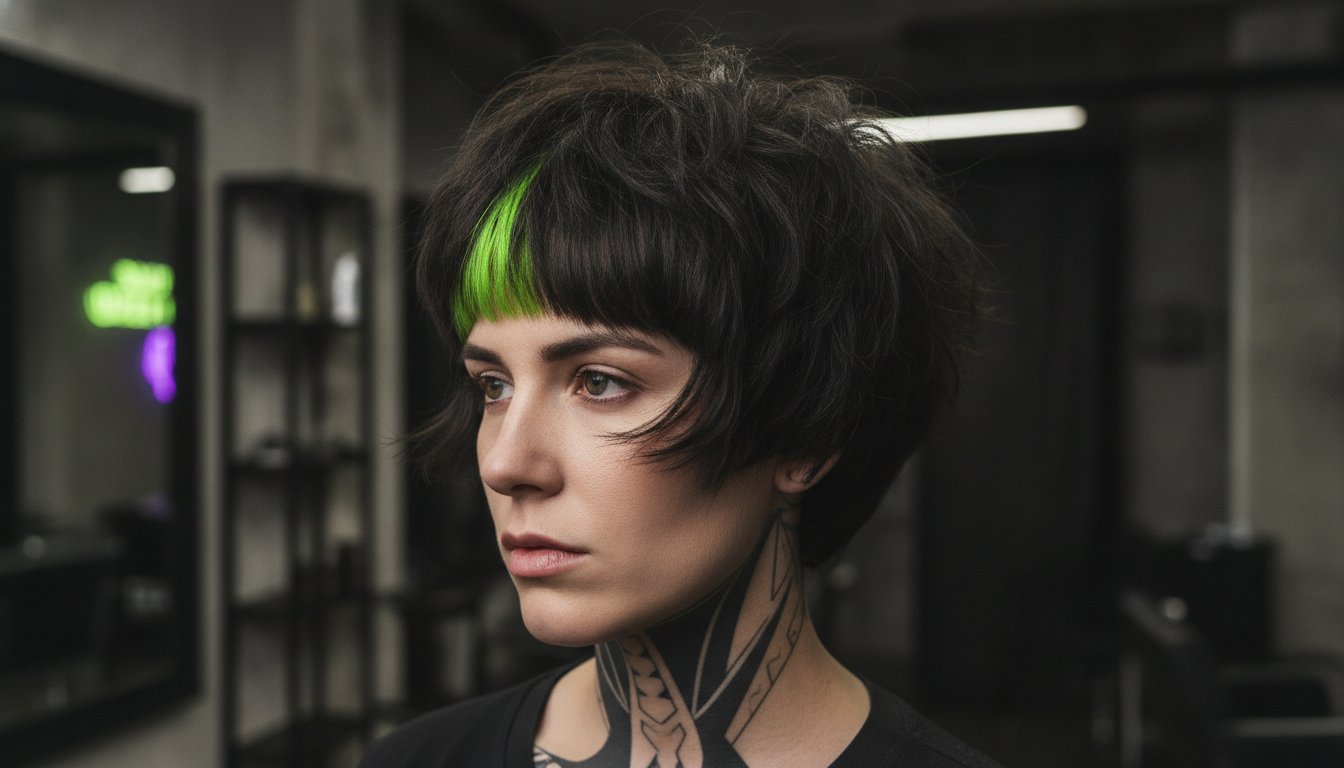
Vivid money pieces around the face act as a visual anchor. They pull the focus toward your eyes and jawline, distracting from the wispy, accidental-looking ends that often occur during a grow-out. If those ends feel too thin, a bold dip dye effect can save them. Adding a saturated, high-pigment block of colour to the very tips makes them look intentional and physically thicker. It turns a frustrated transition into a deliberate alternative statement.
Placement Strategies for Visual Slimming
Placement is everything when managing volume. We place darker, moodier shades in the mid-section where the hair tends to poof out most. This “mushroom zone” becomes less noticeable when the colour is receding. Conversely, we use bright, neon pops on the longest layers to emphasise your growth progress. This makes the hair look longer and more energetic. You can discover more about vivid hair colour and how it manipulates texture to suit your specific subcultural identity.
The Root Melt and Blur
Regrowth is often the enemy of a polished alternative look, but it doesn’t have to be. A soft root melt or blur is the essential solution for 2026. It ensures that as your natural hair grows in, it blends seamlessly into your vivid shades. This technique avoids harsh horizontal lines that would otherwise highlight the disconnection between your layers. For the upcoming festival season, we are seeing a massive shift toward deep forest greens and burnt oranges. These shades provide a gritty, organic backdrop that masks uneven lengths. Maintaining the health of these vivids is vital; keep your hair strong so it can handle the weight of your new length.
Ready to manipulate your silhouette with pigment? Book your vivid colour transformation with our specialists today and skip the awkward phase entirely.
The Evolution Roadmap: Transitioning Your Wolfcut into Your Next Signature Shape
Mainstream hair guides are obsessed with bobs. They see a grown-out style and immediately suggest lopping it all off to “even it out.” we call bullshit. A bob is the safe choice for people who want to blend in. You didn’t get a wolfcut to blend in. Reshaping a grown out wolfcut is about active evolution, not surrender. Your current layers are the perfect foundation for a long, textured alternative mane. It is the ultimate base for a 70s rockstar silhouette that carries real weight and attitude.
The most natural path is the Wolf-to-Shag pipeline. This transition involves blending those aggressive, disconnected layers into a more cohesive but still heavily textured flow. It’s a softer approach that keeps the volume but loses the “mushroom” shelf. If you want to keep the aggression high, the Modern Mullet pivot is your best bet. You keep the back length as a priority whilst the top layers catch up. It allows you to maintain a subcultural edge through every awkward centimetre of growth. You are building a signature shape, not just waiting for a trim.
The Shag Resurrection
Your fringe becomes the new anchor of your identity. As it grows past your eyebrows, it transforms into heavy, face-framing curtain layers. You can evolve your wolfcut into a modern mullet haircut by keeping the temple areas shorter whilst letting the back reach for your shoulder blades. This transition relies on shifting the internal layers into a 70s-inspired rhythm. It feels organic and intentional. It’s about making the growth look like a choice rather than a lack of maintenance. The focus stays on the texture, not just the length.
The Rockstar Long-Game
When your hair finally hits shoulder length, the temptation to “tidy up” the ends is strong. Resist it. A perfectly straight hemline kills the alternative spirit. Keep the perimeter jagged and uneven. Maintaining Death Grip texture is essential here. It prevents your long hair from looking flat and conventional. It keeps that rebellious, matte grit alive. Reshaping a grown out wolfcut means you never have to settle for a boring, one-length style. Only “even out” the perimeter if the ends become truly wispy. Otherwise, embrace the unevenness. It’s your hair, your rules, and your identity. Stay loud through every stage of the grow-out.
Own Your Evolution: The Road to Your Next Signature Style
Your hair is a statement, not a waiting room. You’ve mastered the physics of the mushroom stage and learned that internal weight removal is the key to maintaining your edge. By using strategic vivid colour and gritty styling, you’ve turned an awkward transition into a deliberate alternative evolution. Don’t let a mainstream salon talk you into a boring bob. Reshaping a grown out wolfcut is about reclaiming your silhouette as you move towards a long shag or a modern mullet. You aren’t just growing hair; you’re building a new identity.
We are a gender-inclusive safe space for alternative identities. Our specialists live for aggressive textured cuts and high-pigment vivid colour. We have styled bands backstage at Download and Bloodstock, so we know how to keep hair looking gritty through every stage of growth. Your identity shouldn’t hit a plateau just because your layers are catching up. Trust the experts who understand the subcultural grit your hair requires.
Book your wolfcut evolution at Heavy Metal Hairdresser and own your next signature shape. Stay rebellious.
Frequently Asked Questions
How long does it take to grow out a wolfcut completely?
It takes roughly six to twelve months to transition from a choppy wolfcut to a more uniform long style. Hair grows at an average rate of 1.25cm per month; so your crown layers need significant time to reach your shoulders. Focus on maintaining health during this period. Regular dusting prevents breakage from eating away at your progress. Patience is vital, but active reshaping keeps the style intentional throughout the year.
Can I reshape my wolfcut without losing my current length?
You can absolutely achieve reshaping a grown out wolfcut without sacrificing your hard-earned centimetres. We focus on internal texturising and point-cutting to remove the bulk that creates a “shelf” effect. By thinning the hair from the inside, the silhouette flattens and flows better. This technical approach preserves the perimeter of your cut. You keep the jagged alternative edge whilst losing the unwanted roundness around your ears.
What exactly is the “mushroom stage” and how do I fix it?
The mushroom stage occurs when your short crown layers grow down to meet your ear line, creating horizontal bulk. It makes your head look round rather than edgy. You fix it by removing internal weight and using aggressive matte products like Death Grip. These products crush the volume at the sides whilst keeping the top textured. It’s about shifting the focus from width back to a vertical, rockstar silhouette.
Should I get a trim whilst I am growing out my wolfcut layers?
Trims are essential, but you should ask for “dusting” rather than a traditional cut. Dusting removes only the millimetre of damage at the very tips. This prevents split ends from travelling up the hair shaft and ruining your growth progress. It also allows your stylist to manage the internal density. Regular maintenance every eight to ten weeks ensures your evolution looks like a choice rather than a lack of effort.
What is the best product for styling a growing wolfcut in 2026?
For 2026, the gold standard for alternative texture is a combination of Hair To the Throne and Death Grip. You need Hair To the Throne at the roots to provide weightless lift and prevent a flat crown. Death Grip is then used through the mid-lengths to provide that essential matte grit. This combination allows you to manage the puffy sides whilst keeping the rebellious energy of your original wolfcut alive.
Is a wolfcut harder to grow out than a standard layered haircut?
Yes, a wolfcut is more challenging to grow out because the disconnection between layers is so aggressive. In a standard layered cut, the transition between lengths is smoother. The wolfcut features a massive gap between the short top and wispy bottom. This makes reshaping a grown out wolfcut a more technical process. You need a specialist who understands alt-hair physics to bridge that gap without resorting to a boring bob.
Can I turn my wolfcut into a mullet whilst it grows?
Transitioning into a mullet is the most effective way to keep your edge whilst growing length. You simply keep the back length as it is and have your stylist tighten the sides. This maintains the “party in the back” energy whilst the top layers catch up. It allows your crown layers to reach a manageable length without losing your alternative identity. It’s a classic power move for subcultural styles.
How do I stop my hair looking thin at the bottom during the grow-out?
Wispy ends are often a result of the original aggressive texturising. To fix this, ask for a blunt perimeter trim to thicken the baseline. You can also use vivid colour strategically. A saturated dip-dye or a bold block of colour at the ends creates a visual weight that makes the hair appear fuller. Combining a solid colour foundation with regular dusting will keep your long-game looking thick and healthy.