Pastel hair colour ideas can look dreamy, but pastel shades fade over time. Permanent pastel colour may last several weeks with colour-safe products, and sulfate- and paraben-free shampoo and conditioner can help slow fading. Your starting colour and complexion also shape which pastel shades will work for you.
A soft wash of colour can make a striking change, but it’s fair to wonder how long it will stay vivid and whether a shade will suit you. Pastels can work across different skin tones. The key is choosing a shade that complements your undertones and understanding what it takes to create and maintain the look.
This guide covers how pastel colour fades and practical ways to help it last. You’ll find advice on choosing shades for your complexion, plus green, blue and silver combinations to inspire you. From a subtle tint to a sharper split-dye, explore the direction that feels like you.
Key Takeaways
- Pastel colour may last several weeks; colour-safe, sulfate- and paraben-free shampoo and conditioner can help slow fading.
- Compare a shade with your complexion and wardrobe by holding a shirt or scarf in that colour near your face.
- Try pink and mint green side by side for a fresh contrast, or use them in a split-dye look.
- A blonde base can suit soft pastels, whilst dark hair may need multiple lightening sessions to create a suitable canvas.
- Explore blue and silver gradients for a cooler-toned look, and consider how the shades can blend from roots to ends.
1. Does Pastel Hair Fade Fast?
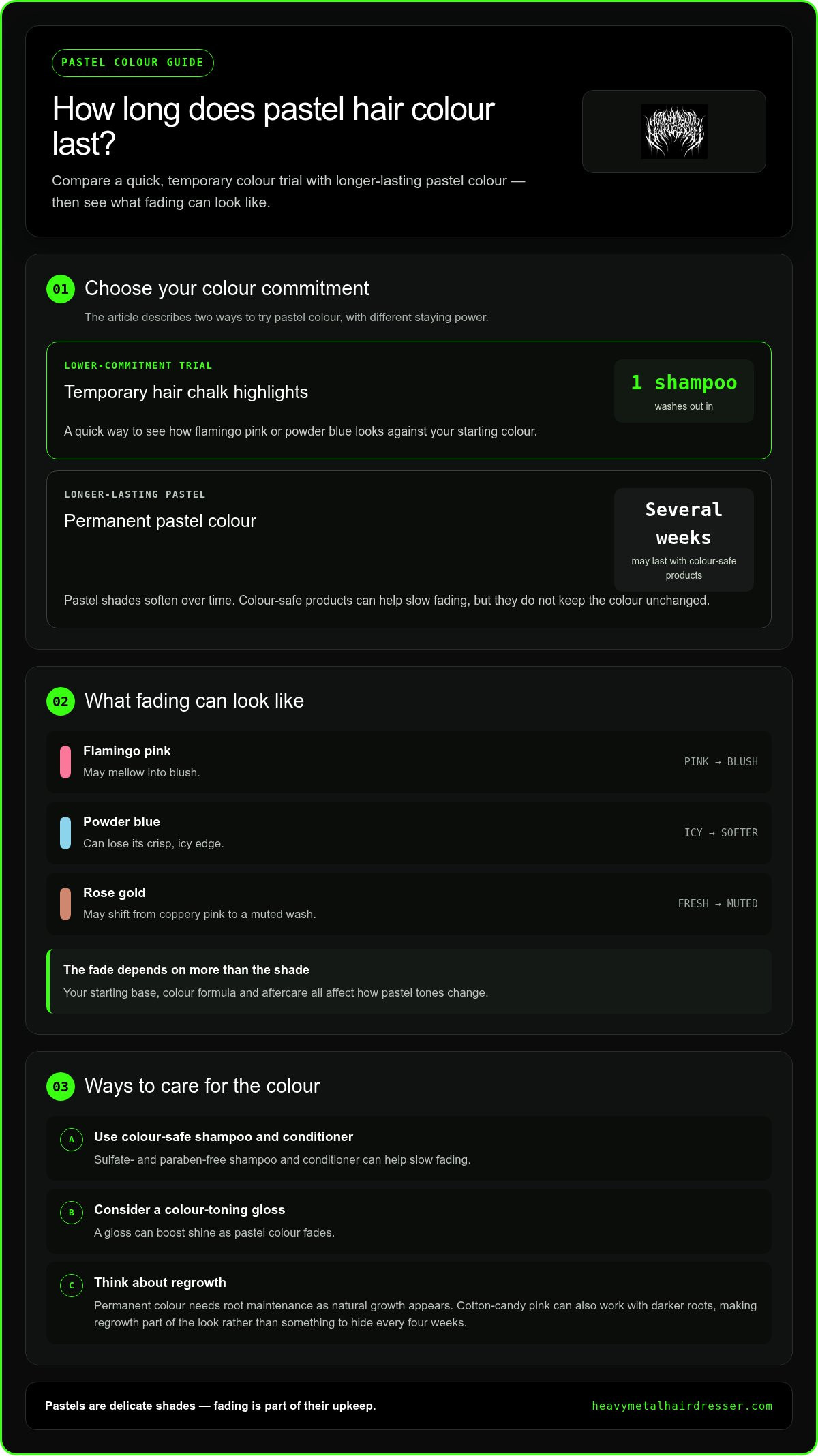
Permanent pastel hair colour may last several weeks with colour-safe products. Sulfate- and paraben-free shampoo and conditioner can help slow fading, but the colour will soften over time.
Pastels are delicate shades, so fading is part of their upkeep. Flamingo pink may mellow into blush, while powder blue can lose its crisp, icy edge. Rose gold can shift from a fresh coppery pink to a more muted wash. Your starting base, colour formula and aftercare all affect how the shades change.
For a lower-commitment trial, try temporary hair chalk highlights. They wash out in one shampoo, giving you a quick way to see how flamingo pink or powder blue looks against your base. For longer-lasting pastel colour, use shampoo and conditioner designed for coloured hair. A colour-toning gloss can also help boost shine as the pastel fades.
Blonde hair provides a light canvas for pastel pink highlights, so fine ribbons of pink can create a soft, visible shift. On dark blonde hair, working with the existing base may be preferable to lightening it before adding pink tones. The natural depth remains visible, with pastel highlights among darker blonde strands rather than one flat block of colour.
Rose gold bridges pink and peach, with a warmer feel than cool pastel pink. Peach adds a softer, sunset-like finish. For a blended effect, place rose-gold tones beside pale pink rather than using separate solid panels. A colour-toning gloss can refresh the shine and help the mix look intentional as the tones soften.
Pink and lavender make a cool pairing. Try pastel pink around the face with lavender through the lengths, or reverse the placement for a less expected finish. You can also blend the shades gradually, without a sharp dividing line. Keep them similarly soft so one colour doesn’t overpower the other.
Roots matter, too. Permanent colour needs root maintenance as natural growth appears, or a visible line can form. Cotton-candy pink can work with darker roots, so they don’t have to be hidden every four weeks. That contrast makes regrowth part of the design, while a gloss can keep the pastel lengths looking considered between colour appointments.
2. Choosing a pastel shade for your complexion
Choose a pastel by considering your skin’s undertone, not just its depth. Undertones are often described as warm, cool or neutral; skin depth ranges from fair to deep. These are different considerations. A shade that complements your undertone can feel harmonious, while deliberate contrast can make the colour pop. Pastels can suit different skin tones when you choose with undertones in mind.
Try a simple face-framing test. Hold a shirt or scarf in your chosen hair colour near your face, then look at your eyes and complexion. Check it beside a window in natural daylight and again under indoor lighting. A soft lilac scarf, for example, may look different from a peach one. Notice which shade makes your features feel clear instead of relying on the fabric colour alone.
Your wardrobe can help guide the choice. If you regularly wear black, bright mint or icy blue can create a sharp contrast. If your favourite clothes lean towards earthy greens, creams or rust, muted peach or dusty rose may blend more easily. Neither is a rule. Use the clothes you already wear as a practical colour palette, not a reason to rule out a shade you love.
Neutral undertones give you room to try both warm and cool pastels. Compare cool lavender with warm peach, or pale pink with powder blue. Hold each shade near your face, then consider whether you want the colour to soften your overall look or stand out. Neutral undertones don’t make every shade look the same: brightness and depth still change the effect.
Consider saturation, too. A muted pastel can feel subtle, while a more vivid version of the same colour makes a stronger statement. Try a soft rose before committing to bright pink, or compare pale mint with a stronger green. These pairings help you judge the intensity you want, rather than choosing a colour name without considering its tone.
Make a shortlist of shades, then test each with a scarf or top you own. Compare them in daylight, see how they work with your usual clothes, and decide whether you prefer harmony or contrast. Save reference pictures that show a similar skin depth and the exact pastel tone you like. A clear brief starts with the shade, intensity and mood you want.
If you’re shaping the whole look around a new colour, explore shag haircut inspiration for a cut with movement and texture.
3. Green pastel shades and combinations
Green pastels can feel soft or deliberately unusual, depending on their depth and placement. Mint sits at the pale end, while deep peppermint green has more weight and contrast. Compare the shade with your starting colour and decide whether you want a hazy wash or a sharper statement. Lighter green reads as delicate; stronger green makes a bolder impression.
Pink and mint green sit opposite each other on the colour wheel, creating a lively contrast side by side. Try a split-dye, with pastel pink on one side and mint on the other, or alternate the colours in distinct panels. Keep both shades similarly light for balance. If one is much brighter, it becomes the main event and the other acts as an accent.
Lavender gives green a cooler, less expected partner. A two-tone look can divide the head vertically or place lavender through the fringe and green through the lengths. You can also keep purple and green distinct in separate sections rather than blending them. For a quieter combination, pair pale lavender with muted mint; deeper purple beside vivid green creates a more graphic clash.
Deep peppermint green is a strong choice if pale mint feels too subtle. Its richer tone can add definition around the face or through the ends, especially against a lighter base. Try a green panel beneath the top layer for a flash of colour when your hair moves. A full-head application is bolder, while separated sections let green share space with your natural shade.
Fluorescent green makes a high-impact statement. It’s brighter than a traditional pastel, so use it as an accent if you want colour without an all-over effect. A vivid fringe, a streak near the parting or a panel beneath the crown can make the shade feel intentional. Green can also shift towards yellow, so be clear about whether you want mint, peppermint or acid-bright green.
Plan the placement before settling on a combination. Choose the dominant shade, then decide where the second colour should go: beside it in a split-dye, underneath as a hidden panel, or in separate streaks. Save reference images showing the balance of green and lavender, or pink and mint, you want. This communicates both shade and layout more clearly than asking for “pastel hair colours” alone.
For a green-and-lavender look, keep the colours in separate panels for a crisp two-tone effect. A softer transition can blur the boundary, but may make the shades less distinct. Your pastel shade and its placement shape the result, so plan both before applying colour.
4. Does pastel hair look good on all skin tones?
Yes. Pastels can suit different skin tones when you choose colours that complement your undertones. On short hair, a pastel fringe or vivid panel makes the shade a focal point; medium hair can carry face-framing pieces or a split-dye. Long hair gives you more room to place colour, such as a gradual blend through the lengths.
A blonde base can provide a suitable foundation for soft pastels, as a pale starting shade lets delicate colour show clearly. Full-saturation pink works best on lighter bases, although a skilled colourist can adapt it to any starting colour. Intensity matters: soft lilac and pale mint look different from vivid pink, even on similar blonde hair.
Your skin tone doesn’t rule out pastel colour. Consider your undertone, then compare warmer and cooler shades near your face. For example, hold peach and lilac fabrics beside your complexion in daylight. Notice which makes your features feel more defined and whether you prefer harmony or contrast. This simple comparison can help narrow a broad choice.
Pre-lightening affects how soft or saturated the final colour looks. Pastel pink over a light blonde base can appear airy, while the same pink over a deeper base may look less pastel. A colourist considers your starting shade, target colour and hair’s integrity when planning how light to go. The aim is a pale enough canvas for the pastel to show while keeping the hair’s condition in view.
Dark hair may need multiple bleaching sessions to reach a light enough base for pastel colour. That takes more commitment than adding colour to blonde hair, as the process depends on how much lightening your starting shade needs. A gradual plan may make more sense than trying to reach a very pale base all at once. Be specific about the goal: pale lavender, powder blue and soft pink each create a different result.
Bleaching at home isn’t a shortcut to take casually. Colourist Stephanie Brown advises against bleaching hair at home to achieve pastel shades. A professional colourist can assess your existing base and plan the lightening needed for your chosen look. This is especially important if you’re starting with dark hair and aiming for a very pale pastel.
Bring reference pictures showing both the shade and placement you want. Pastel pink on a blonde pixie, for instance, suggests a different result from lavender ribbons on long hair. Include images with a similar base colour, and point out whether you want a subtle wash or a bold, full-saturation finish. These details help clarify the colour plan and upkeep before you commit.
5. Blue and silver gradients
A blue-to-silver gradient connects cool colours in one look. You could start with deeper blue near the roots, blending through powder blue into pale silver at the ends. For a softer effect, keep most of the hair silver and concentrate blue through the mid-lengths. The transition can be gradual or defined, depending on whether you want a misty fade or visible colour bands.
Choose the blue tone before planning the blend. Powder blue creates a gentle shift into silver, while stronger blue adds contrast. Think of the colours as a sequence: deep blue, lighter blue, then silver. Each step gives the eye a clear change in tone. For a quieter result, use fewer shades and keep the boundary soft.
Placement changes the overall effect. A root-to-tip gradient makes the colour story easy to see, especially on straight hair. Silver around the face with blue through the back creates a different focal point. You could also keep the crown mostly natural and introduce blue and silver through the lengths, for a more contained look than an all-over transformation.
Hair length affects how much room you have for a visible transition. Short hair can use a blue fringe or silver-tipped sections to suggest a gradient without long colour bands. Medium hair can show a clear shift from blue around the crown to silver ends. Long hair gives more space for several tones, such as navy, powder blue and silver, to flow in sequence.
Blue and silver can work with other pastels, too. A little lavender between them can soften the transition. For sharper contrast, silver beside vivid blue keeps the shades distinct. Pink can join the palette, with a pale face-framing panel and blue-to-silver through the lengths. Keep the colour blocks separate if you want each shade to stand out.
Before choosing a formula, save pictures showing the gradient direction and shade balance you like. One image might show silver ends with a blue crown; another might show blue panels against a mostly silver base. Bring the examples together and mark the details you want to keep. This makes a clearer colour plan than asking for “blue and silver” alone.
Consider how the gradient will look when styled. Loose waves reveal the shift between blue and silver as the sections move, while a smooth finish makes the blend appear more continuous. A tied-back style can show where the colours meet, so decide whether you want a soft or graphic boundary. For a pretty but unconventional finish, blue and silver offer a cool alternative to familiar pastel pink.
Heavy Metal Hairdresser: Shag Haircuts
Heavy Metal Hairdresser offers Shag Haircuts, a natural next step if you want movement with your pastel look. Shaggy layers can make contrasting tones more visible as your hair falls, while face-framing pieces bring colour forward. Bring reference images showing the shade placement and shape you want, such as silver ends with blue through the lengths.
Consider a shag if you want texture and shape to complement your colour. If you prefer a different silhouette, Heavy Metal Hairdresser also offers Wolfcuts. Choose your cut for the outline and movement you want, not just the pastel shade.
To explore a Shag Haircut, visit Heavy Metal Hairdresser.
Make the colour your own
Turn your inspiration into a look that feels personal. Choose a reference image, then mark what matters most: the shade, its placement, the cut’s shape or the level of contrast. That gives you a stronger starting point than trying to recreate every detail of someone else’s hair. Pastel hair colour ideas work best as a springboard for your own expression, not a set of rules.
Heavy Metal Hairdresser can help connect your colour inspiration with a haircut that has the movement and attitude you want. Its Shag Haircuts and Wolfcuts offer expressive shapes to consider, while Guest Spots bring additional creative perspectives. Think about how your chosen colour will sit with your preferred outline, from face-framing pieces to layered lengths.
Ready to shape your next look? Contact Heavy Metal Hairdresser and start planning a style that feels unmistakably yours.
Frequently Asked Questions
Does Pastel Hair Fade Fast?
Yes, pastel colour gradually softens, though permanent pastel dye may last several weeks with colour-safe care. Temporary hair chalk is a much shorter experiment: it washes out in one shampoo. Consider which kind of change suits your routine. If you enjoy seeing a shade shift, fading can be part of the look; if you want a steadier tone, plan for upkeep.
Is Pastel Hair Hard to Maintain?
Pastel hair needs more attention than a low-maintenance natural shade because its delicate tones visibly change as they fade. Choose colour-safe shampoo and conditioner, and use a colour-toning gloss to refresh shine. Consider regrowth, too: permanent colour can leave a visible line as natural roots appear. If you’d rather avoid frequent root upkeep, a design that leaves darker roots visible can make regrowth feel intentional.
Does pastel hair look good on all skin tones?
Pastels can suit different skin tones when the shade works with your undertones and preferred contrast. For a clear comparison, hold lilac and peach fabric near your face in daylight. One may harmonise with your complexion; the other may create a bolder contrast. Neither is automatically better. Decide which effect you prefer, then use it to guide the shade and placement.
How do you know if pastel hair suits you?
Try a colour near your face before committing to a full look. A shirt or scarf gives you a quick visual test, while temporary hair chalk can show how the colour reads in your own hair. Save reference pictures that match your preferred intensity and placement. Consider your usual wardrobe, too: a shade that works with clothes you already wear may feel easier to make your own.
What are the most popular pastel hair colour ideas for 2026?
Standout pastel looks to explore in 2026 include flamingo pink, powder blue, rose gold, mint green, lavender, and blue-to-silver gradients. These are style directions, not a popularity ranking. For a more individual twist, pair pink with mint in a split-dye, blend lavender into green panels, or add peach beside rose gold. Choose the colour combination and placement that suit your intended contrast.
Which pastel hair colours suit different skin tones and undertones?
There’s no single pastel shade for each skin tone. Compare warm options, such as peach and rose gold, with cool choices, such as lavender, powder blue or silver. Neutral undertones can try both directions. Hold a scarf in each shade beside your face and notice whether it creates harmony or contrast. Your preferred effect, base colour and wardrobe can help narrow the choice.
Can you get pastel hair on dark hair, or does it need bleaching?
Dark hair usually needs lightening for a soft pastel to show clearly, and reaching a pale base may take multiple bleaching sessions. Your starting colour and desired shade shape the process. Avoid bleaching at home to achieve pastels; colourist Stephanie Brown advises against it. If you want colour without lightening your whole head, temporary hair chalk offers a brief highlight effect instead.
How to dye hair pastel pink, lavender, blue or peach at home?
For a temporary trial, apply hair chalk to selected sections, then wash it out with one shampoo. Colourist Stephanie Brown describes pink as one of the easier pastel shades to apply at home; green can be unpredictable and turn yellow. Follow the product directions and test a hidden section first. Don’t try home bleaching to create a pale base for pastel dye.