Posted on

Raccoon Tail Hair: The Ultimate Scene Aesthetic Guide

Raccoon Tail Hair: The Ultimate Scene Aesthetic Guide

The stripes aren’t the hard part. Getting the contrast and placement to feel like you, rather than a costume from someone else’s mood board, is where Raccoon Tail Hair comes alive. Alternating bands across a section bring instant scene-era attitude, but they’re not the same as a single, solid skunk stripe. Whether you’re considering bold black-and-white or a softer colour pairing, plan first, especially if your hair has been coloured before.

This guide explains what defines the look and how you can adapt it, from sharp and high-contrast to subtle, vivid or tucked away. You’ll find practical points to discuss with a stylist, including stripe placement, colour history, hair condition and upkeep. Heavy Metal Hairdresser’s alternative-culture roots and vivid-colour experience offer a relevant starting point, but the pattern isn’t a fixed trend template. It’s yours to make your own.

Key Takeaways

  • Raccoon Tail Hair can look sharp and high-contrast or softer and more understated, depending on your colour choices.
  • Stripe width, spacing and placement all affect the finished look. Decide how bold or subtle you want the pattern to feel.
  • Your colour history and hair condition can affect which options are achievable, so discuss them with a stylist before colouring.
  • Gather reference images and decide where you’d like the stripes to sit before a creative colour consultation.
  • Consider how much maintenance you’re comfortable with, so your colour plan fits your routine.

What Is Raccoon Tail Hair? The Striped Alternative Colour Look Explained

Raccoon Tail Hair is a colour pattern made from contrasting bands across a section of hair, creating a striped, tail-inspired effect.

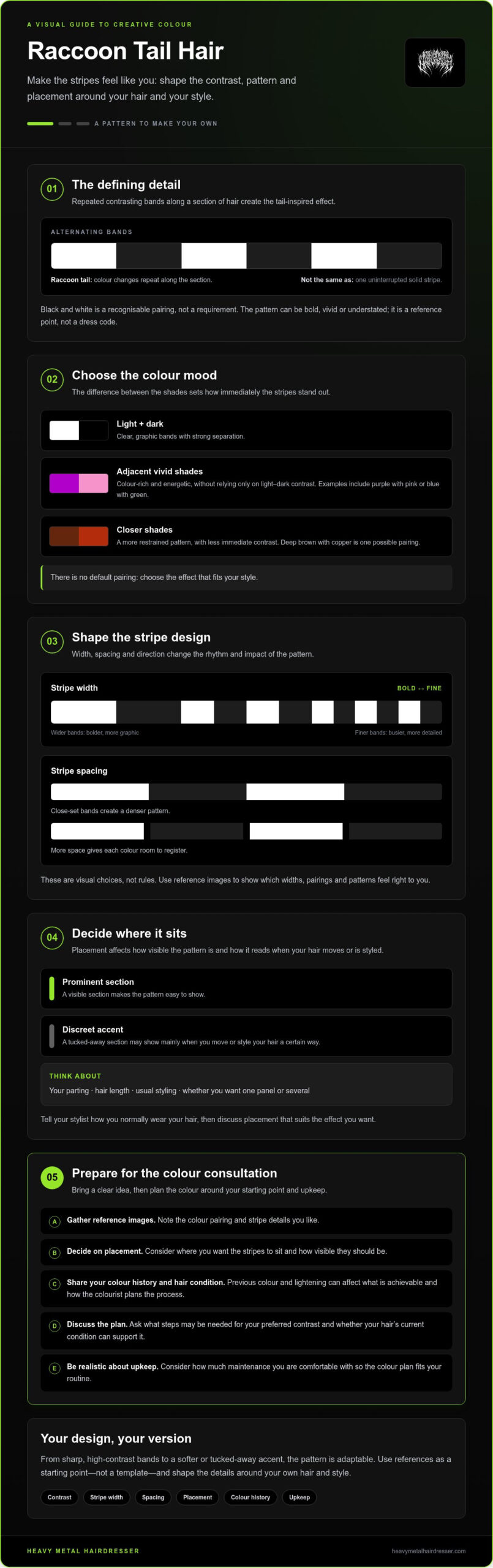
The pattern relies on repetition: one colour meets another, then the contrast returns along the same section. Black and white is a recognisable pairing, but it’s only one option. Deep brown with copper, or a muted shade against a brighter colour, can create a different mood while keeping the signature rhythm.

There’s no single template. Stripes can be broad or fine, close-set or spaced apart, and placed in one panel or several. Their direction and position can also change how the pattern reads. The idea is recognisable, but the details are yours to shape.

What makes the raccoon tail pattern recognisable?

Look for repeated changes in colour along a section, rather than one uninterrupted block of vivid colour. A single solid panel can create contrast, but it doesn’t have the alternating bands that give this pattern its tail-inspired feel.

Stripe size and spacing matter. Wider bands create a bolder, more graphic effect, while finer, closer stripes can feel busier and more detailed. Colour pairing sets the mood; placement and direction affect how visible the pattern is as your hair moves or is styled.

Is raccoon tail hair only for scene style?

The look is strongly associated with alternative fashion and the scene subculture, particularly its 2000s cultural references. For background on that scene, see this overview of the scene subculture. It’s a reference point, not a dress code or a rule about who can wear the pattern.

Make it loud with sharp, high-contrast stripes, or keep the difference between shades restrained for a subtler effect. The pattern can be adapted to different hair lengths, identities and personal aesthetics. You don’t need a particular cut or a full alternative wardrobe to make it feel like yours. Choose the direction that fits your style, rather than copying someone else’s version of the trend.

How Colour, Contrast and Placement Shape Raccoon Tail Hair

Colour sets the mood; placement decides where the pattern catches the eye and how it looks with your parting, hair length and everyday styling. Consider both before settling on a reference. Striking shades in a discreet section can look very different from the same colours placed prominently around the face.

Which colour contrast should you choose?

High contrast, such as a light stripe beside a dark one, makes each band stand out clearly. Adjacent vivid shades, like purple with pink or blue with green, can still feel punchy but create a different kind of contrast. Pairing shades with less difference in lightness gives the pattern a quieter presence. There’s no default: choose the effect that suits your style.

Your starting colour matters. Existing colour and previous lightening can affect what’s achievable and how a colourist plans the process, so don’t assume a reference will translate exactly onto your hair. Ask what steps might be needed to create your preferred contrast and whether your hair’s current condition can support the plan. The FDA’s guidance on safety precautions for hair dye is a useful general reference. Follow the instructions supplied with any colour product and ask a qualified professional about your individual situation.

Pairing direction Visual effect
Light and dark Clear, graphic bands with strong separation.
Adjacent vivid shades Colour-rich stripes that feel energetic without relying only on light-dark contrast.
Closer shades A more restrained pattern, where the stripes are less immediate.

Stripe design changes the impact too. Wider bands tend to look bolder and more graphic; narrower bands can create a finer, busier rhythm. Close-set bands make a dense pattern, while more space between them gives each colour room to register. These are visual choices, not rules. Bring references showing different widths or pairings, and note which details feel authentic rather than copying a look wholesale.

Where should the stripes sit?

A visible section makes the pattern easy to show, while a discreet accent may appear mainly when you move or style your hair a certain way. Length affects how much of each band is visible; your parting and usual styling can expose or conceal particular sections. Tell your stylist how you normally wear your hair, then discuss placement that suits the effect you want.

For a sense of Heavy Metal Hairdresser’s approach to alternative creative colour, you can explore the salon’s creative colour work. Ask about your hair and desired design rather than assuming every pattern is available.

Raccoon Tail Hair Options: Choose a Version That Fits Your Hair

There’s no single version to copy. Start by deciding how visible you want the stripes to be, then consider your hair’s colour history, condition and the upkeep you’re comfortable with. Bold, vivid bands create a strong statement; closer, more restrained shades give the pattern a quieter feel. Neither is the “right” choice. The aim is a design that suits your hair and feels like you.

Direction Visibility Maintenance to discuss Ask your stylist
Bold, vivid stripes Strong colour separation makes the pattern stand out. How the shades may fade and what care or colour refreshes could involve. What process could achieve this contrast on my current hair?
Restrained contrast A subtler effect, with bands that may blend more into the overall look. How to keep the differences between shades looking intentional over time. Which tones would create a noticeable pattern without a sharp contrast?

Can you get raccoon tail hair on different hair lengths?

Hair length affects the space available for each band. On a shorter section, a stylist may need to adjust stripe width or spacing so the pattern reads clearly; more length allows a different rhythm. No length is a requirement. Discuss how the design could work with your cut and the ways you usually wear it, rather than treating a reference as a fixed template.

How does your existing colour affect the plan?

Bring your full colour history to the conversation. Note previous dye, lightening and at-home colour, including roughly when you last coloured it if you know. This helps a colourist assess your starting point alongside your hair’s condition before recommending a process. Don’t expect a reference image to translate exactly: achievable shades and contrast depend on your hair and a professional assessment.

If you’re exploring brighter shades, the guide to vivid hair colour can help you think about the colour direction you want. Use it as inspiration, then discuss how that idea might work with your hair’s history and condition.

Before settling on a plan, be ready to discuss the effect you want, the upkeep that suits your routine and any concerns about your hair’s condition. A clear conversation helps turn inspiration into a considered option, not a promise of an exact result.
Raccoon Tail Hair: The Ultimate Scene Aesthetic Guide

How to Prepare for Raccoon Tail Hair and Care for the Colour

Good preparation turns a striking idea into a useful conversation. Before discussing Raccoon Tail Hair, get clear on the effect you want, while staying open to adjustments if your hair’s history or condition changes what’s achievable.

  • Collect references: Save examples that show the stripe pattern, colour pairing and placement you like. Include a few alternatives, not just one exact result.
  • Document your colour history: Note previous dye, lightening and at-home colour, including what was used if you know. Be upfront about anything that might affect the plan.
  • Define your contrast: Describe whether you want distinct light-and-dark bands or a more restrained difference between shades. Mention how visible you want the pattern with your usual styling.

A colourist should assess your hair’s condition and discuss realistic options before colouring. If the planned process isn’t suitable, ask what could change: the contrast, colours, placement or overall design. A clear alternative is better than forcing a target that your hair may not safely support.

What should you ask before a colour appointment?

Take your references and colour history into the discussion. Ask how your current colour may affect the pattern, whether the placement suits how you wear your hair, and what upkeep the result could involve. If there are concerns about condition, ask what adjustments the stylist recommends and why. Make sure you understand the options before deciding how to proceed.

How can you help the colour stay looking intentional?

Get aftercare advice tailored to the colour work and follow the instructions for any products recommended or used. Washing habits, heat styling and product choices can affect how vivid colour lasts, but the right routine depends on your hair and the specific process. Ask your colourist what to do, what to avoid and when to check in if the colour changes in a way you didn’t expect.

For dedicated upkeep guidance, read these vivid hair colour maintenance tips. If you’re still shaping your palette, explore expressive hair colour ideas for more inspiration.

Ready to discuss your colour history, references and options? Enquire about creative colour suitability, including whether your preferred direction could work for your hair.

Bring Your Raccoon Tail Hair Idea to a Creative Colour Consultation

You’ve got the reference. Now turn it into a conversation about what you want, what your hair can support and how the result might fit your everyday style. Treat Raccoon Tail Hair as a starting point for personal expression, not a pattern you have to copy stripe for stripe.

What should you bring to a creative colour consultation?

A few well-chosen details can make it easier to explain the look you have in mind. Bring:

  • Reference images: Choose examples that show the stripe pattern and colour contrast you like. If you prefer one image’s placement and another’s colour pairing, point that out.
  • Your colour history: Share relevant previous dye, lightening or at-home colour work. Be as accurate as you can, even if the result wasn’t what you expected.
  • Your placement preference: Describe where you’d like the stripes and how visible you want them with your usual parting and styling.
  • Your upkeep comfort zone: Be honest about the time and effort you’re prepared to put into maintaining the colour.

Bring questions, too. Ask how your starting colour might affect the design and what could change if your preferred contrast isn’t realistic for your hair. Clear expectations help you weigh the options before deciding on a look.

How can a stylist make the idea your own?

A stylist can use your references to discuss how stripe placement and contrast might be adapted to your preferences, colour history and hair condition. That could mean considering a different position, a softer colour pairing or another approach to the effect you want. The aim is a considered conversation, not a promise that every reference can be recreated exactly.

Heavy Metal Hairdresser brings an alternative, inclusive perspective and experience with vivid colour. That background is relevant to a creative colour discussion, but it doesn’t confirm that a specific raccoon-tail pattern is available. Ask about your idea and its suitability before assuming the exact service can be provided.

Your style should feel like yours, whether the finished direction stays close to the original reference or takes a different turn. For more on the salon’s creative colour approach, explore creative colour with Heavy Metal Hairdresser.

Make the Stripes Your Own

Raccoon Tail Hair works best as personal expression, not a pattern you have to reproduce exactly. Contrast and placement shape the visual impact, while your colour history and hair condition help determine which options are realistic. Bring references and be ready to discuss the effect you want and the upkeep that fits your life.

Heavy Metal Hairdresser brings experience with vivid colour and alternative styling, including backstage work at Download and Bloodstock. Its inclusive approach celebrates individuality, but the salon’s experience doesn’t guarantee that this specific pattern is available. Enquire about your idea and its suitability before assuming it can be recreated.

Explore creative colour with Heavy Metal Hairdresser and start a colour conversation around your style. Keep the inspiration, stay open to thoughtful adjustments, and make the final look unmistakably yours.

Frequently Asked Questions

What is raccoon tail hair?

Raccoon tail hair is a striped colour pattern made from alternating bands of contrasting colour on a section of hair. The stripes can be wide or fine, closely spaced or more separated, and placed where you want the pattern to show. Black and white is a familiar pairing, but softer shades and vivid colours work too. It’s distinct from a single solid block of contrasting colour.

How do you get raccoon tail hair?

A stylist sections the hair and applies alternating colours to create defined bands. Bring reference images showing the contrast and placement you like, and share your hair’s colour history before a colourist assesses the plan. The process depends on your starting colour and the effect you’re aiming for, so ask what’s achievable and how the stripes could be adapted to your hair.

Can you do raccoon tail hair at home?

You can experiment at home, but creating neat, evenly spaced stripes with clean colour separation can be tricky, especially if the plan involves lightening. Temporary clip-in striped extensions offer a way to try the look without colouring your own hair. For permanent or vivid colour, read product instructions carefully and consider speaking with a qualified colourist first, particularly if your hair has been coloured before.

Does raccoon tail hair work on short hair?

Yes, the pattern can be adapted for short hair. The available length affects how wide the bands can be and how much space there is between them, so a stylist may adjust the stripe design to suit your cut. There’s no required hair length. Discuss how you part and style your hair, and where you’d like the stripes to be visible.

How long does raccoon tail hair colour last?

There isn’t one set lifespan for raccoon tail hair colour. How long it looks fresh can depend on the colour process, your starting shade, washing habits, heat styling and the products you use. Ask your colourist what to expect for the shades and technique planned, and when you might want a refresh. Follow the aftercare instructions they provide for your colour service.

Can raccoon tail hair be done without bleaching?

Sometimes, but it depends on your starting colour and the contrast you want. A vivid or lighter stripe may require lightening to show clearly against darker hair; a closer, subtler pairing may offer different options. No result should be promised before your hair is assessed. Tell the colourist about previous dye or lightening and ask which colour combinations are realistic for your hair.

How do you maintain raccoon tail hair?

Follow the care instructions your colourist gives you, as the right routine depends on the colours and process used. Washing frequency, heat styling and product choices can affect how vivid colour looks over time. Ask which products are suitable, how to use heat carefully and what signs of fading to expect. If you’re unsure about a care step, check with your colourist rather than guessing.
Posted on

Wolf Cut with Vivid Colour Ideas: Weaponising Your Layers for 2026

Wolf Cut with Vivid Colour Ideas: Weaponising Your Layers for 2026

Most people treat hair colour like an accessory, but for the subcultural elite, it is a structural weapon. If you are hunting for wolf cut with vivid colour ideas, you already know that a standard, polished salon job simply won’t cut it. You want hair that feels like a riot, not a rehearsal. You have probably felt the sting of vivids that fade before the weekend is over, or watched your expensive layers disappear into a muddy, shapeless mess. It is frustrating when stylists try to “soften” your edge because they don’t understand the grit of the underground scene.

We agree that your hair should be as loud as your favourite record. This guide is your blueprint for combining aggressive texture with high-octane pigment to create a look that is unapologetically yours. We will explore 2026’s most lethal trends, from “Death Grip” texture to strategic split-tones and smoky lilac underlights. You will discover how to place colour so it highlights every jagged layer and grows out with genuine intent. It is time to stop settling for “pretty” and start weaponising your style.

Key Takeaways

  • Learn how the aggressive texture of a wolf cut acts as a structural canvas for high-saturation pigments.
  • Discover high-impact wolf cut with vivid colour ideas that use strategic placement to make every jagged layer pop.
  • Explore subcultural colour palettes, including toxic greens and high-contrast split dyes, that celebrate your alternative identity.
  • Master the maintenance rituals required to stop vivid fade and protect your layers from heat damage.
  • Understand the importance of choosing a specialist who understands aggressive “Death Grip” texture and inclusive safe spaces.

The Wolf Cut with Vivid Colour: Why This Duo Rules the Alternative Scene

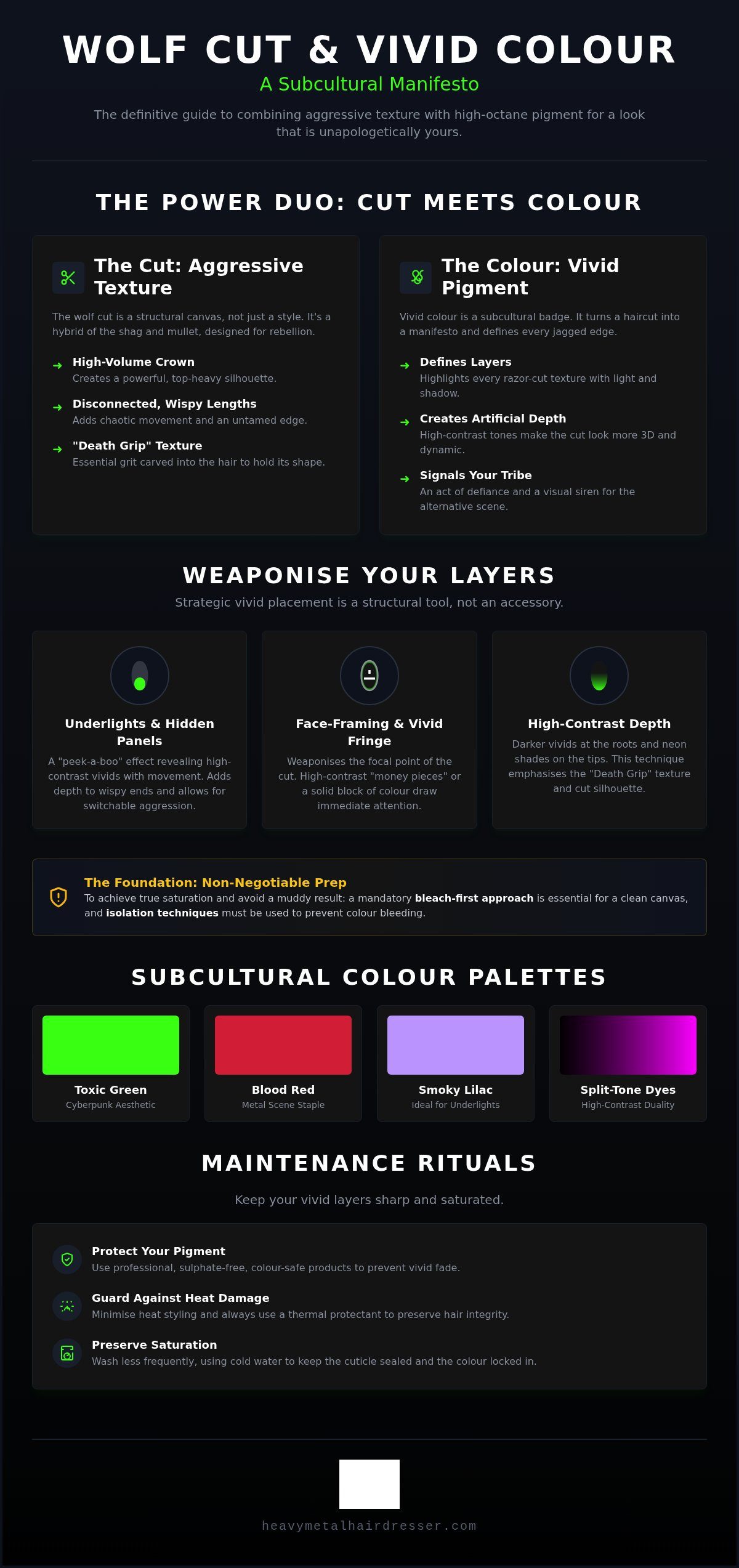
Mainstream salons love to talk about “natural movement” and “subtle blends”. We don’t. In the alternative scene, your hair is a visual siren. The wolf cut is already aggressive by design, but pairing it with high-saturation pigment turns a haircut into a manifesto. It is a synergy that works because the choppy, disconnected layers provide the perfect 3D canvas. Without the right colour, those layers can sometimes look flat or muddy. With vivids, every razor-cut edge is defined by light and shadow.

The Anatomy of an Alternative Wolf Cut

A true alternative wolf cut isn’t just a heavy fringe. It is about the high-volume crown and those signature disconnected, wispy lengths that scream rebellion. Texture is the only word that matters here. We focus on “Death Grip” texture, ensuring the hair has enough grit to hold its shape through a three-day festival set. As a modern take on the shag, the wolf cut is a hybrid of the shag and the mullet for the modern rebel. It demands a stylist who understands how to carve weight out of the hair without losing the structural integrity of the silhouette.

Vivid Colour as a Subcultural Badge

Choosing a bold palette is an act of defiance. It is about moving beyond the binary of traditional styling to express an identity that is uniquely yours. When you are looking for wolf cut with vivid colour ideas, you are looking for a way to signal your tribe. Whether it is the toxic greens of the cyberpunk aesthetic or the deep blood reds of the metal scene, these pigments interact with the gritty texture of the cut to create something visceral.

This transformation requires more than just technical skill; it needs a gender-inclusive safe space where your vision is respected. We celebrate the unconventional. A wolf cut with vivid colour isn’t just a trend for 2026. It is a badge of honour for those who refuse to blend into the background. It is about taking up space and owning your aesthetic with total confidence. Finding the right wolf cut with vivid colour ideas is about more than just picking a shade from a book; it is about weaponising your layers to reflect the music and culture you live for.

Strategic Vivid Placement: Enhancing Your Wolf Cut’s Aggressive Texture

Colour is a structural tool, not just an accessory. It defines the chaos of a wolf cut. When you are exploring wolf cut with vivid colour ideas, you must consider how pigment interacts with the jagged, disconnected layers of the cut. Strategic placement can make short, choppy layers pop with energy or give longer, wispy lengths a sense of fluid movement. It is about using high-contrast tones to create artificial depth. By placing darker vivids at the roots and lighter neon shades on the tips, you emphasise the “Death Grip” texture that makes this style iconic.

Achieving true saturation requires a mandatory bleach-first approach. You cannot get electric blue or toxic green to sing on a dark base. Whilst lightening is essential for that high-octane 2026 look, following professional hair dye safety precautions ensures your hair remains strong enough to hold its textured shape. To avoid a muddy result when mixing multiple shades, we use isolation techniques. This prevents bleeding and keeps your neon yellow from turning into a swampy mess when it hits your jet-black base.

Underlights and Hidden Panels

Hidden panels are the ultimate move for those who want a switchable level of aggression. By placing contrasting vivids in the bottom layers, you create a “peek-a-boo” effect that only reveals itself when the hair moves. This technique adds immense depth to the wispy sections of a long wolf cut, preventing the ends from looking thin or stringy. It is a favourite for the 2026 season, allowing you to hide your subcultural badge during the day and unleash it at the show. If you’re ready to map out your own placement, see how we handle these transformations at Heavy Metal Hairdresser.

Face-Framing Accents and Vivid Fringes

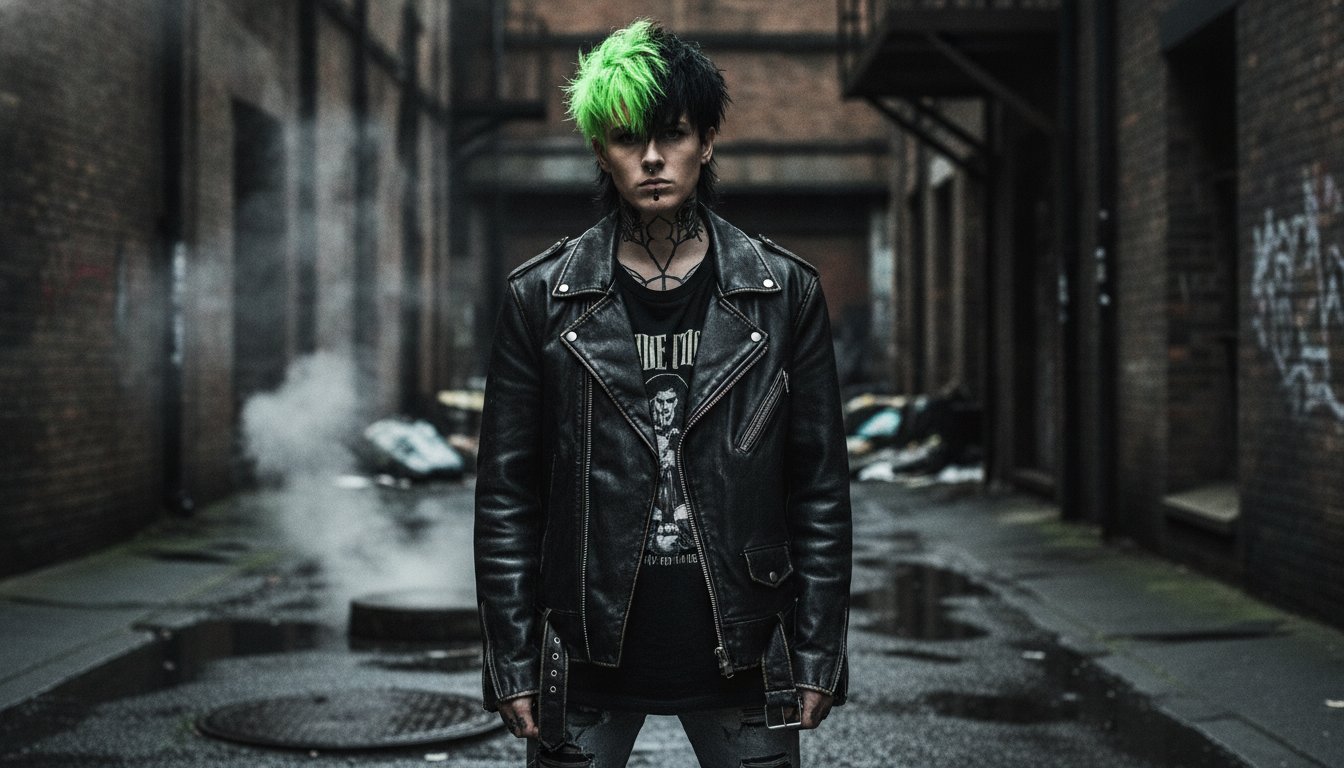
The fringe is the focal point of any wolf cut. Weaponising it with high-contrast “money pieces” or a solid vivid block draws immediate attention to your features. You can create a “halo” effect by applying neon tones specifically to the crown layers, which highlights the volume and height of the cut. This placement ensures that even in low light, the silhouette of your wolf cut with vivid colour ideas remains sharp and recognisable. Whether it’s a razor-sharp platinum blonde or a radioactive green, face-framing accents ensure your alternative identity is the first thing people notice.

Wolf Cut with Vivid Colour Ideas: Weaponising Your Layers for 2026

Colour Palettes for the Unconventional: From Toxic Greens to Blood Reds

Alternative identities aren’t built on “safe” choices. When you are hunting for wolf cut with vivid colour ideas, you are looking for a palette that screams as loud as a distorted guitar. For the metal and rock scenes, colour stories often lean into the dark, the radioactive, and the visceral. We move away from the pastel pinks of the high street. Instead, we embrace deep cherry reds, electric blues, and toxic greens that feel like they belong in a cyberpunk dystopia. These unnatural palettes feel more authentic to subcultural souls because they reject the traditional beauty standard entirely.

Choosing the right palette involves balancing your skin tone whilst maintaining a razor-sharp edge. Cool-toned skin often thrives with smoky lilacs or icy platinums. Warmer skin tones can weaponise neon oranges or blood-soaked reds. The goal isn’t to look “natural”. It is to find a shade that feels like an extension of your creative vision. High-contrast combinations, like neon yellow against jet black, provide the visual impact needed to make those choppy layers stand out in a crowded room.

The High-Contrast Split and Racoon Tails

The “scene” aesthetic is back for 2026, but it is meaner and more refined. Modern racoon tail stripes use aggressive horizontal banding to break up the vertical flow of the layers. This is a technical challenge on heavily layered hair. A perfect split dye requires precision to ensure the line stays sharp across the disconnected lengths of a wolf cut. Whilst many choose vibrant hues, the classic black and white split remains a timeless alternative staple. It provides a stark, graphic look that emphasises the volume and height of the crown.

Gradients and “Melted” Vivids

A colour melt is about creating a seamless flow from deep, shadowy roots to neon-soaked ends. This technique enhances the movement of a textured shag or wolf cut, making the hair look alive. We often recommend palettes that evoke a “radioactive” or “bruised” aesthetic for maximum impact. Consider these combinations for your next session:

  • Radioactive: Deep forest green roots melting into electric lime tips.
  • Bruised: Midnight purple fading into a smoky, ethereal lilac.
  • Volcanic: Jet black crown with fiery orange and blood-red wisps.

These wolf cut with vivid colour ideas work because they use the natural shadows of the cut to their advantage. A well-executed gradient ensures that as your hair moves, the different tones catch the light, revealing the true depth of your “Death Grip” texture. It is high-energy, high-impact, and completely unapologetic.

Maintenance Rituals: Keeping Your Vivid Layers Sharp and Saturated

Achieving the look is only half the battle. You have invested in wolf cut with vivid colour ideas that reflect your identity; now you must defend them. The first 48 hours after your appointment are critical. If you wash your hair too soon, you are literally rinsing your investment down the drain. Let that pigment settle and the cuticle seal. Vivid longevity is about discipline, not luck.

Heat is a double-edged sword. It destroys vivid longevity by blowing open the hair cuticle and wilts the structural integrity of your layers. To keep that “Death Grip” texture looking sharp, you need to step away from the straighteners. Air-drying with the right professional-grade gritty product is the only way to maintain that raw, underground aesthetic without sacrificing your colour saturation. High temperatures will turn your electric blue into a dull grey faster than a bad support act.

The Cold Water Rule and Washing Protocols

Ice-cold water is non-negotiable. It feels like a punishment, but it is the only way to keep those high-octane pigments locked in place. When you do wash, reach for sulphate-free cleansers. Standard high-street shampoos contain harsh detergents that strip your identity along with your natural oils. Wash less, dry shampoo more; this is the fundamental mantra for anyone rocking alternative hair. This approach preserves the natural oils needed to keep your textured ends from becoming brittle.

Protecting Texture in the Mosh Pit

We have spent enough time backstage at Download and Bloodstock to know that a mosh pit is the ultimate stress test for hair. Sweat and friction are the primary enemies of wolf cut with vivid colour ideas. To survive a weekend without looking like a washed-out mess, check out our festival hair survival guide. Using a silk scarf or a loose braid can minimise the friction that leads to colour bleed and tangling during high-energy sets.

Post-festival recovery is about hydration without the damage. Use deep conditioning treatments specifically formulated for alternative hair, avoiding anything with colour-stripping chemicals. This keeps your layers supple and your vivids vibrant until your next session. If your current routine isn’t cutting it, book a maintenance consultation with our specialist team to get your saturation back on track.

Weaponise Your Identity: Booking Your Professional Wolf Cut Transformation

A generalist stylist might give you layers, but they won’t give you a weapon. When you are ready to commit to a wolf cut with vivid colour ideas, you need a specialist who speaks your language. Most traditional salons will try to “soften” your edges or talk you out of high-contrast pigments because they don’t understand the subcultural grit you’re chasing. We don’t do subtle. We specialise in the “Death Grip” texture and aggressive silhouettes that define the alternative scene. Booking with an alt-stylist ensures your vision isn’t diluted by mainstream standards.

Communication is the key to a successful transformation. Reference photos are helpful, but we also want to hear about the subcultural “vibes” you live for. Tell us about your favourite bands or the specific aesthetic you want to project. Do you want “aggressive” layers with sharp, disconnected edges that demand attention? Or are you looking for “soft” layers that offer a more wearable, sophisticated version of the shag? Being clear about the level of chaos you want allows us to carve a silhouette that fits your lifestyle perfectly.

The Consultation: From Concept to Chaos

Our consultation process is a collaboration between your vision and our technical expertise. We translate your aesthetic influences into a concrete hair plan, ensuring the wolf cut with vivid colour ideas we choose will actually work with your hair’s natural behaviour. We honestly discuss the integrity of your hair before any bleach hits the strands. If you want to dive deeper into the mechanics of the cut itself, check out our wolf hair cut guide. We prioritise the health of your hair so your vivids stay saturated and your texture stays gritty.

Joining the Community

Heavy Metal Hairdresser is more than just a place to get a haircut; it is a collective of like-minded individuals who refuse to conform. We take immense pride in being a gender-inclusive, queer-friendly safe space where being different is the only requirement. Our salon is a sanctuary for the outsiders, the metalheads, and the rebels who want their hair to reflect their internal fire. You aren’t just a client; you are part of an independent movement that celebrates individuality above all else. It is time to stop hiding and start owning your space. Book your transformation with Simon Tuckwell and the crew and let’s weaponise your identity for 2026.

Unleash Your Subcultural Edge

Your hair is the loudest thing about you. We have shown how the right wolf cut with vivid colour ideas can transform a standard layered shape into a structural weapon. By using strategic placement like underlights or high-contrast split dyes, you define every razor-cut edge. But the look doesn’t end at the salon door. Success in 2026 relies on your maintenance rituals; cold water and heat protection are your only path to long-term saturation.

Don’t trust your identity to a generalist who wants to play it safe. You deserve a stylist who lives for the mosh pit. As award-winning creative colour specialists with backstage experience at Download and Bloodstock, we know how to make your texture survive the chaos. Our space is a gender-inclusive sanctuary for every rebel, outsider, and alternative soul. It is time to stop settling for a diluted version of yourself. Book your vivid wolf cut transformation at Heavy Metal Hairdresser and own your aesthetic. Your layers are ready for war.

Frequently Asked Questions

How long does vivid colour last on a wolf cut?

Vivid pigments typically last between 4 to 8 weeks depending on your maintenance routine and the specific shade chosen. Cool tones like blue and purple often linger longer than fiery reds or neons. Because wolf cuts feature many exposed, choppy ends, the colour can appear to fade faster on the wispy lengths if you don’t use professional-grade, sulphate-free products to lock in the saturation.

Will bleaching my hair for vivids ruin the wolf cut texture?

Bleaching won’t ruin your texture if it is handled by a specialist who prioritises hair integrity. In fact, the slight opening of the cuticle during the lightening process can actually help you achieve the “Death Grip” texture needed for maximum volume. We use protective treatments to ensure your jagged layers remain resilient and bouncy rather than becoming brittle or losing their structural grit.

Can I get a wolf cut with vivid colour if I have dark hair?

You can definitely achieve a wolf cut with vivid colour ideas starting from a dark base. It simply requires a multi-step lightening process to create a clean canvas for the fantasy pigments to sing. We often suggest strategic placement, such as high-contrast underlights or bold face-framing panels, to give you that subcultural edge whilst protecting the health of your natural dark lengths.

What are the best vivid colour ideas for a short wolf cut?

Short wolf cuts thrive on high-impact crown accents and neon “halo” effects. Because the layers are more compact, electric blues or toxic greens placed at the roots can make the volume look even more aggressive. You might also consider a split-tone fringe or horizontal “racoon tail” banding, which adds a modern, rebellious energy to a shorter, more disconnected silhouette.

How often do I need to visit the salon to maintain the layers and colour?

Most of our community members return every 6 to 8 weeks to keep their silhouette from losing its shape. Whilst the wolf cut is famous for a great grow-out, the aggressive layers need a professional reshape to stay sharp. If you are committed to high-saturation colour, a pigment refresh every 4 weeks will stop the fade from dulling your visual manifesto.

Is a wolf cut with vivid colour suitable for professional environments?

It depends on your workplace, but “peek-a-boo” vivids are the perfect tactical workaround for more conservative settings. We can hide high-octane panels in the bottom layers or under the fringe so they only reveal themselves when you move or style your hair up. This allows you to weaponise your identity on the weekend whilst maintaining a “stealth” look during the working day.

What is the “Death Grip” when it comes to styling a wolf cut?

“Death Grip” is our signature styling philosophy for creating hair that refuses to wilt. It is about using specific gritty products and cutting techniques to ensure your wolf cut with vivid colour ideas holds its aggressive texture through a three-day festival. We move away from polished, “pretty” finishes in favour of a raw, underground feel that stays locked in place no matter the chaos.

How do I stop my vivid colours from bleeding into each other?

Stopping the bleed starts with ice-cold water and minimal friction during your washing ritual. Cold water keeps the hair cuticle clamped shut, preventing the different pigments from migrating into one another. You should also avoid piling your hair on top of your head whilst wet. Use a dedicated colour-safe towel to pat the hair dry rather than rubbing it, which keeps your split-tones crisp.

Posted on

Wolfcut with Vivid Colour Ideas: Saturating Your Alternative Identity

Wolfcut with Vivid Colour Ideas: Saturating Your Alternative Identity

Your hair isn’t just a style choice; it’s a structural rebellion against the beige and the boring. You already know the wolfcut is the ultimate silhouette for anyone living outside the mainstream. It’s raw, it’s messy, and it’s unapologetically loud. However, finding the right wolfcut with vivid colour ideas can feel like a gamble when you’re worried about pigments bleeding or your favourite shades fading into a muddy mess before the month is out. You want the grit without the grime. It’s about ensuring your aesthetic stays as biting as your layers.

We’re here to bridge that gap. You’ll learn how to fuse aggressive, textured layers with high-impact pigments to create a look that screams individuality. We’ll explore expert placement techniques that define your shape and look at 2026 trends like Velvety Cherry Cola and Gemstone Greens. This guide breaks down how to achieve high-contrast results that last. You’ll get the inspiration needed to go beyond basic highlights and the confidence to choose a palette that matches your alternative identity perfectly.

Key Takeaways

  • Discover why the clash of 70s shag layers and 80s mullet grit creates the perfect canvas for high-impact pigments.
  • Master strategic placement for your wolfcut with vivid colour ideas to amplify choppy texture and highlight aggressive face-framing.
  • Choose your aesthetic battle jacket from a range of curated palettes; from deep Gothic Noir to ultraviolet Toxic Neons.
  • Learn the maintenance protocol to stop colour bleeding and keep your saturation biting for longer.
  • Understand why a specialist shag hairdresser is non-negotiable for translating your specific subcultural vibe into a technical reality.

The Wolfcut with Vivid Colour: Why This Duo Rules the Alternative Scene

Forget everything you know about “pretty” hair. The wolfcut is a structural riot. It’s a chaotic, aggressive blend of the 70s shag’s volume and the 80s mullet’s tail. This isn’t a style for those who want to blend in at the office. It’s for the outsiders. By combining these two eras, you get a look that is a modern variation of the shag built on raw energy. The wolfcut is a hybrid of subcultural grit and modern technique that refuses to behave.

Vivid colour is the essential upgrade for these choppy layers. Without high-impact pigment, the intricate texture can often get lost in the shadows. Saturating your hair in electric tones or deep, moody hues brings those layers to life. It’s about the psychology of the alternative identity. Your hair is your visual armour. It’s a narrative that you own completely. Whilst mainstream salon standards push for “safe” natural tones that don’t offend, we advocate for unapologetic saturation that challenges. It’s a middle finger to the boring.

The Structural Advantage of the Wolfcut

The beauty of this cut lies in its total disconnection. Those jagged, uneven layers aren’t just for height. They create hidden “pockets” within the hair. This allows for unexpected colour surprises that reveal themselves only when you move. Movement is everything here. Vivids look better on shaggy hair because the light hits the different planes of colour simultaneously. A blunt cut is a flat screen; a wolfcut is a 3D experience. It’s built to be seen from every angle.

Vivid Pigment as a Form of Rebellion

Opting for a wolfcut with vivid colour ideas is a deliberate act of reclamation. You are moving beyond the natural tones that society deems “professional” to reclaim your own visual story. We are seeing a heavy influence from stage aesthetics and the raw energy of festival culture. In 2026, the UK alternative scene is embracing total saturation over subtle blending. It’s about being seen. This combination of aggressive cutting and high-decibel colour breaks every rule in the traditional handbook. It’s messy, it’s loud, and it’s exactly what the scene needs right now.

Strategic Colour Placement Ideas for Maximum Texture Impact

The wolfcut is a masterpiece of disconnection. If you simply douse it in one flat shade, you risk hiding the very texture that makes it iconic. To truly master a wolfcut with vivid colour ideas, you have to think about where the light hits and where the shadows retreat. It is about architectural placement that respects the movement of the hair. You aren’t just dyeing hair; you are highlighting a structural rebellion.

Start with the “Peek-a-Boo” underlayer. This technique involves saturating the bottom layers in a contrasting, dark shade. When you move, the aggressive underside flashes through the top layers, adding immediate structural depth. Then there is the “Radioactive” frame. This focuses high-impact vivids around the face and through those choppy bangs, acting as a neon spotlight for your features. For those who want a total system shock, Split Dye Chaos is the answer. Dividing the cut down the centre for a symmetrical assault creates a high-contrast look that demands attention from every angle. Finally, dip-dyed ends can emphasise the “shredded” texture of your perimeter. By colouring only the last few inches of the longest layers, you make the flicky ends look intentionally sharp and dangerous.

Contouring Your Cut with Colour

Utilising a wolfcut with vivid colour ideas allows you to manipulate how the cut’s volume is perceived. Darker vivids like deep plum or forest green create artificial shadows. Placing these in the mid-layers creates a sense of immense depth. Conversely, hitting the top layers with neon yellows or acid greens draws the eye upward to the crown volume. To keep things clean, always follow safety guidelines for hair dye when mixing pigments. Using the right barrier products prevents different shades from turning into a muddy mess during the rinse process.

The “Internal Glow” Technique

This method involves placing bright tones strictly on the mid-shaft of the hair. It makes the layers look like they are vibrating from within. This works exceptionally well for the wolf hair cut because the shorter crown layers naturally reveal the glowing mid-section underneath. You can choose horizontal sectioning for a more blended “halo” effect or vertical slices for distinct ribbons of light. If you are unsure which placement fits your specific texture, consulting a specialist shag hairdresser is the best way to ensure your vision translates into a technical reality.

Wolfcut with Vivid Colour Ideas: Saturating Your Alternative Identity

Aggressive Palettes: Choosing Your Vivid Battle Jacket

Choosing your palette isn’t just about what looks good. It’s about personal iconography. Think of your hair as a battle jacket; each shade is a patch representing your subcultural allegiance. A wolfcut with vivid colour ideas requires a palette that matches the aggressive nature of the cut. You don’t want a “pretty” pastel if your layers are designed to look like they’ve been shredded by a riot. You want high-decibel distortion that reflects your internal landscape.

The Gothic Noir palette is for the dwellers of the dark. We are talking deep plums, midnight blues, and blood reds that look almost black until the light hits the texture. If you prefer high-visibility rebellion, Toxic Neons are your weapon. Acid green, electric yellow, and UV-reactive pinks create a radioactive glow that is impossible to ignore. For a more metallic, industrial vibe, Oil Slick Realism uses iridescent teals and purples to mimic the greasy shimmer of petrol on rain-soaked tarmac. Finally, the “Nuclear” Sunset blends magentas, oranges, and yellows into a bleeding horizon that flows perfectly through long, shaggy layers.

Matching Colour to Your Aesthetic

Your hair should resonate with your speakers. Metalheads often gravitate towards the Gothic Noir or Oil Slick palettes, whilst Punks might lean into the raw energy of Toxic Neons. Pairing vivid hair colour with heavy texture is what we call the “Deadly Combination.” It’s a sensory overload. If your wardrobe is strictly all-black, a high-contrast pop of colour acts as a visual anchor. It breaks up the silhouette and ensures your identity isn’t swallowed by the shadows. It is about making your presence felt before you even speak.

The Science of Saturation

Achieving these extreme looks isn’t a quick process. To get that “Nuclear” Sunset or a piercing neon, you usually need to start at a level 10 blonde. This provides a clean canvas for the pigment to bond with. Toning the hair before applying the final vivid pigment is vital to ensure the result is pure and not muddied by yellow undertones. It is also important to follow FDA hair dye safety guidelines to protect your scalp during these intensive lightening sessions. Remember that every colour has a life cycle. Some shades, like magentas, look incredible as they fade into soft peaches, whilst others might require more frequent top-ups to maintain their bite.

Maintenance Protocol: Protecting Your Pigment and Shape

You’ve spent hours in the chair and a fair bit of coin on your wolfcut with vivid colour ideas. Don’t let it all wash down the drain in a week. Maintenance for alternative hair isn’t a suggestion; it’s a lifestyle. If you treat your hair like a standard “short back and sides,” you will lose the saturation and the structure that makes this look biting. You need a ritual that respects the grit whilst guarding the pigment.

The first rule is the Cold Water Commandment. Heat is the ultimate enemy of vivid saturation because it forces the hair cuticle open, allowing those expensive pigments to escape. Wash your hair in water as cold as you can stand. It’s a shock to the system, but it keeps your colour locked in. Next, it’s sulphate-free or die. Traditional shampoos use harsh detergents that strip semi-permanent dyes in a single go. Switch to a professional, sulphate-free cleanser that prioritises moisture over foam.

Maintaining the “shred” is equally vital. A wolfcut relies on aggressive, disconnected layers. Without a trim every 6 to 8 weeks, those layers grow out and lose their flicky energy, turning your masterpiece into a shapeless blob. Between salon visits, establish a refreshment cycle. Use a high-quality semi-permanent dye to top up your most visible sections at home. It keeps your palette looking fresh rather than faded. If you want to keep your look sharp between appointments, you can find the right tools and branded merchandise to support your daily ritual.

Combatting the Fade

The sun is a natural bleach. UV rays break down chemical bonds in your hair colour, leading to a dull, dusty finish. Use a UV protectant spray whenever you’re heading out to a gig or festival. You can also integrate pigment-depositing conditioners, but be careful with your placement if you have a split-dye or peek-a-boo layers. Over-washing is the absolute #1 killer of creative colour, so aim for once or twice a week at most.

Styling for Longevity

Heat styling doesn’t just fade colour; it destroys the integrity of bleached strands. Air-drying is your best friend. It preserves moisture and allows the natural texture of the cut to take centre stage. To get that signature messy look, use products like Death Grip or Hair To the Throne. These provide the necessary grit and volume without the heavy weight of traditional waxes. Avoid heavy oils, as they can sometimes act as a solvent and strip certain types of semi-permanent pigments. This keeps your texture looking raw and your colour looking dangerous.

The Heavy Metal Hairdresser Experience: Execution and Grit

Most salons want to tame you. They treat alternative aesthetics like a costume, missing the structural nuance required for a look that actually lasts. We don’t. A specialist shag hairdresser is non-negotiable for this level of technical aggression. It isn’t just about the cut; it’s about the subcultural context. Your hair needs to survive the front row of a gig. It’s hair designed for the mosh pit and the stage.

The consultation is where the technical plan meets your personal energy. We don’t just look at face shapes. We look at your aesthetic, your music, and your lifestyle. Executing a wolfcut with vivid colour ideas requires a safe space where being different is the standard. Inclusivity isn’t a buzzword here; it’s the foundation of everything we do. Every cut and colour is an identity-affirming act.

Beyond the Chair

Joining the HMH community means entering a network of outsiders. We aren’t just stylists; we are advocates for your individuality. For those looking to master these techniques, we offer alternative hair courses UK to train the next generation of rebellious experts. Whether you are chasing a wolfcut with vivid colour ideas or a raw, textured shag, booking your first session is the start of a transformation. Expect high energy and zero judgment.

Your New Weapon of Self-Expression

Stop apologising for being too much or too loud. The world is beige enough. A wolfcut that finally matches the noise in your head is a powerful weapon. It’s about the moment you look in the mirror and finally see yourself. This isn’t just a change of look. It’s a reclamation of your visual narrative. Book your wolfcut and vivid colour session now and finally saturate your identity.

Claim Your Visual Narrative

Your hair is the loudest thing about you. It’s an architectural statement that refuses to be quiet. By now, you know that a wolfcut with vivid colour ideas isn’t just about a trend; it’s about structural depth and high-decibel pigment. You’ve seen how strategic placement like the “Radioactive” frame can highlight your features, whilst a strict maintenance ritual of cold water and sulphate-free care keeps your saturation biting for longer. This is about more than just a haircut. It is a total reclamation of your identity, and for those wanting to document their unique style for a special occasion, Ian Petrie’s Photography provides professional imagery that respects the alternative aesthetic.

We live for the grit. As experts in aggressive texture and creative pigment, we provide a gender-inclusive safe space for the alternative community. Our team has worked as backstage festival stylists at Download and Bloodstock, so we know exactly what it takes to make hair survive the pit. Stop settling for mainstream standards that don’t understand your vibe. It’s time to step out of the shadows and into the neon. Book your wolfcut and vivid colour transformation at Heavy Metal Hairdresser today. Your most authentic self is waiting to be unleashed.

Frequently Asked Questions

How long does a wolfcut with vivid colour typically last?

A wolfcut with vivid colour typically maintains peak saturation for 4 to 8 weeks depending on your maintenance ritual. Cold water washes and professional sulphate-free cleansers are non-negotiable to prevent premature fading. Some pigments like deep purples or magentas may linger longer as a soft stain, whilst neons often require more frequent top-ups to keep their high-decibel energy.

Can I get a wolfcut if I have naturally curly or textured hair?

Absolutely. The wolfcut actually thrives on natural curls and waves because the disconnected layers remove bulk whilst encouraging movement. It creates a wild, organic shape that is much easier to style than traditional blunt cuts. Textured hair provides the perfect gritty canvas for high-impact pigments, making the layers look even more dimensional and aggressive.

Does vivid hair colour damage your hair more than traditional dye?

No, semi-permanent vivid pigments are generally non-oxidative and act more like a deep conditioning treatment than a chemical process. The potential for damage lies in the pre-lightening stage required to reach the pale blonde base necessary for bright tones. Professional application ensures your hair integrity remains intact during the bleaching process so your alternative aesthetic doesn’t come at the cost of shredded strands.

How often should I get my wolfcut layers trimmed to keep the shape?

You should book a trim every 6 to 8 weeks to prevent your aggressive layers from losing their definition. The wolfcut relies on specific weight distribution to maintain its flicky, textured perimeter. If you wait too long, the crown volume collapses and the shape becomes a heavy, uninspired blob. Regular maintenance ensures your silhouette stays sharp and intentional.

What happens if I want to change my vivid colour to something else later?

Changing your palette is entirely possible through professional fading treatments or colour wheel transitions. We often move between adjacent shades, such as shifting from blue to purple, to maintain hair health and avoid over-processing. If you want a total reset, a professional colour removal process is necessary. Never attempt a “DIY” bleach bath at home, as this can lead to uneven results and permanent structural damage.

Is a wolfcut high maintenance for daily styling?

It’s actually one of the lowest-maintenance styles for daily wear because it’s designed to look “undone” and raw. You don’t need a round brush or a flat iron to make it work. A bit of salt spray or a texture-building product is usually enough to wake up the layers. It’s the perfect cut for anyone who wants high-impact style with minimal morning effort.

Can I achieve these vivid colour ideas on dark hair without bleach?

You cannot achieve high-saturation neons or bright gemstone tones on dark hair without a lightening process first. Dark hair acts like a brown piece of paper; if you put purple ink on it, it simply won’t show. To get the most out of your wolfcut with vivid colour ideas, we must lift the hair to a pale yellow base. This provides the clean canvas required for the pigment to truly pop.

What is the best way to stop vivid colours from bleeding into each other?

The most effective way to prevent colour bleeding is washing your hair in ice-cold water to keep the cuticle closed. Cold water traps the pigment inside each strand and prevents it from migrating. You should also rinse different sections separately if you have a high-contrast look like a split-dye. This ensures your neons don’t muddy your deep tones during the cleaning ritual.