
The stripes aren’t the hard part. Getting the contrast and placement to feel like you, rather than a costume from someone else’s mood board, is where Raccoon Tail Hair comes alive. Alternating bands across a section bring instant scene-era attitude, but they’re not the same as a single, solid skunk stripe. Whether you’re considering bold black-and-white or a softer colour pairing, plan first, especially if your hair has been coloured before.
This guide explains what defines the look and how you can adapt it, from sharp and high-contrast to subtle, vivid or tucked away. You’ll find practical points to discuss with a stylist, including stripe placement, colour history, hair condition and upkeep. Heavy Metal Hairdresser’s alternative-culture roots and vivid-colour experience offer a relevant starting point, but the pattern isn’t a fixed trend template. It’s yours to make your own.
Key Takeaways
- Raccoon Tail Hair can look sharp and high-contrast or softer and more understated, depending on your colour choices.
- Stripe width, spacing and placement all affect the finished look. Decide how bold or subtle you want the pattern to feel.
- Your colour history and hair condition can affect which options are achievable, so discuss them with a stylist before colouring.
- Gather reference images and decide where you’d like the stripes to sit before a creative colour consultation.
- Consider how much maintenance you’re comfortable with, so your colour plan fits your routine.
What Is Raccoon Tail Hair? The Striped Alternative Colour Look Explained
Raccoon Tail Hair is a colour pattern made from contrasting bands across a section of hair, creating a striped, tail-inspired effect.
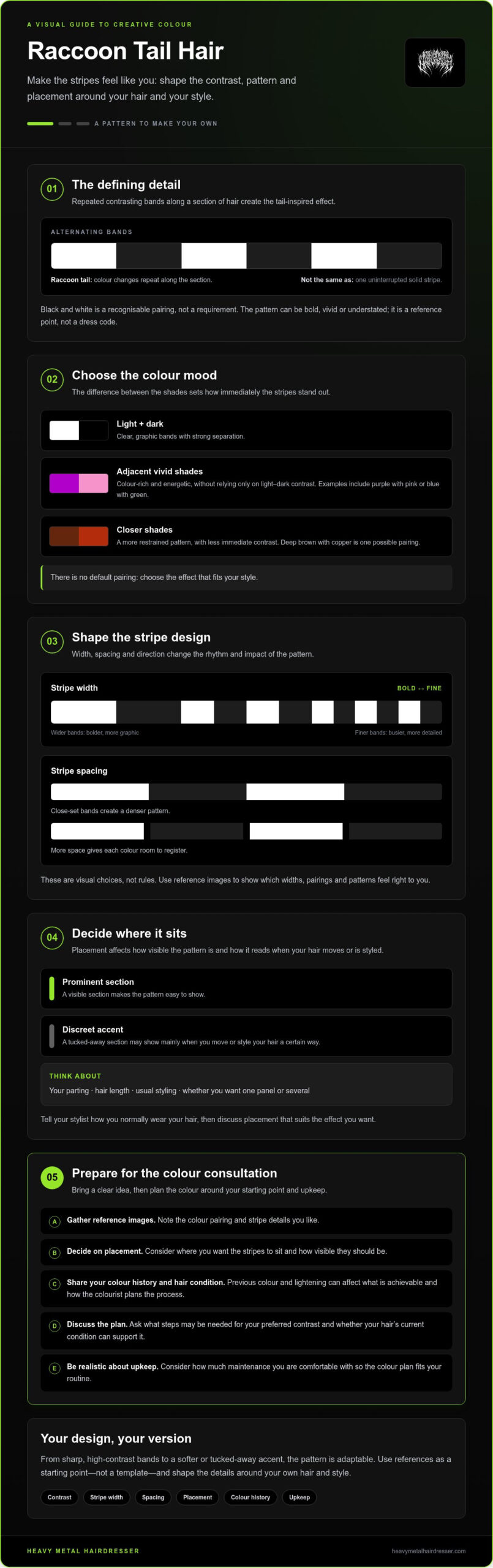
The pattern relies on repetition: one colour meets another, then the contrast returns along the same section. Black and white is a recognisable pairing, but it’s only one option. Deep brown with copper, or a muted shade against a brighter colour, can create a different mood while keeping the signature rhythm.
There’s no single template. Stripes can be broad or fine, close-set or spaced apart, and placed in one panel or several. Their direction and position can also change how the pattern reads. The idea is recognisable, but the details are yours to shape.
What makes the raccoon tail pattern recognisable?
Look for repeated changes in colour along a section, rather than one uninterrupted block of vivid colour. A single solid panel can create contrast, but it doesn’t have the alternating bands that give this pattern its tail-inspired feel.
Stripe size and spacing matter. Wider bands create a bolder, more graphic effect, while finer, closer stripes can feel busier and more detailed. Colour pairing sets the mood; placement and direction affect how visible the pattern is as your hair moves or is styled.
Is raccoon tail hair only for scene style?
The look is strongly associated with alternative fashion and the scene subculture, particularly its 2000s cultural references. For background on that scene, see this overview of the scene subculture. It’s a reference point, not a dress code or a rule about who can wear the pattern.
Make it loud with sharp, high-contrast stripes, or keep the difference between shades restrained for a subtler effect. The pattern can be adapted to different hair lengths, identities and personal aesthetics. You don’t need a particular cut or a full alternative wardrobe to make it feel like yours. Choose the direction that fits your style, rather than copying someone else’s version of the trend.
How Colour, Contrast and Placement Shape Raccoon Tail Hair
Colour sets the mood; placement decides where the pattern catches the eye and how it looks with your parting, hair length and everyday styling. Consider both before settling on a reference. Striking shades in a discreet section can look very different from the same colours placed prominently around the face.
Which colour contrast should you choose?
High contrast, such as a light stripe beside a dark one, makes each band stand out clearly. Adjacent vivid shades, like purple with pink or blue with green, can still feel punchy but create a different kind of contrast. Pairing shades with less difference in lightness gives the pattern a quieter presence. There’s no default: choose the effect that suits your style.
Your starting colour matters. Existing colour and previous lightening can affect what’s achievable and how a colourist plans the process, so don’t assume a reference will translate exactly onto your hair. Ask what steps might be needed to create your preferred contrast and whether your hair’s current condition can support the plan. The FDA’s guidance on safety precautions for hair dye is a useful general reference. Follow the instructions supplied with any colour product and ask a qualified professional about your individual situation.
| Pairing direction | Visual effect |
|---|---|
| Light and dark | Clear, graphic bands with strong separation. |
| Adjacent vivid shades | Colour-rich stripes that feel energetic without relying only on light-dark contrast. |
| Closer shades | A more restrained pattern, where the stripes are less immediate. |
Stripe design changes the impact too. Wider bands tend to look bolder and more graphic; narrower bands can create a finer, busier rhythm. Close-set bands make a dense pattern, while more space between them gives each colour room to register. These are visual choices, not rules. Bring references showing different widths or pairings, and note which details feel authentic rather than copying a look wholesale.
Where should the stripes sit?
A visible section makes the pattern easy to show, while a discreet accent may appear mainly when you move or style your hair a certain way. Length affects how much of each band is visible; your parting and usual styling can expose or conceal particular sections. Tell your stylist how you normally wear your hair, then discuss placement that suits the effect you want.
For a sense of Heavy Metal Hairdresser’s approach to alternative creative colour, you can explore the salon’s creative colour work. Ask about your hair and desired design rather than assuming every pattern is available.
Raccoon Tail Hair Options: Choose a Version That Fits Your Hair
There’s no single version to copy. Start by deciding how visible you want the stripes to be, then consider your hair’s colour history, condition and the upkeep you’re comfortable with. Bold, vivid bands create a strong statement; closer, more restrained shades give the pattern a quieter feel. Neither is the “right” choice. The aim is a design that suits your hair and feels like you.
| Direction | Visibility | Maintenance to discuss | Ask your stylist |
|---|---|---|---|
| Bold, vivid stripes | Strong colour separation makes the pattern stand out. | How the shades may fade and what care or colour refreshes could involve. | What process could achieve this contrast on my current hair? |
| Restrained contrast | A subtler effect, with bands that may blend more into the overall look. | How to keep the differences between shades looking intentional over time. | Which tones would create a noticeable pattern without a sharp contrast? |
Can you get raccoon tail hair on different hair lengths?
Hair length affects the space available for each band. On a shorter section, a stylist may need to adjust stripe width or spacing so the pattern reads clearly; more length allows a different rhythm. No length is a requirement. Discuss how the design could work with your cut and the ways you usually wear it, rather than treating a reference as a fixed template.
How does your existing colour affect the plan?
Bring your full colour history to the conversation. Note previous dye, lightening and at-home colour, including roughly when you last coloured it if you know. This helps a colourist assess your starting point alongside your hair’s condition before recommending a process. Don’t expect a reference image to translate exactly: achievable shades and contrast depend on your hair and a professional assessment.
If you’re exploring brighter shades, the guide to vivid hair colour can help you think about the colour direction you want. Use it as inspiration, then discuss how that idea might work with your hair’s history and condition.
Before settling on a plan, be ready to discuss the effect you want, the upkeep that suits your routine and any concerns about your hair’s condition. A clear conversation helps turn inspiration into a considered option, not a promise of an exact result.
How to Prepare for Raccoon Tail Hair and Care for the Colour
Good preparation turns a striking idea into a useful conversation. Before discussing Raccoon Tail Hair, get clear on the effect you want, while staying open to adjustments if your hair’s history or condition changes what’s achievable.
- Collect references: Save examples that show the stripe pattern, colour pairing and placement you like. Include a few alternatives, not just one exact result.
- Document your colour history: Note previous dye, lightening and at-home colour, including what was used if you know. Be upfront about anything that might affect the plan.
- Define your contrast: Describe whether you want distinct light-and-dark bands or a more restrained difference between shades. Mention how visible you want the pattern with your usual styling.
A colourist should assess your hair’s condition and discuss realistic options before colouring. If the planned process isn’t suitable, ask what could change: the contrast, colours, placement or overall design. A clear alternative is better than forcing a target that your hair may not safely support.
What should you ask before a colour appointment?
Take your references and colour history into the discussion. Ask how your current colour may affect the pattern, whether the placement suits how you wear your hair, and what upkeep the result could involve. If there are concerns about condition, ask what adjustments the stylist recommends and why. Make sure you understand the options before deciding how to proceed.
How can you help the colour stay looking intentional?
Get aftercare advice tailored to the colour work and follow the instructions for any products recommended or used. Washing habits, heat styling and product choices can affect how vivid colour lasts, but the right routine depends on your hair and the specific process. Ask your colourist what to do, what to avoid and when to check in if the colour changes in a way you didn’t expect.
For dedicated upkeep guidance, read these vivid hair colour maintenance tips. If you’re still shaping your palette, explore expressive hair colour ideas for more inspiration.
Ready to discuss your colour history, references and options? Enquire about creative colour suitability, including whether your preferred direction could work for your hair.
Bring Your Raccoon Tail Hair Idea to a Creative Colour Consultation
You’ve got the reference. Now turn it into a conversation about what you want, what your hair can support and how the result might fit your everyday style. Treat Raccoon Tail Hair as a starting point for personal expression, not a pattern you have to copy stripe for stripe.
What should you bring to a creative colour consultation?
A few well-chosen details can make it easier to explain the look you have in mind. Bring:
- Reference images: Choose examples that show the stripe pattern and colour contrast you like. If you prefer one image’s placement and another’s colour pairing, point that out.
- Your colour history: Share relevant previous dye, lightening or at-home colour work. Be as accurate as you can, even if the result wasn’t what you expected.
- Your placement preference: Describe where you’d like the stripes and how visible you want them with your usual parting and styling.
- Your upkeep comfort zone: Be honest about the time and effort you’re prepared to put into maintaining the colour.
Bring questions, too. Ask how your starting colour might affect the design and what could change if your preferred contrast isn’t realistic for your hair. Clear expectations help you weigh the options before deciding on a look.
How can a stylist make the idea your own?
A stylist can use your references to discuss how stripe placement and contrast might be adapted to your preferences, colour history and hair condition. That could mean considering a different position, a softer colour pairing or another approach to the effect you want. The aim is a considered conversation, not a promise that every reference can be recreated exactly.
Heavy Metal Hairdresser brings an alternative, inclusive perspective and experience with vivid colour. That background is relevant to a creative colour discussion, but it doesn’t confirm that a specific raccoon-tail pattern is available. Ask about your idea and its suitability before assuming the exact service can be provided.
Your style should feel like yours, whether the finished direction stays close to the original reference or takes a different turn. For more on the salon’s creative colour approach, explore creative colour with Heavy Metal Hairdresser.
Make the Stripes Your Own
Raccoon Tail Hair works best as personal expression, not a pattern you have to reproduce exactly. Contrast and placement shape the visual impact, while your colour history and hair condition help determine which options are realistic. Bring references and be ready to discuss the effect you want and the upkeep that fits your life.
Heavy Metal Hairdresser brings experience with vivid colour and alternative styling, including backstage work at Download and Bloodstock. Its inclusive approach celebrates individuality, but the salon’s experience doesn’t guarantee that this specific pattern is available. Enquire about your idea and its suitability before assuming it can be recreated.
Explore creative colour with Heavy Metal Hairdresser and start a colour conversation around your style. Keep the inspiration, stay open to thoughtful adjustments, and make the final look unmistakably yours.
Frequently Asked Questions
What is raccoon tail hair?
Raccoon tail hair is a striped colour pattern made from alternating bands of contrasting colour on a section of hair. The stripes can be wide or fine, closely spaced or more separated, and placed where you want the pattern to show. Black and white is a familiar pairing, but softer shades and vivid colours work too. It’s distinct from a single solid block of contrasting colour.
How do you get raccoon tail hair?
A stylist sections the hair and applies alternating colours to create defined bands. Bring reference images showing the contrast and placement you like, and share your hair’s colour history before a colourist assesses the plan. The process depends on your starting colour and the effect you’re aiming for, so ask what’s achievable and how the stripes could be adapted to your hair.
Can you do raccoon tail hair at home?
You can experiment at home, but creating neat, evenly spaced stripes with clean colour separation can be tricky, especially if the plan involves lightening. Temporary clip-in striped extensions offer a way to try the look without colouring your own hair. For permanent or vivid colour, read product instructions carefully and consider speaking with a qualified colourist first, particularly if your hair has been coloured before.
Does raccoon tail hair work on short hair?
Yes, the pattern can be adapted for short hair. The available length affects how wide the bands can be and how much space there is between them, so a stylist may adjust the stripe design to suit your cut. There’s no required hair length. Discuss how you part and style your hair, and where you’d like the stripes to be visible.
How long does raccoon tail hair colour last?
There isn’t one set lifespan for raccoon tail hair colour. How long it looks fresh can depend on the colour process, your starting shade, washing habits, heat styling and the products you use. Ask your colourist what to expect for the shades and technique planned, and when you might want a refresh. Follow the aftercare instructions they provide for your colour service.
Can raccoon tail hair be done without bleaching?
Sometimes, but it depends on your starting colour and the contrast you want. A vivid or lighter stripe may require lightening to show clearly against darker hair; a closer, subtler pairing may offer different options. No result should be promised before your hair is assessed. Tell the colourist about previous dye or lightening and ask which colour combinations are realistic for your hair.
How do you maintain raccoon tail hair?
Follow the care instructions your colourist gives you, as the right routine depends on the colours and process used. Washing frequency, heat styling and product choices can affect how vivid colour looks over time. Ask which products are suitable, how to use heat carefully and what signs of fading to expect. If you’re unsure about a care step, check with your colourist rather than guessing.