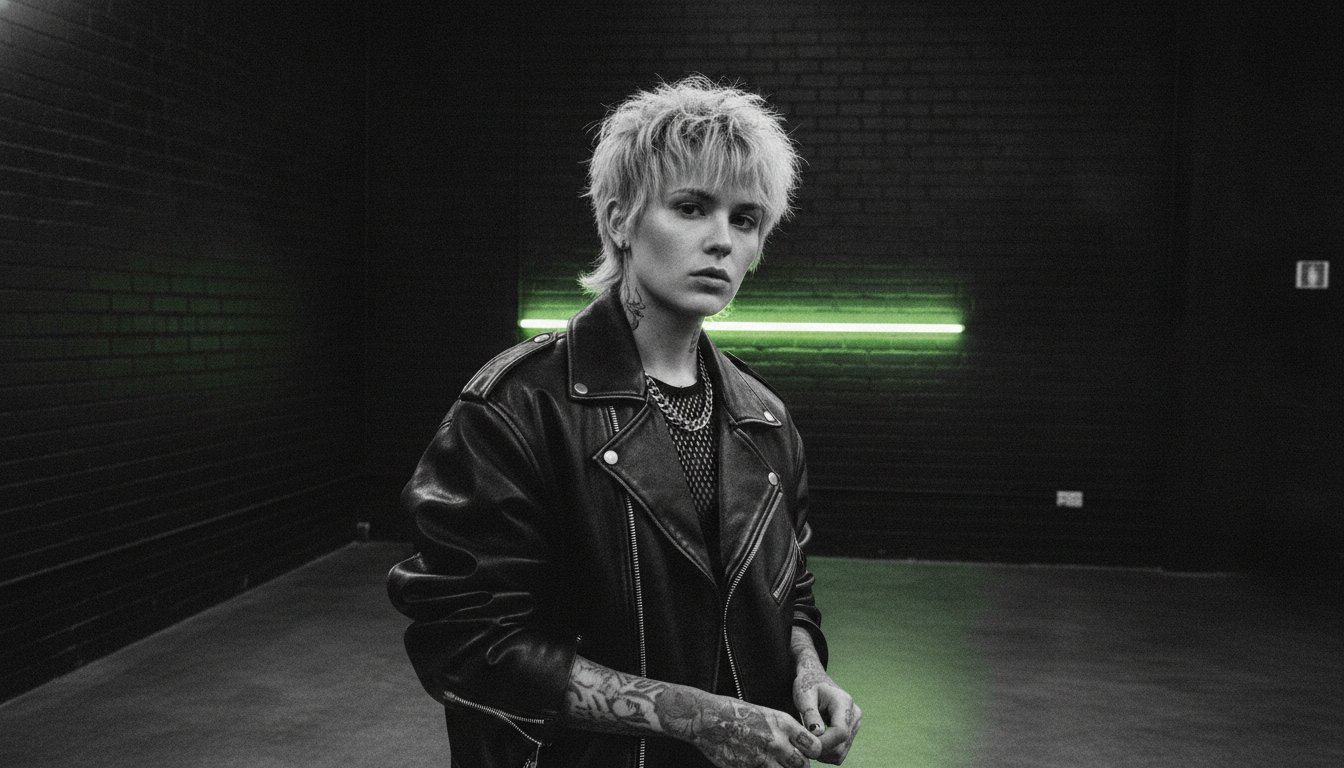

The wolfcut isn’t just another trend; it’s a technical commitment to chaos that requires a specialist who understands subcultural grit. It’s raw. It’s authentic. You’ve likely spent hours scrolling through galleries, yet that nagging anxiety remains. You’re worried your curls will turn into a “poodle” disaster or your fine hair will just look stringy and sad. It’s a valid fear because this isn’t a “one size fits all” chop. Understanding what to know before getting a wolfcut is the only way to ensure your transformation is legendary rather than a regretful mess.
We agree that your hair should be a middle finger to the mundane, not a source of daily stress. This guide promises to strip away the “wake up and go” myths and reveal the technical reality of aggressive layering and maintenance. We will explore the subcultural roots of the cut, how to communicate your vision to a stylist, and the exact routine needed to keep that silhouette sharp. Whether you’re pairing it with a vivid colour or keeping it raw, we’re diving into the technical requirements of the 2026 wolfcut, including how to handle the grow-out phase and use Death Grip for a finish that actually lasts.
Key Takeaways
- Understand the technical reality of what to know before getting a wolfcut to ensure your hair density can handle the aggressive volume and crown-heavy layers.
- Debunk the “wake up and go” myth by mastering a realistic styling routine that keeps your wild, unrefined silhouette sharp between salon visits.
- Learn how to communicate with an alternative specialist using terminology like “shredded ends” to secure a raw aesthetic rather than a commercial chop.
- Prepare for the long game with a maintenance schedule that requires professional shape-ups every six to eight weeks to prevent an awkward grow-out phase.
- Discover how to engineer a unique identity by pairing your textured cut with vivid pigments and the right technical products like Death Grip.
Defining the Wolfcut: Where Shag Meets Mullet
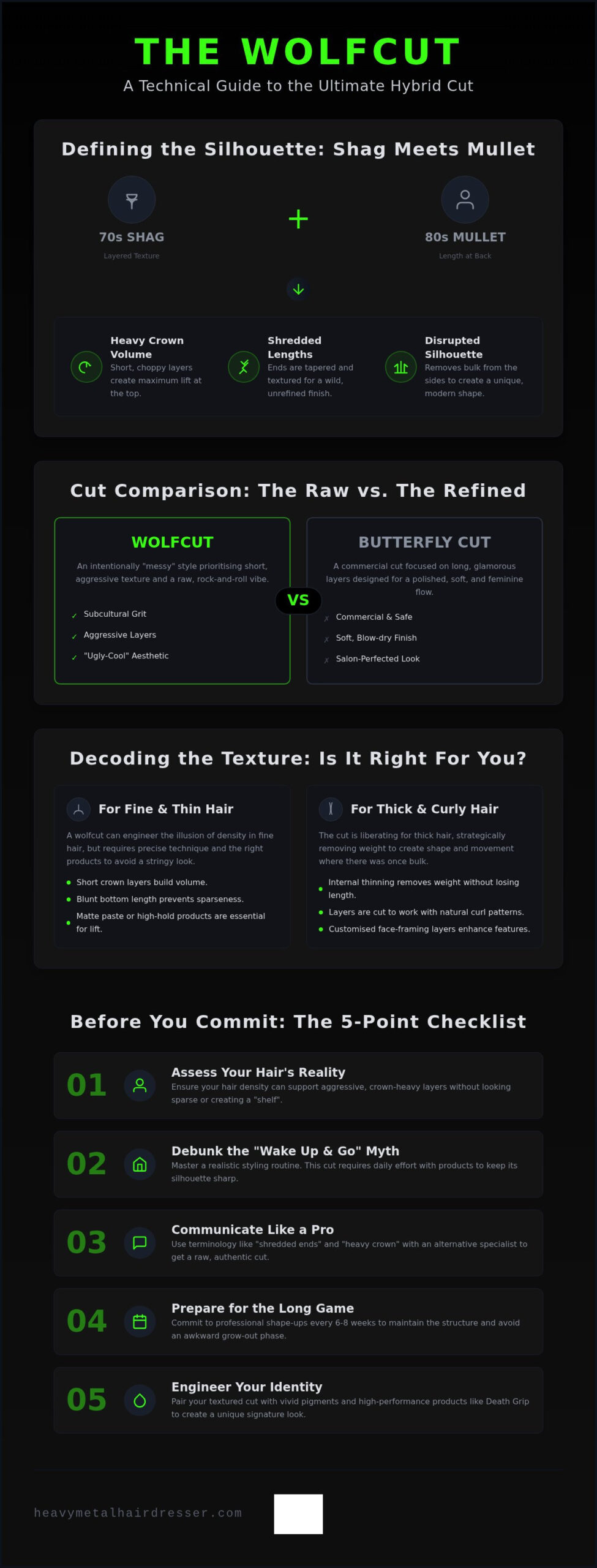
The wolfcut is the hybrid offspring of a 70s shag and an 80s mullet. It prioritises heavy volume at the crown and a tapered, shredded length. This isn’t just a haircut; it’s a technical exercise in weight distribution and texture. It is designed to disrupt standard silhouettes by removing bulk where traditional stylists usually leave it. Unlike a standard layered cut, it utilises short, choppy layers to create a wild, unrefined finish that feels alive. One of the most vital things regarding what to know before getting a wolfcut is that it demands a specialist who isn’t afraid of aggressive, non-conformist shapes.
This style exploded from South Korean street style before being adopted by the global alternative scene as a uniform for rebellion. Its roots are firmly planted in the shag and mullet origins, evolving from retro counter-culture into a modern staple for those who refuse to blend in. It’s about movement. It’s about grit. It’s about engineering a look that reflects an independent spirit rather than following a clinical, polished template.
Wolfcut vs. Butterfly Cut: Knowing the Difference
Don’t confuse these two styles. Butterfly cuts focus on long, glamorous layers designed for a polished, blow-dry finish. They are commercial. They are safe. The wolfcut is the opposite. It’s intentionally “messy” and prioritises short, aggressive texture over sleekness. Whilst the butterfly cut seeks a soft, feminine flow, the wolfcut leans into a raw rock vibe. If you want a style that looks best after a night in a mosh pit or a long weekend at a festival, the wolfcut is your winner. It’s for those who prefer an edgy aesthetic over a salon-perfected commercial look.
The Subcultural Grit: Why It Belongs to the Alt Scene
For modern metalheads and underground creatives, the wolfcut has become the definitive uniform. It’s a reclamation of identity through aggressive texture. This style serves as a visual language for those who exist outside the mainstream. Traditional salons often “soften” the cut too much because they fear the “ugly-cool” aesthetic. They try to make it palatable for a commercial audience. We don’t do that. A true wolfcut should feel slightly dangerous and entirely authentic. It’s a tool for self-expression that works best when it’s allowed to be unapologetically bold. Understanding this subcultural grit is essential when researching what to know before getting a wolfcut, as it ensures you don’t end up with a watered-down version of your vision.
Decoding the Texture: Will a Wolfcut Work for Your Hair Type?
Texture is the foundation of every aggressive silhouette. Your hair density dictates the architecture of the cut. The technical reality is that this style relies on having enough hair to support short, choppy layers without creating a “shelf-like” effect. If the layers are cut too deep into sparse hair, the result looks disconnected and flat. A specialist must evaluate your hair before the first snip to decide if you need a “volume injection” or a massive “de-bulking” session. This assessment is a vital part of what to know before getting a wolfcut because it prevents a technical disaster.
Specialists don’t just hack away at the length. We look at your natural growth patterns to adjust the choppiness. Face-framing “flick” layers are essential. These layers are engineered to kick out at the cheekbones or jawline, customising the shape to your specific features. This bespoke approach ensures the cut works with your movement rather than fighting against it. Understanding the reality of wolfcut maintenance starts with acknowledging that your hair type determines the final result.
Wolfcuts for Fine and Thin Hair
Fine hair doesn’t mean you’re excluded from the alt scene. We inject chaos into thin strands by using short crown layers to create the illusion of density. The secret is keeping the very bottom length blunt whilst shredding the top layers. This prevents the “stringy” look that haunts many DIY attempts. To maintain the grit, you’ll need products that add friction. Using a matte paste or a high-hold product like Death Grip helps the layers stand up rather than collapsing. If you’re unsure if your hair can handle the tension, you can always book a session with our specialists to discuss your options.
Taming the Beast: Wolfcuts for Thick and Curly Hair
Thick hair is often a burden. The wolfcut is liberating because it uses internal thinning to remove massive amounts of weight. For those with natural ringlets, the “Wolf-Shag” is a game-changer. Strategic layering enhances your natural curl pattern without creating the dreaded “triangle head” shape. We focus on removing bulk from the mid-lengths and ends whilst keeping the crown high and proud. It’s about controlled rebellion. When you’re researching what to know before getting a wolfcut, remember that curly hair requires a dry-cut approach to see exactly where those layers will sit once they bounce back. This technical precision ensures your curls look intentional and sharp.
Maintenance and Styling: The Reality of the “Wake Up and Go” Myth
Social media is a liar. The biggest deception is the idea that a wolfcut is a “wake up and go” style. It isn’t. It’s a high-maintenance “low-maintenance” look that demands respect. To prevent that silhouette from collapsing into a flat, shapeless mess, you need a professional shape-up every 6-8 weeks. Without a regular trim, the crown loses its vital lift. The shredded ends start looking frayed and tired. A crucial part of what to know before getting a wolfcut is that the foundation of the look relies on technical products and specific drying techniques. You can enhance the dramatic “flick” of the layers with heat styling, but the goal is always raw texture rather than a polished finish. Many of the skills required for this look overlap with learning how to style a modern mullet, focusing on volume and directional movement.
The Essential Alt-Hair Toolkit
You need a toolkit that prioritises grit over shine. Salt sprays are excellent for that “backstage” crunch, but texture pastes offer more control for those shorter crown layers. We recommend using Death Grip. It is engineered to keep the crown lifted and the layers disconnected all day. Ditch the flat iron. It kills the volume. Embrace the diffuser instead. A diffuser encourages natural movement. It prevents the “shelf” effect by distributing heat evenly. This keeps the aggressive texture intact without making the hair look fried or overly clinical.
Navigating the Grow-Out Phase
The “awkward phase” is inevitable. Eventually, your short layers will hit the “mullet mid-point”. This is where they feel too long for a wolfcut but too short for a standard shag. Don’t panic. You can easily transition your look back into a shag haircut by letting the internal layers blend whilst keeping the face-framing pieces sharp. This allows you to keep your alternative edge without losing your soul to a boring, uniform cut. If you are desperate, the only DIY maintenance we begrudgingly allow is a light fringe trim. Leave the rest to the specialists. Attempting to trim your own layers is a fast track to a disaster that will take months to fix. Consistency is key. Book your maintenance appointments ahead of time to ensure your layers never lose their aggressive edge.
The Salon Consultation: How to Secure the Perfect Cut
Securing a legendary transformation starts long before the first snip. You must lead the conversation with technical precision. Start by curating a mood board that actually reflects your subcultural identity. If you are chasing a raw, aggressive look, avoid K-pop references. Those styles are often too soft and polished for an underground aesthetic. Look for metal-influenced or gritty references instead. When you’re in the chair, use the right terminology to avoid a commercial disaster. Ask for “disconnected layers” and “shredded ends”. This signals to the stylist that you want a silhouette that intentionally disrupts the norm. Understanding what to know before getting a wolfcut means knowing how to speak the language of alternative hair.
Be honest about your fringe. A heavy “block” bang creates a massive, high-impact energy that differs wildly from wispy “curtain” flicks. Your choice here defines the face-framing movement of the entire cut. You must also be truthful about your morning routine. If you don’t own a hairdryer or refuse to use one, your stylist needs to know. They can then engineer the weight distribution to work with your natural air-dry texture. Finally, check their credentials. A stylist who has invested in alternative hair courses UK is far more likely to understand the technical nuances of this style than a traditional high-street hairdresser.
Red Flags to Watch For in a Stylist
If a stylist suggests a “sensible” version or tries to “soften” the layers, they aren’t the right fit. Blending is the enemy of a true, aggressive wolfcut. You want high-contrast texture, not a seamless, commercial transition. A stylist who understands subcultural aesthetics knows that “ugly-cool” is a compliment. They won’t try to “fix” the cut by making it look more mainstream. If they seem hesitant to take enough weight out of the crown, they don’t understand the architecture of the look. This is a primary factor in what to know before getting a wolfcut; the wrong stylist will leave you with a boring, standard layered cut.
Consulting for Colour: Enhancing the Texture
Colour is a technical tool used to make your layers pop. Integrating vivid hair colour can highlight the movement in each shredded section. Use “peek-a-boo” shades to add depth or opt for high-contrast “skunk stripe” dyeing to emphasise the disconnected layers. This adds a visual dimension to the technical cut, turning a great shape into a statement of identity. If you’re ready to commit to a look that refuses to compromise, book your consultation with us today to engineer your new identity.
Why an Alternative Specialist is Your Best Bet for a Wolfcut
Mainstream salons often flinch at the “ugly-cool” aesthetic. They see a wolfcut and try to soften the edges. They want to make it palatable for the masses. We don’t. At Heavy Metal Hairdresser, we don’t just cut hair; we engineer an identity. We understand that a wolfcut is a technical rebellion against the boring and the uniform. It requires a specialist who knows that weight distribution isn’t just about balance; it’s about attitude. Simon Tuckwell’s approach combines clinical technical precision with a “no-rules” alternative spirit. This ensures your cut isn’t just a trend follower but a statement of who you are. It’s about creating a silhouette that feels as raw as the music you listen to. We provide a gender-inclusive safe space where your individuality is the only priority that matters.
Traditional stylists often fear the aggressive texture that makes this cut iconic. They worry about “over-layering” or making the hair look too thin. A specialist understands that the wolfcut is about controlled chaos. We know how to remove the right amount of weight to create that signature lift without sacrificing the integrity of your strands. This is a technical skill that takes years to master. It’s about understanding the intersection of the 70s shag and the 80s mullet and bringing it into 2026 with modern precision. Choosing a specialist is the most important factor in what to know before getting a wolfcut because it determines whether you get a masterpiece or a mess.
From the Mosh Pit to the Salon Chair
Our expertise comes from the front lines. Styling for bands at Download and Bloodstock festivals has taught us how hair behaves under extreme pressure. We know your festival hair needs to survive a mosh pit and still look sharp on Monday morning. We prioritise “grit” over “glamour” in every textured styling session. Alternative hair shouldn’t look like it was made in a factory. It should look lived-in, authentic, and slightly dangerous. By choosing a specialist, you aren’t just getting a trim. You are joining a community that celebrates being outside the mainstream. We understand the subcultures that birthed these styles, and we respect the history behind every shredded layer.
Ready to Join the Pack?
A vital part of what to know before getting a wolfcut is picking the right environment for your transformation. You need a consultation that actually listens to your subcultural needs. Don’t settle for a stylist who doesn’t know your references or tries to talk you out of your vision. When you walk into an alternative space, expect a dialogue about your lifestyle and your aesthetic goals. Be prepared to talk about how you want the layers to move and how much maintenance you can actually handle. We don’t do “sensible” versions. We do the version that makes you feel like your most authentic self. If you’re tired of being misunderstood by high-street salons, it’s time to level up. Book your transformation with the wolfcut specialists today.
Engineer Your New Silhouette
The wolfcut isn’t a safe choice; it’s a bold declaration of identity. You now understand how density dictates the architecture of your hair and why the “wake up and go” promise is a myth that requires the right technical grit. From decoding your texture to securing the perfect consultation, you’ve mastered what to know before getting a wolfcut in 2026. This isn’t about fitting in. It’s about disrupting the mainstream with aggressive texture and unrefined movement that reflects your independent spirit.
Don’t leave your transformation to a high-street stylist who fears the “ugly-cool” aesthetic. Heavy Metal Hairdresser, founded by creative visionary Simon Tuckwell, is a gender-inclusive safe space specialising in aggressive texture and vivid colour. We don’t do commercial. We do authentic. It’s time to stop scrolling and start leading. Claim your identity with a bespoke wolfcut at Heavy Metal Hairdresser. Your hair is your uniform; make sure it tells the right story. Stay rebellious. Stay loud.
Frequently Asked Questions
Is a wolfcut high maintenance for daily styling?
Daily styling is a commitment, not a choice. Whilst it looks effortless, you’ll need to use texturising sprays or pastes to keep the crown from going flat. It’s about building friction. If you leave it to air dry without intervention, the layers can look shelf-like. This is a technical reality of what to know before getting a wolfcut. Expect to spend ten minutes every morning scrunching and diffusing to maintain that aggressive, raw silhouette.
Will a wolfcut make my face look rounder or slimmer?
A wolfcut is a tool for facial engineering. Because the layers are disconnected, a specialist can place “flicks” to either slim the jawline or add width to a narrow face. It’s all about where the weight sits. Short layers at the cheekbones draw the eye upward, creating a lifting effect. If you’re worried about a “round” look, ask for vertical thinning and longer face-framing pieces to elongate the overall shape.
Can I get a wolfcut if I have very short hair?
You need at least a bob-length foundation to start the transformation. Short pixie cuts don’t have enough internal weight to support the aggressive layering required for a true wolfcut. If your hair is currently short, focus on growing out the back and sides first. A specialist can start “shredding” the top layers as they grow, transitioning you through a modern mullet phase before reaching the full, unrefined silhouette.
How often do I need to get my wolfcut trimmed to keep the shape?
Book your shape-up every six to eight weeks. Because the crown layers are so short, even an inch of growth can make the silhouette collapse. The hair starts to look bottom-heavy and loses its rebellious edge. Regular trims ensure the internal thinning stays fresh and the “shredded” ends don’t start to look frayed. Consistency is the only way to prevent the awkward grow-out phase from ruining your alternative aesthetic.
Do I have to have a fringe with a wolfcut?
A fringe is technically essential for the classic silhouette. It connects the short crown layers to the face-framing sections. However, you don’t have to commit to heavy block bangs. You can opt for wispy curtain flicks or even a disconnected “micro-fringe” if you want something more aggressive. The goal is to avoid a “forehead gap” that disrupts the shaggy flow. Your fringe is the anchor that holds the entire messy look together.
What is the best product for styling a wolfcut at home?
Reach for Death Grip if you want a finish that survives the night. This high-hold product is engineered to keep those short layers standing up without looking greasy. For a lighter, “backstage” vibe, a professional-grade salt spray provides the necessary grit. Avoid heavy oils or silicone-based serums. These will weigh down the crown and turn your textured masterpiece into a flat, stringy mess. Friction is your best friend when styling this cut.
How do I explain a “wolfcut” to a hairdresser who doesn’t know the term?
Tell them you want a hybrid of a 70s shag and an 80s mullet. Use technical terms like “disconnected layering” and “extreme weight removal from the crown”. Emphasise that you want the ends to be “shredded” rather than blended. If they seem confused or try to suggest a “soft” version, that’s your cue to find an alternative specialist. A mainstream stylist might accidentally give you a “mom bob” if they don’t understand subcultural grit.
Can I still tie my hair up in a ponytail with a wolfcut?
You can, but expect a lot of “fallout”. Because the layers are so short and aggressive, a standard ponytail will leave the top and side sections hanging loose. This actually creates a cool, “undone” aesthetic that fits the alt scene perfectly. If you need it all back for work or safety, you’ll need a handful of clips to secure the crown. Most people find that a half-up, half-down style works best for this specific cut.