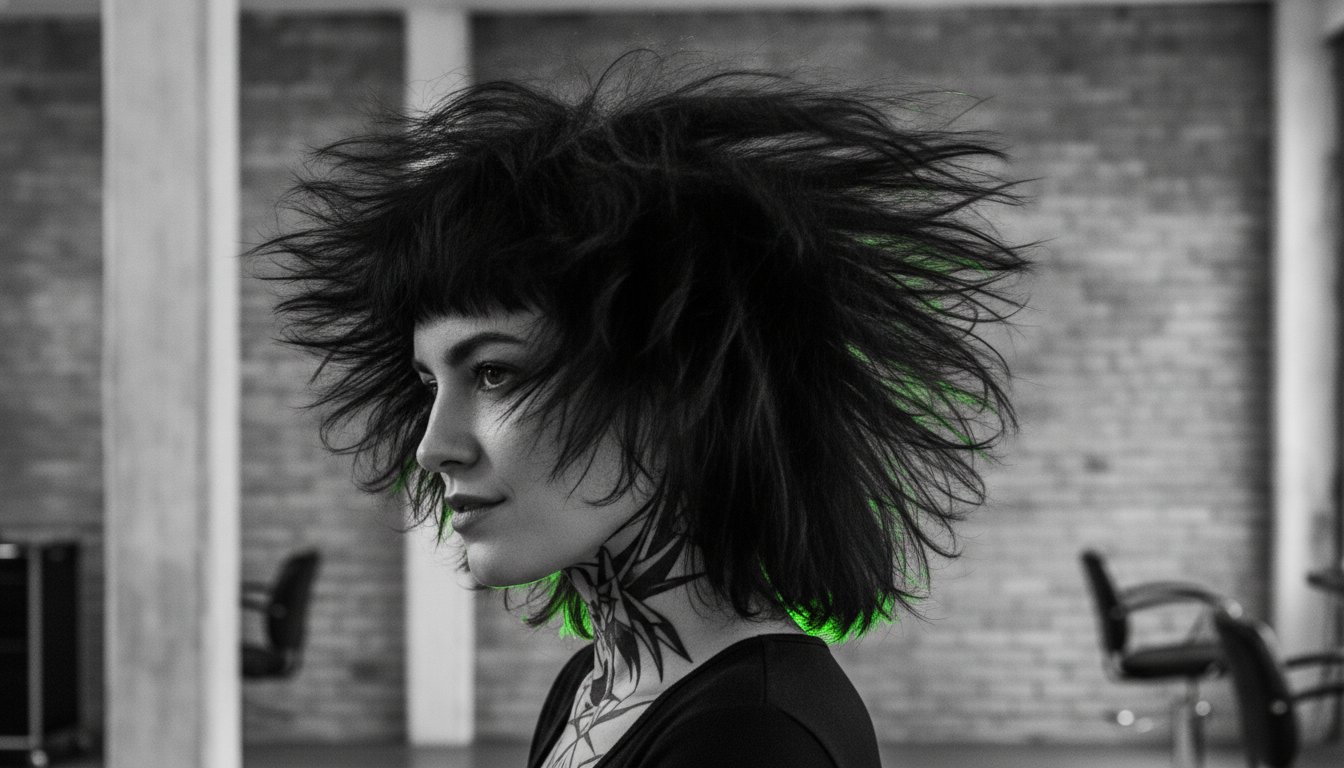
What if your fine hair wasn’t a limitation, but a secret weapon for the most aggressive texture you’ve ever worn? Most mainstream stylists will tell you that a wolf cut for fine hair is a recipe for see-through ends and a limp, flat disaster. They’re wrong. They’re playing by rules that don’t apply to the subcultures we inhabit. You know the soul-crushing frustration of hair that falls flat sixty minutes after styling. You want the grit of a shag and the rebellion of a mullet, but you’re tired of being told your strands can’t handle the weight.
We’re here to flip that narrative. You can master the wolfcut without sacrificing an ounce of density. By using expert alternative layering techniques, we’ll show you how to re-organise your hair to create an illusion of chaotic, permanent volume. This article breaks down how to achieve a bold, textured look that feels thick and stays defiant. We’ll explore internal structure, face-framing aggression, and how tools like Hair To the Throne and Death Grip keep your style locked in whilst you live your life loud.
Key Takeaways
- Learn how expert internal layering techniques re-organise density to prevent the stringy look often feared with a wolf cut for fine hair.
- Understand why the disconnected layer technique is the secret to maintaining weight at the ends whilst building massive volume on top.
- Discover how to choose between the forward-motion wolfcut and the 360-degree shag to best suit your face shape and hair goals.
- Master a low-maintenance styling routine using grit-focused tools like Hair To the Throne to keep your texture aggressive all day.
- Find out why a gender-inclusive, alternative salon environment is essential for carving out an identity that rejects mainstream polish.
Wolfcut on Fine Hair: Can You Actually Pull It Off?
The wolfcut is the aggressive lovechild of the 70s shag and the 80s mullet. It’s a hybrid built for those who reject the polished, flat standards of mainstream beauty. If you’ve spent any time on forums, you’ve seen the warnings. People claim a wolf cut for fine hair is a recipe for stringy, see-through ends. This is a myth born from stylists who only know how to cut “safe” shapes. They use traditional methods that don’t account for the unique physics of finer strands.
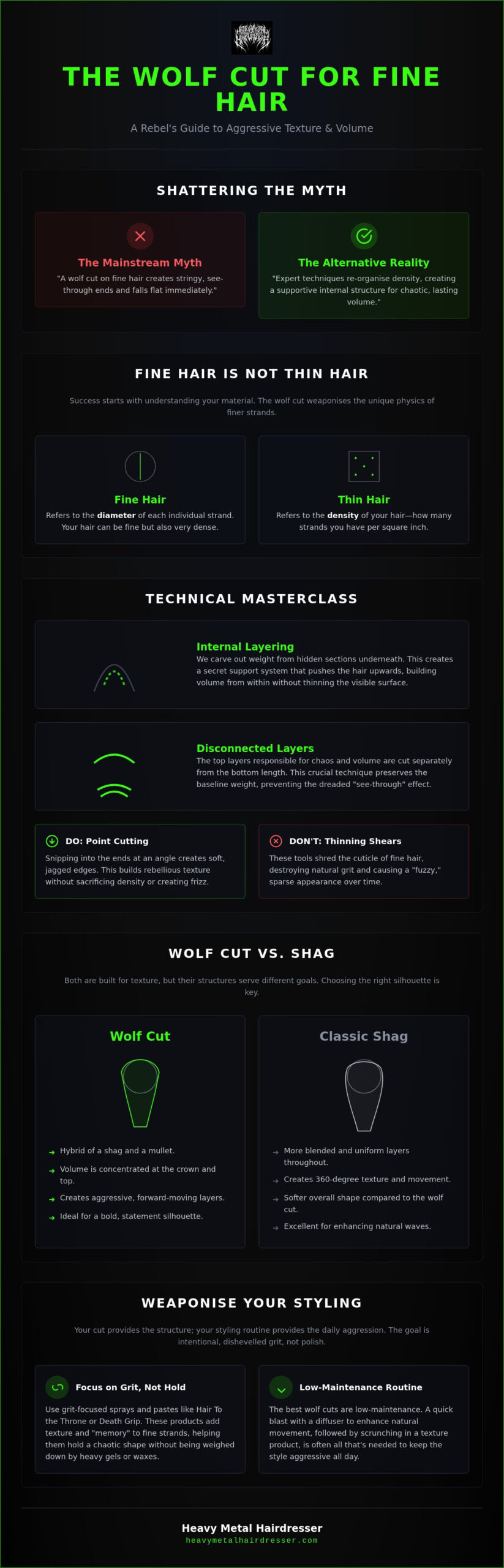
Success starts with understanding the difference between fine hair and thin hair. Fine hair describes the diameter of each individual strand. Thin hair describes the density, or how many strands you actually have. You might have fine hair that’s incredibly dense, or fine hair that’s sparse. Either way, this cut acts as a secret weapon. It doesn’t just sit there; it weaponises your hair by re-organising where the weight lives. Instead of hair hanging in a limp, one-length curtain, we create a silhouette that forces volume into existence.
The Anatomy of a Wolfcut for Thin Strands
Traditional layering often fails fine hair because it removes bulk from the wrong places. This leaves the ends looking starved. Our approach focuses on a top-heavy crown that creates height and grit. The perimeter remains wispy but intentional, maintaining a clear boundary. Alternative texturising techniques allow us to carve out shape without hollowing out the baseline. Face-framing ‘curtain’ elements are the structural anchors here. They add visual weight around the eyes and cheekbones, making the overall mane appear thicker and more aggressive. It’s about building a frame that supports the texture rather than letting it collapse.
Identifying Your Hair Type’s Potential
Your natural fall determines how these layers behave. If your hair is dead straight, we focus on internal structure to prevent the look from falling flat. However, wavy or curly fine hair has a massive natural advantage. The natural bend in the hair interacts with the choppy layers to create instant, effortless lift. We always assess the baseline length first. Keeping enough hair at the bottom ensures you don’t lose the wolf silhouette whilst the top layers do the heavy lifting. We look for the sweet spot where your hair looks intentionally dishevelled, providing a bold, non-conformist style that feels thick and full of life.
The Technicalities: Re-organising Density for Maximum Chaos
Engineering a wolf cut for fine hair isn’t about following a standard template. It’s about structural manipulation. Most mainstream salons hack away at the exterior and hope for the best. We focus on internal layering. This technique involves removing weight from specific pockets where it drags the hair down, whilst leaving the sections that provide coverage untouched. By carving out these internal spaces, we create a hidden support system. Your hair isn’t just hanging; it’s being pushed upward by its own internal structure.
We often utilise a disconnected layer technique to protect your density. In a traditional cut, every layer is blended into the next. On fine hair, this usually results in a massive loss of mid-length weight, leading to that “see-through” look everyone fears. By keeping the top layers and the bottom length separate, we preserve the appearance of a thick mane. The top creates the chaos and height, whilst the bottom provides the solid foundation needed for a bold silhouette.
Precision tools matter, but how we use them matters more. We avoid thinning shears on fine hair because they create “fuzz” and destroy the hair’s natural grit. Instead, we use point cutting. This involves snipping into the ends at an angle to create soft, jagged edges. These edges aren’t blunt or heavy. They’re sharp, intentional, and provide the rebellious texture that defines the wolfcut aesthetic without making the hair look sparse.
The Power of the Short Crown
The crown is the engine room of your volume. We cut a shorter mohawk section through the top to create permanent height that doesn’t rely on backcombing. This isn’t about creating a “mushroom” shape; it’s about balancing that crown volume with the rest of your length. Over-direction is the key to preserving length in fine hair by pulling the hair away from its natural fall during the cutting process to ensure the ends stay heavy.
Perimeter Integrity
A solid foundation is non-negotiable. Keeping a thicker bottom edge is vital for a successful wolf cut for fine hair because it anchors the entire style. We blend aggressive, choppy layers into a solid baseline to ensure the look remains full and healthy. Throughout the cut, we use the pinch test, feeling the density between our fingers to ensure we aren’t over-texturising. If you want to see how we’ve mastered these alternative cuts for our community, our portfolio speaks for itself.
Wolfcut vs. Shag: Which Alternative Cut Wins for Thin Hair?
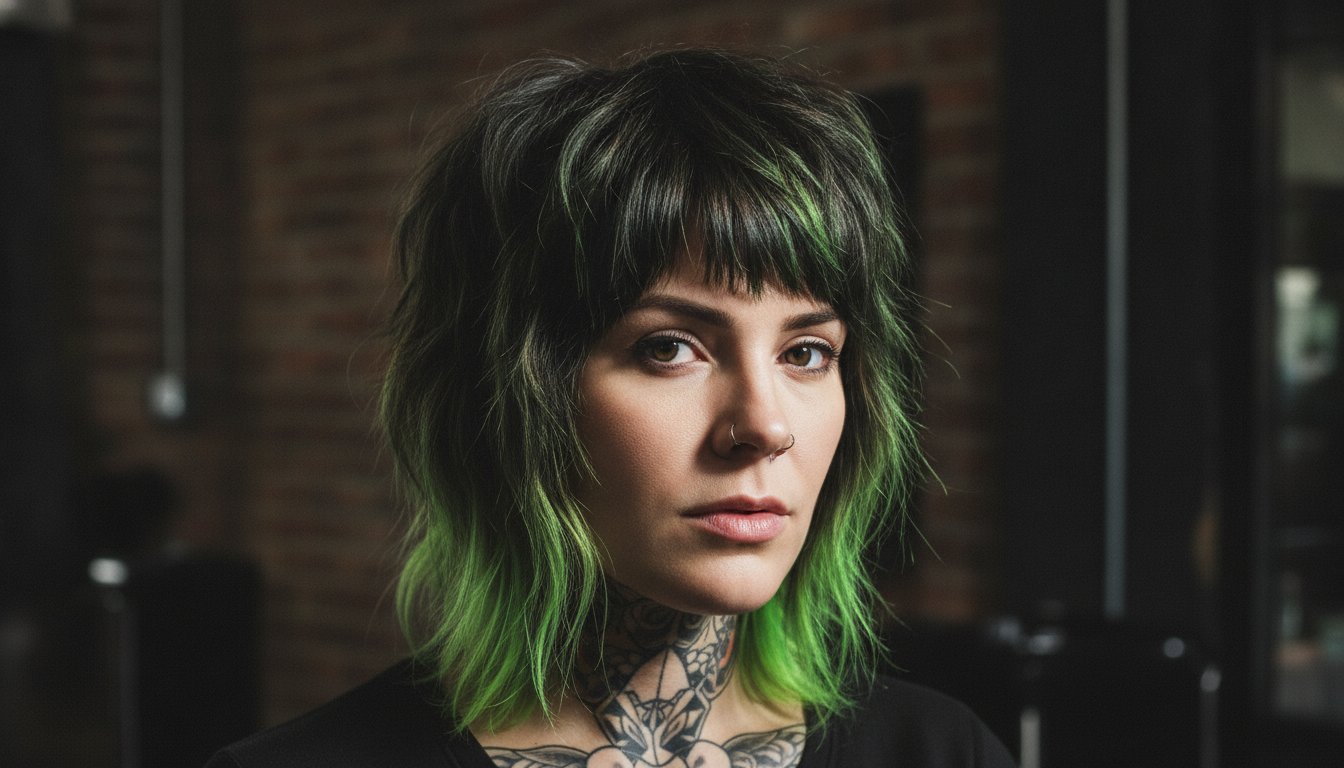
Choosing between these two is about deciding how you want your volume to move. A common mistake is thinking they are identical. They aren’t. A wolf cut for fine hair is defined by its forward-motion. The layers are pushed toward the face, creating an aggressive, face-hugging silhouette that builds density exactly where you need it. In contrast, the shag focuses on 360-degree volume. It’s more about a halo of texture that surrounds the head. You can learn more about the shag haircut resurrection and why it remains a staple of the UK alternative scene if you prefer that rock-and-roll movement.
For those with narrow face shapes, the wolfcut is often the winner. The way the layers fall forward fills in the gaps around the cheekbones and jawline. This creates the illusion of a fuller, more structured face. When it comes to maintenance, the shag is more forgiving. Its softer layers grow out into a lived-in look that lasts months. The wolfcut needs a bit more attention to keep that sharp, aggressive crown from losing its height, but the payoff is a style that looks intentional and bold from day one.
Choosing Your Weapon: Wolfcut or Shag?
The wolfcut is your go-to for a ‘mullet-lite’ energy. It’s for the individual who wants to look like they’ve just stepped off a stage or out of a mosh pit. If you prioritise soft, movement-heavy texture, the shag is your best bet. It offers a more classic rock-and-roll vibe that feels effortless. Many of our clients choose a bespoke hybrid. We can take the aggressive crown of a wolfcut and blend it with the softer, blended perimeter of a shag. This gives you the best of both worlds: maximum height on top with a wearable, textured finish throughout.
The Modern Mullet Alternative
Sometimes, the best way to save density is to stop fighting it. If your hair is exceptionally fine, you might want to lean fully into a modern mullet haircut. The mullet is the ultimate density-saver because it keeps the maximum amount of weight at the back. It allows for extreme texture on top without making the rest of your hair look sparse. When styling the ‘tail’ of a mullet, keep it gritty. Avoid heavy products that make it look oily. Instead, use a light mist of salt spray to give it purpose and grit, ensuring your silhouette remains sharp and rebellious from every angle.
Styling Your Wolfcut: Weaponising Fine Strands for Volume
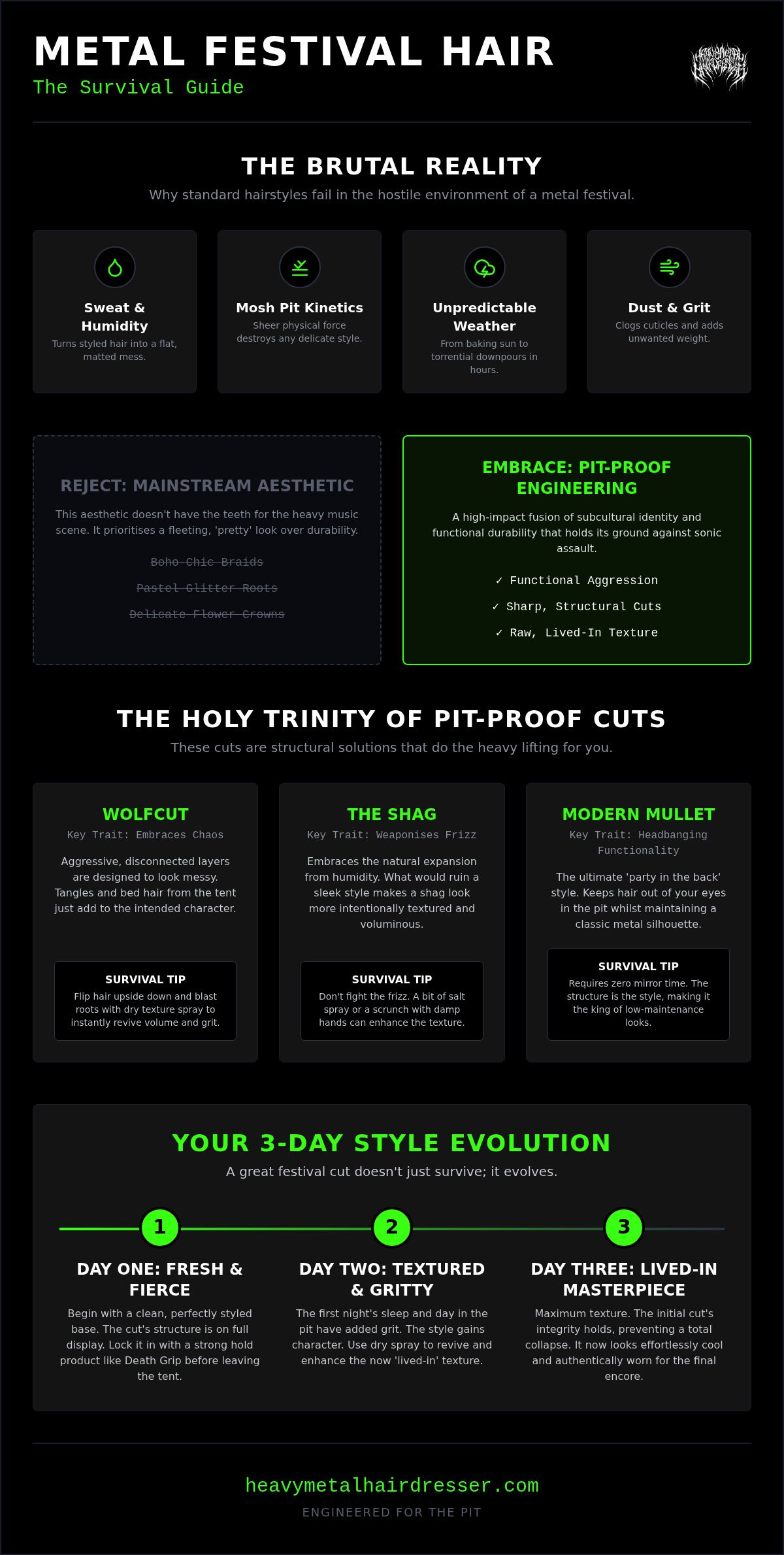
Styling a wolf cut for fine hair is a battle against gravity. Most mainstream advice tells you to “nourish” your hair with heavy oils and serums. Ignore them. On fine strands, those products act like lead weights. They collapse your layers within thirty minutes. To maintain mosh-pit durability, you need products that provide grit without the grease. The goal isn’t a polished finish. It’s an aggressive, lived-in texture that stays defiant from the first track to the encore.
Your foundation starts whilst the hair is damp. Avoid the temptation to air-dry if you want maximum chaos. Instead, use a diffuser on a low heat setting. This encourages your natural wave and locks in the volume created by your internal layers. Before the dryer touches your head, apply a salt spray or a lightweight volume mousse. This creates a “sticky” base that allows your layers to grab onto each other. If you’re looking for more inspiration on maintaining this level of grit, you can also check out our guide on how to style a modern mullet.
The Alternative Toolkit: Death Grip & Hair To the Throne
We developed our own tools because the high-street options were too weak for subcultural styles. Use ‘Hair To the Throne’ to achieve that ‘just-rolled-out-of-the-pit’ texture. It provides the lift needed at the crown without making the hair feel crunchy. For the aggressive layers around your face, ‘Death Grip’ is your secret weapon. It offers a firm hold that keeps your fringe in place whilst you move. The trick is application. Never dump product on the surface. Work it into the roots for lift and use only the smallest amount on the ends to define the jagged edges. You can grab our professional texture tools to see the difference for yourself.
The ‘Second Day’ Survival Guide
Fine hair usually looks its best on day two, provided you know how to revive it. Don’t reach for the shampoo immediately. Instead, use these steps to keep the rebellion alive:
- Texture Powder: Puff a small amount into the crown to absorb oils and instantly reset your height.
- Fringe Scrunch: Mist your fringe with a tiny amount of water or salt spray and scrunch it with your hands to bring back the “piecey” look.
- Silk Protection: Sleep on a silk pillowcase. It prevents fine ends from snapping and keeps your texture from turning into a frizzy mess whilst you sleep.
This routine ensures your wolfcut remains a tool for self-expression rather than a daily chore. It’s about working with your hair’s natural behaviour, not trying to force it into a mainstream mould.
The Heavy Metal Hairdresser Way: Gender-Inclusive Texture
We don’t do gendered checkboxes. At Heavy Metal Hairdresser, hair is a tool for identity. It’s a statement of who you are, not what society expects. Most salons are built on “pretty” standards that feel clinical and exclusionary. We’ve built a safe space for the alternative community. We celebrate the raw, gritty reality of your hair. If you’re looking for a wolf cut for fine hair, you aren’t just looking for a trim. You’re looking for a transformation that reflects your subcultural soul.
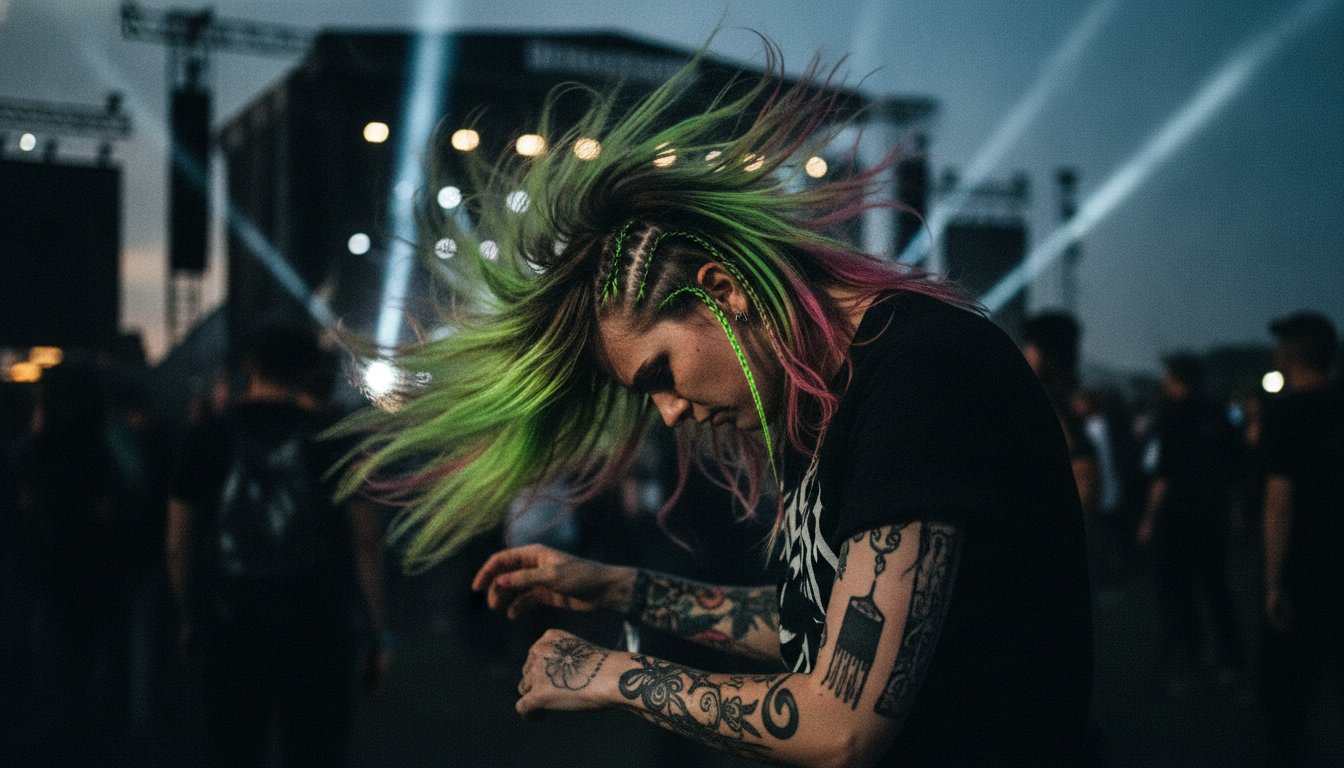
Our techniques aren’t born in a classroom. They’re forged backstage at festivals like Download and Bloodstock. We know how hair behaves when it’s been in a mosh pit for three days. That high-performance cutting informs every layer we carve. We focus on durability and impact. We want your texture to look as good at a gig as it does when you leave the chair. We reject the “polish” of the mainstream for something much more authentic.
Inclusive Styling for Every Identity
The wolfcut is the ultimate unisex staple. It doesn’t care about the binary. We tailor every cut to suit masculine, feminine, or non-binary aesthetics. For some, that means more aggressive, shorter layers around the crown. For others, it’s about a softer, face-hugging frame. The wolf cut for fine hair is particularly effective for those seeking a gender-neutral look. It provides a silhouette that is both powerful and fluid. It’s about building confidence. When your hair finally matches the person in the mirror, everything changes. Your hair should be as non-conformist as your music taste.
Join the Revolution
Stop compromising with mainstream stylists who are afraid of texture. A simple “trim” won’t give you the volume or the edge you crave. You deserve a stylist who understands the nuances of grit and alternative culture. We’re here to help you weaponise your strands and reclaim your identity. Why settle for a boring, flat style when you can have something that screams?
If you’re a stylist wanting to break away from the norm, you can explore our alternative hair courses UK to master the art of subculture styling. For everyone else, it’s time to commit to the look you’ve always wanted. Ready to transform your fine hair? Book your session with our specialists and let’s create something loud together.
Reclaim Your Identity with Aggressive Texture
Fine hair isn’t a life sentence of flat, limp strands. It’s an opportunity to build a shape that defies mainstream logic. You’ve learned how internal layering and disconnected sections protect your density whilst creating the height you’ve always wanted. Whether you choose a forward-motion wolfcut or a bespoke hybrid, the goal is a style that feels thick, gritty, and authentically you. A wolf cut for fine hair is more than just a trend; it’s a statement of non-conformity.
We don’t do generic trims. We specialise in aggressive textured styling that survives the front row of a festival. As a gender-inclusive safe space used by professional musicians and festival-goers alike, we understand that your hair is your armour. Stop letting mainstream salons play it safe with your identity. Our expertise is forged in subculture, ensuring your transformation is handled by those who live and breathe alternative texture.
Secure your alternative hair transformation at Heavy Metal Hairdresser. Your hair should be as loud as your favourite record. Let’s make it happen.
Frequently Asked Questions
Will a wolfcut make my fine hair look thinner?
A professional wolf cut for fine hair won’t make your strands look thinner if your stylist avoids traditional thinning shears. By using internal layering and disconnected sections, we actually create the illusion of more hair. The shorter layers on top push the rest of your hair up, creating volume. It’s about where we remove weight; we keep the perimeter solid to ensure your ends never look see-through or stringy.
How do I style a wolfcut on fine hair without it falling flat?
Success starts on damp hair with a grit-focused foundation. Apply a lightweight volume mousse or salt spray before diffusing on a low heat setting to lock in the shape. Avoid heavy oils or silicones that weigh down fine strands. Focus your styling energy on the crown to maintain height. If it starts to drop, a quick blast of texture powder or dry shampoo will revive the rebellion without needing a full wash.
What is the difference between a wolfcut and a shag for thin hair?
The primary difference lies in the silhouette and movement. A wolfcut features aggressive, forward-moving layers that hug the face and jawline, creating a sharper, mullet-lite energy. A shag focuses on 360-degree volume and a softer halo of texture around the head. For thin hair, the wolfcut often provides more structural weight around the eyes and cheekbones, whilst the shag offers a more classic, rock-and-roll movement that feels lived-in.
How often should I trim my wolfcut to keep the texture sharp?
You should aim for a trim every six to eight weeks to keep the crown layers from losing their lift. Fine hair can quickly lose its structural integrity as it grows, causing the top to fall flat and the perimeter to look unkempt. Regular maintenance ensures the jagged, point-cut edges remain sharp and intentional. If you prefer a more “grown-out” look, you can stretch this to ten weeks with the right styling tools.
Can I get a wolfcut if I have very straight, fine hair?
Absolutely, but it requires a more technical approach to internal structure. Since you don’t have a natural wave to do the work, your stylist must carve out support layers that force the hair to sit up. You’ll need to rely more on grit-building products like salt sprays to create the “piecey” look that defines a wolf cut for fine hair. Without these products, straight fine hair can look like a simple layered cut.
What are the best products for a wolfcut on fine hair?
The best products focus on building grit and friction between the strands. Look for sea salt sprays, texture powders, and lightweight mousses that provide a matte finish. Avoid anything marketed for “shine” or “smoothness,” as these usually contain heavy silicones that collapse fine hair. Our Death Grip and Hair To the Throne products are specifically designed to provide high-performance hold and texture without the greasy weight that usually ruins alternative styles on finer hair.
Is a wolfcut considered a high-maintenance style for thin hair?
It’s a medium-maintenance style that rewards a small amount of daily effort. Whilst the cut itself is designed to do the heavy lifting, you’ll still need two minutes each morning to scrunch in some texture or revive the crown. It isn’t a “wash and go” look for most fine-haired people, but it is much easier to manage than a traditional polished style. The disconnected layers mean it grows out better than a standard blunt cut.
Can men or non-binary people pull off a wolfcut on fine hair?
This is a completely gender-inclusive style that serves as a powerful tool for identity. The wolfcut is a unisex staple of the alternative scene, and we tailor the aggression of the layers to suit any aesthetic, whether masculine, feminine, or non-binary. On fine hair, it provides a bold silhouette that works across all identities. It’s about the attitude and the subcultural soul you bring to the look, not a gendered checkbox.