Posted on

Alternative Hair Courses UK: Master the Art of Subculture Styling in 2026

Alternative Hair Courses UK: Master the Art of Subculture Styling in 2026

Most traditional hair academies are preparing you for a world that doesn’t exist anymore; or at least, one you don’t want to live in. You’ve sat through the clinical demos and the “safe” bridal styles, but they don’t teach you how to handle a razor with intent or how to make a neon green pop against a jagged fringe. If you’re looking for alternative hair courses UK professionals actually respect, you’ve probably realised that mainstream tutors often miss the mark on subculture aesthetics. They see a mess where you see a masterpiece.

It’s frustrating when your creative energy is stifled by rigid rules and polished finishes. You want to craft identities, not just haircuts. In this guide, you’ll discover how to transcend basic training and master the aggressive textures and inclusive techniques that define the modern UK scene. We’ll explore the essential skills for 2026, from perfecting the wolfcut and shag to building a niche client base that values your raw, authentic expertise. It’s time to stop blending in and start leading the underground.

Key Takeaways

  • Learn why mainstream NVQs often leave you unprepared for the aggressive textures and rebellious styles demanded by the UK scene.
  • Master the architecture of wolfcuts and shags through specialised alternative hair courses UK that prioritise identity over conformity.
  • Gain confidence in advanced vivid colour placement and inclusive techniques that go beyond basic primary mixing.
  • Discover how to audit a tutor’s portfolio to ensure they actually live the subculture aesthetic they claim to teach.
  • Explore the “Death Grip” and “Hair To the Throne” methodologies designed to help you build a loyal, niche client base.

Why Traditional Hairdressing Training Often Misses the Mark

Traditional training is a factory line. It’s designed to produce stylists who can replicate a “safe” commercial aesthetic for the masses. In 2024, there were 232,700 people employed in UK hairdressing and beauty salons. With 63% of those being self-employed, the competition is fierce. If you’re just another stylist doing standard layers, you’re invisible. Mainstream education prioritises these polished looks because they’re easy to grade. They don’t want you taking risks with aggressive textures or vivid, clashing colours. They want symmetry. They want “pretty”.

But alternative hair isn’t about being pretty. It’s about being seen. Standardised modules often ignore the nuances of subculture-specific silhouettes. When you try to apply “one size fits all” layering to shags and mullets, the result is weak. It lacks the weight and the attitude that defines the style. There is a massive disconnect between the clinical etiquette taught in colleges and the gritty, raw reality of alternative spaces. Finding alternative hair courses UK stylists actually trust means looking beyond the high-street curriculum.

The Limitations of the Standard NVQ

An NVQ is a foundation, not a finish line. It teaches you the mechanics of how to cut hair without making a mess, but it stops there. You won’t find aggressive, textured layering or creative disconnection in a standard curriculum. To master the art of the underground, you have to unlearn the “perfect” finish. Raw, lived-in results require a different set of rules. Standard training focuses on the “how” but completely ignores the “why” behind subculture styles. You need to move past the basic short back and sides mentality to truly excel.

Bridging the Gap Between Skill and Subculture

You can’t separate the hair from the culture. Understanding the history of punk fashion, metal, and goth aesthetics is vital for any serious stylist. If you don’t understand the music or the movement, you’re just mimicking a trend without any soul. In the UK alternative scene, the stylist acts as a community gatekeeper. You aren’t just providing a service; you’re affirming an identity. The new SIC codes (9621) for hairdressing and barber activities finally give our industry government recognition, but they don’t teach you how to vibe with a niche crowd. Alternative hair courses UK should bridge this gap by blending technical precision with cultural authenticity.

A haircut becomes a declaration of identity when it’s rooted in the rebellion of the scene it serves.

What to Expect from Specialist Alternative Hair Courses in the UK

Specialist alternative hair courses UK are built for the rebels. They aren’t about learning to blow-dry a bouncy bob for a wedding. They’re about dismantling traditional rules to create something raw. You’ll dive deep into the architecture of the wolfcut and the modern shag. These aren’t just “messy” cuts. They require precise engineering to ensure the hair still has structural integrity even after extreme weight removal. Whilst standard UK hairdressing qualifications get you through the door, they rarely touch on the “organised chaos” required for subculture silhouettes.

You’ll also tackle advanced vivid colour theory. This goes way beyond basic primary mixing. You’ll learn how to layer clashing tones and create transitions that look intentional, not accidental. It’s about understanding how light hits jagged edges and using colour to amplify that texture. Expect to work with high-pigment palettes and unconventional placement techniques that mainstream tutors often find “too risky”. This is where you learn to make neon green pop against a soot-black base without the bleed.

Mastering Aggressive Texture and Layers

The toolkit in an alternative workshop looks different. You’ll swap standard shears for razors and thinning shears to create grit. We focus on the “Death Grip” approach to sectioning and tension. This is about how you hold and manipulate the hair to ensure every snip adds to the overall attitude of the silhouette. It’s a high-impact method that requires confidence. You’ll learn exactly where to take the weight out so the style doesn’t collapse. Working with a textured haircut specialist who understands aggressive alternative layers is the key to engineering maximum volume without the style falling flat. We cover:

  • Razor cutting for feathered, “shredded” ends
  • Internal layering to create height without bulk
  • Disconnection techniques for high-contrast shapes

Breaking the Binary: Gender-Neutral Education

Alternative spaces have always been a sanctuary for those outside the norm. Your training must reflect that. Specialist alternative hair courses UK lead the way in gender-inclusive styling. This starts with the consultation. We teach you to remove gendered language from your vocabulary entirely. You aren’t cutting “men’s” or “women’s” hair; you’re cutting for an individual’s identity. It’s about technical skill meeting radical empathy. You’ll learn to adapt classic subculture shapes to suit any face structure, regardless of assigned gender.

Beyond the chair, these courses prepare you for the reality of the scene. Think music-inspired textures and festival-ready stage hair for musicians that can survive a mosh pit. You’ll get hands-on experience with alternative-specific products that mainstream salons don’t even stock. If you’re ready to stop following the crowd, it’s time to explore specialised hair courses that actually speak your language.

Alternative Hair Courses UK: Master the Art of Subculture Styling in 2026

Comparing NVQ Standards with Creative Subculture Workshops

NVQs are the baseline. They provide the fundamental mechanics required to hold a pair of shears without causing a disaster. If you look at the UK’s official hairdressing qualifications, the focus is heavily on safety, hygiene, and standard commercial results. This is essential, but it isn’t enough. While an NVQ gives you the foundation, boutique workshops provide the edge and personality that actually get you booked by the clients you want. There is a massive difference between “Creative” in a mainstream college and “Creative” in an alternative studio.

In a traditional setting, creative hair usually means a slightly more adventurous version of a salon-friendly bob. It’s safe. It’s marketable to the average high-street customer. In the underground scene, alternative hair courses UK professionals lead are far more radical. We’re talking about total identity shifts, not just trims. We prioritise the aggressive, the asymmetrical, and the unapologetic. Accreditation matters for insurance, but authentic experience is what builds a cult following. Clients don’t ask to see your diploma; they look at your portfolio to see if you understand their world.

Accreditation and Career Progression

Choosing private, boutique training doesn’t mean you’re sacrificing professional growth. Many advanced alternative hair courses UK offer CPD (Continuing Professional Development) points that count towards your career milestones. A “name-brand” certificate from a respected alternative specialist carries significant weight in the community. It signals that you’ve moved beyond the basics. This level of specialised training justifies higher service prices in your own space. When you master niche techniques like “Hair To the Throne”, you aren’t just a hairdresser. You’re a specialist in a high-demand, low-supply market.

The Mentorship Factor

Learning from a working “Metal Barber” or a seasoned festival stylist is a total game-changer. These mentors live the lifestyle they teach. They understand the nuances of how hair needs to perform in a mosh pit or under stage lights. This isn’t corporate coaching with a script. Mentorship in the alt-scene is a raw, unfiltered exchange of knowledge between people who value rebellion over conformity. It’s about networking with like-minded rebels who will become your peers, not just your classmates. Corporate coaching focuses on profit margins; alternative mentorship focuses on the power of self-expression and the grit of the craft.

How to Choose the Right Advanced Styling Programme for Your Career

Don’t get blinded by a flashy website or a highly sought-after postcode. Choosing the right alternative hair courses UK stylists can actually bank on requires a deep audit of the person behind the chair. Look at the tutor’s actual portfolio. If their social media is a sea of “safe” honey-blonde balayage, they aren’t the ones to teach you a jagged mullet or a soot-black wolfcut. You need someone who lives the aesthetic they teach. Check for “live” experience. Have they worked backstage at Download Festival? Have they styled prominent artists in the underground scene? This real-world grit is what separates a true mentor from a corporate instructor.

Vivid colour application is another critical factor. Most basic courses teach you how to mix a primary red, but they ignore the science of longevity and clashing. A high-tier programme should cover maintenance as much as application. Inclusivity isn’t just a buzzword in our world; it’s the foundation. Ensure the training environment is a verified safe space where identity-affirming language is the standard, not an afterthought. Post-course support is also vital. You want access to a community of like-minded rebels who can support your growth long after the session ends.

Analysing the Curriculum

A solid curriculum must address the shag haircut resurrection and its many modern variants. It’s the backbone of the current UK alternative scene. Ensure there is a specific focus on the “Wolfcut” and how to adapt it for different hair textures. If you want to go deeper on the mechanics of aggressive disconnection and weight removal that define this style, our dedicated wolfcut hair course covers the full technical workflow from consultation to finish. Demand practical, hands-on time with live models. Mannequins don’t have personalities, cowlicks, or the ability to tell you how they feel. You need to feel the hair move and react to your tools to truly master the craft. Understanding how a textured haircut specialist engineers aggressive alternative layers will transform how you approach every consultation and cut.

Location and Logistics

Travelling for your craft is a rite of passage. If the best alternative hair courses UK has to offer are three train rides away, book the ticket. You should also consider the duration of the training. Some stylists prefer an intensive one-day blast to sharpen a specific skill, whilst others benefit from long-term modular learning. Don’t forget to factor in the cost of professional kits and the specialised alternative products you’ll need to achieve that raw, lived-in finish. Logistics might seem boring, but they’re the bridge between your current skill level and your future career.

Ready to stop following the rules and start making your own? Check out our specialist hair courses and find your edge.

Master the Craft with Heavy Metal Hairdresser’s Specialised Training

Stop settling for mediocre education that tries to sand down your edges. At Heavy Metal Hairdresser, we don’t do “safe”. Our alternative hair courses UK are designed for the rebels who want to dominate the niche market. Simon Tuckwell has spent years perfecting methodologies that mainstream academies simply can’t replicate. With “Hair To the Throne” and “Death Grip”, you aren’t just learning to cut; you’re learning a technical system for high-impact, aggressive silhouettes. These aren’t just buzzwords. They are the tools you need to build a cult following in your own salon.

Our training is built on a foundation of inclusivity and subculture pride. We’ve created a space where being different is the point. You’ll learn the secrets of styling for the people who actually move the needle: bands, festival performers, and high-profile artists. While other tutors are obsessed with red-carpet polish, we teach you how to create stage hair for musicians that survives a mosh pit and still looks iconic under stage lights. Joining the Heavy Metal Hairdresser alumni means stepping into a community of like-minded experts who value raw authenticity over corporate scripts.

The Wolfcut and Shag Masterclass

Our signature textured cutting techniques have gained international acclaim for a reason. They work. In this masterclass, we dive deep into the mechanics of the shag and the wolfcut. You’ll learn how to inject chaos into fine, limp hair to give it life. You’ll also master how to manage the bulk of thick, heavy manes without losing the intended shape. The consultation is where the magic happens. We teach you how to speak the language of alternative clients, ensuring they feel seen and affirmed before you even pick up your shears. It’s about technical precision meeting radical empathy. If you’re ready to go all-in on this signature style, our professional wolfcut hair course gives you the full system for mastering aggressive texture and alternative flow.

Vivid Colour and Beyond

Saturate your identity with our expert vivid colour application training. We go beyond the surface to teach you the actual chemistry of the fade. You’ll learn how to keep your clients’ colours sharp and vibrant between visits, turning them into walking advertisements for your skills. This isn’t just about slapping on some dye. It’s about strategic placement that complements the aggressive textures of an alternative cut. It’s time to stop playing it safe and start making a statement. Level up your skills and book your place on our next course to transform your career and your salon presence.

Own Your Creative Rebellion

You’ve seen how traditional training fails to capture the raw energy of the subculture scene. Mastering the architecture of a wolfcut or the grit of a shag isn’t just about technique; it’s about understanding the identity behind the hair. By choosing specialised alternative hair courses UK, you move beyond “safe” commercial standards and start building a niche career that actually resonates with your values. It’s about technical precision meeting the unfiltered spirit of the underground.

Founder Simon Tuckwell is an internationally acclaimed creative stylist who has brought his expertise to the biggest stages at Download and Bloodstock festivals. Our training is safe-space certified and gender-inclusive, ensuring every stylist feels empowered to express their craft without judgment. This isn’t just a class; it’s an initiation into a community of rebels who refuse to blend in. It’s time to stop mimicking the mainstream and start leading the movement.

Join the revolution and browse our upcoming alternative hair courses

The chair is yours. Make it count.

Frequently Asked Questions

Are alternative hair courses in the UK accredited?

Many specialist alternative hair courses UK offer private certification or CPD (Continuing Professional Development) points rather than traditional NVQ accreditation. While government-regulated diplomas provide a solid baseline, private workshops focus on niche, rebellious techniques that aren’t covered in the standard curriculum. It is always wise to check if the course is recognised by your insurance provider to ensure you are covered for the advanced textures and razor work you’ll be learning.

Do I need a Level 2 NVQ before taking an alternative hair course?

Most advanced workshops require a Level 2 NVQ or equivalent salon experience because they assume you already understand the fundamentals of hair mechanics. However, some entry-level alternative hair courses UK are designed specifically for apprentices or those just starting their journey in the underground scene. If you don’t have a formal qualification, your current skill level or a strong portfolio might still secure you a spot.

What is the difference between a wolfcut and a shag haircut?

A wolfcut is an aggressive, high-contrast hybrid of a shag and a mullet. It features shorter, choppier layers around the crown and face to create maximum volume and a “feral” silhouette. A shag haircut is usually softer and more blended, drawing inspiration from the 70s with feathered layers that frame the face without the extreme disconnection found in a true wolfcut.

Can I learn vivid hair colour techniques online or is face-to-face better?

Face-to-face training is almost always superior for mastering alternative styles. You can’t learn the specific tension of the “Death Grip” or the exact angle of a razor through a screen. Being in the room allows a mentor to correct your hand positioning in real-time, which is vital when you’re working with aggressive layering and complex, multi-tonal vivid colour placements.

Are these courses suitable for barbers as well as hairdressers?

These workshops are perfect for anyone who wants to break away from traditional binary styling. Alternative subcultures don’t care about the label on your shop door. Whether you’re a barber wanting to master longer, textured silhouettes or a hairdresser looking to add more grit to your work, these courses provide the technical skills to serve a diverse, non-conformist clientele.

How much do professional alternative hair courses usually cost in the UK?

Professional training costs vary depending on the depth and duration of the programme. A one-day masterclass often sits between £150 and £350, whilst comprehensive multi-day creative certificates can reach £800 or more. Always check if the fee includes VAT and if you’ll need to provide your own models or if mannequin heads are included in the price.

Will I learn how to style hair for music festivals and bands?

Yes, styling for the scene is a core part of the alternative curriculum. You’ll learn how to create textures that hold up under stage lights and survive the heat of a music festival mosh pit. Mentors with real-world experience at events like Download or Bloodstock will show you how to achieve high-impact looks that are as durable as they are rebellious.

What tools do I need to bring to an alternative hair workshop?

You’ll usually need to bring your own professional kit, including sharp cutting shears, thinning shears, and a high-quality razor. Don’t forget plenty of sectioning clips and a variety of combs. Some workshops might provide specialised styling products or mannequin heads, but it’s always best to check the specific requirements of your chosen course before you arrive.

Posted on

Short Wolf Cut Ideas: 7 Aggressive Ways to Wear the Ultimate Alt-Style

Short Wolf Cut Ideas: 7 Aggressive Ways to Wear the Ultimate Alt-Style

Your hair isn’t a billboard for mainstream approval; it’s a subcultural weapon. Most stylists see a short cut and immediately pivot to something safe, polished, and frankly, boring. You want the grit of a shag and the rebellion of a mullet without looking like you’ve just joined the PTA. We know you’re hunting for short wolf cut ideas because you’re tired of asking for an edge and leaving with a “mum-bob” because someone was too scared to use a razor.

It’s time to reclaim your identity. With over 120,000 monthly searches and a billion views on TikTok, the wolf cut has evolved from a lockdown experiment into a definitive alt-staple for 2026. This guide explores seven aggressive ways to wear the look to help you achieve a high-impact, low-maintenance silhouette that survives the front row of a gig. You’ll discover how to weaponise texture, master the “micro wolf” shape, and get expert styling tips that keep your layers sharp whilst you’re in the pit.

Key Takeaways

  • Learn how the modern wolf cut evolved from the 70s shag into a high-contrast, heavily layered crop designed for maximum rebellion.
  • Explore seven aggressive short wolf cut ideas that cater to specific subcultures, including the boundary-pushing Micro-Wolf and the eyebrow-skimming Goth-Shag.
  • Master the art of customisation by adjusting your fringe-to-layer ratio and using internal thinning to ensure your texture stays sharp without the bulk.
  • Discover low-maintenance styling techniques like the “Air-Dry and Pray” method to keep your layers looking gritty and gig-ready with zero heat.
  • Understand how the Heavy Metal Hairdresser method uses hair as a tool for empowerment, blending festival-inspired aesthetics with technical precision.

Defining the Short Wolf Cut: Why It’s the Ultimate Alternative Statement

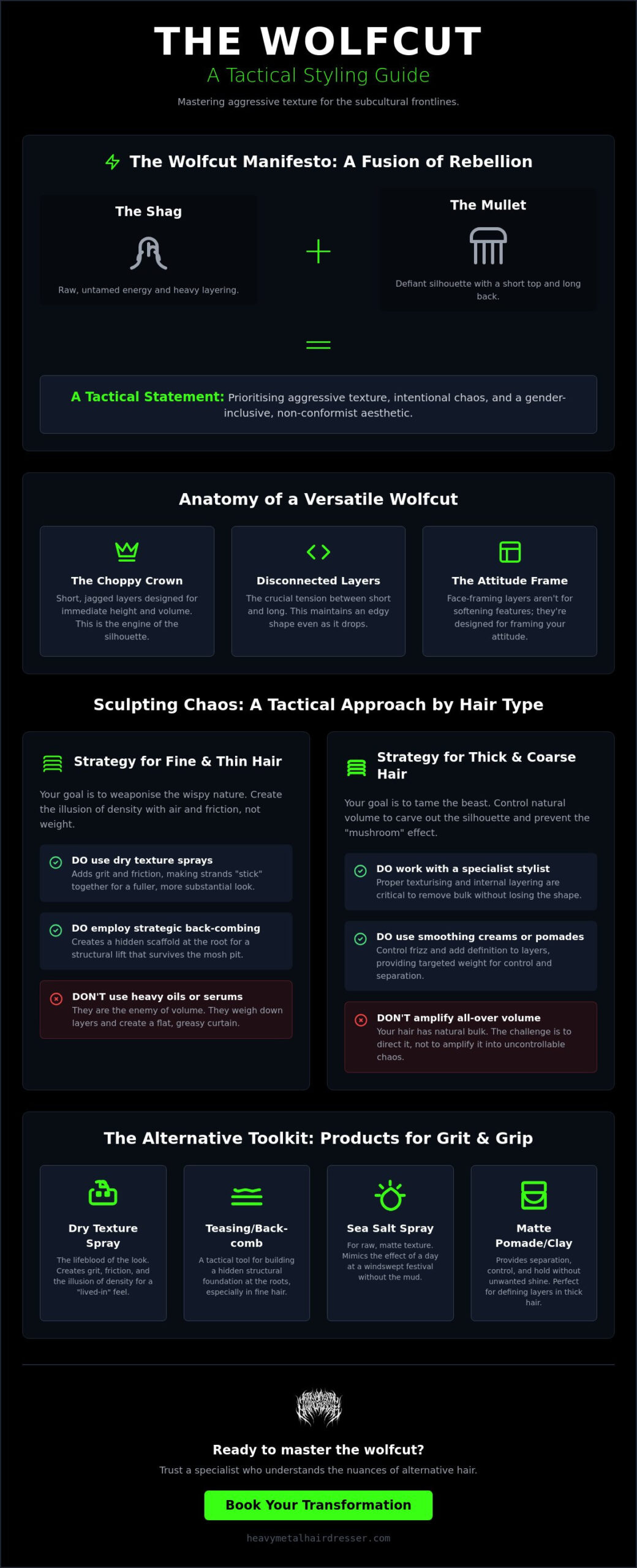
The short wolf cut is a high-contrast, heavily layered crop that refuses to play by the rules of traditional hairdressing. It isn’t just a trend; it’s a subcultural weapon. Unlike the polished, symmetrical styles you see in high-street salons, this cut thrives on “intentional chaos.” It’s a modern take on the ’70s shag that swaps disco vibes for distorted bass and DIY grit. By combining the aggressive silhouette of a mullet with the shaggy texture of a punk-era crop, it creates a look that’s as loud as the music you listen to.

For anyone hunting for short wolf cut ideas, the appeal lies in the balance between high-impact aesthetics and low-maintenance reality. It’s designed to look better the more you mess with it. This cut has become a gender-neutral safe haven for self-expression, stripping away the binary expectations of “masculine” or “feminine” hair. It’s about identity, not industry standards. Whether you’re non-binary, trans, or just tired of gendered styling, the wolf cut offers a silhouette that belongs to everyone whilst remaining fiercely individual.

The Anatomy of a Short Wolf Cut

The secret to this cut is the relationship between crown volume and tapered ends. We build massive height at the top, using disconnected layers to create that signature “bite” that frames the face. These layers aren’t meant to blend perfectly; they’re designed to kick out and create movement. The short wolf cut is a hybrid of a mullet’s attitude and a shag’s texture. It relies on short, choppy sections around the temples and ears to maintain an aggressive, almost predatory shape that works across all hair densities.

Wolf Cut vs. Traditional Shag: The Key Differences

Whilst they share a common ancestor, the wolf cut is the shag’s more volatile younger sibling. A traditional shag usually focuses on soft, blended layers and a bohemian feel. In contrast, the wolf cut demands more intentional chaos and sharper facial framing. We push the “fringe-to-layer” ratio to the extreme, often using razors to create wispy, aggressive finishes that a standard shag lacks. For a deeper look at where these styles diverged, check out The Shag Haircut Resurrection to understand why these silhouettes dominate the UK alternative scene. The wolf cut simply takes that foundation and turns the volume up to eleven.

7 Aggressive Short Wolf Cut Ideas for Every Subculture

Forget the “office-friendly” fluff you see on Pinterest. If you’re looking for short wolf cut ideas that actually bite, you need to look beyond the mainstream. These variations are built for the underground, combining technical precision with a middle finger to traditional beauty standards. Whether you’re into crust-punk aesthetics or dark-academia moods, there is a silhouette here that fits your frequency.

  • The Micro-Wolf: This is for those who find a standard pixie too “nice.” It pushes the boundaries of a short crop by maintaining extreme volume at the crown whilst leaving just enough length at the nape to flicker against the neck.
  • The Goth-Shag: Think deep black tones and an ink-heavy, eyebrow-skimming fringe. It’s about visual weight and a refusal to be approachable. It requires thick, blunt-cut layers that frame the eyes with predatory intent.
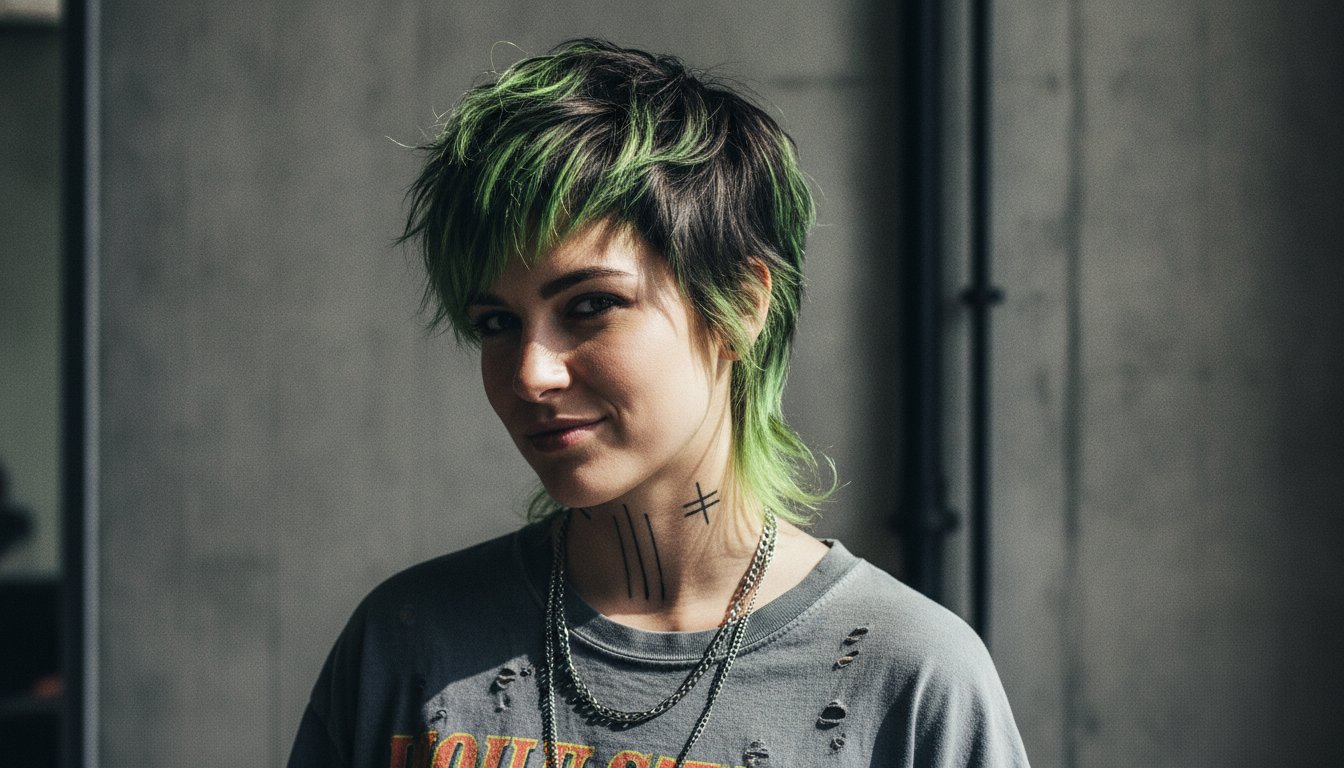
  • The Vivid Chaos: Pair your cut with neon slime green or electric blue. Split-dye colours work exceptionally well here; they highlight the disconnected layers and make the texture look even more aggressive.
  • The Curly Beast: Wolf cuts aren’t just for straight hair. Embracing natural texture allows for massive, horizontal volume. It turns “frizz” into a deliberate design choice that screams subcultural flair.
  • The Mosh-Pit Mullet: A shorter, sharper version of the classic hybrid. It’s built for movement. Shorter temples ensure your hair stays out of your eyes whilst you’re in the pit, but the back keeps that rebellious length.
  • The Heavy Metal Signature: Our specialised Wolfcuts are designed to be raw and unfiltered. We focus on the “bite” of the layer rather than the blend, ensuring your hair looks as loud as your favourite record.
  • The Tapered Terror: This style features high-contrast, almost-shaved sides with a shaggy, chaotic top. It’s the ultimate alternative statement for those who want to bridge the gap between a buzz cut and a shag.

Styles for Straight and Fine Hair

Fine hair often falls victim to the “flat-hair” curse, but a wolf cut is the perfect fix. We use “shattered layers” to create the illusion of density. By cutting internal sections shorter than the top layers, the hair is forced to stand up and out. A razor-cut edge is essential here; it creates wispy, aggressive ends that add grit to even the softest hair types. It turns a “messy bob” into a deliberate, textured weapon.

Bold Colour Pairings for Short Layers

Colour isn’t just about shade; it’s about architecture. Vivid colours like electric blue or neon pink pop on textured layers because they catch the light at different depths. Using “peek-a-boo” colour underneath the fringe or temples highlights the movement of the cut without being overwhelming. This technique helps to organise the visual weight of the hair, making the aggressive layering stand out even in low-light gig environments.

Short Wolf Cut Ideas: 7 Aggressive Ways to Wear the Ultimate Alt-Style

Adapting the Shape: Texture, Density, and Face Framing

Mastering the silhouette of a short wolf cut requires more than just hacking away at the ends. It demands a deep understanding of how hair moves and sits. Traditional stylists often play it safe, but we know you aren’t here for safe. If you’re browsing short wolf cut ideas, you’ve likely seen how the wrong execution can turn a rebellious look into something far too “civilised.” We focus on the fringe-to-layer ratio. It’s the mathematical heart of the cut. By adjusting this balance, we can customise the look to suit any face shape whilst keeping that raw, underground edge.

One of the biggest fears we hear is ending up with a 1980s “mum” perm. This happens when layers are too uniform or the texture is too round. To avoid this, we prioritise “intentional disconnection.” We don’t want the hair to flow perfectly. We want it to collide. By keeping the top layers choppy and the bottom layers elongated and wispy, we ensure the style stays firmly in the alternative camp. It’s about creating a predatory silhouette rather than a soft, bouncy one.

The sideburn area is your secret weapon for creating an alternative silhouette. Leaving these pieces longer and more jagged creates a disconnected, non-conformist edge. It separates a true wolf cut from a standard pixie or bob. These “tendrils” frame the face with grit, especially when they’re razor-cut to flick forward against the cheekbones. It isn’t a mistake. It’s a statement.

Face Framing for Alternative Aesthetics

Every face is a different canvas. You can use curtain bangs to slightly soften the look for a more “grunge” vibe, or pivot to micro-fringes to harden the aesthetic. Micro-fringes are unapologetically aggressive. They open up the face and highlight piercings or heavy eyeliner. To accentuate cheekbones and jawlines whilst maintaining grit, we stack layers at the widest part of your face. If you need versatility, the “tucked-behind-the-ear” trick is essential. Tucking one side exposes the jawline and creates an asymmetrical, sharp look that works perfectly for short wolf cut ideas on the fly.

Managing Density: Thick vs. Thin Strands

Managing hair density is the difference between a “haircut” and a “sculpture.” Thick hair is often the enemy of the short wolf cut because it creates a “mushroom” effect. We use point cutting to remove internal weight without sacrificing the length of the layers. This creates pockets of air that allow the hair to collapse into a shaggier, flatter shape. Conversely, thin hair benefits from shorter crown layers. These provide instant lift and prevent the hair from looking limp. By keeping the top short and the ends wispy, even the finest hair can achieve that high-impact, voluminous “wolf” bite.

Styling Your Short Wolf Cut: From Mosh Pit to Daily Wear

The short wolf cut ideas we have explored only work if you know how to maintain the bite once you leave the chair. Your hair shouldn’t look like a museum piece; it needs to survive a gig, a rainy commute, and everything in between. Styling alternative hair is about working with gravity, not against it. Whilst traditional stylists might tell you to blow-dry every layer for “bounce,” we prefer a raw, unfiltered finish that prioritises grit over polish. You want people to wonder if you’ve just stepped off a stage, not out of a pageant.

The “Air-Dry and Pray” method is your secret weapon for zero-heat texture. By applying product to soaking wet hair and letting it set naturally, you allow your hair’s unique kinks and waves to dictate the chaos. This prevents the “mum-like” roundness that ruins a good wolf cut. If you need that “just stepped off the stage” grit, salt sprays are essential. They add a matte, slightly crunchy feel that holds the layers in place whilst you’re moving. For day two, don’t reach for the shampoo. Dirt is a styling tool. Use a water mister to reactivate the product in your fringe and crown, then scrunch it back into life.

Gravity is the enemy of the alternative silhouette. Flat crown syndrome can turn an aggressive wolf cut into a flat bob in hours. Styling dust or volume powder is the only way to fight back. By applying it directly to the roots, you create a dry, high-friction base that keeps your crown layers standing tall. It’s the difference between a cut that looks lived-in and one that just looks tired.

The 5-Minute Morning Routine

  • Step 1: Dampen your fringe and face-framing layers with a spray bottle to reset any bed-head kinks.
  • Step 2: Apply a small amount of matte clay or texture paste to your fingertips and work it through the ends.
  • Step 3: Scrunched-dry with your hands or use a diffuser on a low heat setting for maximum chaos and volume.

Must-Have Products for Alternative Texture

To get those spiked-out, aggressive ends, you need a high-hold wax like Death Grip. It provides the structural integrity needed to keep disconnected layers from falling flat. For those with fine hair, Hair To the Throne volume powder is non-negotiable for instant lift at the crown. Avoid heavy silicones; they make short layers too slippery and “nice,” which is the exact opposite of what we’re aiming for. You need products that offer a matte finish and a firm hold to ensure your identity stays intact all day. If you’re ready to master these techniques yourself, check out our Hair Courses to learn the art of alternative styling from the experts.

The Heavy Metal Hairdresser Method: Crafting Your Identity

Simon Tuckwell didn’t build this space to follow high-street trends. He built it to weaponise hair as a tool for empowerment. Most salons see a head of hair as a series of technical problems to solve. We see it as the loudest part of your identity. If you’re tired of explaining your short wolf cut ideas to stylists who look at you like you’re from another planet, you’re in the right place. We don’t just “do” hair; we craft a silhouette that reflects who you are when the lights go down and the music starts.

Our approach is forged in the grit of the UK’s festival scene. We’ve spent years cutting hair in fields, amongst the noise and the mud. This background influences every wolf cut we create. It’s why our layers have more “bite” and our textures feel raw rather than refined. A high-street chain will always try to soften your edges. They’ll try to make it “balanced” or “pretty.” We do the opposite. We lean into the aggression because we know that’s where the power lies. A specialist alt-salon understands the subcultural nuances that a mainstream shop will simply miss.

The “Inclusive Consultation” is the cornerstone of our method. It isn’t just about length; it’s about ensuring your hair reflects your true self. We strip away the binary expectations of traditional hairdressing to focus on what makes you feel authentic. We talk about your music, your style, and how you want to move through the world. This dialogue ensures that your short wolf cut isn’t just a style you’re wearing, but a part of who you are.

Beyond the Chair: A Community of Individuality

The salon is a gender-inclusive safe space for the UK’s alternative scene. Whether you’re here for a shag or a wolf cut, your identity is respected and celebrated. We thrive amongst those who live outside the mainstream. Don’t worry about being “too much.” Bring your favourite band references, your mood boards of distorted textures, and your loudest ideas. We speak your language. We understand that your hair is a badge of belonging to a community that values authenticity over approval.

Booking Your Transformation

When you sit down for your consultation, don’t just ask for a “short wolf.” Tell us about your lifestyle. Do you need it to look sharp for work but aggressive for the pit? Ask for disconnected layers and a razor-finished fringe to ensure that “wolf” bite. To keep your short wolf cut ideas looking fresh between visits, use a dry texture paste to maintain the crown volume. Avoid heavy washes; let your natural oils add to the grit and structure of the cut. If you’re ready to evolve your look and claim your space in the subculture, it’s time to move. Book your short wolf cut with the specialists and let’s create something unapologetic.

Claim Your Subcultural Silhouette

Your hair is the loudest part of your identity. We’ve explored how aggressive texture, intentional disconnection, and the right styling grit can transform a standard crop into a weapon of self-expression. Whether you’re leaning into the Goth-Shag or pushing boundaries with a Micro-Wolf, these short wolf cut ideas are about reclaiming your space outside the mainstream. It’s not just about the cut; it’s about the attitude you carry into the pit whilst the music hits.

You deserve a stylist who speaks your language. Our team are specialists in aggressive textured layers and regularly work as stylists for Download and Bloodstock festivals. We’ve built a gender-inclusive safe space where your alternative identity is the priority; it isn’t a trend to be softened or polished. Stop settling for high-street “safety” and start wearing hair that actually bites. Join the revolution and book your short wolf cut today.

Your evolution is waiting. Stay loud and stay authentic.

Frequently Asked Questions

Is a short wolf cut low maintenance for daily wear?

Yes, the short wolf cut is the ultimate low-maintenance look for those who embrace grit. It’s designed to thrive on natural texture, meaning you don’t need a 45-minute blow-dry every morning. Use a bit of salt spray and let the layers do the work. It’s perfect for the “air-dry and pray” method, looking better as it lives in throughout the day.

How do I style a short wolf cut if I have very fine hair?

Fine hair needs structural support to keep the layers from looking limp. Use a volume powder like Hair To the Throne at the roots for instant lift and friction. Short, choppy crown layers are essential here. They create a high-friction base that prevents your hair from collapsing, ensuring your short wolf cut ideas stay aggressive and voluminous from morning until night.

Will a short wolf cut work for my face shape?

Absolutely, because this cut is a sculpture rather than a template. We adjust the fringe-to-layer ratio to highlight your specific features. Rounder faces benefit from shorter, sharper temple layers to create angles and definition. Longer faces can use a heavy, eyebrow-skimming fringe to balance the silhouette. It’s about tailoring the aggression to fit your specific canvas whilst maintaining that subcultural edge.

How often should I get my short wolf cut trimmed to keep the shape?

To maintain that predatory silhouette, aim for a trim every six to eight weeks. Shorter layers grow out faster and can lose their “bite” if left too long. Regular maintenance ensures the crown volume stays high and the tapered ends don’t start looking like a standard bob. If you’re growing it out, we can adjust the internal weight to keep the transition looking intentional.

Can I have a short wolf cut with a fringe if I wear glasses?

Yes, glasses and wolf cuts are a classic alternative pairing. We cut the fringe to sit slightly above or around the frames to avoid any visual clutter or irritation. Micro-fringes work exceptionally well for those with eyewear. They open up the face whilst allowing your frames to stand out as a deliberate part of your aesthetic. It’s about making the layers work with your accessories.

What is the best product to use for a messy, textured wolf cut finish?

For that raw, “just stepped off the stage” finish, reach for a matte clay or a high-hold wax like Death Grip. These products offer the structural integrity needed to spike out the ends without adding greasy shine. Avoid heavy silicones at all costs. You want a dry, gritty texture that holds its shape through a mosh pit or a long shift without weighing down the layers.

Is the short wolf cut suitable for professional work environments?

Yes, though it depends on how you choose to style the “chaos.” The beauty of this cut is its versatility. You can use a small amount of paste to smooth the layers for a more “organised” look during the day. However, we believe your identity shouldn’t be clocked out. A well-executed wolf cut shows expertise and confidence, which belongs in any professional setting that values authenticity.

How do I stop my short wolf cut from looking like a bob?

The key is intentional disconnection and avoiding blunt lines. A bob is symmetrical and blended; a wolf cut is chaotic and tapered. Ensure your stylist uses a razor on the ends to keep them wispy and thin. If the bottom is too heavy or blunt, it will immediately look round and “mum-like.” Focus on maintaining massive crown volume to keep the silhouette aggressive and high-impact.

Posted on

The Shag Haircut Resurrection: Why It Rules the UK Alternative Scene

The Shag Haircut Resurrection: Why It Rules the UK Alternative Scene

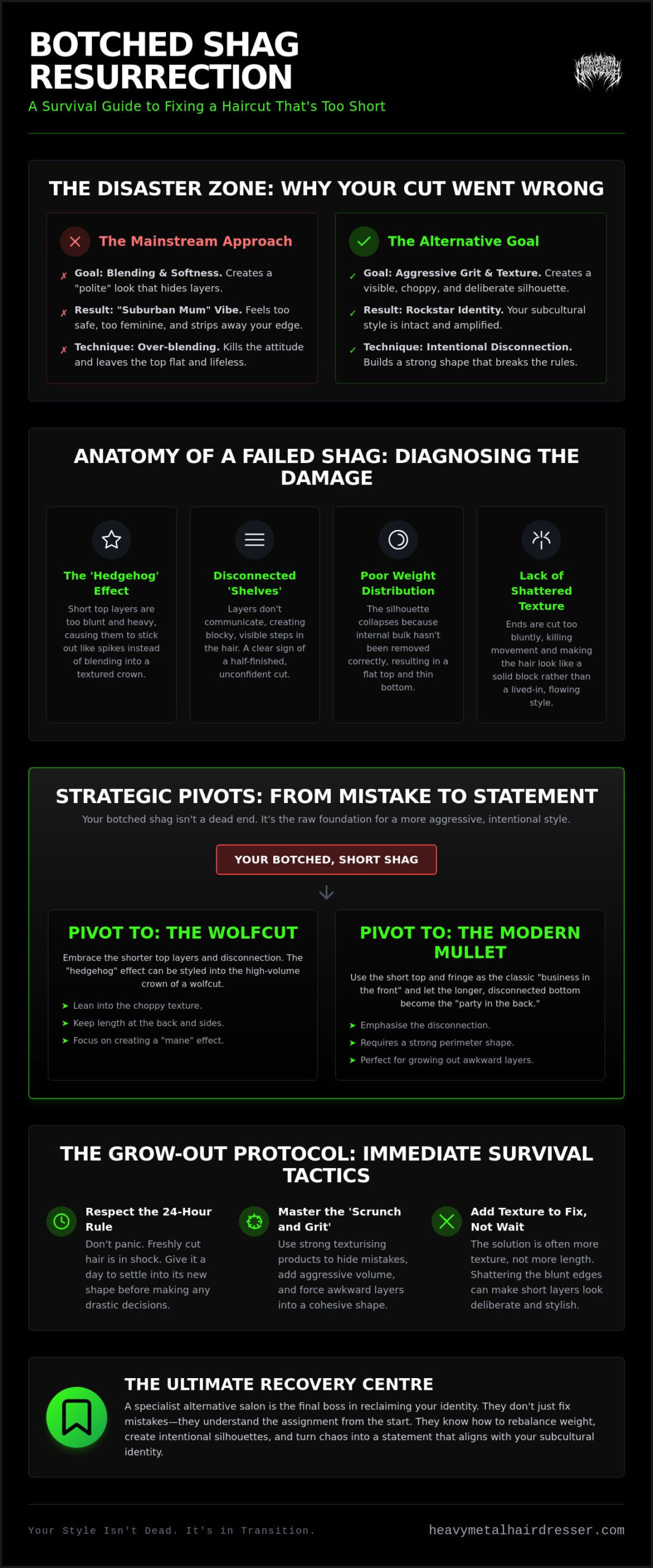
Your local high-street salon is likely terrified of your hair. To them, a shag is a vintage relic or a “soft, wearable” layering job; to you, it’s a middle finger to the status quo. Too many people walk in wanting a razor-sharp edge and walk out looking like a soccer mum because their stylist was afraid to go short and choppy. Finding authentic shag hairdressers shouldn’t feel like a chore. You deserve a cut that screams, not one that whispers. It’s time to stop settling for stylists who treat your alternative aesthetic like a phase they need to “fix” with a blow-dry.

We know the frustration of sitting in a chair where the “creative director” doesn’t know their punk from their post-hardcore. This guide explores why the shag is the definitive tool for self-expression in 2026 and how to find a specialist who actually understands the subculture. We’ll break down the evolution of the wolf cut, the rise of the bixie, and how to find a specialist who prioritises your identity over traditional beauty standards. Your hair is your armour; let’s make sure it’s built by someone who understands the fight.

Key Takeaways

  • Identify why the 2026 resurrection prioritises aggressive texture and heavy crown layers over traditional, soft vintage aesthetics.
  • Uncover the technical secrets behind the disconnection method and why razor-cutting is essential for achieving those iconic shattered ends.
  • Decode the structural differences between a classic shag, a wolfcut, and a mullet to ensure you choose the right silhouette for your subculture.
  • Learn how to vet specialist shag hairdressers by looking for alternative portfolios and a commitment to gender-neutral pricing structures.
  • Discover how Heavy Metal Hairdresser is spearheading the UK scene with techniques designed specifically for mosh pits and individuality.

What is a Shag Haircut? Defining the Resurrection in 2026

The shag isn’t just a haircut; it’s a statement of intent. In 2026, the resurrection of this style has moved far beyond the soft, feathered layers of the past. Modern shag hairdressers are ditching the “vintage” label in favour of something far more aggressive. This isn’t your mum’s 1970s blow-dry. It is a calculated explosion of heavy crown layers and extreme texture designed to survive a twelve-hour festival set without losing its shape. The 2026 aesthetic prioritises “aggressive” movement, favouring sharp, jagged edges over the polite waves seen in mainstream salons.

While the history of the shag haircut traces back to icons like Mick Jagger and Joan Jett, the current UK alternative scene has evolved the look. It’s no longer about looking like a rockstar from a history book. It’s about raw, lived-in energy that bridges the gap between heavy metal grit and underground fashion. From the sweaty basements of the DIY punk scene to the main stages of modern festivals, the shag has reclaimed its place as the ultimate weapon for those who refuse to blend in. If you want to understand how that classic silhouette has been weaponised for modern alternative culture, our deep-dive into the 70s shag haircut modern aggressive layers guide breaks down exactly how the original blueprint was torn apart and rebuilt.

The Core Elements of a Modern Shag

Authenticity in a shag relies on a specific “short-to-long” internal layering technique. This creates height at the crown whilst maintaining length through the perimeter, giving the hair a rebellious, gravity-defying structure. You can’t have a real shag without a fringe or a heavy curtain element; it’s the frame that gives the style its subcultural edge. A shag is a high-contrast, multi-length cut designed for maximum volume. It thrives on “shattered” ends that look better the more you mess them up.

Why Alternative Subcultures Own This Look

The shag has always been a badge of rebellion. It sits at the intersection of music, defiance, and gender-neutrality. Because the cut is inherently fluid, it provides a safe space for expressive, non-binary styling that traditional barbering or feminine hairdressing often ignores. We’ve seen a massive shift away from clinical salon perfection. People want hair that reflects their identity; something raw and unapologetic that doesn’t require a degree in styling to maintain.

Alternative shag hairdressers understand that a haircut is a tool for self-expression, not just a service. It’s about fostering a community where being different isn’t just tolerated; it’s the standard. By focusing on lived-in textures rather than polished finishes, the modern shag allows the wearer to carry their subcultural pride from the mosh pit to the workplace without compromising their soul.

Anatomy of an Aggressive Shag: Layers, Fringe, and Chaos

The secret to a cut that actually survives a night in the pit isn’t just “layers”. It’s disconnection. Specialist shag hairdressers know that traditional blending is for the boardroom, not the gig. By intentionally separating the length of the crown from the length of the perimeter, you create a silhouette that has movement and attitude without looking like a helmet. This technical gap is what gives the style its aggressive edge. It’s a key part of the modern shag revival sweeping the UK alternative scene.

Your stylist should be reaching for a razor or using aggressive point-cutting. Blunt scissors are the enemy here. We want “shattered” ends that look like they’ve been through a war zone, not a finishing school. This specific texture allows the hair to stack on itself, creating massive volume at the crown. However, weight management is vital. If your stylist doesn’t carve out the bulk correctly, you’ll end up with the dreaded “mushroom” effect. It’s about keeping the height whilst ensuring the sides stay lean and mean.

The fringe is the anchor of the whole look. Whether you want jagged micro-bangs or heavy, eyebrow-skimming curtains, it has to be intentional. A weak fringe kills a shag. It needs to be thick, textured, and integrated into those face-framing layers to create a cohesive, rebellious frame for your face. If you’re considering a softer but equally impactful fringe option, our guide to the curtain bangs shag haircut and aggressive face-framing explores exactly how to weaponise that look for alternative souls. If you’re ready to commit to the look, the specialists at Heavy Metal Hairdresser can help you find your perfect level of chaos.

Texture is Your Best Friend

Blunt cuts are the ultimate enemy of a true alternative shag. To keep those layers working, you need products that provide genuine grit. Salt sprays and matte clays are essential for enhancing the shattered finish. Using a high-performance product like “Death Grip” or “Hair To the Throne” ensures your volume doesn’t collapse by the second support band. You want hair that feels alive and slightly chaotic, not static and over-polished. Texture isn’t just an option; it’s the foundation of the entire aesthetic.

Face Framing and Personalisation

Every shag must be tailored to the individual. It’s not a one-size-fits-all job. We focus on “bits”, those random, longer strands that hang around the jawline and cheekbones. These aren’t accidents; they’re calculated elements designed to define your structure whilst keeping the look edgy. The fringe must be cut to suit your unique eye and brow structure to ensure it complements your face shape without losing its subcultural bite. It’s about finding the balance between what looks good and what feels like you. This level of personalisation is why finding experienced shag hairdressers is non-negotiable for anyone serious about their alternative identity.

The Shag Haircut Resurrection: Why It Rules the UK Alternative Scene

Shag vs. Wolfcut vs. Mullet: Choosing Your Weapon

Stop treating these names as synonyms. Most shag hairdressers see clients walk in with a photo of a mullet but asking for a shag. The structural differences are massive. A shag provides an even distribution of layers and 360-degree volume. It is a balanced explosion of texture that works around the entire head. The mullet, however, is a game of extremes. It is built on severe length contrast. You have the tight, cropped front and sides paired with a long, flowing back. If you want something in the middle, you are looking for a wolfcut. This hybrid style takes the wild, untamed layers of the shag and applies them to a mullet silhouette.

Your hair density should dictate your choice. Thick hair is the perfect canvas for shag haircuts. The heavy internal layering removes bulk whilst creating that sought-after height at the crown. Conversely, fine hair often struggles with a full shag but thrives with a wolfcut. The shorter layers at the crown create an illusion of density that does not collapse by midday. Understanding the history of the shag haircut helps you see how these styles branched from the same rebellious root to serve different textures. Finding specialist shag hairdressers who can diagnose your hair type is the first step to ensuring your “weapon” of choice actually performs.

The Mullet: For the Bold and Unapologetic

The aggressive mullet isn’t a hipster accessory. Unlike the soft, “safe” versions seen in mainstream magazines, the alternative mullet is sharp and unapologetic. It requires the most commitment to a specific aesthetic. It is the ultimate statement of subcultural pride. If you are currently rocking a shag and want more drama, it is a simple transition. Let the back grow whilst your stylist keeps the sides and fringe tight. This creates a high-contrast look that screams rather than whispers.

The Wolfcut: The Versatile Alternative

The name says it all; wild, untamed, and fiercely independent. The wolfcut is the perfect entry-level alternative style because it is incredibly versatile. It offers the “flow” people love without the structural rigidity of a traditional mullet. It is particularly effective for those amongst us with straighter hair who want to fake some movement. To maintain the look between salon visits, focus on keeping the face-framing layers from getting too heavy. It is a low-maintenance way to stay outside the mainstream whilst keeping your styling routine simple.

Finding Shag Hairdressers Who Actually Get It

Finding a stylist who won’t butcher your vision is harder than it looks. Most high-street salons claim they do shags; they don’t. They do “layered bobs” and call it a day. To find real shag hairdressers, you have to look beyond the Instagram bio. Scrutinise their portfolio. If it’s a sea of honey balayage and beach waves, run. You want to see vivid colours, high-contrast textures, and genuine alternative styles. A specialist’s work should feel like it belongs at a gig, not a garden party. This is about finding someone who understands the weight of subcultural identity.

The “Vibe Check” is non-negotiable. If you walk in and they’re playing generic chart pop, they probably won’t understand why you want your fringe to look “shattered”. A salon that blasts metal, punk, or alternative music is a salon that speaks your language. Look for gender-neutral pricing too. It is a massive green flag. It shows the space is inclusive and focused on the craft rather than outdated gender norms. Finally, ask about their tools. A true shag specialist lives for the razor. If they aren’t comfortable razor-cutting, they aren’t the one for you. Razor cutting is the only way to get that authentic, lived-in grit.

What to Ask During Your Consultation

Don’t be passive. Your consultation is an interview. Ask them: “How do you plan to create internal texture without losing all my length?” A pro will explain the disconnection and “short-to-long” layering we discussed earlier. Ask them to show you how to style it with a diffuser and texture paste. You want a cut that works at home, not just in the chair. Bring a mood board. Use photos of your favourite bands, festival shots, or subcultural icons. Leave the bridal magazines at the door. If you want a team that genuinely gets the vision, book in with our specialists today.

Red Flags in an Alternative Stylist

Watch out for the “softener”. If a stylist tries to talk you out of an extreme fringe because it’s “too harsh”, they are intimidated by the look. They are trying to pull you back into the mainstream. Another warning sign is an over-reliance on GHDs. A shag is about the cut and the raw texture, not hiding behind a flat iron. A real specialist will be excited by your “weird” ideas. They should be pushing the boundaries with you, not holding you back. If they seem hesitant about short, choppy layers, they aren’t the shag hairdressers you’re looking for. You deserve a stylist who treats your hair like the armour it is. If you’re a stylist yourself looking to develop these skills, exploring alternative hair courses UK professionals actually respect is the best way to master the aggressive textures and inclusive techniques that define the modern scene.

Heavy Metal Hairdresser: Redefining the UK Shag Scene

Heavy Metal Hairdresser isn’t just a salon; it’s a rebellion against the clinical, cookie-cutter world of high-street styling. Founded by Simon Tuckwell, this space was built to celebrate subcultural pride and fierce individuality. We don’t aim for the polished perfection of a catwalk. Instead, our signature “aggressive shag” technique is engineered for the mosh pit. It’s a cut designed to look better the more you move, sweat, and live in it. Whilst other shag hairdressers might worry about “suitability” based on outdated rules, we use your identity as the only blueprint that matters.

Our roots are buried deep in the UK alternative scene. You’ll find us backstage at Download Festival or at the heart of local underground hubs. We don’t just “do” alternative hair; we live the culture every single day. This isn’t a trend we’re following. It’s a community we’re leading. We’ve spent years perfecting the art of the shattered layer and the disconnected fringe to ensure your hair acts as your armour. When you sit in our chair, you’re not just getting a service. You’re joining a movement that prioritises self-expression above all else.

Beyond the Cut: The Alternative Experience

We believe that a great haircut requires a safe, inclusive environment. Our salon is a gender-inclusive space where your comfort is as important as your texture. We’ve ditched the judgemental atmosphere of traditional beauty industries in favour of “inclusive” behaviour and raw authenticity. Our connection to the UK music scene informs everything we do. We understand the nuances of different subcultures because we’re part of them. Booking a session with us is about building your confidence on your own terms, not conforming to mainstream “beauty” standards. It’s a place where you can finally be yourself without explanation.

Join the Resurrection

A transformation doesn’t stop at the silhouette. We encourage you to explore our vivid colour work to truly make your new shag pop. Whether it’s deep forest greens, blood reds, or neon purples, we have the technical expertise to match your hair’s energy to your soul. To keep that post-salon grit alive at home, we’ve developed specific tools for the job. Our “Death Grip” and “Hair To the Throne” products are essential for maintaining that shattered, aggressive texture between visits. You can even grab some of our branded merchandise to show your subcultural pride. If you’re ready to ditch the ordinary and embrace the chaos, it’s time to act. Book your shag transformation with the specialists at Heavy Metal Hairdresser and claim your identity.

Claim Your Place in the Alternative Resurrection

Your hair is more than just a style; it’s a declaration of who you are. We’ve explored the technical chaos of the aggressive shag and why the right shag hairdressers make the difference between a “pretty” trim and a subcultural weapon. Whether you’re choosing the balanced volume of a shag or the high-contrast drama of a mullet; the goal is always the same: unapologetic self-expression. You deserve a cut that reflects your soul and survives the pit without losing its edge.

Heavy Metal Hairdresser is here to ensure that vision becomes a reality. As a gender-inclusive safe space, we prioritise your identity above all else. Our team has worked backstage at major UK festivals like Download and Bloodstock; bringing that same intensity to every chair in our salon. We specialise in aggressive texture and vivid colour work that mainstream salons simply won’t touch. It’s time to stop settling for stylists who don’t speak your language. Join the alternative revolution and book your shag today. You’ve finally found your tribe; now let’s build your look together.

Frequently Asked Questions

Is a shag haircut high maintenance?

Shags are actually incredibly low maintenance because they thrive on a “lived-in” feel. You don’t need to fight your natural texture or blow-dry it into submission. The cut is designed to look better as it grows out and gets a bit messy. It’s the ultimate choice for anyone who wants high-impact style without spending forty minutes in front of the mirror every morning. It’s built for real life, not just the salon chair.

Can I have a shag haircut if I have very fine or thin hair?

Yes, a shag is one of the best ways to fake volume on fine or thin hair. By adding short, internal layers, shag hairdressers can create a structural lift that prevents your hair from looking flat or limp. It creates the illusion of density whilst keeping the ends feeling thick and intentional. It’s about clever weight distribution, not just cutting random layers to remove bulk.

How often should I get my shag trimmed to keep the shape?

You should aim for a trim every eight to twelve weeks to keep the silhouette sharp. Whilst the shag grows out better than a blunt bob, those heavy crown layers will eventually lose their “aggressive” lift as they get heavier. A quick tidy-up keeps the fringe from taking over your face and ensures the volume stays exactly where it belongs. It keeps the chaos looking intentional rather than accidental. This focus on structural maintenance is a universal rule; for those who value the same level of specialist precision for their property’s landscape, WGS Tree Services provides expert arboricultural care across the South Coast.

What is the difference between a shag and a wolfcut?

The main difference is the distribution of weight and the severity of the layering. A shag is a balanced, 360-degree explosion of layers with a consistent silhouette. A wolfcut is a hybrid that pulls more from the mullet, featuring a tighter side and a wilder, more untamed flow through the back. It’s slightly more chaotic and less structured than a classic shag, leaning into a more predatory, wild aesthetic.

Do I need to style my shag every day?

You definitely don’t need to style it every day if the cut is executed correctly. A good shag is built to move and shift with your natural habits. Most days, a quick scrunch with some water or a hit of dry shampoo is all you need to reactivate the texture. It’s a “wash and go” style for the alternative soul who values sleep and rebellion over a round brush and a hair dryer.

Is a shag haircut suitable for all face shapes?

A shag is universally flattering because it is bespoke to your specific bone structure. Expert shag hairdressers will adjust the length of the fringe and the position of the face-framing “bits” to highlight your eyes or jawline. Whether your face is round, square, or heart-shaped, the layers can be carved to balance your features whilst maintaining that rebellious edge. It is about personalising the chaos to suit you.

If you are looking for a salon that excels in this kind of tailored approach, Ross Adams Hair & Beauty is a fantastic destination for high-end precision styling and expert colour transformations.

Can a shag be cut on curly or wavy hair?

Curly and wavy hair are the perfect canvases for a shag. The layering removes the “triangle” shape often associated with curls, allowing your natural pattern to spring up and breathe. It provides definition and bounce that a blunt cut simply can’t match. It’s about working with the curl, not against it. The result is a wild, textured look that celebrates your natural movement instead of hiding it.

What products are best for styling a shag at home?

Focus on products that add grit and hold without the grease. A high-quality salt spray is essential for that beachy, shattered look. For more aggressive texture and crown lift, use a matte paste like Death Grip or a volume powder like Hair To the Throne. These products ensure your layers stay separated and defiant all day long. You want hair that feels raw and lived-in, not static or over-polished. For more guidance on choosing the right products and techniques to maintain a modern 70s shag haircut with aggressive layers, our specialist guide covers everything you need to know.