Posted on

Short Wolfcut: The Aggressive Guide to Alternative Texture and Grit in 2026

Short Wolfcut: The Aggressive Guide to Alternative Texture and Grit in 2026

Your local high-street salon is likely terrified of your hair. They see the vision of a short wolfcut and immediately try to “soften” the edges until you look like a suburban caricature instead of your favourite subcultural icon. It’s a common trap. You ask for grit and rebellion, but you walk out with a flat, polite “mum bob” that feels more like a safe compromise than a masterpiece.

You deserve a silhouette that actually reflects who you are. We understand the frustration of having your identity diluted by stylists who play it too safe. This guide is here to help you reclaim that aggressive texture and master the short wolfcut with zero apologies. We’re going to show you how to choose aggressive layers that scream rather than whisper.

We’ll explore the best ways to keep your hair from falling flat and which specific products, like Death Grip, will give you that festival-ready finish. From understanding your natural movement to nailing the perfect disconnected fringe, it’s time to embrace the grit.

Key Takeaways

  • Learn how the 2026 short wolfcut evolves the classic shag-mullet hybrid into a high-contrast, face-framing silhouette that prioritises crown volume.
  • Discover the secret of internal crown layers that provide massive lift and aggressive texture without relying on old-school backcombing or heavy styling.
  • Master the “shattered” finish by ditching the round brush and using a diffuser alongside gritty foundations like salt spray or texturising mousse.
  • Understand why the cropped version outshines longer styles for long-term shape retention and immediate subcultural impact at festivals or shows.
  • Explore how to maintain your alternative edge at home using identity-affirming techniques and professional-grade tools like Death Grip.

What is a Short Wolfcut? Redefining the Hybrid Style for 2026

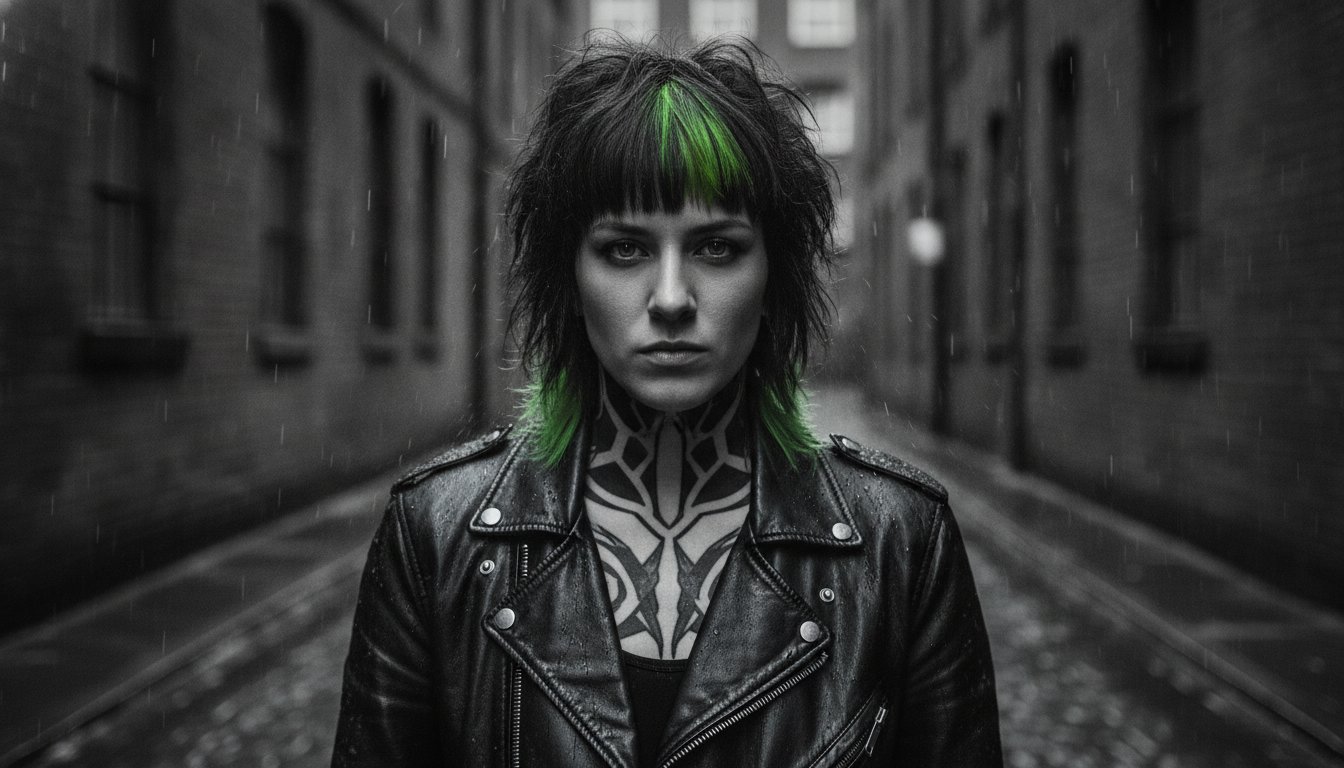
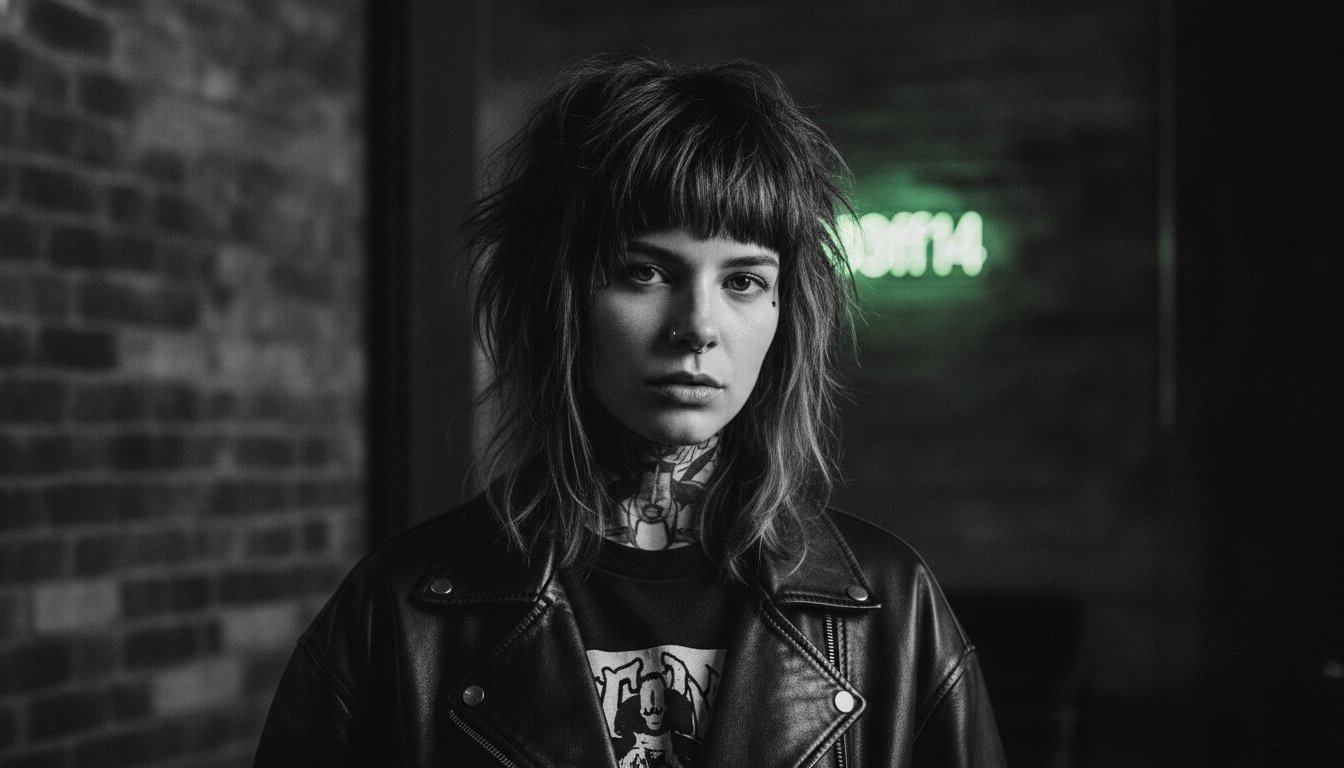
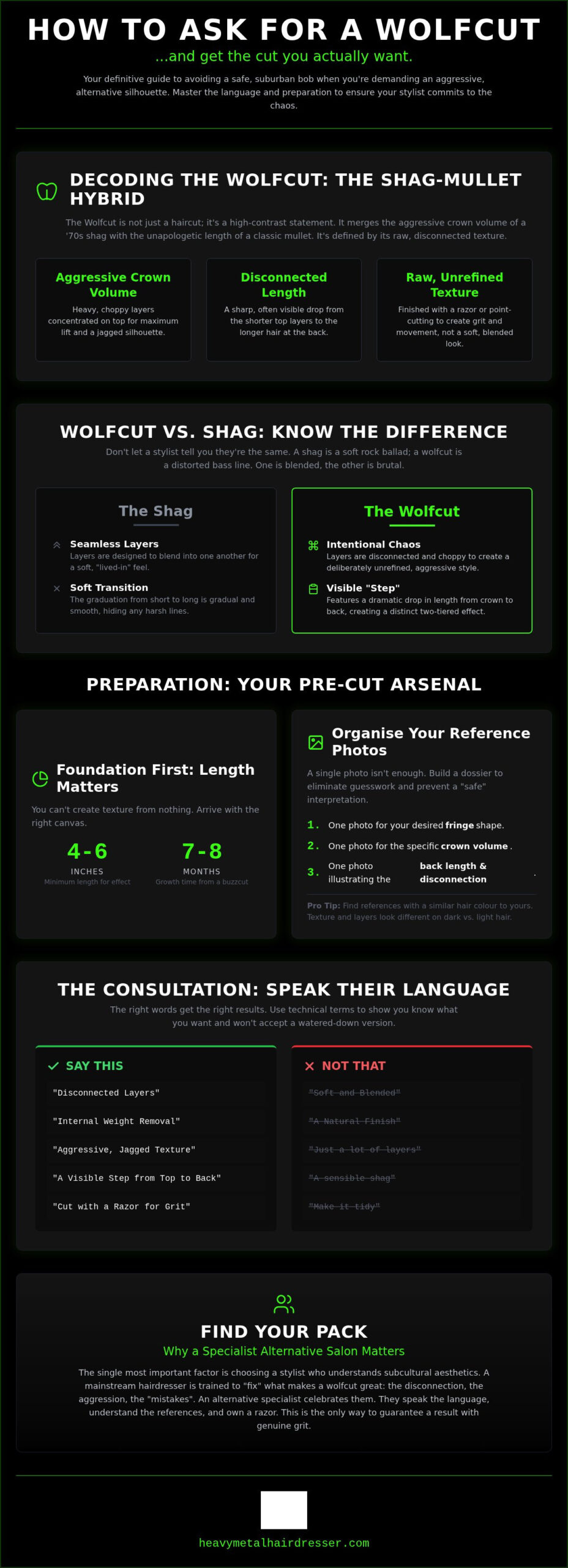
The short wolfcut isn’t just a haircut; it’s a high-contrast collision of eras. Imagine the rebellious spirit of 70s shag texture slammed into the structural aggression of an 80s mullet, then cropped tight for maximum impact. Whilst mainstream salons are busy trying to “perfect” the bob, we’re here to shatter it. This style prioritises massive volume at the crown and aggressive, choppy layers that frame the face with surgical precision. It thrives on raw, textured movement and a tapered nape that refuses to look “done.” The short wolfcut is the definitive 2026 statement for anyone ready to torch the rulebook of polished, binary beauty standards.

The Shag-Mullet DNA in a Cropped Format

Traditional long wolfcuts often rely on length to create flow. The short variant does the opposite. It uses “disconnected” layers to create a silhouette that feels sharp, percussive, and intentional. By stripping away the weight, we reveal the foundational shag and mullet styles that give this look its grit. This isn’t a new concept. It’s the spiritual successor to punk-era evolutions like the “Chelsea” and the “mohawk,” refined for a modern audience that demands both style and subversion. Every snip is designed to create a jagged, shattered edge that moves when you move. It is about creating a shape that holds its own without needing constant adjustments.

Why the Short Variant Rules the Alternative Scene

Practicality meets chaos here. During festival season, you don’t want a style that requires an hour of heat styling or heavy maintenance. The short wolfcut is a low-maintenance weapon. Less weight means more natural lift. It stays aggressive even after three days in a tent at Download or Bloodstock. Beyond the logistics, it serves as a powerful, gender-neutral canvas for self-expression. In the metal and queer communities, hair is identity. This cut offers a way to express that identity amongst peers without conforming to traditional expectations of “pretty” or “handsome.” It’s about being seen on your own terms. For a deeper dive into how this texture functions across different hair types, check out The Ultimate Wolf Hair Cut Guide to master the nuances of subcultural grit.

Anatomy of the Cut: Achieving Aggressive Texture and Volume

The crown is the engine room of any authentic short wolfcut. Forget the dated obsession with backcombing or stiff hairsprays. We achieve massive, percussive lift through short, internal layers that force the hair to stand on its own terms. It’s a technical feat that requires understanding how a client’s specific hair behaviour dictates the final shape. Simon Tuckwell’s approach rejects the cookie-cutter templates found in mainstream salons. Instead, he looks at the natural fall and growth patterns to decide exactly where the grit needs to live to support a rebellious silhouette.

Tool choice is everything. Whilst some stylists reach for thinning shears to remove bulk, we prefer the raw edge of a razor. Razor cutting provides a shattered, lived-in texture that feels immediate and aggressive. It creates the “negative space” necessary for the hair to move and breathe without looking like a static, heavy helmet. When you’re styling the wolf cut in 2026, this built-in texture does half the work for you, ensuring the hair looks just as good at a gig as it does when you first wake up.

The Crown and Choppy Internal Layers

The secret to that voluminous shape in a short wolfcut is the disconnected top section. By separating the crown from the lower lengths, we create a silhouette that screams rather than whispers. This disconnection prevents the hair from looking like a traditional, rounded bob. We focus on shattering the ends to ensure the layers blend through movement rather than through “perfect” graduation. This approach allows the hair to maintain its height throughout the day, even without a heavy arsenal of products. It’s about creating a structure that thrives on chaos.

Face-Framing, Fringes, and Sideburns

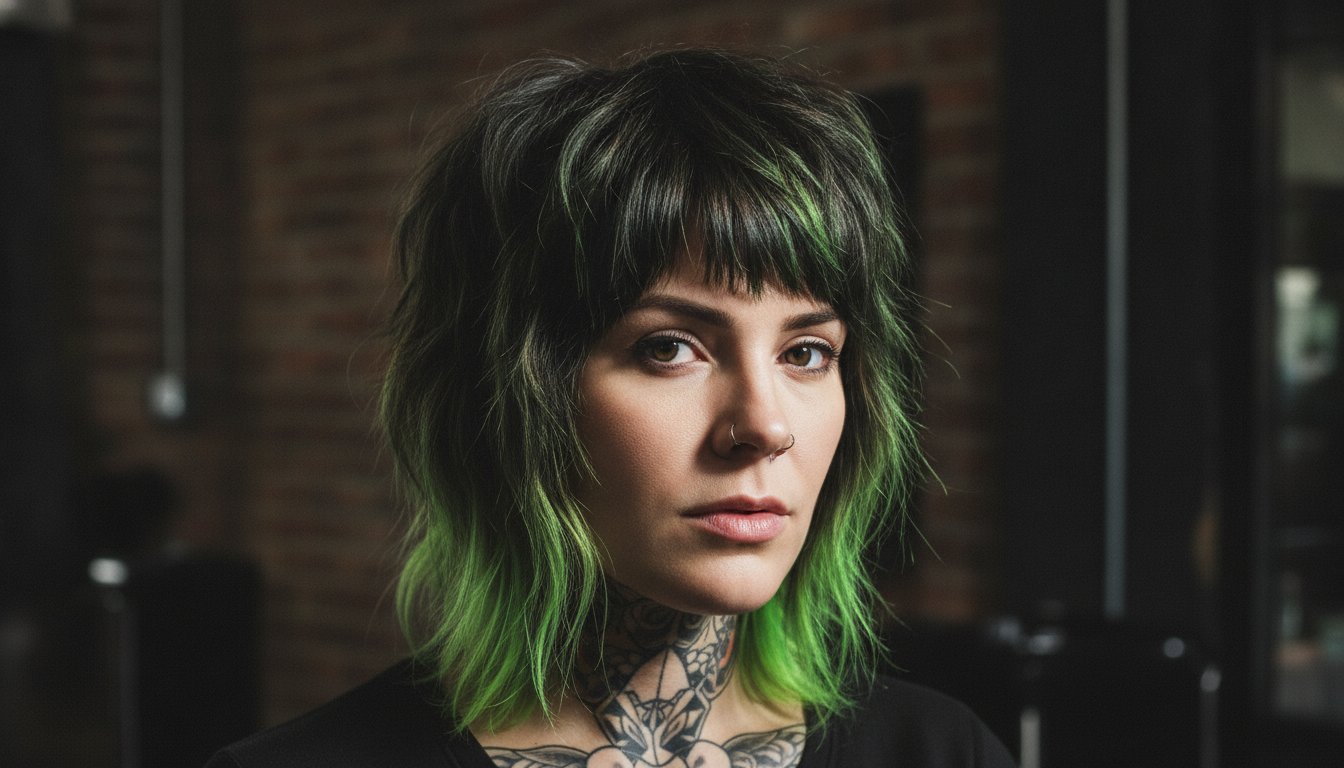
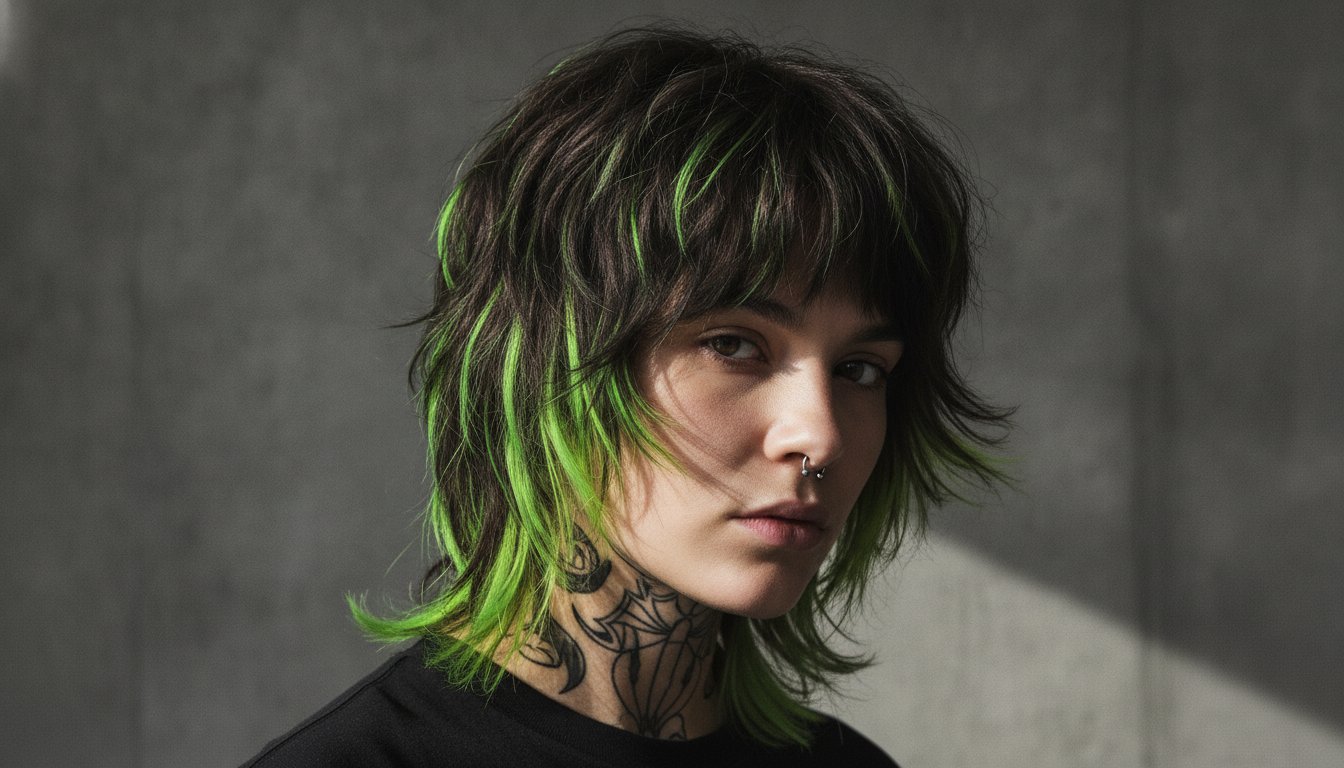
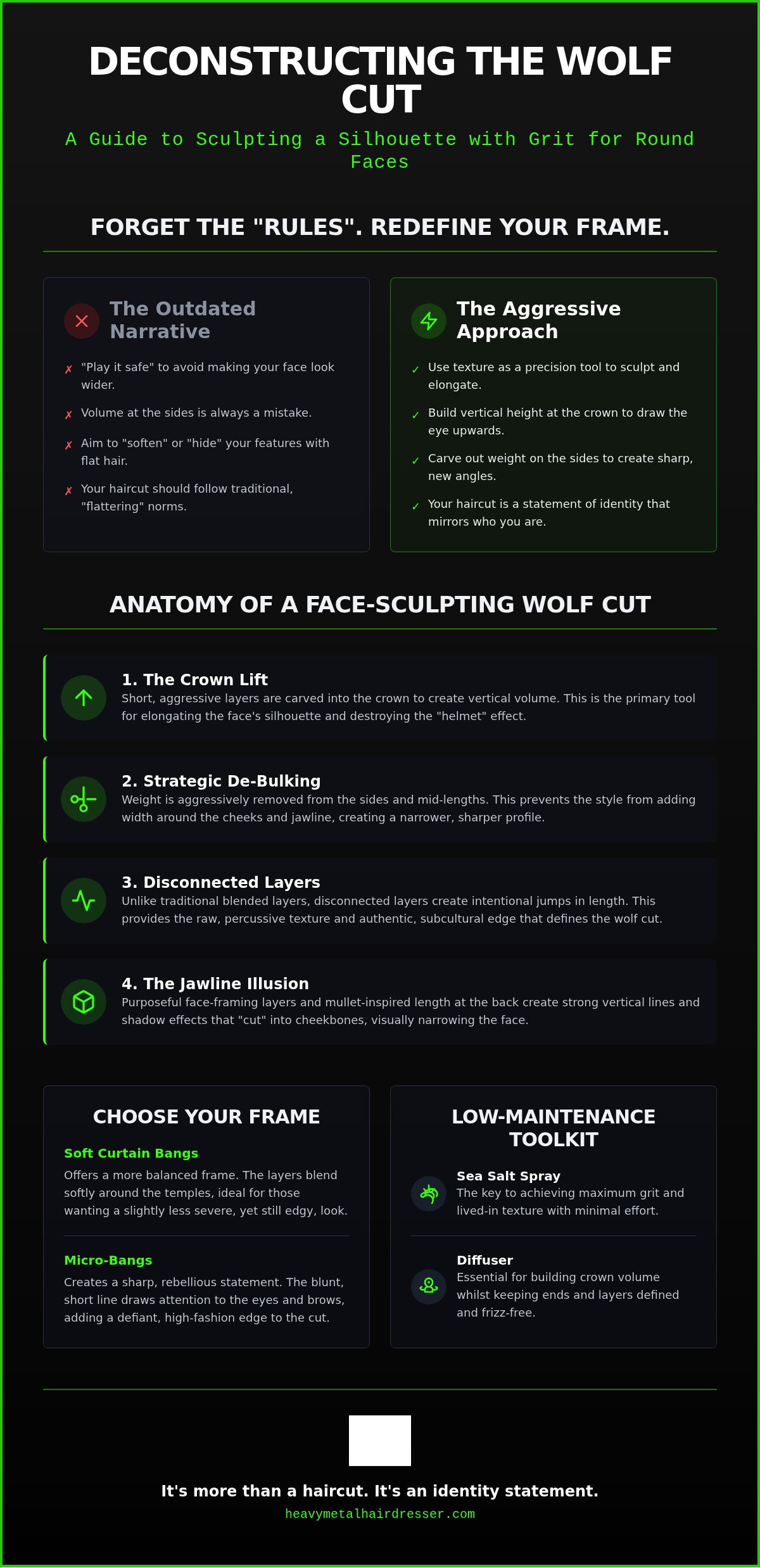
The face-frame is where the “wolf-like” stare is born. It’s about creating eyebrow-skimming chaos that draws attention to the eyes and cheekbones. You can choose between a blunt micro-fringe for a sharper, more punk-inspired edge or curtain bangs for a more versatile, shaggy feel. Sideburns are another critical weapon in our arsenal. We use them to accentuate jawlines and add a distinct androgynous or masculine edge to the cut. Customising the “flick” of these layers ensures the style suits your face shape whilst maintaining its alternative soul. If you’re ready to ditch the mainstream and embrace your own identity, consider booking in with the Heavy Metal Hairdresser team to bring this vision to life.

Short Wolfcut: The Aggressive Guide to Alternative Texture and Grit in 2026

Short Wolfcut vs. Long Wolfcut: Which Weapon Suits Your Vibe?

Choosing between lengths is essentially a choice about where you want your volume to live. The short wolfcut delivers an immediate, punchy aesthetic that screams for a spot in the front row at Download. It is a high-impact choice that refuses to blend in. Longer versions certainly offer more “flow” and movement, but they often lose their shape faster. The sheer weight of long hair pulls those aggressive layers down, turning a rebellious silhouette into something far more subdued. If you want a look that stays sharp without constant maintenance throughout the day, going shorter is the smarter play.

The Comparison:

  • Short Wolfcut: Aggressive vibe, high crown volume, 6-week trim cycle.
  • Long Wolfcut: Flowing movement, moderate volume, 10-week trim cycle.

Your daily behaviour should dictate your choice. Short hair requires more frequent trips to the salon to keep the structure intact, but it slashes your morning styling time in half. You don’t have to battle with tangled lengths or heavy sections that refuse to lift. It is about maximum impact with minimal fuss.

Maintenance and Commitment Levels

A short wolfcut needs a sharp eye for detail. To keep that crown from falling flat, you should aim for a professional tidy-up every 6 to 8 weeks. This ensures the internal layers continue to provide the necessary lift. If you decide to let it grow, the transition is remarkably easy. Because of the way we structure the layers, this cut transitions into a modern mullet haircut naturally. It is a versatile way to evolve your style without enduring an awkward “in-between” phase. Whilst you might spend more on salon visits, you’ll find yourself using significantly fewer styling products per wash, which balances the budget over time.

Suitability for Fine vs. Thick Hair

For those with fine hair, this cut is a genuine cheat code for volume. By removing the weight that usually drags fine strands down, we inject life and grit into the hair. It creates the illusion of thickness through shattered, overlapping layers. If your hair is thick, the approach changes. We use aggressive thinning and internal layering to remove bulk whilst maintaining that heavy, alternative aesthetic. Curls and waves also thrive within this choppy framework. The short length prevents curls from becoming a “pyramid” shape, allowing your natural texture to pop whilst keeping the silhouette aggressive and intentional.

Styling Your Short Wolfcut for Maximum Grit and Chaos

Mainstream styling tutorials often ruin a short wolfcut by treating it like a standard salon finish. They reach for round brushes and smoothing serums, effectively killing the very grit that makes the style work. To maintain that aggressive, subcultural edge, you need a process that celebrates chaos rather than trying to tame it. The goal is a shattered, lived-in texture that looks like you’ve just stepped off a tour bus. This isn’t about perfection. It is about identity-affirming movement that holds up under the strobe lights of a basement show.

  • Step 1: Prep the Foundation. Apply a salt spray or a heavy-duty texturising mousse to damp hair. This provides the necessary “tooth” for the layers to grab onto. Don’t be shy with the product; you need a solid base to support the crown volume.
  • Step 2: Kill the Round Brush. Rough-dry your hair using a diffuser or just your hands. Avoid any tools that smooth the hair cuticle. You want the layers to look separated and sharp. Lean forward and dry from the roots up to encourage maximum lift.
  • Step 3: Define the Grit. Work a small amount of Death Grip paste through the mid-lengths and ends. This defines the choppiness and prevents the hair from looking like a soft, undefined cloud. It adds that essential weight to the tips for a “shattered” effect.
  • Step 4: Freeze the Frame. Finish with a blast of cool air from your dryer. This sets the product and locks your chaotic silhouette in place. It ensures the shape stays aggressive until your next wash.

Essential Products for Textured Definition

Achieving that “backstage festival” look requires products that offer hold without the shine. Matt pastes are your primary weapon here. They provide a dry, gritty finish that highlights the aggressive layering of your short wolfcut. For those days when gravity is your enemy, Hair To the Throne is the ultimate tool for maintaining crown volume. It provides the structural support needed to keep your internal layers from falling flat throughout the day. If you’re looking to upgrade your entire kit, our Alternative Hair Merch UK guide covers the pro-level gear you need to maintain subcultural grit at home.

Heat Styling vs. Air-Drying

A well-executed cut should look deadly even when air-dried. This is the “lazy” method, and it works because the internal layers do the heavy lifting. However, if you want to dial up the aggression, a flat iron is a versatile tool. Use it to create shallow “S-waves” through the longer sections. The trick is to keep the ends straight and sharp whilst the roots stay voluminous. This prevents the dreaded “poodle” effect and ensures your texture looks intentional. It’s about contrast. Straight, jagged ends against a chaotic, voluminous crown create the high-impact silhouette that defines the alternative scene. Ready to reclaim your style? Book your transformation with the experts today.

The Heavy Metal Hairdresser Approach: More Than Just a Trim

At Heavy Metal Hairdresser, we don’t do “traditional.” We don’t care about what’s trending on a generic high street. We care about identity-affirming, aggressive style that makes you feel like yourself. When you book a short wolfcut with us, your individuality is the blueprint for every snip. Our salon is a gender-inclusive safe space where being different isn’t just tolerated; it’s the standard. We aren’t just cutting hair. We’re building a silhouette that matches the music you listen to and the community you belong to. Come join a collective that finds beauty in the grit and power in being outside the mainstream.

Gender-Inclusive Styling and Safe Space Culture

We ditched binary “men’s” and “women’s” pricing long ago. It’s an outdated system that doesn’t reflect the technical reality of alternative hair. Instead, our services are based on time and technique. This ensures that our queer, trans, and non-binary clients feel empowered to explore extreme shapes without being boxed in by gendered expectations. During your consultation, we don’t just talk about hair. We talk about your favourite bands and your subcultural influences. We want to know how your short wolfcut needs to function when you’re in a mosh pit or behind a DJ booth. Your voice is the most important tool we use.

Vivid Colour Integration for Wolfcuts

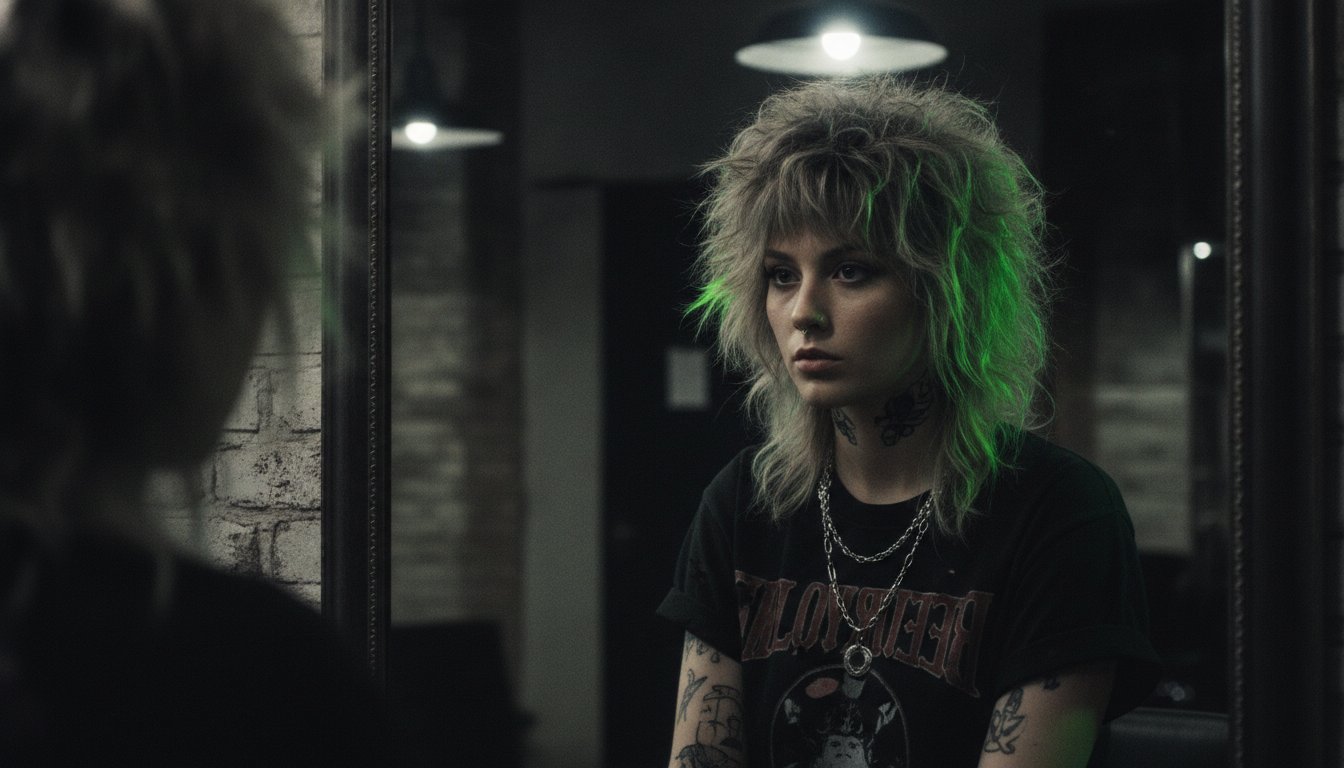
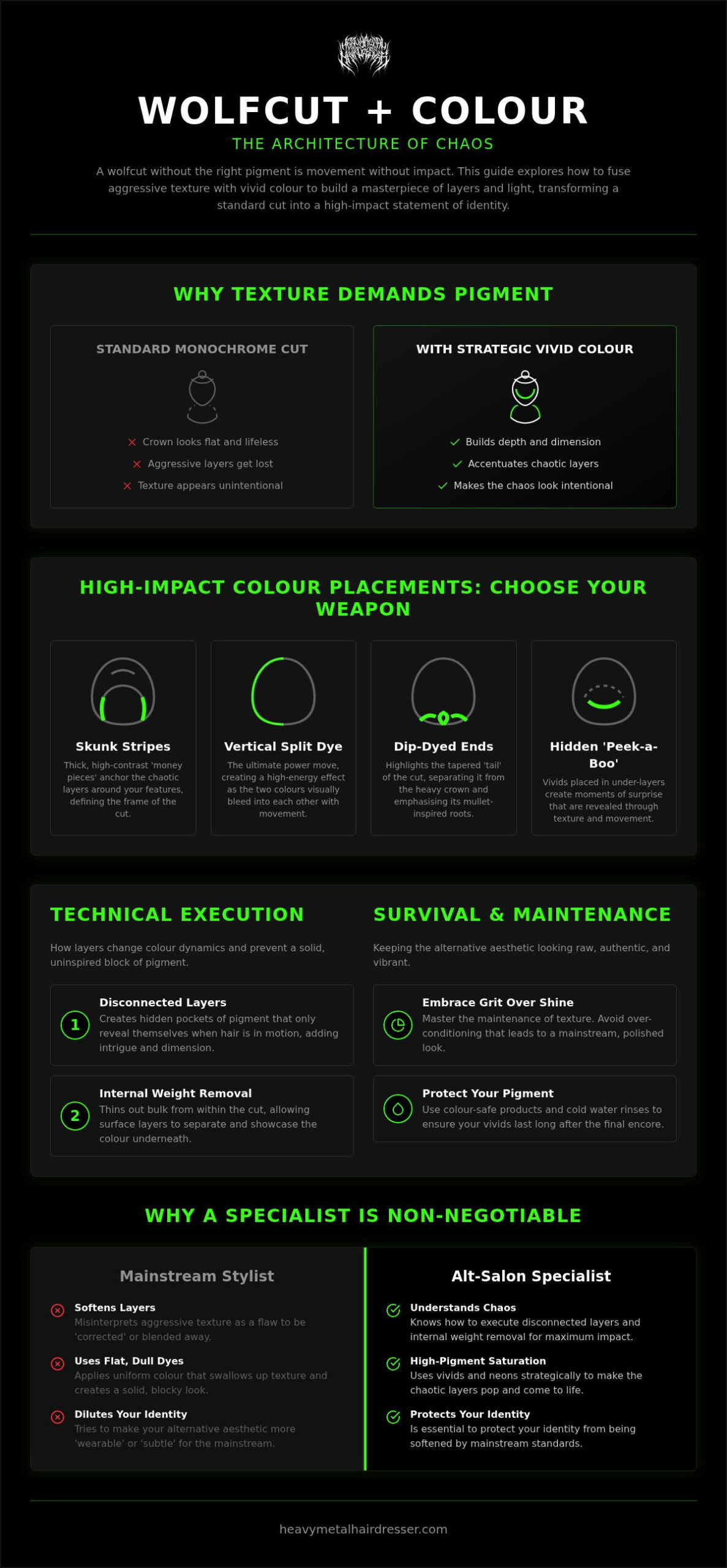
A great cut is the foundation, but vivid hair colour is how you saturate your identity in high-pigment sensation. We use “peek-a-boo” colours hidden within the choppy layers to highlight the aggressive texture of your cut. As you move, flashes of neon or deep jewel tones reveal the complexity of the internal layering we’ve built. We also specialise in the “acid-wash” effect. This involves blending neons with darker, grittier tones for a multi-dimensional finish that looks lived-in and raw. Keeping your creative colour sharp whilst maintaining the integrity of your textured cut is a balancing act we’ve mastered. It’s about ensuring your hair looks just as deadly weeks later as it did on day one.

Reclaim Your Identity with Aggressive Texture

The short wolfcut is more than a trend; it is a declaration of subcultural independence. By mastering the balance between crown volume and shattered, face-framing layers, you move beyond safe compromises and into a silhouette that truly reflects your grit. This cut thrives on raw movement and refuses to be tamed by mainstream standards. It is a low-maintenance weapon designed for those who value authenticity over polish. It provides the perfect canvas for anyone ready to reject the binary and embrace a sharper, more percussive aesthetic.

Don’t let a traditional salon dilute your vision. We bring our expertise from backstage festival work at Download and Bloodstock directly to your chair. As creative specialists in alternative texture, we provide a gender-inclusive safe space where your aesthetic is the only rulebook we follow. We understand the nuances of the scene because we are part of it. Your hair should be a reflection of your soul, not a stylist’s comfort zone.

Book your aggressive short wolfcut at Heavy Metal Hairdresser and step into a style that finally matches your energy. It’s time to wear your rebellion on the outside.

Frequently Asked Questions

Is a short wolfcut high maintenance?

A short wolfcut is low-maintenance for daily styling but requires regular salon visits to maintain its structure. Because the style thrives on imperfection and raw texture, you can often get away with air-drying and minimal product. However, to keep those internal crown layers providing lift, you’ll need a professional tidy-up every 6 to 8 weeks. It is the perfect balance for those who want high-impact style without a long morning routine.

Can I get a wolfcut if I have thin or fine hair?

Absolutely, this style is a genuine cheat code for injecting life into thin or fine hair. By removing the weight that usually drags fine strands down, we create the illusion of thickness through shattered, overlapping layers. The short length allows the hair to stand up more easily, especially when supported by gritty products like salt spray. It transforms flat hair into a voluminous, rebellious statement that holds its own.

What is the difference between a wolfcut and a mullet?

The main difference lies in the blending and the distribution of weight. A traditional mullet has a sharp, often extreme disconnection between a short front and a much longer back. A wolfcut is a hybrid that blends the heavy, face-framing layers of a 70s shag with the tapered nape of an 80s mullet. It results in a more cohesive silhouette that prioritises crown volume over just length at the back.

Do I need to style my wolfcut every day to make it look good?

No, you don’t need to style it every day because this cut is designed to look better as it lives in. A well-executed cut should hold its shape even when air-dried. On days when you want more aggression, a quick blast of cool air and a touch of Death Grip paste will revive the chaos in seconds. It is a style built for festivals and late nights, not for perfection.

Will a short wolfcut suit a round face shape?

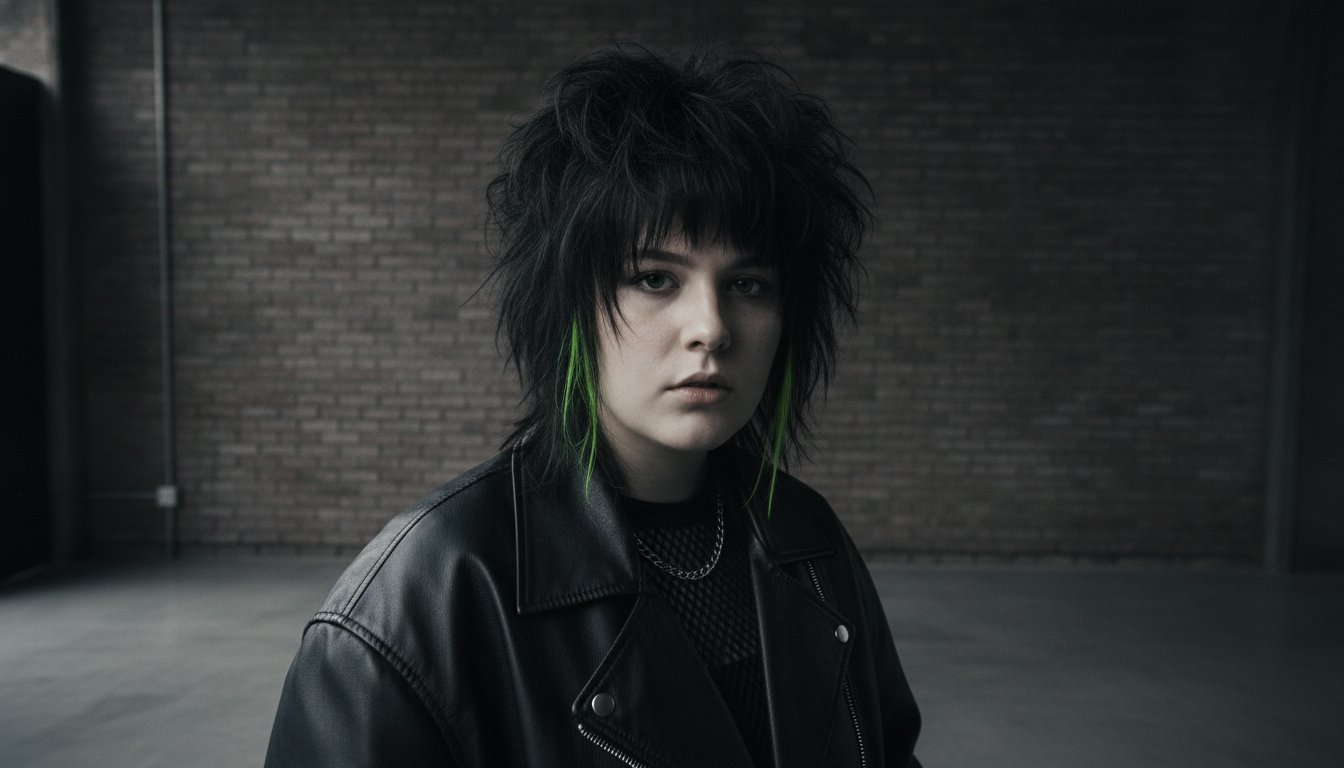
Yes, this cut is particularly flattering for round face shapes because the choppy layers add much-needed angles and height. By creating volume at the crown and using face-framing bits to accentuate the cheekbones, we can elongate the face and provide a sharper, more defined look. It breaks up rounded features and replaces them with an edgy, androgynous silhouette that feels both powerful and intentional.

What should I ask my hairdresser for to get a short wolfcut?

Ask for a razor-cut hybrid of a shag and a mullet with significant crown volume and disconnected internal layers. Specify that you want aggressive, shattered ends rather than a soft or “pretty” finish. Bringing photos of alternative icons and mentioning your favourite subcultural aesthetics will help your stylist understand the level of grit you’re after. Emphasise that you want the cut to look lived-in and raw from day one.

How often should I trim my short wolfcut to keep its shape?

To keep your short wolfcut looking sharp and prevent the crown from falling flat, you should book a trim every 6 to 8 weeks. Short styles lose their structural integrity faster than longer ones as they grow out. Regular maintenance ensures the internal layers continue to provide the percussive lift that defines this alternative silhouette. It prevents the style from transitioning into an unintentional bob and keeps the texture feeling aggressive.

Can I have a short wolfcut without a fringe?

You can have this cut without a fringe, though it significantly alters the subcultural vibe. Most people opt for a micro-fringe or curtain bangs to complete the look. If you skip the fringe, focus on heavy face-framing layers that start around the cheekbones to maintain the aggressive framing that gives the style its name. This creates a more open look whilst still retaining the gritty, textured essence of the hybrid cut.

Posted on

Wolfcut vs Mullet: Decoding Alternative Texture and Subcultural Grit

Wolfcut vs Mullet: Decoding Alternative Texture and Subcultural Grit

Walking into a traditional salon and asking for “texture” is a high-stakes gamble that usually ends in a flat, suburban tragedy. You’re chasing subcultural grit, yet there’s that nagging fear of walking out with a “Karen” cut that belongs in a supermarket aisle rather than a mosh pit. The wolfcut vs mullet debate isn’t just about length; it’s about the technical soul of the shape and the level of aggression in your layers.

It’s exhausting trying to explain a jagged, disconnected fringe to a stylist who only knows how to play it safe. You know your hair can handle heavy layering, but you need someone who respects your natural texture instead of fighting it. Discover the technical and aesthetic differences between the wolfcut and the mullet to find the perfect aggressive layer for your identity. We’ll break down the architecture of these extreme shapes, from layer disconnection to hair density, whilst helping you find a professional who understands that hair is a rebellion, not just a service.

Key Takeaways

  • Master the technical architecture of the wolfcut vs mullet to understand the difference between soft, face-framing graduation and aggressive, disconnected layers.
  • Identify which extreme shape suits your hair density and face shape, ensuring your layers add volume rather than falling flat.
  • Learn the “no-wash” secrets and styling techniques needed to keep your texture looking gritty and lived-in long after you leave the chair.
  • Recognise why these cuts are vital symbols of subcultural identity and how to find a specialist who respects your alternative aesthetic.

The Identity Crisis: Why the Wolfcut and Mullet are Subcultural Siblings

In the sweat-soaked venues of the UK alternative scene, hair isn’t just an accessory. It’s a flag. By 2026, the wolfcut vs mullet debate has moved from niche forums to the main stage of underground culture. These aren’t just haircuts. They’re technical evolutions of subcultural rebellion. The wolfcut is a wild hybrid, blending the shaggy, feathered layers of the 1970s with the aggressive silhouette of a mullet. It’s heavy on volume and face-framing “wolf” ears. The mullet, however, remains the ultimate middle finger to convention. It’s built on a foundation of “business up front, party in the back,” but modern versions swap the 80s cheese for sharp, gritty disconnection.

Tracing the Roots: From 70s Shags to Modern Metal Scenes

The shag haircut laid the foundation for every textured layer we love today. It was the uniform of rock royalty like Joan Jett, prioritising movement and a “just rolled out of a tour bus” aesthetic. As subcultures evolved, this softness hardened. The history of the mullet shows a trajectory from ancient warriors to 80s glam, but the modern metal scene has reclaimed it as something far more aggressive. At festivals like Download and Bloodstock, you’ll see mullets that aren’t about kitsch nostalgia. They’re about extreme disconnection. Alternative communities reclaim these “ugly-cool” styles because they demand attention. They reject the polished, generic standards of traditional beauty in favour of something raw and authentic.

The TikTok Effect vs. True Alternative Identity

Social media algorithms have a habit of sanitising rebellion. The “wolfcut” name exploded on TikTok, racking up over 1.2 billion views by mid-2026. Whilst this brought texture back to the mainstream, it also created a divide. There’s a massive difference between a “soft girl” wolfcut, which is often just a slightly messy long bob, and an aggressive alternative wolfcut. The latter requires deep, purposeful texturising and a total lack of fear.

The mullet has managed to remain “edgy” because it’s harder to make “polite.” It requires a certain level of subcultural grit to pull off a truly disconnected back and front. To ensure your stylist gets it right, you have to move beyond the trending hashtags. You need someone who understands that these silhouettes are a visual handshake in the alternative world. They shouldn’t be “fixing” your frizz or smoothing out your jagged ends. They should be leaning into the chaos of the shape to reflect your specific identity.

Technical Anatomy: Dissecting the Layers of the Wolfcut and the Mullet

Precision is the silent partner of chaos. To the untrained eye, these styles look like an accidental explosion of texture. In reality, the wolfcut vs mullet distinction comes down to the architecture of the layers. One relies on a seamless, albeit aggressive, graduation of length. The other thrives on a total lack of connection. Understanding the technical skeleton of these cuts is how you avoid the “accidental mullet” and achieve a shape that actually serves your aesthetic.

The Mullet: Aggressive Disconnection and the Sharp Silhouette

The modern mullet is defined by its refusal to blend. It’s a game of two halves. The sides are typically taken very short, often utilising skin fades or tight, textured crops that expose the ear. This creates a narrow, streamlined front. The “tail” at the back is left long, creating a sharp, vertical drop from the crown.

  • The Disconnection: There is no transitional bridge between the short temples and the long nape.
  • The Texture: We use deep point-cutting to inject “grit” into the tail, preventing it from looking like a flat curtain.
  • The Perimeter: The front is often finished with a blunt or jagged micro-fringe to heighten the contrast.

The Wolfcut: All-Over Volume and Shaggy Chaos

If the mullet is a vertical line, the wolfcut is a circle. This style is the spiritual successor to the shag. It focuses on massive, top-heavy volume that tapers into wispy ends. The defining feature is the “wolf ears.” These are short, aggressive layers cut into the crown that stand up and create a wild, predatory silhouette.

Unlike the mullet, the wolfcut uses curtain bangs to blend the front into the sides. It’s a continuous flow of layers that frame the face and jawline. It’s softer than a mullet but far more voluminous. To keep the structural integrity, we focus on weight removal from the mid-lengths whilst keeping the crown heavy. If you want to see this technical precision in action, booking a session with a specialist in wolfcuts ensures your layers are intentional rather than just messy.

Comparing the Silhouettes: Volume vs. Drama

Choosing between these two shapes depends on where you want the visual weight. The wolfcut is for those who want height and width at the top of the head. It’s perfect for creating a “halo” of texture. The mullet is for those who want length-focused drama and a slimmer profile. Both require a fearless approach to texturising. Without technical precision, these cuts lose their subcultural edge and just look like a bad DIY job. It’s the difference between a calculated rebellion and a genuine mistake.

Wolfcut vs Mullet: Decoding Alternative Texture and Subcultural Grit

The Battle of the Shapes: Which Cut Should You Choose?

Deciding on the wolfcut vs mullet isn’t just a matter of scrolling through a Pinterest board. It’s a clash of silhouettes that must be negotiated with your hair’s biology. Whilst both styles thrive on a “just rolled out of a pit” aesthetic, they serve very different masters. One is a masterclass in building volume where none exists, whilst the other is a strategic weapon for controlling thick, unruly manes. Choosing the wrong one doesn’t just result in a bad hair day; it results in a shape that fights your features instead of framing them.

Texture and Density: Wolfcuts for Fine Hair vs Mullets for Thick Strands

If you’re constantly battling flat, lifeless hair, the wolfcut is your salvation. It uses short, aggressive crown layers to inject height and movement into fine strands. By concentrating the volume at the top, it creates the illusion of density that traditional long cuts lack. It’s about building a “halo” of texture that stays upright with minimal effort.

Conversely, the mullet is the ultimate tool for those with thick, heavy hair. Thick hair often suffers from the “triangle” effect, where the weight pulls everything down into a wide, shapeless mass. The mullet solves this through extreme disconnection. By removing the bulk from the sides and focusing on a vertical tail, it streamlines your profile. It’s about taking control of the chaos.

  • Fine Hair: Opt for the wolfcut. The graduated layers prevent the ends from looking “ratty” whilst providing maximum lift at the roots.
  • Thick Hair: Choose the mullet. The short sides remove massive amounts of weight, making your hair feel lighter and more manageable.
  • Curly Texture: Both work, but a mullet allows curls to drop vertically, whilst a wolfcut encourages them to expand outwards into a shaggy sphere.

Face Framing and Jawlines: Choosing Your Aesthetic Weapon

Your haircut should act as a frame for your identity. The wolfcut is famously forgiving; it uses “flicked” layers and curtain bangs to soften sharp features or hide a larger forehead. It hugs the jawline, creating a rounded, shaggy indie energy that feels approachable yet rebellious. It’s the “lived-in” look perfected.

The mullet, however, is built for rockstar aggression. By exposing the temples and ears, it highlights the cheekbones and sharpens the jawline. It’s a high-contrast look that demands a fearless attitude. Maintenance levels also play a role here. A wolfcut often requires more daily styling with a blow-dryer to maintain that top-heavy volume. A modern mullet is lower maintenance in the morning, often looking better with a simple “no-wash” refresh, but it requires more frequent trips to a specialist to keep the side disconnection sharp. Mapping these cuts to your unique anatomy is a technical process, so always ensure your stylist understands the subcultural grit you’re aiming for before they pick up the shears.

Maintaining the Grit: Styling Your Texture for the Pit and Beyond

The biggest mistake people make after getting an alternative cut is trying to keep it too clean. If your hair looks like it belongs in a shampoo advert, you’ve missed the mark. The wolfcut vs mullet debate often centres on the cut itself, but the real subcultural grit happens in the days after you leave the chair. These shapes are designed to thrive on a “lived-in” aesthetic. Natural oils and movement are your friends, helping the layers clump together and create that jagged, aggressive silhouette that defines the scene.

The Daily Grind: Keeping Your Layers Sharp Between Salon Visits

To keep a wolfcut looking predatory, you need to lean into the chaos of the crown. Start by refreshing your layers with a light mist of water or a texture spray rather than doing a full wash. This preserves your vivid hair colour whilst giving you a base to work with. For the mullet, the focus is on the contrast. You want the sides to look sharp and the tail to look wild. If you’re heading into a mosh pit at a festival, don’t fight the sweat. Use it to your advantage by scrunching your layers to reactivate the product already in your hair.

  • The No-Wash Rule: Aim for 2-3 days between washes to let the texture build.
  • Wolfcut Refresh: Focus on the “ears” at the crown. Blow-dry them upwards for a few seconds to regain that top-heavy volume.
  • Mullet Control: Keep the front fringe tidy with a tiny bit of pomade, letting the back do whatever it wants.

Essential Gear: Using Death Grip and Hair To the Throne

Generic high-street products are often too heavy or too greasy for extreme shapes. They weigh down the layers and kill the volume. To maintain the structural integrity of your cut, you need gear built for the alternative community. Death Grip is our go-to for that aggressive, “stay-put” texture. It provides a matte finish that looks gritty rather than oily, ensuring your layers don’t fall flat halfway through a gig.

For those chasing the ultimate crown lift, Hair To the Throne is non-negotiable. It provides the height needed for the wolfcut’s signature ears without the crunch of traditional hairspray. These products are designed to protect your vivid tones whilst enhancing the jagged edges of your cut. If you want to master these techniques at home, you can explore our hair courses to learn how to style like a professional. Using the right gear means your hair stays a visual handshake of your identity, no matter how hard you’re going in the pit.

Beyond the Chair: Why Your Cut is an Expression of Identity

A haircut is never just about aesthetics. It’s a visual handshake. It signals your subcultural alignment before you even speak. Whether you’ve landed on the wolfcut vs mullet, your choice is a declaration of independence from the mainstream. In alternative communities, these shapes represent more than fashion; they represent a shared history of music, art, and rebellion. You aren’t just looking for a stylist. You’re looking for a creative collaborator who understands the nuances of your scene.

The Gender-Inclusive Safe Space: Cutting Hair, Not Personalities

Traditional salons often fail those who don’t fit the standard mould. They can feel clinical, judgmental, or overly gendered. We reject that. A true alternative salon is a gender-inclusive safe space where your identity is celebrated rather than merely tolerated. This means moving away from “men’s” and “women’s” price lists in favour of gender-neutral pricing based on time and technical complexity.

  • Identity First: Your hair should reflect who you are, not what society expects.
  • Safe Environment: A place where queer and alternative identities are the norm, not the exception.
  • Authentic Connection: We talk about music, subculture, and art whilst we work on your transformation.

This approach ensures that every client feels seen. We aren’t here to polish you up for a corporate office. We’re here to help you sharpen your edge. It’s about creating an environment where you can be unapologetically yourself whilst we focus on the technical precision of your layers.

Joining the Heavy Metal Hairdresser Community

Our expertise isn’t born in a textbook. It’s forged in the mud of festivals like Download and Bloodstock. Working backstage with bands has taught us that hair needs to survive the pit whilst looking incredible under stage lights. This festival-hardened experience informs every cut we perform in the salon. We know how to balance the “ugly-cool” grit of a mullet with the structural integrity needed to keep it looking sharp for weeks.

To get the best result, come prepared. Bring photos of the specific aggression you’re after. Think about your lifestyle and how much time you actually want to spend styling. Most importantly, trust the process. When you work with a specialist who “gets it,” the result is more than just a new look. It’s a version of yourself that finally feels authentic. Book your wolfcut or mullet with the experts to start your transformation with a team that lives and breathes alternative culture.

Own Your Texture: The Future of Subcultural Style

Choosing between the wolfcut vs mullet is more than a technical decision; it’s a commitment to your subcultural identity. You’ve now mastered the difference between the aggressive disconnection of a mullet and the shaggy, voluminous graduation of a wolfcut. You know which shape serves your hair density and how to maintain that gritty, lived-in texture using the right gear. Most importantly, you know that your hair deserves a specialist who respects your aesthetic and provides a truly gender-neutral, inclusive environment.

Our expertise isn’t just theory. We’ve spent years styling for the chaotic crowds at Download and Bloodstock, perfecting the art of extreme shapes that survive the pit. We aren’t just cutting hair; we’re building a community of rebels who refuse to settle for the suburban status quo. It’s time to stop compromising and start expressing your true self through a silhouette that actually speaks your language.

Join the revolution and book your textured transformation with a team that lives for alternative shags, mullets, and wolfcuts. Your new identity is waiting.

Frequently Asked Questions

Is a wolfcut the same as a mullet?

No, they are distinct technical shapes. A wolfcut is a shaggy, graduated hybrid of a 70s shag and a mullet that focuses on all-over volume. The mullet is defined by extreme disconnection between the short front and the long back. In the wolfcut vs mullet debate, the wolfcut offers a softer, rounded silhouette whilst the mullet is far more vertical and aggressive.

Can I get a wolfcut if I have very fine hair?

Yes, it is actually one of the best styles for fine hair. The aggressive crown layers create height and the illusion of density where hair usually falls flat. By concentrating volume at the top, it prevents your strands from looking limp at the roots. It is a strategic way to inject life and movement into fine hair without needing constant backcombing.

How often do I need to trim a mullet to keep it looking sharp?

You should aim for a trim every 6 to 8 weeks. The side disconnection and the shorter fringe grow out much faster than the length in the back. If you leave it too long, the sharp contrast that defines the mullet begins to blur into a standard shag. Regular maintenance keeps the edges gritty and ensures the silhouette remains intentional rather than accidental.

Do I need to use heat tools to style a wolfcut every day?

Not necessarily, but a quick blast with a hairdryer helps. You can air-dry for a lived-in, “no-wash” look, but using a dryer on the crown layers for sixty seconds will activate those signature “wolf ears.” It is about working with your natural texture. If you want that high-energy, predatory volume, a little heat and a good texture product go a long way.

Is a mullet suitable for a professional work environment?

It depends on your workplace, but modern mullets are far more versatile than the 80s versions. You can style the fringe for a more “conservative” front whilst keeping the grit in the back. However, these are fundamentally rebellious shapes. They are designed to stand out and express subcultural identity, so they rarely feel at home in a traditional corporate cubicle.

What is the best product for adding texture to a modern mullet?

Use a matte-finish product like Death Grip for maximum hold and grit. You want to avoid anything greasy that makes the tail look oily or flat. A volume powder like Hair To the Throne is also essential for the crown. These products ensure the wolfcut vs mullet distinction stays clear by defining the jagged, disconnected edges of the cut.

Can I transition a wolfcut into a mullet later on?

Yes, and it is a relatively simple shift. Since the wolfcut already features short crown layers, your stylist just needs to disconnect the sides and clear the hair away from the ears. You essentially “hollow out” the middle sections to leave the long tail at the nape. It is a natural progression for anyone wanting to increase the aggression of their style.

How do I explain the difference to my hairdresser if they aren’t an alt-specialist?

Use technical terms like “disconnection” and “graduation” to be precise. For a mullet, tell them you want no blend between the short temples and the long nape. For a wolfcut, ask for heavy, shaggy layers with a focus on crown volume and face-framing curtain bangs. Always bring reference photos of specific alternative shapes to ensure they don’t default to a safe, suburban haircut.

Posted on

The Wolfcut with Fringe: Unleashing Aggressive Texture and Subcultural Grit

The Wolfcut with Fringe: Unleashing Aggressive Texture and Subcultural Grit

Most high street salons are terrified of hair that actually says something. They’ll take a reference photo of a gritty, textured masterpiece and hand you back a polished version that looks more like a preppy mistake than a subcultural rebellion. A wolfcut with fringe isn’t about playing it safe. It’s about reclaiming your identity with aggressive layers and a silhouette that refuses to blend in with the mainstream.

You likely know the frustration of explaining that “messy” is the goal and “volume” is a requirement, not a suggestion. You want a look that feels like your favourite record sounds, but you don’t want to spend hours fighting with styling tools every morning. Discover how to pair the perfect fringe with your wolfcut to create a high-impact, low-maintenance look that screams alternative identity. We’ll break down how to choose between bottleneck and curtain styles to suit your specific face shape whilst achieving the maximum, raw texture that defines the modern alternative scene.

Key Takeaways

  • Understand how the wolfcut with fringe fuses 70s shag and 80s mullet vibes into a wild, disconnected silhouette.
  • Identify whether curtain bangs or bottleneck styles best match your bone structure and subcultural attitude.
  • Learn the secrets to “organised chaos” by avoiding heavy silicones that weigh down your crown’s volume.
  • Discover how professional tailoring of aggressive layers can slim round faces or add grit to fine hair.
  • Find out why choosing an inclusive, music-rooted specialist ensures your hair reflects your true identity.

What is a Wolfcut with Fringe? Defining the Subcultural Icon

Forget the sterile, cookie-cutter layers you see in high-street magazines. The wolfcut with fringe is a high-contrast fusion of the 70s shag and the 80s mullet. It is a silhouette built on rebellion. It prioritises disconnected, choppy layers that create a wild, ‘wolf-like’ shape that refuses to sit still. This isn’t just a trend. It is a subcultural icon that has become the go-to for the UK’s alternative and metal scenes. From the pits of Download to the stages of Bloodstock, this cut represents a rejection of the polished and a celebration of the raw. It is a modern take on the shag that adds a sharper, more aggressive edge for those who live outside the mainstream.

The fringe acts as the focal point of the entire look. It frames the eyes and grounds the chaotic texture of the rest of the hair. Whilst the layers provide the volume, the fringe provides the attitude. It creates a visual weight at the front that balances the tapered lengths at the back. This balance is what makes the cut so recognisable amongst a sea of generic styles. It is designed to look best when it is slightly unkempt, making it the ultimate choice for anyone who values identity over perfection.

The Anatomy of the Cut: Layers and Flow

The secret to this cut lies in the crown. Shorter crown layers are the engine room of the silhouette. They provide the vertical lift and maximum volume that prevents the hair from looking limp. In an aggressive version of the cut, these layers are heavily disconnected. This means they don’t blend seamlessly; they stand out to create a jagged, textured profile. The fringe then transitions into side-shunting layers that hug the cheekbones. This flow ensures that the hair has movement even when you aren’t headbanging. A “soft” wolfcut might look like a standard layered style, but a true alternative version thrives on extreme texture and visible separation.

Why the Fringe is Non-Negotiable

The fringe is the anchor of the wolfcut’s silhouette. Without it, the style loses its structural integrity and becomes just another long-layered cut. The fringe is what separates the wolfcut from the pack. It adds a layer of mystery and frames the face in a way that feels intentional rather than accidental. Beyond the aesthetic, there is a deep psychological impact to a bold fringe. It serves as a form of self-expression that feels like a shield and a statement all at once. It tells the world you aren’t afraid to be seen on your own terms. Whether you choose a heavy, blunt fringe or something more wispy, it is the element that completes the subcultural grit of the look.

Choosing Your Weapon: The Best Fringe Styles for Your Wolfcut

The fringe isn’t just a detail. It is the front line of your aesthetic. Whilst mainstream stylists treat bangs as a way to hide a forehead, we see them as a weapon to define your attitude. Your choice of fringe dictates whether your wolfcut with fringe leans into punk rebellion, gothic drama, or rockstar flow. It is the element that bridges the gap between your hair and your identity. If you get the fringe wrong, the entire silhouette collapses into a generic mess. If you get it right, you unleash a high-impact look that requires minimal effort to maintain.

The Micro-Fringe: For the Rebellious Soul

Short, sharp, and unapologetic. The micro-fringe, or baby bangs, is for those who want to open up their face and highlight their bone structure. It creates a stark, aggressive contrast against the heavy, textured layers of the crown. To keep it from looking too “preppy” or “neat”, we recommend a “chewed” edge. This involves point-cutting the ends to create a jagged, uneven finish that looks like it was hacked into shape in a basement rather than a salon. Maintenance is higher here; you will need a trim every three to four weeks to keep that sharp, punk-inspired edge from drifting into awkward territory.

Curtain Bangs: The Ultimate Mosh Pit Companion

If you want a look that moves with you, curtain bangs are the gold standard. They are currently the most-searched pairing for the wolf hair cut because they offer a softer, more versatile rockstar vibe. These bangs sweep to the sides, creating a “butterfly” effect that blends seamlessly into your side-shunting layers. They are incredibly easy to style whilst growing out, making them the perfect choice for anyone who hates frequent salon visits. They frame the cheekbones and provide a frame for your eyes without the commitment of a heavy, solid block of hair.

Wispy vs. Heavy: Selecting Density

Selecting the right density is about more than just your hair type. It’s about the silhouette you want to project. A heavy, blunt fringe creates a solid, gothic silhouette that can mask a larger forehead and balance a longer face shape. It adds weight and drama to the front of the cut. Conversely, wispy fringes are ideal for a “grunge” aesthetic. They allow the forehead to peek through, creating an ethereal, lived-in feel that works perfectly with finer hair textures. Matching the density to your natural hair thickness is vital; too heavy on fine hair will leave the rest of your cut looking limp, whilst too wispy on thick hair can get lost amongst the volume. If you are ready to find your perfect match, you can book your wolfcut transformation with a specialist who understands the grit behind the style.

Combatting Flat Hair: Styling Your Wolfcut with Fringe

Mainstream salons want you to look polished. They want every hair in place. That is the quickest way to kill the soul of a wolfcut with fringe. The goal here is organised chaos. You want maximum volume with a gritty, lived-in feel that looks like you just walked off a stage rather than out of a clinical booth. If your hair looks too “done”, it loses its subcultural edge. Embrace the frizz. Lean into the flyaways. This cut thrives on imperfection and refuses to be tamed by traditional beauty standards.

The biggest mistake you can make is reaching for heavy silicones. Mainstream serums promise “shine” and “smoothness”, but in the world of alternative texture, these are just code words for “flat” and “greasy”. Silicones weigh down the delicate crown layers that give the wolfcut its height. Once those layers collapse, your silhouette is gone. Stick to lightweight, water-based formulas or matte finishes that support the hair’s natural behaviour whilst maintaining that essential vertical lift. Whether your hair is pin-straight or naturally curly, the focus should always be on building structural integrity without the weight.

The Texture Toolkit: Death Grip and Beyond

To achieve that raw, aggressive texture, you need the right arsenal. Salt sprays are your best friend for injecting immediate grit into damp hair. They mimic the effect of sweat and sea air, giving you that effortless “mosh pit” volume. For the fringe itself, you need precision. Using textured styling products like clay-based waxes allows you to piece out the ends without making them look oily. Our Death Grip range is designed specifically for this purpose. It provides a firm hold that defies gravity but remains reworkable throughout the day. For a low-maintenance morning, try the “scrunch and go” method. Apply your product, scrunch the hair upwards towards the scalp, and let it air dry. It is fast. It is effective. It works.

Refreshing the Fringe Between Washes

Your fringe is the first part of the cut to show signs of grease. Because it sits against your forehead, it absorbs oils faster than the rest of your hair. You don’t need to wash your entire head every day; that just strips the natural texture you have worked so hard to build. Instead, master the “sink wash”. Lean over the basin, wash just the fringe area, and blow-dry it back into place. It takes five minutes and resets your entire look. Between washes, dry shampoo is essential for maintaining volume at the roots. If you are at a festival like Bloodstock or Download, humidity is your enemy. A quick blast of dry shampoo and a rough finger-style will keep your wolfcut with fringe looking sharp even in the middle of a muddy field.

Customising the Cut: Face Shapes and Hair Textures

Mainstream stylists treat every head like a blank, identical canvas. That is a massive mistake. A true wolfcut with fringe requires a specialist who understands that your bone structure dictates where the texture should live. It is about more than just hacking into the length. It is about strategic disconnection. If you don’t tailor the layers to the individual, you end up with a cut that wears you, rather than you wearing the cut. Professional customisation ensures the silhouette stays aggressive without overwhelming your features. We look at the way your hair grows and where your features sit to decide exactly where the first layer should break to highlight your identity.

The Wolfcut on Fine vs. Thick Hair

Adapting the cut for different hair types is where the technical mastery happens. Dealing with a wolfcut on fine hair requires a delicate touch to avoid “ratty” or translucent ends. Internal “shingling” creates hidden support for fine strands. This technique involves cutting tiny, invisible layers underneath the main sections to act as a scaffold. This scaffold pushes the top layers up, creating an immediate illusion of density. For those with bulky, thick hair, the challenge is the opposite. We focus on thinning out the internal mass. This ensures the layers have the freedom to move and headbang without feeling like a heavy, suffocating helmet. It’s about removing weight whilst keeping the jagged, textured profile intact.

Adapting for Face Shapes

Your face shape provides the roadmap for the fringe and surrounding layers. Round faces benefit from extreme vertical volume at the crown and “face-slimming” side layers that cut into the cheek area. This elongates the face and adds much-needed sharp angles to the silhouette. If you have an angular face, we use wispy, cheekbone-skimming pieces to soften the sharpest points of your bone structure. Heart-shaped faces use a heavy wolfcut with fringe to balance a wider forehead, whilst square faces need longer, tapered “tails” to soften a strong jawline. These tails provide a visual anchor that draws the eye down, balancing the height of the crown. Oval faces have the ultimate freedom. They can experiment with extreme micro-fringes that would feel too exposing on other bone structures. If you are ready for a cut that actually fits your identity, book your appointment at Heavy Metal Hairdresser today.

Why Heavy Metal Hairdresser is Your Wolfcut Specialist

We don’t just cut hair. We understand the music, the fashion, and the grit that fuels your identity. When you come to us for a wolfcut with fringe, you aren’t getting a watered-down version of an alternative classic. You are getting a cut designed by people who live in the same world you do. Our expertise wasn’t born in a clinical academy. It was forged in the pits, on the stage, and amongst the underground scenes that define the UK’s alternative culture. We know exactly how a cut needs to move when you’re headbanging. We know how it needs to look when the lights hit it. Most importantly, we know that your hair is the loudest part of your voice.

Choosing a specialist means you don’t have to explain why you want your layers “too short” or your fringe “too jagged”. We speak the same language. We recognise that a wolfcut with fringe is a declaration of independence from mainstream beauty standards. Our stylists combine technical proficiency with a deep-rooted passion for subcultural aesthetics. We ensure that every snip of the shears serves to amplify your character and provide the maximum volume your hair deserves.

A Safe Space for All Identities

Your identity is our priority. We have built a reputation as a safe space hair salon UK where everyone is welcome. Alternative spaces are vital for the LGBTQ+ and neurodivergent communities. We provide an environment where you can be yourself without explanation. Our consultation process is entirely judgment-free. We listen to what you want and how you want to feel. Whether you’re looking for a radical transformation or a subtle shift in texture, we ensure you feel seen and supported throughout the entire process. It isn’t just about the hair. It is about the community we build together.

Mastering the Craft

We are the UK’s authority on alternative texture. Our founder, Simon Tuckwell, built this brand on the belief that alternative styling deserves technical excellence. We don’t just follow trends; we teach them through our alternative hair courses UK. Our team brings real-world experience from the backstage areas of Download and Bloodstock festivals. We’ve styled the artists you love and the fans who make the scene what it is. This festival-ready expertise goes into every cut we create. We know how to make hair survive three days in a field whilst still looking incredible. Ready to unleash your aggressive texture? Book your wolfcut with fringe session today and join a community that celebrates the different.

Reclaim Your Identity with Aggressive Texture

A wolfcut with fringe is more than just a haircut. It is a refusal to settle for the mundane. By now, you know that the secret to this look lies in the structural balance between disconnected layers and a fringe that fits your specific bone structure. Whether you have opted for a sharp micro-fringe or mosh-pit-ready curtain bangs, the focus remains on raw, unfiltered volume. You have the tools to combat flat hair and the knowledge to customise your texture for maximum impact. Now, all that is left is to put your hair in the hands of those who truly understand the grit behind the aesthetic.

At Heavy Metal Hairdresser, we are alternative culture experts who live for the stage and the pit. As specialists in wolfcuts and shags, we provide a gender-inclusive safe space where your identity is celebrated, not just tolerated. We don’t do preppy; we do authentic. Ready to unleash your subcultural edge? Book your alternative hair transformation at Heavy Metal Hairdresser and join a community that values self-expression above all else. Your next evolution starts here.

Frequently Asked Questions

Is a wolfcut with fringe high maintenance?

Actually, it is one of the most low-maintenance styles for alternative identities. The cut thrives on “organised chaos”, meaning you don’t need to fight for perfection every morning. Once the structure is cut in, the layers do the work for you. You just need the right grit to keep it looking raw and lived-in.

Can I get a wolfcut if I have curly hair?

Absolutely, curly hair is the perfect canvas for this silhouette. The layers remove the weight that usually drags curls down, allowing for maximum vertical lift and volume. It creates a wild, textured shape that looks incredible with natural movement. We simply adjust the cutting technique to respect your specific curl pattern and density.

How often should I trim my fringe?

Plan for a trim every three to four weeks if you want to maintain a sharp micro-fringe or heavy blunt style. Longer curtain bangs can usually go six to eight weeks before they need professional attention. Frequent fringe maintenance keeps your eyes framed and prevents the silhouette from losing its structural “anchor” as it grows out.

Will a wolfcut work with thin hair?

Yes, but it requires a specialist who knows how to inject density. We use techniques like internal shingling to create hidden support for fine strands. This prevents the ends from looking “ratty” whilst still providing the aggressive texture you want. It is all about strategic disconnection rather than just removing bulk from the hair.

What should I ask my hairdresser for to get this look?

Ask for a high-contrast fusion of a shag and a mullet with heavily disconnected crown layers. Be specific about the fringe type you want, whether that is a punk micro-fringe or rockstar curtain bangs. Bring photos of the specific “grit” you are after. Ensure they understand alternative aesthetics so you don’t leave with a preppy, polished bob.

Do I need to style my wolfcut every day?

No, daily styling isn’t required if you embrace your hair’s natural behaviour. Most people find that air-drying with a bit of salt spray is enough to maintain the lived-in feel. You might want to refresh the fringe between washes using a quick “sink wash” or dry shampoo. This keeps the focal point sharp whilst the rest of the hair stays gritty.

Is the wolfcut still in style for 2026?

Yes, the wolfcut with fringe remains a dominant trend for 2026, though it has evolved into a more refined version. Style reports for 2026 highlight that long wolf cuts with curtain bangs are currently the most-searched hair combination. It has moved from a niche trend to a subcultural staple that prioritises natural movement over forced, polished perfection.

Can I have a wolfcut without a fringe?

You can, but it technically becomes a different style of layered cut. The fringe is the engine that drives the entire wolfcut with fringe aesthetic. It grounds the chaotic layers and frames your face. Removing the fringe takes away the visual anchor that makes the wolfcut so recognisable amongst the UK’s alternative and metal scenes.

Posted on

Transitioning from a Bob to a Wolfcut: The 2026 Alternative Style Guide

Transitioning from a Bob to a Wolfcut: The 2026 Alternative Style Guide

Your precision-cut bob isn’t a style statement; it’s a cage that’s suffocating your alternative edge. We know the frustration of looking too “neat” or “mainstream” while you’re desperate for something with more bite. You want the volume and aggression of a shag, but you’re terrified of that awkward, mullet-like in-between stage. Transitioning from a bob to a wolfcut doesn’t mean you have to wait a year for your hair to grow out before it looks intentional.

We agree that the blunt, structured lines of your current cut feel restrictive when your soul craves chaos. This guide promises to show you how to dismantle that structure and embrace the fierce, textured layers of a short wolfcut right now. We’ll provide a clear roadmap for the transition, proving that short wolfcuts are just as aggressive as longer versions. You’ll also discover how to use products like Death Grip to hide the growth process and maintain your subcultural identity whilst your layers evolve. It’s time to stop the wait and start the deconstruction.

Key Takeaways

  • Stop viewing your blunt cut as a limitation. A structured bob provides the ideal perimeter for a fierce, jaw-length wolfcut that prioritises volume at the crown.
  • Discover why transitioning from a bob to a wolfcut is an act of structural deconstruction. Focus on internal weight removal to achieve that signature, aggressive “kick out” texture.
  • Map out a three-appointment evolution plan with your stylist. This ensures your hair looks intentional and rebellious throughout the growth process instead of accidental or messy.
  • Learn the exact rockstar terminology to use during your consultation. Requesting “disconnection” and “aggressive layers” ensures you avoid a mainstream result and keep your alternative edge.
  • Master the “wash and wreck” styling method. Utilise dry waxes and texture pastes to keep your new layers looking sharp and chaotic with minimal daily effort.

Dismantling the Blunt Line: Why Your Bob is the Perfect Wolfcut Canvas

The structured bob is often sold as a “timeless” classic, but for those outside the mainstream, it can feel like a cage. It’s too polished, too neat, and lacks the raw energy of an alternative aesthetic. Transitioning from a bob to a wolfcut is the immediate solution for anyone looking to trade that “safe” silhouette for something with more bite. You don’t need to wait months for your hair to grow before you can start this process. In fact, the solid baseline of your bob provides the ideal foundation for a shorter, more aggressive iteration of the style.

A wolfcut is the rebellious hybrid of a 70s shag and a modern mullet. It’s defined by heavy crown volume and thin, wispy ends that demand attention. Whilst a bob is all about the perimeter and maintaining a solid shape, the wolfcut is a modern variation of the shag that prioritises movement and internal texture. Your bob’s current length acts as the scaffolding. We aren’t waiting for length; we are deconstructing the weight. This shift from clean lines to intentional chaos is what gives the wolfcut its fierce, underground edge.

The “Wolf-Bob” Hybrid: A 2026 Trend

The “Wolf-Bob” is the high-impact answer for those who want a shorter silhouette. It sits proudly above the shoulders, offering a punchy alternative to the long, flowing versions seen on social media. This is the ultimate first step when transitioning from a bob to a wolfcut. It keeps the compact feel you might be used to but replaces the blunt edges with aggressive, choppy layers. This style creates a high-impact silhouette that works perfectly for those moving away from a blunt cut without sacrificing their alternative identity.

Deconstructing the Perimeter

The biggest hurdle in this transition is the “bottom-heavy” feel of a traditional blunt cut. To fix this, we focus on perimeter deconstruction. This technique involves breaking up the solid baseline through intense point-cutting and razor work. We shred the ends to remove the “helmet” effect that plagues many growing-out bobs. By thinning out the bottom and stacking weight at the top, the hair begins to kick out in that iconic wolfcut fashion. Perimeter deconstruction is the key to avoiding the “helmet” look and transforming a static cut into a living, breathing style.

The Structural Shift: From Clean Lines to Aggressive Layers

Sculpting your new identity requires a complete departure from traditional layering techniques. Transitioning from a bob to a wolfcut is more than just adding a few steps; it’s a structural overhaul of how hair weight is distributed. Standard layers found in high-street salons aim for a smooth, blended finish. Aggressive textured layers do the opposite. They create intentional shelves and jagged edges that demand attention. This disruption is what separates a “nice haircut” from a subcultural statement.

Internal weight removal is the secret weapon for this transition. Whilst a bob keeps weight at the ends to maintain a solid line, a wolfcut requires the mid-lengths to be hollowed out. This allows the hair to kick out and move with a raw, unrefined energy. Without this internal sculpting, your hair will simply look like a messy bob. Avoid the temptation of the DIY “ponytail method” seen on social media. When you are starting with the limited length of a bob, one wrong snip with a hair tie can turn your alternative vision into an accidental bowl cut. Precision is everything when you are working with shorter starting points.

The Crown and the Shag: Creating Vertical Volume

Bobs are essentially horizontal styles. They pull the eye across the jawline. The wolfcut is unapologetically vertical. By cutting shorter, choppy layers into the crown, we shift the focus upwards to create that iconic rockstar volume. This creates a high-impact silhouette that feels tall and aggressive. If you are used to a side-parted bob, this shift involves moving hair towards a centre-weighted or forward-swept position. It’s about building height where there was once only flatness, giving the “wolf” its bite.

Face-Framing Disruption: Disconnecting the Fringe

The fringe is the soul of this style. To successfully move away from a bob, you must disconnect the front sections from the rest of the hair. This usually involves heavy curtain bangs or a “bottleneck” fringe that sits shorter in the middle and longer at the temples. We blend these into new face-framing layers that “shred” the face, creating a frame that looks lived-in and gritty. For a deeper dive into achieving that raw look, check out our Ultimate Wolf Hair Cut Guide to understand how to master subcultural grit. If you’re ready to ditch the boredom, booking a professional wolfcut ensures your transition is handled with expert hands rather than luck.

“My hair isn’t long enough yet” is the most common excuse for staying stuck in a boring blunt cut. It’s also a lie. Mainstream beauty magazines often claim you need collarbone length or six inches of growth before you can even consider this style. They’re wrong. Transitioning from a bob to a wolfcut is about shape evolution, not just length accumulation. We treat this as a strategic roadmap over two or three appointments. By focusing on the silhouette rather than the tape measure, we ensure your hair looks aggressive and intentional from day one.

The first appointment focuses on deconstructing that heavy bob perimeter. By the second visit, we deepen the disconnection between the crown and the nape. The “awkward phase” only happens when layers are left to grow out without a plan. If the weight is correctly distributed, that extra length at the back becomes a deliberate design choice rather than a sign you’ve missed a trim. We lean into the “mullet-esque” growth at the neck. In our world, a mullet isn’t a mistake; it’s a foundation. We keep the sides tight and the crown high to ensure the shape remains fierce whilst the back catches up.

Texture Matching: Fine vs. Thick Hair Transitions

Fine hair needs strategic scaffolding. We use shorter crown layers to create the illusion of a thicker, more chaotic mane. This prevents the hair from looking flat or “stringy” as it grows. Thick hair has the opposite problem: the “triangle bob” effect. This is where the ends flare out and look like a tent. We fix this by cutting internal channels. These “hidden” layers remove bulk and encourage the hair to collapse in the middle whilst kicking out at the ends. It turns a heavy, static block of hair into a moving, breathing wolfcut.

The Role of Vivid Colour in the Transition

Strategic pigment is your best friend during this shift. Using vivid hair colour can distract the eye from uneven growth or “in-between” lengths. Peek-a-boo panels or bold “money pieces” highlight your new, choppy layers, making them the focal point of the style. We also recommend darker, “lived-in” roots. This adds immediate visual depth to the crown, making those shorter layers look even more explosive and voluminous. Colour isn’t just an accessory here; it’s a tool to refine your new silhouette whilst transitioning from a bob to a wolfcut.

The Salon Consultation: How to Request a Wolfcut Without Losing Your Soul

Walking into a standard high-street salon with a bob and asking for a wolfcut is often a gamble. Most traditional hairdressers are trained to value symmetry, “healthy” ends, and polished finishes. They might try to talk you out of the chop. They’ll warn you about “losing your length” or suggest a “soft, blended layer” to keep things tidy. You must be firm. You aren’t there for a sensible trim; you’re there for a structural overhaul. Tell them you want a raw finish that looks intentional, not a “neat” style that blends into the crowd.

When transitioning from a bob to a wolfcut, your reference photos are your strongest weapon. Avoid high-fashion magazines that sanitise the look for a mainstream audience. Instead, search for “stage hair” or “rockstar mullets”. Look for images where the hair looks like it’s survived a three-day festival in a muddy field. You need to show your stylist the “shredded” look you’re after. If the photo looks too curated or brushed, you’ll likely end up with a result that lacks the necessary bite.

Speaking the Language of Grit

You need to use specific terminology to ensure the result matches your vision. Ask for “disconnection” between the crown and the perimeter. Tell your stylist you want “internal weight removal” to create that hollowed-out middle section that allows the hair to move. Request “shattered ends” rather than blunt ones. If your hair type can handle it, ask for a razor cut. Razors create a jagged, lived-in texture that standard scissors simply cannot replicate. For a deeper look at these terms, check out our Modern Mullet Haircut guide to master the language of alternative hair.

Why an Alternative Specialist Matters

An alternative salon is more than just a place for a haircut; it’s a safe space where your subcultural identity is the priority. A specialist in textured layers understands that your hair needs to survive more than just a desk job. We build “mosh-pit survival” into the structure of every cut. We know that a wolfcut should look just as good sweaty and tangled at a gig as it does when you first leave the chair. If you’re ready to stop compromising and finally ditch the bob, book your wolfcut with a team that actually speaks your language.

Styling Your New Chaos: Tools and Techniques for the Wolfcut

Forget the high-maintenance blow-outs and the clinical perfection of your previous blunt cut. Transitioning from a bob to a wolfcut introduces you to the “wash and wreck” philosophy. This is low-effort, high-impact styling designed to look better the more you move. While mainstream tutorials might suggest curling every single layer with a hot iron, we know that true alternative grit comes from working with your hair’s natural rebellion. You want a finish that looks lived-in and raw, not something that belongs in a bridal magazine.

The secret to this texture lies in your product choice. Ditch the heavy oils and smoothing creams that weighed down your bob. You need salt sprays for grit, texture pastes for definition, and dry waxes for that matte, “unwashed” appearance. To define the iconic “wings” of the cut, we recommend using a product like Death Grip. It provides the necessary hold to keep those layers flicking outwards without making the hair feel crunchy or static. Scrunch-drying is your primary technique here. Simply apply your product to damp hair and squeeze upwards to encourage volume and chaos without the need for a round brush.

Air-Drying for the Mosh Pit

Air-drying doesn’t have to mean looking flat. Start by applying a salt spray to damp hair, focusing on the roots and mid-lengths. Use small clips to “set” your face-framing layers whilst they are wet. By pinning the hair back at the temples or pushing the fringe into a specific shape, you ensure it dries with an intentional silhouette. This method is perfect for maintaining your edge without the heat damage. For more cross-compatible tips on managing aggressive texture, our guide on how to style a modern mullet covers the essentials of maintaining grit during the growth phase.

The Power of Texture Pastes

Once your hair is dry, use a texture paste to refine the details. Take a small amount and “pinch” the ends of your layers. This creates the sharp, wolf-like finish that defines the style. Traditional hairspray is the enemy here. It creates a “helmet” effect that kills the movement your new layers provide. You want a style that can survive a gig and still look intentional. If you’re looking for the right tools to maintain your look, explore our alternative hair merch UK for the gear you need to keep your subcultural identity sharp. Transitioning from a bob to a wolfcut is your ticket out of the mainstream. Stay messy, stay aggressive, and let the chaos work for you.

Embrace the Chaos: Your Transformation Starts Now

Your bob was a starting point; now it’s time to make it a statement. Transitioning from a bob to a wolfcut is an act of rebellion against the polished and the predictable. You’ve learned that length isn’t the barrier; structure is. By focusing on aggressive internal layers and disconnecting the crown, you can bypass the “awkward phase” and move straight into intentional grit. Remember that your styling routine should be as raw as your aesthetic. Use texture pastes to define those edges and let your hair breathe whilst it evolves.

We don’t do “neat” and we don’t do mainstream. Our salon is a gender-inclusive safe space where your identity is celebrated, not just managed. We’ve spent years crafting stage-ready looks for bands and festival stages, and we’re ready to bring that same energy to your transformation. It’s time to stop waiting for growth and start embracing the deconstruction. Work with specialists who understand alternative, textured styles and won’t try to “fix” your edge.

Book your wolfcut transformation with the Heavy Metal Hairdresser crew. Your new silhouette is waiting. Let’s wreck the rules together.

Frequently Asked Questions

Can I get a wolfcut if I have a very short bob?

Yes, a chin-length bob is the perfect starting point for a shorter, punchier iteration of the style. We focus on crown volume and face-framing disconnection rather than waiting for length at the back. This “Wolf-Bob” hybrid creates a high-impact silhouette that works immediately without requiring months of growth.

How long does it take to transition from a bob to a full wolfcut?

Most clients achieve the full silhouette within two to three salon appointments, typically over six months. Transitioning from a bob to a wolfcut is a process of evolving the shape. Each visit involves removing weight from the mid-lengths and allowing the nape area to grow into those signature wispy ends whilst keeping the top layers short and voluminous.

Is a wolfcut high maintenance compared to a bob?

It’s actually the opposite. A bob requires precision styling and constant heat to maintain its blunt, polished look. A wolfcut thrives on natural movement and intentional messiness. You’ll swap your round brush for texture pastes and spend significantly less time fighting your hair’s natural rebellion every morning.

Will a wolfcut work on curly or wavy hair during the transition?

Natural texture is a massive advantage for this style. The aggressive layers remove the “tent” effect common with curly bobs, allowing your curls to stack vertically. This creates immediate volume at the crown and prevents the hair from flaring out at the chin in a triangular shape that many alternative clients hate.

Do I need to use heat tools every day to style a wolfcut?

No. We advocate for the air-dry method using salt sprays or dry waxes to maintain that raw, underground aesthetic. Heat tools often make the layers look too “finished” or mainstream. Embracing your natural texture keeps the style looking authentic and gritty whilst protecting your hair from unnecessary damage.

What is the difference between a wolfcut and a shag when growing out a bob?

The difference lies in the level of aggression and disconnection. A shag is a soft, blended variation of the 70s classic. A wolfcut is a hybrid that leans heavily into the mullet aesthetic, featuring sharper disconnection and more dramatic weight removal. It’s the more rebellious choice for those ditching a blunt cut.

How often should I get a trim during the transition period?

Aim for a refresh every 8 to 12 weeks. Regular maintenance is essential to keep the layers from becoming a “helmet” as they grow. These appointments ensure the weight remains focused at the top whilst the perimeter continues to deconstruct, allowing the back to grow into a fierce, mullet-like tail.

Can a wolfcut hide the “awkward growth” phase of a bob?

It is the best way to handle the growth process. By shredding the perimeter of your bob, the extra length at the nape looks like a deliberate design choice rather than a missed trim. Transitioning from a bob to a wolfcut transforms the frustration of growing out a blunt cut into an immediate, intentional style statement.

Posted on

Growing Out a Wolfcut Gracefully: The Alternative Survival Guide

Growing Out a Wolfcut Gracefully: The Alternative Survival Guide

The mushroom stage isn’t a mandatory rite of passage for the alternative crowd. It’s a choice. When those short crown layers start puffing out whilst your lengths look like a disconnected afterthought, it’s easy to feel like your hair has become an accident rather than a statement. We know the frustration of losing that sharp, intentional silhouette. However, growing out a wolfcut gracefully doesn’t mean you have to surrender to a boring, sensible trim or hide under a beanie for six months.

You can keep your rebellious edge whilst navigating the transition. This guide provides a strategic roadmap for your evolution. We’ll explore how to use professional texturising techniques to blend layers and which alternative shapes, like a gritty shag or a refined mullet, will keep you looking sharp. You’ll learn the styling secrets to manage volume, including how a bit of Hair To the Throne can turn unruly puff into intentional texture. It’s time to stop waiting for your hair to grow and start owning the process.

Key Takeaways

  • Identify why the mushroom shelf occurs and how to spot the disconnection points before they ruin your silhouette.
  • Discover the professional secret to growing out a wolfcut gracefully through internal weight removal that keeps your crown flat.
  • Learn how to use high-hold products like Death Grip to turn messy texture into an intentional, subcultural look.
  • Use vivid colour and shadow roots to distract from awkward lengths whilst maintaining a high-impact aesthetic.
  • Map out your hair’s future by following the wolf-to-shag pipeline or evolving into a long mullet.

The Wolfcut Growth Cycle: Why the ‘Mushroom’ Stage Happens

The wolfcut is a masterpiece of aggressive layering. It’s the wilder, modern descendant of the Shag (haircut), designed for maximum volume at the crown and wispy, tapered ends. But that high-impact structure is exactly what makes growing out a wolfcut gracefully such a challenge. The very thing that gives the cut its bite, that extreme disconnection between the top and bottom, becomes a liability once the scissors leave the room.

The “shelf” effect happens because the crown layers are significantly shorter than the perimeter. As it grows, the weight of that hair doesn’t just vanish; it shifts. You move from intentional chaos to a shape that feels like it happened by mistake. Fine hair often loses its volume first, looking flat on top whilst the ends stay wispy. Thick hair does the opposite, expanding horizontally until you’re more mushroom than human. Identifying the disconnection point, usually where the fringe meets the side layers, is the first step in surviving the transition. If that gap isn’t managed, your hair looks like two different haircuts fighting for dominance.

The Physics of the Grow-Out

Gravity is the enemy of the silhouette. As those short top layers gain length, they push outwards before they finally fall downwards. This creates a wider silhouette that can make your face feel overwhelmed. If you have natural curls or waves, the mushroom effect is amplified because the texture adds width exactly where the layers are heaviest. Meanwhile, the “tails” at the back start looking straggly. Without the support of the upper layers to blend them, they look thin and accidental. It’s a psychological hurdle. You have to shift your mindset from “wild and shaggy” to “structured evolution” to avoid the temptation of a buzzcut during month four.

Setting Realistic Expectations for 2026

Patience is a virtue, but a solid strategy is better. Growing out a wolfcut gracefully is a marathon, not a sprint. Here is what the timeline actually looks like:

  • 3 Months: The fringe is in your eyes and the crown is puffy. This is the peak “accidental mess” stage. Focus on pinning back the fringe or using heavy texture.
  • 6 Months: The layers are finally starting to meet. You’re transitioning into long shag territory. The disconnection is less obvious.
  • 12 Months: You’ve achieved a cohesive, long alternative shape. The original wolfcut layers are now mid-length stabilizers.

Don’t wait for a total breakdown before visiting the salon. A “dusting” trim every eight to ten weeks is vital. It removes split ends and subtly reshapes the perimeter without sacrificing the length you’re fighting for. Graceful doesn’t mean boring; it just means looking like you meant for your hair to look that way.

The Technical Transition: Reshaping Without Losing Length

Doing nothing is the quickest way to end up with a haircut you hate. The internet often tells you to just hide under a hat for six months; we disagree. Structural maintenance is what separates a botched grow-out from a deliberate style evolution. To succeed at growing out a wolfcut gracefully, you need a stylist who understands subcultural grit, not just standard layering. Reshaping is about moving the weight around so the hair grows into a new shape rather than just getting bigger.

Internal weight removal is our secret weapon. This involves thinning the crown from the inside. It helps those top layers lay flat against the head instead of puffing out into a mushroom. We also focus on bridge trimming. This technique connects your fringe to the side layers, removing that awkward shelf where the hair looks disconnected. Tool choice is everything here. We use point cutting to create a jagged, textured finish that maintains your edge. Slithering, or slide cutting, is better for blending the long tails into the rest of the cut without losing your hard-earned length. Whilst you learn to maintain and style wolf cut hair during this phase, remember that the goal is a strategic shift in silhouette.

Step 1: The Face-Framing Adjustment

The fringe is usually the first thing to feel “wrong.” To blend a wolf fringe into longer side layers, we use curtain techniques. By angling the cut away from the face, we can hide the shortest layers and create a shaggier, face-hugging shape. This transition allows a micro-fringe to evolve into a heavy, 70s-inspired frame. It keeps the hair out of your eyes whilst maintaining the aggressive attitude of the original cut. If you want to see where this technical journey leads, check out our deep dive into the shag haircut and how it dominates the scene.

Step 2: Internal Texturising

Removing bulk from the mid-lengths allows the top layers to fall further down the head. This elongates the shape. Instead of thinning shears, which often shred alternative textures and lead to frizz, we prefer deep point cutting or channelling. This creates space for the hair to move whilst keeping the ends solid and healthy. These channels act as a guide for the hair to follow as it grows, ensuring the volume stays at the mid-lengths rather than bunching up at the crown. It’s about creating a foundation that looks intentional even as it gains inches.

Styling Through the Awkward Stages with Aggressive Texture

Forget the Dyson Airwrap. A polished blowout might work for the boardroom, but it won’t help you with growing out a wolfcut gracefully. In the alternative scene, we don’t hide the awkward stages under a mountain of hairspray and round brushes. We lean into the chaos. Messy, aggressive texture is your best ally. It blurs the lines between your short crown and your long tails, turning a technical ‘shelf’ into a deliberate aesthetic statement. When your hair looks like it has a story to tell, nobody notices the disconnection.

Maximum hold is non-negotiable when your layers start to fight back. We recommend using Death Grip to pin down those unruly sections. It provides the grit needed to stop the top layers from poofing out whilst keeping the ends looking sharp and intentional. If you are avoiding heat styling to preserve your hair health, try the ‘Tuck and Pin’ method. Small, messy braids or loose buns can help blend disparate lengths. By pinning the shorter layers back into the longer sections, you create a structural look that feels like a choice rather than a struggle. It is about reclaiming your silhouette on your own terms.

The Power of Texture Products

Control is about strategic weight. Use Hair To the Throne to add volume where you want it and weight where you don’t. Salt sprays provide that sun-bleached, desert-punk grit. Pomades, however, offer the weight needed to pull those shorter crown layers down. If your ‘shelf’ is particularly stubborn, mix the two. Apply your pomade to the underside of the top layers to weigh them down; then mist the ends with salt spray. This breaks up the horizontal visual line and forces the layers to mingle. You aren’t just styling your hair; you are camouflaging the transition.

Alternative Accessories and Camouflage

Accessories are tools for reshaping, not just for hiding a disaster. A bandana can flatten a puffy crown whilst leaving your tails free to roam. This creates a classic 80s rock silhouette that feels entirely intentional. Strategic hair slides or hair piercings, such as small metal rings, can draw the eye away from uneven layers. If the volume at the top is truly unmanageable, go for a faux-hawk. Use product to pull the sides tight and let the crown growth become the main event. It turns a growth spurt into a high-impact, subcultural feature that maintains your edge.

Maintenance and Vivid Colour as a Strategic Distraction

Colour is your best tactical diversion. When the silhouette feels off, a shift in pigment can trick the eye. Growing out a wolfcut gracefully often involves managing that puffy crown we discussed earlier. A ‘Shadow Root’ is the ultimate hack for this. By applying a darker, cooler tone at the roots, you create the illusion of depth and recession. This visually flattens the crown, making the ‘mushroom’ effect look intentional and grounded rather than accidental and poofy. It shifts the focus from the volume of the hair to the depth of the shade.

Beyond structural tricks, vivid hair colour allows you to reclaim your identity when the shape feels stagnant. If you’re feeling frustrated by the length, a high-impact neon or deep jewel tone shifts the focus from the shape to the shade. It turns a transition phase into a vibrant statement. We use strategic placement to draw the eye where we want it to go, usually down towards the perimeter to emphasise the length you’ve managed to keep. This makes the grow-out feel like a creative choice rather than a waiting game.

Colour Placement Strategies

Placement is everything. Peek-a-boo colours in the longest layers can visually ‘stretch’ the hair. By using a contrasting bright shade underneath the natural length, you emphasise the longest parts of the cut. A split dye is another powerful tool. It breaks up the symmetry of the head, making any uneven growth stages much less noticeable. Toning is equally vital; keeping those thin ends cool and saturated makes them appear denser and more deliberate. It prevents the ‘tails’ of the wolfcut from looking like a translucent afterthought.

Repairing the Damage

Healthy hair grows faster and looks better. If you’ve been bleaching your way through the alternative scene, your transition layers need extra love. Deep conditioning isn’t a luxury; it’s a requirement for maintaining the integrity of your ends. Split ends are the ultimate enemy of length goals because they travel up the hair shaft, causing breakage that sets you back months. A dusting is a precision trim that targets only the frayed tips of the hair, removing split ends without sacrificing a single millimetre of length. This keeps your hair looking sharp whilst you gain the inches you need for your next evolution.

Ready to use pigment to pivot your look? Book a session for vivid hair colour and let’s plan your strategic grow-out.

Transitioning to Your Next Signature Style

Most mainstream advice suggests that the only way to escape a heavily layered cut is to chop it all into a blunt bob. We disagree. For those in the alternative scene, a bob is often too tame and too predictable. When you are growing out a wolfcut gracefully, you aren’t looking for a safe exit; you are looking for your next high-impact silhouette. Your hair is a canvas. Even the in-between stages are an opportunity for subcultural expression. The goal is to maintain your edge whilst gaining the length you need for your next evolution.

The transition is about strategic patience. By working with the layers you already have, we can pivot your look into something that feels entirely new without sacrificing your identity. Whether you want to lean into a retro rock aesthetic or keep the aggressive disconnection of a mullet, the path forward is about intentional reshaping. You don’t have to look like you’re “waiting” for your hair to grow. You just have to look like you meant for it to look this way.

The Shag Resurrection

The wolf-to-shag pipeline is the most seamless transition available. By repurposing those heavy top layers into a 70s-inspired the shag haircut, you create a look that is far easier to maintain as it continues to grow. Instead of fighting the crown volume, you embrace it. We merge the original wolf fringe into a shaggier, curtain-style frame that hugs the face. This provides a softer, rock-and-roll vibe that looks effortless. The shag is the natural successor because it thrives on the same textured foundation as the wolfcut but allows for a more cohesive, elongated shape.

The Modern Mullet Pivot

If you aren’t ready to surrender the aggression, the modern mullet haircut is your best move. You can lean into the ‘business in the front, party in the back’ energy whilst your hair gains inches. We transition the side layers into a tighter, more tapered shape whilst letting the back length reach the shoulders. This keeps the grit alive and prevents the hair from looking like a shapeless mass. It is a bold way to manage growth that prioritises attitude over traditional blending.

Mapping out this evolution isn’t a DIY job. You need to consult with an alternative hair specialist to map out your 12-month hair journey. They understand how to balance the weight distribution so you never hit that dreaded ‘accidental’ stage. A professional can identify exactly when to pivot the shape and when to leave it alone. Your hair is an extension of your identity; don’t let a growth phase dull your spirit.

Own Your Evolution

Growing out a wolfcut gracefully doesn’t mean you have to settle for a boring “in-between” look or hide under a hat for a year. It is about a strategic evolution. You have learned that internal weight removal can kill the mushroom effect and that vivid colour serves as the ultimate tactical distraction. Whether you are pivoting into a rock-and-roll shag or a long, aggressive mullet, the transition is just another stage of your self-expression. It is a process of refinement, not a period of waiting.

Don’t let your hair look like an accident. As creators of the professional-grade Death Grip texture range, we know how to handle subcultural grit without losing the plot. We are a gender-inclusive safe space for all identities, specialising in the textured, alternative styles that the mainstream simply doesn’t understand. We will map out your journey so you never lose your edge. Book your transition session with an alternative specialist at Heavy Metal Hairdresser and turn your growth cycle into a signature statement. You’ve got the vision; we’ve got the expertise to make it happen.

Frequently Asked Questions

How long does it realistically take to grow out a wolfcut?

It typically takes six to twelve months to move from a wolfcut to a cohesive mid-length style. The first three months are the most challenging because the crown layers are still short and disconnected. By month six, the weight starts to drop, and by a year, you have achieved a solid alternative shape. Patience is vital, but strategic reshaping makes the wait feel much shorter.

What is the ‘mushroom stage’ and how do I fix it?

The mushroom stage occurs when the short crown layers grow out horizontally, creating a rounded, puffy silhouette. You fix this through internal weight removal, which thins the hair from the inside so it lays flatter against the head. This technique allows you to maintain your length whilst killing the unwanted volume. It turns a growth spurt into a deliberate, manageable shape that stays edgy.

Can I grow out a wolfcut without cutting it into a bob?

You absolutely can grow out your hair without resorting to a traditional bob. Transitioning into a shag or a long mullet allows you to keep your alternative edge whilst gaining length. These styles repurpose your existing layers rather than cutting them all to one length. It is the best way of growing out a wolfcut gracefully without losing your subcultural identity to a tame, mainstream cut.

How often should I trim my hair while growing out a wolfcut?

Plan for a precision trim every eight to ten weeks to keep the shape intentional. We call this a dusting, which focuses on removing split ends and cleaning the perimeter without sacrificing length. Regular maintenance prevents the ends from looking straggly and ensures the layers blend as they grow. If you wait too long, the shape collapses into a mess that is much harder to fix later.

Which products are best for styling an awkward-length wolfcut?

High-hold texture products like Death Grip are essential for controlling unruly transition layers. You need products that provide grit and weight to pull the crown layers down whilst defining the ends. Hair To the Throne is another favourite for adding volume exactly where you want it. Avoid heavy oils that make thin ends look greasy; stick to matte pastes and salt sprays for that authentic alternative finish.

Will my hair look thin at the ends while it grows out?

Yes, the ends often look thin because the original cut relies on heavy tapering and tails. As the hair grows, this disconnection becomes more obvious. You can combat this by having your stylist thicken the perimeter during your dusting appointments. Using darker vivid colours or toners on the ends can also create the visual illusion of more density whilst the top layers catch up with the length.

Can I transition my wolfcut into a mullet or a shag?

Transitioning into a shag or a long mullet is the most logical path for any wolfcut. The shag uses your existing crown layers to create a 70s rock silhouette, whilst the mullet leans into the disconnection for a more aggressive look. Both styles are natural successors that thrive on the same textured foundation. They allow you to evolve your style rather than just waiting for it to change on its own.

How do I style my fringe while it grows out to meet the side layers?

Use curtain fringe techniques to blend your fringe into the side layers as it gains length. By angling the hair away from your face, you hide the disconnection point and create a face-hugging frame. You can also use small braids or subcultural hair slides to pin back the shortest sections. This keeps the hair out of your eyes whilst maintaining the gritty, intentional vibe of your original alternative cut.

Posted on

How to Fix Uneven Layers in a Wolf Cut: The Alternative Survival Guide

How to Fix Uneven Layers in a Wolf Cut: The Alternative Survival Guide

A botched haircut isn’t a death sentence for your subcultural identity; it’s just raw material for a more aggressive, bespoke silhouette. You wanted a wolf cut that screams rebellion, but you’ve ended up with a staircase of harsh steps and zero flow. It’s frustrating to feel like your identity-defining look has become a disaster, especially whilst you’re dreading another trip to a mainstream salon that doesn’t get your vibe. If you’re currently staring at the mirror wondering how to fix uneven layers in wolf cut styles without losing your length, take a breath. You aren’t stuck with a mistake.

This guide is your alternative survival kit. We’re going to stop the panic and show you how to salvage those botched layers into a killer shape that actually feels like you. You’ll learn the techniques to blend those disconnected chunks, restore the volume you crave, and reclaim your confidence. We’ll break down how to turn a technical fail into an intentional, textured masterpiece that belongs in the pit, not just under a beanie. Let’s get to work on your new favourite look.

Key Takeaways

  • Identify the “shelf effect” and technical asymmetry to understand exactly where the cut went wrong before you touch a pair of scissors.
  • Discover how to fix uneven layers in wolf cut hair by using aggressive texture and volume to blend harsh steps into a cohesive style.
  • Avoid the trap of the kitchen scissor rescue; learn when to stop and seek an expert who specialises in subcultural grit.
  • Master tactical styling tricks that disguise unevenness whilst your hair grows, keeping your identity intact during the transition.
  • Transform a botched wolf cut into a signature alternative shape like a modern mullet or a classic shag for a more intentional silhouette.

The Wolf Cut Crisis: Why Your Layers Look More Messy Than Masterpiece

You’re staring in the mirror and all you see is a series of shelves that look more like a staircase than a silhouette. It’s a gut punch. You wanted the raw, unpolished energy of a wolf cut, but instead, you’ve got a technical disaster that feels like a costume. This is the wolf cut crisis. When you’re searching for how to fix uneven layers in wolf cut styles, you’re usually dealing with a haircut that has lost its soul. The layers don’t move. They just sit there, heavy and disjointed. It’s frustrating because this isn’t just a bad trim; it’s a blow to your subcultural identity.

Don’t reach for the clippers just yet. Shaving it all off is a last resort you probably don’t need. Most “botched” cuts are actually just unfinished or misunderstood by a stylist who treats hair like a math problem rather than a piece of art. Traditional salons often fail here because they’re terrified of the aggressive thinning and disconnected sections that make this style work. They try to play it safe, and safe is the enemy of the wolf cut.

Intentional Chaos vs. Technical Error

There is a massive difference between subcultural grit and a genuine mistake. A proper wolf cut uses disconnected layers to create movement and volume. It’s supposed to look lived-in and a bit feral. However, technical errors happen when the “mushy middle” is ignored. This is where the top layers are too short and the bottom is too thin, creating a harsh gap. Traditional salons often struggle here because they are trained to blend everything perfectly. When they try to go “edgy,” they often over-compensate with blunt chops that leave you with a mess instead of a masterpiece. If your hair doesn’t flow when you shake your head, it’s a technical error, not a style choice.

The Emotional Toll of a Bad Cut

For many in the alternative scene, hair is a primary pillar of identity. When it’s wrong, it feels like a personal fracture. You might experience a temporary form of hair dysmorphia, where you don’t recognise the person in the mirror. It’s not “just hair” when that hair is your armour. The rescue process isn’t instant, but it is possible. You need to set a realistic timeline for the fix. Sometimes the rescue involves transitioning into a Modern Mullet or a Shag Haircut to bridge the gap whilst your length catches up. We aren’t just fixing hair; we’re reclaiming your look and your confidence.

Diagnosing the Damage: Identifying Unevenness and ‘Shelf’ Layers

You can’t fix what you haven’t properly diagnosed. Most people know their hair looks “off,” but they can’t pin down the technical reason why it feels more like a disaster than a style. Learning how to fix uneven layers in wolf cut hair starts with a brutal, honest look in the mirror. You need to distinguish between the intentional grit of an alternative style and a genuine technical failure. If your hair looks like a mushroom cap sitting on top of some straggly extensions, you’re dealing with the dreaded shelf effect.

Asymmetry is another common culprit. This usually manifests as one side looking like a sharp mullet whilst the other looks like a blunt bob. It often happens when someone attempts a DIY “unicorn cut” or a “ponytail method” without understanding how hair density shifts around the head. A true wolf cut relies on point-cutting; a technique where the scissors are used at an angle to carve out weight. If your layers look blunt and “choppy” in a way that feels heavy, the stylist likely used straight horizontal cuts instead of vertical texturising. This leaves the crown looking flat and the transitions feeling like a staircase.

The ‘Shelf’ Effect and Harsh Transitions

The “shelf” happens when there is zero internal weight removal. Instead of the layers cascading into each other, the top section sits as a solid block over the bottom length. This creates a mushroom-like silhouette that kills the movement of the cut. You can identify where the blending failed by lifting the top layers; if there is a massive gap in length between the crown and the mid-lengths, you’ve found the problem. High-density hair makes this look even more extreme, as the weight causes the layers to “stack” rather than flow. If you’re struggling with this technical mess, you might need a professional wolfcut correction to thin out those internal blocks.

Disconnected Lengths and Asymmetry

Testing for asymmetry is simple. Section your hair right down the centre and pull both sides forward. If the “holes” in the cut—the areas where too much hair was removed—don’t match up, the balance is gone. These holes often appear around the ears or the jawline. The ponytail method is notorious for creating these gaps because it ignores the natural fall of the hair. When you pull everything to one point, you lose control over the front-to-back ratio. This results in a cut that looks okay from the front but looks like a jagged mess from the side. Identifying these gaps is the first step toward building a new, more intentional shape.

DIY Rescue vs. Expert Intervention: When to Put Down the Scissors

Put the kitchen scissors back in the drawer. Right now. When you’re frantically googling how to fix uneven layers in wolf cut hair, your first instinct is usually to hack away at the offending “shelf” you discovered in the mirror. Stop. Panic-cutting is exactly how a minor technical error turns into a buzzcut-worthy disaster. Before you touch your hair, run through this “Stop and Think” checklist. Are you doing this because you’re angry? Do you actually have professional-grade hair shears? Is your hair dry and styled? If the answer to any of these is “no”, step away from the mirror and take a breath.

Kitchen scissors are for opening packages, not for carving out subcultural grit. They are blunt, they crush the hair shaft, and they leave your ends looking like they’ve been chewed by a lawnmower. Even worse is the TikTok-famous trap of using thinning shears to “blend” everything. Over-thinning is the fastest way to turn a wolf cut into a frizzy, lifeless mess with shredded ends that have zero structural integrity. You want texture, not transparency.

Safe DIY Tweaks for Minor Unevenness

If the damage is minimal, you can manage small tweaks whilst waiting for a professional rescue. Focus only on the face-framing bits. Use a slide-cutting technique; keep your shears slightly open and glide them down the hair to soften a harsh edge. You can also “dust” the very ends by snipping vertically into the hair to remove sharp corners. Always do this on dry, styled hair. You need to see how the hair naturally falls to understand how to fix uneven layers in wolf cut shapes without creating new holes.

Why Professional Blending is Non-Negotiable

There is a limit to what you can do at home. An alternative specialist doesn’t just cut the perimeter; they use internal layering to remove weight from the “mushy middle” where traditional stylists fail. This is usually done through dry cutting, which allows the specialist to see the movement in real-time. They can blend that awkward disconnect between your crown and your length without sacrificing the aggressive edge that defines the style. A pro knows how to carve out the bulk whilst keeping the silhouette sharp and intentional. They turn your “mistake” into a signature shape that looks like you meant it all along.

Tactical Styling: How to Disguise Uneven Layers Whilst They Grow

You’ve diagnosed the shelf. Now you need to live with it whilst it heals. The best camouflage for a technical failure is raw, unapologetic texture. Smooth, straight hair is the enemy here. It highlights every harsh line and every accidental step in the cut. When you’re figuring out how to fix uneven layers in wolf cut styles on a daily basis, you need to embrace the chaos. Volume is your best friend. By lifting the heavy “shelf” layers away from the base length, you blur the transition and make the disconnect look like a choice rather than a mistake.

Think of styling as visual deception. You aren’t just doing your hair; you’re restructuring the silhouette to hide the holes. The goal is to create enough movement that the eye can’t settle on a single “step” in the hair. This tactical approach keeps your identity intact whilst you wait for the length to catch up. It turns a disaster into a “lived-in” look that actually fits the alternative aesthetic.

Product-Led Solutions for Texture and Volume

Reach for high-performance grit. A heavy-duty clay like Death Grip is essential for piecing out uneven ends and adding structural integrity to the crown. It creates that “dirty” rockstar finish that hides a multitude of technical sins. If your crown feels flat and disconnected, root lift powder is the secret weapon. It provides the friction needed to keep those short layers standing up, preventing them from lying flat against the length. Avoid heavy oils or silicone-heavy serums. These make the hair separate into distinct sections, which makes your uneven layers look incredibly obvious and limp.

Heat Styling for Camouflage

Heat is a powerful tool for visual redirection. Use a wand to create alternating curls; wrap one section towards your face and the next away from it. This breaks up the horizontal lines of a “shelf” and replaces them with vertical movement. If you want a more aggressive look, try straightening only the bottom two inches of your length whilst keeping the top messy and voluminous. This creates a mullet-leaning silhouette that feels entirely intentional. You can also use a flat iron to “flick” the shorter layers outward. This blends the transitions by creating a shattered, flared-out effect that screams subcultural grit rather than “bad haircut.”

If your daily styling routine is starting to feel like a full-time job, it is time to book an expert correction and get your silhouette back on track.

Evolving the Cut: Turning a Botched Wolf into a Signature Shape

Stop trying to hide the damage. Start evolving it. Most mainstream advice tells you to cut everything to one length or hide under a hat until it grows into a boring bob. That’s a cowardly move that kills your alternative edge. At Heavy Metal Hairdresser, we see a botched cut as a pivot point. If you’re struggling with how to fix uneven layers in wolf cut hair, the answer isn’t always “blending it away.” Sometimes, the answer is leaning into the disconnect and turning that technical fail into an aggressive, intentional silhouette.

A botched wolf cut is often just a Modern Mullet in disguise. If your top layers are too short and the bottom is too thin, you’ve already got the foundations of a killer mullet. Alternatively, we can transition the shape into a textured Shag Haircut. This approach uses the existing choppy layers as a base for a more cohesive, rock-and-roll flow. We don’t fix mistakes by playing it safe; we fix them by making the “error” look like a deliberate, subcultural choice.

The Wolf-to-Mullet Pipeline

The easiest way to rescue a bottom-heavy wolf cut is to embrace the disconnect. By shortening the sides and tightening the area around the ears, you instantly transform a messy “step” into a sharp mullet silhouette. This removes the awkwardness of the “shelf” by turning it into a focal point. If your crown layers are particularly uneven, we can push the texture further to create a death-hawk inspired shape. This removes the visual weight from the sides and puts it where it belongs. It’s about taking control of the chaos and giving it a name.

The Corrective Cutting Consultation

When you book a rescue appointment, communication is everything. Don’t just show up and say “fix it.” Tell your stylist exactly what you hate about the current flow and what you want to keep. Bring “vibe” photos. We want to see the energy you’re chasing, not just a polished Pinterest board of “perfect” hair that doesn’t fit your reality. A specialist will help you build a long-term plan to reach your ultimate hair goal whilst keeping your look sharp during the grow-out. Ready to reclaim your identity? Book a consultation with our alternative specialists and let’s turn that disaster into a signature shape.

Reclaim Your Silhouette: From Botched to Bespoke

A bad haircut is a temporary setback; it is not a permanent loss of your subcultural identity. You now have the tools to diagnose the technical “shelf” and use aggressive volume to mask the damage whilst your hair heals. Whether you’re leaning into tactical styling or pivoting the entire shape into a modern mullet, you have the power to take control. Understanding how to fix uneven layers in wolf cut styles is about moving past the panic and seeing the raw potential in your existing hair. You aren’t just fixing a mistake; you’re evolving into a more intentional version of yourself.

Don’t settle for a look that doesn’t define you. Our specialists live for aggressive textured layers and provide a gender-inclusive safe space for those who reject the mainstream. We specialise in shags, mullets, and wolf cuts that scream grit rather than technical error. It’s time to stop hiding under beanies and start wearing your hair with pride. Your alternative identity deserves a shape that matches your energy.

Book your Wolf Cut Rescue at Heavy Metal Hairdresser and let’s get your silhouette back on track. You deserve a style as bold and fiercely independent as you are.

Frequently Asked Questions

Can I fix uneven layers in my wolf cut at home?

You can perform minor “dusting” on face-framing bits, but structural repairs are best left to a specialist. Attempting a full rescue at home often results in more holes and shorter hair than you intended. If you are desperate to know how to fix uneven layers in wolf cut hair before an event, stick to styling tricks rather than reaching for the shears.

How long does it take for a botched wolf cut to grow out?

Most botched cuts require three to six months of growth before they can be fully reorganised into a cohesive shape. Hair grows at an average rate of half an inch per month; so patience is key. During this transition, regular trims from an alternative stylist will help maintain a deliberate silhouette whilst the shorter crown sections catch up to the base length.

What is a ‘shelf’ layer and how do I get rid of it?

A ‘shelf’ layer is a harsh horizontal line where the top section sits heavily over the bottom without any transition. You get rid of it through internal weight removal and point-cutting. A professional will carve out the bulk from the middle sections, allowing the layers to collapse into each other rather than stacking like a staircase.

Should I use thinning shears to blend my wolf cut layers?

Avoid using thinning shears as they often shred the hair ends and create a frizzy, transparent texture. Whilst they seem like an easy way to blend steps, they actually remove the structural integrity needed for a wolf cut’s aggressive flick. Point-cutting with professional shears is the superior method for creating a shattered, intentional look without the fuzz.

My wolf cut looks like a mushroom, what went wrong?

The mushroom shape happens when the top layers are cut too blunt and the internal weight isn’t thinned out. It creates a round, heavy silhouette that lacks the aggressive taper of a true alternative style. This usually occurs when a stylist is too timid with the length or doesn’t understand how to balance the crown volume with the perimeter.

Can I turn a bad wolf cut into a mullet?

Absolutely, a botched wolf cut is the ideal foundation for a modern mullet. By shortening the sides and increasing the disconnect around the ears, you turn those uneven layers into a sharp, aggressive silhouette. It is often the most effective way to reclaim your style whilst removing the technical errors from the original cut without losing your back length.

What products help hide uneven layers in short hair?

High-hold clays like Death Grip are perfect for piecing out uneven ends and adding grit. Root lift powders help keep the crown layers from lying flat, whilst salt sprays add the messy texture needed to camouflage harsh steps. Avoid heavy oils or serums; these make the disjointed layers separate and look more obvious against your neck.

Why does my wolf cut look flat at the top but heavy at the bottom?

This imbalance occurs when the crown layers aren’t short enough to create lift, or when the mid-lengths are left too bulky. It kills the “wolf” energy and leaves you with a bottom-heavy shape. Learning how to fix uneven layers in wolf cut hair often involves cutting the top shorter to restore the volume and flow that defines the style.

Posted on

Fixing a Bad Wolfcut Haircut: Salvaging Your Alternative Style

Fixing a Bad Wolfcut Haircut: Salvaging Your Alternative Style

Your wolfcut looks nothing like the inspo pic. The layers sit in a hard, disconnected shelf. The ends are thin and straggly. And every time you catch your reflection, you’re not seeing a rockstar — you’re seeing a Karen mullet. Fixing a bad wolfcut haircut feels urgent, but here’s the reframe you actually need: this isn’t a disaster. It’s an unfinished shape.

That frustration is real, and it’s valid. The wolfcut is one of the most technically demanding cuts in alternative styling, and when it goes wrong, it goes visibly wrong. The good news? A botched wolfcut isn’t a failure — it’s just a transition to something more aggressive and intentional. You don’t have to chop it all off, and you don’t have to white-knuckle it through months of growing out a shape you hate.

In this guide, you’ll learn exactly how to identify what went wrong, which styling techniques can disguise the damage whilst your hair grows, and how to communicate clearly with a specialist so it never happens again. Whether you’re reaching for texturising products or considering a corrective appointment with a wolfcut specialist, there’s a clear path forward.

Key Takeaways

  • Fixing a bad wolfcut haircut starts with diagnosing the exact problem — whether that’s a disconnected shelf of layers or over-thinned, straggly ends — because the fix depends entirely on what went wrong.
  • The right texture products can disguise an uneven cut immediately, buying you time whilst your hair grows into a more intentional shape.
  • A botched wolfcut isn’t a dead end — it’s often the perfect starting point for pivoting into a shag or modern mullet, both of which can absorb and rework the existing layers.
  • Not every salon can repair alternative cuts; finding a specialist who understands subcultural aesthetics makes the difference between a corrective cut and a second disaster.
  • The goal isn’t to erase the wolfcut — it’s to evolve it into something more deliberate, aggressive, and unmistakably yours.

Why Your Wolfcut Looks Wrong: Anatomy of a Botched Cut

Before fixing a bad wolfcut haircut, you need to know exactly what broke. “Just blend the layers” is the advice plastered across every YouTube tutorial, but blending isn’t the problem. Structure is. A failed wolfcut is fundamentally a lack of structural balance between volume and length, and until you can name what went wrong, no amount of product or styling is going to fix it.

The wolfcut sits at the intersection of the shag haircut and the modern mullet. Both of those cuts live and die by their internal weight distribution. Get it wrong, and you’re not rocking subcultural grit. You’re wearing a helmet with a tail.

The Disconnected Layer Disaster

The most common failure point is the transition zone between the fringe and the sides. When a stylist cuts the crown layers too short without removing internal weight beneath them, the top section puffs outward whilst the sides hang flat. The result is the shelf effect: a hard, horizontal ridge where the layers stop communicating with each other. To check your own hair’s flow, look side-on in a mirror and run a finger along the perimeter. If you hit a ledge rather than a gradual slope, that’s your disconnection. The layers aren’t blending because there’s nothing connecting them internally.

  • Mushroom shape: Caused by crown volume with no corresponding weight removal through the sides and back.
  • Hard shelf line: Top layers cut too bluntly, with no graduation into the mid-lengths.
  • Fringe-to-side gap: The most visible failure point, especially on fine or straight hair.

Over-Texturising and Lost Density

Thinning shears are a tool, not a solution. When a stylist reaches for them too aggressively on fine hair, they strip out the density that holds the wolfcut’s silhouette together. The ends go transparent. Instead of the wispy, deliberate texture that defines an intentional wolfcut, you’re left with straggly, see-through tips that collapse under their own lightness. The shape disappears entirely.

There’s a critical difference between intentional grit and accidental choppiness. Intentional grit has rhythm: the texture follows the shape, and every disconnection feels deliberate. Accidental choppiness is random. It doesn’t direct the eye anywhere. Traditional blending techniques often make this worse because they’re designed for conventional cuts, not for alternative styles that rely on strategic contrast between sections. Blending erases that contrast. It smooths out the very thing that makes a wolfcut work.

Emergency First Aid: How to Style a Bad Wolfcut Today

You’ve got somewhere to be. You don’t have time to book a corrective appointment and you’re not wearing a beanie. Here’s what actually works right now, today, with what you’ve got.

The secret to fixing a bad wolfcut haircut in the short term isn’t hiding it. It’s weaponising the chaos. A high-hold texture product like Death Grip gives you the grip to force disconnected layers into a deliberate position rather than letting them flop into that shelf shape you’re trying to escape. Work it through dry hair, section by section, and scrunch upward. You’re not smoothing anything down. You’re building architecture.

Salt spray is your other weapon. Mist it through the mid-lengths and ends, then scrunch and leave it alone. The texture it creates reads as intentional grit rather than accidental unevenness. Flat, failed layers suddenly have movement. The cut looks considered rather than botched. Volume at the crown pulls the eye upward and away from the baseline, which is where most of the damage lives.

Manipulating Texture with Heat

A small flat iron isn’t just for smoothing. Use it to flick individual layers outward at the ends, which softens blunt edges and creates the illusion of graduation that your cut is missing. Work in small sections and flick away from the face on the front layers. On the back, alternate the direction of each flick to build texture rather than uniformity. Diffusing on a low heat setting rather than blast-drying straight adds controlled chaos that disguises uneven cutting lines far better than anything smooth and polished ever could. If your ends are already over-processed, apply a lightweight heat protectant first. Don’t sacrifice hair health for a temporary fix.

The “Tuck and Pin” Method

Barrettes and bobby pins aren’t an afterthought. Pin the shortest, most awkward sections flat against the temple to create a faux-shaved effect that reads as intentional edge rather than a styling accident. For too-short fringe, push it to one side and pin at the root rather than fighting it into a curtain it can’t hold. Hair To the Throne can build height at the crown that draws the eye upward, making the overall silhouette read taller and more structured.

  • Flat iron flicking: Softens blunt layer edges without removing length.
  • Salt spray scrunching: Converts accidental unevenness into deliberate texture.
  • Temple pinning: Turns awkward short sections into an intentional punk detail.
  • Crown height: Redirects attention away from baseline damage.

None of this is a permanent solution, but it gets you through the door looking like you meant every bit of it. When you’re ready to go further than styling can take you, a specialist who actually understands alternative cuts makes all the difference. Find a wolfcut specialist who can work with your existing shape rather than against it.

Fixing a Bad Wolfcut Haircut: Salvaging Your Alternative Style

The Pivot: Evolving Your Wolfcut into a Shag or Mullet

Growing it out isn’t a strategy. It’s a sentence. And “just chop it into a pixie” ignores an entire universe of alternative shapes that can absorb a botched wolfcut and transform it into something genuinely intentional. Fixing a bad wolfcut haircut doesn’t always mean correcting what’s there. Sometimes it means committing harder to a direction and letting the existing damage become the foundation of something more aggressive.

The modern mullet haircut is the natural successor here. It shares the wolfcut’s DNA: disconnected layers, contrast between sections, and a silhouette that reads as deliberate rather than polished. The structural problems that make your wolfcut look wrong, specifically the shelf effect and the weight imbalance between crown and perimeter, are exactly what a mullet embraces. You’re not fighting the shape anymore. You’re finishing it.

Committing to the Mullet

Shortening the sides further is the move most people are afraid to make, but it’s the one that works. When the sides are cut closer, that hard shelf suddenly reads as intentional contrast rather than a blending failure. The “tail” at the back becomes the focal point. Build density there and you’ve got a rockstar silhouette that requires almost zero daily effort to maintain. The mullet is the ultimate recovery style precisely because its power lives in contrast, not in seamless blending.

The 70s Shag as a Softer Pivot

If the mullet feels too committed, a 70s-inspired shag is the middle ground. The shag’s curtain fringe and mid-length graduation are designed to absorb and rework exactly the kind of disconnected layers a failed wolfcut leaves behind. When you’re booking a corrective appointment, ask specifically for a “corrective texture service” rather than a “fix.” That language signals to a specialist that you understand the cut needs structural reworking from the inside, not just surface blending. It also filters out stylists who’ll reach for thinning shears and make everything worse.

For the most extreme cases, where the crown layers are genuinely too short to work with, the Pixie-Wolf hybrid is worth considering. It’s a bold commitment, but it’s a deliberate one. Short all over, with intentional length and texture kept at the nape and fringe, it reads as a statement rather than a mistake.

Masking Mistakes with Creative Colour

Vivid hair colour is one of the most underused tools when fixing a bad wolfcut haircut. A bold block of colour at the fringe or crown pulls the eye exactly where you want it, away from uneven mid-lengths and towards the most intentional part of your shape. Shadow roots add perceived depth to over-layered, thin hair by creating contrast at the scalp that makes the overall structure look denser and more considered. When your colour is that loud, nobody’s analysing your layers. They’re reading the whole thing as a deliberate identity statement, because it is one.

Professional Repair: Finding a Specialist Who “Gets” Alt Hair

Here’s the hard truth: most salons cannot fix a bad wolfcut haircut. Not because they’re bad at cutting hair, but because the wolfcut isn’t a mainstream shape. It’s a subcultural artefact with specific structural logic, and a stylist trained on conventional graduation and blending techniques is working from the wrong blueprint entirely. Taking a botched wolfcut to a high street salon is like asking someone to fix a vintage amp with a manual for a Bluetooth speaker. The tools are wrong. The language is wrong. The outcome will be wrong.

What you need is a specialist who lives inside alternative aesthetics. Someone who understands why contrast matters, why blending can destroy a cut, and why the shag and the mullet exist in the same family tree as the wolfcut. Heavy Metal Hairdresser was built precisely for this. Founder Simon Tuckwell is a wolfcut specialist with real subcultural credentials, having styled for bands at Download and Bloodstock. That context matters. It means the aesthetic isn’t performed. It’s understood.

The salon is also a genuinely gender-inclusive safe space. That’s not marketing language. When you’re already feeling vulnerable about a cut that went wrong, walking into an environment where your identity is celebrated rather than quietly tolerated changes the entire consultation dynamic. You can be honest about what you hate, what you wanted, and what you’re afraid of without translating yourself for someone who doesn’t get it.

Vetting a specialist before you book is non-negotiable. Use Instagram as your primary research tool. Don’t just look at the finished shots. Look for process content, before-and-afters on hair that started damaged or disconnected, and evidence of genuine range across shags, mullets, and wolf hair cuts. A portfolio full of polished blowouts with one token edgy cut buried at the bottom isn’t what you’re looking for.

Red flags to walk away from during a consultation:

  • They reach for thinning shears immediately. That’s the tool that likely caused the damage in the first place.
  • They promise to “blend everything together”. Blending erases the structural contrast that makes alternative cuts work.
  • They haven’t asked about your lifestyle, texture, or styling routine. A corrective cut that doesn’t account for how you actually live is just a second disaster waiting to happen.
  • They seem uncomfortable with the word “mullet”. If the vocabulary makes them flinch, the aesthetic will too.

The Consultation is Your Weapon

Bring two sets of photos: your goal shots and your disaster shots. The goal shots show where you’re headed. The disaster shots show exactly what went wrong and where the shape broke down. Describing your “ideal chaos” doesn’t require technical jargon. Say what you mean: “I want it to feel aggressive but not try-hard”, “I want the fringe to feel intentional, not accidental”, “I want the ends to look textured, not damaged”. Ask directly whether the stylist has worked on corrective shags and mullets. Their answer will tell you everything.

Growing Out the Damage Safely

If significant length needs to grow back, ask your specialist about “dusting”: a technique that removes split ends and damaged tips without sacrificing meaningful length. It keeps the hair healthy whilst the shape rebuilds itself. Pair that with a professional strengthening treatment to counteract the effects of aggressive styling and over-processing. Set a six-month resurrection plan with your stylist at the first appointment. Map out the shape at each stage so you’re not flying blind between visits. Fixing a bad wolfcut haircut isn’t a single appointment. It’s a considered evolution.

Book a corrective consultation with a wolfcut specialist who’ll build the plan with you, not just cut and send you home.

Heavy Metal Hairdresser: The Ultimate Alt-Fixers

You aren’t just looking for a haircut. You’re looking for a restoration of your identity. When a stylist misses the mark on an alternative shape, it feels like a violation of the subculture you belong to. Simon Tuckwell and the team at Heavy Metal Hairdresser built this space specifically for those moments. We don’t just “tidy up” mistakes. We specialise in saving alternative identities from the brink of mainstream mediocrity. Fixing a bad wolfcut haircut is our bread and butter because we understand the architectural grit required to make these styles work.

Our expertise isn’t theoretical. It was forged in the mud and noise of the UK’s biggest alternative stages. Experience styling for bands backstage at Download and Bloodstock informs every cut we perform. We know how hair behaves under stage lights, in a mosh pit, and after three days in a tent. Our cutting style is gritty, durable, and unapologetically aggressive. We don’t aim for “pretty” or “polished” in the traditional sense. We aim for authenticity. If your current cut feels too safe or too messy for the wrong reasons, we’re the ones who’ll find the edge again.

Our Approach to Texture and Grit

We don’t just cut hair; we sculpt a shape that survives your lifestyle. A wolfcut or shag should look as good at the end of a gig as it did when you walked out of the salon. We focus on internal weight removal and strategic disconnection to ensure your hair has movement without losing its soul. It’s about creating a silhouette that speaks for you before you’ve even opened your mouth. Once the shape is restored, we’ll show you how to maintain that raw aesthetic using our curated alternative hair merch UK. We are the destination for those who refuse to blend into the background.

Join the Community

Our salon is more than a business. It’s a hub for underground culture and a sanctuary for those who have been misunderstood by the traditional beauty industry. We celebrate individuality amongst the noise of generic trends. When you walk through our doors, you’re entering a gender-inclusive safe space where your hair is treated as a medium for self-expression, not a problem to be solved. Reclaiming your confidence starts with a specialist who actually sees you. Stop hiding your hair under hats and start wearing it as a weapon. Book your corrective wolfcut session with the experts and let’s turn that disaster into your signature look.

Your Next Move: Own the Shape You’ve Got

A botched wolfcut isn’t the end of your alternative identity. It’s a crossroads. Fixing a bad wolfcut haircut is about understanding the structural failure, buying yourself time with the right texture products, and then committing to a direction that’s more intentional than what you started with. Whether that’s a harder pivot into a mullet or a corrective appointment that rebuilds the shape from the inside out, there’s always a clear path forward.

The two things that matter most? Knowing what actually went wrong, and finding a specialist who speaks your aesthetic language. A gender-inclusive salon with real subcultural credentials, including backstage experience at Download and Bloodstock, isn’t just a nice-to-have. It’s the difference between a second disaster and a cut that finally looks like you.

Don’t white-knuckle it through months of hating your reflection. Reclaim your style and book a corrective cut with the UK’s alt-hair specialists. Your hair’s best chapter hasn’t been written yet.

Frequently Asked Questions About Fixing a Bad Wolfcut Haircut

Can I fix a bad wolfcut at home without cutting it shorter?

Yes, to a meaningful degree. Texture products, heat styling, and strategic pinning can disguise disconnected layers and uneven ends without removing any length. Salt spray scrunched through the mid-lengths creates deliberate grit that reads as intentional rather than botched. A small flat iron used to flick ends outward softens blunt layer edges and mimics graduation. You’re not correcting the structure, but you can absolutely make it look considered whilst you decide your next move.

The honest limit here is internal weight distribution. If your crown is puffing out and creating a shelf effect, no product will fix the underlying architecture. Styling buys you time. It doesn’t rebuild the shape.

How long does it take for a botched wolfcut to grow out?

It depends entirely on which part failed. Crown layers cut too short typically need three to six months to reach a workable length again, assuming average hair growth of roughly one centimetre per month. If the problem is over-thinned ends rather than short layers, the timeline is shorter because you’re waiting for density to rebuild rather than length to return. A specialist can assess your specific situation and give you a realistic recovery window at a consultation.

Growing it out passively isn’t your only option. A corrective cut that pivots the existing shape into a mullet or shag can make the damage work for you immediately, rather than forcing you through months of hating your reflection.

What should I say to a hairdresser to fix my choppy layers?

Lead with the problem, not the solution. Say exactly what’s wrong: “The layers have created a hard shelf and aren’t communicating with each other,” or “The ends are see-through and the shape has collapsed.” Bring two sets of photos: what you wanted and what went wrong. Ask specifically whether they’ve performed corrective work on shags, mullets, or wolfcuts before. Their answer tells you whether they understand the structural logic of alternative cuts or whether they’ll just reach for thinning shears and repeat the original mistake.

Avoid vague language like “just blend it.” Blending erases the contrast that makes these cuts work. Ask for internal weight removal and structural reworking instead.

Is a shag or a mullet better for fixing a failed wolfcut?

It depends on how much contrast you’re willing to commit to. A mullet is the more aggressive pivot: shortening the sides further transforms that disconnected shelf from a blending failure into intentional structural contrast, and the length at the back becomes the focal point rather than an afterthought. It’s the faster fix visually because it leans into the problem rather than trying to smooth it out.

A shag is the softer route. Its curtain fringe and mid-length graduation are built to absorb exactly the kind of disconnected layers a botched wolfcut produces. If the mullet feels like too much of a commitment right now, a 70s-inspired shag gives you room to breathe whilst still moving the shape in a deliberate direction.

Will creative colour help hide my bad haircut?

Genuinely, yes. A bold block of vivid colour at the fringe or crown pulls the eye towards the most intentional part of your shape and away from uneven mid-lengths. Shadow roots add perceived depth to over-layered, thin hair by creating contrast at the scalp that makes the overall structure look denser. When the colour is loud enough, nobody’s analysing your layers. They’re reading the whole look as a deliberate identity statement.

Colour works best as a complement to a corrective cut rather than a replacement for one. It’s a powerful distraction tool, but it doesn’t fix internal weight distribution or rebuild a collapsed silhouette on its own.

What are the best products for styling a disconnected wolfcut?

High-hold texture products are your foundation. Death Grip gives you the grip to force awkward, disconnected layers into a deliberate position rather than letting them default to that shelf shape. Work it through dry hair section by section and scrunch upward to build architecture rather than smooth things down. Salt spray through the mid-lengths converts accidental unevenness into intentional grit. Hair To the Throne builds crown height that draws the eye upward and away from wherever the shape broke down.

Avoid anything that promises smoothness or frizz control. Those products are designed for conventional cuts. They’ll flatten the texture that’s keeping your wolfcut looking considered rather than chaotic.

Should I get extensions to fix a wolfcut that is too thin at the bottom?

Extensions can add density to over-thinned ends, but they’re not a straightforward fix for a wolfcut. The wolfcut’s layered, textured structure makes blending extensions significantly more complex than it would be on a one-length style. Poorly matched extensions will add visible bulk in the wrong places and make the disconnection worse rather than better. If you’re seriously considering this route, you need a specialist who has specific experience with extensions on heavily layered alternative cuts, not a generalist.

In most cases, a corrective cut that removes the damaged, see-through tips and rebuilds the shape from a healthier foundation is a more reliable starting point than adding length over compromised hair.

How do I know if my hairdresser understands alternative styles?

Check their Instagram portfolio before you book, and look beyond the finished shots. You want process content, before-and-afters on damaged or disconnected hair, and genuine range across wolfcuts, shags, and mullets. A portfolio full of polished blowouts with one token edgy cut isn’t what you need. During the consultation, pay attention to how they talk about contrast and structure. If they immediately reach for thinning shears or promise to “blend everything together,” walk out.

Subcultural credentials matter too. A specialist like Simon Tuckwell at Heavy Metal Hairdresser, with real backstage experience at Download and Bloodstock, understands these aesthetics from the inside. That’s a fundamentally different starting point than someone performing edginess for a trend cycle.

Posted on

Wolfcut with Colour Ideas: Aggressive Texture Meets Vivid Pigment

Wolfcut with Colour Ideas: Aggressive Texture Meets Vivid Pigment

A wolfcut without the right pigment is like a mosh pit without a soundtrack. It’s just a lot of movement with zero impact. You’ve likely felt the sting of a mainstream salon softening your layers when you specifically asked for a blade. It’s frustrating when flat, dull dyes swallow up the texture you crave. If you’re looking for wolfcut with color ideas that refuse to blend in, you’ve come to the right place. We understand that your hair isn’t just a style. It’s a structural commitment to chaos that requires a specialist’s touch.

We agree that a bold aesthetic shouldn’t fade into the background or wash out after one weekend at a festival. You deserve a look that fuses aggressive texture with vivid pigments that actually stay put. In this article, you’ll discover how to use alternative colour placements to make those chaotic layers pop. We’ll explore the specific techniques that turn a standard cut into a high-impact statement of identity. It’s time to stop settling for mainstream standards and start building a masterpiece of layers and light.

Key Takeaways

  • Understand why aggressive texture demands vivid pigment to build depth and stop your crown looking flat.
  • Explore high-impact wolfcut with colour ideas like skunk stripes and face-framing money pieces that define your silhouette.
  • Learn how disconnected layers and internal weight removal prevent your vivids from looking like a solid, uninspired block.
  • Master the maintenance of grit over shine to keep your alternative aesthetic looking raw and authentic.
  • Discover why a specialist alt-salon is essential to protect your identity from being softened by mainstream stylists.

The Synergy of the Wolfcut and Colour: Why Texture Demands Pigment

A wolf cut isn’t just another trend; it’s a structural canvas for those who refuse to play by the rules. It thrives on a heavy crown and wispy, tapered ends that demand visual depth to avoid looking flat or uninspired. Without the right pigment placement, those aggressive layers can easily get lost in a sea of monochrome. This is where the magic of vivid hair colour comes in. By using high-pigment saturation, we can accentuate the disconnected layers and highlight the face-framing ‘claws’ that define the wolf aesthetic. Finding the right wolfcut with color ideas starts with understanding the geometry of the cut. It’s about making the chaos look intentional.

The Architecture of Alternative Colour

Traditional highlights are too polite for this silhouette. You need something grittier. When you’re looking for wolfcut with color ideas, think about how the hair moves. Disconnected layers create hidden pockets of pigment that only reveal themselves when you’re in motion. Blunt, uniform colour fails because it hides the very texture you’ve worked so hard to achieve. You need diffused, gritty transitions and sharp contrasts to separate the ‘mane’ at the top from the ‘tail’ at the bottom. By placing darker tones at the roots and through the internal layers, we create an illusion of even more volume in the crown. Meanwhile, lighter or more vivid pigments on the ends make those ‘claws’ look sharper and more intentional. It’s a structural masterpiece that uses light and shadow to demand attention.

Subcultural Roots: From Punk to the Mosh Pit

This look didn’t appear in a vacuum. It draws its DNA from the 70s rock scene and 80s underground punk movements. It’s a staple amongst the crowds at Download and Bloodstock for a reason. It’s raw. It’s unapologetic. Most importantly, it’s a gender-neutral foundation that allows anyone to build a creative identity. The cut serves as a safe space for experimentation, whilst the colour provides the volume. Whether you’re in the mosh pit or the front row, this combination signals that you’re part of a community that values self-expression over mainstream polish. It’s about being seen on your own terms. We don’t do ‘subtle’ here; we do identity-affirming statements that last long after the final encore.

Vivid Wolfcut with Colour Ideas: Choose Your Weapon

Forget the subtle balayage you see in high-street window displays. An aggressive cut demands an aggressive palette. When you’re scouting for wolfcut with color ideas, you’re looking for pigment that acts as a weapon, slashing through the texture to command attention. The wolf hair cut is the perfect host for neon pigments because its disconnected nature allows for multiple points of impact. It isn’t just about picking a shade; it’s about strategic placement that respects the grit of the silhouette.

Face-framing is essential for this look. Using ‘skunk stripes’ or thick, high-contrast ‘money pieces’ anchors the chaotic layers around your features. These aren’t your standard face-lights. We’re talking about broad sections of bleached white or neon green against a dark base. This technique defines the frame of the cut, ensuring the wispy ‘claws’ of the fringe don’t disappear into your forehead. It’s a subcultural staple that screams identity.

Split Dyes and High-Contrast Chaos

If you want maximum impact, the vertical split dye is the ultimate power move. Often called the ‘Cruella’ effect, this technique divides the head down the centre, allowing the shaggy frame to showcase two entirely different worlds. One side might be a deep obsidian, whilst the other is a piercing ultraviolet. Because the wolfcut is so heavily layered, the two colours bleed into each other visually as you move, creating a flickering, high-energy effect. For those who prefer horizontal movement, dip-dyeing the tapered ends follows the natural flow of the cut. This highlights the ‘tail’ and separates it from the heavy crown, emphasising the mullet-inspired roots of the style. High-contrast pairings like black and neon pink are non-negotiable for a true alt-aesthetic.

Hidden Layers and Peek-a-Boo Pigment

When exploring wolfcut with color ideas, don’t overlook the power of the under-layer. Not every statement needs to be screaming from the surface. Placing vivids in the under-layers creates ‘peek-a-boo’ moments that reveal themselves through the texture. When you use a technique like Death Grip texture to style your layers, you create separation that allows these hidden pigments to pop. This ‘halo’ effect around the face-framing sections adds a three-dimensional quality to the hair. It prevents the cut from looking like a solid block of colour, which is a common mistake in traditional salons. By hiding neon green or electric blue beneath a darker top layer, the colour only flashes when the hair is in motion or styled with heavy texture. It’s a sophisticated way to handle vivids without losing the raw, underground vibe of the cut.

Wolfcut with Colour Ideas: Aggressive Texture Meets Vivid Pigment

Technical Execution: How Layers Change Colour Dynamics

A wolfcut isn’t a flat surface. It’s a three-dimensional sculpture. Most mainstream stylists treat colour like a two-dimensional sheet, but that approach dies the moment you introduce disconnected layers. These layers act like shutters. They open and close with every movement, revealing and hiding pigment in a percussive rhythm. When we perform internal weight removal, we aren’t just making the hair lighter. We’re creating channels for light to penetrate the crown and hit those vivid tones from the inside out. This is why your wolfcut with color ideas needs to be built into the cut itself, rather than slapped on as an afterthought.

The movement of the hair is heavily dictated by its shag haircut heritage. This influence creates a multi-directional flow that makes multi-coloured strands look like they’re vibrating. Without this technical foundation, vivid colours can look muddy or disjointed. You need a specialist who understands how a blade creates the space for a brush to do its job. It’s a technical dance between the blade and the pigment.

Dimension Through Disconnection

We use the shorter crown layers to anchor the visual weight of the style. By placing more saturated or darker pigments here, we boost the appearance of volume. It’s a trick of the light. Conversely, the wispy ends are the perfect place for ‘dipped’ neon accents. Because these ends are so fine, they can carry intense pigment without making the overall silhouette feel bottom-heavy. The goal is to avoid the ‘shelf’ effect. This happens when a stylist doesn’t know how to transition colour between two distinct lengths. We use diffused, hand-painted techniques to ensure the ‘mane’ and the ‘tail’ feel like part of the same beast.

The Grow-Out Strategy

Alternative hair should look better as it ages. We don’t aim for pristine perfection that falls apart after one wash. Root-smudging is a non-negotiable part of the gritty, lived-in wolfcut look. It allows your natural colour to bleed into the vivids, creating a shadow-root that adds even more depth to the crown. As your wolfcut with color ideas evolves, the fade becomes part of the aesthetic. You can use the ‘Death Grip’ method of styling to maintain that aggressive shape even as the pigment starts to soften. It’s about embracing the evolution of the grit. We build the cut to survive the mosh pit, ensuring the structure remains intact whilst the colour tells the story of where you’ve been.

Survival and Maintenance: Keeping the Grit Vibrant

Vivid hair isn’t a museum piece. It’s meant to be lived in. If you’ve spent three days in a field at Bloodstock, you know that your hair needs to survive more than just a light breeze. Maintaining wolfcut with color ideas requires a shift in mindset. You need to stop chasing high-street shine and start embracing subcultural grit. Shine is for bridal parties. Grit is what defines the separation in your layers and makes your pigment look intentional rather than polished. When layers are too shiny, they clump together. When they have grit, they stand apart like claws.

To keep that volume from collapsing under the weight of the day, you need tools like Hair To the Throne. This isn’t just about height. It’s about ensuring your crown stays aggressive even when the vivids start their inevitable fade. Protecting your colour whilst using heavy styling techniques is a balancing act. You want the hold, but you don’t want the build-up that turns electric blue into muddy grey. We build these looks to be durable, but the right home care keeps the fire burning longer.

Mosh-Pit Proof Maintenance

Festivals are the ultimate endurance test for alternative hair. To keep your look vibrant through long nights and heavy sets, you need to rethink your wash cycle. Dry texture sprays are your best friend here. They preserve the colour by extending the time between water exposures whilst adding the necessary friction to keep your layers from falling flat. Interestingly, second-day hair often shows off the wolfcut’s colour best. The natural oils and product remnants create a piecey texture that lets the light hit different pigment pockets. It’s a raw look that a fresh wash simply can’t replicate. It looks better when it’s a little bit wrecked.

The Gear: Essential Styling Tools

Choosing the right products is critical for maintaining the integrity of your cut and colour. You should check out our textured styling products guide to find the specific gear that suits your hair density. Using a product like Death Grip allows you to define individual coloured sections without turning them into a sticky mess. It provides the structural support your layers need to stay separated and visible.

Avoid heavy waxes that trap dirt and dull your vivids. Instead, opt for lightweight, high-impact powders and sprays. Heat protection is also non-negotiable. Bleached strands are already vulnerable. Hitting them with a flat iron without a barrier is a fast track to breakage and pigment loss. We recommend using a professional-grade heat shield every time you style. Ready to level up your look? Book your session with a specialist today to ensure your colour survives the pit and stays as bold as your identity.

Why a Specialist Alt-Salon is Non-Negotiable

High-street salons are built on the “polished” ideal. When you walk in asking for a wolfcut, they often panic and “soften” the layers. They turn a blade-cut masterpiece into a generic feathered layer because they’re afraid of the aggression. To truly execute wolfcut with color ideas, you need a stylist who isn’t trying to make you look “presentable” for a corporate office. Simon Tuckwell specialises in creating aggressive yet wearable art. He understands that your hair is a shield and a statement. It’s about ditching the refined for the authentic. You don’t need a stylist who asks if your parents will like it. You need a visionary who asks if it’s loud enough.

The difference lies in the intention. A specialist alt-salon doesn’t just cut hair; we curate identity. We know the difference between a fringe that’s “too short” and one that’s “just punk enough.” This isn’t about following a manual. It’s about understanding the geometry of the face and the spirit of the person in the chair. We recognise that your hair is often the loudest part of your subcultural voice. We’re here to make sure it doesn’t stutter.

From Backstage to the Chair

Our techniques aren’t born in a clinical classroom. They’re forged backstage at festivals like Bloodstock and Download. We understand the specific needs of the heavy music and alt-fashion communities because we’re part of them. When we talk about wolfcut with color ideas, we’re considering how that pigment will look under stage lights or in a rain-soaked field. The value of a consultation here is that we respect your subcultural “why.” We won’t try to talk you out of a neon split-dye; we’ll figure out how to make it hit harder. We know that for many, this hair is the first time they’ve truly seen themselves in the mirror. It’s a powerful moment, and we don’t take it lightly.

Booking Your Metamorphosis

When you’re ready to commit, bring us photos of chaos. We don’t want to see over-edited, airbrushed perfection from a mainstream magazine. Bring us the gritty, the raw, and the unconventional. This is a gender-inclusive safe space where your identity is the priority, not a checkbox. Our pricing is inclusive and our services are gender-neutral because hair has no binary. We’re here to help you navigate the transition from “standard” to “subcultural icon.”

It’s time to stop settling for stylists who are scared of your vision. You deserve a structural masterpiece that doesn’t wash out or lose its edge the moment you leave the salon. Book your wolfcut and colour session today and let’s build something that actually represents who you are. No more softening. No more compromises. Just pure, unadulterated pigment and texture.

Reclaim Your Identity Through Texture and Pigment

Your hair is a structural masterpiece that deserves more than a softened mainstream finish. We’ve explored how aggressive layers demand vivid placements and why maintenance is a matter of preserving the grit. It’s about making the chaos intentional. Stop scrolling through wolfcut with color ideas and start living the metamorphosis in a space that actually understands your “why.” You don’t need to settle for a look that doesn’t represent your subcultural roots.

Our team brings the same expertise seen backstage at Download and Bloodstock directly to your chair. We’ve built a gender-inclusive safe space where alternative identities are celebrated rather than tolerated. We specialise in the aggressive texture and high-pigment vivids that traditional salons are often too afraid to touch. You don’t need to blend in anymore. It is time to embrace the raw, authentic version of yourself with a cut and colour that commands respect.

Join the Resurrection: Book Your Specialist Wolfcut and Colour at Heavy Metal Hairdresser

The pit is waiting. Make sure your hair is ready for it.

Frequently Asked Questions

Is a wolfcut with colour high maintenance?

It is more demanding than a natural look, but the maintenance level depends on your specific choice of wolfcut with color ideas. Vivid pigments require cold water washes and sulphate-free care to prevent bleeding. However, the cut itself is designed to look better as it grows out and gets grittier. Using techniques like root-smudging can extend your time between salon visits whilst maintaining an intentional aesthetic.

Which colours work best for a wolfcut on fine hair?

High-contrast tones and shadow roots are the best weapons for fine hair. Darker pigments at the crown create an illusion of density and depth. Meanwhile, lighter accents on the wispy ends add movement without making the hair look thin. Avoid solid, heavy blocks of colour. These can weigh down the silhouette and make your aggressive layers look flat rather than textured.

How often should I refresh the colour in my wolfcut?

You should plan for a colour refresh every 6 to 8 weeks to keep vivid pigments piercing. If you have opted for a lived-in look with root-smudging, you might push this to 10 or 12 weeks. The aggressive texture of the cut hides growth better than a blunt style. Use a colour-depositing conditioner at home to maintain the intensity of your pigment between appointments.

Can I get a wolfcut and vivid colour if I have dark hair?

You can definitely achieve this, though it requires a professional lightening process first. We use high-performance lighteners to lift dark bases before applying the vivid pigment of your choice. This ensures the neon or jewel tones pop against the textured layers. It is a multi-step metamorphosis, but the high-impact result is worth the time spent in the specialist’s chair.

Does a wolfcut suit a round face shape when using bright colours?

It absolutely does, provided you use strategic colour placement to elongate the silhouette. Bright face-framing “claws” or vertical skunk stripes can draw the eye down and create sharp angles. We use the disconnected layers to add height at the crown, which balances out a rounder face shape. Colour is a tool we use to contour your features and highlight your identity.

What is the best way to style a coloured wolfcut for volume?

The best way to build volume is by using professional tools like Hair To the Throne. Apply it to damp roots before blast-drying with your head upside down to encourage maximum lift. Once dry, use a product like Death Grip to separate the coloured layers and add that signature gritty texture. This prevents the hair from clumping together and hiding your carefully placed pigment.

Will the layers in a wolfcut make my colour look messy?

The layers won’t make it look messy; they make it look three-dimensional. In fact, a wolfcut with color ideas thrives on the movement that layers provide. Instead of a flat, boring block of dye, you get a flickering effect as the hair moves. The disconnection prevents the colours from muddying together, keeping your vivids distinct and sharp within the aggressive texture.

Can I tie my hair up with a wolfcut without hiding the colour?

You can tie your hair up and actually reveal even more pigment. Half-up styles are perfect for showing off the contrast between the crown and the under-layers. If you have peek-a-boo colour, a high ponytail or bun will bring those hidden vivids to the surface. The shorter face-framing layers will stay down, keeping your alternative aesthetic front and centre even when tied back.

Posted on

How to Ask Your Stylist for a Wolfcut: The Alternative Guide to Textured Grit

How to Ask Your Stylist for a Wolfcut: The Alternative Guide to Textured Grit

Most stylists are terrified of your hair. They see a reference photo for a wolfcut and immediately try to soften the edges, worried that a jagged, aggressive silhouette will look like a mistake. You walk in wanting a technical hybrid of a shag and a mullet. You walk out with a sensible, blended bob that feels more suburban parent than underground icon. It is the ultimate betrayal of your aesthetic identity.

We know that feeling of being misunderstood whilst sitting in the chair. You want the grit, the disconnected layers, and the raw texture that defines alternative style. This is your definitive guide on how to ask your stylist for a wolfcut without getting a “Karen” cut in the process. We will master the subcultural terminology and the technical preparation required to ensure your stylist actually picks up the razor and commits to the chaos.

We are going to break down the specific language of texture, explain why the shag-mullet balance is non-negotiable, and give you the confidence to demand the aggressive finish you deserve. It is time to stop playing it safe and start looking like yourself.

Key Takeaways

  • Understand the technical DNA of the style as a high-contrast merger of shag volume and mullet length that defies mainstream norms.
  • Learn exactly how to ask your stylist for a wolfcut using precise terms like “internal weight removal” to avoid a safe, suburban result.
  • Master the art of organising reference photos to communicate specific goals for your fringe, crown, and length without leaving room for “safe” interpretations.
  • Discover how to tailor the texture for your specific hair type, whether you need to build volume in fine hair or strip weight from thick locks.
  • Recognise why choosing an alternative specialist who understands subcultural aesthetics is the only way to guarantee a result with genuine grit.

Decoding the Wolfcut: The Hybrid of Shag and Mullet

The wolfcut isn’t just a trend. It’s a technical evolution. Think of it as a hybrid of the shag and mullet that has been stripped of its politeness. It takes the aggressive crown volume of a 70s shag and slams it into the unapologetic length of a classic mullet. This is a high-contrast, heavily layered style designed for impact. It doesn’t ask for permission; it demands attention. This specific silhouette is defined by choppy layers, a heavy face-framing fringe, and a disconnected texture that feels raw and unrefined.

If you are wondering how to ask your stylist for a wolfcut that actually looks right, you need to understand the anatomy of the beast. You aren’t looking for a smooth transition or a “natural” finish. You want a fringe that bleeds into shorter, jagged layers on top, whilst the back maintains its length and bite. This cut has become the absolute favourite amongst the UK alternative scene for 2026 because it rejects the polished, “done” look of mainstream salons. It is the ultimate expression of textured grit for those who live outside the norm.

Wolfcut vs. Shag: Understanding the Difference

Don’t let a stylist tell you they are the same thing. A shag is about seamless, lived-in layers that blend into one another. It’s cool, but it’s soft. The wolfcut is about intentional chaos. Whilst both styles use texture to create movement, the wolfcut features a much more dramatic drop in length towards the back. The transition is sharper and more disconnected. If the shag is a soft rock ballad, the wolfcut is a distorted bass line in a basement club. You want that “step” in the hair to be visible, not hidden or blended away into safety.

Why Length Matters Before You Sit in the Chair

You can’t manifest texture out of thin air. You need a solid foundation before you start worrying about how to ask your stylist for a wolfcut. Ideally, you want at least 4 to 6 inches of hair to see the true “wolf” effect. Anything shorter and you are just getting a choppy mullet without the necessary weight to create those iconic layers. If you are growing out a fresh buzz, expect a timeline of roughly 7 to 8 months to reach full form. Your current fringe length is the anchor. It dictates where those first face-framing layers begin and how much “lift” you can actually achieve at the crown.

Preparation: How to Organise Your Reference Photos

Photos are your primary weapon. But one image is never enough. If you want to master how to ask your stylist for a wolfcut, you need a curated dossier, not a single screenshot. Most people fail here. They show a blurry photo of a celebrity and hope for the best. You need 3 to 5 high-quality images that highlight different aspects of the cut. One should show the fringe you want. Another should capture the specific crown volume. A third must illustrate the length at the back. This eliminates the guesswork that leads to a boring, safe result.

Texture is easier to see on lighter hair. If you have dark hair, try to find references with similar tones. A jet-black wolfcut looks completely different from a bleached one in a photo. Shadows and layers often get lost in the darkness of a digital screen. By finding models with a similar hair colour to yours, you can see exactly how those choppy layers will behave on your own head. It allows you to point at a specific strand and say, “I want this level of disconnection.”

Selecting the Right Reference for Your Face Shape

Face-framing layers are the engine room of this style. They can be adjusted to accentuate your jawline or soften your features. Curtain bangs act as the bridge. They connect the aggressive top volume to the disconnected sides. You must avoid those over-edited, highly filtered social media shots. They are a lie. They show hair that has been photoshopped to look fuller than humanly possible. Real hair has gaps. Real hair has movement. Choose references that look like they exist in the real world, not just on a curated feed.

The ‘Styling Reality’ Check

Be honest about your morning routine. Does the photo show air-dried hair or a professional salon blowout? Most wolfcut references you see online have been meticulously styled for the camera. You need to identify if the look you love requires specific textured styling products like Death Grip or Hair To the Throne to maintain its structure. Be prepared to discuss your daily hair behaviour with your stylist. If you aren’t going to blow-dry it, tell them. They can then cut more grit into the hair to ensure it holds its shape without the extra effort. If you want to see how we handle these transformations in person, take a look at our latest wolfcuts for some genuine inspiration.

How to Ask Your Stylist for a Wolfcut: The Alternative Guide to Textured Grit

The Consultation: Technical Terms to Use (and Avoid)

Never say the word “trim”. That word is the death of alternative hair. To a mainstream stylist, it signals a desire for safety and minimal change. If you want to know how to ask your stylist for a wolfcut, you must use language that signals technical precision and a refusal to play it safe. Ask for “internal weight removal”. This isn’t about thinning the hair with cheap thinning shears. It’s about carving out space within the structure so the hair can actually move. It creates that signature shaggy lift that makes the style look alive rather than flat and heavy.

Demand “short, choppy layers” through the crown. This is where the volume lives. If the layers are too long, the weight will drag the style down into a standard layered cut. You want the top to feel almost like a separate entity from the length. Use the term “disconnected” if you want a sharper, more aggressive transition between the top and the bottom. It tells the stylist you aren’t afraid of a visible step. You aren’t looking for a “natural” blend. You are looking for a silhouette with genuine bite.

Razor Cutting vs. Scissor Cutting

Razor cutting is the gold standard for this aesthetic. It creates a “shattered” edge that scissors struggle to replicate. Ask your stylist: “Do you use a straight razor for textured layers?” A razor thins the ends in a way that feels raw and punk. If you prefer something slightly more controlled, scissor “point-cutting” is the alternative. It provides a softer wolfcut whilst still maintaining the necessary grit. Most mainstream stylists default to scissors. Specialists reach for the blade.

Nailing the Fringe and Face-Framing

The fringe makes or breaks the look. When you are explaining how to ask your stylist for a wolfcut, be very clear about the fringe. Ask for “eyebrow-grazing” or “shattered” bangs. You want them to look like they were cut with intent, not just shortened to stay out of your eyes. Ensure the “step” between the fringe and the side layers isn’t too blunt. It should flow, but with enough texture to avoid looking like a helmet. Finally, specify that you want a “flick” at the ends of the layers. This ensures the hair kicks out rather than curling under, maintaining that wild energy.

Customising the Cut for Your Hair Type

Your hair density shouldn’t be a barrier to alternative style. It just changes the technical roadmap. When you are figuring out how to ask your stylist for a wolfcut, you must account for how your specific strands behave. Fine hair needs support. Thick hair needs space. Curly hair needs a stylist who understands how to let the texture breathe without losing the shape. This is about adapting the grit to your reality, not forcing a reference photo onto a texture that can’t support it.

Injecting Chaos into Thin Strands

There is a common myth that wolfcuts don’t work on thin hair. That is rubbish. You just need a different strategy. Over-layering fine hair is a disaster; it removes the weight needed to maintain a silhouette and makes the hair look sparse. Instead, focus on blunt ends to create the illusion of thickness. We use internal layering to build “faked” volume from the inside out. Adding vivid hair colour can also provide visual depth, making the layers look more substantial. Dry cutting is essential here. It allows the stylist to see exactly where the hair falls in its natural state, ensuring they don’t take too much weight from the wrong places.

Taming the Beast: Thick and Coarse Hair

Thick hair is the ultimate canvas for a wolfcut, but it requires aggressive weight removal. Without it, you end up with a “mushroom” effect that looks more like a 1980s helmet than a modern alternative icon. The crown needs strategic thinning to prevent it from becoming too poofy. You want the flow of the cut to remain sharp and gritty. It is about stripping out the bulk whilst keeping the structure intact. This allows the layers to sit flat where they should and kick out where they need to, maintaining that signature aggressive silhouette without the unnecessary weight.

Curly and wavy hair types are born for this style. The natural movement adds a layer of “chaos” that straight hair has to work hard to replicate. The key is managing cowlicks and natural partings. A heavily layered style can sometimes make a parting look sparse if not handled correctly. Your stylist needs to work with your natural growth patterns, not against them. This ensures the cut looks intentional even when you haven’t touched a styling tool. If you are ready to ditch the mainstream and embrace the grit, book your wolfcut transformation with a team that speaks your language.

Finding Your Pack: Why a Specialist Alternative Salon Matters

Mainstream salons operate on a “safe” default. They fear the razor. They fear the disconnection. To them, a wolfcut is just a mistake they haven’t “corrected” yet. You need a specialist who understands that your hair is a subcultural flag. Whether your influences are 70s punk, 90s grunge, or modern metal aesthetics, your stylist should already speak that language. This makes the process of how to ask your stylist for a wolfcut much simpler. You aren’t teaching them; you are collaborating with them.

Look for salons that lead the industry rather than just following it. Those who offer alternative hair courses UK are usually at the forefront of these technical styles. They aren’t just copying TikTok trends. They are creating the blueprints. A stylist who teaches others how to master textured grit is far more likely to give you the aggressive, raw finish you are looking for.

The Safe Space Consultation

A proper alternative salon is more than just a place for a haircut. It is a gender-inclusive safe space. You should feel empowered to express your identity as clearly as your haircut goals. Look for salons that celebrate individuality rather than just tolerating it. One major sign of an expert, modern salon is inclusive, gender-neutral pricing. It shows they value the craft and the person, not outdated binary categories. Communicating your identity should be as natural as discussing your fringe length.

Vetting Your Stylist’s Portfolio

Don’t be fooled by a generic mood board. Anyone can pin a photo. You need to see real wolf hair cuts in their actual client work. Check their social media for evidence of “aggressive” textures and vivid colours. If their portfolio is full of soft balayage and “safe” trims, they aren’t the one for your wolfcut. You want to see evidence of technical grit and a willingness to break the traditional rules of hairdressing. This gives you the confidence to sit in the chair and know you won’t walk out looking like everyone else.

You have the terminology. You have the reference photos. Now you just need the right hands to execute the vision. Stop settling for watered-down versions of your identity. Book your transformation with the Heavy Metal Hairdresser crew and finally walk out with the aggressive, textured wolfcut you actually wanted.

Own Your Texture and Join the Pack

You now have the technical script and the visual evidence to secure the cut you actually want. Mastering how to ask your stylist for a wolfcut is about more than just showing a picture. It is about demanding internal weight removal and refusing the safety of a standard trim. You know how to curate your references based on your hair density and how to communicate with technical precision. No more suburban bobs. No more watered-down layers. You are finally ready to claim the grit.

Don’t leave your aesthetic to chance in a mainstream salon that doesn’t understand your world. As a specialist alternative hair salon, we live for aggressive texture and vivid colour. We provide a gender-inclusive safe space where your identity is the priority, not a trend to be softened. It is time to stop compromising and start looking like the icon you are. Book your wolfcut at Heavy Metal Hairdresser and let our experts carve out the silhouette you deserve. Your hair is your loudest statement. Make sure it says exactly who you are.

Frequently Asked Questions

What do I say to my hairdresser to get a wolfcut?

You should ask for “internal weight removal” and “short, choppy layers” through the crown to achieve that signature shaggy lift. Avoid saying you want a “trim”, as this signals safety to a mainstream stylist. Instead, use technical terms like “disconnected texture” to ensure the transition between the top volume and the length is sharp, gritty, and unapologetic.

Can I get a wolfcut if I have very fine or thin hair?

You can definitely get a wolfcut with fine hair, but the strategy must change to avoid making the hair look sparse. Focus on keeping the ends blunt whilst using internal layering to build volume from the inside out. Dry cutting is essential here. It allows the stylist to see exactly how the layers behave without the weight of water dragging them down into a flat silhouette.

Is a wolfcut the same as a shag or a mullet?

No, it is a technical hybrid that merges the crown volume of a shag with the aggressive length of a mullet. Whilst shags are often about seamless, lived-in layers, the wolfcut is about intentional chaos and disconnection. It features a much more dramatic drop in length towards the back, creating a high-contrast silhouette that a standard shag usually lacks.

How long does my hair need to be for a wolfcut?

You need at least 4 to 6 inches of hair to see the true effect of the layers. Anything shorter and you are essentially getting a choppy mullet without the necessary weight to create the iconic “wolf” silhouette. If you are growing out a buzz cut, expect a wait of roughly 7 to 8 months to reach the ideal starting length for this style.

How do I style a wolfcut at home so it looks like the salon?

Focus on enhancing the natural texture with lightweight products like sea salt sprays or texturising mists. Air-drying often works best to maintain the “intentionally undone” look, but you can use a diffuser for extra root volume. If you want more definition, use a small amount of styling cream to separate the choppy layers without weighing the hair down with heavy oils.

Do I need to go to a specialist alternative salon for this cut?

It is highly recommended to seek out a specialist because mainstream salons often default to “safe” techniques that water down the result. Alternative specialists understand subcultural aesthetics like punk and grunge. They aren’t afraid to use razors or create the aggressive, disconnected layers that define the style, ensuring you don’t end up with a sensible, blended bob that lacks grit.

What is the maintenance like for a wolfcut?

You should expect to visit the salon every 6 to 8 weeks to maintain the shape and prevent the layers from becoming too heavy. Because this style relies on crown volume, the “lift” will start to drop as the hair grows out. Regular maintenance ensures the fringe stays at the right length and the internal weight removal remains effective for that signature kick.

Can a wolfcut be gender-neutral?

The wolfcut is inherently gender-neutral and suits anyone looking to express a non-conformist identity. Its roots in subcultural hair mean it prioritises self-expression over traditional binary beauty standards. When learning how to ask your stylist for a wolfcut, focus on the silhouette and texture rather than gendered terms to ensure the result matches your personal aesthetic and provides a safe, inclusive experience.

Posted on

Wolf Cut for Round Face: Sculpting Alternative Texture and Grit in 2026

Wolf Cut for Round Face: Sculpting Alternative Texture and Grit in 2026

Most stylists tell you to play it safe with a round face, but playing it safe is exactly how you end up with a characterless, suburban bob. You’ve likely been told that a wolf cut for round face shapes is a massive risk, fearing that those wild side layers will only make your features look wider. It’s a common anxiety, especially when you’ve spent years being steered toward “flattering” cuts that feel nothing like who you actually are.

We’re here to kill that narrative. Strategic layering and aggressive, percussive texture don’t just add volume; they act as a precision tool to sculpt and elongate your profile. You don’t need a safe cut; you need a silhouette with grit that mirrors your identity. In this guide, we’ll break down the 2026 evolution of the wolfie. We’ll explore how to master vertical height at the crown and use disconnected layers to create a look that’s unapologetically alternative and low-maintenance. It’s time to stop hiding behind boring hair and start using texture to define your space.

Key Takeaways

  • Learn why the wolf cut for round face shapes isn’t a risk but a precision tool for sculpting vertical height and destroying the “helmet” effect.
  • Discover how aggressive layering and thinning out the sides can elongate your features whilst maintaining a gritty, subcultural edge.
  • Find out how to choose between soft curtain bangs for balance or micro-bangs to add a sharper, more rebellious frame to your face.
  • Master the art of low-maintenance styling using sea salt sprays and diffusers to achieve maximum texture without unwanted bulk.
  • Understand why seeking an alternative, inclusive salon is vital for ensuring your cut reflects your identity in a safe, gender-neutral space.

Why the Wolf Cut is the Ultimate Frame for Round Faces

Traditional beauty standards are often boring. They tell people with rounder features to “soften” or “hide” behind long, flat curtains of hair. That’s a lie. The wolf cut for round face shapes is actually a precision weapon. It’s a raw, high-energy hybrid of the shag and mullet, built on a foundation of aggressive texture. Instead of working against your natural shape, we use controlled chaos to build new visual angles where there were none before. It’s about taking up space rather than trying to disappear.

Customisation is everything. There is no one-size-fits-all formula here. A generic cut from a high-street salon will likely leave you with a “helmet” effect because they don’t understand the physics of alternative hair. We focus on removing weight from the sides whilst stacking it where it counts. This creates a silhouette that feels intentional and fierce. It isn’t just a “safe” compromise; it’s a structural transformation that prioritises your aesthetic over outdated rules.

Debunking the “No Volume” Myth

You’ve probably been told that volume makes a face look wider. That’s only true if the volume is trapped at the jawline. Vertical height at the crown is your best friend. By carving out short, gritty layers on top, we draw the eye upwards. This elongates the head shape and shatters the circular silhouette. It’s about balance. Aggressive layers through the mid-lengths break up the roundness, creating a jagged, percussive frame that looks sharp from every angle. The psychological power of a bold, alternative aesthetic comes from knowing you look exactly how you feel.

Alternative Identity and Face Shape

Choosing a wolf cut for round face features is more than just a style choice. It’s a statement of identity. We don’t care about traditional “flattering” norms that try to make everyone look the same. Our goal is to express subcultural grit through textured hair that feels authentic to you. Inclusive styling means celebrating your features, not apologising for them. If you want to dive deeper into the technical mechanics of this style, check out The Ultimate Wolf Hair Cut Guide. We specialise in these aggressive textured layers because we know that when your hair matches your spirit, the “rules” become irrelevant.

The Anatomy of a Face-Sculpting Wolf Cut

Architecture matters. When we approach a wolf cut for round face shapes, we aren’t just hacking away at the hair. We’re building a structure. The goal is to shift the visual weight from the cheeks to the crown. By focusing aggressive volume at the top, we create an immediate vertical stretch. This simple shift in physics transforms a soft, circular silhouette into something sharp and intentional. It’s about using height to cheat the eye and redefine your profile.

The “helmet” effect is the enemy. It happens when a stylist leaves too much bulk at the sides, which inevitably makes the face look wider. We fix this by thinning out the mid-sections and ends with a percussive cutting technique. This creates much-needed space. Shoulder-skimming layers are the sweet spot for this; they provide enough length to frame the neck without dragging the features down. For those seeking expert advice on wolf cuts, the consensus is clear: customisation of these layers is what separates a generic shag from a sculpted masterpiece.

Alternative cutting relies heavily on the “disconnected” layer. This isn’t your standard blend. It involves creating intentional jumps in length that don’t technically “match.” This provides that raw, gritty edge that defines subcultural styles. It allows the hair to move independently. This ensures the texture looks lived-in and authentic from the moment you leave the chair. It’s a rebellious approach to geometry that prioritises attitude over traditional perfection.

Strategic Layering for Elongation

We use short, punchy layers at the crown to draw the eye upward. These layers act as a pedestal for the rest of the style. By tapering the ends, we ensure a sharp finish that avoids any unwanted softness. Internal weight removal is the secret weapon here. We take out the bulk from the inside so the hair keeps its shape, even when it’s air-dried. If you want to see how this looks in practice, our wolfcuts are designed to maintain this structural integrity for weeks between salon visits.

The Jawline Illusion

We position specific face-framing layers to “cut” into the cheekbones. This creates a shadow effect that narrows the mid-face. The mullet-inspired back is equally vital. It provides a strong vertical line that grounds the look. This isn’t about hiding your face; it’s about framing it with an aggressive, authentic texture that feels entirely yours. The result is a profile that looks sculpted, not just styled. You get the grit of an 80s icon with the precision of modern alternative craft.

Wolf Cut for Round Face: Sculpting Alternative Texture and Grit in 2026

Bangs and Face-Framing: Precision for Rounder Features

Bangs are the frontline of your identity. For a wolf cut for round face, the fringe isn’t just an accessory; it’s a structural necessity. Most stylists fear bangs on rounder features. They’re wrong. You just need the right geometry to break the circle. Forget the blunt, straight-across fringe. That’s a face-shortener. It creates a harsh horizontal line that emphasises width. We want the opposite. We want layers that move, breathe, and cut into the face shape with intent.

The eyebrow-skimming rule is our baseline for depth. By letting the texture graze your brows, we create a sense of mystery and shadow. It breaks up the forehead without cutting the face in half. It’s about creating a focal point that draws the eye away from the jawline. Micro-bangs are the alternative extreme. They provide an aggressive, high-impact edge. By keeping them short and jagged, we open up the face whilst maintaining that gritty, subcultural vibe. It’s a bold move that says you aren’t here to play by the rules.

Curtain Bangs and Cheekbone Definition

Curtain bangs are the gateway to a balanced wolf cut for round face. They’re the perfect entry point for anyone transitioning into a heavier silhouette. The “flick” of a curtain bang is strategic. It hits exactly at the cheekbones, creating an illusion of width in the right places whilst the longer pieces taper down to slim the jaw. These bangs must blend seamlessly into the shag-inspired side layers. It’s a technique we’ve mastered as part of The Shag Haircut Resurrection, ensuring the transition is fluid but sharp. It’s about creating a frame that moves with you, not against you.

Asymmetric and Jagged Edges

Symmetry is for the mainstream. We prefer asymmetric and jagged edges because they destroy the circular silhouette. Breaking the visual balance is the fastest way to distract from facial roundness. If the hair is uneven, the eye doesn’t settle on the roundness. We often use our Death Grip approach to fringe styling. This isn’t about a polished finish; it’s about creating that “just rolled out of a pit” look that stays gritty all day. It’s low-effort but high-impact. It’s hair that looks better the more you mess with it. You aren’t just wearing a haircut; you’re wearing an attitude that refuses to be contained by traditional standards.

Styling the Gritty Wolf Cut: Volume Without the Bulk

Forget the salon-perfect blowout. That’s for people who haven’t found their scene yet. For a wolf cut for round face shapes, we want the hair to look like it’s survived a three-day festival. Perfection is the enemy here. If it looks too polished, it loses its subcultural edge. We’re aiming for a lived-in, raw texture that feels authentic. Air-drying is a solid option if you have natural movement, but if you want to maximise that vertical height we established earlier, you need to master the diffuser.

Tilting your head upside down whilst diffusing the roots is the fastest way to create lift at the crown. This technique elongates your silhouette without adding any unwanted width to the sides. Sea salt sprays are your foundation. They add the necessary “crunch” that makes the aggressive layers stand out. Dry waxes are for the finish. Avoid heavy, oil-based creams that weigh the hair down. You want volume that feels light but looks heavy. It’s about creating a silhouette that stays sharp, even when you’re in the middle of a pit.

Using Texture Tools for Maximum Grit

To get those aggressive, piecey ends, you need the right kit. We use Death Grip to separate the layers and give them a sharp, percussive finish. It provides a matte hold that doesn’t feel greasy. If your hair feels flat by midday, inject some volume at the roots with Hair To the Throne. This isn’t about creating “fluffy” volume; it’s about structural support that keeps the crown high. You can find all these essentials and more in our Alternative Hair Merch UK gear guide. These tools are designed for those who prioritise identity over traditional beauty standards.

Maintaining the Fade in Vivid Colours

A wolf cut for round face features looks even more lethal when paired with high-contrast, vivid colour. Strategic colour placement can actually enhance the sculpting effect. Placing darker tones near the jawline and lighter, saturated shades on the top layers adds massive depth. Protecting that pigment is vital, but so is maintaining the grit. Don’t over-wash your hair. Use cold water and colour-safe products that don’t strip the texture. Our Vivid Hair Colour Guide breaks down how to keep your saturated identity from fading into obscurity.

Maintenance is non-negotiable. You need to refresh your layers every 6 to 8 weeks to keep the shape from collapsing. Once the ends get too soft, the face-sculpting magic disappears. If you’re ready to master these alternative techniques and take your styling to the next level, explore our professional Hair Courses today.

Beyond the Chair: The Alternative Inclusive Experience

A haircut is a conversation. It’s an exchange of identity. Finding a specialist who actually understands the wolf cut for round face isn’t just about technical skill; it’s about cultural literacy. Most people with alternative aesthetics have experienced the “salon trauma” of asking for a gritty, disconnected look and leaving with a safe, suburban bob. Traditional salons often try to “fix” your features according to mainstream beauty standards. We don’t do that. We aren’t here to make you look more conventional. We’re here to make you look more like yourself.

Consultation is where the magic happens. You need to speak “alt” to your stylist. Don’t just ask for layers. Ask for internal weight removal. Ask for aggressive, percussive texture. Mention the specific references that drive your style, whether it’s 70s rock icons or modern underground scenes. A specialist salon understands these nuances. They know that a wolf cut for round face requires a rebellious approach to geometry. It’s about celebrating your individuality instead of trying to hide it behind a “flattering” mask.

Inclusivity is the backbone of our community. Our space is unapologetically gender-neutral and fiercely independent. It’s a safe harbour where being different is the standard, not the exception. We believe that hair has no gender, and style has no rules. When you step into an alternative-focused salon, you aren’t just getting a service. You’re joining a community that values self-expression above all else. It’s about feeling seen, respected, and empowered by your own reflection.

Finding Your Style Master

What should you look for in a specialist? Look for someone who lives the culture. Stylists with festival experience, like those of us who’ve worked the pits at Download or Bloodstock, handle texture differently. We’re used to hair that needs to perform in high-energy environments. We understand how to cut hair so it looks incredible when it’s messy, sweaty, and lived-in. Booking your transformation should feel like a collaboration with a peer who gets your vision. Don’t settle for a stylist who is afraid to pick up the razor.

Training the Next Generation

We don’t just cut hair; we evolve the craft. The art of the wolf cut is something we actively share with the wider industry to ensure alternative styles are handled with the respect they deserve. We teach other stylists how to master aggressive layering and inclusive cutting techniques through our Alternative Hair Courses UK. The future of hair is textured, inclusive, and unapologetically bold. We’re proud to be at the centre of that movement, ensuring that the next generation of stylists is equipped to handle the grit and soul of subcultural styling.

Own Your Silhouette with Gritty Precision

We’ve dismantled the myth that rounder features require “safe” or boring haircuts. By stacking aggressive volume at the crown and utilising disconnected layers, the wolf cut for round face shapes becomes a precision tool for structural elongation. You now know that texture isn’t just about mess; it’s about creating sharp, percussive angles that redefine your profile. It’s time to stop apologising for your face shape and start framing it with intent.

We are a gender-inclusive safe space dedicated to those who live outside the mainstream. As specialists in shags, mullets, and wolf cuts, we’ve brought our gritty aesthetic to the stages of Download and Bloodstock festivals. We understand the nuances of subcultural identity because we live it every day. You deserve a stylist who prioritises your grit over outdated beauty standards.

Book Your Alternative Transformation at Heavy Metal Hairdresser. Your hair should be as unapologetic as your spirit. Let’s build a look that finally feels like home.

Frequently Asked Questions

Is a wolf cut high maintenance for a round face?

No, it’s actually designed for low-maintenance, lived-in texture. Unlike precision bobs that require constant heat styling to look “done,” the wolfie thrives on a bit of mess. You can usually get away with air-drying using a matte product to define the layers. The only real maintenance is a salon visit every 6 to 8 weeks to keep the crown layers from growing too heavy and losing their vertical lift.

What is the difference between a wolf cut and a shag?

The wolf cut is essentially a more aggressive, mullet-inspired evolution of the traditional shag. Whilst a shag is all about blended layers and 70s softness, the wolfie introduces disconnected length and a much heavier crown. It’s got more grit, sharper edges, and a percussive finish that feels more aligned with alternative subcultures than the classic bohemian shag styles.

Can I get a wolf cut if I have thin or fine hair?

Yes, aggressive layering is a secret weapon for adding volume to fine hair. By removing internal weight and creating short, choppy layers at the crown, we make the hair look thicker and more energetic. It’s about building a structure that supports itself rather than letting fine strands lie flat. The result is a gritty silhouette that feels substantial without needing heavy extensions.

How do I style a wolf cut for a round face at home?

Focus on vertical lift at the crown to elongate your features. Use a diffuser upside down to inject volume directly at the roots. Avoid smoothing the sides; instead, use a matte wax to create piecey, jagged ends that break up the circular silhouette of the face. The goal is to keep the top high and the sides textured and sharp.

Should I get a short or long wolf cut for my face shape?

Shoulder-skimming lengths are usually the sweet spot for a wolf cut for round face shapes. This length provides enough vertical line to elongate the neck and slim the jawline. If you prefer a shorter look, a wolfie pixie works well as long as you maintain aggressive height at the crown. This prevents the hair from hugging the cheeks and adding unwanted width to your profile.

Will a wolf cut make my round face look chubby?

Not if it’s cut with precision. The fear of looking “chubby” usually comes from cuts that leave too much bulk at the sides. We avoid this by using internal weight removal and thinning out the sections near the jaw. By shifting the focus to vertical height and jagged layers, we create a sharper silhouette that sculpts and defines your features rather than hiding them.

How often should I trim my wolf cut to keep the shape?

You should book a refresh every 6 to 8 weeks to maintain the structural integrity of the layers. Once the crown layers grow out too long, the vertical lift collapses and the style begins to look flat. Keeping the ends sharp and the fringe at the right depth ensures the face-sculpting effect stays intact and the grit remains authentic.

What products are best for a gritty, alternative wolf cut finish?

Matte textures and root lifters are non-negotiable for that authentic subcultural finish. We recommend using a sea salt spray on damp hair for foundation. Once dry, use a product like Death Grip to create aggressive, piecey separation on the ends. If your crown needs more support, a root-lifting spray like Hair To the Throne provides the structural grit needed to keep the silhouette high and fierce.