Posted on

The Shag Haircut for Fine Hair: Injecting Texture into Thin Strands (2026 Guide)

The Shag Haircut for Fine Hair: Injecting Texture into Thin Strands (2026 Guide)

Your fine hair isn’t a curse; it’s a blank canvas for the most aggressive texture you’ve ever seen. You’ve likely been told to keep your hair blunt to save the volume. You’ve been warned that heavy layers will make your strands look stringy or weak. It’s a boring lie fed to you by mainstream salons that don’t understand the grit of a true alternative aesthetic. We know the frustration of a style that goes flat before you’ve even finished your morning coffee.

The truth is that a shag haircut for fine hair is the ultimate hack for achieving effortless, rock-star volume without losing your identity. By using strategic, alternative cutting techniques, we can inject life into thin strands and create a look that celebrates your natural texture rather than fighting it. In this 2026 guide, we’ll show you how to ditch the “weight” and embrace the chaos. We’ll explore the specialised methods used to build height at the crown and the essential products like Death Grip that keep your fringe defiant all day long. Get ready to transform your flat hair into a high-volume masterpiece.

Key Takeaways

  • Ditch the blunt cuts and learn how razor techniques create the “lived-in” texture fine hair needs without sacrificing perimeter thickness.
  • Discover why the shag haircut for fine hair is the ultimate solution for resurrecting 70s rock grit and banning flat, lifeless strands.
  • Compare the silhouettes of the shag, wolfcut, and mullet to find which aggressive style preserves the most weight for your hair density.
  • Master the “no-blow-dry” philosophy and learn how to use specialised products like Death Grip to lock in volume that actually lasts.
  • Find out why an inclusive, alternative-focused salon is the only place that prioritises your identity over mainstream beauty standards.

Why the shag haircut for fine hair is the ultimate alternative solution

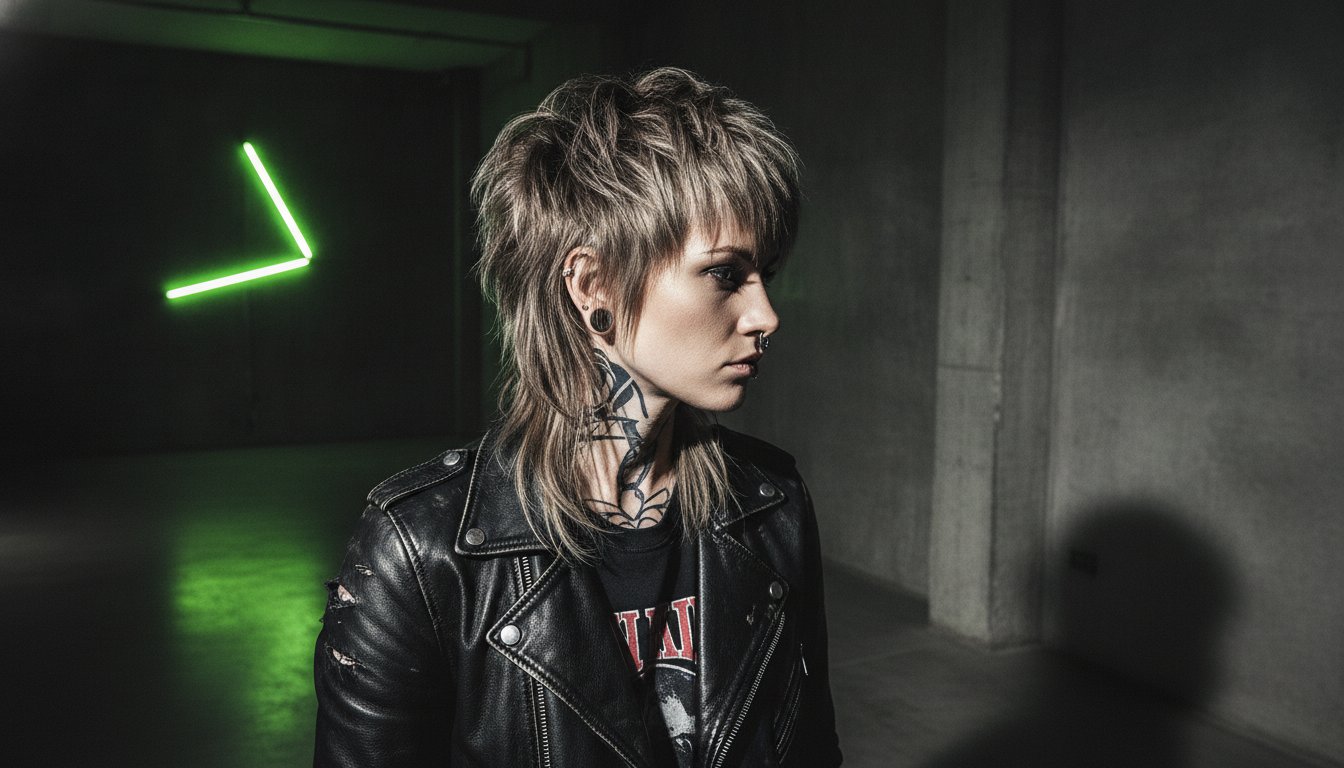
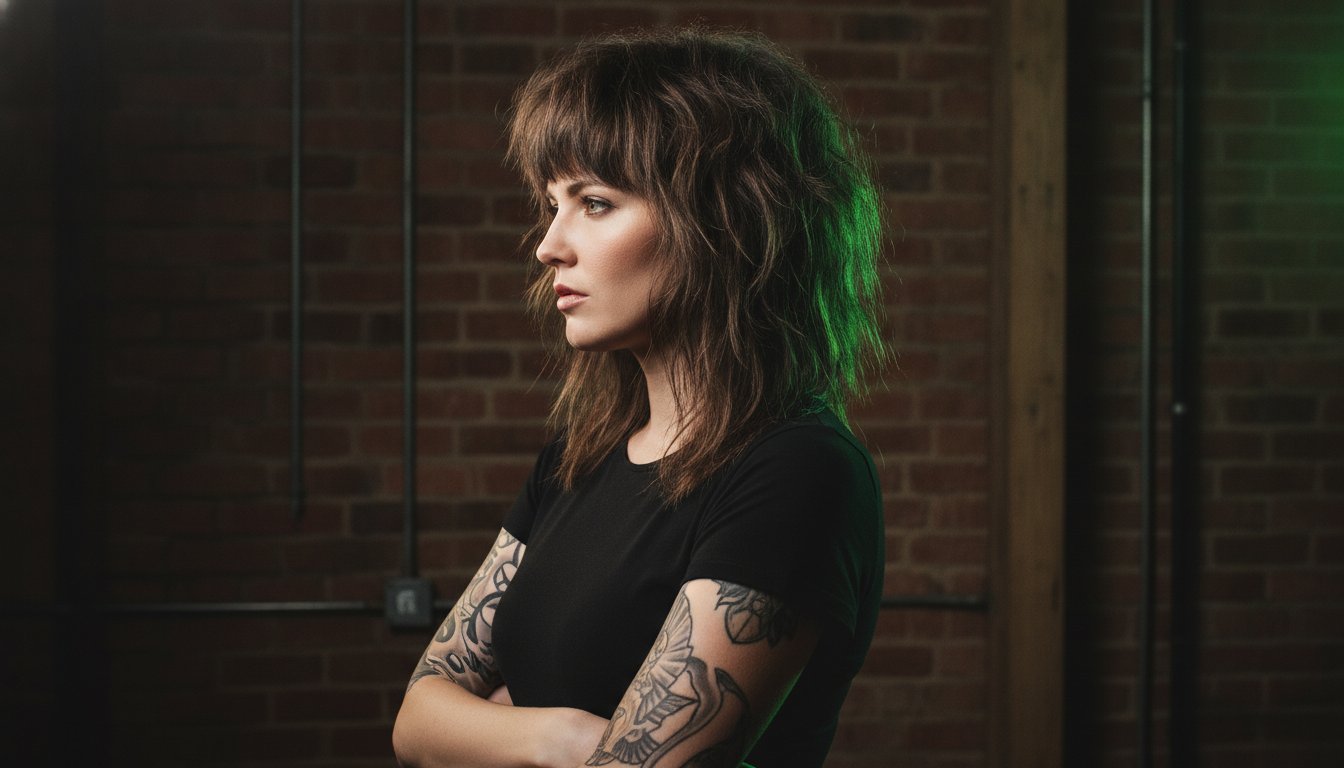
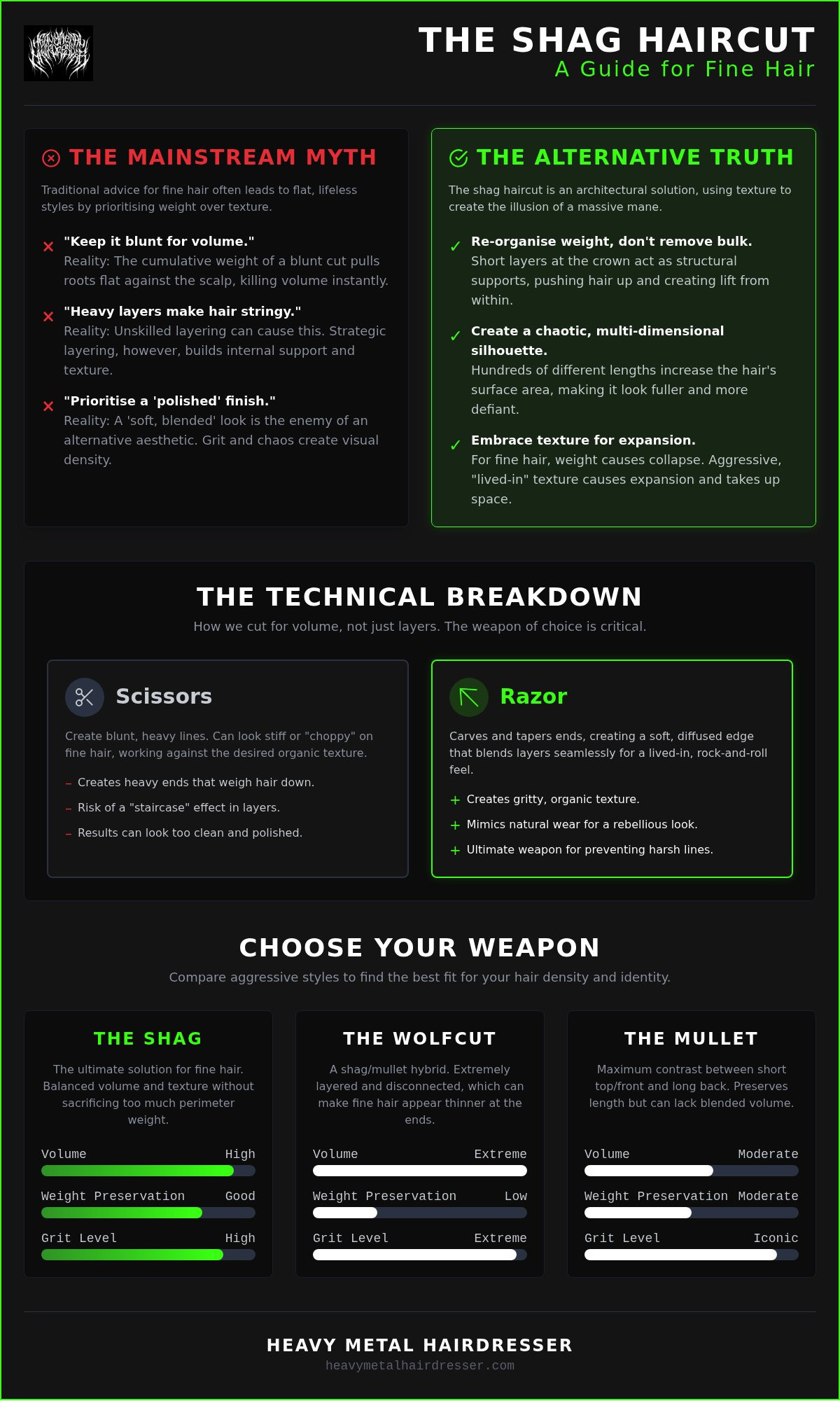
Forget what the high-street stylist told you. They usually want you to keep your hair blunt. They claim it adds “weight” or “bulk”. In reality, that weight acts like a lead anchor, dragging your style into the dirt within minutes of you leaving the house. The modern shag is a high-texture, multi-layered beast featuring a heavy fringe that demands attention. It is the perfect shag haircut for fine hair because it replaces boring, flat lines with a chaotic, multi-dimensional silhouette that actually stays upright.

To understand why this works, look at the history of the shag haircut. Born in the 70s and refined by rock legends, it was never meant to be “pretty” or polished. It was about grit. Today, it serves as a strategic visual lie. By creating hundreds of different lengths across the head, you increase the surface area of the hair. This creates the illusion of a massive, thick mane where there was once just a thin, transparent veil. It is about taking up space and refusing to let your hair go unnoticed.

The “Thin Hair” Myth: Why layers are your friend

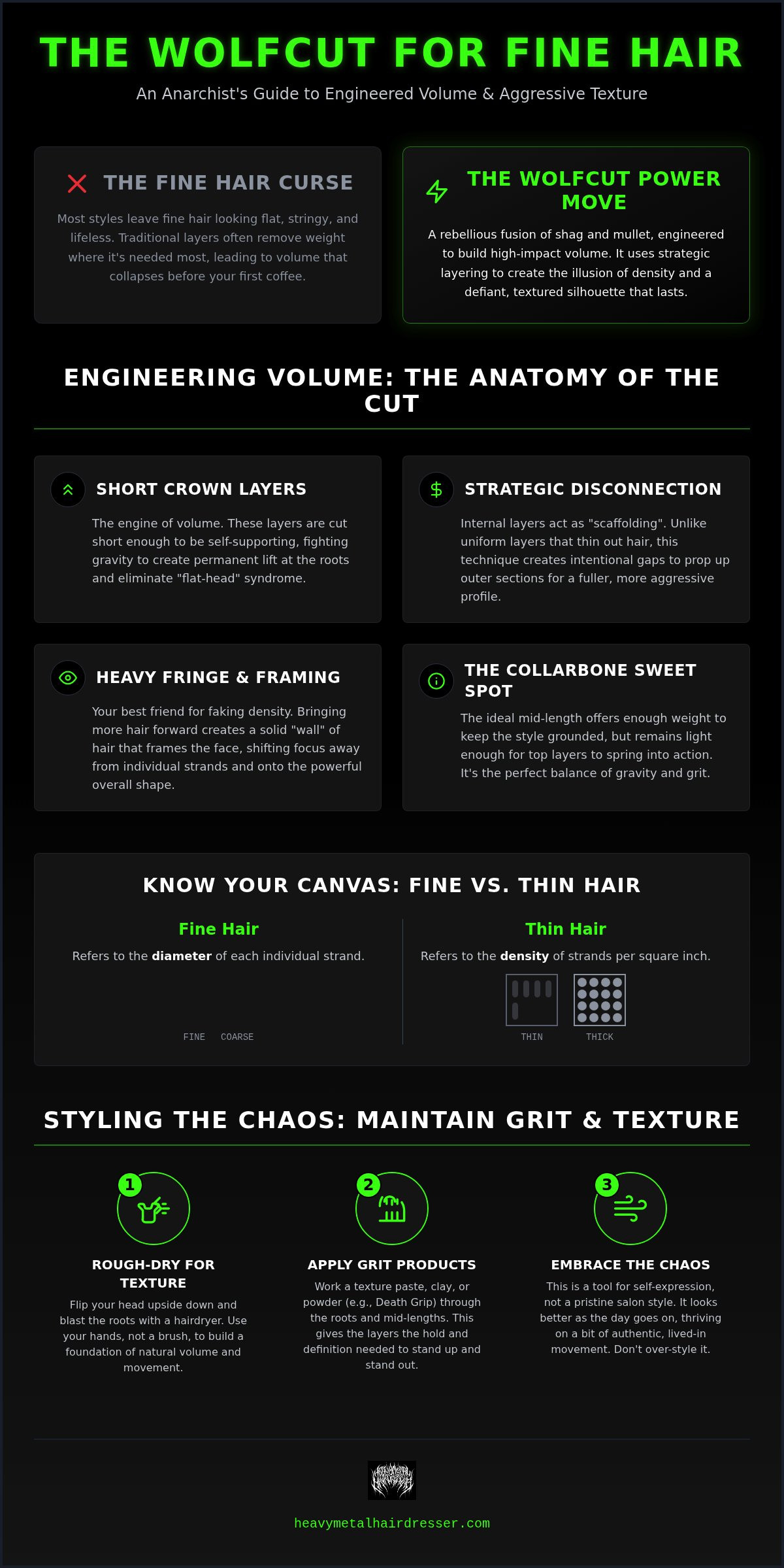
The biggest fear for anyone with fine hair is that layers will “thin it out” or make the ends look stringy. This is absolute rubbish. When you leave fine hair at one length, the cumulative weight of the ends pulls the roots flat against the scalp. By carving out short layers at the crown, we remove that anchor. These shorter pieces act as structural support, pushing the rest of the hair up and creating a lift that no amount of backcombing can replicate. We aren’t removing bulk; we’re re-organising it to work for your silhouette. Weight in fine hair causes collapse; texture causes expansion.

Shag vs. The Mainstream: Choosing grit over polish

Traditional salons often try to give you “soft, blended layers”. That is fine if you want to look like a catalogue model, but it is useless for an alternative identity. We prioritise aggressive texture and a rebellious silhouette over “sensible” styles. This isn’t about a smooth finish; it is about a raw, lived-in aesthetic that looks better the more you mess with it. This style represents the shag haircut resurrection currently tearing through the UK scene. It is about reclaiming your look and refusing to settle for a boring cut just because your hair is fine.

The technical breakdown: how we cut for volume, not just layers

Most stylists approach a shag haircut for fine hair with a sense of dread. They worry that removing hair will leave the client with a transparent, stringy mess. We don’t. We use technical precision to build an internal scaffold that holds the hair up. It is about removing weight in the right places whilst reinforcing the perimeter to maintain density. This isn’t just a haircut; it’s an architectural project for your head.

The goal is to create a style that looks massive but feels weightless. We achieve this by focusing on the relationship between the crown and the length. If you’re ready to ditch the flat look, come see us for a bespoke shag haircut that actually works with your texture.

Razor cutting vs. Scissor cutting for fine strands

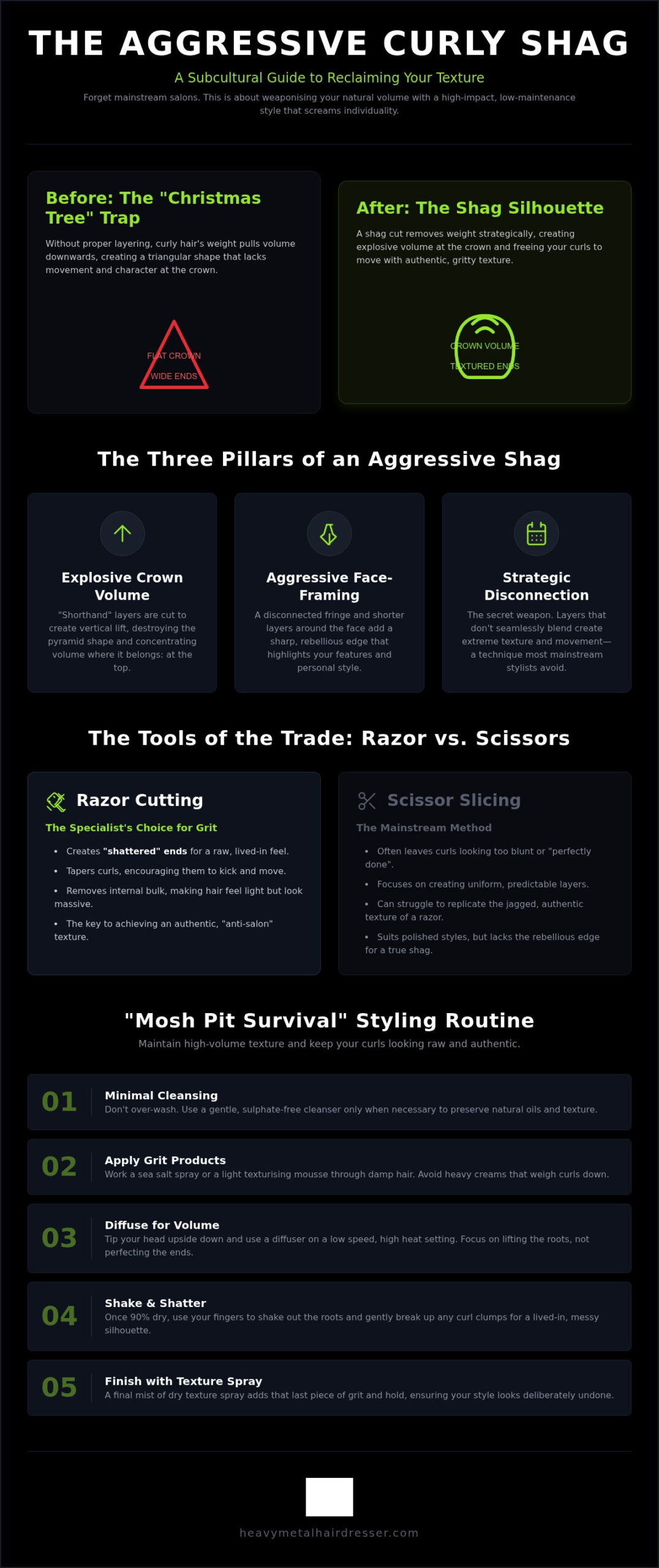
Scissors create blunt, heavy lines. On fine hair, these lines can look too “perfect” or stiff, which is the opposite of the lived-in, alternative aesthetic we want. Scissors can also make fine hair look “choppy” in a way that feels accidental rather than intentional. We prefer the razor. A blade allows us to taper the ends of the hair, mimicking the natural wear and tear of a rock-and-roll lifestyle. It gives the hair a soft, diffused edge that blends seamlessly with other layers.

This technique is vital for fine hair because it prevents the “staircase” effect where you can see exactly where one layer ends and the next begins. The razor is the ultimate weapon of choice for carving out gritty, organic texture in fine hair without the clinical stiffness of scissors.

The importance of the crown: building the “nest”

The secret to a high-volume shag lies in the “nest” at the crown. We use internal layering techniques, cutting shorter pieces underneath the top sections. These hidden layers act as “kickers,” propping up the surface hair and preventing it from falling flat. It creates a structural lift that stays put even without heavy styling. This is how we achieve that iconic, messy height that defines the alternative look.

To keep the style from looking like an accidental mullet, we manage the transition from the fringe to the side layers with extreme care. We often integrate curtain bangs to frame the face. These bangs bridge the gap between the heavy fringe and the shorter crown layers, creating a “deadly” combination that looks intentional and edgy. For those who want to preserve maximum length, we might suggest a “shullet” hybrid. This preserves the density at the bottom whilst allowing the crown to go wild, ensuring you don’t lose that precious “weight” at the ends.

Choosing your weapon: Shag vs. Wolfcut vs. Mullet

Picking between these three isn’t just about style. It’s about how your specific hair density behaves under pressure. A shag haircut for fine hair typically offers a more rounded, blended silhouette. It is the most forgiving of the three. It focuses on uniform layers that create a seamless flow from the heavy fringe down to the ends. If you want volume without looking like you’ve had a fight with a lawnmower, the shag is your baseline. It feels authentic, gritty, and lived-in without requiring a massive leap of faith.

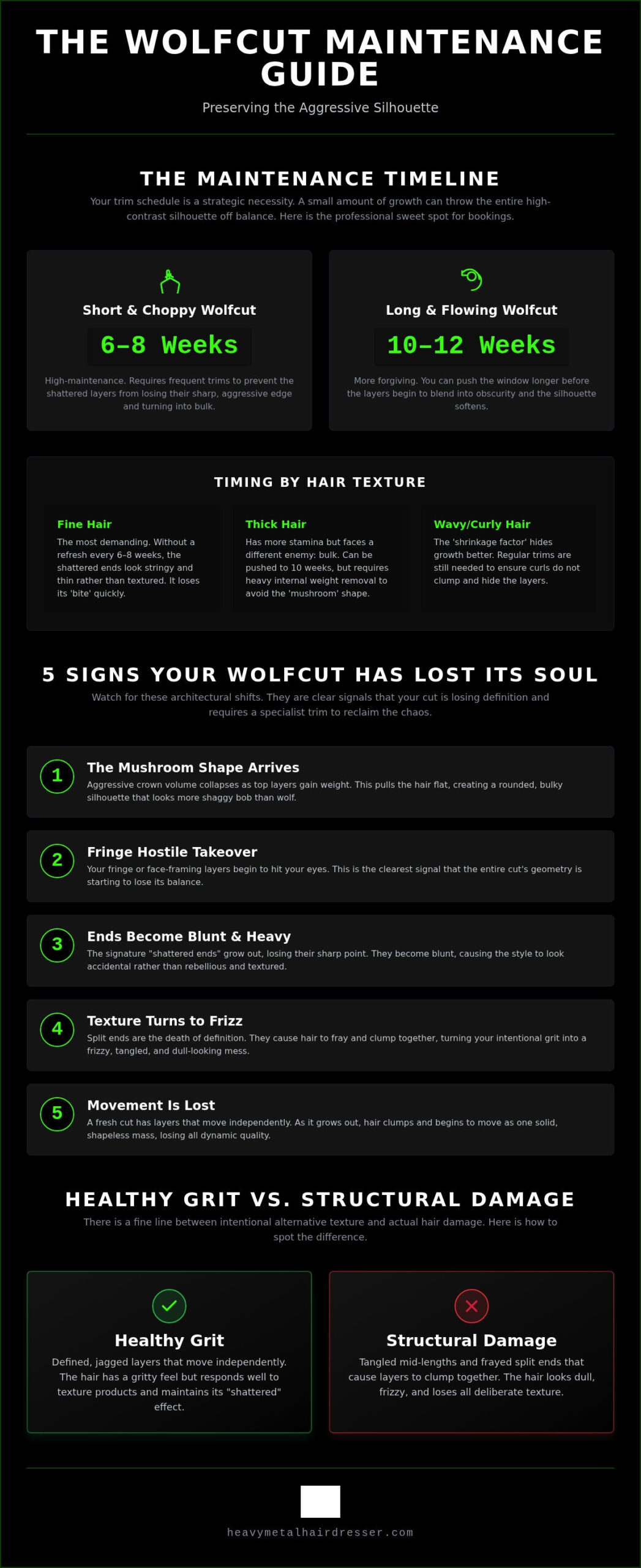
The wolfcut and mullet are more aggressive. They rely on disconnection. This means there is a sharp jump in length between the top and the bottom. For fine hair, the shag preserves the most weight at the perimeter. This is crucial if you’re worried about your ends looking transparent. Maintenance also varies. A shag can usually last eight to twelve weeks. A wolfcut needs the crown refreshed every six to eight weeks. A mullet needs regular attention to the sides and top to keep the contrast sharp and the attitude high.

The Wolfcut on fine hair: Injecting chaos

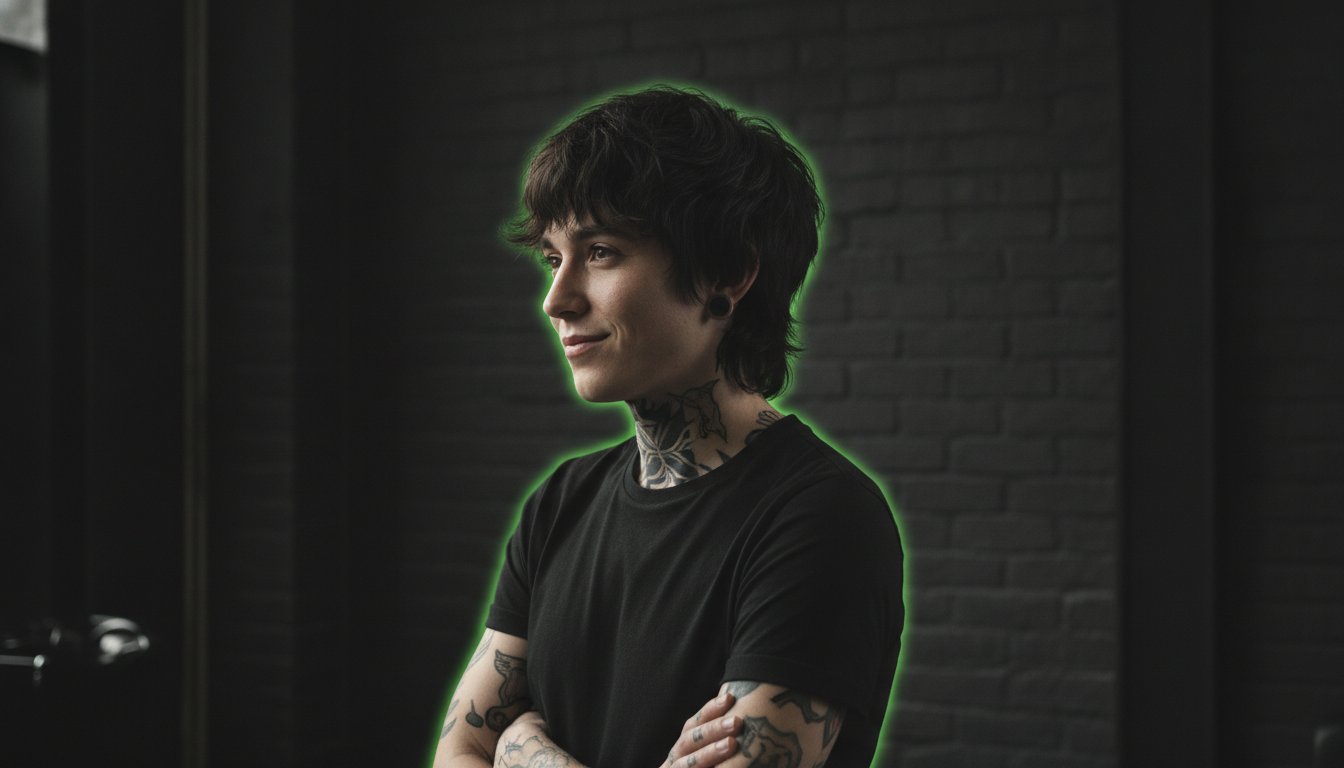
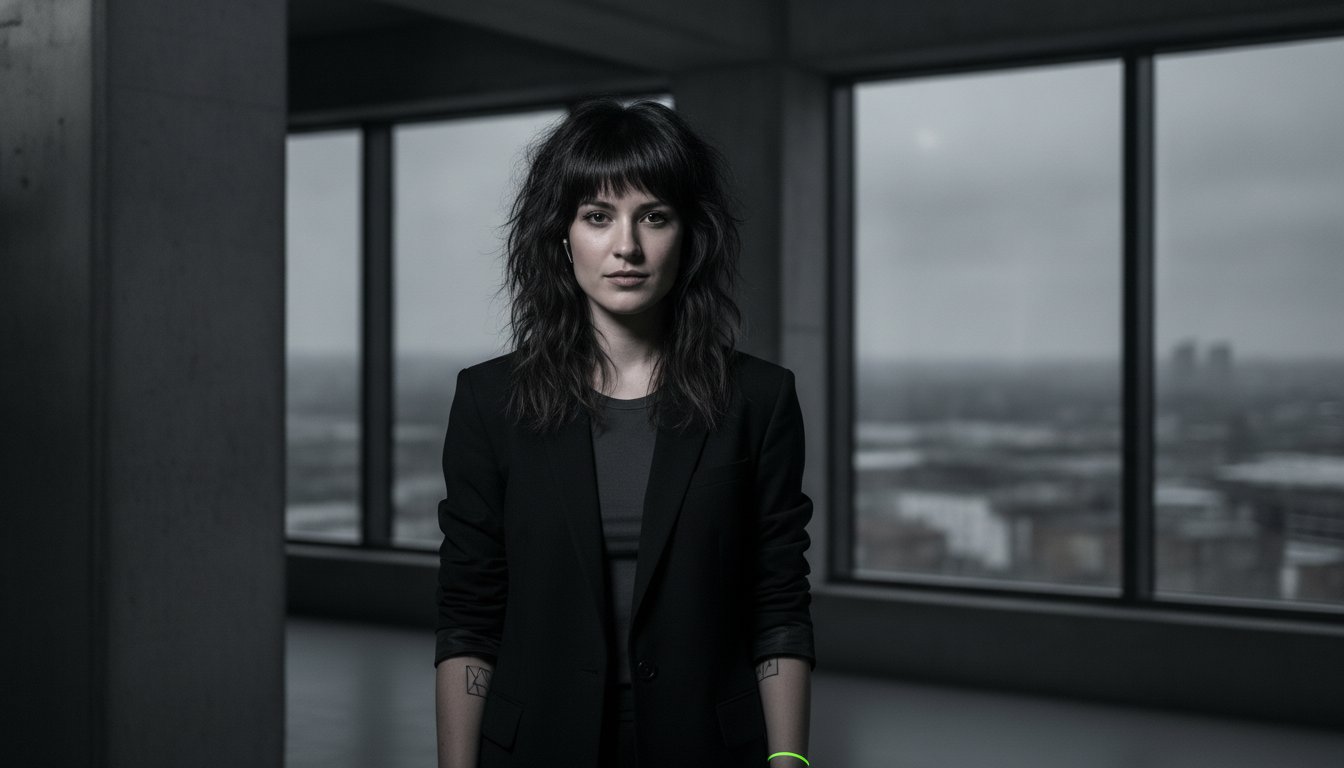
The wolfcut is the louder, more chaotic cousin of the shag haircut for fine hair. It uses heavily disconnected layers to create a massive illusion of density at the crown. By stacking short layers on top of longer ones, it forces the hair to stand up. For many, it is the ultimate way to express a subcultural identity. Check out the ultimate wolf hair cut guide for a deeper dive into this aggressive silhouette.

Is it too risky for very thin hair? Our expert verdict is no, provided the disconnection isn’t too extreme. If your hair is exceptionally thin at the ends, we might suggest a “soft” wolfcut. This keeps the crown wild whilst ensuring the bottom doesn’t vanish into thin air. It is about balance, not just bravery. We work with your natural texture to ensure the “wolf” doesn’t swallow your style whole.

The Modern Mullet: For the truly bold

For those who want to push boundaries, the modern mullet haircut is the ultimate fine-hair hack. It is arguably the most gender-neutral style in our arsenal. By keeping the back long and dense, we preserve the appearance of “weight” that fine-haired people often fear losing. Meanwhile, the top and sides are cut short and heavily textured. This creates a high-contrast look that makes even the finest hair look intentional and aggressive. It is a statement of defiance against boring, flat hair. It says you’re here, you’re different, and you don’t care about mainstream “rules” for thin hair.
The Shag Haircut for Fine Hair: Injecting Texture into Thin Strands (2026 Guide)

How to style your shag for maximum grit and hold

Traditional styling advice is a trap for fine hair. They want you to use round brushes and high heat to force volume into existence. That is a waste of time. A proper shag haircut for fine hair is designed to be low-maintenance and high-impact. We advocate for a “No-Blow-Dry” philosophy. Air-drying preserves the authentic, raw texture of the razor cut. It prevents your hair from looking like a frizzy mess and instead lets it settle into its natural, gritty rhythm. It is about working with your hair, not fighting it.

Salt sprays are often the first thing people reach for, but they are a double-edged sword. On fine strands, too much salt leads to dehydration and breakage. It makes the hair look matte but feels like straw. You want the grit without the damage. This is why strategic product choice is your best friend. You need products that provide hold without the heavy, greasy residue of mainstream waxes.

The Product Arsenal: Death Grip & Hair To the Throne

To get that defiant height, start with Hair To the Throne. Apply it to your roots whilst the hair is still damp. It provides the structural support needed for crown-focused volume without feeling sticky or stiff. Once your hair is dry, it is time for the heavy hitter. Death Grip is essential for keeping your layers separated and gritty. It provides a tactile hold that defines the ends of your shag and keeps the silhouette aggressive.

The trick with fine hair is avoiding “product slump”. Start with a tiny amount of Death Grip. You can always add more, but if you overload fine strands, they will collapse. Use just enough to define the fringe and the face-framing layers. This ensures your texture stays sharp all day without the weight pulling your roots flat.

The “Mosh-Pit Survival” styling routine

Whether you are at a gig or a festival, you need a routine that takes five minutes. Apply your products, use the “scrunch and go” method to encourage the layers to pop, and get out the door. It is that simple. If you are heading to a weekend event, check out our festival hair survival guide for backstage tips on keeping your hair alive in the pit.

Refreshing your look on day two is easy. Don’t wash it. Use a small amount of Death Grip to piece out the fringe and add a bit of water to reactivate the Hair To the Throne at the roots. It keeps the alternative edge without the need for a full reset. If you are ready to overhaul your routine, you can order Death Grip and Hair To the Throne to start building your own arsenal.

Why Heavy Metal Hairdresser is the home of the alternative shag

We don’t do “traditional”. If you are looking for a polished, suburban bob, you are in the wrong place. Heavy Metal Hairdresser is built for the outsiders, the rebels, and the people who have been told their hair is “too difficult” for an edgy look. Mastering a shag haircut for fine hair requires more than just a pair of scissors; it requires an understanding of subcultural identity. Our expertise wasn’t born in a clinical beauty school. It was forged backstage at festivals like Download and Bloodstock, styling bands who need hair that survives a set and looks killer under the lights.

Lead stylist Simon Tuckwell approaches every head of hair as a unique piece of DNA. We don’t use templates. We look at your growth patterns, your texture, and your lifestyle to create a bespoke silhouette. We understand that fine hair needs an aggressive, technical touch to keep it from falling flat. We celebrate individuality by refusing to follow mainstream rules that prioritise “safety” over style. Here, being different is the standard. It is about taking your thin strands and giving them a voice.

A safe space for alternative souls

Finding a stylist who actually understands your music and your aesthetic is a game-changer. You shouldn’t have to explain why you want a heavy, face-shrouding fringe or disconnected layers. We already get it. We’ve built a gender-inclusive safe space where your identity is the priority, not a box to be checked. This commitment is reflected in our business model; we’ve binned gendered pricing in favour of a system that values time and craft over outdated social norms.

Your first consultation isn’t a lecture. It is a direct dialogue. We talk about your hair’s history, your styling habits, and exactly how much grit you want to achieve. We want you to leave feeling like the best version of yourself, not a watered-down version of a trend. It is about creating a look that feels like home and reflects the subcultures you belong to.

Ready to resurrect your hair?

Stop settling for hair that collapses the moment you walk out the door. It is time to embrace the resurrection of the 70s rock aesthetic with a modern, technical twist. Whether you want a rounded shag, a sharp wolfcut, or a defiant mullet, we are ready to transform your thin strands into a high-volume masterpiece. For stylists who want to master these aggressive techniques themselves, we also offer alternative hair courses to help spread the art of subculture styling.

Your transformation is just a booking away. Don’t let your fine hair dictate your identity any longer. Book your shag haircut for fine hair today and join a community that values authenticity over everything else. Let’s build a silhouette that actually says something.

Stop Settling for Flat Hair and Reclaim Your Volume

Fine hair is no longer a reason to hide behind a boring, one-length cut. You’ve discovered that the secret to thickness isn’t “weight,” but strategic, aggressive texture. By embracing the razor and the internal scaffold of a shag haircut for fine hair, you can finally achieve a silhouette that reflects your alternative identity. Whether you choose the rounded flow of a shag or the high-contrast grit of a mullet, you are choosing a style that works with your natural DNA instead of fighting it.

At Heavy Metal Hairdresser, we don’t follow the mainstream rules that leave your hair looking flat. Our expertise is forged backstage at festivals like Download and Bloodstock, and our gender-inclusive safe space is built for the outsiders. Led by Simon Tuckwell’s Red Dot level creative vision, we are ready to resurrect your strands with technical precision. It is time to ditch the polished lies of traditional salons and embrace the chaos of a truly bespoke cut.

Ready to transform your look? Book Your Transformation at Heavy Metal Hairdresser and step into a style that actually says something. Your hair is a blank canvas; let’s make it a masterpiece.

Frequently Asked Questions

Does a shag haircut make fine hair look thinner or thicker?

A shag haircut for fine hair makes it look significantly thicker by creating a multi-dimensional silhouette. Instead of one flat layer, the strategic internal scaffolding of shorter crown pieces pushes the rest of the hair up. This creates the illusion of a massive, dense mane. We focus on removing weight that causes collapse whilst reinforcing the perimeter to ensure you don’t lose that essential feeling of fullness.

How often should I get my shag haircut trimmed to keep it sharp?

To keep the silhouette sharp and the volume at its peak, you should aim for a trim every eight to twelve weeks. Fine hair is prone to split ends which can make your layers look stringy rather than gritty. Regular maintenance ensures the crown layers stay light enough to maintain their lift. If you wait too long, the cumulative weight of the growth will drag the style flat, ruining the alternative edge.

Can I have a shag haircut if my hair is naturally very straight and fine?

Absolutely. Straight, fine hair often lacks natural movement, which is exactly why a shag is the perfect solution. We use razor cutting to carve out organic texture that straight strands simply cannot achieve with blunt scissors. By tapering the ends and building height at the crown, we give straight hair a rebellious, lived-in character. It transforms a limp, “perfect” look into something raw and intentional.

What is the best fringe style for a fine hair shag?

A heavy, face-shrouding fringe or curtain bangs are the best options for fine hair. These styles bridge the gap between your shortest crown layers and the longer perimeter. A thick fringe creates a focal point of density right at the front, making the rest of your hair appear fuller by association. It adds an aggressive, subcultural grit that defines the entire look and frames your face with purpose.

Is a razor cut safe for fine, fragile hair?

Razor cutting is perfectly safe for fine hair when executed by a specialist who understands the tool’s mechanics. It is actually preferable to scissors because it creates a diffused, tapered edge that blends seamlessly. This prevents the harsh, “staircase” effect often seen in traditional layered cuts. As long as the blade is fresh and the technique is precise, it avoids the damage associated with blunt, dragging tools.

How do I style a shag haircut for fine hair without it going flat?

Styling a shag haircut for fine hair requires a “less is more” approach to prevent it from going flat. Start with Hair To the Throne at the roots whilst damp to build structural support. Once air-dried, apply a tiny amount of Death Grip to the ends to separate layers and add grit. This combination locks in volume without the greasy weight of mainstream products, keeping your texture defiant from morning until the mosh pit.

Can I transition from a bob to a shag with fine hair?

Transitioning from a bob to a shag is a common journey for those reclaiming their alternative identity. We start by introducing internal texture and shorter layers at the crown whilst allowing your perimeter length to grow. It is about shifting the weight from the bottom of the cut to the top. This process prevents the “awkward stage” by ensuring your hair always has a deliberate, textured silhouette as it evolves.

What styling products should I avoid with a fine hair shag?

You must avoid heavy, oil-based waxes and thick pomades designed for coarser textures. These products are too heavy for fine strands and will cause your style to collapse into a greasy mess within hours. Similarly, be cautious with excessive salt sprays; whilst they provide grit, they can dehydrate fine hair and lead to breakage. Stick to lightweight, specialised products like Death Grip that offer hold without the leaden weight.

Posted on

Vivid Hair Colour: The Alternative Guide to High-Pigment Identity

Vivid Hair Colour: The Alternative Guide to High-Pigment Identity

Your hair isn’t a canvas for some fleeting high-street trend; it’s a high-decibel broadcast of your identity. If you’ve ever walked out of a traditional salon feeling like a “project” rather than a person, you know the frustration of stylists who don’t understand the soul of a shag or the aggressive edge of a wolfcut. You deserve vivid hair colour that commands attention without fading into a muddy mess after just two washes. We agree that settling for dull pigments or compromised hair health is a sacrifice you shouldn’t have to make to express your subcultural roots.

This guide masters the art of alternative saturation. It shows you how to achieve and own the boldest hues in the UK while keeping your strands resilient. Having styled backstage at festivals like Download and Bloodstock, we understand that your look needs to survive the pit and the after-party alike. We’ll explore the impact of the 2026 cosmetic regulations on pigment safety, the secrets to maintaining punchy tones, and how to find a creative peer who shares your values. It’s time to stop blending in. Start saturating your style with professional expertise that actually respects your aesthetic.

Key Takeaways

  • Master the canvas theory to understand why extreme lifts require professional bond builders to protect your hair’s structural integrity.
  • Ditch high-street fashion tints for the deep subcultural saturation that defines a true alternative identity.
  • Extend the life of your pigments with a maintenance guide that covers everything from the cold-water rule to heat damage.
  • Learn how textured cuts like shags and wolfcuts provide the perfect aggressive foundation for high-impact vivid hair colour.
  • Discover why gender-neutral pricing and safe-space values are vital for an inclusive and identity-affirming salon experience.

What is Vivid Hair Colour? Beyond the Mainstream Trend

Vivid hair colour isn’t a temporary flirtation with a trend. It’s a permanent commitment to an alternative existence. Unlike the “fashion tints” found in high-street windows, true vivids are high-pigment, semi-permanent dyes that live entirely outside the natural spectrum. We’re talking about saturation that hits as hard as a kick drum. While mainstream salons treat these shades as accessories, we see them as a visual manifestation of your musical and personal soul. It’s about taking up space and refusing to be muted.

The mainstream aesthetic often chases a “polished” look, where every strand is perfectly placed and the colours are designed to blend in. Our approach is the polar opposite. We embrace the raw, the gritty, and the authentic. To understand the foundations of these pigments, looking into The Science of Hair Colour helps explain how semi-permanent molecules sit on the hair shaft, but science only gets you halfway. The rest is about subcultural intuition. It’s knowing that a neon green isn’t just a colour; it’s a nod to a specific era of punk or a particular underground scene.

The Spectrum of Alternative Saturation

Choosing your palette is a high-stakes decision. In the alternative community, primary colours rule the roost. While the mainstream is currently obsessed with washed-out pastels that disappear after a single rinse, we focus on deep blood reds, electric blues, and toxic yellows. These shades offer a tonal depth that pastels simply can’t match. When we apply vivid hair colour, we aren’t just looking for brightness. We’re looking for a saturation that feels heavy and intentional, ensuring your identity remains front and centre whether you’re under stage lights or streetlights.

Why Subcultural Expertise Matters

A standard hairdresser might be a wizard with a blonde balayage, but they’ll often struggle with high-contrast vivid placements. They don’t always “get” how a bolt of violet should interact with the aggressive layers of a wolfcut or the choppy fringe of a shag. Subcultural expertise matters because the cut and the colour are inseparable. We don’t just slap dye on a head; we use the texture of the hair to dictate where the pigment should live. Our consultations aren’t about “looking pretty” in a conventional sense. They’re about finding the intersection between your aesthetic influences and the technical reality of your hair. We speak the same language as you, which means we don’t need a translator to understand your vision for a gritty, non-conformist look.

The Science of Saturated Pigment: How We Build the Look

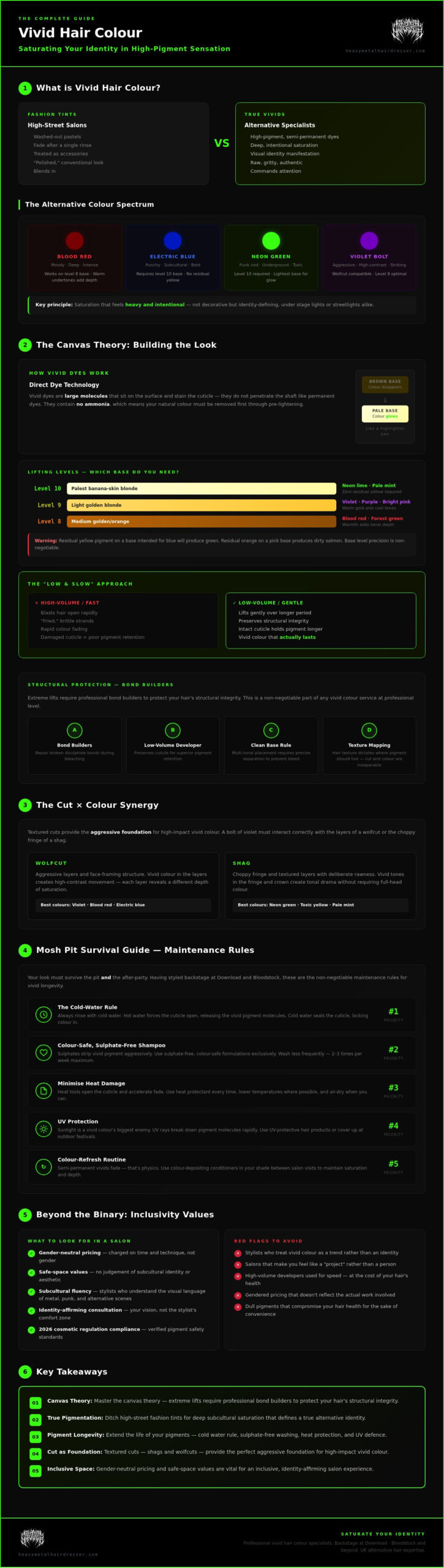
Building a high-impact alternative look isn’t about luck. It’s about chemistry. To achieve the kind of saturation that stops people in the street, we use the “canvas theory.” Unlike traditional permanent dyes that penetrate the hair shaft and alter your natural pigment, vivid dyes are direct dyes. They’re large molecules that sit on the surface and stain the cuticle. Because they don’t contain ammonia to lift your natural colour, your hair needs to be pre-lightened first. Think of it like painting with a highlighter pen. If you draw on brown paper, the colour disappears. If you draw on white paper, it glows. We create that white or pale yellow “paper” through precise bleaching.

We don’t believe in taking shortcuts with your hair’s health. Many salons use high-volume developers to blast the hair open quickly, but that’s a recipe for “fried” strands and rapid fading. We advocate for a “low and slow” approach. By using lower volume developers over a longer period, we lift the hair gently. This preserves the structural integrity of the hair fibres. When the cuticle remains healthy and intact, it holds onto those vivid pigment molecules much longer. For those seeking vivid hair colour that actually lasts, this technical patience is non-negotiable.

Lifting to the Correct Level

Not every vivid shade requires the same base. If you’re chasing a neon lime or a pale mint, we have to lift your hair to a “level 10” blonde, which looks like the inside of a banana skin. Any remaining yellow pigment will turn your blue into green or your pink into orange. However, if you’re going for a deep blood red or a moody forest green, a “level 8” base with some underlying warmth actually adds tonal depth. We follow the “clean base” rule for multi-tonal applications to ensure colours don’t bleed into a muddy mess. Understanding Hair Dye Safety Regulations and the limits of your hair’s chemistry ensures we never push your strands past their breaking point.

Integrity Over Intensity

We refuse to compromise hair health for a single-session transformation. If your hair is already compromised, we’ll tell you straight. We use professional-grade bond builders like Olaplex during the bleaching process to repair the disulphide bonds that give hair its strength. These treatments aren’t just an optional “add-on”; they’re essential for anyone living an alternative lifestyle where hair is frequently bleached and re-coloured. Structural integrity is the foundation of long-lasting colour. Without it, your pigment has nothing to hold onto, and your vivid dream will wash down the drain in a week. For a look that stays punchy through every mosh pit, you need a stylist who prioritises hair health as much as the aesthetic.

Vivid Hair Colour Maintenance: Mosh Pit Survival Guide

“Vivids fade too fast.” It’s the most common excuse for staying beige. But here’s the reality check: high-pigment saturation is a lifestyle, not a set-it-and-forget-it service. If you’re treating your hair like a standard high-street dye job, you’re going to lose that punchy edge within a fortnight. Maintaining your look requires a tactical approach to home care that respects the chemistry we’ve built. To keep your vivid hair colour Nottingham looking fresh, you have to change how you think about hair health.

The #1 rule is simple: heat is the enemy. Every time you blast your hair with hot water, you’re opening the cuticle and letting those expensive pigment molecules escape. Think of it like a mosh pit for your hair cells; you want to keep things tight and controlled. Cold water is your best friend. It seals the cuticle and locks in the saturation. Beyond temperature, your choice of product is vital. Sulphate-free shampoos are non-negotiable. Sulphates are harsh detergents that strip colour faster than a bad review. For an extra boost, a colour-depositing conditioner can refresh your tones between salon visits.

The Alternative Wash Routine

Step one: stop washing your hair every day. It’s unnecessary and aggressive. When you do wash, focus the shampoo on the roots and let the suds rinse through the ends. This prevents over-cleaning the most porous parts of your hair. Dry shampoo is the unsung hero of the alternative scene. It absorbs oil without disturbing the pigment, allowing you to stretch the time between wet washes whilst keeping your volume high. The “rinse and repeat” cycle is a myth designed to sell more product. For us, less frequent washing means sharper colour and healthier strands.

Festival and Gig Survival

Whether you’re at Download or a basement gig, your wolf hair cut and colour take a beating. Sweat, grit, and beer are part of the experience, but they don’t have to ruin your look. Before heading into the pit, consider a leave-in conditioner with UV protection. Sun exposure is a silent colour killer, especially for neons and electric blues. It bleaches the pigment and leaves your hair feeling parched.

After the weekend, your hair needs a detox. Use a gentle, clarifying treatment to remove product build-up without nuking your base. If your face-framing “money pieces” are looking a bit tired, a quick home refresh with a direct dye can bridge the gap until your next appointment. Owning a bold identity means doing the work to keep it loud. If you’re ready for a refresh, we can always help you organise your next transformation.

Vivid Hair Colour: The Alternative Guide to High-Pigment Identity

Beyond the Binary: Inclusivity in Alternative Styling

Traditional salons often feel like a stage where you’re forced to perform a version of yourself that doesn’t fit. For the queer and alternative communities, a salon shouldn’t just be a place for a trim; it must be a safe space. We’ve built an environment where being different is the baseline, not the exception. This is about more than just aesthetics. It’s about finding a stylist who understands that your vivid hair colour Nottingham search isn’t just about a trend. It’s about visibility and safety in a world that often demands conformity. We foster a community where your subcultural identity is celebrated, providing a psychological sanctuary from the judgmental gaze of the high street.

We’ve ditched the outdated “men’s” and “women’s” menus. Hair has no gender, and neither does our pricing. We charge based on time, technical complexity, and the skill required to execute your vision. Whether you’re getting a short textured crop or a full-head vivid saturation, the price reflects the work, not the binary. This transparency removes the “pink tax” and ensures everyone feels respected from the moment they book. It’s a direct rejection of the clinical, gendered norms that have dominated the beauty industry for far too long.

Identity-Affirming Hair

Vivid colour is a powerful tool for gender expression. It can be a flag, a shield, or a shout. We see the stylist as a collaborative partner in your journey. We don’t dictate what “looks good” based on traditional beauty standards. Instead, we listen to how you want to feel. Our chair is a place where your identity is affirmed through every brushstroke of pigment. Whether you’re using high-saturation tones to align with your gender identity or simply to reclaim your personal power, we’re here to make that vision a reality without judgment.

The Safe Space Consultation

An inclusive consultation goes beyond just looking at reference photos. We talk about pronouns. We discuss neurodivergence and sensory needs. If you need a silent appointment or have specific sensitivities to sound or touch, we accommodate that. Our salon is a high-energy, percussive environment, but it’s also a sanctuary. We’ve created a space where you can be your loudest self or your most quiet, knowing you’re amongst peers who truly get it. We prioritize your comfort as much as the final result, ensuring the process is as identity-affirming as the colour itself.

If you’re ready to express your true self in an environment that respects your boundaries, book your identity-affirming consultation with our expert team today.

The Heavy Metal Hairdresser Way: Saturating the UK Scene

Simon Tuckwell didn’t build this salon to fit in. He built it to provide a sanctuary for those who’ve been told their look is “too much” by traditional high-street stylists. The Heavy Metal Hairdresser Way is about merging technical precision with a gritty, underground soul. We don’t just “do” hair; we engineer it to survive. Whether it’s the aggressive, choppy texture of a “Death Grip” style or the gravity-defying height of “Hair To the Throne” volume, our work is a direct rejection of the mundane. We’ve created a space where your subcultural identity isn’t just tolerated. It’s the entire point of the process.

Our expertise isn’t theoretical. It’s forged in the mud and heat of the UK’s biggest alternative stages. By styling for bands at festivals like Download and Bloodstock, we’ve mastered the art of durability and high-impact visual performance. When you’re searching for vivid hair color Nottingham, you aren’t just looking for a new shade. You’re looking for a result that stays saturated and sharp through a three-day festival set or a heavy night in the pit. We bring that same backstage intensity to every chair in our salon, ensuring your colour hits as hard as a headline set.

From Download to the Salon

We take that backstage intensity and translate it into wearable, aggressive styles for your everyday life. This is where modern mullet haircuts meet high-decibel pigments. We understand that a mullet, a shag, or a wolfcut needs a specific type of saturation to truly pop. A standard flat colour won’t do justice to the layers and movement we create. Our techniques ensure your colour doesn’t just look good in the salon mirror. It looks lethal under the strobe lights of a basement gig and holds its own against the grit of the real world. We use the same road-tested standards for our clients that we use for the artists on stage.

Joining the Community

We aren’t a walk-in factory. We’re a peer-led community of innovators and rebels. Preparing for your first session with us means understanding that we value your hair’s health as much as its hue. Safety is paramount, which is why a patch test is mandatory at least 48 hours before any pigment touches your head. This isn’t just a formality; it’s about protecting your canvas for future transformations. During your consultation, we’ll map out your identity journey and discuss how your chosen palette interacts with your lifestyle. We’re here to be your knowledgeable guides, helping you navigate the world of high-pigment saturation with confidence. If you’re ready to stop blending in and start saturating your identity, book your alternative colour session now and join the movement.

Own Your Alternative Saturation

Your hair is the loudest part of your identity. We’ve explored how to achieve high-decibel saturation through technical precision and how to protect that pigment in the heat of a mosh pit. From the essential “canvas theory” to the cold-water rules of maintenance, mastering your look is about respecting the chemistry as much as the subculture. You no longer have to settle for stylists who don’t understand the grit of a wolfcut or the soul of a shag.

Founded by Simon Tuckwell, our salon is a gender-inclusive safe space built for rebels and innovators. Having worked backstage at Download and Bloodstock, we bring festival-grade durability and expertise to every chair. If you’re tired of being judged in traditional salons and want a vivid hair color Nottingham experience that truly affirms who you are, it’s time to join our community. Stop blending in with the mainstream and start saturating your world with unapologetic pigment. We’re ready to help you manifest your loudest identity.

Secure your spot at Heavy Metal Hairdresser and let’s build your high-pigment identity today.

Frequently Asked Questions

How long does vivid hair colour actually last?

Vivid hair colour usually remains punchy for four to eight weeks before noticeable fading begins. Its longevity depends entirely on your maintenance routine and the initial saturation level. Cold water washes and sulphate-free products are essential for keeping those pigments locked inside the hair shaft. If you’re frequently in the mosh pit or under harsh UV lights at festivals, you’ll need a more rigorous home care plan to prevent premature dullness.

Do I have to bleach my hair to get bright colours?

You almost certainly need to pre-lighten your hair to achieve high-impact vivid results. Think of your hair as a canvas; dark hair acts like a black background that swallows up bright pigments. To make neons or primary colours glow, we have to lift the natural pigment to a pale blonde base. Without this step, the colour will look like a subtle tint rather than the high-decibel saturation our community demands.

Can I get vivid hair colour if I have dark or dyed hair?

Achieving a vivid hair color Nottingham result on dark or previously dyed hair is possible, but it requires a strategic approach. We have to strip away existing artificial pigments or lift through natural dark tones to create a clean base. This process might take multiple sessions if you’ve used box dyes or have very stubborn hair. We prioritise your hair’s structural integrity, ensuring we don’t push the lifting process faster than your strands can handle.

How much does a vivid hair colour session cost in the UK?

Pricing for creative colour in the UK varies significantly based on the complexity of the placement and the time required. Most alternative salons move away from gendered pricing, instead charging for the technical skill and product usage involved in the transformation. You should expect to pay for the pre-lightening stage, the vivid application, and any bond-building treatments used to protect your hair. Always book a consultation to get an accurate estimate based on your specific hair goals.

Is vivid hair colour damaging for my hair?

The vivid dye itself is non-damaging because it doesn’t use developer or ammonia; it’s actually quite conditioning. The potential for damage lies in the pre-lightening process required to create your canvas. We mitigate this risk by using professional bond builders and opting for a low and slow bleaching method. When managed by an expert, your hair stays healthy and resilient whilst maintaining the boldest alternative shades on the scene.

What is the difference between semi-permanent and vivid hair dye?

Vivid hair dyes are essentially high-pigment semi-permanent direct dyes. Traditional semi-permanents often aim for natural tones and offer lower saturation. Vivids are formulated with much larger pigment molecules designed to stain the hair cuticle with intense, non-natural colours. They don’t penetrate the cortex like permanent dye, which is why they eventually wash out. This allows for total creative freedom without the long-term commitment of traditional oxidative hair colouring methods.

How do I stop my vivid hair colour from bleeding onto my clothes?

Bleeding is a common side effect of high-pigment saturation, especially during the first few washes. To minimise this, always rinse your hair with the coldest water you can stand to seal the cuticle shut. Use old or dark-coloured towels and pillowcases to avoid staining your favourite gear. Applying a leave-in sealant or a light hair oil can also help create a barrier that keeps the pigment on your strands rather than your clothes.

Can I go from black to neon in one salon visit?

Going from jet black to a neon shade in a single visit is a massive technical challenge that often compromises hair health. If your hair is naturally dark and healthy, we might achieve it; however, previously dyed black hair usually requires several sessions to lift safely. We refuse to nuking your hair just for a quick fix. A multi-stage journey ensures your vivid hair color Nottingham transformation stays vibrant and your hair remains strong.

Posted on

Common Mullet Cutting Mistakes: Alternative Grit 2026

Common Mullet Cutting Mistakes: Alternative Grit 2026

Forget everything the high street told you about “blending” and “tidiness”. If your mullet looks like it belongs in an accountancy firm circa 1985, you haven’t got an alternative style; you’ve got a disaster. True grit comes from embracing aggressive, purposeful disconnection, not trying to make a subcultural icon look “safe” or “presentable”.

We know the frustration of asking for a sharp, rockstar silhouette and walking out with a “helmet” effect on top. It’s a common story: you lose too much length at the back too quickly, or the transition looks like a genuine accident rather than a deliberate stylistic choice. We’re here to help you identify the common mullet cutting mistakes to avoid so you can finally achieve that textured, aggressive finish that grows out with intent. Whether you’re rocking a wolfcut or a heavy shag, balance and weight distribution are everything.

In this guide, we’ll dive into the technical traps that ruin a bold cut. You’ll learn how to maintain that crucial length at the nape and why products like Hair To the Throne are essential for that gritty, lived-in texture. Get ready to turn a mediocre cut into a fierce statement of identity.

Key Takeaways

  • Ditch the “helmet” effect by mastering the balance between aggressive layers and intentional disconnection for a sharper silhouette.
  • Identify the common mullet cutting mistakes to avoid, such as over-layering the crown or cutting the fringe too narrow, which can kill the flow of your style.
  • Discover why thinning shears often sap the soul from an alternative cut and why techniques like point-cutting create more authentic grit.
  • Learn the “internal thinning” trick to reduce bulk and restore a failing shape without sacrificing your hard-earned length.
  • Understand how to use subcultural identity and musical taste as a technical guide for creating a truly bespoke, rock-inspired look.

Why Most Mullets Fail: Understanding the Alternative Silhouette

A mullet isn’t just a haircut; it’s a subcultural statement. When you get it right, it’s pure rock and roll. When you get it wrong, you’re one step away from a bad fancy dress party. The biggest problem with most modern attempts is a lack of understanding regarding the alternative silhouette. We aren’t aiming for the soft, feathered look of a 1980s pop star. The 2026 aesthetic is about aggressive layers and grit. If your stylist tries to play it safe, they’ll likely fall into the trap of making it look “tidy,” which is the fastest way to kill the vibe.

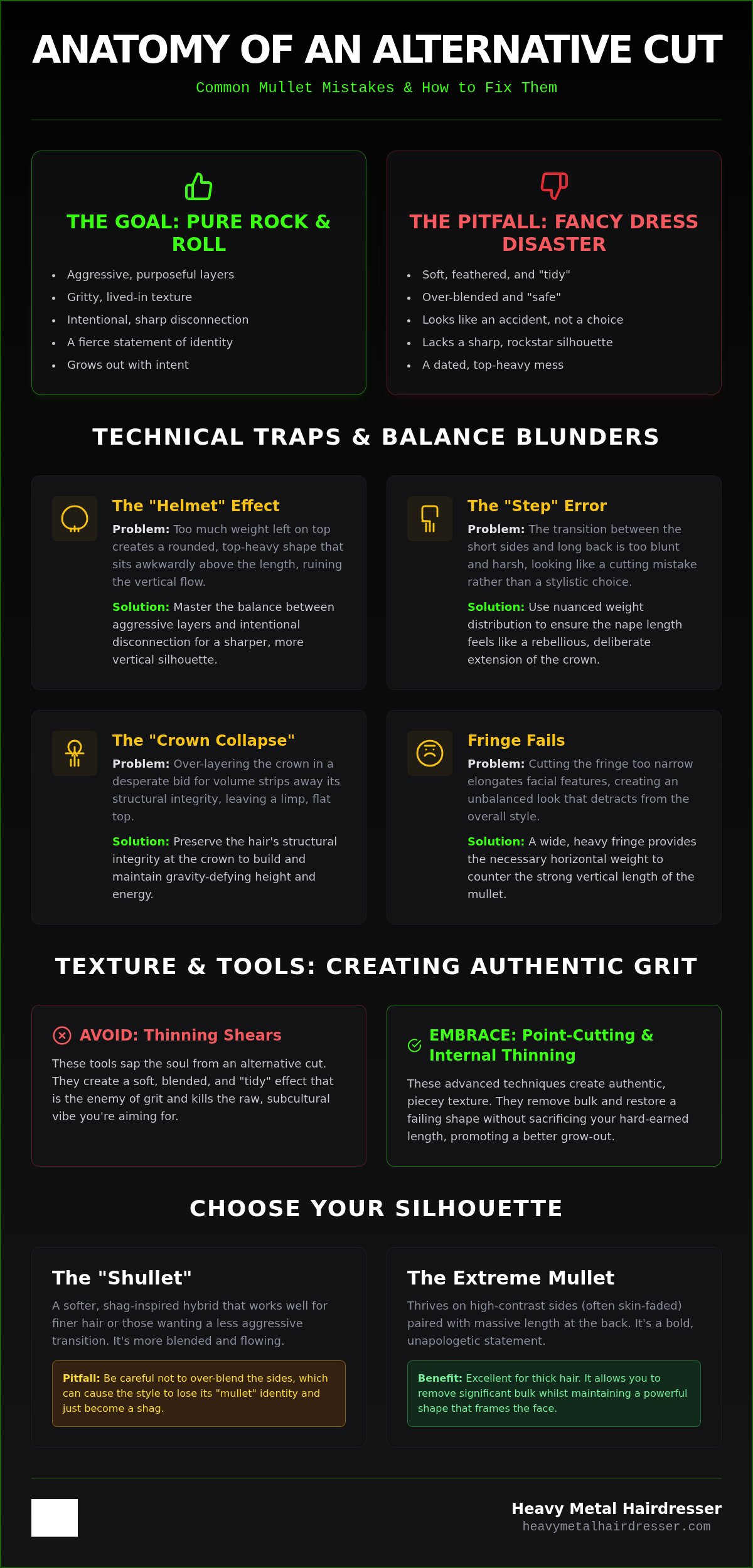
One of the common mullet cutting mistakes to avoid is the “Helmet Mistake.” This happens when too much weight is left on top, creating a rounded shape that sits awkwardly above the length. It ruins the vertical flow. Instead of a tapering silhouette, you get a top-heavy mess that feels dated. Another disaster is the “Step Error.” This occurs when the transition between buzzed sides and the long back is too blunt. It looks like a mistake because it is one. A successful cut requires nuanced weight distribution, ensuring the nape length feels like a rebellious extension of the crown.

Looking back at the history of the mullet, we see it has always been about contrast. However, the modern version demands a specific type of tension between the short and long sections. You want it to look intentional, not accidental.

The Shullet vs. The Extreme Mullet

Choosing your silhouette is the first step. The “shullet” is a softer, shag-inspired hybrid that works for fine hair or anyone wanting a less aggressive transition. Its biggest pitfall is losing the “mullet” identity by over-blending the sides. The extreme mullet thrives on high-contrast sides, often skin-faded, paired with massive length at the back. For thick hair, this allows you to remove bulk whilst maintaining a powerful shape that frames the face without overwhelming it.

The Role of Intentional Disconnection

Blending is often the enemy of alternative hair. Traditional barbering demands seamless transitions; we embrace the gap. Many confuse a “bad cut” with “bold disconnection.” A bad cut looks messy because foundations are weak. Bold disconnection looks sharp because lines are deliberate. It provides that raw aesthetic that sets you apart. Truly, intentional disconnection is the hallmark of the modern mullet haircut. By dodging common mullet cutting mistakes to avoid, you ensure your hair screams attitude, not an accidental error.

Technical Traps: Sectioning and Balance Blunders

Technical mastery isn’t about being neat; it’s about being deliberate. If you don’t understand the architecture of the skull, your alternative cut will fall flat. Literally. One of the primary common mullet cutting mistakes to avoid is the ‘Crown Collapse’. This happens when you over-layer the crown in a desperate bid for volume. Instead of height, you strip away the structural integrity. The hair loses its ability to defy gravity, leaving you with a limp top that doesn’t match the energy of the back.

Failing to plan the ear-clearance is another profile-killer. We call it the ‘Sideburn Struggle’. If you don’t carve out the space around the ear with precision, the hair just clumps together. It loses that sharp, aggressive edge. Similarly, over-direction is a silent killer. Pulling the hair too far forward whilst cutting the sides creates massive ‘holes’ in the length behind the shoulder. It’s a major reason why mullet hairstyles fail during the grow-out phase. You want a solid wall of hair at the back, not a patchy curtain.

Mastering the Radial Section

The radial section is the backbone of your architecture. It is the line that separates the ‘business’ from the ‘party’. Most stylists botch the transition from the top to the nape because they treat them as two separate haircuts. You need to maintain weight behind the ears whilst aggressively removing it from the temples. This creates a forward-pushing energy that looks fierce. If you’re serious about mastering these pivots, our alternative hair courses break down these subcultural silhouettes in detail.

Fringe Fails and Forehead Framing

The fringe defines the face. Go too narrow, and you’ll elongate the features until they look unbalanced. A wide, heavy fringe provides the necessary horizontal weight to counter the vertical length of the mullet. Avoid the ‘bowl cut’ trap by keeping your connection to the sides intentionally jagged. Use a spray of Hair To the Throne during the process. It allows you to see how the fringe behaves with texture, ensuring you don’t accidentally create a flat, lifeless line that kills the rock-inspired aesthetic.

Texture and Tools: Why ‘Tidy’ is the Enemy of Alternative Hair

Clean lines are for office blocks. In the world of alternative hair, “tidy” is just another word for boring. If your mullet looks like it was measured with a spirit level, you’ve missed the point entirely. One of the common mullet cutting mistakes to avoid is treating the texture as an afterthought. You cannot just cut a basic shape and hope for the best. You have to carve the attitude into the hair fibre itself. A mullet that is too polished feels like a costume, not a lifestyle.

The “Over-Thinning” Disaster is a classic trap. Using standard thinning shears often creates a cloud of frizz rather than defined, piecey texture. It strips the hair of its weight and its soul. Similarly, reaching for clippers to “clean up” the edges is a mistake. Clippers create a clinical, manufactured finish that lacks character. If you want a cut that screams subculture, you need the jagged, irregular edges that only a razor or deep point-cutting can provide. You’re aiming for a silhouette that looks like it has already survived a three-day festival. Don’t fight the hair’s natural behaviour, either. Cowlicks in the nape area are gifts. If you try to force a uniform line across a rebellious growth pattern, the hair will kick out awkwardly. Work with the movement and let the hair dictate the grit.

Razor Cutting vs. Point Cutting

Reach for the razor when you want that lived-in, mosh pit ready texture. It provides a feathered, aggressive edge that scissors simply cannot replicate. A common razor mistake is scraping the cuticle; you must slice through the weight with a fresh, sharp blade to keep the hair looking healthy whilst remaining raw. For thicker manes, deep point-cutting is your best friend. It injects chaos into the interior. This removes bulk without making the hair look thin or wispy, maintaining that heavy metal weight we crave.

The Importance of Product Choice

A great cut is only half the battle. If you finish a gritty mullet with a high-shine pomade, you’ve turned a rockstar into a car salesman. A dry, matte finish is essential for modern alternative grit. It highlights the layers and keeps the look authentic. This is where Death Grip comes in. It is designed to create that aggressive, piecey texture that holds its shape through the heaviest sets. Using the wrong product can make a technical masterpiece look like a genuine mistake.

Common Mullet Cutting Mistakes: Alternative Grit 2026

How to Fix a Bad Mullet: Step-by-Step Restoration

Most high-street barbers will tell you that a botched cut requires a buzz cut and a fresh start. They’re wrong. A bad mullet isn’t a death sentence; it’s just a shape that has lost its way. To save the style, you must first assess the damage. Is it a weight issue, a length issue, or a balance issue? Usually, it’s a combination of all three. If you’ve fallen victim to common mullet cutting mistakes to avoid, such as the dreaded “step” or an accidental 80s accountant vibe, there are tactical ways to reclaim your grit without losing your hard-earned length.

The “Internal Thinning” trick is your best friend here. By removing bulk from the inside of the hair rather than the surface, you can collapse a “helmet” shape whilst keeping the exterior silhouette intact. If your layers look too uniform or “neat,” you need to “shag it out.” This involves deep, irregular point-cutting to break up those polite lines and inject some much-needed chaos. If you’ve got genuine “holes” or uneven patches, creative colour can be a lifesaver. Using a darker root or vivid block panels can mask technical errors and make a shaky transition look like a deliberate stylistic choice.

Re-balancing the Profile

Restoring the silhouette requires a methodical approach to weight distribution. Follow these steps to get the shape back on track:

  • Step 1: Shorten the top sections. This creates a more vertical, aggressive lift that moves the focus away from the bulk at the sides.
  • Step 2: Carve out the sides. Use a razor to tighten the area around the ears, which emphasises the disconnection between the front and the back.
  • Step 3: Texturise the perimeter. Soften any “boxy” or square corners at the nape to ensure the length flows naturally rather than hanging like a flat curtain.

When to Call in a Professional

There comes a point where DIY intervention only makes the problem worse. If you’ve hacked into the hairline or lost the structural integrity of the crown, you need a rescue mission. An alternative hair specialist sees the shape through a different lens than a standard barber. We don’t look for symmetry; we look for attitude and subcultural relevance. A professional “re-boot” doesn’t just fix the hair; it restores your confidence to wear a bold style with pride. If your current look feels like a joke, book a restoration session and let us turn that disaster into a masterpiece.

Mastering the Modern Mullet: The Heavy Metal Hairdresser Approach

We don’t believe in factory-line haircuts. At Heavy Metal Hairdresser, our philosophy is rooted in the individual, not the trend. A mullet shouldn’t be a uniform; it should be a bespoke piece of architecture that reflects who you are. Avoiding common mullet cutting mistakes to avoid isn’t just about technical skill; it’s about cultural literacy. We don’t just look at your hair; we look at your life. Our stylists are trained to see the person behind the mane, ensuring every snip serves a purpose.

The consultation is where the magic happens. We often ask, “What music do you listen to?” It sounds like small talk, but it’s a technical guide. A punk-inspired mullet requires a different weight distribution and level of aggression than something leaning towards a 70s glam-rock vibe. By understanding your subcultural roots, we can tailor the texture to match your energy. We focus on creating aggressive texture that doesn’t just look good in the mirror; it lasts between salon visits. It’s about building a shape that evolves whilst maintaining its edge.

Education for the Rebellious Stylist

Mastering these unconventional shapes requires a different kind of training. Our Alternative Hair Courses UK are designed for stylists who want to break the rules with precision. We teach the “backstage” techniques honed at festivals like Download and Bloodstock, where hair has to survive heat, sweat, and movement. Learning to master the wolf hair cut provides the perfect foundation for mullet mastery. It teaches you how to balance extreme layers with wearable grit, ensuring you never fall into the trap of a “safe” mainstream finish.

Final Styling Secrets

Maintenance shouldn’t be a chore. The best alternative cuts thrive on a “scrunch and go” mindset that embraces natural chaos. Apply Hair To the Throne to damp roots and mid-lengths to achieve maximum volume and a gritty, lived-in feel that stays tall. Once dry, use your fingers to break up the sections for that piecey, rock-inspired silhouette. If you want a look that stays sharp without losing its soul, it is time to ditch the high-street approach. Common mullet cutting mistakes to avoid become a thing of the past when you work with experts who live and breathe this scene. Ready for a cut that doesn’t miss? Book your transformation with the Heavy Metal crew.

Claim Your Subcultural Silhouette

Ditching the mainstream doesn’t mean settling for a technical disaster. You now know that a true alternative mullet relies on aggressive texture and intentional disconnection, not the safe, blended lines of the high street. By identifying the common mullet cutting mistakes to avoid, you’ve already taken the first step toward a silhouette that actually speaks your language. Whether you’re fixing a DIY mishap or refining a wolfcut, focus on weight distribution and the raw energy of the razor.

Our crew lives for this grit. As stylists for Download and Bloodstock festivals, we’ve mastered the art of hair that survives the pit whilst looking fierce. We provide a gender-inclusive safe space where vivid colour and aggressive texture are the standard, not the exception. Don’t let a mediocre barber kill your vibe with a “tidy” trim that lacks soul. It’s time to wear your identity with pride and precision.

Join the Revolution: Book Your Alternative Cut at Heavy Metal Hairdresser. Your best look is waiting.

Frequently Asked Questions

How do I stop my mullet from looking like a 1980s haircut?

Focus on aggressive texture and intentional disconnection rather than soft, feathered blending. Modern mullets thrive on sharp contrast and irregular layers that create a gritty silhouette. Avoid the “helmet” effect by keeping the top weight light and the sides tight. Using a razor instead of clippers adds a raw, lived-in edge that feels contemporary. It is about embracing a rock-inspired attitude that rejects the polished finish of decades past.

Can I cut a mullet on curly hair without it looking messy?

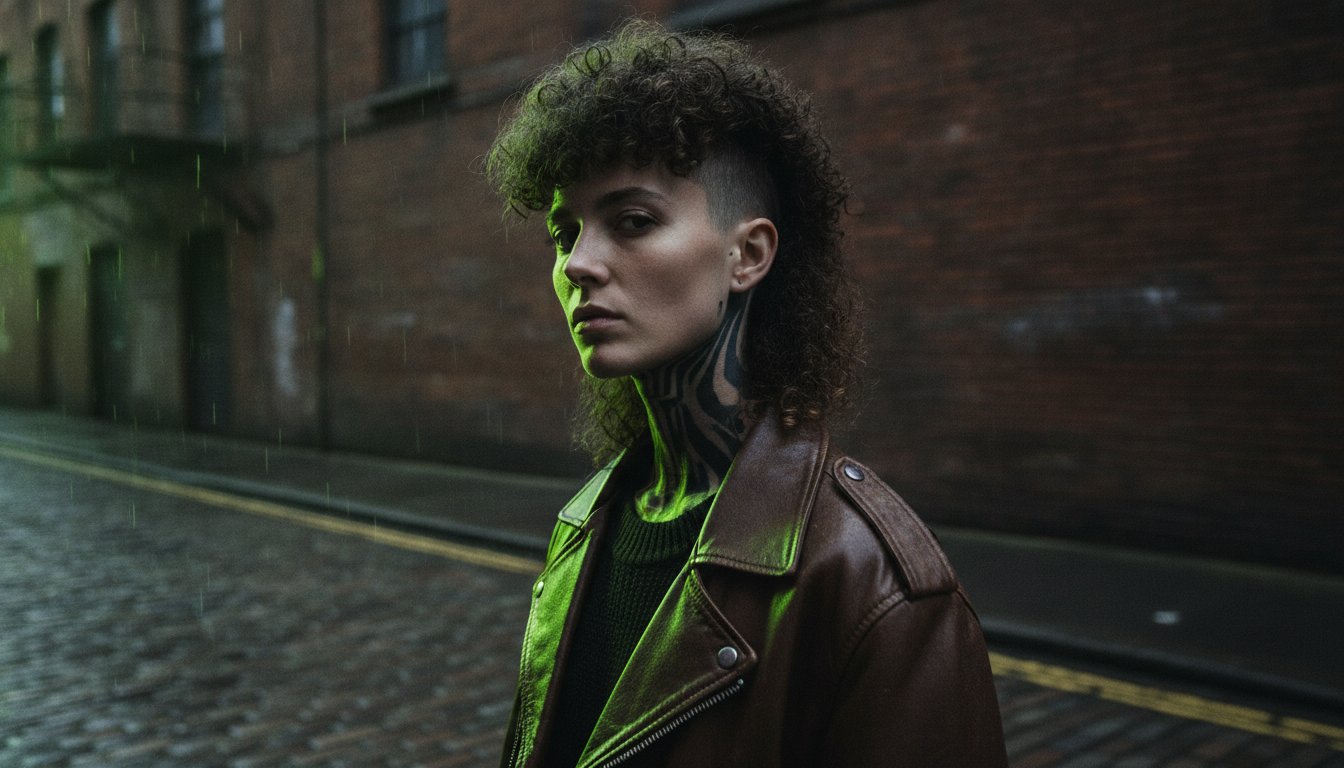
Absolutely, curly hair provides natural volume that makes an alternative mullet look incredible. The key is to cut the hair whilst dry to see exactly how each curl sits and bounces. Avoid over-thinning the ends, which leads to frizz. Instead, use deep point-cutting to remove bulk. This ensures your curls frame your face with intent rather than looking like an accidental mop of hair that has lost its shape.

What should I do if I cut the top of my mullet too short?

If the top is too short, you should lean into a “shullet” or wolfcut hybrid to re-balance the shape. Shorten the transition area between the crown and the nape to create a more cohesive vertical line. This is one of the common mullet cutting mistakes to avoid, but it is fixable. Use a matte product like Death Grip to add piecey texture, which helps mask the lack of length whilst it grows back with intent.

How do I explain an alternative mullet to a traditional barber?

Show them clear visual references from subcultural scenes rather than celebrity magazines. Use specific terms like “intentional disconnection” and “jagged texture”. Tell them you want to avoid a “tidy” finish and prefer a razor-cut edge. If they seem hesitant about leaving the back long whilst skin-fading the sides, they might not be the right fit. A traditional barber often prioritises symmetry over the aggressive grit that defines this style.

Is it possible to have a mullet with fine or thin hair?

Yes, fine hair can look surprisingly dense with the right technical approach. You need to focus on internal weight removal to create lift at the root without stripping the perimeter. Avoid using heavy oils or waxes that collapse the shape. Instead, use a volume-boosting spray like Hair To the Throne. This provides the structural support needed to maintain a bold silhouette without the hair appearing sparse or stringy whilst you move.

How often should I trim my mullet to keep the shape sharp?

You should aim for a professional trim every six to eight weeks to maintain the aggressive silhouette. The “party” at the back grows at the same rate as the “business” at the front, which can lead to a loss of balance. Regular maintenance ensures the disconnection remains deliberate. If you wait too long, the layers begin to blend into a generic shag, losing that sharp, alternative edge that sets you apart.

What are the best products for styling a textured mullet?

The best results come from products that provide a dry, matte finish with high hold. We recommend Hair To the Throne for initial volume and grit on damp hair. Once dry, use Death Grip to define individual sections and create a piecey, aggressive look. These tools help you avoid common mullet cutting mistakes to avoid by providing the structural support that a technical cut needs to truly shine in a high-energy environment.

Can a mullet be professional for a workplace environment?

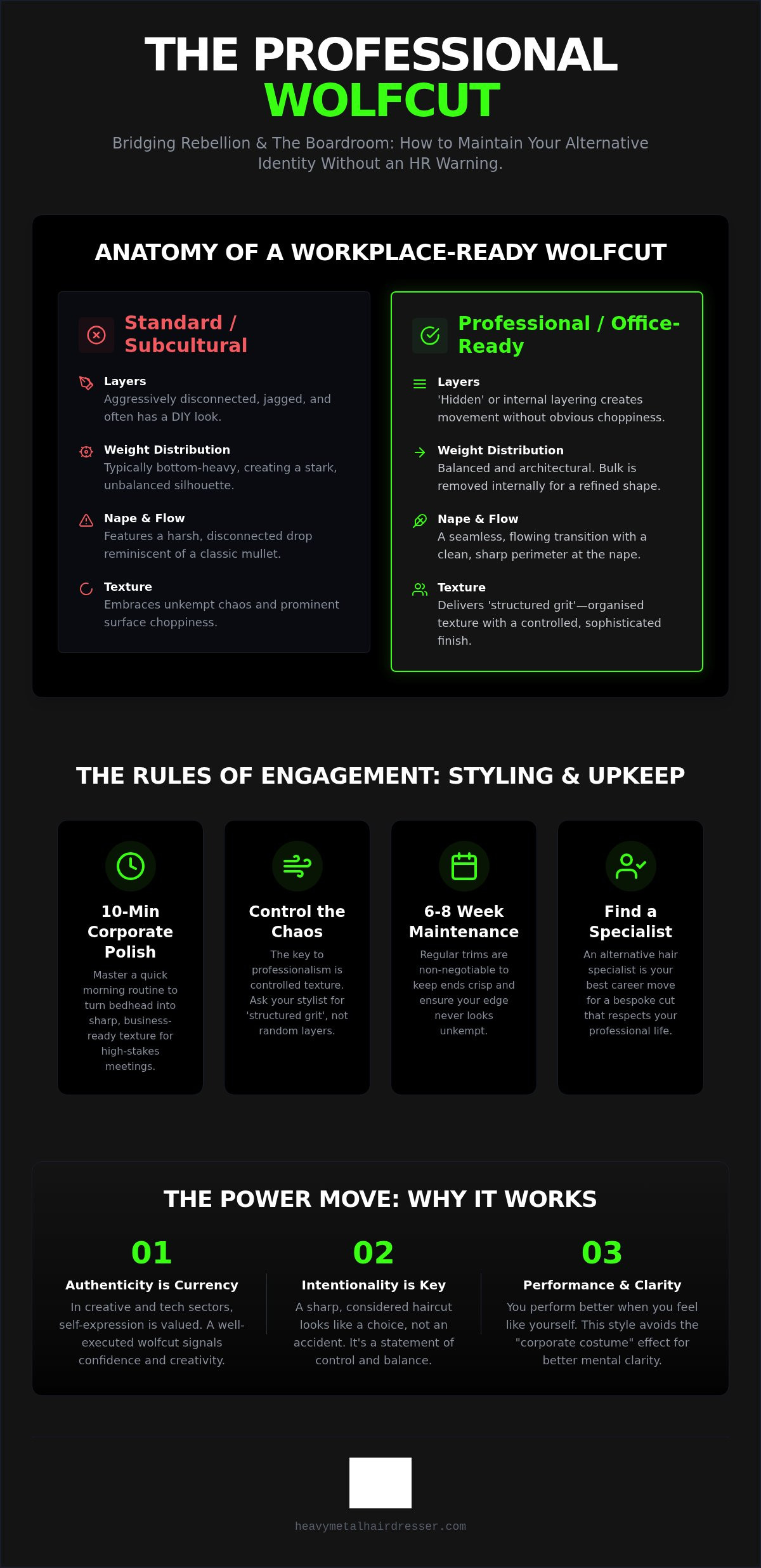
A well-executed mullet is a powerful statement of identity that can absolutely work in professional settings. It comes down to the balance of the cut and how you carry it. A modern mullet with clean, intentional lines looks like a high-fashion choice rather than a lack of grooming. By focusing on a sharp silhouette and healthy hair, you project confidence and creativity, which are valued traits in any modern career path whilst staying authentic.

Posted on

The Modern Mullet Revolution: A Guide to Alternative Texture and British Subculture

The Modern Mullet Revolution: A Guide to Alternative Texture and British Subculture

Your haircut shouldn’t be a polite suggestion; it should be a percussive weapon of subcultural rebellion. For too long, the mainstream has treated the mullet as a retro punchline or a “business in the front” cliché. You’ve likely felt the sting of a stylist who tries to make your alternative edge look “neat” or “manageable.” It’s frustrating when you want grit and volume but walk out looking like a polished extra from a period drama. Finding a proper mullet haircut Nottingham that understands the weight of a heavy bassline is harder than it should be.

We agree that your hair is the ultimate tool for self-expression. It needs to survive the sweat of the front row and the chaos of your favourite mosh pits whilst retaining its bite. This guide promises to help you reclaim the mullet as a bold, textured statement of identity. We will explore how to inject life into fine hair and the secrets to achieving that raw, unpolished finish. We’ll also dive into why subculture is the heartbeat of every cut. From the “Death Grip” of styling to the “Hair To the Throne” mindset, we’re breaking every traditional rule to ensure your look is unapologetically you.

Key Takeaways

  • Learn how the modern alternative mullet ditches the 80s “dad” vibe for aggressive layers and intentional weight distribution.
  • Master the three pillars of a gritty cut, including the fringe, the sides, and the ‘party’, to create a silhouette that serves as a tool for self-expression.
  • Compare the wolfcut, shag, and mullet to find the perfect textured cut for your hair type whilst seeking a mullet haircut nottingham that respects your alternative identity.
  • Discover the secret to mosh-pit survival with expert styling tips for volume and grit that lasts through your favourite festival sets.
  • Understand why a gender-inclusive, subculture-driven environment is vital for those who want their aesthetic to reflect their underground roots.

What Defines the Modern Alternative Mullet in the UK?

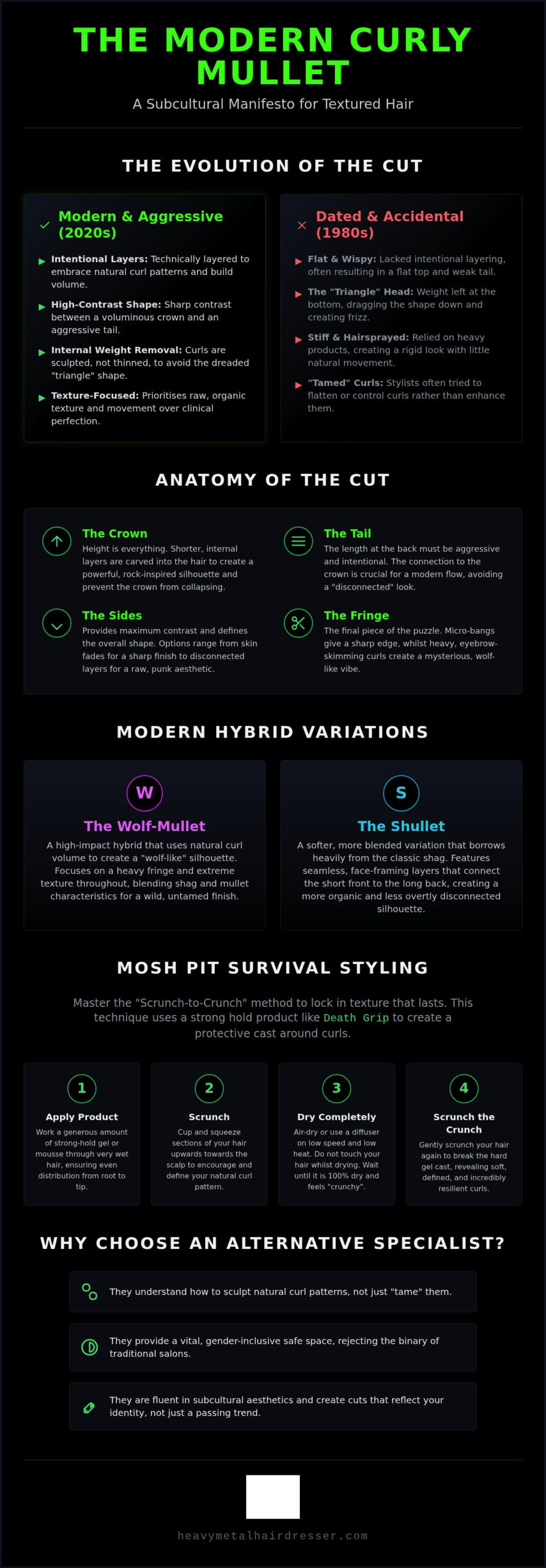
The modern mullet isn’t a costume or a nostalgic throwback. It’s a calculated blend of aggressive layers and intentional weight distribution designed to frame the face whilst leaving enough length to move. Unlike the “dad mullet” of the 1980s, which often felt accidental or overly feathered, the alternative version is deliberate. It’s sharp. It’s heavy. It’s built for those who live outside the mainstream. If you are searching for a mullet haircut nottingham, you aren’t looking for a “short back and sides” with a bit of length. You’re looking for a silhouette that mirrors the intensity of the music you listen to.

The history of the mullet shows a style that has constantly shifted between utility and ridicule. In the UK underground, it has been reclaimed as a badge of honour. From the sweaty basement venues of the punk scene to the main stages of Bloodstock, this cut signifies a refusal to blend in. The alternative mullet is a percussive tool for self-expression.

The Evolution of Subcultural Hair

The mullet moved from a punchline to a symbol of rebellion amongst outsiders. Punk, metal, and queer cultures took the basic shape and weaponised it, creating something far more extreme than its predecessors. Today’s silhouettes prioritise grit over neatness. A modern alt-mullet shouldn’t look like it was finished with a round brush and hairspray. It should look like it just survived a three-day festival. It’s about being unapologetically visible in a world that often demands conformity.

Why Texture is the Secret Ingredient

Standard thinning just removes bulk. Aggressive texturing creates character. We don’t just “tidy up” the ends; we carve into the hair to create “disconnected” layers that provide maximum lift. This is what gives the hair its “shattered” look. It’s the difference between a flat, lifeless cut and a modern mullet haircut that actually moves whilst you’re in the pit. When you get a mullet haircut nottingham at a specialist salon, the focus is on how the hair behaves when you aren’t standing still. It needs to look just as good messy as it does styled. This aggressive approach to texture ensures your hair feels like a weapon rather than just a style choice.

The Anatomy of a Gritty, Textured Mullet

A great mullet isn’t a happy accident. It’s an engineered structure built on three rigid pillars: the fringe, the sides, and the ‘party’ at the back. When you book a mullet haircut nottingham, you’re looking for a stylist who treats your head like a sculpture rather than a lawn. We use ‘disconnected’ layers to create sharp, jagged edges that refuse to blend. This isn’t about traditional transition; it’s about contrast. It’s about making a statement that cannot be ignored. The ‘party’ at the back needs intention. We look at the ‘drop’ from the crown to the nape to determine how much volume you carry. Too much weight and it looks dated; too little and it loses its edge.

Percussive cutting is the secret. We don’t just snip. We carve. We channel air into the hair. This technique adds immediate volume and prevents the style from looking like a flat helmet. A 1999 sociological study of the mullet noted its power as a cultural signifier amongst the alternative crowd, and that power remains today. Every mullet haircut nottingham must be tailored to your bone structure. If you have a strong jaw, we use the weight at the back to balance it. If your identity is sharp and industrial, we lean into the aggression of the sides to ensure your look is a weapon of self-expression.

Choosing Your Fringe: Micro-Bangs to Shaggy Layers

The fringe dictates the level of aggression. Micro-bangs are for those who want a sharper, more industrial look that screams intent. They open up the face and put your features on display. If you prefer a softer, 70s-inspired vibe, shaggy layers that graze the eyebrows offer a more fluid aesthetic. Both options work, but they tell different stories about who you are and what you stand for.

Managing Weight and Flow in Thick Hair

Thick hair can easily turn a mullet into a heavy, shapeless mass. We manage this by ‘carving’ the hair from the inside out to remove bulk whilst maintaining the iconic silhouette. This ensures the back doesn’t look like a stray ‘tail’ but a deliberate, powerful extension of the style. You want flow, not weight. If you’re ready to transform your look, check out our range of alternative styles to find your next weapon of self-expression.

Mullet vs Wolfcut vs Shag: Finding Your Weapon

Your hair is a signal. Choosing between a mullet, a wolfcut, or a shag depends on how loud you want that signal to be. The mullet is the most aggressive choice in the alternative arsenal. It demands attention with its sharp disconnection and heavy back. If you are searching for a mullet haircut nottingham, you’ve already decided to stand out from the crowd. The shag is its effortless, rock ‘n’ roll counterpart, whilst the wolfcut bridges the gap with explosive volume. Your decision framework should rest on two things: your hair texture and your commitment to the mosh pit.

Thick hair handles the weight of a mullet tail best, allowing for a dense, powerful silhouette. Fine hair often thrives with a wolfcut because the shorter, aggressive layers create an illusion of density. If you want a “get up and go” vibe, the shag is your best friend. If you want a look that feels like a deliberate act of defiance, the mullet is the only answer. Consider your maintenance level before you commit. A mullet requires regular side-tapering to keep its bite, whereas a shag grows out with a lived-in grit that actually improves with age.

The Wolfcut: The Mullet’s Softer Cousin

Transitioning from a standard cut? The wolf hair cut is your entry point. It uses heavy facial framing to soften the aggression of a mullet whilst keeping the height at the crown. It’s the perfect choice for fine hair that needs a boost. The layers are more blended than a traditional mullet, making it feel less like a “weapon” and more like a textured frame for your identity. It’s an ideal way to test the waters of alternative hair without losing the safety net of face-framing length.

The Shag: 70s Grit and Rock ‘n’ Roll

The shag represents the resurrection of UK alternative hair as a gender-neutral staple. It is the easiest style to maintain between salon visits. You don’t need to be precious with it. In fact, it looks better when it’s messy. When you’re looking for a mullet haircut nottingham but want something slightly more fluid, the shag offers that 70s rock ‘n’ roll edge. It’s about movement and texture rather than the rigid structure of a mullet. It’s the ultimate choice for those who spend more time in the pit than in front of a mirror.

The Modern Mullet Revolution: A Guide to Alternative Texture and British Subculture

Styling and Maintenance for Mosh-Pit Survival

A mullet that looks good in a salon chair is easy. A mullet that survives a twelve-hour festival set is a different beast entirely. You need a styling routine that prioritises grit over perfection. We focus on building a foundation of volume that won’t collapse the moment the first chord hits. For those rocking a mullet haircut nottingham, the goal is to create a shape that feels alive. It should move when you move, but it shouldn’t lose its structural integrity. You can find more detailed breakdowns in our guide on how to style a modern mullet.

Texture is your best friend. Salt sprays are essential for that raw, beach-meets-basement-show finish. If you want maximum chaos, use a diffuser on a low heat setting to explode the layers. This adds air and separation. If you prefer a more natural, lived-in look, air-drying allows the weight of the hair to settle into its own rhythm. Either way, you need products that act as a scaffold for your style without making it feel like plastic.

The ‘Death Grip’ Approach to Texture

We use Death Grip to lock in the silhouette. It provides the hold you need for a mosh pit whilst keeping the hair touchable. It isn’t about being “crispy”. It’s about control. When you’re on day three of a festival and dry shampoo isn’t cutting it, a quick blast of Hair To the Throne at the roots will resurrect your volume. This isn’t just about vanity. It’s about maintaining your identity when the world around you is nothing but mud and loud music. These products are designed for the outsider who refuses to compromise on their aesthetic.

Maintaining the Shape Between Visits

Alternative hair is a commitment. To keep your mullet haircut nottingham looking sharp, you should book a trim every six to eight weeks. This prevents the back from becoming a shapeless mass and keeps the sides tight. Never attempt a bathroom mullet trim. It always ends in disaster. We’ve seen the results of kitchen scissors and a few beers. It isn’t pretty. Trust the experts who understand the nuances of subcultural hair. If you want to keep your soul intact during the grow-out phase, come and see us for a maintenance session. Ready to sharpen your edge? Book your next session with our expert team.

The Heavy Metal Hairdresser Experience: More Than a Cut

Traditional salons often feel like a clinical mismatch for anyone living outside the mainstream. You walk in with a vision. You walk out with a compromise. We hate that. This space was built to be the opposite. It is a gender-inclusive safe space where being an outsider is the standard, not the exception. When you are hunting for a mullet haircut nottingham, you deserve a stylist who speaks your language. Simon Tuckwell founded this salon on the principle that hair is a tool for rebellion. We have ditched the vapid salon chatter about weather and holidays. Instead, we have fostered a high-energy, community-driven vibe where your identity is celebrated rather than tolerated.

Choosing an alternative specialist matters. Complex textured cuts require a deep understanding of subcultural nuances that traditional barbershops simply don’t grasp. A generalist might see a fleeting trend; we see a legacy of punk and metal. We treat every appointment as a dedicated transformation. This is why we operate on a strictly no walk-ins basis. You get our full, undivided expertise and a seat in a space that respects your aesthetic. It is about more than just hair. It is about finding a tribe that understands the weight of a heavy bassline.

Backstage Expertise Brought to the Chair

Our techniques aren’t just learned in a classroom. They are forged in the mud and chaos of festivals like Download and Bloodstock. Styling for bands backstage has taught us how hair needs to perform under pressure. We bring that rockstar aesthetic directly to the chair. Whether you are on stage or in the front row, your cut needs to survive high-energy movement. Our methods are built for expressive identities that refuse to be quiet. We understand the grit because we live it. Every snip is informed by the energy of the pit.

Saturation and Identity: Vivid Colour and Mullets

A mullet is a statement of shape, but vivid hair colour is a statement of soul. Saturating your texture in high-pigment tones can elevate the aggressive layering we have explored. It makes the shattered ends pop and the disconnected layers scream. In our safe space environment, we prioritise identity-affirming hair that makes you feel like the most authentic version of yourself. This is more than a service; it is a reclamation of your image. Your mullet haircut nottingham is the foundation, and our expert colour work is the finishing blow. Secure your dedicated slot now to begin the transformation.

Own Your Alternative Edge

The modern mullet is no longer a retro relic. It is a percussive statement of intent. You have seen how a true alternative cut requires more than just length at the back; it demands aggressive, disconnected layers and intentional weight distribution. From the sharp aggression of micro-bangs to the festival-tested volume of the wolfcut, your hair is the ultimate tool for self-expression. It should thrive in the mosh pit and reflect the subcultures you belong to. Finding a mullet haircut nottingham that respects your identity means choosing a specialist who lives and breathes the underground scene.

At Heavy Metal Hairdresser, we bring our backstage expertise from festivals like Download and Bloodstock directly to the chair. We offer a gender-inclusive safe space where your outsider status is celebrated. There is no traditional salon chatter here; only expert craftsmanship and a community that understands your aesthetic. It is time to stop compromising with generalist stylists who don’t get the vision. Secure your transformation at Heavy Metal Hairdresser and walk out with a cut that feels like a weapon. Your evolution starts now.

Frequently Asked Questions

Is a mullet haircut high maintenance for someone in the UK?

A mullet is surprisingly low maintenance for daily wear whilst requiring regular professional upkeep to stay sharp. You don’t need to spend hours with a blow-dryer; the grit comes from the cut itself. However, to maintain the iconic silhouette and prevent it from looking like an accidental grow-out, you should book a trim every six to eight weeks. This ensures the sides remain tight and the back keeps its deliberate, aggressive shape.

Can I get a mullet if I have very fine or thin hair?

You can absolutely rock this style with fine hair because the aggressive texturing creates an illusion of density. We use specific carving techniques to add air and lift at the roots, preventing the hair from lying flat. When searching for a mullet haircut nottingham, it’s vital to find a stylist who understands how to manipulate weight distribution. By removing bulk in the right places, we make thin hair appear much fuller and more energetic.

What is the difference between a mullet and a wolfcut?

The main difference lies in the level of disconnection and facial framing. A mullet typically features shorter, tighter sides and a more dramatic drop to the length at the back. A wolfcut is essentially the mullet’s softer cousin, using shaggier layers and more hair around the face to create a hybrid between a shag and a mullet. If you want maximum aggression and a sharp contrast, the mullet is your best weapon.

How do I style a mullet for a music festival or concert?

Survival in the mosh pit requires products that lock in shape without making your hair feel like plastic. Start with a salt spray for a raw foundation, then use a diffuser to explode the layers for maximum volume. We recommend using Death Grip to secure the silhouette before you head to the stage. If you’re on day three of a festival, a blast of Hair To the Throne will resurrect your roots and maintain that essential grit.

Is the mullet a gender-neutral haircut?

Yes, the mullet is a completely gender-neutral haircut that prioritises identity over traditional beauty standards. It has been a staple of queer and alternative subcultures for decades because it defies the binary. Our salon operates as a gender-inclusive safe space where your aesthetic is the only thing that matters. We focus on tailoring the cut to your bone structure and personal vibe rather than following outdated rules about who should wear which length.

Do I need to use specific products to maintain a textured mullet?

You need specific professional products to maintain the shattered texture that defines an alternative cut. Standard supermarket shampoos often weigh the hair down with silicones, killing the volume you need. We suggest using Hair To the Throne for root lift and Death Grip for a textured, matte finish. These products are engineered for the chaos of the alternative lifestyle, ensuring your layers stay separated and sharp even after a long night at a show.

How long does my hair need to be before I can get a mullet?

You generally need about two to three inches of length at the nape of your neck to establish the tail of the mullet. The top and sides can be much shorter, as the disconnection is what gives the cut its bite. If you are starting from a buzz cut or a short crop, we can still map out the shape and begin carving the texture as it grows. The goal is to create a deliberate silhouette at every stage.

Why should I choose an alternative hair salon over a regular hairdresser?

Choosing an alternative specialist ensures your stylist actually understands the music, fashion, and subcultures that inform your look. Regular hairdressers often try to tidy alternative styles, which strips away the rebellion. We bring backstage experience from festivals like Download and Bloodstock to every chair. You won’t find vapid salon chatter here; instead, you get a community-driven environment where your desire for a gritty, unpolished aesthetic is fully understood and executed.

Posted on

The Curly Mullet Hairstyle: A Guide to Aggressive Texture and Subcultural Grit

The Curly Mullet Hairstyle: A Guide to Aggressive Texture and Subcultural Grit

The modern mullet isn’t some ironic throwback; it is a textured manifesto for the subcultural underground. If you’ve ever left a traditional salon looking like a shapeless poodle because the stylist feared your natural volume, you know the struggle is real. Embracing a curly mullet hairstyle shouldn’t mean compromising on your identity or settling for a dated accident. You deserve a look that carries as much grit as your favourite record.

We are here to help you master this high-impact cut with zero apologies. You will learn how technical layering creates that essential crown volume whilst keeping your length aggressive and intentional. We’ll break down the subcultural variations that set you apart from the mainstream. We’ll also cover the styling secrets needed for maximum mosh pit survival, including how to use Death Grip for a finish that stays put. From understanding the wolfcut hybrid to finding a gender-inclusive space that actually gets it, this is your blueprint for texture. It is time to ditch the frizz and embrace the chaos.

Key Takeaways

  • Learn to distinguish a modern, high-contrast cut from a dated 80s accident by focusing on your natural curl patterns.
  • Ditch the dreaded triangle shape with internal weight removal techniques that balance crown volume with an aggressive, textured tail.
  • Identify the best curly mullet hairstyle hybrid for your look, including the high-impact wolf-mullet and the face-framing shullet.
  • Master the scrunch-to-crunch method using Death Grip to keep your texture intact through the most intense mosh pits.
  • Find out why alternative specialists provide a vital, gender-inclusive safe space for those rejected by traditional high-street salons.

What is a Modern Curly Mullet Hairstyle?

The modern curly mullet hairstyle is a high-contrast, aggressive statement. It prioritises raw texture over the clinical perfection of high-street styling. Forget the “business in the front, party in the back” nonsense that mainstream media loves to recycle. This isn’t a joke or a costume. It’s a technical, layered cut designed to embrace natural curl patterns whilst maintaining a sharp, subcultural edge. Traditional stylists often try to “tame” curls. We do the opposite. We use them to build height and attitude that a standard fade could never achieve.

Whilst the 80s version often looked like a flat, wispy accident, the 2026 “alt” mullet is all about intentional weight. It thrives on the organic chaos of curls. This shape has become a uniform amongst the metal and punk scenes, offering a silhouette that commands space. It’s built for those who find beauty in the grit and power in being different. This cut doesn’t just sit on your head; it works with your hair’s natural behaviour to create something fierce and functional.

The Evolution of the Alternative Mullet

Tracing the mullet hairstyle history reveals a path from 70s glam rock rebellion to its current status as a subcultural staple. In the past, the mullet was often bound by rigid, awkward proportions. Today, it has evolved into a powerful tool for gender-neutral expression. It breaks the binary of traditional hairdressing. The modern version focuses on the “shag” influence, blending the length and the crown with seamless, internal layers. It’s about how the hair moves, not just how it sits. This shift prioritises a textured, lived-in feel over the stiff, hairsprayed looks of previous decades.

Why Curls Change the Mullet Game

Curls are the perfect medium for an aggressive shape. Natural volume creates a “wolf-like” silhouette that straight hair can’t mimic without heavy product intervention. The bounce and spring of a curl provide an organic lift at the crown, which is essential for that high-impact profile. Curls are also practical for the alternative lifestyle. They hide growth stages effectively and maintain their shape even after a night in a crowded venue.

A professional curly mullet hairstyle serves as a visual manifesto, turning natural texture into a defiant badge of subcultural identity. It’s the ultimate way to reclaim your curls from the boring, polished standards of the mainstream.

The Anatomy of an Aggressive Curly Mullet: Layers and Weight

Engineering a high-impact curly mullet hairstyle requires more than just a pair of scissors. It demands a deep understanding of how curls stack and move. Most traditional salons fail because they treat curls as a problem to be solved rather than a medium to be sculpted. They leave you with a “triangle” head. This happens when weight is left at the bottom, dragging the crown down and flattening your silhouette. We fix this through aggressive internal weight removal. It is about creating space within the hair so each curl has the freedom to bounce and coil without being crushed by bulk.

The cultural symbolism of the mullet is rooted in rebellion. Your cut should reflect that. You need a sharp, intentional contrast between the height of the crown and the length of the “tail” at the back. If the transition is too soft, it looks like a dated mistake. If it is too disconnected, it can lose its organic flow. Your fringe is the final piece of the puzzle. Micro-bangs offer a sharp, punk-rock edge. Heavy, eyebrow-skimming curls provide a more mysterious, “wolf-like” vibe. Both require technical precision to ensure they don’t collapse into a frizzy mess by midday.

Managing Curl Weight and Bulk

Traditional thinning shears are the enemy of the alternative mullet. They shred the hair, creating “fuzz” and destroying curl definition. We use a technical “carving” method instead. This involves cutting into the curl pattern to encourage movement and grit. It allows us to remove bulk whilst keeping the curl intact. The sides play a massive role in the final shape. You have options:

  • Skin Fades: For maximum contrast and an aggressive, modern finish.
  • Tapers: For a more blended, traditional subcultural look.
  • Disconnected Layers: For a raw, DIY aesthetic that screams punk.

The Crown: Creating Height Without the Frizz

Height is everything. Shorter layers at the top create the signature rock silhouette that defines this look. We inject chaos into the texture whilst maintaining curl integrity. It is a delicate balance of grit and health. If you want to explore how these layers can merge into even more extreme shapes, check out the ultimate wolf hair cut guide for a deeper dive. Finding a stylist who understands this technicality is vital. If you’re ready to ditch the high-street boredom, you should visit an alternative specialist who understands your aesthetic.

Modern Variations: From the Wolf-Mullet to the Shullet

The curly mullet hairstyle isn’t a static look. It’s a versatile template that adapts to your specific subculture. Whether you’re fronting a band or losing yourself in an underground rave, there’s a variation that fits your vibe. We’ve moved past the “slick-back” styles found in mainstream catalogues. Instead, we embrace the modern mullet revival by pushing the boundaries of what texture can do. These variations aren’t just about length; they’re about how you frame your identity.

For those in the underground electronic scene, the Curly Euro-Mullet has become a staple. It features tighter, often buzzed sides that transition sharply into a dense, curly tail. It’s clean but aggressive. If you want something even more punk-inspired, the Burst Fade Mullet focuses the fade around the ear. This creates a circular, “burst” effect that makes your curls pop with maximum contrast. It’s high-energy and requires zero apologies.

The Wolf-Mullet: Maximum Chaos

The Wolf-Mullet is the ultimate hybrid for those who refuse to choose between a shag and a mullet. It takes the heavy, choppy layers of a wolfcut and stretches the back for that signature mullet silhouette. Expect extreme volume and a wild, unkempt finish that thrives at festivals. Unlike a standard modern mullet haircut, the wolf variant prioritises shaggy internal texture over clean lines. It’s the favourite of musicians who want their hair to move as much as they do on stage. It’s raw. It’s loud. It’s chaotic.

The Shullet: A Softer Edge

If you aren’t ready for a skin-fade but still want to ditch the mainstream, the Shullet is your entry point. It blends 70s shag aesthetics with the mullet’s distinctive length. This style is perfect for transitioning from a standard shag into something more daring. It keeps the face-framing curls that soften your features whilst maintaining the length in the back. You get the best of both worlds:

  • Internal Layers: These keep the crown high and prevent the hair from dragging.
  • Face Framing: Heavy fringe and side pieces hug the jawline to add mystery.
  • Versatility: The Shullet works with everything from loose waves to tight coils.

The Shullet proves that grit doesn’t always have to be sharp. It can be textured, lived-in, and unapologetically cool without the harshness of a buzz saw. It’s about finding the balance that feels like you.

The Curly Mullet Hairstyle: A Guide to Aggressive Texture and Subcultural Grit

Styling Your Curls for Grit, Volume, and Mosh Pit Survival

Most high-street curl guides focus on “pretty” results. They push heavy oils and shine-enhancing creams that leave you looking polished and precious. That doesn’t work for a curly mullet hairstyle. You need grit. You need volume that fights back against humidity and movement. We prioritise a matte, deconstructed finish that actually looks better as the night goes on. This isn’t about perfection. It is about structure and survival.

The “scrunch-to-crunch” method is your secret weapon for alternative styling. Instead of fearing the product cast, we use it to lock in an aggressive shape. You apply your styler to soaking wet hair, let it dry into a hard shell, and then “scrunch” it out. For a subcultural look, don’t over-scrunch. Leave some of that tension in the hair. It creates a “dirty” texture that stays upright whilst everyone else’s hair is falling flat. Between washes, don’t reach for the water spray. Use dry shampoo to add “dirt” and grip to the roots, maintaining that lived-in, effortless aesthetic.

The Alternative Styling Routine

Getting the height right requires a methodical approach. Follow these steps to ensure your crown doesn’t collapse:

  • Step 1: Apply a volumising base like Hair To the Throne to damp roots. Focus on the crown and the fringe area to build a foundation of lift.
  • Step 2: Use a diffuser on a low-heat, low-airflow setting. Tilt your head upside down to encourage aggressive volume. Do not touch the curls until they are 100% dry.
  • Step 3: Once dry, take a small amount of Death Grip. Rub it between your palms and manipulate individual curls. This deconstructs the pattern and adds a matte, gritty finish.

Survival Tips for Gigs and Festivals

A curly mullet hairstyle faces its toughest test in a crowded venue. Heat and sweat are the enemies of volume. If you’re heading into the pit, you need products that offer a “death grip” on your style. Dry shampoo is vital here. It isn’t just for cleaning; it adds a layer of friction that prevents layers from sliding together and losing their definition. For more technical advice on maintaining this level of attitude, check out our guide on how to style a modern mullet. If you want to keep your texture sharp through the final encore, you need to stock up on professional-grade grit before your next show.

Choosing an Alternative Specialist for Your Curly Transformation

Traditional high-street salons are often built on rigid, mainstream beauty standards. They prioritise “neatness” and “suitability” over raw self-expression. If you walk in asking for an aggressive curly mullet hairstyle, a standard stylist might try to talk you out of it. They might suggest softening the layers or “taming” the frizz. This happens because they don’t understand the subcultural grit required for an authentic alt-cut. You aren’t looking for a “pretty” haircut; you’re looking for a visual manifesto. You need a specialist who understands that hair is a tool for identity, not just a service to be performed.

When scouting for a stylist, look at their portfolio for more than just technical skill. Search for shags, mullets, and heavy texture. If their feed is full of “lived-in blondes” and bridal updos, they likely won’t have the technical proficiency to carve out the internal weight needed for a curly mullet. You want to see evidence of vivid colours and high-contrast shapes. Communication is your best tool here. Use subcultural references from the music and art scenes you love. Mention specific bands, eras, or aesthetics. A specialist will know exactly what you mean when you ask for “mosh pit survival” hair.

Finding a Safe Space Salon

A salon should be a refuge, not a source of anxiety. Inclusive environments are vital in the hair industry, especially for those who exist outside the mainstream. One hallmark of a progressive, alternative salon is gender-neutral pricing. This ensures that you are charged for the time and skill involved in your cut, rather than being forced into a gendered “tax” for self-expression. Heavy Metal Hairdresser organises its space to celebrate individuality and foster a sense of belonging. It is a gender-inclusive safe space where your identity is respected and celebrated. We act as a knowledgeable guide for those who seek to express themselves through unconventional means.

Preparing for Your Appointment

Gathering the right references is essential for a successful transformation. Don’t settle for generic images. Bring album covers, gig photos, or street-style shots that capture the specific energy you want to project. This is also the time to discuss how vivid hair colour can elevate your new shape. High-pigment tones can highlight the technical layering of a curly mullet hairstyle, adding depth and even more attitude to your curls. Booking your transformation with a specialist ensures that the “alt-cut” soul is preserved. You deserve a stylist who acts as a supportive peer and understands the nuances of your community.

Reclaim Your Texture and Command the Pit

Your hair is the loudest thing about you. Mastering the curly mullet hairstyle isn’t about chasing a fleeting trend; it’s about reclaiming your texture from the clinical boredom of the high street. You now have the technical blueprint for internal weight removal, the knowledge of gritty styling, and the confidence to choose a specialist who understands your subcultural soul. Whether you’re fronting a band or losing yourself in the crowd, your curls are finally working for you.

We don’t do polished. We specialise in aggressive, textured alt-cuts designed for mosh pit survival. Our team brings the same expertise seen backstage at Download and Bloodstock to every chair in our gender-inclusive safe space. It’s time to stop hiding your natural volume and start using it to project your identity. Don’t settle for a stylist who fears your curls. Choose a rebel expert who knows how to sculpt them.

Ready to unleash your curls? Book your alternative transformation at Heavy Metal Hairdresser today.

Stay loud. Stay gritty. We’ll see you in the pit.

Frequently Asked Questions

Is a curly mullet high maintenance for daily wear?

A curly mullet hairstyle is actually lower maintenance than you might think. It thrives on a lived-in, gritty texture rather than clinical perfection. You don’t need to wash it daily; in fact, second-day hair often has more natural grip. A quick refresh with a volumising base like Hair To the Throne at the roots is usually enough to revive the crown. It’s about embracing the chaos of your natural pattern whilst keeping the silhouette aggressive.

Can I get a curly mullet if I only have wavy hair?

Wavy hair is a perfect foundation for this look. You don’t need tight coils to achieve an aggressive shape. Waves often provide a softer, “wolf-like” texture that is easier to style into a deconstructed finish. You will likely rely more on high-hold products like Death Grip to ensure your waves don’t fall flat during the day. The technical layering remains the same, focusing on building height at the top and length at the back.

How often should I trim my mullet to keep the shape sharp?

To keep the silhouette sharp and intentional, you should book a trim every six to eight weeks. Curls grow “out” as much as they grow “down,” so the internal weight can quickly become bottom-heavy. Regular maintenance ensures the crown stays high and the “tail” doesn’t become too wispy or tangled. If you leave it longer, the “triangle” shape usually returns, dragging down the overall impact of the cut.

Will a curly mullet work for thin or fine hair types?

This style is a secret weapon for thin or fine hair. The aggressive layering and weight removal actually create the illusion of much thicker hair. By stacking shorter layers at the crown, you generate natural lift that fine hair usually lacks. It’s about strategic sculpting. We remove bulk from the sides to make the top and back appear more dense and high-impact. It transforms flat hair into a textured, subcultural statement.

What should I ask my barber for to get an alternative curly mullet?

Avoid generic terms. Ask your specialist for a “high-contrast, textured alt-cut with internal weight removal.” Be specific about wanting a shaggy, disconnected crown and an aggressive tail. It’s always best to bring references from the music and art scenes you follow. This helps the stylist understand the “grit” you are aiming for. Mention that you want to avoid a “polished” finish in favour of something more raw and subcultural.

How do I stop my curly mullet from looking like a 1980s perm?

The key is the technical transition and the finish. The 80s look relied on soft blends and stiff hairsprays. The modern curly mullet hairstyle uses sharp tapers, skin fades, or “carved” layers to create a more aggressive, intentional silhouette. We prioritise matte, deconstructed textures over shiny, uniform curls. Using a matte paste instead of traditional gel ensures the hair looks gritty and modern rather than like a dated, chemically-treated accident.

Can I combine a curly mullet with vivid hair colours?

Vivid tones are the perfect partner for an alternative cut. High-pigment colours like neon greens, deep purples, or blood reds highlight the technical layering and make individual curls pop. It adds a visual depth that enhances the “grit” of the style. Many of our clients combine their transformation with creative colour to fully saturate their identity. It’s a bold way to ensure your texture stands out even in a dark, crowded venue.

Is the curly mullet considered a gender-neutral hairstyle?

The mullet is a powerful tool for gender-neutral expression. It completely bypasses the traditional binaries of “masculine” or “feminine” hairdressing. By blending various lengths and textures, it creates a shape that belongs to everyone. In a progressive, safe space salon, these cuts are valued for the skill and time they require, not the gender of the person in the chair. It is a universal badge of subcultural rebellion and individual pride.

Posted on

Medium Length Wolfcut for Fine Hair: Injecting Volume and Grit

Medium Length Wolfcut for Fine Hair: Injecting Volume and Grit

Fine hair isn’t a limitation; it’s an opportunity for strategic, high-impact chaos. Most stylists will tell you to play it safe with a blunt bob, but safety is boring. You want the edge of a subcultural icon without the fear of your hair looking like a wet rat by lunchtime. Choosing a medium length wolfcut for fine hair is the ultimate power move for anyone tired of flat, lifeless strands. It’s about reclaiming your identity through aggressive texture and precision layers that build height where you need it most.

We know the struggle of fighting for every bit of volume only to watch it collapse before your first coffee. You deserve a style that stays as loud as your music. This guide reveals how to master the wolfcut aesthetic whilst maintaining thickness and grit. We’ll explore the specific cutting techniques that create the illusion of density, the must-have products like Death Grip for that gritty finish, and the daily styling routines that won’t eat up your morning. It is time to stop hiding behind thin layers and start embracing a look that is unapologetically bold.

Key Takeaways

  • Learn why the medium length wolfcut for fine hair uses strategic disconnection to build height without thinning out your ends.
  • Discover how the collarbone sweet spot prevents gravity from weighing down your layers; this keeps your style sharp and defiant.
  • Master a gritty styling routine using rough-drying techniques and texture-heavy products like Death Grip to maintain volume all day.
  • Understand how a heavy fringe and crown-focused layering create the illusion of density for even the flattest hair types.
  • Find out why this alternative cut is a tool for self-expression that prioritises your subcultural identity over traditional beauty standards.

What is a Medium Length Wolfcut for Fine Hair?

The wolfcut is the rebellious middle child of the hair world. It takes the effortless cool of the 70s shag haircut and fuses it with the unapologetic attitude of an 80s mullet. For those seeking a medium length wolfcut for fine hair, this isn’t just about following a TikTok trend. It is about engineering volume where it usually doesn’t exist. Unlike standard layered cuts that often leave fine hair looking stringy, the wolfcut relies on aggressive, short layers at the crown to create a “wolfish” silhouette. You get that signature height at the top, tapering down into textured, face-framing chaos that feels raw and intentional. It is a specialised architecture for your head.

The medium length, typically resting between your collarbone and chest, is the secret weapon for fine strands. This specific length provides the best structural support. It offers enough weight to keep the style grounded so it doesn’t look like a “wet rat”, but it remains light enough for the top layers to spring into action. By keeping the base around the collarbone, we ensure the hair has enough “swing” to look thick whilst allowing the shorter layers to do the heavy lifting for your volume. It is the sweet spot where gravity and grit find a perfect balance.

The Aesthetic: Why Subculture Loves the Wolf

This look belongs to the alternative souls. It has deep roots in the rock and metal scenes, where hair has always been a tool for defiance. We are moving away from the “polished” salon finish that feels clinical and fake. The wolfcut is about authenticity. It celebrates the grit of a life lived at festivals and in independent venues. Amongst the alternative community, this cut is a badge of individuality. It doesn’t ask for permission to be messy. It demands it. It is a style that looks better as the day goes on, thriving on a bit of movement rather than staying frozen in place with traditional hairspray.

Fine Hair vs. Thin Hair: Knowing Your Canvas

Before we pick up the shears, we need to talk about your canvas. Fine hair refers to the actual diameter of each individual strand. Thin hair describes the density, or how many strands you have per square inch. A medium length wolfcut for fine hair works for both because it focuses on “visual density”. By creating multiple tiers of texture, we trick the eye into seeing more hair than is actually there. During a professional consultation, we assess your “rebound” potential. This is how well your hair bounces back when cut. We don’t do “standard” here. We customise the layers to ensure your hair doesn’t just hang there, but actually fights back against gravity. It is about turning a perceived weakness into a high-texture strength.

Engineering Volume: The Anatomy of a Wolfcut for Fine Strands

The biggest lie in the hair industry is that layers make fine hair look thinner. If you use traditional, uniform layering, that might be true. But a medium length wolfcut for fine hair relies on strategic disconnection. This means we create intentional gaps between the lengths to build height. By utilising strategic layering for fine hair, we can stack the hair in a way that creates a permanent lift. It is about building a structural foundation rather than just removing weight. We use internal layers as “scaffolding” to prop up the outer sections, ensuring your style doesn’t fall flat the moment you leave the house.

A heavy fringe is your best friend for creating the illusion of density. By bringing more hair forward from the crown, we create a solid “wall” of hair that frames the face. This shifts the focus away from the diameter of individual strands and onto the overall shape. To avoid the “mullet trap”, where the back looks sparse and stringy, we keep the perimeter slightly more solid whilst texturising the interior. This balance ensures you get the aggressive, choppy look of a wolfcut without sacrificing the appearance of thickness at the ends. If you’re ready to ditch the safe options, you can find a stylist who understands this rebellious architecture at Heavy Metal Hairdresser.

The Power of the Short Crown Layer

Short layers on top are the only cure for “flat-head” syndrome. In fine hair, the weight of longer strands pulls everything down, leaving you with zero volume at the roots. We cut these crown layers short enough to be self-supporting. They should stand up with just a bit of grit, not hang limp. The “shullet” transition, which blends the shag and mullet elements, is vital here. It creates a bulkier mid-section that connects the height of the crown to the length of the back, giving your hair a fuller, more aggressive profile from every angle.

Face-Framing for Impact

Face-framing is where the wolfcut gets its personality. For fine strands, we often recommend bottleneck fringes or heavy curtain bangs that melt into shorter cheekbone layers. The goal is to create as much movement as possible around your features. More layers around the face actually add weight to the look by creating multiple tiers of hair. We customise this frame based on your specific vibe, whether you want something jagged and punk or a slightly softer, lived-in edge. It is about making the hair look intentional and thick through sheer, chaotic texture.

Length Logic: Why Mid-Length is the Strategic Choice

Long hair is often the enemy of fine strands. It drags everything down. When you opt for a medium length wolfcut for fine hair, you are choosing structural integrity over vanity length. The collarbone is the ultimate sweet spot. It provides enough length to feel like a significant change, but it stays light enough for your layers to actually “spring” into action. Long wolfcuts on fine hair usually end up looking like a mistake by noon. Without the help of extensions, the bottom half becomes transparent and stringy. We want grit, not gaps. We want hair that fights back against gravity.

Transitioning into this style is easy. If you are growing out a short bob or a tighter mullet, the mid-length wolfcut is your best friend. It bridges the gap whilst keeping your aesthetic sharp. You don’t have to endure a “boring” phase. We use the existing shorter layers to build the crown height whilst the perimeter catches up to the collarbone. This length ensures the hair remains dense enough to support the aggressive texturising that defines the wolfcut look. It is about working with the physics of your hair rather than fighting against them.

The Mid-Length Advantage

Mid-length hair is a rockstar’s best friend because it is manageable. You can get that massive volume at home without needing a team of stylists. It is long enough to pull back into a messy bun when you’re in the pit, but short enough to maintain maximum lift at the roots. This length also supports vivid hair colour transitions perfectly. High-pigment shades like neon greens or deep purples look more intentional on a structured, mid-length cut than on trailing, thin ends. The saturation stays consistent from root to tip.

Avoiding the “Wet Rat” Look

How do you know if your hair is too fine for length? If you can see through your ends when you stand in front of a light, it is time to go shorter. We keep the perimeter blunt to ensure the base looks thick. This provides a solid frame for the chaotic layers above. If your hair is exceptionally fine, we might even suggest a modern mullet haircut as a higher-volume alternative. It follows similar logic but pushes the texture even further to ensure you never look like a wet rat. It is about maintaining that solid foundation whilst letting the interior layers go wild.

Medium Length Wolfcut for Fine Hair: Injecting Volume and Grit

Styling the Chaos: How to Maintain Grit and Texture

A medium length wolfcut for fine hair thrives on intentional disorder. If you are reaching for a round brush and a smoothing serum, stop. You are killing the vibe. To keep fine hair from looking limp, we need to strip away the weight and inject pure, unadulterated texture. It starts in the shower. Use a lightweight volumising wash and skip the heavy conditioners that turn your strands into silk. We want hair that has some “bite” and resistance. The goal is a style that looks like it has lived through a three-day festival and come out the other side with more attitude.

The styling process is a five-step ritual for maximum volume:

  • Step 1: Prep with a volume-focused wash to keep the base light and responsive.
  • Step 2: Rough-dry your hair with your head upside down. This forces the roots to stand up and stay there whilst the hair sets.
  • Step 3: Apply a texturising product like Death Grip to the mid-lengths and ends. This adds the “dirt” and structural support needed for that subcultural edge.
  • Step 4: Use a diffuser or simply scrunch-dry with your fingers. This encourages any natural wave to come out and play, creating the “wolfish” movement.
  • Step 5: Lock it in with Hair To the Throne. It provides an aggressive, matte hold that prevents your fine layers from collapsing by mid-afternoon.

If you want to master these techniques with professional guidance and get a cut tailored to your specific strands, book a session at Heavy Metal Hairdresser and let us weaponise your texture.

The Alternative Toolkit

Matte products are non-negotiable for this look. Shiny pomades and waxes are far too heavy; they will make your medium length wolfcut for fine hair look greasy and flat within hours. Dry shampoo is your secret weapon, but don’t wait for day three to use it. Blast your roots on day one to create a powdery foundation that holds the hair up. Ditch the traditional brushes. Your own fingers are the best tools for a deconstructed, raw finish. A diffuser attachment is the only bit of tech you really need to enhance that “lived-in” movement without creating unwanted frizz.

Maintaining the Edge Between Salon Visits

Fine hair loses its shape faster than thicker types. A 6-8 week “MOT” is essential to keep the fringe from getting too heavy and the crown layers from drooping. In the morning, don’t feel the need for a full wash. Spritz the hair with a bit of water, add some more texturiser, and rough-dry it again. It is about maintaining that “just rolled out of a gig” aesthetic. For more tips on handling this level of texture, check out our guide on how to style a modern mullet, as many of the same rules for grit and volume apply here.

Choosing Your Weapon: The Heavy Metal Hairdresser Approach

We don’t do “safe”. We definitely don’t do “standard”. At Heavy Metal Hairdresser, a haircut is never just a service; it is an identity-affirming transformation. If you have been told that a medium length wolfcut for fine hair is impossible for your strands, you have been listening to mainstream voices that fear texture. We thrive on it. We specialise in wolf hair cuts that defy the traditional rules of density. We use aggressive layering and precision disconnection to give you the height and grit you deserve. This is a safe space where your alternative soul is the priority, not an afterthought. We don’t just cut hair; we engineer volume for those who refuse to blend in.

More Than a Haircut: A Subcultural Experience

Our stylists don’t just work in a salon. They live the scene. From the mud of Download Festival to the intensity of Bloodstock, we have spent years styling the bands and fans who keep subculture alive. This history informs every cut we perform. We understand the nuances of alternative identities whilst maintaining a fiercely gender-inclusive environment. You aren’t just another appointment on a list; you are part of a community that celebrates being different. We know exactly how to translate your musical influences into a silhouette that speaks for you before you even open your mouth.

Take the Craft Home

For the rebels who want to master this architecture themselves, we offer specialised alternative hair courses UK. We teach the technical grit required to handle fine hair without losing the edge. You can also represent the brand with our official alternative hair merch UK, designed for those who value authenticity above all else. Whether you are looking to level up your styling skills or finally get the cut of your dreams, we are your guides. Ready to transform your fine hair? Book your wolfcut session today and claim your space in the alternative world.

Reclaim Your Texture and Identity

Fine hair doesn’t have to mean playing it safe with boring, flat styles. By choosing a medium length wolfcut for fine hair, you are opting for a silhouette built on strategic chaos and structural support. You now know that the collarbone sweet spot prevents gravity from winning, whilst aggressive crown layers provide the lift you’ve been missing. It is about using the right tools and techniques to turn thin strands into a high-impact, alternative statement that stays loud all day long.

At Heavy Metal Hairdresser, we provide a gender-inclusive safe space where your subcultural edge is celebrated. Our festival-tested styling expertise ensures your hair can handle the pit and the daily grind alike. We are specialists in alternative texture who understand that your hair is a vital tool for self-expression. Don’t let mainstream standards dictate your look any longer.

Ready to ditch the “wet rat” look for something with real bite? Book your alternative hair transformation at Heavy Metal Hairdresser today. Stop compromising on your aesthetic and start wearing the volume you deserve. Your hair is your canvas; let’s make it loud.

Frequently Asked Questions

Will a wolfcut make my fine hair look thinner?

A medium length wolfcut for fine hair actually makes your strands look thicker by using strategic disconnection. Unlike traditional layers that remove bulk, these aggressive tiers stack on top of each other to build height and visual weight. We keep the perimeter blunt to provide a solid foundation. This prevents the ends from looking transparent whilst the crown layers do the heavy lifting for your volume. It is about architecture, not just thinning.

How often should I get my medium length wolfcut trimmed?

You should book a trim every 6 to 8 weeks. Fine hair is prone to losing its structural integrity as it grows; the weight of just a few extra centimetres can pull those short crown layers flat. Regular “MOT” sessions keep the fringe sharp and the internal scaffolding strong. This frequency ensures your alternative silhouette remains defiant and doesn’t collapse into a shapeless, limp mess between major salon visits.

Can I have a wolfcut if I have straight, fine hair?

Absolutely. Straight, fine hair is a perfect canvas for the wolfcut because the bluntness of the strands highlights the jagged, choppy layers. You don’t need a natural wave to make this work; you just need the right texturising ritual. By rough-drying and using matte products, you can inject a “lived-in” grit that gives straight hair a rebellious, deconstructed edge it usually lacks. It turns “flat” into “fierce” with minimal effort.

What are the best products for styling a fine hair wolfcut?

Stick to matte, lightweight products that provide extreme hold without the grease. We recommend using Death Grip on your mid-lengths and ends to create that gritty, festival-ready texture. Finish the look with Hair To the Throne for an aggressive hold that keeps your crown layers from drooping. Avoid shiny pomades or heavy oils; these are the enemies of volume and can make your medium length wolfcut for fine hair look flat and oily.

Do I need a fringe for a wolfcut to work on fine hair?

A fringe isn’t mandatory, but it is highly recommended for building visual density. Bringing more hair forward from the crown creates a solid frame that makes the rest of your hair look much thicker. Whether you choose a bottleneck fringe or heavy curtain bangs, this added weight at the front balances the choppy layers in the back. It completes the subcultural aesthetic whilst providing a necessary boost to your overall volume.

How do I explain a wolfcut to my stylist without using corporate jargon?

Tell them you want a “shullet” or a shag-mullet hybrid with aggressive, short layers at the crown. Emphasise that you want to keep the perimeter blunt to maintain thickness whilst the interior is heavily texturised for height. Avoid words like “soft” or “blended”. Ask for a disconnected, choppy finish that looks raw and intentional. Bringing photos of alternative icons from the rock and metal scene is the best way to communicate.

Is the wolfcut high maintenance for people with fine hair?

It is surprisingly low maintenance because it thrives on imperfection. Unlike polished styles that require constant smoothing, a wolfcut looks better as it gets messier. You don’t need to spend hours with a round brush. A quick rough-dry and a blast of dry shampoo are often enough to revive the grit. It is a style designed for a fast-paced, creative life where looking “done” is the last thing you want.

Can I transition from a shag to a wolfcut easily?

Transitioning is a seamless process since both styles share the same rebellious DNA. To move from a shag to a wolfcut, your stylist will focus on shortening the crown layers to create a more aggressive, mullet-inspired height. We keep the length at the back around the collarbone to maintain that medium length silhouette. It is a simple shift in weight distribution that adds more grit and subcultural edge to your existing texture.

Posted on

The Curly Shag Haircut in Nottingham: A Guide to Alternative Texture

The Curly Shag Haircut in Nottingham: A Guide to Alternative Texture

Your curls aren’t a mess to be managed or a problem to be “tamed” by a clinical high-street stylist. Most traditional salons see texture as something to be flattened, but we see it as a weapon. If you’re hunting for a curly shag haircut nottingham, you’re likely tired of the dreaded “Christmas tree” shape and the total lack of volume at your crown. You want hair that reflects your subcultural edge, not a watered-down version of mainstream beauty.

We agree that your hair should be as loud as your favourite record. That’s why we’re showing you how to reclaim your texture with an aggressive, low-maintenance shag that defies every boring rule in the book. It’s about high-impact volume and a gritty, rock-inspired aesthetic that actually works with your natural curl pattern rather than fighting against it.

In this guide, we’ll dive into why the 2026 curly shag is the undisputed king of alternative styles. We’ll explore the power of dry-cutting for precision weight placement and how to maintain that effortless, messy silhouette with a routine that doesn’t eat up your morning. Get ready to ditch the “safe” cuts and embrace a style that’s as fiercely independent as you are.

Key Takeaways

  • Master the three pillars of an aggressive silhouette: crown volume, face-framing, and the strategic disconnection that mainstream stylists often avoid.
  • Understand why a curly shag haircut nottingham requires a specialist who prioritises your individuality over traditional, clinical beauty standards.
  • Learn the crucial differences between the balanced layers of a shag and the mullet-inspired grit of a wolfcut to select your ideal alternative look.
  • Adopt a five-step “Mosh Pit Survival” styling routine to maintain high-volume texture whilst keeping your curls looking raw and authentic.
  • Discover the value of a gender-inclusive safe space that views your natural curls as a tool for self-expression rather than a problem to be tamed.

Redefining the Curly Shag Haircut for the Alternative Scene

Forget the clinical, white-walled salons that treat your curls like a problem to be solved. The curly shag is a high-texture, multi-layered beast inspired by the raw energy of 70s rock and 90s grunge. It is the ultimate “anti-salon” look for anyone who feels out of place in a traditional setting. Most stylists want to “smooth” and “define,” but a curly shag haircut nottingham is about weaponising your natural volume. We do not hide frizz; we embrace it as a deliberate stylistic choice that adds grit and soul to your silhouette. It’s a rebellion against the polished, airbrushed standards that have dominated the industry for too long.

Whilst traditional shag hairdressers laid the groundwork, modern alt-specialists have pushed the boundaries of what textured hair can do. We have moved away from the “pretty” layers of the past towards something more jagged and authentic. This style is for the people who want their hair to look as loud as the music they listen to. It is about creating a shape that feels lived-in from the moment you leave the chair.

Why Curls and Shags are a Match Made in Hell

Curly hair naturally wants to expand outwards. Without the right structure, you often end up with the dreaded “triangle head” or “Christmas tree” shape. Shag layers destroy this silhouette by removing weight where it isn’t wanted and adding it where it’s needed. By using “shorthand” layers, we create vertical volume that stays at the crown rather than sliding down to the ends. This technique ensures your curls have the freedom to move and bounce without being dragged down by their own weight. This cut is also fiercely gender-inclusive. It does not care about traditional masculine or feminine “rules.” It is simply about the hair, the texture, and the person wearing it.

The Rebellious History of Textured Layers

This look has a lineage that screams. From Patti Smith’s iconic dishevelled layers in the 70s to the modern chaos of festival stages at Download and Bloodstock, textured layers have always belonged to the outsiders. In the metal and punk scenes, your hair is a badge of identity. We have seen a massive shift from the polished, “perfect” curls of the early 2000s to the aggressive texture of today. It is about looking like you just stepped off a tour bus, not out of a clinical spa. A curly shag haircut nottingham connects you to that subcultural history, giving you a style that feels both timeless and aggressively modern. We prioritise your individuality over mainstream “perfection” every single time.

The Anatomy of an Aggressive Curly Shag

Constructing a curly shag haircut nottingham requires a total shift in perspective. You aren’t just cutting hair; you’re building a silhouette that demands attention and refuses to blend in. A successful alternative shag rests on three distinct pillars: explosive crown volume, aggressive face-framing, and maintained perimeter length. Whilst mainstream salons aim for a seamless, “safe” transition between layers, we utilise “disconnection.” This technique involves creating layers that don’t technically “match” in length. It sounds like a mistake to the uninitiated, but it’s exactly how you achieve that extreme, high-texture shape. Mainstream stylists fear these gaps. We use them to weaponise your curls.

The “Death Grip” mindset is essential for this process. It is about taking control of the hair’s natural chaos rather than trying to suppress it. This isn’t a passive process. It involves looking at how every individual ringlet behaves and deciding where it needs to be shattered to create movement. If you’re ready to ditch the boring options, you can explore our specialist alternative techniques to see how we handle extreme texture.

Razor Cutting vs. Scissor Slicing for Curls

There is a persistent myth that razors are the enemy of curly hair. In the hands of a specialist, the opposite is true. We use a razor to create “shattered” ends, a technique borrowed from the metal barber scene. Scissor slicing can sometimes leave curls looking too blunt or “done.” A razor allows us to taper the ends of each curl, encouraging them to “kick” and move in different directions. This creates a raw, lived-in feel that scissors simply cannot replicate. It is about removing bulk from the inside out, ensuring your hair feels light whilst looking massive.

The Power of the Disconnected Fringe

Your fringe is the gateway to your entire alternative identity. In a curly shag, the fringe shouldn’t just “be there”; it should frame your face with intent. You might opt for a heavy curtain fringe that hits the cheekbones or a bold micro-fringe that opens up your features. The key is to keep it disconnected from the rest of the layers. This ensures the fringe remains gritty and defined whilst the rest of your hair stays wild. It is the focal point that ties the aggressive volume together. To keep it looking its best, focus on styling the fringe with a bit more tension, allowing the rest of your curls to do exactly what they want.

Curly Shag vs. Wolfcut: Choosing Your Textural Weapon

Choosing between these two looks isn’t just about length. It’s about deciding how much chaos you want to invite into your life. Whilst some stylists claim they’re the same thing, they couldn’t be more wrong. One is a balanced explosion of texture; the other is a mullet-adjacent strike against tradition. If you’re hunting for a curly shag haircut nottingham, you need to know which weapon fits your specific subcultural aesthetic and curl pattern. It’s the difference between looking like a 70s rock icon or a modern e-girl with a death-metal edge. Both styles celebrate individuality, but they communicate very different energies.

Your curl pattern plays a massive role in how these shapes settle. Tighter 3C ringlets will respond differently to disconnection than loose 2C waves. We don’t believe in a one-size-fits-all approach. We look at the way your hair naturally clumps and where it needs to be shattered to give you the most aggressive silhouette possible. It is about choosing the right tool for the job.

The Wolfcut: For Maximum Aggression

The wolf hair cut is the more extreme sibling. It thrives on heavy contrast. You have very short, choppy layers on the top and sides that transition into long, thin lengths at the back. It’s aggressively disconnected. This style has become the favourite of the modern “scene” and e-boy/e-girl aesthetics because it refuses to be subtle. For those with tighter 3C patterns, the wolfcut creates a massive, wild silhouette that feels architectural. It’s for the person who wants their hair to look like it was cut in a dark alley with a switchblade. The curls add a layer of unpredictable grit that straight hair simply cannot match.

The Shag: For 70s Rock Authenticity

The classic shag is more about the flow. Whilst it still uses heavy layering to destroy bulk, the transition between the crown and the perimeter is more blended than a wolfcut. It’s less “mullet” and more “rockstar.” This look is perfect for 2C or 3A curl patterns where you want to encourage better curl clumping and a more rounded, halo-like volume. If your wardrobe is full of vintage leather and band tees, the shag is your best bet. It offers a more authentic, lived-in vibe that feels timeless rather than just trending on TikTok. A curly shag haircut nottingham gives you that high-volume crown without the extreme “long-tail” effect of the wolfcut. It’s a balanced textural weapon that still packs a punch.

The Curly Shag Haircut in Nottingham: A Guide to Alternative Texture

How to Maintain and Style Your Curly Shag Whilst Keeping the Grit

Stop trying to make your curls look “polite.” The whole point of a curly shag haircut nottingham is the raw, unrefined energy it projects. Traditional “scrunching” is often too soft. It creates a “pretty” finish that doesn’t match a rock-inspired aesthetic. Instead, we embrace the “Death Grip” mindset. This means using products with enough backbone to hold the shape whilst you’re in the middle of a mosh pit. To keep your texture looking intentional, follow this 5-step Mosh Pit Survival routine:

  • Cleanse with a sulphate-free formula to protect your vivid hair colour.
  • Apply a gritty styler to soaking wet hair to lock in the volume.
  • Shake your head vigorously to encourage natural separation and movement.
  • Allow the hair to dry completely without touching it to prevent accidental frizz.
  • Disrupt the cast once dry to reveal a shattered, lived-in texture.

To prevent your silhouette from becoming “bottom-heavy,” you’ll need a maintenance trim every 8 to 10 weeks. This ensures the crown layers stay short and the volume remains where it belongs. If you’re ready to overhaul your routine, grab our specialist styling gear to start weaponising your texture today.

The “Air-Dry and Destroy” Method

Minimal product is the key to an authentic, raw finish. Whilst a curly shag haircut nottingham thrives on volume, the wrong products will weigh it down. Sea salt sprays are often better than heavy creams for this look. They provide a matte, shattered finish that looks far more alternative than a shiny, gel-heavy ringlet. You should stop brushing your curls immediately after the shower. Brushing separates the hair into thin, frizzy strands. By leaving the curls to clump naturally, you maintain the aggressive shape of the cut whilst keeping the ends looking sharp.

Diffusing for Maximum Chaos

When you don’t have time for a slow air-dry, use a diffuser to “blast” volume into your crown. Flip your head upside down and focus the heat on the roots to encourage maximum lift. We aren’t aiming for perfectly defined ringlets. We want a look that says you’ve been front-row at a festival all weekend. Disruption is the act of breaking the curl cast for a rock-n-roll finish. This final step is what transforms “pretty” hair into a textural weapon that reflects your subcultural identity.

Why Your Next Alt-Cut Requires a Specialist Stylist

Mainstream salons are built on the idea of “correcting” hair. They see a jagged layer as a flaw that needs smoothing. They’re trained for symmetry, “pretty” finishes, and clinical perfection. If you walk into a traditional shop asking for a curly shag haircut nottingham, they might try to blend your layers or soften your fringe. They’ll try to “tame” the very thing you want to weaponise. That’s the opposite of our mission. We understand that your hair is a badge of your subculture; it’s an extension of your identity that shouldn’t be watered down for the sake of high-street trends.

We don’t just cut hair. We live the culture. Whether we’re styling bands backstage or working in the thick of festivals like Download and Bloodstock, we know how hair performs in the real world. This expertise is why we also provide alternative hair courses UK. We’re teaching the industry how to master subculture aesthetics whilst respecting the raw, gritty nature of textured hair. You deserve a stylist who speaks your language and respects your noise.

Beyond the Binary: Inclusive Styling

Alternative salons are the natural leaders in gender-neutral cutting. We don’t care about “men’s” or “women’s” sections. We care about the silhouette and the soul behind it. A curly shag haircut nottingham is a universal tool for self-expression. It defies the binary. You can communicate your identity to us without needing traditional jargon or feeling like you have to fit a specific mould. In our chair, you’re seen. It’s a sanctuary where you never have to justify why you want your hair to look aggressive or unconventional.

The Heavy Metal Hairdresser Experience

Our philosophy is driven by “Hair To the Throne” and “Death Grip” principles. It’s about having total authority over your own image. We’ve honed these techniques in the mud of Bloodstock and the high-energy chaos of live shows. We know your hair needs to look as sharp at the end of a set as it did at the start. Don’t settle for a stylist who doesn’t understand the music that moves you. Book your alternative transformation today and join a community that celebrates the outliers and the innovators.

Reclaim Your Texture and Your Identity

Your curls are a tool for self-expression, not a puzzle for a high-street stylist to solve. We’ve explored how a curly shag haircut nottingham uses strategic disconnection and crown volume to shatter mainstream beauty standards. Whether you choose the balanced rockstar energy of a shag or the aggressive contrast of a wolfcut, your hair should look as raw and authentic as the music you love. It’s about moving away from “taming” and towards total textural authority.

We don’t just understand this aesthetic; we build it. As official backstage stylists for festivals like Download and Bloodstock, we’ve mastered the art of high-impact texture that survives the pit. Our “Death Grip” and “Hair To the Throne” philosophies ensure your curls have the grit they deserve in a gender-inclusive safe space. We prioritise your individuality over clinical perfection every single time. It’s time to stop fighting your natural texture and start weaponising it.

Take the leap into a style that actually reflects who you are. Book Your Alternative Curly Shag Transformation and join a community that celebrates the outliers. You’ve spent long enough trying to fit in. It’s time to stand out.

Frequently Asked Questions

Can a curly shag work on fine hair?

A curly shag is one of the best choices for fine hair because the short crown layers create immediate lift and the illusion of thickness. By removing weight from the perimeter, we prevent your curls from looking flat or stringy. It’s about building a silhouette that expands outwards rather than hanging downwards. This technique ensures your hair looks massive and textured, regardless of your actual density or curl pattern.

How often should I get my curly shag trimmed to maintain the shape?

You’ll need to book a maintenance trim every 8 to 10 weeks to keep the aggressive silhouette from becoming bottom-heavy. Curly hair grows at an average rate of half an inch per month. As those crown layers lengthen, the volume begins to drop. Regular visits ensure your fringe stays at the right level and the internal layers continue to provide that signature rock-inspired lift and movement.

Is a shag haircut high maintenance for curly hair?

Shag haircuts are famously low maintenance because they thrive on a lived-in, messy aesthetic. You won’t need to spend hours with a round brush or straighteners. Most clients find that a quick air-dry or a blast with a diffuser is enough to set the style. Because the cut follows your natural curl pattern, it actually looks better as it ages between washes. It’s the ultimate alternative style.

What is the difference between a shag and a wolfcut for curls?

The main difference lies in the level of disconnection and the mullet-adjacent silhouette. A wolfcut features much shorter top layers and a more dramatic transition to the back lengths. A curly shag is more balanced, with layers that flow together whilst still providing significant crown volume. Both looks work brilliantly for texture, but the wolfcut offers a more aggressive, jagged silhouette for those seeking an extreme e-girl or e-boy edge.

Do I need to use a diffuser to style my curly shag?

You don’t strictly need a diffuser, but it’s the best tool for injecting maximum chaos and volume into your crown. Air-drying creates a more relaxed, raw finish, whilst diffusing helps to set the curls quickly and encourages them to expand. If you’re short on time or want that high-impact festival look, a diffuser is your best friend. It helps to break the curl cast and create gritty texture.

Can I have a fringe with curly hair in a shag cut?

A fringe is a non-negotiable element of a curly shag haircut nottingham. Whether you choose a heavy curtain fringe or a bold micro-fringe, it serves to frame your face and tie the layers together. We cut curly fringes dry to ensure they sit perfectly at the right level without springing up too high. It adds an immediate alternative edge and prevents the hair from looking like a generic mass.

Will a shag haircut make my hair look thinner or thicker?

A shag haircut is designed to make your hair look significantly thicker by creating vertical volume. Traditional one-length cuts often make curly hair look thin at the roots and bulky at the ends. By introducing multiple layers, we distribute that volume throughout the entire head. This creates a fuller, more architectural shape that celebrates the natural expansion of your curls. It’s the perfect solution for flat, lifeless hair.

What styling products are best for an alternative curly look?

You need products that provide hold without looking too polished or “pretty.” We recommend using our “Death Grip” or “Hair To the Throne” philosophies when selecting stylers. Look for sea salt sprays or gritty matt pastes that encourage separation and a lived-in feel. Avoid heavy oils or silicones that weigh down the layers. The goal is to maintain a dry, shattered texture that looks like you’ve just stepped off a stage.

Posted on

How Often Should a Wolfcut Be Trimmed? The Alt-Hair Maintenance Guide

How Often Should a Wolfcut Be Trimmed? The Alt-Hair Maintenance Guide

Your wolfcut isn’t a “set it and forget it” hairstyle. It’s a living, breathing shape that thrives on chaotic energy. The moment those aggressive layers start to settle into a polite, blended mess is the moment the subcultural edge dies. You’re likely staring in the mirror wondering exactly how often should a wolfcut be trimmed before the silhouette loses its bite. It’s a common frustration when that hard-earned volume at the crown starts to sink and your fringe begins a hostile takeover of your vision.

We get it. You want to keep that gritty texture without sacrificing the length you’ve spent months growing out. This guide reveals the professional sweet spot for bookings, ensuring your ends stay healthy whilst your layers remain distinct. We’ll explore the specific signs that your cut is losing its definition and how to maintain that sharp, alternative aesthetic between salon visits. From managing split ends to the secret of the six-week refresh, you’ll learn how to preserve the aggressive shape that defines your identity.

Key Takeaways

  • Identify the architectural shift from a sharp crown to a bulky mushroom shape as your layers grow out.
  • Learn exactly how often should a wolfcut be trimmed to maintain its aggressive silhouette, typically falling between 6 and 10 weeks.
  • Master the art of damage control using professional-grade texture tools like Death Grip to keep the vibe alive whilst stretching your booking.
  • Discover the difference between a standard salon trim and a specialist maintenance session that preserves your subcultural edge.

The Wolfcut Lifecycle: Why Your Aggressive Layers Lose Their Edge

Stop treating your hair like a fleeting trend. A wolfcut is a deliberate architectural shape, not just a case of “messy bedhead” that happened by accident. It relies on a specific, high-contrast ratio of crown volume to wispy, tapered length. This modern variation of the shag uses disconnected layers to create a silhouette that feels both predatory and effortless. However, hair grows at its own pace, and that precision doesn’t last forever without intervention. The wolfcut lifecycle is the inevitable transition from intentional chaos to unstructured bulk.

The signature look of this cut comes from “shattered ends.” These are sections of hair thinned out with a razor or shears to create a jagged, uneven finish. This isn’t about being tidy. It’s about creating a gritty, alternative texture that moves when you move. When these ends grow out, they lose their sharp point. They become blunt and heavy, causing the entire style to collapse into a shape that looks accidental rather than rebellious. Understanding how often should a wolfcut be trimmed is the only way to stop your hair from looking like a neglected mullet.

The Gravity Problem: Why Crown Volume Disappears

Gravity is the primary enemy of alternative hair. As your top layers grow, they gain weight. This extra mass pulls the hair flat against your scalp, dragging the volume away from your roots and down towards your ears. This is the exact point where the “wolf” starts looking more like a standard shaggy bob. The aggressive lift at the crown is what gives the style its bite. Because these layers are so much shorter than the rest of the cut, even a centimetre of growth can drastically shift the weight distribution. You lose that top-heavy, rebellious energy that makes the cut work in the first place.

Texture vs. Frizz: The Health of Your Ends

There’s a massive difference between “cool” grit and actual hair damage. A fresh cut features separated layers that move independently. As you approach the limit of your maintenance window, those ends begin to fray. Split ends are the death of definition. They cause your hair to clump together, turning your shattered texture into a frizzy, tangled mess.

  • Healthy Grit: Defined, jagged layers that respond well to texture products.
  • Structural Damage: Tangled mid-lengths that lose their “shattered” effect and look dull.

Knowing how often should a wolfcut be trimmed ensures you are removing that dead weight before it ruins the silhouette. Professional thinning isn’t just about length. It’s about reclaiming the negative space between your layers so the style can breathe again.

The Maintenance Timeline: How Often Should You Trim a Wolfcut?

Your trim schedule is a strategic necessity, not a suggestion. Because this style relies on a high-contrast silhouette, even a small amount of growth can throw the entire look off balance. Determining how often should a wolfcut be trimmed involves looking at the specific geometry of your cut. Short, choppy versions are high-maintenance beasts that typically require a routine trim schedule every 6 to 8 weeks. If you’ve opted for a longer, flowing variation, you can often push the window to 10 or 12 weeks before the layers begin to blend into obscurity.

There is a specific phenomenon in the alternative community where a cut actually looks its best at the three-week mark. This is when the initial salon sharpness settles into a more lived-in, authentic grit. However, once you pass the two-month threshold, that “intentional chaos” quickly turns into heavy, shapeless bulk. If you want to keep that aggressive edge, you need to book before the weight of your hair destroys the lift at your crown.

Timing by Hair Texture: Fine vs. Thick Strands

Your hair’s natural DNA dictates the speed of your structural breakdown. Fine hair is arguably the most demanding. Without a refresh every 6 to 8 weeks, the shattered ends start looking stringy and thin rather than textured and sharp. It loses its “bite” quickly. Thick hair has more stamina but faces a different enemy: bulk. Whilst you can push your appointment to 10 weeks, your stylist will need to focus heavily on internal weight removal to stop you from looking like a mushroom. For those with curly or wavy textures, the “shrinkage factor” is your best friend. It hides growth better than straight hair, but you still need regular sessions to ensure your curls don’t clump together and hide the layers.

The Fringe Factor: Managing the Face-Frame

The fringe is the soul of the cut. Whether you’re rocking a micro-fringe or heavy curtain bangs, this section usually requires a refresh twice as often as the rest of your hair. When your fringe starts hitting your eyes, it’s a clear signal that the rest of the silhouette is soon to follow. Maintaining that deadly combination of face-framing layers and aggressive crown volume is a delicate balance. Avoid the temptation of a DIY bathroom trim whilst waiting for your specialist. One wrong snip can ruin the disconnected flow that makes the style work. If your fringe has lost its way, our experts in wolfcuts can sharpen your look without sacrificing your hard-earned length.

5 Signs Your Wolfcut Has Lost Its Soul

A wolfcut isn’t a static style. It’s a volatile shape that eventually surrenders to gravity and growth. If you’re wondering how often should a wolfcut be trimmed, the answer is usually written on your face. When the intentional chaos starts looking like a neglected accident, you’ve hit the limit. Your hair stops being a statement and starts being a chore. Here are the five definitive red flags that your cut has lost its bite.

  • The Mushroom Effect: This happens when your mid-lengths become too bulky. The hair around your ears expands whilst the top stays flat, creating a rounded silhouette that lacks the aggressive taper of a fresh cut.
  • The Vanishing Crown: You’ve reached the point where no amount of backcombing or product can provide lift. The top layers have grown just long enough to become heavy, dragging all that rebellious volume down with them.
  • Invisible Layers: The distinct, shattered steps of your cut begin to blend into a solid wall of hair. Without that separation, you lose the movement and depth that defines the alternative aesthetic.
  • The Eye-Poker: Your face-framing layers lose their “flick” and start obstructing your vision. Instead of framing your features, they become a curtain of frustration.
  • Split End Sabotage: Your texture looks dull. The ends are frayed. Your hair refuses to hold a shape because the structural integrity of the finish has been compromised by damage.

Diagnostic: Is it a Styling Issue or a Growth Issue?

Before you panic, perform a quick diagnostic. Start by testing your volume. If a professional-grade tool like Hair To the Throne can’t resurrect your crown, you aren’t dealing with bad styling. You’re dealing with excess weight. Try the “Comb Test” for your layers. Run your fingers through the mid-lengths. If they don’t separate naturally into distinct sections, the layers have grown into each other. You have officially reached the “Mullet Point,” where the back length completely overwhelms the front, destroying the balance of the cut.

The Growth-Out Strategy: Trimming for Length

Maintaining a long wolfcut doesn’t mean avoiding the salon for six months. In fact, micro-trims are essential for those aiming for length. By dusting the very ends of your hair, a specialist removes the split ends that cause clumping without sacrificing your overall progress. This keeps the hair growing strong whilst preserving the deliberate architecture of the style. Be clear with your stylist. Tell them you want to reclaim the chaos without losing the inches. Knowing how often should a wolfcut be trimmed for length usually means a quick refresh every 10 to 12 weeks to keep the shape from turning into a shapeless mass.

How Often Should a Wolfcut Be Trimmed? The Alt-Hair Maintenance Guide

Stretching the Silence: Maintaining Texture Between Salon Visits

You can’t always hit the salon the second your layers start to lag. Home maintenance is about strategic damage control. It’s the art of buying yourself an extra fortnight of dignity before your silhouette completely collapses. Whilst the structural breakdown is inevitable, you can fake the freshly-cut look with the right arsenal. The goal is to keep the ends shattered and the crown defiant.

Ditch the heavy silicones. Most mainstream conditioners are packed with “smoothing” agents that act like lead weights on alternative hair. They coat the strands. They flatten the volume. Switch to lightweight, professional-grade formulas that prioritise hair health without the grease. Avoid the brush during the drying process. Brushing out a wolfcut is a fast track to a shapeless mop. Scrunch your hair whilst damp. Let it air-dry to preserve that jagged, disconnected finish.

The Texture Toolkit: Products for Subcultural Grit

If your layers have started to blend, you need to manually redefine them. Use a matte clay like Death Grip to pinch and twist individual sections. This recreates the “shattered” effect that growth tries to hide. Salt sprays and volume powders are non-negotiable for injecting chaos back into flat crowns. Apply powder directly to the roots for instant lift that defies gravity. Whilst you’re figuring out how often should a wolfcut be trimmed for your specific hair type, products are your best tool for extending the life of the cut.

Protecting Your Pigment: Maintenance for Vivid Wolfcuts

Aggressive shapes and vivid hair colour go hand-in-hand. However, high-pigment shades require their own set of rules. Wash your hair in cold water to keep the colour from bleeding and losing its punch. This also helps seal the cuticle, keeping your textured layers looking sharp rather than frizzy. If your hair is heavily bleached, try co-washing. It maintains essential moisture in those thirsty, shattered strands without stripping away your identity. If you’re ready to refresh your look, check out our specialist styling services to get your edge back.

Reclaiming the Chaos: Booking Your Specialist Wolfcut Trim

You’ve seen the signs. The crown is flat. The layers have vanished. Now, you need a specialist. Don’t trust a standard high-street salon with an alternative silhouette. They often try to “fix” the disconnect that makes the cut work. They’ll tidy up the edges and blend the layers until you’re left with a generic, polite shag. Reclaiming the chaos requires a stylist who respects the grit. Understanding how often should a wolfcut be trimmed is only half the battle. The other half is knowing who to trust with the blade.

Alternative hair thrives in spaces that understand subcultural identity. We provide a gender-inclusive safe space where your hair journey is respected, not just “serviced.” We don’t do walk-ins or children’s cuts. Our focus is entirely on those who seek to express themselves through unconventional means. When you book with a specialist, you aren’t just getting a haircut. You’re getting a structural restoration of your identity.

Finding Your Style Master in the UK

The Heavy Metal Hairdresser approach prioritises individuality over fleeting trends. We aren’t here to give you a “safe” version of a subcultural staple. We understand the modern mullet and shag lineage that birthed the wolfcut. This expertise allows us to maintain the aggressive texture you crave whilst keeping your hair healthy. When you book, bring inspiration photos of your own hair when it was freshly cut. This helps us see exactly where your specific version of the style lives and how it has evolved as it grew out.

The Consultation: Speaking the Language of Alt-Hair

Forget the word “trim.” It’s too vague for this level of technical work. When you sit in the chair, ask for “re-shattering the layers” and “internal weight removal.” This tells your stylist you want to restore the negative space and movement without necessarily losing overall length. Discuss how your hair has behaved since the last session. Did the fringe get too heavy too fast? Did the crown collapse after four weeks?

Be specific about your desired level of aggression. Some want a soft, wearable wolfcut whilst others want a jagged, predatory silhouette. Setting a long-term plan ensures your aesthetic evolves with you. Prepare for your appointment by arriving with clean, product-free hair so we can see the natural fall. This is how you ensure the professional “sweet spot” for how often should a wolfcut be trimmed remains consistent with your lifestyle and your look.

Keep the Chaos Sharp

Your wolfcut is more than a hairstyle. It’s a statement of identity that demands respect. Letting your layers grow into a shapeless bulk isn’t an option if you want to keep that subcultural edge. You now know the signs of a collapsing silhouette and the technical reality of the 6 to 10 week maintenance window. Determining how often should a wolfcut be trimmed depends on your texture and your commitment to the look, whilst ensuring you don’t let gravity win the battle against your crown volume.

Trust your hair with specialists who actually live the lifestyle. We’ve styled bands at Download and Bloodstock. We understand that your hair is a weapon of self-expression. As a gender-inclusive safe space, we focus on aggressive textures that the mainstream simply doesn’t get. It’s time to stop settling for “polite” hair and reclaim the grit that defines you. Book your specialist wolfcut trim at Heavy Metal Hairdresser today. Let’s get that aggressive shape back where it belongs.

Frequently Asked Questions

Will my wolfcut look like a mullet if I don’t trim it regularly?

Yes, it eventually will. Without regular maintenance, the short layers at the top grow out and lose their lift, whilst the back length continues to drop. This shift in weight distribution turns the balanced silhouette into a heavy, unstructured mullet. To prevent this, you need to know how often should a wolfcut be trimmed to keep the crown volume high and the taper aggressive. Regular sessions ensure the “wolf” stays sharp.

Can I trim my own wolfcut layers at home?

We strongly advise against it. A wolfcut relies on deliberate disconnection and shattered layers that require professional thinning techniques. One wrong snip with kitchen scissors can ruin the architectural flow, leaving you with blunt steps or a patchy fringe. It’s a technical cut that needs a specialist’s eye to maintain its subcultural edge. Save the bathroom experiments for your colour and leave the structural work to our experts.

Does a wolfcut require more maintenance than a standard shag?

It does, primarily because the layers are more aggressive and the contrast is higher. Whilst a standard shag is often softer and more blended, the wolfcut thrives on high-volume crowns and wispy, tapered ends. This specific geometry collapses faster as the hair grows. You’ll find that determining how often should a wolfcut be trimmed is a more frequent task than managing a traditional shag if you want to keep that predatory silhouette.

How much length will I lose during a wolfcut maintenance trim?

You shouldn’t lose significant length during a maintenance session. A specialist trim focuses on “dusting” the ends and internal weight removal rather than taking off inches. The goal is to reclaim the negative space between the layers and restore the lift at the crown. If you communicate clearly that you’re growing your hair out, your stylist will focus on re-shattering the texture whilst preserving every possible centimetre of your overall length.

Is it possible to grow out a wolfcut without it looking awkward?

Absolutely, but you can’t just stop visiting the salon. Growing out this style requires “transitional trims” to manage the bulk as the short crown layers catch up with the length. Without these sessions, the hair becomes mushroom-shaped and heavy around the ears. By booking regular micro-trims, your stylist can slowly blend the disconnected sections, allowing you to transition into a longer shag or mullet without the dreaded awkward phase.

What happens if I wait 6 months between wolfcut trims?

After six months, the architectural soul of the cut will be gone. The short layers that provided the signature crown volume will have grown long enough to pull flat against your scalp. The shattered ends will likely be frayed and clumping together, destroying the gritty texture. Instead of an intentional alternative statement, your hair will look like an unstructured, grown-out mess that has lost its subcultural edge and aggressive silhouette.

How do I tell my hairdresser I want to keep the “messy” look but remove the bulk?

Speak the language of alternative hair. Ask for “internal weight removal” and “re-shattering the layers.” These technical terms tell your stylist that you want to keep the disconnected, gritty vibe whilst getting rid of the heavy bulk that’s flattening your crown. Avoid using the word “tidy.” Instead, explain that you want to restore the movement and negative space so your texture products can actually do their job again.

Should I get a trim if I am using vivid hair colour in my wolfcut?

Yes, maintenance is even more vital for vivid hair. Bleached and high-pigment strands are prone to split ends, which can make your aggressive layers look dull and frizzy. A quick trim removes the damaged tips that cause colour to look muddy or faded. By keeping your ends sharp and healthy, you ensure your vivid tones pop against the shattered texture of the cut, maintaining the full integrity of your alternative identity.

Posted on

The Professional Wolfcut for Work: Balancing Subcultural Grit with Workplace Polish

The Professional Wolfcut for Work: Balancing Subcultural Grit with Workplace Polish

Your identity shouldn’t have to die at the office door. For too long, the narrative has been that you either embrace the subcultural chaos of a wolfcut or you settle for a sterile, corporate trim. It’s a binary choice that forces you to choose between your career and your soul. Finding a professional shag haircut for work that doesn’t look like a total HR violation shouldn’t feel like an impossible mission. You’ve spent years honing a look that feels like home, and you shouldn’t have to bin it just to climb the ladder.

The good news is that you don’t have to pick a side. You can keep the grit and the paycheck by mastering a style that bridges the gap between the pit and the boardroom. This isn’t about watering down your aesthetic; it’s about strategic architecture and controlled texture. We’re going to show you how to wear the wolfcut’s aggressive layers in a professional setting without compromising your alternative identity. We will break down the morning styling routines that turn bedhead into business-ready grit, the best ways to use products like Death Grip for hold, and how to command respect without losing your edge.

Key Takeaways

  • Learn how ‘hidden’ layering techniques create volume and movement without the aggressive choppiness that scares off HR.
  • Discover why a professional shag haircut for work is the ultimate hybrid style for balancing subcultural grit with modern office standards.
  • Master a 10-minute ‘Corporate Polish’ routine using Death Grip to keep your texture controlled and sharp for high-stakes meetings.
  • Understand the 6-8 week maintenance rule to ensure your alternative edge never crosses the line into looking unkempt.
  • Find out why an alternative hair specialist is your best career move for achieving a bespoke wolfcut that respects your identity.

The Rise of the Professional Wolfcut in British Workplaces

The wolfcut is the ultimate subcultural middle finger to corporate blandness. It’s a bespoke hybrid. It blends the rebellious spirit of the shag haircut history with the sharp, aggressive lines of an 80s mullet. But for the office, we refine the transitions. We swap the jagged, DIY look for architectural layers that flow. This isn’t just a TikTok phase. It’s a sustainable, high-impact look for anyone who refuses to leave their identity at the train station. You get the volume, you get the grit, but you lose the unkempt chaos.

Modern British organisations are finally waking up. They don’t just tolerate the “messy” look; they want the creativity it represents. Wearing a professional shag haircut for work tells your team you’re intentional. You’re bold. You’ve got the confidence to lead because you’re not hiding who you are. Maintaining that alternative edge whilst at your desk isn’t just about vanity. It’s about mental clarity. You perform better when you don’t feel like you’re wearing a corporate costume. Authenticity is the new professional standard.

Why Subculture and Career No Longer Collide

UK dress codes have shifted dramatically. The old rules are dead. Today, authentic self-expression is a currency in the creative and tech sectors. A well-executed wolfcut signals you’re a creative thinker who understands balance. The key is intentionality. If your hair looks like an accident, it’s a problem. If it looks like a choice, it’s a power move. This haircut bridges the gap. It shows you can respect a boardroom environment without sacrificing your soul to a boring trim.

Professional Wolfcut vs Standard Wolfcut

The difference is in the weight distribution. A standard wolfcut is often bottom-heavy and aggressively disconnected. A professional version uses subtle, hidden layering to manage the bulk. We focus on face-framing pieces that soften the texture for client meetings. It’s about finding your specific balance. We keep the length tidy at the nape but maintain that signature volume at the crown. It’s a professional shag haircut for work that works as hard as you do. You stay sharp, you stay edgy, and you stay employed.

Anatomy of a Workplace-Ready Wolfcut: Layers and Logic

The architecture of a professional wolfcut is where the rebellion meets the blueprint. It isn’t just about hacking into the hair. It’s about logic. A standard wolfcut thrives on chaos, but a professional shag haircut for work requires a more calculated approach to geometry. We focus on ‘hidden’ layering. This technique removes weight from the inside out. It gives you that signature volume and movement without the jagged, obvious steps that might make your manager twitchy. You get the lift, but the surface remains sophisticated.

Managing the nape is non-negotiable for the office. The mullet-inspired length at the back must look intentional, not like you’ve missed an appointment for three months. We use precise perimeter detailing to keep the ends sharp and clean. Your secret weapon for this transition is the curtain fringe. It’s the ultimate professional bridge. You can style it forward for a gritty, creative vibe or sweep it back for a clean, open face during high-stakes presentations. If you’re looking for a specialist who understands this balance, check out our bespoke wolfcuts designed for your specific lifestyle.

The Crown-to-Nape Ratio for the Office

The transition from the crown to the nape is where the ‘danger’ lies. In a subcultural setting, a harsh, disconnected drop is often the goal. For the office, we create a more seamless flow. This less aggressive transition ensures your silhouette looks balanced when you’re wearing professional attire like a blazer or a structured coat. We remove weight differently depending on your hair type. Thick hair gets deep point cutting or channel cutting to prevent the layers from stacking up like a shelf. Fine hair requires blunt perimeters to maintain a look of health and density whilst the internal layers provide the necessary grit.

Texture Control: The Key to Professionalism

Surface chaos is the enemy of the boardroom. We use internal layers to provide lift while keeping the top layer relatively smooth. When you’re in the chair, ask your stylist for ‘structured grit’ rather than random layers. This tells them you want the texture, but you need it to be organised. A clean finish on the ends is vital. If the ends look frayed, the whole cut looks accidental. If they are crisp, the cut looks like a high-end design choice. It’s the difference between looking like you’ve just rolled out of a van and looking like the most creative person in the room.

Styling Your Wolfcut: From Boardroom Meetings to Creative Studios

Styling is the final frontier of the professional wolfcut. A professional shag haircut for work lives or dies by how you handle it in the morning. It’s about having two distinct gears. One gear is for when you need to command a boardroom. The other is for when you’re back in the studio or the pit. You don’t need a massive kit to make this happen. A decent blow-dryer, a diffuser attachment, and a high-performance texture spray are your essentials for maintaining that balance between grit and polish.

The ‘Corporate Polish’ routine takes ten minutes. Use a nozzle on your dryer. Aim the airflow down the hair shaft. This smooths the cuticle and tames frizz whilst keeping the volume at the crown. It creates a sleek, intentional shape that looks expensive and controlled. If you have five minutes before an unexpected call, this is your emergency move. For the ‘Creative Edge’, swap the nozzle for a diffuser. Scrunch in some product and let the natural wave take over. It’s about controlled chaos. Use a bit of Death Grip to define the ends and add that signature subcultural grit without looking unkempt.

Corporate vs Creative Styling Comparison

Element Corporate Polish Creative Edge
Method Smooth Blow-dry Diffused or Air Dry
Texture Sleek and Tucked Tousled and Gritty
Product Light Serum or Oil Death Grip or Texture Spray
Tool Flat Brush and Nozzle Diffuser and Fingers

The Power of the ‘Tuck’ and the ‘Pin’

Ear-tucking is your secret weapon for a versatile professional transition. It instantly opens up your face and makes the layers look buttoned-up. It signals that you’re present and ready for business. If the layers are feeling too aggressive for a specific meeting, use subtle accessories. A couple of matte black pins can secure the top layers and manage the volume during work hours. It shifts the vibe from “gig-ready” to “meeting-ready” in seconds. Transitioning your look from desk to gig is even faster. Shake it out, add a blast of texture spray, and you’re done. You’ve kept your identity and your career intact.

The Professional Wolfcut for Work: Balancing Subcultural Grit with Workplace Polish

Maintenance and Upkeep: Keeping Your Edge Sharp

A wolfcut is a living thing. It doesn’t stay static. To keep your professional shag haircut for work looking like a career-focused choice rather than a mistake, the 6-8 week rule is non-negotiable. After eight weeks, the architectural layers begin to collapse. The crown goes flat. The face-framing pieces start to obscure your eyes during meetings. You’ve crossed the line from edgy to unkempt when the shape loses its verticality and starts looking bottom-heavy. If you’ve invested in vivid hair colour, this is also when the fade starts to look tired. Professionalism requires saturation and sharpness. Don’t let a washed-out tone undermine your authority.

At-home care is about preventing the flat crown syndrome. Between salon visits, you need to actively manage the volume. This means washing with products that don’t weigh the hair down and using targeted styling to keep the lift. If you let the layers settle too much, the cut loses its intentionality. It starts to look like a standard grow-out rather than a bespoke style. Keep the texture alive by using the right tools and techniques every morning. Your hair should look like you’ve made an effort, even if that effort is designed to look effortless.

The ‘Dusting’ Trim: Maintaining Shape without Losing Length

Micro-trims are the secret. You don’t need a full overhaul every time. A ‘dusting’ trim maintains the silhouette without sacrificing the length you’ve worked hard to grow. We focus specifically on the fringe and those critical face-framing layers to ensure you stay work-ready. The logic behind the shag haircut resurrection applies perfectly here. It’s about keeping the internal movement alive whilst ensuring the perimeter stays clean. If you wait too long, you lose the professional part of the equation. A quick tidy-up keeps the transitions smooth and the grit controlled.

Professional Texture Tools

Grit doesn’t mean dryness. In a professional setting, your hair needs to look healthy, even if it’s heavily textured. Use ‘Hair To the Throne’ for that initial volume and ‘Death Grip’ to manage the chaos throughout the work day. These tools provide the hold you need without making your hair look like a bird’s nest. Heat protection is non-negotiable. If your layers are fried, they won’t hold the shape. They’ll just look frizzy. Keep the moisture in and the texture sharp. Ready to keep your edge? Book your next maintenance cut with a specialist who understands the alt-professional life.

Why an Alternative Specialist is Your Best Career Move

Mainstream salons are a gamble. Most traditional stylists are trained to “fix” what they perceive as messy. They see the aggressive layers of a wolfcut and try to blend them into a safe, suburban bob. This is how you end up with a haircut that lacks soul and fails to represent who you are. An alternative specialist doesn’t see a mess. They see architecture. We understand the nuance of ‘Professional Grit’. We know how to engineer a professional shag haircut for work that respects your subcultural roots whilst satisfying the requirements of a high-level career. It’s about technical proficiency meeting underground aesthetic.

Heavy Metal Hairdresser, led by Simon Tuckwell, was built for this exact purpose. We provide a national, gender-inclusive safe space for those who refuse to conform. Simon’s vision is simple: your hair should empower you, not hold you back. We’ve styled prominent bands and worked backstage at festivals like Download and Bloodstock. We know the pit, but we also know the boardroom. This expertise allows us to create bespoke wolfcuts that bridge the gap between your weekend identity and your Monday morning meetings. You shouldn’t have to choose between being yourself and being successful.

Finding Your Style Master in the UK

A professional consultation is about more than just length. It’s a deep dive into your lifestyle. We consider your job role, your industry, and how much time you actually have to style your hair before a 9:00 AM call. This level of detail is why alternative hair courses UK are so vital. They ensure the person behind the chair understands the history and the mechanics of subculture styling. When booking your transformation, bring photos of your favourite artists, but also tell us about your workplace vibe. We need to know where the boundary lies so we can push it just the right amount.

A Safe Space for Your Identity

Choosing an inclusive salon is a strategic career move. There is a direct link between feeling like yourself and performing better at work. If you’re constantly worried that your hair looks “unprofessional” or out of place, you’re wasting mental energy that should be going into your projects. When you walk into a space that celebrates your individuality, it builds a specific type of professional confidence. You stop playing a character and start leading with authenticity. Your professional shag haircut for work becomes a badge of honour, not a source of anxiety. It’s time to stop compromising. Book your professional wolfcut with Heavy Metal Hairdresser and own your identity in every environment.

Own Your Identity in Every Environment

You don’t have to bin your identity just to keep your paycheck. Mastering a professional shag haircut for work is a power move that proves authenticity and authority can coexist. By leaning into architectural hidden layers and versatile styling routines, you can transition from a high-stakes meeting to a weekend gig without missing a beat. Intentionality is your greatest asset. When your grit is calculated and your maintenance is sharp, your hair becomes a tool for professional confidence rather than a source of HR anxiety.

We are national specialists in aggressive textured layers and alternative subcultures. We provide a gender-inclusive safe space where your individuality is the priority. Stop settling for mainstream trims that don’t understand your soul. It’s time to lead with your real self. Claim your professional edge-book your bespoke wolfcut today. You’ve worked hard for your career and your culture. Now, it’s time to wear both with pride.

Frequently Asked Questions

Is a wolfcut considered unprofessional for a corporate office job?

A wolfcut is professional as long as it looks intentional rather than accidental. The key is architectural layering that creates volume without the jagged, DIY appearance of subcultural versions. A professional shag haircut for work relies on refined transitions between the crown and the nape. When your hair is well-maintained and styled with purpose, it signals creativity and confidence. It’s a deliberate choice that tells your colleagues you value both your identity and your role.

How do I style a wolfcut for a formal business meeting?

Focus on control and polish rather than raw texture. Use a hairdryer with a concentrator nozzle to smooth the cuticle and tame flyaways. Blow-dry the hair downwards to keep the layers sleek. You can use an ear-tuck to open up your face and make the look feel more buttoned-up. A small amount of a light serum provides a clean finish that commands respect in any boardroom setting whilst keeping your alternative edge.

What should I ask my hairdresser for if I want a ‘tamer’ wolfcut?

Request ‘structured grit’ and ‘hidden layers’ rather than aggressive disconnection. Ask your specialist to focus on internal weight removal. This provides the signature lift and volume without creating obvious steps in the hair. You should also ask for a more blended transition between the crown and the perimeter. This ensures the silhouette remains sophisticated and balanced. It makes the cut easier to style for office environments whilst retaining its subcultural soul.

Can I have a wolfcut if I have very fine or thin hair?

Fine hair actually benefits from the wolfcut’s layered structure. We use internal layering to create density and lift where you need it most. Keep the perimeter blunt to maintain a look of health and thickness at the ends. Products like ‘Hair To the Throne’ are essential for providing the necessary volume without weighing the hair down. It’s about creating the illusion of a fuller mane through strategic architecture and high-performance styling tools.

How long does it take to style a professional wolfcut in the morning?

Expect to spend about 10 minutes on your morning routine. A professional shag haircut for work is designed to be efficient. You aren’t fighting your hair; you’re working with its natural movement. A quick blast with a hairdryer and a nozzle for smoothness, followed by a bit of ‘Death Grip’ to define the ends, is usually all it takes. It’s a sustainable routine for anyone who needs to look sharp for a 9:00 AM start.

Do I need to get a fringe for a professional wolfcut?

A fringe isn’t strictly mandatory, but curtain bangs are a powerful tool for versatility. They provide a soft, face-framing element that can be easily swept back or pinned for formal meetings. If you prefer a look without a fringe, we focus on shorter layers around the face to maintain the wolfcut’s signature volume. The goal is to create a bespoke shape that suits your specific professional needs and personal aesthetic preferences.

How often do I need to trim a wolfcut to keep it looking sharp for work?

Stick to a 6-8 week maintenance schedule to keep the shape from collapsing. Once the layers grow past a certain point, the weight distribution shifts and the cut starts to look unkempt. Regular ‘dusting’ trims ensure the transitions stay smooth and the perimeter remains clean. This non-negotiable routine prevents your alternative style from crossing the line into looking accidental. It’s the difference between a sharp, professional image and a messy grow-out.

Can I pull off a wolfcut in a conservative industry like law or finance?

You can definitely pull this off in conservative sectors by opting for a more refined version. We reduce the crown-to-nape contrast and use seamless blending techniques. During the workday, you can style it with a sleek finish that mimics a traditional layered cut. The “grit” remains hidden in the internal architecture, ready to be unleashed with a bit of texture spray as soon as you leave the office. It’s the ultimate professional disguise.

Posted on

The Low Maintenance Wolfcut: Aggressive Texture Without the Daily Graft

The Low Maintenance Wolfcut: Aggressive Texture Without the Daily Graft

Your hair should look better at 3 AM in a sweaty mosh pit than it did when you first stepped out of the salon. Most people assume a low maintenance wolfcut is a total myth that demands a round brush and a prayer every single morning. You’ve likely felt the sting of “alt” styles falling flat or looking like a disaster the moment you put down the hairdryer. It’s exhausting fighting your natural texture whilst trying to maintain an edgy silhouette that traditional stylists simply don’t understand.

We’re here to prove that aggressive texture doesn’t have to mean hours of work. If you’re tired of the daily graft, you’ve come to the right place. We’ll master the art of a cut that’s engineered to thrive on chaos. This guide explores how we use deep layering and professional tools like Death Grip to build a style that actually looks better as it gets messier. We’re breaking down how to embrace your natural movement and claim an alternative identity that requires zero effort to maintain.

Key Takeaways

  • Understand how internal weight removal creates a low maintenance wolfcut that thrives without heat tools.
  • Master the “Scrub and Shake” finger-styling technique to achieve a chaotic, alt-aesthetic whilst spending less than two minutes in front of the mirror.
  • Discover why a precision-cut wolfcut looks better as it gets messier, making it the ultimate pit-ready style.
  • Learn why specialist expertise is essential for tailoring aggressive layers to your specific hair density and vivid colour.

What is a Low Maintenance Wolfcut?

Forget the polished, clinical vibe of high-street salons. The low maintenance wolfcut is a reimagined, 2026 evolution of the subcultural icons that defined the underground scene for decades. It is a deliberate, high-energy hybrid of the modern take on the shag and the rebellious, anti-establishment 80s mullet. This isn’t just a trend; it’s an engineering feat designed for those who value grit over grooming. It thrives on imperfection. It looks better when it’s lived-in, sweaty, and slightly chaotic. A low maintenance wolfcut is a precision-layered shape that utilises natural hair movement to create volume without effort.

The Anatomy of the Wolfcut

To understand why this style works, you have to look at the architecture of the cut itself. We don’t do “safe” layers here. Instead, we focus on three core elements that create that signature aggressive profile:

  • Short, choppy crown layers: These are essential for instant height. By removing weight at the top, the hair gains a natural lift that stays put even without backcombing.
  • Wispy “wolf” ears: These face-framing pieces aren’t just layers; they are architectural features. They accentuate bone structure and add a sharp, animalistic edge to the silhouette.
  • Tapered lengths: The back remains longer but heavily textured. This maintains the classic mullet-inspired shape whilst ensuring the hair doesn’t feel heavy or lifeless as it grows.

Why “Low Maintenance” Isn’t Just a Buzzword

True low maintenance wolfcut engineering comes from technical weight removal. We aren’t just cutting length; we’re carving out space within the hair so it moves by itself. Unlike the “social media wolfcut” that requires a mountain of product and a round brush to look decent, a professional wolf hair cut is built to air-dry. It’s the ultimate pit-ready style. It’s for the people at Download or Bloodstock who don’t have access to a plug socket but still want to look like they’ve just stepped off the main stage.

By focusing on internal structure rather than surface styling, we ensure your hair keeps its shape through every set. You get maximum volume with zero daily graft. It’s a “wash and go” reality that actually works for alternative identities, allowing you to spend your time on your music or your art rather than fighting with a hairdryer. This cut is designed to grow out beautifully, meaning you can push your appointments further apart without losing your edge.

The Technical Secret: Why the Cut Matters More Than the Styling

If your hair looks like a flat, lifeless helmet the moment you step out of the shower, your technical foundation is broken. Most people struggle with their hair because traditional salons focus on length removal. In the alternative scene, we focus on weight removal. This is the fundamental secret of the low maintenance wolfcut. By carving weight out from the internal structure of the hair, we create pockets of space that allow your strands to move, breathe, and stand up on their own. It isn’t about how you style it; it’s about how we engineer it in the chair.

We often favour a razor over standard shears to achieve that signature “lived-in” grit. Whilst shears create blunt, clean lines, a razor produces tapered, irregular ends that mimic the raw energy of a subcultural aesthetic. This approach is entirely gender-neutral. We don’t care about binary “men’s” or “women’s” styles. We care about the silhouette and how a wolf hair cut can be tailored to your specific bone structure and hair density.

Aggressive Layering for Maximum Volume

To prevent your hair from looking like a mushroom, we use disconnected layers. These layers don’t blend in the traditional, polished sense; they stack. The shorter internal layers act as a “scaffold,” physically pushing the longer top sections upwards to create height that doesn’t collapse. This structural support is what makes the style so easy to live with. Whether you opt for aggressive micro-bangs or heavy, face-shrouding curtains, the fringe is always integrated into these layers to ensure the shape remains balanced as it grows out.

Adapting the Wolfcut to Your Hair Type

The beauty of a low maintenance wolfcut is its versatility across different textures. For those with fine hair, we inject chaos. By creating shorter, strategic layers, we stop thin strands from lying flat against the scalp. If you have thick hair, it’s all about management. We use advanced thinning techniques that remove massive amounts of bulk without sacrificing the alternative silhouette. For the curly-haired community, this cut is a revelation. We embrace the natural bounce and frizz to create a “rockstar” finish that actually looks better the messier it gets. If you’re ready to stop fighting your hair and start embracing your identity, our Wolfcuts are designed to give you that edge with zero effort.

Low Maintenance Wolfcut Pros and Cons

Don’t get it twisted. A low maintenance wolfcut isn’t about being lazy; it’s about being efficient with your rebellion. Most guides show you highly curated, heat-styled versions that take an hour to perfect. The reality of a proper alt-cut is that it should look like intentional bedhead, not a mistake. If the technical foundation is solid, you should be able to roll out of bed, shake your hair, and look pit-ready. Whilst the wolfcut is low-effort daily, it requires a high-skill initial appointment to ensure the architecture doesn’t collapse the moment you leave the chair.

The pros are undeniable for anyone living outside the mainstream. You get effortless volume that defies gravity and a shape that is entirely air-dry friendly. It also works brilliantly with vivid hair colour. Because you’re ditching the daily heat styling, your high-pigment saturation lasts significantly longer without fading into a dull mess. The only real “con” is the need for a specialist. This isn’t a high-street trim. You’ll also need a “dusting” every 8 to 10 weeks to keep the internal weight from dragging the silhouette down.

Is the Wolfcut Right for You?

Assessing your lifestyle is the first step. If you’re a “wash and go” person who hates the clinical feel of traditional styling, this is your match. You need to decide between the low maintenance wolfcut and its cousin, the modern mullet haircut. The wolfcut offers more face-framing softness whilst the mullet leans into sharper, more aggressive disconnection. Because we customise the layers to your specific bone structure, this style is universally inclusive and works across all gender identities and face shapes.

The “Growing Out” Survival Guide

One of the greatest technical triumphs of this style is how it transitions over time. As the aggressive crown layers grow, the silhouette naturally evolves into a shag haircut. It retains its subcultural edge even as it gains length. To keep the shape sharp between salon visits, focus on maintaining the fringe. A quick trim around the eyes can keep the look intentional for weeks. When the crown starts to lose its natural lift and feels heavy, that’s your signal to book a shape-up appointment to restore the grit.

The Low Maintenance Wolfcut: Aggressive Texture Without the Daily Graft

How to Style Your Wolfcut in Under Two Minutes

If you’re still reaching for a round brush, you’ve missed the point entirely. A low maintenance wolfcut is designed to look best when it’s left to its own devices. Traditional salons will tell you to blow-dry with high heat and curling tongs to get that curated “social media” look. We disagree. Finger-styling is the only way to achieve a true alt-aesthetic. It keeps the texture raw and prevents the layers from looking too polished. This isn’t about perfection; it’s about character. By using the “Scrub and Shake” method, you can walk out the door in minutes whilst your hair does the heavy lifting.

Your choice of weapons matters. You need grit-focused products that enhance the internal structure we’ve carved into your hair. On day two, don’t reach for the shampoo. A blast of dry shampoo and a bit of attitude is usually enough to refresh the volume. The natural oils actually help the layers clump together, creating that sought-after lived-in feel that defines the subculture. It’s about working with your hair’s natural behaviour rather than fighting it.

The Air-Dry Routine

Mastering the air-dry is the key to reclaiming your morning. Follow these steps for a perfect finish every time:

  • Step 1: Squeeze out excess moisture with a microfibre towel. Never rub your hair; it ruins the cuticle and creates unwanted frizz.
  • Step 2: Apply a small amount of texture cream or a sea salt spray through the mid-lengths and ends whilst the hair is damp.
  • Step 3: “Scrunch” the layers upwards towards the scalp to encourage natural movement and wave.
  • Step 4: Leave it alone. The more you touch it whilst it dries, the more you disturb the shape. Let the air do the work.

Emergency Styling for the Mosh Pit

When the lights go down and the pit opens up, you need a style that stays out of your eyes without losing its edge. Use heavy-duty products like Death Grip to ensure your texture survives the set. If you need to pin it back, avoid generic “pretty” clips. Opt for a grunge aesthetic with matte black slides or a simple headband that keeps your vision clear whilst you’re in the thick of it. This cut is built for high-energy environments, so don’t be afraid to let it get messy. If you’re ready to embrace a style that works as hard as you do, check out our Wolfcuts and book your transformation today.

Why Heavy Metal Hairdresser is the Ultimate Destination

Simon Tuckwell founded this space with a single mission: to create a safe haven for alternative identities. We don’t do “traditional.” We specialise in the aggressive, the unconventional, and the unapologetically loud. This is a gender-inclusive environment where your identity is celebrated, not just tolerated. Whether you’re a musician on the main stage or a fan in the front row, we understand the subcultural grit that defines your world. Our heritage stretches from the mud of Bloodstock to the high-energy atmosphere of our salon floor. We’ve spent years perfecting styles that thrive in the heat of the pit.

We don’t believe in the polished, clinical feel of high-street service industries. Our vibe is raw, authentic, and community-driven. When you walk into our space, you’re entering a sanctuary for the misfits and the rebels. We take pride in being outside the mainstream. Every low maintenance wolfcut we create is a piece of architectural rebellion designed to empower you. We’re not just cutting hair; we’re helping you claim an alternative identity that demands respect without requiring a daily struggle in front of the mirror.

The Alternative Hair Specialist Advantage

Taking a reference photo for a low maintenance wolfcut to a high-street barber is a recipe for disaster. They often lack the technical understanding of alternative silhouettes, resulting in a cut that feels safe rather than sharp. We aren’t interested in making you look “presentable” for a corporate office. We focus on identity-affirming styling that reflects who you actually are. Our stylists have mastered the art of stage hair for musicians, ensuring your texture survives the lights and the chaos of a live set. We understand how to manipulate weight and density to create a shape that holds its own.

Ready to Join the Pack?

Your first consultation isn’t a clinical checklist. It’s a direct dialogue about your aesthetic, your music, and your lifestyle. We customise every cut to match your specific subcultural vibe, ensuring the layers work with your natural movement. We’ll discuss how to maintain that aggressive texture whilst keeping the daily graft to a minimum. You aren’t just getting a haircut; you’re joining a community that values self-expression above all else. Stop settling for a style that doesn’t fit your soul. Book your low maintenance wolfcut transformation today! and claim the identity you were meant to have.

Claim Your Chaos and Ditch the Daily Graft

A true low maintenance wolfcut isn’t a result of luck; it’s a result of precision engineering. We’ve shown you that by focusing on internal weight removal and aggressive layering, you can finally bin the round brushes and ditch the heat damage. Your hair should be pit-ready from the moment you wake up. This style thrives on your natural movement whilst offering a gender-inclusive silhouette that evolves beautifully into a shag over time. It’s about reclaiming your time and your identity without compromising on that essential alt-aesthetic.

Ready to stop fighting your hair and start embracing who you really are? As official stylists for bands at Download and Bloodstock, we’re the specialists in alternative grit and subcultural texture. Our salon is a dedicated safe space for the misfits, the rebels, and everyone in between. It’s time to let your hair do the talking whilst you focus on the music. Book Your Alternative Cut at Heavy Metal Hairdresser and join a pack that celebrates individuality. Your best, messiest look is just one appointment away.

Frequently Asked Questions

Does a wolfcut look good unstyled?

A wolfcut looks incredible unstyled if the architecture is built on internal weight removal. It’s designed to look like intentional bedhead rather than a mistake. You don’t need a round brush to make it work. The goal is a raw, gritty texture that thrives on your natural movement. If your stylist understands alternative shapes, your hair will have a built-in silhouette that looks pit-ready from the moment you wake up.

Is a wolfcut high maintenance for straight hair?

It isn’t high maintenance for straight hair if you ditch the expectation of a polished finish. We use disconnected layers to prevent straight strands from looking like a flat helmet. By creating a structural scaffold within the cut, your hair gains natural volume without heat. You just need a bit of salt spray and a quick shake to encourage that signature aggressive texture. It’s about embracing a messy, effortless vibe.

How often should I trim my wolfcut to keep it low maintenance?

You should aim for a trim every 8 to 10 weeks to keep the internal structure from collapsing. This “dusting” ensures the weight removal remains effective and the crown layers stay light. A low maintenance wolfcut stays easy to style because the architecture supports itself. If you leave it too long, the silhouette can become heavy and lose its edge. Regular maintenance keeps the shape sharp whilst allowing you to grow it out.

Can I get a wolfcut if I have very thin hair?

You can absolutely get a wolfcut with thin hair because the aggressive layering actually creates the illusion of density. We focus on injecting chaos into the strands to stop them from lying flat against your scalp. By removing weight in specific areas, we allow the remaining hair to bounce and stack. This creates a much fuller, more textured silhouette than a traditional blunt cut ever could. It’s a game-changer for fine hair types.

What is the difference between a wolfcut and a shag?

The wolfcut is a more aggressive, disconnected evolution of the classic shag. Whilst a shag features blended layers for a softer 70s feel, the wolfcut leans into the sharp disconnection of an 80s mullet. It has shorter crown layers and more dramatic face-framing “wolf” ears. It’s a higher-energy shape that prioritises grit and subcultural edge over the more bohemian, rounded silhouette of a traditional shag.

Do I need specific products for a low maintenance wolfcut?

You only need a few grit-focused weapons to keep your look sharp. Ditch the heavy oils and silicones that weigh hair down. Instead, opt for a sea salt spray or a professional texture cream to enhance the internal layers. If you’re heading into a mosh pit, a heavy-duty product like Death Grip provides the maximum hold needed to survive the set. The right low maintenance wolfcut products should provide volume without feeling greasy.

Is the wolfcut a gender-neutral hairstyle?

The wolfcut is a fiercely gender-neutral hairstyle that celebrates individuality across all identities. We don’t believe in binary “men’s” or “women’s” cuts. We focus on bone structure and subcultural aesthetic to create a shape that feels authentic to you. Our salon is a safe space where anyone can claim an alternative identity through aggressive texture. It’s a versatile, inclusive look that works for anyone ready to step outside the mainstream.

What happens if I don’t blow-dry my wolfcut?

If you don’t blow-dry your wolfcut, it actually develops a more authentic, lived-in texture. The cut is engineered to be air-dry friendly, so leaving it alone prevents the frizz caused by excessive handling. You’ll get a raw, gritty finish that perfectly suits the alternative scene. Just use the “Scrub and Shake” method whilst it’s damp and let the air do the heavy lifting. It saves time and keeps your hair healthier.